

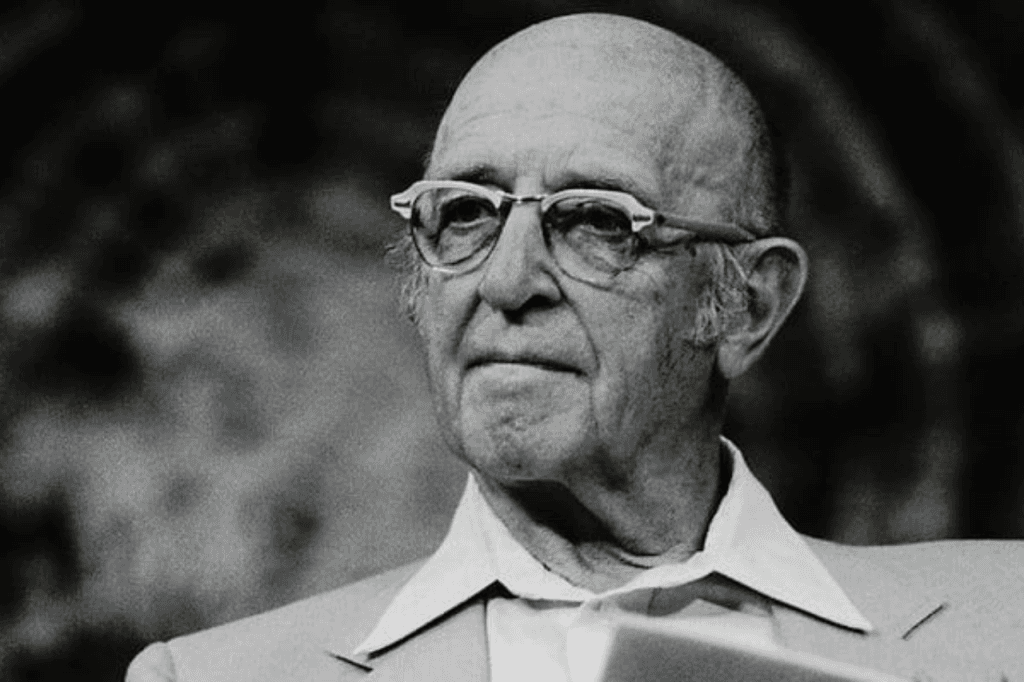

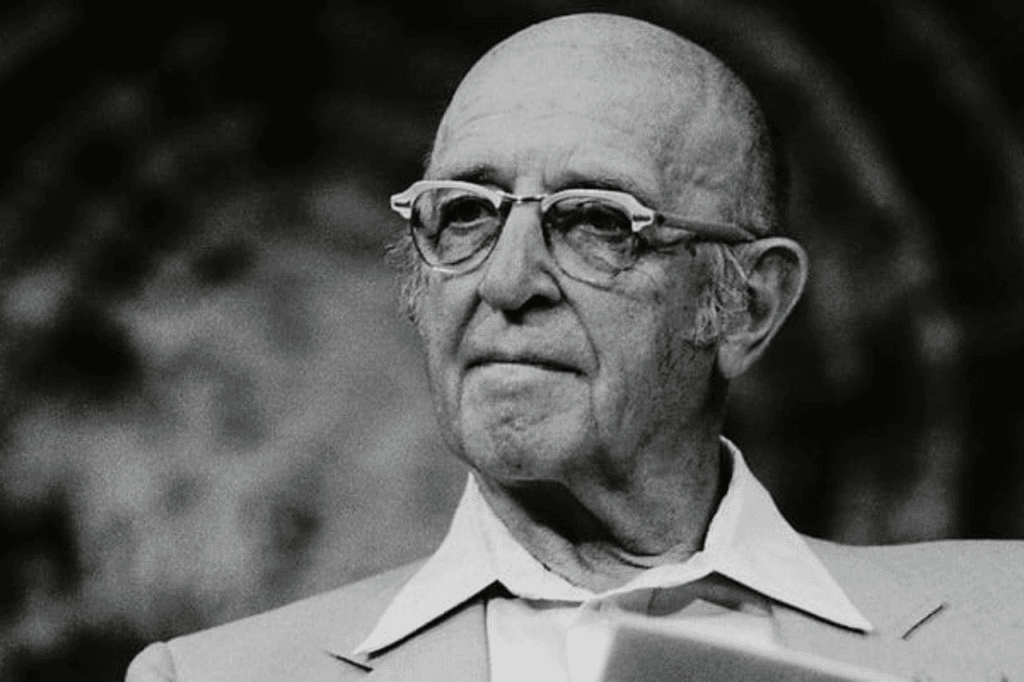
Carl Ransom Rogers
Doğum tarihi | 1902-01-08 | ||||||||
|---|---|---|---|---|---|---|---|---|---|
Place of Birth | Oak Park, Illinois, Türkiye | ||||||||
Ölüm tarihi | 1987-02-04 | ||||||||
Place of Death | La Jolla, California, Türkiye | ||||||||
Nationality | American | ||||||||
Profession(s) | Psychologist Writer Academic | ||||||||
Carl Ransom Rogers was born on January 8, 1902, in Chicago, Illinois. He was the middle child of a farming family with strict religious views. From an early age, he developed an interest in scientific topics and studied agriculture at the University of Wisconsin. However, he shifted his focus to psychology instead of continuing in agriculture. He received his psychological training at Columbia University and completed his doctoral degree in clinical and educational psychology in 1931.
After completing his education, Rogers provided counseling services to children in New York from 1928 to 1940. During this period, he observed that psychoanalytic methods had limited effectiveness with child clients. This realization led him to seek new approaches in psychotherapy.
In 1940, Rogers began his professorship at Ohio State University. From 1945 to 1947, he worked at the University of Chicago, where he developed the "person-centered therapy" approach. This approach is grounded in the unconditional positive regard of the client and empathetic understanding by the therapist.

Carl Ransom Rogers (Invitation)
Rogers served as president of the American Psychological Association (APA) from 1946 to 1947. During his tenure, efforts were made to develop ethical principles and standards for psychotherapy practice. He emphasized client confidentiality, informed consent, and ethical responsibility, contributing to the establishment of psychotherapy on solid ethical foundations. Rogers developed a framework that supported an approach based on empathy and understanding in the therapist-client relationship.
In the 1950s and 1960s, Rogers conducted research to examine the effectiveness of psychotherapy using scientific methods. He developed experimental approaches to measure the outcomes of psychotherapy. His 1951 book, Client-Centered Therapy, systematically presented the theoretical foundation of the person-centered approach. This work redefined the role of the therapist by highlighting empathic relationships and unconditional positive regard. Rogers also argued that the psychotherapeutic process should be based on observable and measurable principles. In 1957, he served as a faculty member at the University of Wisconsin. In 1963, he moved to California and worked with the Western Behavioral Sciences Institute (WBSI). In 1968, he founded the Center for the Study of the Person, engaging in academic and applied research focused on personal growth.
In the 1970s and 1980s, Rogers undertook various initiatives to promote the humanistic psychology approach internationally. By examining the relationship between psychology and human rights, social peace, and societal change, he argued that psychotherapy and personal development practices could contribute to resolving intercultural conflicts. In this context, he conducted work in Northern Ireland, South Africa, Brazil, and the Soviet Union. In the workshops and seminars he organized, he emphasized methods for improving effective communication and mutual understanding.
Carl Rogers died in California in 1987. The theoretical and practical approaches he developed in psychotherapy and personal growth have had a lasting impact on contemporary psychological practice. His contributions to the therapist-client relationship, the development of human potential, and empathy-based therapeutic approaches hold a significant place in psychotherapy literature.
"Carl Ransom Rogers: Hayatı ve Kuramı." *edavet.com.tr*. https://www.edavet.com.tr/kazankultur/carl-ransom-rogers-hayati-ve-kurami/. Accessed May 10, 2025.
American Psychological Association. “Carl R. Rogers.” *APA*. https://www.apa.org/about/governance/president/carl-r-rogers. Accessed May 10, 2025.
Rogers, Carl. *Carl Rogers ve Birey Merkezli Yaklaşım*. Ankara Üniversitesi Açık Ders Malzemeleri. Accessed May 10, 2025. https://acikders.ankara.edu.tr/pluginfile.php/48412/mod_resource/content/1/Carl%20Rogers%20ve%20Birey%20Merkezli%20Yakla%C5%9F%C4%B1m.pdf
Çaktan, Derya. “Rogers ve Maslow.” Hacettepe Üniversitesi. Accessed May 10, 2025.

Carl Ransom Rogers
Doğum tarihi | 1902-01-08 | ||||||||
|---|---|---|---|---|---|---|---|---|---|
Place of Birth | Oak Park, Illinois, Türkiye | ||||||||
Ölüm tarihi | 1987-02-04 | ||||||||
Place of Death | La Jolla, California, Türkiye | ||||||||
Nationality | American | ||||||||
Profession(s) | Psychologist Writer Academic | ||||||||
Early Career and Transition to Psychotherapy
Ohio State University and Person-Centered Therapy
Presidency of the American Psychological Association and Development of Ethical Standards
Scientific Research and Publications
International Work and Social Applications
Death and Academic Legacy