

This article was automatically translated from the original Turkish version.
Type of Geographical İndication | Origin Name | ||||||||
|---|---|---|---|---|---|---|---|---|---|
Registration Number | 112 | ||||||||
Registration Date | 09.06.2009 | ||||||||
Product / Product Group(s) | Processed and Unprocessed Fruits Vegetables and Mushrooms | ||||||||
Province(s) | Erzurum | ||||||||
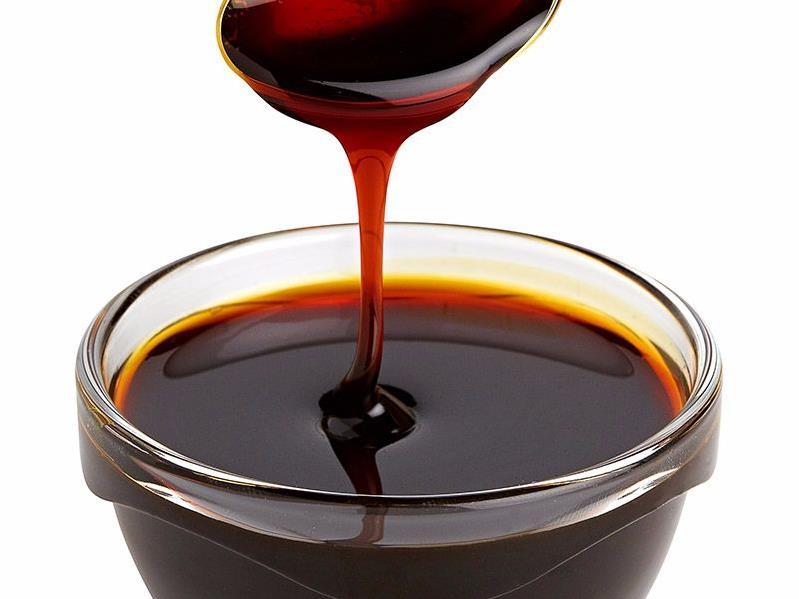
Karnavas Fig Molasses is a traditional product produced in the villages of Ormanağzı (Karnavas), Taşlıköy, Yeşilbağlar, Köprübaşı, and Coşkunlar in the Olur district of Erzurum Province, Türkiye, and registered under its place of origin. It received geographical indication registration after being published in the Official Gazette on 11 May 2008, following an application submitted on 12 August 2005.
Karnavas fig molasses is distinguished from similar products in other regions by the physical and chemical properties of the figs used in its production. The fig fruits weigh on average between 3.29 and 5.08 grams, with a width ranging from 12.58 to 30.04 mm and a length between 14.2 and 19.7 mm. The juice yield ranges from 46.73% to 72.14%, indicating the product’s efficiency. Only farmyard manure is used in fig orchards; no chemical pest control is applied.
The molasses is notable for its highly viscous texture. Its chemical composition varies within the following ranges:
Color values vary as follows: L (lightness): 18.89–24.18; a (redness): 7.18–18.71; b (yellowness): -4.18 to +1.86. These values reflect the product’s physical appearance and processing quality.
The production of Karnavas fig molasses begins in the first week of June and lasts approximately five weeks. Fig trees are harvested 8 to 10 times at intervals of 3 to 4 days, depending on climatic conditions. The first harvest is typically reserved for fresh consumption or sale; subsequent harvests are suitable for molasses production.
The harvested figs are cleaned to remove foreign matter. They are then placed in vats with one-quarter water by volume and boiled over pine wood fire. After thermal treatment, the juice is extracted by pressing and filtered. The filtered juice is concentrated in open vats. This process lasts 15 to 40 minutes and is terminated according to the desired consistency. In the final stage, the molasses is aerated and cooled while being stirred with wooden spoons until it acquires a glossy appearance. Only water and figs are used in production; no additives are added.
Approximately 80% of the produced molasses is sold immediately. The remainder is stored in glass or plastic jars at temperatures slightly below room temperature. Although the ideal shelf life is one year, longer storage is possible.
The product is filled automatically into glass jars of 100 g, 250 g, 400 g, and 800 g capacities. Labels include the product name, production and expiry dates, batch number, ingredients, storage instructions, and nutritional information. If organic certification is obtained, the term “organic” may also be added.
Production and quality control are conducted annually in June and July, and as needed, by a five-member commission composed of representatives from the Olur District Governorate’s Village Services Unit, Olur Municipality, District Directorate of Agriculture, Atatürk University Oltu Vocational School Food Technology Program, and the Ormanağzı Village Headmanship.
Turk Patent and Trademark Office. "Coğrafi İşaret Tescil Belgesi: Karnavas Dut Pekmezi." Turk Patent and Trademark Office. Accessed October 24, 2025. https://ci.turkpatent.gov.tr/Files/GeographicalSigns/9b9197f9-526d-473b-a835-63e3786f1719.pdf.
Turkish Patent and Trademark Office. "Karnavas Dut Pekmezi." Geographical Indications Portal. Accessed October 24, 2025. https://ci.turkpatent.gov.tr/cografi-isaretler/detay/37962.

Type of Geographical İndication | Origin Name | ||||||||
|---|---|---|---|---|---|---|---|---|---|
Registration Number | 112 | ||||||||
Registration Date | 09.06.2009 | ||||||||
Product / Product Group(s) | Processed and Unprocessed Fruits Vegetables and Mushrooms | ||||||||
Province(s) | Erzurum | ||||||||
No Discussion Added Yet
Start discussion for "Carnival Grape Molasses" article
Distinctive Characteristics
Production Process
Storage and Labeling
Inspection