

This article was automatically translated from the original Turkish version.
+1 More
CH-7 is a Chinese-origin Cai Hong-7 (Rainbow 7) long-range, low-observable unmanned combat aerial vehicle. Developed by the China Aerospace Science and Technology Corporation (CASC), it is designed for high-altitude and multi-mission operations, employing a flying-wing architecture that integrates reconnaissance, surveillance and precision strike capabilities.
The development process dates back to its first public unveiling at Airshow China in 2018. Modifications have been made to the wingspan and control surfaces of the model. It has been reported that full-scale testing is expected to be completed around 2024【1】.
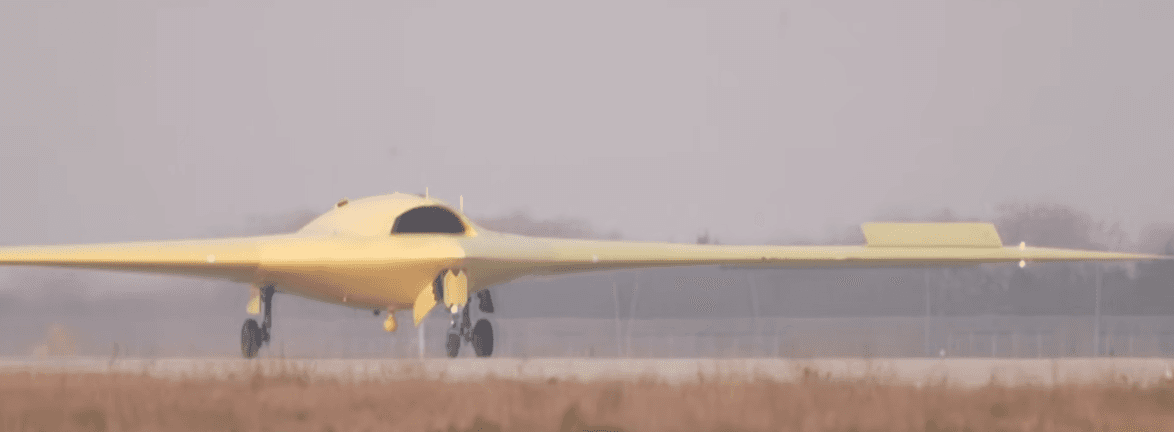
On 15 December 2025, the CH-7 successfully completed its first flight from an airfield in northwestern China. During this flight, basic flight characteristics and autonomous takeoff and landing performance were tested. Further flight tests are planned to validate advanced performance metrics and mission payload capabilities【2】.
CH-7 First Flight (CCTV Video News Agency)
The aircraft adopts a flying-wing configuration, with a blended body-wing design that provides high aerodynamic efficiency and supports low observability. An aerodynamic profile has been engineered to reduce radar signature through features such as a dorsal engine air intake and internal weapons bays. The design also bears resemblance to the ANKA-3 model produced by TUSAŞ【3】.
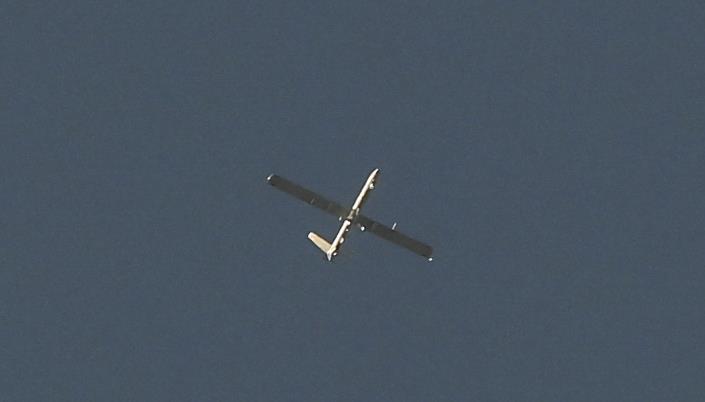
According to design parameters, the CH-7 has an approximate length of 10 meters, a wingspan of around 22 meters, and a maximum takeoff weight in the ten-thousand-kilogram class. Powered by a single turbofan engine, the vehicle can cruise at speeds of approximately Mach 0.5–0.75 and operate at altitudes of 12 to 15 kilometers. Its operational range can reach thousands of kilometers, with an endurance of approximately 15 hours in flight.
CH-7 (Anadolu Agency)ı)
The CH-7’s mission payload options may include anti-radar missiles, standoff precision strike weapons, and electro-optical/sensor pods. Internal weapons bays enhance payload capacity while preserving a low radar cross-section.
The CH-7 is classified as a stealth UCAV (Unmanned Combat Aerial Vehicle), combining high-altitude capability, durability and low observability among modern unmanned aerial systems.
[1]
UAS Vision, “China Completing Development of CH-7 Stealth UCAV,” UAS VISION, 12 Şubat 2024, Erişim Tarihi 15 Aralık 2025, https://www.uasvision.com/2024/02/12/china-completing-development-of-ch-7-stealth-ucav.
[2]
Liu Xuanzun, ve Ma Jun, “China’s CH-7 High-Altitude, High-Speed Drone Makes Maiden Flight,” Global Times, 15 Aralık 2025, Erişim Tarihi 15 Aralık 2025, https://www.globaltimes.cn/page/202512/1350559.shtml.
[3]
Başak Berber, “Çin’in ANKA-3 Benzeri İHA’sı CH-7 Ilk Uçuşunu Yaptı,” SavunmaSanayiST, 15 Aralık 2025, Erişim Tarihi 15 Aralık 2025, https://www.savunmasanayist.com/cinin-anka-3-benzeri-ihasi-ch-7-ilk-ucusunu-yapti/.

Development Process
Design and Technical Specifications