This article was automatically translated from the original Turkish version.
+2 More
Location | Türkiye Van | ||||||||
|---|---|---|---|---|---|---|---|---|---|
Founder(s) | King Sarduri II of Urartu | ||||||||
Foundation Date | 764–734 BCE | ||||||||
Architectural Feature(s) | Water Structures Lower Castle Upper Castle | ||||||||
Temples | Temple of Irmushini Temple of Haldi | ||||||||
Important Discoveries | Cisterns Pits Wall Paintings Bronze and Iron Arrowheads Cuneiform Inscriptional Tablets | ||||||||
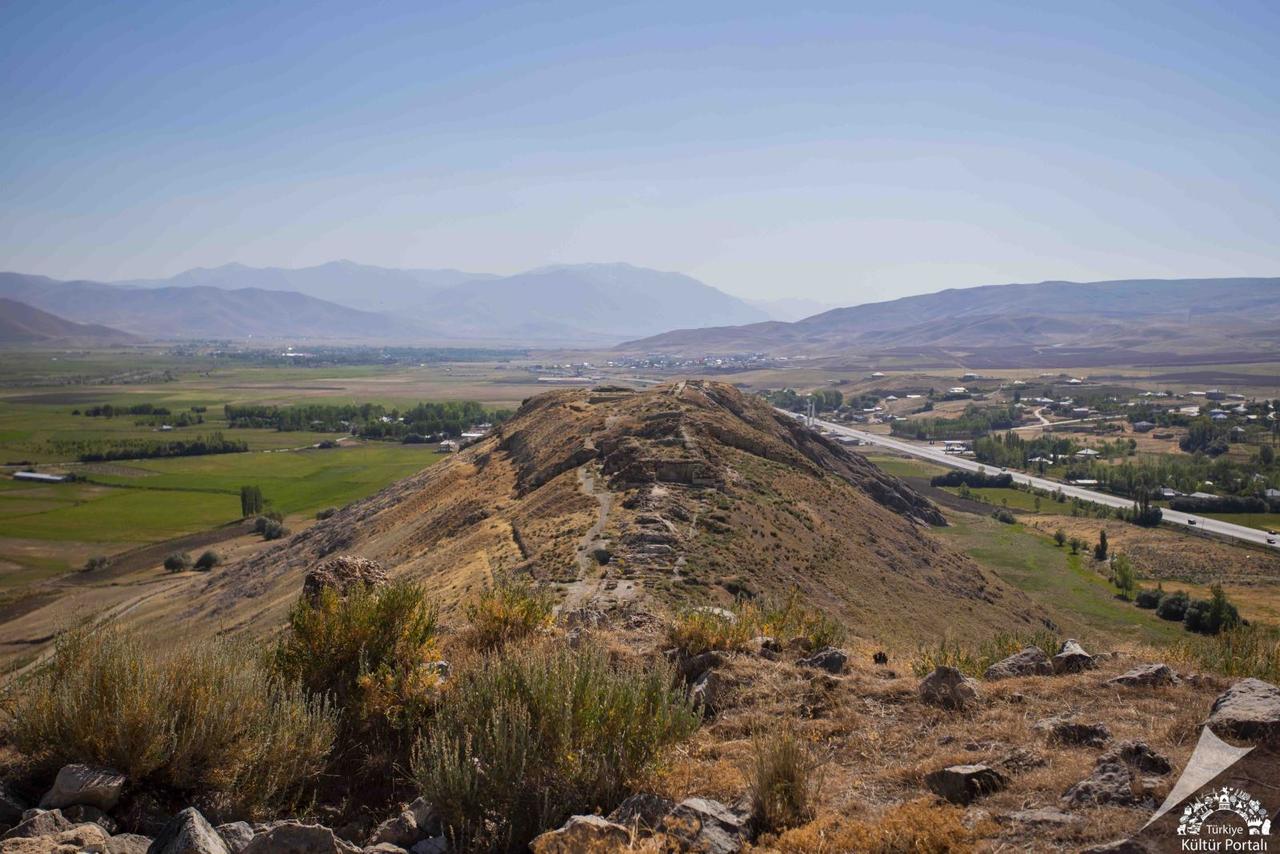
Çavuştepe Castle is located approximately 24–25 kilometers southeast of the center of Van Province, within the boundaries of the Gürpınar district. Built on two low hills at the western end of Mount Bol, the castle was constructed between 764 and 734 BCE by King Sarduri II of Urartu and was known in the Urartian language as “Sardurihinili” (the city founded by Sarduri). The castle occupies a strategic position along the Van–Hakkâri–Iran highway, commanding views over the Gürpınar Plain and key transit routes.
%2520kopya.jpg&w=1280&q=75)
Çavuştepe Castle (Türkiye Culture Portal)
The first archaeological excavations at Çavuştepe Castle were conducted between 1961 and 1986 under the leadership of Professor Dr. Afif Erzen. In 2014, a second phase of excavations was initiated under the direction of Professor Dr. Rafet Çavuşoğlu and continues to the present day.
The castle consists of two main sections: the Upper Castle and the Lower Castle, connected by a low neck of land.
The Upper Castle, situated on a higher elevation to the east, has a rectangular plan. It houses a square-plan temple with corner projections (risalits), dedicated to Haldi, the chief deity of Urartu. The external dimensions of the temple are 12.50 x 12.50 meters, while the cella (sacred chamber) measures 4.50 x 4.50 meters. The entrance faces east, and the forecourt is surrounded by colonnades on three sides. The castle is enclosed by strong rampart systems, and to the east, a natural rock platform carved into the hillside forms the “eastern ditch,” a prominent defensive feature.
The Lower Castle, located on a lower hill to the west, spans approximately 430–450 meters in length and 125 meters in width. Surrounded by stone-based mudbrick walls, this area contains temples, palace structures, storage buildings, and workshops.
At the highest point of the Lower Castle stands a second temple dedicated to the god Irmushini. Its external dimensions are 10 x 10 meters, with a cella measuring 4.50 x 4.50 meters. The entrance façade, facing east, was constructed using two rows of carefully worked basalt blocks. At the temple entrance, a cuneiform foundation inscription bearing the name of Sarduri II was discovered. Wall paintings with geometric and floral motifs in red, blue, white, and black pigments have been identified on the interior walls.
To the east of the temple is a large storage building composed of two spacious halls. Approximately 100 pithoi (large ceramic jars), buried up to their shoulders in the earth, were found within this structure. Stamps, scale markings, and cuneiform inscriptions were identified on their surfaces. To the west of the Irmushini Temple lies a palace measuring 81 x 33 meters, consisting of two side corridors and a central hall with rooms. The lower levels of the palace contain a kitchen, storerooms, latrines, and cisterns. Three cisterns carved into the floor and a drainage channel system demonstrate the building’s advanced technical features.
The Uçkale structure, located to the east of the Lower Castle, extends in an east–west direction and measures 39 x 23.92 meters. Constructed with carefully worked limestone blocks, it is a two-story building whose foundation was formed by leveling the natural bedrock. It is assessed to have served a religious function.
One of the most significant infrastructural investments of the Urartian period is the Gugunaini Creek Water Canal, constructed by Sarduri II near Çavuştepe Castle to meet the settlement’s water needs. The canal channels water from the Hoşap Creek (known in Urartian times as Gugunaini) over a distance of approximately eight kilometers, bringing it from southern slopes to the castle and surrounding agricultural lands. The canal is approximately 3.5 meters wide and follows a simple earthen channel design. Construction activities related to this canal are explicitly recorded in temple inscriptions.
The necropolis located approximately one kilometer north of the castle provides insight into Urartian burial customs. Archaeological excavations in this area have identified two distinct burial types: urn-type (cremated remains placed in ceramic vessels) and hoker-type (burial in a fetal position resembling the posture within the maternal womb). Four different tomb types have been documented in the necropolis: built chamber tombs, chest tombs, and simple earthen graves.
Numerous arrowheads made of iron and bronze have been uncovered during excavations at Çavuştepe Castle. These arrowheads are divided into two groups: socketed and leaf-shaped. Socketed arrowheads are made of bronze, while leaf-shaped ones are made of iron. Fifty-four arrowheads were recovered during the first phase of excavations and 25 during the second phase; these have been further classified into subgroups based on structural characteristics. Some arrowheads were used as weapons, while others served as ritual offerings for religious purposes.
Çavuştepe Castle (Sardurihinili) is a comprehensive Urartian settlement that reflects the military, economic, religious, and infrastructural investments of Sarduri II. From temples to palaces, storage systems to water canals, its many architectural elements demonstrate the sophistication of Urartian civilization. The presence of two distinct temples dedicated to different deities within the same fortress stands out as a unique feature distinguishing Çavuştepe from other Urartian citadels.
Culture Portal. "Çavuştepe Kalesi." Ministry of Culture and Tourism of the Republic of Türkiye. Accessed July 8, 2025. https://www.kulturportali.gov.tr/turkiye/van/gezilecekyer/cavustepe-kales.
Müze.gov.tr. "Çavuştepe Kalesi." T.C. Kültür ve Turizm Bakanlığı. Accessed July 8, 2025. https://muze.gov.tr/muze-detay?SectionId=VCK01&DistId=MRK.
Turkish Museums. "Van Çavuştepe Kalesi." Accessed July 8, 2025. https://www.turkishmuseums.com/museum/detail/2252-van-cavustepe-kalesi/2252/1.
Çavuşoğlu, Rafet, and Yenal Sürün. “Van-Çavuştepe Kalesi’nde Bulunan Ok Uçları.” *Van Yüzüncü Yıl Üniversitesi Sosyal Bilimler Enstitüsü Dergisi* 60 (2023): 1–16. Accessed July 8, 2025. https://dergipark.org.tr/tr/download/article-file/3083927.
Özkan, Kazım. “Urartu Kralı II. Sarduri’nin Yaptırdığı Gugunaini Deresi Su Kanalı Üzerine Bir Değerlendirme.” *Aras Türkiye Eski Yakın Doğu Araştırmaları Dergisi (TUJANES)* 4 (2022): 37–48. Accessed July 8, 2025. https://dergipark.org.tr/tr/download/article-file/2825705.
“Urartular - Çavuştepe (Sardurihinili).” *Urartular.com.tr*. Accessed July 8, 2025. https://www.urartular.com.tr/alticerik/47/cavustepe-sardurihinili.html.

Location | Türkiye Van | ||||||||
|---|---|---|---|---|---|---|---|---|---|
Founder(s) | King Sarduri II of Urartu | ||||||||
Foundation Date | 764–734 BCE | ||||||||
Architectural Feature(s) | Water Structures Lower Castle Upper Castle | ||||||||
Temples | Temple of Irmushini Temple of Haldi | ||||||||
Important Discoveries | Cisterns Pits Wall Paintings Bronze and Iron Arrowheads Cuneiform Inscriptional Tablets | ||||||||
No Discussion Added Yet
Start discussion for "Çavuştepe (Sardurihinili) Castle" article
Excavations and Research
Architectural Structure and Sections
Upper Castle (Temple of Haldi and Surroundings)
Lower Castle (Temple of Irmushini, Palace, Uçkale)
Water Systems and the Gugunaini Canal
Necropolis Area and Burial Practices
Military Equipment and Arrowheads