


This article was automatically translated from the original Turkish version.
+2 More
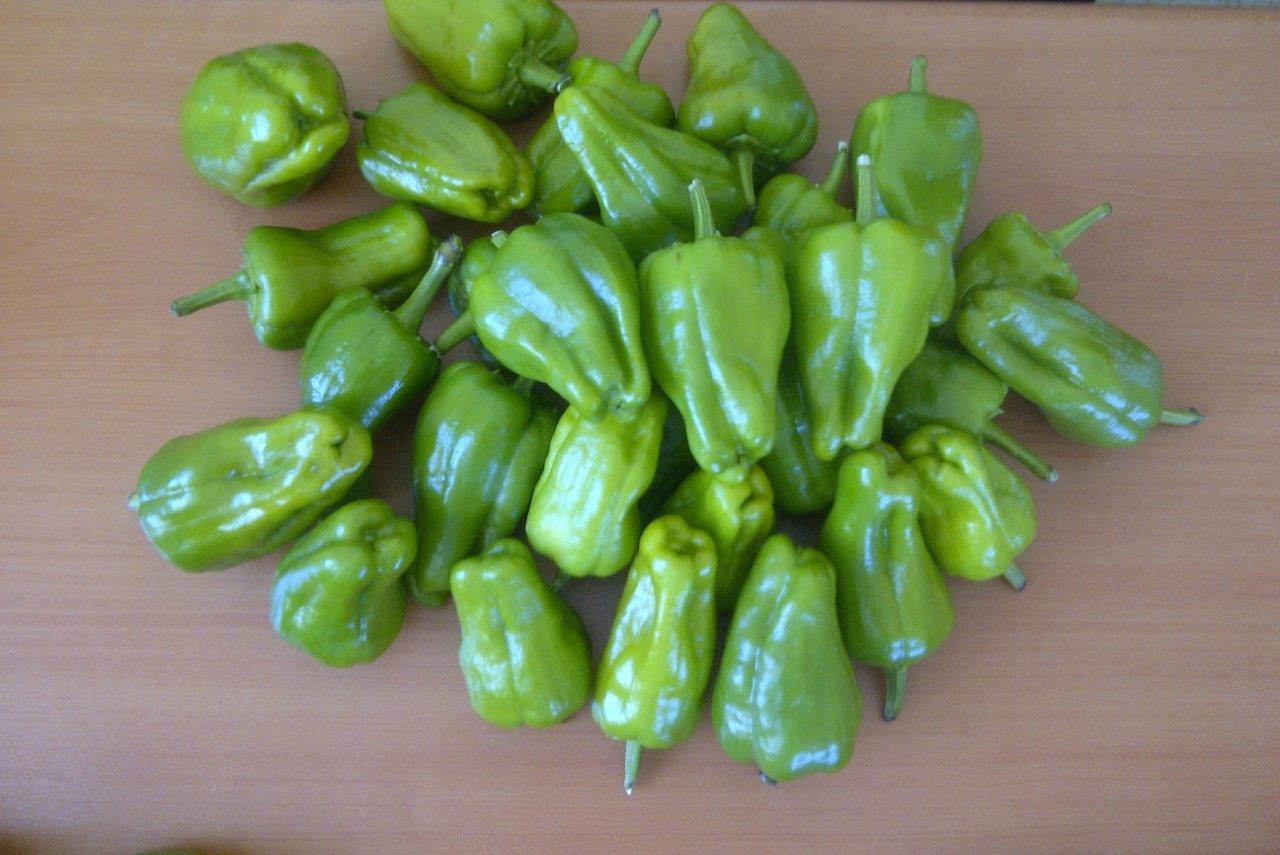
Cemele Pepper
Product / Product Group(s) | Processed and unprocessed fruits and mushrooms vegetables | ||||||||
|---|---|---|---|---|---|---|---|---|---|
Applicant/Registrant(s) | Limited Liability Cemele Pepper Production and Marketing Cooperative | ||||||||
Registration Date | 24.11.2021 | ||||||||
File Number | C2021/000193 | ||||||||
Registration Number | 956 | ||||||||
Place of Manufacture | Çayağzı Village, Kırşehir | ||||||||
Cemele Pepper is a local variety of stuffing pepper grown within the boundaries of Çayağzı village in Kırşehir Province, Türkiye. It is characterized by its thin skin, mild spiciness, and dark green color. The product has been officially registered with the Turkish Patent and Trademark Office under the designation “Geographical Origin” and is protected under Geographical Indication No. 956 dated 24 November 2021.
Cemele Pepper is a stuffing pepper variety that develops under the specific climatic and altitude conditions of its geographical origin. It features thin flesh, a dark green color, and a mild spicy character. The product belongs to the species Capsicum annuum and exhibits notable surface shine and smoothness.
Each growing season, seed material distinct from the previous year’s stock is used. The region’s altitude, which reaches up to 1100 meters, and the significant difference between day and night temperatures play a decisive role in determining the pepper’s color, aroma, and texture.

Cemele Pepper (AA)
Cemele Pepper production begins with transplanting seedlings. Seedling cultivation is also carried out within the same geographical boundaries. Seeds are sown under cover in early April using the viyol or karık method. Seedlings reach transplanting size within 30 to 35 days and are then moved to open fields.
As a vegetable adapted to temperate climates, Cemele Pepper is sensitive to high humidity and rainfall. However, it demonstrates greater resilience to low humidity levels.
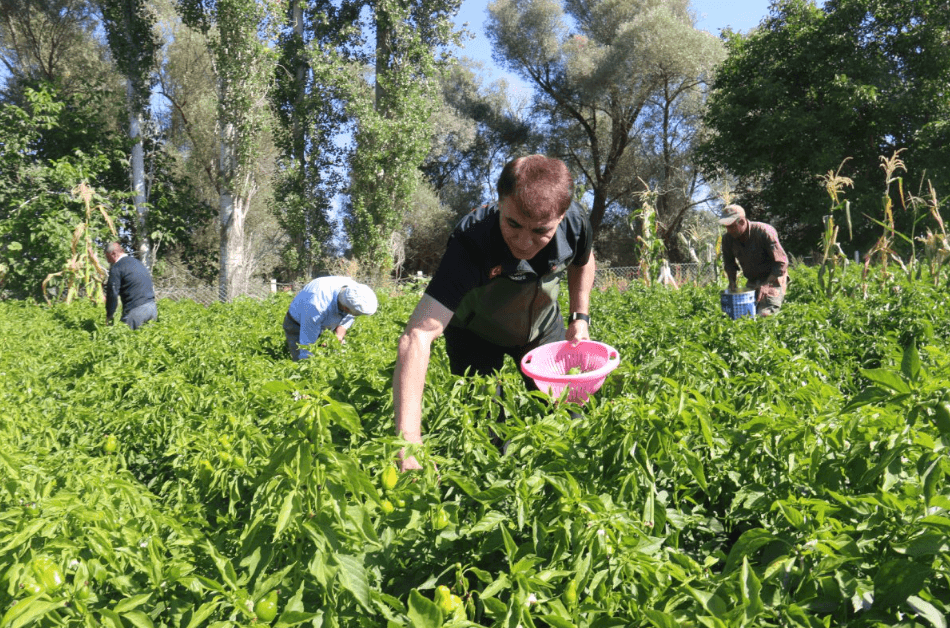
Cemele Pepper Harvest (Ministry of Agriculture and Forestry)
Cemele Pepper is cultivated exclusively within the boundaries of Çayağzı village in Kırşehir Province. Monitoring is conducted under the coordination of the Cemele Pepper Production and Marketing Cooperative. The monitoring board consists of at least seven members, including representatives from the Kırşehir Chamber of Commerce, Kırşehir Provincial Directorate of Agriculture and Forestry, Ahi Evran University Faculty of Agriculture, and Kırşehir Provincial Special Administration.
Anadolu Ajansı. “Kırşehirli Çiftçilerden Avrupa’ya Cemele Biberi.” Accessed May 31, 2025. https://www.aa.com.tr/tr/ekonomi/kirsehirli-ciftcilerden-avrupaya-cemele-biberi/3055266
Kırşehir İl Tarım ve Orman Müdürlüğü. "İl Müdürümüz Coğrafi İşaretli Ürünümüz Olan Cemele Biberi Hasadına Katıldı."
Kırşehir İl Tarım ve Orman Müdürlüğü. Accessed May 31, 2025. https://kirsehir.tarimorman.gov.tr/Haber/593/%E2%80%8Bil-Mudurumuz-Cografi-Isaretli-Urunumuz-Olan-Cemele-Biberi-Hasadina-Katildi
Turk Patent and Trademark Office. "Cemele Biberi." Accessed May 31, 2025. https://ci.turkpatent.gov.tr/cografi-isaretler/detay/4142

Cemele Pepper
Product / Product Group(s) | Processed and unprocessed fruits and mushrooms vegetables | ||||||||
|---|---|---|---|---|---|---|---|---|---|
Applicant/Registrant(s) | Limited Liability Cemele Pepper Production and Marketing Cooperative | ||||||||
Registration Date | 24.11.2021 | ||||||||
File Number | C2021/000193 | ||||||||
Registration Number | 956 | ||||||||
Place of Manufacture | Çayağzı Village, Kırşehir | ||||||||
Product Description and Distinctive Characteristics
Physical Characteristics
Production Method
Agricultural Practices
Geographical Boundary and Monitoring