

This article was automatically translated from the original Turkish version.
+1 More
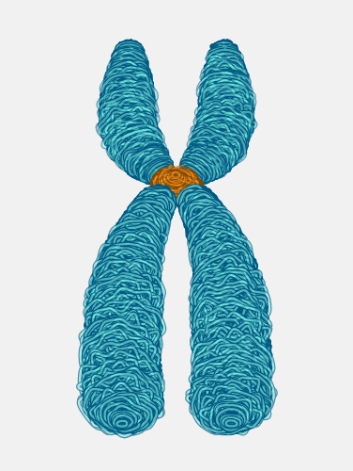
Centromere is a specialized chromatin region in eukaryotic chromosomes that ensures the proper segregation of sister chromatids during mitosis and meiosis. This region serves as the structural platform for the assembly of the multi-subunit protein complex known as the kinetochore, which binds to microtubules. The centromere facilitates the movement of chromosomes toward the cell poles and plays a central role in maintaining genomic integrity. Under light microscopy, it is typically identified as the “primary constriction,” a region of distinct chromatin density located at the chromosome’s center.
The importance of the centromere was first recognized in the late 19th century through microscopic observations of mitosis. It was later established that this region mediates attachment to microtubules and drives chromosome movement toward the poles. Initially sought as a genetically defined locus, molecular and epigenetic analyses revealed that the centromere’s identity is primarily determined by epigenetic marks rather than DNA sequence alone. At the core of these epigenetic marks is the protein CENP-A, a specialized variant of histone H3.
Centromere structure is evolutionarily highly variable. Although the position and DNA sequence of the centromeric region differ across species, its function in cell division is conserved. In particular, most centromeres in hominid genomes are associated with specific alpha-satellite DNA sequences, but this association is not obligatory; events such as neocentromere formation demonstrate the centromere’s capacity for reprogramming.
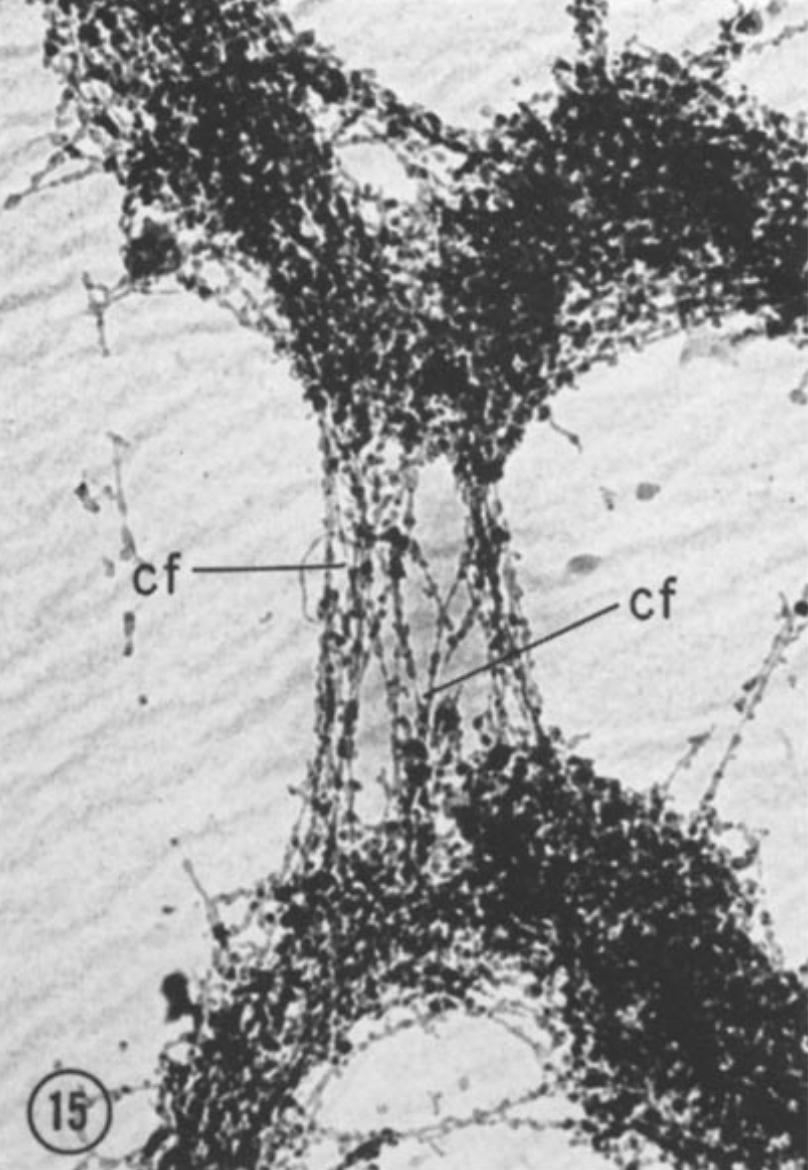
Centromere Region of the Chromosome - CF (Sister Centromeres) (ResearchGate)
【1】
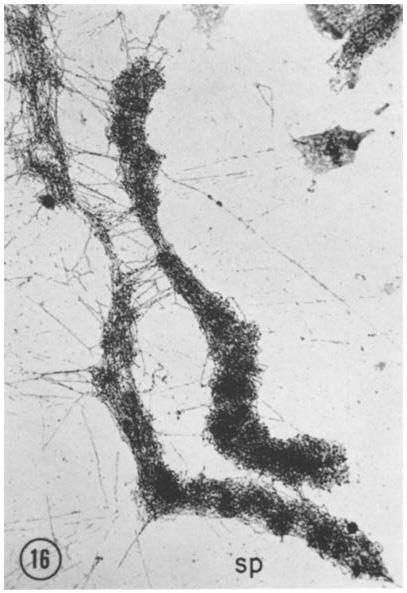
Chromatin Fiber Relaxation in the Chromosome (ResearchGate)
In a clinical study published in 1995 in the journal Cytogenetics and Cell Genetics, researchers from the Finnish Institute of Occupational Health in Helsinki investigated the relationship between age-related micronucleus formation and loss of the X chromosome in peripheral lymphocytes of women.【2】 They analyzed the presence of chromosomes within micronuclei in lymphocytes from women under 30 and over 50 years of age. The proportion of micronuclei containing centromeres was significantly higher in older women (51.5%) compared to younger women (34.3%). Similarly, the frequency of X-chromosome-positive micronuclei increased with age, and a comparable age-related rise was observed in micronuclei containing autosomes. These findings indicate that centromere-containing micronuclei increase markedly during aging and suggest that this phenomenon may represent a fundamental mechanism of chromosome loss.【3】
The genetic basis of human centromeres is formed by alpha-satellite (α-satellite) DNA sequences. These consist of repeating monomers, each 171 base pairs in length, organized into chromosome-specific higher-order repeat (HOR) structures. HOR arrays vary in length from 0.3 to 5 megabases and are arranged in a characteristic pattern for each chromosome. Each chromosome possesses a unique α-satellite HOR structure; for example, chromosome 17 has a 16-mer repeat while chromosome X has a distinct 12-mer arrangement. Moreover, multiple HOR variants can coexist on the same chromosome. These variations reveal that centromere organization is highly modular and mosaic.
CENP-A binding is not uniformly distributed across all alpha-satellite sequences. Only specific HOR clusters form nucleosomes containing CENP-A. These CENP-A-rich regions constitute epigenetically marked “core domains” where centromere function is executed.
CENP-A, a specialized variant of histone H3, serves as the epigenetic determinant of centromere identity at the nucleosomal level. The incorporation of CENP-A into nucleosomes induces a structural conformation distinct from classical H3 nucleosomes. DNA is wrapped less tightly around CENP-A nucleosomes compared to classical ones, resulting in a more open and accessible chromatin structure.
CENP-A not only alters nucleosome structure but also provides a platform for kinetochore protein assembly. Inner kinetochore components such as CENP-C and CENP-N bind directly to CENP-A, initiating the assembly of the kinetochore scaffold. These protein-protein interactions organize the outer kinetochore structures capable of binding microtubules. CENP-A distribution forms tightly clustered islands within alpha-satellite arrays. These clusters are both physically and functionally stable and are symmetrically positioned on each sister chromatid. Although the underlying DNA sequence is repetitive, CENP-A binds only to specific locations, dependent on an epigenetically regulated nucleosomal environment. ChIP-seq and long-read sequencing analyses have shown that these CENP-A regions, though transcriptionally inactive, are highly conserved structural elements.
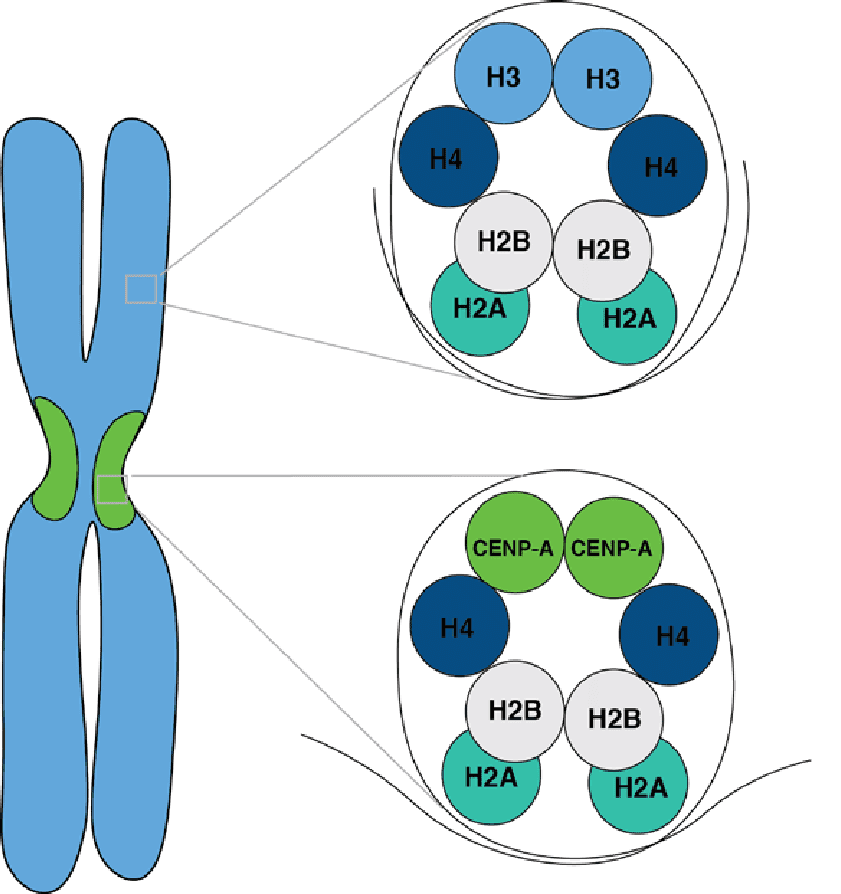
Centromere and CENP-A Nucleosomes (Caitríona M. Collins)
【4】
In a 1998 review published in Cell, it was emphasized that epigenetic mechanisms play a fundamental role in determining centromere identity. In eukaryotic organisms, regional centromeres are defined not solely by DNA sequence but by epigenetic marks. Comparative studies across species have shown that centromere-associated satellite DNA sequences are not conserved; even closely related species exhibit marked differences. This suggests that centromere function is determined by broader structural features—such as the repeat architecture of satellite DNA, the “adenine + thymine” base composition, and chromatin properties—rather than by specific DNA sequences. The review also addressed how epigenetic marks are maintained through cell division. For instance, the presence of hypoacetylated histones in active centromere regions contributes to their stable epigenetic inheritance. Furthermore, the cell cycle–regulated synthesis and chromatin incorporation of CENP-A demonstrate that this structure is copied in a temporally controlled manner.【5】
In conclusion, centromere function does not rely solely on DNA sequence; the epigenetically organized chromatin structure is the defining feature of this critical region. This enables centromeres to relocate and adapt to chromosomal rearrangements and also suggests that other chromosomal functions—such as sex chromosome pairing, DNA replication, and gene regulation—may also be governed by epigenetic mechanisms.
The centromere structure is functionally and structurally divided into two main regions. The centromeric core region consists of specific HOR sequences of alpha-satellite DNA and hosts CENP-A-containing nucleosomes. This region provides the platform for assembly of inner kinetochore components (CENP-C, CENP-N) and forms the central site for microtubule attachment during mitosis and meiosis. Pericentromeric chromatin is typically represented by satellite II and III sequences and is marked by heterochromatic signatures such as H3K9me3 and HP1. Cohesin rings accumulate in this region and mediate sister chromatid cohesion. Additionally, this region provides mechanical resilience essential for accurate chromosomal segregation. Pericentromeric regions are three-dimensionally encircling the centromeric CENP-A clusters, and this organization ensures mechanical stability of the kinetochore-microtubule connection.
Centromeric chromatin has a modular, three-dimensional structure rather than a linear one. CENP-A clusters are arranged in discrete groupings along HOR structures and are epigenetically distinct from surrounding alpha-satellite regions. The regions where CENP-A binds spatially organize both chromatin conformation and kinetochore assembly.
Long-read sequencing and epigenetic mapping methods have revealed that these CENP-A clusters are stable and maintain their position throughout the cell cycle. Furthermore, CENP-A clusters on sister chromatids exhibit symmetric positioning, enabling the coordinated formation of kinetochores. CENP-A clustering is structured to support multiple microtubule attachment sites, allowing a single kinetochore to interact simultaneously with several microtubule ends. This organization is critical for chromosome motility and the chromosomal tension response.
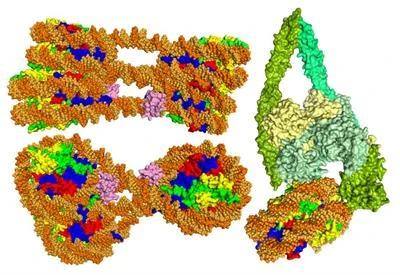
Three-Dimensional Chromatin Structure (Frontiers)
A study demonstrated that RNA polymerase II (RNAPII) transcription elongation disrupts CTCF-directed and cohesin-mediated chromatin loops. Transcription, particularly near gene ends, causes loop dissolution and chromatin relaxation; RNAPII progression displaces cohesin from CTCF binding sites, triggering these effects. When transcription termination is blocked by the NS1 protein of influenza A virus, RNAPII transcribes beyond gene ends, erasing chromatin loops, dismantling compact structures, and inducing a transition from B to A chromatin compartments in heterochromatic regions. When transcription is suppressed, cohesin reassembles and loop structures reform.【6】
These findings demonstrate that transcription elongation dynamically influences not only genetic expression but also the three-dimensional genomic architecture associated with epigenetic structures such as the centromere.
[1]
José G., Abuelo, ve Dorothy E., Moore. “The Human Chromosome: Electron Microscopic Observations on Chromatin Fiber Organization.” The Journal of Cell Biology 41, no. 1 (1969): 85. https://doi.org/10.1083/jcb.41.1.73
[2]
José G., Abuelo, ve Dorothy E., Moore. “The Human Chromosome: Electron Microscopic Observations on Chromatin Fiber Organization.” The Journal of Cell Biology 41, no. 1 (1969): 85. https://doi.org/10.1083/jcb.41.1.73
[3]
Josep, Catalán, Kirsti, Autio, Marja, Wessman, Christina, Lindholm, Sakari, Knuutila, Mikko, Sorsa, ve Hannu, Norppa. “Age-Associated Micronuclei Containing Centromeres and the X Chromosome in Lymphocytes of Women.” Cytogenetics and Cell Genetics 68, no. 1–2 (1995): 11–16. https://doi.org/10.1159/000133879
[4]
Caitríona M., Collins. “Novel Functions for the CENP-A N-Terminus during Male Meiosis in Drosophila Melanogaster.” (2018): 5. https://api.semanticscholar.org/CorpusID:90011549
[5]
Terence D., Murphy, ve Karpen, Gary H. “Centromeres Take Flight: Alpha Satellite and the Quest for the Human Centromere.” Cell 93, no. 3 (1998): 317–320. Erişim 25 Temmuz 2025. https://doi.org/10.1016/S0092-8674(00)81158-7
[6]
Sven, Heinz, Laure, Texari, Michael, G. B., Hayes, Matthew, Urbanowski, Max-W., Chang, Ninvita Givarkes, Alexander, Rialdi, Kris M., White, Randy A., Albrecht, Lars, Pache, Ivan, Marazzi, Adolfo, García-Sastre, Megan L., Shaw, ve Christopher, Benner. “Transcription Elongation Can Affect Genome 3D Structure.” Cell 174, no. 6 (2018): 1522–1536. Erişim 25 Temmuz 2025. https://doi.org/10.1016/j.cell.2018.07.047

Genetic Component: Alpha-Satellite DNA
Epigenetic Component: CENP-A Nucleosomes
Centromeric and Pericentromeric Chromatin Distinction
Three-Dimensional Chromatin Organization