


This article was automatically translated from the original Turkish version.
+2 More
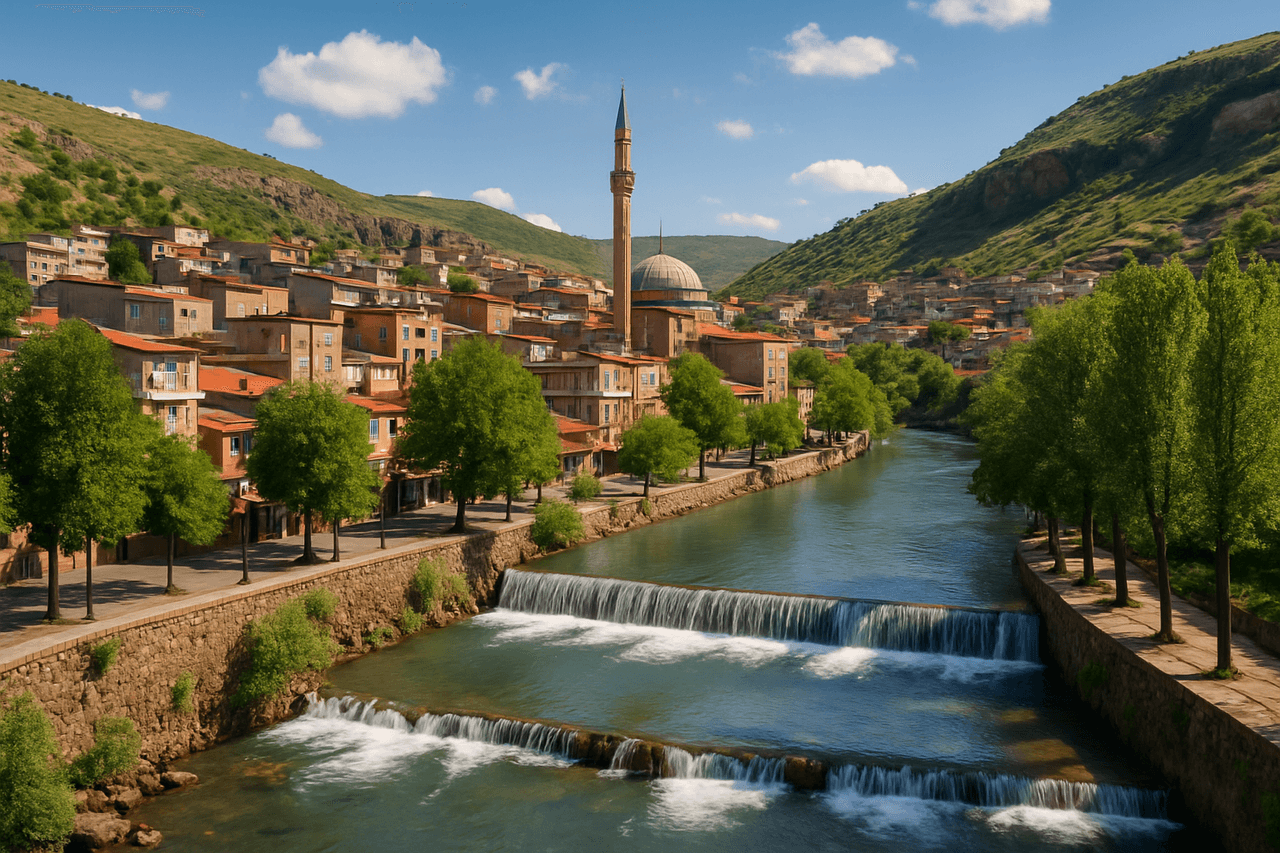
Generated by Artificial Intelligence
Çermik (District)
Affiliated Province | Diyarbakır | ||||||||
|---|---|---|---|---|---|---|---|---|---|
Location | West of the city center of Diyarbakır | ||||||||
Landforms | Has geothermal resources | ||||||||
Historical Sovereignties | Hittite, Roman, Byzantine, Islamic, Ottoman | ||||||||
Economy | Agriculture Thermal tourism Livestock | ||||||||
Cultural Elements | Folk dances, Traditional cuisine, Handicrafts | ||||||||
Çermik is a district of Diyarbakır in Türkiye’s Southeastern Anatolia Region. Located west of the city center of Diyarbakır, the district is bordered by Çüngüş to the north, Eğil to the east, Şatır and Dicle to the southeast, and Siverek district of Şanlıurfa to the west. It is approximately 90 kilometers from the Diyarbakır provincial center. The administrative structure of the district includes not only neighborhoods in the central area but also rural settlements, comprising 2 towns, 2 neighborhoods, and 60 villages under Çermik’s jurisdiction.

Çermik (Generated by Artificial Intelligence)
The historical roots of Çermik extend back to the Hittite period, and research conducted in the district has revealed that the region was inhabited during the Roman, Byzantine, and Islamic eras. The area was incorporated into Ottoman territory in 1515 during the reign of Yavuz Sultan Selim. Documents sent to the Ottoman foreign affairs offices refer to two distinct settlements: “Çermik-i Süfla” and “Çermik-i Ulya.” During the Republican era, Çermik retained its district status and continues to house various historical remnants and structures.
According to the 2023 Address-Based Population Registration System (ADNKS) data, the total population of Çermik district is 50,206, of whom 23,574 are male and 26,632 are female.
The district is rich in geothermal resources. Thermal water sources are among its most prominent natural assets, providing facilities for health tourism through local spas. These resources attract visitors from neighboring provinces and districts.
Various elements of traditional folk culture are actively preserved in Çermik. Local music and folk dance traditions continue to be practiced. Cultural events are held throughout the year, and traditional customs are demonstrated during weddings and holiday celebrations.
Culinary culture holds an important place in daily life. Meat dishes, baked goods, and regional specialties form the foundation of the local cuisine. Traditional crafts also play a role in the cultural fabric, with examples of traditional weaving and craftsmanship produced in the region.
The economic structure of Çermik district is largely based on agriculture and animal husbandry. Agricultural activities include the production of cereals, legumes, and vegetables. Animal husbandry encompasses both large and small livestock farming. In addition, thermal tourism developed through the utilization of geothermal resources is another significant contributor to the district’s economic life.
Diyarbakır Büyükşehir Municipality. "İlçe Nüfus." Accessed July 4, 2025. https://www.diyarbakir.bel.tr/diyarbakir/genel-bilgiler/ilce-nufus.html
Diyarbakır Valiliği. "Çermik." Accessed July 4, 2025. http://www.diyarbakir.gov.tr/cermik
Çermik Belediyesi. "Kültürel Zenginlik." Accessed July 4, 2025. https://cermik.bel.tr/icerik/kulturel-zenginlik.html
Çermik Kaymakamlığı Governorship. “İlçemizin Tarihçesi.” Accessed July 4, 2025. http://www.cermik.gov.tr/ilemizin-tarihesi
Generated by Artificial Intelligence
Çermik (District)
Affiliated Province | Diyarbakır | ||||||||
|---|---|---|---|---|---|---|---|---|---|
Location | West of the city center of Diyarbakır | ||||||||
Landforms | Has geothermal resources | ||||||||
Historical Sovereignties | Hittite, Roman, Byzantine, Islamic, Ottoman | ||||||||
Economy | Agriculture Thermal tourism Livestock | ||||||||
Cultural Elements | Folk dances, Traditional cuisine, Handicrafts | ||||||||
History
Population
Natural Resources and Tourism
Cultural Structure
Economy