


This article was automatically translated from the original Turkish version.
+1 More
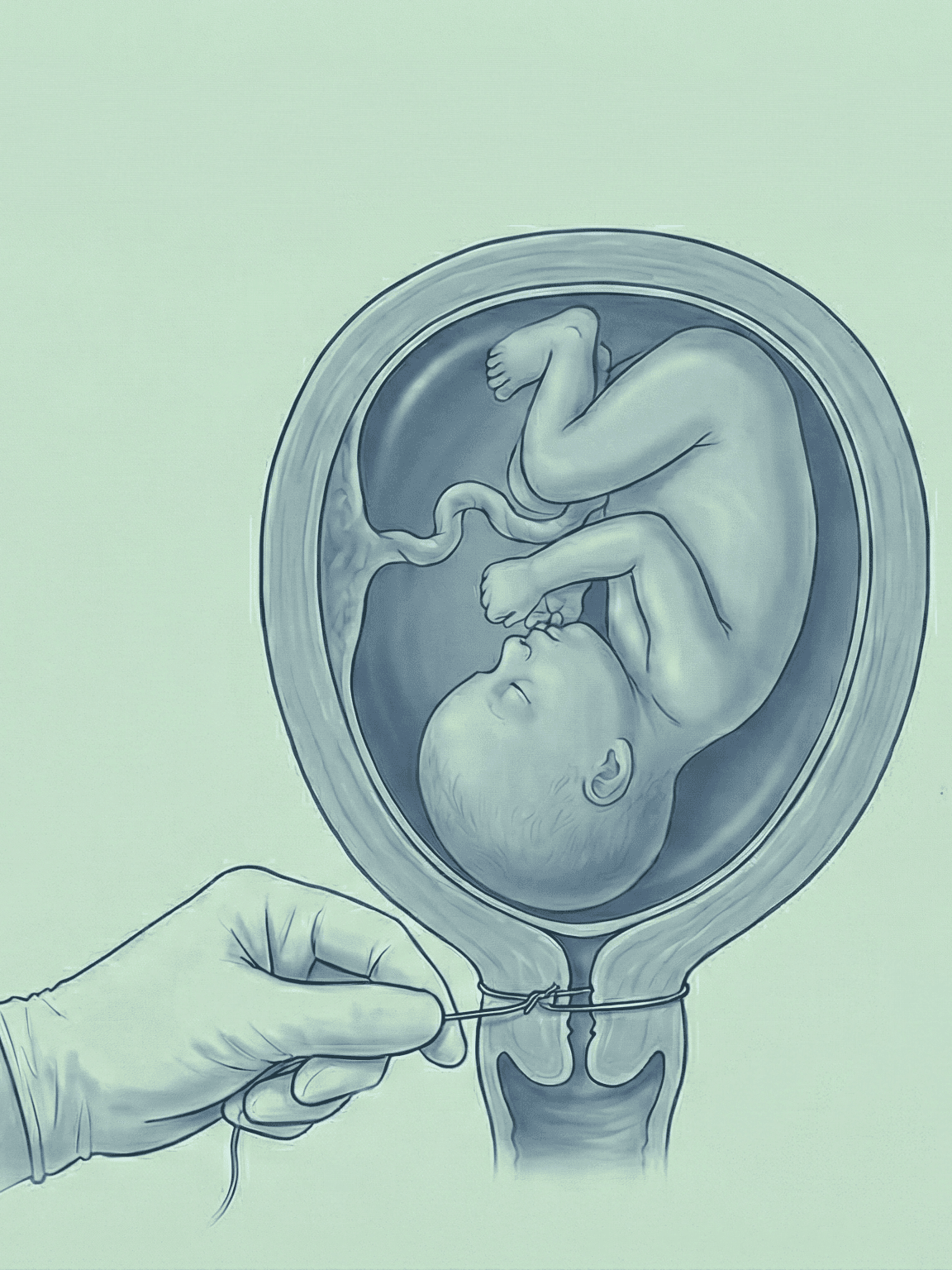
Servikal Serklaj İşlemi
(Yapay Zeka ile Oluşturulmuştur)
Cervical Incompetence (Insufficientia cervicis), is an obstetric pathology characterized by painless dilation and effacement of the cervix without uterine contractions during the second trimester or early third trimester of pregnancy. This clinical condition leads to prolapse and rupture of the fetal membranes into the vagina, resulting in expulsion of a fetus that has not yet reached viability. Cervical incompetence is responsible for approximately 16–20% of second-trimester pregnancy losses.【1】
The concept of cervical incompetence has a long history in medical literature. It was first described by Riverius in 1658; approximately 200 years later, Gream suggested that cervical dilation performed for dysmenorrhea or infertility could lead to this condition.【2】 The first steps toward surgical treatment were taken in 1902 by Herman, who applied trachelorrhaphy in cases of Emmet tears. The first modern report on isthmic repair of cervical incompetence was published by Palmer and Lacomme in 1948; in 1950, Lash proposed pre-pregnancy surgical intervention. Vaginal cerclage techniques still in use today were described by Shirodkar in 1955 and McDonald in 1957; abdominal cerclage was first defined by Benson and Durfee in 1965.【3】
The incidence of the condition is not precisely known due to diagnostic complexities, but it is reported to occur in 0.1–1% of all pregnancies, or at a rate of 1 in 200 to 1 in 2000 births. This condition is observed in approximately 8% of women with recurrent second-trimester pregnancy loss. According to U.S. data, cervical incompetence is responsible for approximately 10% of preterm births (ACOG data).【4】
The anatomical structure of the cervix is richer in connective tissue than smooth muscle, in contrast to the uterine corpus. Disruptions in this structure predispose to incompetence.
The fundamental mechanism underlying cervical incompetence is the premature initiation of cervical maturation. In a normal pregnancy, the cervix maintains its firmness and retains the pregnancy product within the uterus through a sphincter mechanism, due to its high collagen content. In cases of incompetence, changes occur in the cervical extracellular matrix without activation of proinflammatory cytokines or onset of uterine contractions. The organization of collagen fibers is disrupted, water content increases, and the cervix loses its biomechanical resistance, becoming unable to withstand intrauterine pressure. This process results in cervical shortening and dilation.
Cervical incompetence typically follows a silent course. However, careful questioning may reveal the following symptoms:
There is no single laboratory test universally accepted for diagnosing cervical incompetence. Diagnosis is typically established through a combination of the following methods:
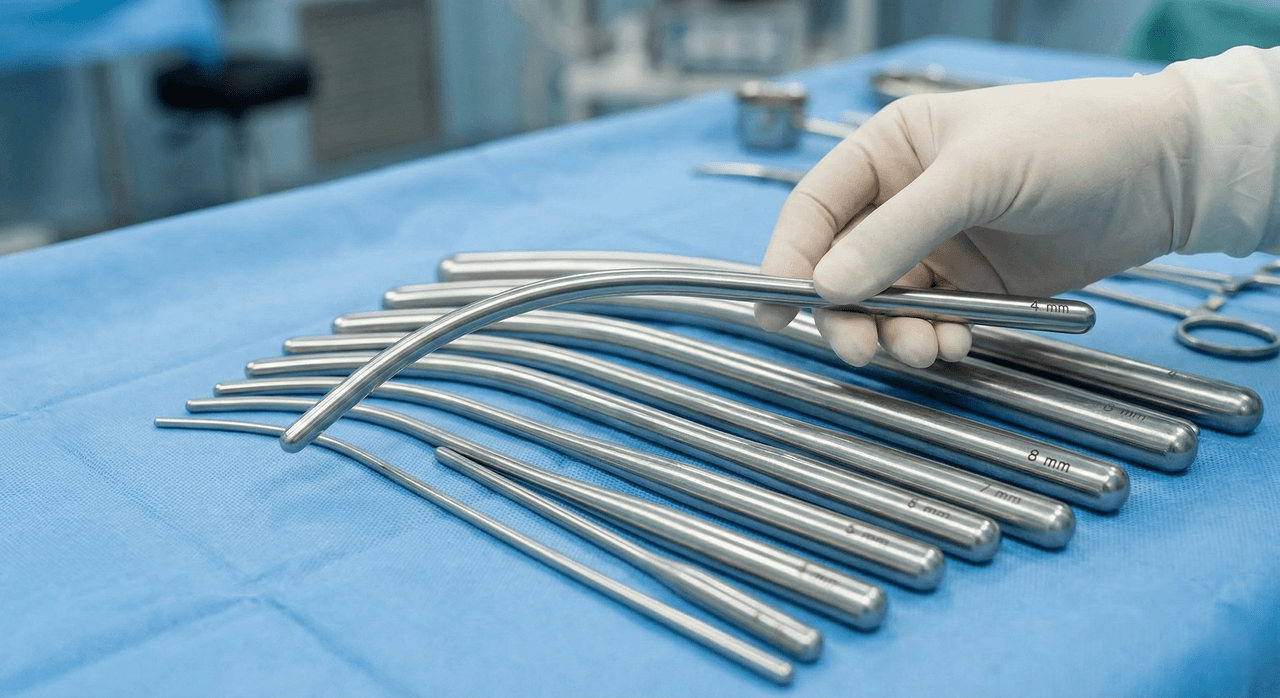
Hegar Burette
(Generated by Artificial Intelligence)
Treatment is divided into surgical and nonsurgical approaches.
Nonsurgical Methods
In addition to bed rest, activity restriction, and pessary use, pharmacological support is administered.
Cervical cerclage is the primary and well-established surgical treatment.
Cerclage should not be performed in the following conditions:
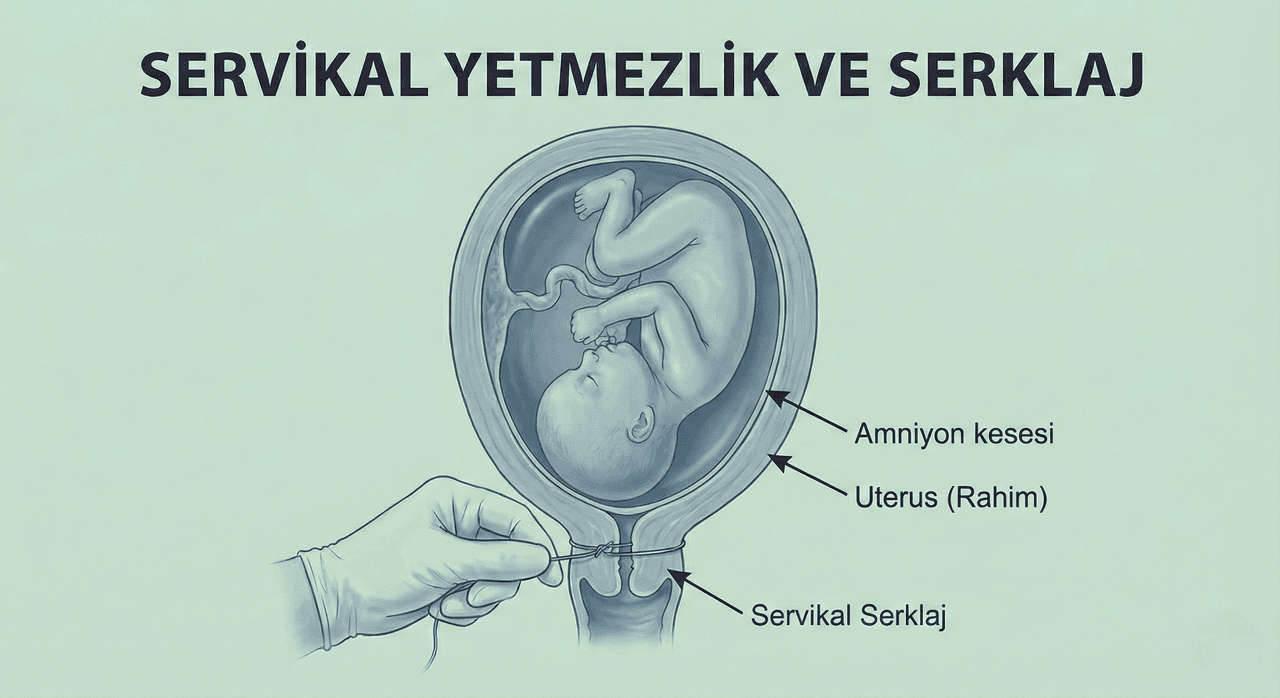
Cervical Cerclage
(Generated by Artificial Intelligence)
In emergency cerclage cases, the following maneuvers are used to prevent membrane damage and elevate the presenting parts:
Cerclage is effective in reducing preterm birth rates. However, success rates decline as cervical dilation increases in emergency cases.【8】Fetal survival rates are 85–95% in appropriately selected cases.【9】
Postoperative management typically includes bed rest, hydration, prophylactic antibiotics, and tocolytic therapy. Sutures are removed at 37 weeks of gestation or upon onset of labor.
Warning: The content in this article is provided solely for general encyclopedic informational purposes. The information herein should not be used for diagnosis, treatment, or medical guidance. Always consult a physician or qualified healthcare professional before making any health-related decisions. The author and KÜRE Encyclopedia assume no responsibility for any consequences arising from the use of this information for diagnostic or therapeutic purposes.
Akbaba, Eren. "Servikal Yetmezliği Olan Gebelerde Medikal Tedavi Yeterli mi? Acil Serklaj Uygulanmalı mı?" *Muğla Sıtkı Koçman Üniversitesi Tıp Dergisi* 8, no. 2 (2021): 75–79. Accessed February 17, 2026. https://dergipark.org.tr/en/download/article-file/1730436
Doruk, Arzu, Talat Umut Dilek, Hüseyin Durukan, and Saffet Dilek. "Acil Servikal Serklaj: Olgu Serisi." *Türk Jinekoloji ve Obstetrik Derneği Dergisi* 8, no. 2 (2011): 144–148. Accessed February 17, 2026. https://tjoddergisi.org/pdf/c2f7718d-0796-4c18-a6d4-3c339e748b23/articles/tjod.2011.59489/144-148.pdf
Gün, İsmet. "Servikal Yetmezlik ve Servikal Serklaj." *Van Tıp Dergisi* 16, no. 2 (April 2009): 67–72. Accessed February 17, 2026. https://pdf.journalagent.com/vmj/pdfs/VTD_16_2_67_72.pdf
Karaca, İbrahim, Ömer Erkan Yapça, İlhan Bahri Delibaş, and Metin İngeç. "Servikal Yetmezlik: Profilaktik ve Acil Serklajların Karşılaştırılması." *Perinatoloji Dergisi* 21, no. 1 (April 2013): 7–11. Accessed February 17, 2026. https://www.researchgate.net/profile/Ibrahim-Karaca-4/publication/270185635_Cervical_Incompetence_Comparison_the_prophylactic_and_therapeutic_cerclage/links/5e93653392851c2f529be0ea/Cervical-Incompetence-Comparison-the-prophylactic-and-therapeutic-cerclage.pdf
Levi, Rafael, Ayşin Akdoğan, Pınar Solmaz Yıldız, Ege Nazan Tavmergen Göker, Şefik Eser Özyürek, and Erol Tavmergen. "Servikal Yetmezlik Tedavisinde Serklajın Yeri." *Ege Tıp Dergisi* 43, no. 2 (2004): 87–89. Accessed February 17, 2026. https://dergipark.org.tr/en/download/article-file/350080
Sapmaz, Ekrem, Hüsnü Çelik, and Aygen Altıngül. "Servikal Yetmezlik Vakalarında Acil ve Elektif Serklaj Operasyonu." *T Klin Jinekoloji Obstetrik Dergisi* 11 (2001): 314-318. Accessed February 17, 2026. https://www.jcog.com.tr/pdf/?pdf=8387fca7a43cdbc6aa08ed97fc8d1cb9
Topdağı, Yunus Emre, Emsal Pınar Topdağı Yılmaz, Seray Kaya Topdağı, and Ali İrfan Güzel. "Successful Cervical Cerclage in a Pregnant Woman with a Large Cervical Myoma." *Türk Kadın Sağlığı ve Neonatoloji Dergisi* 2, no. 3 (2020): 112-114. Accessed February 17, 2026. https://www.researchgate.net/profile/Yunus-Topdagi/publication/345897315_Dev_servikal_myomu_olan_gebelikte_basarili_servikal_serklaj_uygulanmasi/links/60a387f6299bf1d21d6e9c79/Dev-servikal-myomu-olan-gebelikte-basarili-servikal-serklaj-uygulanmasi.pdf
Yalvaç, Serdar, Sertaç Esin, Özgür Koçak, Tuğba Ensari Altun, and Ömer Kandemir. "Servikal Yetmezlikte Öykü Endikasyonlu Servikal Serklaj: Etlik Doğumevi’nde 5 Yıllık Deneyim." *Perinatoloji Dergisi* 22, no. 1 (April 2014): 38–41. Accessed February 17, 2026. https://www.perinataldergi.com/Files/Archive/Covers/tr-TR/PJ-22-239.pdf#page=44
Çelik Kavak, Ebru, Salih Burçin Kavak, Yakup Baykuş, and Hüsnü Çelik. "Servikal Yetmezlikte Modifiye Transabdominal Serviko-istmik Serklaj: 16 Olgunun Analizi." *Perinatoloji Dergisi* 24, no. 2 (2016): 96-99. Accessed February 17, 2026. https://perinataldergi.com/Files/Archive/tr-TR/Articles/PJ-d7dface0-026c-44e4-be9f-39c55c74f1d9.pdf
Çelik, Hüsnü, Ekrem Sapmaz, and Aygen Altıngül. "Kliniğimizdeki Servikal Yetmezlik Olgularına Yaklaşım." O.M.Ü. Tıp Dergisi 18, no. 2 (2001): 80–86. Accessed February 17, 2026. https://dergipark.org.tr/en/download/article-file/189150
Öz, İsa Şükrü. "Servikal Serklaj Uygulanan Hastalardaki Klinik Deneyimimiz." *Namık Kemal Tıp Dergisi* 8, no. 2 (2020): 219–224. Accessed February 17, 2026. https://dergipark.org.tr/en/download/article-file/1212201
Özmen, Kadir, Mustafa Şahin, and Hakan Raşit Yalçın. "Servikal Eksizyonel İşlemde Çıkarılan Spesmenin Ektoservikal Yüzey Alanı ile Bebek Doğum Ağırlığı, Doğum Haftası, Obstetrik Komplikasyonlar ve Gebelikteki Maternal Hastalıklar Arasındaki İlişkinin İncelenmesi." *Jinekoloji - Obstetrik ve Neonatoloji Tıp Dergisi* 21, no. 3 (2024): 167-173. Accessed February 17, 2026. https://dergipark.org.tr/en/download/article-file/2886588
İsaoğlu, Ünal, Mehmet Yılmaz, and Sedat Kadanalı. "Tek Merkezde Beş Yıllık Sürede Uygulanan Servikal Serklaj Sonuçları." *Klinik ve Deneysel Araştırmalar Dergisi* 1, no. 2 (2010): 104-107. Accessed February 17, 2026. https://dergipark.org.tr/en/download/article-file/104444
Şen, Cihat, Semih Kaleli, Rıza Madazlı, Fahri Öçer, Vedat Ocak, and Necati Tolun. "Servikal Yetmezlikte Tanı ve Tedavi." T Klin Jinekoloji Obstetrik Dergisi 1, no. 1 (1991): 121–127. Accessed February 17, 2026. https://www.jcog.com.tr/pdf/?pdf=c6cfe1c179619ec732caf2e9a3145717
[1]
Hüsnü Çelik, Ekrem Sapmaz ve Aygen Altıngül, "Kliniğimizdeki Servikal Yetmezlik Olgularına Yaklaşım," O.M.Ü. Tıp Dergisi 18, no. 2 (Nisan–Haziran 2001), erişim tarihi 18 Şubat 2026, https://dergipark.org.tr/en/download/article-file/189150
[2]
İsmet Gün, "Servikal Yetmezlik ve Serklaj," Van Tıp Dergisi 16, no. 2 (Nisan 2009), erişim tarihi 17 Şubat 2026, https://pdf.journalagent.com/vmj/pdfs/VTD_16_2_67_72.pdf
[3]
Ebru Çelik Kavak vd., "Servikal Yetmezlikte Modifiye Transabdominal Serviko-istmik Serklaj: 16 Olgunun Analizi," Perinatoloji Dergisi 24, no. 2 (Ağustos 2016), erişim tarihi 17 Şubat 2026, https://perinataldergi.com/Files/Archive/tr-TR/Articles/PJ-d7dface0-026c-44e4-be9f-39c55c74f1d9.pdf
[4]
İsmet Gün, "Servikal Yetmezlik ve Serklaj," Van Tıp Dergisi 16, no. 2 (Nisan 2009), erişim tarihi 17 Şubat 2026, https://pdf.journalagent.com/vmj/pdfs/VTD_16_2_67_72.pdf
[5]
Kadir Özmen, Mustafa Şahin ve Hakan Raşit Yalçın, "Servikal Eksizyonel İşlemde Çıkarılan Spesmenin Ektoservikal Yüzey Alanı ile Bebek Doğum Ağırlığı, Doğum Haftası, Obstetrik Komplikasyonlar ve Gebelikteki Maternal Hastalıklar Arasındaki İlişkinin İncelenmesi," Jinekoloji - Obstetrik ve Neonatoloji Tıp Dergisi 21, no. 3 (2024), erişim tarihi 17 Şubat 2026, https://dergipark.org.tr/en/download/article-file/2886588
[6]
İbrahim Karaca vd., "Servikal Yetmezlik: Profilaktik ve Acil Serklajların Karşılaştırılması," Perinatoloji Dergisi 21, no. 1 (Nisan 2013), erişim tarihi 18 Şubat 2026, https://www.perinataldergi.com/Files/Archive/tr-TR/Articles/PD-20130211014tr.pdf
[7]
Ebru Çelik Kavak vd., "Servikal Yetmezlikte Modifiye Transabdominal Serviko-istmik Serklaj: 16 Olgunun Analizi," Perinatoloji Dergisi 24, no. 2 (Ağustos 2016), erişim tarihi 18 Şubat 2026, https://perinataldergi.com/Files/Archive/tr-TR/Articles/PJ-d7dface0-026c-44e4-be9f-39c55c74f1d9.pdf
[8]
İbrahim Karaca vd., "Servikal Yetmezlik: Profilaktik ve Acil Serklajların Karşılaştırılması," Perinatoloji Dergisi 21, no. 1 (Nisan 2013), erişim tarihi 17 Şubat 2026, https://www.researchgate.net/profile/Ibrahim-Karaca-4/publication/270185635_Cervical_Incompetence_Comparison_the_prophylactic_and_therapeutic_cerclage/links/5e93653392851c2f529be0ea/Cervical-Incompetence-Comparison-the-prophylactic-and-therapeutic-cerclage.pdf
[9]
Ebru Çelik Kavak vd., "Servikal Yetmezlikte Modifiye Transabdominal Serviko-istmik Serklaj: 16 Olgunun Analizi," Perinatoloji Dergisi 24, no. 2 (Ağustos 2016), erişim tarihi 18 Şubat 2026, https://perinataldergi.com/Files/Archive/tr-TR/Articles/PJ-d7dface0-026c-44e4-be9f-39c55c74f1d9.pdf

Servikal Serklaj İşlemi
(Yapay Zeka ile Oluşturulmuştur)
No Discussion Added Yet
Start discussion for "Cervical Insufficiency (Insufficientia cervicis)" article
History
Epidemiology
Etiology and Risk Factors
Pathophysiology
Clinical Findings
Diagnostic Methods
Treatment Approaches
Surgical Treatment
Classification of Cerclage
Contraindications to Cerclage
Surgical Techniques
Emergency Management and Adjunctive Techniques
Prognosis
Complications