This article was automatically translated from the original Turkish version.
+1 More
Type(s) | Unmanned aerial vehicle (UAV) | ||||||||
|---|---|---|---|---|---|---|---|---|---|
Configuration | Tailless flying wing | ||||||||
Mission Class | support UAV high-altitude reconnaissance Long-range | ||||||||
Developer(s) | China Aviation Aerospace Aerodynamics Academy | ||||||||
Country of Origin | People's Republic of China | ||||||||
Wingspan | 27.3 m | ||||||||
Maximum Takeoff Weight | 8,000 kg | ||||||||
Cruise Speed | ≈ 612 km/h (Mach 0.5) | ||||||||
Maximum Altitude | ≈ 16,000 m | ||||||||
Maximum Endurance | 16 hours | ||||||||
Operational / Reconnaissance Range | Over 2,000 km | ||||||||
First Test Flight | 15 December 2025 | ||||||||
CH-7 (Caihong-7 or Rainbow-7) is a low-observable, long-range, high-altitude unmanned aerial vehicle (UAV) with a flying wing configuration, developed by the People’s Republic of China. The system was developed by the China Aerospace Aerodynamics Academy, a subsidiary of the China Aerospace Science and Technology Corporation (CASC).
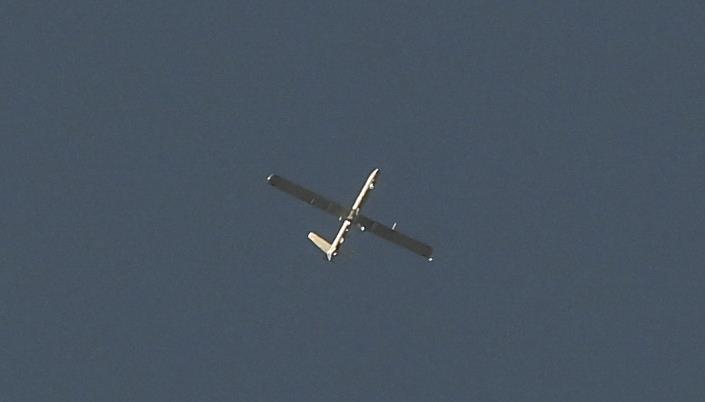
CH-7 developed by the People’s Republic of China – (CCTV Video News Agency)
The CH-7 program emerged as part of the China Aerospace Aerodynamics Academy’s unmanned aerial vehicle research and development initiatives, which began in 1999. During this period, the academy adapted its engineering expertise in aerodynamics and missile design to unmanned aerial platforms.
The CH-7 was first publicly unveiled during the 12th China International Aviation & Aerospace Exhibition (Airshow China 2018), held in Zhuhai, Guangdong province, from 6 to 11 November 2018. At this event, the system was displayed as a conceptual model.
During the Zhuhai Airshow 2024, held from 12 to 17 November 2024, a full-scale airframe of the CH-7 was exhibited, fitted with test equipment and painted in yellow primer. This stage indicated that the project had progressed to ground testing and pre-flight preparation phases. The CH-7 completed its ground taxi tests in the second half of 2024, after which it entered the flight preparation phase.
The CH-7’s first flight test was conducted on 15 December 2025 from the Pucheng Airport in Shaanxi province, located in northwestern China. The facility is operated by the China Flight Test Establishment (CFTE).
During the first flight test, the aircraft’s basic flight performance, autonomous taxi capability, takeoff and landing procedures, flight attitude control, and route tracking functions were evaluated. This flight marked the beginning of the comprehensive flight test series planned for the CH-7.
The CH-7 is designed as an unmanned aerial vehicle with a tailless flying wing and a cranked-kite aerodynamic architecture. The fuselage and wing form a single integrated structure, with no vertical stabilizer or tail component. This tailless configuration with a high aspect ratio reduces radar cross-section while enabling long-range and high-altitude flight performance.
The air intake is positioned in a dorsal configuration on the upper fuselage. The exhaust outlet features a semi-recessed, slotted design. Geometric arrangements to scatter radar waves have been applied to the leading edges of the wings and at panel junctions. These structural elements are specifically engineered to reduce the aircraft’s radar signature.
The following technical data, publicly disclosed and confirmed during the 2024–2025 period, are attributed to the CH-7:
It has been noted that these technical specifications have been revised since the initial projections presented in 2018. During development, the system’s weight, wingspan, and mission profile were reconfigured.
Thanks to its high-altitude and long-endurance capabilities, the CH-7 is designed for a variety of mission types. The disclosed mission profiles include:
Chinese officials have stated that the current version is primarily designed as a high-cruise-speed reconnaissance platform and is not configured for direct armed strike missions. Accordingly, previous assumptions regarding internal weapons bays have been deemed invalid.
The China Aerospace Aerodynamics Academy, which developed the CH-7, operates under CASC. Since 1999, the academy has developed various classes of unmanned aerial vehicles under the CH series.
According to data released by CASC, as of 2025, more than 200 medium- and large-class UAVs from the CH series have been delivered to over ten countries. These platforms have collectively accumulated approximately 70,000 operational flight hours.
Anadolu Ajansı. “Çin’in Yeni Nesil Uzun Menzafe İHA’sı CH-7 İlk Deneme Uçuşunu Yaptı.” Accessed December 16, 2025. https://www.aa.com.tr/tr/dunya/cinin-yeni-nesil-uzun-mesafe-ihasi-ch-7-ilk-deneme-ucusunu-yapti/3772010#
Asian Military Review. "Chinese CH-7 stealthy UAV performs its maiden flight." Asian Military Review. Accessed December 16, 2025. https://www.asianmilitaryreview.com/2025/12/chinese-ch-7-stealthy-uav-performs-its-maiden-flight-foc/
CCTV Video News Agency. “China’s CH-7 High-Altitude, High-Speed Drone Successfully Completes Maiden Flight.” YouTube Video. Accessed December 16, 2025. https://www.youtube.com/watch?v=7qXn6ei975s
China Daily. “CH-7 stealth drone debut boosts aerospace tech.” China Daily Global. Accessed December 16, 2025. https://www.chinadaily.com.cn/a/202512/15/WS693f5d75a310d6866eb2e8f5.html
TWZ. “China’s Stealthy CH-7 Flying Wing Drone Has Flown.” TWZ Air. Accessed December 16, 2025. https://www.twz.com/air/chinas-stealthy-ch-7-long-endurance-drone-is-now-flying

Type(s) | Unmanned aerial vehicle (UAV) | ||||||||
|---|---|---|---|---|---|---|---|---|---|
Configuration | Tailless flying wing | ||||||||
Mission Class | support UAV high-altitude reconnaissance Long-range | ||||||||
Developer(s) | China Aviation Aerospace Aerodynamics Academy | ||||||||
Country of Origin | People's Republic of China | ||||||||
Wingspan | 27.3 m | ||||||||
Maximum Takeoff Weight | 8,000 kg | ||||||||
Cruise Speed | ≈ 612 km/h (Mach 0.5) | ||||||||
Maximum Altitude | ≈ 16,000 m | ||||||||
Maximum Endurance | 16 hours | ||||||||
Operational / Reconnaissance Range | Over 2,000 km | ||||||||
First Test Flight | 15 December 2025 | ||||||||
Development Process and History
First Flight Test
Design and Aerodynamic Structure
Technical Specifications
Mission Profiles
Corporate Background and the CH Series