

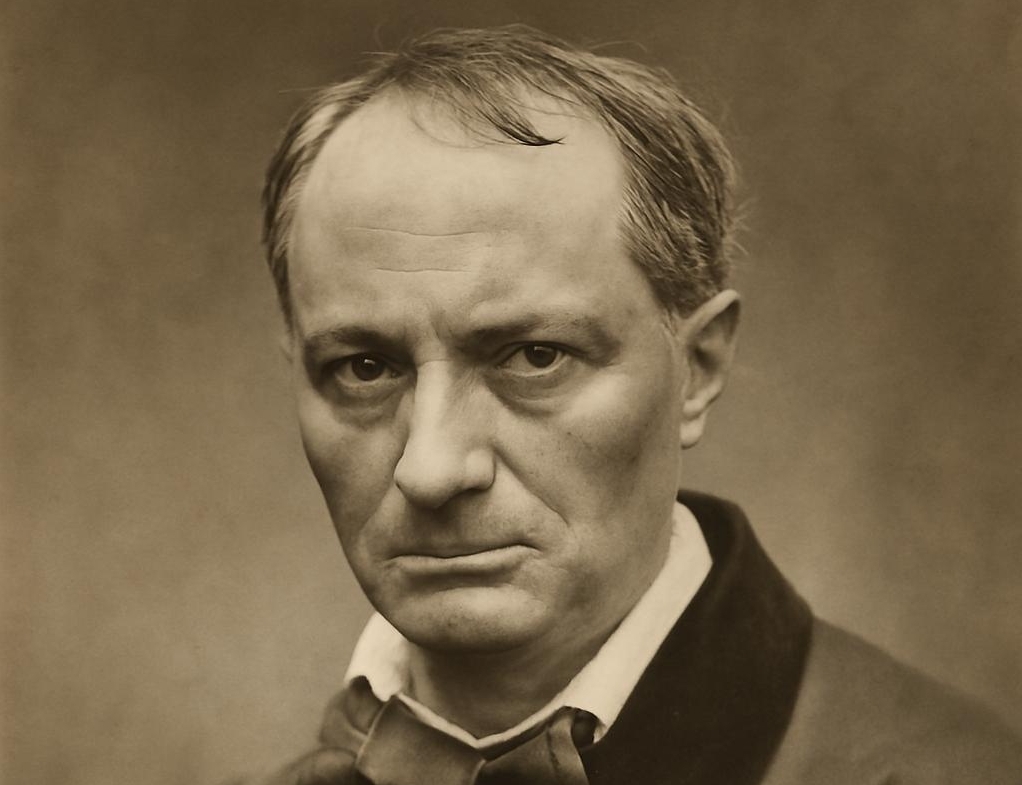

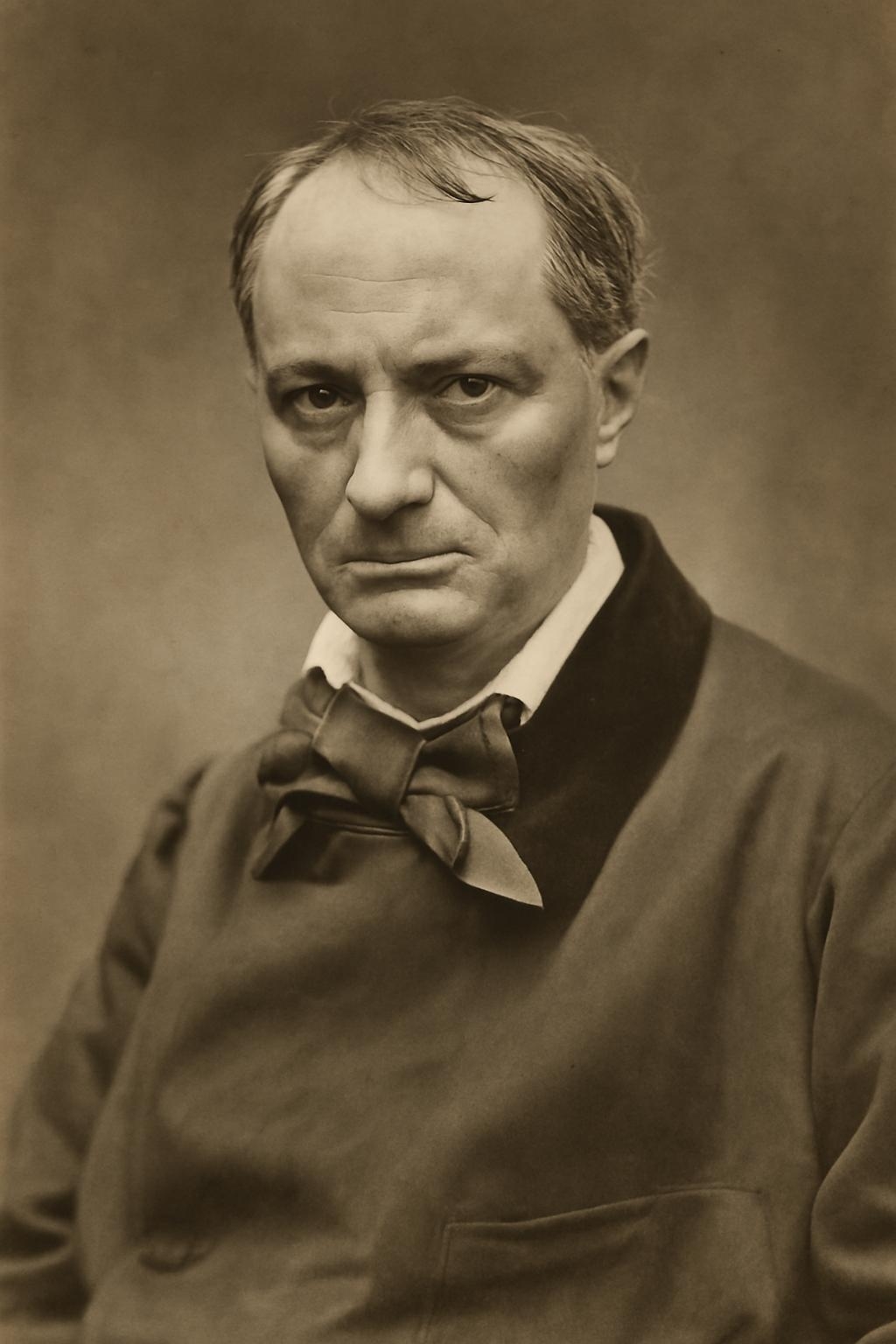
Charles Baudelaire is regarded as one of the most influential poets of 19th century French literature. Modern Baudelaire, considered one of the founders of modern poetry, is best known for his work Les Fleurs du Mal (The Flowers of Evil). Industry Following the Revolution, city his life, his approach to modernity, social change, and the inner world of the individual, through distinctive aesthetic perspectives, positions him as one of the first theorists of modernism original.
Charles Baudelaire’s youth was shaped by both inner conflicts and aesthetic pursuits. One of the most significant events of his early life was his voyage to India in 1842. This journey provided him not only with a physical experience but also with the exotic imagery that would later recur frequently in his literary production. The year 1842, when he returned from his travels, also marked his return to Paris. During this period, he entered into a relationship with Jeanne Duval, a mixed-race woman; this relationship became both a source of passion and a recurring memory of pain in his poetry pain.
Baudelaire’s intense interest in art and literature is evident from an early age. His proficiency in literary criticism reveals a rich accumulation of knowledge in Art literature and beautiful visual arts on strong information. His intellectual and artistic training is clearly reflected both in his poems and in his writings on art theory. His analyses of Constantin Guys and his method of evaluating modern life demonstrate that his intellectual development began at an early age Artist.
Charles Baudelaire holds a prominent place in 19th century French literature as both a poet and an art critic. The foundation of his literary career lies in his aesthetic approach that connects modern life with art. His most famous work, Les Fleurs du Mal (The Flowers of Evil), is regarded as one of the starting points of modern poetry. This work is a pioneering example that not only rejects traditional poetic conventions but also artistically reflects the inner world of the individual and the contradictions of modern life row.
Baudelaire is also renowned for his critical writings on art. In particular, his essay Le Peintre de la Vie Moderne (The Painter of Modern Life) is a key text that clearly articulates his views on modernism. In this essay, he discusses the poetic dimension of modernity through the art of Constantin Guys and attempts to define the concept of “modernity.” He viewed art not merely as an aesthetic activity but also as a reflection of social and historical processes.
Another prominent aspect of Baudelaire’s career is his definition and integration of urban individuals into literature. The figures of the dandy, the bohemian, and especially the flâneur occupy a central position in his artistic theory. Through these figures, he defines the individual who observes and interprets the transforming structure of 19th century Paris. These conceptualizations have made significant contributions not only to literature but also to sociology and culture.
Charles Baudelaire became one of the pioneering figures of the 19th century through his contributions to modern literature and art theory. One of his most important contributions was the theoretical articulation of the concept of “modernity” within an artistic context. For Baudelaire, modernity is the union of the transient, fleeting, and time-bound with the eternal and unchanging. Through this understanding, he argued that art must reflect not only classical and universal beauty but also the spirit of its age.
Baudelaire’s view of art centers on aesthetic experience. Rather than adopting academic or ideological approaches, he focused on the artist’s sensitivity and the aesthetic phenomena observed in everyday life. In this way, he developed a critical stance against ideological modernism, defending the autonomy of art and redefining it as an expressive form rather than a utilitarian or moral vehicle.
Baudelaire’s contribution to modernism was not limited to content; he also sought to free art from social utility and moral ideology. In this regard, he charted a more original path by distinguishing his aesthetic understanding from the ideological modernism of his time. His conception of art exhibits a stance that both rejects and reinterprets the contradictory nature of modernity, resonating with today’s postmodern approaches.
His observations on urban life are another significant contribution. Baudelaire examined the changing structure of modern Paris through an artistic lens and defined the urban individual through the figure of the flâneur. Flâneur is a city stroller who wanders among crowds, observes his surroundings, and achieves intellectual production. This figure represents a crucial abstraction in Baudelaire’s conception of the relationship between the city and individual, and was later central to the thought of Walter Benjamin such as.
Additionally, through figures such as the dandy and the bohemian, he sought to interpret the cultural and social transformations brought about by industrial society, foregrounding the modern individual’s loneliness, alienation, and aesthetic attitude in place of traditional heroic imagery. Through these characters, he transferred the traces of modernity into art and created a representational space beyond classical literature.
The approach Baudelaire developed in art criticism offers a mode of inquiry that considers not only the artwork itself but also the social and cultural conditions that shape it. In this way, he laid an intellectual foundation that paved the way for both modernism and subsequent critical theories.
Les Fleurs du Mal (The Flowers of Evil): Baudelaire’s most famous collection of poetry. This work consists of poems that reflect the individual’s inner conflicts, the melancholy of modern life, and aesthetic sensitivity. Recognized as a precursor to modern poetry, this book is regarded as the beginning of literary modernism.
Le Peintre de la Vie Moderne (The Painter of Modern Life): One of Baudelaire’s most important theoretical essays on art. Through the work of Constantin Guys, he discusses the nature of modernity, the concepts of “modern beauty” and “fleetingness.” This text is among his most influential contributions to art criticism.
Poèmes en Prose (Prose Poems): This work consists of experiments in expressing poetry in prose form and is written with an approach that transcends traditional poetic structures. Baudelaire’s fusion of lyrical sensitivity with prose narration presents a formal innovation in poetic expression lyric.
Mon cœur mis à nu and Fusées: These two works, composed of Baudelaire’s notes and aphorisms, reflect his moral and aesthetic thoughts. Unlike his poetry, they are more direct texts containing inner observation and critique.
Charles Baudelaire’s personal life was shaped within a framework of artistic immersion, solitude, inner unrest, and aesthetic pursuit. In his youth, Baudelaire undertook a voyage to India, an experience that provided him with exotic images and inspirations from distant geographies. The imagery born during this period became the foundation for the exotic female figures that appear frequently in his poetry.
After returning to Paris, a central figure in Baudelaire’s life was Jeanne Duval, a mixed-race woman. The melancholic, elusive, and exotic female image that recurs frequently in his poems was nourished by this relationship. Jeanne Duval became a character through whom his passions and inner anguish were intensely reflected; in this way, she occupied a central position in his poetic production.
Baudelaire’s personality is described as “solitary,” “introverted,” and “in conflict with life.” While his daily life did not differ greatly from that of ordinary people together, his relationship with art and his aesthetic attitude toward life made his existence distinctly unique. His opium addiction and dandy lifestyle are signs of the care he devoted to his outward appearance and mode of self-expression Fashion.
Moreover, Baudelaire attracted attention through his special interest in urban life. He adopted the identity of the flâneur—an individual who observes amidst crowds and feels solitude and social alienation; this identity became a defining aspect of both his artistic and personal existence.
It is understood that much of Baudelaire’s life was marked by disease, financial hardship, and mental collapse. Some sources suggest that this life served as a backdrop that contributed to his art.
In his later years, Baudelaire’s life was marked by illness and financial difficulties. He suffered from aphasia, his health deteriorated, and he died in Paris in 1867. After his death, his influence in the literary world became more pronounced, and he came to be regarded as a pioneer of modern poetry and art criticism.
Baudelaire is regarded as the starting point of modern poetry. His aesthetic approaches and poetic analyses of modern life profoundly influenced not only his own era but also subsequent generations. He is also acknowledged as a forerunner of certain concepts in postmodern thought. His redefinition of the concepts of beauty, art, the city, and the individual has made him one of the most important intellectual figures of modern culture.

Youth and Education
Career and Achievements
Contributions
Works
Personal Life
Final Years and Death
Legacy and Influence