


This article was automatically translated from the original Turkish version.
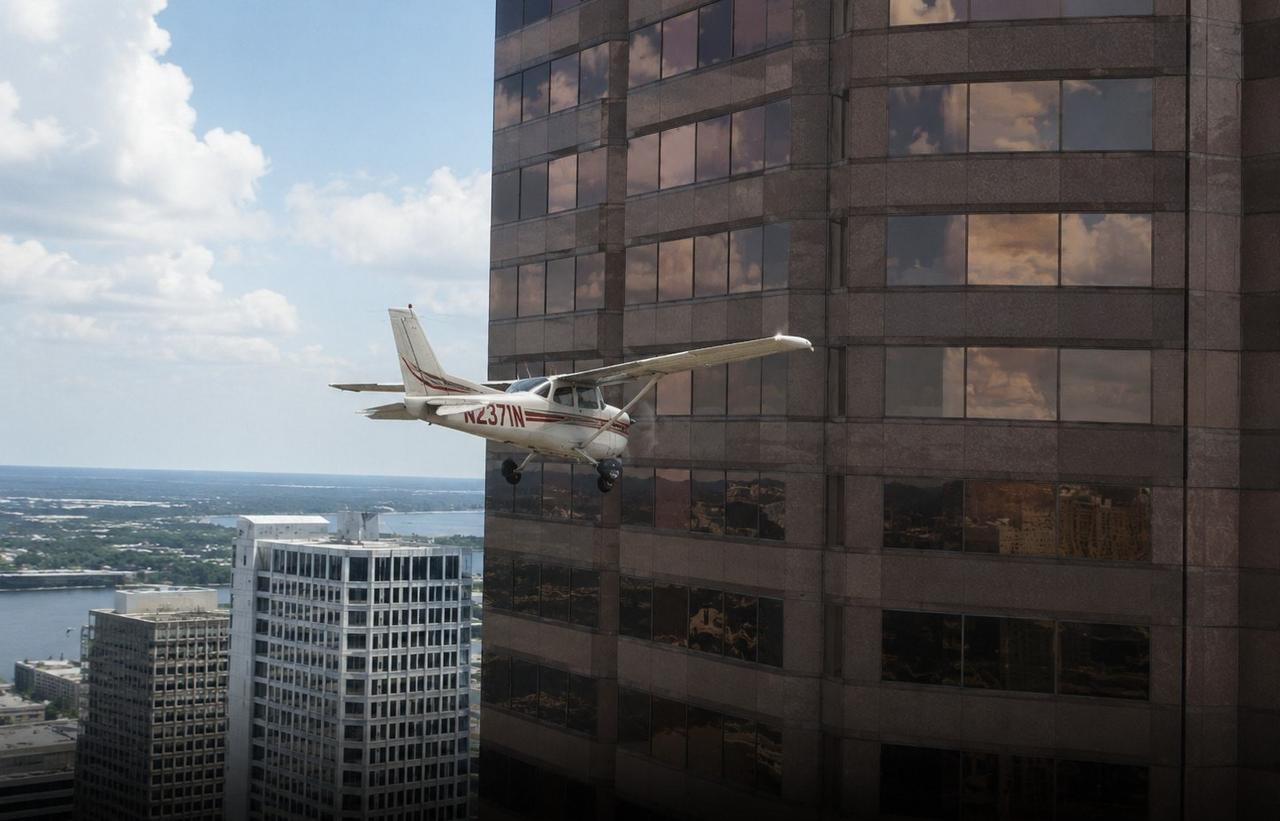
(Generated with Artificial Intelligence)
Charles Bishop Case
Also known as | 2002 Tampa Cessna 172 accident | ||||||||
|---|---|---|---|---|---|---|---|---|---|
Date | 5 January 2002 | ||||||||
Location | Tampa, Florida, United States | ||||||||
Struck structure | Bank of America Plaza building | ||||||||
Impact point | 28th floor | ||||||||
Aircraft | Cessna 172R Skyhawk | ||||||||
Registration number | N2371N | ||||||||
Year of manufacture | 2000 | ||||||||
Pilot | Charles J. Bishop | ||||||||
Pilot's age | 15 | ||||||||
Pilot status | Student pilot | ||||||||
Flight origin | St. Petersburg-Clearwater International Airport | ||||||||
Takeoff method | Unauthorized takeoff | ||||||||
ATC communication | Not established | ||||||||
Flight duration | Approximately 9–12 minutes | ||||||||
Weather conditions | Visual flight rules | ||||||||
Mechanical failure | Not detected | ||||||||
Death | Sole pilot | ||||||||
Official cause | Unauthorized and intentional suicide act | ||||||||
Suicide note | Found | ||||||||
September 11 connection | Ideological expressions in the note | ||||||||
terror organization connection | Not officially confirmed | ||||||||
Charles Bishop Incident (2002 Tampa Cessna 172 Crash), a solo aviation incident motivated by suicide, occurred on January 5, 2002, in Tampa, Florida, when 15-year-old student pilot Charles J. Bishop illegally took control of a Cessna 172R and deliberately crashed it into the Bank of America Plaza building. No mechanical failure was found that could have caused the accident; the flight was determined to have been initiated without authorization, the pilot did not respond to air traffic control calls or Coast Guard warnings, and he intentionally steered the aircraft toward a high-rise building in the city center. Although the incident occurred shortly after the September 11 attacks and the pilot’s suicide note contained ideological statements that initially raised suspicions of terrorism, official investigations concluded that the act had no connection to any organization and that the pilot acted alone.
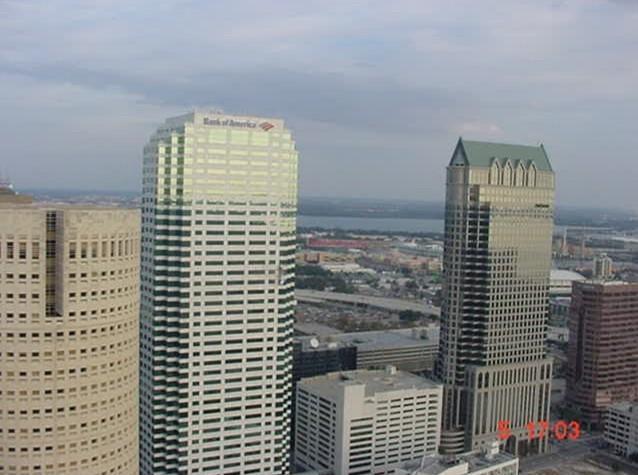
View of the Bank of America Building (NTSB)
The aircraft involved in the crash was a 172R Skyhawk model manufactured by Cessna Aircraft Company in 2000. This fixed-wing, single-engine aircraft with a four-seat capacity had a tail registration number of N2371N and a serial number of 17280838.
The aircraft held a standard airworthiness certificate for Normal and Utility categories. Its maximum takeoff weight was 2300 pounds, with a usable fuel capacity of 40 gallons. The aircraft’s maximum cruise speed was 125 miles per hour. Ownership of the aircraft was registered to National Aviation Holdings Inc., a commercial entity headquartered in Clearwater, Florida.【1】

Aircraft in Impact: Cessna 172 Skyhawk (James)
The aircraft’s powerplant consisted of a 160-horsepower, fuel-injected, piston engine, model IO-360-L2A, manufactured by Textron Lycoming. The engine’s serial number was L-28670-51A. The Emergency Locator Transmitter (ELT) installed on the aircraft was a Pointer Inc. model 3000-11, with its battery expiration date recorded as October 30, 2003. As a result of the impact, the aircraft’s airframe and engine components lost all structural integrity and were classified as completely damaged. The forces at impact caused the cockpit section to split in two.【2】
The most recent Phase 1 maintenance procedure on the aircraft was completed on December 27, 2001. At that time, the aircraft’s total flight hours were recorded at 1705.5 hours. The previous Phase 2 inspection had been conducted when the aircraft reached 1661.8 flight hours. Examination of pre-flight and accident-era technical data revealed no mechanical failure, hardware defect, or system malfunction that could have contributed to the crash.【3】
Charles J. Bishop, who was piloting the aircraft at the time of the crash, was born in February 1986 and was 15 years old at the time of the incident. The pilot resided with his mother in the Palm Harbor area of northern Tampa, Florida, and was a ninth-grade student at East Lake High School. Under aviation regulations, the minimum age to obtain a solo flight license is 16. Due to his age, the pilot did not hold authorization to fly alone on the date of the accident. Official accident reports classified the pilot’s flight certificate as “Student Pilot.” The pilot had no instrument flight (IFR) rating or any other aviation qualifications. At the time of the incident, the pilot was seated in the left seat (the pilot-in-command position) of the aircraft.【4】
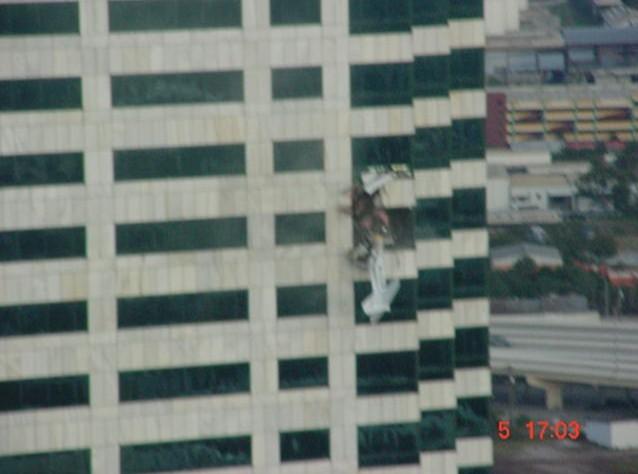
Aircraft hanging from the 28th floor after impact (NTSB)
According to the pilot’s flight log and accident report data, his total flight experience amounted to approximately 17 hours. Flight training included takeoff, climb, descent, turning maneuvers, stall practice, and landing procedures. All training flights were conducted under the supervision of certified flight instructors in dual-control training aircraft. The flight on the day of the accident was initiated entirely without authorization, without the permission of flight school officials or the presence of a flight instructor. At flight training facilities, instructors typically allow students to enter the aircraft alone to complete pre-flight preparations. This practice grants students direct and unsupervised access to aircraft. At the time of the crash, there were no other passengers or crew members aboard the aircraft.【5】
At the time of the crash, atmospheric conditions in the Tampa area fully complied with Visual Flight Rules (VFR) standards. Daylight conditions prevailed, and no meteorological obstruction impaired the aircraft’s orientation or the pilot’s visibility. Surface wind direction was recorded as northeast. No flight plan had been filed with air traffic control units or approved through the system. No adverse weather events such as severe turbulence, heavy rain, fog, or haze occurred along the flight path that could have disrupted flight dynamics. Atmospheric conditions along the aircraft’s route did not fall below the minimum aviation limits that would have required instrument flight (IFR) equipment. Local and surrounding meteorological parameters met the basic safety requirements necessary for direct visual operation of standard flight procedures.【6】
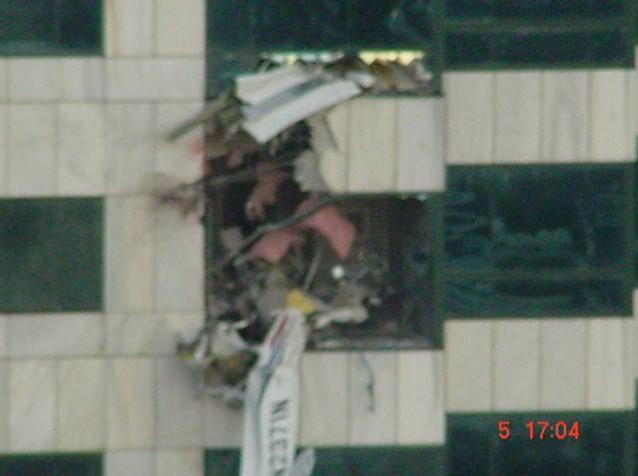
Aircraft hanging from the 28th floor after impact (NTSB)
On the day of the crash, the student pilot arrived at the flight school located at St. Petersburg-Clearwater International Airport at approximately 16:40. At 16:50, he received the aircraft’s flight logbook from a flight school official for a scheduled training flight. The flight instructor had instructed the pilot to complete the required external pre-flight checks before beginning the traffic pattern training. Without the instructor’s supervision, the pilot went to the aircraft, failed to perform the pre-flight checks, released the tie-down ropes, and started the engine directly.【7】
After engine start, the aircraft began ground taxiing. At 16:50 EST, the aircraft taxied on Alpha taxiway with full flap extension and then turned onto the Gulf taxiway. Just before entering Runway 35R, the flaps were retracted. The pilot established no radio communication with the Air Traffic Control (ATC) tower during ground movements or takeoff preparations. The aircraft took off without authorization from Runway 35R, without obtaining the mandatory takeoff clearance required by aviation regulations. Immediately after takeoff, the aircraft executed a right turn to the southeast at low altitude. The entire takeoff phase was conducted without radio communication, and the aircraft’s systems were configured to provide only primary radar tracking.【8】
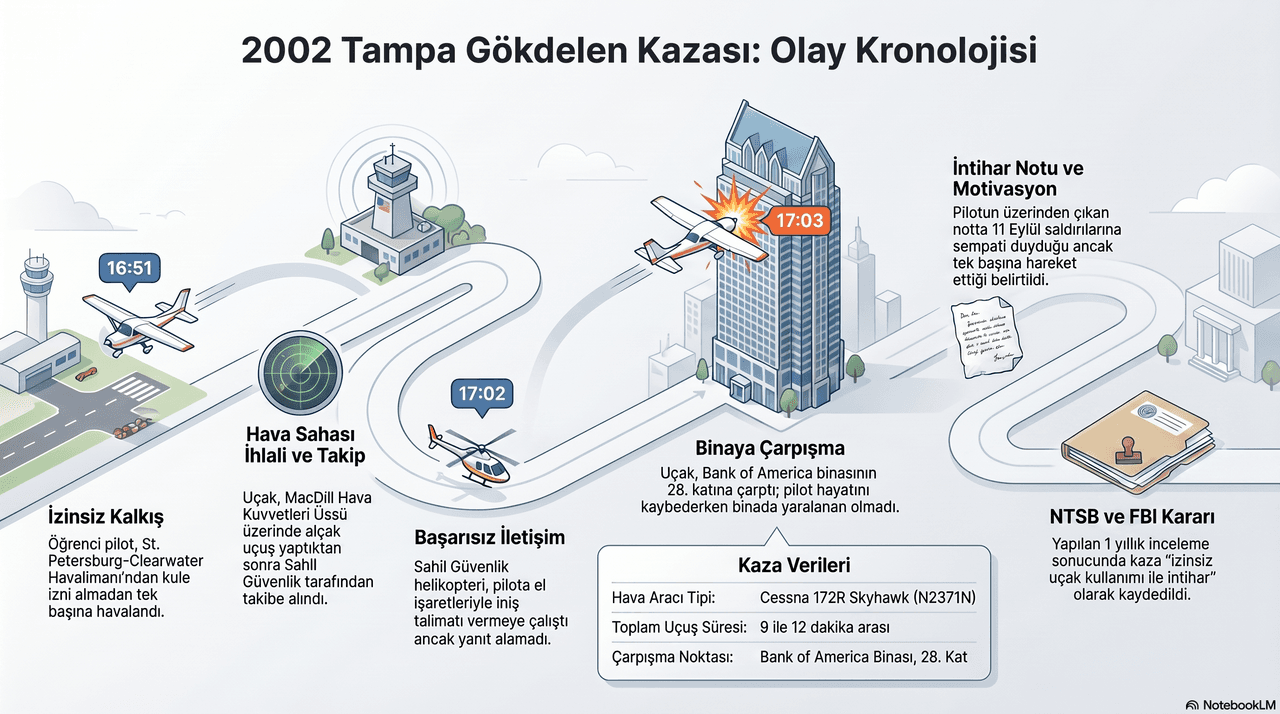
Flight Chronology (Generated by Artificial Intelligence)
Following the unauthorized takeoff, St. Petersburg-Clearwater International Airport ground controllers notified Tampa Approach controllers at 16:52, initiating inter-agency flight tracking coordination. Transcripts confirm that ground controllers informed Tampa units that the aircraft had taken off without radio contact and that its flight intentions were unknown. The aircraft was tracked solely via primary radar data as it proceeded southeast toward the MacDill Air Force Base airspace.【9】
Proceeding southeast, the aircraft entered the restricted airspace of MacDill Air Force Base and flew over military facilities. Radar and observational data recorded the aircraft passing approximately 20 feet from the base tower and flying between 50 and 100 feet above parked KC-135 aerial refueling aircraft.

Charles J. Bishop (FOX 13 Tampa Bay)
Following this airspace violation, Tampa Approach controllers attempted to establish radio contact with the aircraft twice on the international emergency frequency of 121.5 MHz but received no response. Simultaneously, a Coast Guard helicopter conducted a physical interception maneuver and used visual hand signals to direct the pilot to land. The pilot gave no response to these visual warnings or radio calls.【10】
After the Coast Guard helicopter’s interception attempt failed at 17:02, the aircraft turned northeast and redirected its course directly toward downtown Tampa. The entire flight lasted between 9 and 12 minutes. At 17:03, the aircraft’s Emergency Locator Transmitter (ELT) signal was detected by ATC systems.
Based on confirmed radar tracks and official reports, the aircraft physically impacted the 28th floor of the Bank of America Plaza building at 17:04. 【11】 Immediately after confirmation of the impact by local authorities, all commercial takeoff operations at Tampa International Airport were suspended under security protocols.
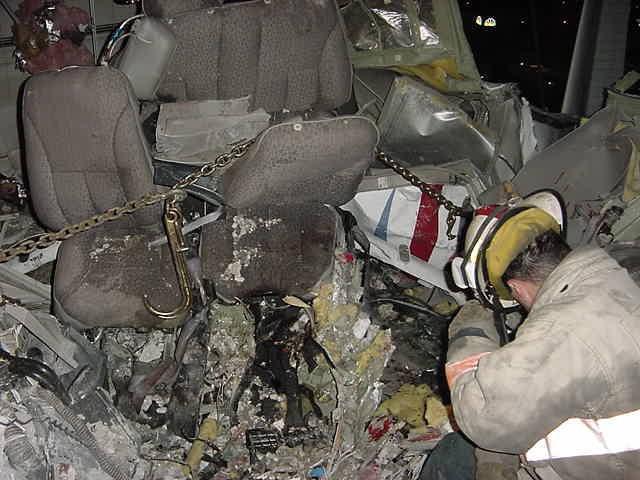
Photo from the 28th Floor (NTSB)
The Coast Guard helicopter crew, responsible for tracking and intercepting the aircraft, continuously reported their operational steps to ground-based Tampa air traffic controllers. During the approach procedure, direct radio communication between the helicopter and the aircraft was not established. After the Cessna 172 impacted the downtown building, air traffic controllers requested confirmation of the debris location from the Coast Guard unit. Two minutes after impact, the helicopter pilot, surveying the coordinates from the air, observed that the aircraft had struck the building at approximately two-thirds of its vertical height and relayed this information to central units, confirming the structural impact point.【12】
The aircraft struck the 28th-floor office suite of the Bank of America Plaza building in downtown Tampa. Official aviation accident data confirm that the flight path was deliberately directed toward the building’s facade and that no mechanical failure occurred prior to or during the impact sequence. The kinetic energy at the point of impact dislodged concrete layers from the building’s structural support beams and buckled the interior office walls. Immediately after impact, the aircraft’s right wing and fuselage section penetrated the office suite, while the tail section, including horizontal and vertical stabilizers, remained suspended outside the building near Ashley Avenue. Official mechanical diagrams prepared by law enforcement agencies show that the majority of the debris and the pilot’s body were located directly within the boundaries of the targeted office suite.【13】
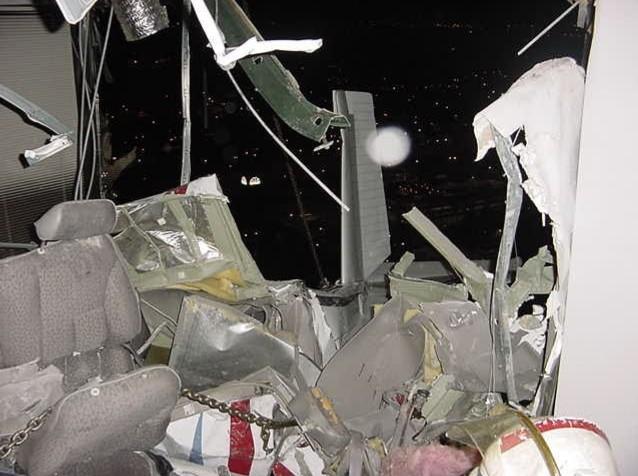
Photo of Aircraft Inside the Building (NTSB)
Physical inspections of the interior revealed that ceiling panels, air circulation ducts, and lighting fixtures had fallen to floor level, furniture was crushed, and all surfaces were covered in gray concrete dust. No fire or ignition source occurred after the impact, and no combustion reaction was observed. However, fuel leakage occurred from the deformed wings onto the office floor. Risk analysis at the scene determined that this fuel type burns at a higher thermal temperature than standard automotive gasoline and could potentially weaken the building’s steel and concrete support structures if ignited. To prevent fuel vaporization and inhibit chemical combustion, fire personnel applied a thick foam insulation layer over the debris area.【14】
To prevent structural components hanging from the building from falling onto the street, rescue units secured the aircraft’s fuselage to a stable structural column inside the building using industrial ropes and chains, then used crane mechanisms to pull the main mass back into the office. Under the technical supervision of a police department aircraft technician, the debris, in the form of twisted metal piles, was cut into sections and lowered to ground level via elevator systems. All physical materials removed were loaded onto flatbed trucks for transport to the Peter O. Knight Airport on Davis Islands, where they underwent structural analysis and reassembly procedures in aviation laboratories.【15】
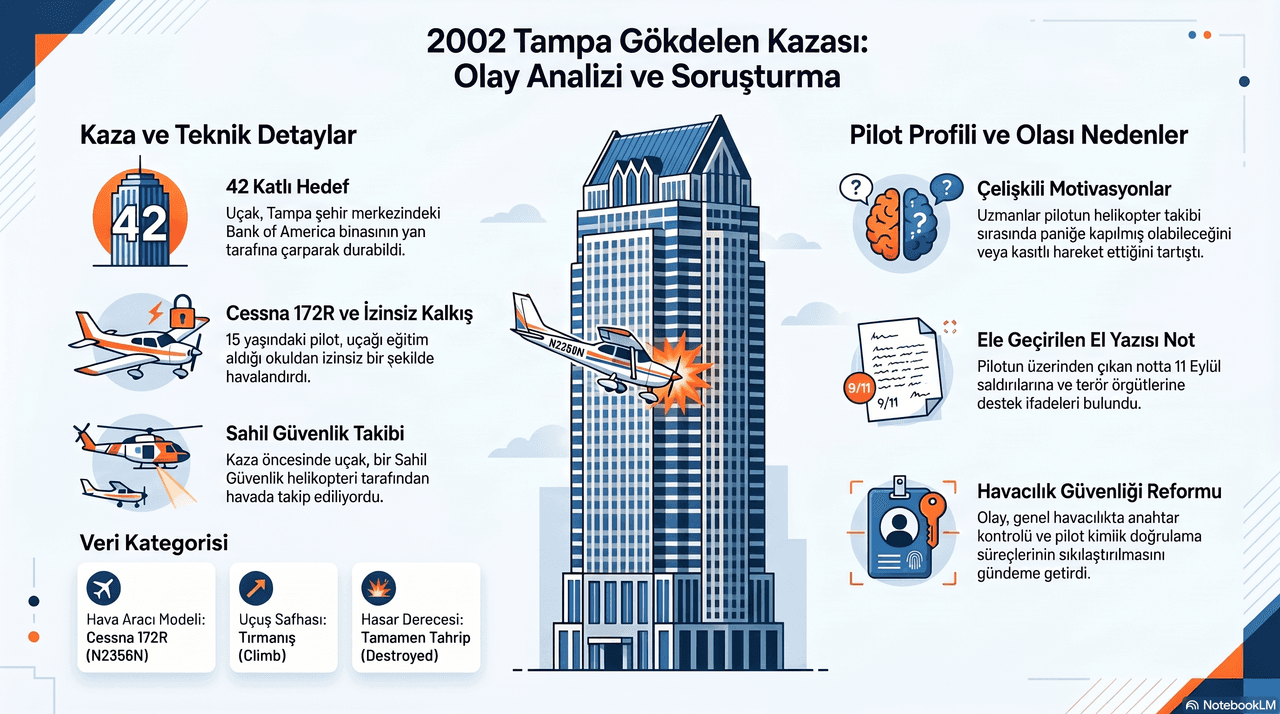
Infographic of the Charles Bishop Incident (Generated by Artificial Intelligence)
Medical examinations of the pilot’s body, who died at the scene, were conducted by the Hillsborough County Medical Examiner’s Office. Initial inspections at the debris site determined that the pilot sustained severe head injuries and died as a result of the physical forces during impact. Based on scene data collected by law enforcement and other investigative units, the Medical Examiner’s Office officially classified the incident as a suicide in its records.【16】
Comprehensive chemical analyses of the pilot’s blood, liver, and other internal organ tissues were conducted by the Federal Aviation Administration’s Toxicology and Accident Research Laboratory. Laboratory tests found no traces of carbon monoxide, cyanide, or ethanol in the pilot’s blood. Pharmacological screening detected no legal or illegal substances with stimulant or narcotic properties, including amphetamines, opiates, marijuana, cocaine, antidepressants, antihistamines, barbiturates, or nicotine. Additionally, tests for isotretinoin in blood and liver samples returned negative results. The analysis reports conclusively documented that no chemical agent capable of impairing the pilot’s physiological condition was present in his bloodstream at the time of the crash.【17】
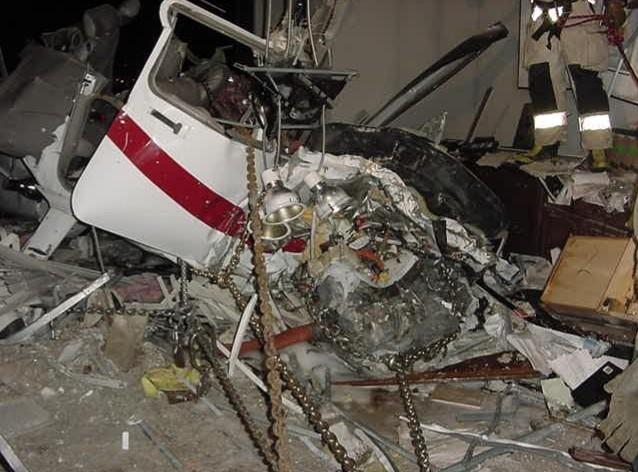
Photo of Aircraft Inside the Building (NTSB)
The National Transportation Safety Board (NTSB) conducted the accident investigation within its legal jurisdiction over civil aviation accidents, in accordance with its mission to enhance transportation safety. Following detailed examinations, the NTSB issued Official Accident Report ATL02FA032. The investigation data revealed no mechanical, structural, or system failure on the aircraft prior to or during the flight sequence. It was determined that the aircraft’s flight path was deliberately directed toward a commercial building, and this intentional act was formally documented. Under NTSB standards, the primary cause of the accident was classified as the unauthorized and intentional use of the aircraft by the student pilot for the purpose of suicide.【18】
Judicial investigations, conducted in parallel with the aviation authorities’ technical reviews, confirmed the root cause of the incident. Final reports prepared by the Tampa Police Department and related law enforcement agencies determined that the impact act was unilateral and entirely intentional. Judicial authorities concluded that no individual other than the pilot had any physical or logistical involvement in planning or executing the crash. The incident’s progression was analyzed in detail by judicial units and officially recorded by law enforcement as a solo suicide with no external interference.【19】
The fact that the crash occurred only months after the September 11, 2001 terrorist attacks, and involved an unauthorized aircraft deliberately crashing into a high-rise office building, triggered serious national security concerns and alarm. One of the key operational factors heightening the sensitivity of the incident was the aircraft’s violation of the restricted airspace surrounding MacDill Air Force Base shortly after takeoff. The base, at the time, housed the U.S. Central Command (CentCom) and Special Operations Command, responsible for managing operations in Afghanistan and the search for Osama bin Laden. The aircraft’s unauthorized flight path immediately triggered surveillance by the U.S. military defense apparatus.【20】
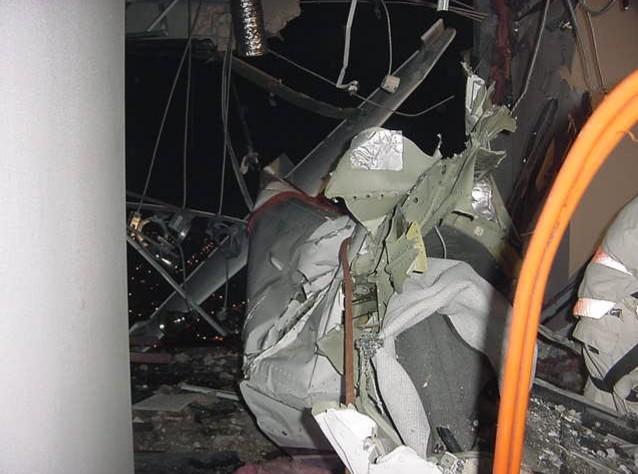
Pulling the Aircraft Inside the Building (NTSB)
Following the crash, a two-page handwritten suicide note found on the pilot revealed ideological motivations for the act. The note expressed support for the September 11 attacks, stating that Osama bin Laden was “absolutely right” in creating terror and “brought down a powerful nation.” The pilot also claimed that the United States deserved consequences for its policies toward the Palestinian people and Iraq. The suicide note further alleged that Al-Qaeda and other organizations had offered to include him in their ranks, but he had rejected their offers and carried out the act alone. One of the most striking claims was a threat that Osama bin Laden planned to use an old nuclear bomb from the 1967 Arab-Israeli War to destroy the Super Bowl event.【21】
Despite the suicide note’s claims of international terrorist network connections, investigations by law enforcement agencies concluded that the pilot had no actual contact with any terrorist organization. Official inquiries confirmed that the alleged meetings with Al-Qaeda were unfounded and that the perpetrator was a troubled youth acting alone. Judicial authorities definitively established that the crash was not an organized or connected terrorist attack, but rather a suicide act embellished with specific, baseless political claims.【22】
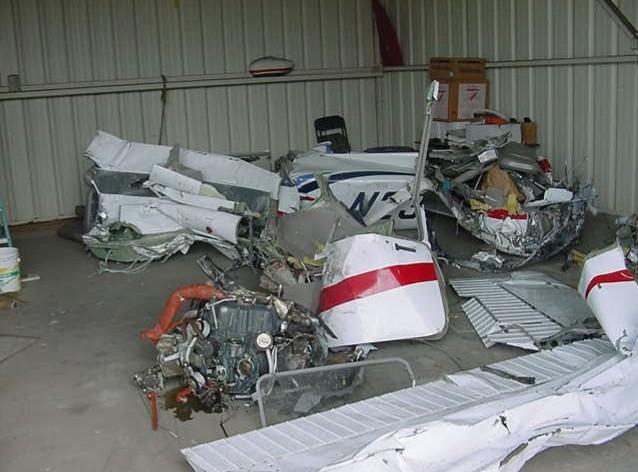
Final State of the Aircraft (NTSB)
The Charles Bishop Incident, also known as the 2002 Tampa Cessna 172 crash, is an aviation event resulting from the convergence of unauthorized access, inadequate supervision, and individual intent rather than technical failure or external interference. Official investigations confirmed that the aircraft was airworthy, that the pilot was not legally authorized to fly alone due to his age and training level, and that the impact was the result of a deliberate maneuver. Although the incident, occurring shortly after the September 11 attacks and the ideological statements in the suicide note, initially raised terrorism suspicions, judicial and aviation investigations definitively confirmed the absence of any organizational connection. In this regard, the crash stands as a notable case highlighting the importance of student access controls and security practices at flight schools, as well as the necessity of rapid inter-agency coordination in response to unusual airspace violations.
Associated Press. “Student Pilot Death Ruled A Suicide.” CBS News, February 6, 2002. Accessed June 19, 2026. https://www.cbsnews.com/news/student-pilot-death-ruled-a-suicide/
Associated Press. “Teen Pilot Crash Unfolds On Tape.” CBS News, April 22, 2002. Accessed June 19, 2026. https://www.cbsnews.com/news/teen-pilot-crash-unfolds-on-tape/
Aviation Safety Network. “Accident Cessna 172R Skyhawk N2371N, Saturday 5 January 2002.” *ASN Aviation Safety WikiBase*. Accessed June 19, 2026. https://aviation-safety.net/wikibase/48755
Aviation Safety Network. “Aviation Investigation Final Report.” ASN Aviation Safety WikiBase. Accessed June 19, 2026. https://aviation-safety.net/wikibase/48755
Burkeman, Oliver. “Death Wish.” *The Guardian*, January 9, 2002. Accessed June 19, 2026. https://www.theguardian.com/world/2002/jan/09/september11.usa
CNN. “Expert: Student pilot likely hit building by mistake.” CNN, January 6, 2002. Accessed June 19, 2026. https://edition.cnn.com/2002/US/01/06/tampa.crash.cnna/index.html
CNN. “Police: Tampa pilot voiced support for bin Laden.” CNN, January 6, 2002. Accessed June 19, 2026. https://edition.cnn.com/2002/US/01/06/tampa.crash/index.html
CNN. “Tampa crash raises serious security questions.” CNN, January 6, 2002. Accessed June 19, 2026. https://edition.cnn.com/2002/US/01/06/rec.athome.facts/index.html
Dahlberg, John-Thor, and Josh Meyer. “Teen Pilot Hits Skyscraper: Crash in Tampa Sparks Concern, but No Tie Made to Terror.” SFGATE, January 6, 2002. Accessed June 19, 2026. https://www.sfgate.com/news/article/teen-pilot-hits-skyscraper-crash-in-tampa-2885852.php
Dahlburg, John-Thor, and Josh Meyer. “Florida Teen Dies as Stolen Plane Crashes Into Building.” *Los Angeles Times*, January 6, 2002. Accessed June 19, 2026. https://www.latimes.com/archives/la-xpm-2002-jan-06-mn-20751-story.html
FOX 13 Tampa Bay. "From January 5, 2002: Plane Hits Bank of America Building in Tampa." YouTube. Accessed June 19, 2026. https://www.youtube.com/watch?v=tJskfwUofLI
Find a Grave. "Charles J. Bishop." Find a Grave Memorial. Accessed June 19, 2026. https://www.findagrave.com/memorial/6781923/charles_j-bishop
James. "EI-MCG Cessna 172R Skyhawk (Galway Flying Club Ltd)." Flickr. Accessed June 19, 2026. https://www.flickr.com/photos/95512093@N05/47993992787
McKie, Robin. “Terror Fear as Plane Hits US Tower.” *The Guardian*, January 6, 2002. Accessed June 19, 2026. https://www.theguardian.com/world/2002/jan/06/robinmckie.theobserver
National Transportation Safety Board. “Aircraft Registration Certification.” NTSB Docket Management System. Accessed June 19, 2026. https://data.ntsb.gov/Docket/Document/docBLOB?ID=40377393&FileExtension=.PDF&FileName=Aircraft%20Registration%20Certification-Redacted.PDF
National Transportation Safety Board. “Maintenance Records.” NTSB Docket Management System. Accessed June 19, 2026. https://data.ntsb.gov/Docket/Document/docBLOB?ID=40170962&FileExtension=.PDF&FileName=Maintenance%20Records-Master.PDF
National Transportation Safety Board. “Photo 1 - View of Bank of America Building.” NTSB Docket Management System. Accessed June 19, 2026. https://data.ntsb.gov/Docket/Document/docBLOB?ID=40170967&FileExtension=.PDF&FileName=Photo%201%20-%20View%20of%20Bank%20of%20America%20Building-Master.PDF
National Transportation Safety Board. “Photo 2 - Aircraft hanging from 28th floor.” NTSB Docket Management System. Accessed June 19, 2026. https://data.ntsb.gov/Docket/Document/docBLOB?ID=40170968&FileExtension=.PDF&FileName=Photo%202%20-%20Aircraft%20hanging%20from%2028th%20floor-Master.PDF
National Transportation Safety Board. “Photo 3 - Aircraft hanging from 28th floor.” NTSB Docket Management System. Accessed June 19, 2026. https://data.ntsb.gov/Docket/Document/docBLOB?ID=40170969&FileExtension=.PDF&FileName=Photo%203%20-%20Aircraft%20hanging%20from%2028th%20floor-Master.PDF
National Transportation Safety Board. “Photo 4 - Photo hanging from 28th floor.” NTSB Docket Management System. Accessed June 19, 2026. https://data.ntsb.gov/Docket/Document/docBLOB?ID=40170970&FileExtension=.PDF&FileName=Photo%204%20-%20Photo%20hanging%20from%2028th%20floor-Master.PDF
National Transportation Safety Board. “Photo 5 - Aircraft inside of building.” NTSB Docket Management System. Accessed June 19, 2026. https://data.ntsb.gov/Docket/Document/docBLOB?ID=40170971&FileExtension=.PDF&FileName=Photo%205%20-%20Aircraft%20inside%20of%20building-Master.PDF
National Transportation Safety Board. “Photo 6 - Aircraft inside of building.” NTSB Docket Management System. Accessed June 19, 2026. https://data.ntsb.gov/Docket/Document/docBLOB?ID=40170972&FileExtension=.PDF&FileName=Photo%206%20-%20Aircraft%20inside%20of%20building-Master.PDF
National Transportation Safety Board. “Photo 7 - Pulling airplane inside of building.” NTSB Docket Management System. Accessed June 19, 2026. https://data.ntsb.gov/Docket/Document/docBLOB?ID=40170973&FileExtension=.PDF&FileName=Photo%207%20-%20Pulling%20airplane%20inside%20of%20building-Master.PDF
National Transportation Safety Board. “Photo 8 - Bringing tail inside of building.” NTSB Docket Management System. Accessed June 19, 2026. https://data.ntsb.gov/Docket/Document/docBLOB?ID=40170974&FileExtension=.PDF&FileName=Photo%208%20-%20Bringing%20tail%20inside%20of%20building-Master.PDF
National Transportation Safety Board. “Pilot Logbook.” NTSB Docket Management System. Accessed June 19, 2026. https://data.ntsb.gov/Docket/Document/docBLOB?ID=40377394&FileExtension=.PDF&FileName=Pilot%20Logbook-Redacted.PDF
National Transportation Safety Board. “Pilot/Operator Aircraft Accident Report, NTSB Form 6120.1.” NTSB Docket Management System. Accessed June 19, 2026. https://data.ntsb.gov/Docket/Document/docBLOB?ID=40377387&FileExtension=.PDF&FileName=Pilot%2FOperator%20Aircraft%20Accident%20Report,%20NTSB%20Form%206120.1-Redacted.PDF
National Transportation Safety Board. “Police Report.” NTSB Docket Management System. Accessed June 19, 2026. https://data.ntsb.gov/Docket/Document/docBLOB?ID=40377395&FileExtension=.PDF&FileName=Police%20Report-Redacted.PDF
National Transportation Safety Board. “Project Summary: Aviation Investigation — ATL02FA032.” *NTSB Docket Management System*. Date Opened: July 22, 2005. Accessed June 19, 2026. https://data.ntsb.gov/Docket?ProjectID=53994
National Transportation Safety Board. “Radar Data.” NTSB Docket Management System. Accessed June 19, 2026. https://data.ntsb.gov/Docket/Document/docBLOB?ID=40170957&FileExtension=.PDF&FileName=Radar%20Data-Master.PDF
National Transportation Safety Board. “Release of Aircraft Wreckage, NTSB Form 6120.15.” NTSB Docket Management System. Accessed June 19, 2026. https://data.ntsb.gov/Docket/Document/docBLOB?ID=40377389&FileExtension=.PDF&FileName=Release%20of%20Aircraft%20Wreckage,%20NTSB%20Form%206120.15-Redacted.PDF
National Transportation Safety Board. “Sectional.” NTSB Docket Management System. Accessed June 19, 2026. https://data.ntsb.gov/Docket/Document/docBLOB?ID=40170961&FileExtension=.PDF&FileName=Sectional-Master.PDF
National Transportation Safety Board. “Statement of Party Representatives to NTSB Investigation.” NTSB Docket Management System. Accessed June 19, 2026. https://data.ntsb.gov/Docket/Document/docBLOB?ID=40377388&FileExtension=.PDF&FileName=Statement%20of%20Party%20Representatives%20to%20NTSB%20Investigation-Redacted.PDF
National Transportation Safety Board. “Student Pilot's Medical Certification.” NTSB Docket Management System. Accessed June 19, 2026. https://data.ntsb.gov/Docket/Document/docBLOB?ID=40377392&FileExtension=.PDF&FileName=Student%20Pilot%27s%20Medical%20Certification-Redacted.PDF
National Transportation Safety Board. “Suicide Note.” NTSB Docket Management System. Accessed June 19, 2026. https://data.ntsb.gov/Docket/Document/docBLOB?ID=40170963&FileExtension=.PDF&FileName=Suicide%20Note-Master.PDF
National Transportation Safety Board. “Summaries.” NTSB Docket Management System. Accessed June 19, 2026. https://data.ntsb.gov/Docket/Document/docBLOB?ID=40377396&FileExtension=.PDF&FileName=Summaries-Redacted.PDF
National Transportation Safety Board. “Supplement A.” NTSB Docket Management System. Accessed June 19, 2026. https://data.ntsb.gov/Docket/Document/docBLOB?ID=40170950&FileExtension=.PDF&FileName=Supplement%20A-Master.PDF
National Transportation Safety Board. “Toxicological Report.” NTSB Docket Management System. Accessed June 19, 2026. https://data.ntsb.gov/Docket/Document/docBLOB?ID=40377390&FileExtension=.PDF&FileName=Toxicological%20Report-Redacted.PDF
National Transportation Safety Board. “Witness Statements.” NTSB Docket Management System. Accessed June 19, 2026. https://data.ntsb.gov/Docket/Document/docBLOB?ID=40170964&FileExtension=.PDF&FileName=Witness%20Statements-Master.PDF
Staff and Agencies. “Teen Pilot in Tampa Crash Had ‘Sympathy’ for Osama.” *The Guardian*, January 7, 2002. Accessed June 19, 2026. https://www.theguardian.com/world/2002/jan/06/1
Tampa Bay Times. “Teen’s Suicide Note Tells of Sympathy for bin Laden.” Tampa Bay Times, January 7, 2002. Accessed June 19, 2026. https://www.tampabay.com/archive/2002/01/07/teen-s-suicide-note-tells-of-sympathy-for-bin-laden/
[1]
Aviation Safety Network. “Accident Cessna 172R Skyhawk N2371N, Saturday 5 January 2002.” ASN Aviation Safety WikiBase. Erişim: 19 Haziran 2026. https://aviation-safety.net/wikibase/48755
[2]
National Transportation Safety Board. “Pilot/Operator Aircraft Accident Report, NTSB Form 6120.1.” NTSB Docket Management System. Erişim: 19 Haziran 2026. https://data.ntsb.gov/Docket?ProjectID=53994#:~:text=Pilot/Operator%20Aircraft%20Accident%20Report%2C%20NTSB%20Form%206120.1
[3]
National Transportation Safety Board, “Pilot/Operator Aircraft Accident Report.”
[4]
John-Thor Dahlburg ve Josh Meyer, “Florida Teen Dies as Stolen Plane Crashes Into Building,” Los Angeles Times, 6 Ocak 2002, Erişim: 19 Haziran 2026, https://www.latimes.com/archives/la-xpm-2002-jan-06-mn-20751-story.html
[5]
Aviation Safety Network. “Aviation Investigation Final Report.” ASN Aviation Safety WikiBase. Erişim: 19 Haziran 2026. https://aviation-safety.net/wikibase/48755
[6]
National Transportation Safety Board, “Pilot/Operator Aircraft Accident Report.”
[7]
National Transportation Safety Board. “Witness Statements.” NTSB Docket Management System. Erişim: 19 Haziran 2026. https://data.ntsb.gov/Docket?ProjectID=53994#:~:text=14-,Witness%20Statements,-11
[8]
National Transportation Safety Board, “Witness Statements.”
[9]
Aviation Safety Network, “Aviation Investigation Final Report.”
[10]
Aviation Safety Network, “Aviation Investigation Final Report.”
[11]
Aviation Safety Network, “Aviation Investigation Final Report.”
[12]
Associated Press. “Teen Pilot Crash Unfolds On Tape.” CBS News, 22 Nisan 2002. Erişim: 19 Haziran 2026. https://www.cbsnews.com/news/teen-pilot-crash-unfolds-on-tape/
[13]
National Transportation Safety Board, “Police Report,” NTSB Docket Management System, Erişim: 19 Haziran 2026, https://data.ntsb.gov/Docket?ProjectID=53994#:~:text=10-,Police%20Report,-7
[14]
Tampa Bay Times, “Teen’s Suicide Note Tells of Sympathy for bin Laden,” Tampa Bay Times, 7 Ocak 2002, Erişim: 19 Haziran 2026, https://www.tampabay.com/archive/2002/01/07/teen-s-suicide-note-tells-of-sympathy-for-bin-laden/
[15]
Tampa Bay Times, “Teen’s Suicide Note Tells of Sympathy for bin Laden.”
[16]
Associated Press, “Student Pilot Death Ruled A Suicide,” CBS News, 6 Şubat 2002, Erişim: 19 Haziran 2026, https://www.cbsnews.com/news/student-pilot-death-ruled-a-suicide/
[17]
National Transportation Safety Board, “Toxicological Report,” NTSB Docket Management System, Erişim: 19 Haziran 2026. https://data.ntsb.gov/Docket?ProjectID=53994#:~:text=Toxicological%20Report
[18]
Aviation Safety Network, “Aviation Investigation Final Report,” ASN Aviation Safety WikiBase, Erişim: 19 Haziran 2026, https://aviation-safety.net/wikibase/48755
[19]
Aviation Safety Network, “Aviation Investigation Final Report,” ASN Aviation Safety WikiBase, Erişim: 19 Haziran 2026, https://aviation-safety.net/wikibase/48755
[20]
John-Thor Dahlburg ve Josh Meyer, “Florida Teen Dies as Stolen Plane Crashes Into Building,” Los Angeles Times, 6 Ocak 2002, Erişim: 19 Haziran 2026, https://www.latimes.com/archives/la-xpm-2002-jan-06-mn-20751-story.html
[21]
National Transportation Safety Board, “Suicide Note,” NTSB Docket Management System, Erişim: 19 Haziran 2026. https://data.ntsb.gov/Docket?ProjectID=53994#:~:text=13-,Suicide%20Note,-4
[22]
Associated Press, “Teen Pilot Crash Unfolds On Tape,” CBS News, 22 Nisan 2002, Erişim: 19 Haziran 2026, https://www.cbsnews.com/news/teen-pilot-crash-unfolds-on-tape/


(Generated with Artificial Intelligence)
Charles Bishop Case
Also known as | 2002 Tampa Cessna 172 accident | ||||||||
|---|---|---|---|---|---|---|---|---|---|
Date | 5 January 2002 | ||||||||
Location | Tampa, Florida, United States | ||||||||
Struck structure | Bank of America Plaza building | ||||||||
Impact point | 28th floor | ||||||||
Aircraft | Cessna 172R Skyhawk | ||||||||
Registration number | N2371N | ||||||||
Year of manufacture | 2000 | ||||||||
Pilot | Charles J. Bishop | ||||||||
Pilot's age | 15 | ||||||||
Pilot status | Student pilot | ||||||||
Flight origin | St. Petersburg-Clearwater International Airport | ||||||||
Takeoff method | Unauthorized takeoff | ||||||||
ATC communication | Not established | ||||||||
Flight duration | Approximately 9–12 minutes | ||||||||
Weather conditions | Visual flight rules | ||||||||
Mechanical failure | Not detected | ||||||||
Death | Sole pilot | ||||||||
Official cause | Unauthorized and intentional suicide act | ||||||||
Suicide note | Found | ||||||||
September 11 connection | Ideological expressions in the note | ||||||||
terror organization connection | Not officially confirmed | ||||||||
No Discussion Added Yet
Start discussion for "Charles Bishop Case" article
Aircraft Technical and Registration Details
Pilot’s Basic Information and Training History
Meteorological Conditions
Pre-Incident Activities and Takeoff Phase
Flight Chronology and Air Traffic Control (ATC) Communication
Coast Guard Interception Activities
Impact Moment and Debris Analysis Data
Medical and Toxicological Analysis Reports
Official Investigation Findings and Primary Cause
September 11 Attacks and Terrorism Connection