

This article was automatically translated from the original Turkish version.
+1 More
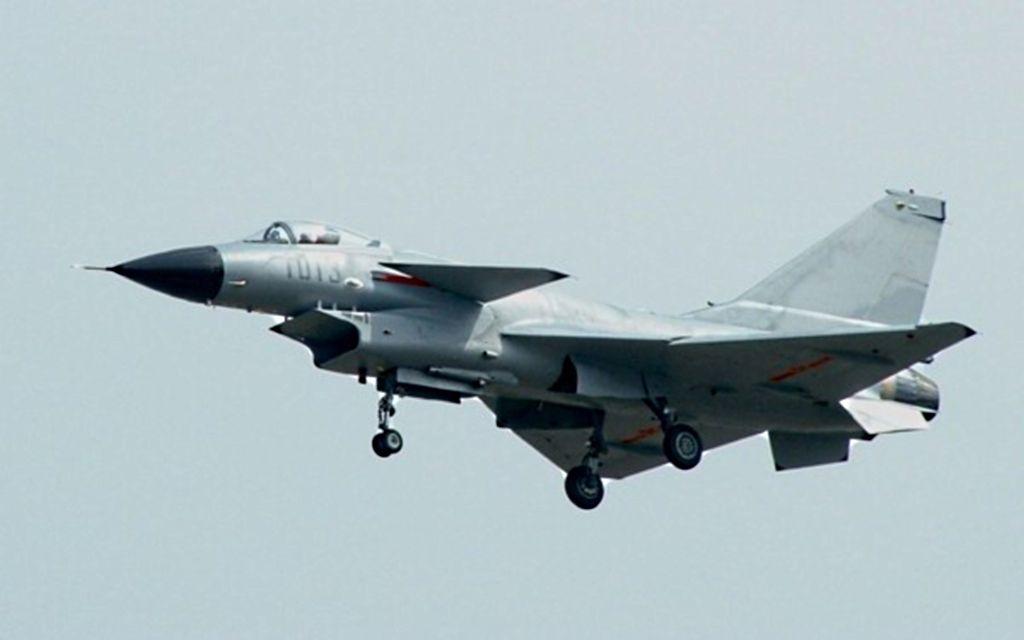
Chengdu J-10 is a single-engine, multirole fourth-generation fighter aircraft developed by the People's Republic of China. Known in Western literature by the nickname "Vigorous Dragon," the platform was designed by the Chengdu Aircraft Industry Group (CAC) to reduce China’s technological dependence on Western systems and align with modern air combat doctrines. Aerodynamically configured with a canard-delta wing layout, the aircraft is built on a versatile avionics architecture capable of performing both air superiority and ground attack missions.
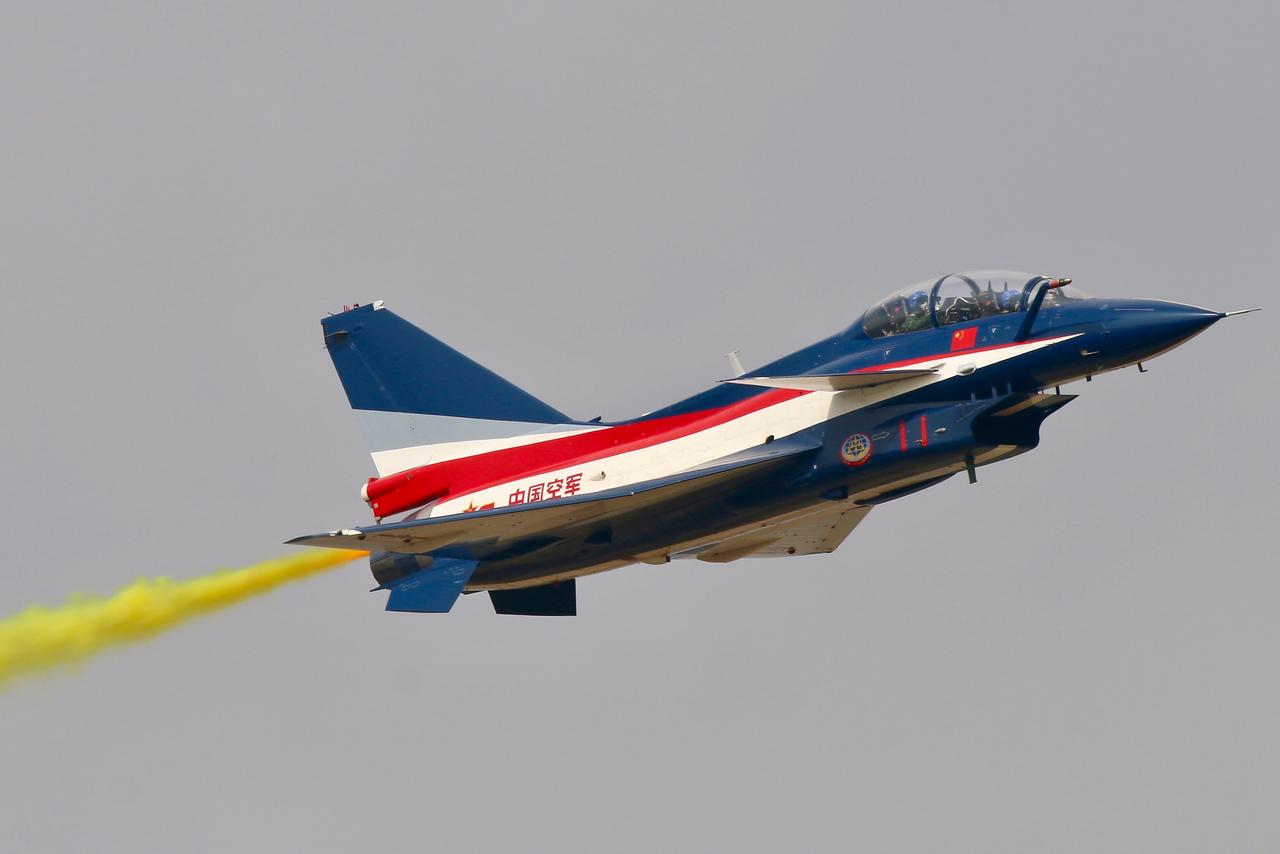
Chengdu J-10 (Colin Cooke)
Chengdu J-10’s design process was initiated in the early 1980s under the code name "Project 8610" as part of the People's Republic of China’s strategy to close the technological gap with Western counterparts. The project, led by the Chengdu Aircraft Design Institute (Institute 611), was headed by chief designer Song Wencong. The primary engineering objective was to develop a multirole platform with high maneuverability capable of executing both air-to-air and air-to-ground missions. To this end, the design opted for a close-coupled canard-delta configuration, which is aerodynamically unstable but offers superior maneuverability. To stabilize this configuration during flight, China’s aerospace industry developed its own indigenous four-channel digital fly-by-wire flight control system for the platform.
During development, advanced composite materials and titanium alloys were prioritized to minimize weight and enhance structural integrity. Technological similarities between the J-10 and Israel’s canceled IAI Lavi project have been frequently discussed in international defense analyses; however, Chinese officials and designers assert that the J-10’s aerodynamic structure was entirely shaped through original wind tunnel testing and indigenous engineering calculations. The first prototype was completed in the mid-1990s, and its maiden official flight took place on 23 March 1998. Following this, a comprehensive six-year testing program was conducted to integrate weapon systems and validate avionics, leading to the aircraft achieving operational readiness and entering serial production in 2004.【1】

Chengdu J-10 Technical Drawing (Generated by Artificial Intelligence)
Chengdu J-10’s performance parameters define its position among light-to-medium weight fourth-generation multirole platforms. Its powerplant has evolved across production variants: early models used the Russian-made Saturn AL-31FN afterburning turbofan engine, while current J-10C variants have transitioned to the indigenous Shenyang WS-10B (Taihang) engine system. The AL-31FN produces approximately 122.58 kN (27,557 lbf) of maximum thrust with afterburner engaged, whereas the WS-10B is reported to increase this capacity to between 132 kN and 145 kN. This thrust enables the aircraft to achieve a maximum speed of Mach 1.8 to Mach 2.2 at high altitude and a climb rate exceeding 200 meters per second at sea level.
The aircraft’s aerodynamic range performance varies depending on fuel configuration. With internal fuel tanks, the operational range is approximately 1,850 kilometers; this extends to 2,950 kilometers with the addition of under-fuselage and under-wing external fuel tanks. The J-10 has an empty weight of approximately 9,750 kilograms and a maximum takeoff weight (MTOW) of 19,277 kilograms. With a service ceiling of 17,000 meters (approximately 56,000 feet), the J-10 demonstrates high structural resilience and agility in close air combat.【2】
Chengdu J-10’s avionics architecture has evolved from mechanical systems to modern phased-array sensor technologies throughout its development. The initial operational variant, the J-10A, was equipped with the KLJ-3 mechanically scanned pulse-Doppler radar developed by the Nanjing Electronic Technology Research Institute (Institute 14), offering a detection range of approximately 100–130 kilometers. Later modernized variants, the J-10B and J-10C, transitioned to an active electronically scanned array (AESA) radar system. This new radar infrastructure enables the detection of low-observable targets at longer ranges, enhanced resistance to electronic countermeasures (ECM), and simultaneous high-precision tracking of multiple air and ground targets.
Chengdu J-10 Flight (Haci Productions)
In terms of weapons carriage capacity, the J-10 features a total of 11 external hardpoints on its fuselage and wings, enabling it to carry up to 7,000 kilograms of ordnance. For air superiority missions, the platform is armed with beyond-visual-range (BVR) PL-12 and the more advanced dual-pulse propulsion PL-15 radar-guided missiles. For close-in air combat, it employs the highly maneuverable PL-10 infrared-guided missiles integrated with a helmet-mounted sight system. For air-to-ground operations, the J-10 can deploy a wide array of precision munitions including laser-guided bombs, YJ-91 anti-radiation missiles, and KD-88 cruise missiles. Additionally, it is equipped with an internal 23 mm Type 23-3 twin-barrel cannon for close-in defense and air-to-ground strafing missions.【3】
Chengdu J-10’s path to operational capability was achieved through a multi-stage flight test program encompassing complex ground and flight evaluations. The aircraft’s aerodynamically unstable design and reliance on digital flight control systems necessitated stringent safety and data-collection protocols during testing.
Ground Tests and Static Validation: Prior to flight testing, static structural tests were conducted on Prototype No. 01 to measure maximum load capacity, wing structural integrity, and landing gear strength. Simultaneously, engine ground runs verified fuel and hydraulic system leak-tightness. One of the most critical phases involved "Iron Bird" tests, in which the aircraft’s digital fly-by-wire (FBW) system was simulated in a laboratory environment to validate response times and error margins before flight.

Chengdu J-10 (AereiMilitari)
First Flight and Basic Flight Calibration: The platform conducted its first official flight on 23 March 1998. During this phase, focus was placed on observing fundamental takeoff, climb, and landing characteristics. In this "envelope expansion" period, structural vibrations (flutter), control surface effectiveness, and engine stability at various altitudes were tested. Pilot evaluations covered low-speed stall limits and aerodynamic responses during transonic and supersonic transitions.
Weapon System and Avionics Integration Tests: Beginning in the early 2000s, the test program shifted focus to integrating operational munitions. Firing tests measured shockwave effects on the airframe during missile launches and assessed radar target tracking precision. With the development of the J-10B and J-10C variants, this phase expanded to include the AESA radar’s electronic warfare (EW) capabilities and the integration of advanced infrared search and track (IRST) sensors with other avionics through data fusion. The test program concluded in 2004 with full validation of the aircraft’s operational envelope and approval for serial production.
Chengdu J-10 directly competes with several globally recognized aircraft models in terms of operational capability and design philosophy. The following analyses examine the J-10’s technical and doctrinal position relative to its counterparts on an individual basis.
Gripen and the J-10 are modern platforms sharing a canard-delta configuration but belong to different weight classes.
MiG-29, although twin-engine, fulfills similar tactical roles as the J-10.
Eurofighter Typhoon, as a twin-engine, high-performance air superiority fighter, shares similar aerodynamic configurations with the single-engine J-10 and competes with it technologically.
Chengdu J-10 represents a pivotal technological milestone in China’s aerospace industry, marking its transition from reverse-engineering Soviet designs to developing indigenous systems and configurations. As China’s first domestically developed fourth-generation multirole fighter, the J-10 is widely regarded as the primary indicator of the nation’s expanded industrial capacity.

Chengdu J-10 (AereiMilitari)
The J-10 project spearheaded advancements in indigenous digital flight control systems (Fly-by-Wire), integration of high-strength composite materials into airframe structures, and development of network-centric warfare capabilities. Particularly in power systems, the transition from Russian AL-31FN engines to domestically produced WS-10B (Taihang) engines during serial production significantly reduced the platform’s dependence on foreign critical components.
Aerodynamic data and fly-by-wire software expertise gained during the J-10’s development provided the technical foundation for China’s fifth-generation platform, the Chengdu J-20. Specifically, engineering experience from the "close-coupled canard" configuration and advanced avionics data fusion architecture directly influenced the development timelines of higher-tier platforms.
The sale of the J-10CE variant to the Pakistan Air Force marked China’s successful entry into the international market for fourth-generation jet technology. This export initiative demonstrates that China’s defense industry offers a technically competitive and cost-effective alternative to Western and Russian platforms. The J-10 stands as the key technological threshold that transformed China’s aerospace production from a capacity-building entity into a system-designing power.
AereiMilitari. J-10_01b. October 21, 2008. Flickr. Accessed February 14, 2026. https://www.flickr.com/photos/aereimilitariorg/3953868037/
AereiMilitari. J-10_03b. October 21, 2008. Flickr. Accessed February 14, 2026. https://www.flickr.com/photos/aereimilitariorg/3954648876/
AereiMilitari. J-10_08b. January 19, 2009. Flickr. Accessed February 14, 2026. https://www.flickr.com/photos/aereimilitariorg/3953868653/
Colin Cooke Photo. The August 1st or Ba Yi Aerobatics Team Chengdu J-10 PLAAF Zhuhai 11.11.18. November 11, 2018. Flickr. Accessed February 14, 2026. https://www.flickr.com/photos/cooke1/44405056980/
GlobalSecurity. "Chinese Aircraft J-10 Firebird." GlobalSecurity. Accessed February 14, 2026. https://www.globalsecurity.org/military/world/china/j-10-lavi.htm
GlobalSecurity. "J-10H - Carrier Variant." Accessed February 14, 2026. https://www.globalsecurity.org/military/world/china/j-10c.htm
Haci Productions. “J-10 Fighter Aircraft.” YouTube. Accessed February 14, 2026. https://www.youtube.com/watch?v=GATUworrsXE
Rinaldi, Jake. “Weapons of Influence: Unpacking China’s Global Arms Strategy.” The US Army War College Quarterly: Parameters 54, no. 4 (November 2024). Accessed February 14, 2026. https://doi.org/10.55540/0031-1723.3317
Sutrisno et al. "The Flow Visualization CFD Studies of the Fuselage and Rolled-up Vortex Effects of the Chengdu J-10-like Fighter Canard." Modern Applied Science 12, no. 2 (2018): 148-148. Accessed February 14, 2026. https://ideas.repec.org//a/ibn/masjnl/v12y2018i2p148.html
Yüksel, Arif Zahid. "Eurofighter Typhoon." Küre Ansiklopedi. April 16, 2025. Accessed February 14, 2026. https://kureansiklopedi.com/tr/detay/eurofighter-typhoon-8dbed
Yüksel, Arif Zahid. "Mikoyan MiG-29." Küre Ansiklopedi. April 16, 2025. Accessed February 14, 2026. https://kureansiklopedi.com/tr/detay/mikoyan-mig-29-a981b
Yüksel, Arif Zahid. "Saab JAS 39 Gripen." Küre Ansiklopedi. April 16, 2025. Accessed February 14, 2026. https://kureansiklopedi.com/tr/detay/saab-jas-39-gripen-0aca0
[1]
GlobalSecurity. "Chinese Aircraft J-10 Firebird." GlobalSecurity. Access Date: 14 February 2026.https://www.globalsecurity.org/military/world/china/j-10-lavi.htm.
[2]
GlobalSecurity. "J-10 (Jian-10) - Specifications".GlobalSecurity. Access Date: 14 February 2026.https://www.globalsecurity.org/military/world/china/j-10-specs.htm.
[3]
GlobalSecurity. "J-10C".GlobalSecurity. Access Date: 14 February 2026.https://www.globalsecurity.org/military/world/china/j-10c.htm.
[4]
Yüksel, Arif Zahid. "Saab JAS 39 Gripen." Küre Encyclopedia. 16 April 2025. Accessed 14 February 2026.https://kureansiklopedi.com/tr/detay/saab-jas-39-gripen-0aca0.
[5]
Yüksel, Arif Zahid. "Mikoyan MiG-29." Küre Encyclopedia. 16 April 2025. Accessed 14 February 2026.https://kureansiklopedi.com/tr/detay/mikoyan-mig-29-a981b.
[6]
Yüksel, Arif Zahid. "Eurofighter Typhoon." Küre Encyclopedia. 16 April 2025. Accessed 14 February 2026.https://kureansiklopedi.com/tr/detay/eurofighter-typhoon-8dbed.

Design and Development Process
Technical Specifications and Performance
Avionics and Weapon Systems
Flight Test Phases
International Comparison
J-10 and Saab JAS 39 Gripen
J-10 and Mikoyan MiG-29
J-10 and Eurofighter Typhoon (European Union)
Industrial Legacy
Technological Advancement and Localization
Technical Contributions to the Aerospace Industry
Global Market and Export Dynamics