This article was automatically translated from the original Turkish version.
+1 More
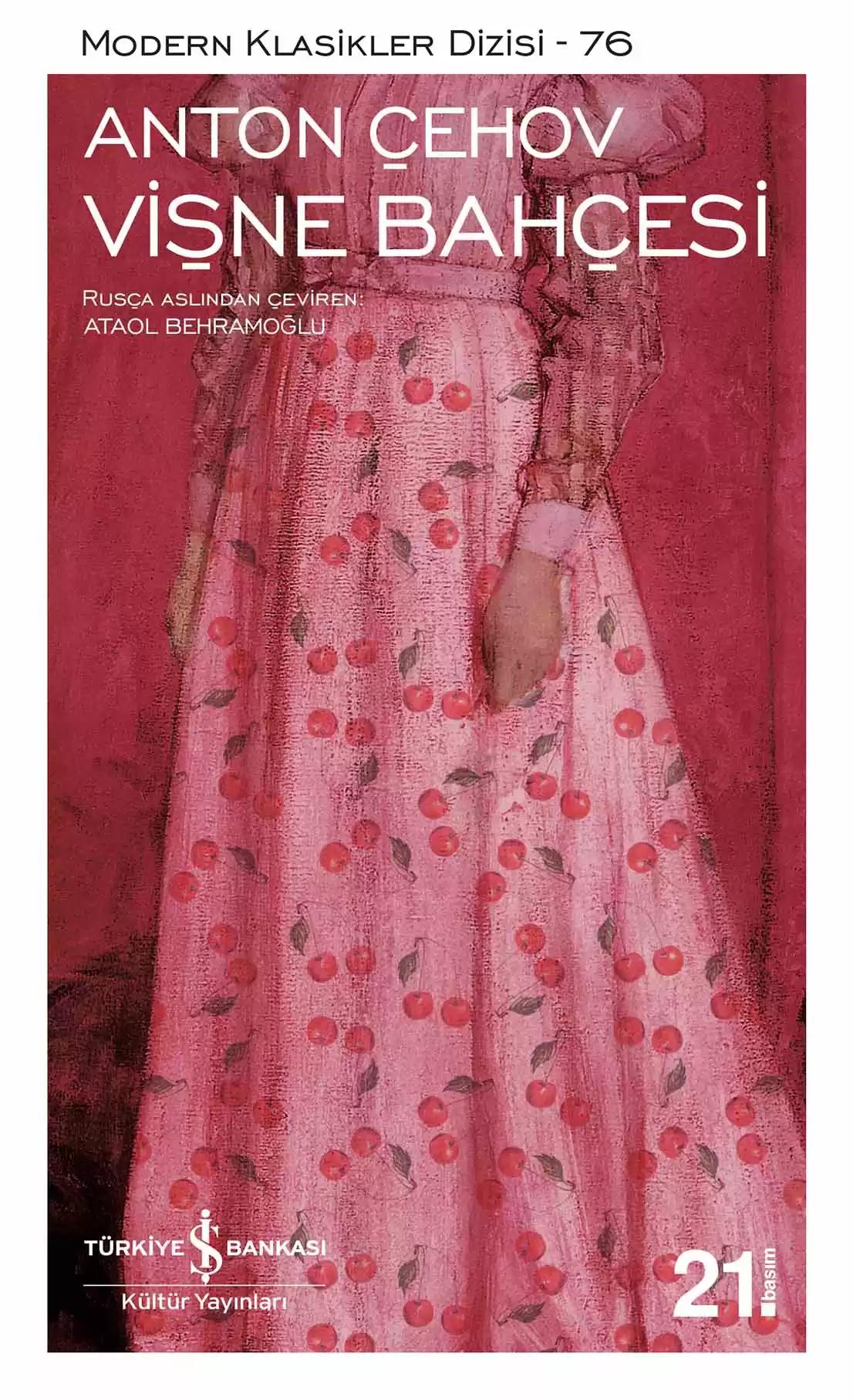
Author(s) | Anton Pavlovich Chekhov | ||||||||
|---|---|---|---|---|---|---|---|---|---|
Translator(s) | Ataol Behramoğlu | ||||||||
Number of Pages | 104 | ||||||||
Genre | Theater | ||||||||
Publisher(s) | Türkiye İş Bankası Kültür Yayınları | ||||||||
Original Title | Vişneviy Sad | ||||||||
Publication Year | 2016 | ||||||||
The Cherry Orchard is the final four-act play by Russian writer Anton Chekhov, exploring themes of social disintegration class transformation and individual alienation. In this work Chekhov assumes the perspective of an observer witnessing the decline of the aristocracy and the rise of the emerging bourgeoisie in late 19th century Russia. The play centers on the economic downfall of the aristocratic Ranevskaya family and their passive response to it.
The story begins with Lubov Andreyevna Ranevskaya returning to her family’s estate in Russia after five turbulent years in France. Once wealthy nobles the Ranevskaya family now faces severe financial hardship and the imminent loss of their last remaining property: the cherry orchard. Members of the family cling to the grandeur of the past and fail to devise any realistic solution to their crisis. In the end Lopahin an former serf who has become wealthy and joined the bourgeoisie purchases the estate and orders the cherry trees cut down to build summer villas on the land.
Social Change and Class Struggle: The play vividly reflects the collapse of the aristocracy and the ascent of the bourgeoisie. The rise of the former servant class such as Lopahin to landownership and the dispossession of the nobility symbolize the class transformation of the era.
Nostalgia for the Past: Ranevskaya and her brother Gayev live in attachment to their former wealth and past customs a nostalgic attitude that disconnects them from reality.
Miscommunication and Discord: The lack of communication among the characters forms the dramatic core of the play. Each individual lives within their own emotional world avoiding solutions and retreating into escapism.
Representatives of the New Era: Anya from the younger generation is more open to change and sees the sale of the cherry orchard as the beginning of a "new life". Trofimov represents the intellectual figure who articulates ideas about societal transformation but refuses to take action.
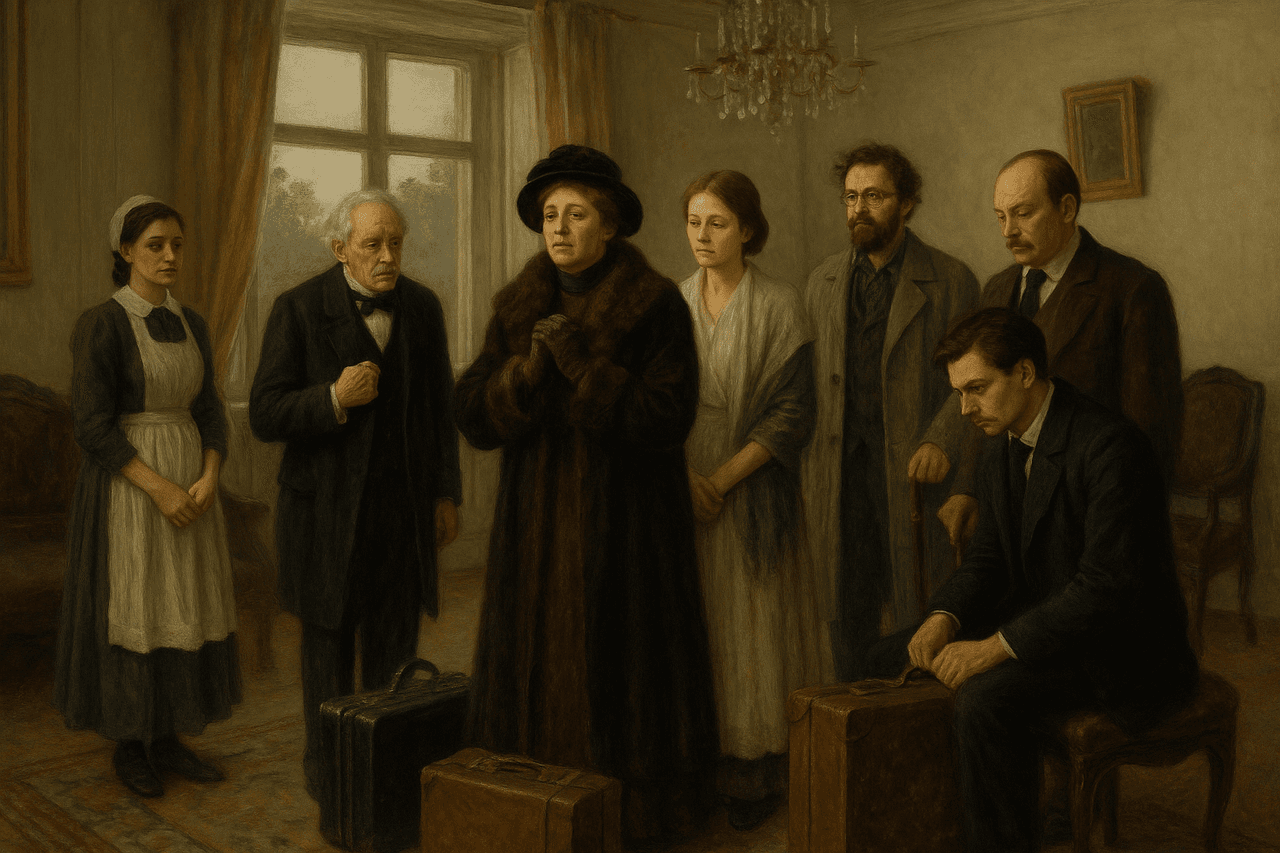
Lubov Andreyevna Ranevskaya Family (Generated by Artificial Intelligence)
The Cherry Orchard premiered at the Moscow Art Theatre in 1904 directed by Stanislavski. Although Chekhov emphasized that the play was a "comedy even occasionally farcical" Stanislavski insisted on interpreting it as a "tragedy". While Stanislavski had gained fame for introducing naturalistic and unadorned performances to Russian theatre which had previously been overly emotional he failed to capture the simplicity and authenticity Chekhov intended for his own work.
Lubov Andreyevna Ranevskaya: A symbol of former wealth and extravagance. She is emotional extravagant and detached from reality.
Leonid Gayev: Ranevskaya’s brother a dreamer who avoids responsibility.
Yermolay Lopahin: Once a serf he later becomes a wealthy merchant.
Anya: Ranevskaya’s daughter young hopeful and open to change.
Trofimov: An intellectual figure representing the future yet passive in action.
Firs: The elderly manservant who embodies the old order.
Yasha: A dismissive servant representing individualism of the new era.
Anton Chekhov’s final artistic creation The Cherry Orchard holds a unique place in his artistic life differing from his other works in both personal and aesthetic terms. The writing process coincided with the final stages of his illness profoundly affecting him both emotionally and physically. He was forced to work on the play for an extended period spending his limited time between severe illness attacks locked in his room working. Despite all these hardships Chekhov remained determined to write a comedy. He portrayed his characters their mundane conversations their outlook on life and even their clothing in ordinary ways. Yet when this comic framework merged with the changing political order and mindset of the era the work unintentionally transformed into a drama. Although Chekhov refused to acknowledge it the primary reason for this transformation was the inherently dramatic nature of the subject matter. While Chekhov attempted to soften the tone through dialogue few perceived it as he intended. After Chekhov’s death the play’s directors K. S. Stanislavski and V. I. Nemirovich-Danchenko further reinforced this dramatic interpretation guiding their actors accordingly. As a result the play was marketed and received as a drama rather than a comedy. Due to his deteriorating health Chekhov was unable to attend rehearsals and despite all his efforts he could not convince directors literary critics or audiences that his work was meant to be a comedy.
Günör, Tuğba. “Komedi mi? Dram mı? Vişne Bahçesi.” *Ankara Üniversitesi Dil ve Tarih-Coğrafya Fakültesi Dergisi* 62, no. 2 (2022). https://dergipark.org.tr/en/pub/dtcfdergisi/article/990482.
Çehov, Pavloviç, Anton. *Vişne Bahçesi.* Translated from the Russian by Ataol Behramoğlu. Türkiye İş Bankası Kültür Yayınları, 2016. https://www.iskultur.com.tr/visne-bahcesi.aspx

Author(s) | Anton Pavlovich Chekhov | ||||||||
|---|---|---|---|---|---|---|---|---|---|
Translator(s) | Ataol Behramoğlu | ||||||||
Number of Pages | 104 | ||||||||
Genre | Theater | ||||||||
Publisher(s) | Türkiye İş Bankası Kültür Yayınları | ||||||||
Original Title | Vişneviy Sad | ||||||||
Publication Year | 2016 | ||||||||
No Discussion Added Yet
Start discussion for "Cherry Orchard (Book)" article
Plot
Themes
Characters
Comedy or Drama?