


 Recently Added:
This article was automatically translated from the original Turkish version.
The China-Japan crisis was triggered by remarks made by Japanese Prime Minister Sanae Takaichi, who suggested that a potential Chinese attack in the Taiwan Strait could constitute a “threat to Japan’s very existence” and that Japan might respond militarily in such a scenario. The situation rapidly escalated into a multifaceted tension involving diplomatic economic and security dimensions. The Chinese government characterized these statements as interference in its sovereignty emphasized that the Taiwan issue is an “internal matter” and accused Japan of “crossing the line”.
Sanae Takaichi assumed the office of prime minister at the end of October and in one of her first speeches in parliament stated that the Japan Self-Defense Forces could be activated if China were to attack Taiwan and thereby threaten Japan’s security. This assessment was framed within the legal context established in 2015 which permits limited conditions of “collective self-defense”.
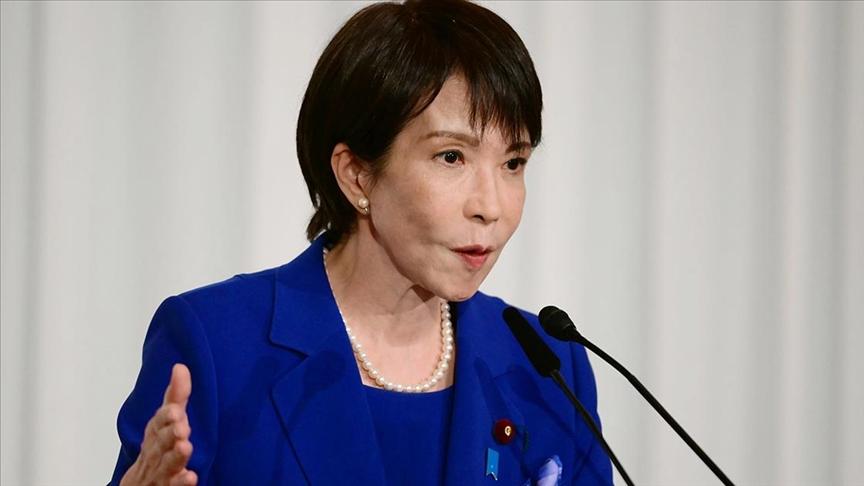
Japanese Prime Minister Sanae Takaichi (Anadolu Ajansı)
In subsequent parliamentary and public statements Takaichi noted that a crisis in the Taiwan Strait could pose a direct security risk to Japan through islands located just 110 kilometers from Japanese territory. She argued that Japan could act in concert with its allies in the event of such an “existential threat”.
The Chinese Ministry of Foreign Affairs labeled Takaichi’s comments as a “blatant interference” in China’s internal affairs and demanded that Japan retract them. Beijing reaffirmed that Taiwan is an inseparable part of China and that the resolution of this “issue” is solely a matter for China to decide.
Chinese Foreign Minister Wang Yi described Takaichi’s suggestion of a possible military response to a Taiwan attack as “shocking” and “unacceptable”. Official statements from the ministry asserted that these remarks amounted to “open interference” in China’s sovereignty and accused Japan of “crossing the line”.
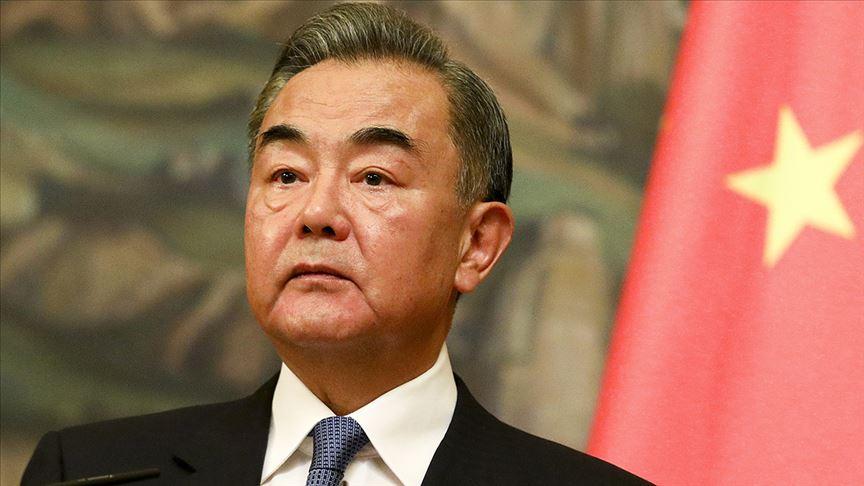
Chinese Foreign Minister Wang Yi (Anadolu Ajansı)
The Chinese Ministry of National Defense strongly objected to Japan’s plans to deploy medium-range air defense missiles on Yonaguni Island approximately 100–110 kilometers from Taiwan’s coast. In an official statement it was asserted that the Taiwan issue “does not concern Japan” that Japan has not adequately confronted its history of militaristic aggression and that it is indulging in fantasies of “military intervention” toward Taiwan. The ministry spokesperson warned that if Japan were to “cross the line even by half a step” it would “pay a painful price”.
China has interpreted Japan’s recent increases in defense spending as part of a broader process of military preparation and rearmament aimed at the Taiwan scenario. The Takaichi government has confirmed its goal of raising defense expenditure to 2 percent of gross domestic product and has linked this increase to the deteriorating security environment caused by China’s regional military activities.
The tension quickly manifested in travel and security advisories targeting citizens of both countries. China’s Ministry of Culture and Tourism issued a warning to Chinese nationals planning to travel to Japan citing a deteriorating security situation and alleging that Chinese citizens had been subjected to attacks. China’s Ministry of Education also warned students about security risks in Japan.
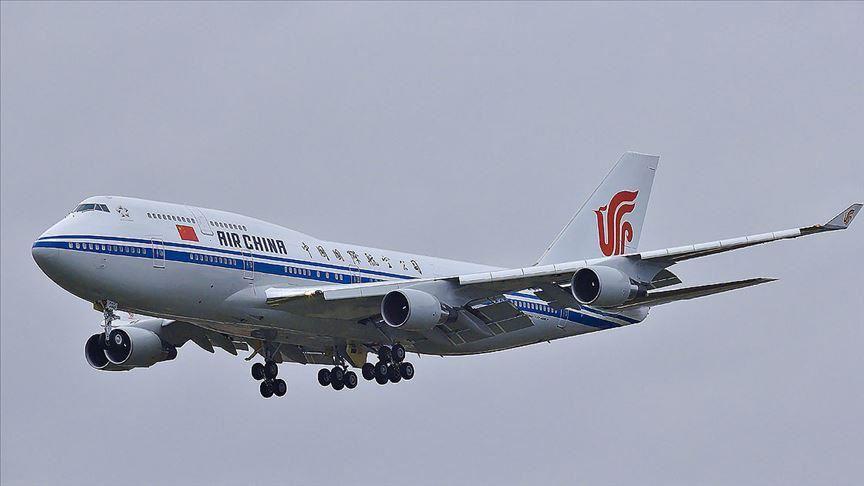
Aircraft operated by Air China (Anadolu Ajansı)
In response Japan issued a notice via the website of its embassy in Beijing advising Japanese citizens living in China to exercise caution regarding local media coverage of China-Japan relations. The advisory urged citizens to closely monitor their surroundings avoid crowded areas particularly those frequented by Japanese nationals and to quickly leave any area where they encounter suspicious individuals or groups.
Japan also referenced two knife attacks in China in 2024 targeting Japanese children noting that these incidents had heightened concerns in Tokyo about hate crimes and the safety of Japanese nationals. Chinese officials characterized these events as “isolated incidents” and avoided commenting on the motives of the attackers.
The economic repercussions of the crisis emerged rapidly. China’s travel advisory to its citizens caused significant declines in the stock values of companies operating in Japan’s tourism and retail sectors. Analyses estimate that a potential drop in Chinese tourists and changes in the decisions of Chinese students could impose a cost of billions of dollars on the Japanese economy.
It has been reported that China has also taken cultural measures in response to the diplomatic tensions. The release dates of two Japanese animated films scheduled for screening in China have been indefinitely postponed. State-aligned media outlets have framed these decisions as part of Beijing’s countermeasures.
Additionally China is reported to have taken steps to restrict or suspend imports of Japanese seafood. This development has added further pressure on Japan’s fishing industry and food exports serving as an example of how mutual economic interdependence between the two countries can be leveraged under crisis conditions.
Various planned bilateral meetings have been postponed mutual visits canceled and high-level contacts significantly reduced. This demonstrates that the crisis has produced tangible consequences not only in rhetoric but also in diplomatic calendars and cooperation channels.
China-Japan Tension - (Al Jazeera)
The international dimension of the crisis has brought the position of the United States to the forefront. U.S. President Donald Trump spoke with Japanese Prime Minister Takaichi following a phone call with Chinese President Xi Jinping and urged that tensions between Tokyo and Beijing not escalate further. Trump emphasized that deepening discord between Japan and China could jeopardize the fragile trade balance Washington is seeking to maintain with Beijing.
It has been reported that Trump did not ask Takaichi to make a direct concession to China’s demands but expressed his desire to avoid any further escalation. A White House statement affirmed that U.S.-China relations are “extremely strong” and that this is also beneficial for Japan Japan’s “close ally”.
The U.S. Ambassador to Tokyo separately stated that the United States supports Japan against what it describes as China’s “coercive” posture. However some Japanese politicians have expressed concern that Trump has not offered direct and robust public backing. Some analysts have suggested that the U.S. administration’s resolve on Taiwan may be weakening under the shadow of trade negotiations with China.
Chinese state media has framed Takaichi’s remarks as a “dangerous provocation” and a sign of “militaristic tendencies”. Some outlets have recalled Japan’s wartime history and highlighted that the prime minister is a political heir to the conservative faction that has previously visited the Yasukuni Shrine which honors Japan’s war dead.
In Japanese media China’s travel advisories have been interpreted as a propaganda tool designed to portray Japan’s security conditions as worse than they are. Concerns have been raised by civil society organizations and business circles in both countries about the potential for mutual hate speech targeting Japanese citizens in China and Chinese citizens in Japan.
The status of Taiwan has long constituted a historical fault line in China-Japan relations. Japan exercised colonial rule over Taiwan from 1895 until the end of the Second World War and relinquished its claims to the island after the war. Although the current government in Beijing has never directly administered Taiwan it continues to regard the island as a province of China.
From Japan’s perspective Taiwan holds strategic value not only due to historical ties but also because it is part of the “First Island Chain” whose control is seen as critical for access to the Pacific. Japan views the prospect of Chinese dominance in an area so close to its western islands as a security risk.
Meanwhile the Taiwanese authorities have rejected China’s sovereignty claim and emphasized that only the people of Taiwan can determine its future. Taiwanese President Lai Ching-te announced a plan to increase defense spending by $40 billion over the next eight years a move criticized by Beijing as “wasteful and likely to plunge the region into catastrophe”.
AA (Anadolu Ajansı). "Japonya, Çin ile Gerilim Nedeniyle Bu Ülkedeki Vatandaşlarını Güvenlik Konusunda Uyardı." Accessed November 28, 2025.
Al Jazeera English. "kx4VVuFkl48." YouTube video. Accessed November 28, 2025. https://www.youtube.com/watch?v=kx4VVuFkl48
Al Jazeera. "China Issues Travel Warning for Japan over Threats to Intervene in Taiwan." Accessed November 28, 2025.
Al Jazeera. "China to Suspend Imports of Japanese Seafood amid Diplomatic Row: Reports." Accessed November 28, 2025.
Asia Nikkei. "Fears Grow Japan–China Spat May Spiral into Worst Crisis Since 2012." Accessed November 28, 2025.
Asia Times. "China and Japan Share Blame for Crisis but Not Equally." Accessed November 28, 2025.
BBC News. "China–Japan Relations: What We Know." Accessed November 28, 2025.
CNN. "China, Japan Trade Blows over Taiwan after Takaichi Remarks." Accessed November 28, 2025.
Defence24. "Taiwan at the Heart of the China–Japan Crisis." Accessed November 28, 2025.
Euronews. "Çin–Japonya Krizi Derinleşiyor: Toplantılar Ertelendi, Seyahatler İptal Edildi." Accessed November 28, 2025.
Euronews. “Çin–Japonya Krizi Derinleşiyor: Toplantılar Ertelendi, Seyahatler İptal Edildi.” Erişim 28 Kasım 2025.
Foreign Policy. "Sanae Takaichi and the Future of China–Japan Tensions." Accessed November 28, 2025.
Foreign Policy. “Sanae Takaichi and the Future of China–Japan Tensions.” Erişim 28 Kasım 2025.
Japan Times. “Trump–Xi–Japan Triangle: How Taiwan Shapes the New Strategic Equation.” Accessed November 28, 2025. https://www.japantimes.co.jp/news/2025/11/25/japan/trump-xi-taiwan-china-us-japan-analysis/
NBC News. “China Criticizes Japan’s Plan to Deploy Missiles on Island near Taiwan.” Accessed November 28, 2025. https://www.nbcnews.com/world/asia/china-criticizes-japans-plan-deploy-missiles-island-taiwan-rcna244926
Newsweek. "Diplomatic Crisis Deepens between China and Japan." Accessed November 28, 2025.
Newsweek. “Diplomatic Crisis Deepens between China and Japan.” Erişim 28 Kasım 2025.
Reuters. "China Says Japan Sent 'Shocking, Wrong Signal' on Taiwan." Accessed November 28, 2025.
Reuters. "China Suspends Japanese Film Releases as Diplomatic Crisis Deepens." Accessed November 28, 2025.
Reuters. "China Will Pay Painful Price If It Steps Out of Line over Taiwan, China Says." Accessed November 28, 2025.
Reuters. "Trump Urged Japan PM to Avoid Escalation in China Dispute, Sources Say." Accessed November 28, 2025.
Reuters. “China Will Pay Painful Price If It Steps Out of Line over Taiwan, China Says.” Erişim 28 Kasım 2025.
Reuters. “Trump Urged Japan PM to Avoid Escalation in China Dispute, Sources Say.” Erişim 28 Kasım 2025.
SCMP (South China Morning Post). "China Warns Against Japan Travel, Citing Significant Surge in Assaults as Ties Spiral." Accessed November 28, 2025.
SCMP (South China Morning Post). "Why Beijing Is Unlikely to Ease Pressure on Japan over Takaichi’s Taiwan Comments." Accessed November 28, 2025.
SCMP (South China Morning Post). “China Warns Against Japan Travel, Citing Significant Surge in Assaults as Ties Spiral.” Erişim 28 Kasım 2025.
SCMP (South China Morning Post). “Why Beijing Is Unlikely to Ease Pressure on Japan over Takaichi’s Taiwan Comments.” Erişim 28 Kasım 2025.
The Guardian. “China and Japan Are in a War of Words over Taiwan — What Happens Next?” Accessed November 28, 2025. https://www.theguardian.com/world/2025/nov/17/china-and-japan-are-in-a-war-of-words-over-taiwan-what-happens-next

Tensions centered on Taiwan between China and Japan began when Prime Minister Sanae Takaichi stated that a potential Chinese attack would threaten Japan’s security. Beijing responded sharply, viewing these remarks as interference in its sovereignty. Despite mutual travel and security advisories, economic and cultural restrictions, hardened military rhetoric, and calls from the United States to de-escalate tensions, the developments have led to a serious diplomatic crisis between the two countries.
No Discussion Added Yet
Start discussion for "China-Japan Diplomatic Tensions (November 2025)" article
November 28, 2025
Catalyst of the Crisis: Takaichi’s Remarks on Taiwan
November 28, 2025
China’s Official Reactions and Strong Warnings
November 28, 2025
Travel and Security Advisories
November 28, 2025
Economic and Cultural Repercussions
November 28, 2025
The Role of the United States and International Reactions
November 28, 2025
Public Perception Media Rhetoric and Propaganda Elements
November 28, 2025
Historical and Strategic Context