
 Recently Added:
This article was automatically translated from the original Turkish version.
United States Arms Sales Packages to Taiwan is a multi-package arms sale process announced by the United States government on December 17, 2025, comprising eight separate defense supply packages with a total monetary value exceeding 10 billion US dollars. The packages have been formally notified to the United States Congress through the U.S. Department of State and the Defense Security Cooperation Agency and are now under statutory review.
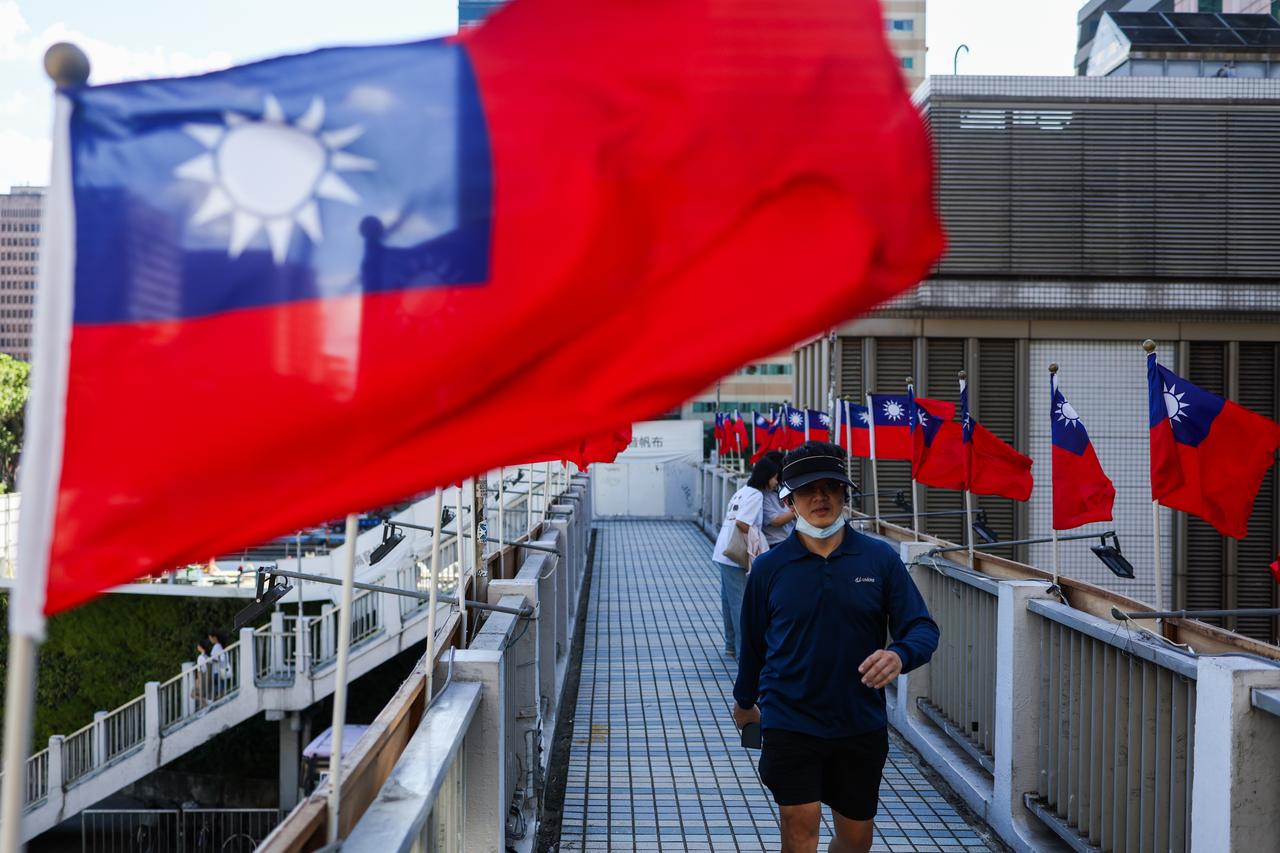
Taiwan flag – (Anadolu Ajansı)
The United States arms sales packages to Taiwan were publicly announced on December 17, 2025. The announcement was made during a address to the nation delivered by U.S. President Donald Trump from the Diplomatic Reception Room of the White House, with simultaneous public notification issued by the U.S. Department of State.
The U.S. Department of State transmitted notifications regarding the sales to the U.S. Congress through the Defense Security Cooperation Agency (DSCA). The DSCA statement specified that the sales were organized into eight separate packages, each subject to individual congressional notification. Following these notifications, the sales entered a mandatory review period of approximately 30 days as required by U.S. law.
During the same period, Taiwan’s Ministry of National Defense issued a statement parallel to the U.S. notifications. The ministry announced that the sales had entered the statutory review process of the U.S. Congress and that formal contract negotiations would proceed only after the completion of this process.
Taiwan’s military authorities described the process as follows: “A formal contract will be signed after the U.S. Congress approves the arms sales within its mandatory 30-day review period.”
The legal basis for these arms sales is grounded in the Taiwan Relations Act, the U.S. legislation governing defense cooperation with Taiwan. U.S. authorities have stated that the sales are conducted in full compliance with this legal framework.
Taiwan’s Ministry of National Defense characterized the U.S. approach as follows: “Washington’s efforts to assist Taiwan in maintaining adequate self-defense capabilities under the Taiwan Relations Act and the Six Assurances.”
The U.S. Department of State defined the legal justification for the sales as follows: “The Department of State affirms that these sales serve U.S. national, economic, and security interests by supporting Taiwan’s ongoing efforts to modernize its armed forces and sustain a credible defense capability.”
The arms sales announced by the United States to Taiwan in 2025 were structured as eight separate sales packages. Each package was individually notified to the U.S. Congress and subjected to independent review processes. The total monetary value of the sales, according to various official sources, exceeds 10 billion U.S. dollars, with Taiwan’s Ministry of National Defense specifying the figure as 11.15 billion U.S. dollars.
The U.S. Defense Security Cooperation Agency (DSCA) publicly disclosed the contents and estimated costs of each package individually. The eight packages encompassed missile systems, rocket systems, artillery components, unmanned systems, software, and logistical support items.
Instead of a single consolidated contract, the sales are being executed through eight separate agreement files. This structure ensures that each system undergoes individual cost evaluation, technical assessment, and approval process. The packages include not only high-cost primary weapon systems but also associated maintenance, repair, software, and spare parts support.
The 2025 arms sales packages include the M142 High Mobility Artillery Rocket System (HIMARS) and Army Tactical Missile System (ATACMS) missiles. U.S. authorities stated that the packages cover 82 HIMARS units and 420 ATACMS missiles. These systems are evaluated as separate cost items, with the total value of these systems exceeding 4 billion U.S. dollars.
Another major component of the arms packages consists of self-propelled howitzer systems. The package includes 60 M109A7 self-propelled howitzers and related equipment. This procurement item was submitted to Congress through a separate DSCA notification. The total cost of the howitzer systems and associated equipment is reported to exceed 4 billion U.S. dollars.
The sales packages also include the FGM-148 Javelin and TOW / TOW-2B anti-tank missile systems. These systems, designed to enhance ground defense capabilities, are presented as separate packages.
The arms packages include unmanned aerial vehicles and loitering munition systems. In particular, the ALTIUS tube-launched loitering munitions were included as a distinct procurement item in DSCA notifications. Their total value is estimated to exceed 1 billion U.S. dollars.
The sales packages encompass not only weapon systems but also military software, network infrastructure, and logistical support elements. In this context, the Tactical Mission Network command and control software, along with associated military software and service packages, were notified as separate procurement items. The total value of this component is also reported to exceed 1 billion U.S. dollars. Additionally, the packages include the following elements:
The U.S. administration justified the 2025 arms sales packages to Taiwan through the U.S. Department of State and the Defense Security Cooperation Agency (DSCA). Official statements emphasized that the sales are evaluated within the context of U.S. national, economic, and security interests.
The U.S. Department of State stated that the sales aim to modernize Taiwan’s armed forces and support the maintenance of a credible defense capability. The DSCA notifications to Congress further linked the sales to regional security, military balance, and political stability.
The People’s Republic of China has formally responded to the United States’ announcement of the eight separate arms sales packages to Taiwan. Spokesperson of the Chinese Ministry of Foreign Affairs Guo Jiakun described China’s assessment of the sales as follows: “These sales packages seriously violate the One-China Principle and the three joint communiqués between China and the United States, gravely undermine China’s sovereignty, security, and territorial integrity, and severely disrupt peace and stability across the Taiwan Strait.”
In the same statement, China’s position on the sales was articulated as: “Beijing firmly opposes this situation and strongly condemns it. China will take resolute and robust measures to safeguard its national sovereignty, security, and territorial integrity.”
Guo Jiakun also commented on the impact of the arms sales in the Taiwan context: “Arms purchases will not avert the inevitable outcome of Taiwan’s independence; they will only accelerate the Taiwan Strait toward heightened military danger and the risk of war.”
The statement further emphasized the seriousness of the Chinese government’s stance with the following words: “No one should underestimate the firm resolve and strong capacity of the Chinese government and the Chinese people to safeguard national sovereignty and territorial integrity.”
Al Jazeera. “US Approves $11bn in Arms Sales to Taiwan in Deal Likely to Anger China.” Al Jazeera English. Accessed December 18, 2025. https://www.aljazeera.com/news/2025/12/18/us-approves-11bn-in-arms-sales-to-taiwan-in-deal-likely-to-anger-china
Anadolu Ajansı. "Trump Greenlights over $11B in New Arms Packages for Taiwan." Anadolu Ajansı (English). Accessed December 18, 2025. https://www.aa.com.tr/en/americas/trump-greenlights-over-11b-in-new-arms-packages-for-taiwan/3774206#
Anadolu Ajansı. “China Warns US Arms Sales to Taiwan Undermine Peace, Stability; Vows ‘Resolute Measures.’” Anadolu Ajansı (English). Accessed December 18, 2025. https://www.aa.com.tr/en/asia-pacific/china-warns-us-arms-sales-to-taiwan-undermine-peace-stability-vows-resolute-measures-/3774482#
Associated Press. “US announces massive package of arms sales to Taiwan valued at more than $10 billion.” Accessed December 18, 2025. https://apnews.com/article/trump-taiwan-arms-sales-china-2743b66e3a4e47a895e731568cef9008
Focus Taiwan. "U.S. announces US$11.1 billion arms sale to Taiwan." Accessed December 18, 2025. https://focustaiwan.tw/politics/202512180004
Focus Taiwan. "U.S. approves potential US$330 million arms sale to Taiwan." Accessed December 18, 2025. https://focustaiwan.tw/politics/202511140007
Global Times. “China firmly opposes, strongly condemns US govt's approval of $11 billion arms sales package to Taiwan island: FM.” Accessed December 18, 2025. https://www.globaltimes.cn/page/202512/1350909.shtml
NPR. “US announces massive package of arms sales to Taiwan valued at more than $10 billion.” NPR News. Accessed December 18, 2025. https://www.npr.org/2025/12/18/nx-s1-5648080/us-arms-sales-taiwan-10-billion

On December 17, 2025, the United States government announced eight separate arms sales packages to Taiwan. The sales, with a total value exceeding 10 billion US dollars, were notified to Congress through the U.S. Department of State and the Defense Security Cooperation Agency and entered a statutory review period of approximately 30 days. The packages included rocket and missile systems, artillery components, anti-tank weapons, unmanned systems, as well as software and logistical support items. The People’s Republic of China formally objected, stating that the sales violated the One China Principle and announced it would take strong measures.
No Discussion Added Yet
Start discussion for "United States' Arms Sales Packages to Taiwan (2025)" article
December 18, 2025
Announcement of the Sales Packages
December 18, 2025
Legal and Institutional Framework
December 18, 2025
Number and Structural Composition of the Packages
December 18, 2025
Weapons and Systems Included in the Sales
December 18, 2025
Official Justifications by the U.S. Administration
December 18, 2025
Responses from the People’s Republic of China