

This article was automatically translated from the original Turkish version.
+2 More
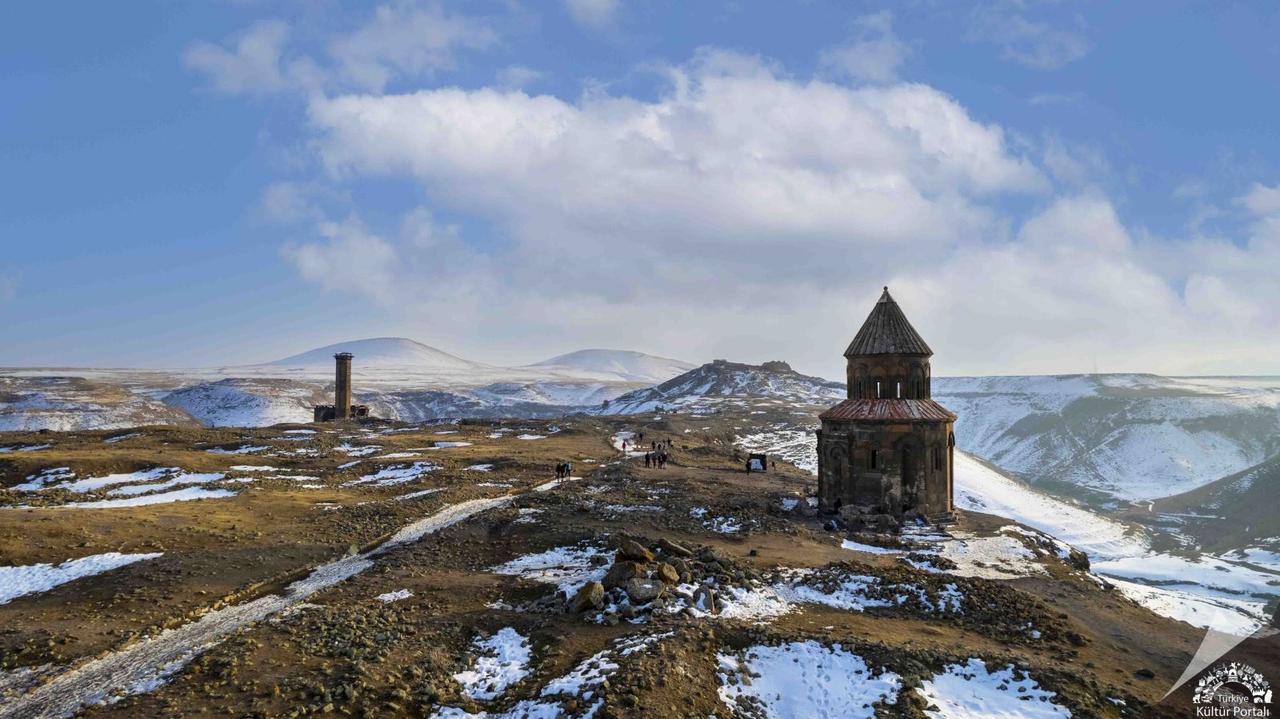
Abughamrents Church is an important religious structure from the early Middle Ages, located on the western slope of the Ani Archaeological Site within the boundaries of Kars Province, Türkiye, facing the Bostanlar Stream. It has been registered as a “protected immovable cultural heritage.” The church is among the significant monumental structures of Ani due to its architectural features and state of preservation.
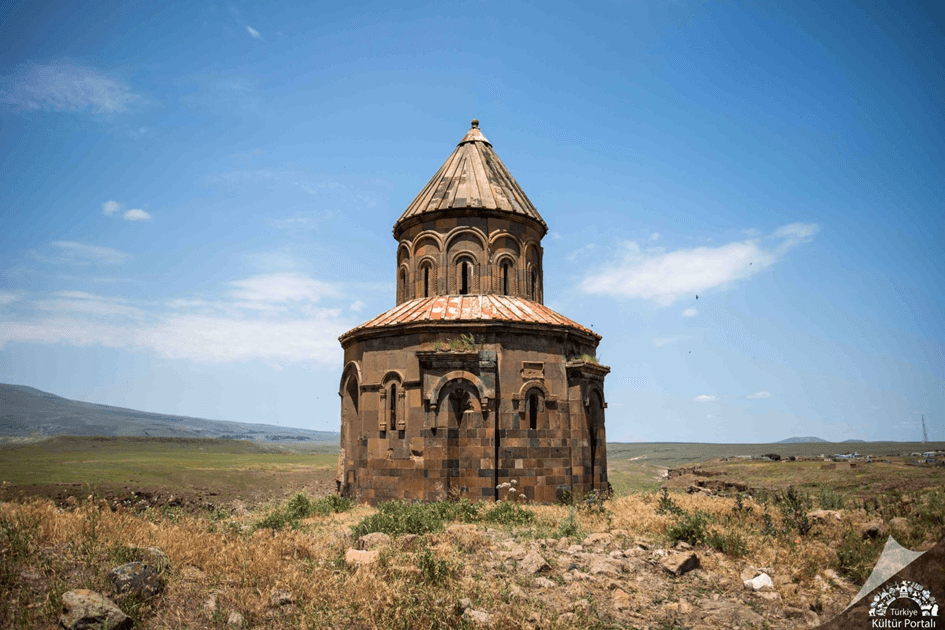
Abughamrents Church (Culture Portal)
The exact date of construction and the founder of the church are not definitively known. However, according to an Armenian inscription on the northern wall, the church was likely built around 980 by Prince Grigor Pahlavuni in memory of his father, Abughamrents. In 1040, burial chapels dedicated to St. Grigor and St. Stephanos were added to its northern side. These records indicate that the structure was built at the end of the 10th century and underwent additions during the 11th century.
Abughamrents Church is a twelve-sided structure externally and hexaconch (six-lobed) internally. It was built on a three-step platform. The building uses red, black, and brownish finely cut stones. Its cylindrical body is covered by an octagonal dome, which rests on six slender columns. Each corner of the octagonal dome features a window. The church has a single entrance on the southwest facade. The absence of an apse supports the view that the structure was intended as a memorial tomb. The carved sundial on the southern facade is one of the architectural details.
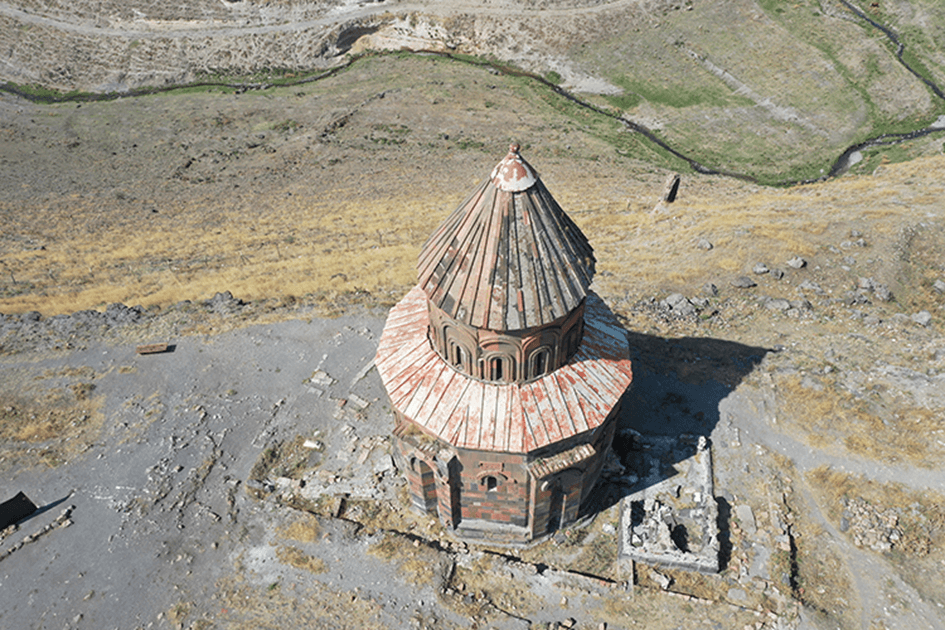
Abughamrents Church (Anadolu Agency)
During excavations at the church, a floor paved with slate stones, a porch, stylobat remains, and a burial area were uncovered on the southern facade. A tomb with a lid indicates that this area was used as a cemetery. Skulls belonging to different individuals were found in the northern chapels. Additionally, small artifacts related to daily life, such as food containers, a tandır oven, ceramic vessels, and a red-slipped rhyton, were identified.
The structure underwent various restoration interventions in 2012. In 2024, as part of excavations conducted in collaboration between the Ministry of Culture and Tourism and Kafkas University, inscriptions and paintings inside the building were cleaned by conservators. Walls, hearth areas, and other architectural elements have been placed under conservation. The Ani Archaeological Site was inscribed on the UNESCO World Heritage List in 2016, and conservation efforts continue to this day.

No Discussion Added Yet
Start discussion for "Church of Abughamrents" article
History
Architectural Features
Excavations and Archaeological Findings
Restoration and Conservation Efforts