
This article was automatically translated from the original Turkish version.
+2 More
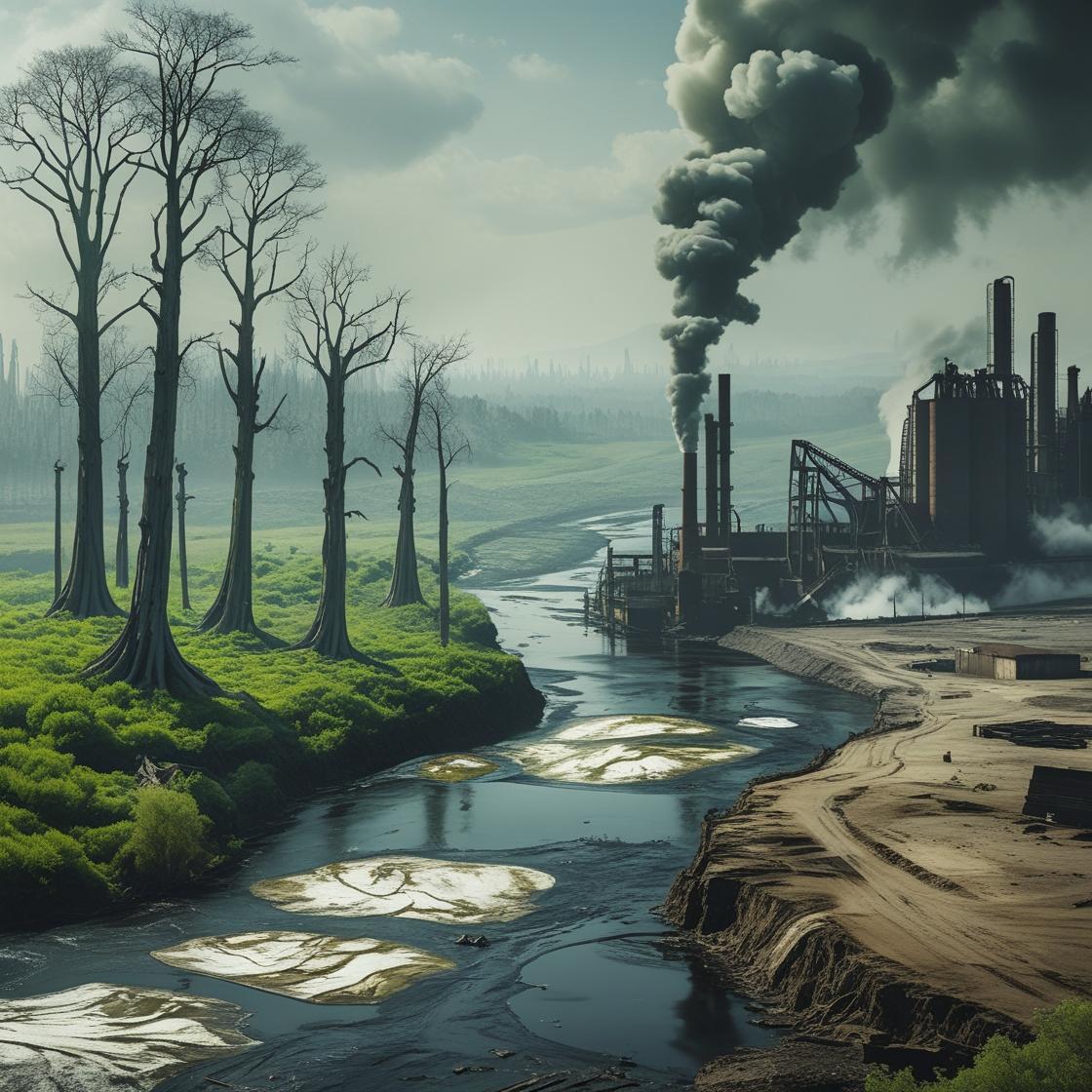
(Generated by Artificial Intelligence)
Circular Economy in Türkiye
Strategic Documents | National Circular Economy Strategy and Action Plan Notice on Waste-derived Fuel and Blended Fuel and Alternative Raw Materials Energy Labeling Framework Regulation Regulation on Eco-design of Energy-related Products 12th Development Plan (2024–2028) | ||||||||
|---|---|---|---|---|---|---|---|---|---|
Application Examples | Awareness of Expiry Date Protect Food Campaign Zero Waste Project | ||||||||
Circular economy is a systematic approach aimed at minimizing resource use in production and consumption processes, reducing waste generation, and ensuring that materials are used for as long as possible within the economic cycle to generate value. Unlike the linear economic model, circular economy is based on efficient resource use, product reuse, repair, refurbishment, and recycling. In Türkiye, the transition to a circular economy is addressed within national development strategies and European Union alignment processes, forming the core of green transformation, resource efficiency, and waste management policies.

Representative Visual of Circular Economy (Source: Unsplash)
In 2019, total domestic raw material consumption in Türkiye amounted to approximately 0.9 billion tons, with per capita raw material consumption recorded at around 10.84 tons. The resource efficiency indicator for the same year (GDP/DMC ratio) stood at 0.7 EUR/kg, below the European Union average. This indicates that resource use in the Turkish economy remains inefficient in generating economic output. As of 2022, the Turkish economy consists of 61% services, 31.5% industry, and 7.5% agriculture, with a population exceeding 83 million. Between 2000 and 2019, absolute resource consumption increased alongside economic growth.
The concept of circular economy was first incorporated into Turkish legislation in 2020 under the “General Principles” section of Law No. 2872 on the Environment. In this context, the Ministry of Environment, Urbanization and Climate Change is working to align secondary legislation with circular economy principles. In 2022, the “Technical Support Project for the Assessment of Türkiye’s Potential for Transition to a Circular Economy (DEEP)”, supported by TÜBİTAK, was launched with the aim of developing a National Circular Economy Action Plan and Roadmap. According to ministry officials, the National Circular Economy Strategy and Action Plan was completed and made ready for implementation by 2025. This plan plays a vital role in helping Türkiye achieve its zero-emission targets through sustainable resource management, innovative business models, and employment generation potential. Additionally, the “National Strategy Document and Action Plan for the Prevention, Reduction and Monitoring of Food Loss and Waste”, implemented in 2020 with FAO support, supports a circular economy approach specifically in the food sector.
The circular economy approach in Türkiye is reflected in various strategic documents:
Under the DEEP project, circular economy indicators have been developed, with analyses conducted using TÜİK and Eurostat data on waste generation, industrial production value, employment, and trade. Key targets include achieving 100% coverage of municipal population by wastewater treatment services (89% in 2022), increasing the reuse rate of treated wastewater from 4.2% in 2022 to 15% by 2030, and ensuring 98% beneficial use of treatment sludge.

Representative Visual of Circular Economy (Source: Unsplash)
The transition to a circular economy in Türkiye faces structural challenges including inadequate technological infrastructure, legislative inconsistencies, shortages of skilled human resources and expertise, cultural resistance, and lack of transparency in data sharing. Economic challenges such as quality and cost issues with recycled materials hinder market competitiveness, while institutional complexity and sectoral disparities impede policy implementation. Supportive mechanisms such as traceability, data standardization, and sustainable public procurement need to be developed.
The development of the National Circular Economy Strategy and Action Plan is regarded as a significant step in guiding Türkiye’s transition to a circular economy at institutional and sectoral levels. Under policies aligned with the European Green Deal, clean production legislation is being updated, sectoral training programs are being implemented, and sustainable public procurement is being promoted. Thus, circular economy is positioned as one of the key strategies contributing to environmental and economic sustainability in Türkiye.
Anadolu Ajansı (AA). "Türkiye'nin 'Ulusal Döngüsel Ekonomi Stratejisi ve Eylem Planı' Hazırlandı." Anadolu Ajansı, February 11, 2025. Accessed June 26, 2025. https://www.aa.com.tr/tr/ekonomi/turkiyenin-ulusal-dongusel-ekonomi-stratejisi-ve-eylem-plani-hazirlandi/3478741.
Balbay, Şenay, Adem Sarıhan, and Edip Avşar. “Dünya’da ve Türkiye’de ‘Döngüsel Ekonomi / Endüstriyel Sürdürülebilirlik’ Yaklaşımı.” *European Journal of Science and Technology* 27 (November 2021): 557–569. Accessed June 26, 2025. https://dergipark.org.tr/en/download/article-file/1879706.
European Environment Agency (EEA). 2022. "Circular Economy Country Profile – Türkiye." ETC CE Report 2022/5. Accessed June 26, 2025. https://www.eionet.europa.eu/etcs/etc-ce/products/etc-ce-products/etc-ce-report-5-2022-country-profiles-on-circular-economy/trkiye-ce-country-profile-2022_for-publication.pdf.
Ministry of Environment, Urbanization and Climate Change. "Circular Economy Policies and Strategic Documents." Ministry of Environment, Urbanization and Climate Change, 2025. Accessed June 26, 2025. https://dongusel.csb.gov.tr/hakkinda-i-105778.
Unsplash. “Green Plant in Clear Glass Vase.” Accessed June 26, 2025. Link
Unsplash. “Windmills on Green Field under White Sky during Daytime.” Accessed June 26, 2025. Link
(Generated by Artificial Intelligence)
Circular Economy in Türkiye
Strategic Documents | National Circular Economy Strategy and Action Plan Notice on Waste-derived Fuel and Blended Fuel and Alternative Raw Materials Energy Labeling Framework Regulation Regulation on Eco-design of Energy-related Products 12th Development Plan (2024–2028) | ||||||||
|---|---|---|---|---|---|---|---|---|---|
Application Examples | Awareness of Expiry Date Protect Food Campaign Zero Waste Project | ||||||||
No Discussion Added Yet
Start discussion for "Circular Economy in Türkiye" article
Data on Resource Use
Policy and Legal Framework
Circular Economy Policies and Strategic Documents
Monitoring Mechanisms and Performance Indicators
Implementation Examples
Challenges and Barriers
Future Perspective