


This article was automatically translated from the original Turkish version.
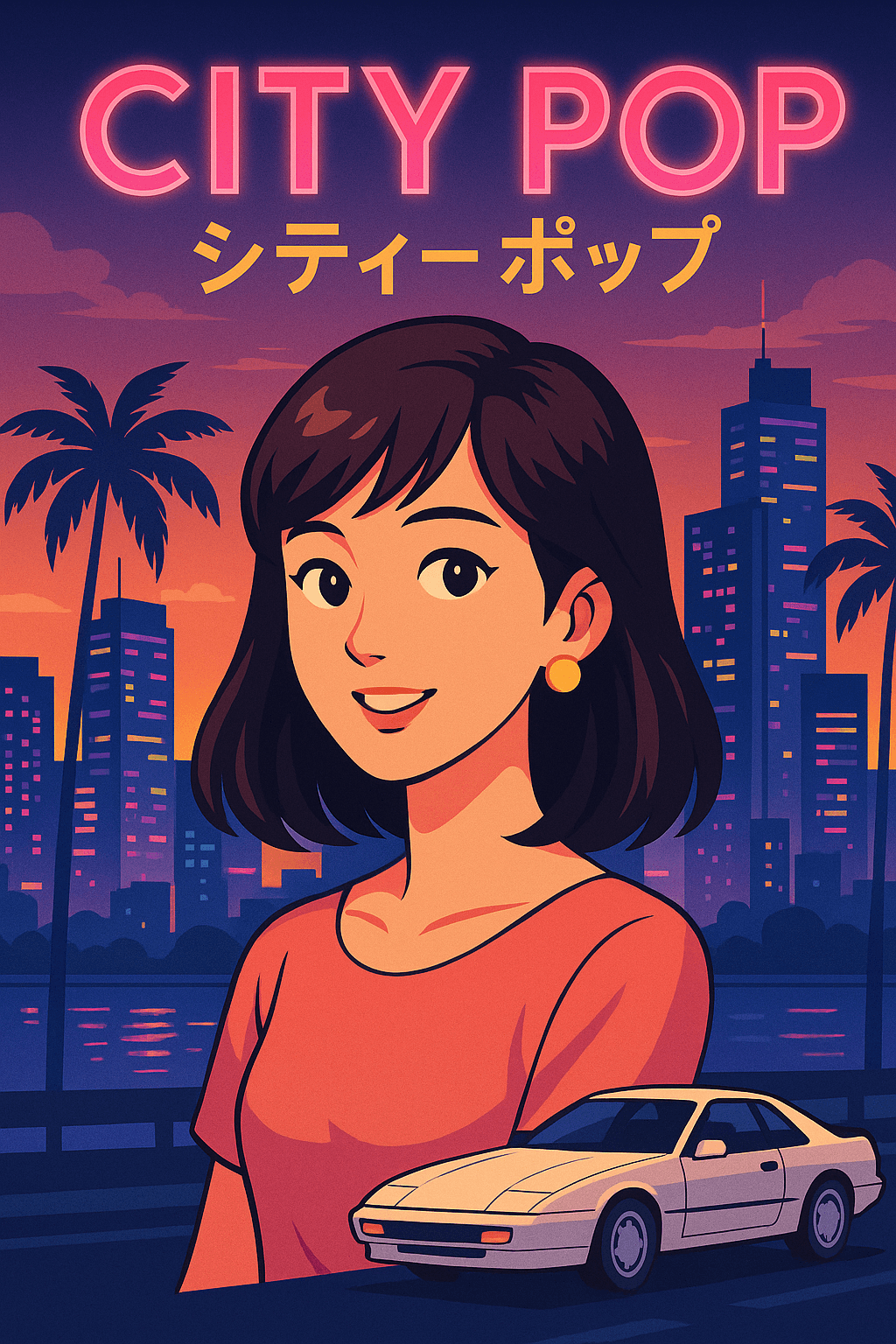
City pop (シティ・ポップ) is a pop music genre that emerged in Japan from the late 1970s to the late 1980s, reflecting the urban lifestyle of the era. Blending Western musical influences such as funk, disco, soft rock, R&B, and jazz with a uniquely Japanese musical sensibility, this genre emerged as a musical expression of increasing urbanization, economic growth, and consumer culture driven by technological advancements. Often referred to as the “soundtrack of city life,” city pop has garnered interest beyond Japan; beginning in the 2010s, it was rediscovered in the West through digital platforms, significantly increasing its recognition.
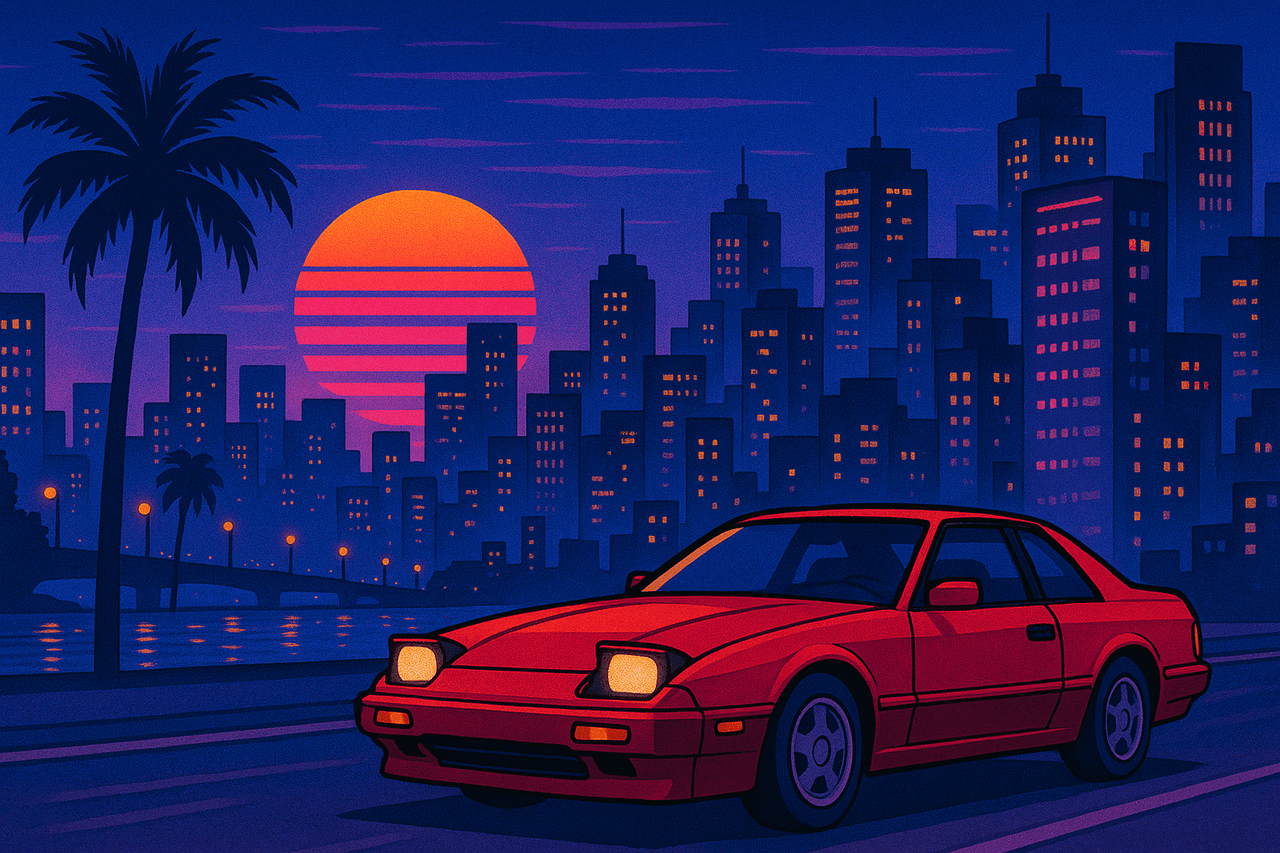
Visual Representing the City Pop Style (Generated by Artificial Intelligence)
The origins of city pop are directly linked to Japan’s economic development during the 1970s and the growing influence of Western music across the country. During this period, Japan entered a phase of prosperity known as the “Bubble Economy,” characterized by rapid urbanization and rising living standards. Japanese youth increasingly embraced Western, particularly American, music and lifestyle trends; automobiles, foreign fashion brands, imported consumer goods, and new media technologies became symbols of urban life.
American funk, soul, R&B, and soft rock had a significant impact on the emergence of city pop. In the mid-1970s, while the traditional Japanese “kayōkyoku” (流行歌) style remained dominant, artists such as Eiichi Ohtaki, Tatsuro Yamashita, and Taeko Ohnuki localized Western musical elements to develop a new pop aesthetic. Although the term “city pop” was not yet widely used at the time, these artists created songs that captured the essence of urban life, establishing a new musical style.
Tatsuro Yamashita’s 1980 album “Ride on Time” is regarded as one of the turning points in city pop, due to its commercial success and its incorporation of Western rhythmic structures. The song was also promoted through advertisements targeting car cassette players, helping to associate city pop with Japan’s rising automobile culture. During the same period, artists such as Mariya Takeuchi further elevated the genre with more melodic and romantic compositions.
The commercial success of city pop also contributed to the international expansion of the Japanese music industry. Partnerships between Japanese companies like Sony and American labels such as CBS facilitated the transfer of American production techniques to Japan. These techniques, combined with high audio quality, jazz-influenced harmonies, and funk-based instrumentation, became defining characteristics of city pop.
However, with the stagnation of Japan’s economy in the early 1990s, city pop lost its popularity. The shift to CDs and digital formats led to the decline of cassette-based listening habits, causing city pop to fade into the background.
One of the most distinctive features of city pop is its fusion of Western music with Japanese pop culture. The intensive use of modern tools such as synthesizers, drum machines, and digital recording technologies set this genre apart from the traditional pop sensibilities of the time. Lyrically, themes such as summer, the sea, cars, urban life, love, and personal freedom are prominent.
City lights, neon signs, sports cars, tropical scenes, and beach vistas are frequently used visual elements in album covers and music videos. These images reflect the ideology of urban life that became widespread in Japan during the 1980s. Particularly, themes such as seaside living, nighttime drives, summer, personal freedom, romance, and luxury consumption are clearly evident in city pop lyrics.
City pop has also been described as “car stereo music.” This definition stems from the genre’s development during a period when individual car ownership was increasing in Japan. Songs were composed with tempos and atmospheres suited for listening while driving. Some city pop tracks, categorized in Japan as “light mellow,” stand out for their easy listenability, production quality, and emotional depth.
The definition of city pop can vary between Japan and the West. In Japan, the term refers to a specific musical style, whereas in the West, it is often used as a general label for Japanese pop music from the 1980s. This highlights how the genre’s global perception varies according to listeners’ backgrounds and cultural contexts.
In addition to Tatsuro Yamashita (山下達郎), widely regarded as one of the pioneers of city pop, artists such as Mariya Takeuchi (竹内まりや), Taeko Ohnuki (大貫妙子), Anri (杏里), Toshiki Kadomatsu (角松敏生), Tomoko Aran (荒井富佐子/亜蘭知子), and Junko Yagami (八神純子) played significant roles in the genre’s development. Additionally, figures such as Eiichi Ohtaki (大瀧詠一), Miki Matsubara (松原みき), and Minako Yoshida (吉田美奈子) gained prominence for their dialogue with Western music.
Miki Matsubara - Stay With Me (YouTube)
City pop is viewed as a cultural reflection of Japan’s 1980s “Bubble Economy” period. During this time, the rising middle class, consumer-driven lifestyles, and themes of individual freedom frequently appeared in city pop lyrics and overall atmosphere. The genre is also regarded as an idealized representation of urban life in Japan.
The music industry of the era positioned city pop artists as modern, urban, and Westernized individuals. Thus, city pop became not only a musical genre but also a reflection of the era’s idealized lifestyles.
From the late 2000s onward, the rediscovery and re-sharing of city pop songs on digital platforms such as YouTube led to the genre’s global recognition. In particular, Mariya Takeuchi’s song “Plastic Love” went viral on YouTube in 2017 and was streamed millions of times. This video rapidly spread through YouTube’s recommendation algorithm and was discovered by users who did not speak Japanese. Similarly, Miki Matsubara’s song “Mayonaka no Door” (1979) was re-released in 2021 and remained at the top of global viral charts for weeks.
The 2019 compilation album Pacific Breeze: Japanese City Pop, AOR and Boogie 1976–1986, released by the American record label Light in the Attic Records, played a significant role in bringing the genre back into the spotlight. Additionally, the widespread proliferation of city pop-related content on applications such as Xiaohongshu (Little Red Book) in China has generated economic vitality in both the music and vintage fashion industries. The resurgence of city pop has also led to a noticeable increase in record sales worldwide.
Blistein, John. “CITY POP: WHY DOES THE SOUNDTRACK TO TOKYO’S TECH BOOM STILL RESONATE?” Rolling Stone. Accessed May 25, 2025. https://www.rollingstone.com/music/music-features/japanese-city-pop-returns-light-in-the-attic-compilation-pacific-breeze-822663/
Chen, ManWai. “The Resurgence of City Pop and The Nostalgia Cycle: Impacts on The Music Industry and Modern Culture.” *Highlights in Business, Economics and Management*, no. 23 (2023). Accessed June 3, 2025. Accessed adresi
Electronic Beats. "A Guide to City Pop: Japan’s Overlooked 80s Disco Phenomenon." Electronic Beats. Accessed May 30, 2025. https://www.electronicbeats.net/city-pop-guide-japans-overlooked-80s-disco-10-tracks
Freeman, John. “City Pop: The Optimistic Disco of 1980s Japan Finds a New Young Crowd in the West.” *Chicago Reader*. Accessed May 30, 2025. https://chicagoreader.com/blogs/city-pop-the-optimistic-disco-of-1980s-japan-finds-a-new-young-crowd-in-the-west
Kamachi Peach. "Miki Matsubara - Stay With Me HD (Club Mix)." YouTube. Accessed June 3, 2025. https://www.youtube.com/watch?v=QNYT9wVwQ8A
Ross, Robert Alex. “The curators of Pacific Breeze 2 on their favorite hard-to-find city pop gems.” The FADER. Accessed May 30, 2025. https://www.thefader.com/2020/05/18/andy-cabic-mark-mcneill-light-in-the-attic-pacific-breeze-city-pop-interview
Vice. “The Guide to Getting Into City Pop, Tokyo’s Lush 80s Nightlife Soundtrack.” Vice. Accessed May 30, 2025. https://www.vice.com/en/article/city-pop-guide-history-interview
Web Japan. “City Pop is Spreading Around the World.” Ministry of Foreign Affairs of Japan. Accessed June 3, 2025. https://web-japan.org/trends/11_culture/pop202203_city-pop.html

History and Development
Characteristics
Key Artists
Cultural and Social Context
Rediscovery and Contemporary Influence