This article was automatically translated from the original Turkish version.
+2 More
Original Name(s) | La Mémoire Collective | ||||||||
|---|---|---|---|---|---|---|---|---|---|
Author(s) | Maurice Halbwachs | ||||||||
Category | Sociology/Social Sciences | ||||||||
Publisher(s) | Heresy | ||||||||
Number of Pages | 174 | ||||||||
ISBN | 9786059436212 | ||||||||
Year of Publication | 2017 | ||||||||
Translator to Turkish | Banu Barış | ||||||||
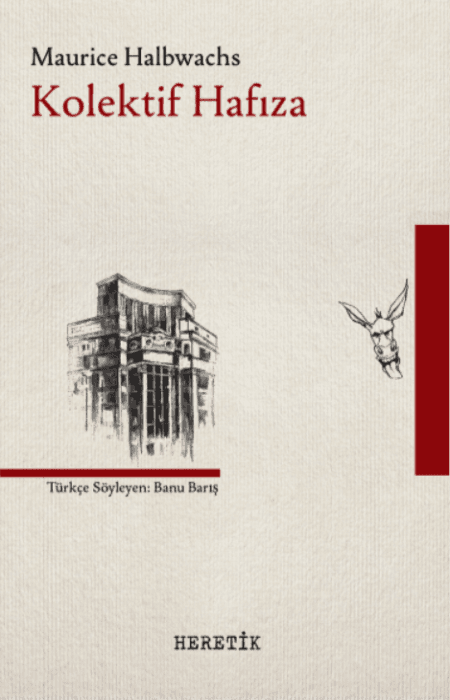
Collective Memory is a work compiled from Maurice Halbwachs’s previously unpublished writings, published after his death. The study continues the themes addressed in Halbwachs’s 1925 work, The Social Frameworks of Memory. Halbwachs critiques psychological approaches to individual memory and analyzes how memory becomes embodied in space and objects, the mechanisms involved, and how memories are restructured through this process. The work examines the social framework of memory, exploring the relationship between the individual and society within historical and spatial contexts.
Maurice Halbwachs (1877–1945) was a French sociologist and philosopher, regarded as part of the Durkheimian school. He is recognized as a pioneer in the study of collective memory. On 26 July 1944, he was arrested by the Gestapo and deported to the Buchenwald concentration camp. He died a year later from dysentery.
The work is organized into four main sections:
The work explores the relationship between individual and collective memory, the social and spatial dimensions of memory, the influence of history and time on collective memory, the persistence and transformation of groups, and the reconstruction of social events. It demonstrates that memory is not merely an individual process but is fundamentally linked to social structures and spatial contexts.
Halbwachs, Maurice. *Kolektif Hafıza*. Translated by Banu Barış. Heretik Yayıncılık, September 2017. https://heretik.com.tr/kitap/kolektif-hafiza/
Heretik Yayınevi. "Kolektif Hafıza." Accessed October 27, 2025. http://heretik.com.tr/wp-content/uploads/2017/09/Kolektif-Haf%C4%B1za-%C4%B0%C3%A7indekiler.pdf

Original Name(s) | La Mémoire Collective | ||||||||
|---|---|---|---|---|---|---|---|---|---|
Author(s) | Maurice Halbwachs | ||||||||
Category | Sociology/Social Sciences | ||||||||
Publisher(s) | Heresy | ||||||||
Number of Pages | 174 | ||||||||
ISBN | 9786059436212 | ||||||||
Year of Publication | 2017 | ||||||||
Translator to Turkish | Banu Barış | ||||||||
No Discussion Added Yet
Start discussion for "Collective Memory (Book)" article
About the Author
Sections and Structure
Main Themes