


This article was automatically translated from the original Turkish version.
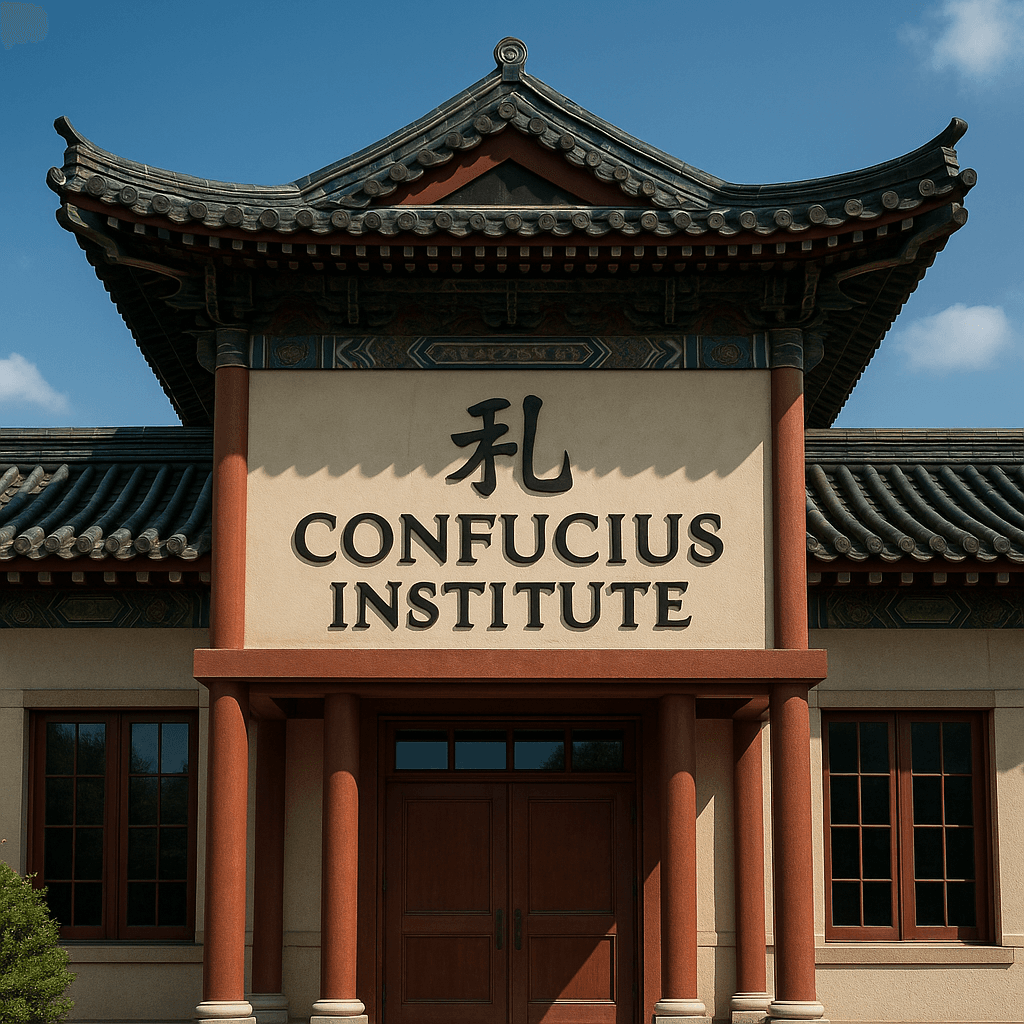
Confucius Institute (Generated by Artificial Intelligence)
Establishment | 2004 | ||||||||
|---|---|---|---|---|---|---|---|---|---|
Founding Country | People's Republic of China | ||||||||
Type(s) | International cultural and educational institution | ||||||||
Area of Activity | Chinese language instruction, cultural promotion | ||||||||
Corporate Structure | Institutes operating in collaboration with universities in host countries | ||||||||
Confucius Institute is an international cultural and educational institution established by the People’s Republic of China since 2004 with the primary aim of promoting Chinese language instruction and introducing Chinese culture. These institutes typically operate in collaboration with universities in host countries, organizing courses on the Chinese language and culture, conducting cultural events, and supporting academic exchange programs. In this regard, Confucius Institutes have emerged as institutional instruments of China’s international engagement strategy based on language, culture, and education.
ODTÜ Confucius Institute Promotion Video (METU)
To understand Confucius Institutes, it is necessary to first examine the theoretical framework of culture, diplomacy, and the concept of cultural diplomacy at their intersection. This is because Confucius Institutes are not merely institutions engaged in education or cultural activities; they are concrete manifestations of a diplomatic approach in which culture is instrumentalized to serve foreign policy objectives.
Cultural diplomacy can be defined as a set of diplomatic activities through which a state promotes its cultural values, language, history, and way of life to other societies in order to foster positive international perceptions and mutual understanding. The defining feature of cultural diplomacy is its reliance on persuasion, attraction, and voluntary interaction mechanisms rather than coercive methods. In this sense, cultural diplomacy is directly linked to the concept of soft power. Soft power refers to a actor’s capacity to influence others without coercion, through cultural appeal, values, and policies.
China’s understanding of cultural diplomacy is regarded as an original source of power shaped by its historical heritage, philosophical traditions, and emphasis on social harmony. Confucianism, above all, places prominence on concepts such as harmony, order, and mutual respect, providing a normative foundation for China’s foreign policy discourse. This philosophical backdrop assigns a central role to Confucius Institutes in the institutional implementation of cultural diplomacy.
Confucius Institutes are institutionalized structures representing the interaction between culture and diplomacy. Through these institutes, China engages with the international community via language instruction and cultural activities, aiming to enhance its soft power and conduct its foreign policy within a more favorable global environment.
Confucius Institutes emerged as a result of the People’s Republic of China’s objective since the early 21st century to provide an institutional framework for cultural diplomacy. The first Confucius Institute was launched in 2004, and within a short time, these institutes experienced rapid expansion across the globe. This growth is directly linked to China’s effort to bolster its increasing economic and political visibility in the global system through cultural means.
During their establishment, Confucius Institutes were not structured as independent entities directly controlled by China, but rather as partnerships between Chinese universities and educational institutions in host countries. Under this model, institutes operate through collaborations between a Chinese university and a host-country university. This partnership system aims to integrate Confucius Institutes into local academic structures and adapt their activities to the host country’s educational context.
The institutional structure of the institutes has been supported by a centralized coordination mechanism reflecting the Chinese state’s prioritization of cultural diplomacy. During the establishment phase, this coordination followed framework principles defined by China; the scope of activities, objectives, and operational modes of the institutes were largely shaped by this centralized structure. This has led to the perception of Confucius Institutes as state-supported instruments of cultural diplomacy.
Over time, Confucius Institutes have expanded their reach beyond the university level through Confucius Classrooms established in primary and secondary schools. This expansion reflects a long-term strategy to introduce Chinese language and culture at earlier educational stages. As a result, Confucius Institutes have gained a broader societal impact.
In a short period, Confucius Institutes have become one of the most visible elements of China’s cultural diplomacy due to their numerical scale and geographic distribution. This rapid expansion has generated international debates not only regarding the effectiveness and function of the institutes, but also concerning their political and ideological implications. Nevertheless, in terms of their establishment and development, Confucius Institutes are regarded as fundamental structures institutionalizing China’s culture-based foreign policy approach.
The objectives and official functions of Confucius Institutes have been shaped in accordance with China’s cultural diplomacy and soft power strategies. According to their founding documents and official statements, their primary goal is to promote the Chinese language and culture globally and to foster mutual understanding in education and culture between China and other countries. In this sense, Confucius Institutes represent the institutional embodiment of a state-centered diplomatic approach that uses culture to support foreign policy.
The most prominent and visible function of the institutes is the promotion of Chinese language instruction. To this end, Confucius Institutes organize language courses at various levels, develop teaching materials, and support examinations and certification programs for Chinese language learners. As language is widely regarded as one of the most effective tools of cultural diplomacy, Chinese language instruction occupies a central position in the institutes’ activities. The transmission of cultural codes through the Chinese language aims to cultivate deeper familiarity with Chinese society and its values.
In addition to language instruction, another core function of Confucius Institutes is the promotion of Chinese culture. In this context, the institutes organize traditional Chinese festivals, art and music events, exhibitions, lectures, and cultural days. Through these activities, China’s historical heritage, philosophical systems, and social values are conveyed to the public of host countries. Officially, these activities are presented as initiatives that strengthen intercultural dialogue and encourage multiculturalism.
Another important objective attributed to Confucius Institutes is the enhancement of educational and academic cooperation between China and other countries. The institutes encourage student and faculty exchange programs, facilitate joint research projects, and contribute to strengthening university-to-university relationships. In this regard, Confucius Institutes function as platforms aimed at building long-term intellectual and institutional ties.
In official discourse, the objectives of Confucius Institutes are also associated with concepts frequently used in China’s foreign policy, such as a “harmonious world” and “peaceful rise.” Through these institutes, China seeks to construct an image of itself not as a confrontational actor in the global system, but as a country guided by culture, cooperation, and mutual respect. In this framework, Confucius Institutes serve as official instruments of cultural diplomacy designed to soften China’s international image and support its foreign policy goals.
The rapid global expansion of Confucius Institutes has triggered intense international criticism regarding their functions and nature. Particularly in Western countries, academic and political debates have framed Confucius Institutes as structures linked to China’s foreign policy objectives. These criticisms have largely focused on academic freedom, propaganda, institutional independence, and security concerns.
One of the most common international criticisms is the claim that Confucius Institutes function as propaganda tools of the Chinese state. According to this view, the institutes promote a favorable narrative about China while deliberately omitting sensitive topics such as Tibet, Taiwan, the Tiananmen Square events, and human rights violations. This has reinforced criticism that the cultural and academic content provided by the institutes is selective and reflects the official Chinese narrative.
Another significant area of criticism concerns academic freedom and university autonomy. Since Confucius Institutes operate largely within university premises, there is concern that they may indirectly interfere with academic decision-making processes. Some academics and university administrations have argued that Chinese-provided funding and teaching staff could undermine the academic independence of host institutions. In this context, concerns have been raised that Confucius Institutes may foster structures incompatible with critical thinking within universities.
Over time, international criticisms have expanded to include political and security dimensions. In some countries, Confucius Institutes have been viewed as part of China’s long-term influence strategy, with claims that they could effectively shape public opinion, cultivate elites, and manage perceptions. In response to these concerns, particularly in the United States and certain European countries, the activities of Confucius Institutes have been reevaluated, and some universities have decided to close these institutes or terminate their partnership agreements.
Anadolu Ajansı. "ABD, Konfüçyüs Enstitüsü ABD Merkezini 'Çin'in yabancı misyonu' olarak tanımladı." Accessed December 13, 2025. https://www.aa.com.tr/tr/dunya/abd-konfucyus-enstitusu-abd-merkezini-cinin-yabanci-misyonu-olarak-tanimladi/1940977
Duran, Hasan, and Kadir Kürşat Yılmaz. “Çin’in Küresel Hegemonya Yarışında Konfüçyüs Enstitüsü ve Küresel Şirketlerin Önemi.” *Strategic Public Management Journal* 6, no. 11 (2020): 77–90. Accessed December 13, 2025. https://dergipark.org.tr/tr/pub/spmj/issue/54675/645938
Islam, Md. Nazmul. “Çin ve 21. Yüzyıl Yeni Dünya Düzeninin Alternatif Tılsımları: Çin, Batı Kökenli Olmayan Yumuşak Güç Modelini Nasıl Yeniden Şekillendiriyor?” *Ulisa: Uluslararası Çalışmalar Dergisi* 6, no. 1 (2022): 33–50. Accessed December 13, 2025. https://www.acarindex.com/ulisa-uluslararasi-calismalar-dergisi/cin-ve-21-yuzyil-yeni-dunya-duzeninin-alternatif-tilsimlari-cin-bati-kokenli-olmayan-yumusak-guc-modelini-nasil-yeniden-sekillendiriyor-1133560
ODTÜ METU. "ODTÜ Konfüçyus Merkezi Tanıtım Filmi / METU Confucius Institute Film." YouTube. Accessed December 13, 2025. https://www.youtube.com/watch?v=sQX282kgU7c
Önal, Buket. “Çin’in Kültürel Diplomasisi: Konfüçyüs Enstitüleri’nin Rolü ve Eleştiriler.” *International Journal of Politics and Security* 2, no. 4 (2020): 217–245. Accessed December 13, 2025. https://dergipark.org.tr/tr/pub/ijps/issue/54281/753100
İlik, Ekin Bahar, Zeynep Nihan Bakır, and Özgür Aslan. “Uluslararası Kamu Diplomasisi Bağlamında Çin ve Türkiye Arasındaki Kültürel Etkileşimin Temsili Olarak Konfüçyüs Enstitüsü.” *Journal of Chinese Research* 1 (2024): 67–88. Accessed December 13, 2025. https://www.scribd.com/document/946041679/Konfucyus-Enstitusu


Confucius Institute (Generated by Artificial Intelligence)
Establishment | 2004 | ||||||||
|---|---|---|---|---|---|---|---|---|---|
Founding Country | People's Republic of China | ||||||||
Type(s) | International cultural and educational institution | ||||||||
Area of Activity | Chinese language instruction, cultural promotion | ||||||||
Corporate Structure | Institutes operating in collaboration with universities in host countries | ||||||||
No Discussion Added Yet
Start discussion for "Confucius Institute" article
Conceptual and Theoretical Background
Establishment and Development of Confucius Institutes
Objectives and Functions
International Criticisms