


This article was automatically translated from the original Turkish version.
+1 More
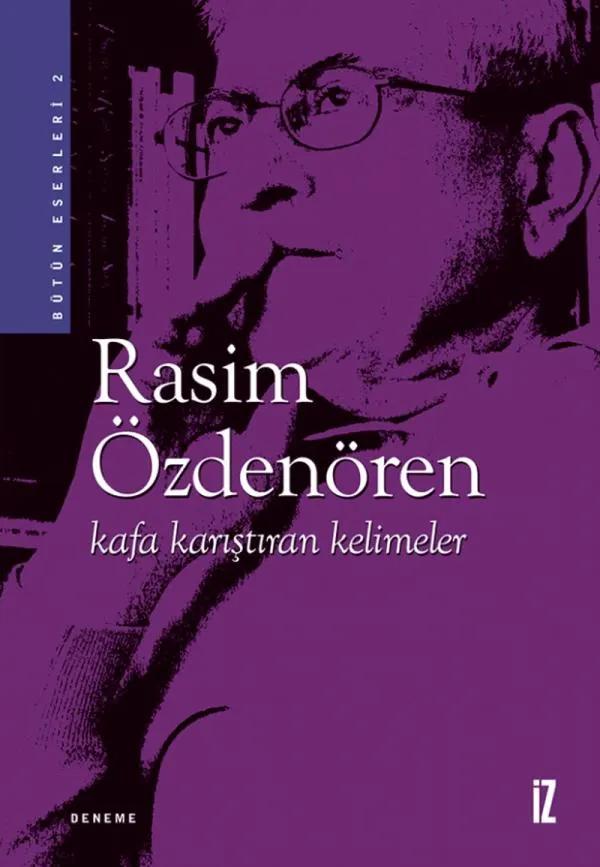
Confusing Words
Author(s) | Rasim Özdenören | ||||||||
|---|---|---|---|---|---|---|---|---|---|
Publisher(s) | İz Yayıncılık | ||||||||
Publication Year | 1987 (Revised edition 2022) | ||||||||
Number of Pages | 208 pages | ||||||||
Type(s) | Essay | ||||||||
A work of essayistic writing authored by Rasim Özdenören. First published in 1987 by İz Yayıncılık. The book examines the shifts in meaning experienced by concepts such as democracy dialectic rationalism positivism humanism science culture tradition freedom migration Sufism reason and virtue within Turkish-speaking societies during the process of Westernization. It evaluates the conceptual confusion arising from this process through an Islamic perspective and offers suggestions on how these concepts should be understood from an Islamic standpoint proposing a method for their deeper analysis.
Kafa Karıştıran Kelimeler is a collection of essays that examine semantic shifts in concepts either adopted from the West or adapted into Turkish. The book is composed of chapters each focusing on a specific concept. These concepts are analyzed from philosophical sociological and Islamic perspectives. The work argues that the process of Westernization in Turkish society since the Tanzimat era has generated conceptual confusion. This confusion is said to have led to intellectual distortions as words drifted from their original meanings and became reduced to slogans. The 2022 edition revised and updated by Özdenören on the occasion of his fiftieth year as an author was published in this revised form.
The book addresses the following key themes and arguments:
Conceptual Confusion and Westernization: It is argued that concepts adopted from the West such as democracy humanism and rationalism are used with different meanings within the Turkish-Islamic cultural context. The distinction between sharia/nizami and religious/secular introduced from the Tanzimat period is said to have complicated the interpretation of these concepts in ways compatible with Islam.
Islamic Thinking: The book contends that concepts must be examined from an Islamic perspective. For instance the concept of “science” should be understood as compatible with divine guidance rather than through the secular framework dominant in the West.
Semantic Shifts and Intellectual Distortions: It is asserted that the departure of words from their original meanings has contributed to social disarray. Islamic concepts such as “virtue” “piety” and “migration” are claimed to have been distorted through Western-centric interpretations.
Critique of Knowledge and Science: It is argued that spiritual insight offers a higher form of understanding than science and that Western science does not represent absolute truth. Science is said to be subject to paradigm shifts whereas spiritual insight provides a deeper and more enduring comprehension.
The work emphasizes that concepts must be examined not superficially but in depth and calls upon readers to engage in critical thinking and cultivate an Islamic consciousness.
Kafa Karıştıran Kelimeler has attracted attention among readers interested in Islamic thought but has also received criticism. Some have noted its lack of fluidity and argued that deeper analysis of the concepts requires more extensive philosophical and historical sources. For example the treatment of complex ideas such as dialectic in just a few pages has been deemed superficial. Academics have also pointed out that the semantic scope of concepts such as preaching and jihad has been overly restricted. On the other hand the book’s questioning of the impact of Westernization on Turkish intellectual life has garnered particular interest among conservative circles.
Rasim Özdenören analyzes in the work the cultural and mental fractures produced by Westernization in Turkish society. He argues that words and concepts constitute the shared existence of a nation and that semantic shifts have led to social confusion. From an Islamic perspective he contends that these concepts must return to their original meanings.
Özdenören, Rasim. Kafa Karıştıran Kelimeler. İstanbul: İz Yayıncılık, 2022.

Confusing Words
Author(s) | Rasim Özdenören | ||||||||
|---|---|---|---|---|---|---|---|---|---|
Publisher(s) | İz Yayıncılık | ||||||||
Publication Year | 1987 (Revised edition 2022) | ||||||||
Number of Pages | 208 pages | ||||||||
Type(s) | Essay | ||||||||
No Discussion Added Yet
Start discussion for "Confusing Words (Book)" article
Content and Structure of the Book
Themes and Central Theses
Critiques and Debates
The Author’s Perspective