


This article was automatically translated from the original Turkish version.
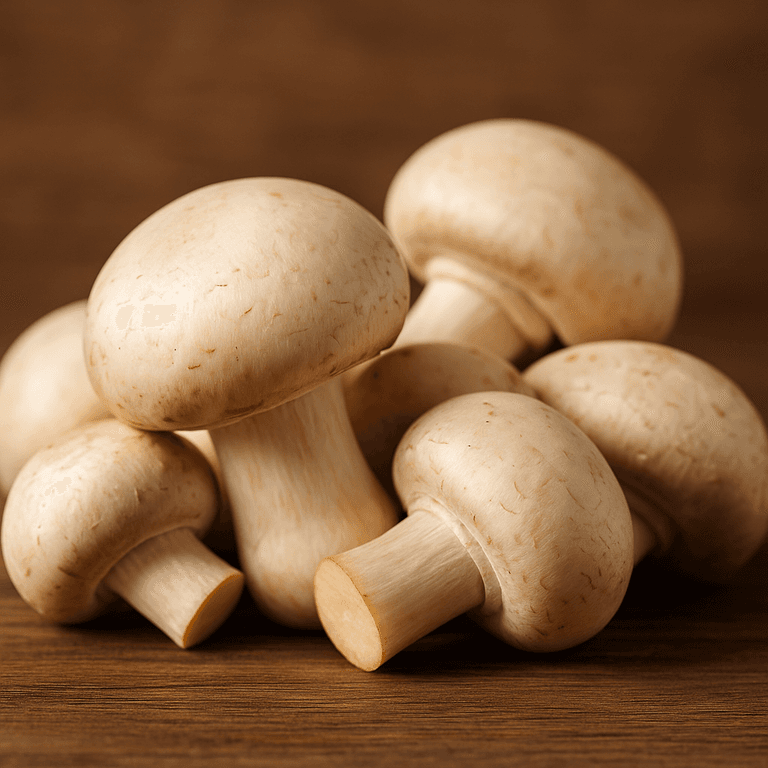
Kültür Mantarı (Yapay Zeka İle Oluşturulmuştur)
Edible mushroom species that are cultivated indoors under controlled conditions of temperature, humidity, ventilation, and hygiene, after being isolated from natural habitats and propagated by human intervention, are known as cultivated mushrooms. These mushrooms are saprophytic organisms in nature that decompose organic matter; when integrated into agricultural production systems, they can be grown with high yields in controlled environments. Cultivated mushroom farming holds significant potential for both food security and rural development as a sustainable, environmentally friendly production method requiring low inputs yet yielding high biomass, even in small spaces. In Türkiye, cultivated mushroom production has experienced substantial growth over the past 40 years, evolving from traditional techniques to modern climate-controlled facilities and becoming a major agricultural activity.
Cultivated mushrooms are among plant-based foods with high water content. Generally, fresh mushrooms consist of 88–91% water and 9–12% dry matter. The dry matter contains proteins, carbohydrates, fats, fiber, vitamins, and minerals. Due to this high water content, fresh mushrooms have a short shelf life and are best transported and stored under a cold chain.
The protein content of cultivated mushrooms varies depending on the species, growing conditions, and harvest time, typically ranging from 3–8%. Mushroom proteins are rich in essential amino acids and have high biological value. Their bioavailability ranges from 70–80%, surpassing that of most plant-based proteins.
The carbohydrate content of cultivated mushrooms is approximately 3–6%. These carbohydrates primarily consist of digestible compounds such as glycogen and mannitol. Mushrooms are also rich in dietary fiber, which positively contributes to gut health.
Cultivated mushrooms are particularly rich in B-group vitamins (B1, B2, B3, B5, B6, and folic acid). They also contain ergosterol, a precursor to vitamin D, which can be converted into vitamin D2 upon exposure to sunlight.
Cultivated mushrooms naturally contain important minerals such as potassium, phosphorus, magnesium, calcium, selenium, iron, and zinc. The low sodium-to-potassium ratio is especially advantageous for individuals with hypertension.
Cultivated mushrooms contain bioactive compounds with high antioxidant capacity, including phenolic compounds, flavonoids, polysaccharides (β-glucans), and ergothioneine. These substances help neutralize free radicals and support immune system function.
The energy value of 100 grams of fresh cultivated mushrooms ranges from an average of 22–30 kcal. Despite their low caloric content, their high fiber and protein levels make them an important component of dietary programs.
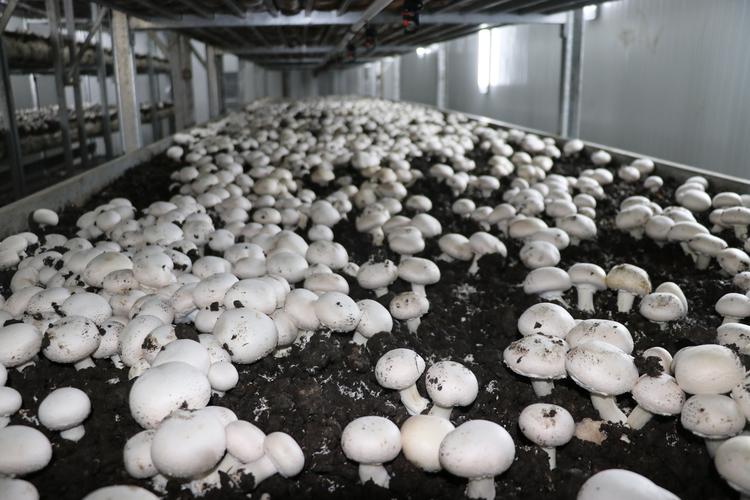
Cultivated Mushroom Facility (Cihan Okur. Anadolu Agency)
Compost forms the foundation of cultivated mushroom production. It is prepared by mixing wheat straw, chicken manure, gypsum, and water. The prepared compost is first subjected to fermentation. During this process, microbial activity raises the temperature and eliminates harmful microorganisms. The temperature is controlled and raised to 60–80 °C. After this stage, the compost undergoes pasteurization and maturation.
After maturation, the compost is transferred to the growing environment and inoculated under sterile conditions. At this stage, mushroom spawn (mycelium) is uniformly mixed into the compost. The inoculation rate is typically 1.5–2% of the compost’s weight.
Once the mycelium has fully colonized the compost, a casing layer (a mixture of peat, lime stone, and perlite) is applied to the surface. This layer aids in the formation of mushroom fruiting bodies and helps maintain moisture balance. The average thickness is 4–5 cm.
After casing, carbon dioxide levels are reduced and temperature is lowered (to 18–20 °C), triggering the emergence of mushrooms from the substrate. This stage is called “shocking.” The first fruiting bodies appear within 3–4 days. Harvesting occurs in 3–4 flushes (waves) over average periods of 2–3 weeks.
Compost is filled into wooden or plastic boxes. Production areas can be organized and multi-tiered systems can be established. This system is commonly used in modern facilities.
Applied in simpler, lower-cost wooden rack systems. It requires higher labor input and is typically preferred in semi-enclosed spaces.
Compost packed in plastic bags is either hung on hooks or arranged on the ground. This system is widely used for species such as oyster mushrooms and is suitable for amateur or small-scale production.
In modern facilities, temperature, humidity, carbon dioxide levels, and air exchange rates are automatically controlled. These systems enhance yield while reducing the risk of disease and contamination.
Mature mushrooms are harvested manually. Sorting is performed based on cap diameter and stem length. After harvesting, they must be stored at +2/+4 °C with 85–90% relative humidity. The shelf life is approximately 7–10 days.
Annual cultivated mushroom production in Türkiye, which was only about 1,400 tons in 1983, reached 65,000 tons by 2018 and approximately 85,000 tons by 2023. This growth has been driven by increased modernization (accounting for 35% of production), improved production planning systems, and technological advancements.
Biological control strategies, such as Trichoderma competition and beneficial bacteria, have been developed. These methods are detailed in brochures published by the Ministry of Agriculture. Cultural practices, including crop rotation and sterilization, are widely adopted.
Post-production procedures must emphasize cleanliness, appropriate packaging (typically polyethylene bags), and proper transportation and storage conditions. Ambient temperature should be maintained between +2–4 °C and humidity below 90%. These practices can extend the mushroom shelf life to 7–10 days.
The sustainability of mushroom farming in agriculture is achieved through recycling of spent compost, water and energy efficiency, biological pathogen control, and organic cultivation goals. Technical staff training, Key Performance Indicators (KPIs), production efficiency, and quality management are being integrated into classical agricultural standards.

Kültür Mantarı (Yapay Zeka İle Oluşturulmuştur)
No Discussion Added Yet
Start discussion for "Cultivated Mushroom (Agaricus bisporus)" article
Composition and Nutritional Value
Water and Dry Matter Content
Protein Content and Quality
Carbohydrate and Fat Content
Vitamin Content
Mineral Content
Antioxidant Capacity and Functional Components
Energy Value
Production Technology and Methods
Compost Preparation
Mycelium Inoculation (Spawning)
Casing Layer Application
Shocking and Harvest Period
Production Systems
Box System
Bench System
Bag System
Climate Control and Automation Systems
Harvesting, Sorting, and Storage
History of Production and Sectoral Development
Pathology and Management of Pests and Diseases
Threatening Microorganisms
Evolution of Control Methods
Hygiene, Quality, and Packaging Practices
Sustainability and Future Approaches