

This article was automatically translated from the original Turkish version.
+2 More
Emergence | First half of the 18th century | ||||||||
|---|---|---|---|---|---|---|---|---|---|
Festival | Hatsuichi Matsuri (every year on January 9 in Maebashi since the 1600s) | ||||||||
Rituals | Burning of the old daruma and acquiring a new one for the new year | ||||||||
Main Production Center | Takasaki Gunma (annual production of approximately 900000) | ||||||||
Traditional Color | Red (believed to ward off evil spirits) | ||||||||
Modern Colors | Black White Matte colors Patterned designs | ||||||||
Origin(s) | Bodhidharma (Zen Buddhism) | ||||||||
Type(s) | Uğur nesnesi / wish doll | ||||||||
Daruma is a traditional good-luck charm in Japanese culture, symbolizing the fulfillment of wishes and the determination to rise again in the face of adversity. This figure, known as a papier-mâché doll with a rounded, weighted base, traces its origins to Bodhidharma, the founder of Zen Buddhism, and holds both spiritual significance and an important role in various cultural rituals in Japanese society.

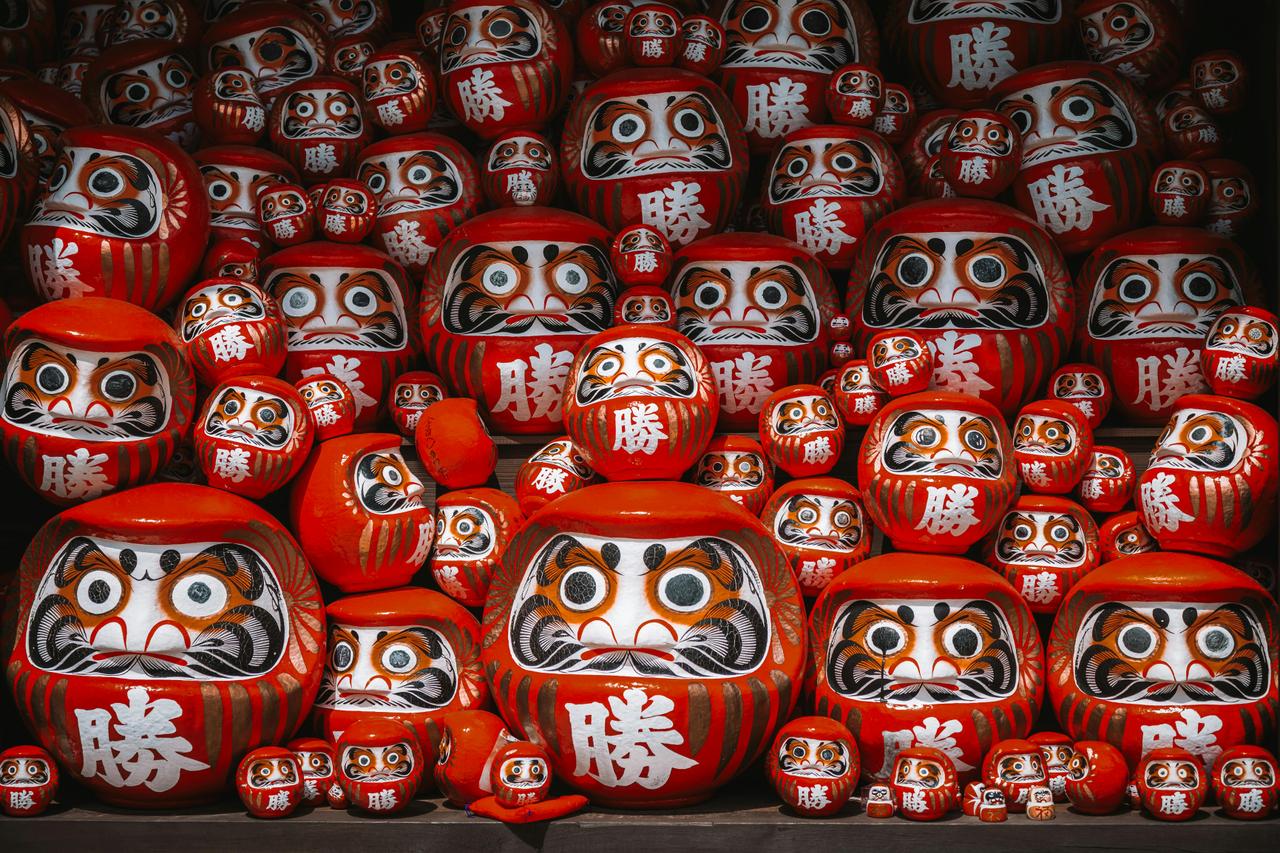
Daruma (Pexels)
Daruma is a type of doll that, due to its round shape and low center of gravity, can be knocked over but always rights itself. The Japanese proverb “Nana korobi ya oki” (Fall seven times, rise eight) clearly expresses the resilience and determination embodied by this object. Its ability to return to an upright position symbolizes the need to persist and try again when facing difficulties.
Traditionally, daruma is made in red, a color in Japanese culture associated with warding off evil spirits and illness. In modern times, new designs in black, white, and multicolored variants have become widespread.
The name “daruma” derives from the Japanese pronunciation of the Sanskrit word Dharma. Bodhidharma, regarded as the founder of Zen Buddhism, is believed to have sat in meditation for years without blinking his eyes; the large eyes and strong facial expressions of daruma dolls are a stylized representation of this figure.
The use of daruma as a talisman became widespread in the first half of the 1700s and gradually established itself as a protective good-luck charm in both homes and workplaces.
Daruma dolls are sold with blank eyes. When a doll is purchased:
This method allows the daruma to function symbolically as a witness to the wish, while also reinforcing the individual’s own determination.
Daruma is used for wishes such as:
It is commonly placed in a visible location within the home.
Approximately 900,000 daruma dolls are produced annually in Japan, with the center of production located in Takasaki, about 100 kilometers north of Tokyo. Takasaki has a tradition of daruma-making that spans over 200 years.
All painting stages are still done by hand; the beard, eyebrows, and facial features are drawn using traditional techniques.

Daruma (Pexels)
Since the 2010s, designer daruma have emerged, using colors such as matte black and white instead of traditional red. These modern designs are produced using:
Designs featuring Italian words “cadere” (to fall) and “rialzarsi” (to rise again) demonstrate the universal message of resilience conveyed by the daruma.
Every year on January 9, the Hatsuichi Matsuri, held in Maebashi city in Gunma Prefecture, continues a tradition dating back to the 1600s.
The ceremony begins with a thanksgiving fire at the Hachiman Shrine, followed by a portable shrine carrying the spirit of the market deity being carried through the streets.
Daruma is regarded in Japanese society as an object that unites religious and cultural symbols. It represents:
Through both traditional and contemporary forms, daruma continues to be one of Japan’s most recognizable cultural icons.
De Santis, Andrea. “Katsuo-ji Temple.” Pexels. Accessed November 24, 2025. https://www.pexels.com/photo/katsuo-ji-temple-18785906/
De Santis, Andrea. “Vibrant Daruma Dolls at Japanese Temple Display.” Pexels. Accessed November 24, 2025. https://www.pexels.com/photo/vibrant-daruma-dolls-at-japanese-temple-display-31100425/
Japan National Tourism Organization. "Hatsuichi Matsuri Daruma Festival." Japan.travel. Accessed November 24, 2025. https://www.japan.travel/en/spot/307/
Japanese Embassy, Turkiye. "Daruma." Japanese Embassy, Turkiye – About Japan. Accessed November 24, 2025. https://www.tr.emb-japan.go.jp/itpr_ja/11_000001_00384.html
Ministry of Foreign Affairs of Japan. “Have You Ever Heard of a Lucky Daruma?” Web Japan. Accessed November 24, 2025. https://web-japan.org/trends/11_fashion/fas202302_daruma.html
Shin. “Vibrant Daruma Dolls Display in Minoh, Osaka.” Pexels. Accessed November 24, 2025. https://www.pexels.com/photo/vibrant-daruma-dolls-display-in-minoh-osaka-34065646/


Emergence | First half of the 18th century | ||||||||
|---|---|---|---|---|---|---|---|---|---|
Festival | Hatsuichi Matsuri (every year on January 9 in Maebashi since the 1600s) | ||||||||
Rituals | Burning of the old daruma and acquiring a new one for the new year | ||||||||
Main Production Center | Takasaki Gunma (annual production of approximately 900000) | ||||||||
Traditional Color | Red (believed to ward off evil spirits) | ||||||||
Modern Colors | Black White Matte colors Patterned designs | ||||||||
Origin(s) | Bodhidharma (Zen Buddhism) | ||||||||
Type(s) | Uğur nesnesi / wish doll | ||||||||
Definition and General Characteristics
Origins and Historical Development
Connection to Bodhidharma
Emergence in the 18th Century
Meaning and Uses
Wish Ritual: Painting the Eyes
Good Luck and Protective Function
Manufacturing Process
Takasaki Daruma Tradition
Traditional Method
Modern Method: Vacuum Molding
Modern Daruma Designs
Hatsuichi Matsuri: The Daruma Festival
Festival Features
Cultural Significance of Daruma