


This article was automatically translated from the original Turkish version.
+2 More
Location | Balıkesir Hisartepe Locality Bandırma District | ||||||||
|---|---|---|---|---|---|---|---|---|---|
Establishment | 3rd Millennium BC; Important Settlement During the Persian, Phrygian, Lydian, and Hellenistic Periods | ||||||||
Prominent Areas | Acropolis, Palace Structures, Temple Remains, Tomb Chambers | ||||||||
Excavation Start | 1952 | ||||||||
Protection Status | Site Area | ||||||||
Visit Status | Open to Visit (Specific Areas) | ||||||||
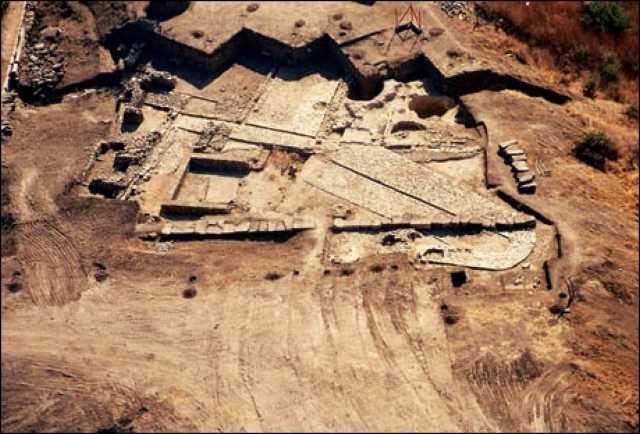
The ancient city of Daskyleion is located 2 kilometers east of the Ergili neighborhood in the Bandırma district of Balıkesir province, on the southeast shore of Lake Kuş, at the Hisartepe site. Situated very close to the renowned natural sanctuary of Kuş Cenneti (Paradeisos), the city was established in a geographically strategic region.

The Ancient City of Daskyleion (Anadolu Agency)
According to ancient sources, the city derived its name from Daskylos, a Lydian king who arrived in the region during the 7th century BCE due to dynastic struggles from Sardis. After Daskylos’s son Gyges was recalled to become king of Lydia, the city came to be known as Daskyleion, meaning “the place of Daskylos.” It began to be referred to by this name around 650 BCE. Evidence from surface surveys, including obsidian axes and ceramic fragments, confirms that human settlement in the area extends back to the Chalcolithic period.
The first investigations in the region were conducted by Kurt Bittel in 1952, and excavation work was initiated in 1954 by Professor Dr. Ekrem Akurgal. These excavations continued until 1960, and were resumed in 1988 under the direction of Professor Dr. Tomris Bakır. Today, excavations are carried out under the leadership of Professor Dr. Kaan İren with the support of Muğla Sıtkı Koçman University.
Excavations have revealed numerous archaeological remains from various periods, including walls from the Phrygian and Lydian eras, a ceremonial road dated to the Achaemenid period, a three-room administrative-religious structure, a Lydian kitchen, and structures from the Hellenistic and Medieval periods. Additionally, a drinking vessel inscribed with Phrygian letters from the 4th century BCE and the stone foundations with mudbrick walls of a palace attributed to King Daskylos have been uncovered.
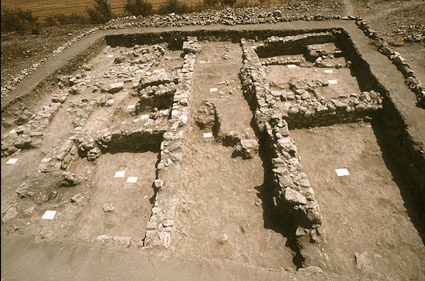
The Ancient City of Daskyleion ( Republic of Türkiye Balıkesir Governorship)
Recent excavations have uncovered a 2,700-year-old Lydian wall east of the previously identified Phrygian wall, constructed from andesite and limestone. In preserved sections, the wall reaches a height of up to five meters, and when considering unexcavated areas, it is estimated to have exceeded seven meters. The structure exhibits three construction phases, with some sections featuring horasan mortar and conglomerate stones, suggesting that the wall underwent repairs during the Medieval period.
The Phrygian wall is a double-faced dry-stone construction supported by small cut stones and rubble. In contrast, the Lydian wall was built using large stone blocks, resulting in a more monumental and robust structure. The presence of both walls in sequence within the city provides valuable insight into the historical evolution of Daskyleion.
Daskyleion served as an important center during multiple civilizations including the Phrygian, Lydian, Achaemenid, Macedonian, and Byzantine periods, and notably functioned as a satrapal capital under Persian rule. It was among the cities sought by Alexander the Great during his campaign in Anatolia in 334 BCE. Ancient authors noted the city and its surrounding natural beauty with admiration and praise.
Archaeological investigations at Daskyleion have uncovered artifacts such as steatite cylinder seals dating to 1700–1800 BCE, demonstrating the region’s connections with Early Near Eastern cultures. It is known that the Aeolians settled in the area during the 12th century BCE, followed by Phrygians who migrated from Thrace. Phrygian votive inscriptions and ceramics corroborate this sequence of settlement.
Anadolu Ajansı. “Daskyleion'u Saldırılardan Korumak İçin Yapılmış 2 Bin 700 Yıllık Sur Bulundu.” Anadolu Ajansı. Accessed June 17, 2025. https://www.aa.com.tr/tr/gundem/daskyleionu-saldirilardan-korumak-icin-yapilmis-2-bin-700-yillik-sur-bulundu/3417808
Ministry of Culture and Tourism of the Republic of Türkiye. "Antik Kentler (Ören Yerleri)." Accessed June 17, 2025. https://balikesir.ktb.gov.tr/TR-90612/antik-kentler-oren-yerleri.html.
T.C.Balıkesir Valiliği. "Antik Kentler." Accessed June 17, 2025. http://www.balikesir.gov.tr/antik-kentler.
Türkiye Kültür Portalı. "Daskyleion Antik Kenti - Balıkesir." Accessed June 17, 2025. https://www.kulturportali.gov.tr/turkiye/balikesir/gezilecekyer/daskyleion-antik-kenti.

Location | Balıkesir Hisartepe Locality Bandırma District | ||||||||
|---|---|---|---|---|---|---|---|---|---|
Establishment | 3rd Millennium BC; Important Settlement During the Persian, Phrygian, Lydian, and Hellenistic Periods | ||||||||
Prominent Areas | Acropolis, Palace Structures, Temple Remains, Tomb Chambers | ||||||||
Excavation Start | 1952 | ||||||||
Protection Status | Site Area | ||||||||
Visit Status | Open to Visit (Specific Areas) | ||||||||
No Discussion Added Yet
Start discussion for "Daskyleion Ancient City" article
History and Foundation
Excavations and Research
Archaeological Findings and Structures
Lydian Wall and Structural Features
Comparison with the Phrygian Wall
Cultural and Geopolitical Significance
Prehistoric Period and Early Settlements