


 Recently Added:
This article was automatically translated from the original Turkish version.
The 56th Annual Meetings of the World Economic Forum, held in Davos, Switzerland, opened on 20 January 2026 and concluded on 23 January 2026. The meetings were conducted under the theme “Spirit of Dialogue.” The 2026 meeting was structured around the theme of “Spirit of Dialogue,” which focused on sustaining multilateral channels of communication amid growing economic, political, and technological tensions in the international system.
The main agenda items of the meeting included the global economic outlook, geopolitical tensions, trade policies, technological transformation, artificial intelligence, climate and sustainability, energy security, and global risks. Assessments published by the Forum emphasized that economic conflicts and trade-based tensions were among the most prominent risk areas for the global system.
U.S. President Donald Trump attended the 2026 Davos meetings. Trump’s engagements in Davos were shaped particularly within the framework of The economic and commercial policies of the United States. It was noted that Trump met with global corporate executives to articulate U.S. policy priorities. It was also recorded that several heads of state and government did not attend the summit, sparking discussions about the level of representation at Davos.
Rapports and research published before and during the Forum identified economic conflicts, geopolitical fragmentation, and trade wars as key global risks. These assessments helped define the policy framework discussed at the Davos sessions. Global economic governance, extreme impartiality, and international cooperation were addressed within this context.
Panels, roundtable discussions, and leader-to-leader meetings held during Davos 2026 formed a significant part of the official program. The meeting process was communicated to the public through live broadcasts and daily briefings on the World Economic Forum’s digital platforms. Thematic sessions targeting various sectors were organized throughout the meeting days.
More than 250 sessions were held during the summit, bringing together approximately 3,000 participants including business leaders, politicians, academics, and civil society representatives from over 130 countries. Sixty-four heads of state and government attended the meetings. The main agenda revolved around global uncertainties, geopolitical and geo-economic risks, the global economy, technological transformation, artificial intelligence, and sustainability. Senior executives from Türkiye’s business community also participated in the summit.
Trump’s speeches drew particular attention in the context of tensions with Europe over Greenland, global power balances, and artificial intelligence policies. Trump stated that he ruled out any military intervention regarding Greenland, emphasizing the strength of the U.S. economy and its global leadership in artificial intelligence. He reiterated that technology transfers to China would be completely halted and described artificial intelligence as the “new fortress” of U.S. power.
At the summit, technology and especially artificial intelligence investments were identified as fundamental drivers transforming production and consumption processes. AI-driven investments were assessed as one of the key engines of economic growth. Additionally, a $9 billion credit package for Ukraine and the proposed Gaza Peace Council aimed at restoring order following Israeli attacks were among the concrete outcomes of the meetings.
In his speech at the signing ceremony of the “Gaza Peace Council Framework” on 22 January, Trump stated that the ceasefire in Gaza was being strictly maintained. He noted that 59 countries were part of the Council and emphasized a global effort to reduce long-standing conflicts in the Middle East. Trump expressed his determination regarding the demilitarization, governance, and reconstruction of Gaza and recalled that the permanent solution plan announced in October 2025 had been unanimously adopted by the United Nations Security Council.
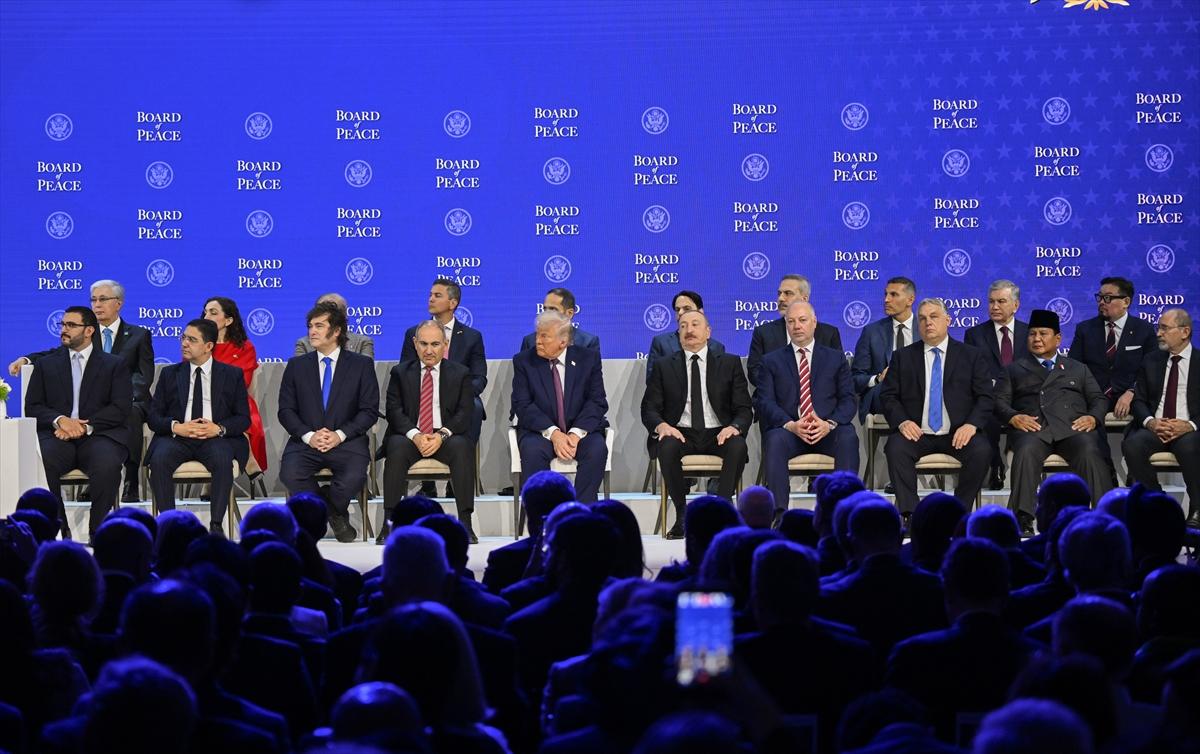
Signing Ceremony of the “Gaza Peace Council Framework” in Davos. 22 January 2026 (Anadolu Agency)
Hakan Fidan, recalling that he attended the signing ceremony of the Gaza Peace Council Framework on 22 January 2026 on behalf of President Recep Tayyip Erdoğan, stated that the Peace Council represented a significant opportunity for the region.
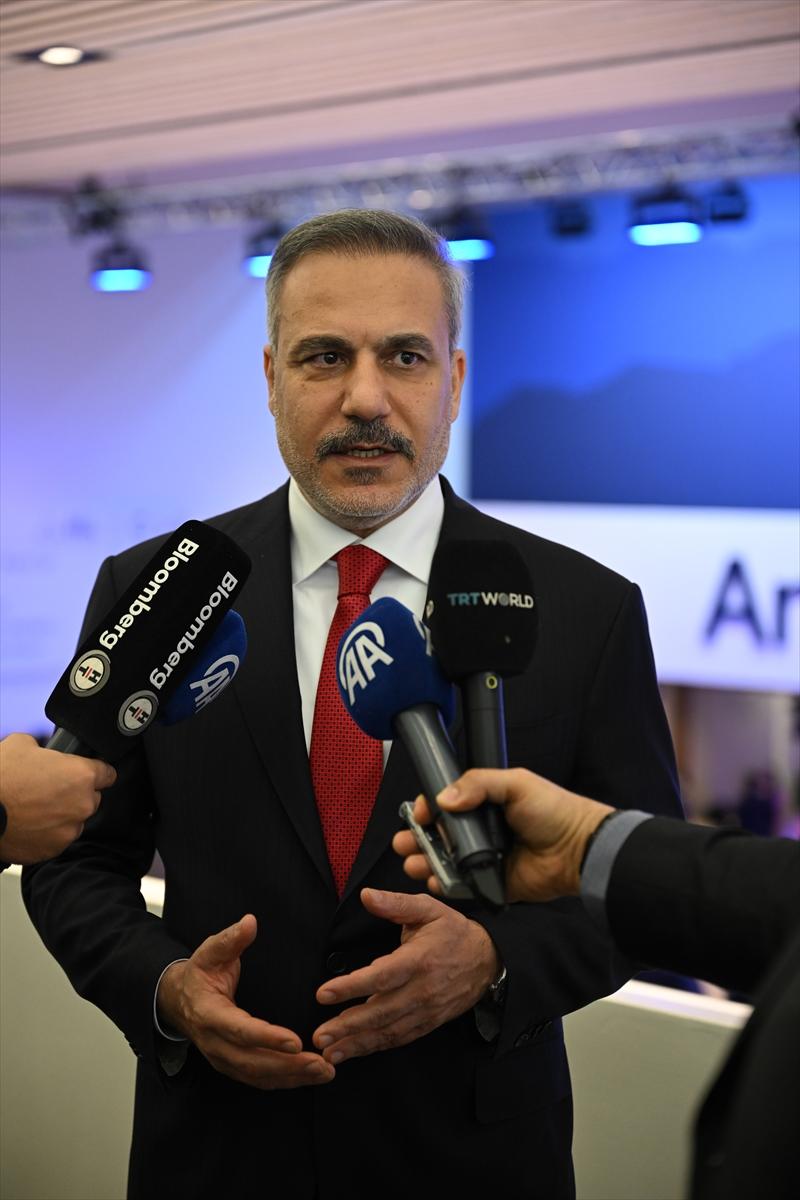
Foreign Minister Fidan, 23 January 2022, Anadolu Agency
Minister Fidan emphasized that the Peace Council offered a “historic opportunity” to rebuild Gaza and establish a lasting and inclusive peace by addressing the long-standing suffering of the Gazan people and meeting their humanitarian needs. He expressed confidence that this structure would play a vital role in shaping Gaza’s future through close collaboration with its people. Fidan also stated that this collective will had demonstrated that the voice of the Gazan people could be heard, their rights secured, and a future of peaceful coexistence made possible.
In his address at the World Economic Forum meetings in Davos, Switzerland, Canadian Prime Minister Mark Carney stated that the world was not in the midst of a transition but of a rupture.
Carney argued that crises in finance, health, energy, and geopolitics over the past two decades had exposed structural risks arising from excessive global integration. He contended that the rules-based international order had been presented as a “story,” but that this narrative was partially flawed. He highlighted that international trade rules were applied asymmetrically and that international law was enforced with varying degrees of rigor depending on the identity of the parties involved.
Carney acknowledged that this system was a construct, yet he noted that the United States had played a crucial role in ensuring the security of open sea lanes, maintaining a stable financial system, providing collective security, and facilitating mechanisms for dispute resolution. However, he stated that the gap between rhetoric and reality had long been ignored and that this approach was no longer sustainable.
In his speech, Carney drew attention to the severe pressure facing multilateral institutions upon which mid-sized powers rely, particularly the World Trade Organization and the United Nations system, noting that the architecture for collective problem-solving had weakened. He added that many countries were now seeking greater strategic autonomy in energy, food, critical minerals, finance, and supply chains.
Carney emphasized that countries unable to be self-sufficient have limited options, using the phrase: “When rules no longer protect you, you must protect yourself.” He argued that in situations where global integration has led countries not to mutual dependence but to vulnerability, the rhetoric of mutual benefit has become unsustainable. The full speech is as follows.
In an international system marked by intense competition among great powers, Carney argued that countries caught in between must either adapt by competing or collaborate to forge an effective third path. He stated that a strong domestic economy must be an urgent priority for every government. He emphasized that diversification on the international stage is not merely an economic precaution but a material foundation for a principled and consistent foreign policy. He noted that this approach enables countries to reduce their vulnerability to coercion and to adopt more independent and principled stances.
In his speeches, Trump addressed potential air strikes against Iran’s nuclear capabilities, operations against ISIS targets in Syria, and defense spending by NATO allies. He also brought up energy relations with Venezuela, efforts to end the war in Ukraine, and U.S. border security policies.
In remarks made during his return to Washington on 22 January, Trump stated that he returned from Davos with significant gains regarding Greenland and the Peace Council. He noted that a formula granting the United States “full access” to Greenland had been negotiated under a framework agreement with NATO and defended the Peace Council as a unique initiative on a global scale.

The World Economic Forum’s 2026 Davos Summit, under the theme “Spirit of Dialogue,” has begun in Switzerland. While the summit addressed topics such as the global economy, trade policies, geopolitical risks and technology, the meetings between U.S. President Donald Trump and global corporate executives attracted significant attention.
No Discussion Added Yet
Start discussion for "Davos 2026: World Economic Forum (WEF)" article
January 20, 2026
Agenda Highlights
January 20, 2026
The U.S. Administration and the Davos Agenda
January 20, 2026
World Economic Forum Assessments and Research
January 20, 2026
Sessions and Side Events
January 20, 2026
Overall Framework and Participation
January 20, 2026
Trump’s Statements
January 20, 2026
Economic and Political Agenda
January 20, 2026
Gaza Peace Council Framework and Trump’s Statements (23 January 2026)
January 20, 2026
Foreign Minister Hakan Fidan’s Assessment of the “Peace Council”
January 20, 2026
Canadian Prime Minister Mark Carney’s Davos Speech
January 20, 2026
Other Foreign Policy and Security Issues
January 20, 2026
Post-Davos Assessments