


 Recently Added:
This article was automatically translated from the original Turkish version.
Donald Trump’s Gaza Plan is a 20-point proposal for a ceasefire, transitional administration, and reconstruction aimed at ending the conflict in the Gaza Strip, announced on 29 September 2025 at a joint press conference held at the White House in Washington with the participation of Benjamin Netanyahu. The plan foresees the immediate cessation of hostilities, suspension of military operations, and withdrawal of the Israeli military behind the line designated as the “yellow line” upon its public acceptance by Israel. Following the announcement, the plan was conveyed to Hamas through Egypt and Qatar; after indirect negotiations conducted between 3 and 9 October 2025, the first phase of the ceasefire plan was approved by the parties on 9 October 2025. The ceasefire entered into force on 10 October 2025 at 12:00 local time.
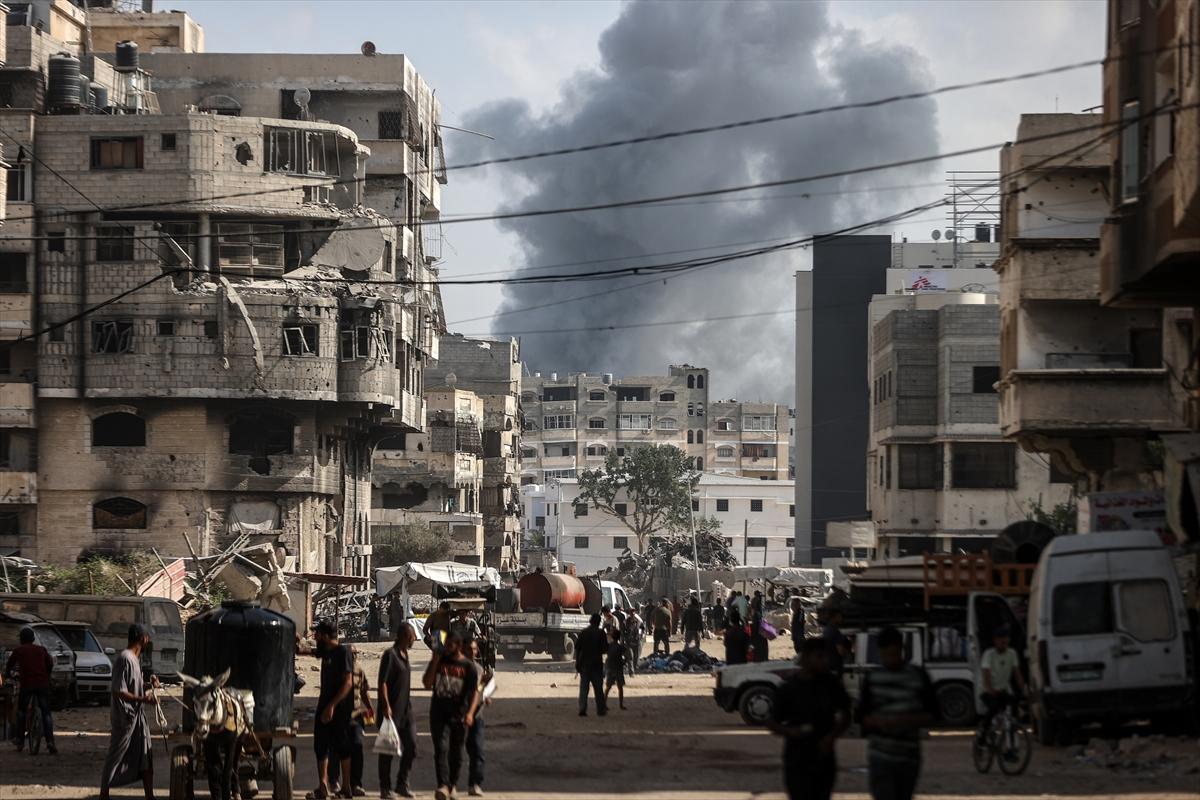
Israel’s attacks on Gaza, 29 September 2025 – (Anadolu Agency)
However, since the plan’s announcement, Israel’s military attacks on Gazain 2025 and 2026 have continued at varying intensities. Between 29 September and 9 October 2025, the Israeli military conducted aerial strikes and artillery fire in northern and central Gaza; after the ceasefire took effect on 10 October 2025, attacks did not fully cease, with bombardments continuing especially around the Netzarim Corridor, eastern Gaza City, Khan Yunis, and Rafah. The first phase of the ceasefire covered the 95-day period from 10 October 2025 to 15 January 2026. The implementation of the ceasefire was discussed in various diplomatic meetings, notably the Sharm el-Sheikh Peace Summit held on 13 October 2025. On 15 January 2026, following the completion of the first phase, the plan moved to its second phase, which envisaged the disarmament of Gaza, the establishment of a technocratic interim Palestinian administration, and the initiation of the reconstruction process. The U.S. administration announced on 14–16 January 2026 that the second phase had officially begun, that the “Gaza Peace Council” had been formed, and that the process would proceed under international oversight.
According to data from Palestinian authorities in Gaza, during the first phase of the ceasefire, which was in effect from 10 October 2025 to 15 January 2026, Israel committed 1,244 ceasefire violations; during this period, 449 Palestinians were killed, 1,246 were injured, and 50 were detained.
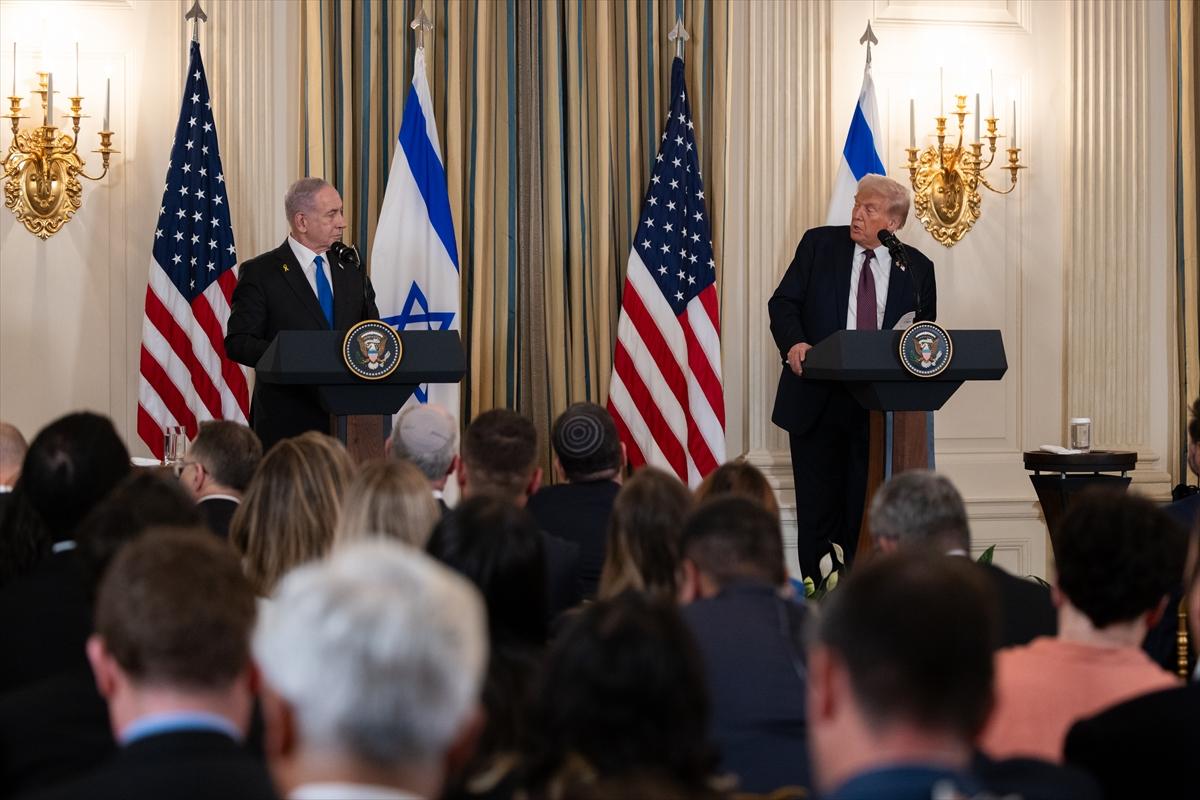
Trump and Netanyahu announcing the 20-point Gaza plan at a press conference at the White House, 29 September 2025 – (Anadolu Agency)
Donald Trump’s 20-point Gaza Plan was announced on 29 September 2025 at a press conference held at the White House in Washington following talks with Israeli Prime Minister Benjamin Netanyahu. This meeting took place amid ongoing Israeli attacks on Gaza and mounting international calls for an urgent ceasefire. While the Netanyahu administration faced diplomatic pressure due to rising civilian casualties and destruction in Gaza, the Trump administration unveiled a “peace plan” at this juncture.
Prior to announcing the plan, Trump held consultations with leaders of Turkey, Saudi Arabia, Qatar, the United Arab Emirates, Jordan, Egypt, Pakistan, and Indonesia on the sidelines of the 80th United Nations General Assembly. It was stated that consensus had been reached on the main outlines of a new peace plan and that support had been secured from these countries. Trump described the plan after these talks as “the most important initiative undertaken during the summit.”
Trump’s proposal was structured with reference to previous peace initiatives. Elements from the 2020 “Trump Peace Plan” and the Saudi-French joint proposal were incorporated into this plan. The plan conditions the transfer of Gaza back to the Palestinian Authority on the completion of its reform process.
The first provisions of the plan require Hamas to assume no role in governing Gaza and to completely dismantle its military capacity. Accordingly, Hamas and other armed groups will withdraw from governance, and all military infrastructure—including tunnels and weapons production facilities—will be destroyed.
Under reconstruction, it was agreed that infrastructure would be rebuilt, water, electricity, and sewage systems repaired, hospitals and bakeries restored to operation, and necessary equipment permitted to enter the region to clear damaged roads. Humanitarian aid flows will be guaranteed under the standards established by the aid agreement of 19 January 2025. Within this framework, aid is planned to be delivered continuously and without interference from either party through the United Nations, the Red Cross, and other international organizations.
The reopening of the Rafah Border Crossing is also included in the plan. This crossing will facilitate two-way movement under international supervision and ease the entry of materials needed for reconstruction.
A critical element of the plan is the establishment of a ceasefire and the reciprocal release of hostages. Accordingly, all hostages are to be released within 72 hours of Israel’s public acceptance of the plan.
Under the hostage exchange framework, Israel agreed to release 1,700 Gazans after all hostages are returned. This group includes the 250 Palestinians sentenced to life imprisonment following 7 October 2023, as well as all women and children. Additionally, for every Israeli hostage body returned, the remains of 15 Gazans will be handed over to their families.
The plan provides for amnesty for Hamas members under specific conditions. Members who pledge to lay down their arms and participate in peaceful life will be pardoned, and those wishing to leave Gaza will be granted safe passage.
The plan proposes a temporary administrative structure for Gaza, designed to operate without any role for Hamas or other armed groups. The transitional administration will be managed by a technocratic and apolitical Palestinian committee responsible for delivering daily public services—municipal services, healthcare, education, and basic infrastructure functions. Committee members will consist of qualified Palestinians and international experts.
The committee will operate under an international oversight mechanism called the “Peace Council”. Donald Trump will chair the council, which will also include former British Prime Minister Tony Blair and other heads of state and senior international representatives to be determined.
The Peace Council will establish a framework for Gaza’s reconstruction and development, manage funding, and oversee the process in accordance with international standards. This structure will remain in place until the Palestinian Authority completes its necessary reforms and can safely and effectively assume control of Gaza.
Under the plan, a program titled the “Trump Economic Development Plan” is proposed to provide employment, investment, and trade opportunities in the region. A special economic zone is planned for Gaza, supported by preferential tariffs and access rates for international investors and designed to meet modern infrastructure standards. To ensure investment security, the Peace Council will manage the financial framework, oversee the use of international funds, and prioritize local employment.
The plan envisages the creation of a temporary security mechanism, the International Stability Force (ISF), to ensure security arrangements in Gaza. This force will be organized under U.S. leadership with Arab and international partners and deployed immediately to Gaza. The ISF’s primary mission is to train and support the newly established Palestinian police forces, establish border security, and maintain internal stability. Consultations with countries such as Jordan and Egypt are specified as part of the plan’s details.
The force will be responsible not only for internal security but also for securing the borders with Israel and Egypt. Once the ISF establishes control and stability in the region, the timetable for the Israeli military’s phased withdrawal will commence.
The Israeli military’s withdrawal process will be carried out in stages according to standards and timelines established by the U.S., the Israeli military, the ISF, and other guarantors. Israel will gradually transfer control of occupied Gaza territories to the interim government through agreements with the ISF. However, the plan also acknowledges Israel’s right to maintain a limited security perimeter.
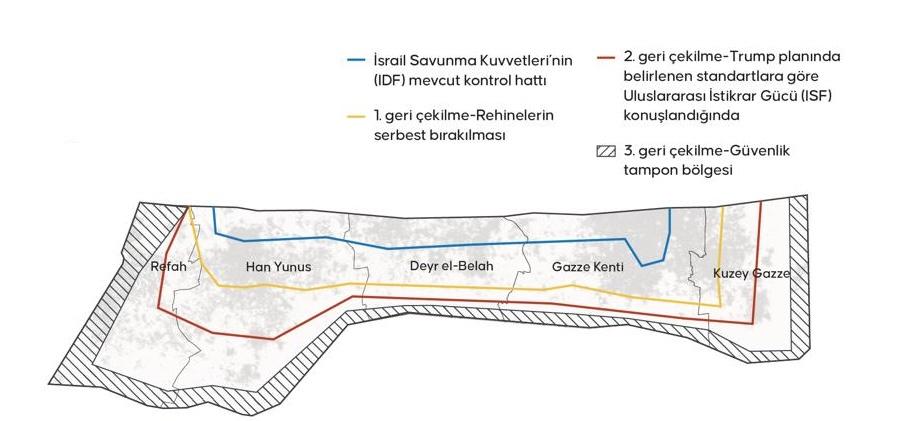
Map showing the stages of Israel’s withdrawal plan from Gaza – (Anadolu Agency)
Prime Minister Benjamin Netanyahu, in his remarks at the joint press conference at the White House, expressed support for Trump’s Gaza plan and stated that it “achieves Israel’s war objectives.” Netanyahu indicated that Israel would take a reasonable step toward withdrawal if Hamas accepts the plan.
Netanyahu stated that Israel’s withdrawal from the area would be proportional to Gaza’s disarmament. However, he emphasized that the Israeli military would remain in the region within a security perimeter for some time. Israel’s stated goal is the establishment of a peaceful civilian administration in Gaza that is neither controlled by Hamas nor by the current Palestinian Authority.
Netanyahu also stated that if the newly established “Peace Council” succeeds, the war could be permanently ended, but claimed that if Hamas rejects the plan, Israel will “finish the job on its own.”
Benny Gantz, a member of Israel’s war cabinet and a leader of the main opposition, made a statement supporting Trump’s Gaza plan. In his assessment, Gantz noted that Israel’s security interests were preserved and that the plan contained elements acceptable to Israel. He particularly emphasized the importance of the release of hostages and the disarmament of Hamas.
Israeli Finance Minister and leader of the far-right Religious Zionism Party, Bezalel Smotrich, strongly criticized the plan. Smotrich described Trump’s plan as “a tragedy of Netanyahu’s leadership.” He argued that the plan amounts to Israel retreating from its military objectives in Gaza. Smotrich maintained that any agreement reached before Hamas is fully eliminated and before Israel achieves total control over Gaza is unacceptable to Israel.
President Recep Tayyip Erdoğan, in his assessment of Trump’s 20-point Gaza plan announced at the White House, said, “I appreciate the effort and leadership shown by U.S. President President Trump in stopping the bloodshed in Gaza and achieving a ceasefire. Türkiye will continue contributing to the process to establish a fair and lasting peace acceptable to all parties.” Erdoğan emphasized the importance of unimpeded humanitarian aid reaching Gaza and the preservation of the two-state solution. He also stated that Türkiye is ready to cooperate with the international community for the plan’s implementation.
Egypt and Qatar conveyed Trump’s plan to Hamas. According to Palestinian sources, a copy of the plan reached Hamas, which informed Egypt and Qatar that it would examine the plan “positively and objectively.” An Egyptian security official speaking to El-Kahire News confirmed that the plan had been delivered to Hamas. Mahmoud Mardawi, a senior Hamas official, told Al-Aqsa TV that the plan closely reflected Israel’s position, contained ambiguous language, and offered no guarantees. Mardawi argued that the plan aimed to undermine international support for the recognition of a Palestinian state and stressed that no proposal failing to recognize the Palestinian people’s right to self-determination would be accepted.
Prior to the announcement of Trump’s plan, during a meeting on the sidelines of the 80th UN General Assembly, leaders of Saudi Arabia and the UAE, along with Turkey, Qatar, Egypt, Jordan, Pakistan, and Indonesia, declared their support for the plan’s main outlines. These countries emphasized that achieving a ceasefire in Gaza, releasing hostages, and delivering humanitarian aid to the region were top priorities. They also highlighted the importance of arrangements for Israel’s phased withdrawal from Gaza.
Jordan and Pakistan are among the regional countries supporting the plan. Both countries stressed the need for an immediate ceasefire and the opening of humanitarian aid corridors. They also stated that the plan presents an opportunity to revitalize the Palestinian political horizon in line with the two-state solution.
GCC Secretary-General Qasim al-Budeywi, in a written statement, expressed that his organization welcomed the proposals in Trump’s plan. Budeywi stated that the plan could open the way for a fair process that safeguards the inalienable rights of the Palestinian people. He emphasized that achieving a ceasefire, lifting humanitarian restrictions, and preventing the displacement of Gaza’s population must remain priorities for international efforts.
Bahrain’s Ministry of Foreign Affairs announced that it welcomed Trump’s peace plan regarding ceasefire, the release of hostages, and humanitarian access. The ministry stated that the plan represents a positive initiative toward establishing peace in the Middle East and that the international community should focus its efforts on ending the war in Gaza.
IKRG President Nechirvan Barzani announced that he “welcomed” Trump’s plan and praised his leadership. Barzani called on the parties to engage constructively in negotiations with a spirit of compromise. He emphasized that peace, security, and lasting prosperity for the region’s populations can only be achieved through cooperation among the parties.
Iran’s Foreign Minister Abbas Araghchi, in an interview with CNN in New York, commented on Trump’s plan. Araghchi noted that hundreds of different plans have been proposed in the Middle East to date, but only a plan recognizing the Palestinian people’s right to self-determination can be sustainable. He stated that it remains to be seen how Hamas and Palestinians will respond to the plan.
European Commission President Ursula von der Leyen welcomed Trump’s plan and emphasized that the EU is ready to contribute to the process. Von der Leyen stated that urgent humanitarian aid to the people of Gaza and the immediate release of all hostages are essential, and affirmed that the two-state solution remains the only viable path to a just and lasting peace in the Middle East.
Council of the European Union President Antonio Costa welcomed the plan and called on all parties to “give peace a real chance.” Costa stated that he expected Israel to fully engage with the plan and that Hamas had no alternative but to immediately release hostages and implement the plan.
EU High Representative for Foreign Affairs and Security Policy Kaja Kallas described Trump’s plan as “the best opportunity to end the war.” Kallas emphasized that the EU is ready to assist in ensuring the plan’s success and urged Hamas to accept the plan without delay by releasing the hostages.
German Chancellor Friedrich Merz announced that his government welcomed the plan and described it as the best opportunity so far to end the war. Merz called on Hamas to accept the plan and stated that Germany is ready to contribute politically, humanely, and in reconstruction efforts. German Foreign Minister Johann Wadephul, in a written statement, noted that the plan offers an “unprecedented opportunity” to end the fighting in Gaza, emphasizing the need to protect civilians and guarantee humanitarian aid.
French President Emmanuel Macron welcomed Trump’s Gaza plan and stressed that Israel must act decisively on this issue. Macron emphasized that Hamas has no alternative but to release hostages and accept the plan. He also stated that a lasting peace in the region must be built on the two-state solution, in line with the principles endorsed by 142 UN member states.
Italian Prime Minister Giorgia Meloni said the proposal presented by Trump could be a turning point in ending the humanitarian crisis in Gaza. Meloni noted that the plan could halt hostilities, secure the release of all hostages, and ensure unimpeded humanitarian access. She described the plan as an “ambitious project for Gaza’s stabilization, reconstruction, and development.”
Spanish Prime Minister Pedro Sánchez announced that his government welcomed Trump’s plan and said, “It is now time for violence to end, hostages to be released, and humanitarian aid to be delivered.” Sánchez reaffirmed that the two-state solution remains the only viable path for the Middle East.
British Prime Minister Keir Starmer announced that his government welcomed Trump’s 20-point Gaza plan “with great satisfaction.” Starmer stated that the UK strongly supports U.S. efforts to end hostilities, release hostages, and provide humanitarian aid to Gazans. He affirmed that the UK will continue working with partners to achieve a lasting ceasefire.
Dutch Prime Minister Dick Schoof said the plan makes the end of the war visible and stressed that Hamas must also approve it. Schoof noted that a ceasefire, safe access to humanitarian aid, and the release of hostages are now vital. Belgian Foreign Minister Maxime Prevot stated that Trump’s plan offers a ceasefire, unimpeded humanitarian aid, the release of hostages, and a political horizon toward a two-state solution.
Austrian Chancellor Christian Stocker described the plan as a positive initiative and stressed that Hamas must also approve it. Irish Deputy Prime Minister Simon Harris stated that the plan offers a chance for the two-state solution and emphasized the urgent need for humanitarian aid to enter Gaza. The Swiss Federal Department of Foreign Affairs defined the plan as an initiative based on international law, guaranteeing civilian protection and laying the foundations for a lasting peace grounded in the two-state solution.
The Russian government did not issue a detailed official statement on Trump’s Gaza plan but has generally expressed support for all peace initiatives. Russia has emphasized the importance of international efforts to end hostilities and ensure uninterrupted humanitarian aid.
Chinese Foreign Ministry Spokesperson Guo Jiakun, in a statement in Beijing, assessed Trump’s plan. The spokesperson stressed that the plan, which includes the phased withdrawal of Israeli forces from Gaza and security arrangements, must be implemented in accordance with UN resolutions. China called for a full ceasefire, the release of all hostages, and the rapid resolution of the humanitarian crisis. The statement specifically affirmed China’s support for the principle that “Palestinians must govern Palestine” and its backing of the two-state solution.
Indian Prime Minister Narendra Modi announced on his social media account that he welcomed Trump’s plan. Modi stated that the plan offers a “practical path toward long-term peace, security, and development for the people of Palestine and Israel and the broader West Asia region.” He also called on all parties to support the plan and end the conflict.
Australian Prime Minister Anthony Albanese announced that his country supports Trump’s initiative. Albanese welcomed the plan as an effort to bring peace to Gaza following two years of conflict and heavy casualties. Recalling Australia’s long-standing calls for a ceasefire, he emphasized that the plan represents a significant step in this direction.
New Zealand Foreign Minister Winston Peters described Trump’s plan as “an example of global leadership.” Peters urged the parties to seize this opportunity and fully implement the plan’s conditions. New Zealand stated that the plan presents a vital opportunity to end the devastating conflict.
Al Jazeera. “Five Unanswered Questions about Trump’s Gaza Plan.” Al Jazeera. Accessed September 30, 2025. https://www.aljazeera.com/news/2025/9/29/five-unanswered-questions-about-trumps-gaza-plan
Al Jazeera. “How Arab nations, rest of the world reacted to Trump’s Gaza peace plan.” Accessed September 30, 2025. https://www.aljazeera.com/news/2025/9/29/trumps-gaza-peace-plan-welcomed-by-arab-and-islamic-countries-the-west
Anadolu Ajansı. "Cumhurbaşkanı Erdoğan: Gazze’de Adil ve Kalıcı Bir Barışın Tesisi İçin Sürece Katkı Vermeye Devam Edeceğiz." Accessed September 30, 2025. https://www.aa.com.tr/tr/gundem/cumhurbaskani-erdogan-gazzede-adil-ve-kalici-bir-barisin-tesisi-icin-surece-katki-vermeye-devam-edecegiz/3702759
Anadolu Ajansı. "European Leaders Voice Support for Trump’s Gaza Peace Plan." Accessed September 30, 2025. https://www.aa.com.tr/en/europe/european-leaders-voice-support-for-trumps-gaza-peace-plan/3703140#
Anadolu Ajansı. "Trump’ın Gazze Girişimlerine İlişkin Ortak Açıklama." Accessed September 30, 2025. https://www.aa.com.tr/tr/gundem/trumpin-gazze-girisimlerine-iliskin-ortak-aciklama/3702805#
Anadolu Ajansı. "Trump’ın Gazze Planına Dünyadan Tepkiler." Accessed September 30, 2025. https://www.aa.com.tr/tr/dunya/trumpin-gazze-planina-dunyadan-tepkiler-/3702767#
Anadolu Ajansı. “ABD Başkanı Trump, 20 Maddelik Gazze Planını Netanyahu ile Açıkladı.” Accessed September 30, 2025. https://www.aa.com.tr/tr/dunya/abd-baskani-trump-20-maddelik-gazze-planini-netanyahu-ile-acikladi/3702707#
Anadolu Ajansı. “Far-Right Israeli Minister Slams Trump’s Gaza Plan as ‘Tragedy of Netanyahu Leadership.’” Accessed September 30, 2025. https://www.aa.com.tr/en/middle-east/far-right-israeli-minister-slams-trump-s-gaza-plan-as-tragedy-of-netanyahu-leadership/3703123#
Anadolu Ajansı. “Mısır ve Katar, Trump’ın Gazze Planını Hamas’a İletti.” Accessed September 30, 2025. https://www.aa.com.tr/tr/dunya/misir-ve-katar-trumpin-gazze-planini-hamasa-iletti-/3702803#
Anadolu Ajansı. “Trump, İsrail Başbakanı Netanyahu’yu Beyaz Saray’da Kabul Etti.” Accessed September 30, 2025. https://www.aa.com.tr/tr/dunya/trump-israil-basbakani-netanyahuyu-beyaz-sarayda-kabul-etti/3702531#
Anadolu Ajansı. “İnfografik: Trump’ın Gazze Planı.” Accessed September 30, 2025. https://www.aa.com.tr/tr/info/infografik/48137
BBC News. “Trump's 20-point Gaza peace plan in full.” BBC News. Accessed September 30, 2025. https://www.bbc.com/news/articles/c70155nked7o
The twenty-point Gaza Plan, announced by Donald Trump at the White House on 29 September 2025, was swiftly conveyed to Hamas through Egypt and Qatar, the two principal mediator countries in the region. According to a 30 September report by the Cairo-based El-Kahire News channel, the transmission of the plan to Hamas was conducted under the supervision of Egyptian security sources.
Palestinian sources confirmed that a copy of the plan had reached Hamas leadership. According to the same sources, Hamas stated it would examine the plan “in a positive and objective manner.” Mahmoud Mardawi, a senior Hamas official, provided his initial assessment of the plan’s general framework in an interview with Al-Aqsa TV on 30 September. Mardawi noted that the provisions in Trump’s plan were “close to Israel’s perspective,” contained “ambiguous language,” and “failed to provide guarantees for the Palestinians.” He further stated that the plan could weaken international recognition of a Palestinian state and did not secure the Palestinian people’s right to self-determination.
Mardawi emphasized that Hamas would not make a final evaluation of any proposal unilaterally but in coordination with other Palestinian groups. It was clarified that the plan would be addressed through a consultative process among Palestinians rather than by Hamas alone.
On 30 September 2025, Qatar’s Prime Minister and Minister of Foreign Affairs Mohammed bin Abdulrahman Al Thani stated that the Gaza plan proposed by U.S. President Donald Trump remained in its initial phase and that various elements required clarification and negotiation. Al Thani underscored that the plan’s primary objective was to end the war but emphasized the need for greater clarity on key issues such as the areas from which Israel would withdraw, the future governance of Gaza, and security arrangements.
In an interview with the Doha-based Al Jazeera television network, Al Thani affirmed that Qatar’s priority was “to halt the war, hunger, deaths, and forced displacement.” He added that the plan remained at a “general principles level” and required detailed elaboration. The Qatari Prime Minister stressed that the governance model determining Gaza’s future must align with the will of the Palestinian people and comply with international law.
In his statement, Al Thani noted that “the Gaza plan contains a clear provision for ending the war, but details regarding Israel’s withdrawal remain uncertain,” and that these matters must be discussed in detail with Washington. He confirmed Qatar’s active role alongside Egypt in delivering the plan to the Hamas delegation, noting that mediation talks had taken place within a broad framework and that Hamas had examined the plan “with a responsible attitude.”
The Qatari Prime Minister also stated that Doha intended to advance the peace process in coordination with Egypt and Türkiye. In this context, he indicated that during mediation meetings involving Egypt and Türkiye, the top priority would be ending the humanitarian catastrophe in Gaza and halting forced displacements.
At the conclusion of his statement, Al Thani said: “Mediators are working to transform this plan into a path that protects the rights of the Palestinians.”
White House Press Secretary Karoline Leavitt, during a press briefing on 2 October 2025, made statements regarding Donald Trump’s Gaza plan. Leavitt said: “Hamas has the opportunity to accept this plan and move forward toward peace and prosperity in the region. If they refuse, the consequences will unfortunately be extremely tragic.”
Reminding reporters that Trump had given Hamas until 01:00 Turkey time on Monday, 6 October, to respond, Leavitt described the plan as “comprehensive, feasible, and detailed.” She added: “The President has clearly communicated to Hamas that this is a proposal that must be accepted and that it is a detailed plan. If they refuse, the consequences will be extremely severe for them.”
In response to journalists’ questions about the political context of the plan, Leavitt said: “The President has deep concern over all the brutality witnessed in the Middle East over the past several years. It is extremely unfortunate that he inherited this chaos from the (Joe) Biden administration.”
Leavitt also recalled the Abraham Accords signed during Trump’s first term, stating: “The President initiated the normalization process between Israel and Arab countries and hopes this process will continue.”
On 3 October 2025, U.S. President Donald Trump announced that Hamas had until 01:00 Turkey time on Monday, 6 October, to reach an agreement. Trump defended the Gaza plan as “a good plan” and called for Hamas to accept the ceasefire proposal for Gaza.
In a post on Truth Social, he stated: “The ceasefire plan for Gaza has been accepted by regional countries and is a good plan that will bring peace to the region.” Trump clarified that he had given Hamas until 01:00 Turkey time (18:00 Eastern Time on Sunday) to accept the agreement.
Trump stated that if the agreement is reached, violence will end, saying: “This is a wonderful deal for everyone. If this last chance is not accepted, Hamas will face an unprecedented catastrophe.” He added that “no harm will come to the remaining Hamas fighters if the agreement is reached,” thereby presenting it as Hamas’s final opportunity.
In his statement, the U.S. President also said: “I want the Palestinians to move to safer areas within Gaza,” and emphasized that “all hostages must be released immediately.”
Anadolu Ajansı. “ABD Başkanı Trump, Hamas’a Anlaşmaya Varması İçin Pazartesi Günü TSİ 01.00’e Kadar Süre Verdi.” Accessed October 3, 2025. https://www.aa.com.tr/tr/dunya/abd-baskani-trump-hamasa-anlasmaya-varmasi-icin-pazartesi-gunu-tsi-0100e-kadar-sure-verdi/3706863#
Anadolu Ajansı. “Katar: Trump’ın Gazze Planındaki Bazı Konular Açıklık ve Müzakere Gerektiriyor.” Accessed October 3, 2025. https://www.aa.com.tr/tr/dunya/katar-trumpin-gazze-planindaki-bazi-konular-aciklik-ve-muzakere-gerektiriyor/3703693#
On the evening of 3 October 2025, Hamas publicly announced its response to Donald Trump’s Gaza Plan via an official statement. In a communiqué published on Telegram, it declared its acceptance of “the release of all Israeli captives, the return of the bodies of those killed, and the transfer of Gaza’s administration to an independent Palestinian authority.”
The statement emphasized that “issues concerning the future of the Gaza Strip and the legitimate rights of the Palestinian people must be addressed within a unified national framework based on relevant international laws and resolutions.” Hamas stated that these matters would be clarified through negotiations facilitated by mediators and friendly countries.
Palestinian diplomatic sources confirmed that Hamas’s response was transmitted to the United States via Egypt and Qatar. According to the same sources, Hamas requested “greater clarity” on certain provisions of the plan and expressed readiness for immediate negotiations under the supervision of mediators.
In its statement, Hamas reported that “extensive consultations were conducted within the movement’s leadership bodies, and broad discussions took place among Palestinian factions and mediator countries.” It stressed that the decision reached was “the result of a responsible stance.” Hamas also welcomed the efforts made by the Arab, Islamic and international communities to halt the war in Gaza, facilitate prisoner exchanges, allow immediate humanitarian access, reject the occupation of the Gaza Strip, and oppose the displacement of the Palestinian people.
The statement underscored that Hamas accepted the release of all Israeli captives, both living and deceased, in accordance with the transformation framework proposed by Trump, “once conditions on the ground become suitable.” It further declared its readiness to immediately begin negotiations through mediators to finalize the details.
Hamas reiterated its approval for transferring the administration of the Gaza Strip to an independent Palestinian technocratic committee based on Palestinian national consensus and supported by Arab and Islamic countries. Musa Abu Marzuk, a member of Hamas’s Political Bureau, told Al Jazeera, “We have agreed in principle on the broad outlines of the US plan.” He added, “Hamas will hand over its weapons to the future Palestinian state, because this is a national matter to be decided not by Hamas alone but by the entire Palestinian people.”
Abu Marzuk emphasized that “all details regarding a peace force must be clarified,” and that negotiations on weapons and all related issues would proceed through mediators. He also recalled that “there is national consensus on transferring Gaza’s administration to an independent committee under the authority of the Palestinian Authority.”
Following this announcement, Qatari Ministry of Foreign Affairs spokesperson Majid al-Ensaari stated, “Qatar welcomes Hamas’s announcement that it has accepted President Trump’s plan and is ready to release all hostages within the framework of the proposed changes.”
The Egyptian Ministry of Foreign Affairs also issued a statement saying, “Egypt welcomes Hamas’s response to President Donald Trump’s Gaza ceasefire plan.” The statement noted that Hamas’s position “reflects a sincere desire to prevent further bloodshed among the Palestinian people and bring an end to a dark chapter in the region’s history.”
Following these developments, Trump said, “Based on the recent statement by Hamas, I believe they are ready for a lasting peace. Israel must immediately halt its bombardment of Gaza so we can swiftly and safely extract the captives.”
On 4 October 2025, US President Donald Trump, in a video statement posted on his social media account following Hamas’s response to the Gaza Plan, said, “Based on the recent statement by Hamas, I believe they are ready for a lasting peace. Israel must immediately halt its bombardment of Gaza so we can swiftly and safely extract the captives.”
Donald Trump's statement of 4 October - (The White House)
Referring to the current security situation in Gaza, Trump stated, “We are currently engaged in discussions on the details. This is not only about Gaza but about the long-sought peace in the Middle East.” The US President described Hamas’s offer on prisoner exchange and its positive response to a ceasefire as “an important and hopeful development.”
In his post, Trump said, “I want to thank the countries that helped bring us to this point: Qatar, Türkiye, Saudi Arabia, Egypt, Jordan and others. Today is a great day; we will see how everything turns out. The final words must be made concrete.”
The US President marked the process as “a very special turning point,” adding, “Therefore, I want to tell you this: Today is a very special day, perhaps unprecedented in many ways. I also thank the great countries that have supported us. Everyone wanted this war to end and peace to be established in the Middle East. We are very close to achieving it.”
Following Trump’s 4 October 2025 call for Israel to immediately halt its bombardment, according to a report on the American website Axios, Israeli Prime Minister Benjamin Netanyahu expressed “surprise” at Trump’s statement. The report, citing an unnamed Israeli official, indicated that Netanyahu had planned a coordinated statement with the United States but that the US President’s announcement came “earlier than expected.”
According to the same report, Netanyahu initially interpreted Hamas’s response as a rejection of Trump’s plan, though this assessment was not fully shared within Israeli security and diplomatic circles. Some Israeli officials described Hamas’s statement as a “positive response” and “a step that opens the door to an agreement.”
In its official statement on 4 October, the Israeli Prime Minister’s Office said regarding Trump’s plan, which Hamas had “accepted in principle in broad outline,” that “Israel is preparing to implement the first phase of Trump’s plan, which calls for the immediate release of all hostages.” The statement further noted that “Israel will cooperate with the United States to end the war in accordance with principles it has outlined and that align with Trump’s vision.”
Reports in the Israeli press indicated that, following the Prime Minister’s Office statement, the military command received an order to “reduce the intensity of attacks in Gaza.”
In a statement issued by a platform formed by families of Israeli captives, it was said, “Trump’s determination to bring back the Israelis held in Gaza and end the war is supported.” The families called on Prime Minister Netanyahu, urging, “Immediate and effective negotiations must begin without delay to return all our captives home.”
Yair Lapid, leader of Israel’s main opposition party, Yesh Atid, posted on the US-based platform X, describing Trump’s Gaza plan as “an unprecedented opportunity.” Lapid stated, “Israel must announce its participation in negotiations led by President Trump to finalize the details of the agreement.”
Following Hamas’s 3 October statement, a series of evaluations were issued by numerous countries and international institutions. Regional mediator countries, including Türkiye, Qatar and Egypt, characterized Hamas’s response as a “constructive development.”
President Recep Tayyip Erdoğan stated that Hamas’s response to the plan aimed at establishing a ceasefire in Gaza was a “constructive and important step toward achieving lasting peace.” In a social media post, Erdoğan said, “Hamas’s response to the plan for establishing a ceasefire in Gaza is a constructive and important step toward achieving lasting peace.”
Emphasizing that the immediate priority is for Israel to halt all attacks and comply with the ceasefire plan, Erdoğan added, “All steps necessary to deliver humanitarian aid to Gaza and achieve lasting peace must be taken without delay. This genocide, this shameful spectacle that deeply wounds the global conscience, must end now. As Türkiye, we will continue to use all our resources to ensure that negotiations conclude in the best possible way for the Palestinian people and to implement the two-state solution, which is supported by the international community.”
Qatari Ministry of Foreign Affairs spokesperson Majid al-Ensaari, in a social media post, said, “Qatar welcomes Hamas’s announcement that it has accepted President Trump’s plan and is ready to release all hostages within the framework of the proposed changes.” He noted that Qatar is continuing negotiations with the United States and Egypt to end hostilities in Gaza.
The Egyptian Ministry of Foreign Affairs issued a written statement saying, “Egypt welcomes Hamas’s response to President Donald Trump’s Gaza ceasefire plan.” The statement noted that Hamas’s position “reflects a sincere commitment to preventing further bloodshed and protecting civilian lives.” The Egyptian government emphasized that the implementation of the plan would mark “the beginning of a new phase toward peace” and that the international community could contribute to regional stability based on the two-state solution.
United Nations Secretary-General António Guterres, in a statement from New York, said, “This diplomatic opening in Gaza must be seized.” He described Hamas’s statement as an “important development” and called on the parties to “seize the opportunity for an immediate ceasefire and unhindered humanitarian access.”
European countries also welcomed the developments. French President Emmanuel Macron stated, “Every step taken by the parties toward dialogue and reconciliation must be supported by Europe.” German Chancellor Friedrich Merz described Hamas’s statement as “a long-awaited sign of peace.”
In Asia, Malaysian Prime Minister Anwar Ibrahim said, “Our priority is saving lives in Gaza,” welcoming the response to Trump’s plan. India’s Ministry of External Affairs stated, “The plan’s feasibility depends on the sincere participation of all parties,” while China’s Ministry of Foreign Affairs declared it was “ready to support every constructive step toward a ceasefire.”
On 5 October 2025, the foreign ministers of Türkiye, Jordan, the United Arab Emirates, Indonesia, Pakistan, Saudi Arabia, Qatar and Egypt issued a joint statement regarding Donald Trump’s Gaza ceasefire plan and Hamas’s response. The statement noted that the eight countries “welcome Hamas’s response to the proposal to end hostilities in Gaza, release all captives and immediately launch negotiations on implementation mechanisms.”
The foreign ministers also welcomed Trump’s call for “an immediate halt to Israeli bombardments” and his message urging “the commencement of the implementation of the swap agreement.” The joint statement emphasized that “these developments represent a genuine opportunity to achieve a comprehensive and sustainable ceasefire and alleviate the severe humanitarian conditions faced by the people of Gaza.”
The statement further highlighted that Hamas’s announcement of its readiness to transfer Gaza’s administration to an independent interim Palestinian Administrative Committee constitutes “an important step.” The ministers stressed that negotiations must begin immediately to address all elements of the plan.
The eight foreign ministers reaffirmed their “determination to immediately end hostilities in Gaza,” emphasized the importance of ensuring that Palestinians are not displaced, that civilian safety is guaranteed, and that humanitarian aid reaches them without interruption. The statement affirmed a “shared resolve” to achieve Israel’s full withdrawal from the region, the reconstruction of Gaza, and the establishment of a just peace based on the two-state solution.
On 5 October 2025, in an interview with CNN, US President Donald Trump stated that if Hamas continues to retain control over Gaza’s administration, it will be “completely destroyed.” Responding to the question, “What happens if Hamas refuses to relinquish power in Gaza?”, Trump replied, “Total destruction.”
In the interview, Trump defended Israeli Prime Minister Benjamin Netanyahu’s compliance with the ceasefire plan and indicated that Hamas’s true intentions would soon become clear. He added, “I am hopeful that my proposal to achieve a ceasefire in Gaza will become reality, and I am working very hard to make it happen.”
On the same day Trump made these remarks, at least 67 Palestinians were reported killed in Israeli military attacks in Gaza. On his Truth Social account that day, Trump wrote, “I commend Israel for temporarily halting its bombardments to allow for the release of captives and the completion of the peace agreement.”
According to a report on the American news site Axios, on the same day, President Donald Trump called Israeli Prime Minister Benjamin Netanyahu and, in response to Netanyahu’s reaction to Hamas’s statement, said, “Damn it, why are you always so negative?”
According to the report, Netanyahu told Trump during the call that “Hamas’s response has no meaning and there is nothing to celebrate,” prompting Trump’s outburst.
Al Jazeera. “Hamas agrees to parts of Trump’s Gaza plan, seeks more talks, bombing eases.” Al Jazeera. Accessed October 4, 2025. https://www.aljazeera.com/news/2025/10/3/hamas-says-it-agrees-to-parts-of-trumps-gaza-plan-but-more-talks-needed
Al Jazeera. “Live: Trump Tells Israel to Stop Bombing Gaza after Hamas Ceasefire Reply.” Al Jazeera Liveblog. Accessed October 4, 2025. https://www.aljazeera.com/news/liveblog/2025/10/4/live-trumps-tells-israel-stop-bombing-gaza-after-hamas-ceasefire-reply
Anadolu Ajansı. "Cumhurbaşkanı Erdoğan: Hamas’ın Verdiği Yanıt, Kalıcı Barışın Sağlanması Noktasında Yapıcı ve Önemli Bir Adımdır." Accessed October 4, 2025. https://www.aa.com.tr/tr/gundem/cumhurbaskani-erdogan-hamasin-verdigi-yanit-kalici-barisin-saglanmasi-noktasinda-yapici-ve-onemli-bir-adimdir/3707153#
Anadolu Ajansı. "Trump’tan Netanyahu’ya: ‘Kahretsin, Neden Her Zaman Böyle Olumsuzsun?’ Çıkışı." Accessed October 6, 2025. https://www.aa.com.tr/tr/dunya/trumptan-netanyahuya-kahretsin-neden-her-zaman-boyle-olumsuzsun-cikisi-/3708260#
Anadolu Ajansı. "Trump’tan: ‘Hamas Kalıcı Barışa Hazır, İsrail Gazze’ye Saldırıları Derhal Durdurmalı’ Açıklaması." Accessed October 4, 2025. https://www.aa.com.tr/tr/dunya/trumptan-hamas-kalici-barisa-hazir-israil-gazzeye-saldirilari-derhal-durdurmali-aciklamasi/3707111#
Anadolu Ajansı. "Türkiye ile 7 Ülkeden Trump’ın Gazze’de Ateşkes Planına ve Hamas’ın Yanıtına Dair Ortak Açıklama." Accessed October 6, 2025. https://www.aa.com.tr/tr/gundem/turkiye-ile-7-ulkeden-trumpin-gazzede-ateskes-planina-ve-hamasin-yanitina-dair-ortak-aciklama/3708004#
Anadolu Ajansı. “Hamas Announces Approval to Release All Israeli Captives under Trump’s Gaza Ceasefire Plan.” Accessed October 4, 2025. https://www.aa.com.tr/en/middle-east/hamas-announces-approval-to-release-all-israeli-captives-under-trump-s-gaza-ceasefire-plan/3707055#
Anadolu Ajansı. “Hamas, Trump’ın Planını Kısmen Kabul Ederken Bazı Maddelerde Müzakere İstedi.” Accessed October 4, 2025. https://www.aa.com.tr/tr/dunya/hamas-trumpin-planini-kismen-kabul-ederken-bazi-maddelerde-muzakere-istedi/3707040#
Anadolu Ajansı. “Trump, Hamas’ın Yönetimde Kalmakta Israr Etmesi Halinde Tamamen Yok Olacağını Söyledi.” Accessed October 6, 2025. https://www.aa.com.tr/tr/dunya/trump-hamasin-yonetimde-kalmakta-israr-etmesi-halinde-tamamen-yok-olacagini-soyledi/3708241#
On 6 October 2025, negotiations between Israel and Hamas, hosted by Egypt, will be conducted under the framework of the 20-point Gaza plan announced by U.S. President Donald Trump. The Egyptian Ministry of Foreign Affairs stated that the talks, to be held in Cairo and Sharm El-Sheikh, are organized with the goal of “ending the conflict in Gaza and restoring regional stability.” It was specified that the negotiations will be conducted indirectly, meaning the parties will not meet face-to-face at the same table.
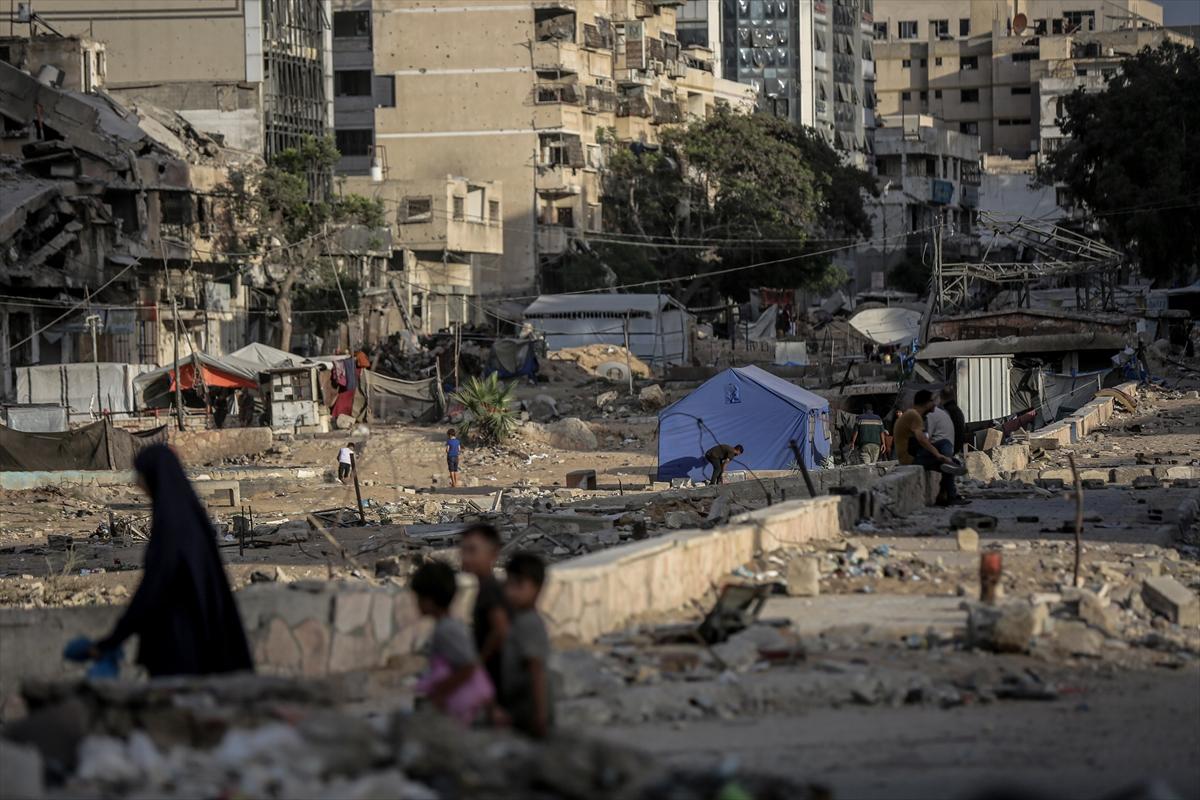
Daily life in Gaza under Israeli attacks, 5 October 2025 - (Anadolu Agency)
The U.S. administration announced it is providing mediation support to expedite the negotiations and has sent Donald Trump’s advisors Jared Kushner and Steve Witkoff to Egypt as observers. In a social media statement, U.S. President Trump stated that “Hamas is ready for a lasting peace” and that “Israel must immediately halt its bombardment.”
The Hamas delegation is led by Khalil al-Hayya, the political leader in Gaza. In a written statement issued by the movement on 6 October, it was stated that “the delegation led by Khalil al-Hayya has arrived in Egypt to begin negotiations on ceasefire, withdrawal of occupation forces, and prisoner exchange.” Al-Hayya is a senior member of Hamas’s Political Bureau, elected to the Palestinian Legislative Council in 2006 and has repeatedly led negotiation teams in mediation processes.
The delegation under al-Hayya’s leadership has authority to represent both military and political matters in the process of ending the genocide in Gaza. Hamas sources have indicated that the top agenda items in the negotiations are “the implementation mechanism for a lasting ceasefire, the withdrawal of the Israeli military from Gaza, and the safe implementation of a mutual prisoner exchange.”
Khalil al-Hayya survived an Israeli assassination attempt in Qatar in September 2025; in the same attack, his son Homam al-Hayya and office director Jihad Lebad were killed.
After the Hamas delegation arrived in Cairo, it was announced that the parties would communicate indirectly through Egyptian security institutions. Details regarding the duration of the visit and the negotiation schedule were not disclosed, but according to reports in the Egyptian press, the initial sessions will focus on “preparatory and technical coordination.”
The Israeli delegation is headed by Minister of Strategic Affairs Ron Dermer. A statement from the Israeli Prime Minister’s Office confirmed that Prime Minister Benjamin Netanyahu instructed Dermer’s negotiation team to travel to Egypt to discuss Trump’s Gaza ceasefire plan. The delegation departed for Sharm El-Sheikh on the morning of 6 October, where it will analyze the technical details of Hamas’s response alongside mediators.
The Israeli delegation’s primary agenda in the talks in Egypt is to accelerate the release process of Israeli captives accepted by Hamas and to establish security mechanisms for the return of Palestinian detainees in exchange. The Tel Aviv administration stated it is preparing to withdraw its military elements in Gaza to a boundary defined as the “safety line.”
Defense Minister Israel Katz’s statements that “the Gaza Strip will be demilitarized and the Israeli military will remain in specific security zones” have sparked debate regarding the plan’s feasibility. Prior to the negotiations, the Israeli military continued operations in northern Gaza, with at least 24 Palestinians reported killed on 5 October.
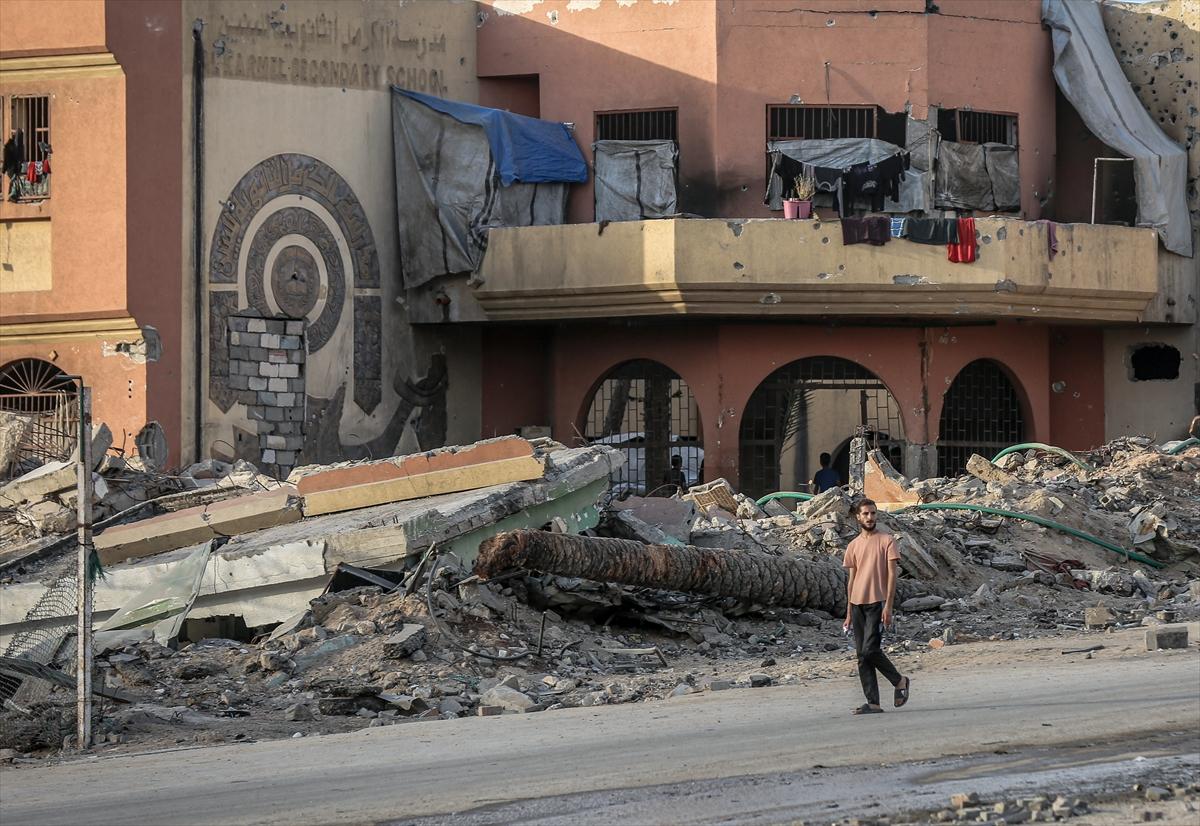
Daily life in Gaza under Israeli attacks, 5 October 2025 - (Anadolu Agency)
Despite the indirect nature of the talks, the Israeli side stated it may show “limited flexibility” toward Hamas’s demands through U.S. and Egyptian mediators. The Netanyahu government announced it will reassess the scope of military operations in Gaza depending on the outcome of the negotiations.
U.S. President Donald Trump appointed two special envoys to participate in the talks: his son-in-law and chief advisor Jared Kushner, and Special Representative for the Middle East Steve Witkoff. Both individuals are coordinating closely with Egyptian and Qatari representatives acting as mediators in Cairo and Sharm El-Sheikh.
According to White House sources, Witkoff and Kushner have been tasked with clarifying the “implementation procedures” related to the technical aspects of the negotiations, particularly concerning prisoner exchange and ceasefire monitoring. Axios correspondent Barak Ravid reported, based on White House information, that “the representatives will finalize technical details regarding the release of prisoners and discuss the framework for a lasting peace agreement.”
On 5 October, Trump stated on social media: “These talks are progressing very successfully. Technical teams will meet again in Egypt on Monday. The first phase must be completed this week; everyone must act quickly.”
U.S. Secretary of State Marco Rubio, in an interview with CBS, stated: “The process of releasing hostages cannot proceed under ongoing bombardment; therefore, Israel must halt its attacks.”
On 5 October 2025, the Egyptian Ministry of Foreign Affairs announced in a written statement that Cairo and Sharm El-Sheikh would host indirect negotiations between the Hamas and Israeli delegations. The statement emphasized that the talks are organized to “end the conflict in the Gaza Strip, improve humanitarian conditions, and achieve lasting peace.”
The Egyptian administration conducts its mediation activities in coordination with the United States and Qatar. The Ministry of Foreign Affairs spokesperson stated that “these talks are of critical importance for reestablishing regional stability and alleviating the humanitarian crisis faced by the people of Gaza.” The statement underscored that the negotiations will be conducted indirectly, with no direct face-to-face meetings between the parties, and that communication will occur exclusively through mediators.
Egyptian security sources outlined a three-phase mediation plan in Cairo: the first phase will clarify the positions of both parties; the second phase will involve technical teams assessing on-the-ground implementation conditions; and the third phase will evaluate the international endorsement process for the ceasefire.
On the morning of 6 October, Egypt’s Minister of Foreign Affairs stated: “We hope this process contributes to ending the war and alleviating the suffering endured by the Palestinian people.”
The Egypt-based news channel Kahire News reported that delegations from Hamas and Israel would begin indirect negotiations on prisoner exchange in Egypt on 6 October 2025 under the framework of U.S. President Donald Trump’s Gaza plan. Following the report, the Egyptian Ministry of Foreign Affairs issued an official statement.
On 6 October 2025, Hamas announced in a statement that a delegation led by its Gaza-based leader Khalil al-Hayya had arrived in Sharm El-Sheikh, Egypt, to begin ceasefire negotiations. The statement specified that discussions would cover “ceasefire, withdrawal of Israeli forces, and prisoner exchange.”
On the same day, the Egyptian Ministry of Foreign Affairs announced it would host the Israeli and Hamas delegations and confirmed that the indirect talks would be conducted under the framework of U.S. President Trump’s plan. Hamas stated it hopes the process “will contribute to alleviating the suffering endured by the Palestinian people.”
U.S. Special Representative for the Middle East Steve Witkoff and Trump’s son-in-law Jared Kushner arrived in Sharm El-Sheikh on the morning of 8 October 2025 to join the negotiations. Prior to their departure to Egypt, Trump held a meeting with senior national security officials and assessed that “an agreement this week appears possible.” U.S. officials stated that Witkoff and Kushner would not leave Egypt until a deal on prisoner release and cessation of hostilities is reached. On the same day, Qatar’s Prime Minister Sheikh Mohammed bin Abdulrahman Al Thani also departed for Sharm El-Sheikh to participate in the talks.
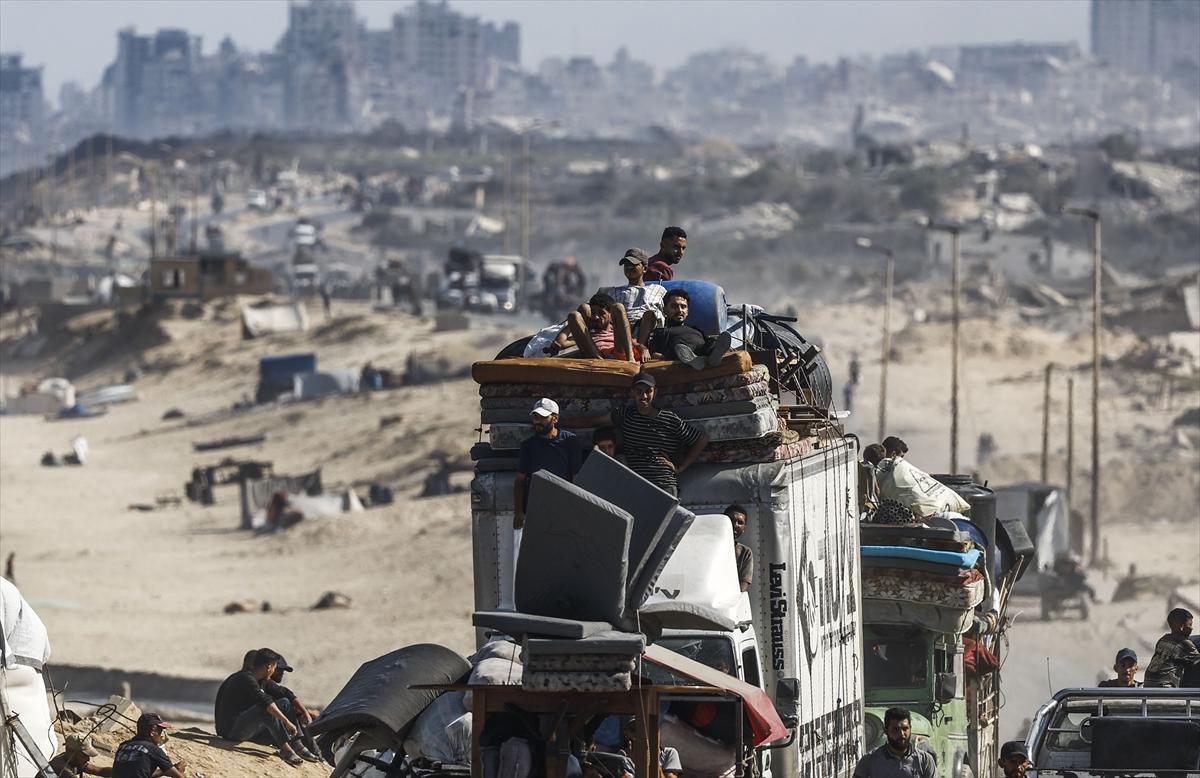
Palestinians fleeing Israeli attacks migrating from north to south - (Anadolu Agency)
Gaza ceasefire negotiations began on 6 October 2025 in Sharm El-Sheikh, Egypt. On 7 October 2025, Egyptian Foreign Minister Badr Abdelatty, during a joint press conference with Slovenia’s Foreign Minister, stated that negotiators are working on a mechanism to guarantee “Israel’s complete withdrawal and unhindered humanitarian aid access to Gaza.” Abdelatty noted “significant progress” and expressed hope that the talks would result in an end to both the war and famine in Gaza.
According to Egypt’s state television channel Al-Qahera News, the first day of negotiations concluded in a “positive atmosphere.” On the same day, Israel’s public broadcaster KAN reported “optimism” from both the Israeli and U.S. sides and indicated that an agreement by Sunday appeared possible.
On 8 October 2025, Tahir al-Nunu, media advisor to the head of Hamas’s Political Bureau, stated in a written statement that “positive developments have occurred in the agreement process.” Nunu noted that the Hamas delegation has demonstrated “the necessary responsibility and constructive attitude to advance the completion of the agreement.”
The same statement indicated that mediators are making intense efforts to remove all obstacles to implementing the ceasefire, and that negotiations have addressed the complete cessation of attacks, the withdrawal of Israeli forces, and the operational mechanisms for prisoner exchange. The Hamas delegation also reported that “lists of prisoners to be released according to mutually agreed criteria and numbers have been mutually reviewed.”
On 8 October 2025, Director of the National Intelligence Organization (MİT) İbrahim Kalın traveled to Egypt to participate in the talks in Sharm El-Sheikh. According to security sources, the main agenda items of the meetings Kalın attended were the establishment of a ceasefire, implementation of prisoner exchange, and delivery of humanitarian aid to the region.
Before attending the meetings in Egypt, Kalın held bilateral contacts with U.S., Qatari, Egyptian, and Hamas officials. Turkey, following prior talks in Doha, has now directly joined the indirect negotiation process initiated in Egypt.
Al Jazeera. “Israel Strikes Gaza, Killing 24 before Egypt Talks on Trump Ceasefire Plan.” Al Jazeera. Accessed October 6, 2025. https://www.aljazeera.com/news/2025/10/5/israel-strikes-gaza-killing-24-before-egypt-talks-on-trump-ceasefire-plan
Al Jazeera. “Live: Trump Urges Negotiators to Move Fast on Israel-Gaza Peace Deal.” Al Jazeera Liveblog. Accessed October 6, 2025. https://www.aljazeera.com/news/liveblog/2025/10/6/live-trump-urges-negotiators-to-move-fast-on-israel-gaza-peace-deal
Anadolu Ajansı. “Hamas Delegation Arrives in Egypt to Launch Ceasefire Negotiations in Gaza.” Accessed October 6, 2025. https://www.aa.com.tr/tr/dunya/hamas-heyeti-gazze-de-ateskes-muzakerelerini-baslatmak-uzere-misir-a-ulasti/3708460#
Anadolu Ajansı. “Hamas ile İsrail Heyetleri, 6 Ekim’de Mısır’da Esir Takasını Müzakere Edecek.” Accessed October 6, 2025. https://www.aa.com.tr/tr/dunya/hamas-ile-israil-heyetleri-6-ekimde-misirda-esir-takasini-muzakere-edecek/3707785#
Anadolu Ajansı. “İsrail, Trump’ın Gazze Planını Görüşmek Üzere Müzakere Heyetini Mısır’a Gönderiyor.” Accessed October 6, 2025. https://www.aa.com.tr/tr/dunya/israil-trumpin-gazze-planini-gorusmek-uzere-muzakere-heyetini-misira-gonderiyor/3708361#
Indirect negotiations for Gaza concluded on 9 October 2025 with the approval of the first phase of the ceasefire plan. U.S. President Donald Trump announced on his social media account: “I am extremely proud to announce that Israel and Hamas have approved the first phase of our peace plan.” Trump stated that under the agreement “all hostages will be released” and “Israel will withdraw to its previously agreed line.”
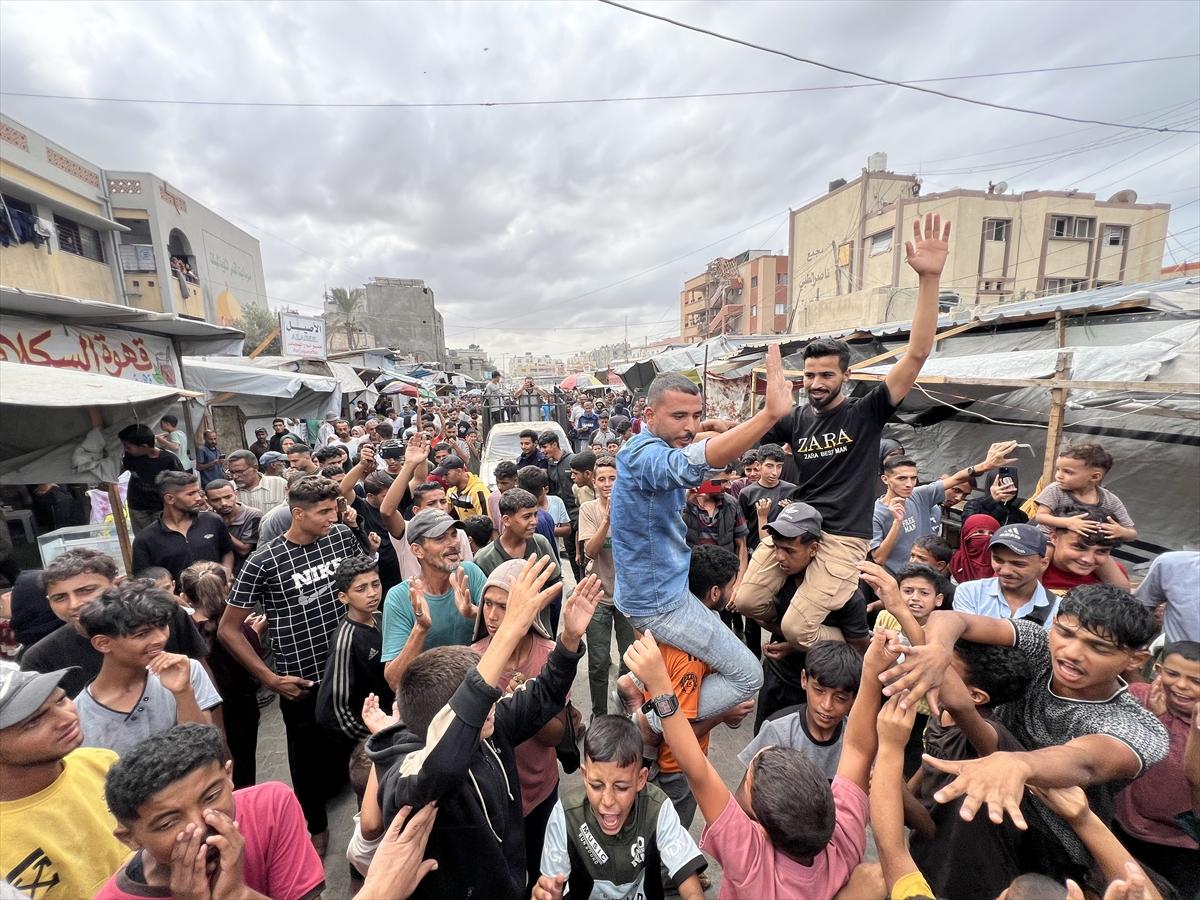
Palestinians gather in Khan Younis following the announcement of the expected ceasefire in Gaza, 9 October 2025 – (Anadolu Agency)
On the morning of 9 October 2025, U.S. President Donald Trump declared on his social media account: “I am extremely proud to announce that Israel and Hamas have approved the first phase of our peace plan.” Trump emphasized that under this agreement, all hostages would be released shortly and Israel would withdraw to the agreed line. He underscored that this was “the first step by Israel toward a strong, lasting, and eternal peace.”
In his post, Trump also thanked countries that contributed to the ceasefire process, saying: “We thank our mediators from Qatar, Egypt, and Türkiye for working with us to make this historic and unprecedented event possible.” The U.S. President stated that the agreement was not only significant for the parties involved but also marked a crucial turning point for the Arab and Muslim worlds, Israel, the United States, and regional nations.
In a separate statement to Fox News on the same day, Trump remarked: “This is not just about Gaza, it is about peace in the Middle East,” and stressed that the success of the ceasefire plan depended on international solidarity. He added: “The entire world came together around this plan; without it, the plan could not have succeeded.”
Trump announced that the release of hostages was scheduled for 13 October 2025 and recounted a recent phone call with Israeli Prime Minister Benjamin Netanyahu: “Netanyahu told me he could not believe it. I told him, ‘Israel cannot fight the entire world; you know this very well.’”
Speaking about the future of the ceasefire plan, Trump said: “A structure called the Peace Council has been established to oversee the reconstruction and governance of Gaza. People will be protected, and an entirely new world will emerge.” He confirmed that this council would coordinate security and reconstruction efforts in Gaza with international partners.
Trump stated: “Gaza will become a much safer place,” highlighting the humanitarian and economic dimensions of the new era. He added: “Since taking office, I have brokered peace agreements between many countries; these successes came through tariffs. Tariffs brought peace to the world.”
In the interview, Trump also commented on Iran. Recalling U.S. strikes on Iran’s nuclear facilities, he claimed these operations prevented Iran from acquiring nuclear weapons in the near term. “If these strikes had not occurred, Iran would have had nuclear weapons within one or two months,” he said.
Trump indicated that a new diplomatic process with Iran had begun, stating: “I now believe peace is possible; Iran will be part of this peace.” These remarks underscored that the Gaza agreement was not merely a regional initiative but an effort to establish a broader diplomatic balance across the Middle East.
On 9 October 2025, Hamas officially confirmed in a written statement that a ceasefire agreement had been reached in Gaza. The statement read: “An agreement has been reached to end the war against Gaza, ensure the withdrawal of occupiers, allow the entry of aid, and facilitate prisoner exchanges.”
Hamas emphasized that the agreement represented a historic milestone for the Palestinian people and expressed deep appreciation for the efforts of mediators in Qatar, Egypt, and Türkiye. It also commended U.S. President Donald Trump for his efforts in securing the ceasefire and ensuring the complete withdrawal of the occupying Israeli forces from the Gaza Strip.
The statement further noted: “This agreement has been achieved as a result of the sacrifices of our people, which have thwarted the occupier’s plans.” Hamas affirmed that the Palestinian people “will never relinquish their right to freedom, independence, and self-determination.”
Hamas indicated that the first steps in implementing the ceasefire would center on prisoner exchanges and shared the list of Palestinians scheduled for release.
According to the statement, final agreement on the names of Palestinians to be released under the agreed criteria is expected soon. Hamas stated that the names of those to be freed would be announced once all necessary procedures are completed.
The Hamas statement also declared: “The release of Palestinians held in Israeli prisons is the movement’s top priority. Our efforts will continue until the last Palestinian prisoner is freed.” Hamas emphasized that the agreement was not only a victory for the Gaza Strip but also a significant gain for the legitimacy of resistance in Jerusalem, the West Bank, and all Palestinian territories, and that this process marked a step toward the complete end of occupation.
The Israeli Prime Minister’s Office announced on 9 October 2025 that the ceasefire agreement reached in Gaza would enter into force after approval by the Israeli government. It was stated that the cabinet would convene that evening to discuss the draft plan for the release of hostages.
Israeli media reported that the meeting, originally scheduled for 17:00, had been postponed to 18:00 and that the cabinet would formally launch the ceasefire process upon approving the agreement. According to Israeli government sources, the release process for Israeli hostages held in Gaza would be rapidly activated once the ceasefire took effect.

Israelis gather in Tel Aviv following the announcement of the expected ceasefire in Gaza, 9 October 2025 – (Anadolu Agency)
In a written statement following the agreement, Israeli Prime Minister Binyamin Netanyahu said: “With God’s permission, we will bring back all of them (the hostages).” The Prime Minister’s Press Office reported that on the same day, Netanyahu spoke by phone with U.S. President Donald Trump and thanked him for his efforts in securing the prisoner exchange and ceasefire agreement. It was also noted that Netanyahu invited Trump to address the Israeli Knesset.
According to Israeli media reports, the newspaper Yedioth Ahronoth anticipated that Trump would visit Israel on Sunday, during which he would deliver a speech to the Knesset and meet with Israeli hostages who are physically and mentally fit for release.
Following approval of the agreement, the Israeli government announced that the terms of the ceasefire in Gaza would be implemented immediately. It was stated that the prisoner exchange and withdrawal process would be conducted under the supervision of international mediators.
On the night of 9 October 2025, Qatar Ministry of Foreign Affairs spokesperson Majid al-Ensaari announced on the American X platform that full agreement had been reached on all provisions of the first-phase ceasefire between Hamas and Israel, following Egypt-mediated negotiations. Ensari stated: “Mediators have agreed on all implementation mechanisms to end the war in Gaza, release Israeli hostages and Palestinian detainees, and allow humanitarian aid to enter.” He added that implementation details would be shared in the coming days.
Qatar, working in coordination with Egypt and the United States since the beginning of the process, provided technical support particularly on hostage exchange lists and the security of humanitarian corridors. The Doha administration announced that humanitarian shipments would be accelerated once the ceasefire took effect.
Egyptian Foreign Minister Badr Abdelatty, in a statement following the approval of the ceasefire agreement, stated: “Mechanisms have been activated to guarantee Israel’s full withdrawal and the unconditional flow of humanitarian aid into Gaza.”
President Recep Tayyip Erdoğan, in a social media post, said: “I am greatly pleased that the Hamas-Israel talks, conducted in Sharm El Sheikh with Türkiye’s contribution, have resulted in a ceasefire in Gaza.” Erdoğan added: “I extend my sincere gratitude to U.S. President Donald Trump, who demonstrated the necessary political will to encourage Israel toward the ceasefire, and to our brotherly countries Qatar and Egypt for their vital support in reaching this agreement. Türkiye will closely monitor the full implementation of the agreement and continue to contribute to the process. Likewise, we will continue our struggle until an independent, sovereign, and geographically unified Palestinian state is established with East Jerusalem as its capital, based on the 1967 borders.”
On this occasion, Erdoğan said: “I extend my deepest condolences and solidarity to my Palestinian brothers and sisters who have endured two years of unbearable suffering under inhumane conditions, who have fought for life and dignity, who have lost their children, mothers, fathers, relatives, and friends, yet have never compromised their dignity despite all tragedies. May my Lord be the helper and protector of my Palestinian brothers and sisters, and may He grant peace to the souls of our martyrs and make their resting places paradise.”
Vice President Cevdet Yılmaz also stated that Türkiye had contributed to both the diplomatic and humanitarian dimensions of the process and would closely monitor the implementation of the ceasefire in Gaza. Yılmaz noted: “Gaza is entering a new era through its reconstruction, and the end of two years of attacks is a victory for humanity.”
Presidential Communications Director Burhanettin Duran, in his assessment of the agreement, said: “From this stage onward, the parties must adhere to the agreement’s terms, urgent humanitarian aid must reach Gaza, and the humanitarian crisis of the past two years must be brought to an end.”
The Republic of Türkiye Ministry of Foreign Affairs, in its official statement, said: “We welcome the achievement of a ceasefire in Gaza and hope this ceasefire ends the two-year-long genocide.” The statement emphasized the expectation of full implementation of the ceasefire, the urgent delivery of humanitarian aid to Gaza, and the immediate initiation of reconstruction efforts.
On 9 October, the Israeli Prime Minister’s Office announced that the cabinet had approved the agreement, with Prime Minister Binyamin Netanyahu’s government adopting the decision to “end the war in Gaza and bring back all Israeli hostages.” U.S. President Donald Trump’s Middle East Special Representative Steve Witkoff and advisor Jared Kushner also attended the meeting. Five far-right ministers voted “no,” but the agreement was approved by a majority.
According to Israel’s official broadcaster KAN, most cabinet ministers approved the agreement, but five ministers—including National Security Minister Itamar Ben-Gvir and Finance Minister Bezalel Smotrich—voted against it. All ministers who voted “no” were reported to belong to parties led by Ben-Gvir and Smotrich.
According to KAN, following the agreement, the Israeli military began withdrawing to its “preset deployment lines.” Israel Army Radio reported that some brigades had withdrawn from Gaza and that tank and armored vehicle activity had been observed along the Gaza border after the partial withdrawal.
Trump’s 20-point Gaza peace plan is as follows:
According to the official statement by the Israeli military, the ceasefire in Gaza entered into force on 10 October 2025 at 12:00 local time. The statement confirmed that Israeli soldiers had completed their partial withdrawal to designated points known as the “yellow line,” and no attacks or explosions occurred in Gaza after the withdrawal.
The same statement indicated that operations against targets designated as “urgent threats” outside the withdrawal line could continue. According to an Anadolu Agency correspondent on the Israeli side of the border, after the ceasefire took effect, combat sounds ceased, but Israeli unmanned aerial vehicles continued flying over the area.
The Israeli military stated that, according to the agreement, Israeli hostages held in Gaza are scheduled to be released within 72 hours after the completion of the partial withdrawal. The handover process is expected to be completed by 13 October 2025, Monday, around noon.
After the ceasefire took effect, it was reported that the Israeli military began a gradual withdrawal to the “yellow line” deployment positions in Gaza. However, it was observed that the military continued attacks in certain areas during this process.
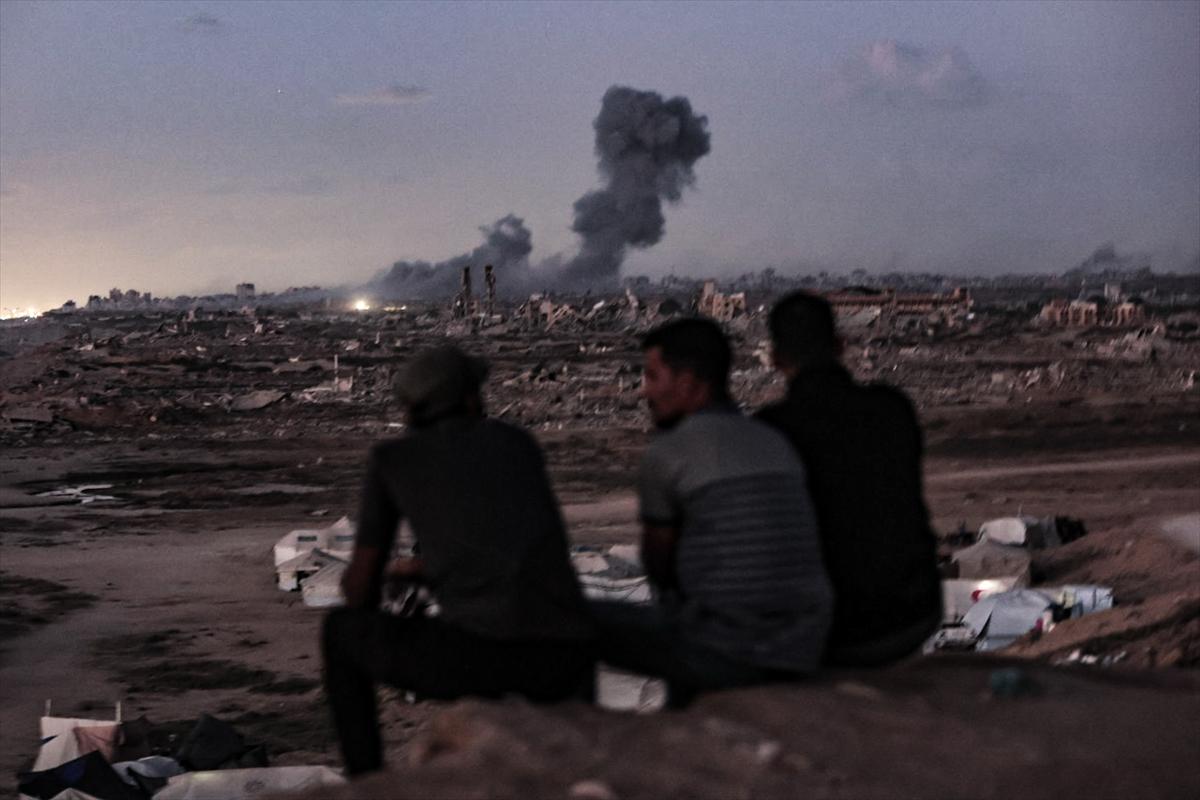
A view from within the Israeli-occupied Gaza Strip, 9 October 2025 – (Anadolu Agency)
According to eyewitness accounts, Israeli warplanes and artillery units targeted the eastern part of Gaza City in the morning hours following the ceasefire approval. It was also reported that tank units fired at areas around the Netzarim Corridor, which divides northern and southern Gaza.
In the Shakuş area in the northwest of the Rafah city, areas surrounding tents and homes housing displaced civilians were also subjected to fire. Smoke bombs were fired toward the northeastern part of Khan Younis, followed by an airstrike on the city center.
According to Anadolu Agency correspondents on the Gaza border, Israeli warplanes and helicopters continued flying over the region despite the ceasefire. Artillery fire and gunfire were heard in northern Gaza.
According to the Times of Israel, the Israeli military carried out its “partial withdrawals” accompanied by artillery fire and airstrikes. Gaza’s Ministry of Health has not yet issued a statement regarding casualties from the latest attacks.
The Israeli military’s press office left unanswered questions regarding the cause of continued explosions despite the ceasefire. This situation has triggered diplomatic criticism over violations of the ceasefire even on its first day.
On 9 October 2025, U.S. President Donald Trump assessed the ceasefire agreement in Gaza during a cabinet meeting at the White House. Trump described the agreement as “a historic turning point for peace in the Middle East” and noted that Türkiye, Qatar, and Egypt had played “very important roles” in the successful completion of the process.
Trump thanked the three countries, saying: “I want to express my great gratitude to the leaders of Türkiye, Qatar, and Egypt for helping us reach this incredible outcome and for standing by our side.” He devoted a special paragraph to President Recep Tayyip Erdoğan, stating: “President Erdoğan personally engaged on the issue of Hamas and other groups and did an outstanding job.”
The U.S. President emphasized that the ceasefire was not merely a step to halt fighting but an agreement that opens the door to lasting peace in the region. “I believe this peace will be lasting; I hope it lasts forever,” he said. Trump declared: “We ended the war in Gaza,” adding: “A new chapter has been opened for the future of the region’s people.”
Trump also noted the economic dimension of the agreement, saying: “Gaza will gradually be rebuilt. Some countries in the region have enormous wealth, and only a small portion of this wealth will create miracles in Gaza.” He affirmed that Gaza’s reconstruction would be carried out through “international cooperation” and repeated: “This is a great plan; a peace plan supported by everyone.”
Trump emphasized that the people of Gaza would not be forcibly displaced, stating: “No one will be forcibly displaced. We have never considered such a thing. This plan guarantees that Palestinians will remain on their own land.”
Trump’s statement that “I believe peace will be lasting. Peace in the Middle East became possible because everyone came together” drew attention. Regarding the hostage exchange, Trump said: “All hostages will be released on Monday or Tuesday. I will likely be there that day. We plan to depart on Sunday.”
Trump indicated he would travel to Egypt to attend the official signing ceremony and possibly deliver a speech at the Israeli Knesset. “They asked me to speak there. If they want me to, I will go and speak. It will be the first time a U.S. president does this. So it will be very interesting,” he said.
When asked about the two-state solution, Trump replied: “I have no position on this. I will follow whatever agreement they (Israel and the Palestinians) reach.” Trump emphasized that the fundamental goals of the peace process were “ending the war, reconstruction, and ensuring the safety of the people.”
Finnish President Alexander Stubb, in his remarks during the same meeting, thanked U.S. President Trump, saying: “I congratulate you on what we have seen in Gaza over the past 24 hours. This is truly a historic agreement.”
According to the official statement by the Israeli military, the ceasefire in Gaza entered into force on 10 October 2025 at 12:00 local time. The statement confirmed that Israeli soldiers had completed their partial withdrawal to designated points known as the “yellow line,” and no attacks or explosions occurred in Gaza after the withdrawal.
The same statement indicated that operations against targets designated as “urgent threats” outside the withdrawal line could continue. According to an Anadolu Agency correspondent on the Israeli side of the border, after the ceasefire took effect, combat sounds ceased, but Israeli unmanned aerial vehicles continued flying over the area.
The Israeli military stated that, according to the agreement, Israeli hostages held in Gaza are scheduled to be released within 72 hours after the completion of the partial withdrawal. The handover process is expected to be completed by 13 October 2025, Monday, around noon.
With the implementation of the ceasefire, a large-scale return movement began from southern to northern Gaza. According to Anadolu Agency, thousands of Palestinians began returning to homes they had abandoned due to two years of attacks.
Immediately after the Israeli military announced the ceasefire, the Rashid Street, which connects central and southern Gaza to the north, became heavily used by returning civilians. After the Israeli withdrawal, many families moved northward toward their homes, carrying whatever belongings they could.
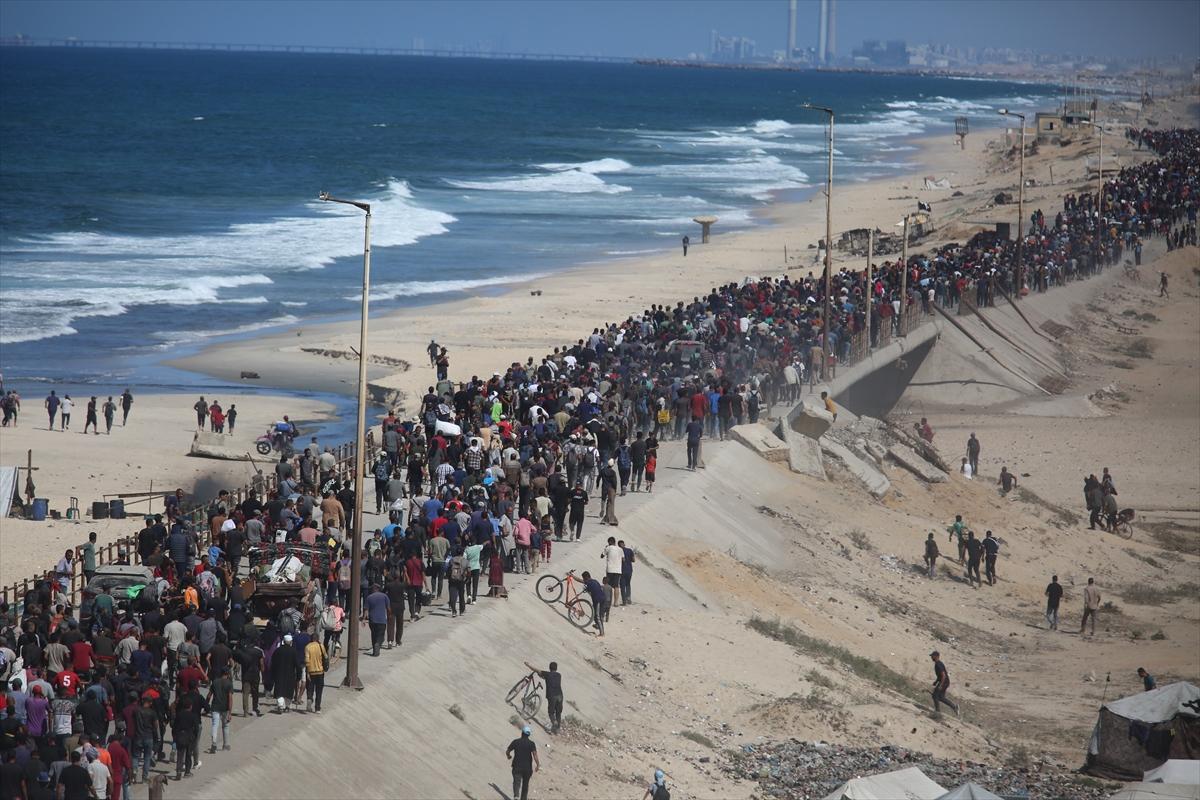
Thousands of Palestinians return to their homes in northern Gaza after the ceasefire takes effect, 10 October 2025 – (Anadolu Agency)
Following the implementation of the ceasefire in Gaza on 10 October 2025, governments, international organizations, and humanitarian aid groups described the end of two years of attacks as a “humanitarian turning point.”
German Chancellor Friedrich Merz described the ceasefire in Gaza as “good news for the Middle East and beyond.” He thanked Türkiye, Qatar, and Egypt for their mediation efforts, stating: “The signing of a ceasefire agreement after more than two years of war in Gaza is an achievement.”
Chancellor Merz also thanked U.S. President Donald Trump for his peace initiative, stressing the need for rapid implementation of the ceasefire and making the reunification of all hostages with their families a top priority. “The ceasefire must take effect and gain stability in the coming weeks. Humanitarian aid must reach the people of Gaza swiftly,” he said.
Merz emphasized the importance of sustaining the steps toward peace, highlighting the need for Gaza’s reconstruction, Hamas’s disarmament, and the delivery of humanitarian aid to civilians. Germany announced it would co-host an “International Reconstruction Conference for Gaza” with Egypt.
Merz also indicated Germany’s readiness to assume responsibility within Trump’s proposed “Peace Council” structure and pledged support for the reform process within the Palestinian Authority. He noted that Germany would support Palestinian security and judicial institutions through its EU missions EUBAM and EUPOL COPPS.
Merz emphasized that Germany would not participate militarily and would contribute only within diplomatic and legal frameworks. He also stated that Germany would review arms export licenses in light of developments in the region, calling this a “requirement of historical responsibility.” Merz concluded his remarks with: “The two-state solution is the only hope for lasting peace.”
International Committee of the Red Cross (ICRC) President Mirjana Spoljaric Egger, in a written statement, said: “The ceasefire agreement between Israel and Hamas must be a turning point after two years of unimaginable horror.” She emphasized that the ceasefire offered a “vital opportunity to save lives and alleviate suffering.”
The ICRC stated that its teams in Gaza, Israel, and the West Bank would play an active role in the process of returning hostages and detainees to their families. It also committed to “helping return human remains so families can mourn their loved ones with dignity.”
Egger stated that more humanitarian aid would reach Gaza, saying: “The coming days are critical. I call on the parties to remain faithful to their commitments. Evacuation operations must be conducted safely, aid must resume at full capacity, and it must reach people securely. Lives depend on the continuation of the ceasefire.”
South Africa, through its Ministry of Foreign Affairs, stated in a written statement that the ceasefire represented “an important step on the path to lasting peace.” The statement called on all parties to adhere to the steps agreed upon in negotiations.
The South African government emphasized the need for a “reliable political process” to end the tragic humanitarian catastrophe and prevent further loss of life, and expressed appreciation for the roles of guarantor states (Türkiye, Qatar, Egypt, and the United States). The statement also called for “urgent and unimpeded humanitarian aid” to be delivered to besieged Gaza. South Africa announced its readiness to share its experience in peacebuilding and transitional justice.
Somalia’s Ministry of Foreign Affairs and International Cooperation, in its statement, said: “We hope this agreement is a sincere step toward a just peace that ends the suffering of the Palestinian people and strengthens security in the region.” Somalia reiterated its support for the Palestinian people’s right to establish an independent and sovereign state and emphasized adherence to international law.
The Sudanese Sovereignty Council stated in its statement that the ceasefire was “an important step toward stopping the flow of blood and alleviating the suffering of our Palestinian brothers.” It described the ceasefire as “a victory for justice and humanitarian values” and a “genuine opportunity to restore security and stability to the region.”
Following the approval of the first phase of the Gaza peace plan, an international peace summit with broad participation was convened to assess the implementation of the ceasefire and developments on the ground. In this context, the Sharm el-Şeyh Peace Summit, held on 13 October, was recorded as a diplomatic meeting addressing the status of ceasefire implementation, security developments, and the humanitarian aid process.
The first phase of the ceasefire agreement, which entered into force in Gaza on 10 October 2025, was completed on 15 January 2026 with the transition to the second phase. During this period, although the ceasefire was officially in effect, Israel continued to violate the ceasefire and conduct attacks on Gaza.
The summit held in Sharm el-Şeyh documented the details of Israeli attacks on Gaza during the 2025–2026 period as follows:
2- Gaza Ceasefire Agreement: Violations and Attacks (2025)
3- Israel’s Attacks on Gaza and Developments in Gaza (2026)
On 15 January 2026, the Gaza-based Palestinian government’s Media Office released a statement sharing military, humanitarian, and infrastructure data regarding the 95-day period. According to data from the Palestinian government in Gaza, 1,244 violations by Israel were recorded during the first phase of the ceasefire. The violations were categorized as follows:
During the same period, attacks resulted in 449 Palestinian deaths, 1,246 injuries, and 50 arrests.
Instead of the 57,000 humanitarian aid trucks envisioned under the ceasefire agreement, only 24,611 trucks entered Gaza during the first phase. While the agreement anticipated an average of 600 trucks per day, the actual average was 259 trucks per day, resulting in a compliance rate of 43% for this category. Due to insufficient aid, serious shortages occurred in food, medicine, water, and fuel; a significant portion of permitted food items was found to have low nutritional value.
Regarding fuel deliveries, only 601 trucks entered Gaza instead of the 4,750 trucks stipulated in the agreement. With an average of only 6 trucks per day instead of the planned 50 trucks per day, compliance with the fuel provision clause dropped to 12%. Due to fuel shortages, hospitals, bakeries, and water purification plants ceased operations.
Due to restrictions at border crossings, prefabricated structures and shelter materials were unable to enter Gaza, deepening the shelter crisis during winter conditions. During cold weather waves, more than 50 damaged buildings and homes collapsed, and cold-related deaths occurred in tents. The statement noted that over 127,000 tents had become unusable and that more than 1.5 million displaced people lacked even minimal shelter conditions.
Al Jazeera. “World Reacts to Gaza Ceasefire Deal Announced by Trump.” Al Jazeera. Accessed October 9, 2025. https://www.aljazeera.com/news/2025/10/9/world-reacts-to-gaza-ceasefire-deal-announced-by-trump
Anadolu Ajansı. "Cumhurbaşkanı Erdoğan: Anlaşmanın Uygulamalarını Takip Edecek Görev Gücünde Türkiye Olarak İnşallah Biz de Yer Alacağız." Accessed October 10, 2025. https://www.aa.com.tr/tr/gundem/cumhurbaskani-erdogan-anlasmanin-uygulamalarini-takip-edecek-gorev-gucunde-turkiye-olarak-insallah-biz-de-yer-alacagiz/3712423
Anadolu Ajansı. "Trump, Gazze’de Ateşkes Konusunda Türkiye ve Cumhurbaşkanı Erdoğan’a Teşekkür Etti." Accessed October 10, 2025. https://www.aa.com.tr/tr/dunya/trump-gazzede-ateskes-konusunda-turkiye-ve-cumhurbaskani-erdogana-tesekkur-etti/3712953
Anadolu Ajansı. “ABD Başkanı Trump, Gazze’den Kimsenin Zorla Çıkarılmayacağını Söyledi.” Accessed October 10, 2025. https://www.aa.com.tr/tr/dunya/abd-baskani-trump-gazzeden-kimsenin-zorla-cikarilmayacagini-soyledi/3713177#
Anadolu Ajansı. “ABD Başkanı Trump, İsrail ile Hamas’ın Gazze’de Ateşkes Planının İlk Aşamasını Onayladığını Duyurdu.” Accessed October 9, 2025. https://www.aa.com.tr/tr/dunya/abd-baskani-trump-israil-ile-hamasin-gazzede-ateskes-planinin-ilk-asamasini-onayladigini-duyurdu/3711871#
Anadolu Ajansı. “Dünya Liderleri, Gazze’de Ateşkes Sağlanmasını Memnuniyetle Karşıladı.” Accessed October 9, 2025. https://www.aa.com.tr/tr/dunya/dunya-liderleri-gazzede-ateskes-saglanmasini-memnuniyetle-karsiladi/3711916#
Anadolu Ajansı. “Gazze’de Ateşkes Devreye Girdi.” Accessed October 10, 2025. https://www.aa.com.tr/tr/dunya/gazze-de-ateskes-devreye-girdi/3713223
Anadolu Ajansı. “Gazze’de Ateşkes Devreye Girdi.” Accessed October 10, 2025. https://www.aa.com.tr/tr/dunya/gazze-de-ateskes-devreye-girdi/3713223
Anadolu Ajansı. “Gazze’de Ateşkesin Yürürlüğe Girmesiyle Binlerce Filistinli Kuzeydeki Evlerine Dönmeye Başladı.” Accessed October 10, 2025. https://www.aa.com.tr/tr/dunya/gazzede-ateskesin-yururluge-girmesiyle-binlerce-filistinli-kuzeydeki-evlerine-donmeye-basladi/3713569#
Anadolu Ajansı. “Gazze’de Yürürlüğe Giren Ateşkese Dünyadan Tepkiler.” Accessed October 10, 2025. https://www.aa.com.tr/tr/dunya/gazzede-yururluge-giren-ateskese-dunyadan-tepkiler/3713366#
Anadolu Ajansı. “İsrail, Gazze’de Ateşkesin Birinci Aşamasında 1.244 İhlal Yaptı.” Accessed January 16, 2026. https://www.aa.com.tr/tr/dunya/-israil-gazzede-ateskesin-birinci-asamasinda-1244-ihlal-yapti/3799881
Anadolu Ajansı. “İsrail, Gazze’de Yürürlüğe Giren Ateşkese Rağmen Saldırılarına Devam Ediyor.” Accessed October 10, 2025. https://www.aa.com.tr/tr/dunya/israil-gazzede-yururluge-giren-ateskese-ragmen-saldirilarina-devam-ediyor/3713309#
BBC News. “Trump's 20-point Gaza peace plan in full.” BBC News. Accessed January 16, 2026. https://www.bbc.com/news/articles/c70155nked7o
Gaza’s second phase of the ceasefire agreement was launched on January 14, 2026, under the 20-point Gaza Peace Plan proposed by U.S. President Donald Trump. The process was announced by U.S. President’s Special Representative for the Middle East, Steve Witkoff. In a statement on the social media platform X, Witkoff said: “Today, on behalf of President Trump, we announce the launch of the second phase of his 20-point plan to end the conflict in Gaza; this phase transitions from ceasefire to disarmament, technocratic governance, and reconstruction.”
The second phase follows the initial ceasefire period and encompasses disarmament, interim governance, and reconstruction efforts. Witkoff stated that a technocratic interim administration, named the National Committee for the Administration of Gaza, will be established in Gaza, with the “complete disarmament of Gaza” and “the reconstruction of the region” as central objectives. The process is being implemented in accordance with United Nations Security Council Resolution of November 18, 2025, which envisions Gaza being administered by a temporary Palestinian technocratic government under the oversight of the Trump-led Peace Council.
The U.S. administration claims that the commencement of the second phase is “a step toward transforming the ceasefire into lasting peace.” Witkoff also thanked Türkiye, Qatar, and Egypt for their “contributions to the peace process.”
United Nations Secretary-General’s Spokesperson Stephane Dujarric, in a press briefing following the U.S. announcement, said: “We call on all parties to continue adhering to their commitments under the agreement.” Dujarric noted that serious obstacles remain in delivering humanitarian aid and that needs in Gaza are “still immense.”
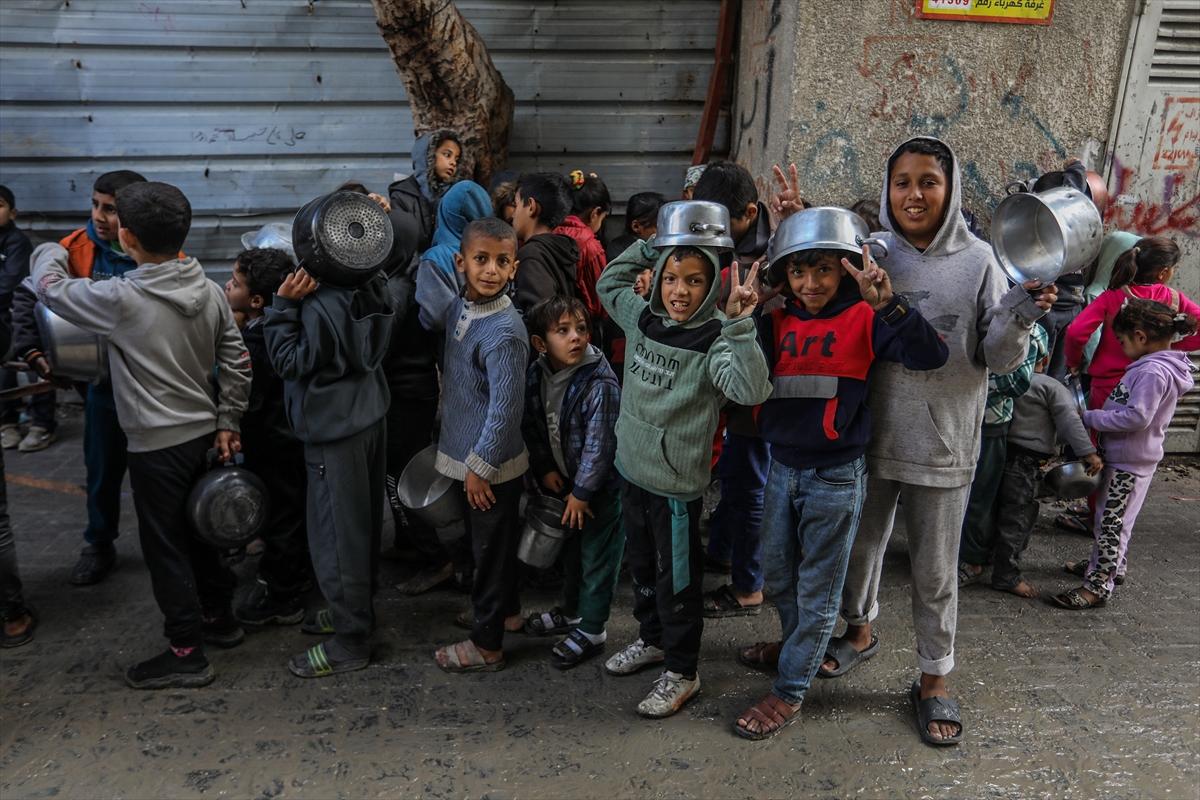
Daily life in Gaza, January 19, 2026 - (Anadolu Agency)
One of the most fundamental steps in the second phase of the Gaza Peace Plan was the establishment of the Gaza Peace Council. On January 16, 2026, U.S. President Donald Trump declared: “I am honored to announce the formation of the Peace Council. The members will be announced shortly, but I can say with certainty that this council is the largest and most prestigious ever assembled.”
In his statement, Trump also confirmed that the second phase had formally begun, asserting that “the ceasefire has halted hostilities and significant humanitarian aid has been delivered to Gaza.” Regarding the new interim technocratic Palestinian administration, Trump stated: “As Chairman of the Peace Council, I support the newly appointed Palestinian technocratic government, the National Committee for the Administration of Gaza, backed by the Council’s High Representative, to govern Gaza during the transition. These Palestinian leaders are firmly committed to a peaceful future.”
According to U.S. sources, former United Nations Special Coordinator for the Middle East Peace Process Nickolay Mladenov has been appointed to oversee the day-to-day operations of the council. It was stated that Mladenov will monitor the implementation of Trump’s plan and serve as a liaison bridge between the technocratic Palestinian administration and the Peace Council.
It is reported that the structure of the council will be officially announced during the World Economic Forum in Davos, Switzerland, on January 23, 2026.
Trump, as Chairman of the Gaza Peace Council, stated that with the support of Türkiye, Egypt, and Qatar, the council will initiate the process of demilitarizing the region, including “the surrender of all Hamas weapons and the destruction of all tunnels.” The U.S. administration, in outlining the council’s objectives, declared: “The goal here is to create an alternative structure to Hamas for those seeking peace and to determine how to strengthen them.”
U.S. sources indicated that the Peace Council will operate in coordination with an international stabilization force and technocratic governance, and will manage the implementation of the Peace Plan on the ground.
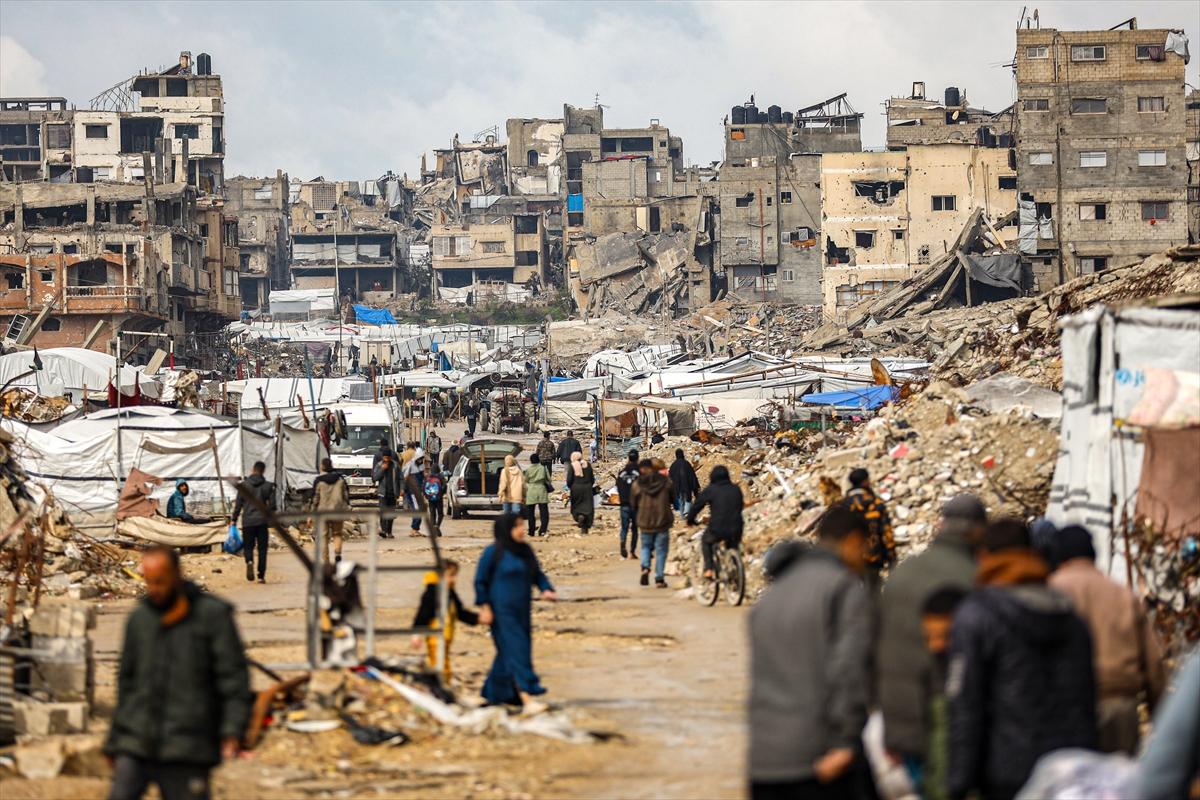
Daily life in Gaza, January 18, 2026 - (Anadolu Agency)
The Palestinian Technocratic Administration Committee, tasked with assuming temporary governance in Gaza, was established through a joint initiative by the United States, Türkiye, Egypt, and Qatar. The committee was formed to oversee the civil dimension of Gaza’s reconstruction and governance process.
Dr. Ali Abdel Hamid Shaath has been appointed as chairman of the committee. In a joint statement by Türkiye, Egypt, and Qatar, it was stated: “Mediators Türkiye, Egypt, and Qatar welcome the establishment of the Palestinian technocratic committee under the leadership of Dr. Ali Abdel Hamid Shaath as a significant development that will strengthen stability and improve the humanitarian situation in the Gaza Strip.” In line with the plan announced by U.S. President Donald Trump, the statement added: “The formation of this committee paves the way for the implementation of the second phase of the Gaza ceasefire agreement, thereby reinforcing the ceasefire and preventing a new escalation. Mediators emphasize that all parties must fully adhere to the agreement to create conditions conducive to sustainable peace and the reconstruction of the Gaza Strip, in order to meet the aspirations of the Palestinian people for security, stability, and a dignified life.”
The committee will be responsible for managing civil affairs and essential services in areas vacated by the Israeli military. It was also specified that the committee will not engage directly with Palestinian armed groups and will conduct its administration entirely on a civilian basis.
Gaza’s reconstruction will be financed through a special fund managed by the World Bank, funded by Arab and international donors. Under this fund, plans include the recycling of rubble for land reclamation and road construction, as well as the repair of shelters, drinking water facilities, and schools.
In addition to the United States, Türkiye, Egypt, and Qatar, Spain and France have also welcomed the establishment of the technocratic committee. The Spanish Ministry of Foreign Affairs stated: “Spain appreciates the determination of Türkiye, Egypt, and Qatar to advance the implementation of the peace plan aimed at achieving a just and lasting peace.”
The French Ministry of Foreign Affairs characterized the committee’s formation as “the first step toward the Palestinian people taking ownership of the new phase.”
The White House announced on January 17, 2026, the members of the “Peace Council” responsible for implementing the second phase of the Gaza Peace Plan.
The announcement stated that this body, under the chairmanship of U.S. President Donald Trump, will coordinate closely with the National Committee for the Administration of Gaza and the Gaza Executive Board to manage the transition process in Gaza. The chairmanship of the committee has been assigned to Dr. Ali Shaath, former Deputy Minister of Planning of the Palestinian Authority. Dr. Shaath will oversee responsibilities in the areas of “re-establishing public services, rebuilding civil institutions, and stabilizing daily life in Gaza.”
The founding members of the Peace Council Executive Board include:
The Gaza Executive Board was established to support governance, services, and reconstruction activities in Gaza. Its members include: Turkish Foreign Minister Hakan Fidan, Steve Witkoff, Jared Kushner, Tony Blair, UAE Minister of International Cooperation Reem Al-Hashimy, Qatari diplomat Ali Al-Thawadi, Egyptian intelligence chief Hassan Rashad, Marc Rowan, Nickolay Mladenov, Yakir Gabay, and Sigrid Kaag.
Nickolay Mladenov has been appointed as the High Representative for Gaza. His role is to ensure on-the-ground coordination between the Peace Council and the National Committee for the Administration of Gaza. He will also provide oversight support on matters of governance, reconstruction, and development and manage civil-security coordination. The White House announcement also confirmed that Lieutenant General Jasper Jeffers has been appointed as Commander of the International Stabilization Force (ISF). The White House announcement also confirmed that Lieutenant General Jasper Jeffers has been appointed as Commander of the International Stabilization Force (ISF).
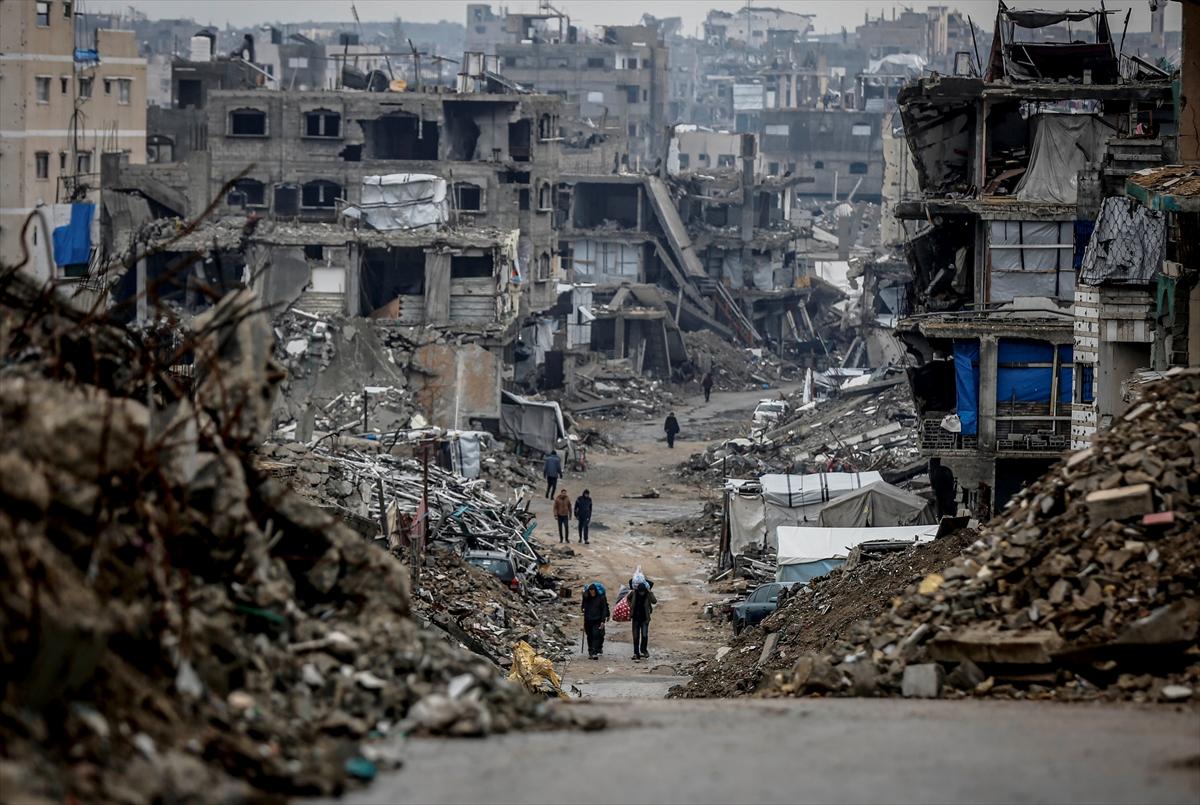
Daily life in Gaza, January 18, 2026 - (Anadolu Agency)
The new governance structure established under the Gaza Peace Plan is built upon a three-tier administrative model. According to diplomatic sources, this structure consists of three main bodies: the Peace Council (Board of Peace), the Peace Council Executive Board, and the Gaza Executive Board.
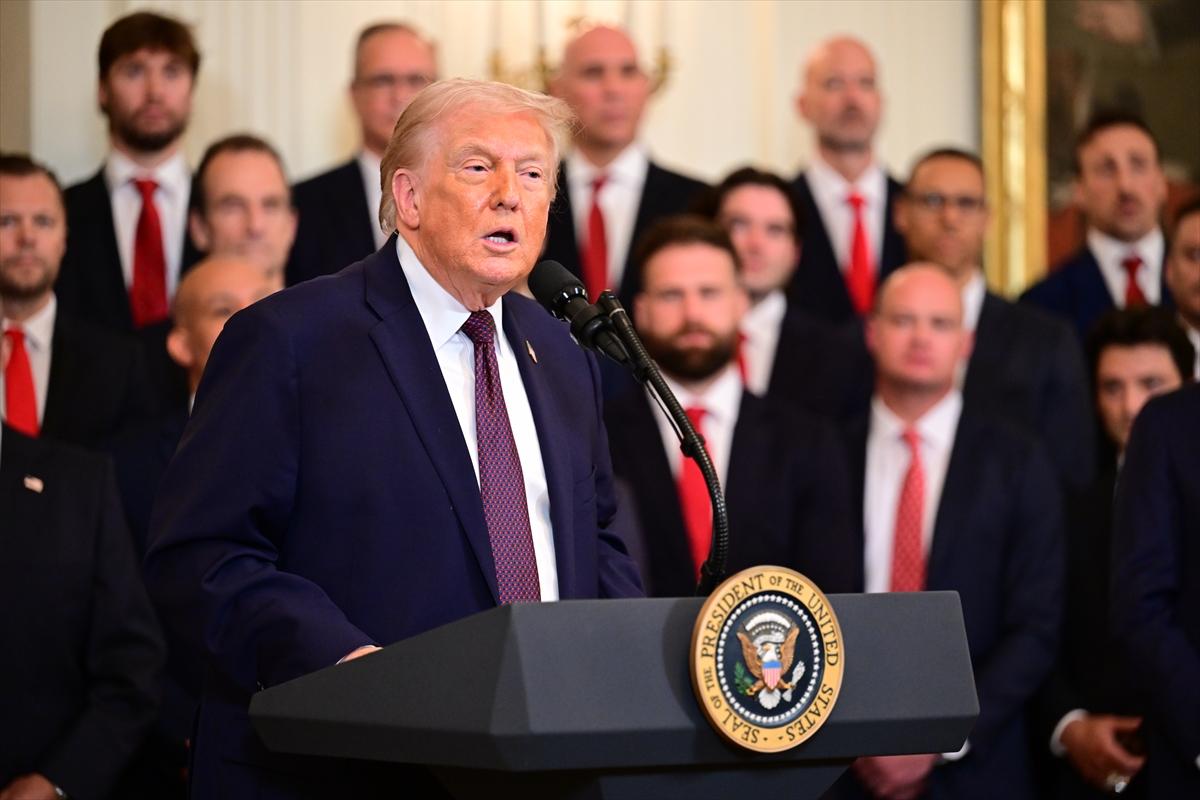
U.S. President Donald Trump, January 16, 2026 - (Anadolu Agency)
At the highest level is the Peace Council (Board of Peace), to be chaired by U.S. President Donald Trump. This council is responsible for the overall coordination of Gaza’s reconstruction, security, and political transition. Trump has stated that the council is also “the highest political body.”
The second level is defined as the Peace Council Executive Board, established to develop strategic vision and submit policy recommendations to the Peace Council. Its members include: U.S. Secretary of State Marco Rubio, Steve Witkoff, Jared Kushner, Sir Tony Blair, Marc Rowan, Ajay Banga, and Robert Gabriel.
At the third level is the National Committee for the Administration of Gaza (NCAG), responsible for on-the-ground implementation. This body consists of 15 Palestinian technocrats. Dr. Ali Shaath serves as its chair. The committee is authorized under United Nations Security Council Resolution 2803 and U.S. President Donald Trump’s 20-point Comprehensive Plan.
The administrative structure of the Gaza Peace Plan also includes the High Representative Office. Nickolay Mladenov has been appointed to lead this office. Mladenov previously served as the UN Special Coordinator for the Middle East Peace Process. In the new system, his role is to coordinate between the Peace Council and the National Committee for the Administration of Gaza.
Within the Gaza High Representative Office, a Gaza Executive Board has also been established. Its members include: Turkish Foreign Minister Hakan Fidan, Steve Witkoff, Jared Kushner, Tony Blair, Ali Al-Thawadi, Hassan Rashad, Marc Rowan, Reem Al-Hashimy, Nickolay Mladenov, Yakir Gabay, and Sigrid Kaag.
This three-tier structure is designed to coordinate security, governance, and reconstruction efforts in Gaza. According to the White House statement, this structure serves the purpose of “ensuring effective governance, stability, and reconstruction in Gaza.” The security domain is additionally organized as an independent entity. The military unit known as the International Stabilization Force (ISF) has been placed under the command of U.S. Lieutenant General Jasper Jeffers. This force is tasked with ensuring security in Gaza and maintaining temporary peace conditions.
The members of the Gaza Executive Board include:
The Gaza Executive Board operates in direct coordination with the Gaza High Representative Office, chaired by Nickolay Mladenov. Mladenov is responsible for on-the-ground coordination between the Peace Council and the National Committee for the Administration of Gaza. The White House statement emphasized that each member of the board holds specific responsibilities critical to Gaza’s stability.
Nickolay Mladenov has assumed the title of High Representative for Gaza in his new role. In this capacity, he has taken on the responsibility of “ensuring coordination between the Peace Council and the National Committee for the Administration of Gaza and integrating civil and security efforts.”
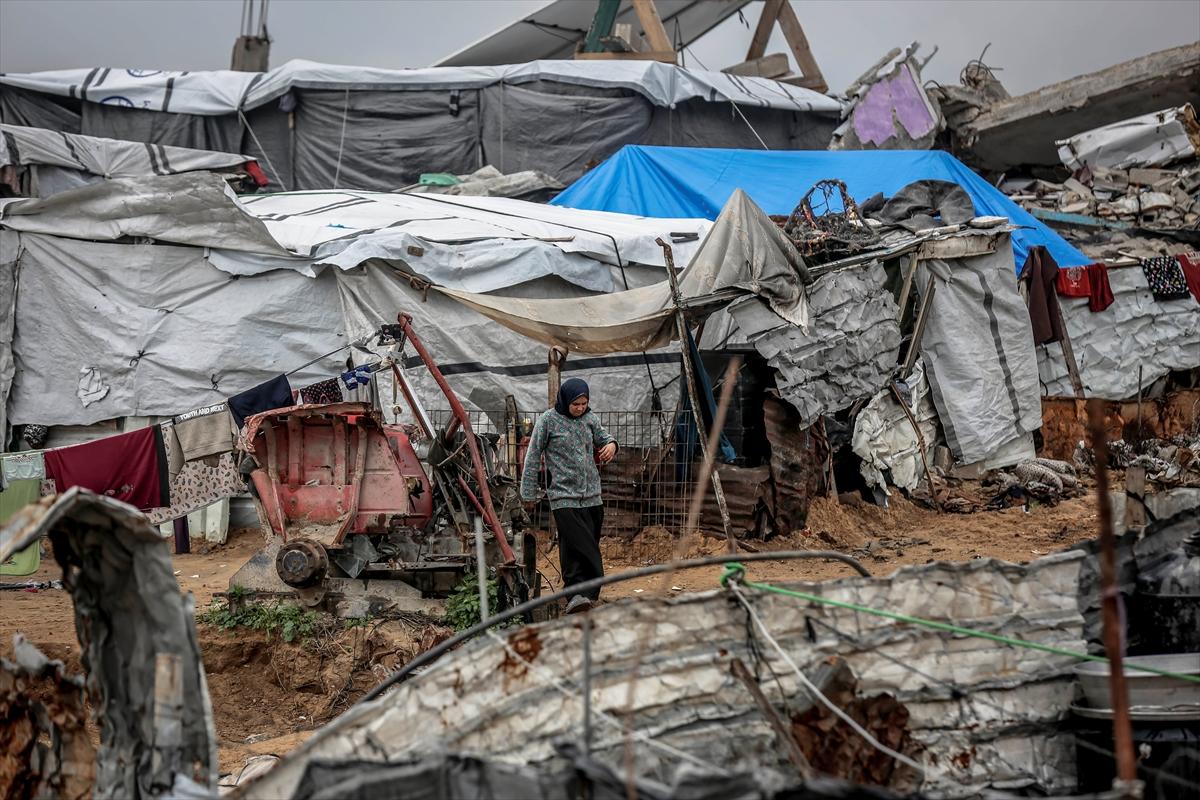
Daily life in Gaza, January 18, 2026 - (Anadolu Agency)
Dr. Ali Shaath, Chairman of the National Committee for the Administration of Gaza, announced on January 18, 2026, that he had approved the committee’s mission statement. In a statement posted on the U.S.-based social media platform X, Shaath said: “Today, as my first official act, I approved and signed the mission statement of the National Committee for the Administration of Gaza, defining our mandate, guiding principles, and areas of responsibility.”
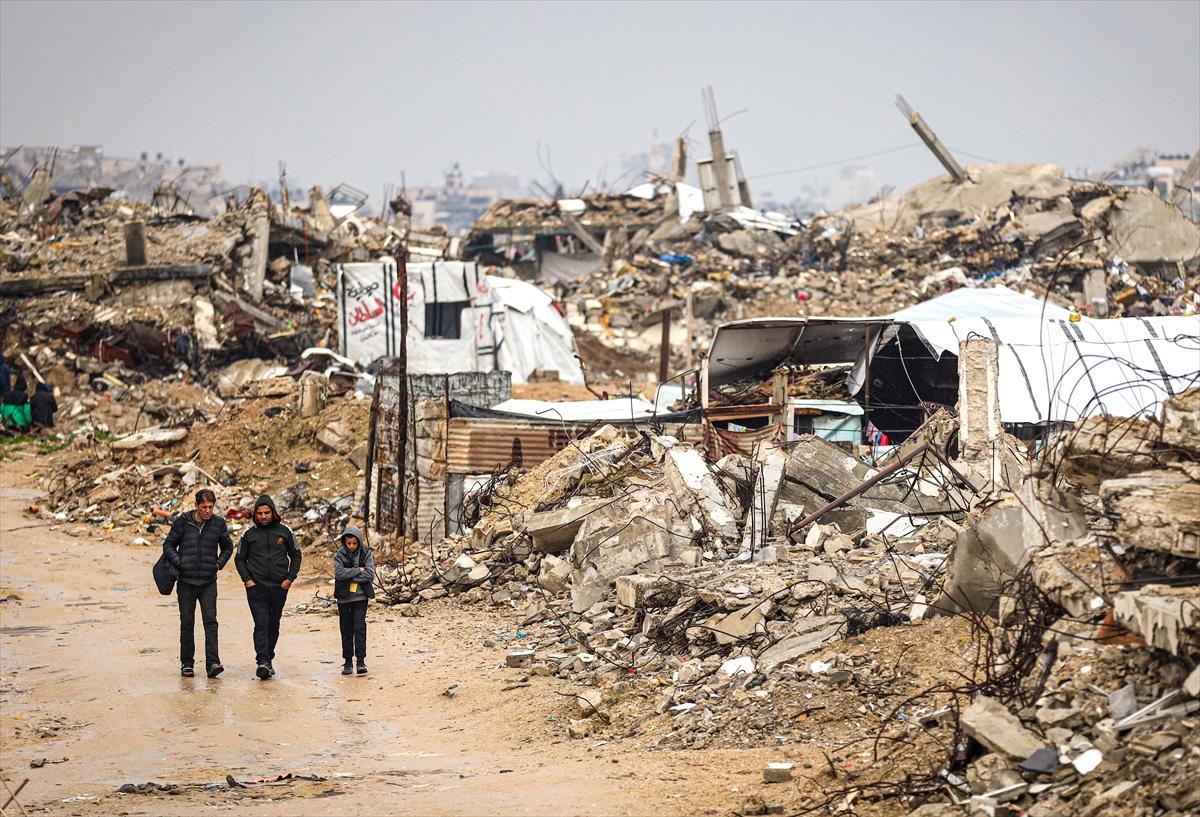
Daily life in Gaza, January 18, 2026 - (Anadolu Agency)
Shaath stated that the committee’s work will be conducted in accordance with United Nations Security Council Resolution 2803 and U.S. President Donald Trump’s 20-point peace plan. In the same statement, he declared: “We are determined to transform the transition process in the Gaza Strip into a solid foundation for sustainable Palestinian prosperity.”
The committee’s core mission is not only infrastructure restoration but also the revitalization of social structures and the re-establishment of hope for the future. Shaath clarified that the process will be conducted under the oversight of the Peace Council chaired by U.S. President Donald Trump and with the support of Gaza High Representative Nickolay Mladenov.
In outlining the committee’s priorities, Shaath said: “The committee is committed to strengthening security, restoring essential services such as electricity, water, health, and education — the fundamental pillars of human dignity — and supporting a society based on the values of peace, democracy, and the rule of law.” Shaath also emphasized that the National Committee for the Administration of Gaza will adhere to the principles of “integrity and transparency,” adding: “The committee will work to build a sustainable and productive economy that transforms challenges into opportunities, replaces unemployment with dignified employment for all.”
The National Committee for the Administration of Gaza consists of 15 members, all Palestinian technocrats. The members and their areas of responsibility are as follows:
Shaath announced that the committee’s work will commence in Cairo, Egypt. Among its immediate priorities are the opening of the Rafah Crossing, the delivery of humanitarian aid, and the resumption of educational activities for children in Gaza. Referring to Egypt’s reconstruction plan, Shaath stated: “Egypt’s reconstruction plan begins with the provision of temporary housing until new homes are built to replace those destroyed by Israel in Gaza. The tents currently in use in Gaza are inadequate, so there is a need to deliver container homes through the Rafah Crossing.”
This plan is part of a five-year reconstruction program adopted in March 2025 by the Arab League and the Organization of Islamic Cooperation. The plan does not envisage the displacement of Palestinians and is estimated to cost approximately $53 billion. According to United Nations data, the estimated cost for the full reconstruction of Gaza is around $70 billion.
On January 16, 2026, U.S. President Donald Trump formally announced the establishment of the “Peace Council” through letters sent to world leaders. The invitation aimed to create an international body to manage the transition process in Gaza and implement the second phase of the ceasefire. According to a draft charter obtained by Associated Press, the council is defined as a “more flexible and effective international peace-building institution.” The charter emphasizes that lasting peace “requires courage to move beyond approaches that have often failed under existing institutions.”
According to the material obligations set for council membership, countries contributing $1 billion within the first year will attain the status of permanent member.
In his invitation letters, Trump described the council as a “bold and novel approach to resolving global conflicts.” The council is chaired directly by Donald Trump. The president’s powers include inviting member states, casting tie-breaking votes, determining meeting frequency, and establishing or dissolving subcommittees.
President Recep Tayyip Erdoğan was invited by U.S. President Donald Trump to join the Peace Council as a founding member. Presidential Communications Director Burhanettin Duran, in a social media statement, said: “U.S. President Donald Trump invited our President, Mr. Recep Tayyip Erdoğan, to serve as a founding member of the Peace Council on January 16, 2026.”
UAE Foreign Minister Abdullah bin Zayid Al Nahyan announced that President Mohamed bin Zayed Al Nahyan accepted the invitation to join the Peace Council. Minister Al Nahyan stated that the UAE is ready to “effectively contribute to the council’s mandates, support cooperation, and ensure stability and prosperity for all.”
King Hamad bin Isa Al Khalifa of Bahrain is among the countries that accepted the U.S. invitation. The Bahraini Ministry of Foreign Affairs stated that the decision is significant in safeguarding the legitimate rights of the Palestinian people.
The Moroccan Ministry of Foreign Affairs announced that King Mohammed VI has accepted the invitation from U.S. President Donald Trump to join as a founding member. In a written statement, it was reported that King Mohammed VI accepted the invitation to participate as a founding member of the Peace Council, described by U.S. President Trump as an initiative aimed at contributing to peace efforts in the Middle East and adopting a new approach to resolving global conflicts.
According to U.S. sources, Egyptian President Abdel Fattah el-Sisi is among the leaders who received the invitation.
Israeli Prime Minister Benjamin Netanyahu announced that he accepted the invitation from U.S. President Donald Trump. The Prime Minister’s Office stated that Netanyahu has “decided to join the Peace Council.”
Kremlin Spokesperson Dmitriy Peskov stated that Russian President Vladimir Putin received a diplomatic offer to join the Peace Council. Peskov said: “President Putin also received a diplomatic offer to join the Peace Council. We are currently examining all the details of this offer and hope for further discussions with the American side to clarify all aspects.”
Chinese Ministry of Foreign Affairs Spokesperson Guo Caikun, at a press briefing in Beijing, said: “China received an invitation from the United States.” The spokesperson did not elaborate on China’s position on the matter.
Kazakh President Kassym-Jomart Tokayev has accepted the invitation to join the Gaza Peace Council. Presidential Spokesperson Ruslan Zholdibay stated that Tokayev “confirmed his determination to contribute to lasting peace in the Middle East, strengthen interstate trust, and support global stability.”
Uzbek President Shavkat Mirziyoyev accepted the invitation from U.S. President Donald Trump and declared his country ready to participate as a founding member. Presidential Spokesperson Sherzod Asadov stated that in his letter, Mirziyoyev described the initiative as an important step toward resolving long-standing conflicts in the Middle East and achieving peace and stability in the region.
Armenian Prime Ministerial Spokesperson Nazeli Bagdasaryan announced that Prime Minister Nikol Pashinyan has accepted the invitation with satisfaction. In a social media post, Bagdasaryan emphasized that U.S. President Donald Trump invited Armenia as a founding member of the Peace Council.
General Secretary of the Communist Party of Vietnam To Lam announced that he has accepted the invitation from the United States. To Lam stated: “We are ready to cooperate with the United States and the international community to find a long-term and comprehensive solution to the Middle East peace process, including the establishment of an independent Palestinian state coexisting with Israel.”
The Thai Ministry of Foreign Affairs stated that it has received the U.S. invitation and is reviewing the details. The statement expressed the hope that the initiative will be “guided by the aspirations of the Palestinian people.”
Malaysian Prime Minister Anwar Ibrahim has described his country’s stance on the Peace Council as cautious. Enver stated that Malaysia will adopt a cautious approach regarding approval of the “Peace Council,” emphasizing that it cannot be considered a viable solution while Israel’s attacks on Gaza continue.
French President Emmanuel Macron has decided not to join the invitation from U.S. President Donald Trump. Sources close to Macron stated that the Peace Council initiative “goes beyond the context of Gaza” and raises “significant concerns regarding respect for the United Nations (UN) structure and principles, which must never be questioned.”
Additionally, Elysee sources stated: “France, like many countries, was invited to the Peace Council and has reviewed the proposed legal framework with its partners, but at this stage does not intend to respond positively.”
In response, Trump told reporters: “I will impose a 200 percent tariff on his wines and champagne, and he will join. But he does not have to join.”
German Government Spokesperson Stefan Kornelius confirmed that the United States invited Germany to join the Peace Council. Kornelius said: “The United States, along with other countries, invited Germany to join the international Peace Council. We welcome this invitation.” Germany will finalize its decision on participation after consultations with its EU and international partners.
The Belarusian Ministry of Foreign Affairs announced that President Alexander Lukashenko received the invitation from Trump and welcomed it positively. The announcement stated: “This offer was positively received by the President of Belarus. We are ready to join the Peace Council. We hope the council will expand its mandated scope, enabling Belarus to participate in global processes for resolving international issues, thereby contributing to the new security architecture that Belarus has actively supported in recent years.”
The Azerbaijani Ministry of Foreign Affairs announced that it has accepted the U.S. invitation. The statement read: “Azerbaijan has communicated to the United States its intention to join the Peace Council as a founding member state.”
According to U.S. sources, Hungary is among the countries that accepted the invitation. The approval of participation was communicated to Washington through diplomatic channels.
Canadian Prime Minister Mark Carney confirmed that Canada was invited to the Peace Council. Carney emphasized Canada’s readiness to support the well-being of the Palestinian people, stating: “We write checks and make contributions to enhance the well-being of the Palestinian people, but we insist these efforts lead to tangible outcomes that directly promote peace.”
According to U.S. sources, Argentina is among the council’s members. The invitation has been accepted, and the country is listed as an active participant.
U.S. President Donald Trump sent an official invitation letter to Paraguayan President Santiago Peña. Peña announced receipt of the invitation on his social media account. A response is pending.
Al Jazeera. "Who Is Part of Trump’s Board of Peace for Gaza?" Al Jazeera, Accessed January 19, 2026. https://www.aljazeera.com/news/2026/1/18/who-is-part-of-trumps-board-of-peace-for-gaza
Al Jazeera. “Gaza Plan Phase Two: US to Discuss Hamas Disarmament, Israeli Withdrawal.” Al Jazeera. Accessed January 16, 2026. https://www.aljazeera.com/news/2026/1/15/gaza-plan-phase-two-us-to-discuss-hamas-disarmament-israeli-withdrawal
Anadolu Ajansı. "ABD Başkanı Trump, Cumhurbaşkanı Erdoğan’ı Barış Kurulu Kurucu Üyeliğine Davet Etti." Accessed January 19, 2026. https://www.aa.com.tr/tr/gundem/abd-baskani-trump-cumhurbaskani-erdogani-baris-kurulu-kurucu-uyeligine-davet-etti/3802214
Anadolu Ajansı. "ABD Yönetimi, Gazze’de Ateşkes Sürecinin İkinci Aşamasının Başladığını Açıkladı." Accessed January 16, 2026. https://www.aa.com.tr/tr/dunya/abd-yonetimi-gazzede-ateskes-surecinin-ikinci-asamasinin-basladigini-acikladi/3799442
Anadolu Ajansı. "ABD, Bahreyn’i Gazze İçin Oluşturulan Barış Kurulu’na Davet Etti." Accessed January 19, 2026. https://www.aa.com.tr/tr/dunya/abd-bahreyni-gazze-icin-olusturulan-baris-kurulu-na-davet-etti/3802656
Anadolu Ajansı. "Beyaz Saray, Gazze’deki Geçiş Sürecini Yönetecek Barış Kurulu Üyelerini Açıkladı." Accessed January 17, 2026. https://www.aa.com.tr/tr/dunya/beyaz-saray-gazzedeki-gecis-surecini-yonetecek-baris-kurulu-uyelerini-acikladi/3801899
Anadolu Ajansı. "Factbox: 2nd Phase of Gaza Ceasefire Agreement Begins, Outlining Political, Security Steps." Accessed January 16, 2026. https://www.aa.com.tr/en/middle-east/factbox-2nd-phase-of-gaza-ceasefire-agreement-begins-outlining-political-security-steps/3800376
Anadolu Ajansı. "Türkiye, Mısır ve Katar’ın Gazze’deki Çabaları Uluslararası Alanda Takdir Topluyor." Accessed January 16, 2026. https://www.aa.com.tr/tr/dunya/turkiye-misir-ve-katar-in-gazze-deki-cabalari-uluslararasi-alanda-takdir-topluyor/3800717
Anadolu Ajansı. “ABD Başkanı Trump: Gazze’de Barış Kurulunun Kurulduğunu Açıkladı.” Accessed January 16, 2026. https://www.aa.com.tr/tr/dunya/abd-baskani-trump-gazzede-baris-kurulunun-kuruldugunu-acikladi/3800864
Anadolu Ajansı. “Gazze Yönetimi Ulusal Komitesi Başkanı Şaas, Komitenin Misyon Bildirisini Onayladığını Açıkladı.” Accessed January 19, 2026. https://www.aa.com.tr/tr/dunya/gazze-yonetimi-ulusal-komitesi-baskani-saas-komitenin-misyon-bildirisini-onayladigini-acikladi/3802796
Anadolu Ajansı. “Gazze İçin Öngörülen Yerel ve Uluslararası Yönetim Yapılandırmasının Ayrıntıları Netleşiyor.” Accessed January 19, 2026. https://www.aa.com.tr/tr/dunya/gazze-icin-ongorulen-yerel-ve-uluslararasi-yonetim-yapilandirmasinin-ayrintilari-netlesiyor/3802393
Anadolu Ajansı. “Gazze’de Ateşkes Anlaşmasının İkinci Aşamasındaki 6 Temel Madde.” Accessed January 16, 2026. https://www.aa.com.tr/tr/dunya/gazzede-ateskes-anlasmasinin-ikinci-asamasindaki-6-temel-madde/3800423
Anadolu Ajansı. “Gazze’yi Yönetecek Komitenin Filistinli Teknokratlardan Oluşan Üyeleri Belirlendi.” Accessed January 19, 2026. https://www.aa.com.tr/tr/dunya/gazzeyi-yonetecek-komitenin-filistinli-teknokratlardan-olusan-uyeleri-belirlendi/3802625
Anadolu Ajansı. “Kremlin, Putin’in Gazze Barış Kurulu’na Davet Edildiğini Bildirdi.” Accessed January 19, 2026. https://www.aa.com.tr/tr/dunya/kremlin-putinin-gazze-baris-kuruluna-davet-edildigini-bildirdi/3803884
BBC News. “US launches phase two of Gaza peace plan with new technocratic government.” BBC News. Accessed January 16, 2026. https://www.bbc.com/news/articles/cjw1nxe5pvlo
BBC News. “White House Announces Members of Gaza Peace Council to Oversee Transition Process.” BBC News. Accessed January 17, 2026. https://www.bbc.com/news/articles/c9vx7kn33elo
Reuters. "Leaders receive US invite for 'Board of Peace' to go beyond Gaza conflict." Reuters, January 17, 2026. Accessed January 19, 2026. https://www.reuters.com/world/middle-east/us-names-rubio-blair-kushner-gaza-board-under-trumps-plan-2026-01-17/
The White House. “Statement on President Trump’s Comprehensive Plan to End the Gaza Conflict.” The White House, 2026. Accessed January 19, 2026. https://www.whitehouse.gov/briefings-statements/2026/01/statement-on-president-trumps-comprehensive-plan-to-end-the-gaza-conflict/

Donald Trump’s Gaza Plan was announced on 29 September 2025 at the White House in Washington with the participation of Binyamin Netanyahu as a 20-point proposal for a ceasefire and transition process aimed at ending the conflict in the Gaza Strip. The plan was conveyed to Hamas through Egypt and Qatar, and after indirect negotiations between 3 and 9 October 2025, the first phase of the ceasefire was approved on 9 October 2025. The ceasefire entered into force on 10 October 2025. Nevertheless, Israel’s air strikes and artillery fire against Gaza continued at varying intensities throughout 2025 and 2026 and did not cease entirely during the ceasefire period. According to data from Palestinian authorities in Gaza, 1,244 ceasefire violations were committed by Israel during the first phase from 10 October 2025 to 15 January 2026, resulting in 449 Palestinian deaths, 1,246 injuries and 50 arrests. Following the completion of the first phase on 15 January 2026, the plan moved to its second phase, which envisions the disarmament of Gaza, the establishment of a technocratic interim Palestinian administration and the initiation of a reconstruction process under international supervision.
September 30, 2025
Background and Announcement of the Plan
September 30, 2025
Key Provisions of the Plan
September 30, 2025
National and International Reactions
October 4, 2025
The Negotiation Process of the Gaza Plan
October 4, 2025
Hamas’s Response and Accepted Terms
October 4, 2025
Donald Trump’s Statement and Global Reactions
October 6, 2025
Ceasefire Negotiations in Egypt for Gaza
October 9, 2025
Approval of the First Phase of the Ceasefire Plan
October 9, 2025
Approval of the Ceasefire by the Israeli Government
October 9, 2025
Implementation of the Ceasefire
October 9, 2025
Gaza Peace Plan – Assessment of the First Phase of the Ceasefire (10 October 2025 – 15 January 2026)
January 16, 2026
Phase Two of the Gaza Peace Plan
January 16, 2026
U.S. Invitation Process to the Peace Council