


 Recently Added:
This article was automatically translated from the original Turkish version.
The 2025 Gaza Ceasefire Agreement is a diplomatic accord signed under the framework of U.S. President Donald Trump’s proposed “20-Point Comprehensive Plan” aimed at ending more than two years of conflict in the Gaza Strip. Following negotiations mediated by Türkiye, Qatar, Egypt, and the United States in Sharm El-Sheikh, Egypt, the agreement was accepted by all parties on 9 October 2025. The accord provides for the mutual release of prisoners, the phased withdrawal of Israeli forces, the administration of Gaza by a technocratic committee, and the international-backed reconstruction of the region. The ceasefire, which came into effect on the ground on 10 October 2025, also introduced new administrative and security mechanisms in Middle Eastern geopolitics, including the “Peace Council” and the “International Stability Force (ISF).”

Daily life under Israeli attacks in Gaza, 29 September 2025 - (Anadolu Agency)
On 29 September 2025, U.S. President Donald Trump established the diplomatic framework for the ceasefire process by unveiling his 20-point “Comprehensive Plan to End the Gaza Conflict.” The plan included a multi-stage mechanism for achieving a ceasefire, the phased withdrawal of Israeli forces, the mutual release of prisoners, the disarmament of Hamas, and the reconstruction of Gaza.

Trump and Netanyahu announce the 20-point Gaza plan at a press conference at the White House, 29 September 2025 - (Anadolu Agency)
According to the plan, Israeli forces will withdraw to a mutually agreed line. During this process, bombardments and artillery attacks will be fully halted, and temporary border lines will be maintained until security conditions are secured. Israel will release all living prisoners within 72 hours of publicly announcing the agreement. The first phase envisions the release of 1,700 Gazan detainees, followed by the completion of a mutual prisoner exchange in the second phase.
The plan also mandates the immediate delivery of humanitarian aid to Gaza. Accordingly, international aid organizations have been authorized to begin operations in the region to repair hospitals, bakeries, and infrastructure, clear roads, and remove rubble.
Trump’s plan proposes the establishment of a temporary administration under the name “Technocratic Palestinian Committee and Peace Council.” This body will be responsible for daily public services in Gaza and will be managed by a technocratic Palestinian committee under the oversight of an international “Peace Council.” The council’s members are planned to include Donald Trump, Tony Blair, and certain heads of state to be announced later.
Additionally, under the plan, a temporary security force called the “International Stability Force (ISF)” will be created and supported by the United States, Israel, and Egypt. This force will provide training and support to Palestinian police units in Gaza and manage the phased transfer of security responsibilities to local institutions. Israel’s explicit commitment in the text of the plan not to occupy or annex Gaza after its implementation is clearly stated.
According to Trump’s announcement, Hamas and other Palestinian groups will assume no political or administrative role in governing Gaza; weapons production facilities and tunnel infrastructure will be destroyed. During this process, the Palestinian administration’s security and administrative control will be reestablished under ISF supervision.
In his statement on 7 October 2025, U.S. President Trump said, “I believe we are very close to an agreement. We are extremely close. This will be a very special agreement and will bring peace to the Middle East.” Trump emphasized that Arab and Muslim countries supported the plan and underscored that the international community had demonstrated a unified will toward the reconstruction of Gaza and the establishment of lasting peace.
The Cairo-based news channel Kahire News reported that delegations from Hamas and Israel would begin indirect negotiations on hostage swaps in Egypt on 6 October 2025 under the framework of U.S. President Donald Trump’s Gaza plan. Following the channel’s report, the Egyptian Ministry of Foreign Affairs issued an official statement on the matter.
On 6 October 2025, Hamas announced that a delegation led by its Gaza-based leader Khalil al-Hayya had arrived in Sharm El-Sheikh, Egypt, to begin ceasefire negotiations. The statement specified that discussions would cover the ceasefire, the withdrawal of Israeli forces, and prisoner exchanges.
On the same day, the Egyptian Ministry of Foreign Affairs confirmed it would host the Israeli and Hamas delegations and that the indirect talks would be conducted under the framework of U.S. President Trump’s plan. Hamas stated it hoped the process would alleviate the suffering endured by the Palestinian people.
U.S. Special Envoy to the Middle East Steve Witkoff and Trump’s son-in-law Jared Kushner arrived in Sharm El-Sheikh on the morning of 8 October 2025 to join the negotiations. Prior to their departure to Egypt, Trump held a meeting with his senior national security team and assessed that “an agreement appears possible this week.” U.S. officials stated that Witkoff and Kushner would not leave Egypt until a deal on prisoner releases and the end of the war was reached.
On the same day, Qatar’s Prime Minister Sheikh Mohammed bin Abdulrahman Al Thani also departed for Sharm El-Sheikh to participate in the negotiations.
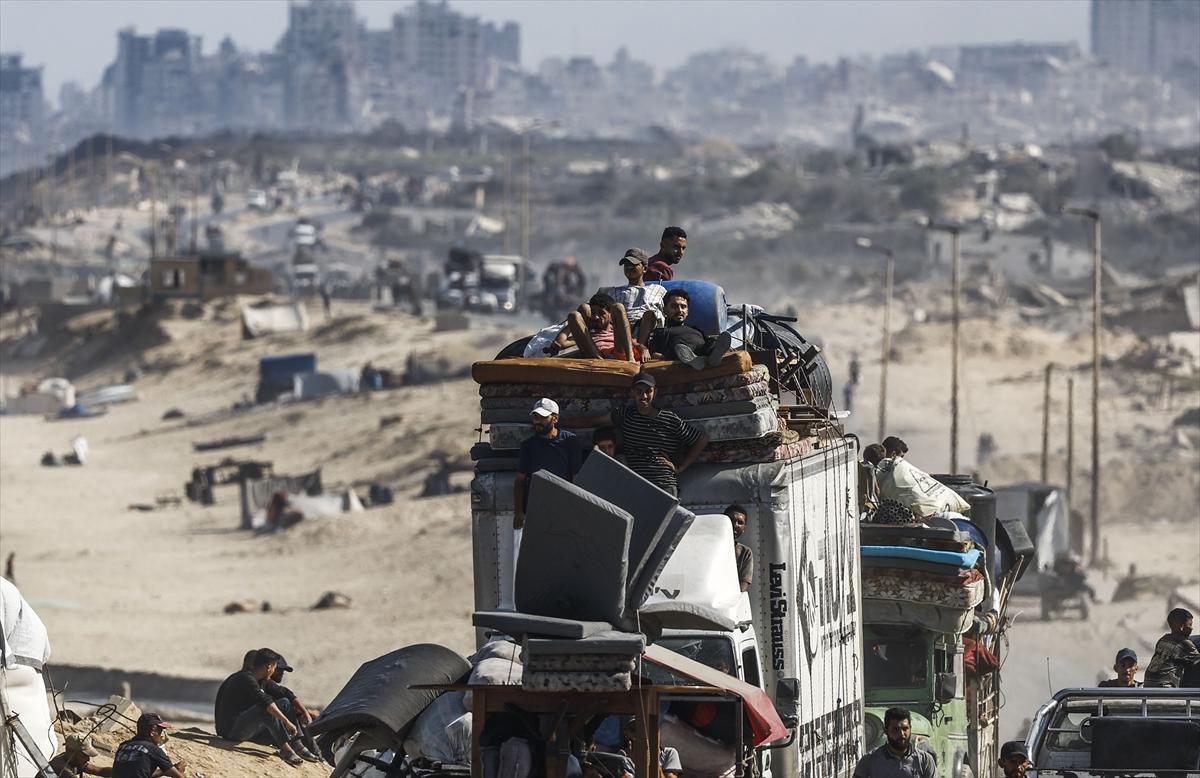
Palestinians fleeing Israeli attacks migrate from north to south - (Anadolu Agency)
The Gaza ceasefire negotiations began on 6 October 2025 in Sharm El-Sheikh, Egypt. On 7 October 2025, Egyptian Foreign Minister Badr Abdelatty, during a joint press conference with his Slovenian counterpart, stated that negotiators were working on a mechanism to guarantee Israel’s full withdrawal and the unhindered delivery of humanitarian aid to Gaza. Abdelatty noted “significant progress” and expressed hope that talks would result in an end to the war and famine in Gaza.
According to Egypt’s state television Al-Qahera News, the first day of negotiations concluded in a “positive atmosphere.” On the same day, Israel’s public broadcaster KAN reported optimism from both the Israeli and U.S. sides and indicated that an agreement by Sunday appeared possible.
On 8 October 2025, Tahir al-Nunu, media advisor to the head of Hamas’s Political Bureau, issued a written statement reporting “positive developments” in the negotiation process. Nunu stated that the Hamas delegation had demonstrated the necessary responsibility and constructive approach to advance the completion of the agreement.
The same statement noted that mediators were making intense efforts to remove all obstacles to implementing the ceasefire, and that discussions had focused on the complete cessation of hostilities, the withdrawal of Israeli forces, and the operational mechanisms for prisoner exchanges. The Hamas delegation also confirmed that lists of prisoners to be released under agreed criteria had been mutually reviewed.
The head of Türkiye’s National Intelligence Organization (MİT), İbrahim Kalın, traveled to Egypt on 8 October 2025 to participate in the negotiations in Sharm El-Sheikh. According to security sources, the main agenda items of Kalın’s meetings were achieving a ceasefire, implementing the prisoner exchange, and ensuring humanitarian aid reached the region.
Before attending the meetings in Egypt, Kalın held bilateral consultations with officials from the United States, Qatar, Egypt, and Hamas. Türkiye, following prior contacts in Doha, became directly involved in the indirect negotiation process initiated in Egypt.
The indirect negotiations in Gaza concluded on 9 October 2025 with the approval of the first phase of the ceasefire plan. U.S. President Donald Trump announced on his social media account, “I am very proud to announce that Israel and Hamas have approved the first phase of our peace plan.” Trump stated that the agreement would lead to the release of all prisoners and the withdrawal of Israeli forces to the previously agreed line.
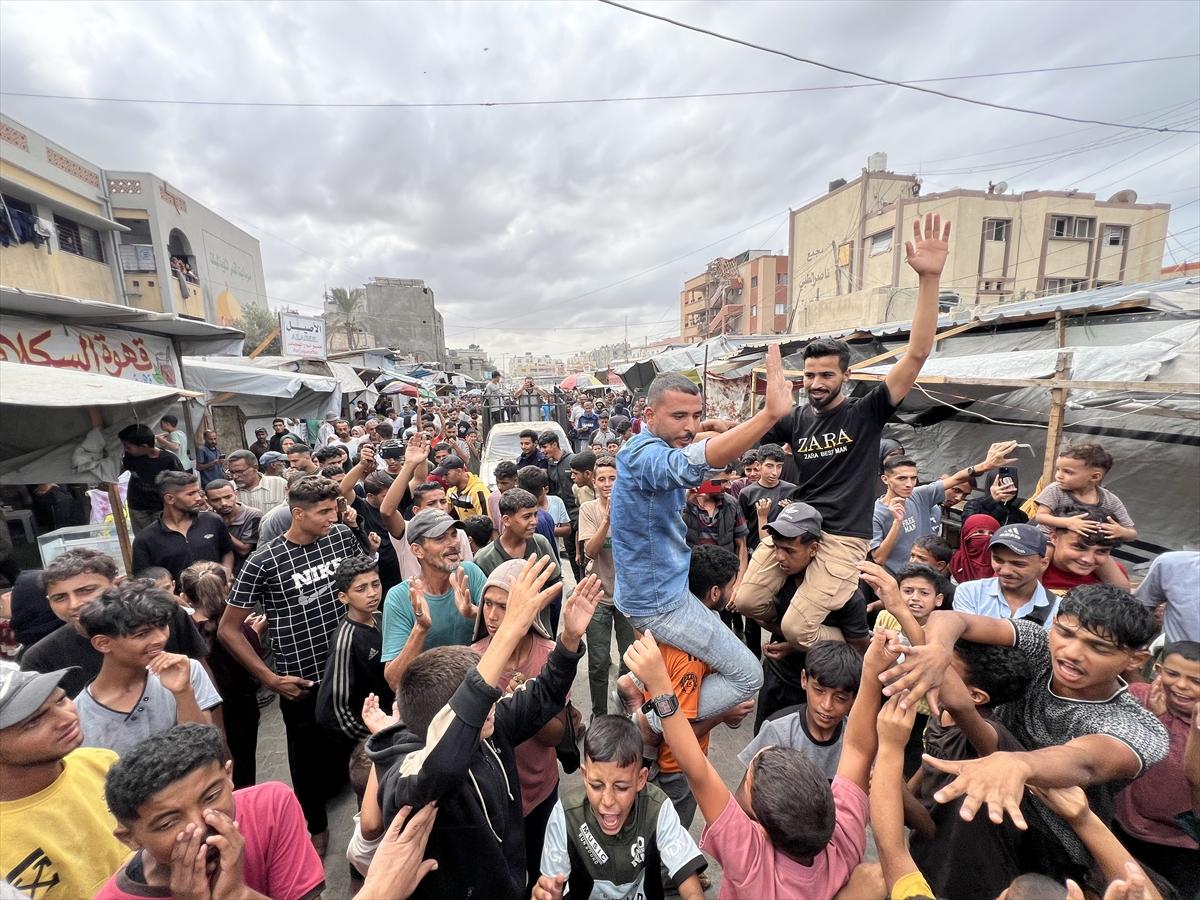
Palestinians gather in Khan Younis following the announcement of the anticipated ceasefire, 9 October 2025 - (Anadolu Agency)
On the morning of 9 October 2025, U.S. President Donald Trump announced on his social media account, “I am very proud to announce that Israel and Hamas have approved the first phase of our peace plan.” Trump stated that under this agreement, all prisoners would be released shortly and Israeli forces would withdraw to the mutually agreed line. He emphasized that this marked “the first step by Israel toward a strong, lasting, and eternal peace.”
In his post, Trump also thanked countries contributing to the ceasefire process, saying, “We thank our mediators in Qatar, Egypt, and Türkiye who worked with us to make this historic and unprecedented event possible.” The U.S. President noted that the agreement was a pivotal moment not only for the parties involved but also for the Arab and Muslim world, Israel, the United States, and regional nations.
On the same day, in an interview with Fox News, Trump declared, “This is not just about Gaza—it is peace in the Middle East,” and stressed that the success of the ceasefire plan depended on international solidarity. He added, “The entire world united around this plan; without it, the plan could not have succeeded.”
Trump announced that the release of prisoners is scheduled for 13 October 2025 and recounted a recent phone conversation with Israeli Prime Minister Benjamin Netanyahu, saying, “Netanyahu told me he couldn’t believe it. I told him, ‘Israel cannot fight the entire world—you know that very well.’”
Speaking about the future of the ceasefire, Trump said, “A structure called the ‘Peace Council’ has been established to oversee the reconstruction and governance of Gaza. People will be protected; a completely different world will emerge.” He stated that the council would coordinate security and reconstruction efforts in Gaza with international partners.
Trump said, “Gaza will become a much safer place,” highlighting the humanitarian and economic dimensions of the new era. He added, “Since taking office, I have brokered peace agreements between many countries; these successes came through tariffs. Tariffs brought peace to the world.”
In the interview, Trump also commented on Iran. Recalling U.S. strikes on Iran’s nuclear facilities, he stated these operations had prevented Iran from acquiring nuclear weapons in the short term. “If those strikes had not occurred, Iran would have had nuclear weapons within one or two months,” he said.
Trump indicated that a new diplomatic process with Iran had begun, saying, “I now believe peace is possible; Iran will be part of this peace.” These remarks demonstrated that the Gaza agreement was not merely a regional initiative but part of a broader effort to establish diplomatic balance across the Middle East.
On 9 October 2025, Hamas officially confirmed the达成 of a ceasefire agreement in Gaza through a written statement. The statement read, “An agreement has been reached to end the war against Gaza, ensure the withdrawal of occupiers, allow the entry of aid, and facilitate prisoner exchanges.”
Hamas emphasized that the agreement marked a historic turning point for the Palestinian people and expressed deep appreciation for the efforts of its “brotherly mediators in Qatar, Egypt, and Türkiye.” It also commended U.S. President Donald Trump for his efforts to achieve a final end to the war and the complete withdrawal of the occupying Israeli forces from the Gaza Strip.
The statement further noted, “This agreement is the result of the sacrifices of our people, which have thwarted the occupier’s plans.” Hamas affirmed that the Palestinian people “will never relinquish their right to freedom, independence, and self-determination.”
The announcement specified that the first steps in implementing the ceasefire would center on prisoner exchanges. Hamas stated, “We have submitted the list of Palestinians to be released.”
According to the statement, final agreement on the names of Palestinians to be released under agreed criteria is expected soon. Hamas stated that the names of those to be freed would be disclosed once all necessary procedures are completed.
Additionally, Hamas’s statement declared, “The release of Palestinians held in Israeli prisons is our primary priority. Our efforts will continue until the last Palestinian prisoner is freed.” Hamas emphasized that the agreement was not only significant for the Gaza Strip but also represented a victory for the legitimacy of resistance in Jerusalem, the West Bank, and all Palestinian territories, and that this process was a step toward the complete end of occupation.
On 9 October 2025, the Israeli Prime Minister’s Office announced that the ceasefire agreement reached by the parties would enter into force after approval by the Israeli government. The statement indicated that the cabinet would convene that evening to consider the draft for prisoner releases.
Israeli media reported that the cabinet meeting, originally scheduled for 17:00, had been postponed to 18:00 and that the government would formally launch the ceasefire process upon approving the agreement. According to Israeli government sources, the release of Israeli prisoners held in Gaza will be rapidly activated upon the ceasefire taking effect.

Israelis gather in Tel Aviv following the announcement of the anticipated ceasefire, 9 October 2025 - (Anadolu Agency)
In a written statement following the agreement, Israeli Prime Minister Binyamin Netanyahu said, “With God’s permission, we will bring back all of them (the prisoners).” The Prime Minister’s Press Office later confirmed that Netanyahu had spoken by phone with U.S. President Donald Trump and thanked him for his efforts to achieve the prisoner swap and ceasefire agreement. It was also noted that Netanyahu had invited Trump to address the Israeli Knesset.
According to Israeli media reports, the newspaper Yedioth Ahronoth stated that Trump was expected to visit Israel on Sunday, during which he would deliver a speech to the Knesset and meet with Israeli prisoners deemed physically and mentally fit for release.
Following the approval of the agreement, the Israeli government announced that the terms of the ceasefire in Gaza would be implemented immediately. It was stated that the prisoner exchange and withdrawal process would be conducted under the supervision of international mediators.
On the night of 9 October 2025, Qatar’s Ministry of Foreign Affairs spokesperson Majid al-Ansari announced on the American X platform that full agreement had been reached on all provisions of the first-phase ceasefire between Hamas and Israel. Ansari stated, “Mediators have agreed on all operational mechanisms to end the war in Gaza, release Israeli hostages and Palestinian detainees, and facilitate the entry of aid.” He added that implementation details would be shared in the coming days.
Qatar had worked in coordination with Egypt and the United States since the beginning of the process, providing technical support particularly on prisoner exchange lists and the security of humanitarian aid corridors. The Doha administration announced that aid shipments would be accelerated once the ceasefire took effect.
Following the approval of the ceasefire agreement, Egyptian Foreign Minister Badr Abdelatty stated, “Mechanisms have been activated to guarantee Israel’s full withdrawal and the unconditional flow of humanitarian aid into Gaza.”
President Recep Tayyip Erdoğan, in a social media post, said, “I am greatly pleased that the Hamas-Israel talks in Sharm El-Sheikh, to which Türkiye also contributed, have resulted in a ceasefire in Gaza.” Erdoğan added, “I sincerely thank U.S. President Donald Trump, who demonstrated the necessary political will to encourage Israel toward the ceasefire, as well as our brotherly nations Qatar and Egypt for their vital support in reaching this agreement. Türkiye will closely monitor the full implementation of this agreement and continue to contribute to the process. Likewise, we will continue our struggle until an independent, sovereign, and geographically unified Palestinian state is established with East Jerusalem as its capital, based on the 1967 borders.”
He continued, “On this occasion, I extend my deepest affection to my Palestinian brothers and sisters who, for two years, have endured unprecedented suffering under inhumane conditions, fought for life and dignity, lost their children, mothers, fathers, relatives, and friends, yet have never compromised their dignity despite all tragedies. May my Lord be their helper and protector, and may He grant the souls of our martyrs joy and their resting places paradise.”
Vice President Cevdet Yılmaz stated in his remarks that Türkiye had contributed to both the diplomatic and humanitarian dimensions of the process and would closely monitor the implementation of the Gaza ceasefire. Yılmaz said, “Gaza is entering a new era with its reconstruction, and the end of two years of attacks is a victory for humanity.”
Presidential Communications Director Burhanettin Duran, in his assessment of the agreement, said, “From this point forward, the parties must comply with the agreement’s terms, urgent humanitarian aid must reach Gaza, and the humanitarian crisis of the past two years must be ended.”
The Ministry of Foreign Affairs of the Republic of Türkiye, in its official written statement, said, “We welcome the achievement of a ceasefire in Gaza and hope this ceasefire ends the two-year-long genocide.” The statement emphasized that the full implementation of the ceasefire was expected, and that humanitarian aid to Gaza and the immediate initiation of reconstruction efforts were essential.
Al Jazeera. “Day One of Gaza Peace Talks Ends on Positive Note in Egypt.” Al Jazeera. Accessed October 9, 2025. https://www.aljazeera.com/news/2025/10/7/day-one-of-gaza-peace-talks-ends-on-positive-note-in-egypt
Al Jazeera. “LIVE: Trump says Israel, Hamas agree on ‘first phase’ of Gaza ceasefire.” Al Jazeera Liveblog. Accessed October 9, 2025. https://www.aljazeera.com/news/liveblog/2025/10/9/live-israel-hamas-agree-on-first-phase-of-gaza-ceasefire-deal
Al Jazeera. “Trump says Israel and Hamas sign off on first phase of Gaza ceasefire plan.” Accessed October 9, 2025. https://www.aljazeera.com/news/2025/10/8/trump-says-he-may-travel-to-middle-east-as-gaza-deal-very-close
Al Jazeera. “Updates: Trump says Israel, Hamas reach Gaza ceasefire deal.” Al Jazeera Liveblog. Accessed October 9, 2025. https://www.aljazeera.com/news/liveblog/2025/10/8/live-israel-keeps-bombing-gaza-as-peace-talks-in-egypt-enter-third-day
Anadolu Ajansı. "ABD Başkanı Trump, Gazze’de Ateşkes Planının İlk Aşamasını Onayladığını Duyurdu." Accessed October 9, 2025. https://www.aa.com.tr/tr/dunya/abd-baskani-trump-israil-ile-hamasin-gazzede-ateskes-planinin-ilk-asamasini-onayladigini-duyurdu/3711871
Anadolu Ajansı. "Trump: Herkesin Gazze’de Ateşkes Anlaşmasına Uymasını Sağlamak İçin Elimizden Geleni Yapacağız." Accessed October 9, 2025. https://www.aa.com.tr/tr/dunya/trump-herkesin-gazzede-ateskes-anlasmaya-uymasini-saglamak-icin-elimizden-geleni-yapacagiz/3710413#
Anadolu Ajansı. “ABD Başkanı Trump, Gazze’de Ateşkes Anlaşması İçin Mısır’a Gidecek.” Accessed October 9, 2025. https://www.aa.com.tr/tr/dunya/abd-baskani-trump-gazzede-ateskes-anlasmasi-icin-misira-gidecek/3711849
Anadolu Ajansı. “ABD Başkanı Trump, Gazze’de Ateşkes Anlaşmasının Tamamlanmasına Çok Yaklaşıldığını Söyledi.” Accessed October 9, 2025. https://www.aa.com.tr/tr/dunya/abd-baskani-trump-gazzede-ateskes-anlasmasinin-tamamlanmasina-cok-yaklasildigini-soyledi/3709439#
Anadolu Ajansı. “ABD Başkanı Trump, Gazze’de Ateşkes için Türkiye’nin Çabalarına Dikkat Çekti.” Accessed October 9, 2025. https://www.aa.com.tr/tr/dunya/abd-baskani-trump-gazze-de-ateskes-icin-turkiye-nin-cabalarina-dikkat-cekti/3709328#
Anadolu Ajansı. “Cumhurbaşkanı Erdoğan: Hamas-İsrail Görüşmelerinin Ateşkesle Sonuçlanmasından Büyük Memnuniyet Duyuyorum.” Accessed October 9, 2025. https://www.aa.com.tr/tr/gundem/cumhurbaskani-erdogan-hamas-israil-gorusmelerinin-ateskesle-sonuclanmasindan-buyuk-memnuniyet-duyuyorum/3712008
Anadolu Ajansı. “Egypt Reports Significant Progress in Gaza Ceasefire Negotiations.” Accessed October 9, 2025. https://www.aa.com.tr/en/africa/egypt-reports-significant-progress-in-gaza-ceasefire-negotiations/3709653#
Anadolu Ajansı. “Expanded Session of Gaza Ceasefire Talks Opens in Egypt’s Sharm el-Sheikh.” Accessed October 9, 2025. https://www.aa.com.tr/en/middle-east/expanded-session-of-gaza-ceasefire-talks-opens-in-egypt-s-sharm-el-sheikh/3711292#
Anadolu Ajansı. “Gaza Ceasefire Negotiations between Hamas, Israel Resume in Egypt.” Accessed October 9, 2025. https://www.aa.com.tr/en/middle-east/gaza-ceasefire-negotiations-between-hamas-israel-resume-in-egypt/3709912#
Anadolu Ajansı. “Hamas Heyeti, Gazze’de Ateşkes Müzakerelerini Başlatmak Üzere Mısır’a Ulaştı.” Accessed October 9, 2025. https://www.aa.com.tr/tr/dunya/hamas-heyeti-gazze-de-ateskes-muzakerelerini-baslatmak-uzere-misir-a-ulasti/3708460#
Anadolu Ajansı. “Hamas: Ateşkes ve Esir Takası Anlaşması Sürecinde Olumlu Gelişmeler Yaşanıyor.” Accessed October 9, 2025. https://www.aa.com.tr/tr/dunya/hamas-ateskes-ve-esir-takasi-anlasmasi-surecinde-olumlu-gelismeler-yasaniyor/3710891#
Anadolu Ajansı. “MİT Başkanı Kalın, Gazze’de Ateşkes Müzakereleri İçin Mısır’a Gidecek.” Accessed October 9, 2025. https://www.aa.com.tr/tr/gundem/mit-baskani-kalin-gazzede-ateskes-muzakereleri-icin-misira-gidecek/3710333#
Anadolu Ajansı. “Mısır Cumhurbaşkanı Sisi: Ateşkes Müzakerelerinde Anlaşma Sağlanırsa ABD Başkanı Trump’ı İmza Törenine Davet Ediyorum.” Accessed October 9, 2025. https://www.aa.com.tr/tr/dunya/misir-cumhurbaskani-sisi-ateskes-muzakerelerinde-anlasma-saglanirsa-abd-baskani-trumpi-imza-torenine-davet-ediyorum/3711211
Anadolu Ajansı. “Netanyahu, Gazze’de Ateşkese Varılmasının Ardından Kabineyi Toplayacağını Açıkladı.” Accessed October 9, 2025. https://www.aa.com.tr/tr/dunya/netanyahu-gazzede-ateskese-varilmasinin-ardindan-kabineyi-toplayacagini-acikladi/3711909#
Anadolu Ajansı. “US Envoy Witkoff, Kushner Arrive in Egypt for Gaza Ceasefire Talks: Report.” Accessed October 9, 2025. https://www.aa.com.tr/en/americas/us-envoy-witkoff-kushner-arrive-in-egypt-for-gaza-ceasefire-talks-report/3710560#
President Recep Tayyip Erdoğan, during his speech at the Opening Ceremony of the 2025–2026 Academic Year in Higher Education held on 9 October 2025 at the Beştepe National Congress and Culture Center, made significant assessments regarding the ceasefire agreement reached in Gaza.
Erdoğan stated, “I am greatly pleased by the good news received from Sharm El-Sheikh last night and today,” and recalled the intensive diplomatic efforts undertaken to halt the prolonged bloodshed in Gaza. The President said, “We are very satisfied with this agreement, to which we have actively contributed from the very beginning.”

President Recep Tayyip Erdoğan, 9 October 2025 – (Anadolu Agency)
Erdoğan affirmed that Türkiye will closely monitor the implementation of the agreement, adding, “We will follow the on-the-ground application of the agreement and, God willing, Türkiye will also play a role within its capacity.” He emphasized that Türkiye will play an active role not only diplomatically but also in humanitarian aid and reconstruction efforts during this process.
President Erdoğan stated that the primary objectives are “the immediate delivery of humanitarian aid to Gaza, the exchange of hostages and prisoners, the cessation of Israeli attacks, and the withdrawal of forces to the agreed lines.” Türkiye, he said, will meticulously monitor the strict implementation of all agreed provisions of the deal.
Erdoğan further said, “Together with the international community, we will support reconstruction efforts to rebuild Gaza. Our goal is to end the genocide and bring peace to the region as soon as possible.”
The President thanked countries that contributed to the process, saying, “I thank U.S. President Donald Trump for his strong resolve in encouraging Israel to accept the ceasefire. I also extend my gratitude to Qatar and Egypt for their significant contributions toward reaching this agreement.”
Erdoğan also commented on the stance of the Palestinian resistance movement Hamas, stating, “I congratulate Hamas for its wise and principled position.”
Reiterating his support for the Palestinian people, the President said, “I salute my Palestinian brothers and sisters who, for two years, have refused to yield despite all forms of barbarism, oppression, massacres, and genocide. Türkiye will stand with the Palestinian people today, tomorrow, and always, and will never leave them alone.”
Erdoğan concluded his remarks with, “May my Lord make this agreement a source of blessings for the Palestinian people. I pray to Allah for mercy for the more than 67,000 martyrs who have fallen on this land.”
United Nations (UN) Secretary-General Antonio Guterres announced his welcome of the ceasefire agreement reached in Gaza and expected to enter into force. In a written statement, Guterres said, “I welcome the announcement of the agreement reached on the basis of the proposal by President Donald Trump to secure a ceasefire in Gaza and the release of hostages.”
The Secretary-General expressed appreciation for the diplomatic efforts of the United States, Qatar, Egypt, and Türkiye, and called on all parties to fully comply with the terms of the agreement. Guterres stressed the necessity of the immediate release of all hostages, the establishment of a lasting ceasefire, and the prompt delivery of humanitarian aid to Gaza, adding, “The suffering must end.”
In his statement, Guterres also urged all stakeholders to build a credible political path toward ending the occupation, recognizing the Palestinian people’s right to self-determination, and achieving a two-state solution that allows Israelis and Palestinians to live together in peace and security.
The UN Secretary-General noted that following the agreement, “The United Nations will expand its humanitarian assistance efforts and support reconstruction and rehabilitation initiatives.” This statement has been interpreted as indicating the UN’s active role as an observer and humanitarian coordinator in the ceasefire process.
World Health Organization (WHO) Director-General Tedros Adhanom Ghebreyesus, in his statement, said, “I welcome the announcement by U.S. President Donald Trump regarding the ceasefire in Gaza and the release of hostages.” Ghebreyesus noted that this development represents a major step toward lasting peace for both Israelis and Palestinians, adding, “Peace is the best medicine.”
Ghebreyesus stated that WHO is prepared to intensify its efforts to meet the urgent health needs of patients in Gaza and support the rehabilitation of the destroyed health system.
European Commission President Ursula von der Leyen announced her welcome of the approval of the first phase of the ceasefire plan in Gaza. In a post on the U.S.-based X platform, von der Leyen said, “I commend the diplomatic efforts of the United States, Qatar, Egypt, and Türkiye in making this breakthrough possible.” The EU President called on all parties to fully comply with the agreement’s terms, stating, “All detainees must be released safely, a lasting ceasefire must be achieved, and the suffering must end.”
Von der Leyen further stated that the EU will continue to support the rapid and secure delivery of humanitarian aid to Gaza and will contribute to reconstruction efforts when the time comes. In her statement, she added, “This is an opportunity to build a credible political path toward lasting peace and security — a path anchored in a two-state solution.”
High Representative of the European Union for Foreign Affairs and Security Policy Kaja Kallas, in her statement on the first phase of the ceasefire plan, described it as a major diplomatic success that offers a real opportunity to end the war and free all detainees. Kallas affirmed the EU’s support for the process, saying, “This is a significant diplomatic breakthrough and a moment of real hope. The European Union will do everything in its power to support the implementation of the agreement.”
Additionally, European Council President Antonio Costa and European Parliament President Roberta Metsola made similar statements, describing the agreement as a “promising turning point after two years of destruction and suffering.”
French President Emmanuel Macron, in a statement following the announcement of the agreement, said, “This agreement must mark the end of the war and the beginning of a political solution based on a two-state framework.” Macron highlighted the efforts of Trump and the mediators from Qatar, Egypt, and Türkiye, and affirmed France’s readiness to contribute to this objective.
British Prime Minister Keir Starmer, in a written statement, said, “We welcome the agreement on the first phase of President Donald Trump’s ceasefire plan in Gaza.” He noted that this development represents a moment of great relief for the hostages, their families, and the people of Gaza. Starmer emphasized the need for the agreement to enter into force immediately and called for the removal of obstacles to humanitarian aid entering Gaza.
Irish Prime Minister Micheal Martin welcomed the agreement and called on all parties to comply with its terms, release all detainees, and ensure the delivery of humanitarian aid to Gaza.
German Chancellor Friedrich Merz described the agreement as a “hopeful first step for the detainees, their families, and the region,” adding, “For the first time in a long time, a real possibility of peace has emerged in the region.” German Foreign Minister Johann Wadephul welcomed the agreement, stating, “The progress made in the Gaza negotiations means that the release of detainees and a ceasefire are within reach.”
Italian Prime Minister Giorgia Meloni characterized the agreement as “an extraordinary development that paves the way for a ceasefire in Gaza, the release of all hostages, and the withdrawal of Israeli forces to the agreed lines.” Meloni said, “This agreement is a unique opportunity to end the conflict,” and affirmed Italy’s continued support for its implementation and its readiness to contribute to stabilizing and rebuilding Gaza.
Dutch Prime Minister Dick Schoof assessed the agreement as “something that can bring an end to the suffering of many people.” Schoof said, “This agreement must be a step toward lasting and just peace,” and thanked the United States, Egypt, Qatar, and Türkiye for their diplomatic efforts. Dutch Foreign Minister David Van Weel emphasized that the agreement is a “historic turning point for peace and stability in the Middle East,” and thanked the Trump administration for its leadership.
Austrian Chancellor Christian Stocker said, “The progress achieved in peace negotiations is good news after a long wait,” and thanked U.S. President Trump and all relevant countries for their diplomatic efforts.
Hungarian Foreign Minister Peter Szijjarto stated, “Thanks to Trump’s efforts, a real hope for peace and security in the Middle East has finally emerged.” Slovak Foreign Minister Juraj Blanar assessed the agreement as an “important step toward ending the conflict and alleviating the suffering of civilians.”
Qatar Ministry of Foreign Affairs spokesperson Majid al-Ansari, in a statement on the U.S.-based X platform, said, “Mediators have announced that all provisions of the first phase of the ceasefire agreement in Gaza have been agreed upon, bringing an end to the war, securing the release of Israeli hostages and Palestinian detainees, and enabling the entry of aid.” Qatari Prime Minister Sheikh Mohammed bin Abdulrahman Al Thani traveled to Egypt to participate in the negotiations and stated that his country had mobilized all diplomatic resources to end the two-year war.
Egyptian President Abdel Fattah el-Sisi described the ceasefire achieved in Sharm El-Sheikh as a “historic moment symbolizing the victory of the world’s will for peace.” Sisi said the agreement does not merely close a chapter of war but also opens the door to a future of justice and stability.
The Saudi Ministry of Foreign Affairs, in a written statement, said, “We welcome the achievement of a ceasefire in Gaza and the commencement of implementation of the first phase of President Donald Trump’s proposal.” The statement praised the mediation efforts of Trump, Qatar, Egypt, and Türkiye, and expressed hope that the agreement would alleviate the humanitarian suffering of the Palestinian people, ensure Israel’s full withdrawal, and establish a just peace based on a two-state solution.
Jordanian Foreign Minister Ayman Safadi welcomed the achievement of the ceasefire and thanked Türkiye, Qatar, and Egypt for their diplomatic efforts. The Jordanian Ministry of Foreign Affairs statement said, “The urgent delivery of humanitarian aid is essential to end the scarcity in Gaza. The terms of the agreement must be fully implemented.”
The United Arab Emirates Ministry of Foreign Affairs welcomed the approval of the first phase of the ceasefire in Gaza. The statement called on all parties to comply with the agreement’s conditions and ensure the unhindered delivery of humanitarian aid to Gaza.
Pakistani Prime Minister Shehbaz Sharif described the agreement as a “historic opportunity to end the genocide in Gaza.” Sharif expressed appreciation for the diplomatic contributions of Türkiye, Qatar, and Egypt, stating, “Our efforts will continue to secure peace, security, and dignity for the Palestinian people.”
Indian Prime Minister Narendra Modi expressed satisfaction with the agreement reached in Gaza, saying, “This development must open the path to lasting peace.” Modi noted that the release of hostages and delivery of humanitarian aid would contribute to stability in the region. Malaysian Prime Minister Anwar Ibrahim described the agreement as a “hopeful development after months of destruction and suffering,” and called on the parties to seize the opportunity to achieve lasting and comprehensive peace.
Kazakhstan Presidential Spokesperson Ruslan Zheldibay announced that President Kassym-Jomart Tokayev supports the ceasefire agreement reached in Egypt. Tokayev said, “The mediation efforts of Egypt, Qatar, and Türkiye have been effective; this diplomatic process under U.S. leadership is a special contribution to peace in the Middle East.”
Chinese Ministry of Foreign Affairs spokesperson Guo Jiakun, in a statement from Beijing, emphasized China’s commitment to the principle that “Palestine must be governed by the Palestinians” and its support for a two-state solution. Guo said, “We will continue our efforts with the international community to find a fair, comprehensive, and lasting solution to the Palestinian issue.”
Australian Prime Minister Anthony Albanese and Foreign Minister Penny Wong, in a joint statement, described the ceasefire as a “necessary step toward peace after two years of conflict.” Australia thanked Türkiye, Qatar, and Egypt for their efforts and reaffirmed its support for the two-state solution process.
New Zealand Foreign Minister Winston Peters welcomed the ceasefire in Gaza and stressed that all parties must fulfill their responsibilities. Peters thanked the United States, Türkiye, Qatar, and Egypt for their efforts, calling it a significant step toward ending two years of suffering.
Canadian Prime Minister Mark Carney thanked the United States, Türkiye, Qatar, and Egypt, saying, “After years of intense suffering, peace now feels attainable.” Carney called on all parties to rapidly implement all provisions of the agreement and to make efforts toward a fair and lasting peace.
On behalf of Russia, Kremlin spokesperson Dmitry Peskov stated that Russia supports the agreement reached between Israel and Hamas, describing it as a “positive step toward resolving the conflict in Gaza.”
Al Jazeera. “World Reacts to Gaza Ceasefire Deal Announced by Trump.” Al Jazeera. Accessed October 9, 2025. https://www.aljazeera.com/news/2025/10/9/world-reacts-to-gaza-ceasefire-deal-announced-by-trump
Anadolu Ajansı. "Cumhurbaşkanı Erdoğan: Anlaşmanın Uygulamalarını Takip Edecek Görev Gücünde Türkiye Olarak İnşallah Biz de Yer Alacağız." Accessed October 10, 2025. https://www.aa.com.tr/tr/gundem/cumhurbaskani-erdogan-anlasmanin-uygulamalarini-takip-edecek-gorev-gucunde-turkiye-olarak-insallah-biz-de-yer-alacagiz/3712423
Anadolu Ajansı. “Dünya Liderleri, Gazze’de Ateşkes Sağlanmasını Memnuniyetle Karşıladı.” Accessed October 9, 2025. https://www.aa.com.tr/tr/dunya/dunya-liderleri-gazzede-ateskes-saglanmasini-memnuniyetle-karsiladi/3711916#
The Israeli Prime Minister’s Office announced on 9 October that the cabinet had approved the agreement, with the government led by Prime Minister Benjamin Netanyahu accepting the decision to “end the war in Gaza and return all Israeli captives.” U.S. President Donald Trump’s Special Representative for the Middle East, Steve Witkoff, and adviser Jared Kushner also attended the meeting. Five far-right ministers voted “no,” but the agreement was approved by a majority.
According to Israel’s official broadcasting authority KAN, a majority of ministers approved the agreement, while five ministers including National Security Minister Itamar Ben-Gvir and Finance Minister Bezalel Smotrich voted against it. All ministers who voted against were reported to belong to parties led by Ben-Gvir and Smotrich.
According to KAN, following the agreement, the Israeli military began withdrawing to its “pre-agreed deployment lines.” Army Radio reported that some brigades had withdrawn from Gaza and that tank and armored vehicle movements had been observed along the Gaza border after the partial withdrawal.
The full text of the ceasefire agreement is contained in the document titled “Implementation Steps of President Trump’s Proposal for the Comprehensive End of the Gaza War,” obtained by the Anadolu Agency from security sources. The six-point agreement text, bearing the signature of Ibrahim Kalın, Head of Turkey’s National Intelligence Organization, on behalf of Türkiye, reads as follows:
1. U.S. President Donald Trump announces that the war in the Gaza Strip has ended and that the parties have agreed to implement the necessary steps toward this goal.
2. The war will end immediately upon approval by the Israeli government. All military operations, including aerial and artillery bombardments and targeting operations, will be suspended. For a period of 72 hours, aerial surveillance will be suspended in areas from which the Israeli military has withdrawn.
3. Immediate and unhindered delivery of humanitarian aid and relief supplies will commence, in accordance at minimum with the humanitarian aid agreement dated 19 January 2025. Steps for implementing humanitarian aid and support are provided in the annex.
4. The Israeli military will withdraw to the lines agreed upon in the map labeled X attached to this agreement. This withdrawal will be completed within 24 hours following President Trump’s announcement and the Israeli government’s approval. As long as Hamas fully implements this agreement, the Israeli military will not return to the areas from which it has withdrawn.
5. Within 72 hours after the Israeli military’s withdrawal, all Israeli captives alive or deceased in Gaza will be released. (The list is attached.)
a. After completing its withdrawal, Hamas will begin investigating the status of the captives and collect all relevant information. Hamas will provide feedback on its findings through the information-sharing mechanism specified in subsection 5.e below. Israel will provide information regarding Palestinian detainees and persons held in custody in Israel who are from Gaza.
b. Within 72 hours, Hamas will release all living captives, including those held by Palestinian groups in Gaza.
c. Within 72 hours, Hamas will hand over the bodies of all deceased captives in its possession as well as those held by Palestinian groups in Gaza.
d. Within 72 hours, Hamas will share all information it has regarding any remaining deceased captives through the information-sharing mechanism specified in subsection (e) above. Israel will provide information regarding the bodies of Gazans held in its custody.
e. A mechanism for information and intelligence exchange regarding deceased captives not recovered within 72 hours or the bodies of Gazans held by Israel will be established between the two parties through mediators and the International Committee of the Red Cross (ICRC). This mechanism will ensure the complete and safe exhumation and handover of all captives’ remains. Hamas will make maximum efforts to implement these commitments as soon as possible.
f. As Hamas releases all captives, Israel will release a corresponding number of Palestinian detainees according to the attached lists.
g. The exchange of captives and detainees will be carried out under the agreed mechanism, mediated by intermediaries and under the supervision of the International Committee of the Red Cross (ICRC). No public ceremony or media broadcast will take place during this process.
6. A joint task force composed of representatives from the United States, Qatar, Egypt, Türkiye and other countries will be established to monitor and coordinate implementation of the agreement with both parties.
It has been announced that the U.S. Central Command (CENTCOM) will establish a “civil-military coordination center” in Israel to support the implementation of this mechanism. Officials speaking to Associated Press stated that the center will facilitate the flow of humanitarian aid and provide security support.
The United States is expected to send approximately 200 troops to Israel to monitor the implementation of the ceasefire in Gaza. It has been emphasized that these troops will not enter Gaza and that their activities will be conducted on Israeli territory. According to officials, this team aims to monitor “the implementation of the ceasefire and the transition to civilian governance in Gaza.”
According to the official statement issued by the Israeli military, the ceasefire in Gaza came into effect at 12:00 local time on 10 October 2025. The statement confirmed that Israeli forces had completed their partial withdrawal to the points designated as the “yellow line,” and reported that no attacks or explosions occurred in Gaza following the withdrawal.
The same statement indicated that operations against targets designated as “urgent threats” outside the withdrawal line may continue. According to an Anadolu Agency correspondent on the Israeli side of the border, after the ceasefire took effect, sounds of fighting ceased in the area, but Israeli unmanned aerial vehicles continued to fly overhead.
The Israeli military stated that, in accordance with the agreement, the Israeli captives held in Gaza will be released within 72 hours after the completion of the partial withdrawal. The handover process is expected to be completed by Monday, 13 October 2025, around midday.
Following the entry into force of the ceasefire, it was reported that the Israeli military began a gradual withdrawal to the deployment lines designated as the “yellow line” in Gaza. However, during this process, it was observed that the military continued attacks in certain areas.
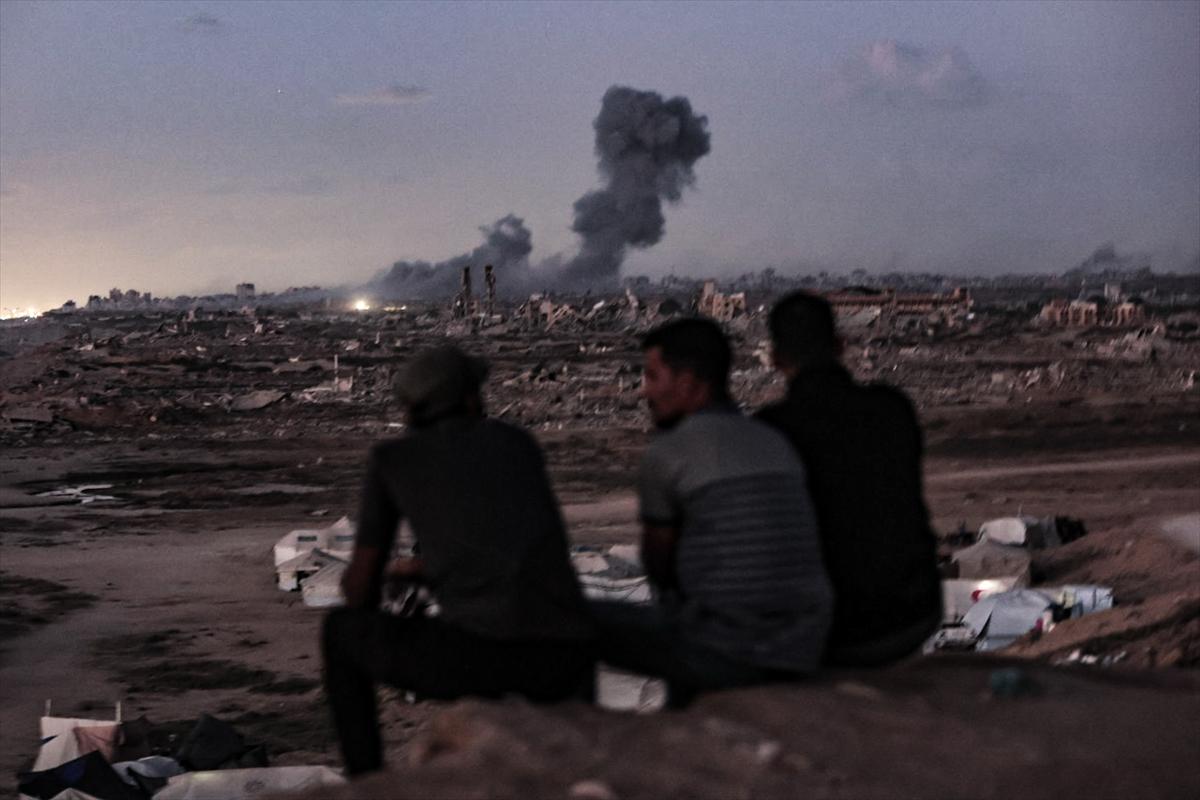
An image from within the Israeli-occupied Gaza Strip, 9 October 2025 - (Anadolu Agency)
According to eyewitness accounts, Israeli warplanes and artillery units targeted the eastern part of Gaza City in the morning hours following the approval of the ceasefire. It was also reported that tank units fired at areas around the Netzarim Corridor, which separates northern and southern Gaza.
The area surrounding tents and homes in the Shakuş neighborhood, northwest of Rafah, where displaced civilians were sheltering, was also subjected to fire. Smoke bombs were launched toward the northeastern part of Khan Yunis, followed by an aerial strike on the city center.
According to Anadolu Agency correspondents on the Gaza border, Israeli warplanes and helicopters continue to fly over the region despite the ceasefire. Artillery fire and gunfire are audible in northern Gaza.
According to information published in the Times of Israel, the Israeli military’s “partial withdrawals” were carried out under artillery fire and aerial bombardments. Gaza’s Ministry of Health has not yet issued any statement regarding casualties from the latest attacks.
The Israeli military’s press office left unanswered questions regarding the cause of ongoing explosions despite the ceasefire. This situation has triggered diplomatic criticism, indicating violations in the on-the-ground implementation of the ceasefire even on its first day.
U.S. President Donald Trump assessed the ceasefire agreement that entered into force in Gaza during a cabinet meeting held at the White House on 9 October 2025. Trump described the agreement as a “historic turning point for peace in the Middle East” and noted the “very important roles” played by Türkiye, Qatar and Egypt in ensuring the process’s success.
Trump expressed his deep gratitude to the leaders of Türkiye, Qatar and Egypt for their assistance and support in achieving this remarkable outcome. He dedicated a separate paragraph to Turkish President Recep Tayyip Erdoğan, stating, “President Erdoğan personally engaged with Hamas and other groups and did an outstanding job.”
The U.S. President emphasized that the ceasefire is not merely a step to halt fighting but an agreement that opens the door to lasting peace in the region. “I believe this peace will be lasting, and I hope it lasts forever,” he said. Trump used the phrase “We ended the war in Gaza” and added, “A new chapter has been opened for the future of the region’s people.”
Trump also addressed the economic dimension of the agreement, stating, “Gaza will slowly be rebuilt. Some countries in the region have enormous wealth, and only a small portion of this wealth will create miracles in Gaza.” The U.S. President noted that Gaza’s reconstruction would be carried out through “international cooperation” and reiterated, “This is a wonderful plan; a peace plan supported by everyone.”
Trump emphasized that the people of Gaza would not be forcibly displaced during the reconstruction process, stating, “No one will be forcibly displaced. We are not even considering such a thing. This plan guarantees that Palestinians will remain on their own land.”
Trump’s statements, “I believe peace will be lasting. Peace in the Middle East has become possible because everyone came together,” drew attention. Regarding the prisoner exchange process, Trump said, “All captives will be released on Monday or Tuesday. I will probably be there that day. We plan to depart on Sunday.”
Trump indicated that he would travel to Egypt for the official signing ceremony of the agreement and possibly deliver a speech at Israel’s Knesset. “They asked me to speak there. If they want me to, I will go and speak. It will be the first time a U.S. president does this. That’s why it will be very interesting,” he said.
In response to questions about the two-state solution, Trump stated, “I have no position on this. I will follow whatever agreement they (Israel and Palestine) reach.” Trump emphasized that the fundamental goals of the peace process are “ending the war, rebuilding, and ensuring the safety of the people.”
At the same meeting, Finnish President Alexander Stubb thanked U.S. President Trump, saying, “I congratulate you on what we have seen in Gaza over the past 24 hours. This is truly a historic agreement.”
According to the official statement issued by the Israeli military, the ceasefire in Gaza came into effect at 12:00 local time on 10 October 2025. The statement confirmed that Israeli forces had completed their partial withdrawal to the points designated as the “yellow line,” and reported that no attacks or explosions occurred in Gaza following the withdrawal.
The same statement indicated that operations against targets designated as “urgent threats” outside the withdrawal line may continue. According to an Anadolu Agency correspondent on the Israeli side of the border, after the ceasefire took effect, sounds of fighting ceased in the area, but Israeli unmanned aerial vehicles continued to fly overhead.
The Israeli military stated that, in accordance with the agreement, the Israeli captives held in Gaza will be released within 72 hours after the completion of the partial withdrawal. The handover process is expected to be completed by Monday, 13 October 2025, around midday.
With the entry into force of the ceasefire, a large-scale return movement has begun from southern to northern Gaza Strip. According to the Anadolu Agency, thousands of Palestinians have set out to return to their homes, abandoned due to two years of attacks.
Immediately after the Israeli military announced the ceasefire had taken effect, the Reshid Street, which connects central and southern Gaza to the north, became heavily used by returning civilians. After the Israeli withdrawal, many families began moving toward their homes in the north, carrying whatever belongings they could.
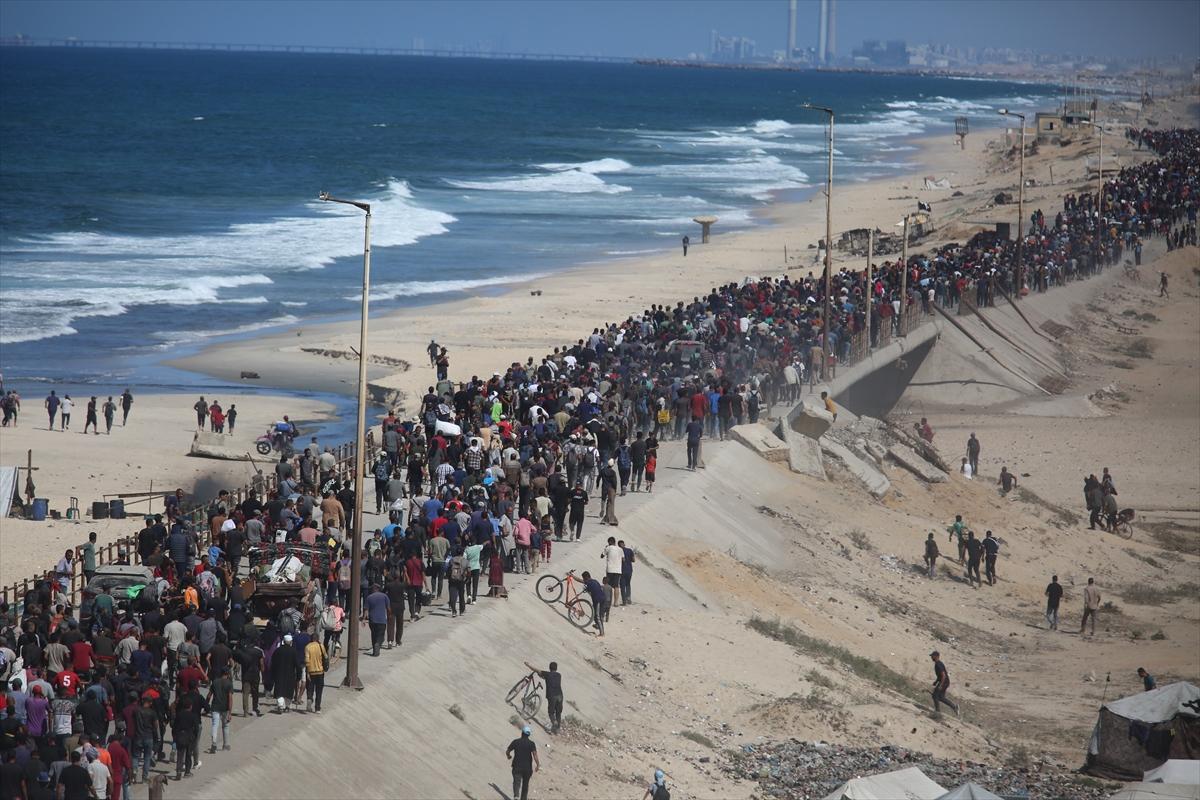
Thousands of Palestinians return to their homes in northern Gaza after the ceasefire, 10 October 2025 - (Anadolu Agency)
Following the entry into force of the ceasefire in Gaza on 10 October 2025, governments, international organizations and humanitarian agencies described the end of two years of attacks as a “humanitarian turning point.”
German Chancellor Friedrich Merz described the achievement of the ceasefire in Gaza as “good news for the Middle East and beyond.” Merz thanked Türkiye, Qatar and Egypt for their mediation efforts, stating, “The signing of a ceasefire agreement after more than two years of war in Gaza is a success.”
Chancellor Merz also thanked U.S. President Donald Trump for his peace initiative and stressed the need for rapid implementation of the ceasefire, emphasizing that “the top priority is reuniting all captives with their families, including German citizens.” He added, “The ceasefire must take effect and gain stability over the coming weeks. Humanitarian aid must reach the people of Gaza quickly.”
Merz highlighted the importance of continuing the steps toward peace, stressing the necessity of Gaza’s reconstruction, the disarmament of Hamas and the delivery of humanitarian aid to the civilian population. Germany announced it would co-host with Egypt an “international conference for Gaza’s reconstruction.”
Merz further noted that Germany is ready to assume responsibility within the “Peace Council” proposed by Trump and pledged support for the reform process within the Palestinian Authority. Germany will provide support to Palestinian security and judicial institutions through its EU missions EUBAM and EUPOL COPPS.
Merz emphasized that Germany has no intention of participating militarily and will contribute only within diplomatic and legal frameworks. He also stated that Germany will review its arms export licenses in light of developments in the region, calling this “a requirement of historical responsibility.” Merz concluded his remarks with, “The two-state solution is the only hope for lasting peace.”
International Committee of the Red Cross (ICRC) President Mirjana Spoljaric Egger, in a written statement, said, “The ceasefire agreement between Israel and Hamas must be a turning point after two years of unimaginable horror.” Egger emphasized that the ceasefire offers a “vital opportunity to save lives and alleviate suffering.”
The ICRC announced that its teams in Gaza, Israel and the West Bank will play an active role in the process of returning captives and detainees to their families. It also committed to “helping return human remains to families so they can mourn with dignity.”
Egger stated that more humanitarian aid will reach Gaza, saying, “The coming days are critical. I call on the parties to remain faithful to their commitments. Evacuation operations must be conducted safely, aid must resume at full capacity and be delivered safely to people. Lives depend on the continuation of the ceasefire.”
South Africa, through its Ministry of Foreign Affairs, stated in a written statement that the ceasefire represents an “important step” on the path to lasting peace. The statement called on all parties to adhere to the steps agreed upon in negotiations.
The South African government emphasized the need for a “reliable political process” to end the tragic humanitarian catastrophe and prevent further loss of life, and welcomed the roles of the guarantor states (Türkiye, Qatar, Egypt, and the United States). The statement also called for “urgent and unimpeded humanitarian access to besieged Gaza.” South Africa further declared its readiness to share its experience in peacebuilding and transitional justice.
In a statement issued by Somalia’s Ministry of Foreign Affairs and International Cooperation, it was said, “We hope this agreement will be a sincere step toward a just peace that ends the suffering of the Palestinian people and strengthens security in the region.” Somalia reiterated its support for the Palestinian people’s right to establish an independent and sovereign state and emphasized adherence to international law.
In a statement issued by Sudan’s Sovereignty Council, the ceasefire was described as an “important step toward stopping the flow of blood and alleviating the suffering of our brotherly Palestinian people.” The statement affirmed that the ceasefire represents “a victory for justice and humanitarian values” and offers “a genuine opportunity to restore security and stability to the region.”
Anadolu Ajansı. "Trump, Gazze’de Ateşkes Konusunda Türkiye ve Cumhurbaşkanı Erdoğan’a Teşekkür Etti." Accessed October 10, 2025. https://www.aa.com.tr/tr/dunya/trump-gazzede-ateskes-konusunda-turkiye-ve-cumhurbaskani-erdogana-tesekkur-etti/3712953
Anadolu Ajansı. “ABD Başkanı Trump, Gazze’den Kimsenin Zorla Çıkarılmayacağını Söyledi.” Accessed October 10, 2025. https://www.aa.com.tr/tr/dunya/abd-baskani-trump-gazzeden-kimsenin-zorla-cikarilmayacagini-soyledi/3713177#
Anadolu Ajansı. “Gazze’de Ateşkes Devreye Girdi.” Accessed October 10, 2025. https://www.aa.com.tr/tr/dunya/gazze-de-ateskes-devreye-girdi/3713223
Anadolu Ajansı. “Gazze’de Ateşkes Devreye Girdi.” Accessed October 10, 2025. https://www.aa.com.tr/tr/dunya/gazze-de-ateskes-devreye-girdi/3713223
Anadolu Ajansı. “Gazze’de Ateşkesin Yürürlüğe Girmesiyle Binlerce Filistinli Kuzeydeki Evlerine Dönmeye Başladı.” Accessed October 10, 2025. https://www.aa.com.tr/tr/dunya/gazzede-ateskesin-yururluge-girmesiyle-binlerce-filistinli-kuzeydeki-evlerine-donmeye-basladi/3713569#
Anadolu Ajansı. “Gazze’de Yürürlüğe Giren Ateşkese Dünyadan Tepkiler.” Accessed October 10, 2025. https://www.aa.com.tr/tr/dunya/gazzede-yururluge-giren-ateskese-dunyadan-tepkiler/3713366#
Anadolu Ajansı. “İsrail, Gazze’de Yürürlüğe Giren Ateşkese Rağmen Saldırılarına Devam Ediyor.” Accessed October 10, 2025. https://www.aa.com.tr/tr/dunya/israil-gazzede-yururluge-giren-ateskese-ragmen-saldirilarina-devam-ediyor/3713309#
The United Nations Office for the Coordination of Humanitarian Affairs (OCHA) reported on 13 October 2025 that significant progress had been made in humanitarian aid deliveries to Gaza following months of blockade. The statement noted that “for the first time since March, cooking gas cylinders have entered the Gaza Strip.” It also stated that there had been an increase in the entry of food, medicine and tents for displaced families, with necessary permits obtained for the distribution of a total of 190 tons of humanitarian aid.
The UN stated that it aims to expand the scope of humanitarian operations during the first 60 days of the ceasefire to reach all civilians in Gaza in need of life-saving services. The Government of Gaza’s Media Office, in a statement issued on 12 October 2025, reported that 173 trucks reached Gaza on the first day of the ceasefire, three of which carried cooking gas and six carried fuel. The statement emphasized that the aid arriving in Gaza, home to a population of 2.4 million, remains insufficient to meet basic needs, with urgent requirements for fuel, cooking gas and food supplies.
Following the ceasefire that came into effect on 10 October 2025 in Gaza, the Turkish Red Crescent intensified its humanitarian operations. The organization delivers approximately 21,000 hot meals daily through the Derilbalah soup kitchen in the region. These distributions include not only displaced families but also patients receiving treatment in hospitals and healthcare workers.
The current capacity of the soup kitchen is set at 21,000 people. The Turkish Red Crescent announced that it aims to rapidly increase this capacity using newly arrived aid supplies in Gaza. The organization has accelerated its operations in response to the increased flow of humanitarian aid following the ceasefire.
It was reported that canned meat products prepared with donations received during Eid al-Adha are stored in Egyptian Red Crescent warehouses. The Turkish Red Crescent announced that these canned products will be delivered to Gaza in the coming days. The organization continues to provide uninterrupted access to hot meals clean water and basic food supplies through soup kitchens and international partners.
Since 7 October 2023, when Israel launched its attacks on Gaza, Turkey has been delivering humanitarian aid to the region under the coordination of the Disaster and Emergency Management Presidency (AFAD). To date, aid has been sent via 16 ships and 14 aircraft.
Following the announcement of the ceasefire, preparations for Turkey’s 17th “Ship of Goodwill” to Gaza were completed on 14 October at Mersin International Port. Under the AFAD-coordinated operation, approximately 900 tons of humanitarian supplies were loaded onto the vessel. These supplies include dry food, canned goods and infant formula.
After loading operations were completed, a farewell ceremony was held at Mersin Port on 14 October 2025 at 12:30 with the participation of Interior Minister Ali Yerlikaya. In his remarks at the ceremony, Yerlikaya said “Today we say the Ship of Goodwill is on its way to Gaza. The Mediterranean vessel loaded with 900 tons of food canned goods and infant formula will depart shortly for Gaza.”
After a prayer was recited at the farewell ceremony the ship set sail toward El-Arish Port in Egypt the closest region to Gaza. It was stated that the aid would be transferred via El-Arish Port to the Kerem Shalom Border Crossing in cooperation with the Egyptian Red Crescent. This humanitarian ship was prepared with the contributions of 17 civil society organizations under AFAD coordination.
Jacobo Cilliers Special Representative of the United Nations Development Programme (UNDP) for Palestine participated virtually in the UN weekly press briefing in Geneva on 14 October 2025 and provided an assessment on Gaza’s reconstruction. Cilliers stated that according to the Joint Interim Rapid Damage and Needs Assessment (IRDNA) conducted by the UN the European Union and the World Bank approximately 7 billion dollars in financing will be required for Gaza’s reconstruction.
Cilliers noted that about 2 billion dollars of this amount would need to be utilized within the first three years. He emphasized the importance of increasing access to enable the initiation of reconstruction and early recovery efforts in Gaza. He also stressed the need to deliver heavy equipment to support restoration and repair activities during this phase.
According to UNDP data approximately 81,000 tons of rubble have been cleared in Gaza so far. This volume is equivalent to about 3,100 truckloads of debris. The majority of debris removal efforts are being carried out to ensure humanitarian access and restore essential services. Priority is given to clearing rubble from hospitals health centers and social service buildings.
Cilliers stated that the amount of rubble remaining to be cleared in Gaza is around 55 million tons and continues to increase. UNDP confirmed that it continues to operate remain present and deliver services in the region including not only humanitarian assistance but also early recovery and development initiatives.
It was noted that the private sector could also play a significant role in Gaza’s recovery process. Cilliers projected that private sector financial contributions could cover up to approximately 50 percent of the total cost. He also emphasized that UNDP urges all parties to adhere to the ceasefire as this is vital for achieving long-term stability and development.
Cilliers said “The road ahead is long but with the support of UN partners and other international and national actors we hope that recovery efforts can begin as soon as possible.”
Anadolu Ajansı. "Türkiye’nin Gazze’ye Umut Taşıyan 17. İyilik Gemisi Mersin Limanı’ndan Uğurlandı." Accessed October 14, 2025. https://www.aa.com.tr/tr/gundem/turkiyenin-gazzeye-umut-tasiyan-17-iyilik-gemisi-mersin-limanindan-ugurlandi/3716792#
Anadolu Ajansı. “BM, Gazze'de Ateşkesin Ardından İnsani Yardım Geçişlerinde İlerleme Kaydedildiğini Duyurdu.” Accessed October 14, 2025. https://www.aa.com.tr/tr/-haberici/bm-gazzede-ateskesin-ardindan-insani-yardim-gecislerinde-ilerleme-kaydedildigini-duyurdu/3715433#
Anadolu Ajansı. “Gazze'de Yürürlüğe Giren Ateşkes Sonrası Türk Kızılay’ın Yardımları Sürüyor.” Accessed October 14, 2025. https://www.aa.com.tr/tr/dunya/gazzede-yururluge-giren-ateskes-sonrasi-turk-kizilayin-yardimlari-suruyor/3715736#
Anadolu Ajansı. “Gazze’ye Ulaştırılacak İnsani Yardım Malzemeleri ‘İyilik Gemisi’ne Yüklendi.” Accessed October 14, 2025. https://www.aa.com.tr/tr/gundem/gazzeye-ulastirilacak-insani-yardim-malzemeleri-iyilik-gemisine-yuklendi/3716590#
Anadolu Ajansı. “UNDP, Gazze’nin Yeniden İnşası İçin Yaklaşık 70 Milyar Dolara İhtiyaç Duyulacağını Bildirdi.” Accessed October 14, 2025. https://www.aa.com.tr/tr/dunya/undp-gazzenin-yeniden-insasi-icin-yaklasik-70-milyar-dolara-ihtiyac-duyulacagini-bildirdi/3716818#
Anadolu Ajansı. “İsrail ile Varılan Ateşkesin Ardından Gazze’ye İnsani Yardım Tırlarının Girişi Başladı.” Accessed October 14, 2025. https://www.aa.com.tr/tr/dunya/israil-ile-varilan-ateskesin-ardindan-gazzeye-insani-yardim-tirlarinin-girisi-basladi/3715127#

Damage in Khan Yunis following the ceasefire, 15 October 2025 – (Anadolu Agency)
Following the implementation of the ceasefire, it was reported that between 14 and 16 October 2025, the Israeli military conducted attacks in various areas of the Gaza Strip that violated the ceasefire agreement. According to the Palestinian official news agency WAFA, on 14 October, civilians attempting to return to their homes in the ash-Shu’ayya neighborhood in northern Gaza were targeted by Israeli fire. This attack resulted in the deaths of seven Palestinians. In southern Gaza, in Khan Yunis, a civilian was killed by Israeli gunfire and taken to Nasser Hospital. Additionally, two Palestinians injured in previous attacks also died.
The Israeli military, in its statement regarding the incident, claimed that a group of Palestinians had crossed the so-called Sarit Line, the withdrawal boundary, and continued advancing into the area despite warnings. According to the military, fire was opened after this group ignored the warnings. Hamas spokesperson Hazem Qassem described the incident as “a clear violation of the ceasefire agreement” and called on mediator countries not to allow Israel to evade its obligations.
A report published by Al Jazeera on 14 October stated that Israeli soldiers opened fire on civilians attempting to return to their homes in northern Gaza and southern Khan Yunis, resulting in the deaths of at least nine Palestinians. The report characterized this as the “first major violation” of the ceasefire brokered by the United States. The same source reported that Israel had reduced the number of aid trucks allowed into Gaza to half of what was stipulated in the agreement. It was also noted that Israel had not opened the Rafah Crossing, thereby restricting the flow of aid into Gaza.
On 16 October, the Al Mezan Center for Human Rights stated in a release that Dr. Hussam Abu Safia, Director of Kamal Adwan Hospital, was still being held by Israel. The organization characterized Israel’s refusal to release him as a “political pressure tool” and argued that this constituted “hostage-taking” under international law.

Daily life in Khan Yunis after Israel’s withdrawal, 14 October 2025 – (Anadolu Agency)
United Nations Office for the Coordination of Humanitarian Affairs (OCHA) spokesperson Jens Laerke, in a statement from Geneva on 14 October 2025, noted that movement restrictions within Gaza had eased following the ceasefire. Laerke stated that over 310,000 people had moved from southern Gaza to the north over the weekend. This mobility was said to indicate that displaced civilians were beginning to return to their homes. Laerke also reported that while aid was part of the 20-point ceasefire plan, sufficient assistance had not yet reached the region. The UN emphasized that it was ready to rapidly scale up humanitarian operations once the necessary permissions were granted.
United Nations Children’s Fund (UNICEF) spokesperson Ricardo Pires stated that the destruction in Gaza was immense and that at least 600 aid trucks per day were needed. Pires said that the sense of support felt by the international community had not yet translated into adequate humanitarian aid on the ground, and that current deliveries fell far short of needs.
Gaza government’s Director of the Press Office, Ismail al-Sevabite, announced on 15 October 2025 that since the ceasefire came into effect, only 173 aid trucks had entered the Gaza Strip.

Palestinians continue returning to Gaza after the ceasefire, 15 October 2025 – (Anadolu Agency)
In its statement regarding aid policy, Israel indicated that only 300 trucks would be permitted entry, a figure recorded as half the amount stipulated in the ceasefire agreement. Additionally, Israeli media cited delays in the handover of the bodies of Israeli hostages held by Hamas as justification for the continued closure of the Rafah Crossing.
The prisoner exchange and body handover process continued between 14 and 16 October 2025. The Gaza Ministry of Health announced on 15 October that it had received the bodies of 45 Palestinians from Israel via the International Committee of the Red Cross (ICRC). According to the statement, combined with 45 bodies received the previous day, a total of 90 Palestinian remains had been returned by Israel to Gaza. The ministry stated that medical examinations would be conducted to identify the bodies.

Hamas hands over the bodies of two Israeli hostages to the Red Cross, 15 October 2025 – (Anadolu Agency)
On the same day, it was reported that Hamas had handed over the bodies of two Israeli hostages killed in Gaza to the Red Cross. According to the Israeli military, the two coffins were transferred from a meeting point in the Gaza Strip to Israel after being received by ICRC officials. The bodies were to be sent to the Israeli National Institute of Forensic Medicine for identification, after which their identities would be disclosed. The Israeli Prime Minister’s Office stated that the coffins would be met by the military chief rabbi and that burial procedures would follow the forensic investigation.
Hamas’s military wing, the Izz ad-Din al-Qassam Brigades, stated in its announcement: “The resistance has remained faithful to the agreement and has handed over all living captives and all bodies it could locate.” The statement added that locating and recovering the remaining bodies required “significant effort and specialized equipment,” and that work to fully close this file was ongoing.

Israel hands over Palestinian remains to the Red Cross, 15 October 2025 – (Anadolu Agency)
According to Israeli media reports, progress to the “second phase” of the ceasefire is contingent upon the full handover of all remains of deceased Israeli hostages. Israeli officials stated that negotiations for the second phase had not yet begun and that the process would advance only after the identification of the hostages’ remains. Preparations are underway in Egypt by teams to identify locations in Gaza where the remains of Israeli hostages may be found.
U.S. President Donald Trump, in a statement on Truth Social on 15 October, said: “A great burden has been lifted, but the job is not yet done. The dead have not been handed over as promised. The second phase is now beginning.”
U.S. President Donald Trump, in his 15 October statement, indicated that if Hamas fails to comply with all provisions of the ceasefire agreement, Israel may resume attacks. In an interview with CNN, he stated: “Hamas must fully comply with the terms of the agreement, otherwise Israel can return to attacks.” Trump also asserted that for the agreement to be successfully implemented, Hamas must fulfill its commitment to disarm. The U.S. President stated that the second phase in Gaza would be completed only after the handover of all deceased hostages’ bodies and the return of all remaining captives held by Hamas.
At a press briefing held at the White House by the Federal Bureau of Investigation (FBI), President Trump made further remarks on the situation in Gaza. He stated that Hamas was searching for the bodies of hostages killed in Israeli bombardments, among the rubble of destroyed buildings and beneath tunnels in Gaza’s streets. “We have recovered all living hostages. A few more returned today. This is a horrific process, but they are still digging. They are really digging. There are areas they have dug into and they are finding many bodies. Some of these bodies are under rubble, and they must remove the debris.”
In the same speech, Trump reiterated his warning to Hamas: “Either they lay down their arms or we will disarm them.” In response to a question, he stated that American troops would not assume an active role in Gaza, noting that many countries were already capable of assuming responsibilities in the region. Trump also claimed that Hamas no longer received support from Iran, saying: “Hamas previously had Iran’s support, but now Iran says ‘do not involve us in this.’ Today, Iran is fighting for survival.”
Israeli Minister of Culture and Sports Miki Zohar, in a statement to military radio on 15 October, emphasized that Hamas must fully comply with all provisions of the signed agreement, otherwise this would give Israel the option to “resume attacks on the Gaza Strip.” Zohar added: “Israel will insist on the implementation of all provisions of the agreement and will not turn a blind eye to any non-compliance.”
Israeli Prime Minister Benjamin Netanyahu, in an interview with U.S. television network CBS on the same day, referenced President Trump’s remarks, stating that if Hamas fails to comply with the agreement’s terms, “there will be chaos.”
In its 14 October statement, the Gaza Ministry of Health reported that the number of people killed in Israeli military attacks had increased by 44 in the past 24 hours to 67,913. The number of injured was reported at 170,134. The same statement noted that in the past 24 hours, 44 bodies and 24 injured persons had been brought to hospitals in Gaza, 38 of whom were rescued from under rubble.
The Gaza Civil Defense spokesperson stated that over 10,000 people remain trapped under rubble. Rescue operations have been hindered due to damaged infrastructure and lack of equipment.
Gaza government’s Director of the Press Office, Ismail al-Sevabite, in his 15 October 2025 statement, confirmed that only 173 aid trucks had entered the Gaza Strip since the ceasefire came into effect. Sevabite noted that of these trucks, three carried cooking gas and six carried diesel, while the rest contained limited quantities of food, essential supplies, and medical equipment. It was stated that the aid received was insufficient to meet even the most basic needs in the region.

Meals distributed to Palestinians struggling with hunger in Gaza, 15 October 2025 – (Anadolu Agency)
Sevabite stated that two years of attacks had severely damaged infrastructure, and that destroyed roads were impeding aid distribution. The Gaza government stated that it oversees the delivery and distribution of aid, and that delays have occurred in transporting supplies from south to north. The government emphasized that efforts continue despite these challenges to ensure the continuation of aid entries.
The government listed its priorities as “ensuring security, providing food, medical care, and shelter, and restoring public services.” Sevabite stated that among the government’s urgent goals are meeting the needs of Palestinian families for food, water, medicine, and treatment; repairing the health system; and re-establishing public services. In particular, restoring the collapsed health infrastructure, devastated by what the government describes as genocide, is a top priority.
According to the government’s statement, approximately 288,000 families in Gaza have lost their homes, and efforts are underway to provide temporary shelter for these families. Plans are also in place to restore public services such as water, electricity, sewage, and sanitation. Educational activities are expected to resume gradually once security conditions are secured.
The Gaza government announced that it has begun planning to rebuild infrastructure, facilities, and public buildings destroyed by Israel. It also reported that security units are operating in an organized manner on the ground to re-establish public order.
Sevabite stated: “The security situation shows tangible improvement. Security operations are being conducted to prevent limited violations in certain areas. The rule of law will be firmly enforced.” In this context, security forces are working to restore public order, protect citizens’ safety, and ensure the security of private property.
Al Jazeera. “Live: Gaza Ceasefire Fears as Israel Demands Return of All Captives’ Bodies.” Al Jazeera English Live Blog. Accessed October 16, 2025. https://www.aljazeera.com/news/liveblog/2025/10/16/live-gaza-ceasefire-fears-as-israel-demands-return-of-all-captives-bodies
Al Jazeera. “Updates: Israel accused of new war crimes as it kills more Gaza civilians.” Al Jazeera English Live Blog. Accessed October 16, 2025. https://www.aljazeera.com/news/liveblog/2025/10/15/live-israel-restricts-aid-into-gaza-hamas-releases-bodies-of-4-captives
Al Jazeera. “Updates: Israel kills at least 9 Palestinians in Gaza despite ceasefire.” Al Jazeera English Live Blog. Accessed October 16, 2025. https://www.aljazeera.com/news/liveblog/2025/10/14/live-trump-signs-gaza-ceasefire-deal-with-leaders-of-qatar-egypt-turkiye
Anadolu Ajansı. "BM, Ateşkes Sonrası 310 Binden Fazla Kişinin Gazze’nin Güneyinden Kuzeyine Gittiğini Bildirdi." Accessed October 16, 2025. https://www.aa.com.tr/tr/dunya/bm-ateskes-sonrasi-310-binden-fazla-kisinin-gazzenin-guneyinden-kuzeyine-gittigini-bildirdi/3717046#
Anadolu Ajansı. "Trump, Hamas’ın Ateşkes Şartlarına Uymaması Hâlinde İsrail’in Saldırılarına Yeniden Dönebileceğini Söyledi." Accessed October 16, 2025. https://www.aa.com.tr/tr/dunya/trump-hamasin-ateskes-sartlarina-uymamasi-halinde-israilin-saldirilarina-yeniden-donebilecegini-soyledi/3718289#
Anadolu Ajansı. "Trump’tan ‘Gazze’de Ateşkes Sürecinde İkinci Aşama Başlıyor’ Mesajı." Accessed October 16, 2025. https://www.aa.com.tr/tr/dunya/trumptan-gazzede-ateskes-surecinde-ikinci-asama-basliyor-mesaji/3717245#
Anadolu Ajansı. “ABD Başkanı Trump, Hamas’ın Enkaz Altındaki Esirlerin Cesetlerini Aradığını Söyledi.” Accessed October 16, 2025. https://www.aa.com.tr/tr/dunya/abd-baskani-trump-hamasin-enkaz-altindaki-esirlerin-cesetlerini-aradigini-soyledi/3718366#
Anadolu Ajansı. “Gazze'deki Hükûmet, Ateşkesten Bu Yana Bölgeye Sadece 173 Yardım Tırının Girdiğini Bildirdi.” Accessed October 16, 2025. https://www.aa.com.tr/tr/dunya/gazzedeki-hukumet-ateskesten-bu-yana-bolgeye-sadece-173-yardim-tiri-girdi/3717389#
Anadolu Ajansı. “Gazze'deki Hükûmet: İsrail’den Kızılhaç Aracılığıyla 45 Filistinlinin Naaşını Teslim Aldık.” Accessed October 16, 2025. https://www.aa.com.tr/tr/dunya/gazzedeki-hukumet-israilden-kizilhac-araciligiyla-45-filistinlinin-naasini-teslim-aldik/3717296#
Anadolu Ajansı. “Gazze'deki Sağlık Bakanlığı, İsrail’den 45 Filistinlinin Daha Naaşını Teslim Aldıklarını Açıkladı.” Accessed October 16, 2025. https://www.aa.com.tr/tr/dunya/gazzedeki-saglik-bakanligi-israilden-45-filistinlinin-daha-naasini-teslim-aldik/3717996#
Anadolu Ajansı. “İsrailli Bakandan Gazze’ye Saldırılara Yeniden Başlama Tehdidi.” Accessed October 16, 2025. https://www.aa.com.tr/tr/dunya/israilli-bakandan-gazzeye-saldirilara-yeniden-baslama-tehdidi-/3717699#
Anadolu Ajansı. “İsrail’in Ateşkes Anlaşmasına Rağmen Gazze’de Refah Sınır Kapısını Açmayacağı Duyuruldu.” Accessed October 16, 2025. https://www.aa.com.tr/tr/dunya/israilin-ateskes-anlasmasina-ragmen-gazze-de-refah-sinir-kapisini-acmayacagi-duyuruldu/3717130#
Anadolu Ajansı. “İsrail’in Gazze’ye Saldırılarında Can Kaybı Son 24 Saatte 44 Artarak 67 Bin 913’e Çıktı.” Accessed October 16, 2025. https://www.aa.com.tr/tr/dunya/israilin-gazzeye-saldirilarinda-can-kaybi-son-24-saatte-44-artarak-67-bin-913-e-cikti/3716523#
Anadolu Ajansı. “İsrail’in Refah Sınır Kapısını Açmayacağı Bildirildi.” Accessed October 16, 2025. https://www.aa.com.tr/tr/dunya/israilin-refah-sinir-kapisini-acmayacagi-bildirildi/3717412#
Israeli Defense Minister Yisrael Katz issued instructions on 17 October 2025 for the permanent marking of the “yellow line” established under the ceasefire and prisoner exchange agreement in Gaza. Katz stated that this line would separate areas under Israeli military occupation from areas inhabited by Palestinians. The Defense Minister also warned that individuals violating the line would be met with “fire”.
During the same period, new military measures were announced in Israel, including a plan to extend mandatory military service from 32 to 36 months. It was explained that this change, prompted by increased military needs over the past two years, would reinstate the mandatory service period for men to three years.
Gaza Center for Human Rights reported in its statement on 18 October 2025 that it had documented 129 attacks and firing incidents since the ceasefire came into effect. These incidents resulted in 34 Palestinians killed and 122 injured. The Center stated that Israel’s actions violated international humanitarian law and showed no respect for civilian life.
On the same date, the Media Office affiliated with the Gaza government reported that 47 violations had been recorded since the ceasefire began, resulting in 38 deaths and 143 injuries. The Gaza Civil Defense Directorate reported that since the ceasefire took effect on 10 October, 280 Palestinian bodies had been recovered from under the rubble. The institution stated that approximately 10,000 bodies remain unrecovered and that search operations are ongoing.

Gaza civil defense teams work to recover bodies from under the rubble, 20 October 2025 - (Anadolu Ajansı)
On 19 October 2025, the Israeli military launched air and ground attacks on various areas of Gaza. The regions of Rafah, Nusayrat, and Beit Lahia were targeted, resulting in 16 Palestinian deaths. A café and surrounding buildings in the town of Zuwayde were also struck. Civilian casualties occurred in Khan Yunis due to drone strikes. Hamas declared it remained committed to the ceasefire and announced that Israel’s actions constituted a “ceasefire violation”. On the same day, the Israeli military announced it had launched new operations citing “Hamas’s violation of the ceasefire” as justification.

The El-Buryc Camp, targeted by Israeli military air strikes despite the ceasefire, 19 October 2025 - (Anadolu Ajansı)
On 20 October 2025, Israeli soldiers opened fire on the Esh-Sha’f area of the Et-Tuffah neighborhood, located east of the city of Gaza in northern Gaza Strip. According to sources from El-Ahli Baptist Hospital, two Palestinians were killed in the attack. In its subsequent statement, the Israeli military stated that it had fired upon Palestinians who had crossed the “yellow line”. The same statement claimed that individuals near the Shu’ayya neighborhood, alleged to pose a threat to the Israeli military, were also targeted. The Gaza government reported that since the ceasefire declared on 10 October, 80 violations had been recorded, resulting in 97 Palestinian deaths and over 230 injuries.
UNICEF Emergency Coordinator Hamish Young stated on 18 October 2025 that the humanitarian situation in Gaza had reached “catastrophic proportions”. Young said that restrictions imposed by Israel had made it increasingly difficult for essential humanitarian supplies to enter the region, directly threatening children’s lives. He emphasized that Palestinians faced severe shortages of shelter, clean drinking water, and food, and that the population urgently needed tents, plastic sheeting, and clean water. Young also stressed the immediate need to deliver fuel and water production equipment to the area.
Young added that UNICEF teams have been waiting for a long time to deliver aid. He stated that currently 50 aid trucks carrying life-saving medical supplies and hygiene items for children are awaiting entry permits. Young warned that delays in delivering these supplies are further worsening the humanitarian crisis.
On 19 October 2025, the Israeli government decided to halt all humanitarian aid entry into the Gaza Strip until further notice. However, within hours of announcing this decision, it was reported that the decision had been reversed under pressure from the United States. Israeli media reported that Prime Minister Binyamin Netanyahu’s administration, under U.S. pressure, had halted its attacks and permitted the resumption of humanitarian aid trucks.
Israeli National Security Minister Itamar Ben-Gvir criticized this reversal, describing the government’s decision to reverse its aid suspension as “shameful for Israel”. He further argued that Israel’s proper course was to “return to war and forcibly displace Palestinians from Gaza.”
During this period, Prime Minister Netanyahu ordered the “closure of the Rafah Crossing until further notice”. Following this decision, the flow of humanitarian goods through border crossings slowed again.
The IHH Humanitarian Relief Foundation launched debris removal and cleanup operations in northern Gaza between 17 and 18 October 2025. Foundation teams conducted rubble-clearing efforts to reopen streets and roads destroyed by attacks. IHH teams were also reported to have provided food, hygiene, and medical supplies to meet basic civilian needs. Psychosocial support and water supply initiatives were also carried out during these operations.

IHH’s debris removal and cleanup operations in Gaza, 18 October 2025 - (Anadolu Ajansı)
Civil society organizations in Gaza are coordinating with local authorities to ensure the regular delivery of aid. Some of these activities have been supported by materials provided from Turkey and international humanitarian organizations.
On 17 October 2025, for the first time in months, Friday prayers were held on the rubble of mosques destroyed by Israeli attacks across the Gaza Strip. Hundreds of Palestinians gathered among the ruins of fully or partially destroyed mosques. The prayers took place in Gaza and Khan Yunis cities. Speaking to an AA correspondent, participant Galib al-Nimr said, “After months of deprivation, we have returned to praying in mosques, even if only among the rubble.” Al-Nimr added, “Simply standing here brings us peace after the exhaustion of war and the pain of losing our loved ones.”
On 17 October 2025, following a meeting with German Foreign Minister Johann Wadephul in Ankara, Turkish Foreign Minister Hakan Fidan stated that they discussed the sustainability of the ceasefire in Gaza and the uninterrupted delivery of humanitarian aid. Fidan said, “We confirmed that as two sides, we expect the ceasefire in Gaza to hold, humanitarian aid to enter without interruption, and the war to end permanently.” He also affirmed that a two-state solution is the essential step toward lasting peace.

Turkish Foreign Minister Hakan Fidan, 17 October 2025 - (Anadolu Ajansı)
Fidan emphasized that Turkey continues its diplomatic efforts to preserve a climate of peace in Gaza and stressed the importance of international cooperation on this issue. He stated that Turkey has fulfilled its responsibilities in implementing the agreed arrangements and is prepared to do even more in the future. In this context, Fidan, referencing the determination expressed by President Recep Tayyip Erdoğan, noted that Turkey is ready to participate in structures such as a “peacekeeping force or international stability force.”
Minister Fidan also announced that humanitarian assistance efforts have intensified since the ceasefire and revealed the appointment of Ambassador Mehmet Güllüoğlu as Coordinator for Humanitarian Aid to Gaza. Güllüoğlu’s prior experience as head of AFAD was cited as evidence of his expertise in coordination. Fidan defined the purpose of this coordination role as strengthening communication between civil society organizations and diplomatic channels.
Fidan emphasized that humanitarian aid to Gaza must be long-term and systematic. He stated, “Turkey will continue to be the breath for Gaza and hope for Palestine.” He further underscored Turkey’s commitment to actively support efforts to rebuild Gaza. According to Fidan, “Every building rising in Gaza will be the work of the collective conscience of humanity.”
The minister stated that the ultimate goal is the implementation of a two-state solution and the establishment of peace and prosperity in the Middle East. He emphasized that Turkey views its role in the region not only as a humanitarian responsibility but also as a diplomatic one.
In a statement on 18 October 2025, Foreign Minister Fidan indicated that Turkey is prepared to assume the role of a practical guarantor if a two-state solution is implemented in Gaza. Fidan explained that Turkey could take on this role “to ensure lasting peace and the sustainability of the ceasefire.” He also emphasized that Turkey is ready to play an active role in international initiatives supporting the implementation of the ceasefire.
Since the ceasefire began on 10 October, Gaza Civil Defense teams have recovered 280 Palestinian bodies from under the rubble. The institution reported that approximately 10,000 bodies remain unrecovered. Operations have been severely hampered by infrastructure damage and lack of equipment.
The Gaza Ministry of Health reported that 90 percent of the region’s infrastructure has been destroyed within two years of Israeli attacks. Approximately two million civilians have been forcibly displaced. Civil society organizations and volunteers continue search and rescue and cleanup operations under limited resources.
In a statement on 17 October 2025, Hamas announced that delays in the handover of Israeli prisoners’ bodies were due to Israel’s refusal to permit the entry of rescue equipment into the area. The statement noted that tunnels and buildings had been destroyed by Israeli bombardments, leaving some bodies trapped under the rubble. Hamas stated that the necessary devices and equipment for recovering the unreleased bodies have still not been obtained and placed full responsibility for the delay on the Israeli government.
Hamas spokesperson Hazem Qassem criticized the international community’s sensitivity toward the bodies of a few Israeli soldiers, contrasting it with the indifference shown toward tens of thousands of Palestinian bodies still buried under rubble. The Gaza Ministry of Health reported that so far, 120 Palestinian bodies returned by Israel have arrived unidentified, and identification has been attempted using primitive methods.
On 20 October 2025, during his opening address to the Israeli Knesset, Prime Minister Binyamin Netanyahu announced that 153 tons of bombs had been used in recent attacks on the Gaza Strip. In his speech, Netanyahu said, “The ceasefire is not an excuse for Hamas to threaten us. Any attack against us will come at a very high cost.” He also stated that during the ceasefire, two Israeli soldiers were killed, adding, “Hamas immediately sensed our weakness. We struck dozens of targets across Gaza with 153 tons of bombs.” Netanyahu’s remarks were interpreted as confirming that the ceasefire had been violated. It was noted that members of the opposition were repeatedly interrupted during his speech.
In another speech delivered the same day in the Knesset, Netanyahu made statements regarding the situation in the Middle East. According to Israeli media, he said, “Old threats in the Middle East are taking new forms and new threats are emerging. We are on guard to prevent them. Not everything is known, and not everything will be known.”
U.S. President Donald Trump’s Special Envoy for the Middle East, Steve Witkoff, and Trump’s son-in-law Jared Kushner, traveled to Israel on 20 October 2025 to discuss the ongoing ceasefire in Gaza. Both arrived in the country hours before the visit of U.S. Vice President JD Vance.
According to local media sources, Witkoff and Kushner were scheduled to meet with Israeli Prime Minister Binyamin Netanyahu. The main agenda of the meeting focused on the Gaza ceasefire process, which began on 10 October, and the restoration of humanitarian aid.
The visit followed large-scale Israeli air strikes conducted the previous day against Gaza. During those strikes, the Tel Aviv administration temporarily halted the entry of humanitarian aid trucks into Gaza. Shortly afterward, the Israeli government announced that the attacks had ended and the ceasefire had been restored, adding that humanitarian aid deliveries would resume.
According to Israeli media, Netanyahu’s administration took these steps following pressure from the United States. Reports indicated that Washington demanded an end to the suspension of humanitarian aid flows and urged Israel to avoid operations that could jeopardize the ceasefire.
On 21 October 2025, Witkoff and Kushner met with Israeli Military Intelligence Director Shlomi Binder and Israel Defense Forces Planning Directorate Chief Eyal Harel. The meeting focused on preparations for the second phase of the ceasefire agreement.
According to the newspaper Yedioth Ahronoth, the meeting addressed the deployment of international forces in Gaza and preparations for Hamas’s disarmament. U.S. officials conveyed messages from mediator countries Qatar, Türkiye, and Egypt to the Israeli side. These messages included information that the attack in Rafah that killed two Israeli soldiers was neither directed nor coordinated by Hamas.
The Israeli side requested the acceleration of efforts to recover the bodies of Israeli captives and insisted that Hamas fulfill its obligations by returning the bodies.
On 20 October 2025, Slovenian Prime Minister Robert Golob called on Israel to open the Rafah Crossing to allow more humanitarian aid into Gaza. He made this appeal following the EU-MED9 Leaders Summit, hosted by Slovenia. The summit included nine EU member states from Southern Europe, Jordan’s King Abdullah II, and European Commission President Ursula von der Leyen.
In his speech, Golob said, “It is essential that more humanitarian aid reaches Gaza. Israel must open the Rafah Crossing.” At the same meeting, Croatian Prime Minister Andrej Plenković expressed support for the continuation of the ceasefire in Gaza, stating, “If the ceasefire does not hold, the international community must act collectively.”
Two declarations addressing the current situation in Gaza and the need to increase humanitarian aid were adopted at the summit. One was the Portorož Declaration, and the other was the Joint Declaration issued with Jordan’s King Abdullah II.
The Izzeddin al-Qassam Brigades, the military wing of Hamas, handed over the body of one Israeli captive on 20 October 2025, in accordance with the ceasefire and prisoner exchange agreement, to a delegation of the International Committee of the Red Cross (ICRC). The statement noted that the body had been recovered from under the rubble one day earlier.
The Israeli military confirmed that the coffin delivered by the Red Cross had been transferred to its units. The body was sent to the National Institute of Forensic Medicine for identification, and families will be notified after the identification process is completed.
With this handover, 15 Israeli captives’ bodies remain in Gaza. Previously, Hamas had delivered 13 bodies to the Red Cross, one of which was identified as a Nepali national, another as a Thai national, and one as not belonging to any captive.
Israeli authorities reported that they had previously returned 150 Palestinian bodies. These bodies were reported to show signs of torture, and since Gaza lacks equipment for identification, photographs of the bodies were shown to families in an attempt to confirm identities.
On 20 October 2025, the Gaza Ministry of Health reported that in the past 24 hours, Israeli military attacks, despite the ceasefire, resulted in 45 deaths and 158 injuries. According to the statement, 57 bodies, including 12 recovered from under the rubble, and 158 injured were transported to hospitals in Gaza Strip within the last 24 hours.

Palestinians killed in Israeli attacks despite the ceasefire are being laid to rest, 20 October 2025 - (Anadolu Ajansı)
The ministry’s statement emphasized that attacks targeting civilians continue despite the ceasefire. According to the same statement, the total number of deaths since the Israeli offensive began on 8 October 2023 has reached 68,216, with 170,361 injured. The statement also noted that 426 bodies have been recovered from under the rubble since the ceasefire, and thousands of people remain trapped beneath the debris in Gaza.
Anadolu Ajansı. "BM, Gazze’de 1 Milyondan Fazla Kadın ve Kız Çocuğunun Gıdaya İhtiyaç Duyduğunu Bildirdi." Accessed October 20, 2025. https://www.aa.com.tr/tr/dunya/bm-gazzede-1-milyondan-fazla-kadin-ve-kiz-cocugunun-gidaya-ihtiyac-duydugunu-bildirdi/3719823#
Anadolu Ajansı. "Bakan Fidan: ‘Gazze’de İki Devletli Çözüm Hayata Geçerse Fiili Garantör Olma Sorumluluğunu Almaya Hazırız.’" Accessed October 20, 2025. https://www.aa.com.tr/tr/gundem/bakan-fidan-gazzede-iki-devletli-cozum-hayata-gecerse-fiili-garantor-olma-sorumlulugunu-almaya-haziriz/3720642#
Anadolu Ajansı. “BM Yetkilisi Young, Gazze’deki Durumun Felaket Boyutuna Ulaştığını ve Acil Yardım Gerektiğini Söyledi.” Accessed October 20, 2025. https://www.aa.com.tr/tr/dunya/bm-yetkilisi-young-gazze-deki-durumun-felaket-boyutuna-ulastigini-ve-acil-yardim-gerektigini-soyledi/3720381#
Anadolu Ajansı. “BM, Gazze’ye Giren Yardımlarda İsrail’in Verdiği Rakamlara Güvenmek Zorunda Olduklarını Bildirdi.” Accessed October 20, 2025. https://www.aa.com.tr/tr/dunya/bm-gazzeye-giren-yardimlarda-israilin-verdigi-rakamlara-guvenmek-zorunda-olduklarini-bildirdi/3720048#
Anadolu Ajansı. “Dışişleri Bakanı Fidan: ‘Türkiye, Gazze’ye Nefes, Filistin’e Umut Olmaya Devam Edecektir.’” Accessed October 20, 2025. https://www.aa.com.tr/tr/politika/disisleri-bakani-fidan-turkiye-gazzeye-nefes-filistine-umut-olmaya-devam-edecektir/3719866#
Anadolu Ajansı. “Gazze İnsan Hakları Merkezi: Ateşkesten Bu Yana İsrail’in Saldırılarında 34 Filistinli Öldü, 122 Kişi Yaralandı.” Accessed October 20, 2025. https://www.aa.com.tr/tr/dunya/gazze-insan-haklari-merkezi-ateskesten-bu-yana-israilin-saldirilarinda-34-filistinli-oldu-122-kisi-yaralandi/3720380#
Anadolu Ajansı. “Gazze’de Ateşkesin Yürürlüğe Girmesinden Bu Yana Enkaz Altından 280 Filistinlinin Naaşı Çıkarıldı.” Accessed October 20, 2025. https://www.aa.com.tr/tr/dunya/gazzede-ateskesin-yururluge-girmesinden-bu-yana-enkaz-altindan-280-filistinlinin-naasi-cikarildi/3720186#
Anadolu Ajansı. “Hamas, ABD’nin İddialarını Reddederek Bunun İsrail Propagandası Olduğunu Belirtti.” Accessed October 20, 2025. https://www.aa.com.tr/tr/dunya/hamas-abdnin-iddialarini-reddederek-bunun-israil-propagandasi-oldugunu-belirtti/3720905#
Anadolu Ajansı. “Hamas, Gazze’nin Yönetimi İçin Toplum Destek Komitesi Kurulması Çağrısı Yaptı.” Accessed October 20, 2025. https://www.aa.com.tr/tr/dunya/-hamas-gazzenin-yonetimi-icin-toplum-destek-komitesi-kurulmasi-cagrisi-yapti/3719914#
Anadolu Ajansı. “Hamas: İsrailli Esirlerin Cesetlerinin Teslimi, İsrail’in Ekipman Girişine İzin Vermemesi Nedeniyle Gecikiyor.” Accessed October 20, 2025. https://www.aa.com.tr/tr/dunya/hamas-israilli-esirlerin-cesetlerinin-teslimi-israilin-ekipman-girisine-izin-vermemesi-nedeniyle-gecikiyor/3719270#
Anadolu Ajansı. “Kassam Brigades Deliver Corpses of Two Israeli Hostages in Gaza to Red Cross.” Accessed October 20, 2025. https://www.aa.com.tr/tr/dunya/kassam-tugaylari-gazzedeki-2-israilli-esirin-cesedini-daha-kizilhaca-teslim-etti/3720723#
Anadolu Ajansı. “Kassam Tugayları, Bugün Bulunan Bir İsrailli Esirin Cesedini Teslim Edeceğini Duyurdu.” Accessed October 20, 2025. https://www.aa.com.tr/tr/dunya/kassam-tugaylari-bugun-bulunan-bir-israilli-esirin-cesedini-teslim-edecegini-duyurdu/3720102#
Anadolu Ajansı. “Mısır’dan Gazze’de Ateşkes Anlaşmasına Uyulması Çağrısı.” Accessed October 20, 2025. https://www.aa.com.tr/tr/dunya/misirdan-gazzede-ateskes-anlasmasina-uyulmasi-cagrisi/3721812#
Anadolu Ajansı. “Netanyahu, Refah Kapısının Bir Sonraki Duyuruya Kadar Açılmaması Talimatı Verdi.” Accessed October 20, 2025. https://www.aa.com.tr/tr/dunya/netanyahu-refah-kapisinin-bir-sonraki-duyuruya-kadar-acilmamasi-talimati-verdi/3720600#
Anadolu Ajansı. “Trump’ın Danışmanı Witkoff ve Damadı Kushner, Gazze’deki Ateşkesi Görüşmek İçin İsrail’de.” Accessed October 20, 2025. https://www.aa.com.tr/tr/dunya/trumpin-danismani-witkoff-ve-damadi-kushner-gazzedeki-ateskesi-gorusmek-icin-israilde-/3721653#
Anadolu Ajansı. “İHH, Gazze’de Enkaz Kaldırma ve Temizlik Çalışmalarına Başladı.” Accessed October 20, 2025. https://www.aa.com.tr/tr/dunya/ihh-gazzede-enkaz-kaldirma-ve-temizlik-calismalarina-basladi/3720573#
Anadolu Ajansı. “İsrail Ordusu, Gazze Şeridi’ndeki Ateşkesin Yeniden Uygulanmaya Başladığını Duyurdu.” Accessed October 20, 2025. https://www.aa.com.tr/tr/dunya/israil-ordusu-gazze-seridindeki-ateskesin-yeniden-uygulanmaya-basladigini-duyurdu/3721378#
Anadolu Ajansı. “İsrail Ordusu, Gazze’deki Sarı Hat İçin Ayırıcı Sınırlar Çizecek.” Accessed October 20, 2025. https://www.aa.com.tr/tr/dunya/israil-ordusu-gazzedeki-sari-hat-icin-ayirici-sinirlar-cizecek/3719895#
Anadolu Ajansı. “İsrail Ordusunun Gazze’de Ateşkese Rağmen Düzenlediği Saldırılarda 16 Filistinli Yaşamını Yitirdi.” Accessed October 20, 2025. https://www.aa.com.tr/tr/dunya/israil-ordusunun-gazzede-ateskese-ragmen-duzenledigi-saldirilarda-16-filistinli-yasamini-yitirdi/3720927#
Anadolu Ajansı. “İsrail Ordusunun Gazze’deki Saldırılarında Can Kaybı Son 48 Saatte 29 Artarak 68 Bin 116’ya Çıktı.” Accessed October 20, 2025. https://www.aa.com.tr/tr/dunya/israilin-gazzeye-saldirilarinda-can-kaybi-son-48-saatte-29-artarak-68-bin-116-ya-cikti/3720471#
Anadolu Ajansı. “İsrailli Bakan, İsrail’in Gazze’ye Yardımların Girmesini Engelleme Kararından Geri Adım Attığını Açıkladı.” Accessed October 20, 2025. https://www.aa.com.tr/tr/dunya/israilli-bakan-israilin-gazzeye-yardimlarin-girmesini-engelleme-kararindan-geri-adim-attigini-acikladi/3721243#
Anadolu Ajansı. “İsrail’in Ateşkese Rağmen Gazze Kentinin Doğusuna Açtığı Ateşte 2 Filistinli Hayatını Kaybetti.” Accessed October 20, 2025. https://www.aa.com.tr/tr/dunya/israilin-ateskese-ragmen-gazze-kentinin-dogusuna-actigi-ateste-2-filistinli-hayatini-kaybetti/3721508#
Anadolu Ajansı. “İsrail’in Gazze’de Yıktığı Camilerin Enkazında Aylar Sonra Cuma Namazı Kılındı.” Accessed October 20, 2025. https://www.aa.com.tr/tr/dunya/israilin-gazzede-yiktigi-camilerin-enkazinda-aylar-sonra-cuma-namazi-kilindi/3719940#
Anadolu Ajansı. “İsrail’in Gazze’ye İnsani Yardım Girişini Dondurma Kararından ABD Baskısıyla Vazgeçtiği Öne Sürüldü.” Accessed October 20, 2025. https://www.aa.com.tr/tr/dunya/israilin-gazzeye-insani-yardim-girisini-dondurma-kararindan-abd-baskisiyla-vazgectigi-one-suruldu/3721462#
According to a statement issued by the Gaza Ministry of Health on 21 October 2025, 13 people were killed in Israeli military attacks over the previous 24 hours. Palestinian authorities announced they had received the bodies of 15 prisoners handed over by Israel, bringing the total number of bodies received to 165.

The bodies of 54 unidentified Palestinians in Gaza are buried in Deir al-Balah, 22 October 2025 – (Anadolu Agency)
A statement issued on 22 October 2025 reported that five people were killed and four injured in Gaza over the previous 24 hours. The total death toll rose to 68,234 and the number of injured to 170,373. The Media Office of the Gaza government stated that signs of execution, torture, and burning were found on the bodies of Palestinians handed over by Israel. It was noted that some corpses showed signs of hanging and close-range gunfire, and that hands and feet had been bound with plastic restraints. These findings were described as violations of international humanitarian law and the Geneva Conventions, and it was emphasized that the incidents had been documented with evidence.
According to the Gaza Ministry of Health’s statement on 23 October 2025, 14 more people were killed in the past 24 hours, raising the total death toll to 68,280 and the number of injured to 170,375. It was reported that since the ceasefire came into effect, 89 people have been killed, 317 injured, and 449 bodies recovered from under the rubble. The identities of 32 Palestinians handed over by Israel were confirmed by their families.
On 22 October, the bodies of 54 unidentified Palestinians handed over by Israel under the ceasefire and prisoner exchange agreement were retrieved from Al-Nasser Hospital in Khan Yunis. Under the escort of teams from the Ministry of Health and civil society organizations, the bodies were transported and buried in the cemetery in Deir al-Balah, located in the central area of the Gaza Strip.

The bodies of 54 unidentified Palestinians in Gaza are buried in Deir al-Balah, 22 October 2025 – (Anadolu Agency)
Khalil al-Hayya, a member of the Hamas Political Bureau, stated in an interview with Cairo-based Al-Ikhbariya channel on 21 October 2025 that Hamas was committed to the full implementation of the ceasefire agreement in Gaza. Hayya said, “What we have heard from US President Donald Trump and mediators gives us assurance that Israel’s attacks on Gaza have ended without possibility of resumption.”
The Hamas leader affirmed his group’s determination to hand over the bodies of prisoners still in their custody but noted the immense difficulties faced in recovering bodies from under the rubble. He also emphasized that humanitarian aid entering Gaza remains insufficient.
On 21 October 2025, the Israeli military announced that the bodies of two Israeli prisoners held by the Al-Qassam Brigades, the military wing of Hamas, had been handed over to International Red Cross officials. It was stated that these bodies would later be transferred to the Israeli military for a military funeral.

Daily life amid the rubble of buildings in Khan Yunus, Gaza, 21 October 2025 – (Anadolu Agency)
US Vice President J.D. Vance arrived in Israel on 21 October 2025. It was reported that the purpose of his visit was to prevent Israeli Prime Minister Benjamin Netanyahu from undermining the ceasefire in Gaza. Vance, who landed at Ben Gurion Airport near Tel Aviv, was scheduled to visit the US-supported ceasefire monitoring center and meet with President Isaac Herzog and Prime Minister Netanyahu the following day.
On the morning of 21 October 2025, Egyptian Intelligence Chief Hasan Mahmoud Rashad traveled to Israel and met with Prime Minister Netanyahu, Shin Bet (Shabak) Director David Zini, and other senior Israeli officials to discuss the Gaza agreement.
The discussions focused on moving to the second phase of the peace plan presented by US President Donald Trump. According to Egyptian sources, Rashad also held talks with US Special Envoy Witkoff.
Israeli state television KAN reported that disagreements emerged during the talks between the United States, Egypt, and Israel. The US and Egypt supported the deployment of an international Arab force into Gaza, while Israel opposed it. The countries expected to join this Arab force are Egypt, Azerbaijan, Qatar, Jordan, Indonesia, and Türkiye; the United Arab Emirates and Morocco have not yet stated their positions.
According to a statement issued by the Gaza government on 21 October 2025, only 986 aid trucks have entered the Gaza Strip since the ceasefire took effect on 10 October. Of these, 14 were loaded with cooking gas cylinders and 28 with fuel. An average of 89 trucks per day have been permitted to enter, although the agreement stipulates that the number should reach 600.

Palestinians waiting at a distribution point, 23 October 2025 – (Anadolu Agency)
World Food Programme (WFP) spokesperson Abeer Etefa stated that over 530 aid trucks have been sent to Gaza since 11 October, delivering more than 6,700 tons of food. Etefa noted that daily deliveries average 750 tons, significantly below the target of 2,000 tons. The program has activated 26 of its 145 planned distribution points and is operating nine bakeries across Gaza.
UN Deputy Spokesperson Farhan Haq reported that 300 tents and 14,700 blankets have been distributed in the Khan Yunis area. He stated that as of 19 October, 10,638 tons of essential supplies had been delivered to Gaza through border crossings. Haq emphasized that more shelter materials must enter the area before winter begins and that Israel must urgently increase its approvals for such deliveries.
Anadolu Ajansı. “ABD Başkan Yardımcısı Vance, Netanyahu’nun Gazze’deki Ateşkesi Bozmasını Engellemek İçin İsrail’de.” Accessed October 23, 2025. https://www.aa.com.tr/tr/dunya/abd-baskan-yardimcisi-vance-netanyahunun-gazzedeki-ateskesi-bozmasini-engellemek-icin-israilde-/3722590#
Anadolu Ajansı. “Ateşkesten Bu Yana Gazze Şeridi’ne Sadece 986 Yardım Tırı Giriş Yaptı.” Accessed October 23, 2025. https://www.aa.com.tr/tr/dunya/ateskesten-bu-yana-gazze-seridine-sadece-986-yardim-tiri-giris-yapti/3722373#
Anadolu Ajansı. “Hamas Liderlerinden Hayye, Gazze’de Ateşkes Anlaşmasının Uygulanmasında Kararlı Olduklarını Söyledi.” Accessed October 23, 2025. https://www.aa.com.tr/tr/dunya/hamas-liderlerinden-hayye-gazzede-ateskes-anlasmasinin-uygulanmasinda-kararli-olduklarini-soyledi/3722570#
Anadolu Ajansı. “Mısır İstihbarat Başkanı, İsrail’de Netanyahu ile Gazze Anlaşmasını Görüştü.” Accessed October 23, 2025. https://www.aa.com.tr/tr/dunya/misir-istihbarat-baskani-israilde-netanyahu-ile-gazze-anlasmasini-gorustu/3722643#
Anadolu Ajansı. “İsrail Kızılhaç’ın, Hamas’tan 2 İsrailli Esirin Cesedini Daha Teslim Aldığını Duyurdu.” Accessed October 23, 2025. https://www.aa.com.tr/tr/dunya/israil-kizilhacin-hamas-tan-2-israilli-esirin-cesedini-daha-teslim-aldigini-duyurdu/3722936#
Anadolu Ajansı. “İsrail’in Gazze’ye Saldırılarında Can Kaybı Son 24 Saatte 13 Artarak 68 Bin 229’a Çıktı.” Accessed October 23, 2025. https://www.aa.com.tr/tr/dunya/israilin-gazzeye-saldirilarinda-can-kaybi-son-24-saatte-13-artarak-68-bin-229a-cikti/3722673#
Anadolu Ajansı. “İsrail’in Gazze’ye Saldırılarında Can Kaybı Son 24 Saatte 14 Artarak 68 Bin 280’e Çıktı.” Accessed October 23, 2025. https://www.aa.com.tr/tr/dunya/israilin-gazzeye-saldirilarinda-can-kaybi-son-24-saatte-14-artarak-68-bin-280e-cikti/3724824#
Anadolu Ajansı. “İsrail’in Gazze’ye Saldırılarında Can Kaybı Son 24 Saatte 5 Artarak 68 Bin 234’e Çıktı.” Accessed October 23, 2025. https://www.aa.com.tr/tr/dunya/israilin-gazzeye-saldirilarinda-can-kaybi-son-24-saatte-5-artarak-68-bin-234e-cikti/3723624#
On 24 October, the U.S. administration announced that Steven Fagin, currently serving as U.S. Ambassador to Yemen, has been appointed as the civilian head of the Civil-Military Coordination Center established to implement President Donald Trump’s 20-point Gaza plan.
It has been reported that the military wing of the center will be led by General Patrick Frank, Commander of U.S. Army Central Command. This structure operates under the authority of the U.S. Central Command (CENTCOM).
The appointment was announced during a regional visit by U.S. Secretary of State Marco Rubio, with expectations that Ambassador Fagin will play an active role in the Gaza ceasefire process.
On 26 October, U.S. President Donald Trump stated in a public address that the International Stability Force to be established in Gaza to ensure security after the ceasefire would be deployed “very rapidly” in the region.
According to an audio recording released by the White House, Trump described the force’s start date as “very rapid” during a flight with journalists.
Trump said, “Leaders are currently being selected. Peace in the Middle East is possible. This is a real peace unlike anything seen before.” He characterized the Gaza ceasefire as a “major success” and expressed a wish for “eternal peace.”
The U.S. president also emphasized the urgent return of the bodies of hostages held by Hamas, warning that if they are not returned, third countries will take action. Trump acknowledged that some hostages may be buried in tunnels, calling the situation “difficult,” and suggested this could be linked to the disarmament process. At the end of his remarks, he said, “Let’s see what they do in the next 48 hours. I am closely monitoring this.”

Bodies exhumed from a cemetery destroyed by Israel in Gaza, 26 October 2025 – (Anadolu Agency)
Palestinian factions and political forces issued a joint statement on 23–24 October in Cairo under the auspices of Egyptian President Abdel Fattah el-Sisi.
The statement announced an agreement to transfer administration of the Gaza Strip to a temporary Palestinian committee composed of independent technocrats not affiliated with any Palestinian faction.
The committee will be responsible for managing daily life and essential services in Gaza in cooperation with neighboring Arab countries and international institutions, guided by principles of transparency and accountability. It was also decided to establish an international committee to oversee reconstruction funding.
The statement was framed as a continuation of negotiations mediated by Egypt, Qatar and Türkiye. Palestinian parties emphasized that “all efforts must be sustained” to end the suffering of the people of Gaza.
Key decisions in the statement include:
The statement concluded with a joint declaration affirming the commitment to “preserve the Palestinian cause and pursue the goal of an independent state.”

Funeral held for 41 unidentified Palestinian bodies returned by Israel, 27 October 2025 – (Anadolu Agency)
Between 24 and 27 October 2025, Gaza’s Ministry of Health reported a continued rise in fatalities from Israeli attacks. As of 25 October, the total death toll reached 68,519, with 170,382 injured.
According to the latest figures released on 27 October, eight more people died in the past 48 hours, raising the death toll to 68,527 and the number of injured to 170,395.
Since the ceasefire took effect, 93 people have been killed, 337 injured, and 472 bodies have been recovered from under rubble.
In Israeli attacks in southern Gaza, one civilian was killed and five injured in Khan Younis. In Deir al-Balah, two brothers, Said and Mesud al-Ghawash, were killed by Israeli artillery fire. In the central Gaza area, four people were injured in an attack on a civilian vehicle in the Nuseirat Refugee Camp.
On 26 October, Israeli Defense Minister Yisrael Katz announced that he had ordered the military to continue demolishing structures in areas of the Gaza Strip still under Israeli control under the ceasefire and hostage exchange agreement. Katz stated that the destruction of tunnels, the disarmament of Hamas, and the demilitarization of Gaza are “strategic objectives” for Israel.
The minister claimed that approximately 60 percent of the tunnels remain intact and affirmed that “operations will continue in areas on the Israeli side of the security barrier.” He also emphasized that “the return of the bodies of Israeli hostages in Gaza is the top priority” and pledged that all available resources will be mobilized for this purpose.

Daily life under Israeli attacks in Jabaliya, 26 October 2025 – (Anadolu Agency)
Hamas has so far handed over 16 bodies to Israel under the ceasefire and hostage exchange agreement. One of these bodies was confirmed through testing not to belong to an Israeli hostage. Under U.S. pressure, Israel has permitted Egyptian search and rescue teams to enter the Gaza Strip. These teams are expected to assist in locating the bodies of Israeli hostages under the coordination of the International Committee of the Red Cross (ICRC).
Hamas’s Gaza representative, Khalil al-Hayya, told Al Jazeera television that “resistance forces and Qassam Brigades are working around the clock to locate the bodies of hostages.” He confirmed coordination with Egypt and stated that new search areas had been identified two days ago, with operations to be conducted under ICRC supervision. Hamas emphasized that “advanced equipment and heavy machinery are required” to complete this process.

Daily life under Israeli attacks in Sheikh Radwan neighborhood, 26 October 2025 – (Anadolu Agency)
On 24 October 2025, the Gaza Strip Civil Defense Directorate stated that despite the ceasefire, “a humanitarian catastrophe continues.” It emphasized that “no real change has occurred,” and that aid reaching the area is insufficient to meet the basic needs of the Gazan population.
Civil Defense reported that homes remain destroyed, thousands of bodies are still buried under rubble, and roads are blocked by debris. The directorate stated that a lack of equipment has severely hampered operations and that its teams are working “in complete destitution.”
The statement called for “the immediate delivery of necessary machinery to Gaza and prompt international intervention” to alleviate its suffering.
Civil Defense officials stressed that “no further delay is tolerable” and highlighted the critical importance of deploying heavy machinery and opening safe corridors.
On 27 October 2025, the Egyptian Committee for Aid to the People of Gaza announced that it had delivered heavy machinery and equipment to clear rubble from buildings destroyed in Israeli attacks and to carry out humanitarian operations.
Committee spokesperson Muhammad Mansour stated, “By decision of Egyptian leadership, heavy equipment has reached central Gaza and will begin operations as of this morning.” According to the committee, the equipment includes three excavators, three loaders, and seven dump trucks. These vehicles are intended to clear blocked roads and support various humanitarian tasks. According to UNRWA data, the Gaza Strip is covered by approximately 61 million tons of rubble.
The Israeli press claimed the machinery was brought in to help locate the bodies of Israelis killed in Gaza. Hamas rejected this claim, stating that the equipment entered Gaza under an agreement with Egypt to facilitate search and rubble clearance operations. Hamas’s Gaza representative Khalil al-Hayya said, “Search operations are conducted under ICRC supervision, and resistance forces are determined to complete this process.”
On 24–25 October 2025, the remains of 120 Palestinians temporarily buried in southern Gaza City were exhumed by Civil Defense teams and reburied in the city’s main cemetery. The exhumation was carried out with the participation of volunteers and families, followed by funeral prayers and reburial at Sheikh Shaban Cemetery.
Civil Defense Director General Raid al-Dheshan stated that, through cooperation between the forensic medicine unit, the Ministry of Health, and volunteers, “more than 120 martyrs have been relocated to their final resting places.” Most of these individuals were civilians killed on 17 November 2023 when Israel bombed the home of the Mahir Shuhaybir family in Gaza’s Sabra neighborhood. The attack killed more than 95 Palestinians.
Witness Nahid Shuhaybir said, “Unable to reach the cemeteries, the family temporarily buried the bodies on nearby farmland.” Due to the inability to access cemeteries across Gaza, hospital grounds, parks, schoolyards, and vacant lots have been converted into temporary burial sites.
According to statements on 27 October 2025, limited entries of humanitarian aid trucks into the Gaza Strip continue. Under the ceasefire agreement, trucks loaded with food and essential supplies enter through the Kissufim Crossing. These trucks primarily carry food parcels and basic commodities such as flour.

Water crisis in Gaza, 27 October 2025 – (Anadolu Agency)
However, officials from Gaza Civil Defense and the Gaza Ministry of Health emphasized that these aid deliveries fall far short of meeting the region’s current needs. According to Civil Defense, the aid is “insufficient in scale and variety” and fails to address urgent shortages of equipment in hospitals and shelters.
Anadolu Ajansı. "Filistinli Gruplar ve Siyasi Güçler, Gazze’nin Yönetiminin Geçici Teknokrat Komiteye Devri Konusunda Anlaştı." Accessed October 27, 2025. https://www.aa.com.tr/tr/dunya/filistinli-gruplar-ve-siyasi-gucler-gazzenin-yonetiminin-gecici-teknokrat-komiteye-devri-konusunda-anlasti/3726042#
Anadolu Ajansı. “ABD Başkanı Trump: ‘Gazze’de Güvenliği Sağlayacak Silahlı Güç Hızlıca Göreve Başlayacak.’” Accessed October 27, 2025. https://www.aa.com.tr/tr/dunya/abd-baskani-trump-gazzede-guvenligi-saglayacak-silahli-gucun-hizlica-goreve-baslayacagini-belirtti/3726807#
Anadolu Ajansı. “ABD’nin Yemen Büyükelçisi Fagin, Gazze’deki Sivil-Askeri Koordinasyon Merkezinin Sivil Yöneticisi Olacak.” Accessed October 27, 2025. https://www.aa.com.tr/tr/dunya/abdnin-yemen-buyukelcisi-fagin-gazzedeki-sivil-askeri-koordinasyon-merkezinin-sivil-yoneticisi-olacak/3726056#
Anadolu Ajansı. “Avrupa Birliği: İsrail’in Gazze’ye Saldırılarında Can Kaybı Son 48 Saatte 8 Artarak 68 Bin 527’ye Çıktı.” Accessed October 27, 2025. https://www.aa.com.tr/tr/dunya/israilin-gazzeye-saldirilarinda-can-kaybi-son-48-saatte-8-artarak-68-bin-527ye-cikti/3727455#
Anadolu Ajansı. “Gazze’de İsrail’in Katlettiği 120 Kişinin Naaşı Geçici Defnedildikleri Yerlerden Alınarak Mezarlığa Taşındı.” Accessed October 27, 2025. https://www.aa.com.tr/tr/dunya/gazzede-israilin-katlettigi-120-kisinin-naasi-gecici-defnedildikleri-yerlerden-alinarak-mezarliga-tasindi/3726023#
Anadolu Ajansı. “Gazze’deki Mısır Komitesi: Enkaz Kaldırma İçin Ağır İş Makineleri ve Ekipmanlar Getirildi.” Accessed October 27, 2025. https://www.aa.com.tr/tr/dunya/gazze-deki-misir-komitesi-enkaz-kaldirma-icin-agir-is-makineleri-ve-ekipmanlar-getirildi/3727371#
Anadolu Ajansı. “Gazze’deki Sivil Savunma: ‘İnsani Felaket Devam Ediyor, Uluslararası Müdahale İstiyoruz.’” Accessed October 27, 2025. https://www.aa.com.tr/tr/dunya/gazzedeki-sivil-savunma-insani-felaket-devam-ediyor-uluslararasi-mudahale-istiyoruz/3725890#
Anadolu Ajansı. “İsrail Ordusu, Gazze’nin Deyr el-Belah Kentinde 2 Filistinli Kardeşi Öldürdü.” Accessed October 27, 2025. https://www.aa.com.tr/tr/dunya/israil-ordusu-gazzenin-deyr-el-belah-kentinde-2-filistinli-kardesi-oldurdu/3726267#
Anadolu Ajansı. “İsrail Savunma Bakanı Katz’dan Orduya Gazze’de Yıkımı Sürdürme Talimatı.” Accessed October 27, 2025. https://www.aa.com.tr/tr/dunya/israil-savunma-bakani-katzdan-orduya-gazzede-yikimi-surdurme-talimati/3726808#
Anadolu Ajansı. “İsrail-Mısır Arama Kurtarma Ekiplerinin Gazze Şeridine Girmesini Kabul Etti.” Accessed October 27, 2025. https://www.aa.com.tr/tr/dunya/israil-misir-arama-kurtarma-ekiplerinin-gazze-seridine-girmesini-kabul-etti/3726755#
Anadolu Ajansı. “İsrail’in Gazze’ye Saldırılarında Can Kaybı Son 48 Saatte 19 Artarak 68 Bin 519’a Çıktı.” Accessed October 27, 2025. https://www.aa.com.tr/tr/dunya/israilin-gazzeye-saldirilarinda-can-kaybi-son-48-saatte-19-artarak-68-bin-519a-cikti/3726472#
Despite the ceasefire agreement, the Israeli military continued operations on 28 October in areas east of the Gaza Strip. According to local sources, Israeli forces demolished remaining buildings around the region designated as the “Yellow Line,” with large explosion sounds audible across a wide area in eastern Gaza.
From early morning, the Israeli military carried out air and ground attacks in eastern neighborhoods of Gaza City, southern parts of Khan Yunis, and central sections of the Gaza Strip.
The Israeli government accused Hamas of violating the ceasefire on 28 October 2025. Israeli statements claimed that a body handed over by Hamas on 27 October belonged to Ofir Tzarfati, an Israeli captive allegedly killed in the Gaza Strip in December 2023. Based on this claim, Israel asserted that Hamas had breached the ceasefire agreement.
According to information published in the Israeli press, Prime Minister Binyamin Netanyahu held a consultation meeting with security officials following the allegations of “ceasefire violation.” During the meeting, possible responses to the alleged ceasefire breach were assessed. A senior official speaking to Israel Channel 13 stated that the expansion of the “Yellow Line” area, currently under Israeli military occupation in the Gaza Strip, was discussed and that the US administration had been informed.
It was reported that Netanyahu subsequently convened his narrowed security cabinet. Israeli media claimed that the US administration had approved Israel’s plan to expand the “Yellow Line” area, from which Israeli forces had withdrawn under the ceasefire and prisoner exchange agreement. A senior official speaking to Israel Channel 12 indicated that no definitive decision had been made regarding the response to Hamas, but that restarting attacks on Gaza remained among the possible options under consideration.
Following the security consultations, Israeli Prime Minister Binyamin Netanyahu issued a new order for attacks on the Gaza Strip. A statement from the Israeli Prime Minister’s Office stated that Netanyahu had instructed the military to immediately launch intense assaults on the Gaza Strip.
Local media reported that at the time the order was announced, the Israeli military conducted an air strike on the city of Rafah in southern Gaza.
Hamas’s military wing, the Izzeddin al-Qassam Brigades, announced on 28 October 2025 that the body of an Israeli captive would be handed over under the “Al-Aqsa Flood” prisoner exchange agreement. The statement said the body had been found recently in a tunnel in the Gaza Strip and that the handover would take place at 20:00 local time (21:00 CET).
Later that day, Hamas announced the postponement of the body handover due to Israel’s violations of the ceasefire and its ongoing attacks. In a written statement, the Qassam Brigades stated that Israel’s attacks had obstructed search and recovery operations for the body.
The statement added that “Israel’s escalation would prevent operations to locate and recover the bodies of Israeli captives in the Gaza Strip and delay the handover.”
In another statement, Hamas alleged that the Tel Aviv administration had adopted a systematic policy to obstruct efforts to locate the bodies of Israeli captives in Gaza. The statement noted that “the occupying Israeli regime has explicitly rejected the entry of joint teams composed of the International Committee of the Red Cross and Palestinian resistance groups into various areas of the Gaza Strip.”
It was also stated that Israel had blocked the entry of heavy machinery and equipment required for the search for bodies. Hamas said this situation had made it more difficult to recover the bodies of both Israeli captives and Palestinians buried under rubble. The statement accused Israel of preparing for “new aggressive steps” by violating the ceasefire and attempting to mislead public opinion through “deceptive actions.” Hamas called on mediator and guarantor countries to assume responsibility and exert the necessary pressure to counter Israel’s obstruction.
On 28 October 2025, the Israeli military carried out intense air and artillery strikes across the Gaza Strip. According to a written statement by Mahmoud Basal, spokesperson for Gaza’s Civil Defense, the Israeli military killed over 100 Palestinians within less than 12 hours, including 35 children. Basal described these attacks as “horrific massacres” in the Gaza Strip.

An injured Palestinian child following Israeli attacks that violated the ceasefire in Gaza, 28 October 2025 – (Anadolu Agency)
The statement noted that the massacres occurred “in full view of mediators and the international community,” yet no country had taken effective action to stop the bloodshed. Civil Defense teams reported that numerous buildings had been destroyed in the attacks and that dozens of people remained trapped under rubble.
Israeli bombardments were concentrated particularly in southern areas of Gaza. Settlements around Rafah, Khan Yunis, and Deir al-Balah were targeted. During the attacks, a hospital, a civilian vehicle, and numerous homes were struck.
Following the attacks, the Israeli military announced that the bombardment had ended and that the ceasefire had resumed. However, local health teams reported that search and rescue operations were still ongoing in many areas due to the bombardment, and that many casualties had yet to be confirmed.
Anadolu Ajansı. “Hamas’ı Ateşkesi İhlal Etmekle Suçlayan İsrail, Gazze’de Karşı Adımlar Atmaya Hazırlanıyor.” Accessed October 29, 2025. https://www.aa.com.tr/tr/dunya/hamasi-ateskesi-ihlal-etmekle-suclayan-israil-gazzede-karsi-adimlar-atmaya-hazirlaniyor/3728982#
Anadolu Ajansı. “Netanyahu, Ateşkese Rağmen İsrail Ordusuna Gazze’ye Şiddetli Saldırılar Düzenleme Talimatı Verdi.” Accessed October 29, 2025. https://www.aa.com.tr/tr/dunya/netanyahu-ateskese-ragmen-israil-ordusuna-gazzeye-siddetli-saldirilar-duzenleme-talimati-verdi/3728999#
Anadolu Ajansı. “İsrail Ateşkese Rağmen Gazze’nin Doğusunda Bombalama ve Bina Yıkımlarını Sürdürüyor.” Accessed October 29, 2025. https://www.aa.com.tr/tr/dunya/israil-ateskese-ragmen-gazzenin-dogusunda-bombalama-ve-bina-yikimlarini-surduruyor/3728643#
According to information released on 30 October 2025, the United States has been preparing for the planned deployment of an International Stability Force to the Gaza Strip in the coming weeks. A report by Israel’s Channel 12, citing high-level U.S. sources, stated that the Washington administration has conducted sensitive negotiations with Israel and several Muslim countries on this matter. The plan reportedly includes the possible participation of Türkiye, Egypt, Indonesia and Azerbaijan, all of which are said to be prepared to deploy troops to Gaza. However, it was noted that some other countries have reservations about participation due to the complexity of the situation.

Daily life in Gaza, 29 October 2025 - (Anadolu Agency)
According to the report, the main agenda item during the recent visit of U.S. Vice President J.D. Vance, Foreign Minister Marco Rubio, President Donald Trump’s Middle East Special Representative Steve Witkoff, and his son-in-law Jared Kushner to Israel was the deployment of this international force. Officials highlighted Israel’s inclination to break the ceasefire due to its claim that Hamas will not disarm, while the Trump administration is said to be determined not to allow the resumption of war. However, it was emphasized that this process must be carried out carefully and without haste to avoid undermining the ceasefire.
It was reported that Israel opposes the entry of Turkish troops into Gaza, while the United States favors the inclusion of Türkiye, Qatar and Egypt in the force. A U.S. official stated that Türkiye played a significant role in securing the ceasefire agreement, yet noted that provocative statements by Israeli Prime Minister Binyamin Netanyahu regarding Türkiye have harmed the process.
On 30 October 2025, in a speech at a graduation ceremony for officers joining the Israeli military, Israeli Prime Minister Binyamin Netanyahu reiterated his threat to resume attacks on Gaza if Hamas is not disarmed. Netanyahu stated: “At the end of the day, Hamas will be disarmed and Gaza will be stripped of weapons. If foreign forces do it, so be it; if they do not, we will.”

Daily life in Gaza, 29 October 2025 - (Anadolu Agency)
On 31 October 2025, it was reported that the Israeli military launched attacks on various areas of the Gaza Strip despite the ceasefire. According to the Palestinian official news agency WAFA, the southern city of Khan Yunis was shaken by Israeli bombardments, and the coastal area of Gaza City was targeted by fire from Israeli assault boats. One Palestinian was killed in the Cella Street area. Two Palestinians who had been injured in previous attacks in Khan Yunis also lost their lives.
On the same day, another Palestinian was killed in the Jabaliya area in northern Gaza due to Israeli gunfire. By the morning of 31 October, the death toll in the Gaza Strip had risen to five. According to the Gaza Health Ministry, the bodies of 30 Palestinians handed over by Israel were transferred to Al-Nasr Hospital via the International Committee of the Red Cross.
According to information cited by the Israeli television station KAN, the armed wing of Hamas, the Izz ad-Din al-Qassam Brigades, has resumed efforts with Red Cross officials to locate the bodies of Israeli captives in the Khan Yunis region.
According to information released by the Gaza Health Ministry on 1 November 2025, 22 more people lost their lives within the previous 48 hours. With these figures, the total death toll reached 68,858 and the number of injured rose to 170,670. The Gaza Government’s media office stated that entry records of trucks and casualty figures are regularly published “to inform the public whether ceasefire terms are being implemented.”
On 2 November 2025, despite the ceasefire, the Israeli military launched new attacks on the Shu’ayya neighborhood in eastern Gaza City and the Beit Lahiya area in the north. Gaza Civil Defense Spokesperson Mahmoud Basal stated that Israel used explosive-laden robots to destroy buildings throughout the night and continued shelling with artillery units. It was noted that the “Yellow Line” area, effectively under Israeli control, covers more than half of Gaza, where demolition and detonation operations continue.

Funeral prayer for a Palestinian killed in Shu’ayya neighborhood, 2 November 2025 - (Anadolu Agency)
On 3 November 2025, the Israeli military launched attacks on the southern Gaza city of Khan Yunis and its surroundings. According to the Palestinian official agency WAFA, unmanned aerial vehicles conducted an airstrike on the village of Beni Suheila, while the village of Abasan al-Kabira and the Hansa School were targeted by artillery fire.
On the same day, several boats along the shoreline of the Nusayrat Refugee Camp in central Gaza were struck by Israeli gunfire.
On 30 October 2025, the armed wing of Hamas, the Izz ad-Din al-Qassam Brigades, handed over the bodies of two Israeli captives recovered from rubble in Gaza to officials of the International Committee of the Red Cross (ICRC). The handover process, delayed due to Israeli attacks on 28 October, was completed on 30 October.

Search efforts continue in Gaza for the bodies of Israeli captives, 3 November 2025 - (Anadolu Agency)
Examinations confirmed that the bodies belonged to Israeli captives Amiram Cooper and Sahar (Sahar Baruch). With this development, the number of Israeli captives’ bodies remaining in the Gaza Strip decreased to 11.
According to reports in the Israeli press on 31 October 2025, Hamas handed over remains believed to belong to three Israeli captives to Israeli authorities for identification purposes. The handover was conducted under the mediation of a Red Cross delegation.
According to reports published between 31 October and 3 November 2025, the Prisoners Media Office in Gaza reported that medical examinations of Palestinian prisoners’ bodies held in Israeli prisons revealed signs of torture and execution. The statement noted that some prisoners showed evidence of “prolonged restraint, vehicle run-over, and field execution.”
Documents dated 3 November 2025 reported that former Israeli Military Prosecutor Yifat Tomer-Yerushalmi was detained for leaking video footage of sexual assaults against a Palestinian prisoner held at the Sde Teiman military prison in Israel. After the footage was published, Tomer-Yerushalmi became a target of far-right ministers and resigned under pressure. According to the Israeli police, Tomer-Yerushalmi and another unnamed Israeli were detained as part of an investigation and brought before a court the same day.
It was reported that previously, nine soldiers at the same prison had been detained on charges including “torture, perversion, and attempts to mutilate bodies,” but none received punishment. It was recalled that in July 2024, a far-right group had gathered outside the prison to protest the detentions, and some members of parliament had even stormed the military base.
According to the Gaza Government Media Office’s statement on 1 November 2025, only 3,203 aid trucks entered Gaza between 10 and 31 October 2025. Of these, 2,564 carried humanitarian aid, 639 carried commercial goods, and 84 carried fuel while 31 carried LPG (cooking gas).

Hundreds of Palestinians wait in line for clean water in Gaza, 2 November 2025 - (Anadolu Agency)
According to the ceasefire agreement, 600 aid trucks per day are required to enter the area, but the actual average has been only 145 trucks per day, representing just 24% of the agreed rate. Of the 1,100 trucks required to deliver fuel and LPG, only 115 were able to enter.
The Gaza Government stated that this situation demonstrates that essential energy sources for hospitals, bakeries and facilities are being deliberately restricted. The statement called on U.S. President Donald Trump and the guarantor and mediator countries of the ceasefire to pressure Israel to implement the agreement’s terms, particularly regarding humanitarian aid deliveries.
Anadolu Ajansı. “ABD’nin Gazze’ye Girecek Uluslararası Güçte Türkiye’nin de Yer Almasını İstediği Belirtildi.” Accessed November 3, 2025. https://www.aa.com.tr/tr/dunya/abdnin-gazzeye-girecek-uluslararasi-gucte-turkiyenin-de-yer-almasini-istedigi-belirtildi/3731202
Anadolu Ajansı. “Ateşkesin Yürürlüğe Girmesinden Bu Yana Gazze’ye Sadece 3 Bin 203 Yardım Tırı Ulaştı.” Accessed November 3, 2025. https://www.aa.com.tr/tr/dunya/ateskesin-yururluge-girmesinden-bu-yana-gazzeye-sadece-3-bin-203-yardim-tiri-ulasti/3732823#
Anadolu Ajansı. “Kassam Brigades Deliver Bodies of Two Israeli Hostages in Gaza to Red Cross.” Accessed November 3, 2025. https://www.aa.com.tr/tr/dunya/kassam-tugaylari-gazzedeki-2-israilli-esirin-cesedini-kizilhaca-teslim-etti/3731064#
Anadolu Ajansı. “Netanyahu, Hamas’ın Silahsızlandırılmaması Durumunda Gazze’ye Tekrar Saldıracakları Tehdidini Yineledi.” Accessed November 3, 2025. https://www.aa.com.tr/tr/dunya/netanyahu-hamasin-silahsizlandirilmamasi-durumunda-gazzeye-tekrar-saldiracaklari-tehdidini-yineledi/3731112#
Anadolu Ajansı. “İsrail Ateşkese Rağmen Gazze’de Saldırılara ve Yardım Girişini Kısıtlamaya Devam Ediyor.” Accessed November 3, 2025. https://www.aa.com.tr/tr/dunya/israil-ateskese-ragmen-gazzede-saldirilara-ve-yardim-girisini-kisitlamaya-devam-ediyor/3733288#
Anadolu Ajansı. “İsrail Gazze’de Ateşkesi Yeni Saldırılarla Bir Kez Daha İhlal Etti.” Accessed November 3, 2025. https://www.aa.com.tr/tr/dunya/israil-gazzede-ateskesi-yeni-saldirilarla-bir-kez-daha-ihlal-etti/3733058#
Anadolu Ajansı. “İsrail Gazze’deki Ateşkesi İhlal Etmeye Devam Ediyor.” Accessed November 3, 2025. https://www.aa.com.tr/tr/dunya/israil-gazzedeki-ateskesi-ihlal-etmeye-devam-ediyor/3733841#
Anadolu Ajansı. “İsrail Ordusunun Gazze’de Ateşkese Rağmen Düzenlediği Saldırılarda 5 Filistinli Hayatını Kaybetti.” Accessed November 3, 2025. https://www.aa.com.tr/tr/dunya/israil-ordusunun-gazzede-ateskese-ragmen-duzenledigi-saldirilarda-5-filistinli-hayatini-kaybetti/3731546#
Anadolu Ajansı. “İsrail’in Gazze’ye Saldırılarında Can Kaybı Son 48 Saatte 22 Artarak 68 Bin 858’e Çıktı.” Accessed November 3, 2025. https://www.aa.com.tr/tr/dunya/israilin-gazzeye-saldirilarinda-can-kaybi-son-48-saatte-22-artarak-68-bin-858e-cikti/3732518#
According to statements from Gaza’s Ministry of Health, the number of people killed in Israeli attacks increased to 68,872 by 4 November 2025, an increase of four in the previous 24 hours, and rose to 68,875 on 5 November with three additional fatalities.

Israel conducts attacks east of Gaza City despite the ceasefire, 5 November 2025 – (Anadolu Agency)
On 4 November, the hospitals in the Gaza Strip received the body of one person rescued from rubble, the bodies of three individuals killed in attacks, and seven wounded. On 5 November, two more individuals rescued from rubble, the body of one person killed in new attacks, and two wounded were delivered.
From the entry into force of the ceasefire on 10 October 2025 until 5 November, a total of 241 people have been killed in Israeli attacks, 609 have been injured, and 513 bodies have been recovered from under the rubble.
In a statement issued on 5 November, the Israeli military reported that it had shot two Palestinians it accused of crossing the “Yellow Line” in the Gaza Strip. The statement added: “Two individuals in the central areas of the Gaza Strip advanced toward our forces until they were assessed as posing a threat, at which point fire was opened.”

A Palestinian killed in Israeli attacks, 5 November 2025 – (Anadolu Agency)
The Palestinian official agency WAFA reported that on 4 November the Israeli military carried out a drone strike in northern Gaza, killing one Palestinian and injuring another.
WAFA’s report stated that Israel has conducted various attacks in Gaza despite the ceasefire, and that 240 Palestinians have been killed since the ceasefire began.
It has been reported that the Israeli military carries out almost daily demolition operations and attacks in the “Yellow Line” area under its control. Despite the ongoing ceasefire in the Gaza Strip, attacks continue, and Israel maintains a military presence in certain areas of the region.
Hamas delivered the body of an Israeli prisoner to Israel via the International Committee of the Red Cross (ICRC) on 4 November. The Israeli military confirmed that the body was received from the Izzeddin al-Qassam Brigades and transported to the forensic medicine center in Tel Aviv.

Search operations continue in Gaza for the bodies of Israeli prisoners, 5 November 2025 – (Anadolu Agency)
The Israeli Prime Minister’s Office confirmed through identification procedures that the body belonged to Sergeant Itay Chen of the Israeli military. With this transfer, it was reported that seven Israeli prisoner bodies remain in the Gaza Strip.
Gaza’s Ministry of Health announced that it had received the bodies of 15 Palestinian prisoners from Israel. Following the transfer facilitated by International Committee of the Red Cross teams, medical examinations are ongoing to identify the bodies. To date, Israel has delivered 285 Palestinian prisoner bodies, 84 of which have been identified.

The body of a Palestinian from Gaza whose body was delivered by Israel but remains unidentified is being buried, 5 November 2025 – (Anadolu Agency)
UN Deputy Spokesperson Farhan Haq announced at a press briefing on 5 November 2025 that the number of daily meals distributed in Gaza had exceeded 1.2 million, representing an increase of more than 80 percent compared to the end of September.
Haq noted that meals are being served daily in 183 feeding centers and food parcels are being provided to families. The UN is coordinating with over 40 partner organizations to deliver water at more than 1,900 locations and continues distributing tents and blankets ahead of winter.

Meals are distributed to Palestinians in Gaza, where Israel has imposed a blockade causing starvation, 5 November 2025 – (Anadolu Agency)
Haq stated that UN Office for the Coordination of Humanitarian Affairs (OCHA) personnel are working to expand aid despite access restrictions and bureaucratic obstacles, but emphasized that only two border crossings remain open in Gaza, severely limiting humanitarian operations.
According to Al Jazeera’s live update report on 6 November 2025, the Norwegian Refugee Council (NRC) stated that only about 100 aid trucks per day are permitted to enter Gaza, describing this as “completely inadequate.” NRC Communications Advisor Shaima Low said: “We have $4 million worth of aid materials waiting in Egypt. Every one of our requests is rejected by Israeli authorities.”
UNRWA, the UN agency for Palestinian refugees, reported that many facilities in Gaza City have suffered severe damage, thousands of displaced people are sheltering in “unsafe buildings,” and returning civilians face the risk of unexploded ordnance.

A bakery in Gaza restarting bread production after the ceasefire, 5 November 2025 – (Anadolu Agency)
World Health Organization (WHO) Director-General Tedros Adhanom Ghebreyesus announced on 5 November 2025 that WHO, in collaboration with the United Nations Children’s Fund (UNICEF) and the United Nations Relief and Works Agency for Palestine Refugees in the Near East (UNRWA), would launch routine vaccination and other health services for 44,000 children across Gaza. Ghebreyesus stated that WHO has repaired 20 health facilities damaged or destroyed in Israeli attacks and expanded the number of service points.
Under this vaccination campaign, children will receive three doses of pentavalent vaccine, polio, rotavirus, and conjugate pneumococcal vaccines, and two doses of measles, mumps and rubella (MMR) vaccine. The campaign also includes nutrition screening, treatment services, and growth monitoring.
Fishing activities in the Gaza Strip have largely ceased following Israeli attacks. Reports on 5 November 2025 indicated that Gazan fishermen had resumed going to sea after the ceasefire, but these efforts remain limited due to economic hardship and security risks. Restrictions on fishing persist, and many ports, boats and shelters remain severely damaged. The fishing sector, which provides livelihoods for thousands in Gaza, has suffered severe losses due to two years of conflict. Despite infrastructure destruction and lack of equipment, fishermen have resumed limited operations since the ceasefire.

Fishermen set sail from Gaza City’s port to secure their livelihoods after the ceasefire, 6 November 2025 – (Anadolu Agency)
Zakariya Bakir, Head of the Fishermen’s Committee, stated on 4 November 2025 that Israeli naval forces had detained five fishermen west of Gaza Port. The statement noted that four of the detained individuals belonged to the same family and that the incident resulted from Israeli patrol boats interfering with vessels at sea. According to committee data, a total of 12 fishermen were detained at sea between 25 October and 4 November 2025.
On 5 November 2025, Ibrahim Kalin, Head of Turkey’s National Intelligence Organization (MIT), held talks in Istanbul with a Hamas delegation led by Khalil al-Hayya, Head of Hamas’s Political Bureau and Negotiation Team.
The meeting addressed the implementation of the Gaza ceasefire agreement, monitoring of the ceasefire, and coordination between the parties. The Hamas delegation expressed satisfaction with Turkey’s role as mediator and guarantor, and thanked Turkey, particularly President Recep Tayyip Erdoğan, for its contributions to achieving and sustaining the ceasefire. The delegation also acknowledged that despite Israeli violations during the ceasefire process, the Israeli side has maintained its commitment to the agreement.
Both sides discussed steps to be taken to ensure the smooth functioning of the ceasefire process and methods for resolving current issues. They also exchanged views on strategies for implementing the next phases of the ceasefire plan.
Turkey’s humanitarian assistance to Gaza and coordination efforts with international organizations to increase aid were also discussed during the meeting.
Al Jazeera. “Live: Israel Kills More Palestinians in Gaza as US Peace Plan Given to UN.” Al Jazeera English – Live Blog (November 6, 2025). Accessed November 6, 2025. https://www.aljazeera.com/news/liveblog/2025/11/6/live-israel-kills-more-palestinians-in-gaza-as-us-peace-plan-given-to-un
Anadolu Ajansı. "BM: Gazze’de Servis Edilen Günlük Öğün Sayısı 1,2 Milyonu Aştı." Accessed November 6, 2025. https://www.aa.com.tr/tr/dunya/bm-gazzede-servis-edilen-gunluk-ogun-sayisi-1-2-milyonu-asti/3736156#
Anadolu Ajansı. "DSÖ ve Ortakları, Gazze’de 44 Bin Çocuk İçin Aşılama ve Diğer Sağlık Hizmetleri Sunmaya Başlayacak." Accessed November 6, 2025. https://www.aa.com.tr/tr/dunya/dso-ve-ortaklari-gazzede-44-bin-cocuk-icin-asilama-ve-diger-saglik-hizmetleri-sunmaya-baslayacak/3736066#
Anadolu Ajansı. “Gazze’li Balıkçılar, İsrail Tehdidi ve Av Yasağına Rağmen Denizlere Açıldı.” Accessed November 6, 2025. https://www.aa.com.tr/tr/israilin-gazze-saldirilari/gazzeli-balikcilar-israil-tehdidi-ve-av-yasagina-ragmen-denizlere-acildi/3735723#
Anadolu Ajansı. “MİT Başkanı Kalın, Hamas Müzakere Heyeti Başkanı Hayye ve Beraberindeki Heyetle Görüştü.” Accessed November 6, 2025. https://www.aa.com.tr/tr/gundem/mit-baskani-kalin-hamas-muzakere-heyeti-baskani-hayye-ve-beraberindeki-heyetle-gorustu/3736089#
Anadolu Ajansı. “İsrail’in Gazze’ye Saldırılarında Can Kaybı Son 24 Saatte 3 Artarak 68 Bin 875’e Çıktı.” Accessed November 6, 2025. https://www.aa.com.tr/tr/dunya/israilin-gazzeye-saldirilarinda-can-kaybi-son-24-saatte-3-artarak-68-bin-875e-cikti/3735810#
Anadolu Ajansı. “İsrail’in Gazze’ye Saldırılarında Can Kaybı Son 24 Saatte 4 Artarak 68 Bin 872’ye Çıktı.” Accessed November 6, 2025. https://www.aa.com.tr/tr/dunya/israilin-gazzeye-saldirilarinda-can-kaybi-son-24-saatte-4-artarak-68-bin-872ye-cikti/3734854#
On 10 October 2025, a ceasefire came into effect in the Gaza Strip following its acceptance by Hamas and the Tel Aviv administration under a plan presented by U.S. President Donald Trump. Under the terms of the ceasefire, Hamas released 20 Israeli hostages on 13 October, thereby evacuating all living captives from Gaza. In return, Israel freed approximately 2,000 Palestinians held in its prisons. Hamas also handed over the bodies of 24 of the 28 deceased hostages and continued efforts to locate the remaining four bodies—three Israeli and one Thai. The Israeli authorities sent the remains of 330 Palestinians to Gaza.

Thirty-eight unidentified Palestinians are buried in a mass grave in Gaza, 10 November 2025 – (Anadolu Agency)
During the first weeks of the ceasefire, the Israeli government accused Hamas of violating the agreement and launched a large-scale attack on Gaza on 19 October 2025. At least 21 Palestinians were killed in these attacks. Israeli Prime Minister Benjamin Netanyahu ordered a suspension of humanitarian aid entries into Gaza during the same period. Shortly afterward, under pressure from the United States, the Israeli military halted its operations and announced the restoration of the ceasefire. Humanitarian aid resumed, albeit in limited quantities.
On 29 October, the Israeli government again violated the ceasefire. Following reports that an Israeli soldier had been killed in Rafah in southern Gaza, the Netanyahu government issued new orders for renewed attacks. Over 100 Palestinians were killed in these strikes, including 45 children. Under U.S. mediation, the Israeli military returned to the ceasefire.

Daily life in Gaza, 9 November 2025 – (Anadolu Agency)
According to the Gaza Ministry of Health, during the one-month ceasefire period, from 10 October onward, 241 Palestinians were killed and 619 others were injured. It has been reported that the Israeli military violated the ceasefire at least 194 times during this period.
Under the ceasefire agreement, Israel is required to permit 600 humanitarian truckloads to enter Gaza daily. However, the Gaza government’s media office stated that between 10 October and 6 November 2025, Israel allowed only 4,453 aid trucks to enter. The agreement stipulated that 15,600 trucks should have been permitted. Thus, it was determined that Israel allowed less than one-third of the anticipated aid volume. Furthermore, over 350 essential food items were blocked from entering the region, with only low-nutritional-value foods being permitted passage.
Anadolu Ajansı. “Gazze’de Varılan Kırılgan Ateşkes Birinci Ayını Geride Bıraktı.” Accessed November 10, 2025. https://www.aa.com.tr/tr/dunya/gazzede-varilan-kirilgan-ateskes-birinci-ayini-geride-birakti-/3739658
On the evening of 19 November 2025, despite the ceasefire being in effect, the Israeli military carried out aerial strikes on various areas of the Gaza Strip. According to a statement by Gaza’s Ministry of Health, 25 Palestinians, including women and children, were killed and more than 77 others injured in the attacks.

Israel violates the ceasefire with attacks on Gaza, 20 November 2025 – (Anadolu Agency)
The Gaza Civil Defense spokesperson reported that the Israeli military targeted areas from which it had withdrawn under the terms of the ceasefire. These areas include the Zaytoun and Shuja’iyya neighborhoods in Gaza City and the Mevaser area under the jurisdiction of Khan Yunis. In the attack on Zaytoun, a woman and a child were killed.
In its statement regarding the attacks, the Israeli military claimed that fire had been opened against its soldiers in the “Yellow Line” area of Khan Yunis and that no Israeli personnel were injured. The military further stated that in response to this claim, it had struck targets in Gaza it alleged were affiliated with Hamas.

Daily life in Gaza, 20 November 2025 – (Anadolu Agency)
Hamas issued a written statement regarding the attacks on 19 November. The statement confirmed that more than 25 people, including women and children, were killed in Israeli strikes in Gaza and Khan Yunis, and emphasized that these attacks constituted a violation of the ceasefire. Hamas described the strikes as “the resumption of genocide.”
The statement denied Israeli claims that fire had been opened against its forces in Gaza, asserting that these allegations were fabricated to justify operations violating the ceasefire. Hamas called on the United States administration and mediator countries Egypt, Qatar and Türkiye to increase pressure on Israel and halt the attacks.
On the morning of 20 November, the Israeli military targeted a civilian home in the Beni Suheyla area east of Khan Yunis in southern Gaza. According to the Gaza Civil Defense Directorate, three Palestinians were killed and 15 others injured in the attack.
On the same day, the Gaza Ministry of Health reported that the death toll from attacks in the past 24 hours had risen by 33 to a total of 69,546, with the number of injured reaching 170,833. The ministry stated that among the deceased were 12 children, 8 women, and a total of 32 civilians, with one person rescued from under the rubble.
The Gaza Civil Defense spokesperson reiterated that the Israeli military had launched new attacks in areas it had withdrawn from under the ceasefire agreement, emphasizing that this constituted a clear violation of the ceasefire.

The body of a Palestinian killed in Israeli attacks, 20 November 2025 – (Anadolu Agency)
On 20 November 2025, coinciding with World Children’s Day, the Palestinian Ministry of Education issued a statement on the impact of Israeli attacks on children in Gaza. The statement reported that since 7 October 2023, 19,000 students have been killed, nearly 28,000 have been injured, and hundreds of schools have been completely destroyed or damaged. The ministry called on the international community to take urgent steps to protect Palestinian children and improve their educational conditions.

On World Children’s Day, 20 November 2025,children in the Gaza Strip, 20 November 2025 – (Anadolu Agency)
Human Rights Watch, in its 105-page report titled “All My Dreams Were Erased,” published on 20 November, documented that Israeli forces forcibly displaced Palestinians in the Jenin, Tulkarm and Nur Shams refugee camps in the West Bank, asserting that these actions constitute war crimes and crimes against humanity.
According to the report, more than 850 buildings in the three camps were destroyed or severely damaged at the beginning of 2025. HRW researcher Nadia Hardman stated that Israel had forcibly displaced 32,000 Palestinians and denied them the right to return. Hardman emphasized that these actions must be investigated as war crimes and acts of ethnic cleansing.
Hamas spokesperson Hazem Kassam stated that Israel’s advance within the area known in Gaza as the “Yellow Line” and its westward shift of this line violates the agreed ceasefire map. Kassam noted that this move has led to the forced displacement of civilians and called on mediators to pressure Israel to halt these actions.
Anadolu Ajansı. “İsrail Ordusunun Gazze Şeridi’nin Güneyinde Bir Eve Saldırısı Sonucu 3 Filistinli Hayatını Kaybetti.” Accessed November 20, 2025. https://www.aa.com.tr/tr/dunya/israil-ordusunun-gazze-seridi-nin-guneyinde-bir-eve-saldirisi-sonucu-3-filistinli-hayatini-kaybetti/3748751#
Anadolu Ajansı. “İsrail’in Ateşkese Rağmen Gazze’ye Düzenlediği Saldırılarda Hayatını Kaybedenlerin Sayısı 25’e Yükseldi.” Accessed November 20, 2025. https://www.aa.com.tr/tr/dunya/israilin-ateskese-ragmen-gazzeye-duzenledigi-saldirilarda-hayatini-kaybedenlerin-sayisi-25e-yukseldi/3748159#
Despite the ceasefire agreement that came into effect on 10 October 2025, the Israeli military continued air strikes, artillery shelling and ground operations in the Gaza Strip between 21 and 24 November. According to a statement issued by the Gaza Ministry of Health on 23 November, the number of people killed in Israeli attacks rose by 23 in 24 hours, bringing the total to 69,756. During the same period, 83 people were injured and 574 bodies were recovered from under the rubble. The number of injured since the attacks began in October 2023 has reached 170,946.
According to the Gaza government, since the ceasefire took effect on 10 October, the Israeli military has violated the agreement 497 times. These violations have resulted in 342 Palestinian deaths, 875 injuries and 35 arrests. The government stated that the violations included 142 direct attacks on civilians, homes and tent camps, 228 bombardments and the demolition of 100 buildings using explosives.

Funeral for those killed in Israeli attacks in Han Yunus, 24 November 2025 – (Anadolu Agency)
The Israeli military has begun expanding the area designated as the “Yellow Line” in eastern Gaza under the terms of the ceasefire. On 21 November, Gaza City spokesperson Husni Muhanna announced that the Israeli military had extended the line 300 metres westward, forcing dozens of families living in the Tuffah and Shu’ayya neighborhoods to relocate again. Reports indicate that Israeli soldiers opened fire on civilians living in tents and damaged homes, prompting many families to flee westward.
Witnesses reported that the Israeli military conducted large-scale demolition operations in eastern Gaza and intensified tank shelling in the eastern part of Han Yunus. Al-Nasr Hospital announced that a Palestinian was killed by gunfire in a location outside the Yellow Line in Han Yunus.

Al-Tuffah Neighborhood, Gaza City, 23 November 2025 – (Anadolu Agency)
As of 22 November, the Israeli military intensified its attacks in four cities of the Gaza Strip — Rafah, Han Yunus, Deir al-Balah and Gaza City center. Dozens of air strikes were carried out in the eastern parts of Rafah and Han Yunus from the early hours of 22 November, while neighborhoods in the eastern parts of Deir al-Balah and Gaza City were targeted with artillery fire. The Civil Defense Directorate stated that since the ceasefire took effect, the Israeli military had destroyed dozens of homes and residential buildings in eastern Gaza.
In an attack on a civilian vehicle at the Al-Abbas intersection in western Gaza City, five Palestinians were killed. In an attack on a house in the Nasr neighborhood, four Palestinians died. Two separate attacks in the Nusayrat Refugee Camp resulted in ten Palestinian deaths, and two more were killed in an attack in Deir al-Balah. Thus, a total of 22 Palestinians were killed in attacks on 22 November, with many others injured.
Hamas, in a written statement issued on 22 November, accused Israel of systematically violating the ceasefire and called on mediator countries and the US administration to take action to halt these violations. The statement asserted that Israel was continuing its attacks under “fabricated justifications,” resulting in the deaths of hundreds of Palestinians.
The Gaza Ministry of Health reported that Israeli military operations had destroyed hospitals and medical facilities, severely disrupting healthcare services. The refusal to allow US surgeon Feroze Sidhwa entry into Gaza has delayed treatment for thousands of injured people.

Funeral for those killed in Israeli attacks in Han Yunus, 24 November 2025 – (Anadolu Agency)
On 21 November, the Israeli government decided at a National Security Cabinet meeting to establish a special team to prepare for the implementation of the second phase of the ceasefire. It was announced that National Security Minister Itamar Ben-Gvir and Finance Minister Bezalel Smotrich would be part of this team. This phase is said to include the continuation of prisoner exchanges and the permanent consolidation of the ceasefire process.
Israel demands that Hamas hand over the bodies of three prisoners — two Israelis and one Nepali — as a condition for proceeding to the second phase. In the first phase, Hamas had handed over 20 living Israeli prisoners and the bodies of 25 deceased prisoners.

Daily life in Gaza, 23 November 2025 – (Anadolu Agency)
Before a cabinet meeting on 23 November, Israeli Prime Minister Benjamin Netanyahu stated that attacks against Lebanon and Gaza would continue despite the ceasefire. Netanyahu rejected claims that the attacks were coordinated with the Washington administration, saying, “We make decisions independently of any external actor.”
Netanyahu asserted that operations against Hezbollah were ongoing in southern Lebanon and that attacks in Gaza were being carried out on the grounds that “Hamas has violated the ceasefire.”
On 24 November 2025, two Palestinians were killed in a drone strike on the Beni Suheyla village in southern Han Yunus. Two more Palestinians were killed by sniper fire in the Tuffah neighborhood of Gaza City. One person was injured in the same neighborhood due to artillery shelling. Israeli warplanes also bombed various locations in the Rafah and Han Yunus areas. Hospital officials at Al-Nasr Hospital reported that four Palestinian bodies were brought to the facility following the attacks.
Anadolu Ajansı. "Ateşkesi İhlal Eden İsrail, Gazze’de 4 Kentte Saldırılarını Yoğunlaştırdı." Accessed November 24, 2025. https://www.aa.com.tr/tr/dunya/ateskesi-ihlal-eden-israil-gazzede-4-kentte-saldirilarini-yogunlastirdi/3750658#
Anadolu Ajansı. "Netanyahu’dan Ateşkese Rağmen Lübnan ve Gazze’ye Saldırıları Sürdürecekleri Tehdidi." Accessed November 24, 2025. https://www.aa.com.tr/tr/dunya/netanyahudan-ateskese-ragmen-lubnan-ve-gazzeye-saldirilari-surdurecekleri-tehdidi/3751599#
Anadolu Ajansı. “İsrail Ordusunun Gazze Şeridi’ne Düzenlediği Saldırılarda 22 Filistinli Hayatını Kaybetti.” Accessed November 24, 2025. https://www.aa.com.tr/tr/dunya/israil-ordusunun-gazze-seridine-duzenledigi-saldirilarda-22-filistinli-hayatini-kaybetti/3751049#
Anadolu Ajansı. “İsrail, Gazze’deki Ateşkesin İkinci Aşamasının Uygulanması İçin Ekip Kuracak.” Accessed November 24, 2025. https://www.aa.com.tr/tr/dunya/israil-gazzedeki-ateskesin-ikinci-asamasinin-uygulanmasi-icin-ekip-kuracak/3750083#
Anadolu Ajansı. “İsrail’in Ateşkese Rağmen Gazze’de Sürdürdüğü Saldırılarda 4 Filistinli Hayatını Kaybetti.” Accessed November 24, 2025. https://www.aa.com.tr/tr/dunya/israilin-ateskese-ragmen-gazzede-surdurdugu-saldirilarda-4-filistinli-hayatini-kaybetti/3752289#
Anadolu Ajansı. “İsrail’in Gazze’ye Saldırılarında Can Kaybı Son 24 Saatte 23 Artarak 69 Bin 756’ya Yükseldi.” Accessed November 24, 2025. https://www.aa.com.tr/tr/dunya/israilin-gazzeye-saldirilarinda-can-kaybi-son-24-saatte-23-artarak-69-bin-756-ya-yukseldi/3751613#
Anadolu Ajansı. “İsrail’in Sarı Hattı Genişletmesi Nedeniyle Gazze’de Filistinliler Yeniden Göçe Zorlanıyor.” Accessed November 24, 2025. https://www.aa.com.tr/tr/dunya/israilin-sari-hatti-genisletmesi-nedeniyle-gazzede-filistinliler-yeniden-goce-zorlaniyor/3750278#
Despite the ceasefire that entered into force on 10 October, the Israeli military carried out numerous attacks on Gaza Strip by air, land and sea between 25 November and 4 December 2025. According to statements by the Gaza Ministry of Health, the death toll rose from 69,775 to 70,125 during this period.
On 25 November, an official statement reported that 17 Palestinians had lost their lives in the previous 24 hours, bringing the total death toll to 69,775. A subsequent report published on 26 November stated that another 10 people had been killed in the last 24 hours, raising the death toll to 69,785. Data from 29–30 November indicated that 354 Palestinians had been killed and 906 injured since the ceasefire began, with the total death toll reaching 70,100. The latest report dated 3 December recorded that five people had died over a 48-hour period, bringing the total number of fatalities to 70,117. On 4 December, it was announced that eight Palestinians had been killed in the previous 24 hours, pushing the total death toll to 70,125.
The Media Office affiliated with the Gaza Government, in a report published on 30 November, stated that the Israeli military had violated the ceasefire 591 times since its implementation, resulting in the deaths of 357 Palestinians and injuries to 903 others. The same report added: “During these violations, direct fire was opened 164 times against Palestinians, homes, residential areas and tents housing displaced civilians; 25 ground incursions were conducted; and 280 explosive attacks were carried out.”

Daily life in Gaza, 2 December 2025 - (Anadolu Agency)
Between 25 and 30 November 2025, the Israeli military launched land, air and sea attacks across the northern, central and southern regions of the Gaza Strip. The attacks were concentrated particularly in Beit Lahiya, Bureij Refugee Camp, Rafah, the villages of Karara and Beni Suheyla east of Khan Yunis, and the neighborhoods of Shuja’iyya, Tuffah and Zeitoun in Gaza City.
On the night of 29 November, areas east of Rafah were bombed by warplanes, while at the same time the Gaza coastline was targeted by naval vessels. Ground artillery units fired on Beit Lahiya in the north, while villages east of Khan Yunis endured intense bombardment.
On the morning of 30 November, it was reported that the Israeli military detonated explosives to destroy several buildings at control points along Gaza’s eastern border. After the explosions, smoke rose over the area and nearby neighborhoods were affected by shrapnel fragments.
Israel crossed beyond the “Yellow Line” boundary defined in the ceasefire agreement, expanding its occupied territory in eastern Gaza and gaining control of approximately 60 percent of this line.
On 26 November, the Israeli military targeted six Palestinians it claimed had emerged from a tunnel east of Rafah. Four were killed and two were detained. On 27 November, reports indicated that Israeli soldiers shot and killed three people at close range inside a building in the same area and detained one other individual.
On 28 November, Israeli media reported that approximately 200 Hamas members were trapped in tunnels east of Rafah and that mediator countries were making efforts to facilitate their evacuation. Israeli authorities were reported to have ignored these requests.
Areas east of Khan Yunis have been under continuous bombardment since 30 November. On 3 December, an Israeli attack targeted tents housing displaced Palestinians in the Mevasi area, killing five Palestinians including two children. Fires broke out in the area following the strike, and numerous civilians were injured.
On the same day, northern and eastern neighborhoods of Khan Yunis were struck by artillery fire and subjected to intense aerial attacks from helicopters. Air raids continued throughout the night around Rafah and Karara.
The Media Office affiliated with the Gaza Government, in its 30 November report, stated that “the Israeli military has violated the ceasefire agreement, which entered into force on 10 October, 591 times,” resulting in “the deaths of 357 Palestinians and injuries to 903 others.”

Funeral of Palestinians whose bodies were handed over by Israel but whose identities remain unconfirmed, 1 December 2025 - (Anadolu Agency)
Fifty days after the ceasefire began, the Gaza Government reported that 357 Palestinians had been killed and 903 injured in 591 ceasefire violations, with 38 others detained. The same statement noted that direct fire had been opened 164 times against residential areas and tents, 25 ground incursions had been conducted, and 280 explosive attacks had been carried out.
As of 4 December 2025, the total death toll in Gaza stood at 70,125 and the number of injured at 171,015. During the same period, the bodies of 619 individuals were recovered from under the rubble.
On 25 November, the Qassam Brigades announced that they would hand over the body of an Israeli captive. The armed wing of Hamas stated that the transfer process would be conducted “under the coordination of international mediators.”
On 3 December 2025, the body of one of the last two captives remaining in Gaza was handed over to the International Committee of the Red Cross. Palestinian sources reported that after this transfer, only one captive’s body remained in Gaza. On the same day, the Gaza Government confirmed that the captive transfer processes had been conducted in accordance with the ceasefire protocol.
In its 30 November statement, the Gaza Government indicated that 38 Palestinians had been detained during the ceasefire period, with the majority of them arrested in the Rafah and Khan Yunis areas.

Tents belonging to Palestinians bombed by the Israeli military despite the ceasefire, 4 December 2025 - (Anadolu Agency)
Severe rainfall affecting the Gaza Strip on 25 November 2025 submerged tent camps housing displaced Palestinians, particularly in the El-Mevasi area of Khan Yunis. Dozens of tents were swept away by floodwaters or lifted into the air by strong winds. The Gaza Civil Defense Directorate reported that hundreds of tents and temporary shelters had been submerged.
Spokesperson for Khan Yunis Municipality Saib Lakan stated: “The situation in the city is catastrophic due to the extensive destruction of the occupier Israel’s roads, water and sewage networks and stormwater drainage systems.” Lakan noted that approximately 900,000 people, including displaced persons and local residents, were living in the area and struggling to cope with both adverse weather conditions and inadequate infrastructure.
On the same dates, rainwater seeped into Kuwaiti Sahara Hospital, where medical staff continued cleaning efforts. The Attar and Nisf areas west of Khan Yunis and the vicinity of Kubba Mosque were also affected by flooding. Municipal teams used rudimentary equipment to rescue civilians living in tents and drain accumulated water.
Khan Yunis Municipality appealed to the international community to “act urgently to save the lives of displaced persons.” Due to the heavy rains, tent camps across Gaza suffered damage for the second time, rendering tens of thousands of tents unusable.
The Gaza Ministry of Health and UN agencies reported that the healthcare infrastructure had largely collapsed. The World Health Organization (WHO) announced that most hospitals were damaged and that more than ten mobile health clinics had been rendered inoperable due to heavy rainfall and bombardments.
The United Nations Relief and Works Agency for Palestine Refugees in the Near East (UNRWA) reported on 3 December 2025 that 79,000 people were sheltering in 85 shelters across Gaza under inadequate conditions. According to the UNRWA report, most of these shelters lacked access to clean water, food and heating.
Anadolu Ajansı. "Şiddetli Yağış Nedeniyle Gazze Şeridi’nde Çadırlar Su Altında Kaldı." Accessed December 4, 2025. https://www.aa.com.tr/tr/dunya/siddetli-yagis-nedeniyle-gazze-seridinde-cadirlar-su-altinda-kaldi/3753669#
Anadolu Ajansı. “Ateşkesin İlk 50 Gününde İsrail’in Saldırılarında 357 Filistinli Hayatını Kaybetti.” Accessed December 4, 2025. https://www.aa.com.tr/tr/dunya/ateskesin-ilk-50-gununde-israilin-saldirilarinda-357-filistinli-hayatini-kaybetti-/3757984#
Anadolu Ajansı. “BM: Gazze’de Saldırılar Sivil Can Kayıplarına, Yerinden Edilmelere ve Yıkıma Yol Açmaya Devam Ediyor.” Accessed December 4, 2025. https://www.aa.com.tr/tr/dunya/bm-gazzede-saldirilar-sivil-can-kayiplarina-yerinden-edilmelere-ve-yikima-yol-acmaya-devam-ediyor/3762088#
Anadolu Ajansı. “İsrail Ateşkese Rağmen Gazze'nin Birçok Bölgesine Yoğun Saldırılar Düzenledi.” Accessed December 4, 2025. https://www.aa.com.tr/tr/dunya/israil-ateskese-ragmen-gazze-nin-bircok-bolgesine-yogun-saldirilar-duzenledi-/3757247#
Anadolu Ajansı. “İsrail Gazze’deki Refah Sınır Kapısının Tüm Esirler Teslim Edilince İki Yönlü Açılacağını Açıkladı.” Accessed December 4, 2025. https://www.aa.com.tr/tr/dunya/israil-gazzedeki-refah-sinir-kapisinin-tum-esirler-teslim-edilince-iki-yonlu-acilacagini-acikladi/3761226#
Anadolu Ajansı. “İsrail Ordusu Ateşkese Rağmen Gazze, Refah ve Han Yunus’a Hava Saldırıları Düzenledi.” Accessed December 4, 2025. https://www.aa.com.tr/tr/dunya/israil-ordusu-ateskese-ragmen-gazze-refah-ve-han-yunusa-hava-saldirilari-duzenledi/3755218#
Anadolu Ajansı. “İsrail Ordusu Ateşkese Rağmen Gazze’ye Saldırılar Düzenlemeye Devam Ediyor.” Accessed December 4, 2025. https://www.aa.com.tr/tr/dunya/israil-ordusu-ateskese-ragmen-gazze-ye-saldirilar-duzenlemeye-devam-ediyor/3759682#
Anadolu Ajansı. “İsrail Ordusu Gazze’nin Güneyini Topçu ve Helikopter Ateşiyle Vurdu.” Accessed December 4, 2025. https://www.aa.com.tr/tr/dunya/israil-ordusu-gazzenin-guneyini-topcu-ve-helikopter-atesiyle-vurdu/3758495#
Anadolu Ajansı. “İsrail Ordusu Gazze’nin Kuzey ve Güney Bölgelerini Bombaladı, Evleri Havaya Uçurdu.” Accessed December 4, 2025. https://www.aa.com.tr/tr/dunya/israil-ordusu-gazzenin-kuzey-ve-guney-bolgelerini-bombaladi-evleri-havaya-ucurdu/3761925#
Anadolu Ajansı. “İsrail’in Gazze’ye Saldırılarında Can Kaybı 70 Bin 117’ye Yükseldi.” Accessed December 4, 2025. https://www.aa.com.tr/tr/dunya/israilin-gazzeye-saldirilarinda-can-kaybi-70-bin-117ye-yukseldi/3760749#
Anadolu Ajansı. “İsrail’in Gazze’ye Saldırılarında Can Kaybı Son 24 Saatte 10 Artarak 69 Bin 785’e Yükseldi.” Accessed December 4, 2025. https://www.aa.com.tr/tr/dunya/israilin-gazzeye-saldirilarinda-can-kaybi-son-24-saatte-10-artarak-69-bin-785e-yukseldi/3754317#
Anadolu Ajansı. “İsrail’in Gazze’ye Saldırılarında Can Kaybı Son 24 Saatte 17 Artarak 69 Bin 775’e Yükseldi.” Accessed December 4, 2025. https://www.aa.com.tr/tr/dunya/israilin-gazzeye-saldirilarinda-can-kaybi-son-24-saatte-17-artarak-69-bin-775e-yukseldi/3753109#
Gaza Strip, where a ceasefire agreement entered into force on 10 October 2025, was frequently violated during the first half of December. The Israeli military continued bombardments artillery fire and airstrikes in various areas during this period. The Gaza Ministry of Health reported new casualties resulting from attacks between 5 and 15 December.
Data released on 6 December 2025 revealed that despite the ceasefire attacks continued and that since 10 October up to that date 367 Palestinians had been killed 953 injured and 624 rescued from under rubble.
On 8 December the Gaza Ministry of Health announced that in the previous 24 hours five people had been killed eleven injured and the total death toll had risen to 70 365. A statement on 11 December indicated that in the preceding 24 hours four people had been killed and ten injured and that since the ceasefire began 383 people had been killed 1 002 injured.
According to data dated 13 December during Israeli attacks in the previous 48 hours three more people had been killed and 16 injured. Thus the total death toll rose to 70 654 and the number of injured to 171 095. The number of bodies recovered from under rubble was recorded as 628. On 15 December the total death toll from Israeli attacks on Gaza rose to 70 665.
During this period most attacks were concentrated in the areas of Rafah Han Yunus the eastern part of Gaza City Beit Lahiya Bureyc and Jabaliya. The Israeli military carried out airstrikes artillery bombardments and drone strikes in these areas. The Gaza Ministry of Health confirmed that attacks continued “almost every day” despite the ceasefire.

Search operations for the bodies of Palestinians killed in Israeli attacks 15 December 2025 – (Anadolu Agency)
On 6 December 2025 Israeli military attacks were recorded across various areas of the Gaza Strip. Eyewitnesses reported consecutive bombardments in the eastern districts of the cities of Rafah and Han Yunus and artillery fire directed simultaneously at the eastern part of Han Yunus and the northern part of Gaza City.
The Israeli military detonated several homes in the Tuffah and Shu’aiyya neighborhoods of eastern Gaza City with explosives and continued similar demolition activities in Beit Lahiya and the Bureyc Refugee Camp. These casualty assessments were confirmed by the Gaza Ministry of Health during this period.
On the morning of 8 December Israeli police conducted a raid on the United Nations Relief and Works Agency for Palestine Refugees in the Near East (UNRWA) headquarters in East Jerusalem using trucks and forklifts. During the raid
the UN flag was lowered and replaced with the Israeli flag. UNRWA Commissioner-General Philippe Lazzarini stated on the social media platform X: “This latest action clearly disregards Israel’s obligation to respect and protect the immunity of UN facilities as a UN Member State.”
UN Secretary-General António Guterres also condemned in a written statement: “I strongly condemn today’s unauthorized entry by Israeli authorities into the UN Sheikh Jarrah compound under occupation in East Jerusalem.” The Jerusalem Governorate described the raid as “a clear violation of international law” and the Chairman of the Palestine Liberation Organization’s National Council Ruhi Fattouh said: “This act constitutes a serious attack on the status and legal immunity of UN institutions.”
During these dates attacks were reported by the Israeli military against the Jabaliya Refugee Camp in northern Gaza the village of Bani Suhaila in eastern Han Yunus and the surrounding areas of the Bureyc Camp. As a result of fire from Israeli drones two children and one adult were seriously injured.
In its statement on 11 December the Gaza Ministry of Health reported that four more Palestinians had been killed 10 injured and since the ceasefire began a total of 383 deaths and 1 002 injuries had been recorded. The same report noted that 627 bodies had been recovered from under rubble.
Eyewitnesses reported that Israeli forces had crossed the so-called Sarit Hat border line and entered the central sections of the Jabaliya Refugee Camp. Units advancing with tanks and bulldozers opened heavy fire and prevented civilians and medical teams from reaching the area.
In its 13 December 2025 statement the Gaza Ministry of Health reported that in the previous 48 hours three more Palestinians had been killed and 16 injured. The total death toll reached 70 654 and the number of injured reached 171 095.
On the same day an airstrike targeting a civilian vehicle on Er-Rashid Al-Bahri Street in western Gaza killed four Palestinians. Witnesses stated the attack occurred in an area previously evacuated by Israeli forces.
The Israeli military acknowledged in a statement that a Palestinian who had crossed the “Sarit Hat” border in southern Gaza had been killed. The statement claimed the incident occurred because the individual “posed a threat to units in the area”.
In the Tuffah neighborhood of eastern Gaza City gunfire resulted in the death of 18-year-old Muhammad Sabri al-Edhem. Eyewitnesses stated that Israeli soldiers had opened fire randomly. Hamas in a statement following the attack accused Israel of “deliberately sabotaging the ceasefire.”
The 15 December 2025 update reported that in the previous 24 hours two more people had been killed and six injured. Thus the total death toll rose to 70 665 and the number of injured to 171 145. During the same period 632 bodies had been recovered from under rubble and since the ceasefire began the number of dead reached 393 and the number of injured reached 1 086.

Palestinians killed in an airstrike in Gaza are buried 14 December 2025 – (Anadolu Agency)
As of 10 December 2025 the polar-origin “Byron” storm affecting the Gaza Strip caused flooding in areas inhabited by displaced civilians. Heavy rainfall submerged thousands of tents around Deir al-Balah Han Yunus and Rafah.
Gaza Civil Defense Directorate reported receiving more than 2 500 emergency calls in the 24 hours following the storm’s onset. Directorate Spokesperson Mahmoud Basal stated: “Due to low pressure causing tents to fill with rainwater we received over 2 500 emergency calls from forcibly displaced Palestinians in the past 24 hours.” Basal added that tents had become “completely unusable” due to heavy rain and wind.
Gaza Ministry of Health Director-General Munir al-Bersh said in a statement after the storm: “Cold and rainy weather is threatening the lives of elderly people and children living in tents in Gaza.”
Heavy rainfall and collapsing tents led to fatalities in various areas. In Han Yunus infant Rehaf Abu Jazar died from exposure after his tent was submerged. In the Jabaliya region the collapse of a building claimed the lives of the six-member Bedran family. In the Shati Refugee Camp in western Gaza City the collapse of a wall in a home damaged by Israeli bombardment resulted in the death of Mahmoud Shubayr.
According to data from the Gaza Ministry of Health at least 14 people lost their lives due to the storm and heavy rainfall. Of these three were children.

Tents submerged by heavy rainfall in the Gaza Strip 12 December 2025 – (Anadolu Agency)
On 5 December 2025 the foreign ministers of Türkiye Egypt Indonesia Jordan Pakistan Qatar Saudi Arabia and the United Arab Emirates issued a joint statement on developments in Gaza. The statement expressed concern over the one-way opening of the Rafah Border Crossing and restrictions on humanitarian aid flows.
The statement declared: “The humanitarian situation in the Gaza Strip constitutes a clear violation of international law and an immediate full ceasefire must be achieved.”
The joint statement recalled UN Security Council Resolution 2803 and US President Donald Trump’s ceasefire plan mediated by Egypt and affirmed that “an independent Palestinian state must be established on the basis of the 1967 borders with East Jerusalem as its capital.”
The statement called for the full implementation of the ceasefire the unhindered delivery of humanitarian aid and the lifting of the blockade. It also stated: “Obstructing aid to Gaza violates the collective responsibilities of the international community.”
Hamas’s external affairs chief Khalid Meshaal spoke at a conference in Istanbul titled “Ahd al-Quds: Renewal of the Ummah’s Will Against Eradication and Genocide.” Meshaal rejected external attempts to interfere in Gaza’s governance stating: “Palestinians govern themselves. We do not accept any guardianship over Gaza.”
Meshaal accused Israel of attempting to “reshape the region according to its own agenda” and said: “The time has come for the Ummah to make the decision to liberate Jerusalem and restore Muslim and Christian sacred values.”
Meshaal further emphasized that the international community must bring Israel and its leaders to justice adding: “We must view this structure as a genocidal entity and treat it accordingly.”
UN Secretary-General António Guterres strongly condemned the 8 December raid on UNRWA’s headquarters in East Jerusalem. In his statement he said: “This compound remains a UN building it is immune and exempt from any interference.” UN Deputy Spokesperson Farhan Haq stated at a press briefing on 12 December that 40 percent of Gaza’s population is at risk from flooding.
United Nations Relief and Works Agency for Palestine Refugees in the Near East (UNRWA) stated in a 13 December release: “Winter rains have resumed in Gaza bringing further hardship and suffering.”
World Health Organization (WHO) representatives reported that Gaza’s health infrastructure had reached the brink of collapse. WHO Representative for Palestine Rik Peeperkorn stated: “The health system in Gaza is collapsing. People have no medicines and hospitals have no fuel.”
Anadolu Ajansı. “Gazzede Etkili Olan Fırtına Nedeniyle Hayatını Kaybedenlerin Sayısı 14’e Yükseldi.” Accessed December 15, 2025. https://www.aa.com.tr/tr/dunya/-gazzede-etkili-olan-firtina-nedeniyle-hayatini-kaybedenlerin-sayisi-14e-yukseldi/3769233#
Anadolu Ajansı. “Gazzede Yüzlerce Çadır Yoğun Yağış Nedeniyle Sular Altında Kaldı.” Accessed December 15, 2025. https://www.aa.com.tr/tr/dunya/gazzede-yuzlerce-cadir-yogun-yagis-nedeniyle-sular-altinda-kaldi/3768047#
Anadolu Ajansı. “Gazze’de Ateşkesin Yürürlüğe Girmesinden Bu Yana İsrail’in Saldırılarında 367 Kişi Hayatını Kaybetti.” Accessed December 15, 2025. https://www.aa.com.tr/tr/dunya/gazzede-ateskesin-yururluge-girmesinden-bu-yana-israilin-saldirilarinda-367-kisi-hayatini-kaybetti/3763593#
Anadolu Ajansı. “Gazze’deki Duruma İlişkin 8 Ülkenin Dışişleri Bakanlarından Ortak Açıklama.” Accessed December 15, 2025. https://www.aa.com.tr/tr/dunya/gazzedeki-duruma-iliskin-8-ulkenin-disisleri-bakanlarindan-ortak-aciklama/3763480#
Anadolu Ajansı. “Gazze’yi Etkisi Altına Alan Byron Fırtınası, İsrail’in Soykırımından Kurtulanların Acılarını Katladı.” Accessed December 15, 2025. https://www.aa.com.tr/tr/dunya/gazze-yi-etkisi-altina-alan-byron-firtinasi-israilin-soykirimindan-kurtulanlarin-acilarini-katladi/3768192#
Anadolu Ajansı. “Netanyahu, Gazze’de Ateşkes Anlaşmasının İkinci Aşamasına Yakında Geçilmesini Beklediğini Söyledi.” Accessed December 15, 2025. https://www.aa.com.tr/tr/dunya/netanyahu-gazzede-ateskes-anlasmasinin-ikinci-asamasina-yakinda-gecilmesini-bekledigini-soyledi-/3764562#
Anadolu Ajansı. “İsrail Ordusu Ateşkese Rağmen Gazze Şeridi’ni Bombaladı.” Accessed December 15, 2025. https://www.aa.com.tr/tr/dunya/israil-ordusu-ateskese-ragmen-gazze-seridi-ni-bombaladi/3771418#
Anadolu Ajansı. “İsrail Ordusu Ateşkese Rağmen Gazze’de 4 Filistinliyi Daha Öldürdü.” Accessed December 15, 2025. https://www.aa.com.tr/tr/dunya/israil-ordusu-ateskese-ragmen-gazze-de-4-filistinliyi-daha-oldurdu/3768393#
Anadolu Ajansı. “İsrail Ordusu Ateşkesi İhlal Ederek Gazze ve Han Yunus’un Doğusunu Bombaladı.” Accessed December 15, 2025. https://www.aa.com.tr/tr/dunya/israil-ordusu-ateskesi-ihlal-ederek-gazze-ve-han-yunus-un-dogusunu-bombaladi/3762673#
Anadolu Ajansı. “İsrail’in Gazze’nin Farklı Bölgelerine Düzenlediği Saldırılarda 5 Filistinli Hayatını Kaybetti.” Accessed December 15, 2025. https://www.aa.com.tr/tr/dunya/israilin-gazzenin-farkli-bolgelerine-duzenledigi-saldirilarda-5-filistinli-hayatini-kaybetti/3767935#
Anadolu Ajansı. “İsrail’in Gazze’ye Saldırılarında Can Kaybı 70 Bin 360’a Yükseldi.” Accessed December 15, 2025. https://www.aa.com.tr/tr/dunya/israilin-gazzeye-saldirilarinda-can-kaybi-70-bin-360a-yukseldi/3764292#
Anadolu Ajansı. “İsrail’in Gazze’ye Saldırılarında Can Kaybı 70 Bin 365’e Yükseldi.” Accessed December 15, 2025. https://www.aa.com.tr/tr/dunya/israilin-gazzeye-saldirilarinda-can-kaybi-70-bin-365e-yukseldi/3764787#
Anadolu Ajansı. “İsrail’in Gazze’ye Saldırılarında Can Kaybı 70 Bin 654’e Yükseldi.” Accessed December 15, 2025. https://www.aa.com.tr/tr/dunya/israilin-gazzeye-saldirilarinda-can-kaybi-70-bin-654e-yukseldi/3770117#
Anadolu Ajansı. “Şiddetli Yağış Nedeniyle Gazze Şeridi’nde Binlerce Çadır Su Altında Kaldı.” Accessed December 15, 2025. https://www.aa.com.tr/tr/dunya/siddetli-yagis-nedeniyle-gazze-seridinde-binlerce-cadir-su-altinda-kaldi/3766966#
On 16 December 2025, the Israeli military carried out aerial and artillery strikes on various areas of the Gaza Strip. It was reported that the attacks were concentrated particularly in the eastern districts of Gaza City, including areas northeast of the Bureij Refugee Camp. As a result of the strikes, the bodies of two Palestinians were recovered from under the rubble, and six people were injured.
According to data from the Gaza Ministry of Health, as of 16 December 2025, since the declaration of the ceasefire, 393 people have been killed and 1,074 injured. The number of bodies recovered from under the rubble has reached 634. The total toll of Israeli attacks that began in October 2023 stands at 70,667 killed and 171,151 injured.
Heavy rainfall and storms that began in Gaza on the morning of 16 December have severely affected the healthcare infrastructure and displaced civilians. The emergency and reception departments of the Shifa Medical Complex in Gaza City were submerged in water.

Tents submerged in water in the Gaza Strip due to heavy rainfall, 16 December 2025 – (Anadolu Agency)
Jabalia Municipality reported that streets and tents in the area were flooded due to intense rainfall, and sewage lines had overflowed. Mayor Mazin Neccar stated that the infrastructure had completely collapsed and that local response units lacked the capacity to intervene. On the same day, the Gaza Ministry of Health announced that a two-week-old baby, Muhammad Khalil Abu Hayr, had died due to hypothermia caused by extreme cold.
According to authorities, the “Byron Storm” that affected the region between 10 and 13 December caused 14 deaths and damaged 53,000 tents. A new storm that began on 15 December produced similar effects.
Due to the storm, the upper floor of a house belonging to the Skeyk family collapsed in the eastern part of Gaza City. Civil defense teams rescued people trapped inside the building, and no fatalities occurred. Other similarly damaged structures in the area continue to pose collapse risks. Tents housing displaced civilians were damaged by heavy rainfall; the majority of temporary shelters have become unusable.

Search and rescue operations underway at a building collapsed due to heavy rainfall in the Gaza Strip, 16 December 2025 – (Anadolu Agency)
Mahmud Basal, spokesperson for the Gaza Civil Defense Directorate, stated that since the onset of storms and cold weather, 17 Palestinians have died, including four children. It was also reported that more than 17 buildings have completely collapsed and over 90 structures have suffered partial damage. Basal noted that 90 percent of the centers housing displaced persons are submerged in water, and thousands of families have lost their belongings and shelters.
Civil defense units reported receiving more than 5,000 emergency calls during the storm period. Basal emphasized the urgent need to initiate construction of safe, dignified housing and a comprehensive reconstruction process.
Ismail es-Sevabite, Director of the Government of Gaza’s Media Office, stated that the cold weather conditions have exposed the vulnerable living conditions endured by civilians. Sevabite reported that the closure of border crossings and the blocking of shelter materials from entering have endangered the safety of displaced Palestinians.
Anadolu Ajansı. “Gazze’de Etkili Olan Fırtına Nedeniyle Bir Ev Kısmen Yıkıldı.” Accessed December 17, 2025. https://www.aa.com.tr/tr/dunya/gazzede-etkili-olan-firtina-nedeniyle-bir-ev-kismen-yikildi/3773170#
Anadolu Ajansı. “Gazze’deki Hükümet: Gazze’de Soğuk Havalar, Halkın Yaşadığı Kırılgan Şartları Ortaya Çıkardı.” Accessed December 17, 2025. https://www.aa.com.tr/tr/dunya/gazzedeki-hukumet-gazzede-soguk-havalar-halkin-yasadigi-kirilgan-sartlari-ortaya-cikardi/3773628#
Anadolu Ajansı. “Gazze’deki Sivil Savunma: Soğuk Havaların Başlamasından Bu Yana 17 Kişi Soğuktan Hayatını Kaybetti.” Accessed December 17, 2025. https://www.aa.com.tr/tr/dunya/gazzedeki-sivil-savunma-soguk-havalarin-baslamasindan-bu-yana-17-kisi-soguktan-hayatini-kaybetti/3773527#
Anadolu Ajansı. “İsrail Ordusu Ateşkese Rağmen Gazze’de Hava ve Topçu Saldırıları Düzenledi.” Accessed December 17, 2025. https://www.aa.com.tr/tr/dunya/israil-ordusu-ateskese-ragmen-gazzede-hava-ve-topcu-saldirilari-duzenledi/3772371#
Anadolu Ajansı. “Şiddetli Yağmur, Gazze’de Şifa Hastanesini ve Binlerce Çadırı Sular Altında Bıraktı.” Accessed December 17, 2025. https://www.aa.com.tr/tr/dunya/-siddetli-yagmur-gazze-de-sifa-hastanesini-ve-binlerce-cadiri-sular-altinda-birakti/3772316#
As of 18 December 2025, it was reported that the Israeli military continued aerial and artillery attacks in various areas of the Gaza Strip despite the ceasefire. Eastern districts of Gaza City, including Shuja’iyya and its surroundings, were targeted by artillery fire. During the same days, aerial strikes were carried out against the northern and eastern parts of Khan Yunis and Rafah, with reports indicating indiscriminate firing in some areas.
On 20 December 2025, the Israeli military targeted the eastern sections of the Tuffah and Shuja’iyya neighborhoods in eastern Gaza City with artillery fire, and machine gun fire was also opened from helicopters. It was reported that artillery shells were fired toward the eastern part of the Bureij Refugee Camp in the central part of the Gaza Strip.
On 21 December 2025, the Israeli military conducted a drone strike in the Shuja’iyya neighborhood of eastern Gaza City, which had been reported to have withdrawn under the ceasefire terms. Two Palestinians were killed in the attack. According to hospital sources, the bodies of the deceased were taken to Al-Ahli Baptist Hospital.

Daily life under the shadow of destruction in Khan Yunis, 23 December 2025 – (Anadolu Ajansı)
On 20 December 2025, the Israeli military issued a statement regarding an attack on a school in the Et-Tuffah neighborhood of eastern Gaza City, where displaced civilians had taken shelter, and acknowledged that civilians had been targeted. Six Palestinians were reported killed in the attack. The Israeli military stated that an investigation had been launched into the incident and expressed regret over the harm caused to civilians.
Health officials related to the same attack confirmed that the school had been hit by artillery fire and that the injured were transported to hospitals in central Gaza City.
On 22 December 2025, the Gaza Ministry of Health released a written statement providing updated figures on casualties resulting from Israeli military attacks on the Gaza Strip and bodies recovered from rubble. According to the 22 December statement, a total of 12 Palestinian bodies were delivered to hospitals within the last 48 hours, eight of which were recovered from under rubble. Seven injured persons were also transported to medical facilities during the same period. With these latest figures, the total number of Palestinians killed as a result of Israeli attacks rose to 70,937.
According to information released by the Ministry of Health, since the ceasefire came into effect on 10 October 2025, Israeli military attacks across various areas of the Gaza Strip have resulted in at least 405 civilian deaths. During the same period, 1,115 people were injured, and a total of 649 bodies were recovered from the rubble of buildings destroyed by intense bombardment.

The body of a Palestinian killed in a drone strike in eastern Gaza, 21 December 2025 – (Anadolu Ajansı)
On 18 December 2025, it was announced that a one-month-old infant had died due to severe cold weather conditions in Gaza. The Gaza Ministry of Health stated in a written statement that the infant who died from exposure to the cold was Said Esad Abidin. The same statement noted that the total number of deaths linked to cold weather across the city had risen to 13.
Health authorities reported that power outages, fuel shortages, and inadequate shelter conditions pose serious risks to infants, the elderly, and those with chronic illnesses. Civilians living in tents and temporary shelters were found to lack sufficient protection against the cold, a situation that has led to fatalities.

Daily life among the ruins in Gaza, 21 December 2025 – (Anadolu Ajansı)
On 19 December 2025, an Integrated Food Security Phase Classification (IPC) report published by United Nations agencies revealed that a nutrition crisis continues in Gaza. Although limited improvements have been observed recently, the report forecasts that at least 1.6 million people will face high levels of acute food insecurity until mid-April 2026.
According to IPC data, approximately 1.03 million of this population are in Phase 3, meaning “Crisis,” 571,000 are in Phase 4, classified as “Emergency,” and around 1,900 are in Phase 5, defined as “Famine.” The report emphasized that the overall situation remains at a “Critical” level.
The report also indicated that between October 2025 and October 2026, approximately 101,000 cases of acute malnutrition are expected among children aged six to 59 months in Gaza, with 31,000 of these classified as severe. It is estimated that around 37,000 pregnant and breastfeeding women will require urgent nutritional support during the same period.
The UN report noted that the sustainability of the limited improvements recorded in Gaza is only possible through uninterrupted and expanded humanitarian aid and restored commercial access. It warned that if hostilities resume or aid is halted, the entire Gaza Strip could face a famine risk by mid-April 2026.

Food distribution to Palestinians in the Nuseirat Camp, Gaza, 20 December 2025 – (Anadolu Ajansı)
On 23 December 2025, Israeli Defense Minister Yisrael Katz announced that Israel would not fully withdraw from the Gaza Strip and would reestablish its presence in northern Gaza at the appropriate time. Katz stated in his remarks that Israel would maintain its military presence in certain parts of Gaza despite the ceasefire.
In his statement, Katz referred to former illegal settlement areas and indicated that military outposts would be established in northern Gaza “when the time comes.” These statements have been interpreted in light of provisions in the ceasefire agreement that anticipate the Israeli military’s withdrawal from all areas of Gaza in subsequent phases.
Anadolu Ajansı. "ABD Dışişleri Bakanı Rubio, Gazze’ye Yardım Akışının Artırılmasını İstediklerini Belirtti." Accessed December 23, 2025. https://www.aa.com.tr/tr/dunya/abd-disisleri-bakani-rubio-gazzeye-yardim-akisinin-artirilmasini-istediklerini-belirtti/3776141#
Anadolu Ajansı. "Ateşkesi İhlal Eden İsrail Ordusu Gazze’de 2 Kişiyi Daha Öldürdü." Accessed December 23, 2025. https://www.aa.com.tr/tr/dunya/ateskesi-ihlal-eden-israil-ordusu-gazzede-2-kisiyi-daha-oldurdu/3776822#
Anadolu Ajansı. “BM Raporu: İyileşmelere Rağmen Gazze’de En Az 1,6 Milyon Kişi Akut Gıda Güvensizliği ile Karşı Karşıya.” Accessed December 23, 2025. https://www.aa.com.tr/tr/dunya/bm-raporu-iyilesmelere-ragmen-gazzede-en-az-1-6-milyon-kisi-akut-gida-guvensizligi-ile-karsi-karsiya/3775914#
Anadolu Ajansı. “Gazze’de Şiddetli Soğuk Nedeniyle Bir Aylık Bebek Hayatını Kaybetti.” Accessed December 23, 2025. https://www.aa.com.tr/tr/dunya/gazzede-siddetli-soguk-nedeniyle-bir-aylik-bebek-hayatini-kaybetti/3774523#
Anadolu Ajansı. “İsrail Ateşkese Rağmen Gazze’ye Topçu ve Helikopter Saldırısı Düzenledi.” Accessed December 23, 2025. https://www.aa.com.tr/tr/dunya/israil-ateskese-ragmen-gazzeye-topcu-ve-helikopter-saldirisi-duzenledi/3776317#
Anadolu Ajansı. “İsrail Ordusu Ateşkese Rağmen Gazze Şeridi’nin Çeşitli Bölgelerine Saldırılar Düzenledi.” Accessed December 23, 2025. https://www.aa.com.tr/tr/dunya/israil-ordusu-ateskese-ragmen-gazze-seridinin-cesitli-bolgelerine-saldirilar-duzenledi/3775381#
Anadolu Ajansı. “İsrail Ordusu Gazze Şeridi’nde Ateşkese Rağmen İhlallerini Sürdürüyor.” Accessed December 23, 2025. https://www.aa.com.tr/tr/dunya/israil-ordusu-gazze-seridinde-ateskese-ragmen-ihlallerini-surduruyor/3774291#
Anadolu Ajansı. “İsrail Ordusu, Ateşkese Rağmen Gazze Kentine Düzenlediği Saldırıda Filistinli Sivilleri Hedef Aldığını Kabul Etti.” Accessed December 23, 2025. https://www.aa.com.tr/tr/dunya/israil-ordusu-gazze-kentine-duzenledigi-saldirida-filistinli-sivilleri-hedef-aldigini-kabul-etti/3776167#
Anadolu Ajansı. “İsrail Savunma Bakanı, Gazze’den Tamamen Çekilmeyeceklerini ve Kuzeye Yerleşeceklerini Söyledi.” Accessed December 23, 2025. https://www.aa.com.tr/tr/dunya/israil-savunma-bakani-gazzeden-tamamen-cekilmeyeceklerini-ve-kuzeye-yerleseceklerini-soyledi-/3778571#
Anadolu Ajansı. “İsrail’in Gazze’ye Saldırılarında Can Kaybı 70 Bin 937’ye Yükseldi.” Accessed December 23, 2025. https://www.aa.com.tr/tr/dunya/israilin-gazzeye-saldirilarinda-can-kaybi-70-bin-937ye-yukseldi/3777495#

Israel and Hamas accepted the first phase of a ceasefire on 9 October 2025 following negotiations in Sharm El-Sheikh mediated by Egypt under a 20-point Gaza plan proposed by US President Donald Trump. The talks agreed on prisoner exchanges, the withdrawal of Israeli forces, and the delivery of humanitarian aid to Gaza. The agreement was coordinated by Egypt, Türkiye, Qatar and the United States and came into effect on the ground on 10 October 2025. Following the ceasefire, thousands of Palestinians began returning to their homes.
No Discussion Added Yet
Start discussion for "Gaza Ceasefire Agreement, Violations and Attacks (2025)" article
October 9, 2025
Background and Initiation of Negotiations
October 9, 2025
Course of Negotiations
October 9, 2025
Approval of the First Phase of the Ceasefire Plan
October 9, 2025
Regional Mediators and International Reactions
October 9, 2025
International Reactions to the Approval of the First Phase of the Ceasefire Plan
October 10, 2025
Approval of the Ceasefire by the Israeli Government and the Agreement Text
October 10, 2025
Israeli Attacks Despite the Ceasefire
October 10, 2025
Statements by U.S. President Donald Trump
October 10, 2025
Entry into Force of the Ceasefire
October 10, 2025
Return of Palestinians and the Situation After the Ceasefire
October 10, 2025
International Reactions Following the Entry into Force of the Ceasefire
October 14, 2025
Resumption of Aid Flows to Gaza After the Ceasefire
October 14, 2025
United Nations Development Programme (UNDP) Assessment
October 16, 2025
Developments in Gaza from 14 to 16 October 2025
October 20, 2025
Developments in Gaza from 17–20 October 2025
October 23, 2025
Developments in Gaza from 21 to 23 October 2025
October 27, 2025
Developments in Gaza from 24–27 October 2025
October 28, 2025
Developments in Gaza on 28 October 2025
November 3, 2025
Developments in Gaza Between 30 October and 3 November 2025
November 6, 2025
Developments in Gaza from 4 to 6 November 2025
November 10, 2025
The First Month of the Ceasefire in Gaza
November 20, 2025
Developments in Gaza on 19–20 November 2025
November 24, 2025
Developments in Gaza Between 21–24 November 2025
December 4, 2025
Developments in Gaza Between 25 November and 4 December 2025
December 15, 2025
Developments in Gaza from 5 to 15 December 2025
December 17, 2025
Developments in Gaza on 16–17 December 2025
December 23, 2025
Developments in Gaza Between 17–23 December 2025