


 Recently Added:
This article was automatically translated from the original Turkish version.
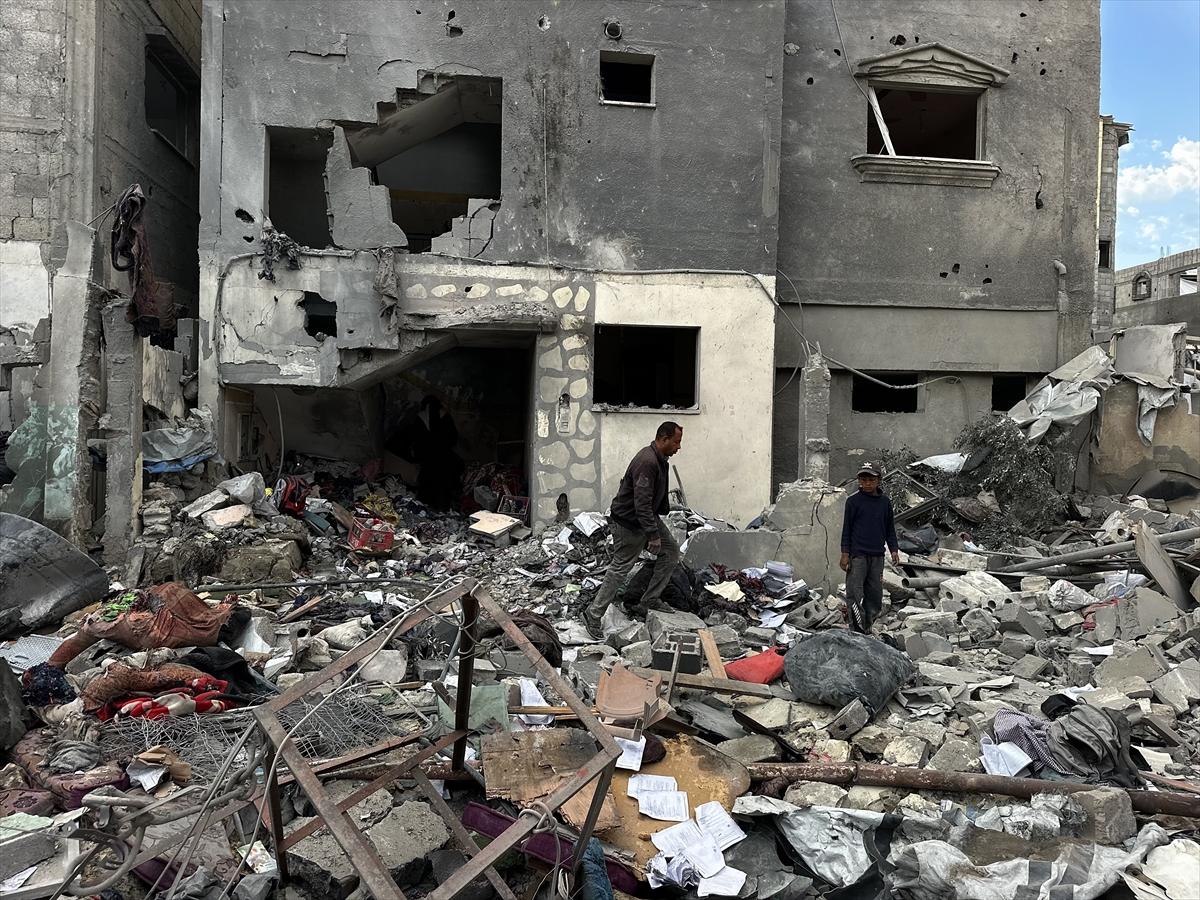
Israel’s large-scale air and land attacks on the Gaza Strip, launched on 18 March 2025. These attacks ended the ceasefire and caused widespread destruction across different areas of Gaza. The Israeli military targeted civilian settlements refugee camps schools and healthcare facilities resulting in hundreds of deaths within a short period.
class=\
On 18 March 2025 the Israeli military launched large-scale military operations against the Gaza Strip ending the ceasefire. Israeli Prime Minister Benjamin Netanyahu and Defense Minister Yisrael Katz ordered a military response against Hamas with “increasing military strength.” The attacks in the Gaza Strip began early on the morning of 18 March with intense aerial bombardment and quickly escalated into ground operations. Israel’s attacks targeted refugee camps and civilian settlements including Han Yunus Gaza City Nusayrat Refugee Camp and Bureyc Refugee Camp. On the first day of the attacks 404 Palestinians were killed.
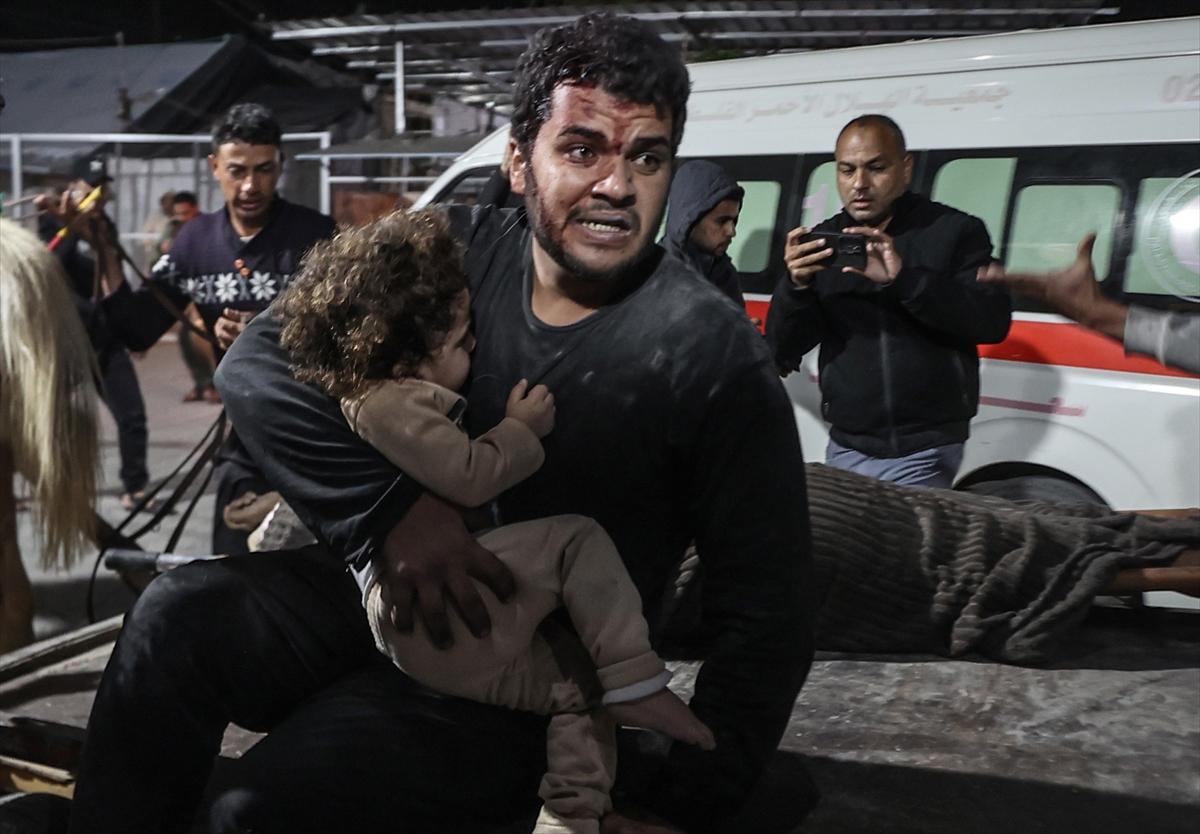
On 19 March the attacks continued. Tents housing displaced Palestinians north of Han Yunus were bombed resulting in the deaths of six more people including one child. In the same area according to the Palestinian Red Crescent two people were killed and five injured in a drone strike. Within just 24 hours on 19 March Israeli attacks killed 70 Palestinians including children and one United Nations (UN) staff member.
In the Sabra neighborhood of southern Gaza City a house belonging to the Hattab family was bombed killing four people and injuring many others. The Israeli military targeted civilians near Gaza’s Eye Hospital causing extensive destruction around the facility. In Nusayrat Refugee Camp attacks on tents housing displaced Palestinians also resulted in deaths and injuries.
The Israeli military also conducted aerial strikes on the fishing port in Han Yunus bombing fishing boats and causing numerous vessels to catch fire. Beyt Hanun and Bureyc Refugee Camp were also targeted with artillery fire.
class=\
Israeli attacks have caused massive civilian casualties in Gaza. The assaults have resulted in at least 792 deaths and over 1600 injuries. The Palestinian Ministry of Health has reported that many people remain trapped under rubble and that the death toll is expected to rise.
The Israeli military’s targeting of hospitals refugee camps and civilian infrastructure has paralyzed Gaza’s healthcare system. Although Al-Ahli Baptist Hospital and Arab Baptist Hospital have attempted to treat the injured from the attacks medical services have nearly collapsed due to shortages of electricity and medical supplies.
Israel has also closed the Rafah Border Crossing preventing the evacuation of the wounded from the area. In addition to water and food shortages in Gaza City and refugee camps the cutoff of fuel supplies has further worsened the humanitarian situation. Due to Israeli artillery and aerial bombardments rescue teams have struggled to reach affected areas and cannot assist those trapped under rubble. In the Beni Suhaila region east of Han Yunus drone strikes have injured many people and hindered rescue teams efforts to evacuate the wounded.
The Palestinian Red Crescent has reported that Israeli artillery has bombarded Beyt Hanun in northern Gaza and some eastern areas but as of now there is no clear information on casualties in those regions.
Following the Israeli attacks shortages of water food electricity and medicine have intensified across Gaza. International organizations have called for urgent access to deliver humanitarian aid. The Israeli government has stated that the operation will continue until Hamas’s military capabilities are weakened.
Al Jazeera. "Israel Launches Gaza Assault, Killing Hundreds and Shattering Ceasefire." Al Jazeera English. Accessed March 18, 2025. https://www.aljazeera.com/news/2025/3/18/israel-launches-gaza-assault-killing-hundreds-and-shattering-ceasefire.
Al Jazeera. "Live: Trump Threatens Iran as Deadly US Attacks on Yemen’s Houthis Continue." Al Jazeera English. Accessed March 18, 2025. https://www.aljazeera.com/news/liveblog/2025/3/18/live-trump-threatens-iran-as-deadly-us-attacks-on-yemens-houthis-continue.
Anadolu Ajansı. "İsrail’in Gazze Şeridine Son 5 Saatte Düzenlediği Saldırılarda Ölen ve Kaybolanların Sayısı 322’yi Aştı." Accessed March 18, 2025. https://www.aa.com.tr/tr/dunya/israilin-gazze-seridine-son-5-saatte-duzenledigi-saldirilarda-olen-ve-kaybolanlarin-sayisi-322yi-asti/3512312.
CNN. "Israel Strikes Gaza as Hamas Ceasefire Collapses." CNN International. Accessed March 18, 2025. https://edition.cnn.com/2025/03/17/middleeast/israel-strikes-gaza-hamas-ceasefire-intl-hnk/index.html.
The Israeli military has republished a map containing orders directing Palestinians living in the Gaza Strip to leave their homes. Israeli Army Spokesperson Avichay Adraee shared the map on social media, dividing Gaza into blocks and stating that “intensive attacks” would be carried out in certain areas. Palestinians were ordered to evacuate under threat that remaining in these areas would endanger their lives.
Israel’s closure of border crossings since 2 March 2025, its continued attacks, and its obstruction of humanitarian aid entering the region have deepened the humanitarian crisis and triggered famine. On 19 March, Palestinian government officials announced that Gaza had entered the initial stages of famine.
The closure of border crossings has brought the supply of basic food items to a standstill. The procurement of essential food sources such as vegetables, fruits and flour has been largely disrupted. The blockade on fuel imports has forced the closure of most bakeries. Dozens of water wells have become unusable, worsening the water crisis. The halt in fuel supplies has severely hindered the transportation of sick and injured people to medical facilities.
Ismail es-Sevabite, Director of the Palestinian Government’s Media Office, warned in a written statement: “If Israel’s attacks do not cease and the border crossings are not urgently opened, life in the Gaza Strip will collapse entirely in the coming days.”
Al Jazeera. "Live: Trump Threatens Iran as Deadly US Attacks on Yemen’s Houthis Continue." Al Jazeera English. Accessed March 18, 2025. https://www.aljazeera.com/news/liveblog/2025/3/18/live-trump-threatens-iran-as-deadly-us-attacks-on-yemens-houthis-continue.
Israel’s attacks on Gaza have drawn widespread international condemnation, with numerous countries and international organizations calling for an immediate ceasefire. As the humanitarian crisis caused by these attacks on civilians deepened, the international community intensified diplomatic pressure on Israel to halt its military operations and ensure unhindered access to humanitarian aid.
United Nations (UN) High Commissioner for Human Rights Volker Türk expressed being “shocked” by Israel’s nighttime attacks on Gaza, stating, “These attacks will add tragedy upon tragedy.” Türk emphasized that these attacks constitute violations of international humanitarian law and asserted that conflicts cannot be resolved through military means.
UN Secretary-General Antonio Guterres, in a statement following the attacks, called for respect for the ceasefire, the uninterrupted resumption of humanitarian aid flows, and the unconditional release of all remaining hostages. UN Spokesperson Farhan Haq noted that Guterres was appalled by the attacks and insisted they must be halted immediately.
The United Nations Relief and Works Agency for Palestine Refugees in the Near East (UNRWA) Commissioner-General Philippe Lazzarini said, “Restarting the war will only fuel the ‘hell on earth’ and bring more despair and suffering.” He stated that Israel’s attacks aim to completely eliminate civilians.
UN Special Rapporteur on the situation of human rights in the Palestinian territories Francesca Albanese characterized Israel’s attacks as “accelerating a genocide against the Palestinian people” and warned global leaders they cannot remain indifferent to this situation.
UN Under-Secretary-General for Humanitarian Affairs and Emergency Relief Coordinator Tom Fletcher said, “Our worst fears have become reality,” warning that “the people of Gaza are once again living in deep fear. The modest gains achieved during the ceasefire are being erased.”
The Ministry of Foreign Affairs of the Republic of Türkiye characterized Israel’s attacks on Gaza as “a grave violation of international law and universal values, and a challenge to humanity.” The statement declared, “Israel’s triggering of a new spiral of violence is unacceptable,” and stressed the need for the international community to adopt a firm stance. Türkiye also affirmed that it would continue to stand with the Palestinian people in their just cause and persist in efforts to achieve peace and stability in the region.
President Recep Tayyip Erdoğan, in his statement on Israel’s attacks, said, “The Zionist regime has once again revealed itself as a terrorist state that feeds on the blood and tears of the innocent,” adding, “On this pre-dawn hour, this Zionist regime has committed genocide, killing mostly children and women. With the news I received last night that over 400 of our brothers have been martyred, those responsible for every drop of blood spilled will be held accountable.”
He further stated, “As Türkiye, we stand with the oppressed people of Gaza and our Palestinian brothers during these sacred days. We will continue to intensify our diplomatic efforts to halt the massacres, restore calm, and reestablish the ceasefire.”
The White House confirmed that Israel consulted with the United States administration prior to the attacks. White House Press Secretary Karoline Leavitt stated that Israel had maintained contact with the United States before launching its strikes.
Temporary U.S. Representative to the UN Dorothy Shea said, “The responsibility for the resumption of hostilities lies entirely with Hamas,” and affirmed that the United States would support Israel’s actions.
President of the European Council Antonio Costa expressed being “shocked and distressed” by civilian losses in Gaza, calling for “violence to end and the terms of the ceasefire to be respected.” France condemned Israel’s attacks, demanding an immediate halt to hostilities that endanger civilians in Gaza and jeopardize efforts to secure the release of hostages.
German Foreign Minister Annalena Baerbock said, “Children fleeing and displaced civilians must not be used as leverage in negotiations,” and described the attacks as alarming. The United Kingdom stated that Israel’s attacks would increase civilian casualties and further destabilize the region, urging all parties to return to a ceasefire.
Spain condemned Israel’s attacks, emphasizing that “all hostilities threatening civilian lives must cease.” Norway identified the attacks as causing a major humanitarian tragedy and called on the international community to take action.
The Organization of Islamic Cooperation (OIC) labeled Israel’s attacks on Gaza as “a war crime and an extension of genocide against the Palestinian people,” and called for their immediate cessation.
Saudi Arabia, Qatar, Jordan, Pakistan, the United Arab Emirates (UAE), Algeria, Kuwait, and Afghanistan strongly condemned Israel’s attacks, demanding their immediate halt and the provision of humanitarian access to Gaza.
The Egyptian Presidency condemned Israel’s attacks, stating that Israel had “openly violated both international law and the ceasefire agreement reached in Gaza,” and warned that the humanitarian crisis in the region would deepen further. Iraq, Iran, Malaysia, Indonesia, and Kuwait strongly condemned Israel’s attacks, asserting they violated international law. King Abdullah II of Jordan, in a statement on 19 March, said Israel’s renewed assault on Gaza was a highly dangerous step.
Hamas characterized Israel’s attacks as “a genocide against the people of Gaza.” Officials stated that Israel had broken the ceasefire, targeted civilians, and sabotaged negotiations aimed at securing the release of Palestinian hostages.
The Israeli government announced it would escalate its attacks. Defense Minister Yisrael Katz issued a threatening statement: “If Hamas does not release Israeli hostages, the gates of hell will open in Gaza.” Israeli Prime Minister Netanyahu affirmed that Israel would continue its military operations.
Anadolu Ajansı. "Cumhurbaşkanı Erdoğan: Siyonist Rejim Masumların Kanından Beslenen Terör Devleti Olduğunu Bir Kez Daha Gösterdi." Accessed March 19, 2025. https://www.aa.com.tr/tr/gundem/cumhurbaskani-erdogan-siyonist-rejim-masumlarin-kanindan-beslenen-teror-devleti-oldugunu-bir-kez-daha-gosterdi/3513229#.
Anadolu Ajansı. "İsrail, Gazze Şeridi’ndeki Saldırılarını Sürdürüyor." Accessed March 19, 2025. https://www.aa.com.tr/tr/dunya/israil-gazze-seridindeki-saldirilarini-surduruyor/3513747#.
Anadolu Ajansı. "İsrail’in Gazze’ye Saldırıları Yeniden Başlatmasına Dünyadan Tepkiler." Accessed March 19, 2025. https://www.aa.com.tr/tr/dunya/israilin-gazzeye-saldirilari-yeniden-baslatmasina-dunyadan-tepkiler/3512510.
Anadolu Ajansı. "İsrail’in Sınır Kapılarını Kapatması Sonucu Gazze’de Kıtlığın İlk Aşamasına Girildiği Açıklandı." Accessed March 20, 2025. https://www.aa.com.tr/tr/dunya/israilin-sinir-kapilarini-kapatmasi-sonucu-gazzede-kitligin-ilk-asamasina-girildigi-aciklandi/3514344.
Europe’s various countries witnessed mass demonstrations on March 2025 to protest against Israel’s military operations in the Gaza Strip and the West Bank. The demonstrations were organized with participation from diverse sectors including civil society organizations, religious leaders, academics, and artists.
On 23 March 2025, in the Dutch capital Amsterdam, a protest was held against Israel’s renewed attacks on the Gaza Strip following its violation of the ceasefire.

Pro-Palestine demonstrations in the Netherlands, 23 March 2025 – Anadolu Agency
On 22 March 2025, thousands gathered in London at the Israeli Embassy in response to a call by the Palestine Solidarity Campaign and other civil society organizations. Protesters carried Palestinian flags and chanted slogans such as “End the Occupation” and “Stop the Genocide.” Artists and activists participated in the demonstration, and some Jewish groups expressed their support with banners.
During the event, British singer Paloma Faith delivered a speech on the situation in Gaza. She highlighted the high number of child deaths and emphasized that silence would amount to complicity in crime. Shamiul Joarder, a representative of the civil society organization FOA, drew attention to the impact of ongoing bombardments on civilians during the Ramadan period.
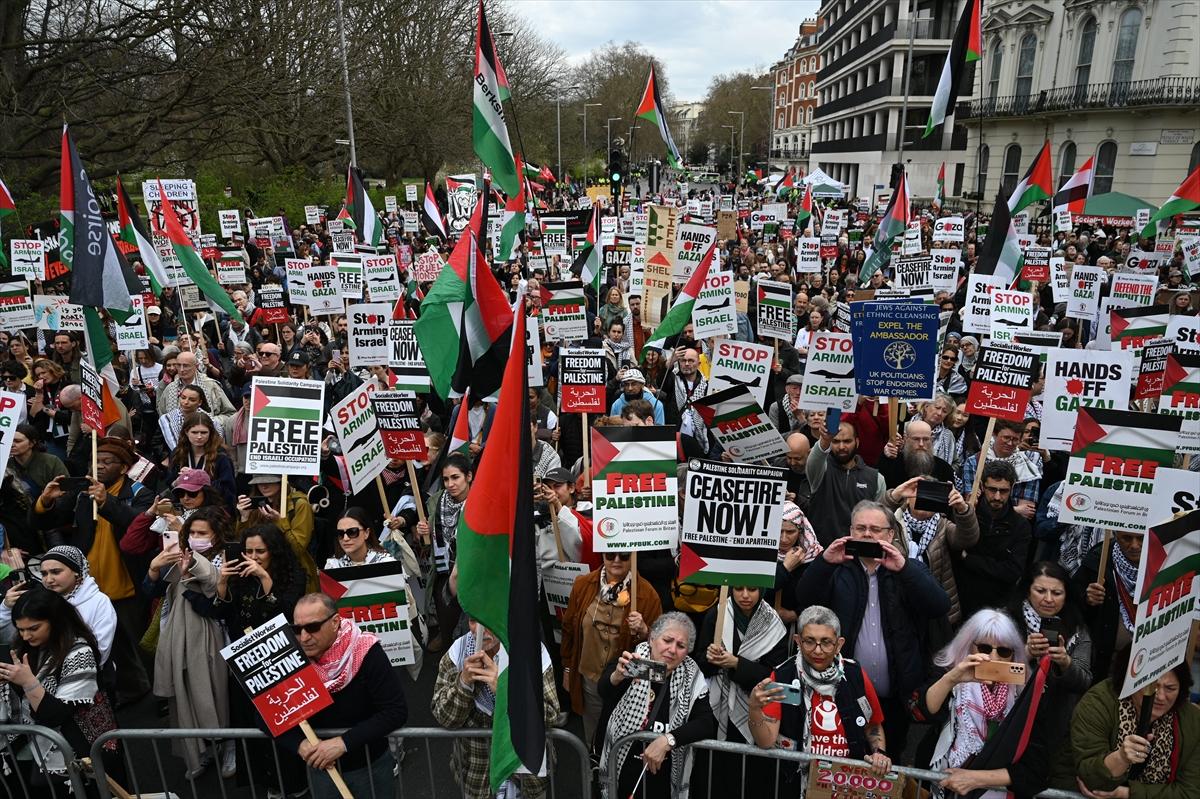
Pro-Palestine demonstrations in the United Kingdom, 22 March 2025 – Anadolu Agency
On the same date, in Stockholm’s Odenplan area, thousands of demonstrators argued that Israel’s attacks constituted war crimes and called on the international community to take action. Protesters marched with Palestinian flags and various banners all the way to the Swedish Parliament.
Among those participating were Ann Christin Kristiansson, a priest from the Church of Sweden, and Professor Dr. Mattias Gardell from Uppsala University. Both condemned Israeli policies toward the Palestinian people as repressive and violent, and called for solidarity.
In Vienna, along Mariahilfer Straße, slogans such as “No to the Killing of Children” and “Boycott Israel” were prominently displayed. Demonstrators expressed outrage over civilian casualties in Gaza and Israel’s breach of the ceasefire.
Activist Wilhelm Langthaler criticized the stance of the Austrian government and media, asserting that public opinion opposes genocide. Langthaler noted that conscientious Jews are also raising their voices against these attacks.
In Berlin’s Wedding district, at Leopoldplatz, a large crowd gathered in solidarity with Palestine. Demonstrators condemned Israel’s attacks on Gaza through slogans and banners.
A Jewish participant described the events in Gaza as a mass killing and criticized the stance of Western countries. This participant argued that a moment of silence should be observed in memory of the children killed.
On 19 March, in the Basque city of San Sebastián, a demonstration was organized at the call of the civil society group “Gernika-Palestina.” The event emphasized the need to end Israel’s attacks and for the international community to enforce a ceasefire.
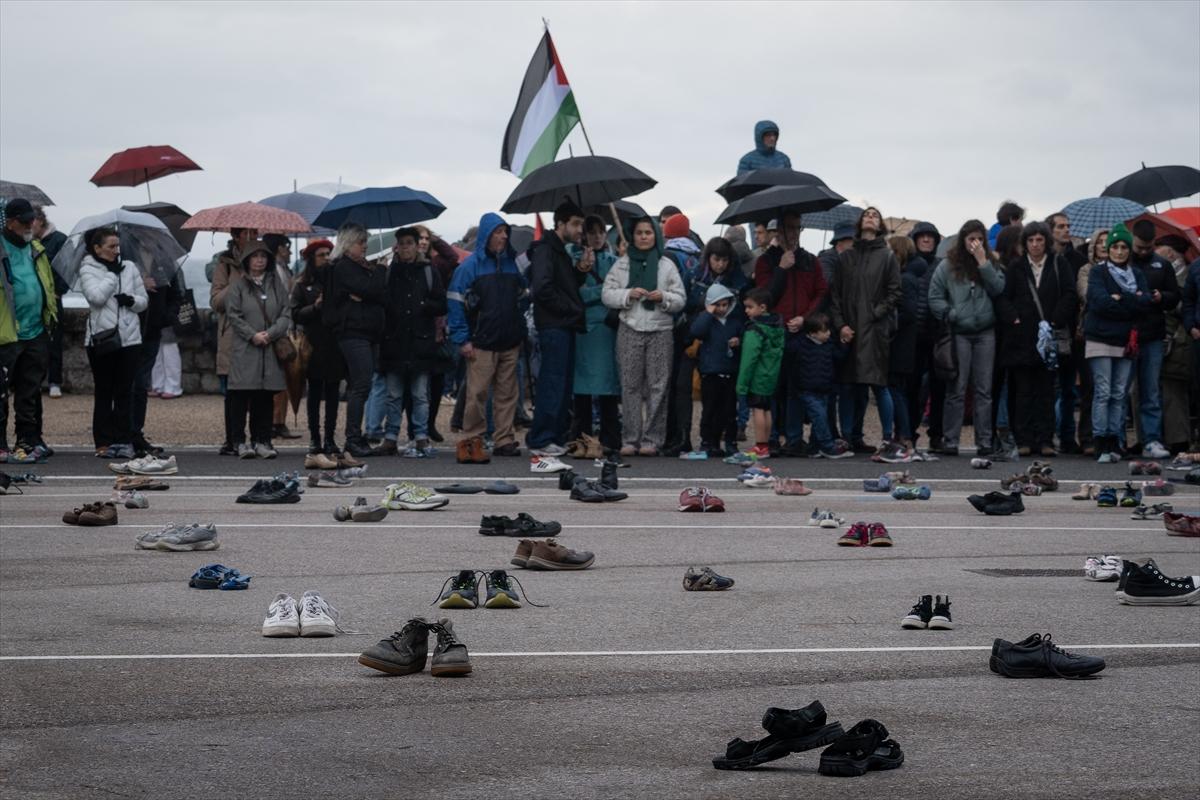
Pro-Palestine demonstrations in Spain, 22 March 2025 – Anadolu Agency
The manifesto highlighted that Israel has blocked humanitarian aid access to Gaza, targeted children and civilians, and that these actions violate international law. The action concluded symbolically with the placement of empty children’s shoes on the ground.
Anadolu Ajansı. “Avrupa’da Filistin’e Destek Gösterileri Düzenlendi.” AA, Accessed March 24, 2025. https://www.aa.com.tr/tr/dunya/avrupada-filistine-destek-gosterileri-duzenlendi/3517420#.
Between 22 and 24 March 2025, the Israeli military intensified air and land attacks across various regions of the Gaza Strip. The attacks targeted areas with high civilian populations, healthcare infrastructure, tent camps, and refugee settlements. During the operations, civilian casualties occurred in Rafah, Khan Yunis, central Gaza City, and the Nuseirat Refugee Camp. During this period, Al-Nasser Hospital was also attacked, ambulances were surrounded, and medical personnel were injured.
On the morning of 22 March 2025, three separate air strikes on different locations in Rafah killed at least nine Palestinians. The strikes targeted residential areas, and medical teams arriving at the scene transported numerous injured to hospitals.
On 23 March, the Israeli military declared the Tel Sultan neighborhood of Rafah a “dangerous combat zone” and issued evacuation orders to the civilian population. Subsequent bombardments resulted in increased civilian casualties.
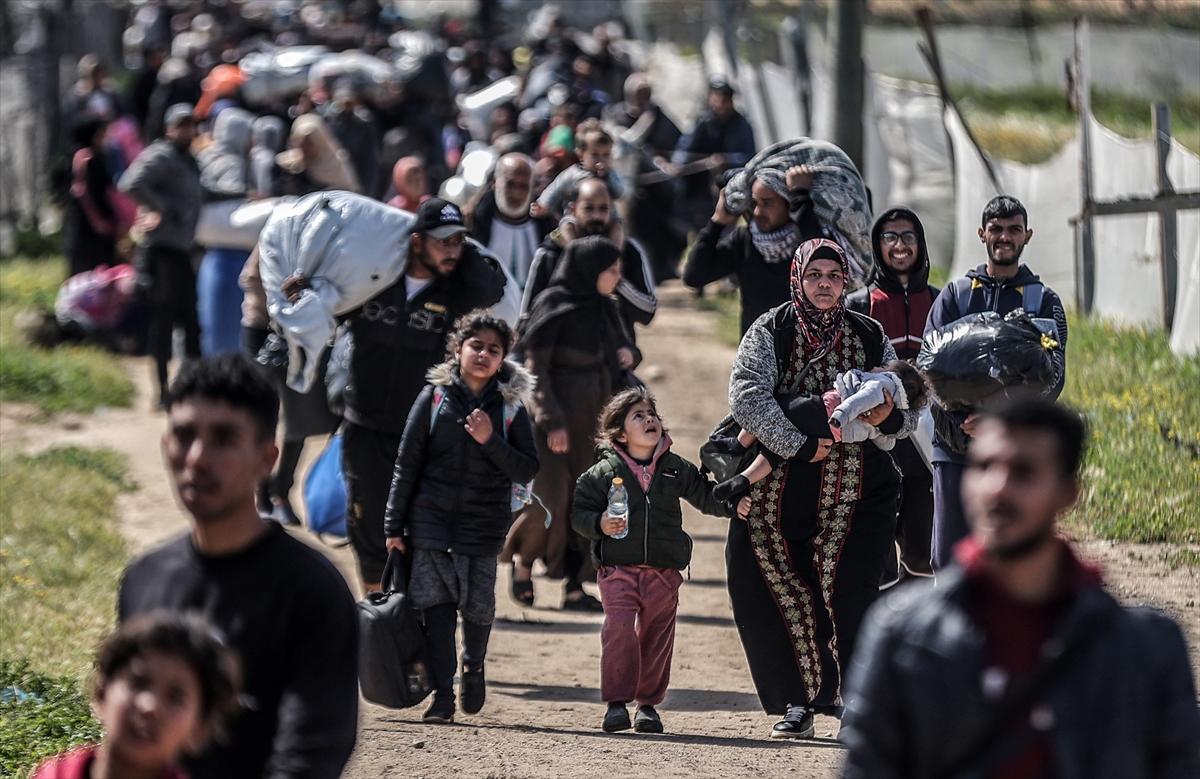
Palestinians forcibly displaced from Rafah, 23 March 2025 – Anadolu Agency
On 23 March, the Et-Tuffah and Ez-Zeytun neighborhoods of Gaza City were subjected to intense aerial bombardments. As a result, 13 people were killed and many others were injured. Eyewitnesses reported that the attacks targeted civilian areas.
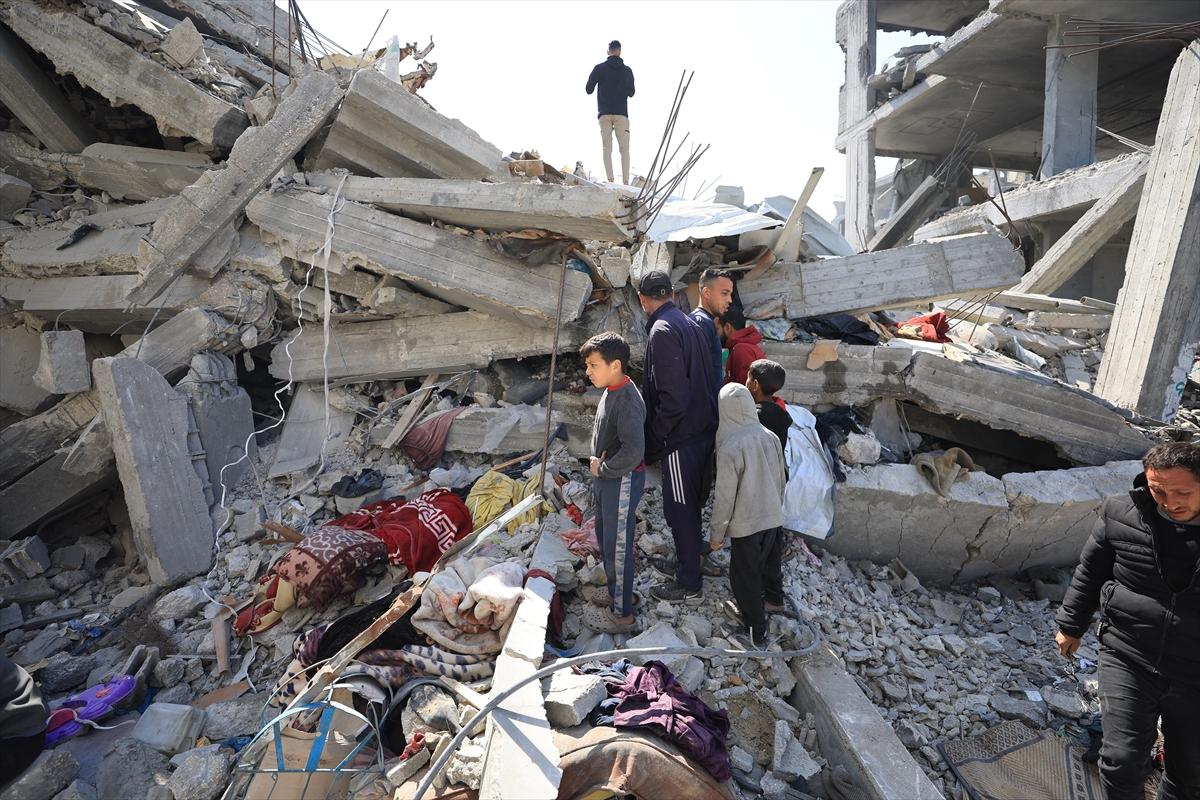
The Shu’aiyya neighborhood east of Gaza City, under continued attack, 24 March 2025 – Anadolu Agency
A residential building in the Al-Fihari area of Khan Yunis was targeted, resulting in the death of a child, Liliyan Jihad Abu Dekka. On the same day, the area surrounding the Gaza European Hospital was bombed, causing numerous injuries.
On 24 March, the Israeli military targeted a tent camp in the courtyard of Razi School in the Nuseirat Refugee Camp, located in the central part of the Gaza Strip. The camp housed displaced civilians. Five people were killed and 13 were injured in the attack. The dead and wounded were transported to Al-Awda Hospital.
According to the Palestinian Red Crescent Society, on 23 March, numerous ambulances attempting to reach the area under bombardment in Rafah were surrounded by the Israeli military. Eyewitnesses stated that the ambulances were encircled by drone and artillery fire, and communication with the crews was cut off for hours. Several medical personnel were injured during the siege.
On 23 March, the Israeli military targeted Al-Nasser Hospital in Khan Yunis, the largest hospital in southern Gaza. Following an airstrike on the hospital’s surgical wing, a fire broke out, killing at least one person and injuring many others, including medical staff.
The Gaza Ministry of Health classified the attack as a violation of international law and called for an independent international investigation.
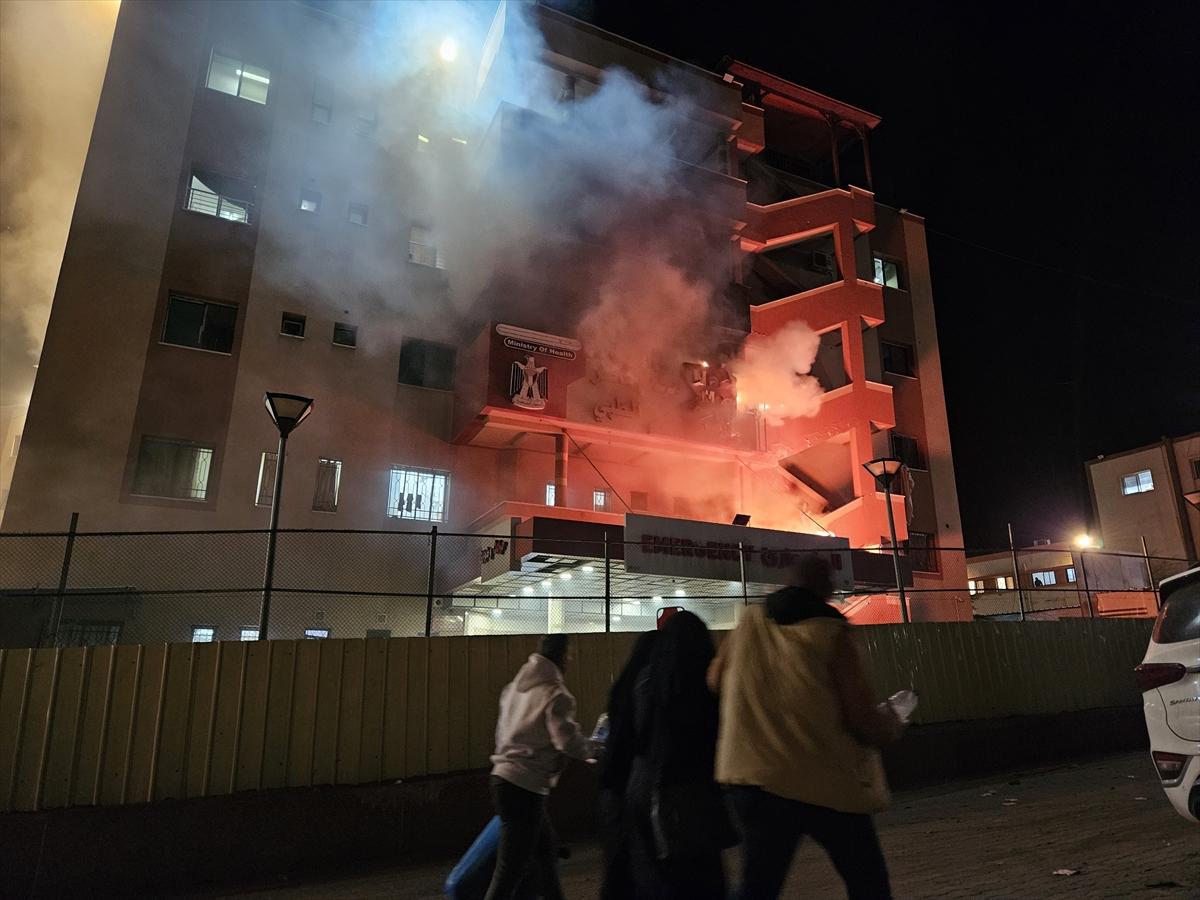
Image of the attack on Al-Nasser Hospital, 23 March 2025 – Anadolu Agency
According to the Gaza Ministry of Health, as of 24 March 2025, the number of people killed since 7 October 2023 has reached 50,082, and the number of injured has reached 113,408.
Anadolu Ajansı. “Gazze'deki Sağlık Bakanlığından İsrail’in Nasır Hastanesi Saldırısı İçin Uluslararası Soruşturma Çağrısı.” AA. Accessed March 24, 2025. https://www.aa.com.tr/tr/dunya/gazzedeki-saglik-bakanligindan-israilin-nasir-hastanesi-saldirisi-icin-uluslararasi-sorusturma-cagrisi/3518600.
Anadolu Ajansı. “İsrail Ordusunun Gazze’nin Güneyindeki Nasır Hastanesini Hedef Alması Sonucu 1 Kişi Öldü.” AA. Accessed March 24, 2025. https://www.aa.com.tr/tr/dunya/israil-ordusunun-gazzenin-guneyindeki-nasir-hastanesini-hedef-almasi-sonucu-1-kisi-oldu/3518178.
Anadolu Ajansı. “İsrail’in Dünden Bu Yana Gazze’ye Düzenlediği Saldırılarda En Az 22 Filistinli Hayatını Kaybetti.” AA. Accessed March 24, 2025. https://www.aa.com.tr/tr/dunya/israilin-dunden-bu-yana-gazzeye-duzenledigi-saldirilarda-en-az-22-filistinli-hayatini-kaybetti/3517633.
Anadolu Ajansı. “İsrail’in Gazze’ye Düzenlediği Saldırılarda En Az 30 Filistinli Hayatını Kaybetti.” AA. Accessed March 24, 2025. https://www.aa.com.tr/tr/dunya/israilin-gazzeye-duzenledigi-saldirilarda-en-az-30-filistinli-hayatini-kaybetti/3517698.
Anadolu Ajansı. “İsrail’in Gazze’ye Saldırılarında Can Kaybı 50 Bini Aştı.” AA. Accessed March 24, 2025. https://www.aa.com.tr/tr/dunya/israilin-gazzeye-saldirilarinda-can-kaybi-50-bini-asti/3517900.
Anadolu Ajansı. “İsrail’in Gazze’ye Yönelik Saldırılarında En Az 32 Filistinli Hayatını Kaybetti.” AA. Accessed March 24, 2025. https://www.aa.com.tr/tr/dunya/israilin-gazzeye-yonelik-saldirilarinda-en-az-32-filistinli-hayatini-kaybetti/3518513.
Israeli Defense Minister Yisrael Katz, in a video statement issued on March 26, 2025, announced that new attack plans targeting additional areas in the Gaza Strip had been prepared and approved.
Katz stated that these attacks would be carried out alongside the forced displacement of Palestinians under the pretext of “evacuation”; he also reiterated the threat of further land annexation in Gaza.
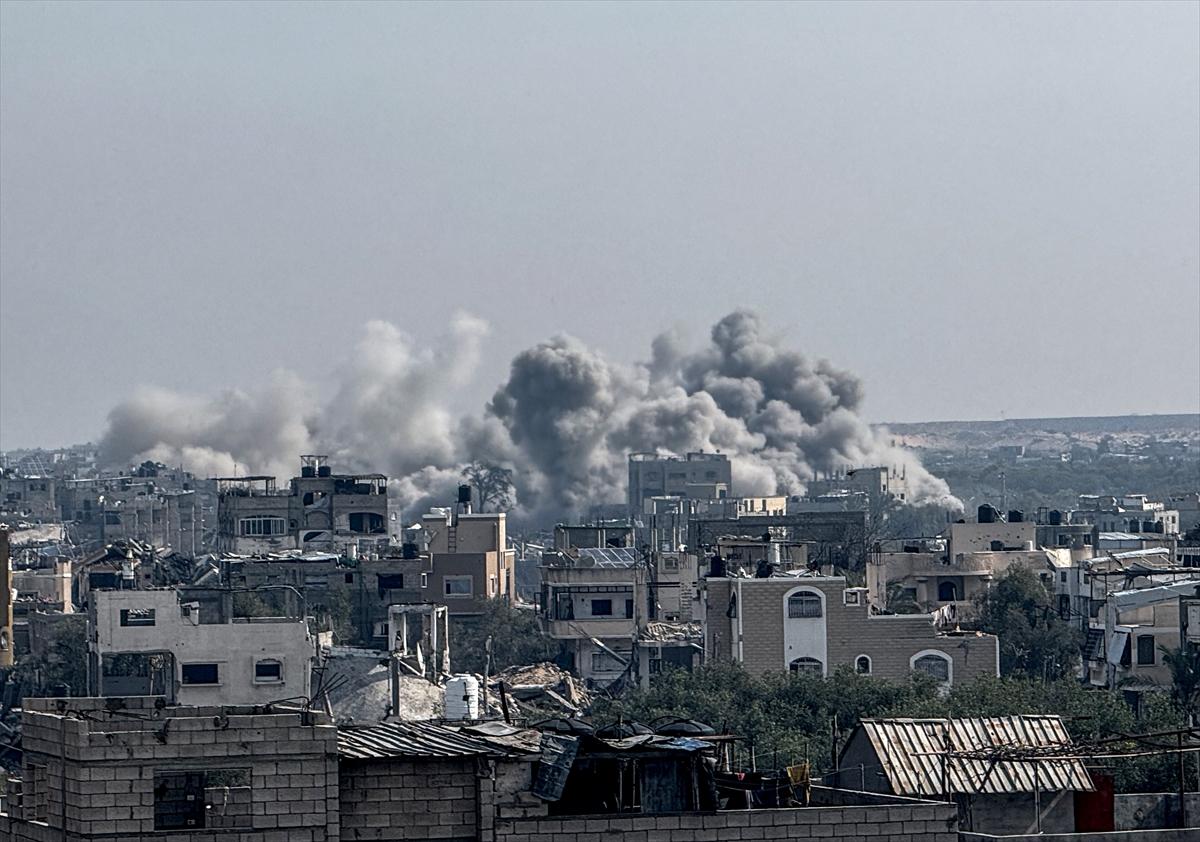
The Israeli military’s attack on the Beit Lahiya town in northern Gaza, March 26, 2025 – Anadolu Agency
The United Nations Relief and Works Agency for Palestine Refugees in the Near East (UNRWA), in a statement issued on March 27, 2025, reported that more than 180 children had lost their lives in Israeli attacks on March 18 alone. UNRWA warned that without an urgent restoration of the ceasefire, widespread civilian casualties would continue, and called on the international community to prioritize a lasting ceasefire.
In another statement issued on the same date, UNRWA noted that the majority of humanitarian aid organizations’ efforts to deliver essential supplies to Gaza had been rejected by Israel. It was stated that aid supplies were running out, with some critical items lasting only a few more days. Agency spokesperson Adnan Abu Hasene emphasized the urgent need to prioritize a ceasefire and humanitarian access, saying, “Almost comprehensive collapse is occurring in every aspect of life in Gaza.”
Deputy Prime Minister and Minister of Foreign Affairs of New Zealand, Winston Peters, stated on March 27 that the ceasefire in Gaza must be immediately restored. During a meeting with his Palestinian counterpart Muhammad Mustafa, topics such as the Arab Plan, the reconstruction of Gaza, and prisoner exchanges were also discussed.
According to a statement from the Gaza Ministry of Health on March 27, 39 people were killed and 124 injured in Israeli attacks within the past 24 hours. Since March 18, the death toll has reached 830 and the number of injured has risen to 1,787.
On March 26, Israeli families of hostages and opposition groups gathered in West Jerusalem and called for an end to Israel’s attacks on Gaza. Protesters demanded the return of hostages and a review of government policies; police intervened against the demonstrators.
Anadolu Ajansı. "Yeni Zelanda, Gazze’de Ateşkesin Derhal Yeniden Uygulanmasını İstedi." Accessed March 27, 2025. https://www.aa.com.tr/tr/dunya/yeni-zelanda-gazzede-ateskesin-derhal-yeniden-uygulanmasini-istedi/3521294.
Anadolu Ajansı. “UNRWA: Gazze'de Bir Günde 180'den Fazla Çocuk Öldü.” Accessed March 27, 2025. https://www.aa.com.tr/tr/dunya/unrwa-gazzede-bir-gunde-180den-fazla-cocuk-oldu/3521253.
Anadolu Ajansı. “İsrail Savunma Bakanı'ndan Gazze'de Yeni Bölgelere Yoğun Saldırılar Düzenleyecekleri Tehdidi.” Accessed March 27, 2025. https://www.aa.com.tr/tr/dunya/israil-savunma-bakanindan-gazzede-yeni-bolgelere-yogun-saldirilar-duzenleyecekleri-tehdidi/3520773.
Anadolu Ajansı. “İsrailli Esir Yakınları, Gazze’ye Yönelik Saldırıların Bir An Önce Durdurulmasını Talep Etti.” Accessed March 27, 2025. https://www.aa.com.tr/tr/dunya/israilli-esir-yakinlari-gazzeye-yonelik-saldirilarin-bir-an-once-durdurulmasini-talep-etti/3520001.
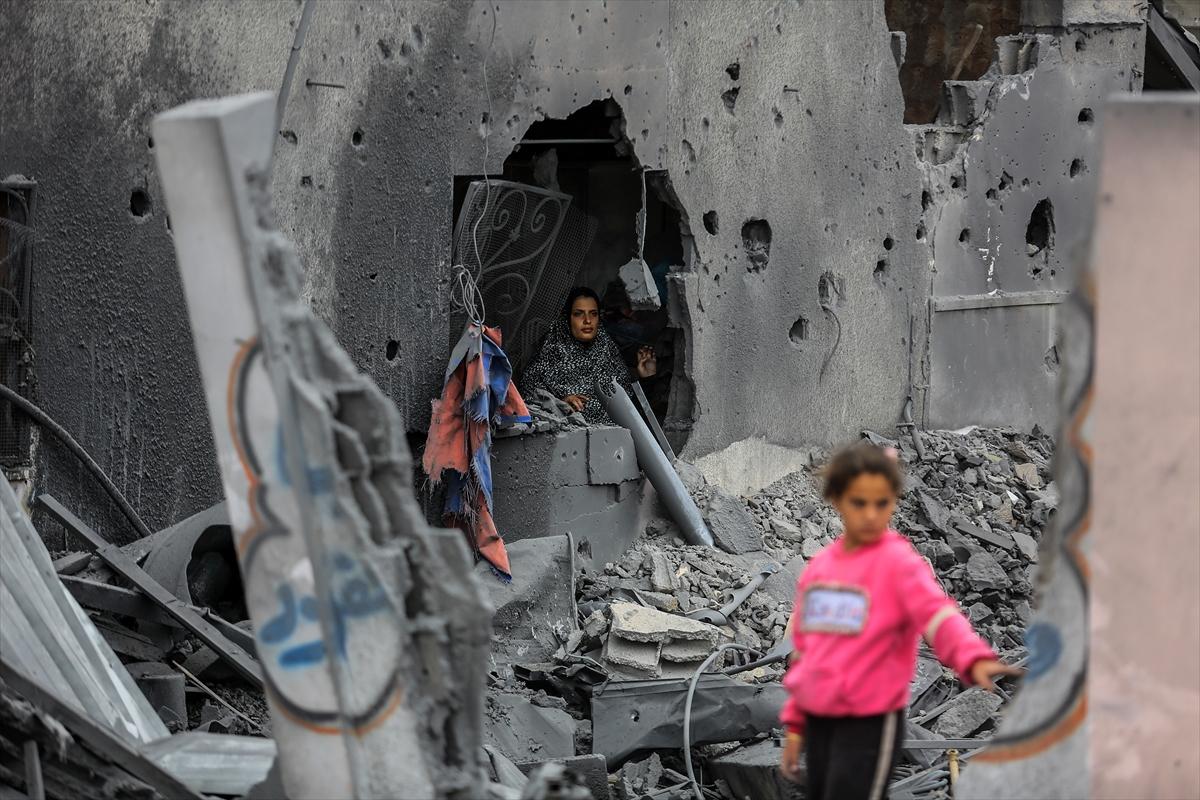
The Israeli military has intensified and continued its attacks on the Gaza Strip since 29 March 2025, the eve of Ramadan Eid. Over the three days of the holiday, numerous civilian settlements including Gaza City, Jabaliya, Khan Yunis and Rafah were targeted by intense aerial bombardments and artillery shelling. Civilian homes, refugee camps, tent sites and vehicles were directly targeted in these attacks.
class=\
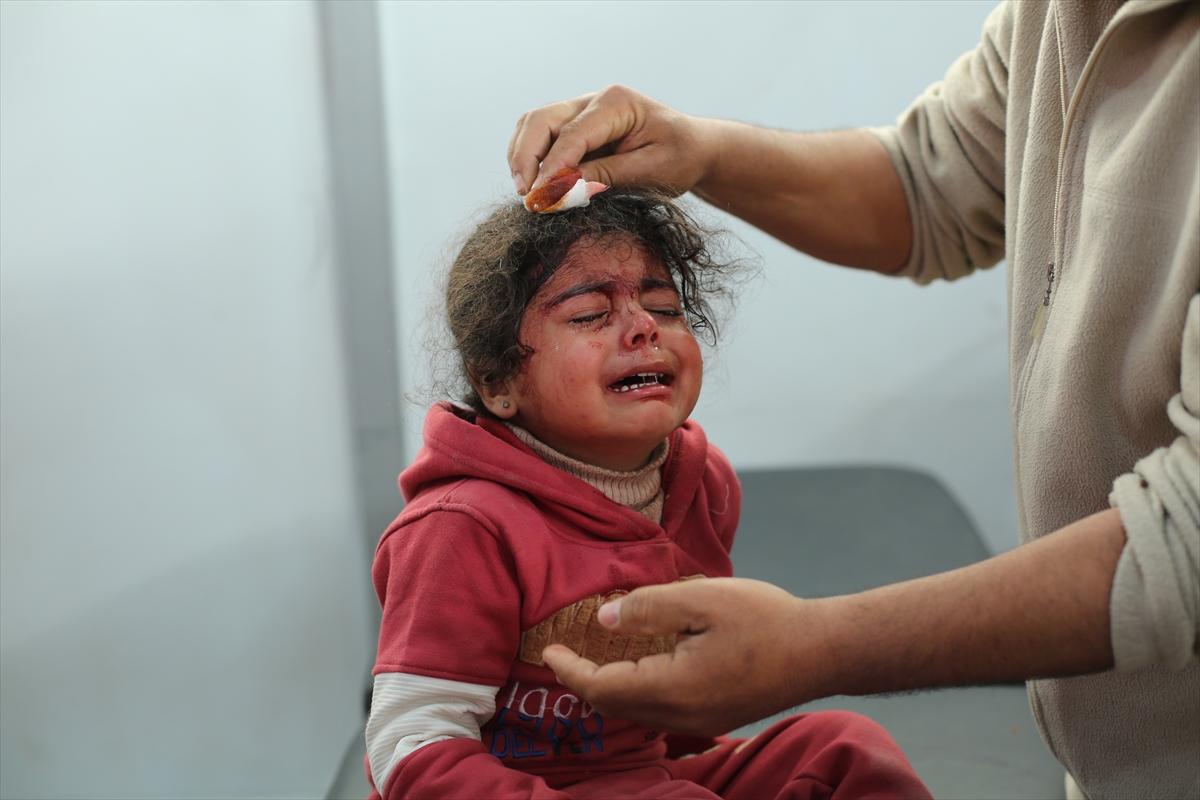
On the first day of the holiday, Israeli air forces launched attacks on the Shuja’iyya and Tuffah neighborhoods of Gaza City and the Jabaliya area in the north, resulting in numerous civilian deaths and injuries. In attacks on various neighborhoods of Khan Yunis, entire families including children were killed. The Gaza Ministry of Health reported that on the first day of Eid, 33 Palestinians were killed, 13 of whom were children. On the same day, 189 others were injured.
On the second day, the Israeli military issued evacuation orders to civilians living in the eastern areas of Rafah and Khan Yunis. In response, thousands of people were forced to flee toward the central areas of Gaza, carrying only a few belongings they could manage. Among the forcibly displaced, women, children and the elderly formed the majority. Attacks continued that day, with civilian areas subjected to artillery fire and aerial bombardment. Many people were killed in homes targeted in the western and eastern neighborhoods of Khan Yunis. According to Ministry of Health data, 41 Palestinians were killed across Gaza on the second day of Eid, with dozens more injured.
class=\
On the third day of Eid, 1 April 2025, Israeli attacks extended to the eastern neighborhoods of Gaza City and along the western coastline of Khan Yunis. As homes were directly targeted, 23 Palestinians were killed. The total death toll over the three days reached 97. A significant portion of those killed in the attacks were children and women.
The Palestinian Ministry of Health reported that since the ceasefire ended on 18 March 2025, the number of those killed in the new wave of attacks has reached 1,001, with 2,359 injured.
The Palestinian Ministry of Information stated that the mass internal displacement following Israeli evacuation warnings has led to a major humanitarian tragedy. The ministry noted that approximately 90 percent of Gaza’s population has been displaced at least once, and many families have spent the Eid holiday in open areas or temporary shelters.
Military raids also continued in the West Bank during the Eid period. Israeli security forces used tear gas against Palestinians attempting to perform Eid prayers at the Jenin Refugee Camp. In Hebron, worship at the Ibrahimi Mosque was conducted under heavy security measures. It has been reported that since 7 October 2023, approximately 940 Palestinians have been killed in the West Bank.
Anadolu Ajansı. "Gazze’de bayramın üçüncü gününde İsrail saldırılarında 23 Filistinli hayatını kaybetti." Accessed April 2, 2025. https://www.aa.com.tr/tr/dunya/gazzede-bayramin-ucuncu-gununde-israil-saldirilarinda-23-filistinli-hayatini-kaybetti/3525699.
Anadolu Ajansı. "İsrail’in Gazze’ye saldırısında Filistinli gazeteci, eşi ve 3 çocuğu yaşamını yitirdi." Accessed April 2, 2025. https://www.aa.com.tr/tr/dunya/israilin-gazzeye-saldirisinda-filistinli-gazeteci-esi-ve-3-cocugu-yasamini-yitirdi/3525085.
Anadolu Ajansı. "İsrail’in Gazze’ye yönelik saldırıları bayramın üçüncü gününde sürdü." Accessed April 2, 2025. https://www.aa.com.tr/tr/dunya/israilin-gazzeye-yonelik-saldirilari-bayramin-ucuncu-gununde-surdu-/3524956.
Anadolu Ajansı. "İsrail’in ateşkesi bozarak Gazze’ye yeniden başlattığı saldırılarda can kaybı 1000’i aştı." Accessed April 2, 2025. https://www.aa.com.tr/tr/dunya/israilin-ateskesi-bozarak-gazzeye-yeniden-baslattigi-saldirilarda-can-kaybi-1000i-asti/3524322.
2 April 2025 marked an intensification of Israel’s attacks on the Gaza Strip. In particular, Rafah, Khan Yunis, the central Gaza City area and northern regions have been targeted. Attacks on civilian settlements have led not only to significant loss of life but also to the widespread collapse of infrastructure.
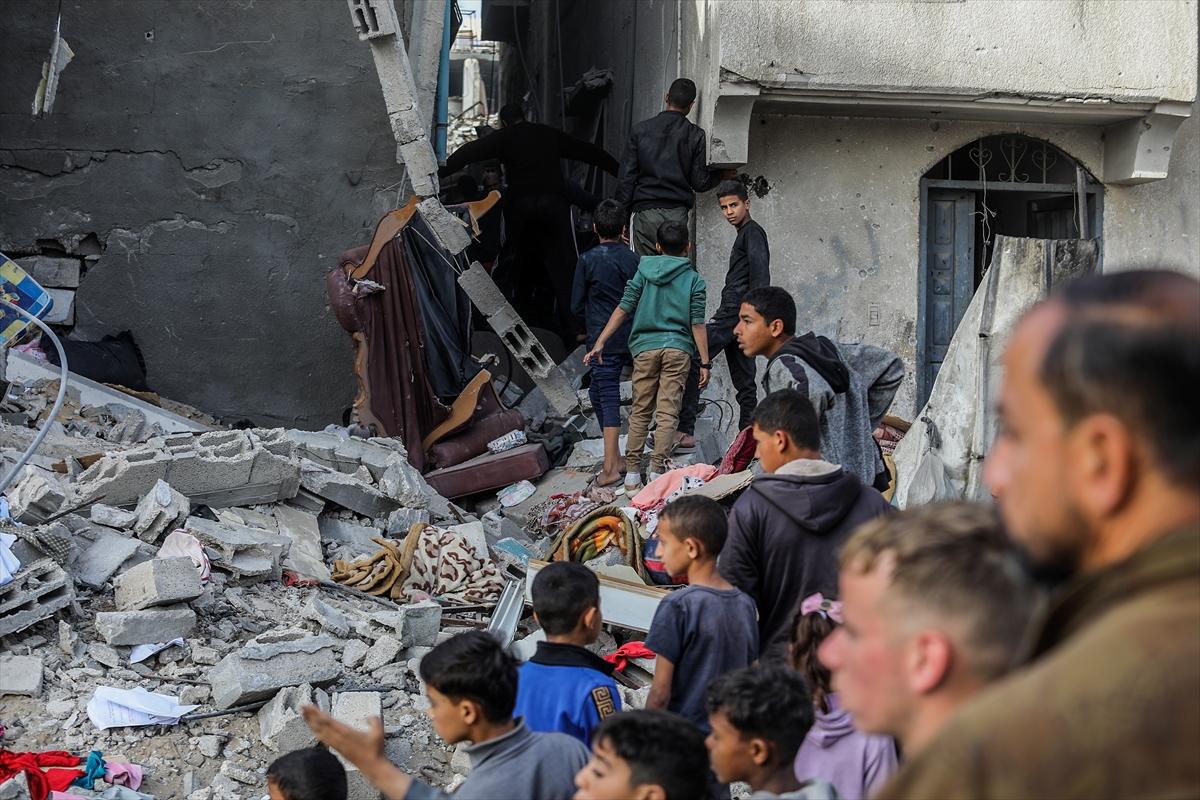
Israel Defense Forces’ attack on the Abdulhadi family home in Khan Yunis, 6 April 2025 – Anadolu Agency
According to the Gaza Ministry of Health, since Israel broke the ceasefire on 18 March 2025, the death toll has reached 1,309 and the number of injured has risen to 3,184. On 5 April 2025 alone, 60 people were killed and 162 injured. Since 7 October 2023, the total number of fatalities has climbed to 50,695 and the number of injured to 115,453.
As a result of Israel Defense Forces’ ground and air operations targeting Rafah, the Gaza government reported that approximately 90 percent of residential areas in Rafah have been destroyed. Israel has constructed a military corridor dubbed the “Morag Corridor” between Rafah and Khan Yunis, effectively dividing the territory along a north-south axis. Units under the 36th Division have launched large-scale offensives along this corridor.
Following the targeting of residential areas in Rafah, widespread forced displacement occurred, with thousands of civilians compelled to flee toward central Gaza. During the same period, healthcare facilities and civil defense personnel also became targets of attacks.
The Gaza Ministry of Health has reported that numerous children have died due to inadequate nutrition and hygiene conditions. According to data recorded on 4 April, the number of children who died from malnutrition reached 52. Health ministry officials warned that this figure could rise further in the coming days.
The United Nations Relief and Works Agency for Palestine Refugees in the Near East (UNRWA), in a statement on 6 April 2025, stated that Gaza’s stockpiles are nearing exhaustion and that the majority of humanitarian aid shipments have been blocked by Israel. The statement emphasized that critical shortages of essential supplies have reached a threshold, with some items available for only a few days.
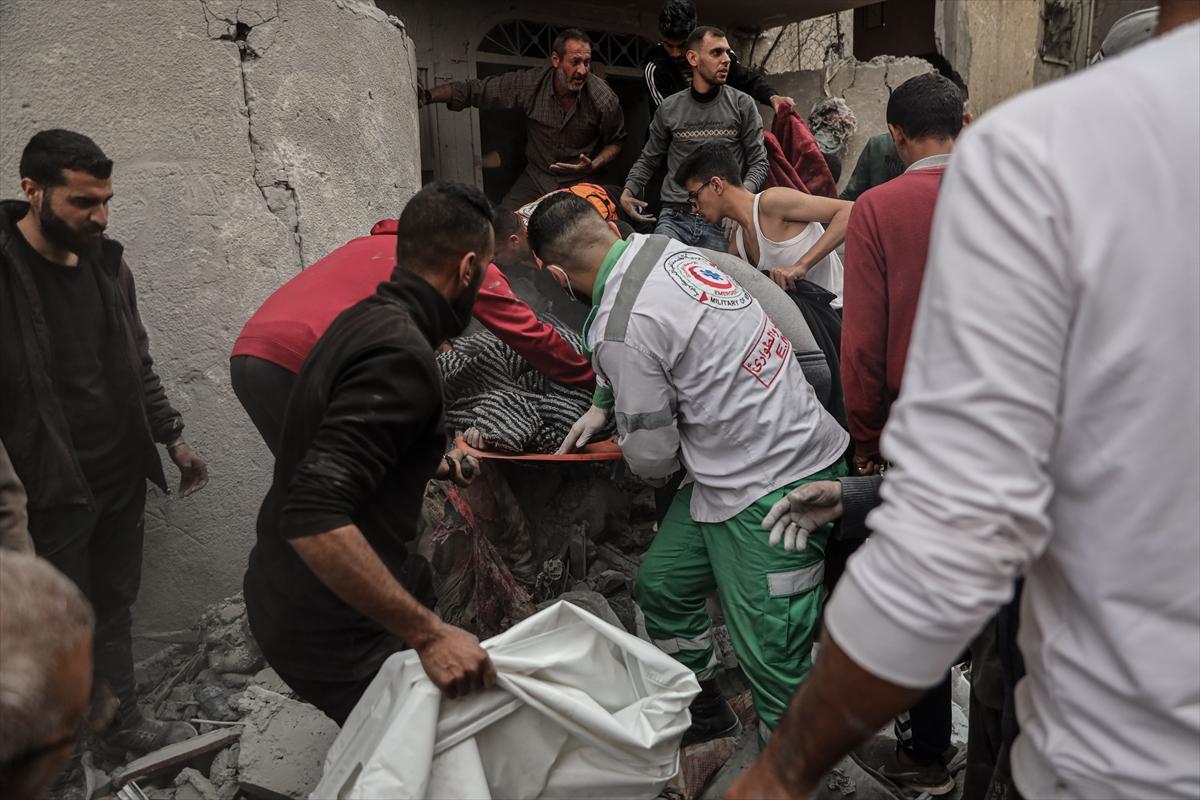
Israel Defense Forces’ attack on Deir al-Balah, 6 April 2025 – Anadolu Agency
On 6 April 2025, a large-scale demonstration in support of Palestine took place in Washington D.C., the capital of the United States, with thousands in attendance. More than 300 civil society organizations participated, particularly protesting attacks on healthcare workers. Demonstrators called for the immediate cessation of the humanitarian crisis in Gaza.
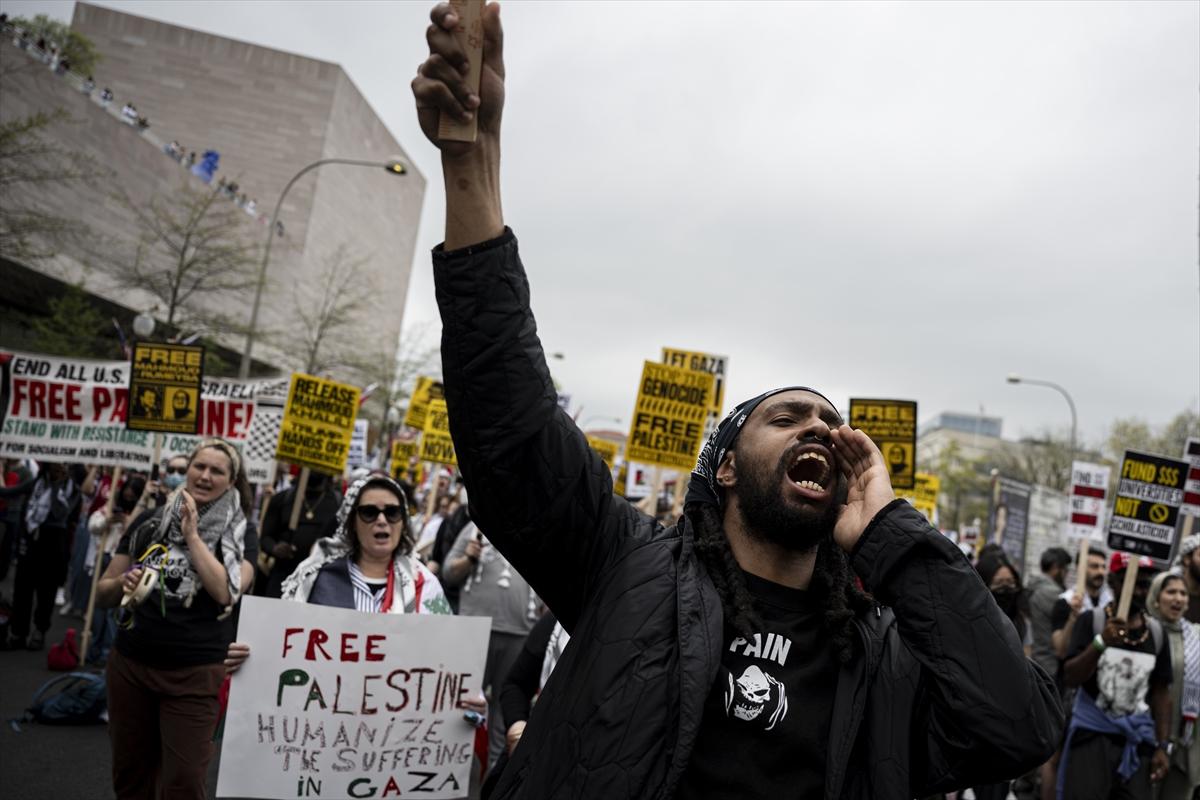
Pro-Palestine demonstration in the United States, 6 April 2025 – Anadolu Agency
On the same date, protests against Israel’s attacks on the Gaza Strip were held in Istanbul, Türkiye. Organized at the call of the Islamic Solidarity Platform, the march began in front of Barbaros Hayrettin Pasha Mosque and ended at the Israeli Consulate General in Levent.
During the march, participants carried symbolic coffins wrapped in shrouds to represent civilians killed in the attacks. In statements made at the conclusion of the march, attention was drawn to civilian casualties in Gaza and the international community’s silence was condemned.
UNRWA and other international organizations have called on the international community to allow the free flow of humanitarian aid to Gaza, protect its healthcare infrastructure, and establish safe corridors for displaced civilians. According to the Ministry of Education, more than 17,000 children have lost their lives in Gaza since 7 October 2023.
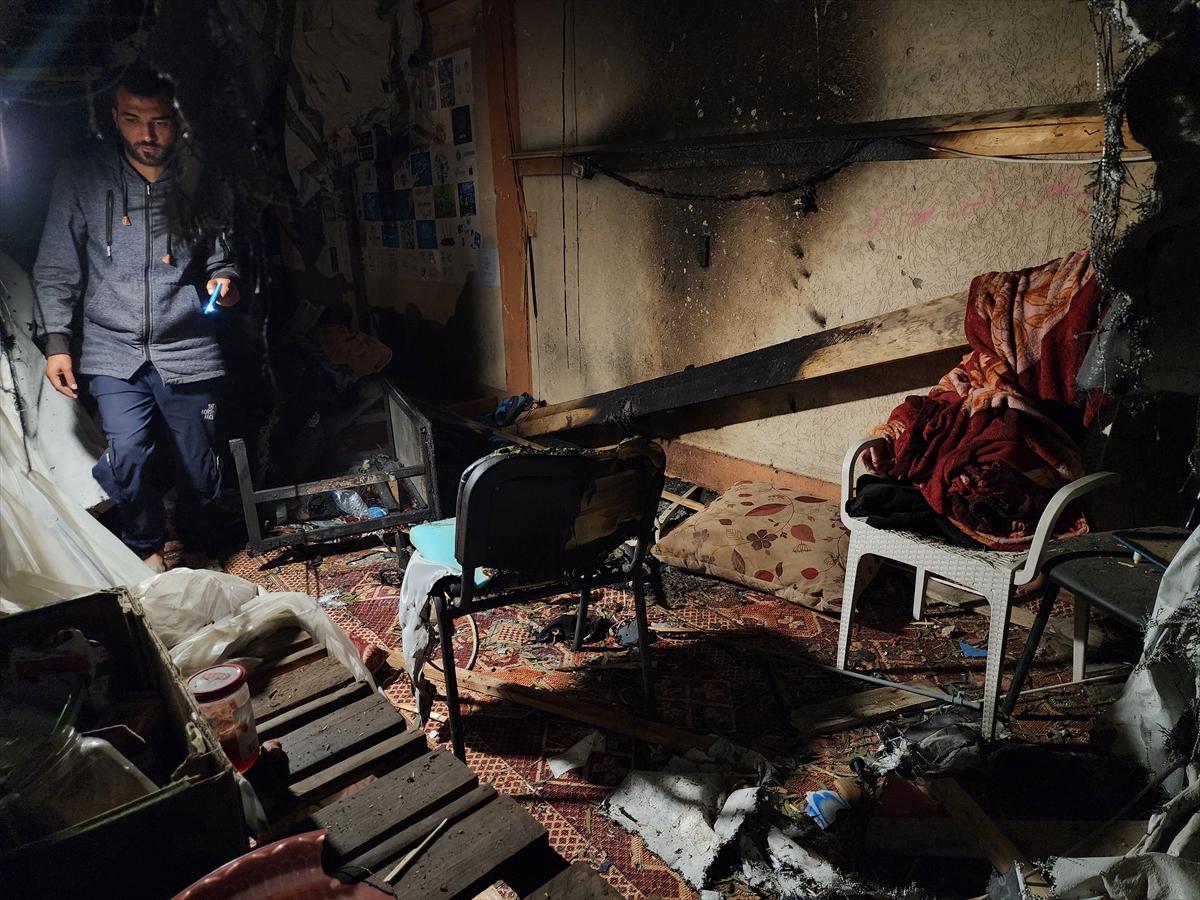
Israel Defense Forces’ attack on the tent housing journalists in Gaza, 7 April 2025 – Anadolu Agency
On 7 April 2025, the Israel Defense Forces launched an attack on a tent area near Nasser Hospital in Khan Yunis, Gaza, where journalists were staying. One journalist was killed and many others were injured.
Anadolu Ajansı. "ABD’nin Başkenti Washington’da Binlerce Kişi Filistin’e Destek Gösterisinde Bir Araya Geldi." Accessed April 7, 2025. https://www.aa.com.tr/tr/dunya/abdnin-baskenti-washingtonda-binlerce-kisi-filistine-destek-gosterisinde-bir-araya-geldi/3529415.
Anadolu Ajansı. “Gazze'deki Hükümet: İsrail, Refah'taki Yerleşim Yerlerinin Yüzde 90'ını Yok Etti.” Accessed April 7, 2025. https://www.aa.com.tr/tr/dunya/gazzedeki-hukumet-israil-refahtaki-yerlesim-yerlerinin-yuzde-90ini-yok-etti/3529883.
Anadolu Ajansı. “Gazze'deki Sağlık Bakanlığı: Yetersiz Beslenme Nedeniyle 52 Çocuk Öldü, Sayı Daha da Artabilir.” Accessed April 7, 2025. https://www.aa.com.tr/tr/dunya/gazzedeki-saglik-bakanligi-yetersiz-beslenme-nedeniyle-52-cocuk-oldu-sayi-daha-da-artabilir/3529954.
Anadolu Ajansı. “UNRWA: Gazze’de Tedarik Stokları Tükenmek Üzere.” Accessed April 7, 2025. https://www.aa.com.tr/tr/dunya/unrwa-gazzede-tedarik-stoklari-tukenmek-uzere/3529926.
Anadolu Ajansı. “İsrail’in Gazze Şeridine Son 24 Saatte Düzenlediği Saldırılarda Onlarca Kişi Hayatını Kaybetti.” Accessed April 7, 2025. https://www.aa.com.tr/tr/dunya/israilin-gazze-seridine-son-24-saatte-duzenledigi-saldirilarda-onlarca-kisi-hayatini-kaybetti/3528846.
Anadolu Ajansı. “İsrail’in Gazze’ye Saldırıları İstanbul’da Yürüyüşle Protesto Edildi.” Accessed April 7, 2025. https://www.aa.com.tr/tr/gundem/israilin-gazzeye-saldirilari-istanbulda-yuruyusle-protesto-edildi/3529817.
Anadolu Ajansı. “İsrail’in Gazze’ye Saldırılarında Can Kaybı 50 Bin 695’e Yükseldi.” Accessed April 7, 2025. https://www.aa.com.tr/tr/dunya/israilin-gazzeye-saldirilarinda-can-kaybi-50-bin-695e-yukseldi/3529481.
On 7 April 2025, the Israeli military issued a new "evacuation order" for the city of Deir al-Balah in the central part of the Gaza Strip. The areas designated for evacuation, as shown in a map shared by Israeli military spokesperson Avichay Adraee, include the neighborhoods of es-Sahabe, es-Samah, el-Avde, el-Zevaide, and el-Salah. The Israeli military announced that intense attacks would be carried out in these neighborhoods and urged Palestinians to move to the al-Mevasi area of Khan Yunis.
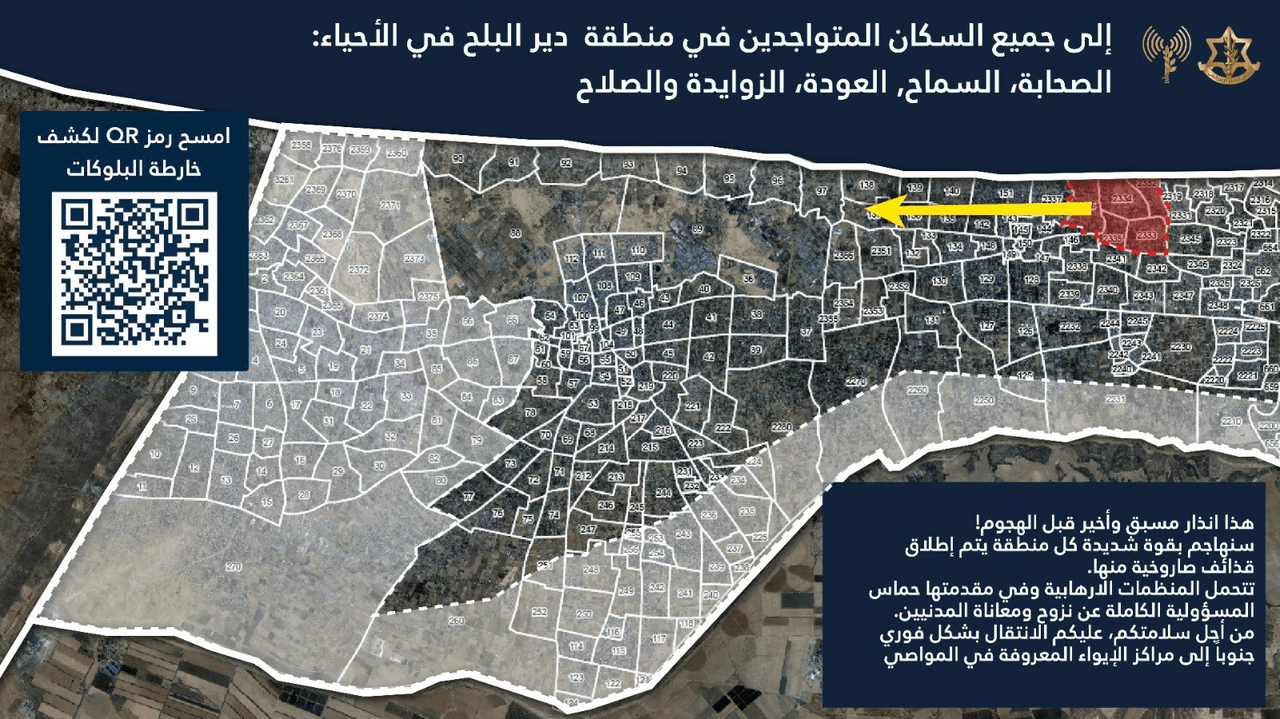
Evacuation order for the Deir al-Balah area, 7 April 2025 - Official X account of Israeli Military Spokesperson Avichay Adraee
On the same day, a house belonging to the al-Nefar family in Khan Yunis in southern Gaza was targeted, resulting in deaths and injuries. It was reported that the injured Palestinians were evacuated from the area.
It was announced that Israeli Prime Minister Benjamin Netanyahu, during a flight to Washington with Defense Minister Yisrael Katz, discussed the situation and issued directives to continue intense attacks on Gaza. Katz stated that the attacks would be carried out in a "very intense" manner.
Anadolu Ajansı. “İsrail Tahliye Emriyle Gazze'nin Orta Kesimindeki Filistinlileri Göçe Zorluyor.” Anadolu Ajansı, April 7, 2025. https://www.aa.com.tr/tr/dunya/israil-tahliye-emriyle-gazzenin-orta-kesimindeki-filistinlileri-goce-zorluyor/3530092
Avichay Adraee (@AvichayAdraee). “İsrail ordusunun tahliye duyurusu.” X (Twitter), April 7, 2025. https://x.com/AvichayAdraee/status/1908977979968872868
On 7 April 2025, Palestinians in the occupied West Bank and East Jerusalem staged a general strike to protest Israeli attacks on the Gaza Strip and demand an end to the war.
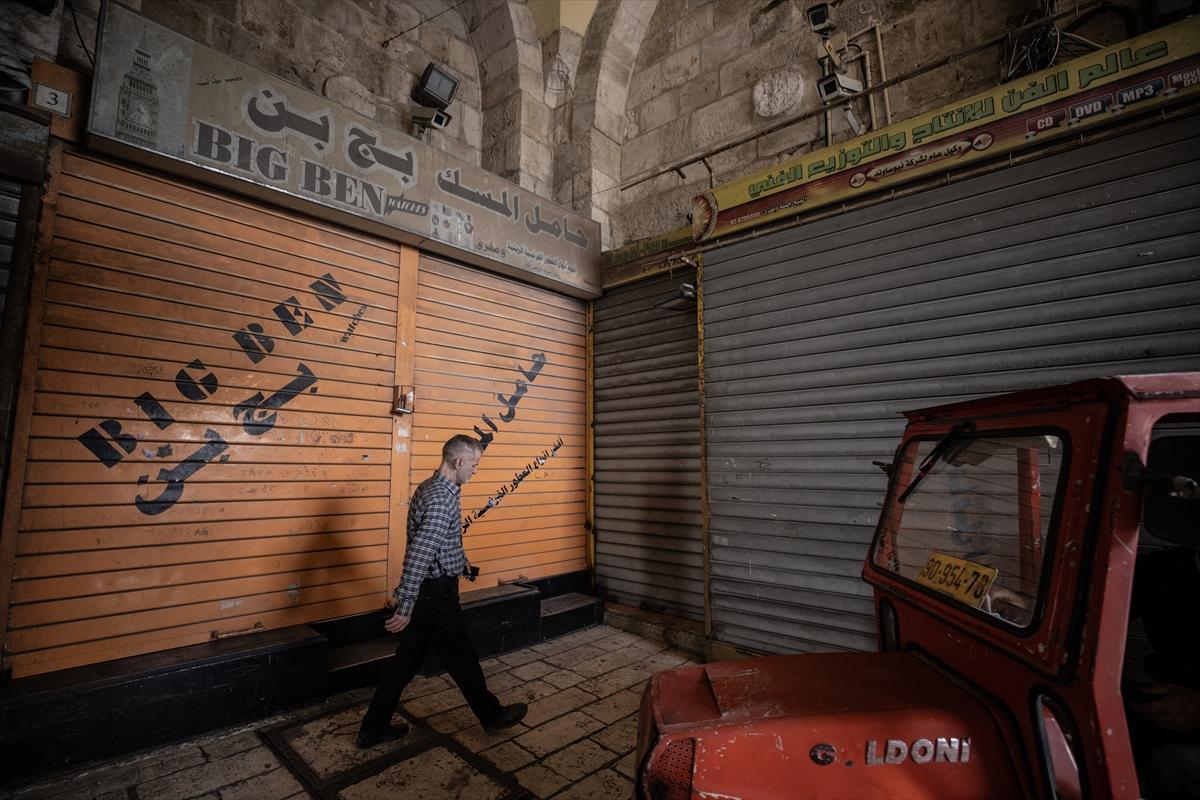
General strike in the West Bank and East Jerusalem, 7 April 2025 – Anadolu Agency
The strike was observed in all cities, towns and refugee camps across the West Bank. Public services, private sector businesses, transportation systems and educational institutions suspended operations. Streets in East Jerusalem’s Old City and West Bank urban centers were emptied, shops closed and transportation halted.
Protest marches were held in the city of Ramallah. During the strike, the Israeli military increased security measures around the city of Nablus and tightened control over its entry and exit points.
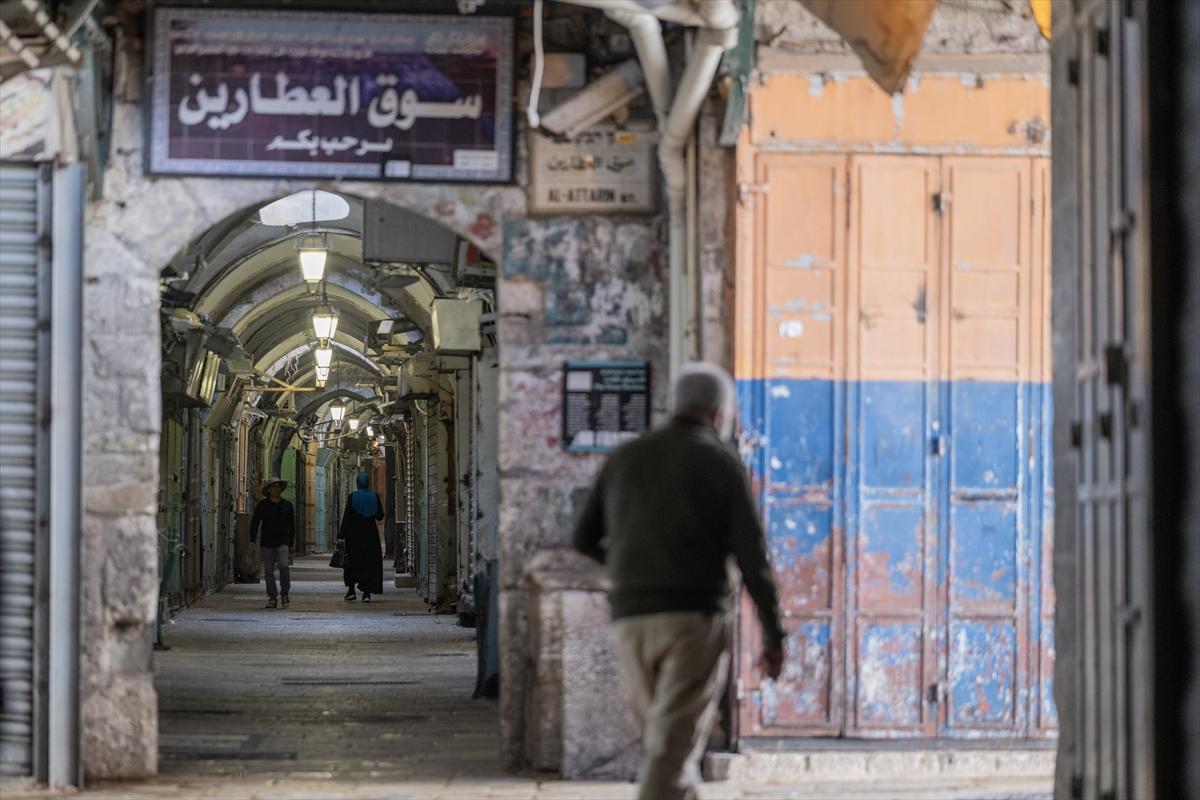
General strike in the West Bank and East Jerusalem, 7 April 2025 – Anadolu Agency
The call for the strike was issued through a joint statement by Palestinian national and Islamic movements. Various groups, including Fatah and Hamas, urged participation in the strike. Demonstrations of support for the strike were also held in countries such as Morocco, Algeria, Tunisia and Lebanon. Schools in the Lebanese city of Sidon were closed.
Anadolu Ajansı. “Doğu Kudüs’te ve Batı Şeria’nın Bütün Kentlerinde Genel Grev Yapılıyor.” Accessed April 7, 2025. https://www.aa.com.tr/tr/dunya/dogu-kuduste-ve-bati-seria-nin-butun-kentlerinde-genel-grev-yapiliyor/3530355.
On 9 April 2025 the Israeli military targeted a house located on Baghdad Street in the Shuqaiyya neighborhood in eastern Gaza Strip. Health sources reported that 38 Palestinians were killed and 85 injured in the attack. Initial reports had indicated 20 dead and 50 injured but the numbers were later updated to include those recovered from the rubble. While rescue operations continued after the attack it was reported that civil defense teams struggled to respond due to the extensive destruction in the area.
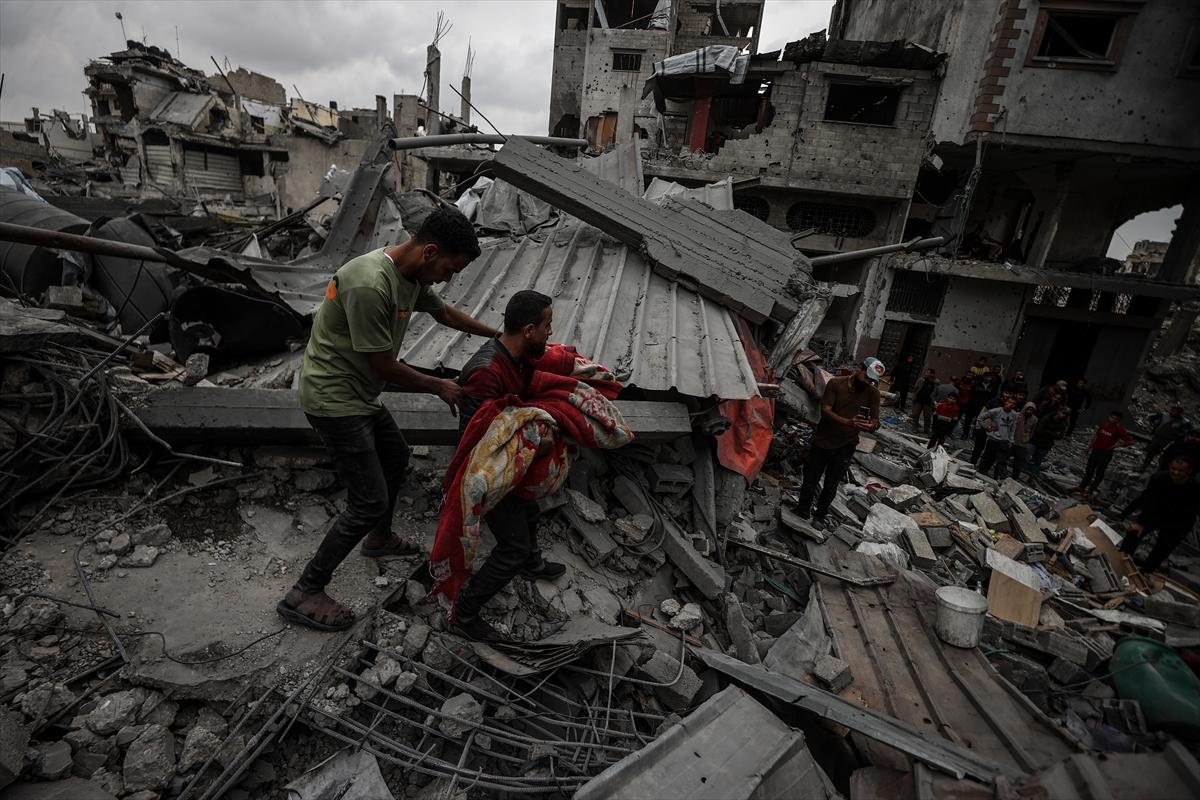
Israel’s Shuqaiyya attacks 9 April 2025 – Anadolu Agency
On the same day two tents housing displaced civilians in Khan Yunis were bombed. Two people were killed including an elderly woman and many others were injured. In an attack on a home belonging to the Hajj family in Nuseirat Refugee Camp two Palestinians were killed one of them a child. One person injured in earlier attacks also died on the same day. It was reported that some residential areas in the northwestern part of Refah were destroyed by airstrikes.
As of 10 April 2025 the Israeli military announced it had carried out more than 45 airstrikes across the Gaza Strip in the previous 24 hours. Israeli Defense Forces spokesperson Avichay Adraee stated that air and ground operations were ongoing in the northern eastern and southern regions of Gaza. The Israeli military declared that it had taken control of approximately 65 percent of the Gaza Strip designating these areas as “restricted zones” and intensifying military operations by enforcing evacuations. The Israeli army continued ground operations in the Tel Sultan neighborhood of Refah and in the area known as the Morag Corridor.
The Gaza Ministry of Health reported on 10 April 2025 that since the ceasefire was broken on 18 March the number of Palestinian deaths had risen to 1482 and the number of injured to 3688. In the past 24 hours 36 dead and 41 injured were transported to hospitals in the region. Since 7 October 2023 the total number of fatalities has reached 50846 and the number of injured has reached 115729. The Ministry of Health stated that many bodies remain buried under rubble.
Al Jazeera. “Live: Israel Kills 35 as Gaza City Neighbourhood Block Bombed to Rubble.” Al Jazeera. Accessed April 10, 2025. https://www.aljazeera.com/news/liveblog/2025/4/10/live-israel-kills-35-as-gaza-city-neighbourhood-block-bombed-to-rubble.
Al Jazeera. “Live: Israel Pounds Gaza, Closes UNRWA Schools in Occupied East Jerusalem.” Al Jazeera. Accessed April 10, 2025. https://www.aljazeera.com/news/liveblog/2025/4/9/live-israel-pounds-gaza-closes-unrwa-schools-in-occupied-east-jerusalem.
Anadolu Ajansı. “İsrail’in Gazze’nin Doğusuna Düzenlediği Saldırıda 38 Filistinli Öldü.” Accessed April 10, 2025. https://www.aa.com.tr/tr/dunya/israilin-gazzenin-dogusuna-duzenledigi-saldirida-38-filistinli-oldu/3532270.
Associated Press. “Israel Pounds Gaza, Hostage Deal Remains Elusive.” AP News. Accessed April 10, 2025. https://apnews.com/article/israel-palestinians-hamas-war-news-ceasefire-hostages-04-09-2025-ae1a50218b0679bf1186b259fddbea37.
On the morning of 13 April 2025, the Israeli military conducted an airstrike targeting Al-Ahli Baptist Hospital in the city of Gaza. According to local sources, the hospital was struck by two separate missiles, hitting multiple critical areas including the emergency and admissions building. As a result of the attack, the hospital’s surgical wing and its medical oxygen production station sustained severe damage. The attack has been reported to have rendered the entire hospital non-operational.
Airstrike on Al-Ahli Baptist Hospital, 13 April 2025 - TRT News
Prior to the bombardment, a telephone warning was issued urging evacuation of the hospital. According to a nurse’s account, this warning was given only 20 minutes before the attack. A sudden panic ensued, and due to a lack of available ambulances, many injured were forced to be transported on foot through the streets.
The Gaza Ministry of Health strongly condemned the bombing of the hospital and stated that the attack had severely disrupted healthcare services. The ministry reported that the targeted building had been completely destroyed and that patients and medical staff had been forcibly evacuated.
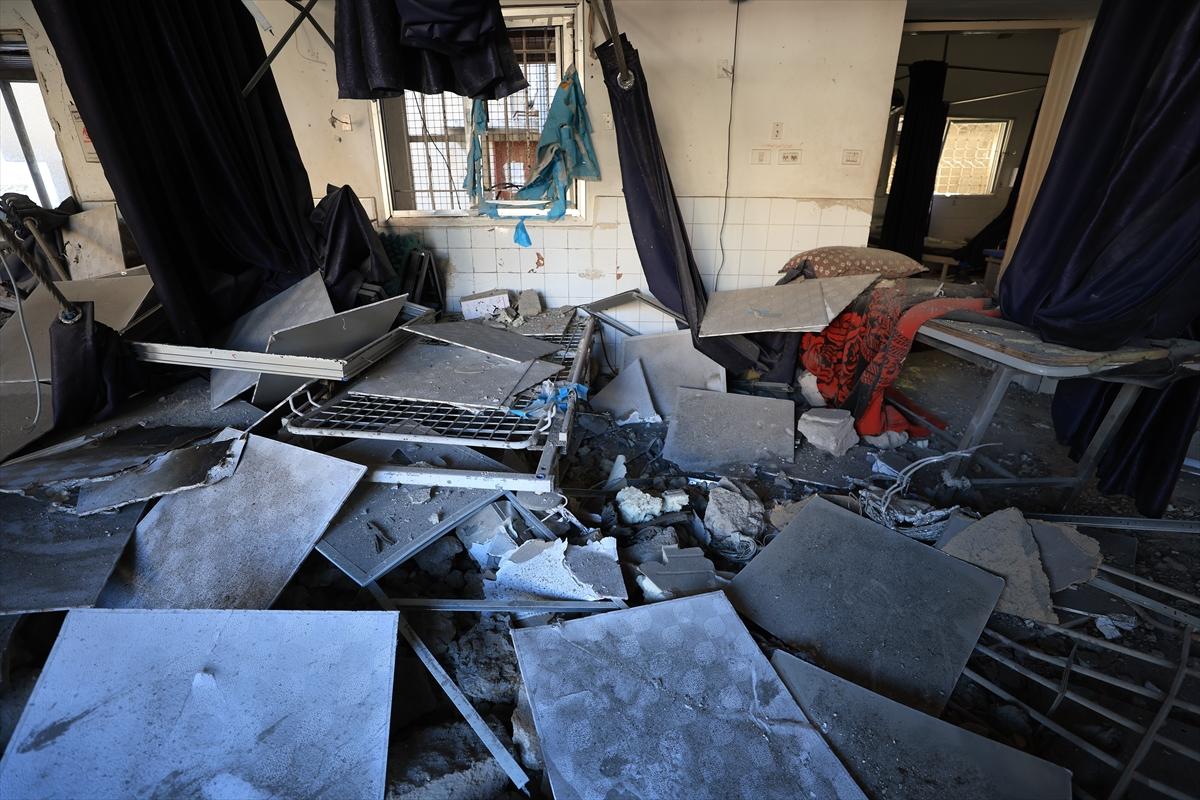
Airstrike on Al-Ahli Baptist Hospital, 13 April 2025 - Anadolu Agency
World Health Organization (WHO) Director-General Tedros Adhanom Ghebreyesus stated in a public statement that Al-Ahli Baptist Hospital had been rendered non-functional following the attack. According to WHO, the hospital’s emergency department, laboratories, X-ray machines, and pharmacy were completely destroyed. Fifty patients receiving treatment at the hospital had to be transferred to other facilities, while 40 critically ill patients could not be moved due to their unstable conditions. The Israeli military confirmed carrying out the strike and claimed the presence of a Hamas “command and control center” inside the hospital. This claim has been rejected by the Gaza government and various international sources, who stated that the hospital had provided only medical services since its founding and had never been used for any military purpose.
Following the attack, the Greek Orthodox Patriarchate of Jerusalem described Israel’s strike on Al-Ahli Baptist Hospital as “an explicit violation of the sanctity of life.” The Patriarchate emphasized that targeting this hospital, one of the few remaining healthcare centers in Gaza, was a deliberate effort to destroy both humanitarian values and the healthcare infrastructure.
Israel’s targeting of Al-Ahli Baptist Hospital triggered strong international condemnation. UK Foreign Secretary David Lammy, in a statement on X platform, labeled the attack “unacceptable” and stated that access to healthcare in Gaza had been severely compromised by such strikes. Lammy emphasized that the path to peace does not lie in further bloodshed and called for diplomatic efforts.
WHO Director-General Ghebreyesus’s statements also recalled that hospitals are protected under international humanitarian law. WHO reported that all critical units of the hospital had been disabled and that new patient admissions had been halted. The organization called for the immediate lifting of the humanitarian aid blockade on Gaza and an urgent ceasefire.
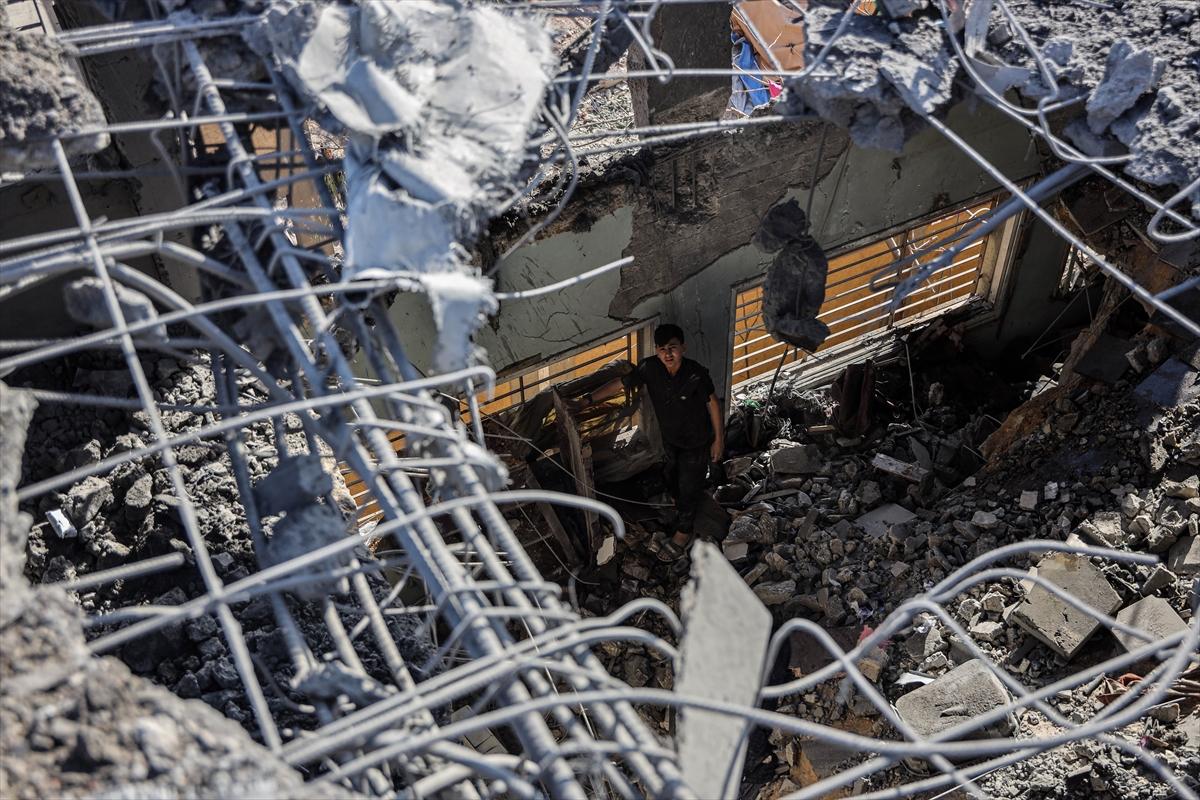
The final state of Dahyan School, where Palestinians sought shelter, 13 April 2025 - Anadolu Agency
The Palestinian Ministry of Foreign Affairs described the attack on Al-Ahli Baptist Hospital as “the most vile form of genocide and forced displacement.” The ministry stressed that Israel had systematically targeted healthcare facilities and clearly violated international law. It further noted that the international community’s silence had enabled the repetition of such violations.
The Gaza Strip’s Government Media Office also issued a statement condemning the attack. It described the strike as a grave crime committed against patients, medical personnel, and the wounded inside the hospital. The government called on international organizations and the United Nations to explicitly condemn the attack and intervene.
Islamic Jihad Movement stated that the attack was not an isolated incident but part of a systematic genocide ongoing in Gaza. It emphasized that Israel had directly targeted hospitals, schools, and shelters, and that such policies constituted a clear violation of international law.
The Saudi Ministry of Foreign Affairs condemned the attack as an “abhorrent crime” and affirmed that Israel had violated international law. The ministry underscored that the international community bears responsibility for protecting civilians in the Gaza Strip.
Airstrikes and artillery shelling were carried out in the northern areas of the Gaza Strip, specifically in the neighborhoods of Jabaliya, Shuja’iyya, and Zeitoun. Footage of attacks on Zeitoun neighborhood was recorded by local sources.
In one attack on Jabaliya, a woman was killed. In another attack in the same area, a vehicle was targeted, resulting in the deaths of seven Palestinian siblings. Officials at Al-Aqsa Martyrs Hospital reported that numerous injured were brought to the facility following the strike.
The municipal building in Deir al-Balah was also targeted. Search and rescue teams arrived at the site after the attack and began operations amid the rubble. Reports confirmed casualties and injuries, with the wounded transported to Al-Aqsa Martyrs Hospital. In a separate strike on the building of the Zakat Committee in the same city, three people were killed. Israel claimed the building housed a Hamas command center.
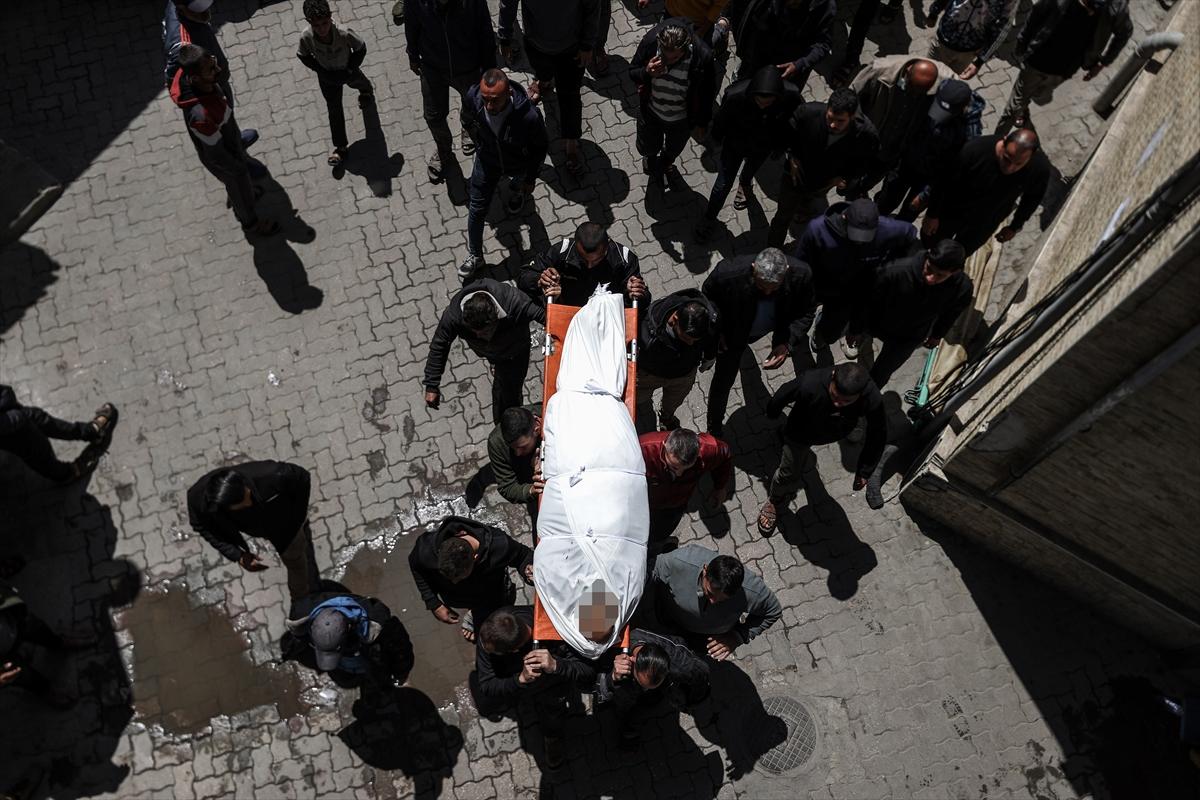
The body of a Palestinian killed in an Israeli military airstrike on the Shuja’iyya neighborhood of Gaza, 12 April 2025 - Anadolu Agency
Northern areas of the town of Refah were targeted by artillery fire. In particular, the area surrounding the electricity plant near the Nuseirat Refugee Camp was subjected to bombardment. The strikes caused severe damage to infrastructure and civilian living areas. Simultaneously, the Shuja’iyya and Tuffah neighborhoods in eastern Gaza City were targeted by artillery as well as helicopters and unmanned aerial vehicles.
In the Tuffah and Sheikh Radwan neighborhoods, three schools housing displaced families were bombed by the Israeli military following evacuation threats. Additionally, in an attack on a tent camp established in the courtyard of Al-Aqsa Martyrs Hospital, numerous people were injured.
In an airstrike on a house in the western part of Khan Yunis, two people were killed, including Colonel Muhammad Derbasi, the head of security.
On 13 April 2025, the Israeli military issued evacuation orders for ten neighborhoods in the southern part of the Gaza Strip, under the jurisdiction of Khan Yunis. Israeli military spokesperson Avichay Adraee, in a statement on the X social media platform, instructed residents of Kizan al-Najjar, Kizan Abu Rashwan, as-Salam, al-Manara, Mean, Qurayn, al-Batn as-Samin, Curti al-Lut, al-Fuhhari, and Beni Suheyla neighborhoods to leave their homes immediately.
Spokesperson Adraee described this as a “final warning,” citing allegations that rockets had been launched from these areas. The statement warned that failure to evacuate would result in these neighborhoods being heavily targeted. It also urged residents of the affected neighborhoods to relocate to the so-called humanitarian zones in the Al-Mevasi area.
Anadolu Ajansı. “DSÖ, İsrail’in Gazze’de Saldırdığı El-Ehli Baptist Hastanesi’nin Hizmet Dışı Kaldığını Bildirdi.” Accessed April 14, 2025. https://www.aa.com.tr/tr/dunya/dso-israilin-gazzede-saldirdigi-el-ehli-baptist-hastanesinin-hizmet-disi-kaldigini-bildirdi/3537393.
Anadolu Ajansı. “El-Ehli Hastanesi Saldırısının Tanığı Hemşire: Görüntü Kıyameti Andırıyordu.” Accessed April 14, 2025. https://www.aa.com.tr/tr/dunya/el-ehli-hastanesi-saldirisinin-tanigi-hemsire-goruntu-kiyameti-andiriyordu/3537118.
Anadolu Ajansı. “Gazze’deki Sağlık Bakanlığı’ndan Hastane Saldırısı Sonrası Uluslararası Topluma Çağrı.” Accessed April 14, 2025. https://www.aa.com.tr/tr/dunya/gazzedeki-saglik-bakanligindan-hastane-saldirisi-sonrasi-uluslararasi-topluma-cagri/3536726.
Anadolu Ajansı. “Kudüs Rum Ortodoks Patrikhanesi: İsrail’in El-Ehli Baptist Hastanesi’ni Bombalaması Korkunç Bir Saldırı.” Accessed April 14, 2025. https://www.aa.com.tr/tr/dunya/kudus-rum-ortodoks-patrikhanesi-israilin-el-ehli-baptist-hastanesi-ni-bombalamasi-korkunc-bir-saldiri-/3537176.
Anadolu Ajansı. “İngiltere Dışişleri Bakanı, İsrail’in Gazze’de El-Ehli Baptist Hastanesi’ni Hedef Almasına Tepki Gösterdi.” Accessed April 14, 2025. https://www.aa.com.tr/tr/dunya/ingiltere-disisleri-bakani-israilin-gazzede-el-ehli-baptist-hastanesini-hedef-almasina-tepki-gosterdi/3537202.
Anadolu Ajansı. “İsrail Ordusu, Gazze’deki El-Ehli Baptist Hastanesi’ne Hava Saldırısı Düzenledi.” Accessed April 14, 2025. https://www.aa.com.tr/tr/dunya/israil-ordusu-gazzedeki-el-ehli-baptist-hastanesine-hava-saldirisi-duzenledi/3536692.
Anadolu Ajansı. “İsrail Ordusu, Saldırılar Düzenlediği Gazze Şeridi’nin Güneyindeki Filistinlileri Göçe Zorlamaya Devam Ediyor.” Accessed April 14, 2025. https://www.aa.com.tr/tr/dunya/israil-ordusu-saldirlar-duzenledigi-gazze-seridinin-guneyindeki-filistinlileri-goce-zorlamaya-devam-ediyor/3537256.
Anadolu Ajansı. “İsrail Ordusunun Gazze Şeridine Saldırıları Sürüyor.” Accessed April 14, 2025. https://www.aa.com.tr/tr/dunya/israil-ordusunun-gazze-seridine-saldirilari-suruyor/3537257.
Anadolu Ajansı. “İsrail’in Gazze’nin Han Yunus Kentine Düzenlediği Saldırıda 5 Filistinli Hayatını Kaybetti.” Accessed April 14, 2025. https://www.aa.com.tr/tr/dunya/israilin-gazzenin-han-yunus-kentine-duzenledigi-saldirida-5-filistinli-hayatini-kaybetti/3537547.
TRT Haber. “İsrail Ordusu, Gazze'deki El-Ehli Baptist Hastanesi'ni Vurdu.” YouTube video, 1:32. April 13, 2025. Accessed April 14, 2025. https://www.youtube.com/watch?v=TbBsJJxiwX4.
Between 17 and 19 April, at least 92 people were killed and 219 injured in attacks targeting Gaza. According to data from the Gaza Ministry of Health, children were among the dead. On 20 April, nine people were killed in an attack on a house in the Nuseirat Refugee Camp, five in an airstrike in the Et-Tuffah neighborhood, a father and his child in the Zaytoun neighborhood, and two people in Shujaiya. Refah, Han Yunus, and Jabalia areas have been targeted with attacks on tents, homes, and the coastal zone.
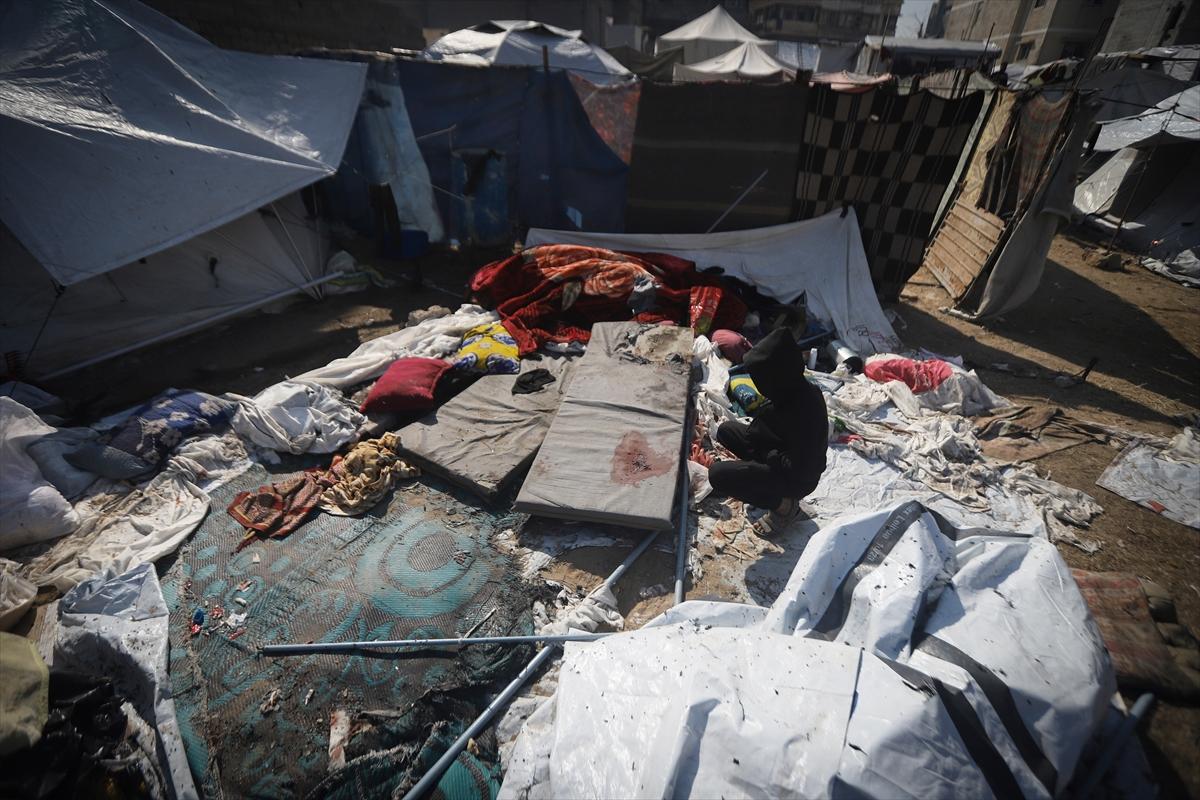
A tent struck by the Israeli military, 19 April 2025 – Anadolu Agency
During the night of 21–22 April, an airstrike on a house in the Es-Sikke area of central Han Yunus killed 11 people, two of them children, while artillery attacks on the Al-Ketibe neighborhood resulted in injuries. The home of the Bakr family on the western edge of Gaza City was targeted, and at least five people, including one doctor, were killed in Deir al-Balah. In total, at least 51 people lost their lives during this period. During the same days, the Israeli military targeted trucks and construction equipment belonging to the Jabalia Municipality used for clearing rubble. Dozens of machines and trucks were rendered inoperable as a result of the attacks.
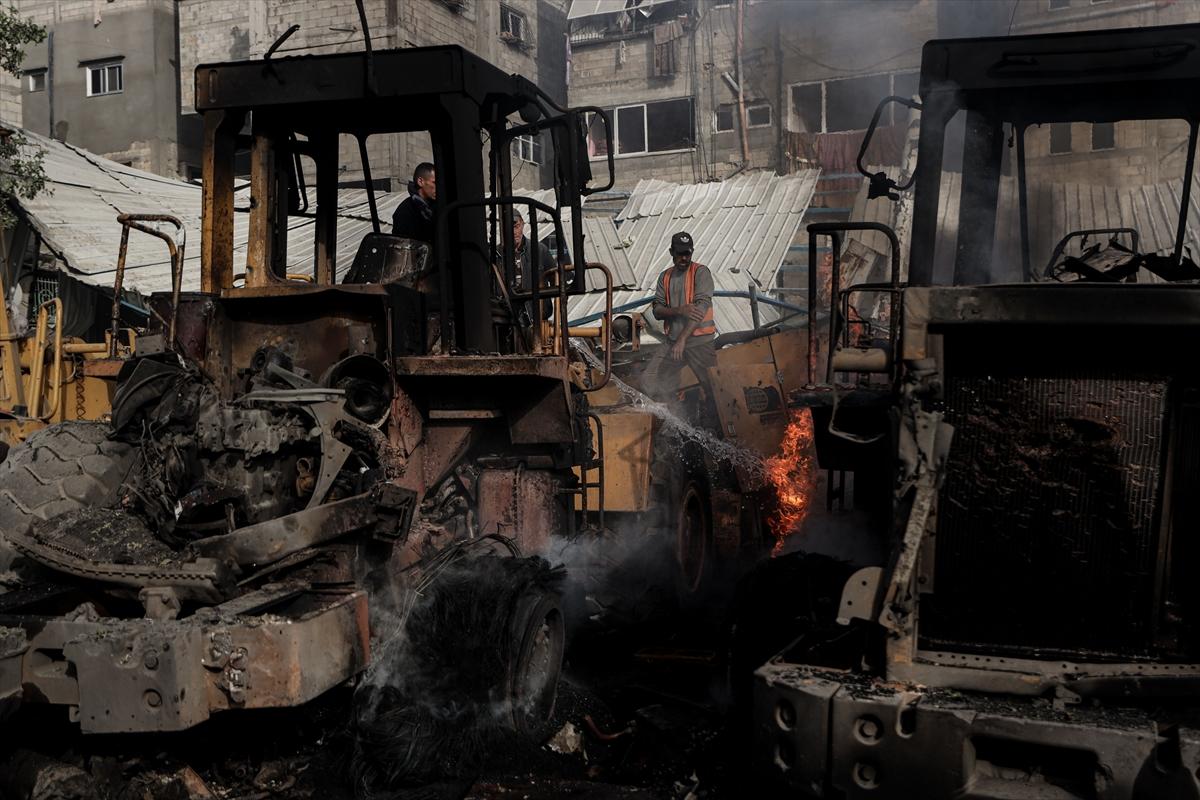
Construction equipment struck by the Israeli military while being used for rubble clearance in Gaza, 22 April 2025 – Anadolu Agency
As of 22 April, the total number of people killed in attacks since 7 October 2023 has risen to 51,266, with 116,991 injured. It is reported that many bodies remain trapped under rubble. Since Israel’s ceasefire, which came into effect on 19 January, was broken on the morning of 18 March, 1,890 Palestinians have been killed and 4,950 injured.
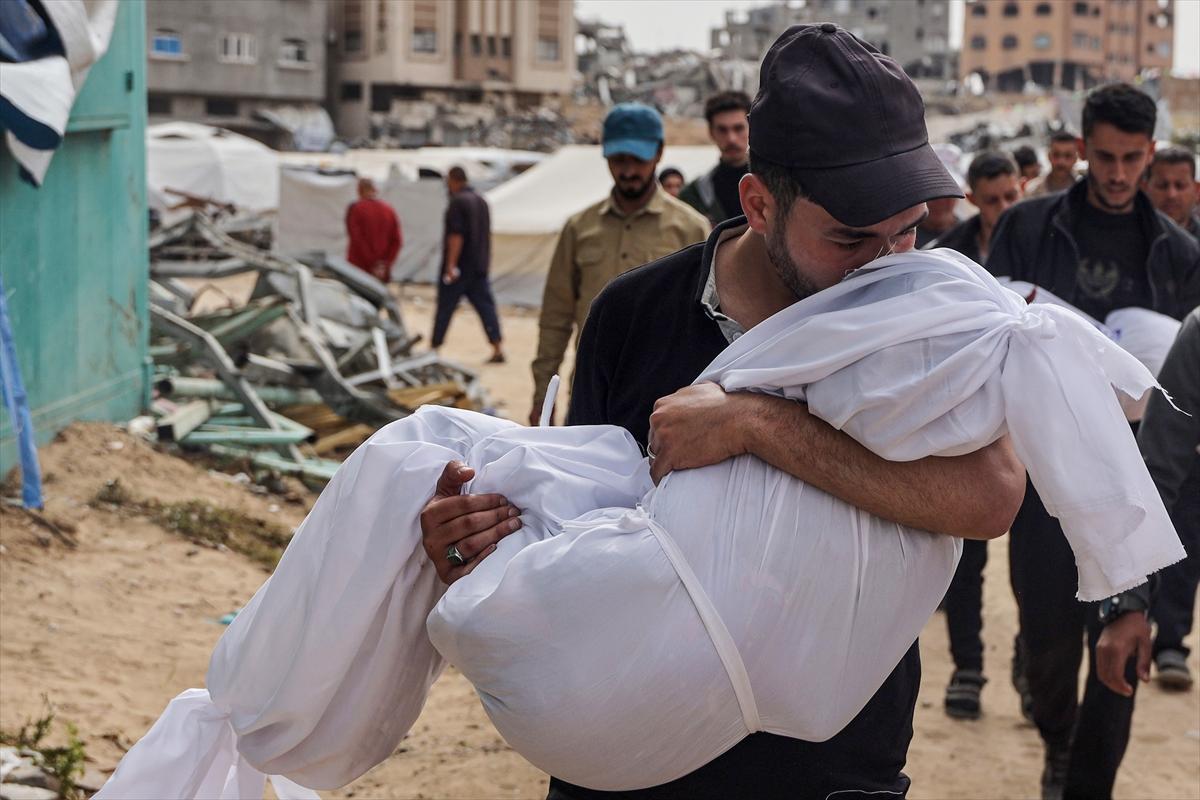
A Palestinian mourning a lost relative in the Jabalia town in northern Gaza Strip, 22 April 2025 – Anadolu Agency
Attacks on health workers have also been a major concern. On 23 March, 15 health workers were killed in an attack on Refah. An internal Israeli military investigation acknowledged an “operational error” and removed a deputy commander from duty. It was noted that ambulances were clearly marked, bodies remained uncollected for weeks despite the attacks, and the site was later sealed off with bulldozers.
Humanitarian aid operations have been severely disrupted. UN Office for the Coordination of Humanitarian Affairs (OCHA) spokesperson Jens Laerke stated on 22 April that the humanitarian situation in Gaza has reached its worst level since the start of the war. UN Deputy Spokesperson Stephanie Tremblay reported that aid access has nearly ceased, with only two of six planned humanitarian operations permitted as of 16 April. Oxfam officials announced that children are receiving less than one meal per day and malnutrition cases are rapidly increasing. These restrictions by Israel continue despite a ruling by the International Court of Justice calling for humanitarian access.
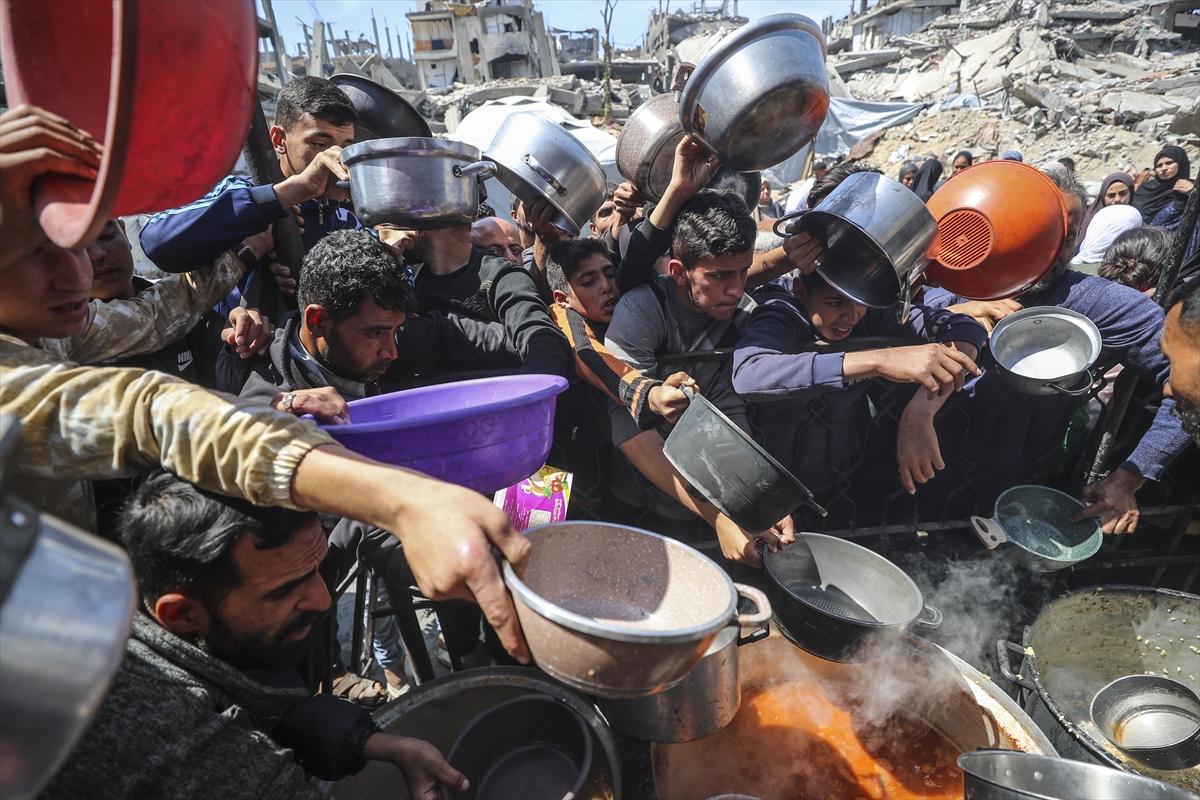
Palestinians waiting in line for food in the northern Gaza Strip town of Beit Lahia, 16 April 2025 – Anadolu Agency
Politically, some Israeli ministers have endorsed the opening of new settlement units in northern West Bank, making statements that imply annexation of these territories. Justice Minister Yariv Levin emphasized “historical rights” over the region, while Defense Minister Yisrael Katz asserted that the West Bank constitutes “Israel’s defensive line.” During the same period, no progress was made in evaluating ceasefire proposals between Hamas and Israel; Israel stated it had rejected Hamas’s proposals, while Hamas declared that Israel had failed to adhere to agreements presented by mediators.
Al Jazeera. “Israeli bombardment kills 92 in two days: Gaza government.” Accessed April 22, 2025. https://www.aljazeera.com/news/2025/4/19/israeli-bombardment-kills-92-in-two-days-gaza-government
Anadolu Ajansı. “BM: İsrail’in Gazze’de insani yardım dağıtımlarını engellemeye devam ettiğini bildirdi.” Accessed April 22, 2025. https://www.aa.com.tr/tr/dunya/bm-israilin-gazzede-insani-yardim-dagitimlarini-engellemeye-devam-ettigini-bildirdi/3540444
Anadolu Ajansı. “UN: Currently, the worst humanitarian situation we have likely seen during the war in Gaza is unfolding.” Accessed April 22, 2025. https://www.aa.com.tr/tr/dunya/bm-su-anda-gazzedeki-savas-boyunca-muhtemelen-gordugumuz-en-kotu-insani-durum-yasaniyor/3545181
Anadolu Ajansı. “UNRWA: 600 Children Killed in Gaza Since Israel Broke the Ceasefire on March 18.” Accessed April 22, 2025. https://www.aa.com.tr/tr/dunya/unrwa-israilin-ateskesi-bozdugu-18-marttan-beri-gazzede-600-cocuk-olduruldu/3544500
Anadolu Ajansı. “İsrail ordusunun gece Gazze’ye düzenlediği saldırılarda en az 22 kişi hayatını kaybetti.” Accessed April 22, 2025. https://www.aa.com.tr/tr/dunya/israil-ordusunun-gece-gazzeye-duzenledigi-saldirilarda-en-az-22-kisi-hayatini-kaybetti/3544854
Anadolu Ajansı. “İsrail, 50 gündür Gazze’ye her türlü yardım malzemesinin girişini engelliyor.” Accessed April 22, 2025. https://www.aa.com.tr/tr/dunya/israil-50-gundur-gazzeye-her-turlu-yardim-malzemesinin-girisini-engelliyor/3544715
Anadolu Ajansı. “İsrail’in Gazze’nin çeşitli yerlerine düzenlediği saldırılarda 29 Filistinli hayatını kaybetti.” Accessed April 22, 2025. https://www.aa.com.tr/tr/dunya/israilin-gazzenin-cesitli-yerlerine-duzenledigi-saldirilarda-29-filistinli-hayatini-kaybetti/3543493
Associated Press. “Gaza medics killed as Israeli strikes continue.” AP News. Accessed April 22, 2025. https://apnews.com/article/gaza-palestinians-israel-hamas-war-medics-killed-437b6ae1e9cf45b3099134524380f004
On 23 April 2025, Al-Durra Children's Hospital located in the Tuffah neighborhood of Gaza City in northern Gaza Strip was targeted by Israeli artillery units. During the attack, solar panels on the hospital's roof and the intensive care unit were struck. Severe damage occurred to the intensive care unit and energy systems, rendering the solar panels that supplied the hospital's electricity inoperable. No official statement has been issued regarding any casualties or injuries resulting from the attack.
Reuters. “Israeli Airstrikes Kill 10; School Housing Displaced Families Hit, Children’s Hospital Damaged.” Accessed April 24, 2025. https://www.reuters.com/world/middle-east/israeli-airstrikes-kill-10-school-housing-displaced-families-hit-childrens-2025-04-23/
TRT Haber. “Katil İsrail, Gazze’deki Durra Çocuk Hastanesi’ni Vurdu.” Accessed April 24, 2025. https://www.trthaber.com/haber/dunya/katil-israil-gazzedeki-durra-cocuk-hastanesini-vurdu-904891.html
On 25 April 2025, the United Nations World Food Programme (WFP) announced that food stocks in Gaza had been completely exhausted due to the ongoing blockade. The WFP stated that the last remaining food supplies had been distributed to kitchens providing hot meals, but these too were expected to run out within a few days. It was also reported that the kitchens, which provide approximately 25 percent of the daily nutritional needs of Palestinians in Gaza, were on the verge of closure.
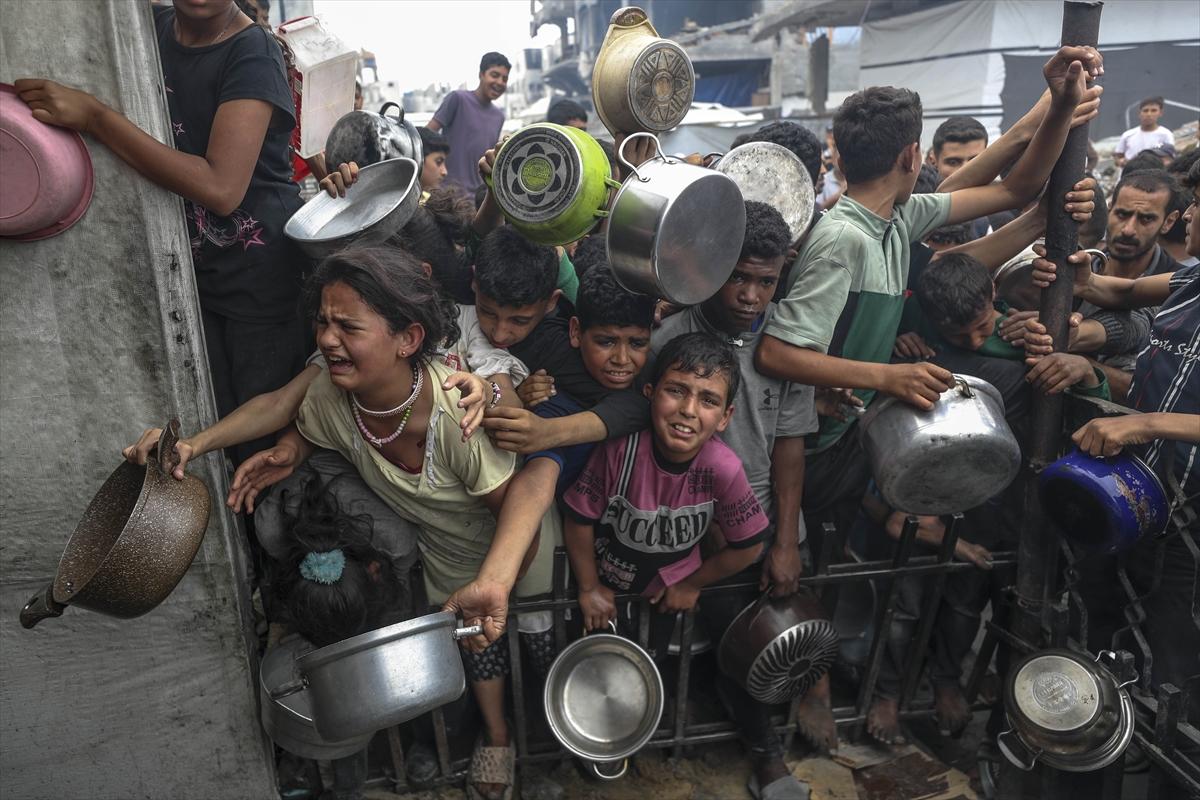
Children waiting for food at the Jabaliya Refugee Camp in northern Gaza Strip, 24 April 2025 – Anadolu Agency
The same statement noted that all 25 bakeries in Gaza producing bread and supported by the WFP had ceased operations as of 31 March 2025 due to the cutoff of wheat flour and baking fuel supplies. The WFP announced that more than 116,000 metric tons of food, sufficient to feed one million people for four months, were ready for shipment if the borders were opened.
In a statement issued by the Media Office of the Palestinian government in Gaza, it was stated that Israel’s 55-day blockade had deepened conditions of scarcity and pushed 2.4 million people toward a humanitarian catastrophe. According to the statement, 52 people, including 50 children, had died from starvation and malnutrition during this period. It was also reported that over 60,000 children were suffering from severe malnutrition.
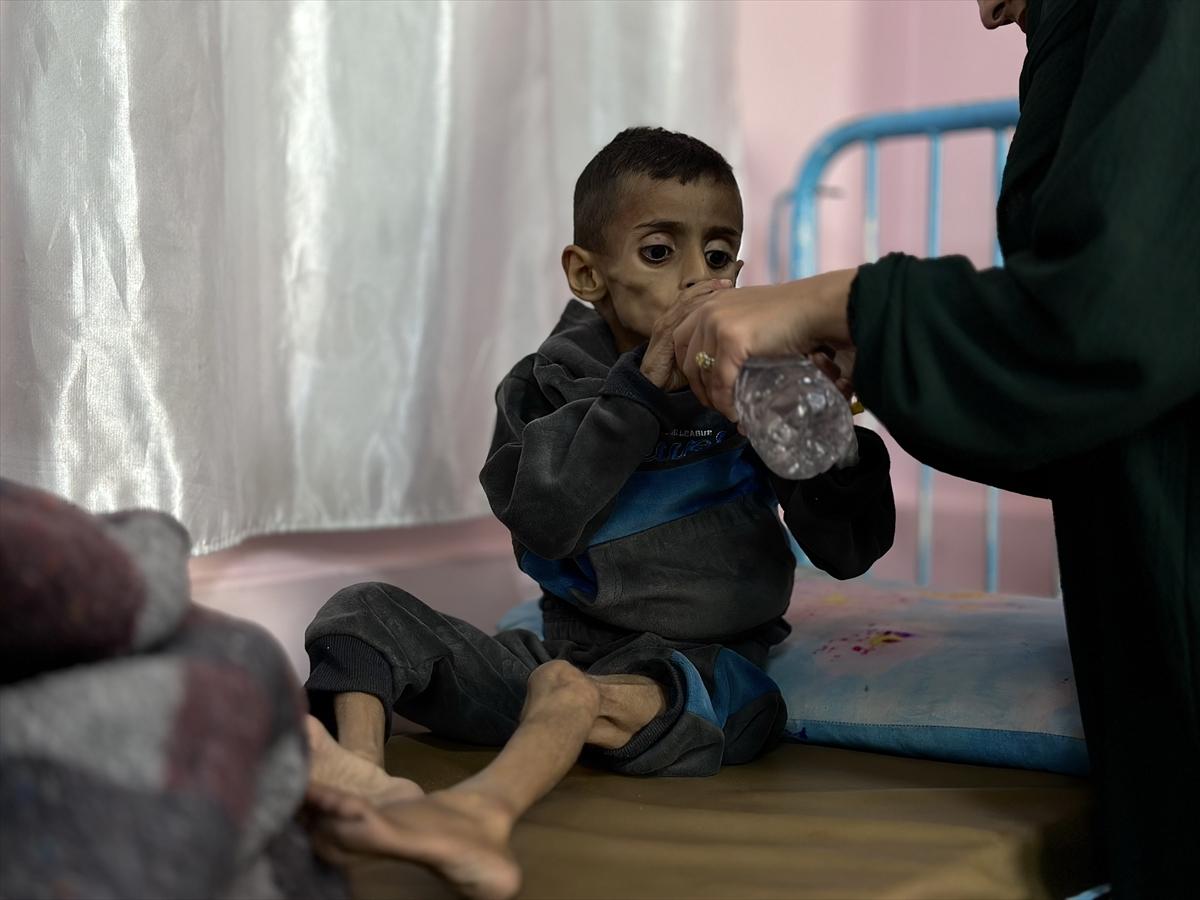
Osama El Rakab, 25 April 2025 – Anadolu Agency
One of the children receiving treatment in Gaza hospitals for malnutrition is five-year-old Osama El Rakab, who is at serious health risk due to extreme weight loss at Al-Nasser Hospital in Khan Yunis.
Anadolu Ajansı. “Dünya Gıda Programı: Gazze’de Gıda Stoklarımız Tamamen Tükendi.” Accessed April 25, 2025. https://www.aa.com.tr/tr/dunya/dunya-gida-programi-gazzede-gida-stoklarimiz-tamamen-tukendi/3548524
World Food Programme. “Palestine Emergency.” Accessed April 25, 2025. https://www.wfp.org/emergencies/palestine-emergency
The Israeli military killed at least 24 Palestinians in air and ground attacks carried out across various areas of the Gaza Strip on 1 and 2 May 2025. In an air strike on a funeral home in Beit Lahiya in northern Gaza, five people were killed; in the bombing of a house belonging to the Abu Zayna family in the Bureij Refugee Camp, seven members of the same family lost their lives. Two people died in a house bombed in the Sheikh Rizwan neighborhood near Al-Ahli Sports Club. The eastern parts of the Bureij and Nusayrat camps were targeted by artillery fire.
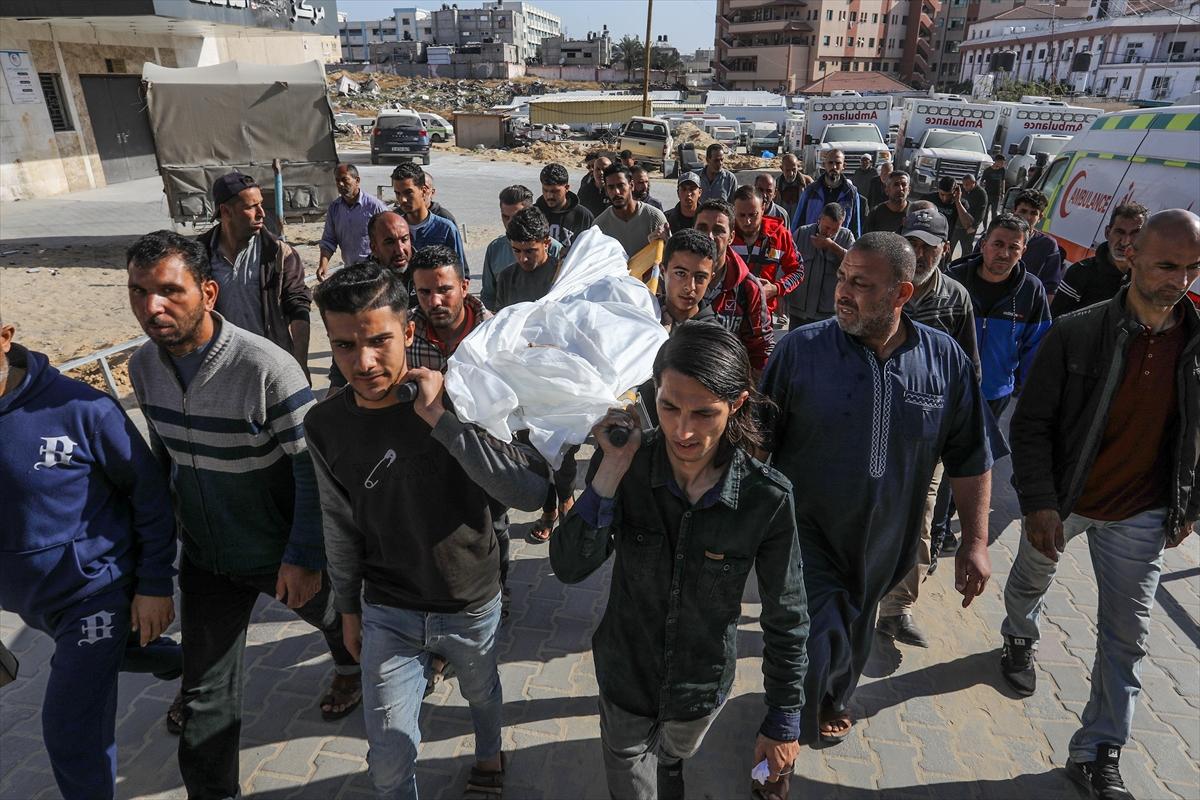
The body of 15-year-old Palestinian Mohammed Najjar, brought to Nasser Hospital in Han Yunus, 2 May 2025 – Anadolu Agency
In an Israeli military attack targeting tents of displaced people in the Mevasi area of Han Yunus, three people were killed. Six people died in a strike on a soup kitchen in Gaza City. It was also reported that civilians, including a baby and an elderly woman, were injured in the Sheikh Nasir neighborhood of Han Yunus. The Misbah district of Rafah, the Turkishmen and Zeytun neighborhoods of Gaza, and agricultural lands in the north were among the areas targeted.
As of 2 May, the total death toll in Gaza reached 51,355 and the number of injured rose to 117,248.
On 2 May, a humanitarian aid ship belonging to the Freedom Flotilla Coalition, formed to deliver assistance to Gaza, was attacked by unmanned aerial vehicles in international waters. The ship, carrying 30 aid workers, caught fire after the attack. Only the Republic of Cyprus responded to the call for assistance. The incident was described by activists and observers on board as a violation of international law and a war crime.
Philippe Lazzarini, Commissioner-General of the United Nations Relief and Works Agency for Palestine Refugees in the Near East (UNRWA), characterized the blockade preventing humanitarian aid from reaching Gaza as collective punishment. Olga Cherevko, spokesperson for the United Nations Office for the Coordination of Humanitarian Affairs, stated that access to water in Gaza had become impossible, hospital blood supplies had been exhausted, and food stocks were largely depleted. It was reported that approximately 420,000 people had been displaced once again, with tents and civilian facilities bombed.
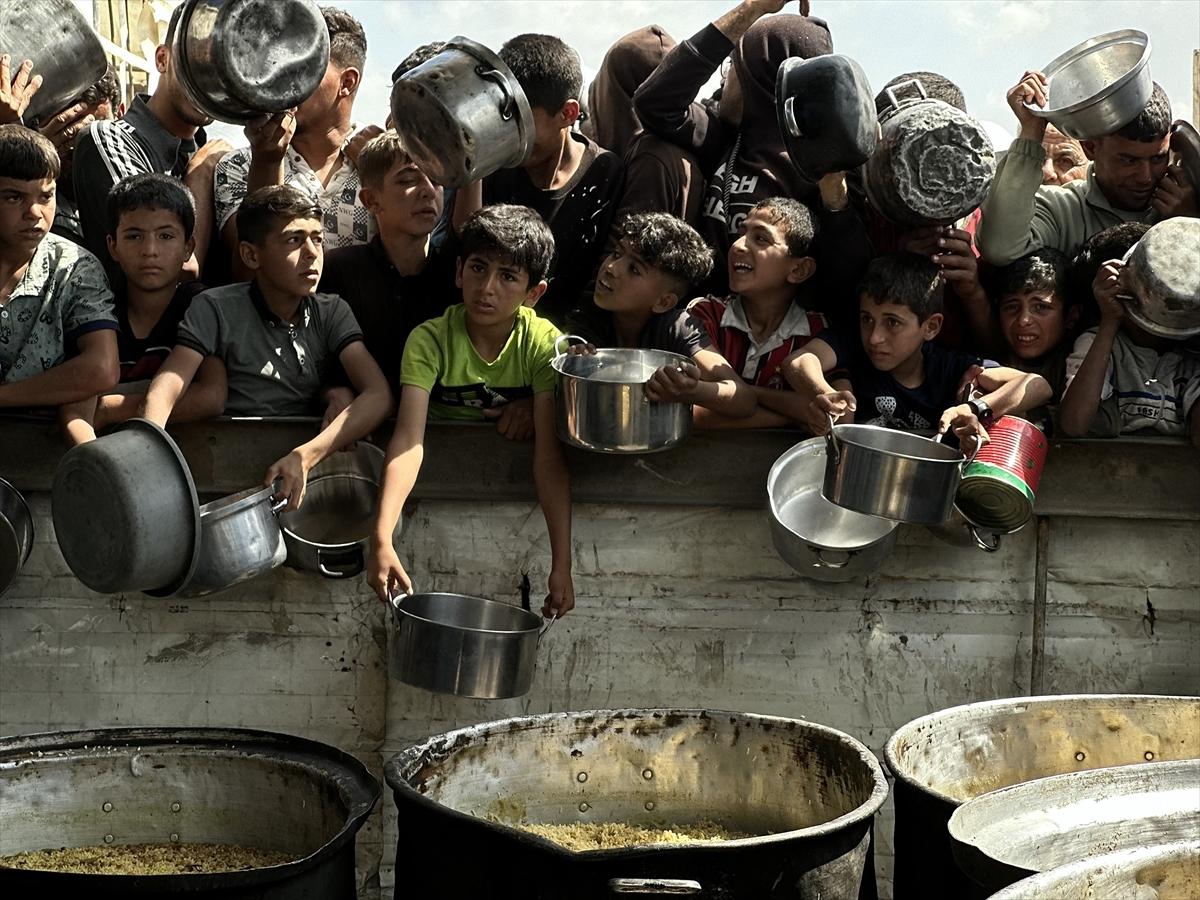
Palestinian children waiting in line for food in the city of Han Yunus, southern Gaza Strip, 2 May 2025 – Anadolu Agency
Representatives of the European Union reiterated their concerns over the obstruction of humanitarian aid and called on Israel to lift the blockade. The international organization Save the Children urged the United Kingdom to take action against Israel for blocking aid to Gaza. The statement noted that for two months, only bombs and bullets had entered the region.
Anadolu Ajansı. “İsrail’in Gazze’ye Düzenlediği Saldırılarda 24 Filistinli Hayatını Kaybetti.” Accessed May 2, 2025. https://www.aa.com.tr/tr/dunya/israilin-gazzeye-duzenledigi-saldirilarda-24-filistinli-hayatini-kaybetti/3554727
In early May 2025, Israel’s security cabinet unanimously approved a new ground operation plan targeting the Gaza Strip. The approved plan envisions the expansion of the occupation in Gaza, the permanent establishment of buffer zones, and the organized forced displacement of the local population. The Israeli military has stated that with this plan, operations in Gaza have entered a “new phase.”
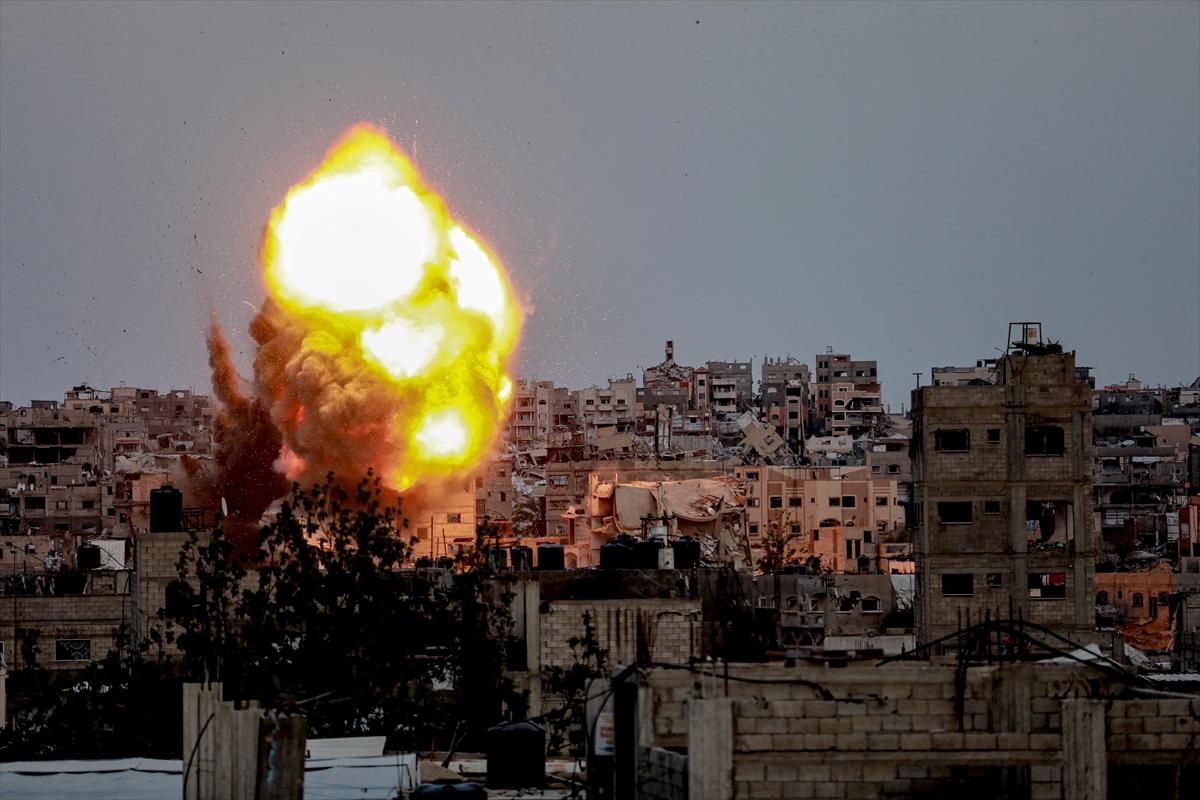
Israel’s attack on Beit Lahiya, 3 May 2025 – Anadolu Agency
Effie Defrin, assistant to Israeli Defense Forces Spokesperson Major General Daniel Hagari, stated on 1 May 2025 that the city of Rafah in southern Gaza would be targeted in a comprehensive military operation, with the primary objective being the forced displacement of Palestinians. It was emphasized that the Israeli military must prepare for a broad mobilization across all segments of society, including the Haredi community.
According to information published in the Israeli press, the plan foresees the capture of nearly the entire Gaza Strip through ground assaults and the establishment of permanent military control in these areas. If implemented, the Israeli military will not withdraw from areas previously held temporarily and will maintain a permanent presence in the buffer zones.
Israeli Prime Minister Benjamin Netanyahu announced that “Israel will enter Rafah” and that the decision had the full support of all government members. Netanyahu also stated that the local population would be relocated southward “for their own security” and that humanitarian aid to Gaza would henceforth be directed through private companies rather than international organizations.
Israeli Chief of General Staff Eyal Zamir warned the government that completely cutting off aid and targeting infrastructure could pose legal risks under international law and endanger the safety of hostages.
International reactions have intensified, particularly due to the linkage between humanitarian aid delivery and military operations. The United Nations Humanitarian Country Team (HCT) announced it would not participate in Israel’s proposed new arrangements for aid distribution. Jan Egeland, Secretary General of the Norwegian Refugee Council, described this approach as “the integration of humanitarian aid into military strategy.”
Farhan Haq, spokesperson for United Nations Secretary-General Antonio Guterres, warned that the new military plan in Gaza would increase civilian casualties and deepen destruction. He emphasized that Gaza remains an inseparable part of the Palestinian state envisioned by the international community. The approval of the plan has reignited debates over the systematic use of displacement as a tool and has drawn sharp criticism from international legal circles.
Al Jazeera. “Israel Plans ‘Conquest’ of Gaza in Expanded Offensive.” Accessed May 6, 2025. https://www.aljazeera.com/news/2025/5/5/israel-plans-conquest-of-gaza-in-expanded-offensive
Anadolu Ajansı. "İsrail Ordusu, İşgalin Genişletilmesi Planıyla Gazze’deki Filistinlilerin Zorla Yeniden Edileceğini Duyurdu." Accessed May 6, 2025. https://www.aa.com.tr/tr/dunya/israil-ordusu-isgalin-genisletilmesi-planiyla-gazzedeki-filistinlilerin-zorla-yeniden-edilecegini-duyurdu/3558068
Reuters. “Israeli Cabinet Approves Expansion of Gaza Offensive, Broadcaster Kan Reports.” Reuters. Accessed May 6, 2025. https://www.reuters.com/world/middle-east/israeli-cabinet-approves-expansion-gaza-offensive-broadcaster-kan-reports-2025-05-05/
On 10 May 2025, Israeli forces launched attacks across various areas of the Gaza Strip, resulting in the deaths of 15 Palestinians. Targeted locations included tent camps housing displaced civilians in Deir al-Balah, the Sheikh Rizwan neighborhood in northwestern Gaza, as well as the Tuffah, Shu’aiyya, and Sabra neighborhoods and civilian settlements around Rafah and Juhor al-Lut. In one attack on a tent belonging to the Talib family, five members of the same family — a mother, father, and three children — were killed.
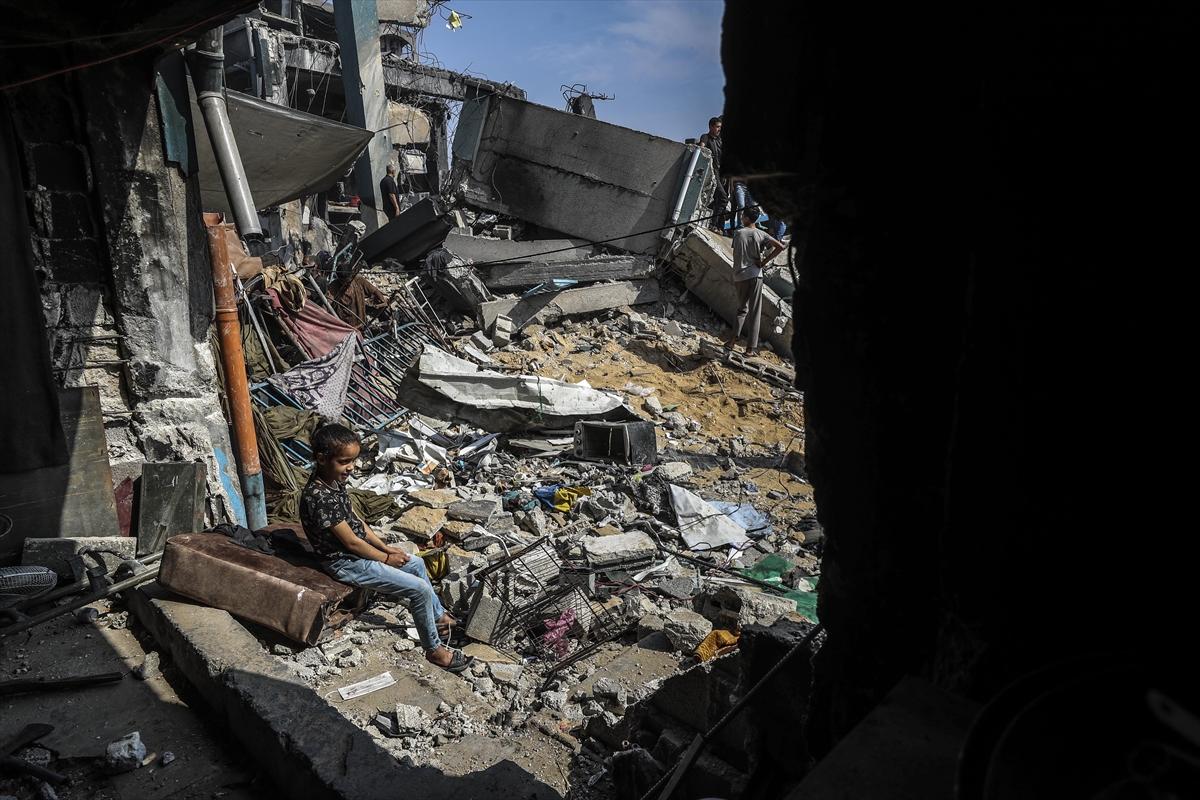
Jabaliya Refugee Camp, 10 May 2025 – Anadolu Agency
On 11 May 2025, tents, homes, and civilian vehicles sheltering displaced civilians in Khan Yunis, Deir al-Balah, Gaza City, and Rafah were targeted. A total of 26 Palestinians were killed in these attacks, including 8 children — four from the Al-Alami family and four from the Al-Agha family.
On 12 May 2025, Israeli forces carried out two aerial strikes on the Fatima bint Asad School in the Jabaliya area of northern Gaza, where displaced civilians had taken shelter, killing 16 people including women and children. On the same day, new attacks occurred near the Nuseirat Refugee Camp, in the Tuffah neighborhood, and at the Abu Hamise School in Burayr, which had previously been hit. In one attack in Nuseirat, a young girl was killed, and another person who had been wounded in earlier strikes died of their injuries.
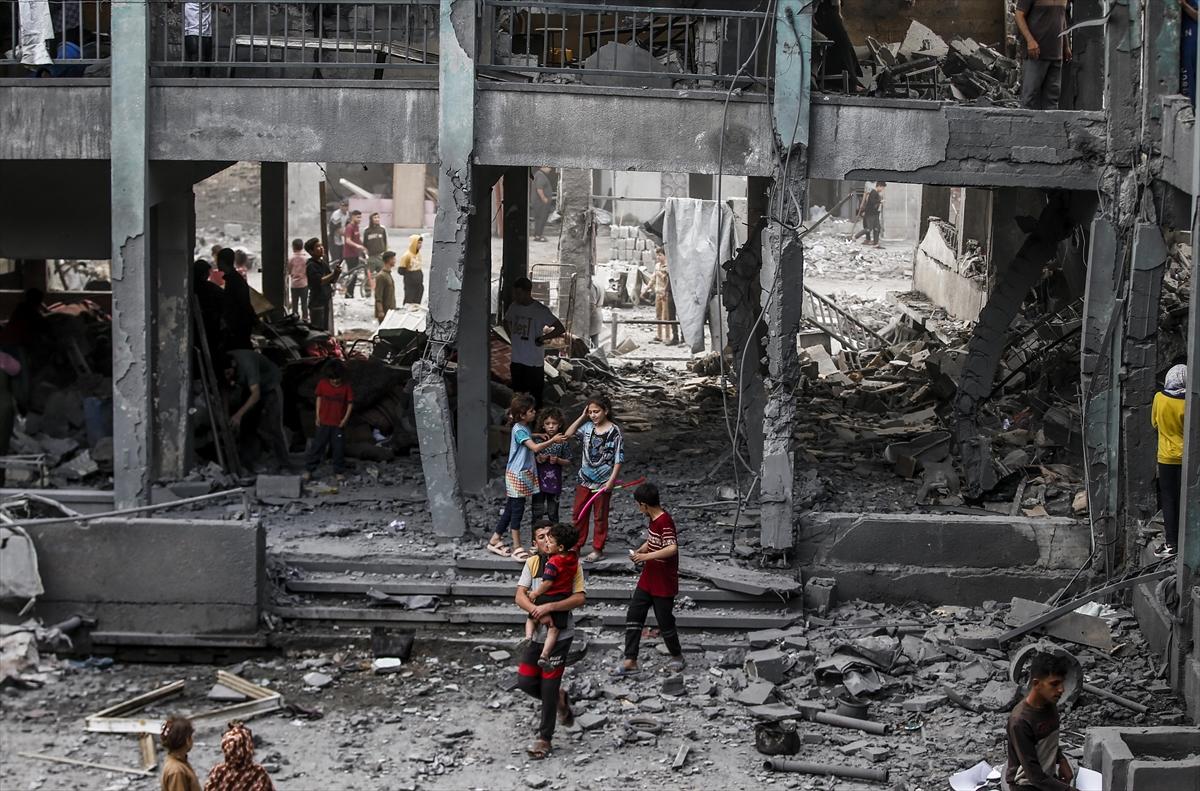
Fatima bint Asad School, sheltering Palestinians, 12 May 2025 – Anadolu Agency
According to a statement by the Ministry of Health, since 7 October 2023, the death toll has reached 52,862 and the number of injured has risen to 119,648. Since the breakdown of the ceasefire on 18 March 2025, 2,749 Palestinians have been killed. The same statement highlighted severe shortages of medical equipment in operating rooms and intensive care units, the depletion of shrouds and hygiene supplies, and the resulting increased risk of infection.
The Palestinian Water Authority reported that 85% of Gaza’s water and sewage systems have suffered severe damage, with per capita access to drinking water falling below the World Health Organization’s minimum recommendation to just 3–5 liters per day. The water available in the region is largely saline and unsafe, contributing to the spread of disease.
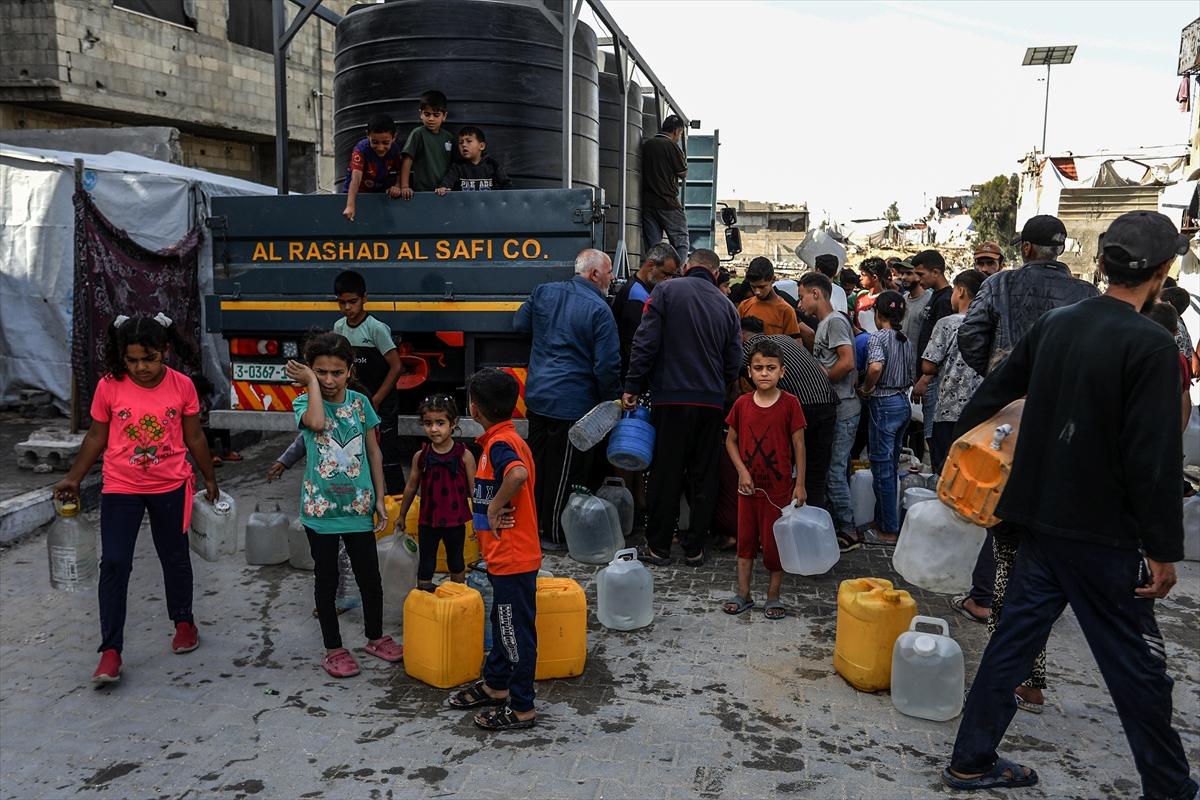
Palestinians waiting for water in Khan Yunis, 11 May 2025 – Anadolu Agency
UNRWA stated that for nine weeks no humanitarian aid, medical supplies, or commercial goods have been permitted to enter Gaza, warning that this situation could lead to irreversible destruction. During this period, the Gaza Civil Defense Directorate also reported an urgent need for essential materials such as engine oil, batteries, and tires for its search and rescue vehicles.
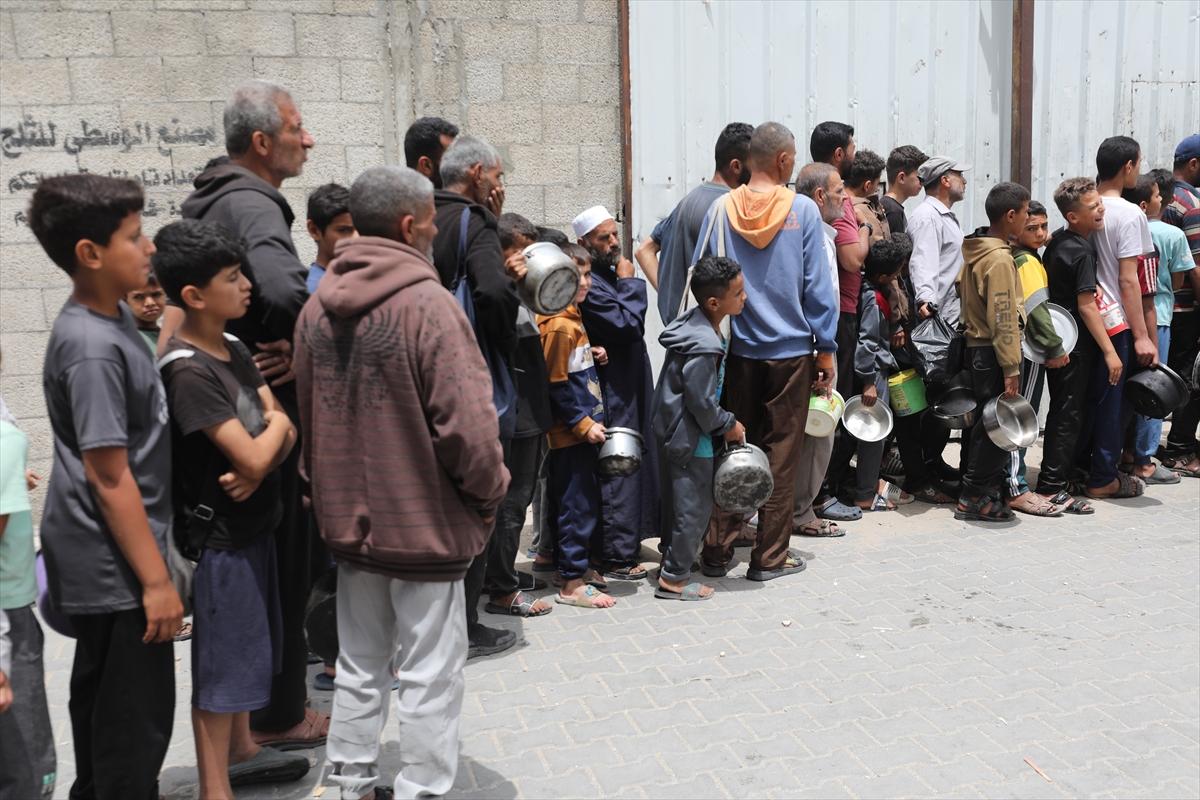
Palestinians waiting for food in Nuseirat Refugee Camp, 12 May 2025 – Anadolu Agency
In Rafah, according to reports, preparations are underway to forcibly displace the civilian population in line with a new attack plan approved by Israel’s security cabinet, including the establishment of designated assembly areas in specific zones.
On 11 May 2025, protests against Israel’s military plans for Gaza took place in cities including Tel Aviv, Haifa, West Jerusalem, and Nir Oz. Relatives of hostages in Gaza participated in the demonstrations. At Habima Square in Tel Aviv, speakers condemned the government’s current strategy as a failure, warned that the lives of hostages were being put at risk, and accused authorities of missing an opportunity for a broad agreement; calls were made for Prime Minister Netanyahu’s government to resign.
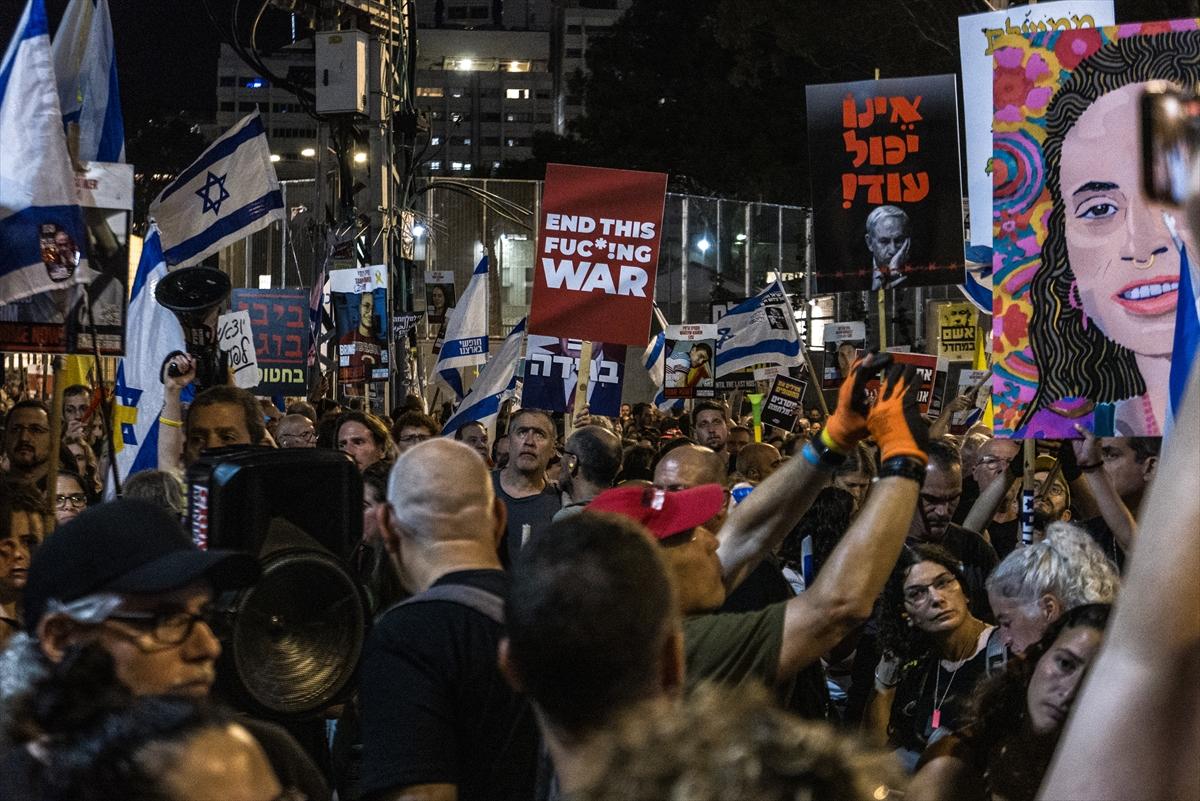
Protests at Habima Square in Tel Aviv, 11 May 2025 – Anadolu Agency
According to a report in the U.S. media on the same day, it was claimed that U.S. President Donald Trump did not approve Israel’s expanded attack plan on Gaza and described it as a “wasted effort.” It was alleged that Trump stated the plan contradicted his own vision for the “reconstruction of Gaza” and therefore would not be supported.
Anadolu Ajansı. "Trump’ın, İsrail’in Gazze’ye Saldırı Planını ‘Boşa Harcanan Çaba’ Olarak Gördüğü İddia Edildi." Accessed May 12, 2025. https://www.aa.com.tr/tr/dunya/trumpin-israilin-gazzeye-saldiri-planini-bosa-harcanan-caba-olarak-gordugu-iddia-edildi/3564068
Anadolu Ajansı. “Gazze’de İsrail’in Saldırısında Bir Ailenin Aralarında Olduğu 15 Filistinli Hayatını Kaybetti.” Accessed May 12, 2025. https://www.aa.com.tr/tr/dunya/gazzede-israilin-saldirisinda-bir-ailenin-aralarinda-oldugu-15-filistinli-hayatini-kaybetti/3562784
Anadolu Ajansı. “Gazze’deki Esirlerin Yakınları Netanyahu Hükümetini İstifaya Davet Etti.” Accessed May 12, 2025. https://www.aa.com.tr/tr/dunya/gazzedeki-esirlerin-yakinlari-netanyahu-hukumetini-istifaya-davet-etti/3563408
Anadolu Ajansı. “İsrail’in Gazze Şeridi’nde Düzenlediği Saldırılarda 26 Filistinli Hayatını Kaybetti.” Accessed May 12, 2025. https://www.aa.com.tr/tr/dunya/israilin-gazze-seridinde-duzenledigi-saldirilarda-26-filistinli-hayatini-kaybetti/3563530
Anadolu Ajansı. “İsrail’in Gazze’de Yerinden Edilenlerin Sığındığı Okulu Bombalaması Sonucu 16 Kişi Hayatını Kaybetti.” Accessed May 12, 2025. https://www.aa.com.tr/tr/dunya/israilin-gazzede-yerinden-edilenlerin-sigindigi-okulu-bombalamasi-sonucu-16-kisi-hayatini-kaybetti/3564262
On 16 May 2025, the Israeli military launched intensive aerial attacks on the northern areas of the Gaza Strip beginning at midnight. Bombardments continued into the morning hours, targeting the neighborhoods of Jabalia, Beit Lahiya, Tel al-Zater and Tel es-Sultan. Health sources reported that over 100 Palestinian bodies were delivered to Indonesia Hospital alone. It was documented that most of the 11 civilian structures targeted were residential buildings, where women and children lost their lives, particularly in structures housing displaced civilians in Beit Lahiya.
During the same attacks, ambulances on Zam Street east of Jabalia were also targeted. Many injuries were reported, though exact numbers have not been disclosed. Following the attacks, hundreds of people were evacuated from the area.
According to the Palestinian Ministry of Health, since 7 October 2023, the number of fatalities in Gaza has risen to 53,010 and the number of injured to 119,998. Since the breakdown of the ceasefire on 18 March 2025, the death toll has reached 2,876 and the number of injured has reached 7,957.
Anadolu Ajansı. “İsrail’in Gece Yarısı Başlayan Saldırılarında 100’den Fazla Filistinli Hayatını Kaybetti.” Accessed May 16, 2025. https://www.aa.com.tr/tr/dunya/israil-in-gece-yarisi-baslayan-saldirilarinda-100den-fazla-filistinli-hayatini-kaybetti/3569967#
On 17 May 2025, the Israeli military announced the commencement of a new military operation named “Gideon’s War Chariots,” aimed at permanently entrenching its occupation of Gaza. Approved by Israel’s security cabinet on 4 May, the plan is structured in three phases: preparation, intensive aerial bombardments, and ground assaults. It has been confirmed that the operation has entered its third phase, with ground forces being deployed comprehensively into the Gaza Strip.
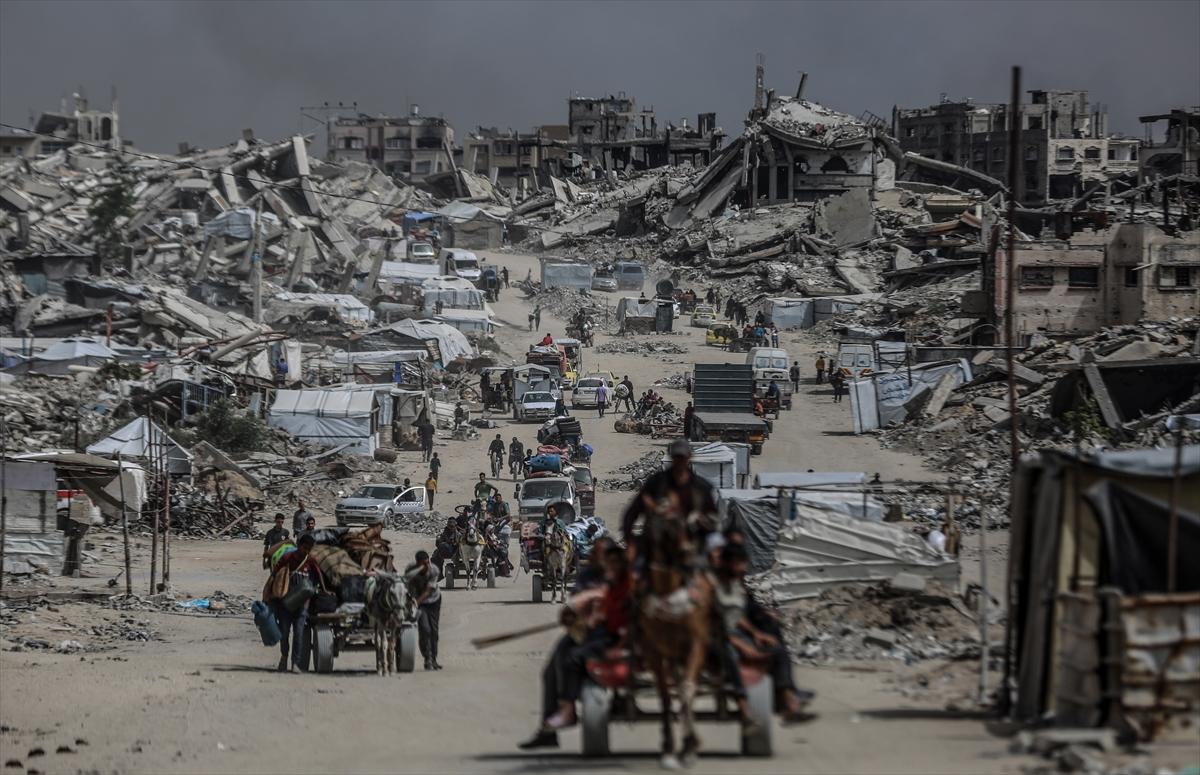
class="italic subscript";
According to Israeli military sources, both active-duty and reserve soldiers have been incorporated into the ground operation. Attacks have been concentrated in northern and southern Gaza, with forces expected to establish permanent positions in areas they seize. Information cited from The Times of Israel states that the military operation aims to achieve the permanent occupation of Gaza and the forced displacement of Palestinians to southern regions.
Prior to the ground offensive, the Israeli military issued evacuation orders for certain areas in the cities of Khan Yunis and Deir al-Balah. Residents of the neighborhoods of Al-Karara, Es-Salka, Al-Jaferi, Es-Suwar, Abu Hadab, and Es-Satar were instructed to leave these zones before the attacks. Official statements warned that “every area from which rockets are launched will be met with overwhelming force.”
The violence has triggered a massive forced displacement of Palestinian civilians. Israeli military documents indicate that approximately 300,000 people were displaced within two days.
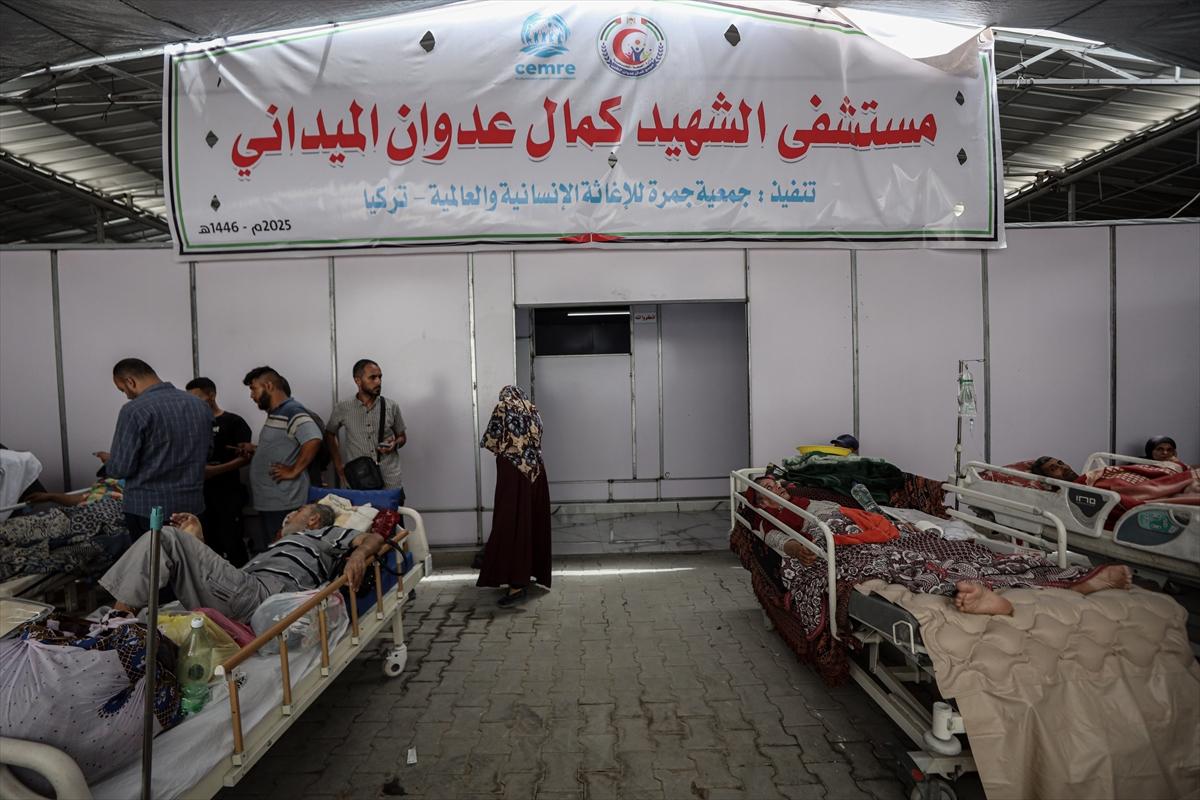
On the morning of 18 May, the Indonesia Hospital in Beit Lahiya, northern Gaza, was placed under intense siege by the Israeli military.
class="italic subscript";
The Gaza Ministry of Health reported that during the siege, the hospital was fired upon, resulting in injuries to several patients and widespread panic within the facility. The intensive care unit was directly targeted, and doctors were unable to complete a surgical procedure.
The hospital has been surrounded by unmanned aerial vehicles, tanks, and bulldozers, with health personnel, wounded, and patients reported to be in grave danger. Director Mervan al-Sultan stated that everyone moving around the hospital is being targeted. The Gaza Ministry of Health confirmed that, following the attacks on the Indonesia Hospital, all state-run hospitals in the region have ceased operations.
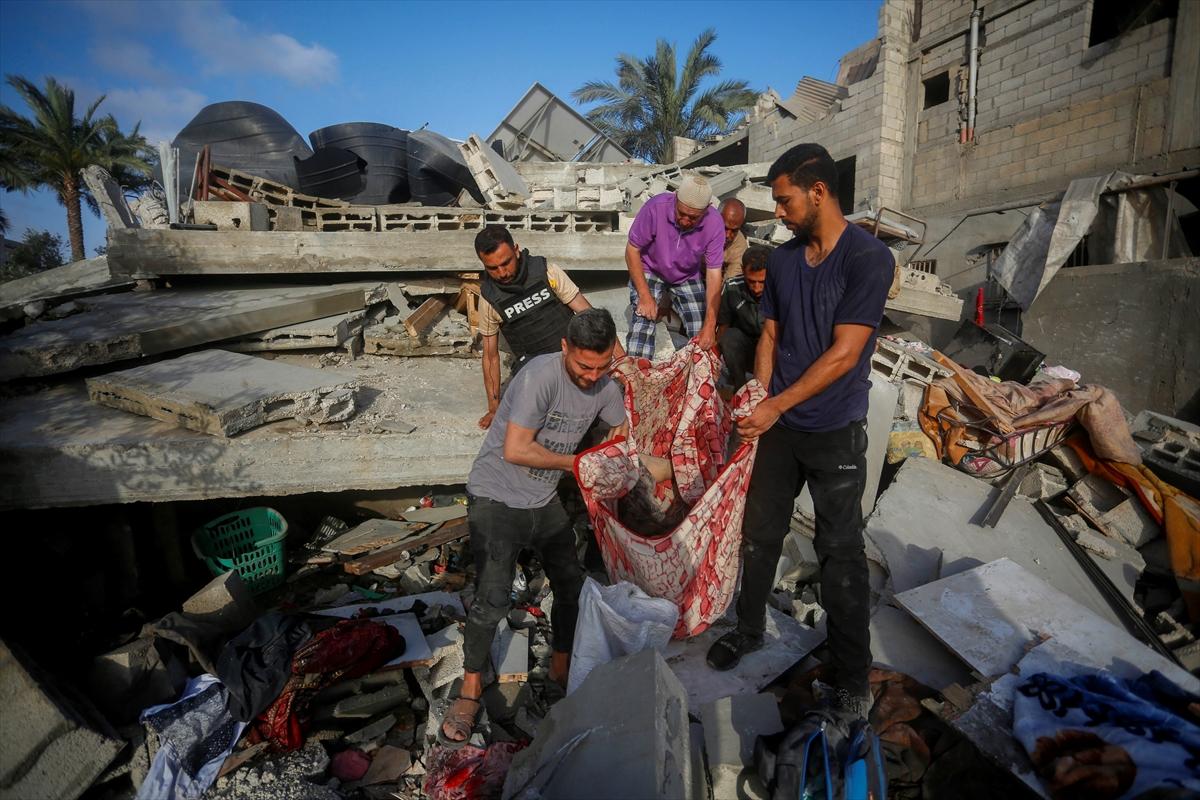
According to the Gaza Ministry of Health, the Israeli military killed more than 200 people in the north alone over two days. During the same period, over 1,000 homes were partially or completely destroyed. The Israeli military has reportedly obstructed civilian defense and medical teams from reaching affected areas, leaving 140 people still trapped under rubble.
class="italic subscript";
Israeli attacks have targeted civilian residential areas, tents, hospital perimeters, and aid warehouses, with particularly severe damage reported in the neighborhoods of Jabaliya, Tel al-Zaatar, Beit Lahiya, Deir al-Balah, and Shuja’iyya. The refugee camp in Khan Yunis has also been among the targeted locations.
It has been reported that drone strikes by the Israeli military caused multiple civilian deaths and injuries in the Me’an and Fuhari areas, as well as casualties in Shuja’iyya and Zeitoun. Nine people were killed in an attack on a humanitarian aid warehouse in Deir al-Balah.
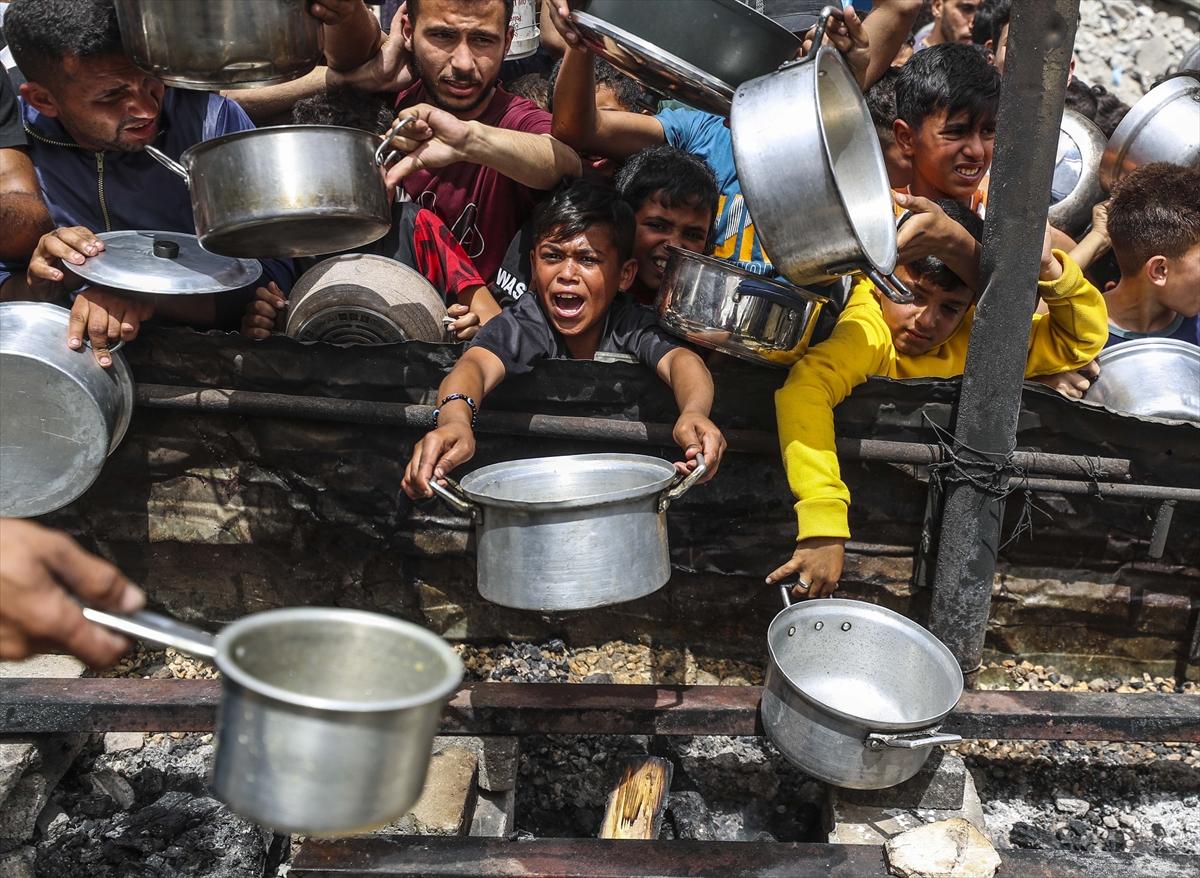
Since March 2025, the near-total closure of all land crossings into the Gaza Strip has severely restricted access to basic humanitarian supplies such as food, water, and medicine. As a result, according to United Nations data, the population at risk of acute hunger has increased, prompting warnings from civil society organizations and health authorities operating in Gaza.
class="italic subscript";
On 18 May, Israel announced it would permit a limited flow of food to prevent famine. The decision, according to official statements, followed intense diplomatic pressure from the United States and European countries. Aid distribution will be conducted under Israeli military control. The decision was made despite strong opposition from far-right ministers within Israel’s cabinet, whose attempts to block the vote were rejected.
Meanwhile, the Palestinian government’s media office reported that since 7 October 2023, 29 kitchens and 39 aid distribution centers have been targeted in Israeli attacks, resulting in the deaths of hundreds of civilians who could not access food due to the destruction of these facilities.
The Palestinian Center for Human Rights stated that over 65,000 children in Gaza are at risk of death due to malnutrition. This situation has led to serious health consequences, particularly for mothers and children, including birth defects, infant mortality, muscle wasting, and impairments in mental and physical development. More than 50 children have died since 7 October 2023 due to these conditions.
On 17 May, U.S. President Donald Trump stated in an address that “people in Gaza are dying of hunger” and announced that he had initiated efforts to address the crisis. In remarks made before departing the United Arab Emirates, the final stop on his Middle East tour, Trump said three regional leaders had raised the issue of food access in Gaza with him.
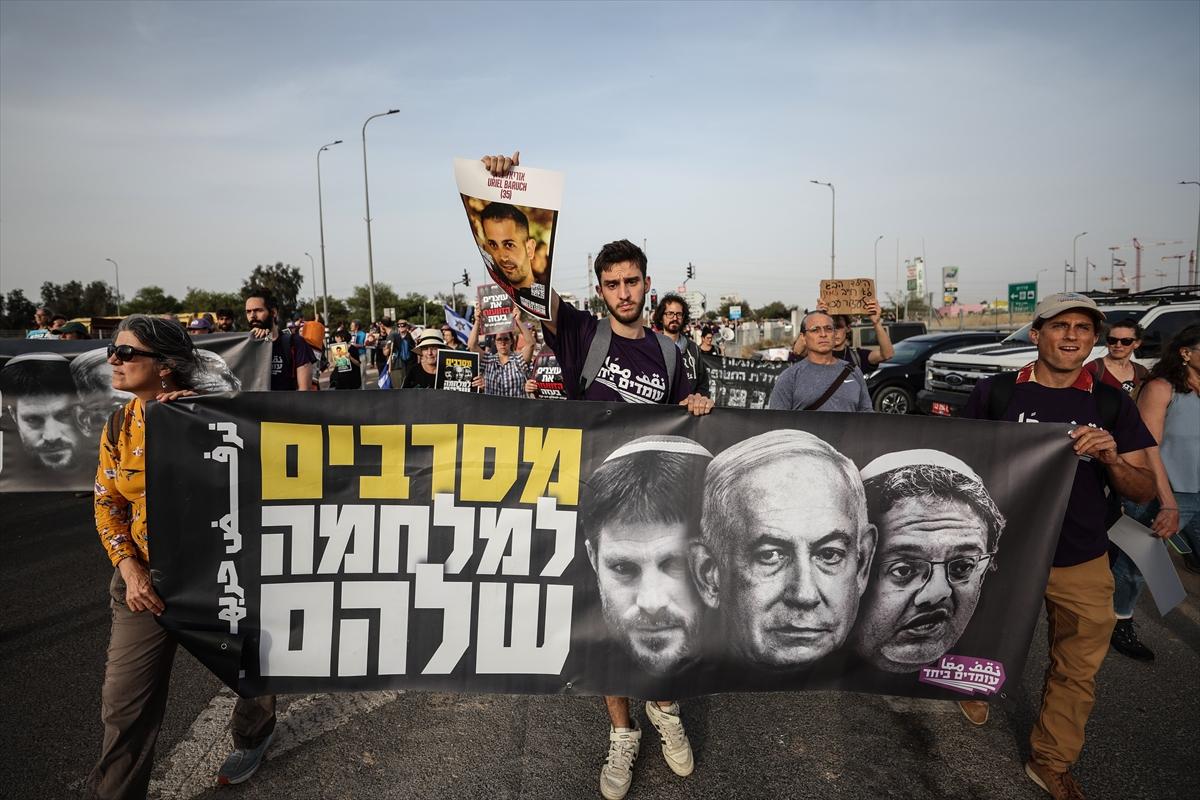
The Israeli government has indicated its openness to permanent ceasefire negotiations currently underway in Doha, Qatar. In an official statement, Israel stated that the release of all Israeli captives, the removal of Hamas from Gaza, and the demilitarization of the region are non-negotiable conditions.
class="italic subscript";
Israeli media reports suggest that Netanyahu’s government has granted its negotiating team only limited authority to evaluate prisoner exchange proposals. It has also been alleged that the United States has exerted pressure on the talks, with U.S. Middle East Special Envoy Steve Witkoff’s initial proposal forming the basis of the current agenda.
Egyptian President Abdel Fattah el-Sisi, during a conversation with U.S. presidential advisor Massad Boulos, emphasized the urgent need for an immediate ceasefire in Gaza and the unhindered delivery of humanitarian aid. Egypt has confirmed it will continue its mediation role between Qatar and the United States.
The Ministry of Foreign Affairs of Türkiye assessed Israel’s ground operation and attacks in Gaza, conducted while negotiations were ongoing, as “a development undermining regional stability.” The statement reiterated calls for the immediate cessation of operations, the unimpeded delivery of humanitarian aid to Gaza, and the urgent establishment of a ceasefire.
Spanish Foreign Minister José Manuel Albares described the killing of over 200 people in recent attacks in Gaza as “unacceptable” and called for the immediate and definitive end to hostilities.
On 18 May, approximately 100,000 people participated in a protest in The Hague, the administrative capital of the Netherlands. The demonstration was supported by Oxfam Novib, Amnesty International, Human Rights Watch, and over 80 civil society organizations. The action, conducted under the slogan “Draw the Red Line for Gaza,” protested their government’s policies toward Israel.
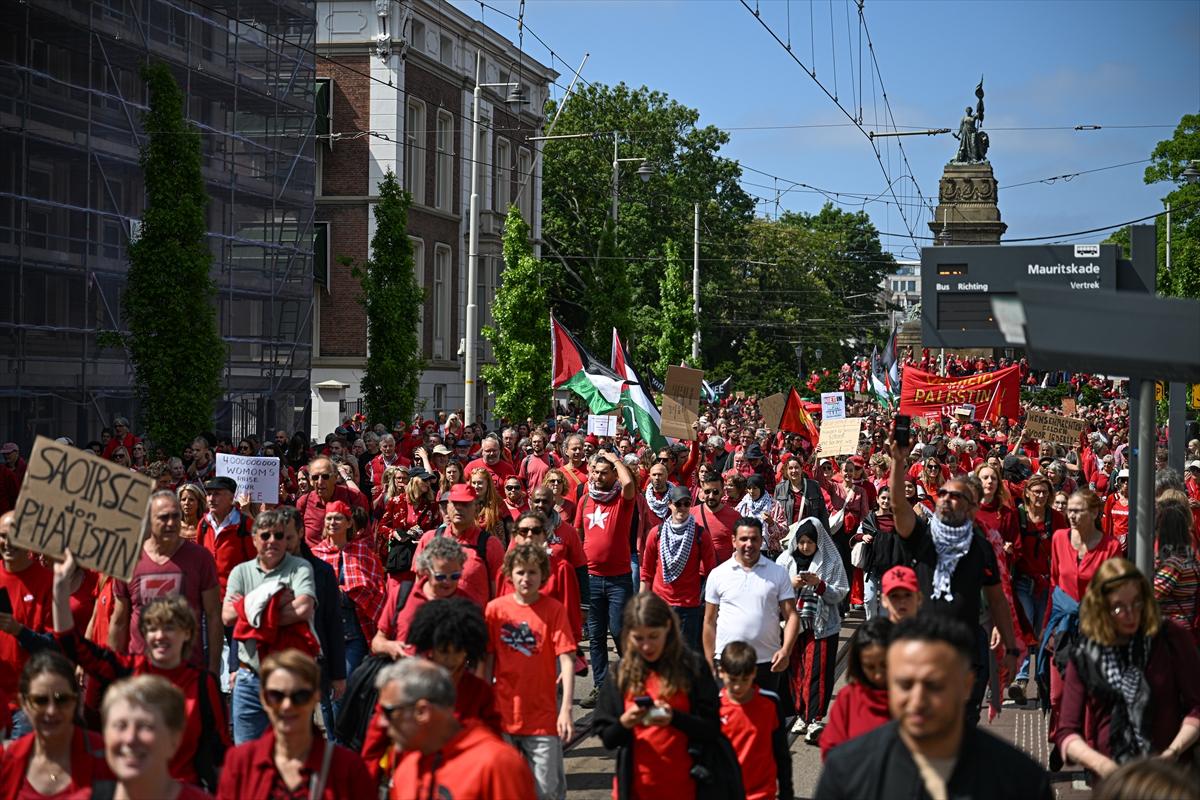
class="italic subscript";
During the protest, demonstrators wore red clothing to form a symbolic line, chanting slogans such as “Schoof government is deaf,” “Stop killing children,” and “Stop genocide.” Protesters demanded that their government sever all military and political support for Israel and impose sanctions.
Anadolu Ajansı. "Sisi, Trump’ın Danışmanı Boulos’a Gazze’de Derhal Ateşkesin Sağlanması Gerektiğini Belirtti." Accessed May 19, 2025. https://www.aa.com.tr/tr/dunya/sisi-trump-in-danismani-boulos-a-gazze-de-derhal-ateskesin-saglanmasi-gerektigini-belirtti/3572542
Anadolu Ajansı. “ABD Başkanı Trump, Gazze’de Halkın Açlıktan Öldüğünü Belirtti.” Accessed May 19, 2025. https://www.aa.com.tr/tr/dunya/abd-baskani-trump-gazzede-halkin-acliktan-oldugunu-belirtti/3571586
Anadolu Ajansı. “ABD’nin Ateşkes İçin Baskı Yaptığı Öne Sürülürken İsrail, Kalıcı Ateşkesin Görüşüldüğünü İtiraf Etti.” Accessed May 19, 2025. https://www.aa.com.tr/tr/dunya/abdnin-ateskes-icin-baski-yaptigi-one-surulurken-israil-kalici-ateskesin-gorusuldugunu-itiraf-etti/3572323
Anadolu Ajansı. “Dışişleri Bakanlığından İsrail’in Gazze’deki Saldırılarını Genişletmesine Tepki.” Accessed May 19, 2025. https://www.aa.com.tr/tr/gundem/disisleri-bakanligindan-israilin-gazzedeki-saldirilarini-genisletmesine-tepki/3572604
Anadolu Ajansı. “Hollanda’da 100 Bin Kişi, Hükümetin İsrail Politikasına Karşı Tepki Gösterdi.” Accessed May 19, 2025. https://www.aa.com.tr/tr/dunya/hollandada-100-bin-kisi-hukumetin-israil-politikasina-karsi-tepki-gosterdi/3572360
Anadolu Ajansı. “İspanya Dışişleri Bakanı Albares, İsrail’in Gazze’ye Yönelik Saldırılarını Sert Dille Kınadı.” Accessed May 19, 2025. https://www.aa.com.tr/tr/dunya/ispanya-disisleri-bakani-albares-israilin-gazzeye-yonelik-saldirilari-sert-dille-kinadi/3572390
Anadolu Ajansı. “İsrail Ordusu, Gazze’de İşgali Genişletip Kalıcı Hale Getirmeyi Amaçlayan Kara Saldırılarına Başladı.” Accessed May 19, 2025. https://www.aa.com.tr/tr/dunya/israil-ordusu-gazzede-isgali-genisletip-kalici-hale-getirmeyi-amaclayan-kara-saldirilarina-basladi/3572339
Anadolu Ajansı. “İsrail Ordusu, Gazze’deki Endonezya Hastanesini Kuşattı.” Accessed May 19, 2025. https://www.aa.com.tr/tr/dunya/israil-ordusu-gazzedeki-endonezya-hastanesini-kusatti/3571969
Anadolu Ajansı. “İsrail Ordusu, Gazze’deki İşgalini Kalıcı Hale Getirecek Saldırıları Başlattığını Duyurdu.” Accessed May 19, 2025. https://www.aa.com.tr/tr/dunya/israil-ordusu-gazzedeki-isgalini-kalici-hale-getirecek-saldirilari-baslattigini-duyurdu/3571087
Anadolu Ajansı. “İsrail Ordusu, Gazze’nin Kuzeyindeki Endonezya Hastanesini Kuşatma Altına Aldı.” Accessed May 19, 2025. https://www.aa.com.tr/tr/dunya/israil-ordusu-gazzenin-kuzeyindeki-endonezya-hastanesini-kusatma-altina-aldi-/3572566
Anadolu Ajansı. “İsrail, Gazze Şeridi’ne Kıtlık Yaşanmaması İçin Temel Miktarda Gıda Geçişine İzin Verdi.” Accessed May 19, 2025. https://www.aa.com.tr/tr/dunya/israil-gazze-seridine-kitlik-yasanmamasi-icin-temel-miktarda-gida-gecisine-izin-verdi-/3572572
Anadolu Ajansı. “İsrail, Gazze’nin Kuzeyinde 2 Günde En Az 200 Kişiyi Öldürdü, 300 Bin Kişiyi Yerinden Etti.” Accessed May 19, 2025. https://www.aa.com.tr/tr/dunya/israil-gazzenin-kuzeyinde-2-gunde-en-az-200-kisiyi-oldurdu-300-bin-kisiyi-yerinden-etti-/3571253
Anadolu Ajansı. “İsrail’in Gazze’ye Saldırılarında 140 Filistinli Hayatını Kaybetti.” Accessed May 19, 2025. https://www.aa.com.tr/tr/dunya/israilin-gazzeye-saldirilarinda-140-filistinli-hayatini-kaybetti/3571968
On 19 May 2025, a joint statement issued by the United Kingdom, France, and Canada called for Israel to immediately halt its military operations in the Gaza Strip and remove all obstacles to humanitarian aid. The three countries stated that Israel’s allowance of limited aid deliveries into Gaza was insufficient. The statement emphasized that the humanitarian situation had reached an unacceptable level and warned that blocking aid posed a risk of violating international humanitarian law.
The statement also condemned the language used by Israeli government officials and affirmed that forced displacement contravenes international law. It noted that if Israel does not cease its attacks, “more concrete steps will be taken.” The statement further called for the release of hostages.
Following the United Kingdom–European Union Summit, a joint statement signed by numerous countries and organizations, including foreign ministers of 22 nations and European Union officials, criticized Israel’s restrictions on humanitarian aid deliveries to Gaza. The statement highlighted that the new aid model approved by Israel’s security cabinet is not supported by the United Nations and humanitarian organizations, that it endangers aid workers and civilian beneficiaries, and that it undermines humanitarian principles.
The statement underscored that humanitarian aid to Gaza must not be politicized and must not be made contingent on military or political objectives. It further stated that the only path to bringing peace and security to the region is to return to ceasefire conditions and advance a political process based on a two-state solution. The statement also opposed Israel’s settlement policies in the West Bank, noting that these practices undermine the viability of a Palestinian state and violate international law.
Signatories to the statement included Australia, Japan, Canada, the United Kingdom, France, Germany, Spain, the Netherlands, Sweden, and Norway, alongside relevant European Union commissioners. The statement emphasized that all states must support ensuring the Gaza population’s access to urgent humanitarian assistance.
Anadolu Ajansı. “İngiltere, Fransa ve Kanada, İsrail’i Gazze’deki Saldırıları Derhal Durdurmaya Çağırdı.” Accessed May 20, 2025. https://www.aa.com.tr/tr/dunya/ingiltere-fransa-ve-kanada-israili-gazzedeki-saldirilari-derhal-durdurmaya-cagirdi/3573223#
On 20 May 2025, the Israeli military launched intense air and ground attacks on various areas of the Gaza Strip. As a result of these attacks, 87 Palestinians were killed within 24 hours and more than 290 others were injured. Since 7 October 2023, the total number of Palestinian fatalities in Gaza has reached 53,573 and the number of injured has risen to 121,688.
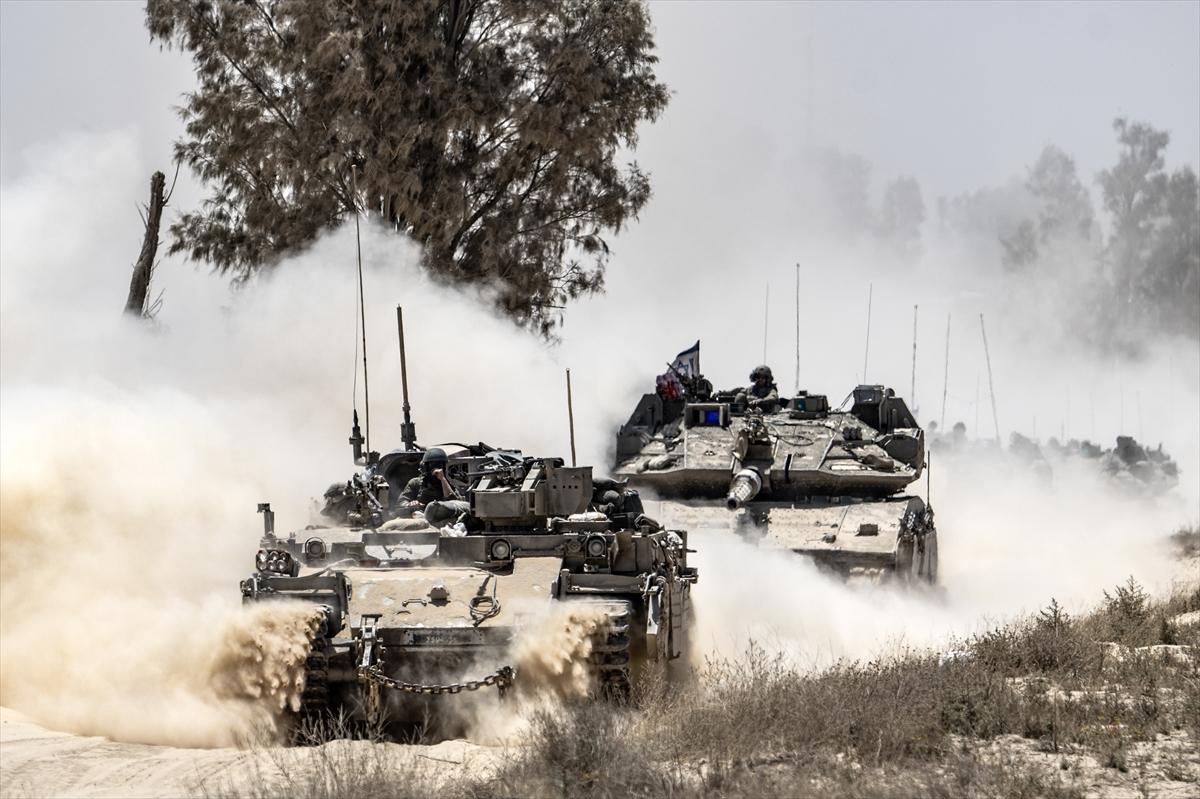
Israeli tanks and military vehicles along the border of the Gaza Strip, 20 May 2025 – Anadolu Agency
The Israeli military targeted the Musa bin Nasser School in the ad-Derec neighborhood of central Gaza City using kamikaze unmanned aerial vehicles. The school had been sheltering displaced Palestinians, and 12 people were killed in the attack with many others seriously injured. In the Jabaliya Refugee Camp in northern Gaza, a house belonging to the Mukayyed family was bombed, resulting in the deaths of nine family members.
The attacks also intensified in central Gaza. In Deir al-Balah, a house belonging to the Abu Samra family was bombed, killing 13 Palestinians. In Nuseirat Refugee Camp, a fuel station where displaced civilians had taken shelter was struck, killing 15 people. In the Menara area east of Khan Yunis, an unmanned aerial vehicle attack killed three people.
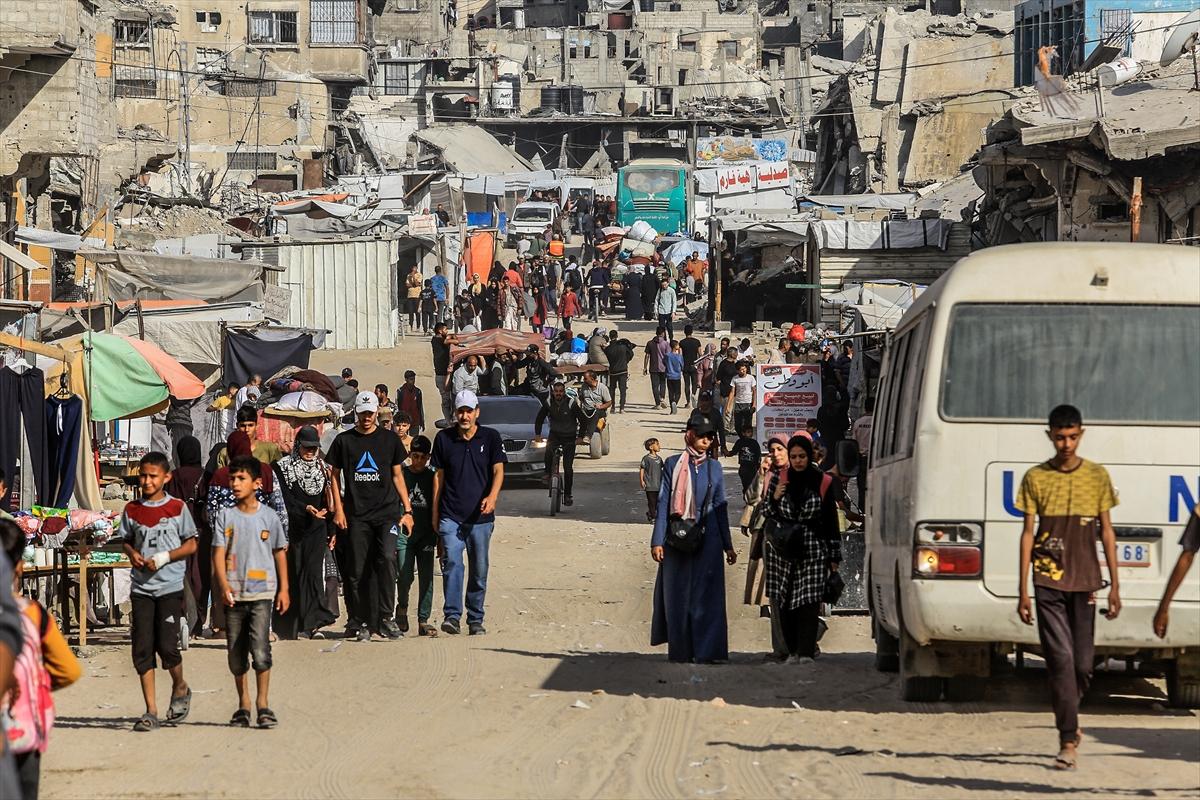
Residents of the area east of Khan Yunis in the Gaza Strip, following a call for evacuation, leave their homes and tents to head west toward Mevaser, 20 May 2025 – Anadolu Agency
In an attack on Sikkah Street in the Zeitoun neighborhood, one civilian was killed. In a bombardment of a tent camp in Khan Yunis, four people lost their lives. A school in Beit Lahiya housing displaced civilians was also targeted, resulting in at least four deaths.
Israeli attacks were not limited to residential areas but also targeted infrastructure, health facilities, and aid centers. The Indonesia Hospital suffered major damage in an Israeli military strike on the morning of 20 May. The destruction of the hospital’s generators triggered a fire that severely disrupted medical services.
Rik Peeperkorn, Representative of the World Health Organization (WHO) in Palestine, stated that the attacks have pushed the healthcare system to the brink of collapse and that since October 2023, 697 health facilities in Gaza have been targeted. The WHO emphasized that healthcare services must be protected and that hospitals must never be militarized.
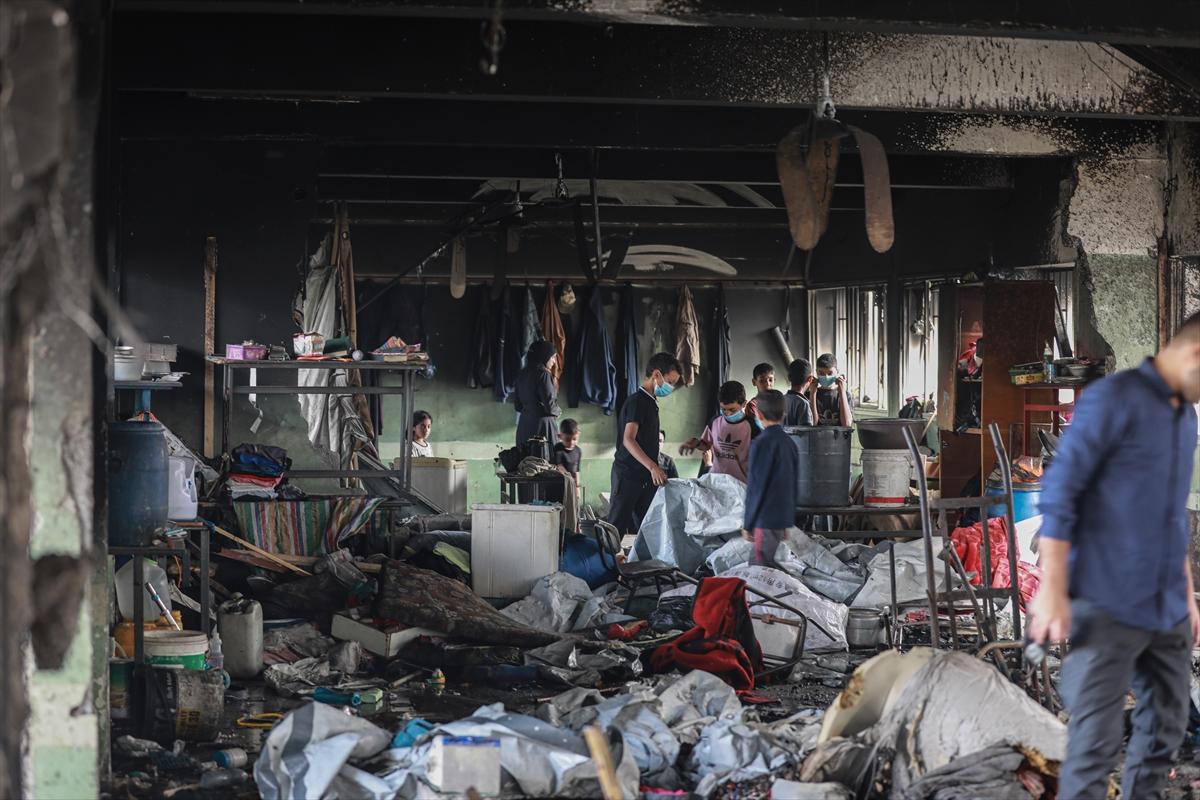
The aftermath of the bombing of the Musa bin Nasir School, which sheltered Palestinians, 20 May 2025 – Anadolu Agency
The United Nations, the World Health Organization, and various humanitarian organizations have called on Israel to accelerate aid deliveries and open at least two border crossings. WHO Representative Rik Peeperkorn noted that while aid deliveries had begun partially after 11 weeks of blockade, this remained at the level of “a drop in the ocean.”
Spain has intensified its diplomatic efforts regarding the humanitarian crisis in Gaza and launched a new initiative at the United Nations. In this context, Spain has called for increased pressure on Israel due to its alleged war crimes, blockade policies, and attacks on civilians. Dr. Bassam El Abdulla Dwehi, President of the Forum for Thought and Strategic Research, expressed support for this initiative, stating that Spain is working to mobilize international public opinion against war crimes and highlighting the importance of efforts to protect the fundamental rights of Gaza’s civilian population.
Dr. Dwehi also affirmed his support for the four priorities outlined by Spanish Prime Minister Pedro Sánchez during his address at the 34th Arab League Summit: halting massacres, ensuring unconditional humanitarian access, pursuing a peaceful political solution, and strengthening international dialogue. The international community, including the UN Secretary-General, the President of the UN General Assembly, the UN Security Council, and the Organization of Islamic Cooperation, has been called upon to act accordingly.
European Union member states, led by the Netherlands, have placed under review the 2000 EU-Israel Association Agreement. This call, raised by the Netherlands, Spain, and Ireland, is based on the violation of Article 2 of the agreement, which obliges both parties to respect human rights and international law.
EU High Representative for Foreign Affairs and Security Policy Kaja Kallas, in a statement prior to the meeting, said the situation of thousands of humanitarian aid trucks stranded at border crossings has deeply concerned EU member states and that aid must reach the region without delay. Belgium, Finland, Portugal, Sweden, and France, all present at the Brussels meeting, confirmed their support for the proposal to review the agreement.
French Foreign Minister Jean-Noël Barrot stated that the EU-Israel Association Agreement must be reassessed. He described Israel’s military operations in Gaza and its obstruction of humanitarian aid as “unacceptable,” asserting that this violates human dignity, international law, and the fundamental values of Europe. Barrot also reiterated France’s commitment to recognizing a Palestinian state.
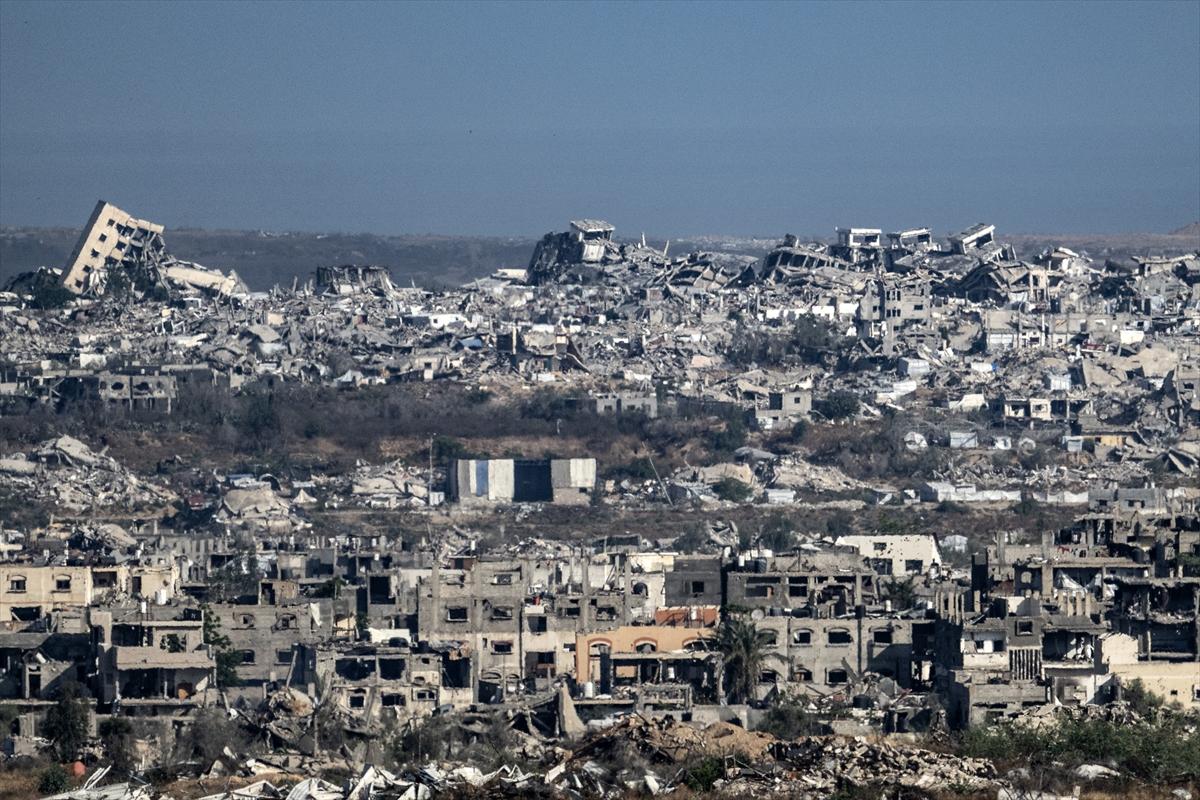
Destruction caused by attacks along the Gaza-Israel border, 20 May 2025 – Anadolu Agency
Spanish Prime Minister Pedro Sánchez stated that Israel should be excluded from international events such as the Eurovision Song Contest. Recalling the international isolation of Russia following its invasion of Ukraine, he argued that a similar stance must be taken toward Israel. “There can be no double standards in culture,” he said. Spanish Government Spokesperson and Minister of Sports Pilar Alegria made a similar statement, asserting that Israel must be excluded from international sporting competitions and that Spain is prepared to consult with other EU countries on this matter. Alegria noted that such decisions must be made by sports federations and institutions such as the IOC, but that the government fully supports the process.
The Austrian Chancellor’s Office criticized Israeli Prime Minister Benjamin Netanyahu’s statements about occupying the entirety of Gaza. The statement read: “International law is clear. Gaza must remain Palestinian territory. Forced displacement is unacceptable.” It further emphasized the need for a lasting ceasefire and unhindered humanitarian access for the people of Gaza.
Pakistan’s Ministry of Foreign Affairs characterized Israel’s attacks in Gaza and its declarations of intent to take full control of the territory as a “serious threat to regional peace.” The ministry stated that attacks specifically targeting civilians constitute a clear violation of international law and humanitarian principles and condemned them “in the strongest terms.” It also noted that Israel’s obstruction of humanitarian aid to millions of Palestinians amounts to collective punishment.
On the same day, Indonesia’s Ministry of Foreign Affairs issued a statement on social media strongly condemning Israel’s attack on the Indonesia Hospital in Gaza. The statement reported that the hospital suffered severe damage after its generators were targeted. It called on the United Nations Security Council and the international community to ensure a lasting ceasefire and unrestricted humanitarian access to Gaza.
On 20 May 2025, UK Foreign Secretary David Lammy announced in Parliament that negotiations for a new free trade agreement with Israel have been officially suspended. This decision follows Israel’s escalating military attacks in the Gaza Strip. Lammy stated in his speech that these attacks not only inflict devastating consequences on the Palestinian people but also directly contradict the foundational values underpinning UK-Israel bilateral relations.

UK Foreign Secretary David Lammy – Anadolu Agency
In his parliamentary address, Lammy said: “We cannot stand idly by as this situation deteriorates. This is contrary to the principles that form the basis of our bilateral relationship and an affront to the values of the British people. Therefore, I announce today that we are suspending our negotiations with the Israeli government on a new free trade agreement. Netanyahu’s actions have made this necessary.”
Lammy added that Israel’s ambassador to the UK had been summoned to the Foreign Office to receive this decision. He continued: “I want to say to the Israeli people: we, I, seek a strong friendship based on shared values. We want the bonds between our peoples and societies to grow. We have never wavered in our determination to protect your security and future from the very real threats posed by Iran, the scourge of terrorism, and the evils of antisemitism. But the manner in which this war is being waged in Gaza is damaging our relationship with your government. If Israel continues these military attacks as threatened and fails to guarantee unhindered humanitarian access, we will take further steps in response.”
Anadolu Ajansı. "Sanchez, İsrail’in Eurovision Gibi Uluslararası Yarışmalardan Men Edilmesini İstedi." Accessed May 20, 2025. https://www.aa.com.tr/tr/dunya/sanchez-israilin-eurovision-gibi-uluslararasi-yarismalardan-men-edilmesini-istedi/3573138
Anadolu Ajansı. “AB Ülkeleri, Hollanda’nın İsrail ile Ticari İlişkileri Gözden Geçirme Teklifini Görüşecek.” Accessed May 20, 2025. https://www.aa.com.tr/tr/dunya/ab-ulkeleri-hollandanin-israil-ile-ticari-iliskileri-gozden-gecirme-teklifini-gorusecek/3573943
Anadolu Ajansı. “Fransa’dan AB-İsrail Ortaklık Anlaşmasının Gözden Geçirilmesine Destek.” Accessed May 20, 2025. https://www.aa.com.tr/tr/dunya/fransadan-ab-israil-ortaklik-anlasmasinin-gozden-gecirilmesine-destek/3573734
Anadolu Ajansı. “İngiltere Dışişleri Bakanı, İsrail ile Yeni Ticaret Anlaşmasına Yönelik Müzakerelerin Askıya Alındığını Açıkladı.” Accessed May 20, 2025. https://www.aa.com.tr/tr/dunya/ingiltere-disisleri-bakani-israil-ile-yeni-ticaret-anlasmasina-yonelik-muzakerelerin-askiya-alindigini-acikladi/3574121
Anadolu Ajansı. “İspanya Hükûmeti, İsrail’in Uluslararası Spor Yarışmalarından Men Edilmesini İstiyor.” Accessed May 20, 2025. https://www.aa.com.tr/tr/dunya/ispanya-hukumeti-israilin-uluslararasi-spor-yarismalarindan-menedilmesini-istiyor/3573992
Anadolu Ajansı. “İsrail’in Gazze Şeridi’ne Düzenlediği Saldırılarda Son 24 Saatte 87 Kişi Hayatını Kaybetti.” Accessed May 20, 2025. https://www.aa.com.tr/tr/dunya/israilin-gazze-seridine-duzenledigi-saldirilarda-son-24-saatte-87-kisi-hayatini-kaybetti/3573476
On 22 May 2025, the Israeli military continued its attacks on the Gaza Strip. According to a statement by the Gaza Ministry of Health, 107 Palestinians were killed in aerial strikes carried out since 21 May. The total death toll has risen to 53,762, with the number of injured reaching 122,197. Among those killed in the attacks were women and children.
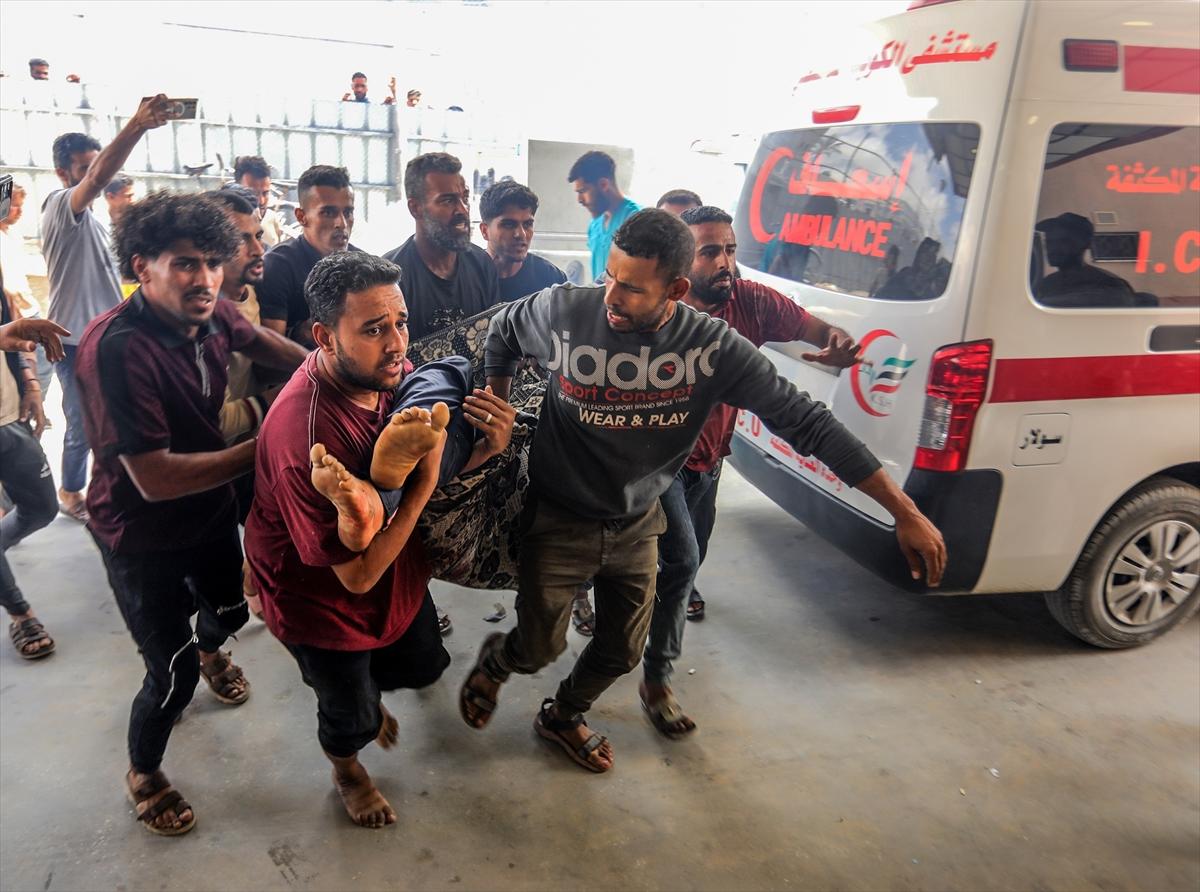
Injured people brought to Al-Nasser Hospital in the city for treatment, 22 May 2025 – Anadolu Agency
Al-Awda Hospital, located in the Tel ez-Zaatar region of northern Gaza, has been repeatedly targeted by the Israeli military. On 22 May, an attack on the hospital’s medicine storage facility caused a fire, endangering the lives of patients and medical staff. Hospital management stated that efforts were underway to extinguish the fire and that the military had renewed its attempt to encircle the facility. The same hospital had previously been subjected to artillery and aerial strikes on 18 and 21 May.
Israeli Defense Forces spokesperson Avichay Adraee issued a call on 22 May for Palestinians living in 14 neighborhoods and settlements in northern Gaza to evacuate. The statement urged residents of areas including Sheikh Zayid, Salatin, al-Kerame, al-Nur, Tal al-Zaatar, Jabaliya, and Beit Lahiya to leave the region. It was stated that military operations would intensify and attacks would increase in these areas.
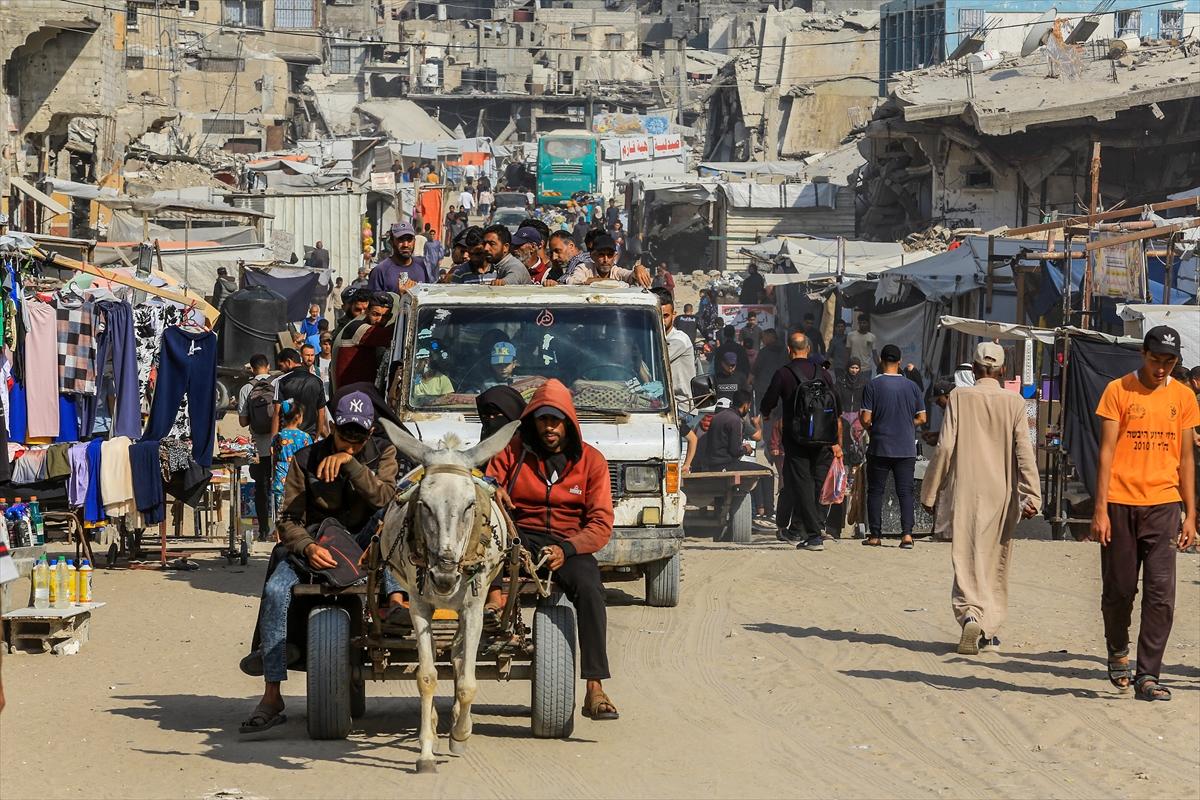
Daily life in Gaza, 22 May 2025 – Anadolu Agency
The Gaza Government Media Office announced on 22 May 2025 that, for the first time since the onset of an 81-day Israeli blockade, aid trucks were permitted to enter the territory. The number of aid trucks delivered to Gaza via the Kerem Abu Salim border crossing ranged between 87 and 92. The aid was primarily delivered on behalf of international organizations and civil society groups.
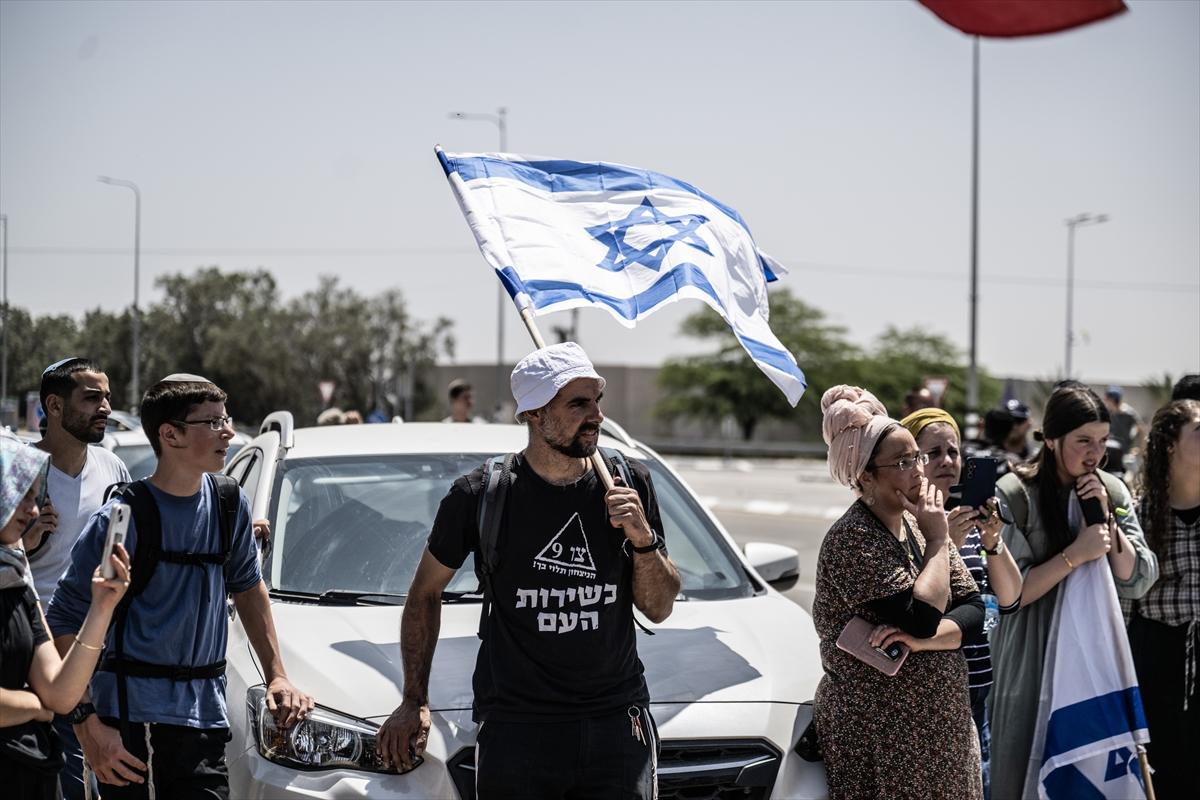
Far-right Israelis attempt to block aid trucks heading to Gaza, 21 May 2025 – Anadolu Agency
According to the Gaza Association of Specialized Transporters, 75 of the aid trucks were allocated to deliver flour to bakeries in the south. Twelve trucks belonging to UNICEF carried nutritious food for children. Additionally, five trucks contained food supplies sent by the United Arab Emirates. The majority of the aid was directed to southern and central Gaza, but the Netzarim Corridor, used to deliver assistance to northern areas, was closed by the Israeli military.
On 21 May 2025, Emily Thornberry, Chair of the United Kingdom Parliament’s Foreign Affairs Committee and a Member of Parliament for the Labour Party, formally called on her country to recognize the State of Palestine. Thornberry made this appeal both in Parliament and in public statements, asserting that Britain’s recognition of Palestine was necessary and would contribute positively to the international diplomatic process.
Speaking on a program broadcast by Channel 4 News, Thornberry proposed that the United Kingdom recognize Palestine simultaneously with France. She framed this proposal within the historical responsibility of both nations as signatories to the 1916 Sykes-Picot Agreement. Thornberry acknowledged that recognition alone would not provide a final solution but argued it would serve as a crucial starting point for drafting a new peace plan, stating: "I believe this is something we must do together with the French. Both of our countries signed the Sykes-Picot Agreement, which defined the borders of the Middle East as we see them today, a century ago. Therefore, it would be a powerful step for the two founding nations of today’s Middle East to recognize Palestine. It is not sufficient on its own, but I believe it is the beginning. We recognize Palestine, and then we work with many of our international allies to draft a peace plan and tell the Israelis, together with the Americans: This is the way forward, there is no other path. The international community is saying this."
Anadolu Ajansı. “Gazzedeki Hükümet: 81 Günlük Ablukanın Ardından İlk Yardım Tırları Gazze’ye Girdi.” Accessed May 22, 2025. https://www.aa.com.tr/tr/dunya/gazzedeki-hukumet-81-gunluk-ablukanin-ardindan-ilk-yardim-tirlari-gazze-ye-girdi/3575724#
Anadolu Ajansı. “İngiliz Milletvekili Thornberry, Ülkesinin Filistin Devletini Tanımasının Tam Zamanı Olduğunu Söyledi.” Accessed May 22, 2025. https://www.aa.com.tr/tr/dunya/ingiliz-milletvekili-thornberry-ulkesinin-filistin-devletini-tanimasinin-tam-zamani-oldugunu-soyledi/3576493#
Anadolu Ajansı. “İsrail’in Gazze Şeridi’ne Son 24 Saatte Düzenlediği Saldırılarda 107 Filistinli Hayatını Kaybetti.” Accessed May 22, 2025. https://www.aa.com.tr/tr/dunya/israilin-gazze-seridine-son-24-saatte-duzenledigi-saldirilarda-107-filistinli-hayatini-kaybetti/3575968#
Channel 4 News. “‘High Time We Recognise State of Palestine’ – Emily Thornberry.” Channel 4. Accessed May 22, 2025. https://www.channel4.com/news/high-time-we-recognise-state-of-palestine-emily-thornberry
On the morning of 26 May 2025, the Israeli military carried out an airstrike on Fehmi al-Jarrawi Primary School in the ad-Durrah neighborhood of northern Gaza Strip. The school was one of the temporary shelters housing Palestinian families who had been displaced from their homes due to prior bombardments.
Airstrike on Fehmi al-Jarrawi School, 26 May 2025 - Al Jazeera
Initial assessments indicate that at least 25 people were killed in the attack, with many others injured due to fires that broke out afterward. Eyewitnesses reported flames rising around the school after the strike, bodies burned beyond recognition, and numerous civilians suffering severe injuries.
Chaos following the attack hindered the evacuation of the wounded, and nearby medical facilities were reported to have insufficient capacity. Fires that erupted in shelters established around the school spread rapidly, and search and rescue operations were launched immediately after the incident.
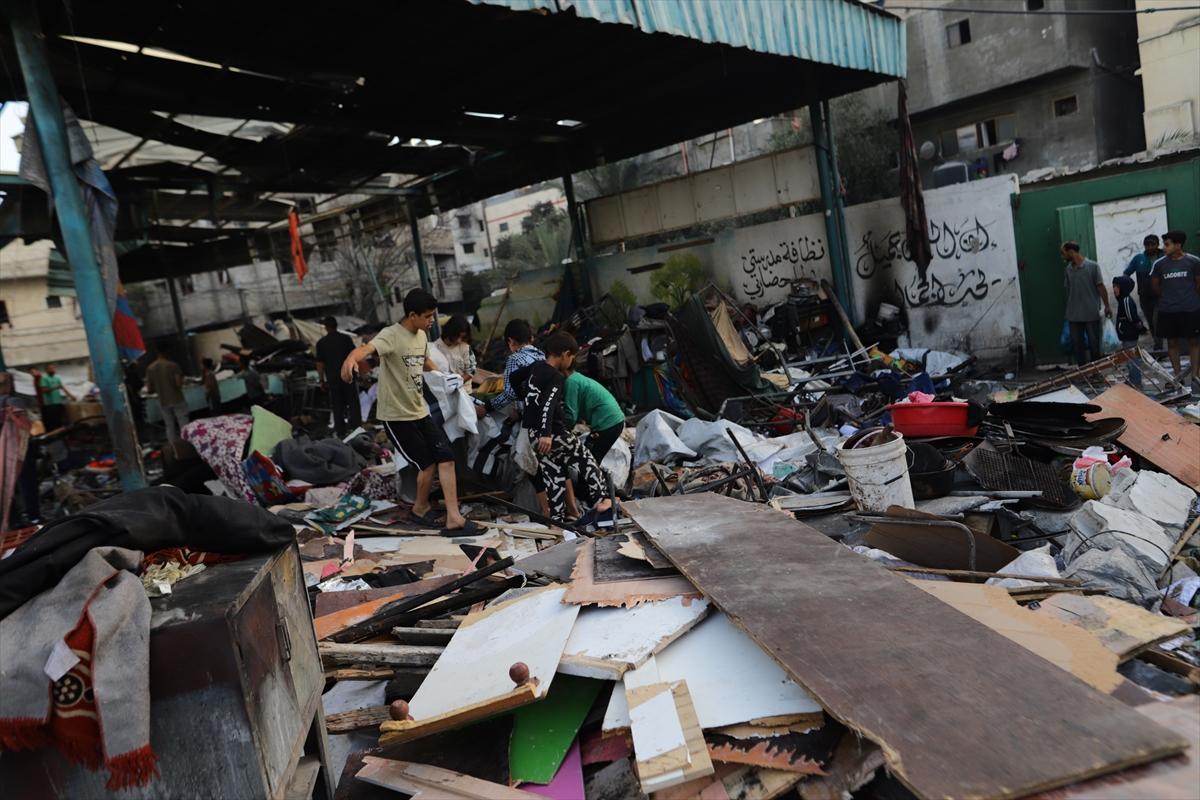
Condition of Fehmi al-Jarrawi School after the strike, 26 May 2025 - Anadolu Agency
In a statement by the Israeli military, the school building was claimed to have been used by Hamas, justifying its targeting. In contrast, Palestinian officials and local civil society organizations stated that the structure served exclusively as a temporary shelter for civilians. Public statements affirmed that no military elements were present in the school.
International human rights organizations and aid agencies emphasized that civilians and educational facilities are protected under international humanitarian law, and described the attack as falling within the category of direct strikes against civilian settlements. This airstrike on Fehmi al-Jarrawi School was among the deadliest of more than 200 airstrikes conducted across various areas of Gaza on the same day.
Anadolu Ajansı. “İsrail’in Gazze’de Filistinlilerin Sığındığı Okula Düzenlediği Hava Saldırısında Onlarca Kişi Hayatını Kaybetti.” Accessed May 26, 2025. https://www.aa.com.tr/tr/dunya/israil-in-gazzede-filistinlilerin-sigindigi-okula-duzenledigi-hava-saldirisinda-onlarca-kisi-hayatini-kaybetti/3579385
On 26 May 2025, statements were issued indicating that a draft ceasefire agreement had been reached between Hamas and the United States following negotiations held in Doha, the capital of Qatar. The talks were led by U.S. Special Envoy for the Middle East Steve Witkoff, and issues concerning prisoner exchanges and humanitarian access had been discussed from the outset of the process.
According to information reported by Al Jazeera, the draft text includes a two-phase implementation plan. Under this framework, the parties have agreed to a 60-day temporary ceasefire. As part of this, the release of ten Israeli hostages held by Hamas is planned, with the first five to be released upon the commencement of the ceasefire and the remaining five to be handed over on the final day of the 60-day period. Simultaneously, a specified number of Palestinian detainees are to be released in exchange, and unconditional humanitarian aid is to be delivered to Gaza starting from the first day. The draft text has also been transmitted by Steve Witkoff to the Israeli government, and Israel’s response is awaited.
A Palestinian source close to Hamas told Anadolu Agency that the group has accepted the ceasefire proposal presented by the United States. According to the source, Hamas made this decision to safeguard the interests of the Palestinian people and to halt ongoing military attacks. This statement was made public on 26 May 2025.
Despite Hamas’s public acceptance, Steve Witkoff, U.S. Special Envoy for the Middle East under President Donald Trump, stated on the same day in an interview with Axios that reports claiming Hamas had accepted the hostage and ceasefire deal did not reflect the truth. Witkoff described Hamas’s position as “disappointing and entirely unacceptable.” He emphasized that the United States had not presented a new proposal to Hamas; rather, the existing agreement remains on the table and Hamas must accept it.
Al Jazeera. “Live: Israel Kills Red Cross Workers, Children; Controls 77 Percent of Gaza.” Al Jazeera. Accessed May 26, 2025. https://www.aljazeera.com/news/liveblog/2025/5/26/live-israel-kills-red-cross-workers-children-controls-77-percent-of-gaza?update=3733879
Anadolu Ajansı. “Hamas, ABD’nin Ateşkes Önerisini Kabul Ettiğini Açıkladı.” Accessed May 26, 2025. https://www.aa.com.tr/tr/dunya/hamas-abdnin-ateskes-onerisini-kabul-ettigini-acikladi/3580002
On 28 May 2025, Israeli soldiers opened fire on civilians at a humanitarian aid distribution center in the city of Rafah in southern Gaza Strip, operated by the “Gaza Humanitarian Aid Foundation,” which is supported by the Israeli government. According to a statement issued by the Palestinian Government Media Office, thousands of Palestinians had gathered at the center to access food aid, and Israel’s target was the distribution center itself.
Israeli forces killed numerous people during aid distribution in Gaza, 28 April 2025 - (TRT World)
As a result of the attack, three Palestinians were killed and 46 others were injured. Seven additional individuals are reported missing. The aid center targeted in the attack was a temporary facility established to enable the local population to access food supplies. Statements emphasized that the center was a site of intense civilian demand due to the threat of starvation and that the attack therefore resulted in severe humanitarian consequences.
Following the attack on the aid center, calls were made to the United Nations and other international actors for urgent and effective intervention. It was stressed that necessary measures must be taken to ensure humanitarian organizations can continue their operations without Israeli interference.
The Palestinian side stated that these aid points serve the purpose of encouraging mass displacement in exchange for limited humanitarian assistance, and that the incident has further deepened the existing humanitarian crisis.
Anadolu Ajansı. “İsrail’in Desteklediği Yardım Noktasında Askerler Filistinlilere Ateş Açtı.” Accessed May 29, 2025. https://www.aa.com.tr/tr/dunya/israilin-destekledigi-yardim-noktasinda-askerler-filistinlilere-ates-acti/3581212#
BBC News. “Crowds Overrun US-Backed Group's New Aid Distribution Site in Gaza.” BBC News. Accessed May 29, 2025. https://www.bbc.com/news/articles/c4gep705527o
Reuters. "Deadly Break-in at UN Warehouse as Aid Trickles into Gaza." Accessed May 29, 2025. https://www.reuters.com/world/middle-east/food-trucks-gaza-raided-underscoring-aid-distribution-problems-2025-05-28/
According to reports in the Israeli press on 29 May 2025, Israeli Prime Minister Benjamin Netanyahu is said to have indicated that Israel would accept a temporary ceasefire and prisoner exchange proposal presented by Steve Witkoff, the United States President Donald Trump’s Special Envoy to the Middle East. It was noted that Netanyahu made this statement during a private meeting with families of Israeli captives.
The proposal includes a 60-day temporary ceasefire in the Gaza Strip and the release of 10 Israeli captives held by Hamas along with 18 bodies, to be delivered in two stages. In return, certain Palestinian detainees held in Israeli prisons are expected to be released. The first group of captives is planned to be handed over at the start of the ceasefire, while the second group is to be released at the end of the 60th day.
Furthermore, the proposed draft states that the parties must begin negotiations for a permanent solution during the ceasefire period, but it provides no guarantees regarding what would happen if these negotiations prove unsuccessful. The draft also specifies that after the 60-day ceasefire, Israel retains the option to resume its attacks or extend the ceasefire in exchange for additional prisoner exchanges.
Anadolu Ajansı. “Hamas, ABD’li Temsilci ile Ateşkesin Çerçevesi Üzerinde Anlaştık.” Accessed May 29, 2025. https://www.aa.com.tr/tr/dunya/hamas-abdli-temsilci-ile-ateskesin-cercevesi-uzerinde-anlastik/3582353
Anadolu Ajansı. “İsrail Basınına Göre ABD’nin Önerisi Gazze’de 60 Günlük Geçici Ateşkesi Kapsıyor.” Accessed May 29, 2025. https://www.aa.com.tr/tr/dunya/israil-basinina-gore-abdnin-onerisi-gazzede-60-gunluk-gecici-ateskesi-kapsiyor/3582795#
As of the end of May, the Israeli military has expanded its operations against the Gaza Strip to encompass land, sea, and air elements. Israeli Defense Minister Yisrael Katz ordered the armed forces to launch attacks on all targets without awaiting any negotiations and to employ all types of weaponry. It was also reported that Chief of Staff Eyal Zamir instructed the expansion of ground operations toward the southern and northern regions of Gaza.
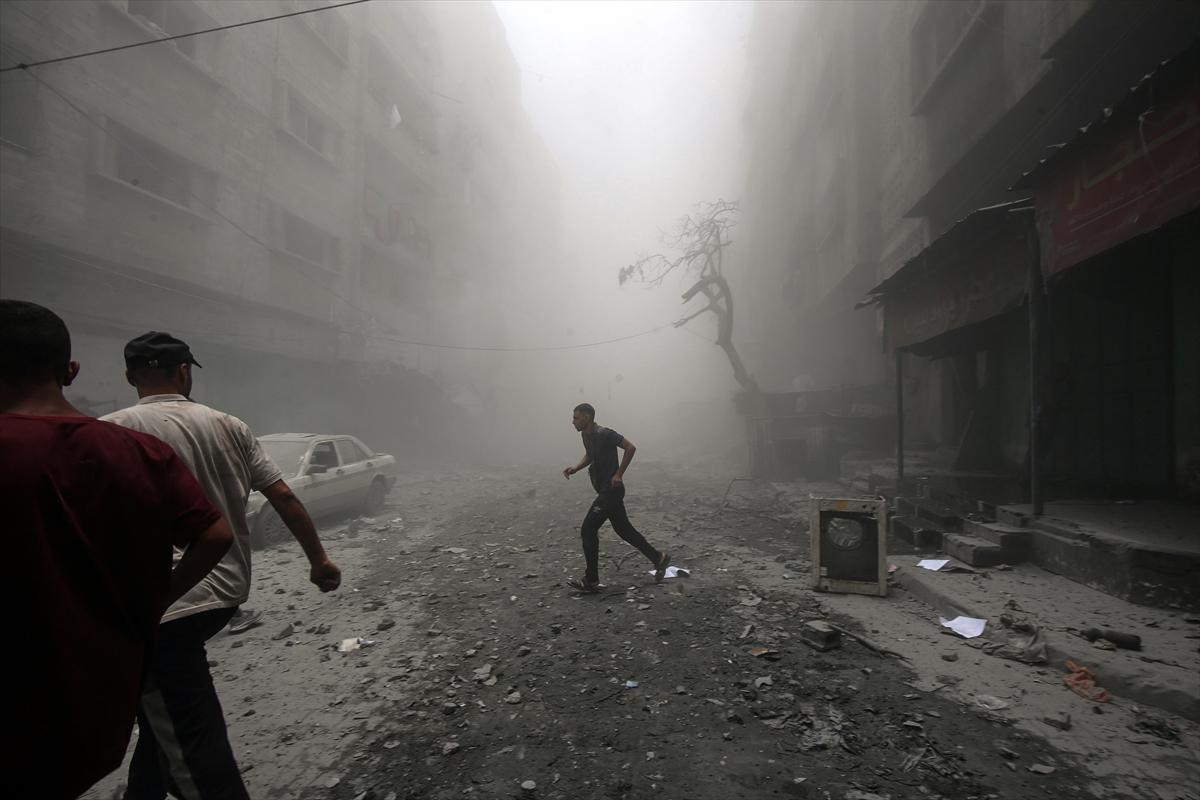
A photograph taken immediately after Israel’s attack on a house in the Sheikh Rizwan neighborhood, 1 June 2025 – Anadolu Agency
Due to the intensity of the attacks, the number of Palestinians killed between 7 October 2023 and 2 June 2025 has risen to 54,470. It was reported that between 1 June and 2 June, 53 people were killed and 503 injured. The Israeli military has also conducted attacks on civilians and aid points in areas such as Rafah, Netzarim, Jabalia, Khan Yunis and Deir al-Balah.
On 1 June 2025, Israel launched two separate attacks on civilians in the Gaza Strip who were seeking aid. At least 30 people were killed by gunfire from armored vehicles in the Mevaser area of Rafah, and one person was killed and 26 injured in a drone strike near the Netzarim Corridor.
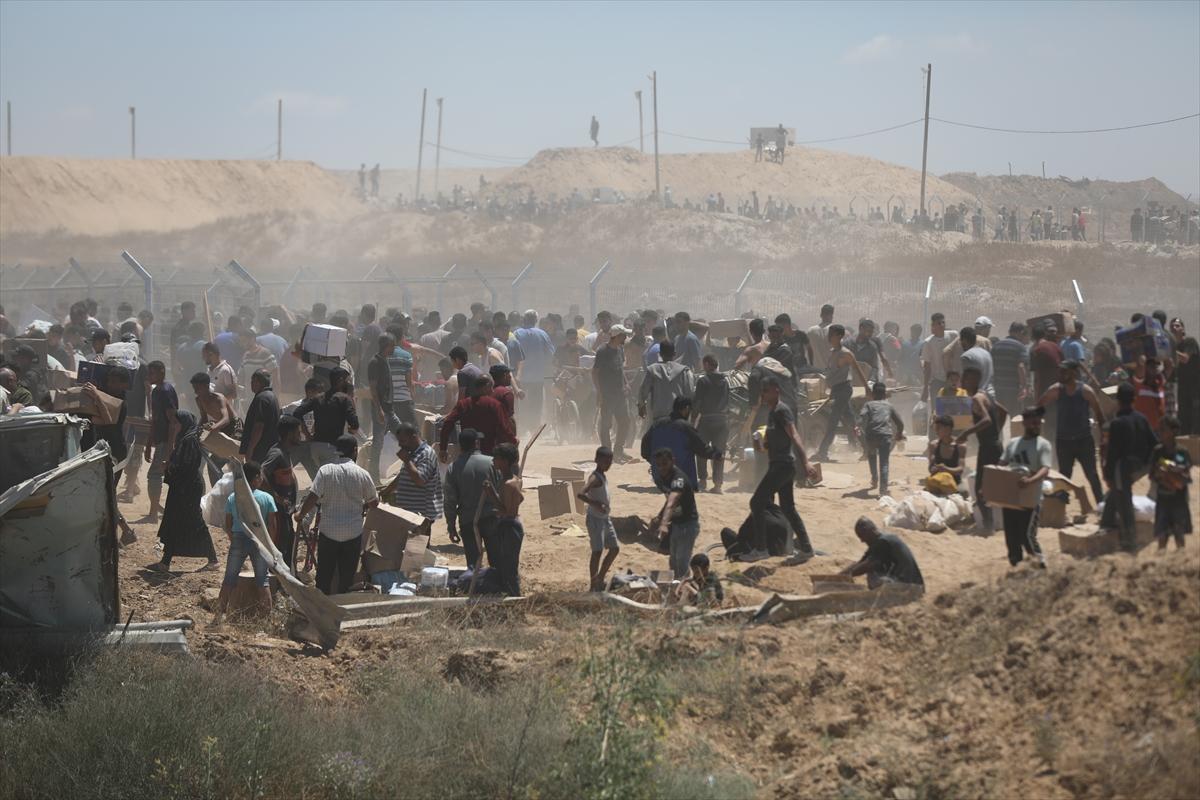
Palestinians at an aid distribution point along the Netzarim Corridor in the central part of the Gaza Strip, 29 May 2025 – Anadolu Agency
According to the United Nations and various organizations, such attacks demonstrate that humanitarian aid points have become “death traps.” Numerous statements have been issued accusing Israel of turning aid into a weapon of war, using civilians as instruments of punishment, and increasing civilian deaths through its aid distribution system.
The UN Office of the High Commissioner for Human Rights expressed deep concern over the killing of five staff members of the Islamic Relief Worldwide in a Israeli attack in Gaza. The statement noted that the deliberate targeting of humanitarian workers could constitute a war crime.
The UN Office for the Coordination of Humanitarian Affairs and UNRWA reported that humanitarian needs in Gaza have reached the worst levels in history, aid supplies are unable to reach the region, and hunger is affecting the entire population.
US President Donald Trump announced that a ceasefire agreement in Gaza is “very close,” and that a proposal had been presented to Hamas through his special envoy Steve Witkoff. Hamas stated that it has conveyed its response to mediators, noting that the proposal includes demands for a permanent ceasefire, Israeli withdrawal from Gaza, and uninterrupted humanitarian aid.
The new aid mechanism established in late May and early June in the Gaza Strip has drawn serious criticism. United Nations-affiliated organizations and Palestinian authorities reacted negatively to the distribution system, which was announced as operational on 27 May 2025 and is controlled by the “Gaza Humanitarian Aid Foundation.” It was reported that this system is supported by the administrations in Tel Aviv and Washington.
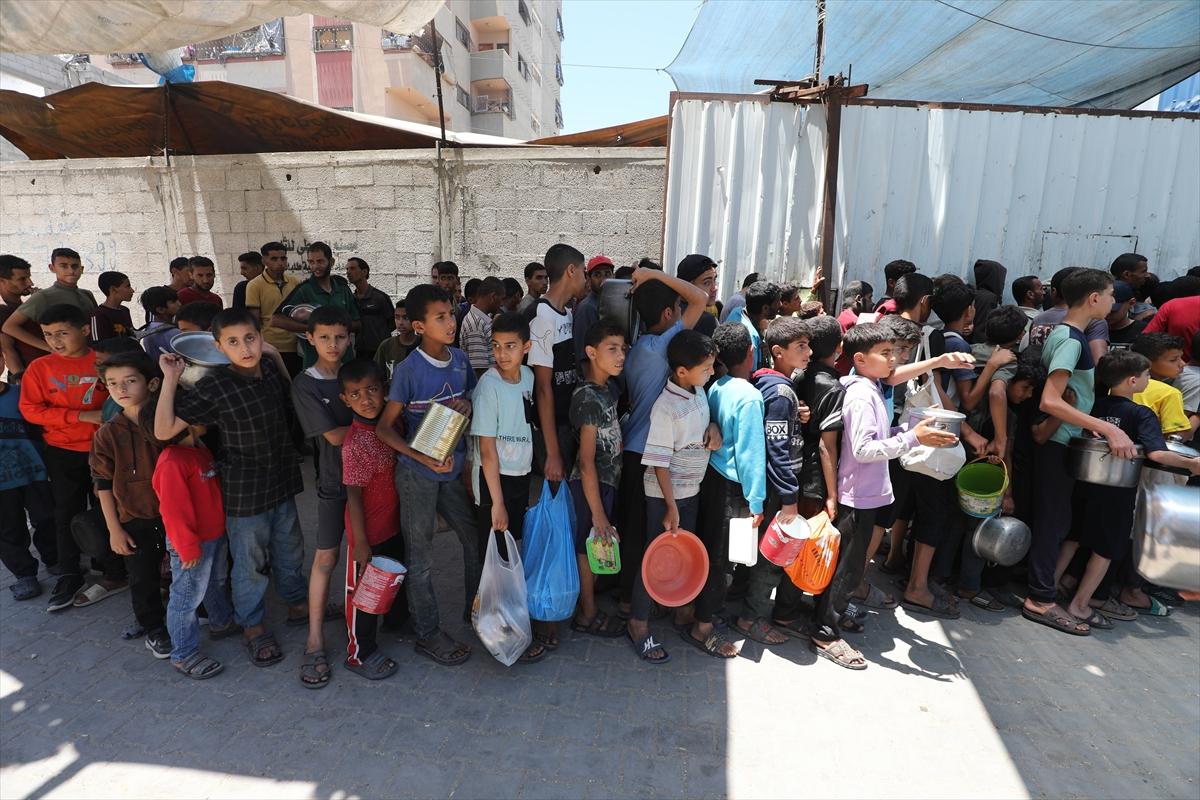
Palestinian children waiting for food at the Nuseirat Refugee Camp, 2 June 2025 – Anadolu Agency
During the chaos of aid distribution, 17 Palestinians were killed on 29 May and 30 May, with one and five deaths respectively, and 86 others were injured. Five people remain reported missing. On 1 June, 31 people were killed at aid points as a result of Israeli attacks.
The UN World Food Programme stated that it has enough aid to reach 2.2 million people but emphasized that an urgent ceasefire is required to deliver this aid safely. According to the Gaza Ministry of Health, Israeli forces targeted three high-capacity electricity generators, rendering hospital operating rooms and intensive care units inoperable. It was stated that spare parts for the generators have not been permitted entry, putting critical medical units at risk of complete failure.
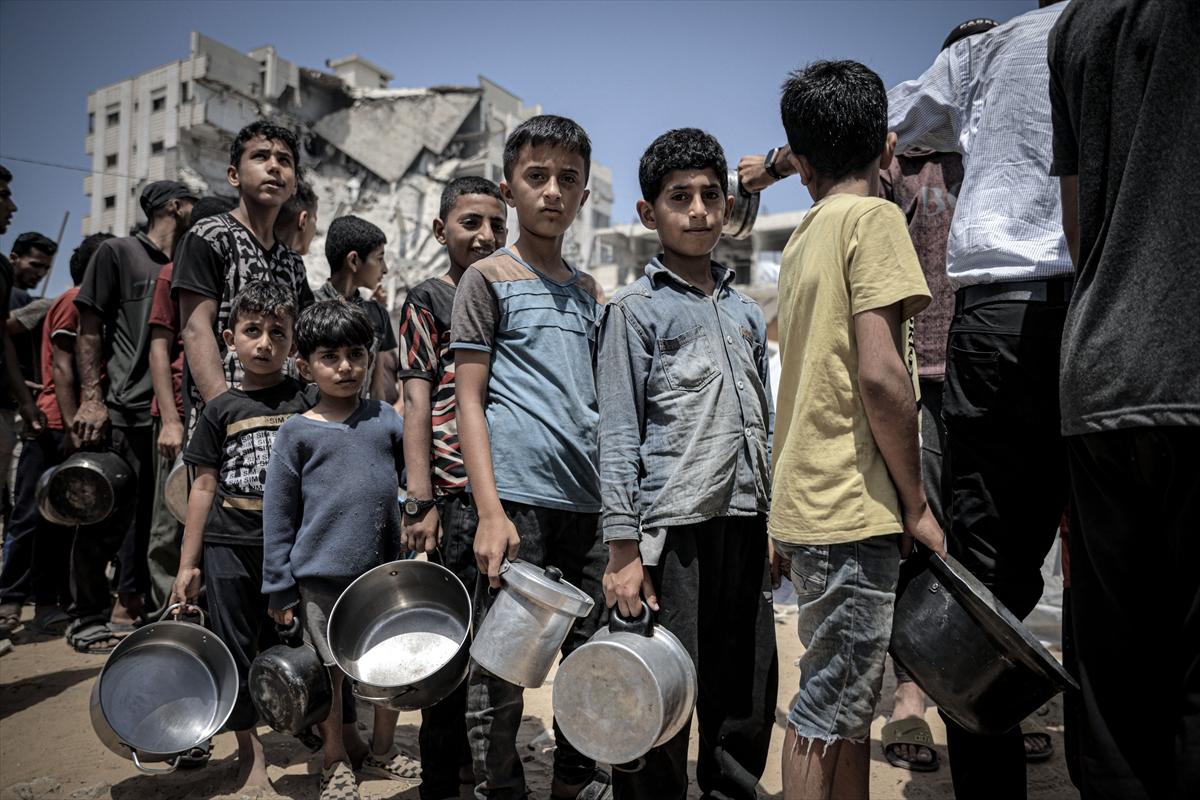
Palestinian children waiting for food in the Rimal neighborhood of Gaza City, 1 June 2025 – Anadolu Agency
According to the municipal council, the village of Huzaa in the Gaza Strip has been declared a “disaster zone.” The statement noted that Israel has targeted all infrastructure, health, and education services, rendered roads unusable, forced the population into mass displacement, and that these actions constitute violations of international humanitarian law.
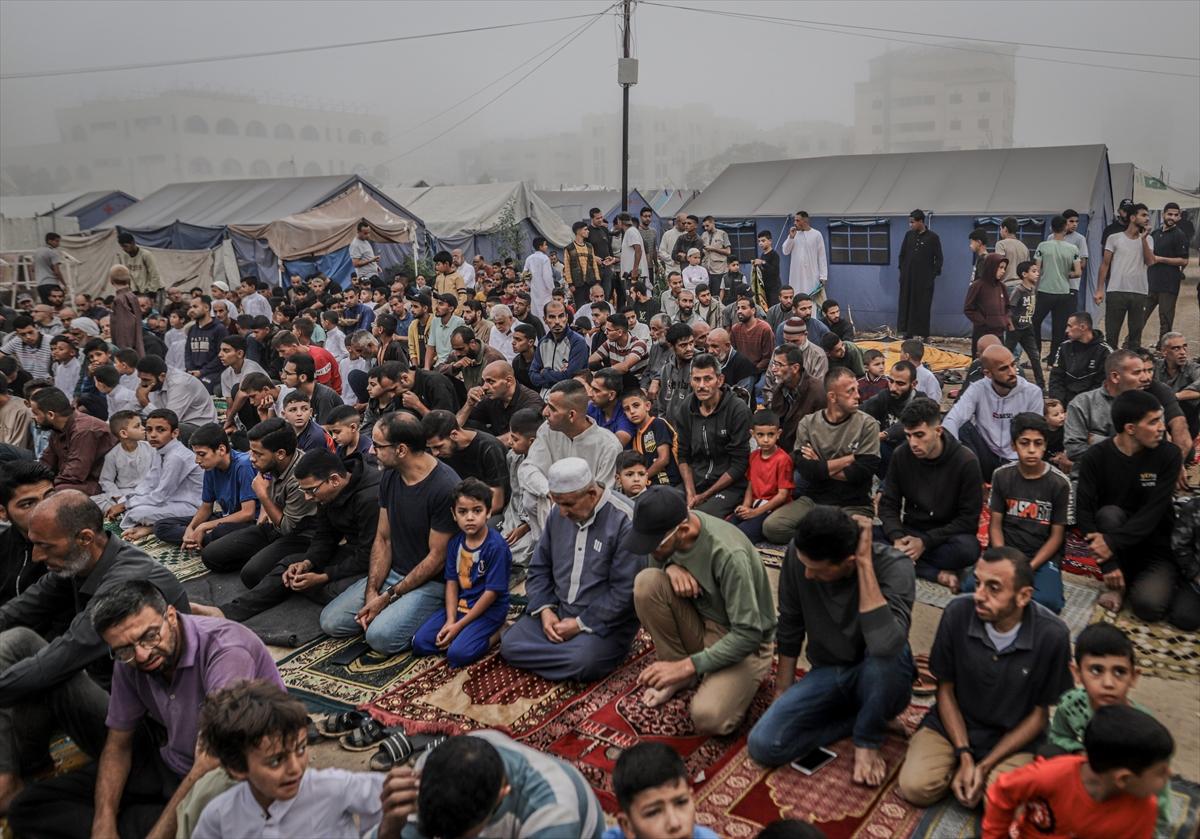
Palestinians performing Eid al-Adha prayers in a tent camp in the Al-Katiba area, 6 June 2025 – (Anadolu Agency)
On the first day of Eid al-Adha, the Israeli military launched air and ground attacks across various areas of the Gaza Strip. According to Gaza Health Ministry data, 31 people were killed and 56 injured in the attacks. The attacks were concentrated in northern neighborhoods of Gaza City; Walid Adil al-Batash, a civil defense worker stationed in the Tuffah neighborhood in eastern Gaza, was also killed in the strikes. On the first day of Eid, Gazans visited the graves of relatives killed in Israeli attacks, with the majority of visits occurring at Khan Yunis Cemetery.
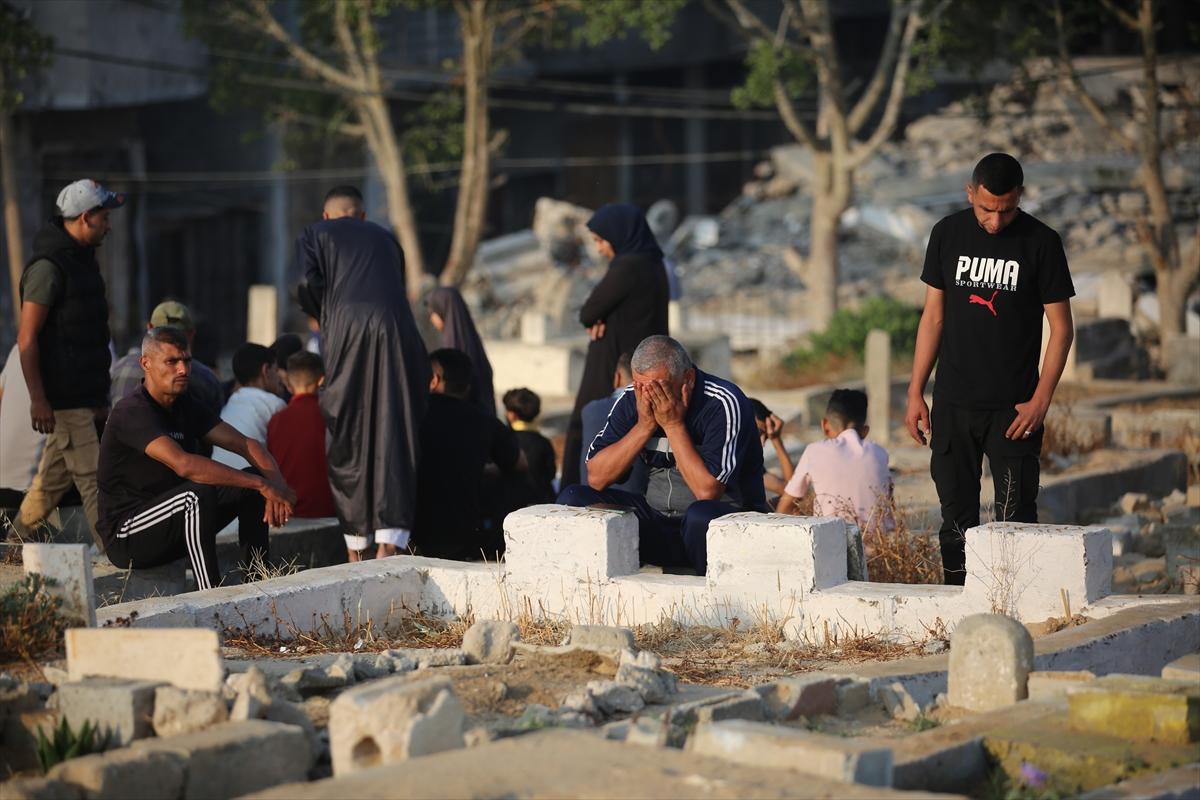
Palestinians in the Nuseirat area visiting graves after Eid prayers, 6 June 2025 – (Anadolu Agency)
Palestinian civilians performed Eid al-Adha prayers amid the rubble of mosques destroyed in attacks. Children and elderly people participated in the prayers. A total of 95 people were killed on the eve and first day of Eid, and the number rose to 173 by the second day. A total of 304 people were injured.
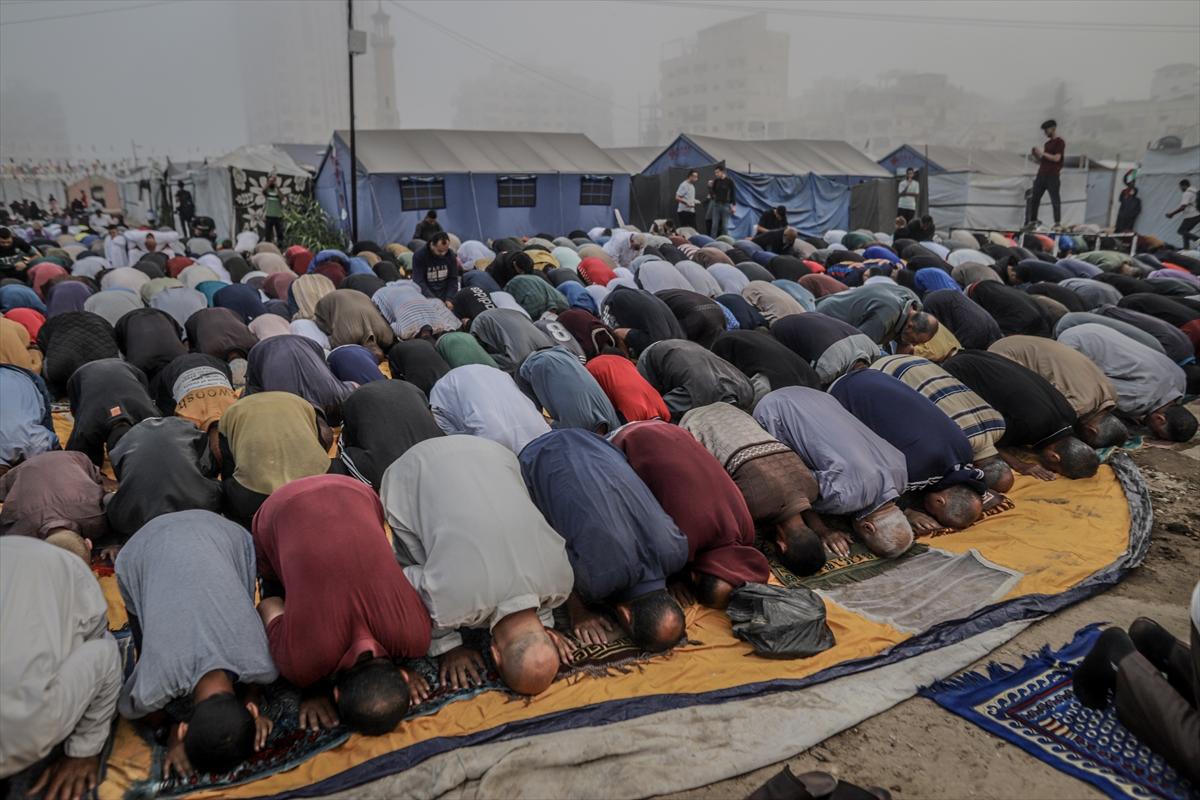
Palestinians performing Eid al-Adha prayers in a tent camp in the Al-Katiba area, 6 June 2025 – (Anadolu Agency)
On 17 June 2025, the second day of Eid, attacks resulted in the deaths of 78 Palestinians. Gaza Civil Defense spokesperson Mahmoud Basal stated that a three-story building in the Sabra neighborhood of southern Gaza City was bombed, killing 15 people and injuring more than 50. The building was identified as belonging to Abu Shari’a, General Secretary of the Mujahideen Movement, and the attack killed Abu Shari’a, his brother Ahmed Abu Shari’a, and other family members.
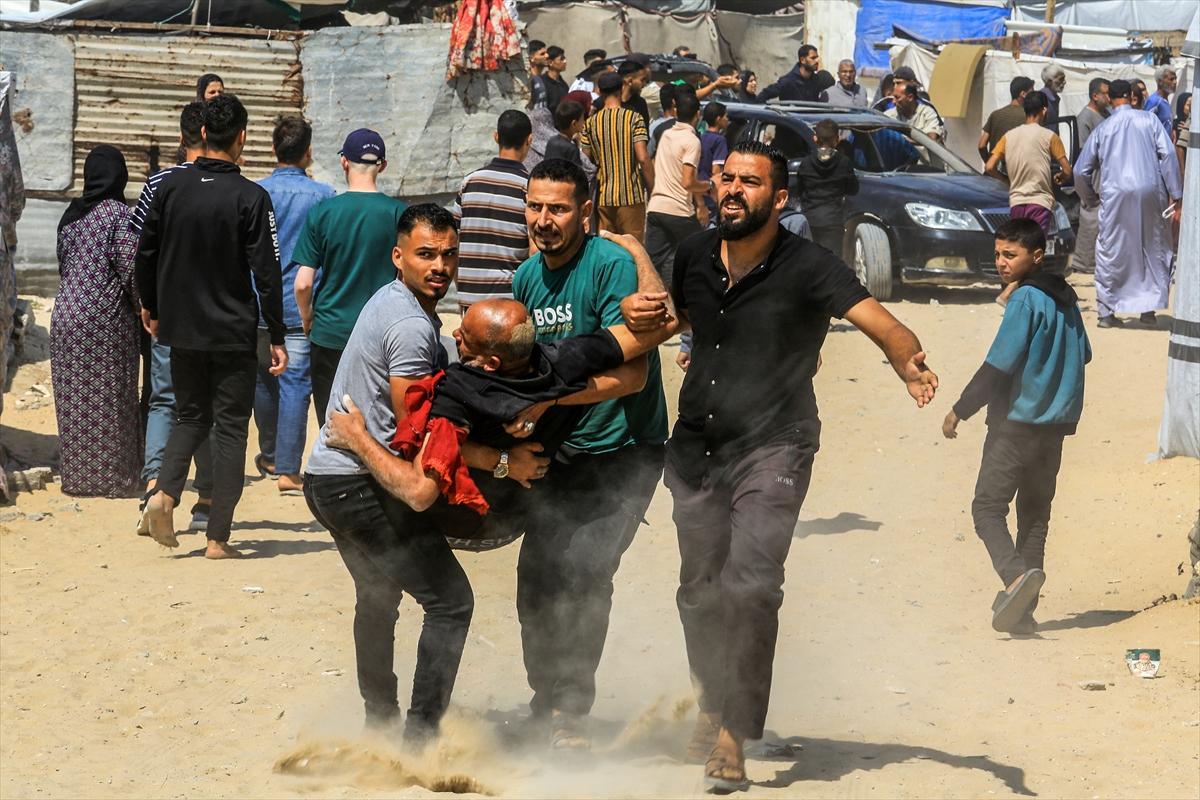
A Palestinian injured in Israel’s attack on Khan Yunis on the first day of Eid, 6 June 2025 – (Anadolu Agency)
In attacks on the Jabalia, Jabalia Nezle, and Faluja areas in northern Gaza, a total of 16 Palestinians were killed. In the Tuffah neighborhood in eastern Gaza, a drone strike killed five people; in Deir al-Balah, two people died when tents were targeted. In a drone attack on the village of Beni Suheyla east of Khan Yunis, six people were killed. In the Emel neighborhood to the west, one person was killed and another injured. Additionally, eight people were killed in Rafah when Israeli forces opened fire on civilians waiting for aid.
The Israeli military issued warnings to civilians living in certain areas of northern Gaza to move westward. Army spokesperson Avichay Adraee published a map on social media dividing Gaza into small blocks and designating certain areas as “no-go zones.” Blocks numbered 608, 609, 615, and 616 were marked as targets, and civilians in these areas were urged to move westward toward the coastline. Official warnings were also issued that approaching designated Israeli-US coordinated aid points at night could lead to fatal consequences. The Israeli military stated that these areas are open only between 06:00 and 18:00, and are considered “closed military zones” outside these hours.
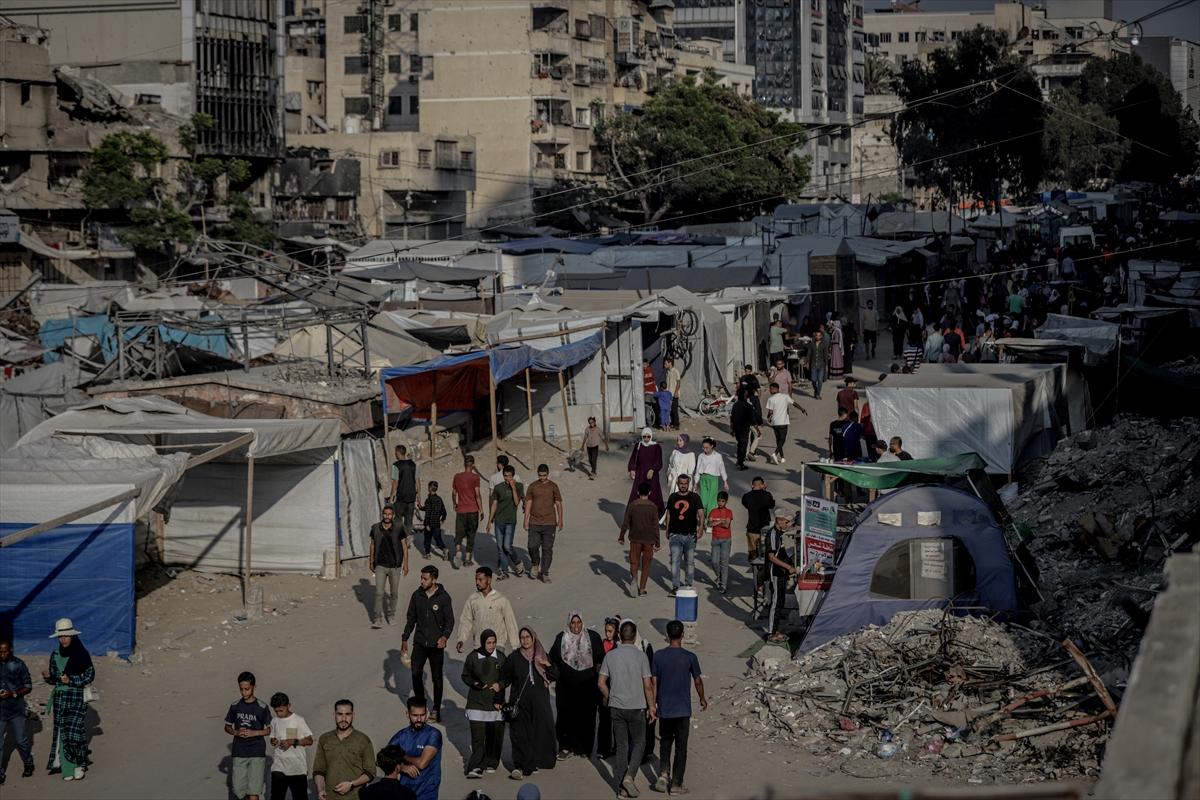
During the second day of Eid al-Adha amid the destruction in Gaza, 7 June 2025 – (Anadolu Agency)
UN Deputy Spokesperson Farhan Haq stated that during Eid al-Adha, Israel did not permit any humanitarian aid teams to enter Gaza. It was reported that civilians are being forced to risk their lives to find food due to attacks on food aid points. Since 19 May, only 4,600 metric tons of wheat flour have been delivered under limited conditions, a quantity far below what is needed to provide at least one sack per family.
Of 18 aid requests submitted to Israel, only seven were approved; the remaining 11 were rejected. Haq also emphasized that UN-run aid distribution points in Gaza are not safe. The Gaza government, however, stated in its announcement that it is capable of ensuring the safety of aid distribution in accordance with UN standards.
During Eid al-Adha, the Israeli military continued military operations in various cities of the West Bank. In Jenin, Kalkilya, Beit Lahia, and Hebron, some Palestinians were arrested. In Kalkilya, one person was injured and two were arrested during operations. Security measures around the Ibrahimi Mosque in Hebron restricted access for worshippers. Director of Hebron Waqf Affairs Muncid al-Jabari stated that Israeli forces had for the seventh time refused to open the mosque’s eastern gate. This practice has also occurred during Ramadan and previous holidays. These actions are said to violate the right to access sacred sites.
During Eid, various international responses were issued. Italian Prime Minister Giorgia Meloni stated that Israel’s operations in Gaza have reached “unacceptable levels.” Meloni emphasized that Israel must fulfill its obligation to protect civilians and called for an immediate end to the operations.
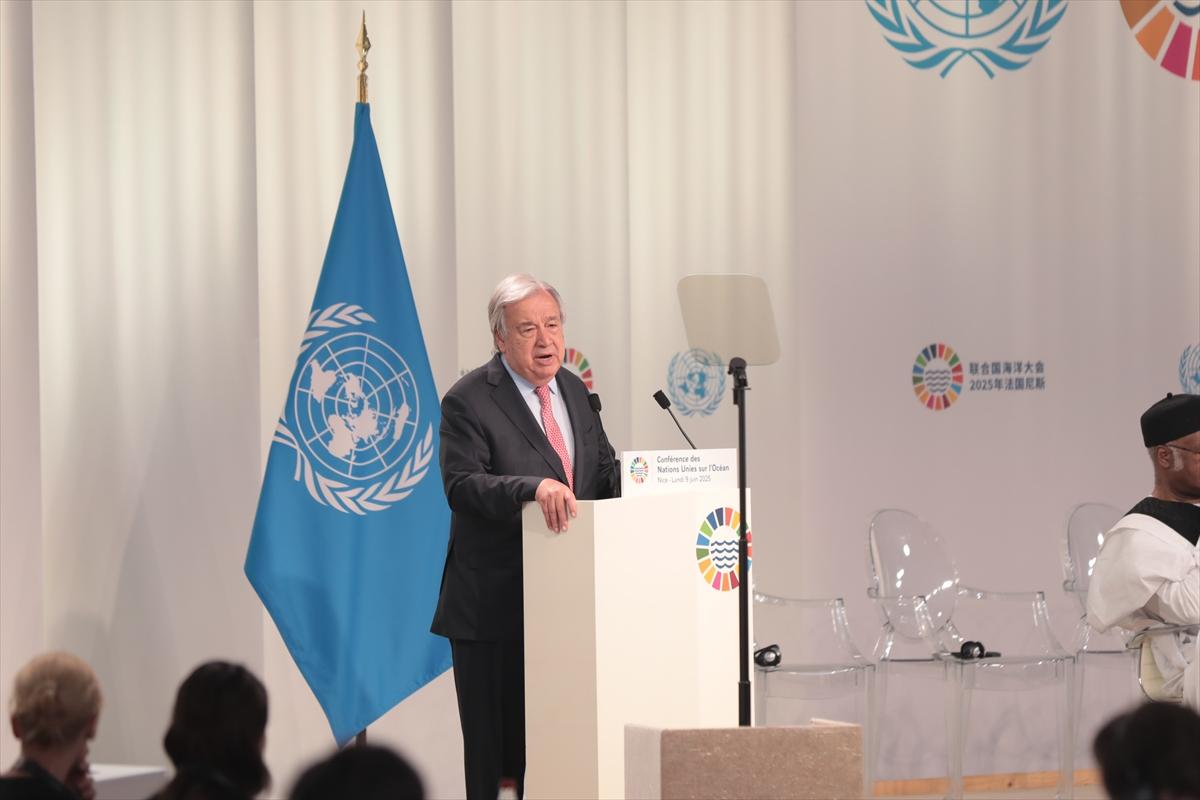
UN Secretary-General Antonio Guterres – (Anadolu Agency)
UN Secretary-General Antonio Guterres, previously drawing attention to UN staff killed in Israeli attacks, stated that those responsible must not go unpunished. Guterres emphasized that Israel must comply with its obligations under international law and ensure the protection of humanitarian workers.
During June, the number of media personnel killed in Israeli attacks targeting journalists in the Gaza Strip rose to 226. A statement by the Gaza government’s Media Office indicated that these attacks are being systematically carried out, with particular targeting of staff working for international media organizations. Ahmed Kalca, a cameraman for Al-Arabi TV, who was severely injured in an attack on the courtyard of El-Ahli Baptist Hospital, died on 6 June.
The statement strongly condemned the Israeli military’s actions against journalists, emphasizing that these attacks violate the right to information and must be investigated under the laws of war. International press organizations have called for the protection of journalists.
According to data from the Gaza government’s Media Office, between 27 May and 6 June, Israeli military attacks on aid centers killed 110 Palestinians and injured 583. These attacks primarily targeted civilians waiting in line for aid. The statement noted that the bodies of nine people reported missing have still not been recovered.
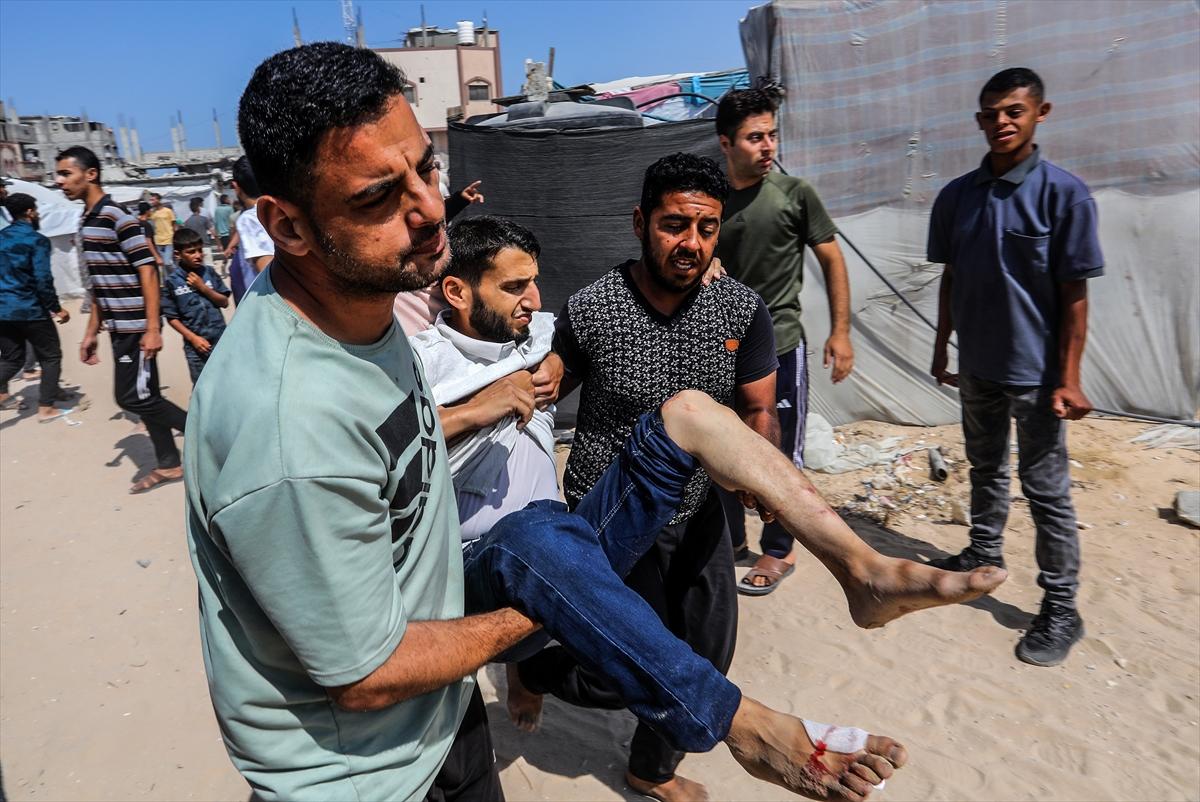
A Palestinian injured in Israel’s attack on Khan Yunis on the first day of Eid, 6 June 2025 – (Anadolu Agency)
On the first day of Eid, eight people were killed and 61 injured in Rafah when Israeli forces opened fire on civilians waiting for aid. Eyewitness accounts from the scene reported that no armed elements were present at the distribution centers during these attacks. Aid organizations operating in Gaza stated that this restriction has effectively made access to aid impossible for civilians struggling with hunger.
During the Eid al-Adha period, attacks caused extensive damage to various infrastructure and civilian targets in Gaza. Settlement areas including Batn al-Samin, Kizan al-Najjar, Satr al-Gharbi, and Ketibe neighborhoods in Khan Yunis; the eastern part of Rafah; the center of Jabalia; and the Tuffah neighborhood in eastern Gaza City were subjected to both air and ground attacks.
Tent camps housing displaced civilians in Khan Yunis were targeted; a drone strike hit a phone charging station set up between the tents. Numerous civilians were injured in the strike, and three were killed. In the same area, a child named Omar Raid Ahmed al-Kutati was killed by Israeli gunfire near the Saraya Prison.
An air strike on a house in Deir al-Balah in central Gaza killed three people. In the Jabalia area of northern Gaza, attacks on civilian homes resulted in the deaths of 10 people.
Anadolu Ajansı. "BM, Gazze'de İHH Yardım Görevlilerinin İsrail Tarafından Öldürülmesinden Derin Endişeli." Accessed June 2, 2025. https://www.aa.com.tr/tr/dunya/bm-gazzede-ihh-yardim-gorevlilerinin-israil-tarafindan-oldurulmesinden-derin-endiseli/3584680#
Anadolu Ajansı. "Guterres, BM Personelinin Öldürülmesinde Sorumluluğu Olanların Cezasız Kalmaması Gerektiğini Söyledi." Accessed June 17, 2025. https://www.aa.com.tr/tr/dunya/guterres-bm-personelinin-oldurulmesinde-sorumlulugu-olanlarin-cezasiz-kalmamasi-gerektigini-soyledi/3590015
Anadolu Ajansı. “ABD Başkanı Trump, Gazze’de Ateşkes Anlaşmasına Çok Yaklaşıldığını Söyledi.” Accessed June 2, 2025. https://www.aa.com.tr/tr/dunya/abd-baskani-trump-gazzede-ateskes-anlasmasina-cok-yaklasildigini-soyledi/3584833#
Anadolu Ajansı. “Gazze Şeridi’ndeki Filistinliler Kurban Bayramı’na Soykırım ve Açlığın Gölgesinde Girdi.” Accessed June 17, 2025. https://www.aa.com.tr/tr/dunya/gazze-seridindeki-filistinliler-kurban-bayramina-soykirim-ve-acligin-golgesinde-girdi/3589940#
Anadolu Ajansı. “Gazze’de Filistinliler Bayram Namazını İsrail Saldırılarında Yıkılan Camilerin Enkazında Kıldı.” Accessed June 17, 2025. https://www.aa.com.tr/tr/dunya/gazzede-filistinliler-bayram-namazini-israil-saldirilarinda-yikilan-camilerin-enkazinda-kildi/3590583#
Anadolu Ajansı. “Hamas, ABD Başkanı Trump’ın Özel Temsilcisi Witkoff’un Ateşkes Önerisine Dair Cevabını Arabuluculara İletti.” Accessed June 2, 2025.
Anadolu Ajansı. “Macron, Filistin Devletinin Tanınmasının ‘Ahlaki Bir Görev’ Olduğunu Belirtti.” Accessed June 2, 2025. https://www.aa.com.tr/tr/dunya/macron-filistin-devletinin-taninmasinin-ahlaki-bir-gorev-oldugunu-belirtti/3584095#
Anadolu Ajansı. “Merz, Netanyahu ile Görüşmesinde Gazze'de Yardımların Dağıtılmasının Acil Gereklilik Olduğunu Belirtti.” Accessed June 2, 2025. https://www.aa.com.tr/tr/dunya/merz-netanyahu-ile-gorusmesinde-gazzede-yardimlarin-dagitilmasinin-acil-gereklilik-oldugunu-belirtti/3586337#
Anadolu Ajansı. “İspanya Başbakanı Sanchez: ‘Gazze'deki Barbarlık İnsanlık, Dayanışma ve Adalet İçin Son Bulmalı.’” Accessed June 2, 2025. https://www.aa.com.tr/tr/dunya/ispanya-basbakani-sanchez-gazzedeki-barbarlik-insanlik-dayanisma-ve-adalet-icin-son-bulmali/3586811#
Anadolu Ajansı. “İsrail Savunma Bakanı’ndan Gazze’ye Saldırılarda Kara, Deniz ve Havadan Tüm Araçları Kullanma Talimatı.” Accessed June 2, 2025. https://www.aa.com.tr/tr/dunya/israil-savunma-bakanindan-gazzeye-saldirilarda-kara-deniz-ve-havadan-tum-araclari-kullanma-talimati/3586239#
Anadolu Ajansı. “İsrail'in Gazze Şeridine Saldırılarında Can Kaybı 54 Bin 381’e Yükseldi.” Accessed June 2, 2025. https://www.aa.com.tr/tr/dunya/israilin-gazze-seridine-saldirilarinda-can-kaybi-54-bin-381e-yukseldi-/3584983#
Anadolu Ajansı. “İsrail'in Gazze'ye Saldırılarında Can Kaybı 54 Bin 321’e Çıktı.” Accessed June 2, 2025. https://www.aa.com.tr/tr/dunya/israilin-gazzeye-saldirilarinda-can-kaybi-54-bin-321e-cikti/3584042#
Anadolu Ajansı. “İsrail'in Gazze'ye Saldırılarında Son 24 Saatte 53 Kişi Hayatını Kaybetti.” Accessed June 2, 2025. https://www.aa.com.tr/tr/dunya/israilin-gazzeye-saldirilarinda-son-24-saatte-53-kisi-hayatini-kaybetti/3586389#
Anadolu Ajansı. “İsrail'in Gazze’de Yardım İçin 2 Noktada Toplananlara Saldırısında 31 Kişi Hayatını Kaybetti, 176 Kişi Yaralandı.” Accessed June 2, 2025. https://www.aa.com.tr/tr/dunya/israilin-gazze-de-yardim-icin-2-noktada-toplananlara-saldirisinda-31-kisi-hayatini-kaybetti-176-kisi-yaralandi/3585631#
Anadolu Ajansı. “İsrail, Kurban Bayramı Boyunca İnsani Yardım Ekiplerinin Gazze’ye Girişine İzin Vermedi.” Accessed June 17, 2025. https://www.aa.com.tr/tr/dunya/israil-kurban-bayrami-boyunca-insani-yardim-ekiplerinin-gazzeye-girisine-izin-vermedi/3592771#
Anadolu Ajansı. “İsrail’in Bayramın İlk Gününde Düzenlediği Saldırılarda 31 Filistinli Hayatını Kaybetti.” Accessed June 17, 2025. https://www.aa.com.tr/tr/dunya/israilin-bayramin-ilk-gununde-duzenledigi-saldirilarda-31-filistinli-hayatini-kaybetti/3590510
Anadolu Ajansı. “İsrail’in Gazze’ye Yönelik Saldırılarında 78 Filistinli Hayatını Kaybetti.” Accessed June 17, 2025. https://www.aa.com.tr/tr/dunya/israilin-gazzeye-yonelik-saldirilarinda-78-filistinli-hayatini-kaybetti/3590917#
Anadolu Ajansı. “İtalya Başbakanı Meloni: İsrail’in Tepkisi Kabul Edilemez Boyutlara Ulaştı.” Accessed June 17, 2025. https://www.aa.com.tr/tr/dunya/italya-basbakani-meloni-israilin-tepkisi-kabul-edilemez-boyutlara-ulasti/3590115
Anadolu Ajansı. “İtalya Cumhurbaşkanı Mattarella, Gazze'deki Halkın Açlık Çekmesine Tepki Gösterdi.” Accessed June 2, 2025. https://www.aa.com.tr/tr/dunya/italya-cumhurbaskani-mattarella-gazzedeki-halkin-aclik-cekmesine-tepki-gosterdi/3586174#
Between 10 and 15 June 2025, a large number of people, primarily Palestinian civilians, were killed in air, land and artillery attacks carried out by the Israeli military across the Gaza Strip. On 10 June, at least 62 Palestinians lost their lives as a result of attacks targeting civilians awaiting aid. At least 19 of these individuals were among civilians gathered in the Netzarim Corridor in central Gaza for assistance. Additionally, 12 people, including women and children, were killed in attacks in the Jabalia area. On the same day, civilians who had been displaced and were living in tents in the Mevasi area of Khan Yunis were targeted, resulting in further casualties.
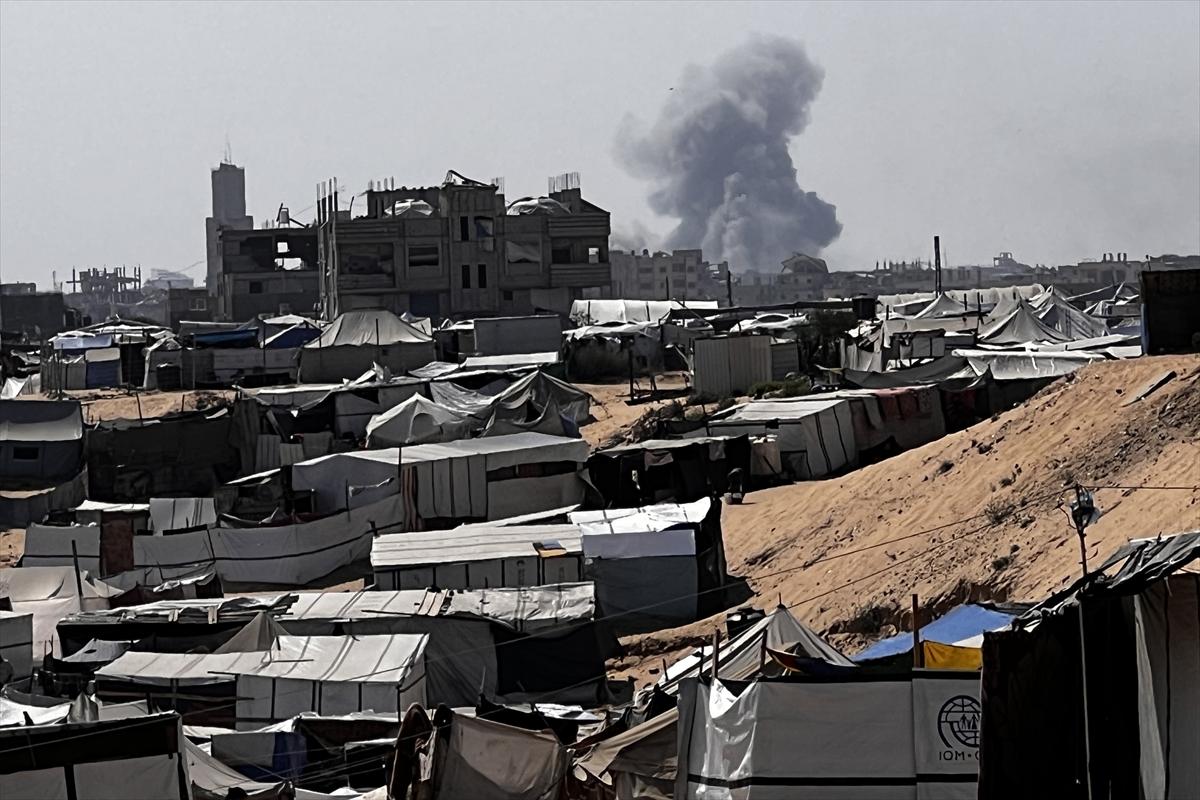
Smoke rising after the Israeli military’s attack south of Khan Yunis city in the Gaza Strip, 11 June 2025 – (Anadolu Agency)
On 11 June, 123 Palestinians were killed and 474 injured as a result of Israeli military attacks in various locations. A significant portion of these attacks targeted civilians gathered at aid distribution zones and refugee camps. Nine Palestinians waiting for aid near a relief center in Rafah were killed by Israeli fire. Attacks in Deir al-Balah and Nuseirat refugee camp also contributed to the rising death toll that day. Health officials reported that 11 additional bodies were recovered from under the rubble during nighttime attacks.
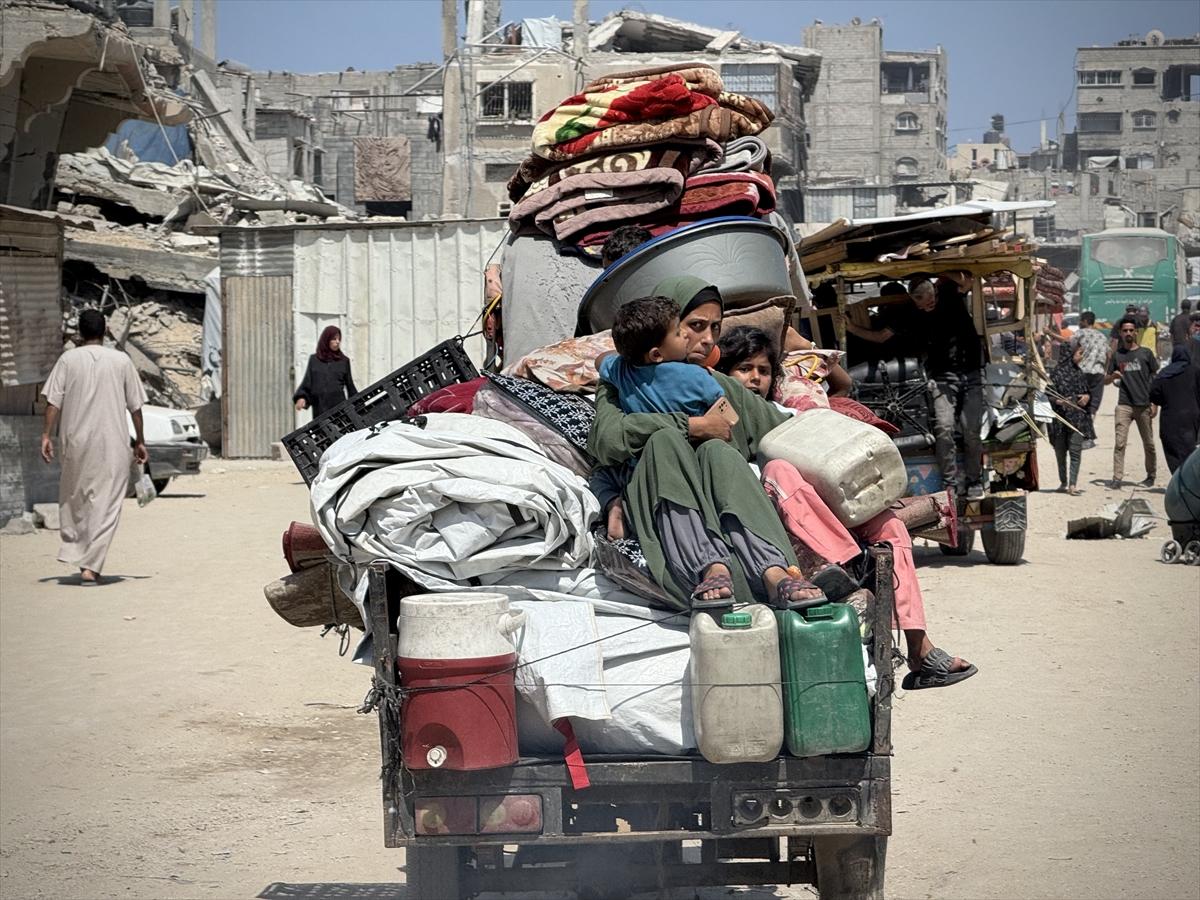
Palestinians who fled to the west of Khan Yunis due to Israeli attacks, 13 June 2025 – (Anadolu Agency)
On 12 June, aid points were again targeted in attacks that resulted in the deaths of 80 Palestinians, including 57 civilians waiting for assistance around the Netzarim Corridor. In addition, 58 more people were killed across other areas that day, 32 of whom were civilians waiting for aid. Bombardments focused particularly on homes, refugee tents and open areas where civilians had gathered.
On 13 June, the southern, central and northern areas of the Gaza Strip were again targeted. At least 20 Palestinians were killed in attacks on the Nablus Junction, Jabalia and Deir al-Balah regions. Intensive Israeli military activity in Gaza occurred simultaneously with attacks launched by Israel against Iran on the same day.
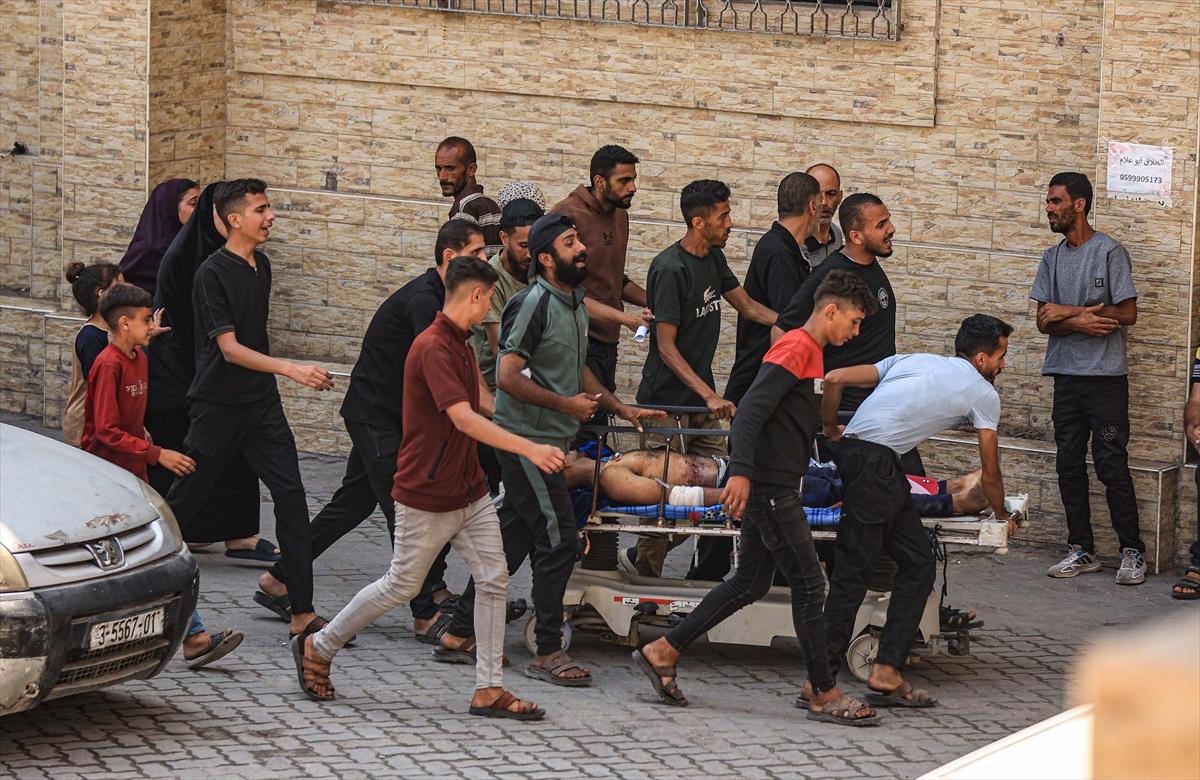
Injured people are brought to Al Ahli Baptist Hospital following the Israeli military’s attack on the Shu’ayya neighborhood, 13 June 2025 – (Anadolu Agency)
As of 14 June, it was reported that 90 Palestinians had been killed and 605 injured in the previous 48 hours. Again, civilians waiting for aid were targeted; 27 civilians were killed directly by Israeli fire in attacks around the Netzarim Corridor. Civilian casualties also occurred due to drone strikes in areas including Deir al-Balah, Khan Yunis, Beit Lahiya and around the Islamic University. According to data released on 15 June, 65 people were killed and 315 injured in the preceding 24 hours. Heavy civilian casualties were reported in Khan Yunis and Tel al-Zatar, alongside those killed at aid points.
The attacks were concentrated especially in aid distribution zones established under the umbrella of the “Gaza Humanitarian Aid Foundation,” which was formed under U.S. and Israeli guidance. The fact that this structure is not recognized by the United Nations and has been rejected by Palestinian groups has cast doubt on the reliability of these distribution zones. Since 27 May, more than 300 people have been killed and over 2,600 injured in these aid zones.
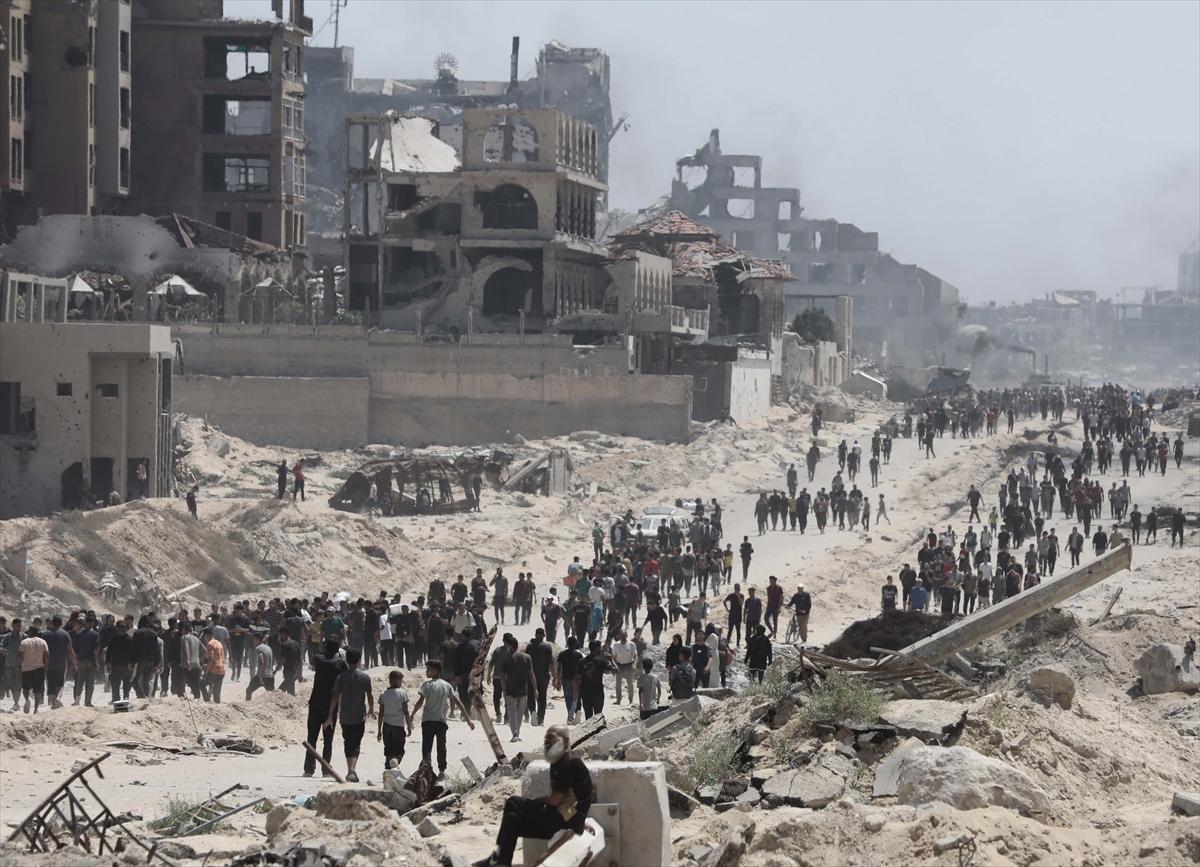
Awaiting aid in northern Gaza: Palestinians gathered in Sudaniyya, 12 June 2025 – (Anadolu Agency)
The United Nations has declared this aid mechanism a failure in terms of access to humanitarian assistance, stating that it fails to alleviate hunger and instead forces hungry and defenseless people to walk dozens of kilometers, exposing them to new dangers. It has also been documented that some civilians who gathered for aid were shot or crushed by aid trucks.
The healthcare system in Gaza has largely lost functionality during this period. Starting on 11 June, internet and communication services were completely cut across wide areas of Gaza, severely disrupting coordination of medical services. Services were partially restored by 15 June.
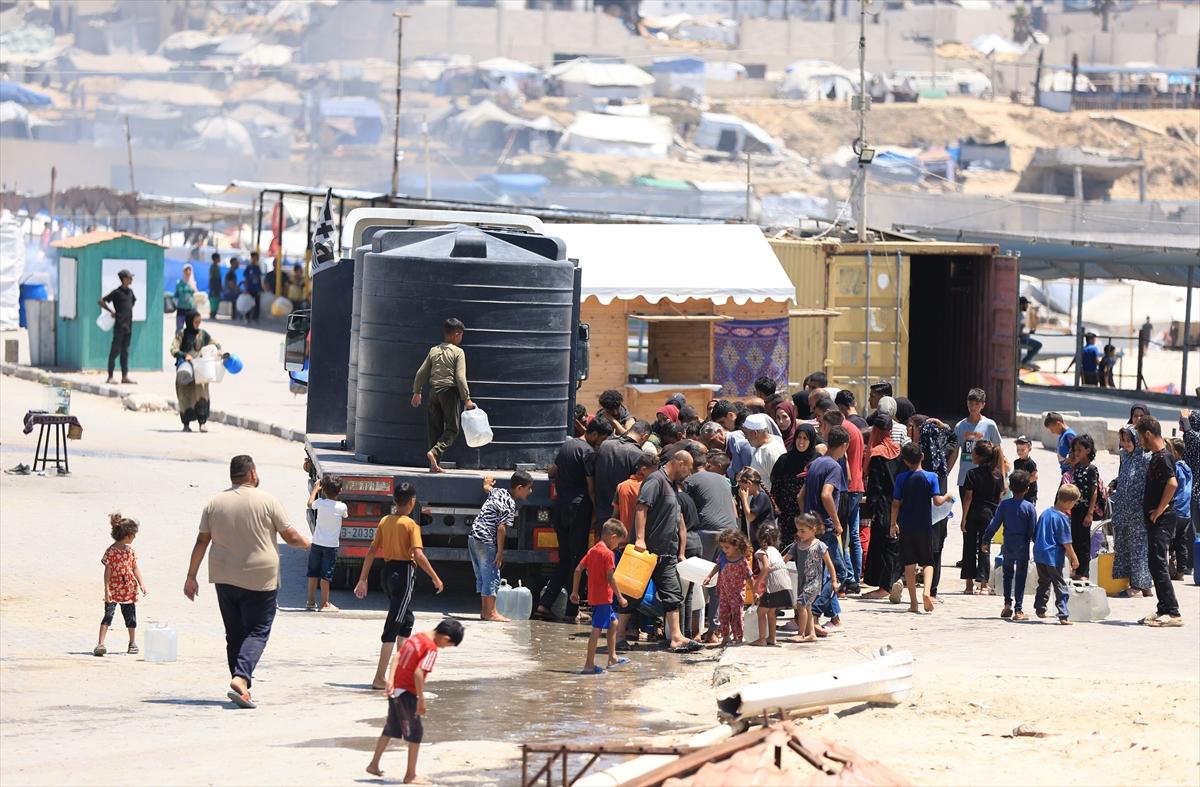
Water crisis continues in Gaza under Israeli attacks, 12 June 2025 – (Anadolu Agency)
Emel Hospital in Khan Yunis was rendered non-operational due to attacks, leaving Nasr Hospital as the region’s only intensive care center. At Shifa Hospital, fuel shortages have put the intensive care unit at risk, with only three days’ worth of fuel remaining for hospital generators. The Ministry of Health has warned that hundreds of patients’ lives are in danger and that the collapse of these hospitals could lead to a major humanitarian catastrophe.
Municipal services have also ceased during this period. The municipalities of Khan Yunis, Nuseirat and Zuwayda have suspended water, sewage and waste collection services due to fuel shortages. This has left hundreds of thousands without access to clean water, and authorities have warned of the risk of infectious diseases spreading due to open sewage systems.
Italian President Sergio Mattarella described the situation in Gaza as “unacceptable” in a statement on 11 June. Speaking during an official visit to Luxembourg, Mattarella called for an immediate ceasefire and the release of all hostages. He stated that a two-state solution is the only viable option and announced that Italy had brought 70 Palestinians to the country for medical treatment as part of humanitarian aid.
Between 10 and 15 June 2025, large-scale mass demonstrations in support of the Palestinian people were held in numerous cities across Europe. These protests aimed to draw attention to civilian casualties in Gaza and to call for increased international pressure on Israel.
On 14 June 2025, thousands of Palestinian supporters in the French capital Paris marched from Place de la République to Place de la Nation. Organized at the call of French trade unions, participants chanted slogans such as “We are all children of Gaza,” “Free Palestine,” and “Israel is a killer, Macron is an accomplice.” Despite hot weather conditions, demonstrators continued their march carrying keffiyehs and Palestinian flags.
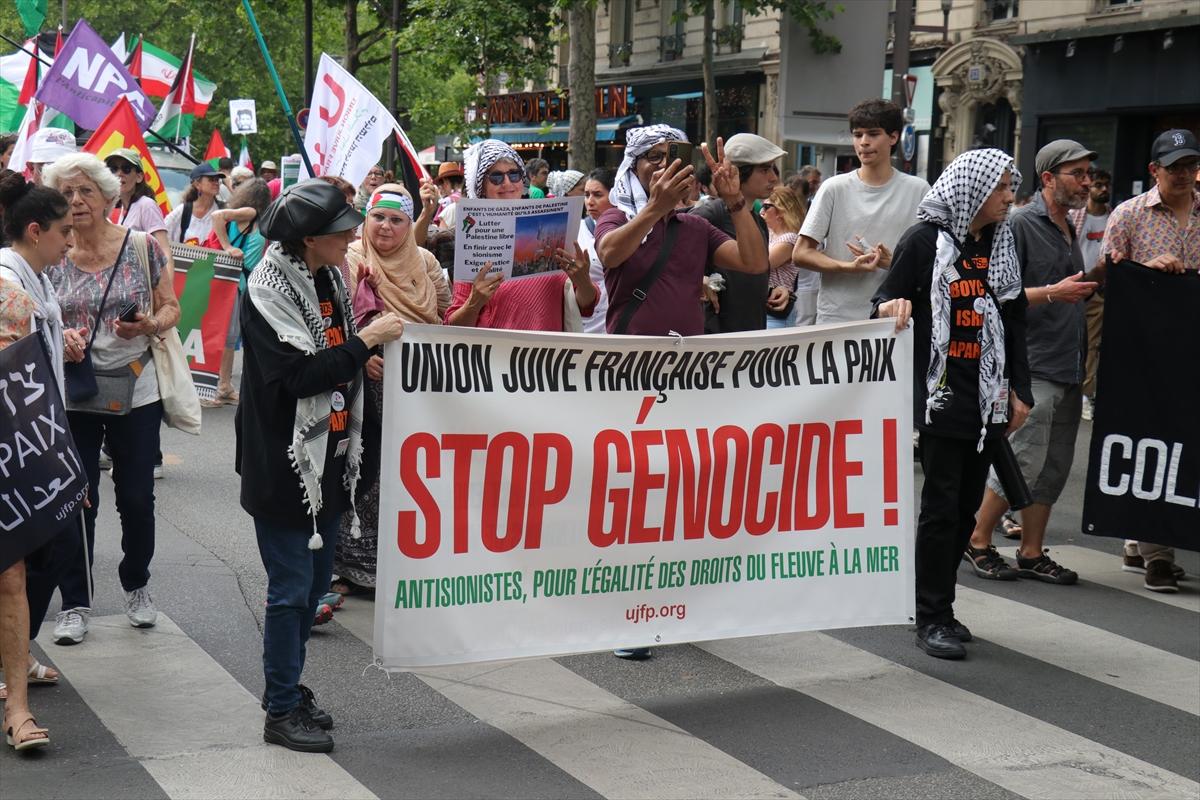
Palestinian supporters marching in Paris in solidarity with the people of Gaza, 14 June 2025 – (Anadolu Agency)
Among those who joined the march were European Parliament member Rima Hassan and Madleen volunteers Reva Viard and Baptiste Andre. In her speech, Hassan stated that public support had prevented an Israeli drone strike and emphasized the symbolic and political significance of these efforts against Israel’s blockade. Protesters also demanded an end to Israel’s actions against the Palestinian people and the release of those detained aboard the Madleen.
French police intervened during the protest. Alma Dufour, a member of parliament from the party France Unbowed (LFI), shared images on social media of police using pepper spray and batons against demonstrators. Manuel Bompard, another MP from the same party, stated that 150,000 people had participated in the demonstration.
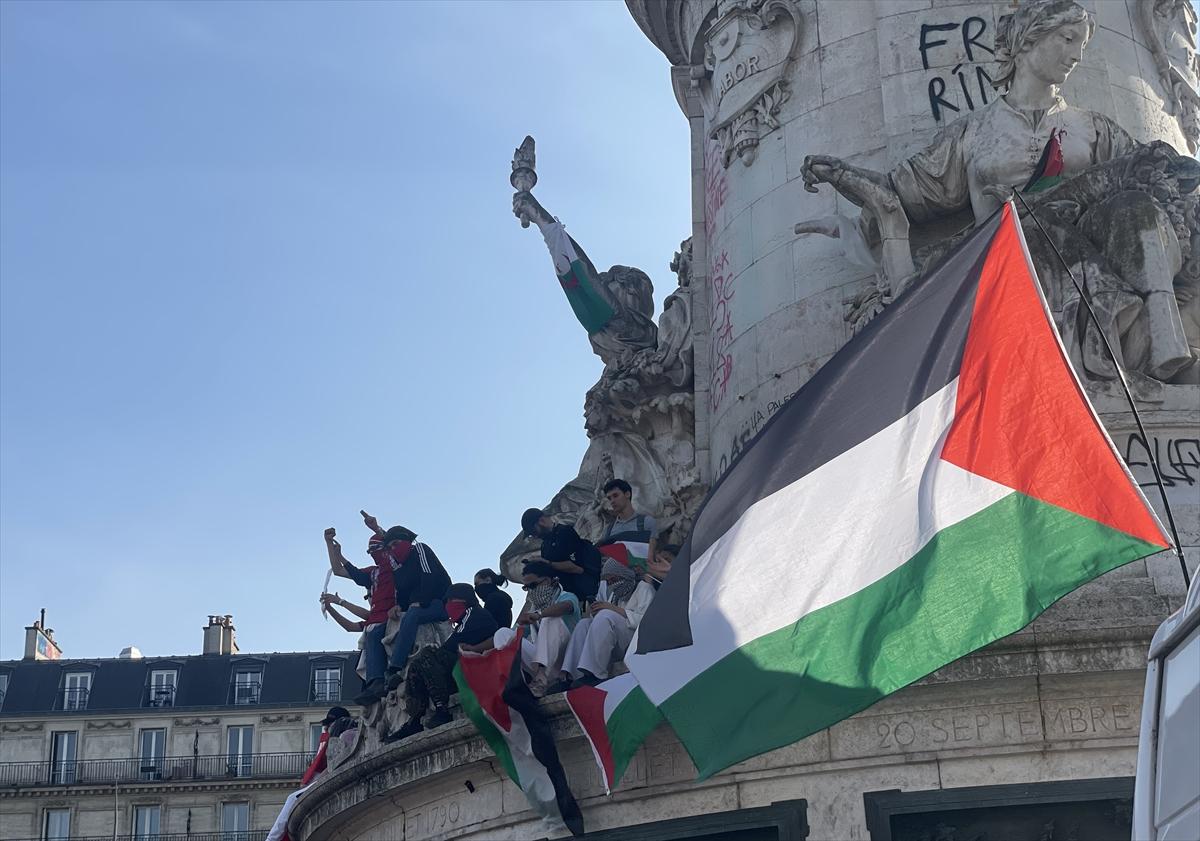
Protest by Palestinian supporters in Paris in solidarity with the people of Gaza, 14 June 2025 – (Anadolu Agency)
On 14 June 2025, thousands gathered in Berlin, Germany’s capital, in support of the Palestinian people. During the march between Brandenburg Gate and the Victory Column, participants carried banners reading “Gaza wants to survive,” “Stop apartheid and genocide,” “Ethnic cleansing is a crime,” and “Palestine will never die.”
Among the groups organizing the action was the Jewish organization “Jüdische Stimme für gerechten Frieden im Nahost” (Jewish Voice for a Just Peace in the Middle East). Udi Raz, a spokesperson for the group, stated that Palestinians are under pressure not only from Israel’s military practices but also from state repression in Germany. A representative from Amnesty International protested against Israel’s attacks on civilians and its blockade, calling on the German government to explicitly condemn Israel’s actions. After the demonstration, some participants set up a tent camp in front of the German Federal Parliament to continue their protest.
On 13 June 2025, hundreds gathered in front of the Sebilj fountain in Sarajevo, the capital of Bosnia and Herzegovina, to protest against Israel’s attacks on Gaza. Demonstrators marched along Ferhadija Street chanting slogans such as “Stop the genocide,” “Freedom for Palestine,” “Netanyahu will be tried,” and “Stop Israeli terrorism.” Models representing babies and children killed in Israeli attacks were carried during the protest, and support was expressed for activists detained aboard the Madleen.
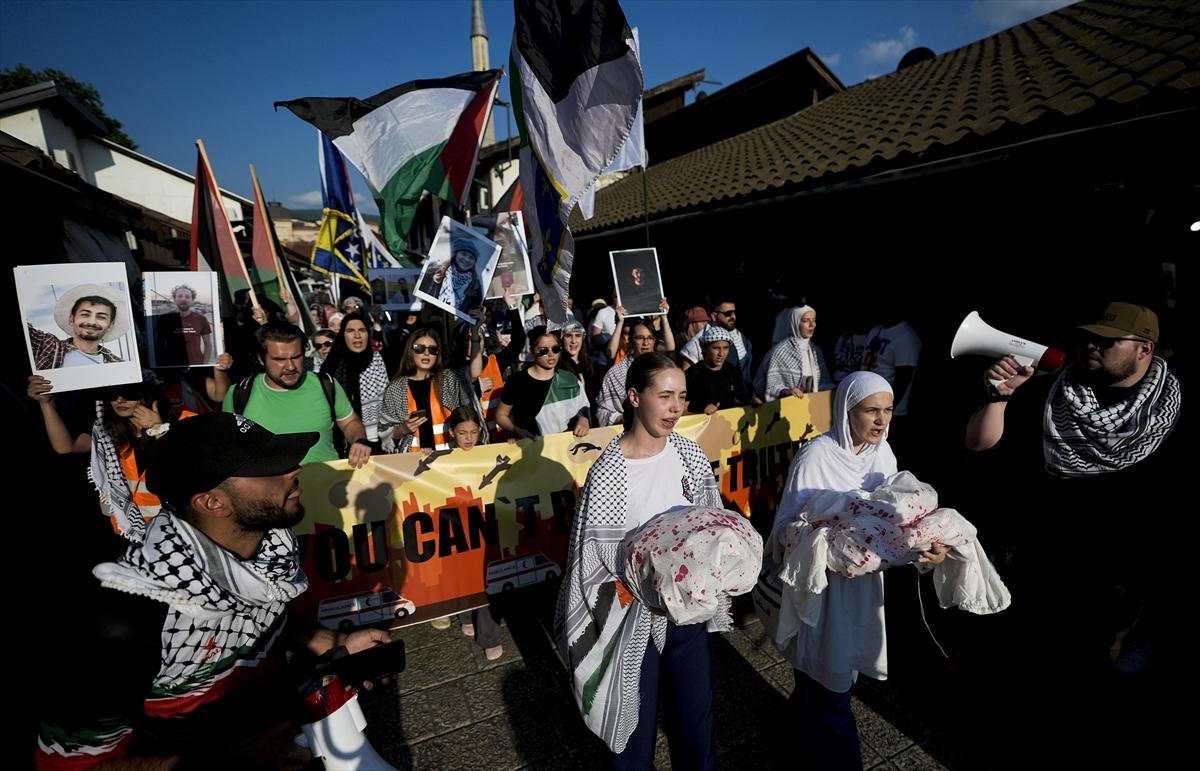
Protest in support of Palestine in Bosnia, 14 June 2025 – (Anadolu Agency)
On 14 June 2025, solidarity marches in support of Palestine were held in 125 cities across Spain, including Madrid and Barcelona. The protests were organized under the call of the “Parar La Guerra” (Stop the War) Platform with the theme “Justice for peace. Free Palestine. Full ceasefire. No terrorism, no genocide.”
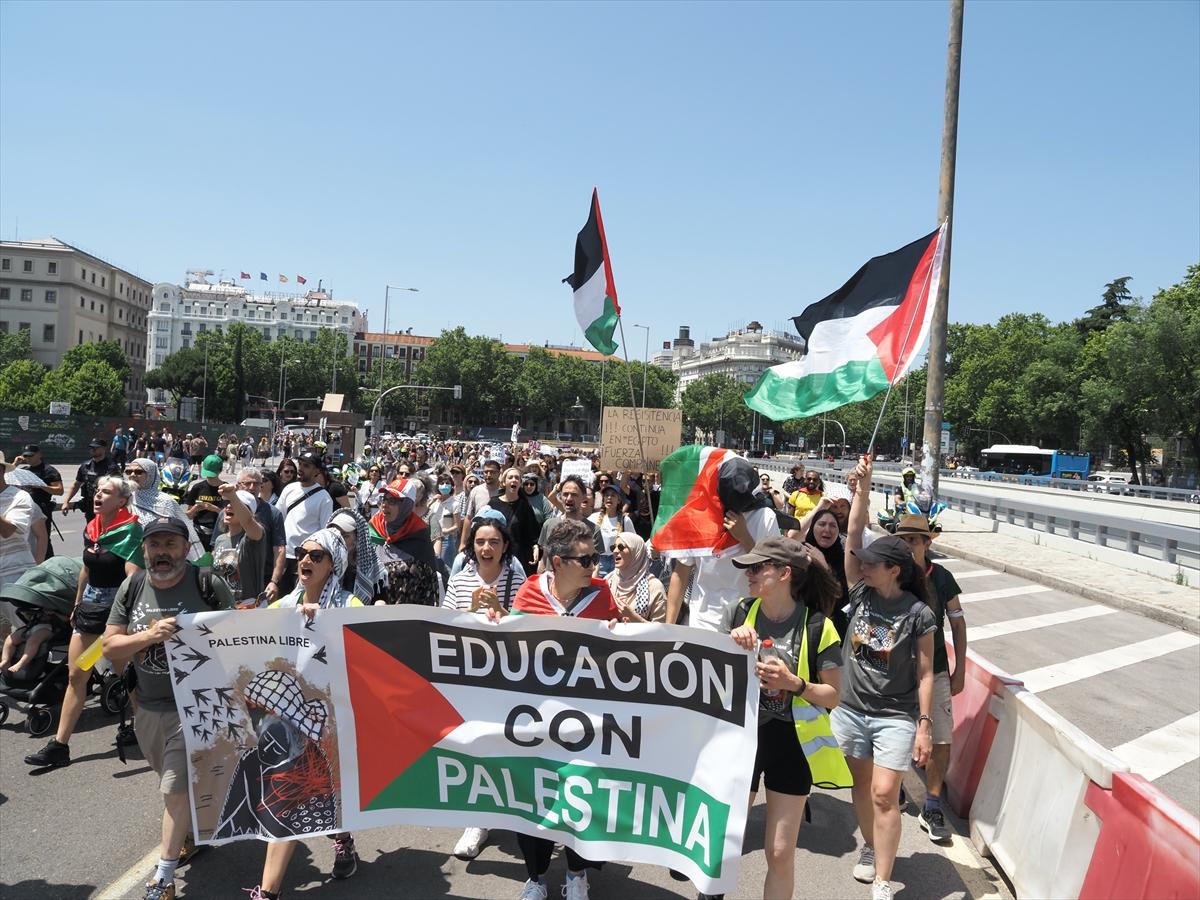
Protest in support of Palestine in Madrid, 14 June 2025 – (Anadolu Agency)
The demonstration in Madrid took place in front of the Reina Sofia Museum, with numerous artists lending their support. A manifesto signed by director Pedro Almodóvar, actor Jose Sacristán, writer Elvira Lindo, actress Malena Alterio, and musicians Rayden, Miguel Poveda and Silvia Perez Cruz stated that Israel had committed war crimes in Gaza, left Palestinians starving and subjected them to ethnic cleansing. The manifesto also referred to “Netanyahu’s criminal project, sustained with unconditional support from Trump.”
Joanen Cunyat, coordinator of the platform, stated in a statement that they would not grow accustomed to bombings and would continue transforming their anger into mass peaceful actions.
Anadolu Ajansı. "İsrail’in Gazze’deki Saldırıları Bosna Hersek’te Protesto Edildi." Accessed June 19, 2025. https://www.aa.com.tr/tr/dunya/israilin-gazzedeki-saldirilari-bosna-hersekte-protesto-edildi/3596189
Anadolu Ajansı. “Berlin’de Binlerce Kişi Filistin’e Destek Gösterisi Yaptı.” Accessed June 19, 2025. https://www.aa.com.tr/tr/dunya/berlin-de-binlerce-kisi-filistin-e-destek-gosterisi-yapti/3598591
Anadolu Ajansı. “Paris’te Filistin Destekçileri Gazze Halkıyla Dayanışma Amacıyla Yürüyüş Düzenledi.” Accessed June 19, 2025. https://www.aa.com.tr/tr/dunya/pariste-filistin-destekcileri-gazze-halkiyla-dayanisma-amaciyla-yuruyus-duzenledi/3598688#
Anadolu Ajansı. “İspanya’da 125 Kentte Filistin’e Destek Gösterileri Düzenlendi.” Accessed June 19, 2025. https://www.aa.com.tr/tr/dunya/ispanyada-125-kentte-filistine-destek-gosterileri-duzenlendi/3598235#
Anadolu Ajansı. “İsrail’in Gazze Şeridi’ne Son 24 Saatte Düzenlediği Saldırılarda 123 Filistinli Hayatını Kaybetti.” Accessed June 19, 2025. https://www.aa.com.tr/tr/dunya/israilin-gazze-seridine-son-24-saatte-duzenledigi-saldirilarda-123-filistinli-hayatini-kaybetti-/3593686
Anadolu Ajansı. “İsrail’in Gazze Şeridi’ne Son 48 Saatte Düzenlediği Saldırılarda 90 Kişi Hayatını Kaybetti.” Accessed June 19, 2025. https://www.aa.com.tr/tr/dunya/israilin-gazze-seridine-son-48-saatte-duzenledigi-saldirilarda-90-kisi-hayatini-kaybetti/3598049#
Anadolu Ajansı. “İsrail’in Gazze’deki Saldırılarında 32’si Yardım Bekleyenler Olmak Üzere 58 Filistinli Hayatını Kaybetti.” Accessed June 19, 2025. https://www.aa.com.tr/tr/dunya/israilin-gazzedeki-saldirilarinda-32-si-yardim-bekleyenler-olmak-uzere-58-filistinli-hayatini-kaybetti/3595568#
Anadolu Ajansı. “İsrail’in Gazze’deki Saldırılarında 57’si Yardım Bekleyen Kişiler Olmak Üzere 80 Filistinli Hayatını Kaybetti.” Accessed June 19, 2025. https://www.aa.com.tr/tr/dunya/israilin-gazzedeki-saldirilarinda-57si-yardim-bekleyen-kisiler-olmak-uzere-80-filistinli-hayatini-kaybetti/3594665#
Anadolu Ajansı. “İsrail’in Gazze’deki Saldırılarında 62 Filistinli Hayatını Kaybetti.” Accessed June 19, 2025. https://www.aa.com.tr/tr/dunya/israil-in-gazzedeki-saldirilarinda-62-filistinli-hayatini-kaybetti/3592994#
Anadolu Ajansı. “İsrail’in Gazze’ye Düzenlediği Saldırılarda 20 Filistinli Hayatını Kaybetti.” Accessed June 19, 2025. https://www.aa.com.tr/tr/dunya/israilin-gazzeye-duzenledigi-saldirilarda-20-filistinli-hayatini-kaybetti/3596851
Anadolu Ajansı. “İsrail’in Gazze’ye Son 24 Saatte Düzenlediği Saldırılarda 65 Kişi Hayatını Kaybetti.” Accessed June 19, 2025. https://www.aa.com.tr/tr/dunya/israilin-gazzeye-son-24-saatte-duzenledigi-saldirilarda-65-kisi-hayatini-kaybetti/3599036#
Anadolu Ajansı. “İtalya Cumhurbaşkanı Mattarella: Gazze’deki Durum Kabul Edilemez.” Accessed June 19, 2025. https://www.aa.com.tr/tr/dunya/italya-cumhurbaskani-mattarella-gazzedeki-durum-kabul-edilemez/3594490#
Between 15 and 20 June 2025, the Israeli military conducted extensive air and ground attacks across various regions of the Gaza Strip. On 17 June, an attack on civilians waiting for aid in Khan Younis resulted in at least 45 deaths. According to data released on 18 June 2025, the Israeli military killed 144 Palestinians in its attacks over the previous 24 hours in Gaza. These attacks targeted not only residential buildings but also tents and gathering areas housing civilians and forcibly displaced persons. Eleven people were killed when Israeli forces opened fire on those awaiting aid near the Netzarim Corridor. In the Zaytoun neighborhood, a house was bombed, killing three people including a child. In the Meghazi Refugee Camp, an attack on a residence claimed the lives of ten people. In the Mevasi area of Khan Younis, an attack on tents resulted in eight deaths.
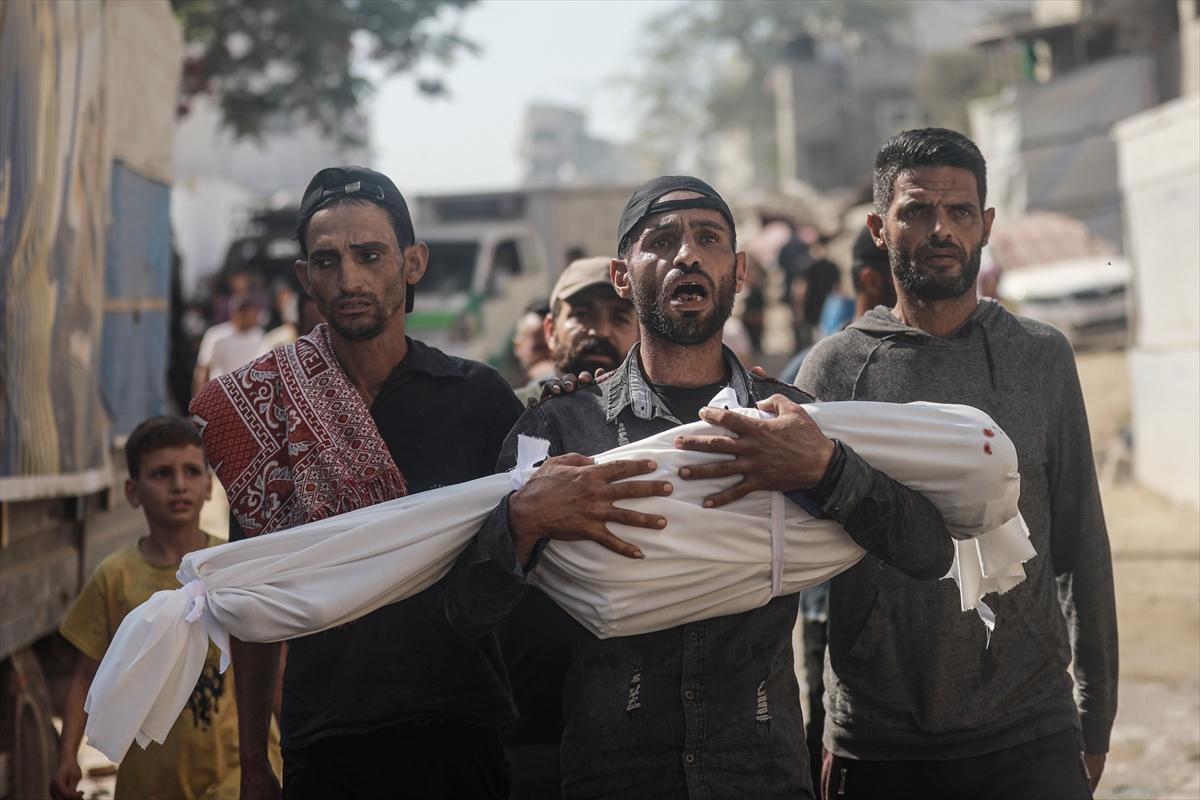
Palestinians waiting near the Netzarim Corridor in southern Gaza City hoping for humanitarian aid, who were hit by an Israeli military attack, 20 June 2025 - (Anadolu Agency)
On 19 June 2025, 84 people were killed in Israeli attacks on Gaza. During these attacks, particularly targeting mobile phone charging stations, aid centers, and densely populated civilian areas. Nineteen people died in an airstrike on a charging point in the Shati Refugee Camp, five were killed in an attack at the Al-Hur Intersection, and five died in a drone strike on Cela Street. Additionally, fourteen Palestinians were killed in an attack on a house in Jabalia.
On 20 June 2025, at least 23 people were killed and dozens injured in an attack on Palestinians waiting for humanitarian aid near the Shuhada Intersection in northern Gaza. On the same day, eleven people were killed when a house in Deir al-Balah was targeted; their bodies were taken to Al-Aqsa Martyrs Hospital. With this incident, the total death toll reached at least 34.
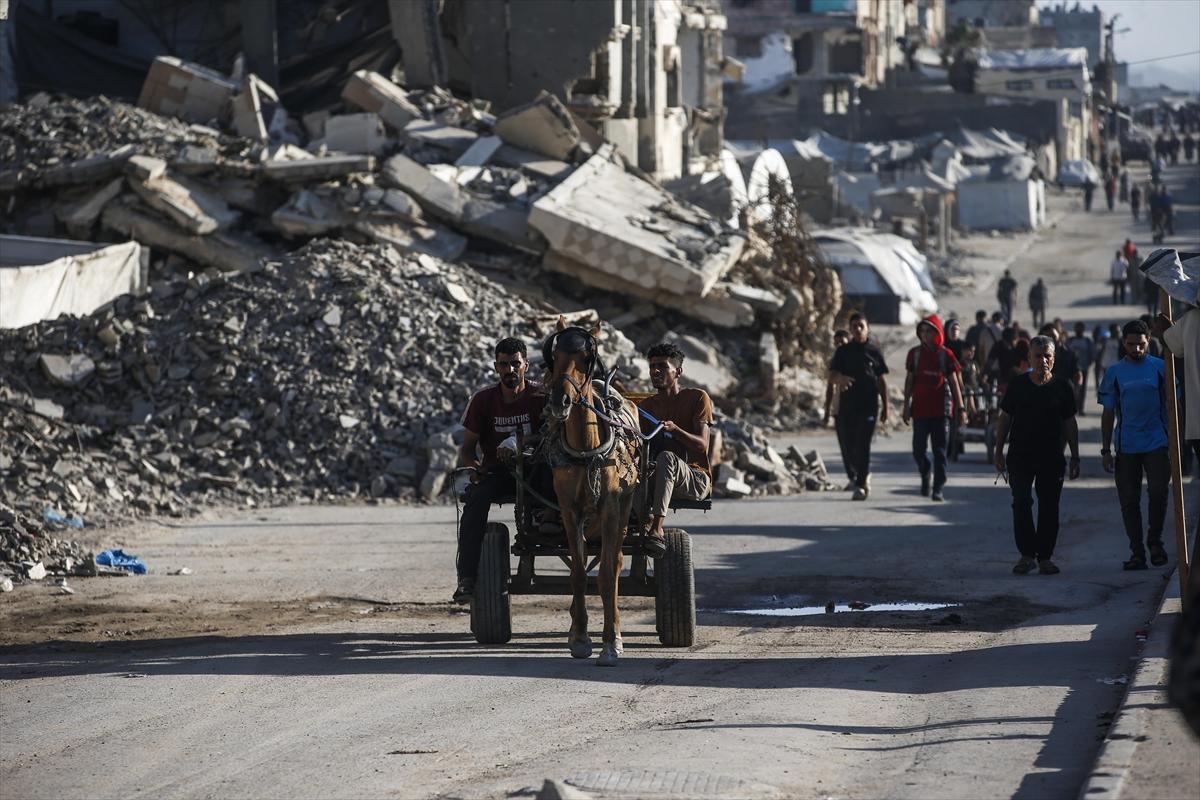
Daily life in Gaza, 19 June 2025 - (Anadolu Agency)
During the same period, the Israeli military carried out intense raids and arrest operations in numerous cities across the occupied West Bank. Between 15 and 20 June, 160 people were detained in the West Bank, including women, children, and former detainees.
The Israeli military also targeted sites directly affecting civilian life, such as aid distribution points and mobile phone charging zones. In the Nasr neighborhood on the western edge of Gaza City, one person was killed in an attack on a tent area. In the Zaytoun neighborhood, the bodies of five people were recovered from the rubble of a previously bombed house. Three more people were killed in a drone strike in the same neighborhood.
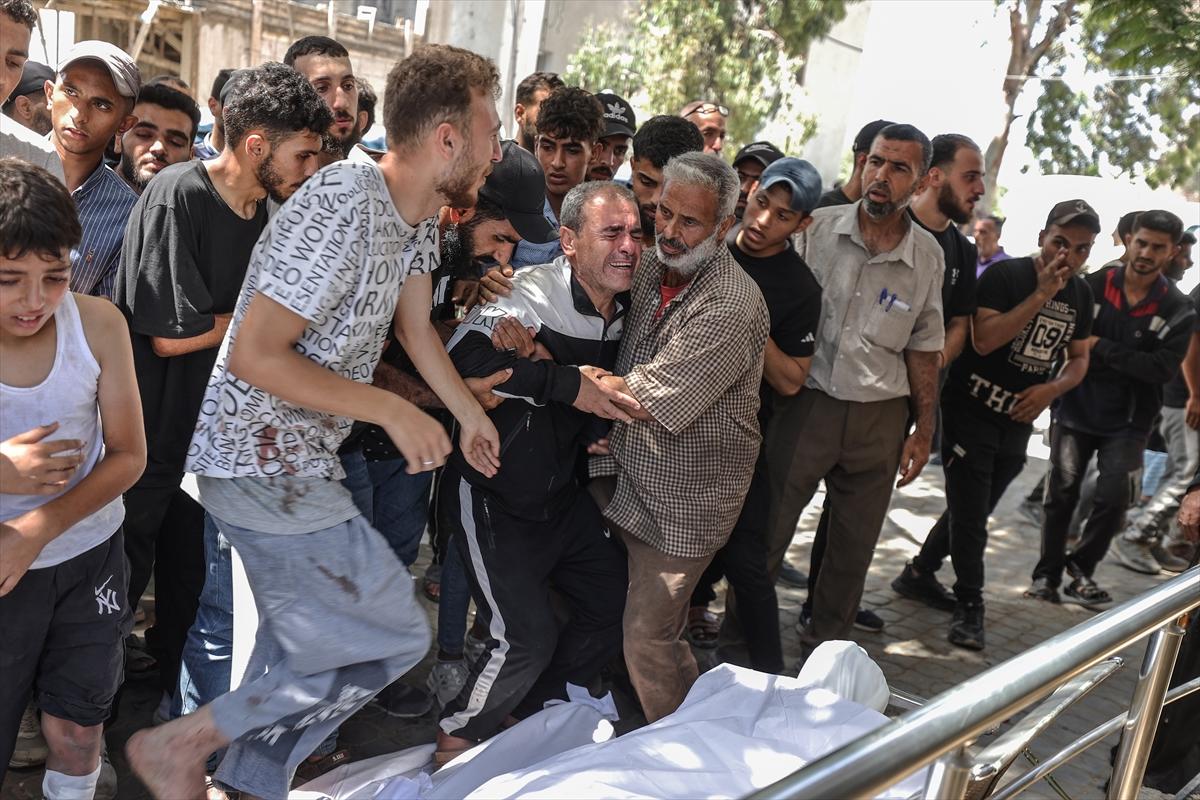
The bodies of Palestinians killed in an Israeli attack on Jabalia in northern Gaza, 19 June 2025 - (Anadolu Agency)
According to a statement by UNRWA, the healthcare infrastructure has been critically damaged. Forty-five percent of essential medical supplies have been depleted, and remaining stockpiles are projected to be exhausted within six weeks. Only 16 hospitals in Gaza (five public and eleven private) are able to provide limited services. Additionally, only eight field hospitals can offer emergency care.
Two hospitals have warned that infant deaths may soon begin due to the complete depletion of baby formula. Dr. Jamil Ali, Director of Rantisi Hospital, stated that not a single packet of baby formula remains in the region. On 19 June, Dr. Ahmed al-Ferra from Nasser Medical Center announced that deaths among premature infants could occur within the next 48 hours.
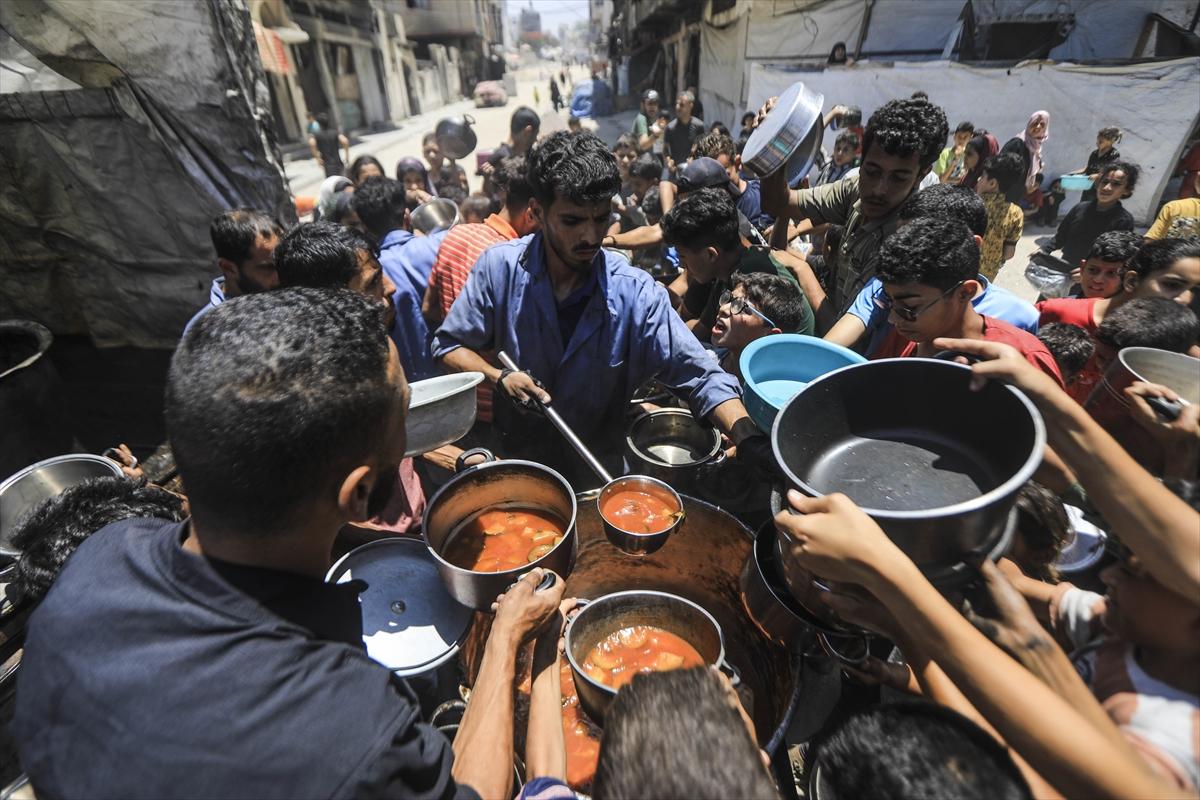
Food is distributed to Palestinians under Israeli attacks in Gaza, 18 June 2025 - (Anadolu Agency)
On 15 June 2025, the “Global March to Gaza,” led by the Islamic Solidarity Platform, began at the Tevfikiye Mosque in Bebek, Istanbul, and ended at the Egyptian Consulate General in Istanbul. Participants, carrying Palestinian flags, called for the opening of the Rafah Border Crossing and the lifting of the blockade. Thousands joined the march, with some drivers honking in support.
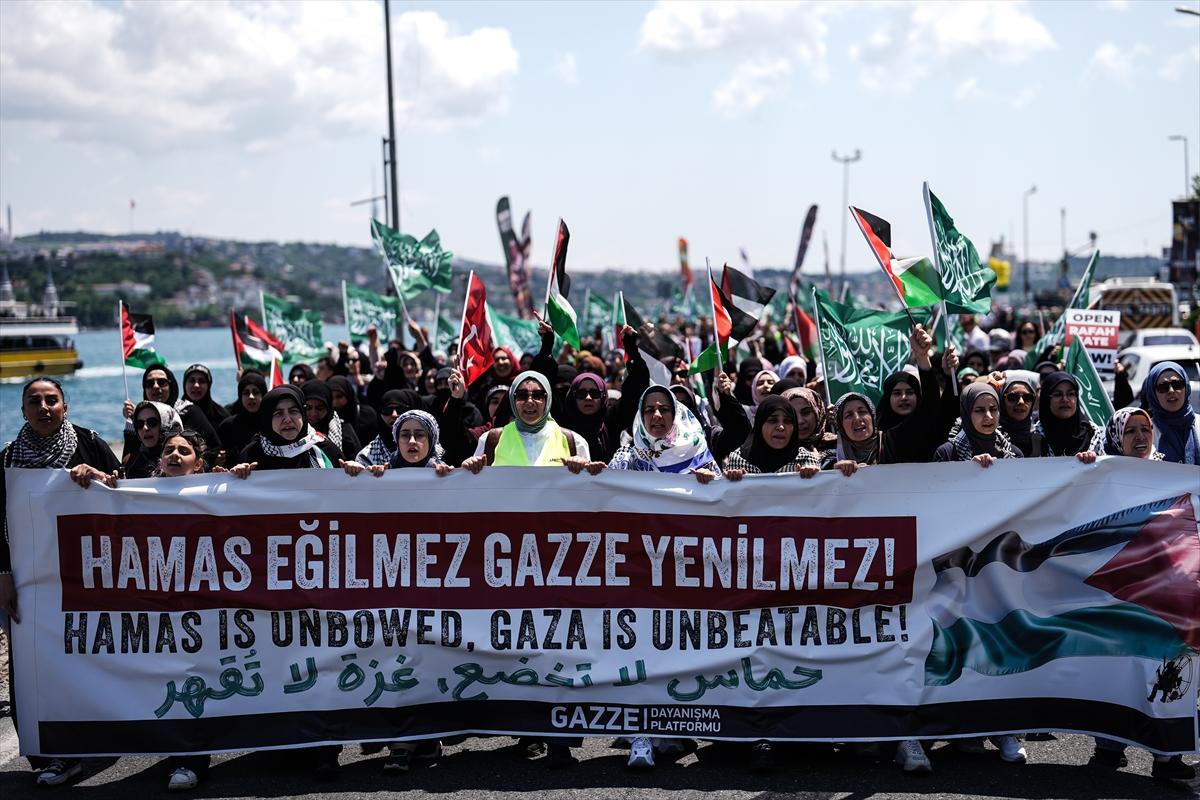
The "Global March to Gaza" held in Istanbul, 15 June 2025 - (Anadolu Agency)
On the same day, the international “Global March to Gaza” was not carried out due to Egypt’s refusal to grant permission. A statement from Cairo clarified that this cancellation was not a retreat but a strategic realignment. The aim was to mobilize global public opinion through diplomacy and social media, and to spread testimonies of conscience worldwide.
The committee emphasized its unwavering commitment to continuing the humanitarian struggle against attacks on Palestine and thanked the Egyptian people for their sensitivity toward the Palestinian cause. The campaign, conducted under the slogan “Freedom for Gaza, Hope for Humanity,” highlighted digital solidarity calls.
On 15 June 2025, tens of thousands of people in Brussels, Belgium’s capital, participated in a large-scale march protesting Israeli attacks on Gaza. Demonstrators called on the European Union to draw a “red line” against Israel. The protest was jointly organized by the European Network for Justice in Palestine (ENPJ) and approximately 100 Belgian civil society organizations and unions.

Tens of thousands marching in Brussels streets demanding a "red line" against Israel, 16 June 2025 - (Anadolu Agency)
Protesters carried banners reading “Stop the Genocide in Gaza,” “Israel Must Be Held Accountable,” “Freedom for Gaza,” and “Do Not Be Complicit in Genocide.” They gathered in front of EU buildings, demanding that European leaders impose military, economic, and diplomatic sanctions on Israel.
A statement read during the action emphasized that rulings by the International Court of Justice regarding Israeli war crimes must be enforced, warning that the EU’s disregard for these rulings would constitute complicity in crime. Protesters also called for the resignation of European Commission President Ursula von der Leyen, citing her support for Israel’s policies.
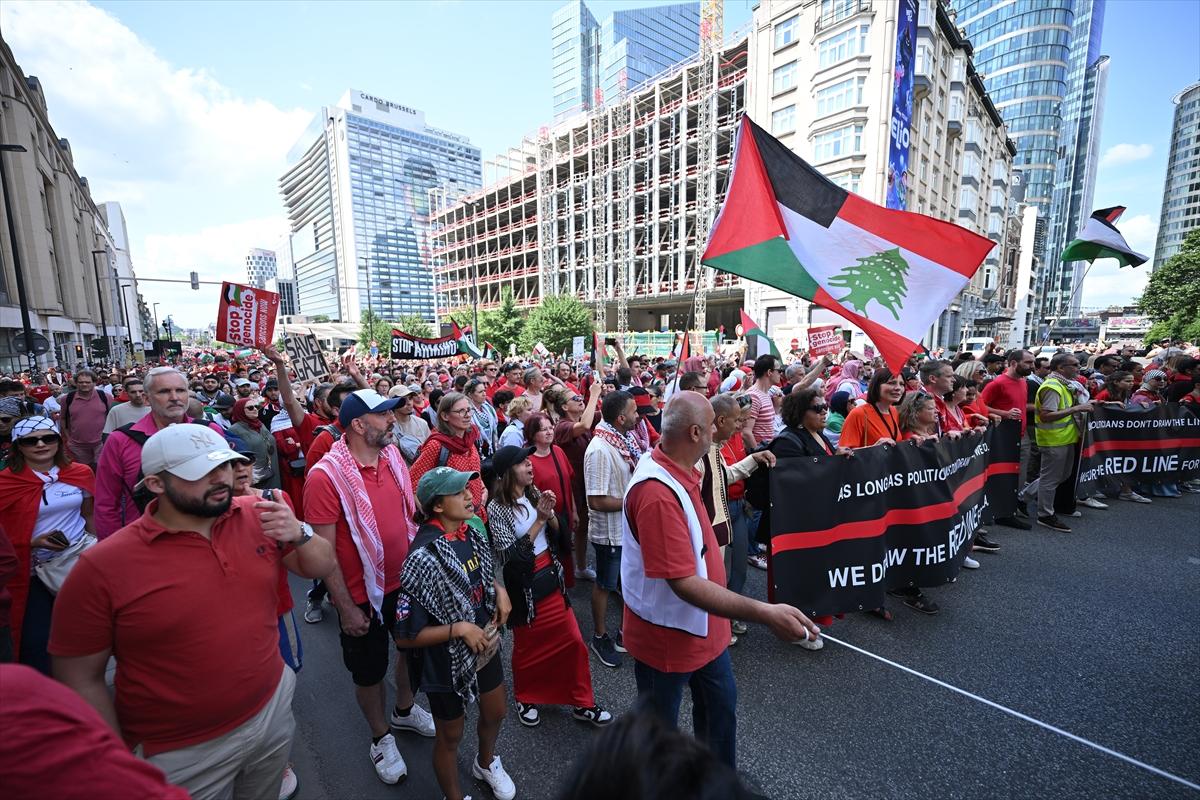
Tens of thousands marching in Brussels streets demanding a "red line" against Israel, 16 June 2025 - (Anadolu Agency)
Demonstrators also demanded that the Belgian government cancel all military agreements with Israel and end arms trade with the country. They called for solidarity with port workers to block ships carrying weapons to Israel from Belgian ports.
As of 20 June 2025, the total death toll in Gaza reached 55,706, with 130,101 injured. Since the onset of attacks on 7 October 2023, a massive humanitarian catastrophe has unfolded due to heavy bombardment, systematic starvation, forced displacement, and infrastructure destruction. Thousands are still believed to be trapped under rubble. The Israeli military violated the ceasefire agreed on 19 January, beginning on 18 March; since then, 5,401 people have been killed and 18,060 injured in ongoing attacks.
Anadolu Ajansı. "Gazze İçin Küresel Yürüyüş Yerine Sosyal Medya ve Diplomasi Odaklı Yeni Rota Belirlendi." Accessed June 20, 2025. https://www.aa.com.tr/tr/dunya/gazze-icin-kuresel-yuruyus-yerine-sosyal-medya-ve-diplomasi-odakli-yeni-rota-belirlendi/3600298#
Anadolu Ajansı. “Brüksel Sokaklarında On Binlerce Kişi İsrail'e Karşı Kırmızı Çizgi Çekilmesi Talebiyle Yürüdü.” Accessed June 20, 2025. https://www.aa.com.tr/tr/dunya/bruksel-sokaklarinda-on-binlerce-kisi-israile-karsi-kirmizi-cizgi-cekilmesi-talebiyle-yurudu/3599539#
Anadolu Ajansı. “Küresel Gazze Yürüyüşü İstanbul’da Düzenlendi.” Accessed June 20, 2025. https://www.aa.com.tr/tr/gundem/kuresel-gazze-yuruyusu-istanbulda-duzenlendi/3599323
Anadolu Ajansı. “İsrail Ordusunun Gazze'de Sivilleri Hedef Alması Sonucu En Az 34 Kişi Hayatını Kaybetti.” Accessed June 20, 2025. https://www.aa.com.tr/tr/dunya/israil-ordusunun-gazze-de-sivilleri-hedef-almasi-sonucu-en-az-34-kisi-hayatini-kaybetti/3605253#
Anadolu Ajansı. “İsrail'in Gazze'de Yardım Bekleyenlere Saldırısında En Az 45 Kişi Hayatını Kaybetti.” Accessed June 20, 2025. https://www.aa.com.tr/tr/dunya/israilin-gazzede-yardim-bekleyenlere-saldirisinda-en-az-45-kisi-hayatini-kaybetti/3601262#
Anadolu Ajansı. “İsrail'in Gazze'ye Düzenlediği Son Saldırılarda 84 Filistinli Hayatını Kaybetti.” Accessed June 20, 2025. https://www.aa.com.tr/tr/dunya/israilin-gazzeye-duzenledigi-son-saldirilarda-84-filistinli-hayatini-kaybetti/3604041#
Anadolu Ajansı. “İsrail'in Gazze'ye Son 24 Saatte Düzenlediği Saldırılarda 144 Filistinli Hayatını Kaybetti.” Accessed June 20, 2025. https://www.aa.com.tr/tr/dunya/israilin-gazzeye-son-24-saatte-duzenledigi-saldirilarda-144-filistinli-hayatini-kaybetti/3602546
Anadolu Ajansı. “İsrail'in Gazze'ye Son 24 Saatte Düzenlediği Saldırılarda 68 Kişi Hayatını Kaybetti.” Accessed June 20, 2025. https://www.aa.com.tr/tr/dunya/israilin-gazzeye-son-24-saatte-duzenledigi-saldirilarda-68-kisi-hayatini-kaybetti/3600108
Anadolu Ajansı. “İsrail'in İran'a Saldırısı Gündemi Değiştirse de Gazze'deki Soykırım Hız Kesmeyen Sürüyor.” Accessed June 20, 2025. https://www.aa.com.tr/tr/dunya/israil-in-iran-a-saldirisi-gundemi-degistirse-de-gazze-deki-soykirim-hiz-kesmeden-suruyor/3600414#
On 23 June 2025, airstrikes and gunfire resulted in the deaths of at least 30 Palestinians and injured hundreds. The attacks targeted civilian residential areas, aid distribution points, and refugee camps.
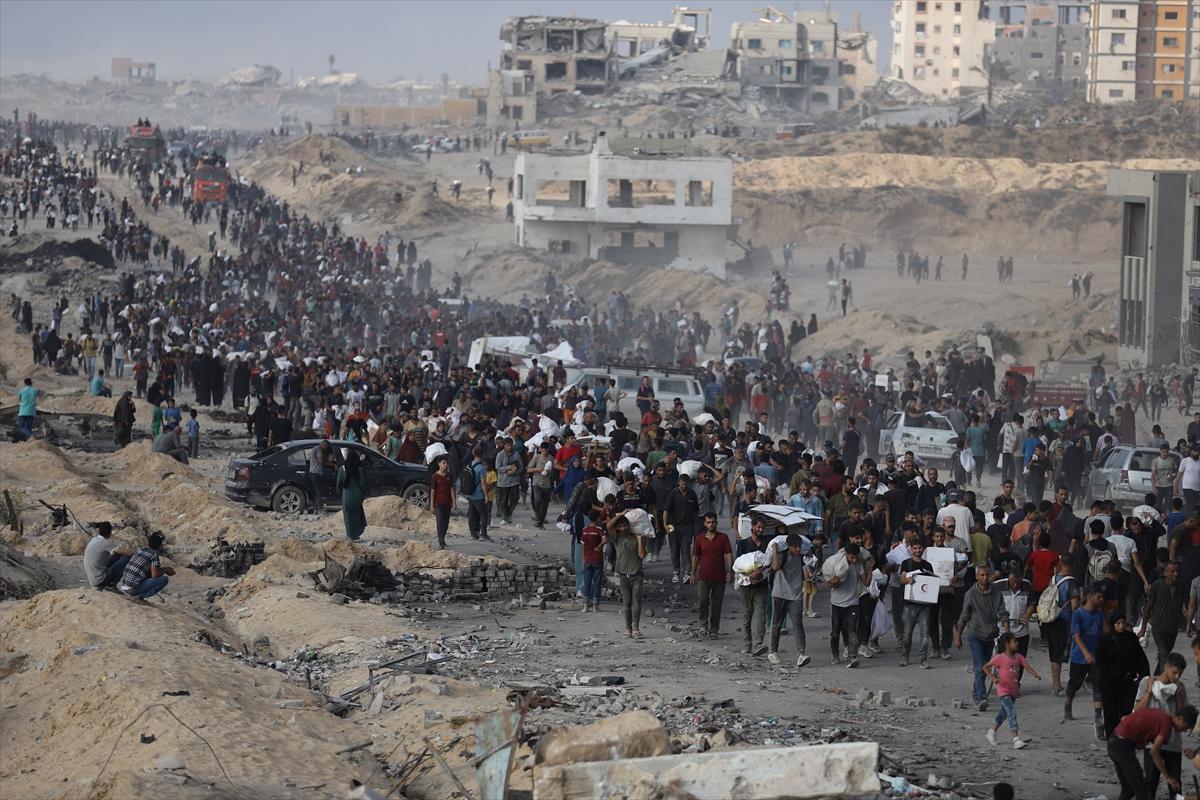
Gaza's thousands of Palestinians struggling with hunger rush toward the Zakim area in the north to receive aid, 23 June 2025 – (Anadolu Agency)
During Israeli military attacks in Gaza City, 11 bodies and seven wounded were transported to Shifa Hospital. In the Al-Karama area in northern Gaza, an attack targeting a house belonging to the Abu Nadi family on Ahmed Yassin Street killed five people from the Abu Iyad and Abu Matar families. In the Sudaniya area west of Gaza City, one person was killed when gunfire was directed at civilians waiting for aid. In the eastern region, two separate attacks on the Yafa neighborhood and the Abu Sharh location of Jabalia Refugee Camp resulted in a total of five deaths.
The Israeli military continued its attacks on civilians waiting for aid. In the attack on Palestinians near a humanitarian center on Salahaddin Street south of the Netzarim Corridor in central Gaza, two people were killed and 35 injured. The wounded were transported to Al-Awda Hospital in the Nusayrat area. In the area south of Khan Yunis, where civilians awaiting aid were fired upon, one person was killed and 15 injured. Civilians near aid centers in the west and northwest of Rafah were also targeted, resulting in two deaths.
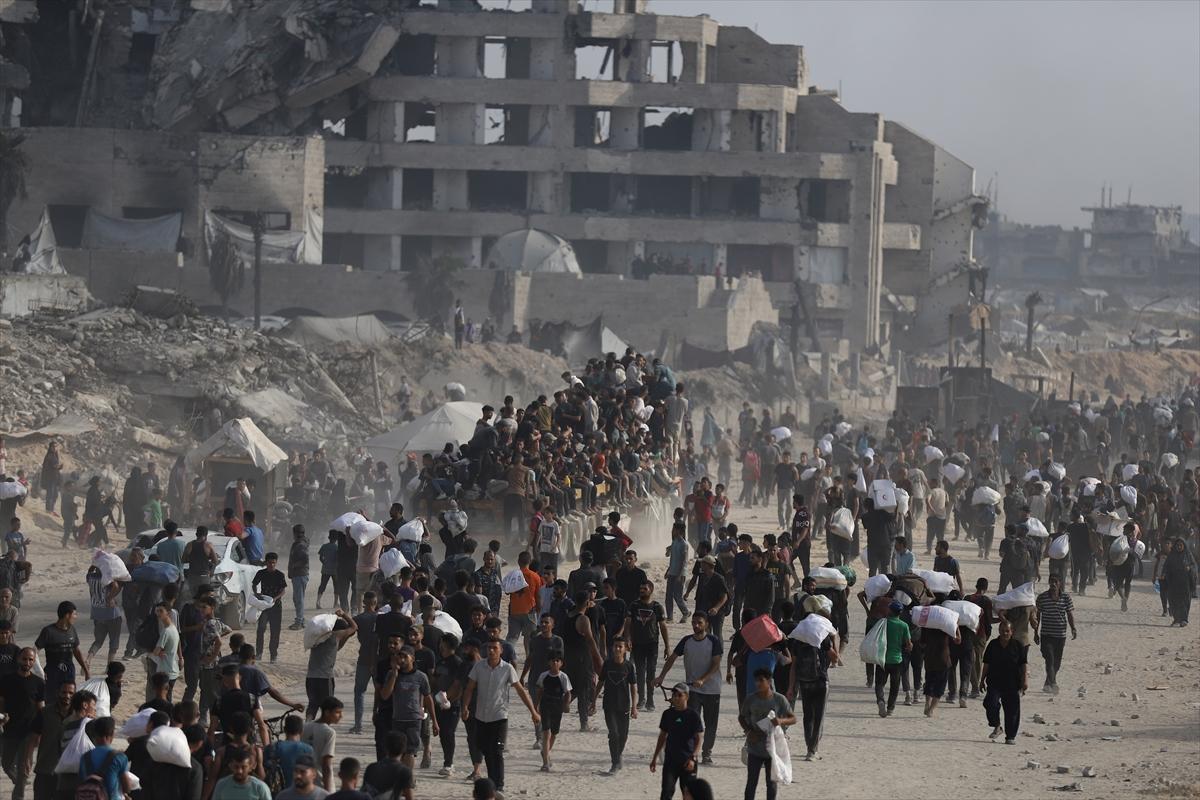
Gaza's thousands of Palestinians struggling with hunger rush toward the Zakim area in the north to receive aid, 23 June 2025 – (Anadolu Agency)
In the Mevasi area west of Khan Yunis, where displaced civilians had gathered, an attack killed three people. In an attack targeting a house in Deir al-Balah Refugee Camp, one person was killed. In attacks in Gaza City, three children died, two of whom were siblings. In attacks targeting civilians waiting for aid in the northwest of Rafah, the exact number of dead and wounded was not officially reported, but fatalities were confirmed.
According to data from Gaza’s Ministry of Health, since 7 October 2023, the total number of people killed in Israeli attacks across the Gaza Strip has reached 55,998, with 131,559 injured. Since the Israeli military violated the ceasefire on 18 March 2025, 5,685 people have been killed and 19,518 injured.
Anadolu Ajansı. “İsrail'in Gazze'de Düzenlediği Saldırılarda 30 Kişi Yaşamını Yitirdi.” Accessed June 23, 2025. https://www.aa.com.tr/tr/dunya/-israilin-gazzede-duzenledigi-saldirilarda-30-kisi-yasamini-yitirdi/3609307
On the morning of 24 June, Israeli forces killed at least 39 Palestinians in attacks targeting central and southern areas of the Gaza Strip, including civilians waiting for aid. More than 200 people were injured in attacks carried out at various locations. The heaviest casualties occurred in attacks that targeted civilians gathered near aid centers.
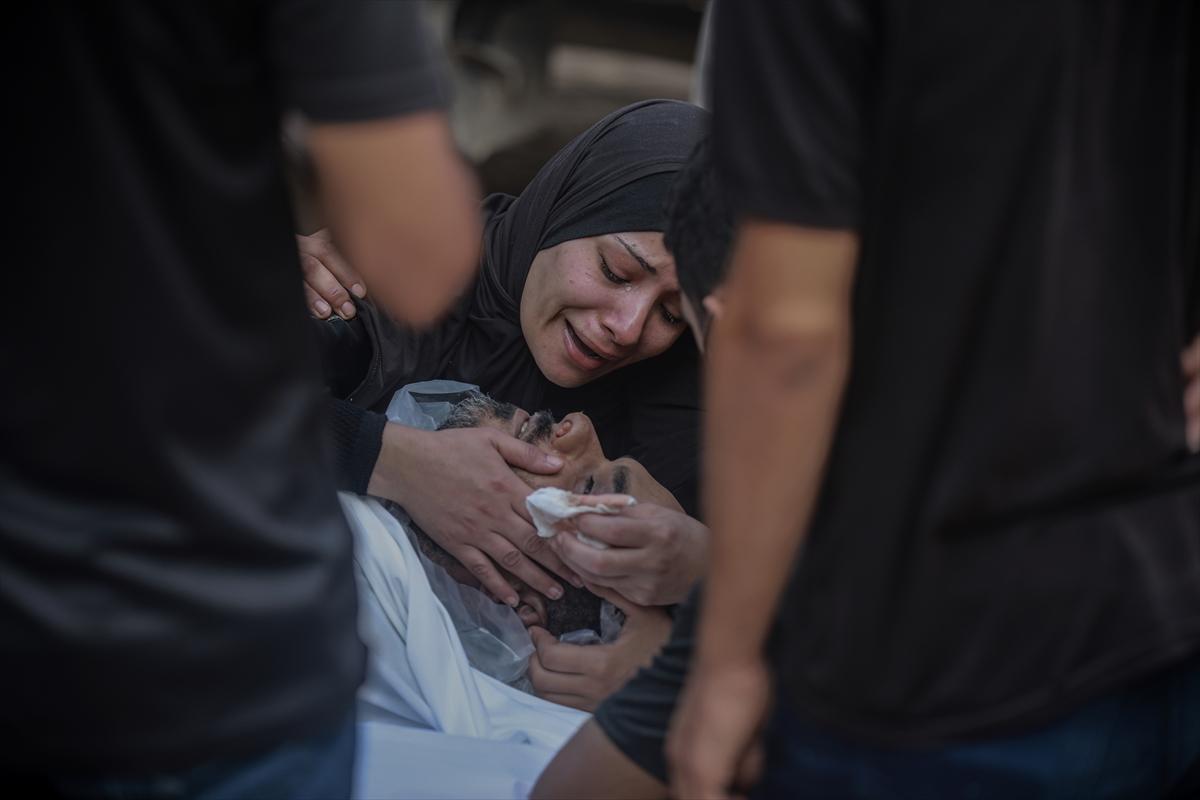
Relatives of Palestinians killed in the Israeli attack, 24 June 2025 – (Anadolu Agency)
In the southern part of the Gaza City area, along Salahaddin Street, Israeli forces launched an attack on a location where civilians were gathered awaiting aid, killing 19 people. A total of 146 people were injured in the same attack, 62 of them seriously. Eyewitnesses reported that bodies still remain on the ground in the area but cannot be retrieved due to dangerous conditions.
In another attack targeting civilians awaiting aid near the Netzarim Corridor, seven people were killed and 60 injured. Initial reports stated that the number of injured was 246.
In the Zeitoun neighborhood in southeastern Gaza, an attack on a house killed eight civilians. In the village of Karara, north of Khan Yunis, an attack on a tent sheltering displaced civilians resulted in three deaths. In another attack in the Satr district of the same city, the bodies of two people were recovered from under the rubble.
Anadolu Ajansı. “İsrail’in Gazze’ye Saldırılarında Çoğu İnsani Yardım Bekleyenler Olmak Üzere 63 Filistinli Hayatını Kaybetti.” Accessed June 24, 2025. https://www.aa.com.tr/tr/dunya/israilin-gazzeye-saldirilarinda-cogu-insani-yardim-bekleyenler-olmak-uzere-63-filistinli-hayatini-kaybetti/3610647
Between 25 and 27 June 2025, the Israeli military continued its attacks on the Gaza Strip. According to statements by the Gaza Ministry of Health, 103 Palestinians were killed and 219 injured in the last 24 hours on 26 June. On 27 June, 72 Palestinians were killed and 174 injured.
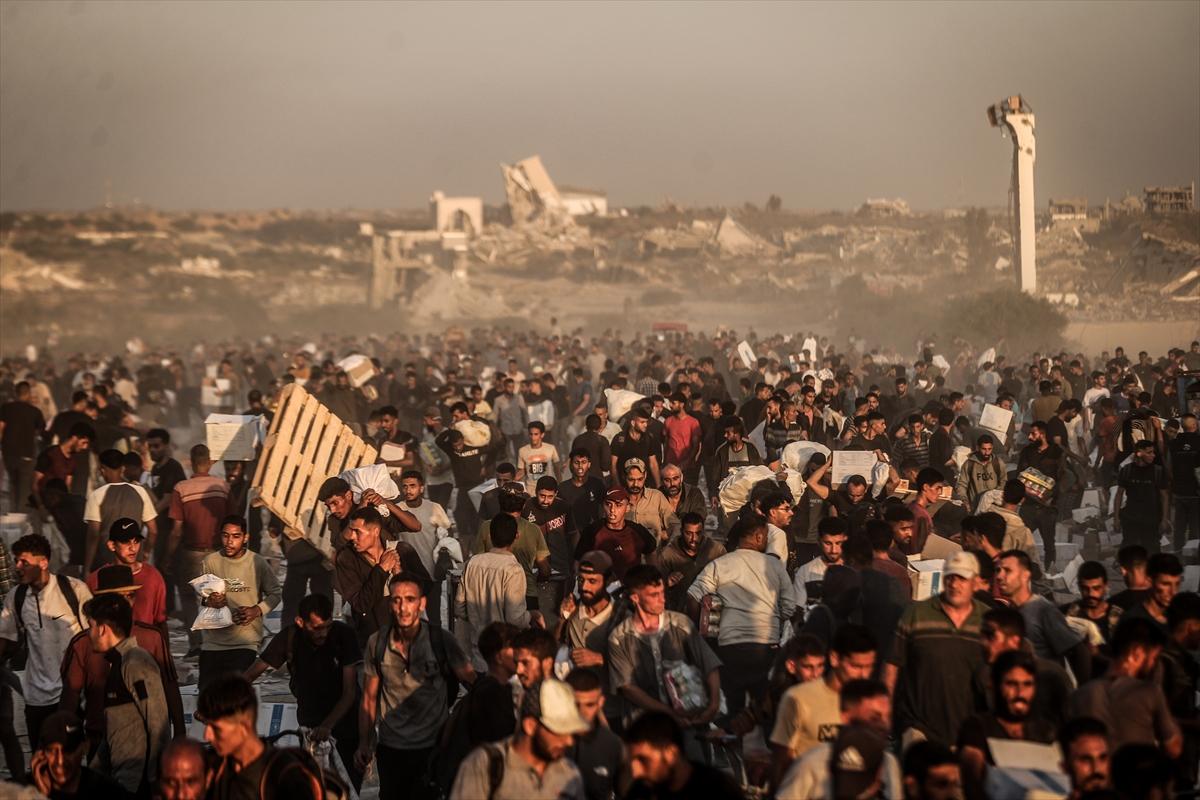
Humanitarian aid distribution in Gaza, 26 June 2025 – (Anadolu Agency)
The attacks occurred in multiple locations across Gaza, from the north to the south. Civilian neighborhoods, civilians awaiting aid, and tent camps in Jabalia, Sheikh Radwan, Zeitoun, Shati Refugee Camp, Khan Yunis, and Rafah were targeted. Civilian deaths were reported during attacks near the Netzarim Corridor, Nabulsi Junction, and Bureij Refugee Camp. In particular, at least 18 people, including police and security personnel, were killed in a bombing of a market in Deir al-Balah.
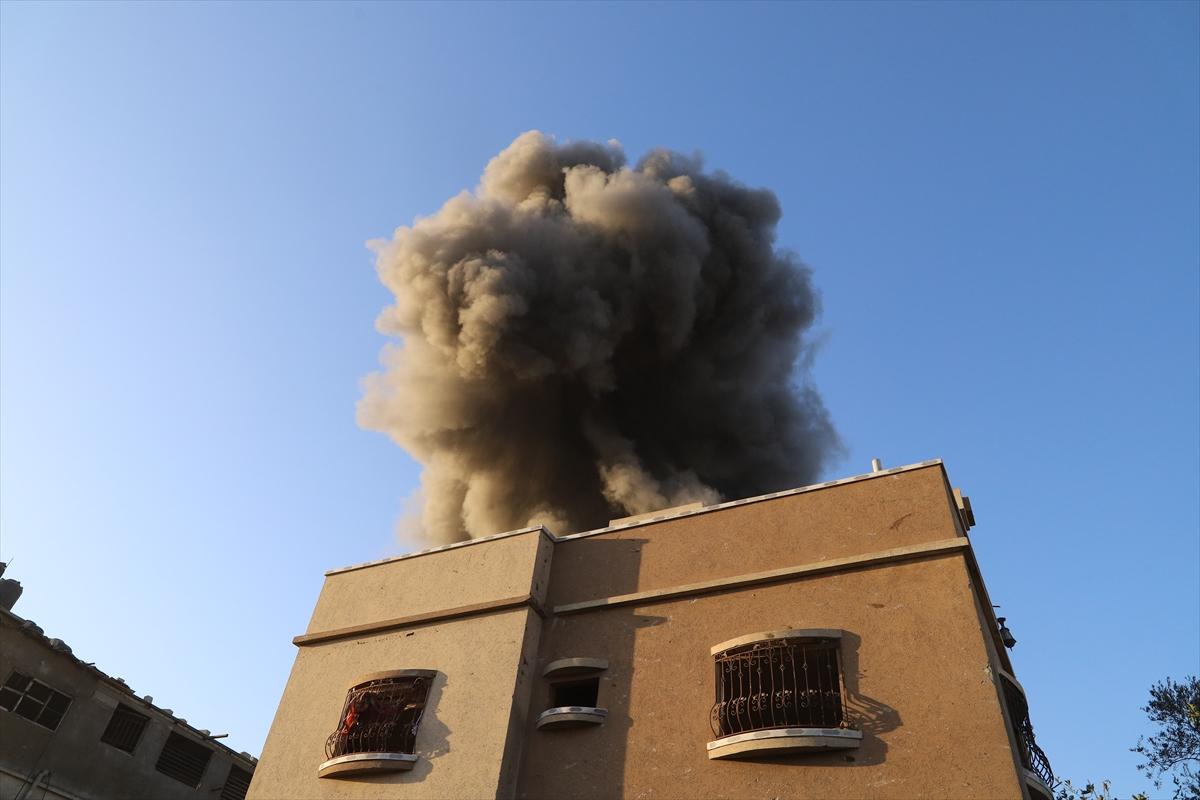
Israeli military attack on a multi-story building belonging to the Al-Khalut family in the Sheikh Radwan neighborhood of northern Gaza Strip, 26 June 2025 – (Anadolu Agency)
Since 27 May, Israeli attacks on humanitarian aid distribution centers under the control of the US-guided Gaza Humanitarian Aid Foundation have resulted in a total of 549 Palestinian deaths and 4,006 injuries. Of these deaths, 12 occurred on 25 June and 13 on 26 June.
The United Nations and the World Health Organization (WHO) expressed concern over civilian deaths at aid centers. WHO representatives described the killing of civilians waiting for aid as “dying for a drop of help in the ocean.”
The United Nations Office for the Coordination of Humanitarian Affairs (OCHA) and UN Secretary-General’s Spokesperson Stephane Dujarric stated that the humanitarian crisis in Gaza has deepened and that essential services have reached the brink of collapse due to shortages of fuel, food, and medical supplies.
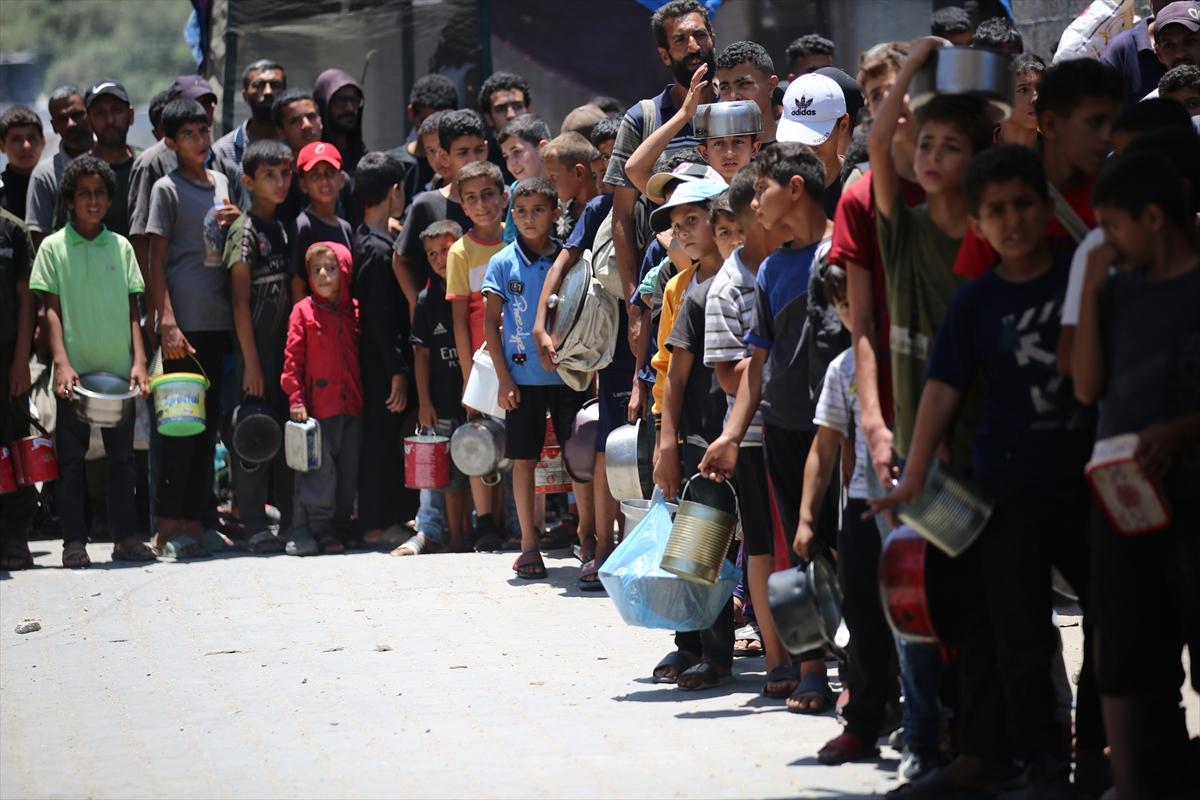
Meals distributed to Palestinians in Gaza under Israeli attacks and blockade, 26 June 2025 – (Anadolu Agency)
WHO Director-General Tedros Adhanom Ghebreyesus noted that the most recent medical aid shipment to Gaza was the first since 2 March 2025 and described the current level of aid as “a drop in the ocean.”
The Swiss Federal Department of Foreign Affairs expressed deep concern over civilian deaths at aid distribution points and called for an independent investigation. Italian Prime Minister Giorgia Meloni, in a statement following the NATO Summit, described the humanitarian situation in Gaza as “unsustainable” and, citing the Iran-Israel ceasefire as an example, called for a ceasefire in Gaza and Ukraine.
The US administration announced the approval of a new $30 million fund for the US-guided Gaza Humanitarian Aid Foundation. US State Department Deputy Spokesperson Tommy Pigott stated that the Foundation had distributed 46 million meals so far, emphasized that this effort “should be applauded,” and called on other countries to provide support. US officials denied allegations that the Gaza Humanitarian Aid Foundation was controlled by Hamas and stated that an investigation had been launched into civilian deaths during aid distribution by the Israeli military.
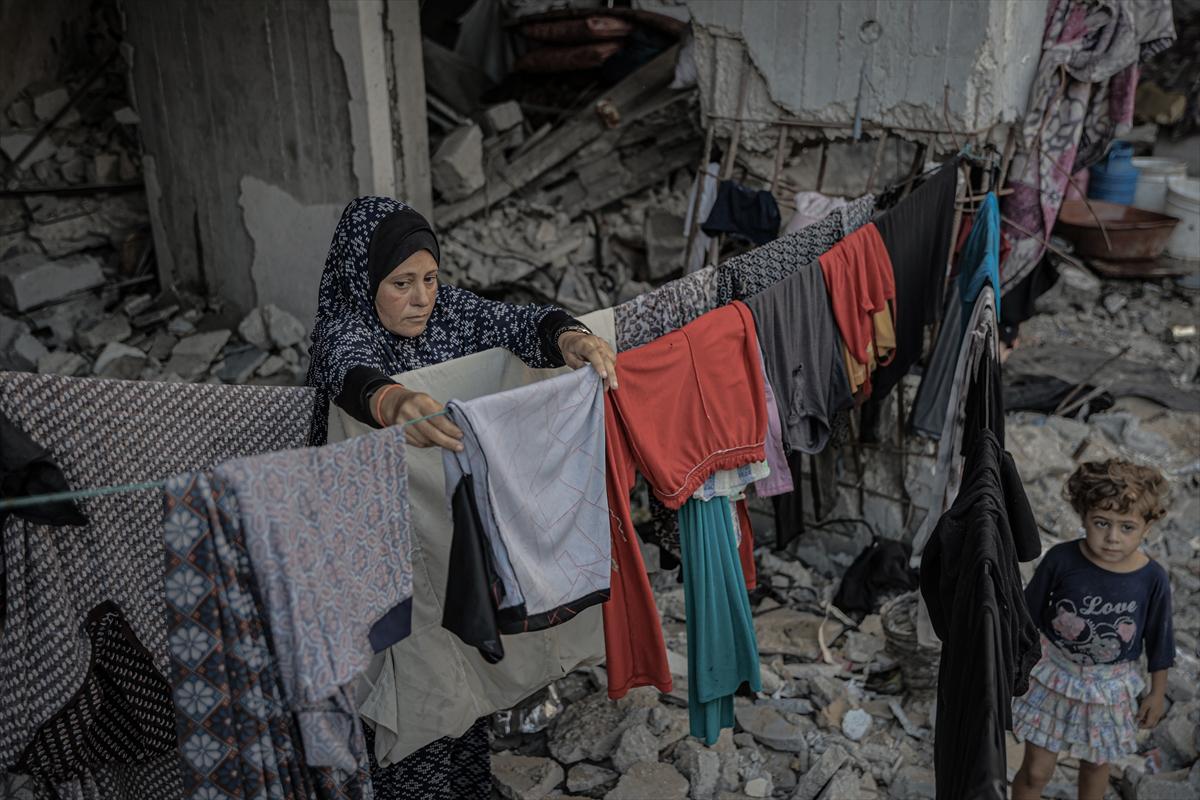
Daily life in Gaza under Israeli attacks, 25 June 2025 – (Anadolu Agency)
United Nations Relief and Works Agency for Palestine Refugees in the Near East (UNRWA) Commissioner-General Philippe Lazzarini described the humanitarian situation in Gaza as “appalling” and stated that Israel’s so-called humanitarian aid system had failed. Lazzarini emphasized that Palestinians in Gaza are forced to risk their lives to access aid and called for the immediate termination of what he termed the “Gaza Degradation Foundation.” He stressed that international attention must be refocused on Gaza following the Iran-Israel ceasefire and reiterated the call for a comprehensive and uninterrupted humanitarian aid flow.
The Palestinian Presidential Spokesperson Nabil Abu Rudeineh called for urgent intervention by the United States due to Israeli settler violence in the West Bank and the starvation policies in Gaza. The Palestinian government further asserted that Israeli military operations in the West Bank, organized settler violence, and the humanitarian crisis in Gaza are the direct result of the Israeli government’s political choices.
Anadolu Ajansı. “ABD Yönetimi, Gazze İnsani Yardım Vakfı İçin Yeni Fon Onayladıklarını Duyurarak Ülkelerden Destek İstedi.” Accessed June 27, 2025. https://www.aa.com.tr/tr/dunya/abd-yonetimi-gazze-insani-yardim-vakfi-icin-yeni-fon-onayladiklarini-duyurarak-ulkelerden-destek-istedi/3614738#
Anadolu Ajansı. “UNRWA: Gazze'de Korkunç Bir Durumla Karşı Karşıyayız.” Accessed June 27, 2025. https://www.aa.com.tr/tr/dunya/unrwa-gazzede-korkunc-bir-durumla-karsi-karsiyayiz/3612250#
Anadolu Ajansı. “İsrail Gazze'deki Yardım Dağıtım Noktalarında Bir Ayda 549 Filistinliyi Öldürdü.” Accessed June 27, 2025. https://www.aa.com.tr/tr/dunya/israil-gazzedeki-yardim-dagitim-noktalarinda-bir-ayda-549-filistinliyi-oldurdu/3613269#
Anadolu Ajansı. “İsrail'in Gazze Şeridi'ne Son 24 Saatte Düzenlediği Saldırılarda 103 Filistinli Hayatını Kaybetti.” Accessed June 27, 2025. https://www.aa.com.tr/tr/dunya/israilin-gazze-seridine-son-24-saatte-duzenledigi-saldirilarda-103-filistinli-hayatini-kaybetti/3613630#
Anadolu Ajansı. “İsrail'in Gazze'de Son 24 Saatte Düzenlediği Saldırılarda 72 Filistinli Hayatını Kaybetti.” Accessed June 27, 2025. https://www.aa.com.tr/tr/dunya/israilin-gazzede-son-24-saatte-duzenledigi-saldirilarda-72-filistinli-hayatini-kaybetti/3614943#
Anadolu Ajansı. “İsrail'in Gazze'ye Saldırılarında Yardım Bekleyenlerin de Olduğu 61 Kişi Hayatını Kaybetti.” Accessed June 27, 2025. https://www.aa.com.tr/tr/dunya/israilin-gazzeye-saldirilarinda-yardim-bekleyenlerin-de-oldugu-61-kisi-hayatini-kaybetti/3612128#
Anadolu Ajansı. “İtalya Başbakanı Meloni'den Gazze ve Ukrayna İçin Ateşkes Vurgusu.” Accessed June 27, 2025. https://www.aa.com.tr/tr/dunya/italya-basbakani-meloniden-gazze-ve-ukrayna-icin-ateskes-vurgusu/3613238#
As of 28 June, the Israeli military’s operations in the Gaza Strip have resulted in a total of 56,412 deaths and 133,004 injuries. By 29 June, the death toll had risen to 56,500 and the number of injured to 133,419. As of 30 June, the number of those killed in Gaza reached 56,531 and the number of injured increased to 133,642.
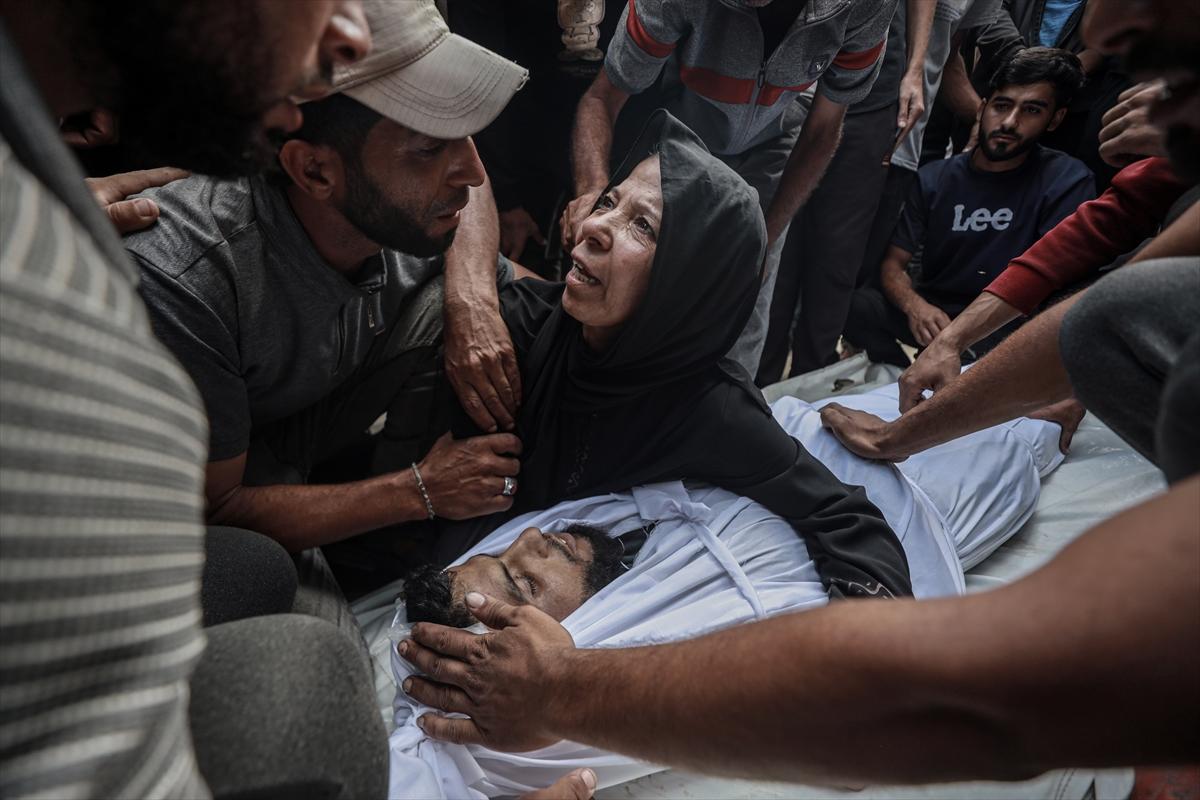
A Palestinian killed during numerous Israeli nighttime air strikes on Gaza City, 30 June 2025 – (Anadolu Agency)
The Israeli military has targeted the Tuffah, Shuja’iyya, Zaytun and Sabra neighborhoods of Gaza City, the city of Jabaliya, the Mevasi area of Han Yunus, and the surrounding areas of Rafah. The Shati Refugee Camp, Zaytun Middle School, and areas where civilians were gathered awaiting aid were also among the sites attacked.
A bombing in the Tuffah neighborhood in eastern Gaza City resulted in casualties, with the wounded transported to Baptist Hospital. In the Shakuş area northwest of Rafah, near a humanitarian aid point, five people were killed and 25 injured. In the Al-Ketibe area north of Han Yunus, an Israeli military strike killed three people.
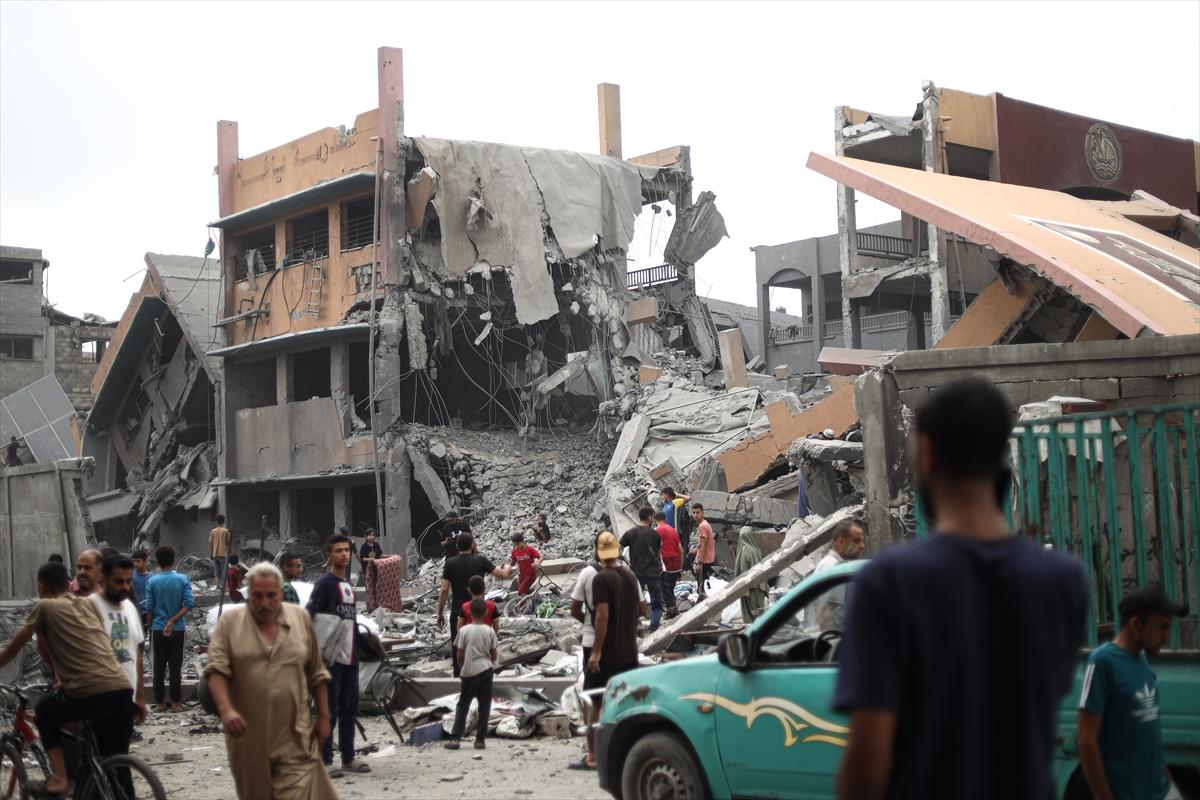
The final state of the Yafa School destroyed in an Israeli attack, 30 June 2025 – (Anadolu Agency)
Israeli forces have continued their attacks on centers established for the distribution of humanitarian aid in Gaza. In one strike on a humanitarian warehouse in the Sabra neighborhood, ten people lost their lives.
On 27 June, U.S. President Donald Trump described the situation in Gaza as “terrible” during a press conference at the White House and stated that he believed a ceasefire would be achieved within the coming week. Trump noted that the issue of a ceasefire in Gaza is frequently raised with him and that he has held discussions with several relevant parties.

U.S. President Donald Trump holding a press conference at the White House, 27 June 2025 – (Anadolu Agency)
Israeli officials, however, expressed surprise at Trump’s remarks. According to Israeli sources, there has been no change in the positions of Hamas and the Netanyahu government. The Israeli cabinet, led by Prime Minister Netanyahu, has not yet reached any concrete decisions regarding ongoing military operations in Gaza or prisoner exchanges.
On 29 June, following the end of the Iran-Israel conflict on 24 June, a protest was held in Tel Aviv demanding the return of Israeli prisoners held in Gaza. Thousands of Israelis gathered in front of the Ministry of Defense, calling on the government to reach a comprehensive agreement including a ceasefire and a prisoner exchange.
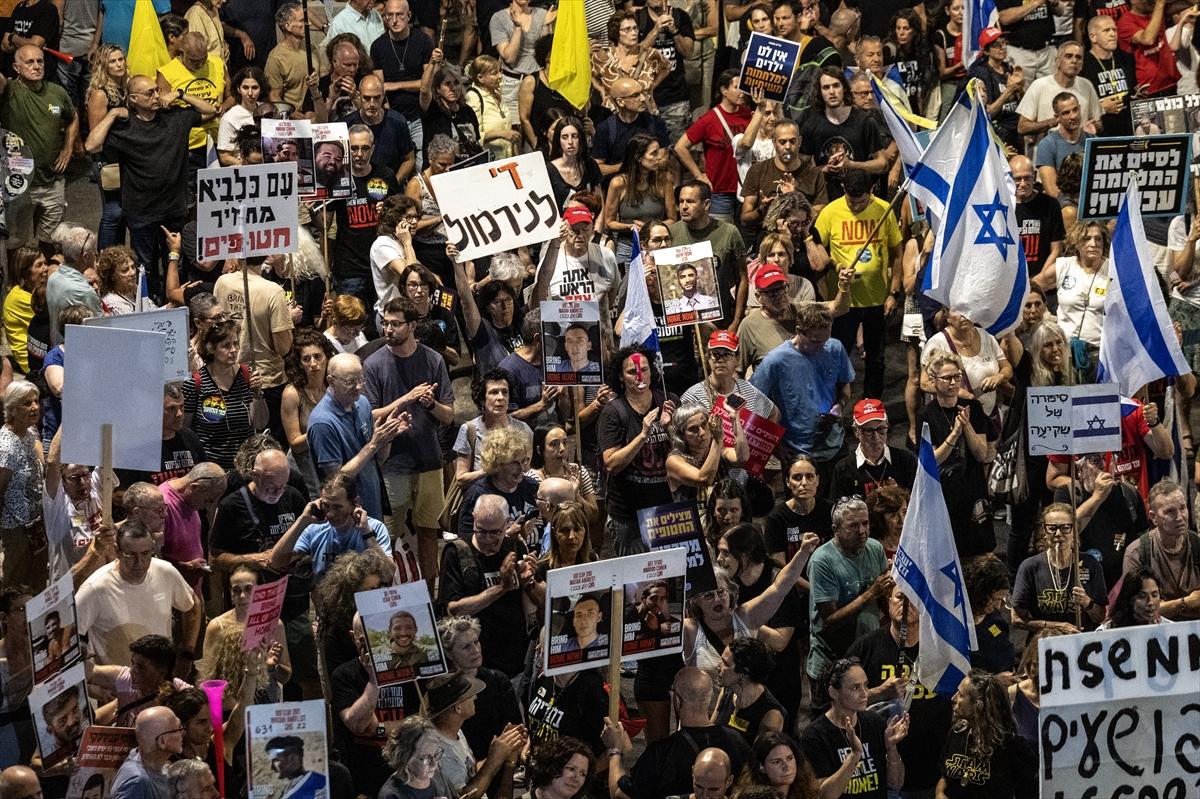
Protest in Tel Aviv demanding a ceasefire and the return of prisoners, 28 June 2025 – (Anadolu Agency)
It was reported that family members of the prisoners were among the demonstrators. Participants accused the Netanyahu government of acting solely in accordance with its own political interests and expressed hope that U.S. President Trump would exert pressure on Netanyahu.
On 29 June 2025, a commemoration event was held in Almere, the Netherlands, for Palestinian children killed in Israeli attacks on the Gaza Strip. Organized by the One Olive Tree Planting Foundation at Stadhuis Square, participants placed thousands of children’s shoes on the square to honor the deceased, with the names and ages of the children read aloud to draw public attention. Volunteers distributed brochures to passersby providing information on the humanitarian situation in Gaza.
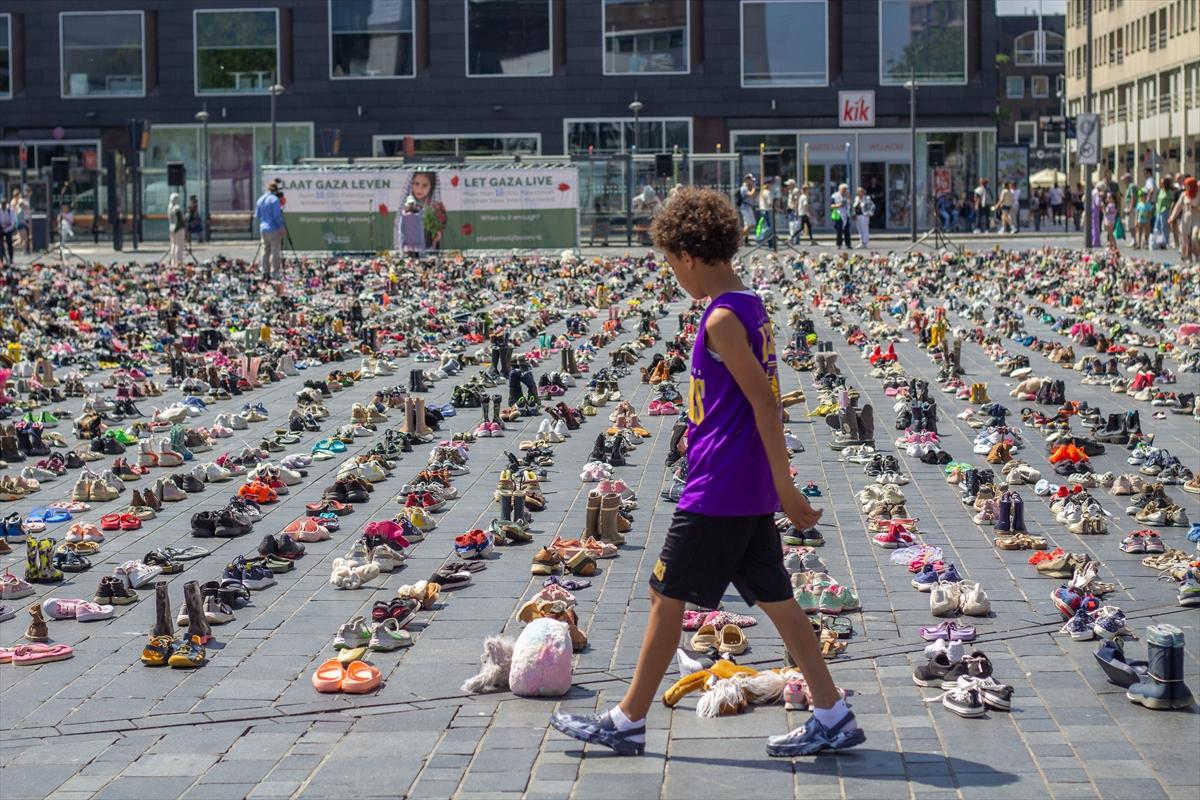
Commemoration event in the Netherlands for Palestinian children killed in Israeli attacks, 29 June 2025 – (Anadolu Agency)
Esther van der Most, a director of the foundation, noted that this was the 12th time such an event had been held and that similar programs had been organized in various cities across the Netherlands. Van der Most emphasized that the Dutch government must impose stricter sanctions on Israel and criticized the international community’s silence in the face of child deaths in Gaza. Speeches during the event declared that the struggle would continue until the Palestinian people achieved freedom, even if the bombardments ceased.
Anadolu Ajansı. "ABD Başkanı Trump: Gazze'de Önümüzdeki Hafta İçinde Bir Ateşkes Sağlanacağını Düşünüyorum." Accessed June 30, 2025. https://www.aa.com.tr/tr/dunya/abd-baskani-trump-gazzede-onumuzdeki-hafta-icinde-bir-ateskes-saglanacagini-dusunuyorum/3615763#
Anadolu Ajansı. “Hollanda'da İsrail Saldırılarında Ölen Filistinli Çocuklar İçin Anma Etkinliği Düzenlendi.” Accessed June 30, 2025. https://www.aa.com.tr/tr/dunya/hollandada-israil-saldirilarinda-olen-filistinli-cocuklar-icin-anma-etkinligi-duzenlendi/3616990#
Anadolu Ajansı. “İran'a Saldırılar Sonrası Tel Aviv'de İlk Kez Gazze'deki Esirlerin Getirilmesi Talebiyle Gösteri Yapıldı.” Accessed June 30, 2025. https://www.aa.com.tr/tr/dunya/irana-saldirilar-sonrasi-tel-avivde-ilk-kez-gazzedeki-esirlerin-getirilmesi-talebiyle-gosteri-yapildi-/3616478#
Anadolu Ajansı. “İsrail'in Gazze'de Son 24 Saatte Düzenlediği Saldırılarda 81 Filistinli Hayatını Kaybetti.” Accessed June 30, 2025. https://www.aa.com.tr/tr/dunya/israilin-gazzede-son-24-saatte-duzenledigi-saldirilarda-81-filistinli-hayatini-kaybetti/3615888#
Anadolu Ajansı. “İsrail'in Gazze'de Son 24 Saatte Düzenlediği Saldırılarda 88 Filistinli Hayatını Kaybetti.” Accessed June 30, 2025. https://www.aa.com.tr/tr/dunya/israilin-gazzede-son-24-saatte-duzenledigi-saldirilarda-88-filistinli-hayatini-kaybetti/3616700#
Anadolu Ajansı. “İsrail'in Gazze'ye Saldırılarında Can Kaybı Son 24 Saatte 28 Artarak 56 Bin 531'e Yükseldi.” Accessed June 30, 2025. https://www.aa.com.tr/tr/dunya/israilin-gazzeye-saldirilarinda-can-kaybi-son-24-saatte-28-artarak-56-bin-531e-yukseldi/3617225#
Anadolu Ajansı. “İsrailli Yetkililer, Trump'ın Gazze'de Yakında Ateşkes Sağlanacağı Yönündeki Açıklamasını Şaşkınlıkla Karşıladı.” Accessed June 30, 2025. https://www.aa.com.tr/tr/dunya/israilli-yetkililer-trumpin-gazzede-yakinda-ateskes-saglanacagi-yonundeki-aciklamasini-saskinlikla-karsiladi/3616488#
On 1 July 2025, U.S. President Donald Trump announced that Israel had accepted the conditions necessary for a 60-day ceasefire in the Gaza Strip. Trump shared this announcement on the social media platform Truth Social.

U.S. President Donald Trump, 1 July 2025 – (Anadolu Ajansı)
Trump stated that his representatives had conducted lengthy and comprehensive talks with Israeli officials. As a result of these discussions, it was reported that Israel had accepted the conditions proposed under the ceasefire plan. Trump indicated that if the agreement is implemented, the parties will work together to permanently end the war.
The announcement noted that Qatar and Egypt have assumed the mediation role to advance the ceasefire process. Trump announced that these two countries would present a “final offer” to Hamas. Trump also emphasized that this process represents a significant step toward overall stability in the Middle East and called on Hamas to accept the offer.
In his statement, Trump also revealed that he would meet with Israeli Prime Minister Benjamin Netanyahu in Washington, where the issues of Gaza and Iran would be addressed.
Anadolu Ajansı. “Trump, İsrail’in Gazze’de 60 Günlük Ateşkes İçin Gerekli Şartları Kabul Ettiğini Açıkladı.” Accessed July 2, 2025. https://www.aa.com.tr/tr/dunya/trump-israil-gazzede-60-gunluk-ateskes-icin-gerekli-sartlari-kabul-etti/3619235#
On 4 July 2025, Hamas announced that it had given a "positive response" to the proposal for a ceasefire and prisoner exchange in the Gaza Strip. Hamas transmitted its response, prepared after consultations with Palestinian political groups, to the mediator countries.
In a written statement by Hamas, it was stated that it is ready to begin a "serious round of negotiations" to implement the ceasefire proposal in Gaza.
The Israeli government has not yet issued an official statement regarding Hamas’s response. It has been indicated that Israeli Prime Minister Benjamin Netanyahu will hold a meeting with his political and security cabinet ahead of his discussion with U.S. President Donald Trump in Washington on 7 July 2025.
Anadolu Ajansı. “Hamas, Gazze’de Ateşkes Teklifine Olumlu Yanıtını Arabuluculara İlettiğini Açıkladı.” Accessed July 5, 2025. https://www.aa.com.tr/tr/dunya/hamas-gazzede-ateskes-teklifine-olumlu-yanitini-arabuluculara-ilettigini-acikladi/3622326#
Hamas received the latest ceasefire proposal from mediators Qatar and Egypt at the beginning of July 2025. Hamas stated that it evaluated the proposals with a high sense of responsibility and conducted national consultations aimed at ending the war in Gaza, securing the withdrawal of the Israeli military, and delivering urgent humanitarian aid. Hamas responded positively to the proposal and indicated its willingness to be flexible on implementation details.
Hamas’s demands are summarized under three main headings:
Israel declared that it found Hamas’s proposed modifications unacceptable. Nevertheless, a delegation was sent from Tel Aviv to Doha to continue negotiations. Israeli Prime Minister Benjamin Netanyahu discussed the ceasefire and prisoner exchange agreement during a meeting with U.S. President Donald Trump in Washington. Netanyahu affirmed that Israel remains committed to eliminating Hamas’s military capabilities, establishing a non-threatening order in Gaza, and securing the return of all Israeli captives.
The U.S. administration is alleged to have opposed Israel’s “occupation plan” in Gaza. It is reported that the United States did not accept Israel’s proposed limitations on the areas from which its forces would withdraw during the 60-day ceasefire. In talks between the U.S. Special Envoy for the Middle East and Israel’s Minister of Strategic Affairs, Israel’s proposed withdrawal map was rejected on the grounds that it included expansive occupation zones akin to the “Smotrich Plan”.
Negotiations revealed that Hamas agreed to release 10 living Israeli hostages. It was also reported that over the 60-day ceasefire period, a total of 10 living hostages and 18 bodies would be released in phases. Israel has shown flexibility in return by agreeing to the release of detained Palestinians and a phased military withdrawal from designated areas. One of the main points of contention has been Israel’s reluctance to withdraw from the Morag Corridor between Rafah and Khan Yunis. Israel plans to maintain a limited military presence there, while Hamas insists on a complete withdrawal.
The Trump administration aims to use the initial phase of the ceasefire as a foundation for negotiating a more durable solution. U.S. President Trump stated that a ceasefire is “very close” and that an agreement could be reached this week or next.
Hamas emphasized that its demands for a permanent ceasefire and binding guarantees that Israel will not resume hostilities remain unresolved. Hamas officials have argued that humanitarian aid must be delivered through United Nations channels and that the Israeli military must withdraw to its positions as of March 2025.
Despite ongoing negotiations, Israeli military attacks on Gaza have continued. According to the Gaza Ministry of Health, more than 770 people have been killed in the past week, including civilians waiting at humanitarian aid distribution points coordinated by the Gaza Humanitarian Fund (GHF).
Hospitals in Gaza continue to face severe shortages of fuel and medicine, with only 18 hospitals operating partially. Some medical facilities, including Nasser Hospital, are in critical condition due to fuel depletion.
Disputes remain over the boundaries of withdrawal, the duration of the ceasefire, the post-ceasefire governance structure, and the entity responsible for distributing humanitarian aid. While both Israel and Hamas have shown some flexibility, no consensus has yet been reached on core security and political demands.
Israeli Prime Minister Benjamin Netanyahu met with families of Israeli captives in Washington on 10 July 2025. He stated that the issue of hostages had been thoroughly discussed in talks with U.S. President Donald Trump and his team, and that efforts are underway to secure the release of all captives. Netanyahu indicated that Israel could end military operations in Gaza after the 60-day ceasefire period. According to Israel’s Channel 13, Netanyahu affirmed that Israel aims to ensure the return of all Israeli hostages following any agreement with Hamas.
Netanyahu stated that 10 living hostages would be released in two phases: eight initially and two later. He clarified that Hamas would determine the identities of the hostages to be released. He also noted that he could not provide a specific date for the release of all hostages.
In a video message posted on the social media platform X on 11 July 2025, Netanyahu stated that if Hamas does not disarm and withdraw from Gaza during the 60-day ceasefire, the Israeli military will resume attacks. He emphasized that negotiations aimed at ending the war would proceed simultaneously with the ceasefire and that Hamas’s disarmament is a fundamental condition of the process.
Netanyahu reiterated that Israel seeks the release of half of the Israeli captives, both living and deceased, in exchange for the temporary ceasefire. These statements are linked to the mediation efforts led by U.S. President Trump.
In Doha, while some disagreements have been largely resolved, Israel’s insistence on maintaining a military presence in the Morag Corridor between Rafah and Khan Yunis remains unresolved. While Hamas demands a complete withdrawal from the area, Israel continues to insist on limited control.
Al Jazeera. “Hamas agrees to release 10 captives as Israeli attacks kill 74 in Gaza.” Accessed July 10, 2025. https://www.aljazeera.com/news/2025/7/9/hamas-agrees-to-release-captives-as-israeli-attacks-kill-in-gaza
Anadolu Ajansı. “Hamas Confirms Receiving Mediators’ Proposals for Gaza Ceasefire Deal.” Accessed July 10, 2025. https://www.aa.com.tr/en/middle-east/hamas-confirms-receiving-mediators-proposals-for-gaza-ceasefire-deal/3619928
Anadolu Ajansı. “Hamas Says It Agreed to Release 10 Israeli Hostages as Gaza Ceasefire Negotiations Continue.” Accessed July 10, 2025. https://www.aa.com.tr/en/middle-east/hamas-says-it-agreed-to-release-10-israeli-hostages-as-gaza-ceasefire-negotiations-continue/3626562
Anadolu Ajansı. “Hamas’ın Gazze’de Ateşkes Teklifine Yanıtında 3 Önemli Konuda Talepte Bulunduğu İleri Sürüldü.” Anadolu Ajansı. Accessed July 10, 2025. https://www.aa.com.tr/tr/dunya/hamasin-gazzede-ateskes-teklifine-yanitinda-3-onemli-konuda-talepte-bulundugu-ileri-suruldu/3623455#
Anadolu Ajansı. “Israel Receives Hamas Response to Ceasefire Proposal, Details Being Discussed: Israeli Media.” Accessed July 10, 2025. https://www.aa.com.tr/en/middle-east/israel-receives-hamas-response-to-ceasefire-proposal-details-being-discussed-israeli-media/3622464
Anadolu Ajansı. “Israeli Prime Minister Flies to Washington for Talks on Gaza Ceasefire Deal.” Accessed July 10, 2025. https://www.aa.com.tr/en/middle-east/israeli-prime-minister-flies-to-washington-for-talks-on-gaza-ceasefire-deal/3623587
BBC. “Gaza truce talks reportedly stall despite second Netanyahu-Trump meeting.” BBC News. Accessed July 10, 2025. https://www.bbc.com/news/articles/ce3newwl1zeo
CNN. “A Gaza ceasefire is the closest it has been in months. Here’s what we know.” Accessed July 10, 2025. https://edition.cnn.com/2025/07/02/middleeast/israel-gaza-ceasefire-deal-closer-than-ever-what-we-know-intl
As of 1 July 2025, Israeli military strikes across various regions of the Gaza Strip have resulted in at least 80 Palestinian deaths. These attacks have targeted civilians awaiting aid displaced populations and civilian infrastructure. Numerous fatalities occurred due to drone strikes in the Zeytun and Tuffah neighborhoods of Gaza City the Derac area and the Shu’aiyya neighborhood. On the same day a strike on a house in Zeytun killed ten members of the same family.
Data released on 2 July 2025 revealed that 142 additional people had died in the previous 24 hours bringing the total death toll to 57,012. It was reported that in a single day Israeli attacks specifically targeting aid queues and tent settlements for displaced persons killed 82 people. During this period Dr Mervan Sultan director of Indonesia Hospital and his family were killed in an airstrike on their home.
On 5 July 2025 the number of those killed in attacks was recorded at 61. In the Nuseirat Refugee Camp eight people including five children died in a shelling attack. In the Mevasi area of Khan Yunis a doctor and his four children were killed when their tent was targeted.
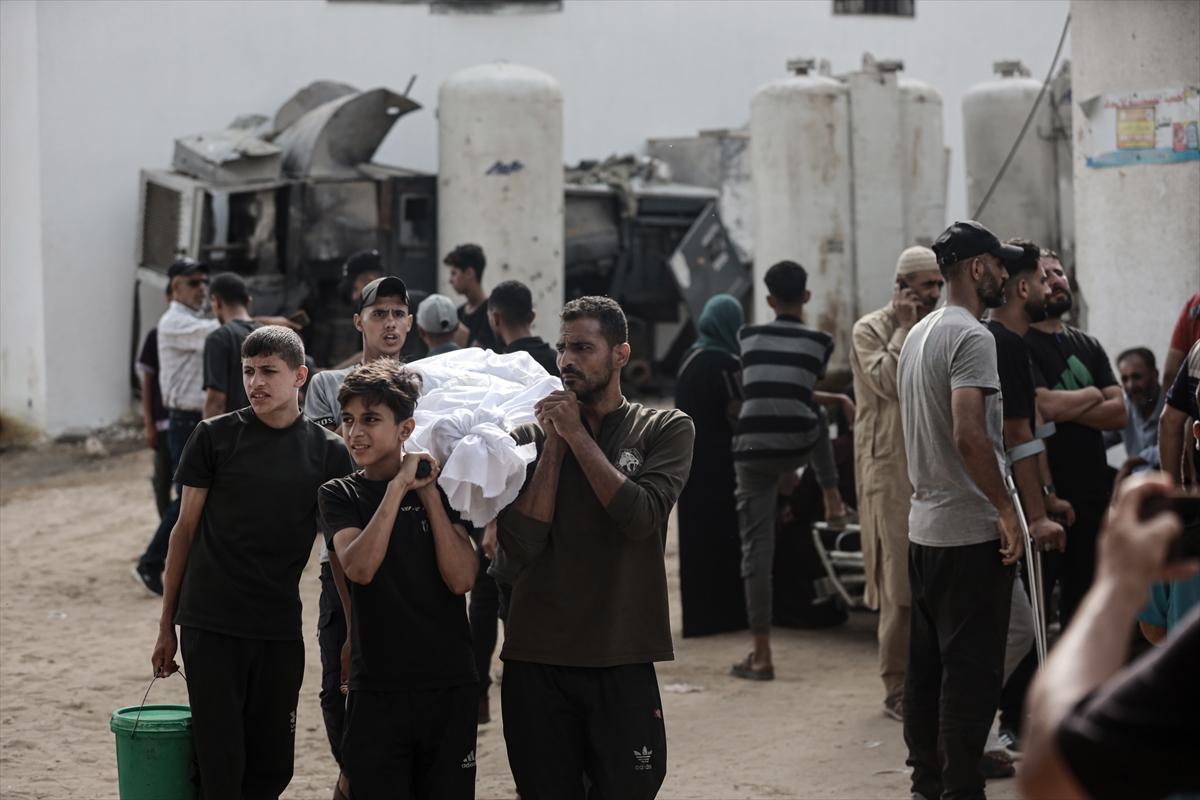
Palestinians killed in Israeli attacks targeting civilians are taken to Shifa Hospital 1 July 2025 – (Anadolu Agency)
During the same period Muhammad Abu Silmiyye director of Shifa Hospital stated that the shutdown of generators would amount to a death sentence for 13 patients in intensive care dozens awaiting emergency surgery and 17 infants in incubators. The dialysis unit had to be shut down and blood donation needs had risen to 10,000 units over the past month. It was reported that 90 percent of Gaza’s population was unable to donate blood due to malnutrition.
Gaza City spokesperson Husni Muhanna reported that water shortages had exceeded 76 percent with only 19 of 96 wells still active and infrastructure largely collapsed. Large-scale displacement has further worsened the water crisis.
The Gaza Ministry of Waqf announced that the burial crisis had intensified due to rising deaths and attacks on cemeteries with corpses accumulating in hospital courtyards. The cost of preparing a new grave had risen to between $200 and $300.
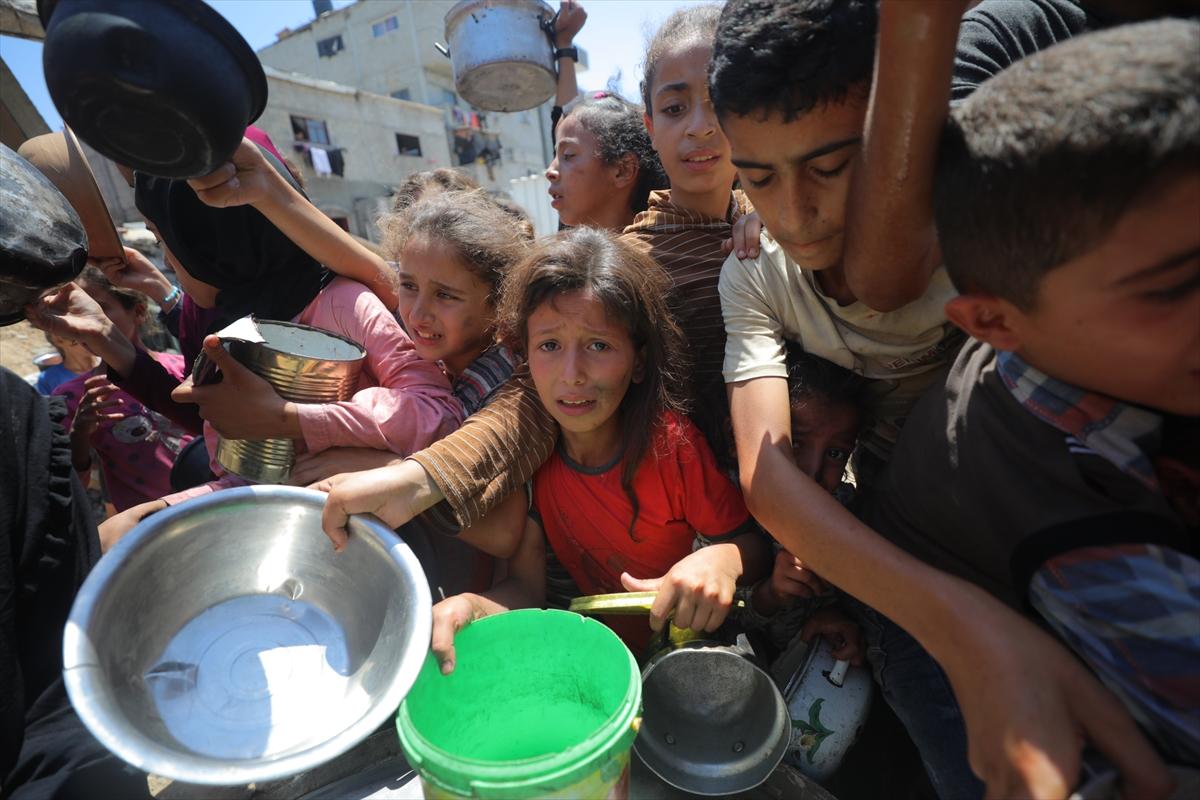
Palestinians in Gaza receive food distributions under Israeli attacks 14 July 2025 – (Anadolu Agency)
Since 27 May attacks on humanitarian distribution points linked to Israel’s “Gaza Humanitarian Aid Foundation” system have resulted in a total of 743 deaths and 4,891 injuries by 5 July. On 1 July 11 people were killed and 84 injured when Israeli forces opened fire on civilians waiting for aid near the Netzarim Corridor. Similar attacks occurred on the same day in aid zones in Rafah and Khan Yunis.
The United Nations announced that Israel had issued a new evacuation order for 80,000 people in the Khan Yunis region of Gaza. It was stated that approximately 85 percent of Gaza’s territory was currently under evacuation orders or designated as military zones.
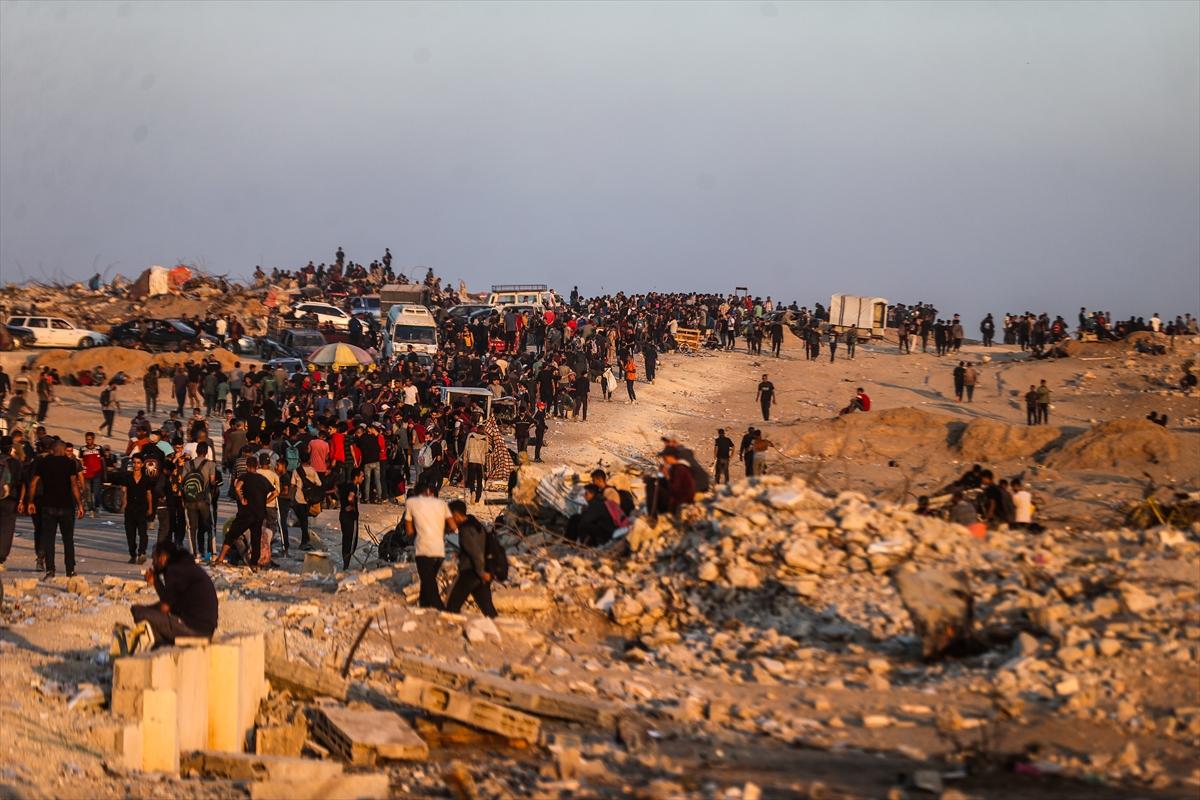
Thousands of Palestinians struggling with hunger in Gaza rush to the Netzarim area to receive aid 2 July 2025 – (Anadolu Agency)
In the United Kingdom human rights organizations announced they would continue legal action after the High Court rejected a case seeking to halt arms sales to Israel. Al-Haq GLAN Amnesty International Human Rights Watch and Oxfam stated that the UK must suspend all military exports to Israel including F-35 components.
In London a demonstration involving thousands of people protested the government’s attempt to designate the Palestine Action group as a terrorist organization. Protesters emphasized the legitimacy of the right to protest and condemned efforts to suppress actions in support of Palestine.
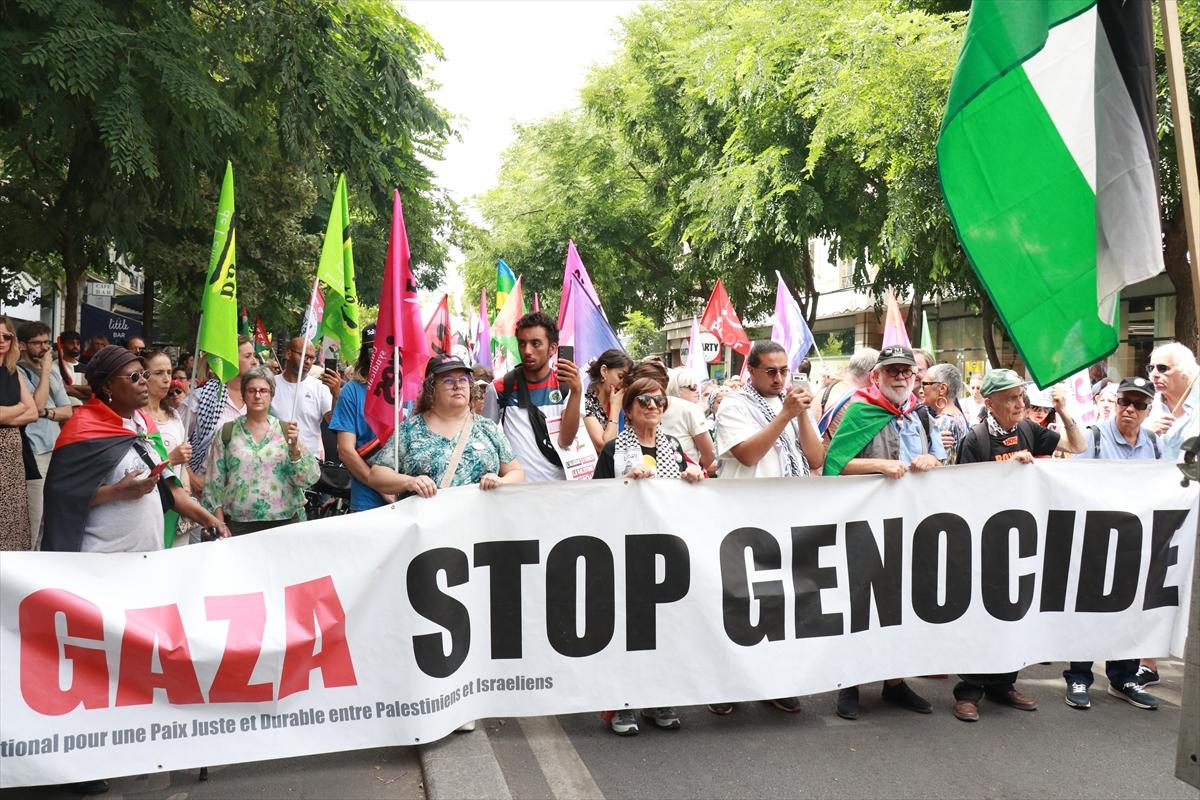
Protest in Paris against the dissolution of Urgence Palestine and for Gaza 5 July 2025 – (Anadolu Agency)
On 6 July 81 Palestinians were killed in attacks targeting the center of Gaza near aid distribution points and a school in the Shati Refugee Camp. On the same day civilians living in tents in the El-Mevasi area of Khan Yunis were targeted resulting in the deaths of 14 people mostly women and children.
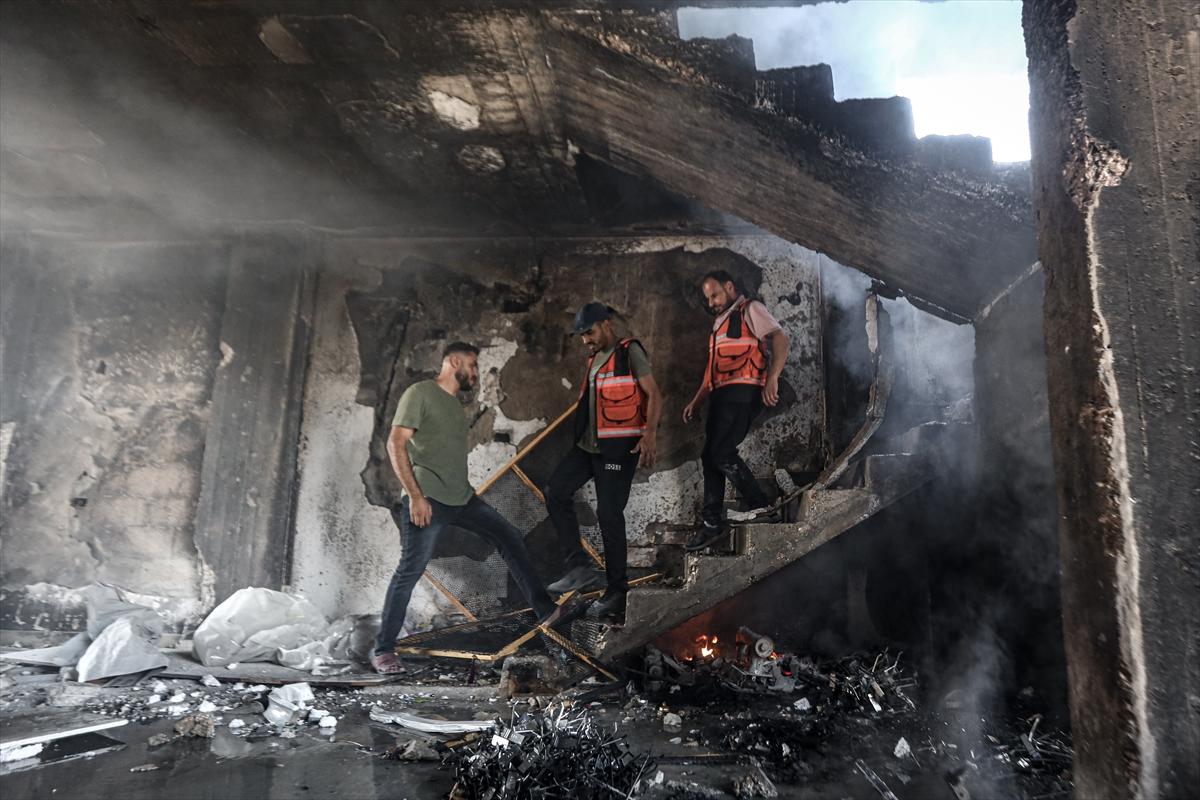
After Israeli strikes on an apartment building on Omar al-Mukhtar Street and a commercial building in the Omar al-Mukhtar Market in eastern Gaza City 6 July 2025 – (Anadolu Agency)
On 7 July at least five people were killed and more than 40 injured when Israeli forces opened fire on civilians near an aid distribution point in Rafah. It was reported that across Gaza a total of 105 people had been killed and 356 injured on that day.
On 8 July a gathering area in the Nusayrat Refugee Camp was targeted resulting in 11 deaths. In the Et-Tuffah neighborhood two members of the Al-Jamasi family were killed in a strike on their home and two other Palestinians died in a strike on a location west of Khan Yunis.
On 9 July a total of 46 Palestinians were killed in attacks. Seventeen died in a drone strike near a supplementary food distribution point in Deir al-Balah four were killed when a house in Bureij Camp was targeted five died in tents in the Mevasi area of Khan Yunis and four died in the home of the Cadallah family. Among the Cadallah family victims was Ibrahim aged one and a half.
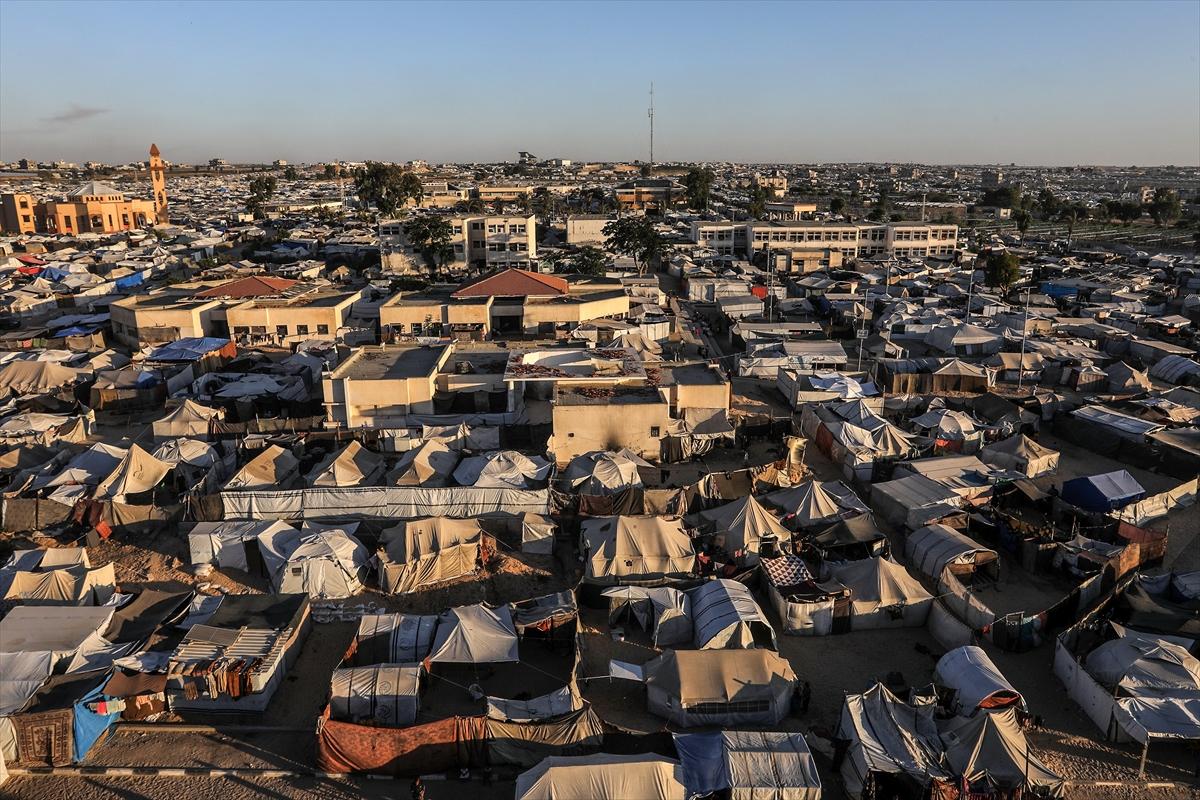
The El-Mevasi area of Khan Yunis where displaced Palestinians have taken shelter due to Israeli attacks 6 July 2025 – (Anadolu Agency)
By 10 July the number of people killed at aid points had risen to 782 and the number of injured to 5,179. It was reported that the Israeli navy had also opened fire around these centers claiming the action was intended to move civilians away outside designated aid hours.
Aksa Martyrs Hospital in Deir al-Balah faced the risk of being taken out of service due to fuel shortages. The Palestinian Ministry of Health warned that generators would soon run out of fuel jeopardizing access to healthcare for 500,000 people. The World Food Programme reported that one in three people in Gaza had not eaten for days.
On 5 July in Istanbul the Open Rafah group organized a march titled “Love for Prophet Muhammad welfare for Gaza.” The march from Beyazıt Square to the Hagia Sophia Grand Mosque called for the opening of the Rafah Crossing and access for humanitarian aid to Gaza.
On the same day protests against Israel’s attacks on Gaza took place in France the Netherlands and Sweden. In Paris thousands marched chanting “Stop the genocide in Gaza.” In the Netherlands protests targeted GKN Fokker’s export of F-35 components. In Stockholm Sweden hundreds called for a boycott of Israel over war crimes in Gaza.
On 5 July in Tel Aviv thousands of people demonstrated demanding a ceasefire and a prisoner exchange agreement. Protesters pressured the government to accept a permanent agreement following Hamas’s positive response to the ceasefire proposal carrying photographs of children killed in Gaza during a silence vigil.
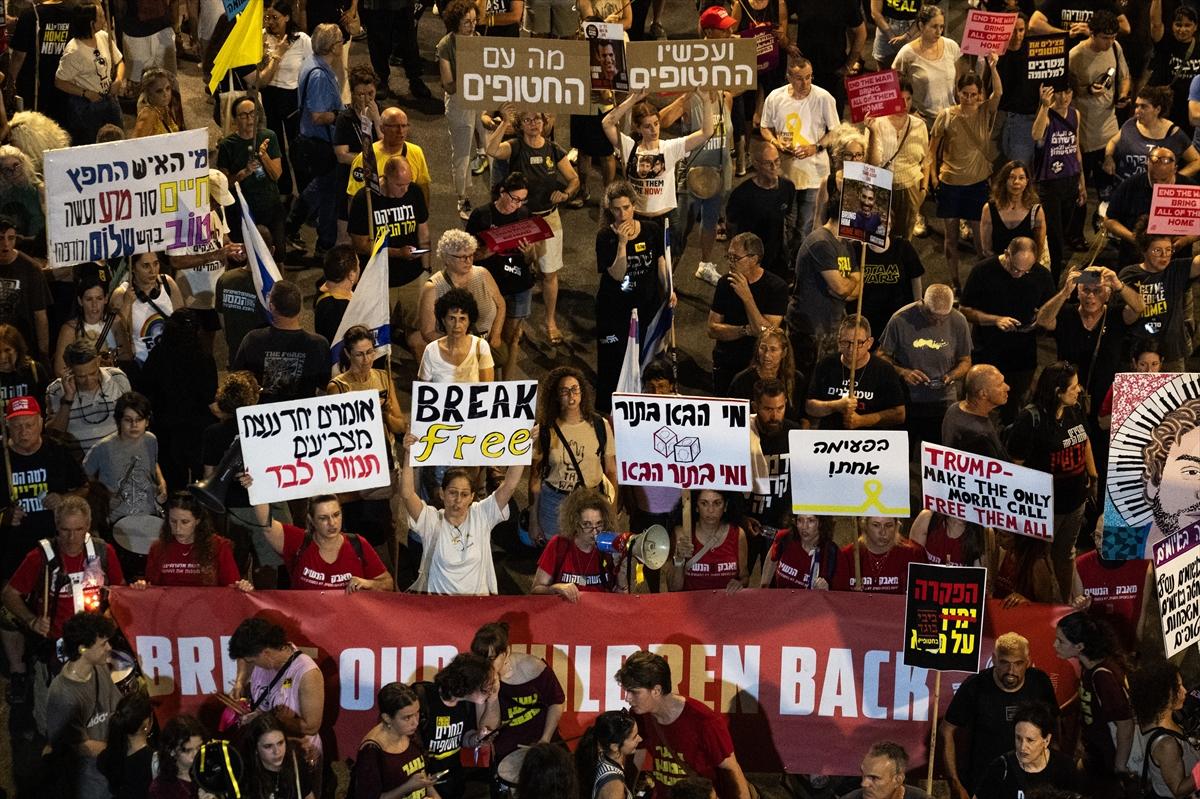
Demonstration in Tel Aviv demanding a ceasefire and return of prisoners 5 July 2025 – (Anadolu Agency)
Between 10 and 14 July 2025 the Israeli military intensified aerial strikes and ground operations across northern central and southern regions of the Gaza Strip. During this period 203 additional Palestinians were killed bringing the total death toll to 58,026. The number of injured rose to 138,520.
Numerous civilians including children were killed in attacks on the Shati Refugee Camp in western Gaza. Bombardments targeting the Zeytun Tuffah and Shu’aiyya neighborhoods in eastern Gaza blocked access to the area leaving Civil Defense teams struggling to reach the wounded. Israeli warplanes targeted a house in the Shati Camp killing six Palestinians. In the Es-Sabra neighborhood two people were killed and many others injured when a building was struck.
On 13 July a strike on civilians waiting for water in the Nusayrat Refugee Camp killed ten people six of them children and injured 16. On the same day in Gaza City 11 more people including a doctor and a child were killed. In a strike on a market in the Derac neighborhood 12 people were killed including Dr Ahmed Kandil a surgeon from Baptist Hospital.
It was reported that the Israeli military carried out over 35 aerial strikes on Beit Hanoun and established a heavy “fire belt” in northern areas.
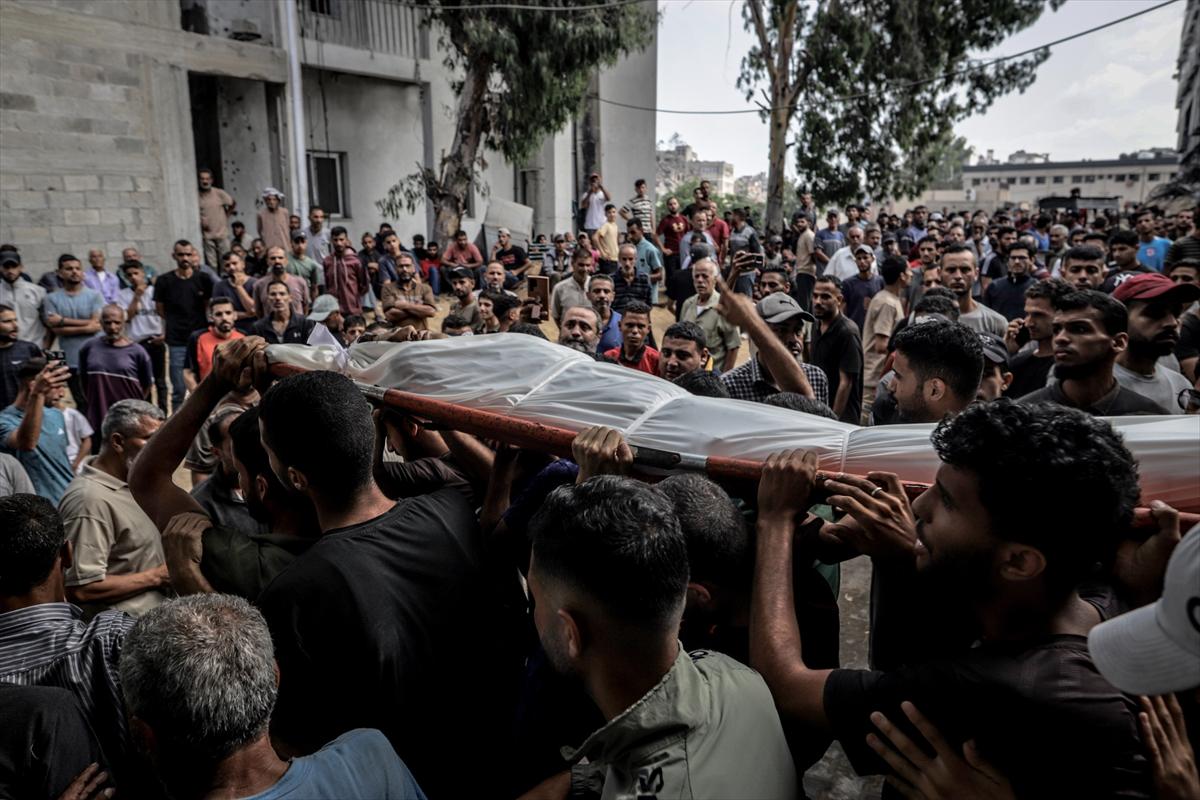
Funerals of those killed in Israeli attacks on Gaza 12 July 2025 – (Anadolu Agency)
As of 10 July burial operations in Khan Yunis had been halted due to the Israeli military’s siege of cemeteries and the morgue at Nasir Hospital was filled with bodies. Cemetery official Tafish Abu Hatab said “50 to 60 corpses are waiting in the morgue if this continues we will have to open mass graves.”
The Ministry of Waqf reported that Israeli military bulldozers had entered cemeteries in Khan Yunis and removed the bodies of martyrs. This act was condemned as a violation of both religious and humanitarian norms.
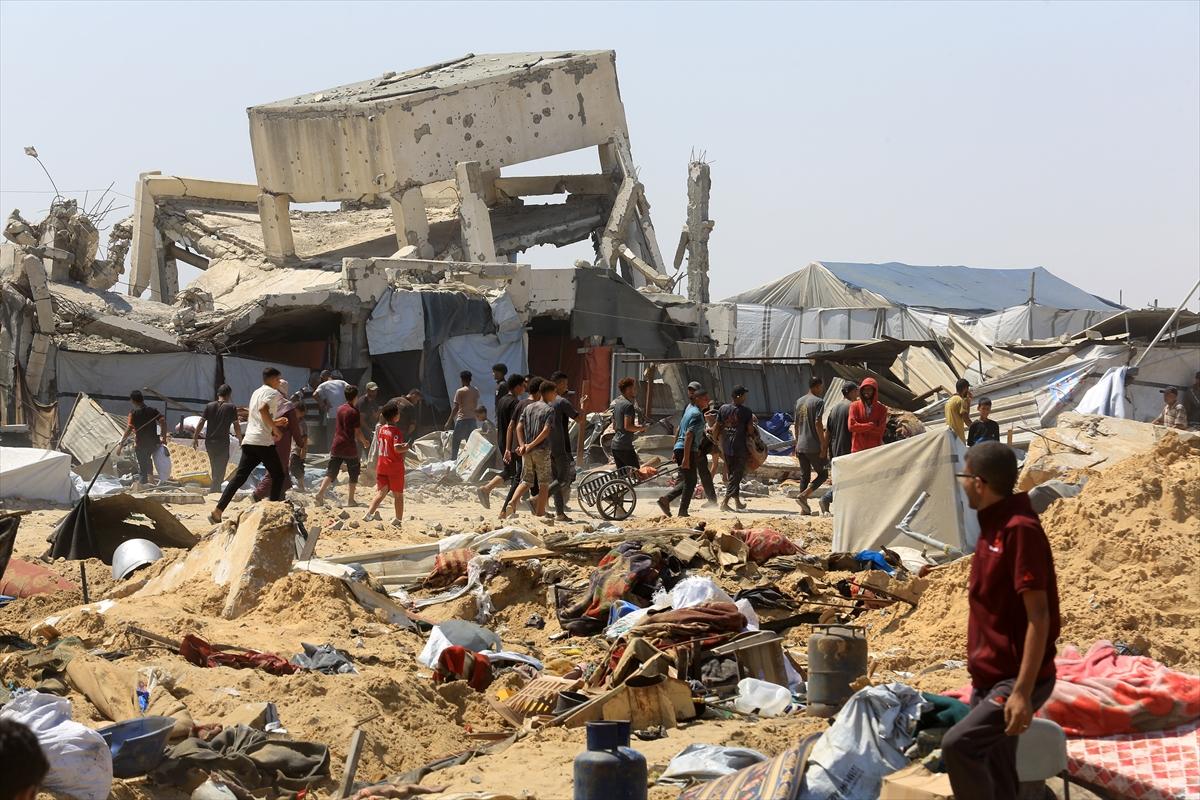
An Israeli military bulldozer destroying a Palestinian cemetery and surrounding tents in Khan Yunis 11 July 2025 – (Anadolu Agency)
Israel’s plan to build a so-called “humanitarian aid city” in Rafah has sparked widespread debate. Prime Minister Benjamin Netanyahu responded to military assessments that the project would take over a year by demanding it be implemented faster at lower cost and in a “practical” manner. Netanyahu issued orders to the military to prepare a new timeline to accelerate the project. The planned tent city is expected to initially house 600,000 Palestinians with the eventual goal of forcibly relocating Gaza’s entire population there.
Former Israeli Prime Minister Ehud Olmert described the structure as a “concentration camp.” Olmert stated “This is a concentration camp. If Palestinians are being forcibly relocated here it is ethnic cleansing.” Officials from UNRWA the United Nations agency for Palestinian refugees also assessed the plan as incompatible with humanitarian principles.
It has been suggested that the Israeli military opposes the plan. Some military officials speaking to Haaretz argued that implementing such a project in Rafah while ceasefire negotiations continue is militarily unfeasible. The military contends that demands to withdraw from the Morag and Philadelphi Corridors would obstruct the plan.
On 11 July activists in the Austrian Parliament protested Israel’s silence over its attacks in Gaza. Jewish activist Dalia Sarig-Fellner told members of parliament “You have not uttered a single word about genocide.”
On the same day members of the Israeli left-wing “Free Jerusalem” movement protested outside the U.S. Consulate in Jerusalem against the U.S.-Israeli-led Gaza Humanitarian Aid Foundation. Activists carried banners reading “Not a humanitarian city a concentration camp.”
On 12 July mass protests against Israel were held in Stockholm Sweden and Berlin Germany. In Berlin a woman was seriously injured during a harsh police crackdown on demonstrators.
Anadolu Ajansı. “Avrupa’da İsrail’in Gazze’ye Yönelik Saldırıları Protesto Edildi.” Accessed July 14, 2025. https://www.aa.com.tr/tr/dunya/avrupada-israilin-gazzeye-yonelik-saldirilari-protesto-edildi/3623004.
Anadolu Ajansı. “Avusturya Parlamentosunda İsrail’in Gazze’deki Soykırımına Sessiz Kalınması Protesto Edildi.” Accessed July 14, 2025. https://www.aa.com.tr/tr/dunya/avusturya-parlamentosunda-israilin-gazzedeki-soykirimina-sessiz-kalinmasi-protesto-edildi/3628167.
Anadolu Ajansı. “Eski İsrail Başbakanı, Refah’ta Planlanan İnsani Yardım Kentini ‘Toplama Kampı’na Benzetti.” Accessed July 14, 2025. https://www.aa.com.tr/tr/dunya/eski-israil-basbakani-refahta-planlanan-insani-yardim-kentini-toplama-kampina-benzetti/3630198.
Anadolu Ajansı. “Londra’da Yüksek Mahkeme Önünde Palestine Action Grubu’na Destek Eylemi Düzenlendi.” Accessed July 14, 2025. https://www.aa.com.tr/tr/dunya/londrada-yuksek-mahkeme-onunde-palestine-action-grubuna-destek-eylemi-duzenlendi/3621912.
Anadolu Ajansı. “Netanyahu’dan Orduya: Filistinlileri Sürgün İçin Refah’ta Toplama Kampı Planını Hızlandırın Talimatı.” Accessed July 14, 2025. https://www.aa.com.tr/tr/dunya/netanyahudan-orduya-filistinlileri-surgun-icin-refahta-toplama-kampi-planini-hizlandirin-talimati/3630208.
Anadolu Ajansı. “İnsan Hakları Örgütleri İngiltere’nin İsrail’e Silah Satışına Karşı Mücadelelerini Sürdürecek.” Accessed July 14, 2025. https://www.aa.com.tr/tr/dunya/insan-haklari-orgutleri-ingilterenin-israile-silah-satisina-karsi-mucadelelerini-surdurecek/3618265.
Anadolu Ajansı. “İsrail Ordusunun Gazze’nin Farklı Bölgelerinde Düzenlediği Saldırılarla 81 Filistinli Hayatını Kaybetti.” Accessed July 14, 2025. https://www.aa.com.tr/tr/dunya/israil-ordusunun-gazzenin-farkli-bolgelerinde-duzenledigi-saldirilarla-81-filistinli-hayatini-kaybetti/3623264.
Anadolu Ajansı. “İsrail Su Almayı Bekleyen Filistinlileri Vurdu: 6’sı Çocuk 10 Kişi Hayatını Kaybetti.” Accessed July 14, 2025. https://www.aa.com.tr/tr/dunya/israil-su-almayi-bekleyen-filistinlileri-vurdu-6si-cocuk-10-kisi-hayatini-kaybetti/3629491.
Anadolu Ajansı. “İsrailli Aktivistler, Gazze’deki ABD-İsrail Güdümlü Vakfı ABD Konsolosluğu Önünde Protesto Etti.” Accessed July 14, 2025. https://www.aa.com.tr/tr/dunya/israilli-aktivistler-gazzedeki-abd-israil-gudumlu-vakfi-abd-konsoloslugu-onunde-protesto-etti/3628138.
Anadolu Ajansı. “İsrail’de Binlerce Gösterici, Gazze’de Ateşkes ve Esir Takası Anlaşması Talebiyle Gösteri Düzenledi.” Accessed July 14, 2025. https://www.aa.com.tr/tr/dunya/israilde-binlerce-gosterici-gazzede-ateskes-ve-esir-takasi-anlasmasi-talebiyle-gosteri-duzenledi/3623150.
Anadolu Ajansı. “İsrail’in Gazze Şeridi’ne Saldırılarında 80 Filistinli Hayatını Kaybetti.” Accessed July 14, 2025. https://www.aa.com.tr/tr/dunya/israilin-gazze-seridine-saldirilarinda-80-filistinli-hayatini-kaybetti/3618253.
Anadolu Ajansı. “İsrail’in Gazze’ye Düzenlediği Saldırılarda 46 Filistinli Hayatını Kaybetti.” Accessed July 14, 2025. https://www.aa.com.tr/tr/dunya/israilin-gazzeye-duzenledigi-saldirilarda-46-filistinli-hayatini-kaybetti/3626715.
Anadolu Ajansı. “İsrail’in Gazze’ye Saldırılarında Aralarında Çocukların da Bulunduğu 61 Filistinli Hayatını Kaybetti.” Accessed July 14, 2025. https://www.aa.com.tr/tr/dunya/israilin-gazzeye-saldirilarinda-aralarinda-cocuklarin-da-bulundugu-61-filistinli-hayatini-kaybetti/3622572.
Anadolu Ajansı. “İsrail’in Gazze’ye Saldırılarında Can Kaybı 57 Bin 882’ye Çıktı.” Accessed July 14, 2025. https://www.aa.com.tr/tr/dunya/israilin-gazzeye-saldirilarinda-can-kaybi-57-bin-882ye-cikti/3628750.
Anadolu Ajansı. “İsrail’in Gazze’ye Saldırılarında Can Kaybı Son 24 Saatte 142 Artarak 57 Bini Aştı.” Accessed July 14, 2025. https://www.aa.com.tr/tr/dunya/israilin-gazzeye-saldirilarinda-can-kaybi-son-24-saatte-142-artarak-57-bini-asti/3619335.
Anadolu Ajansı. “İsrail’in Gazze’ye Saldırılarında Can Kaybı Son 24 Saatte 61 Artarak 57 Bin 823’e Çıktı.” Accessed July 14, 2025. https://www.aa.com.tr/tr/dunya/israilin-gazzeye-saldirilarinda-can-kaybi-son-24-saatte-61-artarak-57-bin-823e-cikti/3628085.
Anadolu Ajansı. “İsrail’in Gazze’ye Son 24 Saatte Düzenlediği Saldırılarda 105 Filistinli Hayatını Kaybetti.” Accessed July 14, 2025. https://www.aa.com.tr/tr/dunya/israilin-gazzeye-son-24-saatte-duzenledigi-saldirilarda-105-filistinli-hayatini-kaybetti/3623814.
Anadolu Ajansı. “İsrail’in Gazze’ye Yönelik Saldırıları İsveç ve Almanya’da Protesto Edildi.” Accessed July 14, 2025. https://www.aa.com.tr/tr/dunya/israilin-gazzeye-saldirilari-isvec-ve-almanyada-protesto-edildi/3629263.
Anadolu Ajansı. “İstanbul’da ‘Open Rafah’ Grubundan ‘Hazreti Muhammed’e Sevgi – Gazze’ye Refah Yürüyüşü’.” Accessed July 14, 2025. https://www.aa.com.tr/tr/gundem/istanbulda-open-rafah-grubundan-hazreti-muhammede-sevgi-gazzeye-refah-yuruyusu/3623108.
The Israeli military conducted attacks on 16 different neighborhoods across Gaza Strip from north to south between 15 and 19 July 2025. In strikes targeting the Shati Refugee Camp west of Gaza City, 11 Palestinians were killed, including five children. Three people died in a bombardment near Sheikh Rizwan Lake, and three others were killed in attacks around the Shaban al-Ris School in the Tuffah neighborhood.
One person was killed when a house in the Zeytun neighborhood was bombed, and one woman died in a tent attack on El-Babeydi Street in the Sheikh Rizwan neighborhood. Two people died in a bombardment at the Senafar Junction, five were killed in a targeted house in the Zerka neighborhood, and one person died in a building in the Derec neighborhood. In an attack on a tent camp in the Er-Rimal neighborhood, numerous civilians were injured.
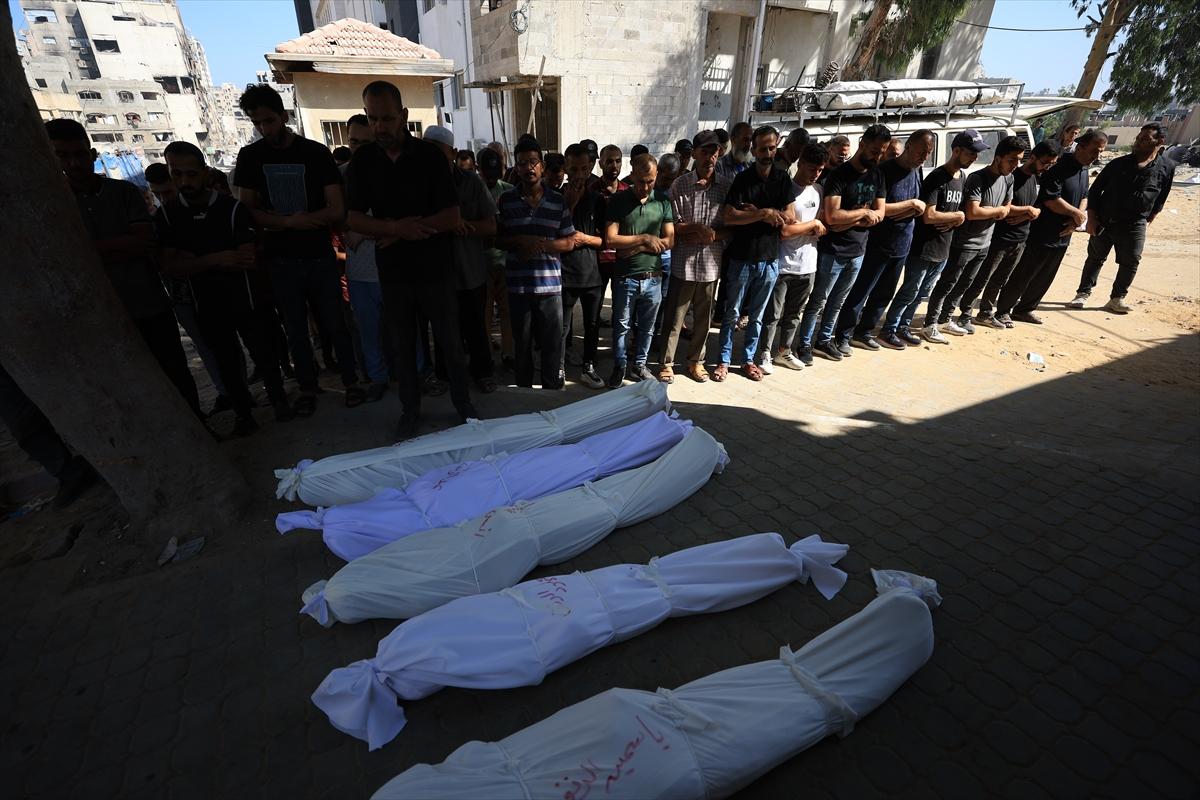
Bodies of those killed in the Israeli military’s attack on the ez-Zeytun neighborhood east of Gaza City, 16 July 2025 – (Anadolu Agency)
Fire was opened on civilians waiting for aid in the Sudaniya area, killing one person. Four Palestinians, including two women, were killed near a humanitarian center in Refah; one person was killed in the Han Yunus Mevasi area and seven in Beni Suheyla. In the north of Gaza, six people, including a woman and a child, were killed when two homes were targeted.
The body of a woman was recovered from the ruins of a house belonging to the Arafat family in the Zerka neighborhood, and it was reported that 14 more bodies remained trapped under the debris. Rescue operations were hampered due to lack of equipment.
The Israeli military targeted at least 10 tents and six homes belonging to civilians in various areas. In Han Yunus Mevasi, eight people, including three children, were killed when tents were struck. Two members of the Levha family were killed in the Sabra neighborhood, and four people died in tents housing displaced families.
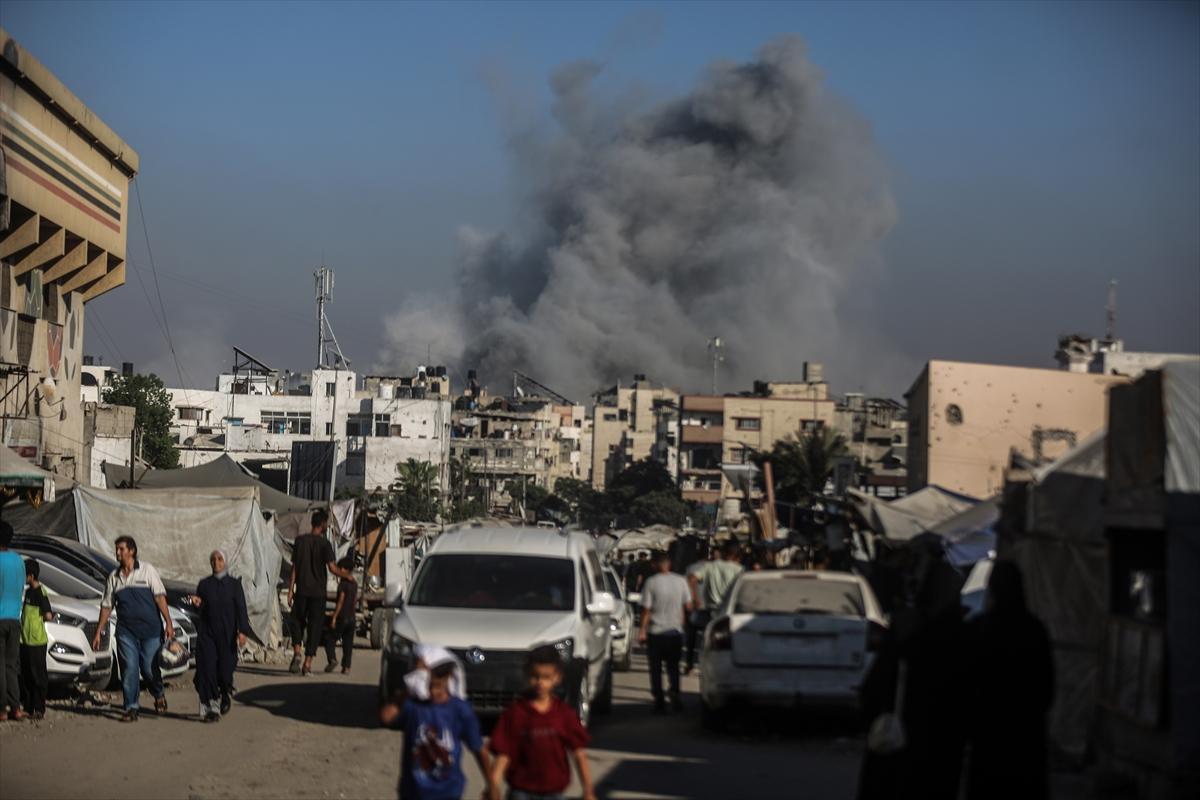
Israel’s attacks on Gaza continue, 15 July 2025 – (Anadolu Agency)
Eleven people were killed in attacks on an apartment, a tent, and a café in the Nusayrat Camp; two in the Sabra neighborhood; two people, including one child, on Abu Hasira Street; four in Jabaliya; two near Tuffah Zerka and the Bin Siltan Mosque; one in the El-Kerame area; one in Zeytun Old City; five in the house of the El-Hattab family; eight in the Bureyc Camp; and seven in Deir al-Balah.
Four people died in the bombing of a humanitarian center near Netzarim Junction. It was announced that the 15-kilometer “Magen Oz Corridor,” which separates the cities of Han Yunus and Refah, has been completed. This corridor has been described as part of Israel’s attack and occupation plans.
Israeli soldiers used tear gas against hungry and destitute civilians gathered around distribution points of the Gaza Humanitarian Fund (GHF), guided by Israel and the United States, and then opened fire with live ammunition. These attacks have revealed that efforts to receive aid in Gaza have become lethal. The Palestinian government stated that the GHF has become an organization responsible for mass casualties under the guise of humanitarian aid and has provided a foundation for Israeli military operations.
Crowds gathering in hope of receiving aid were compressed into narrow passages with no room to breathe, exposed to tear gas, and then shot at. It has been documented that civilians were killed and many injured at these aid points. The Palestinian government has called for an investigation into the GHF’s activities and its immediate suspension.
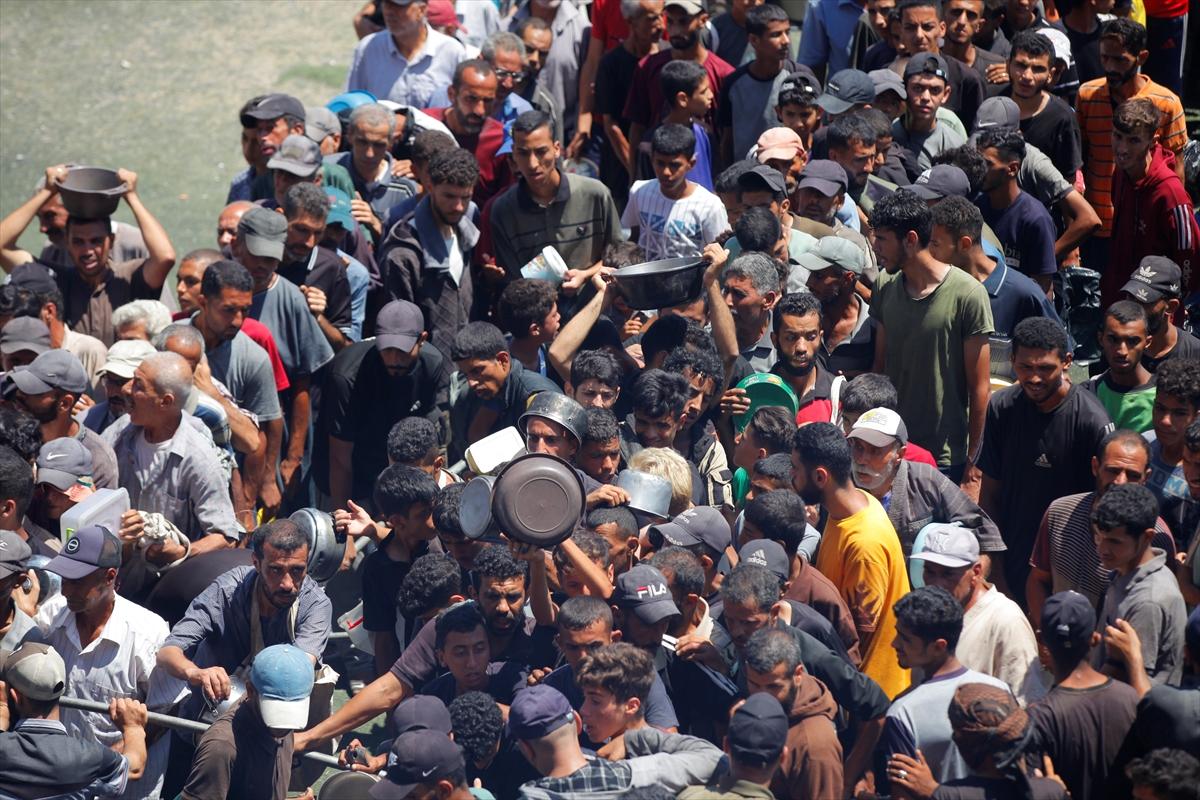
Food is distributed to Palestinians struggling with hunger in Gaza, 19 July 2025 – (Anadolu Agency)
The United Nations reported that the healthcare system has largely collapsed, with only 17 of the 36 remaining hospitals able to provide partial services. Shortages of oxygen, medicine, and medical equipment are widespread; in some hospitals, five infants share a single incubator. Additionally, due to the depletion of basic food supplies, rates of malnutrition among children and women have reached critical levels.
UNICEF announced that approximately 6,000 children in Gaza are suffering from severe malnutrition and that psychological trauma has affected the entire child population.
The International Criminal Court (ICC) rejected a request to annul arrest warrants issued against Israeli Prime Minister Benjamin Netanyahu and former Defense Minister Yoav Gallant. The court confirmed its jurisdiction over crimes committed on Palestinian territory. This decision demonstrates that the international judicial process against military operations in Gaza is ongoing.
Josep Borrell, former High Representative for Foreign Affairs of the European Union, criticized the EU’s refusal to impose sanctions on Israel’s actions in Gaza. Borrell stated that the severe humanitarian devastation in Gaza continues unabated due to the EU’s passive stance.
Britain’s Permanent Representative to the UN, Barbara Woodward, stated that over 800 people have been killed at aid points and called for an end to Israel’s blockade of Gaza.
A group of 100 people gathered in front of the Senedd building in Cardiff, the capital of Wales, and read aloud the names of the 20,000 children killed in Gaza. The event was organized by the Palestine Solidarity Campaign Wales (PSC Cymru) and the Students and Parents Platform for Palestine. The aim was to generate public pressure on the Welsh government to take concrete steps against Israel.
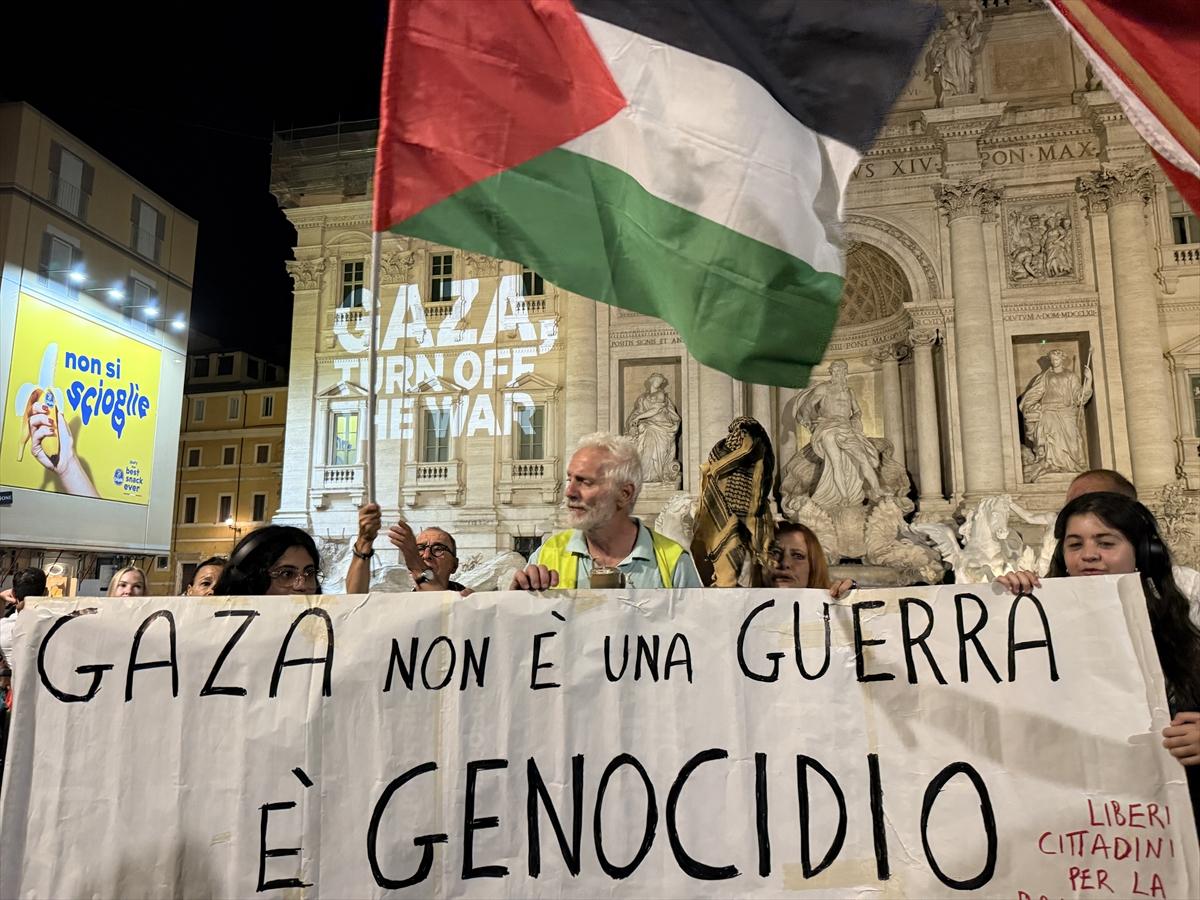
Protests for Gaza around the historic Trevi Fountain in Rome, 19 July 2025 – (Anadolu Agency)
In Rome, the capital of Italy, the lights of the Trevi Fountain were turned off for one hour to call for a ceasefire in Gaza. The words “Stop the War in Gaza” were projected onto the Palazzo Poli behind the fountain, and participants carried banners protesting the situation in Gaza.
Images of Israeli soldiers on the front facade of the Turkish-Palestinian Friendship Hospital in Gaza indicated that the hospital had begun to be used as a military base. The Turkish Ministry of Foreign Affairs stated that the hospital is Gaza’s only oncology center and that its targeting is a clear violation of international law.
The Israeli administration transferred control over the Ibrahimi Mosque in Hebron from the Palestinian Hebron Municipality to the local authority of Kiryat Arba, an illegal settlement in the region. This move is considered a serious intervention aimed at restructuring the mosque and erasing its Islamic identity.
The Israeli military announced the completion of a new 15-kilometer land corridor separating the eastern and western parts of Han Yunus in southern Gaza. This corridor, named the “Magen Oz Corridor,” connects with the Morag Corridor, which separates Refah from Han Yunus. The purpose of the corridor is to geographically divide the Gaza Strip and ensure permanent military control.
The Palestinian Ministry of Foreign Affairs assessed this initiative as part of a plan to forcibly displace the population of Gaza into small tent settlements. The statement highlighted that the majority of buildings in Gaza have been destroyed and that remaining structures continue to be targeted by the Israeli military.
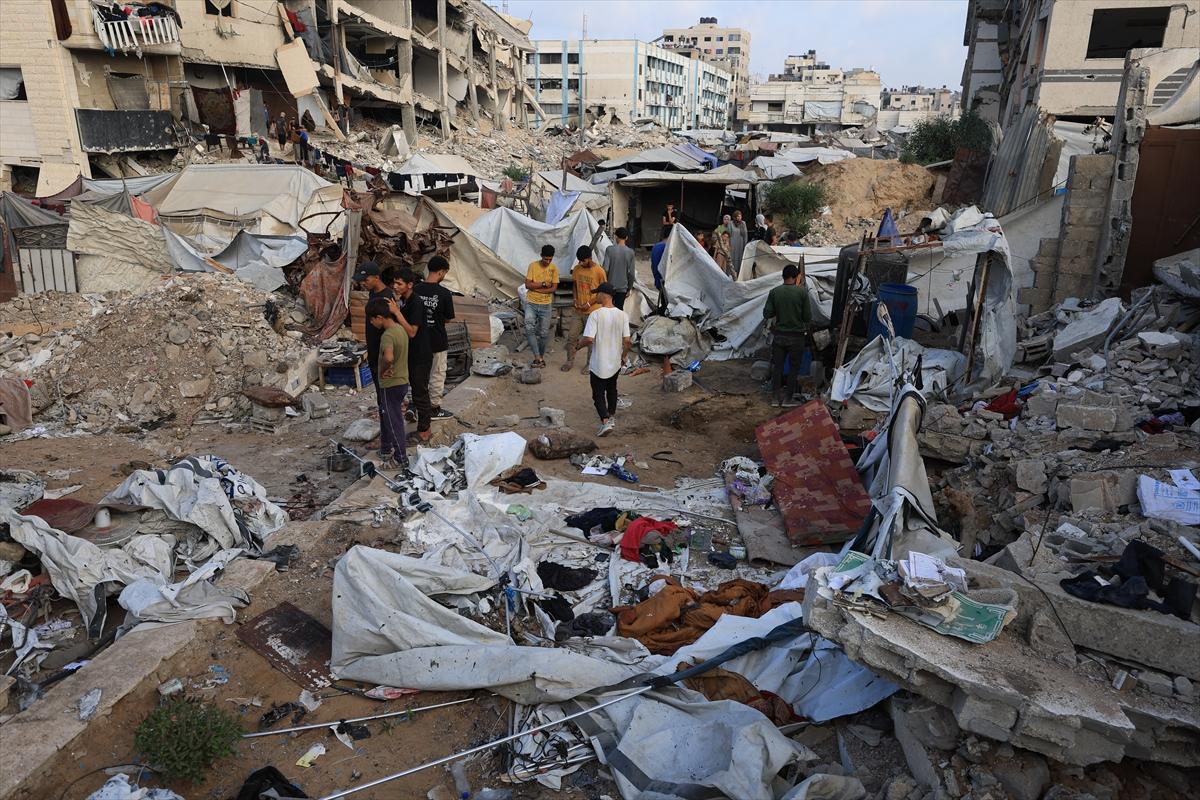
Israel’s attacks on Gaza continue, 15 July 2025 – (Anadolu Agency)
The Israeli military has demanded that civilians living in neighborhoods of Gaza City such as Zeytun, Old City, Turkmen, Sabra, Derec, and Tuffah, as well as many neighborhoods in Jabaliya, move to so-called “safe” zones. It has announced that large-scale attacks will be carried out in these areas. These warnings reveal that forced displacement is being carried out in multiple forms.
At meetings of the United Nations Security Council, conditions in Gaza were described as “unprecedented in scale.” UN Under-Secretary-General for Humanitarian Affairs Tom Fletcher stated that basic food supplies have been exhausted, aid areas have been attacked, and civilian deaths have been impossible to prevent.
UN Secretary-General’s Spokesperson Stephane Dujarric emphasized that Israel, as the occupying power, is responsible for maintaining public order and security in the occupied territories, yet instead it has implemented practices targeting civilians. Dujarric called for the immediate large-scale delivery of humanitarian aid to Gaza and the release of detainees.
UNICEF Executive Director Catherine Russell stated that children in Gaza are enduring severe physical and psychological conditions and that all of them require humanitarian assistance. Russell addressed the world with the message “We have left the children of Gaza face down” and called for urgent international action.
Anadolu Ajansı. “Borrell, AB’nin Gazze’deki Soykırımın Hız Kesmeden Devam Etmesine İzin Verdiğini Belirtti.” Accessed July 22, 2025. https://www.aa.com.tr/tr/dunya/borrell-abnin-gazzedeki-soykirimin-hiz-kesmeden-devam-etmesine-izin-verdigini-belirtti/3632379
Anadolu Ajansı. “Romada Tarihi Trevi Çeşmesi’nin Işıkları Gazze İçin Söndürüldü.” Accessed July 22, 2025. https://www.aa.com.tr/tr/israil-filistin-catismasi/romada-tarihi-trevi-cesmesinin-isiklari-gazze-icin-sonduruldu/3635388
Anadolu Ajansı. “UCM, İsrail’in Netanyahu ve Gallant Hakkındaki Tutuklama Emirlerinin İptali Talebini Reddetti.” Accessed July 22, 2025. https://www.aa.com.tr/tr/dunya/ucm-israilin-netanyahu-ve-gallant-hakkindaki-tutuklama-emirlerinin-iptali-talebini-reddetti/3632932
Anadolu Ajansı. “İsrail’in Gazze’de Öldürdüğü 20 Bin Çocuğun Adı Galler Parlamentosu’nun Önünde Okunuyor.” Accessed July 22, 2025. https://www.aa.com.tr/tr/dunya/israilin-gazzede-oldurdugu-20-bin-cocugun-adi-galler-parlamentosunun-onunde-okunuyor/3632203
Anadolu Ajansı. “İsrail’in Gazze’ye Dün Sabahtan Beri Düzenlediği Saldırılarda 85 Filistinli Hayatını Kaybetti.” Accessed July 22, 2025. https://www.aa.com.tr/tr/dunya/israilin-gazzeye-dun-sabahtan-beri-duzenledigi-saldirilarda-85-filistinli-hayatini-kaybetti/3631987
Anadolu Ajansı. “İsrail’in Gazze’ye Saldırılarında Hayatını Kaybeden Filistinlilerin Sayısı 58 Bin 479’a Yükseldi.” Accessed July 22, 2025. https://www.aa.com.tr/tr/dunya/israilin-gazzeye-saldirilarinda-hayatini-kaybeden-filistinlilerin-sayisi-58-bin-479a-yukseldi/3631031
Emergency. "Gaza Updates." EMERGENCY, Accessed July 22, 2025. https://en.emergency.it/blog/from-the-field/gaza-updates/
Ministry of Foreign Affairs of the Republic of Turkey. "No: 137, Regarding Israel’s Attacks on the Turkish-Palestinian Friendship Hospital in Gaza." Ministry of Foreign Affairs of the Republic of Turkey, Accessed July 22, 2025. https://www.mfa.gov.tr/no_-137_-israil-in-gazze-deki-turk-filistin-dostluk-hastanesi-ni-hedef-alan-saldirilari-hk.en.mfa
Between 19 and 22 July 2025, the Israeli military carried out numerous air, land, and sea attacks on various regions of the Gaza Strip. These attacks specifically targeted civilians waiting at humanitarian aid distribution points and the tents of displaced Palestinians. On 19 July, a total of 89 Palestinians were killed in attacks across multiple areas, 36 of whom were civilians gathered to receive aid.
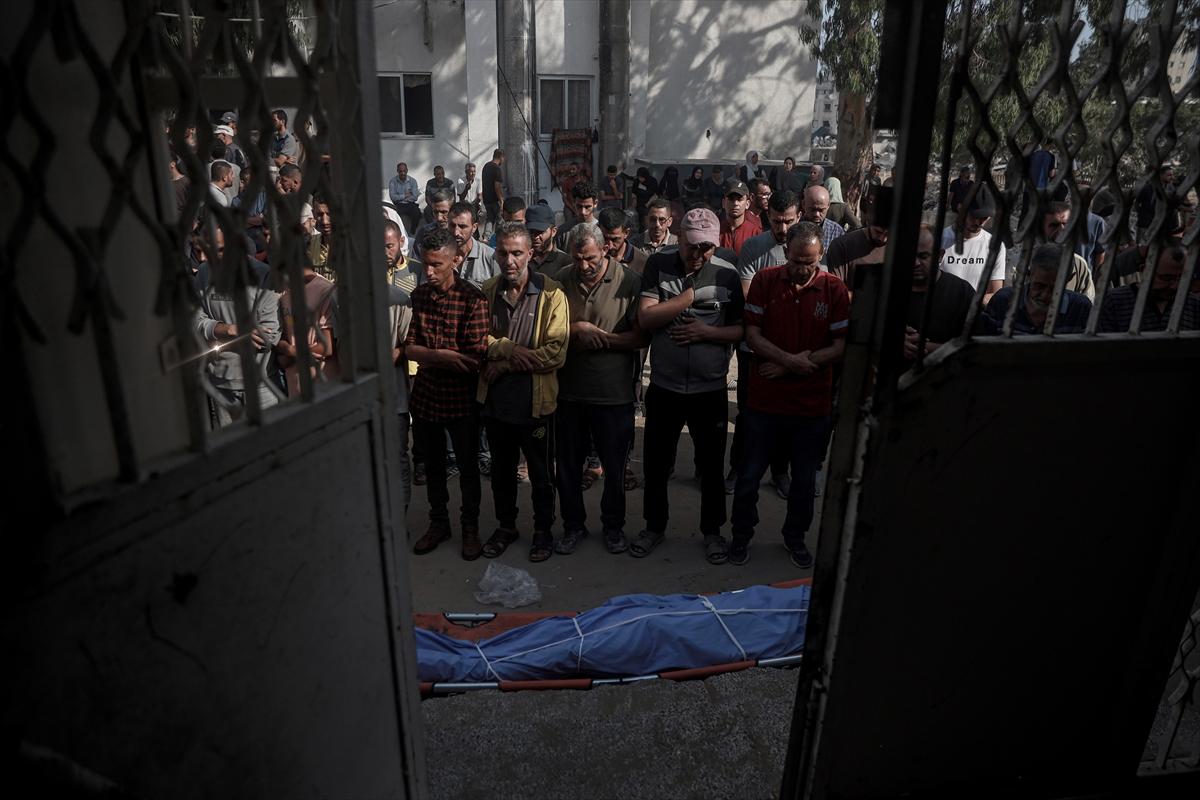
Funeral ceremony at Al-Shifa Hospital, 21 July 2025 – (Anadolu Agency)
On the night of 21 July and the morning of 22 July, 11 people were killed in attacks near the Netzarim Corridor in southern Gaza, followed by another seven deaths in subsequent strikes. On the same days, an attack on tents in the northern part of the Shati Refugee Camp resulted in the deaths of 14 people, including women and children, and left 25 others injured.
In the Sudanîye region of northwestern Gaza, Israeli forces opened fire on civilians waiting for humanitarian aid, killing 81 people. Similar attacks on aid points on 20 July resulted in a total of 132 Palestinian deaths.
Between 19 and 22 July 2025, the number of deaths in Gaza due to starvation rose sharply. On 19 July, 18 people died of hunger; on 20 July, 19; and on 21 July, another 19. The Gaza Ministry of Health stated that the majority of these deaths occurred among children, reporting that child fatalities had exceeded 80.
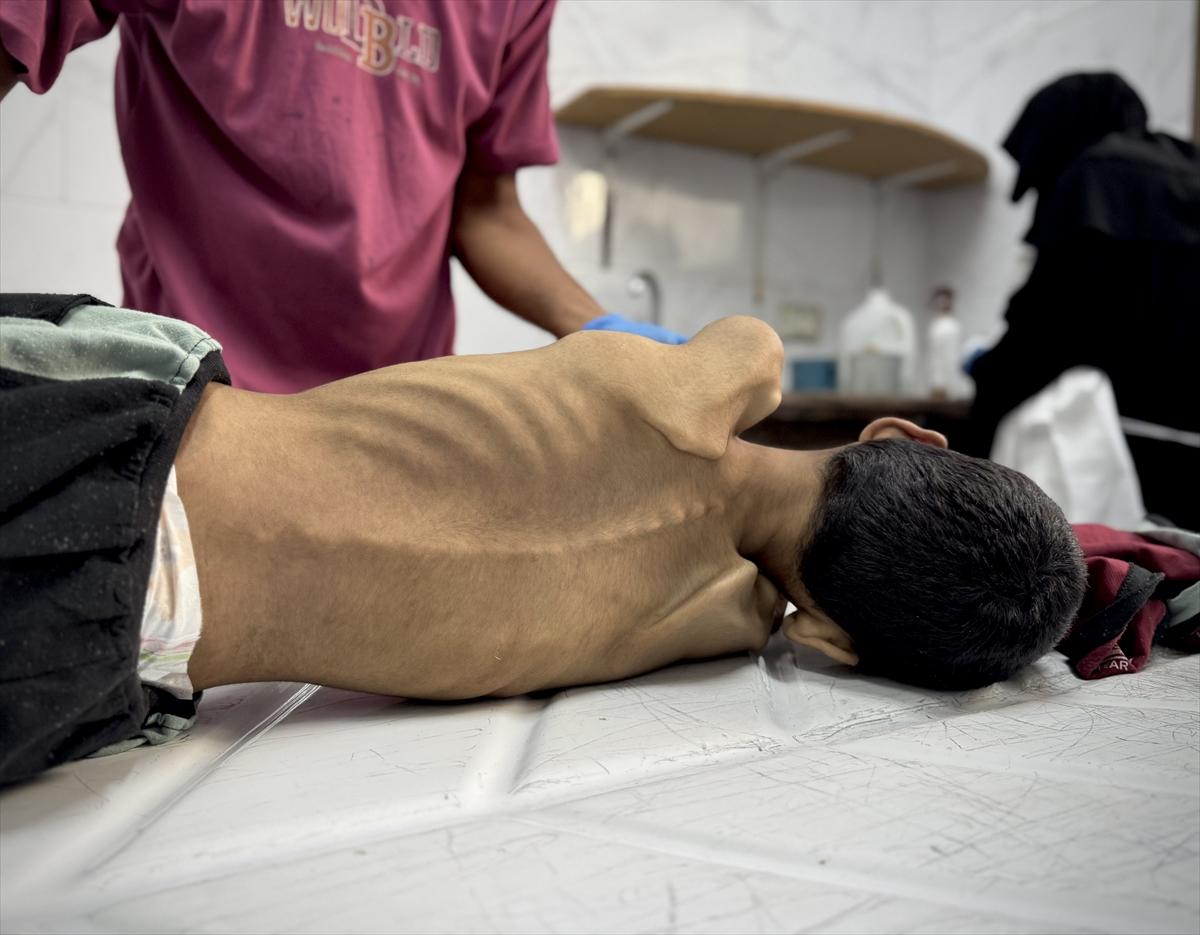
Body of 14-year-old Palestinian child Abdul Jawad Al Ghalban, who died due to malnutrition in Khan Younis, 22 July 2025 – (Anadolu Agency)
Social media posts under the hashtag #GazaIsStarvingToDeath have laid bare the depth of the famine crisis. Health officials and local sources reported a surge in infant deaths due to the inability to obtain flour and baby formula. A three-month-old baby named Yahya was reportedly fed only water and anise tea in hospital due to lack of adequate formula, before succumbing to starvation.
UNICEF declared that starvation-related deaths in Gaza constitute “a man-made catastrophe.” UNRWA stated that 90,000 women and children urgently require medical care and that one in three people have gone days without eating. Despite having enough food in its warehouses to feed Gaza’s population for three months, UNRWA has been denied access to deliver these supplies.
The World Food Programme (WFP) announced that a humanitarian convoy passing through the Zikim Border Crossing on the morning of 20 July was targeted in an area where civilians had gathered, resulting in numerous casualties. According to WFP, one in three civilians unable to access food aid have gone days without eating. In local markets, the price of one kilogram of flour has exceeded 100 dollars.
On 21 July, the Israeli military targeted the Sahabe Medical Complex in western Gaza and a water treatment facility in the Rimal neighborhood. These attacks killed eight people and injured many others. The World Health Organization (WHO) reported that its facilities in Deir al-Balah were struck three times within a single day. During the same attacks, WHO staff and family members were detained, with one still in custody.
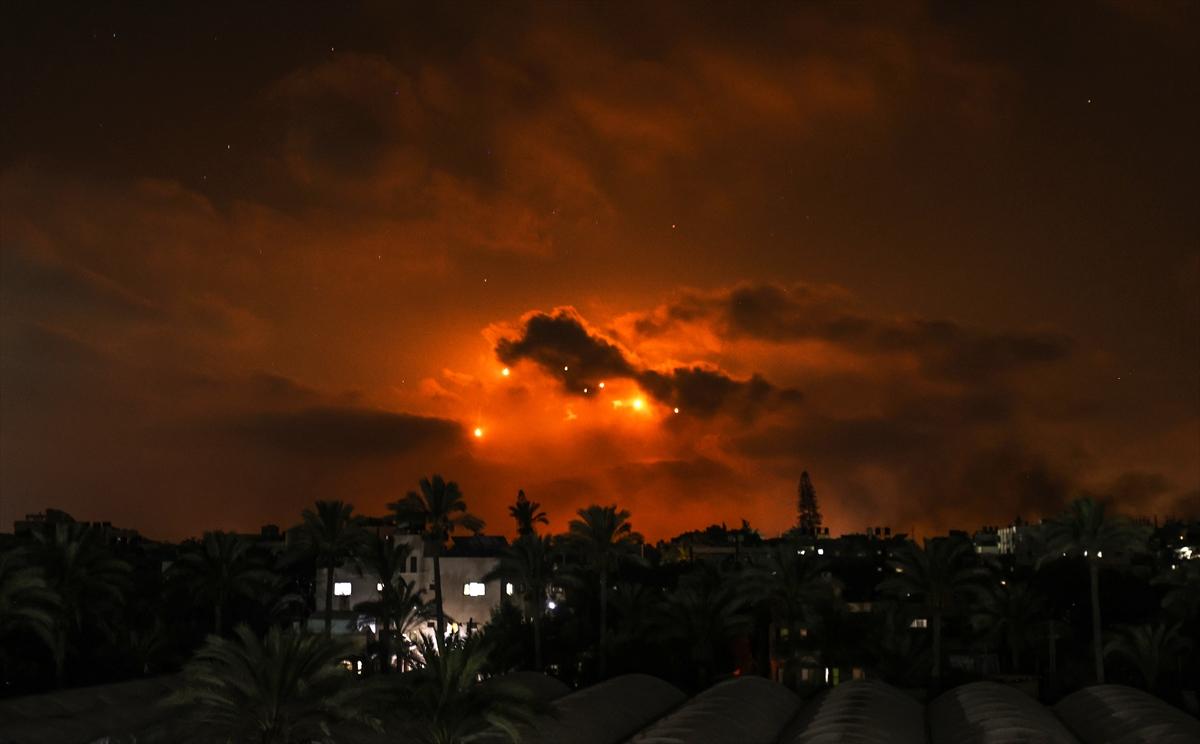
Israeli ground assault on the city of Deir el-Balah in central Gaza Strip, 21 July 2025 – (Anadolu Agency)
Dr. Mervan al-Hams, spokesperson for the Gaza Ministry of Health, was abducted on 21 July by a unit linked to Israel in the city of Refah. During the incident, journalist Tamir al-Ze’ain was killed and journalist Ibrahim Abu Amsha was injured. The Palestinian government condemned the act as “a clear violation of freedom of expression and of the safety of healthcare workers.”
Approximately 88 percent of Gaza’s population has been displaced due to Israeli evacuation orders. The Israeli military has declared more than ten residential blocks in the Deir al-Balah area as “zones requiring evacuation.” Civilians have been directed to move to the Mevasi region of Khan Younis.
On 19 July 2025, a demonstration in support of Palestine in Berlin, Germany’s capital, ended with the arrest of numerous individuals. The protest took place at Breitscheidplatz in the city center, where participants gathered to protest Israeli attacks in Gaza and draw attention to the famine crisis.
Demonstrators carried banners with slogans such as “Stop Starving Gaza,” “One genocide does not justify another,” “Your silence is killing,” and “Israel has committed the largest child massacre in recent history.” Some participants carried empty flour sacks and pots symbolizing hunger and distributed bread to raise awareness.
During the demonstration, a pro-Israel group held a counter-protest nearby, displaying Israeli flags. Police formed a security cordon to prevent clashes between the two groups. Numerous demonstrators were arrested by German police at various points during the protest.
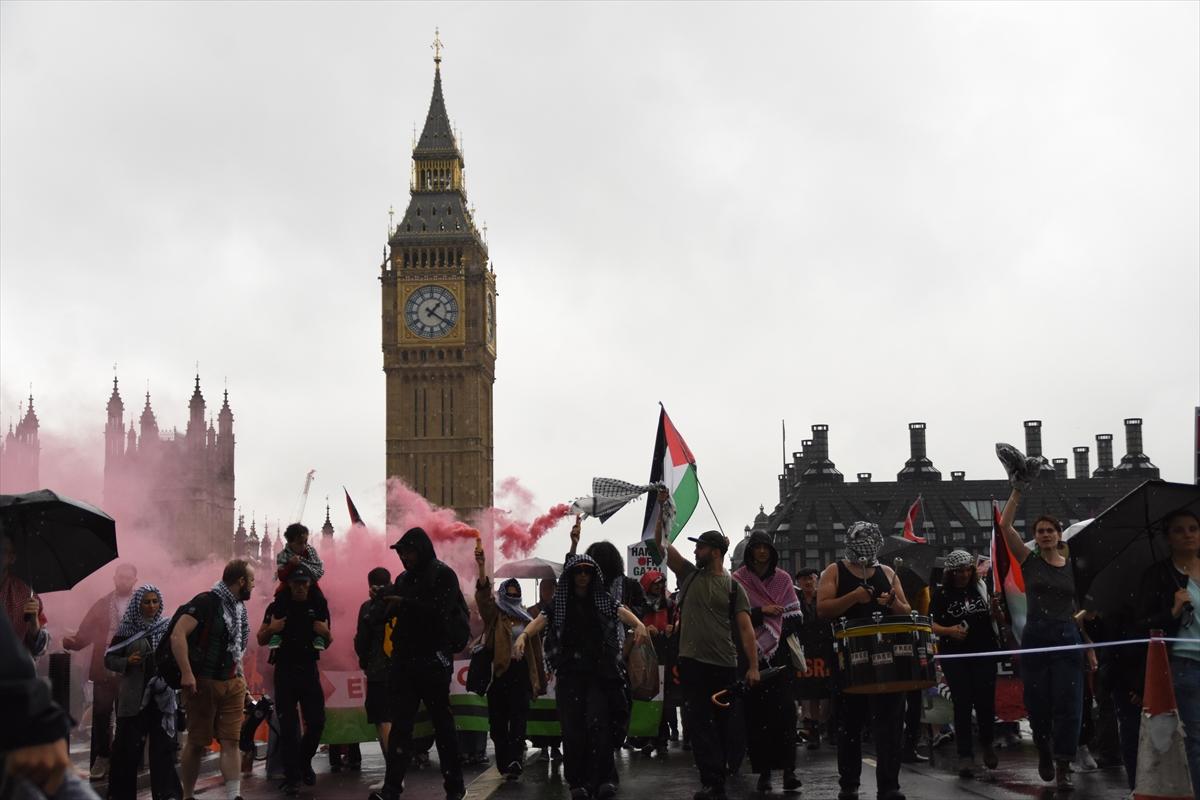
class="italic subscript";
On 19 July 2025, tens of thousands of people participated in a pro-Palestine march in London, the capital of the United Kingdom. This was the 28th national demonstration since the start of Israeli attacks on Gaza on 7 October 2023. Participants began their march at Embankment Station and proceeded across Westminster Bridge to Downing Street to protest Israeli assaults on Gaza, the UK’s arms sales to Israel, and domestic pressure on pro-Palestine activists.
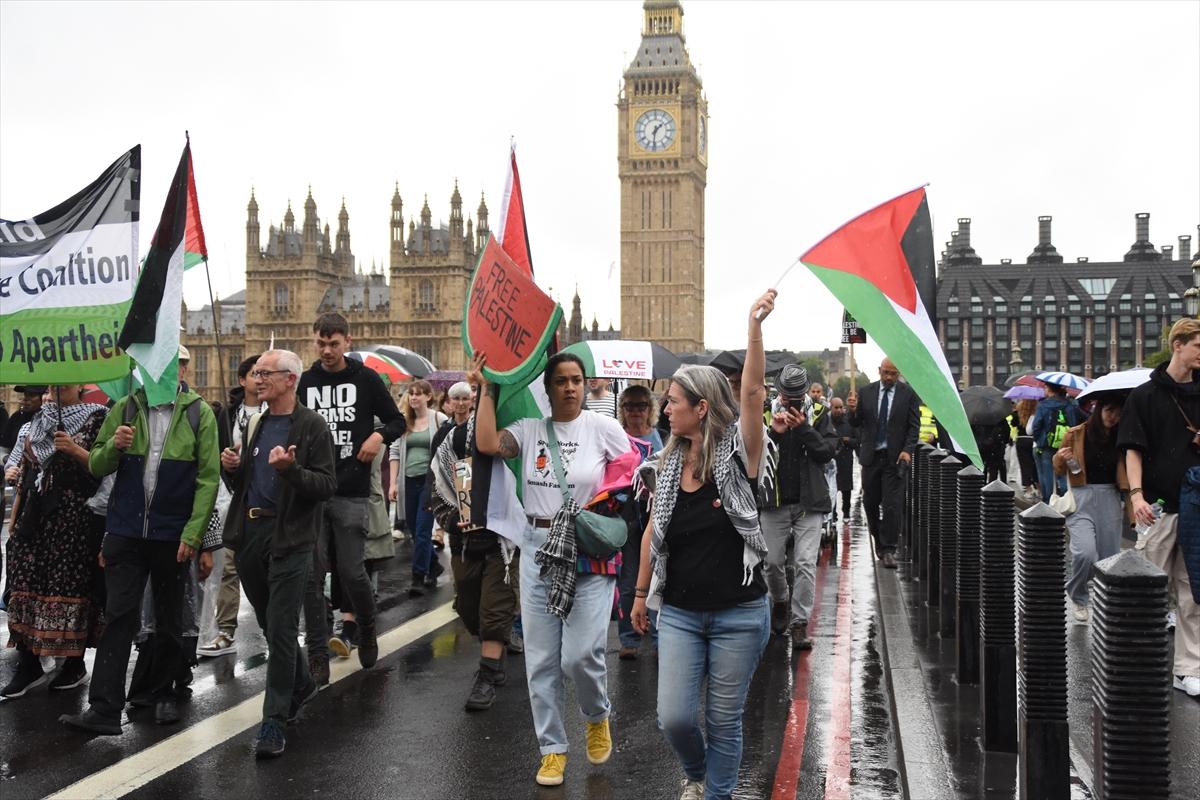
class="italic subscript";
Along the march route, protesters chanted slogans including “Free Palestine,” “Palestine will be free from river to sea,” and “Keir Starmer, you cannot hide, we will judge you for genocide.” Some demonstrators carried flags of Lebanon, Syria, and Iran to express solidarity with those countries’ positions against Israel.
During the demonstration, Hossam Zomlot, head of Palestine’s diplomatic mission in the UK, delivered a speech stating that the killing of children in Gaza had become routine and no longer received media attention. The march concluded in front of 10 Downing Street, the Prime Minister’s Office.
On the same day, another protest outside Parliament in support of the banned group Palestine Action resulted in the arrest of 55 people. The group, previously known for actions such as painting military aircraft in the UK, was declared illegal in July.
Anadolu Ajansı. “Berlin'de Düzenlenen Filistin’e Destek Gösterisinde Çok Sayıda Kişi Gözaltına Alındı.” Accessed July 22, 2025. https://www.aa.com.tr/tr/dunya/berlin-de-duzenlenen-filistin-e-destek-gosterisinde-cok-sayida-kisi-gozaltina-alindi/3636044#
Anadolu Ajansı. “Can Kaybının 59 Bini Aştığı Gazze’de Son 24 Saatte 19 Kişi Açlıktan Hayatını Kaybetti.” Accessed July 22, 2025. https://www.aa.com.tr/tr/dunya/can-kaybinin-59-bini-astigi-gazzede-son-24-saatte-19-kisi-acliktan-hayatini-kaybetti/3637085#
Anadolu Ajansı. “Gazze Şeridi’nden Sosyal Medyaya Taşan Feryat: Gazze Açlıktan Ölüyor.” Accessed July 22, 2025. https://www.aa.com.tr/tr/dunya/gazze-seridi-nden-sosyal-medyaya-tasan-feryat-gazze_acliktan_oluyor/3636143#
Anadolu Ajansı. “Gazze’de Son 24 Saatte 18 Kişi Açlıktan Hayatını Kaybetti.” Accessed July 22, 2025. https://www.aa.com.tr/tr/dunya/gazzede-son-24-saatte-18-kisi-acliktan-hayatini-kaybetti/3636174#
Anadolu Ajansı. “İngiltere’de On Binlerce Kişi Filistin’e Destek İçin Yürüdü.” Accessed July 22, 2025. https://www.aa.com.tr/tr/dunya/ingilterede-on-binlerce-kisi-filistine-destek-icin-yurudu/3635972#
Anadolu Ajansı. “İsrail Gazze’de İnsani Yardım Bekleyenleri ve Çadırları Hedef Aldı: 21 Kişi Hayatını Kaybetti.” Accessed July 22, 2025. https://www.aa.com.tr/tr/dunya/israil-gazze-de-insani-yardim-bekleyenleri-ve-cadirlari-hedef-aldi-21-kisi-hayatini-kaybetti/3638012#
Anadolu Ajansı. “İsrail Saldırıları Altındaki Gazze’de Filistinliler Açlık, Susuzluk ve Yerinden Edilmeyle Mücadele Ediyor.” Accessed July 22, 2025. https://www.aa.com.tr/tr/dunya/israil-saldirilari-altindaki-gazzede-filistinliler-aclik-susuzluk-ve-yerinden-edilmeyle-mucadele-ediyor/3637991#
Anadolu Ajansı. “İsrail Saldırıları ve Ablukası Altındaki Gazze’de Açlıktan Çocuk Ölümleri Artıyor.” Accessed July 22, 2025. https://www.aa.com.tr/tr/dunya/israil-saldirilari-ve-ablukasi-altindaki-gazzede-acliktan-cocuk-olumleri-artiyor/3636553#
Anadolu Ajansı. “İsrail’in Gazze’ye Düzenlediği Saldırılarda, 36’sı İnsani Yardım Bekleyen 89 Filistinli Hayatını Kaybetti.” Accessed July 22, 2025. https://www.aa.com.tr/tr/dunya/israilin-gazzeye-duzenledigi-saldirilarda-36si-insani-yardim-bekleyen-89-filistinli-hayatini-kaybetti/3635449#
As of 25 July 2025, negotiations aimed at establishing a permanent or temporary ceasefire in Gaza have been suspended. U.S. Special Envoy for the Middle East Steve Witkoff announced that the American delegation participating in ceasefire talks in Doha had been recalled for consultation. This decision was reportedly made because Hamas’s latest response clearly demonstrated its lack of willingness regarding a ceasefire.

U.S. President Donald Trump, makes statements to the press as he departs the White House for a visit to Scotland, 25 July 2025 – (Anadolu Agency)
On the same day, the Israeli government also recalled its negotiation team from Doha for consultation. Israel asserted that certain modifications in the ceasefire proposal presented by Hamas through Qatar were “unacceptable.” Hamas, in its statement, affirmed its commitment to the positive response offered under the mediation of Qatar and Egypt and expressed readiness to continue negotiations.
The central agenda of the talks has been a 60-day temporary ceasefire during which 10 Israeli hostages would be released, followed by direct negotiations toward a permanent ceasefire. In return, Hamas has demanded the release of 200 Palestinians serving life sentences and an additional 2,000 individuals detained since 7 October 2023. Israel has rejected these demands as unacceptable.
U.S. President Donald Trump, in a statement from the White House, blamed Hamas alone for the failure of the ceasefire. Trump claimed that Hamas does not wish to reach an agreement because it knows what it will do after the full release of the hostages and accused the group of seeking to “hunt.”
Additionally, Israeli Defense Minister Yoav Gallant stated that a “collection camp” would be established in southern Gaza and that a mass population transfer would be carried out from there. These remarks revealed ongoing plans for forced displacement from Gaza. Israeli Prime Minister Benjamin Netanyahu had previously stated that Israel must “finish its job” in Gaza.
In his remarks, Trump also targeted French President Emmanuel Macron’s declaration recognizing Palestine, arguing that the statement “has no meaning whatsoever.” In contrast, Canadian Prime Minister Mark Carney characterized the obstruction of humanitarian aid to Gaza as a “violation of international law.”
Al Jazeera. “Trump Says Hamas Will Be ‘Hunted Down’ as Gaza Ceasefire Talks Wane.” Al Jazeera. Accessed July 25, 2025. https://www.aljazeera.com/news/2025/7/25/trump-says-hamas-will-be-hunted-down-as-gaza-ceasefire-talks-wane
Anadolu Ajansı. "ABD Başkanı Trump’tan Gazze’de Ateşkes Açıklaması." Accessed July 25, 2025. https://www.aa.com.tr/tr/dunya/abd-baskani-trumptan-gazzede-ateskes-aciklamasi/3642135#
Anadolu Ajansı. “ABD, Gazze’de Ateşkes İçin Görüşmeler Yapan Doha’daki Heyetini Geri Çağırıyor.” Accessed July 25, 2025. https://www.aa.com.tr/tr/dunya/abd-gazzede-ateskes-icin-gorusmeler-yapan-dohadaki-heyetini-geri-cagiriyor/3641250#
On 23 July 2025, ten Palestinians, including a child, died of starvation in the Gaza Strip. With this development, the number of deaths caused by starvation and inadequate nutrition since 7 October 2023 rose to 111. By 24 July, the death toll reached 113, and as of 25 July, the number of people who died from starvation was reported as 122.
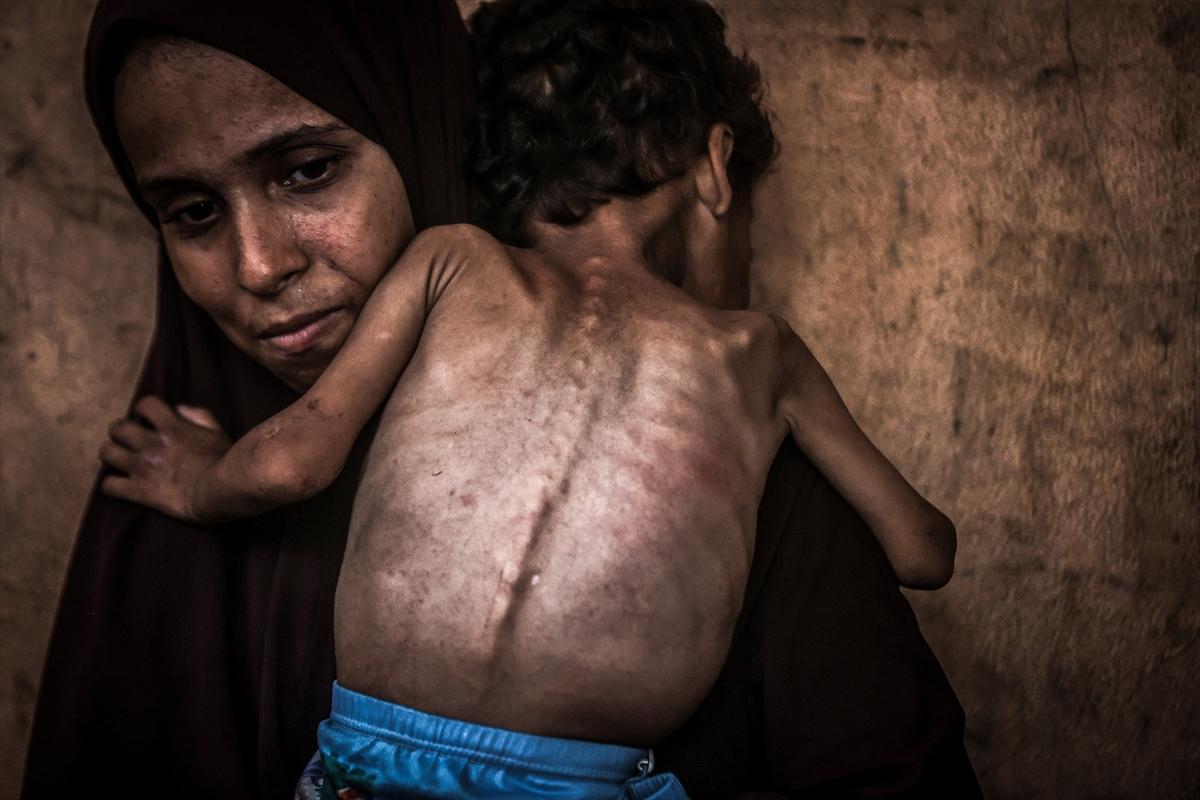
Two-year-old Yazen, suffering from malnutrition in Gaza, 25 July 2025 – (Anadolu Agency)
A significant number of the victims were children. It was reported that 14-year-old Palestinian child Abdulkadir al-Fayyumi died at Al-Ahli Baptist Hospital due to malnutrition. On the same days, a few-month-old baby named Zeynep Abu Halib, receiving treatment at Nasser Hospital in Khan Yunis, could not be saved due to prolonged malnutrition. The causes of death among these infants included collapse of the immune system, vitamin deficiencies, and metabolic failures.
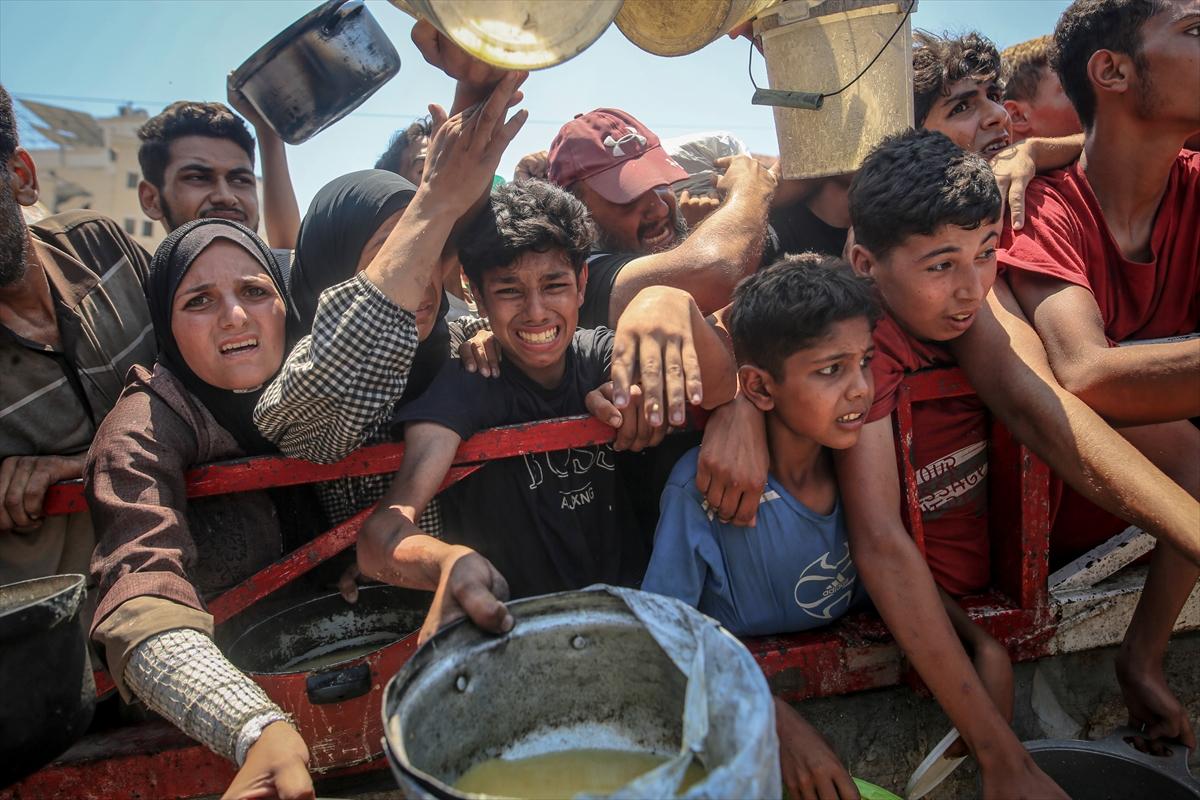
Palestinians in Gaza waiting in line for food despite the heat, 25 July 2025 – (Anadolu Agency)
Dr. Ahmed al-Ferra, Head of the Paediatrics Department at Nasser Hospital in Khan Yunis, stated that five-month-old Rama Abu Ayya had not gained any weight since birth and was suffering from loss of body fat, vitamin deficiency, and anaemia. At the same hospital, it was reported that 11-month-old Sila Barbah weighed only four kilograms despite a normal weight of approximately ten kilograms, having lost 60 percent of her body mass.
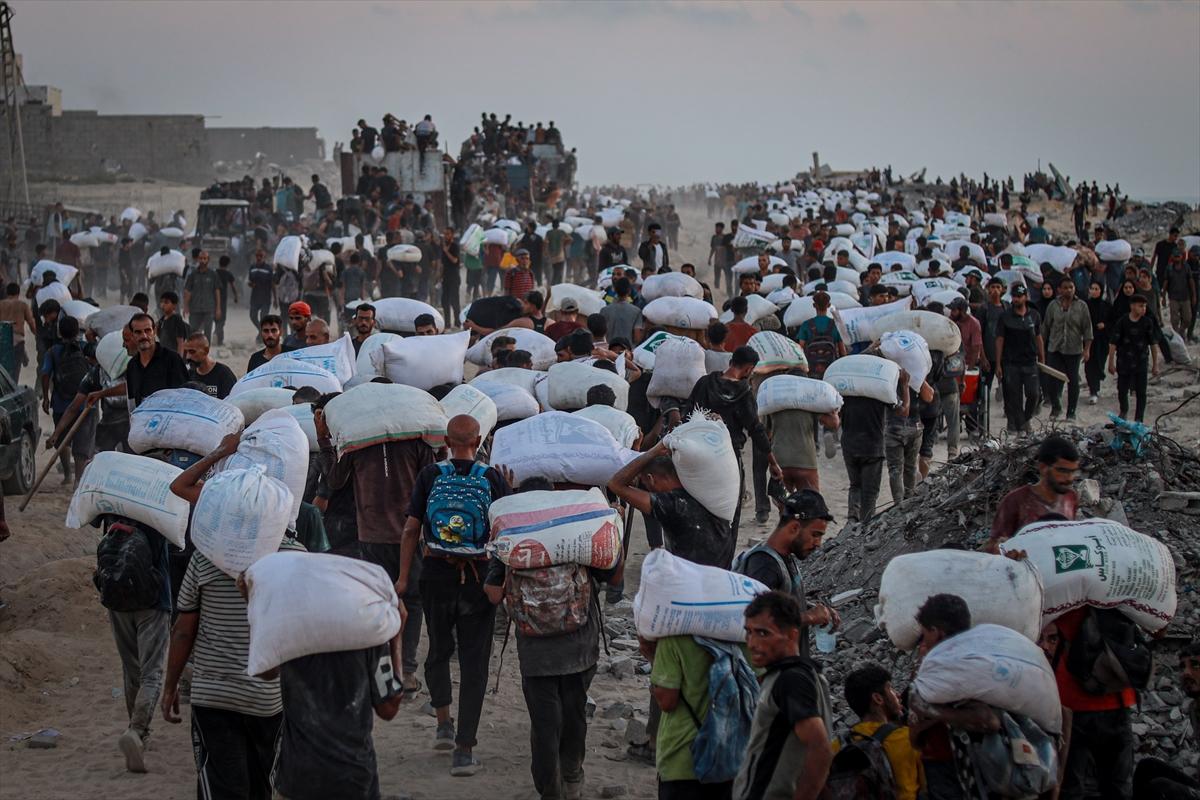
Crowding at a humanitarian aid point in northern Gaza, 25 July 2025 – (Anadolu Agency)
Similar conditions were observed at Al-Aqsa Martyrs Hospital in Deir al-Balah. Five-month-old Emir al-Kilani was receiving intensive care due to muscle weakness and spasms, while one-year-old Muhammad Avvad was suffering from acute diarrhoea and severe weight loss.
Nurses and doctors working in hospitals recorded that some children were unable to perform basic respiratory functions due to malnutrition, and that many infants weighed less than one kilogram.
The United Nations (UN) announced that during nutrition screenings conducted in Gaza in July, 16 percent of 15,000 children screened were found to be suffering from acute malnutrition. This rate was reported to exceed the UN’s defined “famine threshold.”
On 23 July 2025, it was announced that Israeli military operations in Gaza had killed 113 Palestinians and injured 534 in the previous 24 hours. On 24 July, the figures were revised to 89 dead and 453 injured. According to data released on 25 July, since 7 October 2023, the total death toll had reached 59,676 and the number of injured had risen to 143,965.
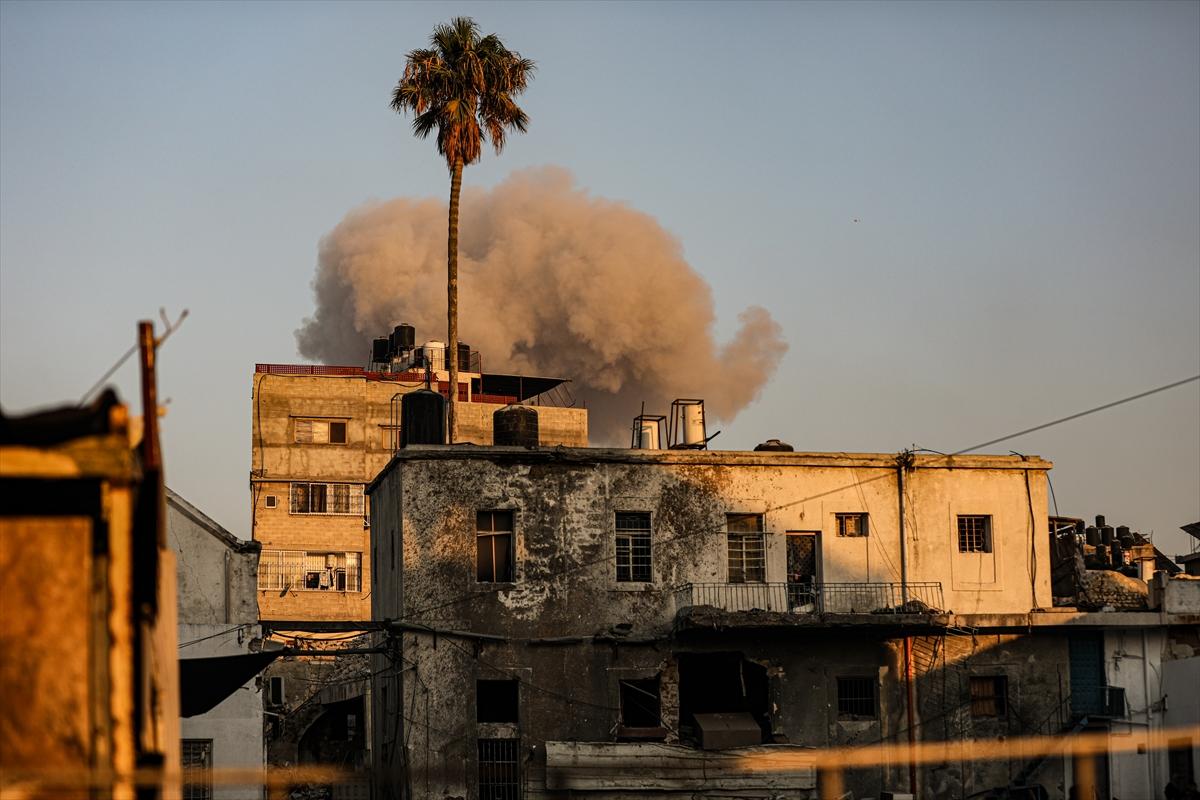
Israeli attacks on Gaza continue, 25 July 2025 – (Anadolu Agency)
The Gaza Ministry of Health indicated that thousands of people remain trapped under rubble across Gaza. It was stated that Israeli attacks have disrupted debris-clearance operations and severely restricted access for civil defence teams.
High Representative of the European Union for Foreign Affairs and Security Policy Kaja Kallas, in a statement on 23 July 2025, described the targeting of civilians seeking humanitarian aid in Gaza as “undefendable.”
Referring to a telephone conversation with Israeli Foreign Minister Gideon Saar, Kallas emphasized that the humanitarian agreement reached between the EU and Tel Aviv on 10 July had not been implemented, and condemned the killing of civilians at aid distribution points as unacceptable.
She also stated that the European Union was keeping on the table possible political measures it could take against Israel if Tel Aviv continued to violate its obligations.
UN Spokesperson Stephane Dujarric, during a press briefing, stated that the famine crisis in Gaza had reached its most horrific level to date. He noted that rates of lethal malnutrition among children had reached catastrophic proportions, citing UNICEF’s report that the risk of death for these children was ten times higher than for those with adequate nutrition.
The UN Office for the Coordination of Humanitarian Affairs (OCHA) reported that humanitarian operations in Gaza had been severely disrupted due to extreme security risks and access restrictions, and that aid delivery was far from meeting needs. It was also noted that the number of aid trucks entering Gaza had dropped to an average of 28 per day, far below the minimum requirement of 600 trucks daily.
WHO Director-General Tedros Adhanom Ghebreyesus announced that at least 21 deaths among children under five in Gaza had been documented as directly linked to malnutrition. Ghebreyesus stated that nutrition centres were completely full, that sufficient medical and nutritional supplies were unavailable, and that water shortages affected 95 percent of the population.
Ghebreyesus used the phrase “This is mass starvation,” emphasizing that the risk of death in Gaza was increasing daily and that survival had become impossible without access to water, hygiene, medicine, and food.
The International Crisis Group (ICG), in its published statement, stated that Israel had condemned Gaza to starvation and pushed the region to the brink of mass catastrophe. The statement emphasized that restrictions on humanitarian and commercial deliveries imposed since March 2025 had directly caused mass deaths, and called for an immediate ceasefire and unhindered delivery of aid.
The ICG also highlighted the ineffectiveness of the Israel-US-backed “Gaza Humanitarian Aid Fund,” reporting that the system had abandoned the poorest Palestinians to starvation and repeatedly exposed civilians waiting for aid to gunfire. It was stated that over a thousand people had been killed at these aid points since May.
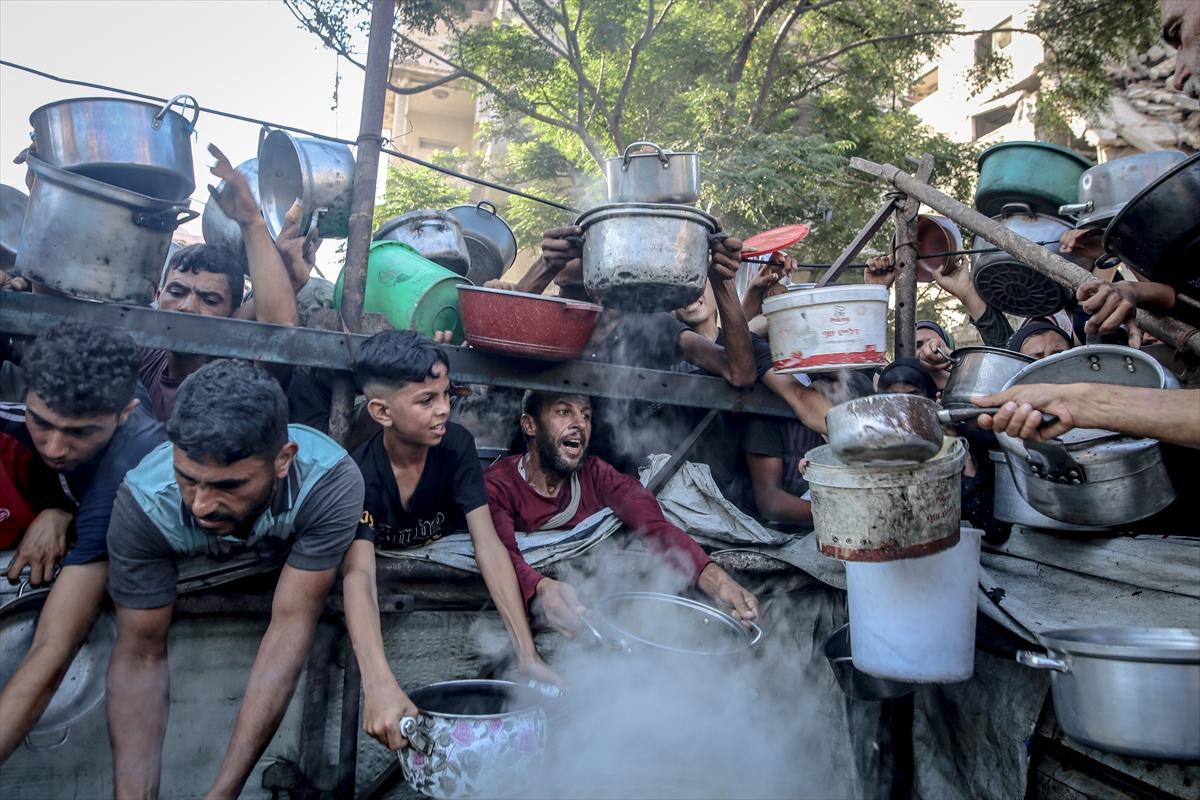
Hot meals being distributed to Palestinians struggling with starvation in Gaza, 23 July 2025 – (Anadolu Agency)
On 24 July 2025, demonstrators gathered at Syntagma Square in Athens, Greece, to protest Israeli attacks on Gaza and its blockade preventing humanitarian aid. Protesters made noise with pots and spoons to draw attention to the famine crisis in Gaza.
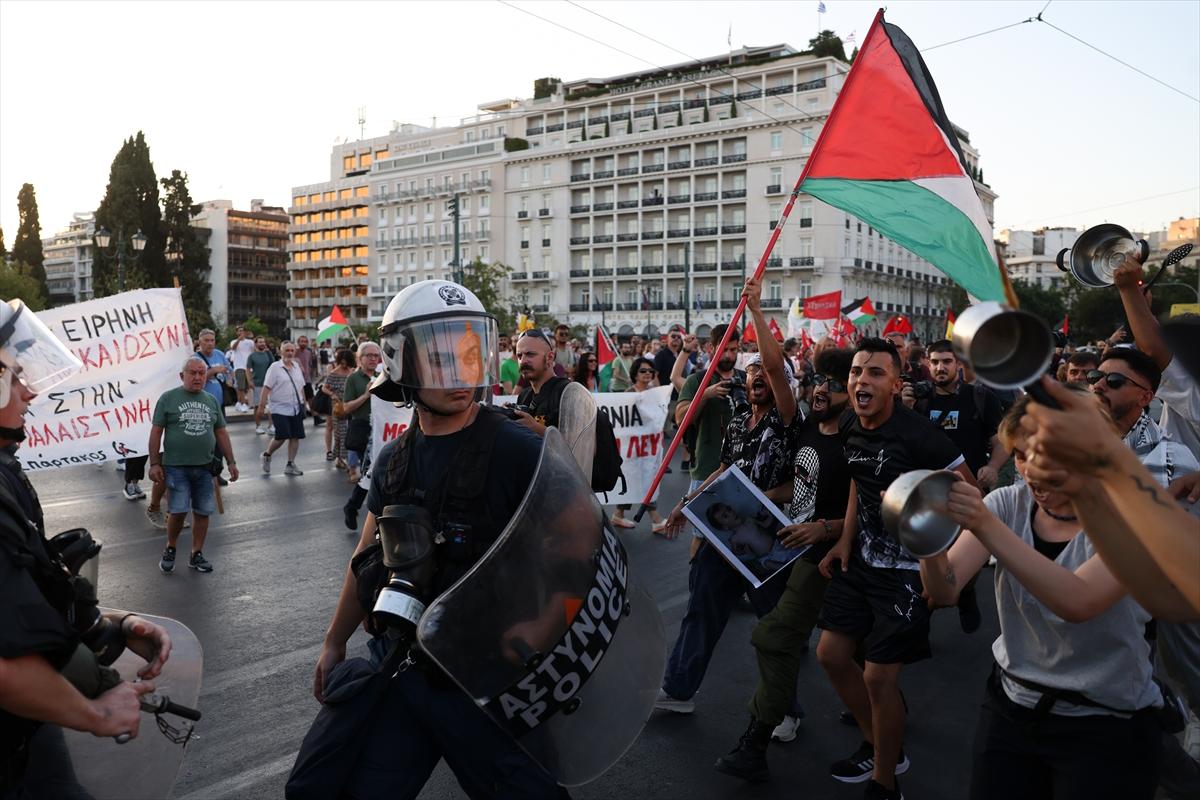
Protest in Greece in support of Palestine highlighting deaths from starvation in Gaza, 24 July 2025 – (Anadolu Agency)
Protester Yannis Adrianos stated that this symbolic protest highlighted the famine in Gaza and the fact that people there could not find food. Another demonstrator, Hristos Stavrakakis, noted that since March, many people including children, civilians, and journalists had died of starvation due to the blockade of humanitarian aid, and that pots and spoons had become symbols of this tragedy.
During the protest, baby dolls wrapped in swaddling clothes were placed in front of the parliament building to represent infants who had died in Gaza. Protesters also called on the Greek government to sever ties with Israel.
On 24 July 2025, hundreds of people gathered outside the Israeli Embassy in Brussels, Belgium, in a protest organized by civil society groups. Demonstrators demanded the closure of the embassy and chanted slogans such as “There is genocide in Gaza, we will not stay silent.”
Protesters carried pots, pans, spoons, and forks to draw attention to the food and water shortages in Gaza, describing Israel’s refusal to allow aid trucks to pass as a war crime. Some participants wore keffiyehs on their shoulders and watermelon symbol brooches representing Palestine.
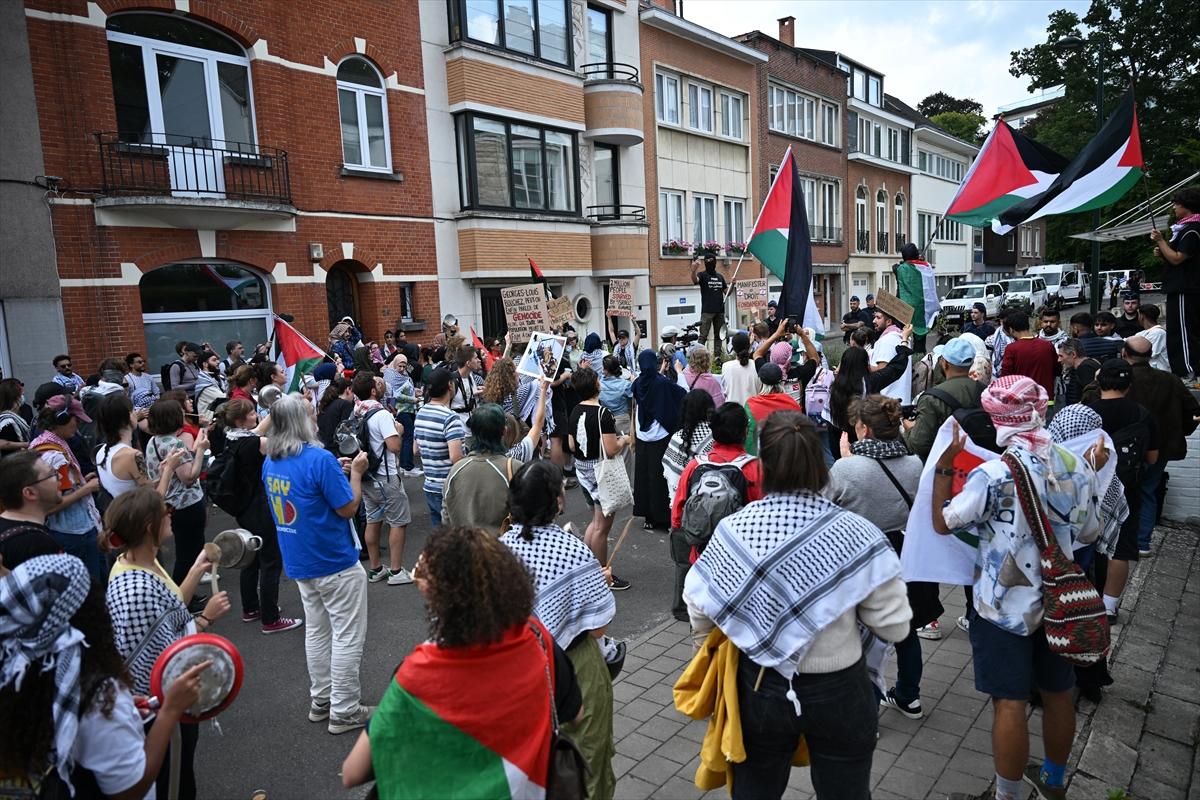
Protest outside the Israeli Embassy in Brussels, 24 July 2025 – (Anadolu Agency)
A brief clash occurred between police and demonstrators during the protest, leading to increased security measures around the embassy.
On 25 July 2025, hundreds of demonstrators gathered in the historic Checkpoint Charlie area of Berlin, Germany, to protest Israeli attacks on Gaza and its blockade of humanitarian aid. Around 300 participants carried banners reading “Israel is killing Gaza by starvation,” “Stop the genocide,” and “Open the gates.”
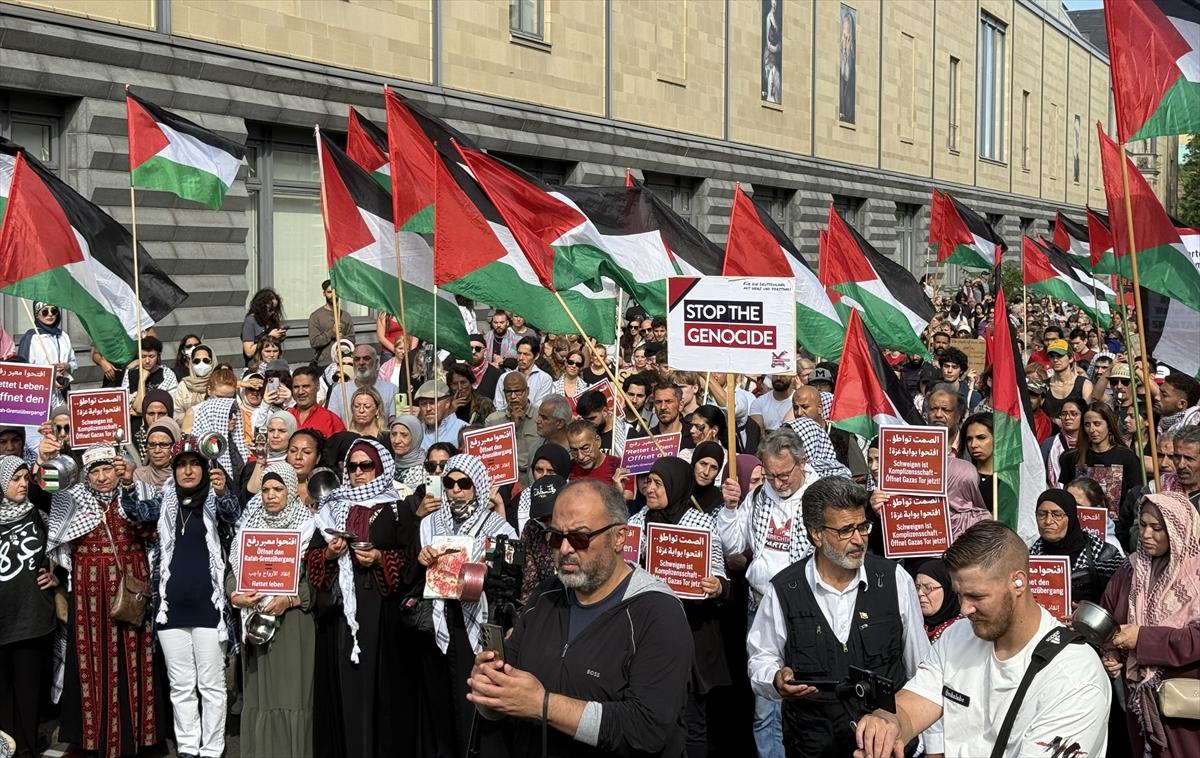
Palestine supporters in Berlin drawing attention to the famine crisis in Gaza, 25 July 2025 – (Anadolu Agency)
A police force of approximately 120 officers intervened in the demonstration, using punches and kicks against some protesters, resulting in the arrest of many individuals. Police stated that the protest threatened public safety and demanded the area be cleared. Footage of the intervention was widely shared on social media and generated significant public reaction.
On 24 July 2025, French President Emmanuel Macron announced in an official statement that France had decided to recognize the State of Palestine. Macron stated that this decision would be formally declared at the United Nations General Assembly in September. He emphasized that the decision was made in alignment with the goal of achieving a just and lasting peace in the Middle East.
Macron outlined conditions that must accompany this process, including an immediate ceasefire in Gaza, the release of hostages held by Hamas, and the unhindered delivery of large-scale humanitarian aid. He also stressed the necessity of disarming Hamas, securing Gaza, and initiating a reconstruction process. Macron affirmed that the establishment and sustainable existence of a Palestinian state were indispensable.
Ireland expressed support for France’s decision. Irish Deputy Prime Minister and Minister for Foreign Affairs Simon Harris welcomed Macron’s announcement, stating that this step would contribute to a two-state solution.
In contrast, US Secretary of State Rubio criticized France’s decision, claiming it served Hamas propaganda. Israeli Ambassador to the United States Mike Huckabee, a prominent supporter of Israel, used social media to mock Macron’s decision.
Following France’s announcement, UN Secretary-General Antonio Guterres stated that he welcomed every step supporting the two-state solution. UN Deputy Spokesperson Stephanie Tremblay, in her assessment of the development, described it as a positive trend for the international community and affirmed that the UN would continue to support such efforts.
On 23 July 2025, London Mayor Sadiq Khan emphasized that the United Kingdom must immediately recognize the State of Palestine. Khan called on the British government and the international community to exert stronger pressure to halt the massacre in Gaza and permit the entry of humanitarian aid.
In a post on X, Khan stated, “If there is no legitimate state bearing the name Palestine, there can be no two-state solution,” and highlighted that the destruction in Gaza had been laid bare for the world to see.
Anadolu Ajansı. "Fransa'nın Filistin’i Tanıma Kararından Sonra BM'den İki Devletli Çözüme Yönelik Adımlara Destek Mesajı." Accessed July 30, 2025. https://www.aa.com.tr/tr/dunya/fransanin-filistini-tanima-kararindan-sonra-bmden-iki-devletli-cozume-yonelik-adimlara-destek-mesaji/3642361#
Anadolu Ajansı. “AB'den İsrail'e Tepki: Gazze'de Yardım Arayan Sivillerin Öldürülmesi Savunulamaz.” Accessed July 30, 2025. https://www.aa.com.tr/tr/dunya/abden-israile-tepki-gazzede-yardim-arayan-sivillerin-oldurulmesi-savunulamaz/3639476#
Anadolu Ajansı. “Almanya'da Filistin'e Destek Gösterisine Polis Sert Müdahalede Bulundu.” Accessed July 30, 2025. https://www.aa.com.tr/tr/dunya/almanyada-filistine-destek-gosterisine-polis-sert-mudahalede-bulundu/3641215#
Anadolu Ajansı. “Brüksel'de İsrail Büyükelçiliği Önünde Protesto Gösterisi Düzenlendi.” Accessed July 30, 2025. https://www.aa.com.tr/tr/dunya/brukselde-israil-buyukelciligi-onunde-protesto-gosterisi-duzenlendi/3641130#
Anadolu Ajansı. “Fransa Cumhurbaşkanı Macron: Eylül Ayında Ülkesinin Filistin Devletini Resmi Olarak Tanıyacağını Açıkladı.” Accessed July 30, 2025. https://www.aa.com.tr/tr/dunya/fransa-cumhurbaskani-macron-eylul-ayinda-ulkesinin-filistin-devletini-resmi-olarak-taniyacagini-acikladi/3641331#
Anadolu Ajansı. “Gazze Şeridi'nde Açlıktan Yaşamını Yitirenlerin Sayısı 122'ye Yükseldi.” Accessed July 30, 2025. https://www.aa.com.tr/tr/dunya/gazze-seridinde-acliktan-yasamini-yitirenlerin-sayisi-122ye-yukseldi/3641761#
Anadolu Ajansı. “Gazze’de Son 24 Saatte Biri Çocuk 10 Filistinli Daha Açlıktan Hayatını Kaybetti.” Accessed July 30, 2025. https://www.aa.com.tr/tr/dunya/gazzede-son-24-saatte-biri-cocuk-10-filistinli-daha-acliktan-hayatini-kaybetti/3639231#
Anadolu Ajansı. “Kitlesel Açlık Krizinin Derinleştiği Gazze’de Hastaneler Ölümle Pençeleşen Bebeklerle Dolup Taşıyor.” Accessed July 30, 2025. https://www.aa.com.tr/tr/dunya/kitlesel-aclik-krizinin-derinlestigi-gazzede-hastaneler-olumle-pencelesen-bebeklerle-dolup-tasiyor/3640587#
Anadolu Ajansı. “Londra Belediye Başkanı Khan, İngiltere'nin Derhal Filistin’i Tanıması Çağrısı Yaptı.” Accessed July 30, 2025. https://www.aa.com.tr/tr/dunya/londra-belediye-baskani-khan-ingilterenin-derhal-filistini-tanimasi-cagrisi-yapti/3639636
Anadolu Ajansı. “Yunanistan'daki Filistin'e Destek Eyleminde Gazze'de Açlıktan Ölenlere Dikkat Çekildi.” Accessed July 30, 2025. https://www.aa.com.tr/tr/dunya/yunanistandaki-filistine-destek-eyleminde-gazzede-acliktan-olenlere-dikkat-cekildi/3642031#
Anadolu Ajansı. “İsrail'in Gazze'de Sivilleri Hedef Alan Saldırılarında Son 24 Saatte 89 Kişi Hayatını Kaybetti.” Accessed July 30, 2025. https://www.aa.com.tr/tr/dunya/israilin-gazzede-sivilleri-hedef-alan-saldirilarinda-son-24-saatte-89-kisi-hayatini-kaybetti/3640552#
Between 26 and 28 July 2025, the Israeli military intensified its attacks on the Gaza Strip. During this period, civilian areas, aid waiting points, tent cities, and residential neighborhoods across various parts of Gaza were targeted.
According to sources from Al-Awda Hospital in northern Gaza, on 27 July, civilians waiting for aid along Salahaddin Street were struck, resulting in 11 deaths. Among those killed were women, and 101 people were injured.
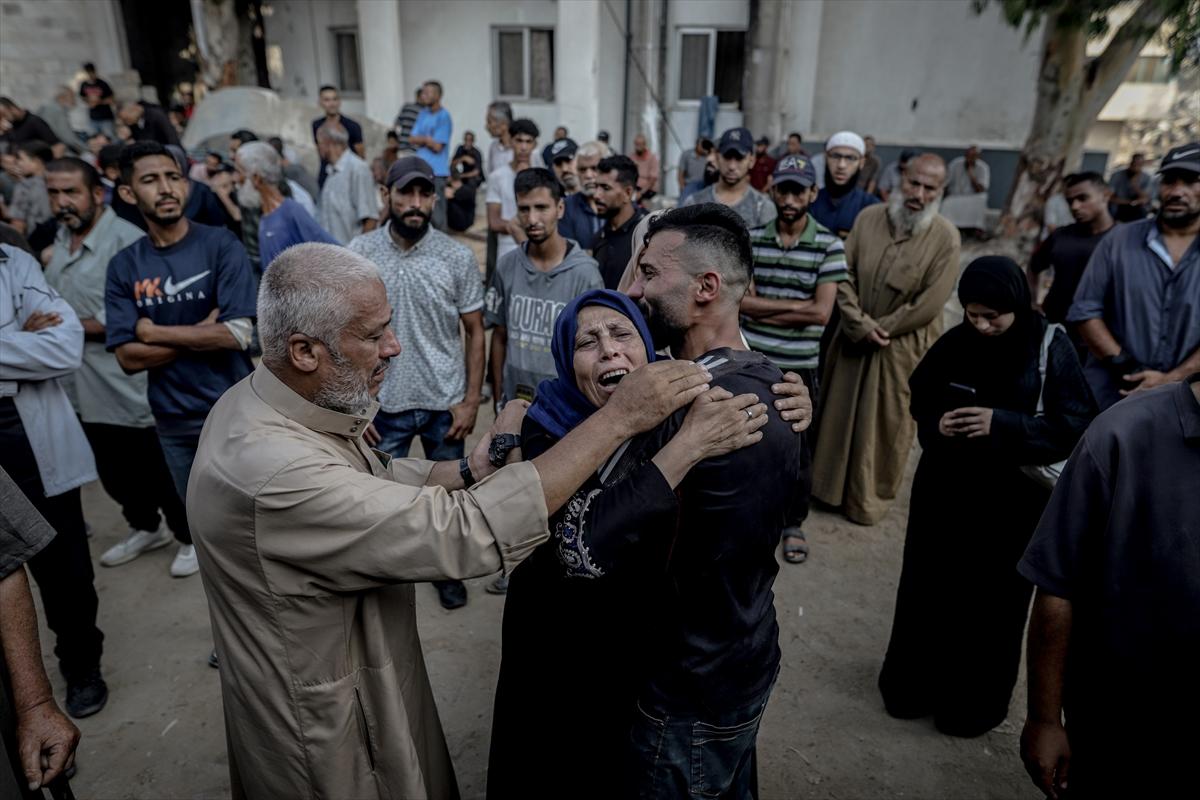
Israel’s attacks on Gaza continue, 26 July 2025 – (Anadolu Agency)
On the same day, in the Mevasi area west of Khan Yunis, an attack on a tent sheltering families forcibly displaced from their homes killed at least six Palestinians, two of whom were children. In another strike targeting a house in central Gaza City, five people were killed and many others injured.
A tent housing refugees in the Al-Birke area south of Deir al-Balah was also hit, killing four people. The total number of fatalities from Israeli military operations on 27 July was at least 26.
According to statements issued on 28 July 2025, Israeli airstrikes caused 88 deaths in the previous 24 hours. As a result, the total number of fatalities in the Gaza Strip since 7 October 2023 rose to 59,821, with 144,851 injured.
Additionally, since 27 May 2025, the number of Palestinians killed at aid points targeted by Israeli forces reached 1,132, with 7,521 injured.
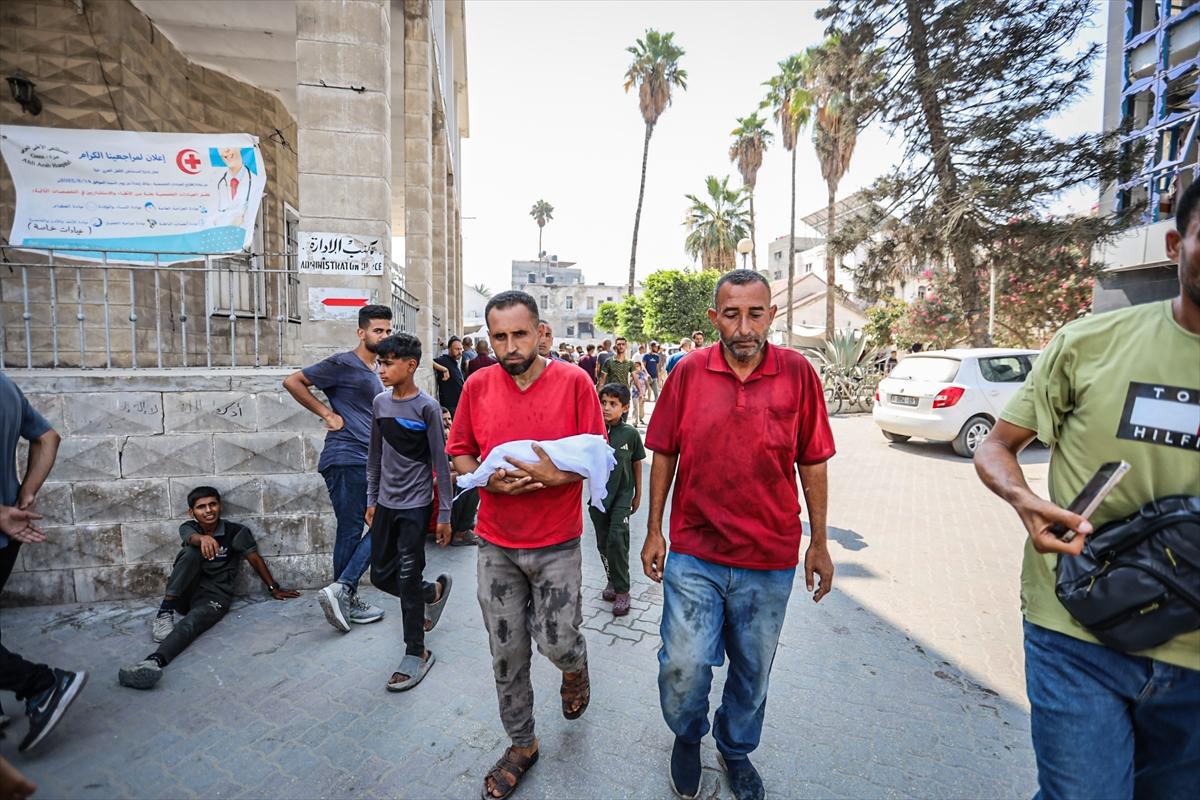
Israel’s attacks on Gaza continue, 26 July 2025 – (Anadolu Agency)
On 27 July 2025, the Israeli military announced a temporary humanitarian pause of several hours in certain areas beginning at 10:00. This pause applied to areas in southern Gaza such as Mevasi, Deir al-Balah in the center, and Gaza City, where Israeli ground forces were not present. It was also claimed that safe corridors for United Nations and aid agency convoys would be established between 06:00 and 23:00.
The Israeli Ministry of Foreign Affairs stated that the humanitarian pause was declared in response to mass deaths from starvation in Gaza and mounting international pressure. However, attacks continued in areas outside the declared pause.
As of 26 July 2025, the number of people who died from starvation in the Gaza Strip reached 127. According to Munir al-Bersh, Director General of the Palestinian Ministry of Health, five people died of starvation in the previous 24 hours, two of whom were children. Bersh stated that food aid was being held at border crossings, deliberately obstructed, and that this situation was directly causing civilian deaths.
A new statement issued on 27 July 2025 reported that six people died from starvation within a single day, two of them children. This raised the total number of deaths due to starvation and malnutrition to 133, with child fatalities reaching 87.
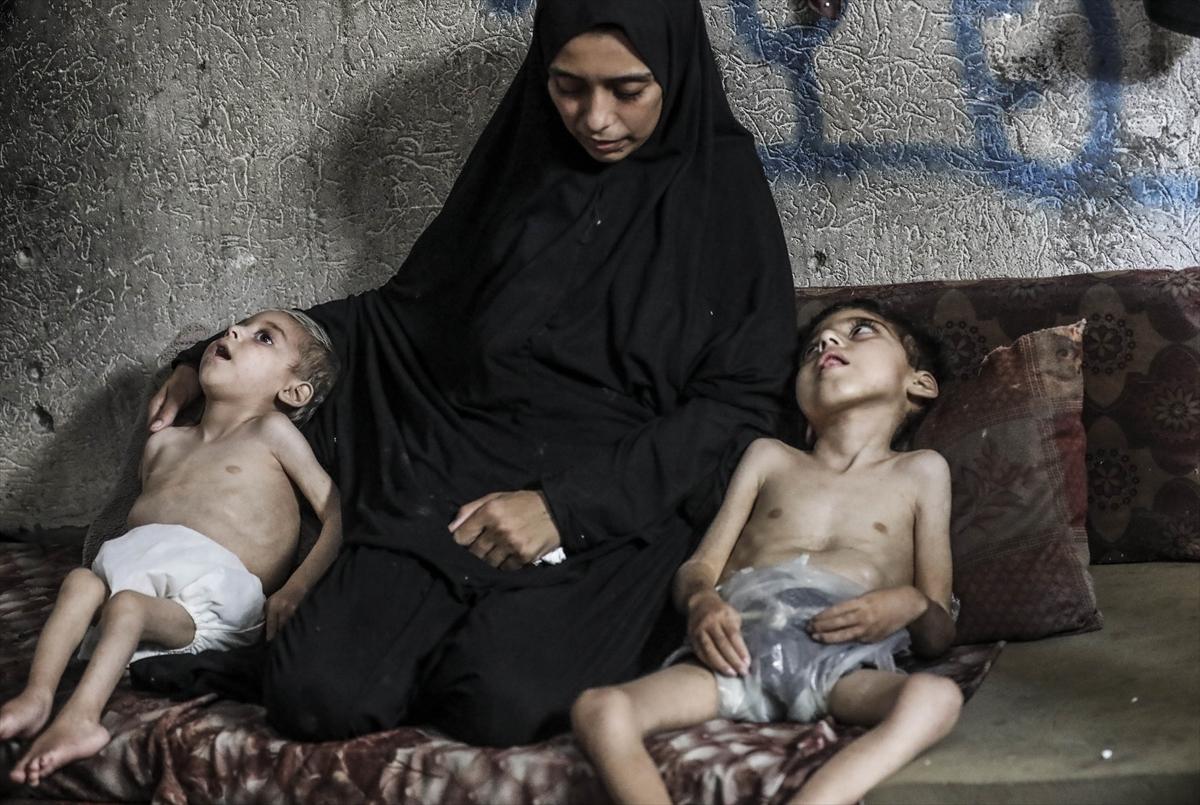
Two siblings in Gaza facing life-threatening malnutrition, 26 July 2025 – (Anadolu Agency)
The World Health Organization (WHO) reported 63 deaths linked to malnutrition in July, 24 of which were children under five. The WHO emphasized that this crisis in Gaza was entirely preventable, but these deaths occurred due to the deliberate obstruction of large-scale food and medical aid.
The Media Office of the Palestinian government in Gaza stated that approximately 100,000 infants faced a risk of mass death, with 40,000 under one year old and all under two. The statement noted that mothers had been forced for days to feed their babies only water, a situation resulting from the complete blockade of access to basic humanitarian needs.
On 27 July, the Palestinian Ministry of Foreign Affairs stated that the humanitarian catastrophe in Gaza had surpassed all projections, with over two million people’s lives under threat. The ministry called for an immediate end to attacks and the urgent initiation of humanitarian aid efforts by land, sea, and air.
Aid organizations and international observers have highlighted that starvation is being systematically used as a weapon and that this directly threatens civilians’ right to life. The United Nations Relief and Works Agency for Palestine Refugees in the Near East (UNRWA) stated that aerial aid deliveries were ineffective and dangerous, with hundreds of trucks of aid stranded at border crossings, and called for the opening of land crossings.
On 26 July 2025, the Israeli military intercepted the ship “Hanzala,” launched by the Freedom Flotilla Coalition to deliver humanitarian aid to the Gaza Strip, in international waters. French Member of the European Parliament Emma Fourreau, aboard the vessel, announced the interception on social media, stating: “The Israeli military is here. See you soon. Stop the genocide.”
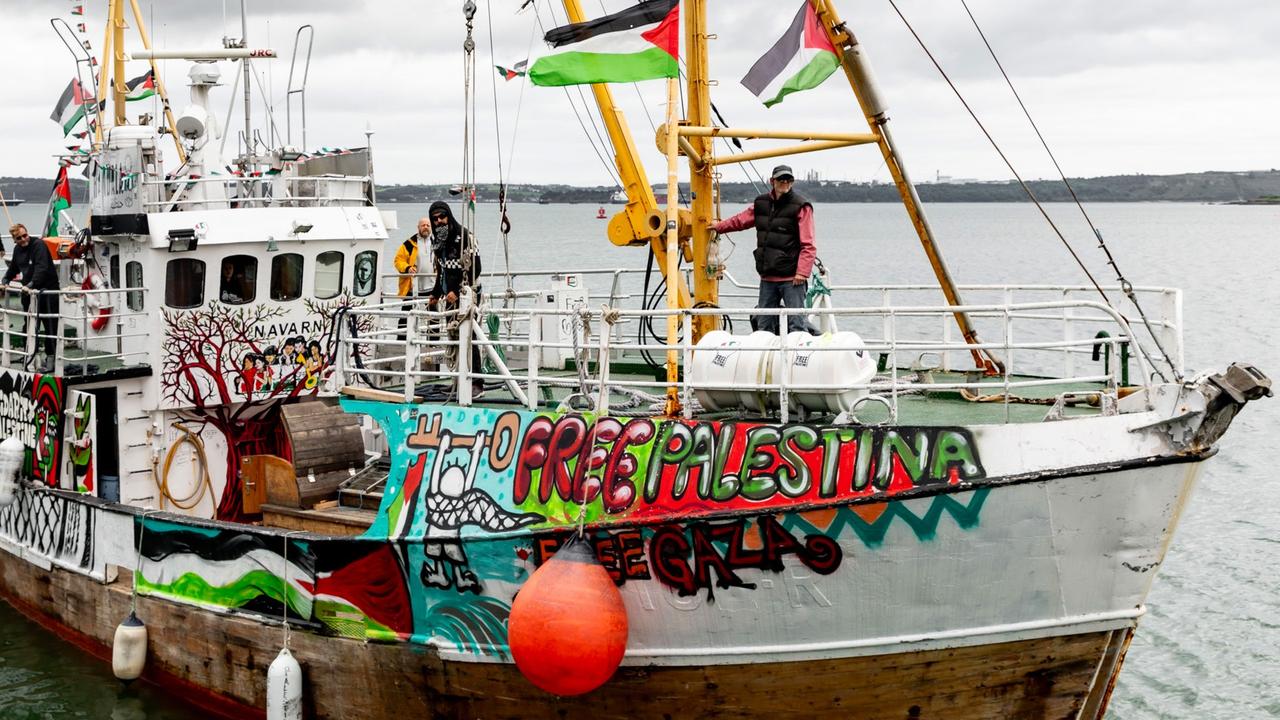
The “Hanzala” ship launched by the Freedom Flotilla Coalition – (Anadolu Agency)
Footage of Israeli soldiers boarding the vessel was broadcast live on YouTube. The images showed passengers raising their hands, security cameras being removed and recordings halted, and passengers throwing their communication devices into the sea. According to the Freedom Flotilla Coalition, the ship was towed toward Israeli coastlines and all passengers were detained.
The Israeli Ministry of Foreign Affairs claimed that the Hanzala ship had been prevented from illegally entering Israeli territorial waters. It defended the interception as a response to a “dangerous and illegal” attempt to break the blockade on Gaza.
Each of the 21 activists on board recorded a video message addressed to their home countries, stating: “If you are watching this video, know that my path at sea has been cut off and I have been abducted by Israeli forces committing genocide against Palestinians.” In these videos, the activists urged their governments and public opinion to pressure for their release.
The Freedom Flotilla Coalition stated that the obstruction of the Hanzala’s humanitarian mission violated international law and emphasized that Israel’s military intervention in international waters to seize the ship constituted a clear breach of rights.
On the morning of 27 July 2025, the Israeli government announced a temporary humanitarian pause in attacks on the Gaza Strip for several hours. The Israeli Ministry of Foreign Affairs stated that this decision was made in response to mass deaths from starvation in Gaza and mounting international pressure.
The “humanitarian pause” was designated for areas where Israeli ground forces were absent, including Mevasi, Deir al-Balah, and Gaza City. It was also claimed that safe corridors for United Nations and international aid convoys would operate between 06:00 and 23:00.
The Israeli administration opted to deliver the majority of aid via aerial drops using parachutes. However, this method has caused civilian casualties and drawn widespread criticism for its ineffectiveness. Some aid packages fell into the sea, while others landed on civilians, resulting in deaths, exposing the risks of this approach.
The United Nations stated that while an average of 550 trucks of aid are needed daily, only 250 trucks managed to enter the area over the course of a week. It was noted that most aid trucks were held up at crossing points, and insufficient quantities of aid were reaching the population.
In a statement by Hamas, Israel’s “humanitarian pause” and aerial aid drops were described as deceptive maneuvers aimed at misleading international public opinion. The statement emphasized that these steps were not intended to end the systematic starvation policy in Gaza but to manage and continue it.
International aid organizations echoed similar assessments. Oxfam’s Palestine and Gaza Coordinator, Bushra Khalid, stated: “A few trucks and lethal aerial aid cannot compensate for the deliberate starvation that has lasted for months.” She called for all crossing points to be opened without restriction and for a lasting ceasefire to be established.
The Euro-Mediterranean Human Rights Monitor stated that aerial aid deliveries humiliated and endangered the civilian population. The organization noted that this practice, which confines civilians to a small portion of Gaza, is not humanitarian aid but a method of pressure and degradation.
UNRWA similarly stated that aerial aid would not end the deepening scarcity in Gaza and called for the urgent establishment of regular, safe, and reliable land-based aid crossings.
On 26 July 2025, tens of thousands of people participated in a demonstration led by the Palestine Solidarity Campaign outside Downing Street in London. Protesters banged pots and pans to protest Israel’s blockade on Gaza and the UK government’s continued arms sales to Israel.
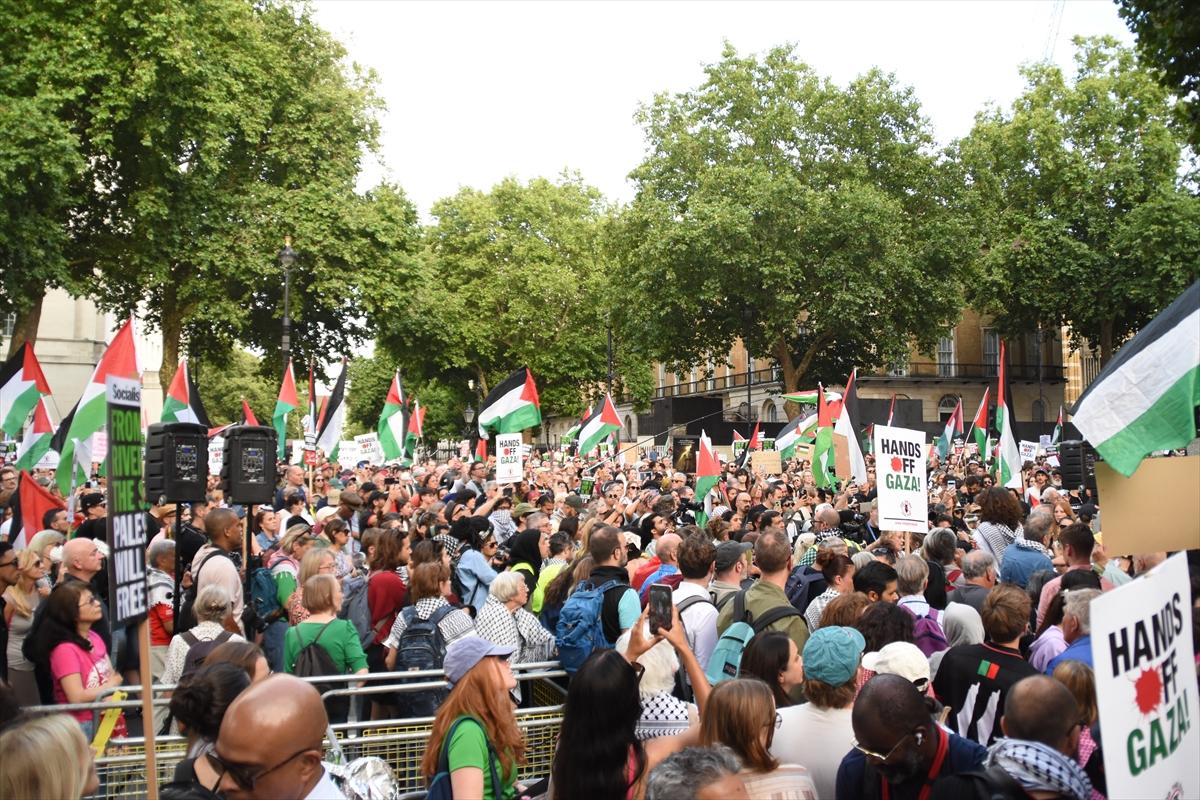
Israel’s starvation of Gaza protested in the UK with pots and pans, 26 July 2025 – (Anadolu Agency)
Former Labour Party leader Jeremy Corbyn and actor Khalid Abdalla also supported the action. Protesters demanded an end to Israel’s blockade on Gaza and recognition of a Palestinian state. At the end of the demonstration, participants symbolically left their kitchen utensils on the street.
Hundreds of people protested in Edinburgh and Aberdeen during U.S. President Donald Trump’s visit to Scotland. Demonstrators carried signs reading “Trump is not welcome here” and “No to fascism, no to Trump,” while also displaying banners and photographs of children to draw attention to the famine crisis in Gaza.
Security was heightened in the Turnberry region, where Trump visited golf facilities, amid allegations that he supports Israel’s policies toward Gaza.
On 26 July, hundreds gathered at Odenplan Square in Stockholm, Sweden’s capital. Protesters labeled Israel’s attacks on Gaza as “ethnic cleansing” and “genocide,” and called on the Swedish government to break its silence.
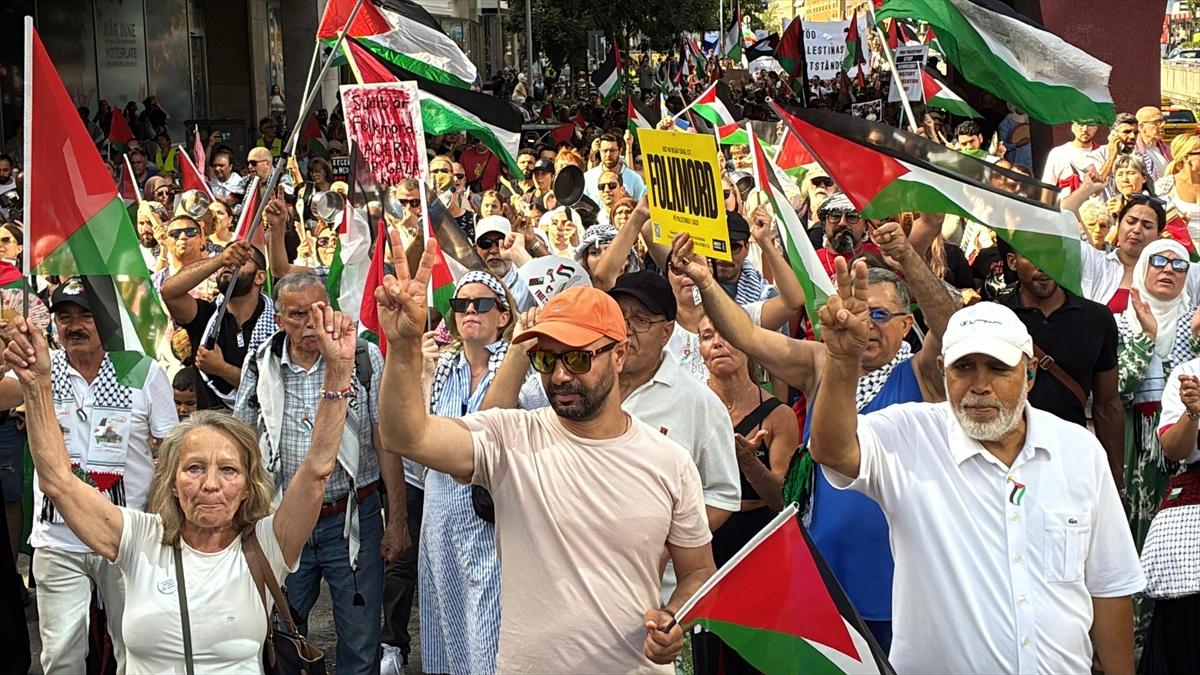
Israel’s attacks on Gaza protested in Stockholm, 26 July 2025 – (Anadolu Agency)
Professor Mattias Gardell of Uppsala University stated that Israel had turned aid points into “death traps” and was using starvation as a weapon. Protesters marched to the Ministry of Foreign Affairs building, demanding an end to the attacks on Gaza.
In Sarajevo, demonstrators gathered at Baščaršija Square and marched to the Sarajevo Children Memorial to express solidarity with Palestine. Protesters carried signs reading “Gaza is dying of hunger while the world watches” and “Stop killing innocent children,” and drew attention by clanging kitchen utensils.
A group gathered in the courtyard of Barbaros Hayrettin Paşa Mosque in Istanbul’s Levent district to protest Israel’s attacks and its blockade on food access. They marched with banners reading “No hospitals or medicine in Gaza, only massacres” and “Bread in Gaza, shame in the world.” The group drew attention to the famine crisis by striking empty pots with spoons outside the Israeli Consulate General.
In Chicago, on Michigan Avenue, the American Muslim Alliance for Palestine and other civil society organizations protested against Israel’s attacks in the Gaza Strip. Demonstrators accused the United States of supporting the famine crisis in Gaza and conducted protests using pots and pans.
On 27 July 2025, the Palestinian Ministry of Foreign Affairs issued a written statement declaring that the humanitarian catastrophe in the Gaza Strip had reached an unprecedented level and that the famine caused by Israeli attacks had far exceeded all projections. The statement emphasized that over two million civilians in Gaza faced a life-threatening risk of starvation.
The ministry stated that the international community had failed to establish a humanitarian corridor ensuring sustainable access to aid and that this inaction exposed the contradiction between words and deeds. It further stressed the urgent need for humanitarian aid deliveries by land, sea, and air and affirmed that a ceasefire was a matter of life and death.
According to a written statement by German Government Spokesperson Stefan Kornelius, German Chancellor Friedrich Merz held a phone call with Israeli Prime Minister Benjamin Netanyahu on 27 July. Merz expressed deep concern over the humanitarian situation in Gaza and urged Netanyahu to immediately establish a ceasefire and ensure the unimpeded delivery of humanitarian aid to civilians.
The statement emphasized that such aid must be delivered rapidly, safely, and in sufficient quantities. Germany indicated it would closely monitor developments and continue consultations with other European countries and the United States to seek a solution. Germany reiterated that recognition of a Palestinian state remains the final step within the framework of a two-state solution.
In a statement issued by Hamas on 27 July 2025, Israel’s limited delivery of aid via aerial drops to certain areas was described not as a genuine solution but as a “humanitarian show” designed to mislead global public opinion. The statement asserted that this initiative was part of Israel’s inhumane mechanism to manage, rather than end, the starvation imposed by its blockade policy.
Hamas stated that the civilian population in Gaza must have safe, unimpeded access to aid under United Nations supervision. It condemned current policies for undermining human dignity and endangering lives. The statement called for international and popular pressure against “war criminal Netanyahu’s government” for its strategy of using starvation as a tool of control.
Anadolu Ajansı. "Trump’ın İskoçya Ziyaretini Protesto Eden Göstericiler Gazze’deki İnsani Krize Dikkati Çekti." Accessed July 30, 2025. https://www.aa.com.tr/tr/dunya/trumpin-iskocya-ziyaretini-protesto-eden-gostericiler-gazzedeki-insani-krize-dikkati-cekti/3643054
Anadolu Ajansı. “Gazze’ye Yardım İçin Yola Çıkan Hanzala Gemisine İsrail’in Müdahalesinin Başladığı Duyuruldu.” Accessed July 30, 2025. https://www.aa.com.tr/tr/dunya/gazzeye-yardim-icin-yola-cikan-hanzala-gemisine-israilin-mudahalesinin-basladigi-duyuruldu/3643102
Anadolu Ajansı. “Gazze’yi Açlığa Mahkûm Eden İsrail İngiltere’de Tencere ve Tavalarla Protesto Edildi.” Accessed July 30, 2025. https://www.aa.com.tr/tr/dunya/gazzeyi-acliga-mahkum-eden-israil-ingilterede-tencere-ve-tavalarla-protesto-edildi/3642499
Anadolu Ajansı. “Saraybosna’da Gazze’deki İnsani Duruma Dikkat Çekmek İçin Yürüyüş Düzenlendi.” Accessed July 30, 2025. https://www.aa.com.tr/tr/dunya/saraybosnada-gazzedeki-insani-duruma-dikkati-cekmek-icin-yuruyus-duzenlendi/3643055
Anadolu Ajansı. “İsrail, Yarın Gazze’de Saldırılara Birkaç Saatlik İnsani Ara Kararı Aldığını Bildirdi.” Accessed July 30, 2025. https://www.aa.com.tr/tr/dunya/israil-yarin-gazzede-saldirilara-birkac-saatlik-insani-ara-karari-aldigini-bildirdi/3643106
Anadolu Ajansı. “İsrail’in Açlık ve Kıtlığı Dayattığı Gazze Şeridi’nde Açlıktan Hayatını Kaybedenlerin Sayısı 127’ye Yükseldi.” Accessed July 30, 2025. https://www.aa.com.tr/tr/dunya/israilin-aclik-ve-kitligi-dayattigi-gazze-seridinde-acliktan-hayatini-kaybedenlerin-sayisi-127ye-yukseldi/3642539
Anadolu Ajansı. “İsrail’in Gazze Şeridi’ne Düzenlediği Saldırılarda En Az 26 Kişi Hayatını Kaybetti.” Accessed July 30, 2025. https://www.aa.com.tr/tr/dunya/israilin-gazze-seridine-duzenledigi-saldirilarda-en-az-26-kisi-hayatini-kaybetti/3643167
Anadolu Ajansı. “İsrail’in Gazze’ye Saldırıları ve Gıdaya Erişimi Engellemesi İstanbul’da Protesto Edildi.” Accessed July 30, 2025. https://www.aa.com.tr/tr/gundem/israilin-gazzeye-saldirilari-ve-gidaya-erisimi-engellemesi-istanbulda-protesto-edildi-/3643082
Anadolu Ajansı. “İsrail’in Gazze’ye Yönelik Acımasız Saldırıları ABD’nin Chicago Kentinde Protesto Edildi.” Accessed July 30, 2025. https://www.aa.com.tr/tr/dunya/israilin-gazzeye-yonelik-acimasiz-saldirilari-abdnin-chicago-kentinde-protesto-edildi/3643249
Anadolu Ajansı. “İsrail’in Gazze’ye Yönelik Saldırıları Stockholm’de Protesto Edildi.” Accessed July 30, 2025. https://www.aa.com.tr/tr/dunya/israilin-gazzeye-yonelik-saldirilari-stockholmde-protesto-edildi/3642911
Anadolu Ajansı. “İsrail’in Kıtlığı Dayattığı Gazze’de Son 24 Saatte 2’si Çocuk 6 Filistinli Açlıktan Hayatını Kaybetti.” Accessed July 30, 2025. https://www.aa.com.tr/tr/dunya/israilin-kitligi-dayattigi-gazzede-son-24-saatte-2si-cocuk-6-filistinli-acliktan-hayatini-kaybetti/3643327
On 30 July 2025, in the Zikim area in the northwestern part of the Gaza Strip, at least 25 Palestinians were killed in Israeli military attacks targeting civilians awaiting humanitarian aid. Health sources reported that the number of injured exceeded 150. Eyewitnesses stated that the military continued to target areas where civilians gathered for aid and that the wounded were being transported to hospitals. That same evening, the spokesperson for the Gaza Civil Defense Directorate announced that hospitals were overwhelmed and that many people remained trapped in the attack zone.
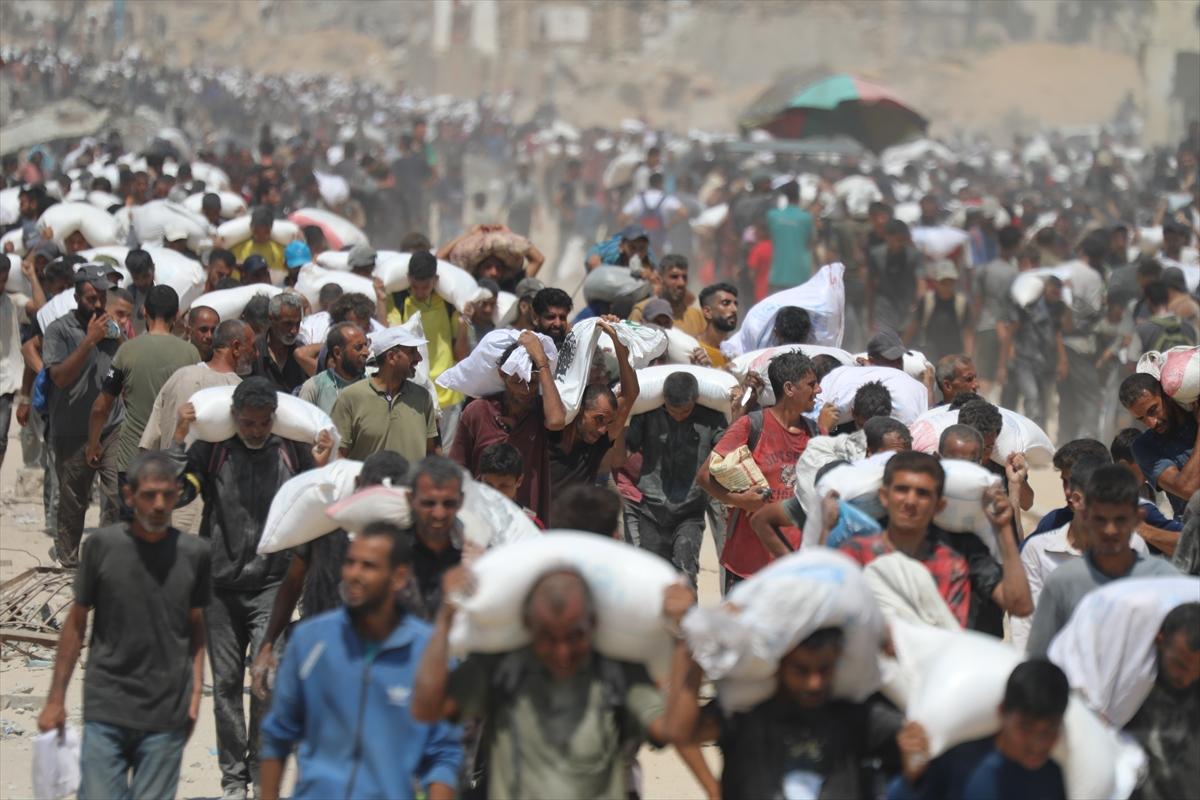
Palestinians obtaining flour from aid trucks entering the Zikim area in northern Gaza, walking for kilometers to leave the region, 27 July 2025 – (Anadolu Agency)
On 31 July 2025, the death toll from an attack on civilians gathered in the Sudaniyye neighborhood to receive aid was updated: 51 people were killed within three hours and 648 were injured. A statement from the Gaza government’s media office indicated that the civilians targeted had been waiting near the Zikim border crossing to collect flour from humanitarian aid trucks. The area was described as densely crowded at the time of the attack, with heavy damage reported at the scene.
On 30 July 2025, Israeli forces opened fire on Palestinians waiting near an aid distribution center in the northern part of the Refah town in southern Gaza. According to a statement by the Gaza Ambulance and Emergency Directorate, at least three people were killed and more than 20 injured. It was stated that the attack occurred immediately adjacent to the designated aid distribution site and that civilians gathered to receive assistance were targeted.
On the same day, Israeli soldiers opened fire on civilians waiting for aid near the Netzarim Corridor in central Gaza. According to information from Gaza hospitals, five people were killed and eight injured in this attack. The injured were transported to hospitals, with some patients reported in critical condition. The attack was said to have occurred along the route used by aid trucks.
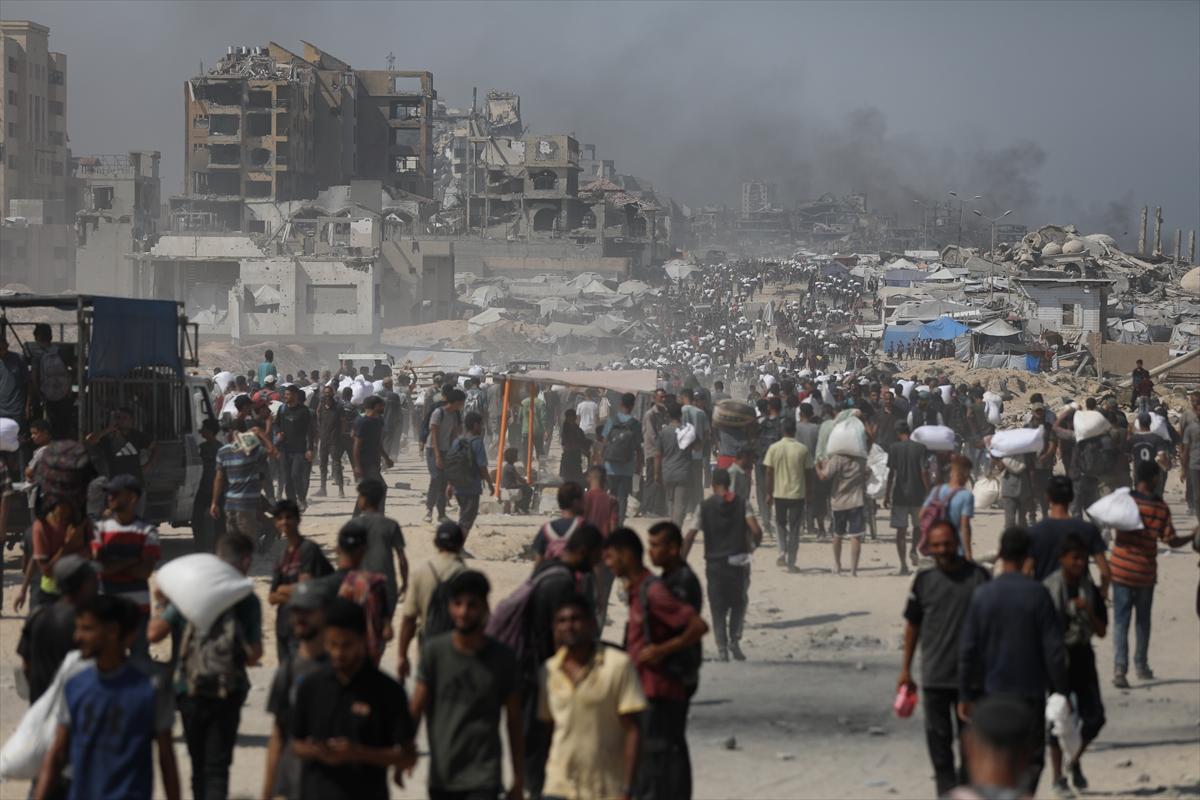
A limited number of aid trucks enter northern Gaza, 27 July 2025 – (Anadolu Agency)
On 31 July 2025, the Israeli military targeted tents housing displaced Palestinians in the southern Gaza town of Khan Yunis. In an airstrike in the El-Mevasi area, at least three people were killed. Among the dead were two children, and the number of injured exceeded 15. It was reported that the strike directly hit the tented area, causing extensive damage to shelters.
On 30 July 2025, civilians gathered near Zehra School in the Derec neighborhood east of Gaza City were targeted by Israeli forces. Two Palestinians were killed in this attack. On the same day, an attack on a house near the Latin Church in the city center resulted in one death and one injury.
On 31 July, a house belonging to the al-Selfiti family in northern Gaza was bombed in an airstrike. The house was directly targeted, killing three Palestinians. A large fire broke out after the strike and spread to surrounding structures.
On the same day, a three-story house belonging to the Nevfel family west of Khan Yunis was struck, killing ten people. It was reported that displaced civilians sheltering near the house were also injured, with some trapped under rubble.
On 30 July, an attack on a house in the al-Ma’azi Refugee Camp resulted in the deaths of a father, mother, and their children. In Deir al-Balah, a house belonging to the Abu al-Sebeh family was targeted, killing one woman and injuring many others. On the same day, an airstrike on a house belonging to the Zareb family in the El-Mevasi area west of Khan Yunis killed five Palestinians. Another attack near al-Zehra School resulted in three deaths.
On 31 July 2025, it was reported that Israeli forces used remotely controlled explosive-laden robots known as “bubi traps” to target civilian structures in the eastern part of Jabaliya town in northern Gaza. According to local sources, homes and facilities were destroyed by these explosive devices. During the attacks, major damage was inflicted on infrastructure, and panic spread among the civilian population.
On 30 July, an attack on an apartment building near the Dabit intersection west of Gaza City injured three Palestinians. Some of the injured, transported to hospitals by first responders, were reported in critical condition. On the same day, a child in the El-Mevasi area near Khan Yunis suffered a head injury, reportedly caused by Israeli soldiers opening fire.
Additionally, on 31 July, the minaret of Abu Selim Mosque in eastern Deir al-Balah was targeted by two Israeli unmanned aerial vehicles. The minaret was largely destroyed, and the attack also caused damage to nearby civilian structures.
On 28 July 2025, it was reported that 14 people, including one child, died in the Gaza Strip due to starvation. According to the Gaza Ministry of Health, the total number of deaths since 7 October 2023 due to malnutrition and starvation reached 147.
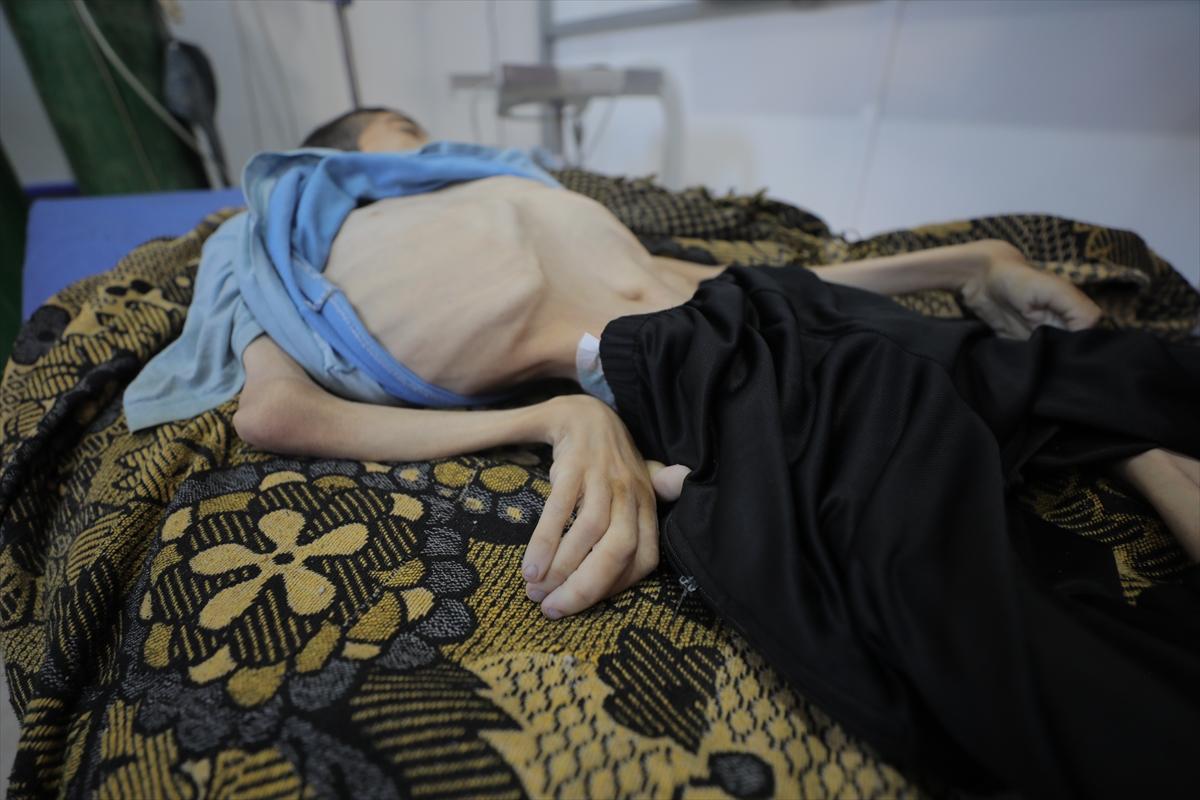
A Palestinian who died of starvation in Gaza under Israel’s imposed scarcity, 31 July 2025 – (Anadolu Agency)
On 30 July, authorities announced that seven more people, including one child, had died from starvation-related causes in the previous 24 hours. With this update, the total death toll rose to 154. The Ministry of Health confirmed that deaths from starvation and malnutrition were being recorded in Gaza’s hospitals and that the crisis was ongoing.
Latest updates as of 31 July confirmed that 154 people had died from starvation, 89 of them children. Health officials stated that these figures were based only on hospital records and that the actual death toll was likely higher.
According to a statement issued on 28 July 2025 by the Gaza government’s media office, Israel permitted only 87 aid trucks to enter the territory. Most of these trucks were looted before reaching distribution centers. The statement accused Israel of creating chaos to prevent the organized delivery of humanitarian supplies. It also noted that some aid dropped from the air had landed in “red zones” where civilians were prohibited from entering, rendering the supplies unusable.
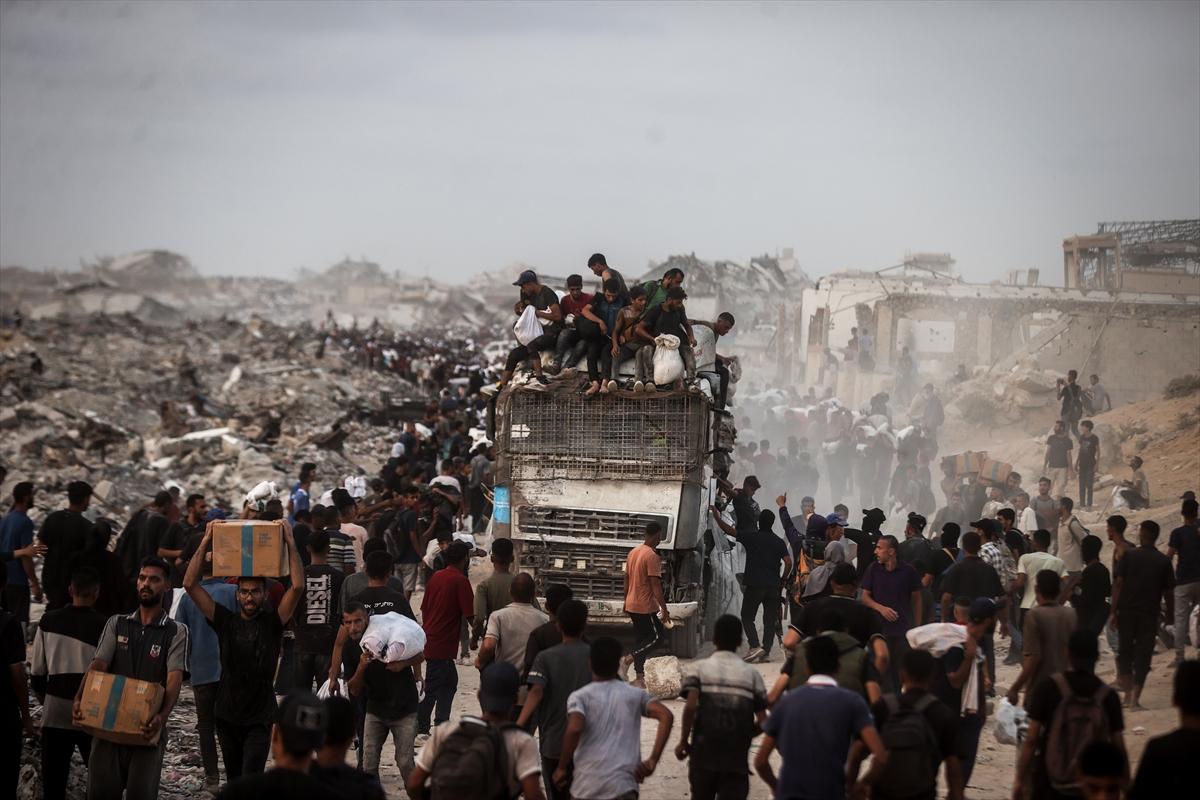
Gaza residents, subjected to starvation by Israel, travel to aid distribution points to obtain limited flour, 29 July 2025 – (Anadolu Agency)
Another statement on 30 July reported that 112 humanitarian aid trucks had entered Gaza, but the majority were looted due to the disorder created by Israel. This situation was said to have prevented aid from reaching those in need, deepening the famine crisis, especially in northern areas where access to basic food had been completely cut off.
Official statements issued on 29 July 2025 indicated that airdropped aid operations authorized by Israel fell far short of meeting Gaza’s needs. It was reported that the supplies delivered by Jordan and the United Arab Emirates during Sunday and Monday operations amounted to only the equivalent of three trucks.
BBC correspondent Jeremy Bowen, who flew on aid aircraft, observed that many airdropped packages failed to deploy their parachutes, posing a danger to civilians and rendering distribution ineffective. Bowen noted that aid operations were presented on television screens as humanitarian efforts, but in reality failed to meet actual needs. He also assessed that Israel only permitted these operations in response to international pressure.
Sky News correspondent Sally Lockwood reported that Israeli authorities had explicitly warned journalists aboard aid aircraft that if they filmed aerial footage, the operations would be halted. Prior to flights, journalists were briefed that aerial photography of Gaza was prohibited and that any violation would result in flight cancellations. Israel’s stance was described as an effort to prevent documentation of destruction in the region.
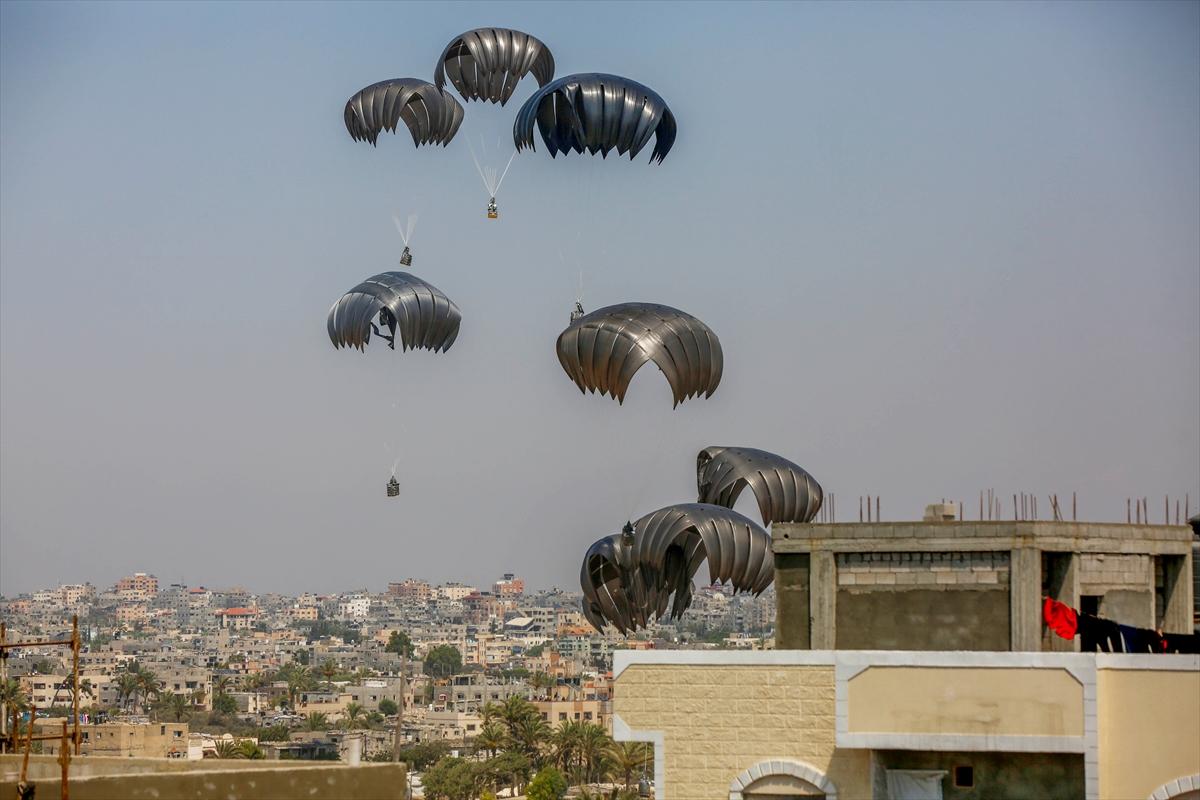
Humanitarian supplies are airdropped by military cargo planes onto the western edge of Deir al-Balah in central Gaza, 28 July 2025 – (Anadolu Agency)
On 27 July 2025, the Israeli military announced a “humanitarian pause” in certain areas of Gaza between 10:00 and 20:00, claiming it was intended to allow the passage of humanitarian aid. However, Dr. Munir al-Beresh, Director-General of the Gaza Ministry of Health, stated that such pauses had no meaning unless they translated into a genuine opportunity to save lives. He emphasized that the wounded were crying out for help, children were dying of hunger, and mothers were struggling to access basic necessities.
Al-Beresh stressed that these short-term ceasefires were ineffective, particularly for infants requiring therapeutic milk and high-protein supplements. Officials underscored that every delay meant another death, and that even during the pause, access to essential supplies remained blocked. The statement also noted that no concrete steps had been taken to evacuate critically ill patients from Gaza.
The Gaza government stated that despite Israel’s published figures on aid entries, these measures remained limited and that the Tel Aviv administration would not end its policy of imposing scarcity on Gaza.
Philippe Lazzarini, Commissioner-General of the United Nations Relief and Works Agency for Palestine Refugees in the Near East (UNRWA), described the airdrop operations as “a distraction effort to cover up a humanitarian catastrophe.” He emphasized that the real solution in Gaza required the unconditional lifting of the blockade, the opening of border crossings, and the continuous flow of aid and fuel.
On 30 July 2025, Chinese Ministry of Foreign Affairs spokesperson Guo Jiakun, during a press briefing, addressed the humanitarian crisis in Gaza. The Beijing government called on Israel to immediately halt its military operations in the region and lift the blockade and siege on Gaza. China demanded the restoration of unimpeded access for humanitarian supplies to those in need.
Guo reiterated China’s support for the Palestinian people’s right to establish an independent state and affirmed that the “two-state solution” was considered the fundamental path to resolving the Palestinian issue. China also stated its readiness to work with the international community to end the conflict in Gaza, alleviate the humanitarian crisis, and achieve a just solution.
China’s statement emphasized that Israel’s attacks in Gaza and its blockade, which deprived the population of water, medicine, medical supplies, and basic hygiene products, had triggered a severe humanitarian catastrophe. It noted that international criticism was justified, particularly regarding the rising number of child deaths from starvation and the use of hunger as a weapon of war.
On 30 July 2025, at the High-Level International Conference on “Finding a Peaceful Solution to the Palestinian Issue and Implementing the Two-State Solution,” convened under the auspices of the United Nations, the “New York Declaration” was issued by Türkiye, the European Union, the Arab League, and 16 other countries. The declaration explicitly condemned Israel’s attacks on Gaza’s civilian population and infrastructure, as well as its siege and starvation policies.
The signatories included Türkiye, France, Saudi Arabia, Brazil, Canada, Egypt, Indonesia, Ireland, Italy, Japan, Jordan, Mexico, Norway, Qatar, Senegal, Spain, the United Kingdom, the European Union, and the Arab League. The joint text stressed the need for concrete steps toward peace, security, and stability in the Middle East and emphasized that the two-state solution must be supported by robust international guarantees.
The declaration clearly stated that Israeli forces must withdraw completely from Gaza and that law enforcement and governance across all Palestinian territories must be carried out by the Palestinian Authority. It also declared international support for the principle of “one state, one government, one law, one weapon.”
The declaration reaffirmed its commitment to the establishment of two sovereign, independent, and democratic states—Israel and Palestine—living side by side in peace within the 1967 borders, including East Jerusalem. It emphasized that full UN membership for the State of Palestine was an indispensable component of any political solution.
On 30 July 2025, at the United Nations General Assembly’s international conference on “Finding a Peaceful Solution to the Palestinian Issue and Implementing the Two-State Solution,” Malta’s Permanent Secretary of the Ministry of Foreign Affairs, Christopher Cutajar, announced that his country would formally recognize the State of Palestine in September. Cutajar stated that this decision would make a significant contribution to efforts toward a two-state solution.
Cutajar emphasized that Malta has long supported the Palestinian people’s right to self-determination and asserted that responsible international actors must recognize this right and move beyond theoretical visions to practical implementation. The Maltese government’s statement affirmed that recognizing Palestine as an independent state was an important step toward peace.
The statement also noted that Malta, as an EU member state located between Sicily and North Africa in the Mediterranean, would continue to support strengthening Palestine’s status at the UN and advancing the two-state solution. This decision will gain formal recognition during the UN General Assembly’s September meetings.
On 30 July 2025, foreign ministers of Andorra, Australia, Canada, Finland, France, Iceland, Ireland, Luxembourg, Malta, New Zealand, Norway, Portugal, San Marino, Slovenia, and Spain issued a joint statement calling for recognition of the State of Palestine. Under the title “New York Call,” the statement urged all states that have not yet recognized Palestine or expressed positive intentions to do so to take immediate steps in this direction.
The statement affirmed that recognizing the State of Palestine is a fundamental step toward implementing the two-state solution. It noted the growing number of countries that have either recognized Palestine or declared their intent to do so and emphasized the need for broader participation by the international community.
The 15-country joint statement further stated that the goal is for Israel and Palestine to exist as two independent, democratic states living side by side in peace within secure and internationally recognized borders, in accordance with UN resolutions and international law. This vision was reaffirmed, and the importance of unifying the West Bank and Gaza Strip under the Palestinian Authority was highlighted.
On 29 July 2025, UK Prime Minister Keir Starmer announced that if Israel fails to meet specific conditions and does not declare a ceasefire in Gaza, the United Kingdom will recognize the State of Palestine at the United Nations General Assembly in September 2025. In remarks following a cabinet meeting, Starmer acknowledged that airdropped aid had begun but stressed that at least 500 trucks of aid per day were required to resolve the humanitarian crisis in Gaza.
Prime Minister Starmer stated that the situation in Gaza had become unbearable and that an immediate ceasefire and unimpeded access to humanitarian aid were essential. He declared that if no steps were taken to lift the blockade on Gaza, the UK would initiate the formal process of recognizing the State of Palestine. The statement assessed that the hope for a two-state solution was at risk and that recognition could revive this process.
Starmer also held phone calls with King Abdullah II of Jordan, Israeli Prime Minister Benjamin Netanyahu, Palestinian President Mahmoud Abbas, and Canadian Prime Minister Mark Carney. In these discussions, he emphasized the need to remove restrictions on aid entries into Gaza and to eliminate barriers preventing food delivery to civilians. Starmer reiterated that the UK would implement its recognition decision if these conditions were not met.
On 27 July 2025, following a meeting with European Commission President Ursula von der Leyen in Scotland, US President Donald Trump stated that Israel must make a decision regarding its next steps in Gaza. Trump did not directly answer the question of whether Israel should deliver more aid to Gaza but recalled that the United States had provided $60 million in food aid to Gaza two weeks earlier.
Trump argued that this aid had not received sufficient public recognition and claimed that other countries had not contributed at a similar scale. He announced that aid would be distributed through newly established food distribution centers under Israeli supervision, asserting that Israel would fully manage these centers and that the United States trusted Israel to do so.
During remarks aboard his plane returning to Washington on 29 July, Trump addressed the famine in Gaza, describing the conditions faced by children as “terrible.” He said his wife had seen photographs of children who died of starvation in Gaza and was deeply affected. He commented that mothers in Gaza were unable to feed their children and were in a state of profound helplessness.
Trump also referred to recent but inconclusive prisoner exchange talks between Israel and Hamas, noting that Israeli families were waiting for the return of the bodies of their deceased captives and that he had spoken directly with some of these families. He stated that Israel must decide how to proceed in this situation and that he knew what should be done, but that it was inappropriate to share this with the public.
Anadolu Ajansı. "ABD Başkanı Trump, Gazze’deki Çocukların Açlık Çektiğini Belirtti." Accessed July 30, 2025. https://www.aa.com.tr/tr/dunya/abd-baskani-trump-gazzedeki-cocuklarin-aclik-cektigini-belirtti/3645738
Anadolu Ajansı. "Trump, İsrail’in Gazze’de Atacağı Adımlar Konusunda Bir Karar Vermek Zorunda Olduğunu Söyledi." Accessed July 30, 2025. https://www.aa.com.tr/tr/dunya/trump-israilin-gazzede-atacagi-adimlar-konusunda-bir-karar-vermek-zorunda-oldugunu-soyledi/3643681
Anadolu Ajansı. "İsrail, Gazze’ye 7 Ekim 2023’ten Beri Düzenlediği Saldırılarda Can Kaybı 60 Bini Aştı." Accessed July 30, 2025. https://www.aa.com.tr/tr/dunya/israilin-gazzeye-7-ekim-2023ten-beri-duzenledigi-saldirilarda-can-kaybi-60-bini-asti/3644955
Anadolu Ajansı. “Filistin Devletinin Tanınmasından Yana 15 Ülke, Tüm Devletleri Bu Yönde Adım Atmaya Çağırdı.” Accessed July 30, 2025. https://www.aa.com.tr/tr/dunya/filistin-devletinin-taninmasindan-yana-15-ulke-tum-devletleri-bu-yonde-adim-atmaya-cagirdi/3646597
Anadolu Ajansı. “Gazze’deki Filistin Hükûmeti: Kıtlık Giderek Şiddetleniyor ve İsrail Soykırıma Devam Ediyor.” Accessed July 30, 2025. https://www.aa.com.tr/tr/dunya/gazzedeki-filistin-hukumeti-kitlik-giderek-siddetleniyor-ve-israil-soykirima-devam-ediyor/3643751
Anadolu Ajansı. “Havadan İndirilen Yardımlar, Gazze’deki İhtiyacın Giderilmesinin Çok Gerisinde.” Accessed July 30, 2025. https://www.aa.com.tr/tr/dunya/havadan-indirilen-yardimlar-gazzedeki-ihtiyacin-giderilmesinin-cok-gerisinde-/3645019
Anadolu Ajansı. “Malta, Filistin Devletini Eylülde Resmen Tanıyacağını Açıkladı.” Accessed July 30, 2025. https://www.aa.com.tr/tr/dunya/malta-filistin-devletini-eylulde-resmen-taniyacagini-acikladi/3646798#
Anadolu Ajansı. “Türkiye, AB, Arap Birliği ve 16 Ülke, İsrail’in Gazze’de Sivillere Saldırılarını Kınadı.” Accessed July 30, 2025. https://www.aa.com.tr/tr/dunya/turkiye-ab-arap-birligi-ve-16-ulke-israilin-gazzede-sivillere-saldirilarini-kinadi/3646396#
Anadolu Ajansı. “Çin, İsrail’i İnsani Yardımların Tamamının Gazze’ye Girişini Yeniden Sağlamaya Çağırdı.” Accessed July 30, 2025. https://www.aa.com.tr/tr/dunya/cin-israili-insani-yardimlarin-tamaminin-gazzeye-girisini-yeniden-saglamaya-cagirdi/3646778#
Anadolu Ajansı. “İngiltere, İsrail Somut Adım Atmazsa Eylülde Filistin’i Tanıyacağını Duyurdu.” Accessed July 30, 2025. https://www.aa.com.tr/tr/dunya/ingiltere-israil-somut-adim-atmazsa-eylulde-filistini-taniyacagini-duyurdu/3645582
Anadolu Ajansı. “İsrail, Dün Gazze’de Yardım Bekleyen Filistinlilere Yönelik Saldırısında 51 Filistinli Hayatını Kaybetti.” Accessed July 30, 2025. https://www.aa.com.tr/tr/dunya/israilin-dun-gazzede-yardim-bekleyen-filistinlilere-yonelik-saldirisinda-51-filistinli-hayatini-kaybetti/3646868#
Anadolu Ajansı. “İsrail, Gazzede Çoğunluğu Yardım Bekleyenler Olmak Üzere 42 Filistinliyi Katletti.” Accessed July 30, 2025. https://www.aa.com.tr/tr/dunya/israil-gazzede-cogunlugu-yardim-bekleyenler-olmak-uzere-42-filistinliyi-katletti/3646769#
Anadolu Ajansı. “İsrail, Gazze’de Sivillerin Ev ve Çadırlarını Hedef Aldığı Saldırılarda 13 Kişi Hayatını Kaybetti.” Accessed July 30, 2025. https://www.aa.com.tr/tr/dunya/israilin-gazzede-sivillerin-ev-ve-cadirlarini-hedef-aldigi-saldirilarda-13-kisi-hayatini-kaybetti/3646911#
Anadolu Ajansı. “İsrail’in Açlık ve Kıtlığı Dayattığı Gazze Şeridi’nde Son 24 Saatte 1’i Çocuk 14 Filistinli Açlıktan Hayatını Kaybetti.” Accessed July 30, 2025. https://www.aa.com.tr/tr/dunya/israilin-aclik-ve-kitligi-dayattigi-gazze-seridinde-son-24-saatte-1i-cocuk-14-filistinli-acliktan-hayatini-kaybetti/3643831
Anadolu Ajansı. “İsrail’in Gazzede Kitliği Dayattığı Bölgede Son 24 Saatte Biri Çocuk 7 Kişi Açlıktan Hayatını Kaybetti.” Accessed July 30, 2025. https://www.aa.com.tr/tr/dunya/israilin-kitligi-dayattigi-gazzede-son-24-saatte-biri-cocuk-7-kisi-acliktan-hayatini-kaybetti/3646108
Anadolu Ajansı. “İsrail’in Gazze’ye Saldırılarında Son 24 Saatte 100 Filistinli Hayatını Kaybetti.” Accessed July 30, 2025. https://www.aa.com.tr/tr/dunya/israilin-gazzeye-saldirilarinda-son-24-saatte-100-filistinli-hayatini-kaybetti/3643786
Anadolu Ajansı. “İsrail’in İnsani Yardım Uçaklarındaki Gazetecilerin Gazzeyi Havadan Görüntülemesine İzin Vermedi.” Accessed July 30, 2025. https://www.aa.com.tr/tr/dunya/israil-insani-yardim-ucaklarindaki-gazetecilerin-gazzeyi-havadan-goruntulemesine-izin-vermedi/3645444
On 1 August 2025, the number of people killed in Israeli attacks in the Gaza Strip increased by 135 in the previous 24 hours, bringing the total to 60,467. On 2 August 2025, fatalities rose by a further 98, bringing the total death toll to 60,565. On 3 August 2025, an additional 119 people lost their lives, raising the total death toll to 60,684. On 4 August 2025, 94 more people were killed, bringing the total number of deaths in Gaza to 60,778.
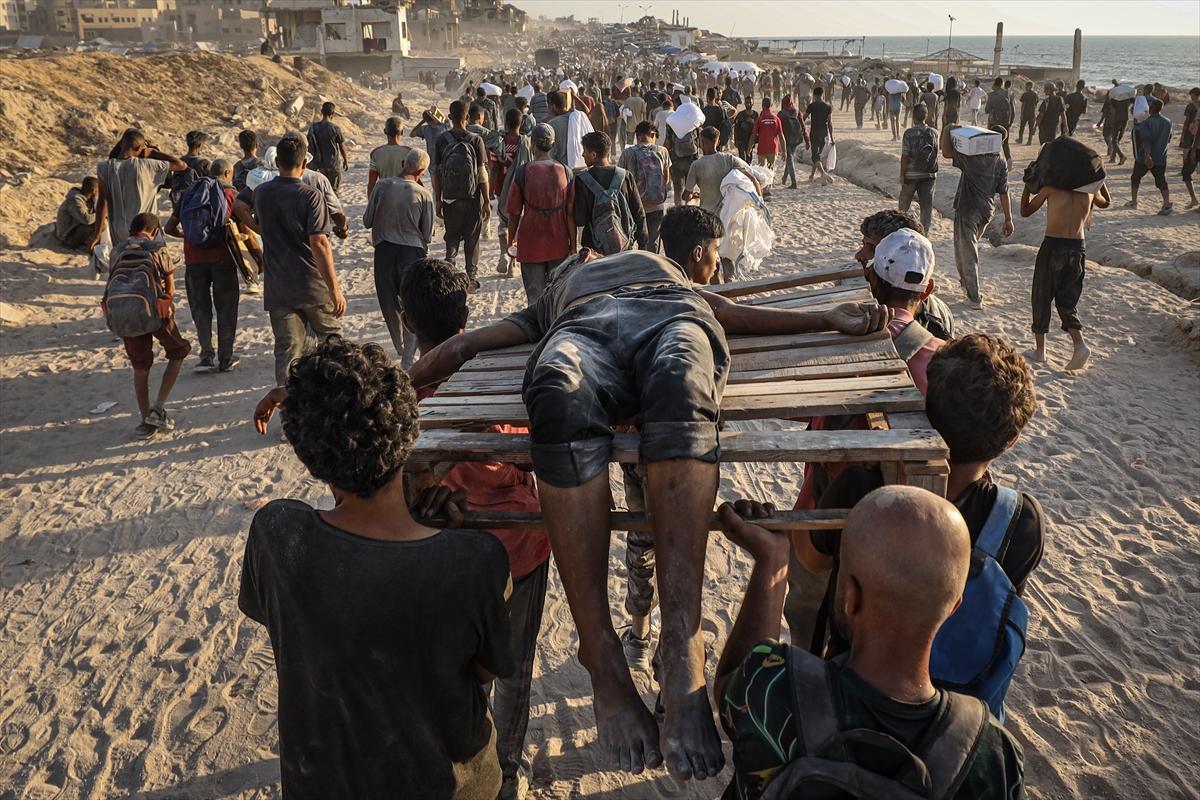
Injured Palestinians waiting for humanitarian aid in the Zikim area of northern Gaza are being transported after Israeli forces opened fire on them, 3 August 2025 – (Anadolu Agency)
According to data released by the Gaza Ministry of Health, as of 31 July 2025, of the 60,199 Palestinians killed in Israeli attacks, 18,430 were children, accounting for 30.8 percent of the total fatalities. The same statement noted that 9,735 women and 4,429 elderly Palestinians also lost their lives. The proportion of female fatalities among the total death toll was reported at 16.1 percent, while that of elderly fatalities was 7.3 percent.
Due to Israel’s blockade and famine policies in the Gaza Strip, the number of people who died from starvation in Gaza reached 180 by 4 August 2025. Of these, 93 were children. The Ministry of Health stated that the malnutrition crisis in Gaza had reached unprecedented levels in terms of child mortality.
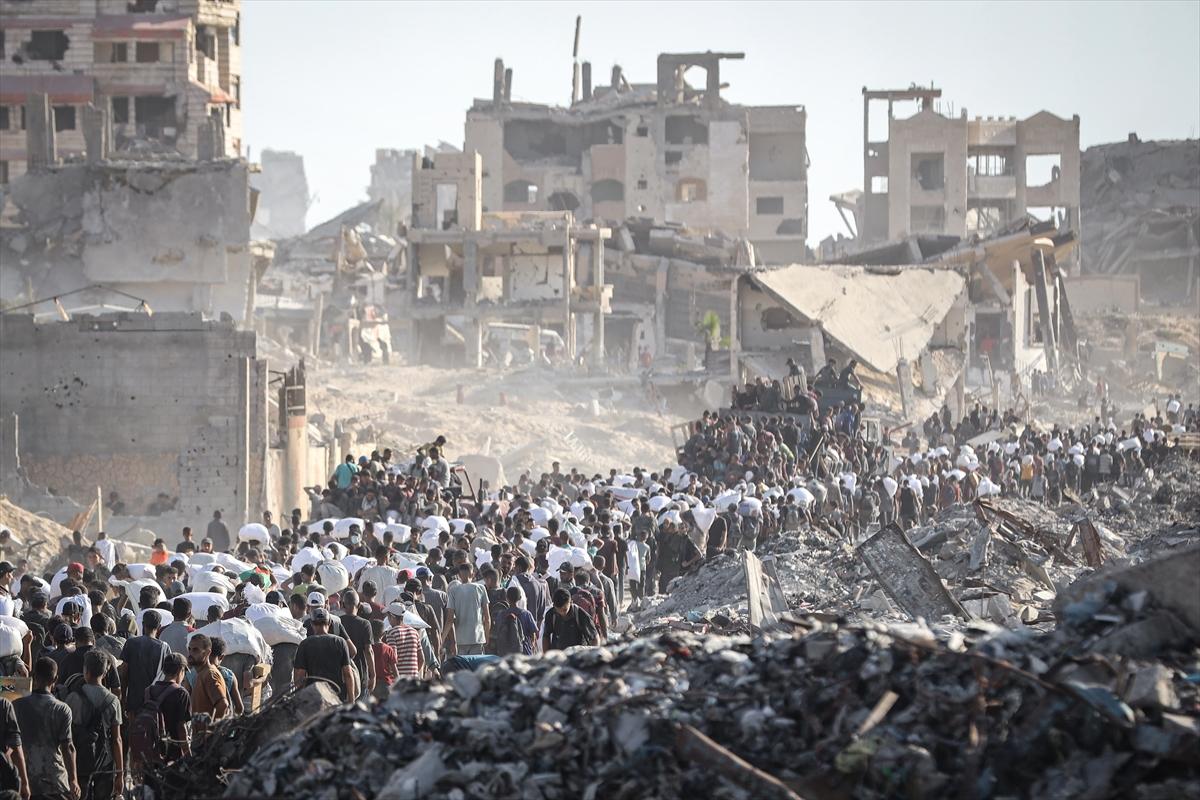
Palestinians subjected to starvation by Israel queue at a aid distribution point in Zikim to obtain limited supplies of flour, 3 August 2025 – (Anadolu Agency)
On 1 August 2025, Israeli forces opened fire on civilians waiting for aid in the city of Rafah in southern Gaza, killing nine people and injuring many others. On the same day, an attack on Palestinians waiting for aid along Salahaddin Street resulted in six deaths. In an attack targeting civilians gathering for aid in the Sudanayya area, five Palestinians were killed. On 2 August 2025, one person was killed and 25 injured when Israeli forces opened fire near aid points in Rafah. In attacks near aid distribution centers in Khan Yunis and Gaza City, a total of 17 people lost their lives.
On 3 August 2025, WHO Director-General Tedros Adhanom Ghebreyesus issued an urgent appeal to the international community to ensure continuous, uninterrupted, and increased flows of medical aid to Gaza. The Gaza Ministry of Health stated that the health infrastructure was on the verge of collapse, with tens of thousands of injured unable to receive treatment and facing imminent risk of death.
Between 1 and 2 August 2025, the United Arab Emirates (UAE) and Jordan, with support from France, Germany, Italy, and Spain, conducted aerial humanitarian aid operations into the Gaza Strip. A total of seven aircraft participated in the operation, delivering 36 tons of aid supplies by parachute. The Jordanian Armed Forces carried out five separate airdrop missions into Gaza on 2 August.
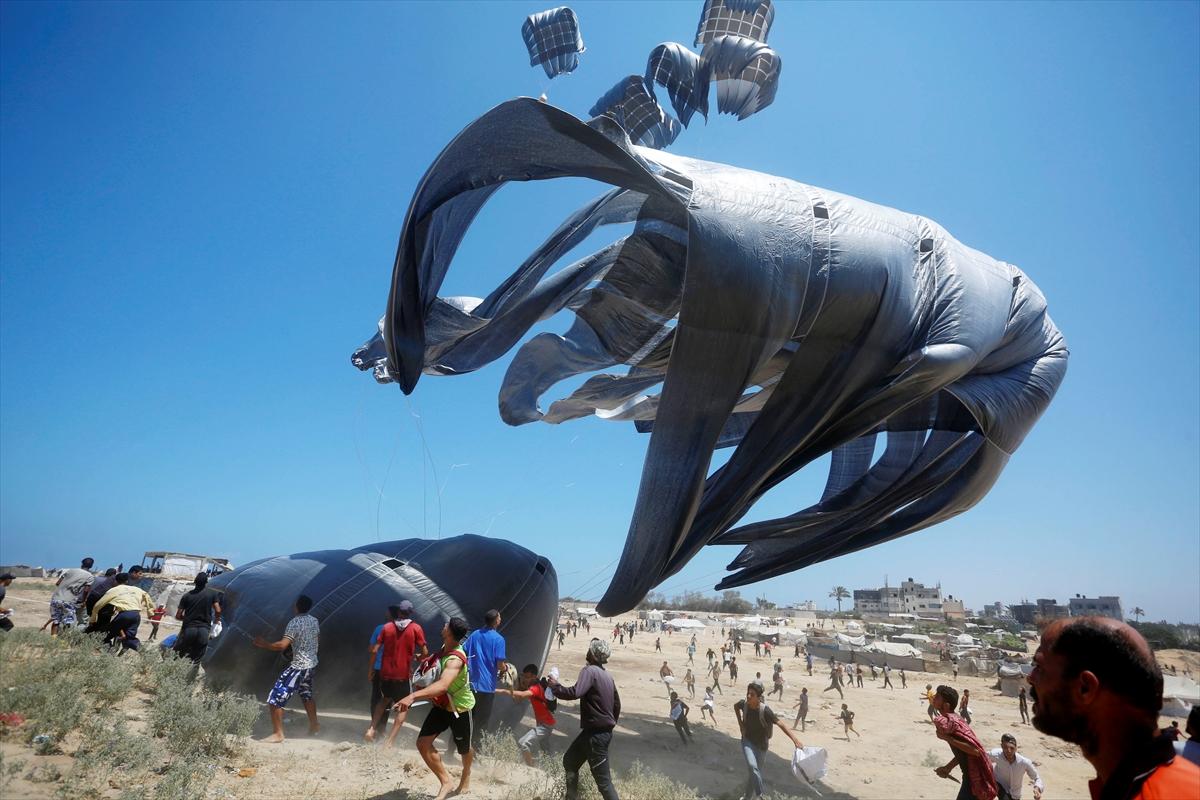
Palestinians struggling against hunger rush to collect humanitarian aid packages dropped from the air, 2 August 2025 – (Anadolu Agency)
Reports indicated that some of the airdropped aid packages fell on civilians, resulting in casualties, while others landed in the sea and became unusable. This method of aid delivery was widely criticized; Palestinian officials and the public stated that Israel was permitting these aid drops as a means of “humiliation and image management.”
The Palestinian Government stated that between 27 July and 3 August 2025, an average of 84 aid trucks per day were able to enter Gaza. However, at least 600 aid and fuel trucks per day are required to meet Gaza’s basic needs. Due to Israel’s systematic blockades, the number of aid trucks waiting at the Gaza border has reached 22,000.
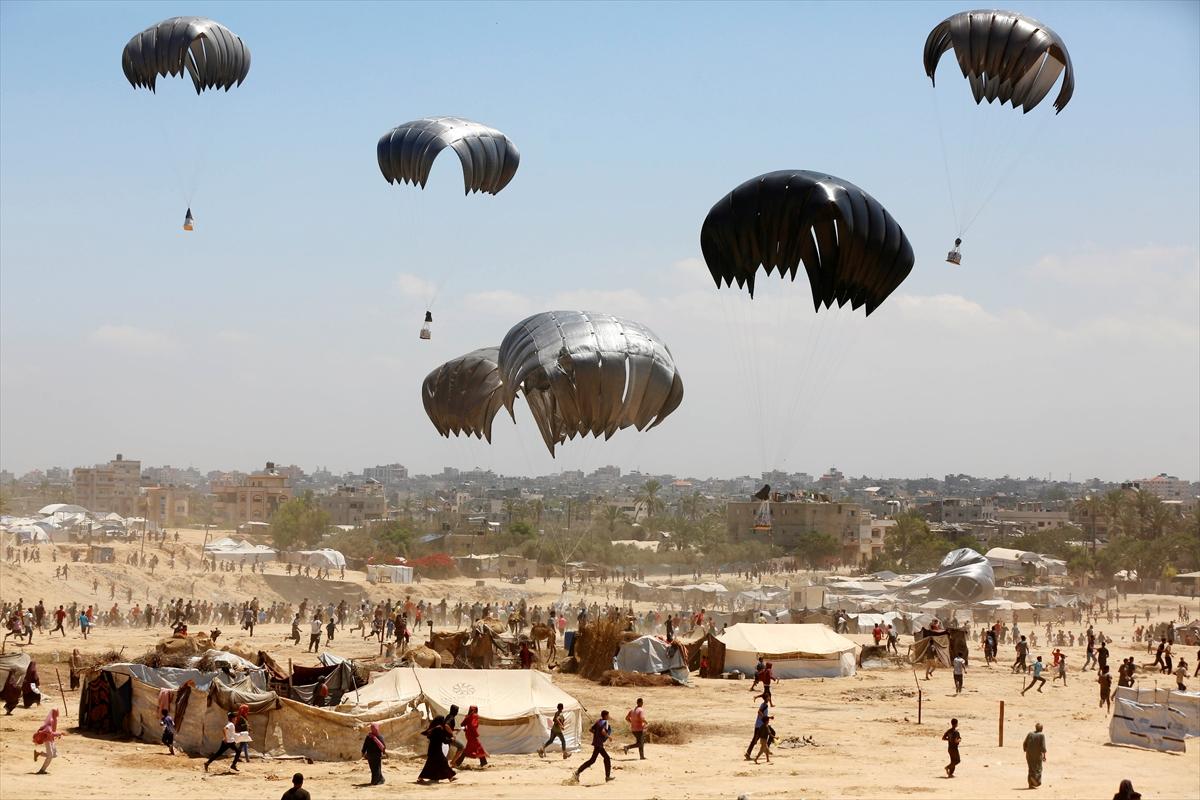
Humanitarian aid supplies are being airdropped into Gaza under Israeli attacks and blockade, 4 August 2025 – (Anadolu Agency)
It was reported that Israel deliberately created security chaos to block truck entries and disrupt the aid flow. On 3 August 2025, the majority of the 73 aid trucks that entered Gaza were looted due to the chaotic conditions created by Israel, and the aid was wasted before reaching those in need.
On 3 August 2025, protests against Israel’s attacks on Gaza and its imposed famine policies took place in various cities across Türkiye. In Istanbul’s İstinye district, a large crowd organized by the Islamic Solidarity Platform marched toward the U.S. Consulate General. Protesters carried banners reading “The deliberate starvation of children is a horrific war crime” and struck empty pots and pans to draw attention to the famine in Gaza.
In Siirt, a demonstration organized by the Association of Devotees of the Prophet featured a banner reading “A Light from Siirt to Gaza” and displayed Palestinian flags. In Diyarbakır, a march led by the Memur-Sen Diyarbakır Provincial Directorate emphasized that Israel was using famine as a weapon of genocide.
On 3 August 2025, simultaneous demonstrations and marches were held in the West Bank cities of Ramallah, Nablus, and Hebron. Hundreds participated in the Ramallah march, while shops in the city center closed for two hours. Demonstrators carried photographs of those who died of starvation in Gaza and drew attention to the crisis by wearing skeleton-patterned clothing and carrying mannequins dressed in shrouds.
In Nablus, protesters marched from Palestine Street to Martyrs’ Square. In Hebron, hundreds protested the silence of international institutions.
On 2 August 2025, hundreds gathered at Odenplan Square in Stockholm, Sweden’s capital, to demand an end to what they described as Israel’s “genocidal war” in Gaza. Protesters criticized the Swedish government for its inadequate response. Banners reading “Children are being killed in Gaza” and “End the food shortage” were displayed.
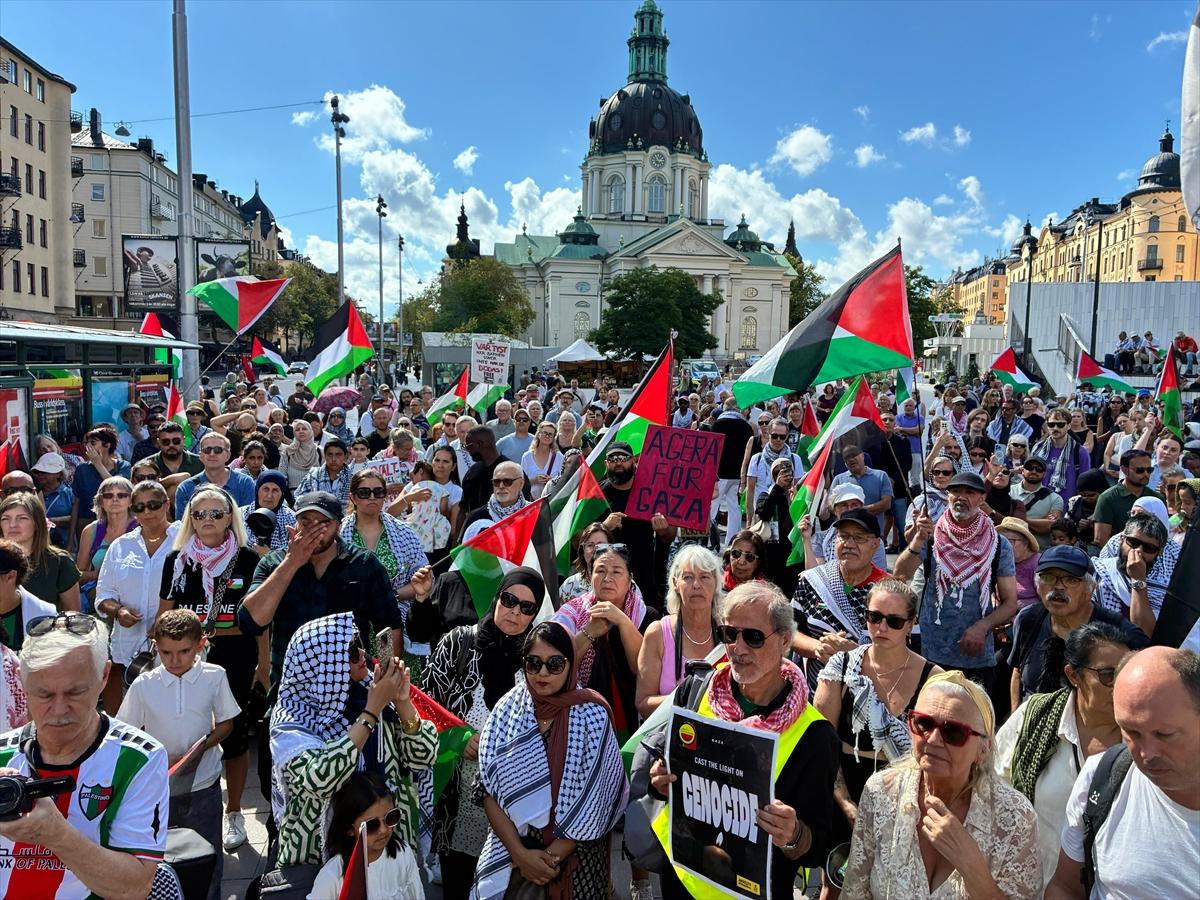
Protests against Israel’s attacks on Gaza take place in Sweden, 2 August 2025 – (Anadolu Agency)
On 3 August 2025, hundreds of people in Berlin, Germany, protested Israel’s genocide in Gaza along Kurfürstendamm Avenue. Demonstrators beat pots and pans with spoons to draw attention to the hunger crisis in Gaza and chanted slogans such as “Freedom for Gaza” and “Let Food Reach Gaza.” The protest continued as a sit-in, and many participants were arrested following police intervention.
On 3 August 2025, a massive march involving tens of thousands of people took place on the Sydney Harbour Bridge in Sydney, Australia. Protesters demanded an end to Israel’s attacks and called on the Australian government to recognize the State of Palestine.
In Jakarta, Indonesia’s capital, thousands protested demanding the opening of the Rafah border crossing and the unrestricted entry of basic food supplies into Gaza. In Lagos, Nigeria, speeches during the demonstration described the situation in Gaza as a “genocide and deliberate starvation campaign.”
On 2 August 2025, tens of thousands of people in Tel Aviv, Israel, demonstrated demanding an urgent prisoner exchange agreement. The protests were organized following the release of videos by Hamas’s military wing, the Izz ad-Din al-Qassam Brigades, and the Islamic Jihad Movement, showing Israeli hostages Evyatar David and Rom Braslavski.
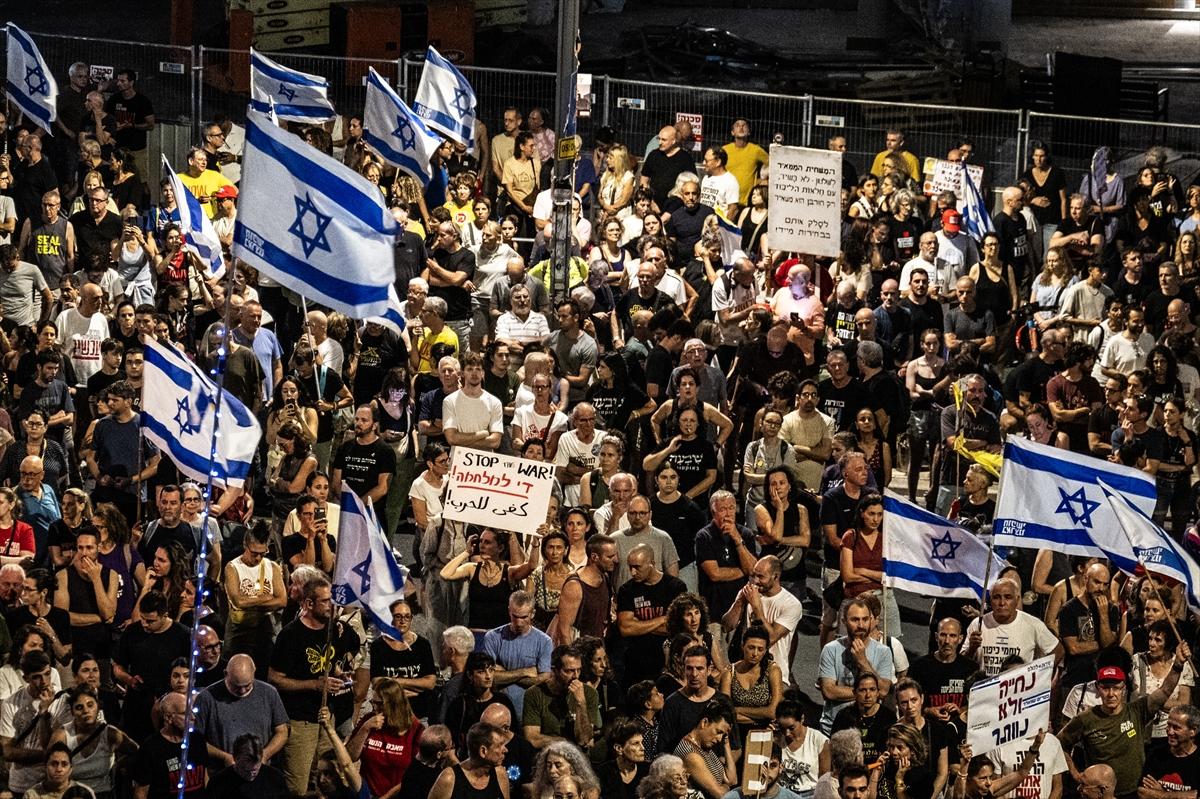
Protest in Tel Aviv demanding a ceasefire and the return of Israeli hostages, 2 August 2025 – (Anadolu Agency)
Demonstrators appealed to Israeli Prime Minister Benjamin Netanyahu and government officials to abandon obstructive positions in negotiations aimed at securing the hostages’ release. Families of the hostages emphasized that the lives of the captives were growing more precarious by the day and accused the government, stating “Our children are paying this price.”
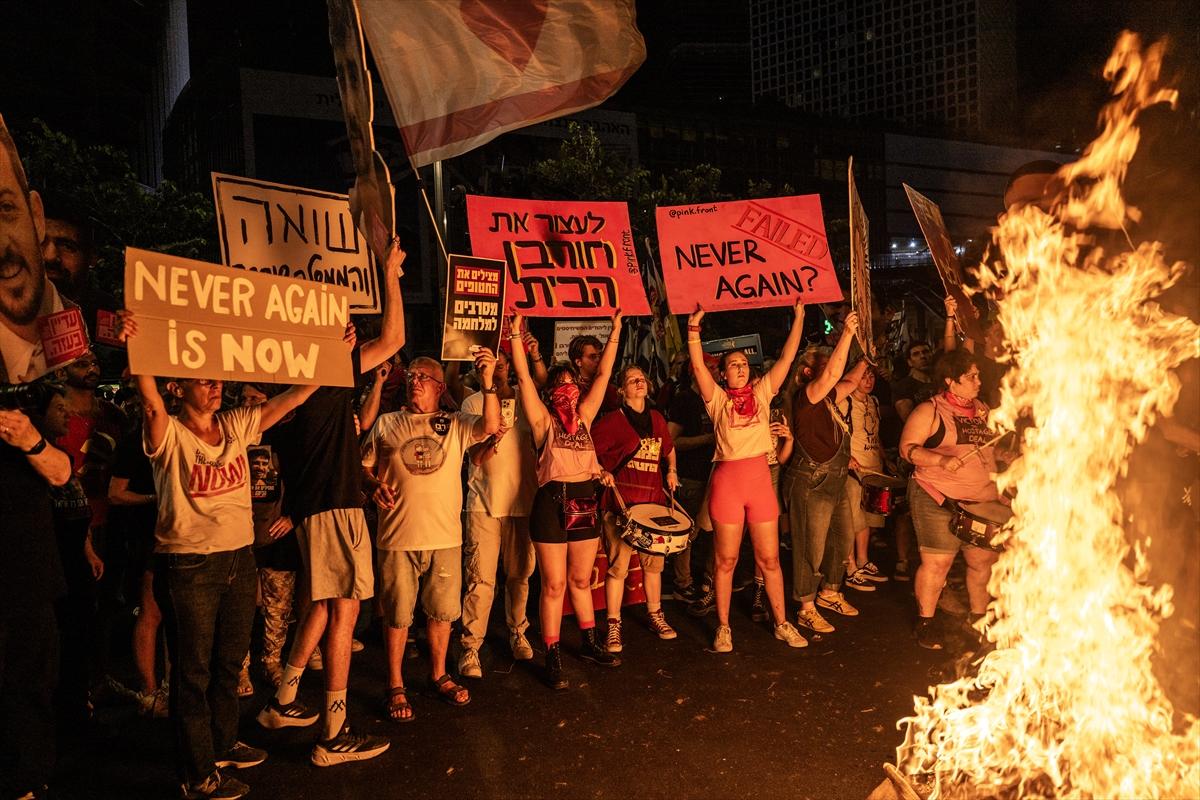
Protest in Tel Aviv demanding a ceasefire and the return of Israeli hostages, 2 August 2025 – (Anadolu Agency)
On 2 August 2025, Israel’s Ministry of Foreign Affairs issued a statement insisting that Evyatar David and all other hostages must be immediately released. Prime Minister Netanyahu, during a meeting with the families of the hostages, said he was “shocked” by the images of the captives and affirmed that efforts for a prisoner exchange were “ongoing without interruption.”
The Qassam Brigades, in their released videos, showed Israeli hostages saying “We eat what they eat,” and supported this message with footage of children who died of starvation in Gaza. Hamas previously stated it was prepared to release Israeli hostages en masse, but only on the conditions that Israel halt its genocide, fully withdraw from Gaza, and release Palestinian prisoners held in Israeli jails.
Anadolu Ajansı. “Almanya’da Polis, Filistin’e Destek Eylemine Sert Müdahalede Bulundu.” Accessed August 4, 2025. https://www.aa.com.tr/tr/dunya/almanyada-polis-filistine-destek-eylemine-sert-mudahalede-bulundu/3649341
Anadolu Ajansı. “BAE ve Ürdün, Bazı Avrupa Ülkelerinin Desteğiyle Kıtlıkla Boğuşan Gazze’ye Havadan Yardım Malzemesi İndirdi.” Accessed August 4, 2025. https://www.aa.com.tr/tr/dunya/bae-ve-urdun-bazi-avrupa-ulkelerinin-destegiyle-kitlikla-bogusan-gazzeye-havadan-yardim-malzemesi-indirdi/3648815
Anadolu Ajansı. “Batı Şeria’da Binlerce Filistinli Gazze’deki Soykırımı Protesto Etti.” Accessed August 4, 2025. https://www.aa.com.tr/tr/dunya/bati-seriada-binlerce-filistinli-gazzedeki-soykirimi-protesto-etti/3649660
Anadolu Ajansı. “Dünyanın Farklı Bölgelerinde Filistin’e Destek Gösterileri Düzenlendi.” Accessed August 4, 2025. https://www.aa.com.tr/tr/dunya/dunyanin-farkli-bolgelerinde-filistine-destek-gosterileri-duzenlendi/3649676#
Anadolu Ajansı. “Tel Aviv’de Esir Takası Anlaşması Talebiyle Gösteri Düzenlendi.” Accessed August 4, 2025. https://www.aa.com.tr/tr/dunya/tel-avivde-esir-takasi-anlasmasi-talebiyle-gosteri-duzenlendi-/3649320#
Anadolu Ajansı. “İsrail’in Gazze’ye Saldırıları Türkiye’de Protesto Edildi.” Accessed August 4, 2025. https://www.aa.com.tr/tr/gundem/israilin-gazzeye-saldirilari-turkiyede-protesto-edildi/3649784
Anadolu Ajansı. “İsrail’in Gazze’ye Saldırılarında Can Kaybı Son 24 Saatte 135 Artarak 60 Bin 467’ye Çıktı.” Accessed August 4, 2025. https://www.aa.com.tr/tr/dunya/israilin-gazzeye-saldirilarinda-can-kaybi-son-24-saatte-135-artarak-60-bin-467ye-cikti/3648863
Anadolu Ajansı. “İsrail’in Gazze’ye Yönelik Saldırıları İsveç’te Protesto Edildi.” Accessed August 4, 2025. https://www.aa.com.tr/tr/dunya/israilin-gazzeye-yonelik-saldirilari-isvecte-protesto-edildi/3649189
Anadolu Ajansı. “İsrail’in Kıtlığı Dayattığı Gazze Şeridi’nde Son 24 Saatte 2’si Çocuk 3 Kişi Daha Açlıktan Hayatını Kaybetti.” Accessed August 4, 2025. https://www.aa.com.tr/tr/dunya/israilin-kitligi-dayattigi-gazze-seridinde-son-24-saatte-2si-cocuk-3-kisi-daha-acliktan-hayatini-kaybetti/3648591
Anadolu Ajansı. “İsrail’in Kıtlığı Dayattığı Gazze Şeridi’nde Son 24 Saatte 5 Kişi Daha Açlıktan Hayatını Kaybetti.” Accessed August 4, 2025. https://www.aa.com.tr/tr/dunya/israilin-kitligi-dayattigi-gazze-seridinde-son-24-saatte-5-kisi-daha-acliktan-hayatini-kaybetti/3649974
Anadolu Ajansı. “İsrail’in Kıtlığı Dayattığı Gazze Şeridi’nde Son 24 Saatte 6 Kişi Daha Açlıktan Hayatını Kaybetti.” Accessed August 4, 2025. https://www.aa.com.tr/tr/dunya/israilin-kitligi-dayattigi-gazze-seridinde-son-24-saatte-6-kisi-daha-acliktan-hayatini-kaybetti/3649406
On 5 August 2025, Israeli media reported that Prime Minister Benjamin Netanyahu was actively considering a plan to occupy the entire Gaza Strip. It was stated that this plan was expected to be approved by the Security Cabinet, which was scheduled to meet on the same day. The first phase of the plan envisages the forced displacement of approximately one million Palestinians living in the city of Gaza in the northern part of the Strip toward the south. Following these evacuations, a ground assault is planned to commence, culminating in the complete occupation of the city.
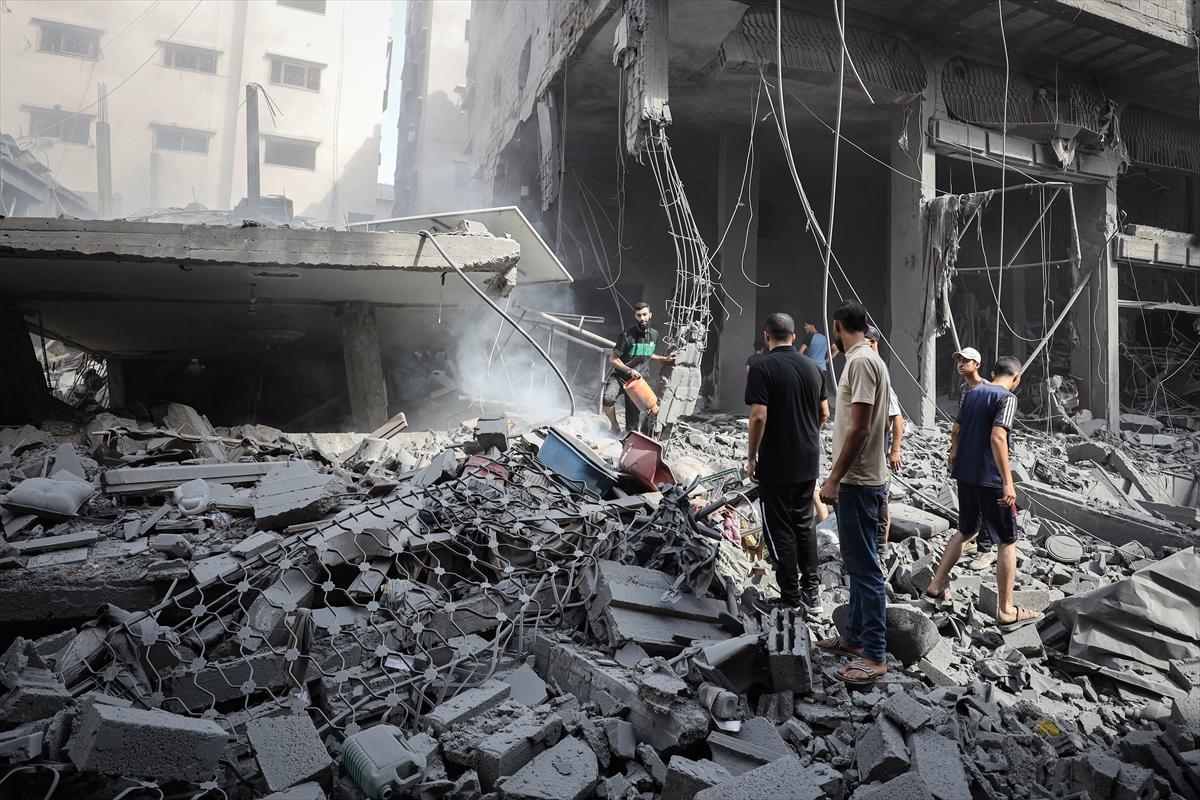
Israel’s attacks on Gaza continue, 6 August 2025 – (Anadolu Agency)
Under the plan, areas previously untouched by attacks and assessed as potentially containing Israeli hostages are also to be targeted. The operation is projected to last between four and five months. The humanitarian situation of Gaza’s population, already struggling with famine due to Israel’s ongoing attacks and blockade, is expected to deteriorate further with the implementation of this plan.
According to Israeli media reports, to mitigate international backlash, humanitarian aid efforts will be expanded. It was reported that U.S. President Donald Trump would intervene to increase the number of aid distribution points from four to sixteen and announce at least one billion dollars in aid. The aid is planned to be financed by the United States and other countries.
During a meeting with a group of Indian journalists in West Jerusalem, Netanyahu stated that his objectives were the elimination of Hamas and the return of all Israeli hostages. He added that if Hamas laid down its arms and released all Israeli hostages unconditionally, the attacks would cease.
Some far-right ministers in Netanyahu’s cabinet have advocated for the deportation of Palestinians living in Gaza to other countries and the reconstruction of Jewish settlement units abandoned in 2005.
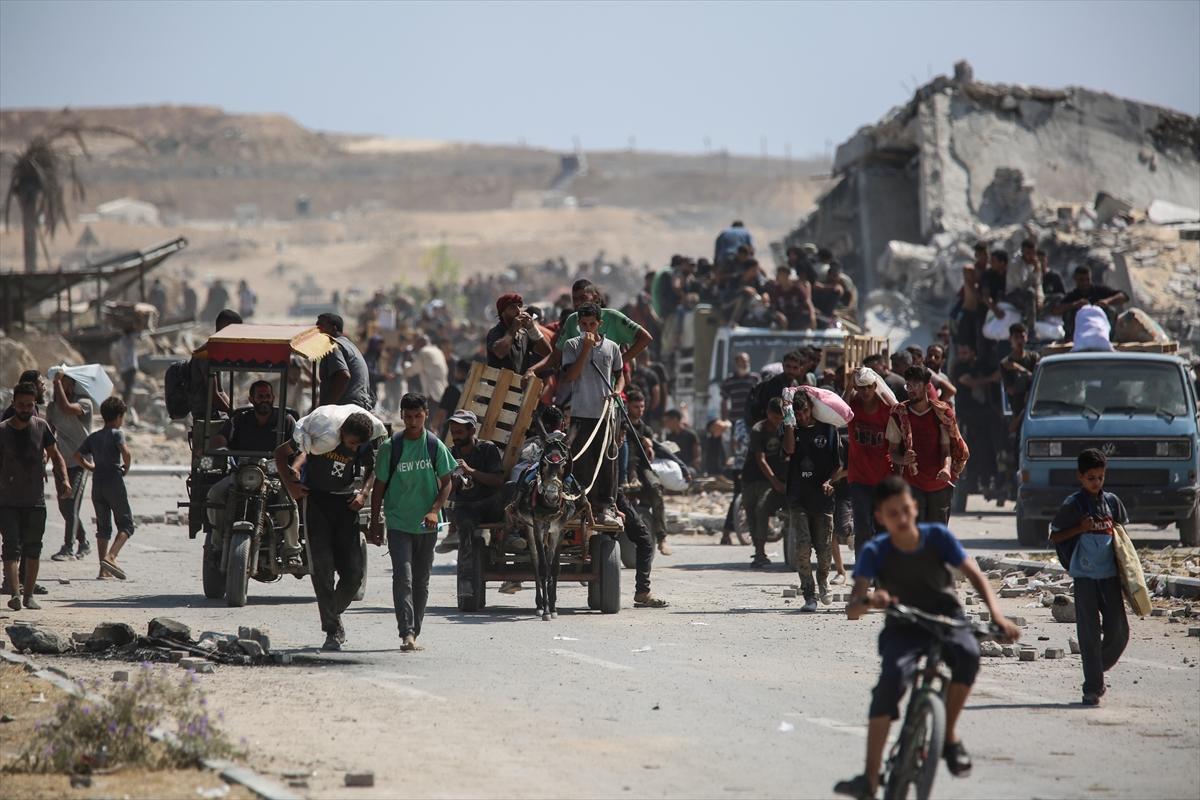
Gaza residents facing starvation rush to the Netzarim Corridor to receive aid, 4 August 2025 – (Anadolu Agency)
According to information published in the Israeli media on 7 August 2025, the first phase of the plan entails the forced relocation of approximately one million people living in the city of Gaza in the northern part of the Strip to the south. After evacuation orders are issued, a simultaneous siege will be established and a ground operation launched. The operation is expected to last four to five months. Areas previously not targeted but assessed as potentially containing hostages are also to be included in the operation. To reduce international criticism, increasing humanitarian capacity has been prioritized, with plans to raise the number of aid distribution points from four to sixteen and secure at least one billion dollars in foreign funding.
According to an official statement issued on 8 August 2025, Israel’s Security Cabinet approved the plan for the military to prepare for control of the city of Gaza. The statement used the term “control” instead of “occupation.” It was stated that the plan would direct all civilians in Gaza City to temporary camps in the central areas and surrounding regions by 7 October, while simultaneously conducting a siege and ground operation against remaining Hamas elements. It was noted that full cabinet approval may be required for the decision to take effect, and the meeting could be postponed to Sunday.
In the second phase, the operation is expected to expand toward central camps and areas assessed as holding hostages, running in parallel with increased humanitarian aid flows. Regarding field organization, the plan aims to construct a security perimeter, transfer administrative responsibility to civilian structures other than Hamas after military objectives are completed, and avoid permanent governance of Gaza.
Within Israel’s internal decision-making process, it was reported that Chief of the General Staff Eyal Zamir objected to a plan encompassing all of Gaza. Zamir reportedly highlighted the risks associated with operations in areas where hostages may be located and the potential for military casualties, leading to disagreements with some cabinet members.
Following the Israeli Security Cabinet’s approval of the plan to occupy Gaza City on 8 August 2025, opposition leaders and some political figures issued statements condemning the decision. Yair Lapid, leader of the main opposition party “Yesh Atid,” described the cabinet’s decision as a “disaster” on his social media account, asserting that it would lead to further destruction.
Lapid claimed that despite objections from the military and security forces, the decision was made under pressure from certain far-right ministers in the cabinet who pushed Netanyahu toward a course that risks the deaths of Israeli hostages, the loss of many Israeli soldiers in combat, and a costly military campaign lasting months. He also emphasized that the attacks could continue for months.
Opposition leader Yair Golan, in a social media statement, said the decision was made despite objections from Chief of Staff Eyal Zamir and constitutes a “disaster spanning generations.” Golan described the occupation decision as a “death sentence” for the hostages in Gaza and asserted that the fall of Netanyahu’s government could save lives.
Avigdor Liberman, leader of the “Our Home Israel” party, argued that the occupation decision contradicts both security concerns and the stated objectives of the attacks on Gaza. Liberman labeled Netanyahu as the “prime minister of 7 October,” accusing him of sacrificing the safety of Israeli citizens to preserve his own position.
On 8 August 2025, the Palestinian Ministry of Foreign Affairs described the Israeli Security Cabinet’s decision to occupy Gaza City as “certain death.” The statement asserted that the occupation decision represents a continuation of policies of genocide and forced displacement against the Palestinian people and emphasized that this step violates international law.
Hamas, prior to the Security Cabinet meeting, evaluated Netanyahu’s statements in a Fox News interview regarding “taking full control of Gaza” and “handing it over to non-Hamas Arab forces.” In a written statement dated 7 August 2025, Hamas stated that this plan is evidence of the continuation of policies of genocide and forced displacement. Hamas asserted that these statements constitute a direct blow to the negotiation process, revealing at a stage when a final agreement seemed near that Netanyahu’s withdrawal from the final round exposes the true motive behind this policy.
Hamas’s statement further argued that the plan to expand attacks on Gaza reveals Netanyahu’s attempt to sacrifice Israeli hostages for personal interests and extreme ideological agendas. The movement declared its determination to resist any occupation or trusteeship of Gaza.
On 8 August 2025, UK Prime Minister Keir Starmer issued a written statement regarding the Israeli Security Cabinet’s approval of the occupation of Gaza City. Starmer stated that Israel’s decision to escalate its attacks in Gaza is wrong and called for its immediate reconsideration. He argued that the decision would not contribute to ending the conflict or securing the release of hostages, but would instead lead to further bloodshed. Starmer emphasized the need to increase humanitarian aid in Gaza, secure the release of all hostages held by Hamas, and pursue a negotiated solution. He maintained that Hamas cannot have a role in Gaza’s future and must be disarmed and leave the region.
On 8 August 2025, the Ministry of Foreign Affairs of the Republic of Türkiye issued a written statement strongly condemning Israel’s decision to expand its military operations in Gaza. The statement asserted that this decision constitutes a new phase in Israel’s “expansionist and genocidal policy,” that the genocide against Palestinians constitutes a severe blow to international peace and security, increases regional instability, and deepens the humanitarian crisis.
The ministry emphasized that lasting peace in the region is only possible through the supremacy of international law, the primacy of diplomacy, and the protection of fundamental human rights. It stated that Israel must immediately halt its war plans, accept a ceasefire in Gaza, and begin negotiations toward a two-state solution.
Furthermore, the statement called on the international community to fulfill its responsibilities to prevent the implementation of this decision, which aims to render Gaza uninhabitable and forcibly displace Palestinians from their homeland. It also urged the United Nations Security Council to adopt binding decisions to prevent Israel’s actions that violate international law and humanitarian values.
United Nations High Commissioner for Human Rights Volker Türk stated in a written statement that Israel’s plan must be immediately halted. Türk emphasized that the plan contradicts the International Court of Justice’s ruling calling for Israel to end its occupation, implement the agreed-upon two-state solution, and recognize the Palestinian people’s right to self-determination. He warned that the plan could result in mass forced displacements, further deaths, destruction, and acts of brutality, and called for an immediate end to the war in Gaza, unrestricted humanitarian access, and the unconditional release of all hostages and arbitrarily detained Palestinians. Swedish Foreign Minister Maria Malmer Stenergard also stated that Israel’s decision to escalate attacks in Gaza violates international law and expressed concern over the situation.
On 9 August 2025, the four permanent members of the United Nations Security Council other than the United States—the United Kingdom, France, China, and Russia—expressed open opposition to Israel’s plan to occupy Gaza City, approved on 8 August.
The UK Foreign Office stated that the decision would worsen the humanitarian situation in Gaza and escalate the conflict, and therefore opposed the occupation plan. The London government emphasized the urgent and lasting need for a ceasefire in Gaza, the unimpeded delivery of humanitarian aid, and the immediate release of all hostages held by Hamas. It stated that the parties must return to a negotiated solution to achieve these goals.
The French Ministry of Foreign Affairs warned that Israel’s decision may violate international law and UN resolutions. Paris stressed that the occupation plan would weaken the two-state solution, completely block the peace process in the region, and affirmed that protecting civilians must be an urgent priority.
China, in an official statement from Beijing, highlighted that Israel’s decision carries risks of land annexation and forced displacement. China stated that such steps violate the Palestinian people’s right to self-determination and threaten peace and stability in the Middle East.
Russia, in a statement from Moscow, stated that the occupation plan could disrupt regional balances, trigger an expansion of conflict in the Middle East, and create new risks to international security. Russia also noted that implementing the decision would deepen the existing humanitarian crisis in the region.
Common to all four countries’ statements were calls for the protection of civilians, removal of obstacles to humanitarian aid, prevention of forced displacement, and full compliance with international law. Additionally, expectations were expressed that the UN Security Council must take binding steps to ensure the enforcement of international law.
On 9 and 10 August 2025, numerous states, international organizations, and human rights groups from different regions issued statements regarding Israel’s decision to occupy Gaza City.
Among European countries, Spain’s Ministry of Foreign Affairs stated that the decision violates international law and demanded its immediate cessation. The statement emphasized that the decision would exacerbate the existing humanitarian catastrophe in Gaza and further deteriorate the safety and living conditions of civilians. Ireland stated that the situation in Gaza is a shared responsibility of the international community and that an immediate ceasefire is imperative. Belgium referenced UN resolutions, asserting that Israel’s actions contradict its international obligations.
Within the Arab world, the Arab League, following a meeting of its permanent representatives, declared the decision unacceptable and called for an end to pressure on the Palestinian people. The statement assessed that the occupation poses a serious threat to regional stability and could completely block the peace process.
The Organization of Islamic Cooperation (OIC), in an official decision, stated that Israel’s occupation plan constitutes a violation of international law, that this step obstructs the Palestinian people’s right to self-determination, and that the safety of civilians and access to basic needs are under threat.
Among African and Latin American countries, South Africa stated that implementing the decision would deepen the humanitarian tragedy in the region and called on Israel to comply with international law. Countries in Latin America, including Chile and Colombia, warned that the plan could eliminate the possibility of a two-state solution and harm international peace efforts.
Among international human rights organizations, Amnesty International stated that the occupation plan violates international humanitarian law and obligations under the 1949 Geneva Conventions. Human Rights Watch emphasized that the plan increases the risk of mass forced displacement and obstructs access to essential humanitarian needs such as healthcare, food, and water. Both organizations called on Israel to immediately withdraw the decision and urged the international community to intervene urgently.
On 9 August 2025, Australia, Germany, Italy, New Zealand, and the United Kingdom issued a joint statement regarding the Israeli Security Cabinet’s decision of 8 August 2025 to occupy Gaza City. The statement warned that the decision would worsen the humanitarian situation in Gaza, endanger the lives of Israeli hostages, and increase the risk of mass forced displacement of civilians.
The text stated that the plan risks violating international humanitarian law and emphasized that annexation and settlement expansion efforts are contrary to international law. The statement affirmed that the international community must oppose this course and expressed the purpose of demonstrating a unified stance against the decision.
The joint statement underscored the necessity of an immediate and lasting ceasefire during a period of famine in Gaza. It called on the parties to immediately halt hostilities and protect civilians. With extensive focus on humanitarian aid, the statement declared it mandatory to provide massive, urgent, and unimpeded humanitarian assistance to Gaza. It demanded the removal of all obstacles to aid delivery and the end of restrictions on the activities of international humanitarian organizations.
The statement affirmed support for a negotiated two-state solution in which both Israelis and Palestinians can live in peace, security, and dignity. In this context, it stated that Hamas must be fully disarmed, the Palestinian Authority must assume a central role in any future governance of Gaza, and Hamas must be entirely excluded from this administration. It called on the Israeli government to modify its registration system for international humanitarian organizations and ensure their inclusion. It also emphasized that all logistical obstacles must be removed to ensure unimpeded delivery of humanitarian aid.
On 9 August 2025, Austria, France, Canada, and Norway announced their adherence to the joint statement issued by Australia, Germany, Italy, New Zealand, and the United Kingdom. With this development, the number of countries supporting the statement rose to nine.
The newly joined countries shared the view that the plan to occupy Gaza City would deepen the humanitarian crisis, increase the risk of mass forced displacement, and potentially constitute a violation of international law. They also endorsed calls for an immediate and lasting ceasefire to prevent further deterioration of the humanitarian situation, the unimpeded delivery of humanitarian aid, and strict adherence to international humanitarian law.
On 10 August 2025, a meeting was held between Israeli Prime Minister Benjamin Netanyahu and U.S. President Donald Trump. The primary agenda items included the release of Israeli hostages, the elimination of Hamas’s military capabilities, and Israel’s plan to occupy Gaza City.
During the meeting, Netanyahu stated that Israel would not allow Gaza to remain under the control of Hamas or the Palestinian Authority. He clarified that the operation’s objective is to establish a “Gaza without Hamas.” Netanyahu explained that the plan would be implemented in stages: the first phase would involve the occupation of Gaza City, followed by advances toward refugee camps in the central areas.
Netanyahu thanked Trump for his support. Trump referenced Israel’s security priorities and affirmed that strategic cooperation between the two sides would continue. It was reported that both sides acknowledged the urgency of the hostages’ situation and the importance of humanitarian aid.
Netanyahu asserted during the meeting that Israel’s operations are necessary within the context of national security and that the military and political neutralization of Hamas is essential for lasting security. Trump stated that the United States would continue close consultations with Israel throughout this process.
Al Jazeera. “Israeli Security Cabinet Approves Plan to Occupy Gaza City: Report.” Accessed August 8, 2025. https://www.aljazeera.com/news/2025/8/8/israeli-security-cabinet-approves-plan-to-occupy-gaza-city-report
Al Jazeera. “Israel’s Netanyahu Has Decided on Full Occupation of Gaza, Reports Say.” Accessed August 8, 2025. https://www.aljazeera.com/news/2025/8/5/israels-netanyahu-has-decided-on-full-occupation-of-gaza-reports-say
Al Jazeera. “Netanyahu Says Israel Intends to Take Control of Gaza in Interview.” Accessed August 8, 2025. https://www.aljazeera.com/news/2025/8/7/netanyahu-says-israel-intends-to-take-control-of-gaza-in-interview
Anadolu Ajansı. "Trump: Gazze’yi Tamamen İşgal Planı ‘Bu Tamamen İsrail’e Kalmış Bir Durum’." Accessed August 8, 2025. https://www.aa.com.tr/tr/dunya/trump-gazzeyi-tamamen-isgal-plani-bu-tamamen-israile-kalmis-bir-durum/3651550
Anadolu Ajansı. "Türkiye’den İsrail’in Gazze’deki Askeri Harekâtı Genişletme Kararına Tepki." Accessed August 8, 2025. https://www.aa.com.tr/tr/politika/turkiyeden-israilin-gazzedeki-askeri-harekati-genisletme-kararina-tepki/3653647#
Anadolu Ajansı. “Avusturya, Fransa, Kanada ve Norveç, 5 Ülkenin Ortak Gazze Açıklamasına Katıldı.” Accessed August 12, 2025. https://www.aa.com.tr/tr/dunya/avusturya-fransa-kanada-ve-norvec-5-ulkenin-ortak-gazze-aciklamasina-katildi/3655162
Anadolu Ajansı. “BMGK’nin ABD Hariç 4 Daimi Üyesi, İsrail’in Gazze’yi İşgal Kararına Karşı Çıktı.” Accessed August 12, 2025. https://www.aa.com.tr/tr/dunya/bmgknin-abd-haric-4-daimi-uyesi-israilin-gazzeyi-isgal-kararina-karsi-cikti/3655674#
Anadolu Ajansı. “Netanyahu ile Trump, Gazze Kentinin İşgali Kararını Görüştü.” Accessed August 12, 2025. https://www.aa.com.tr/tr/dunya/netanyahu-ile-trump-gazze-kentinin-isgali-kararini-gorustu/3655902
Anadolu Ajansı. “Netanyahu’nun Gazze’nin Tümünü İşgal Planının Detayları Ortaya Çıktı.” Accessed August 8, 2025. https://www.aa.com.tr/tr/dunya/netanyahunun-gazzenin-tumunu-isgal-planinin-detaylari-ortaya-cikti/3653141
Anadolu Ajansı. “İsrail Güvenlik Kabinesi Gazze Kentinin İşgalini Onayladı.” Accessed August 8, 2025. https://www.aa.com.tr/tr/dunya/israil-guvenlik-kabinesi-gazze-kentinin-isgalini-onayladi/3653526#
Anadolu Ajansı. “İsrail’in Gazze Kentinin İşgali Kararına Dünyadan Tepkiler.” Accessed August 8, 2025. https://www.aa.com.tr/tr/dunya/israilin-gazze-kentinin-isgali-karanina-dunyadan-tepkiler/3653668#
Anadolu Ajansı. “İsrail’in Gazze’nin İşgali Kararına Dünyadan Tepkiler.” Accessed August 12, 2025. https://www.aa.com.tr/tr/dunya/israilin-gazzenin-isgali-karanina-dunyadan-tepkiler/3653668
BBC. “Israel Gaza: Netanyahu Reportedly Approves Plan for Full Occupation.” Accessed August 8, 2025. https://www.bbc.com/news/articles/c8ryekj1m1do

Gaza protest at the front of the Trump Hotel in New York, 5 August 2025 – (Anadolu Agency)
In the United States, a protest was held in front of the Trump International Hotel, owned by President Donald Trump, to denounce the famine and humanitarian crisis in Gaza. The action was organized by the Jewish civil society group IfNotNow. Hundreds of participants carried banners with slogans such as “Stop ethnic cleansing” and “Do not starve the people of Gaza,” and chanted slogans like “Trump, the Jews are saying enough.” Demonstrators called for pressure on Israel to halt attacks on Gaza and allow greater humanitarian aid into the region. More than 40 people were arrested following police intervention.

Gaza protest at the front of the Trump Hotel in New York, 5 August 2025 – (Anadolu Agency)
In Istanbul, a large-scale march titled “Be a Light of Hope for Gaza” was organized by the Platform for Support of Palestine. In addition to the civil society organizations that formed the platform, thousands of citizens participated. Demonstrators gathered at Beyazıt Square, began their march with smartphone lights and flashlights, and chanted anti-Israel slogans throughout the event. After the march, recitations from the Qur’an were performed, followed by speeches. A broad delegation including the Governor of Istanbul and leaders of various foundations and civil society organizations attended the program. It was reported that over 100,000 people participated in the march. The event concluded with a prayer by the President of the Directorate of Religious Affairs.
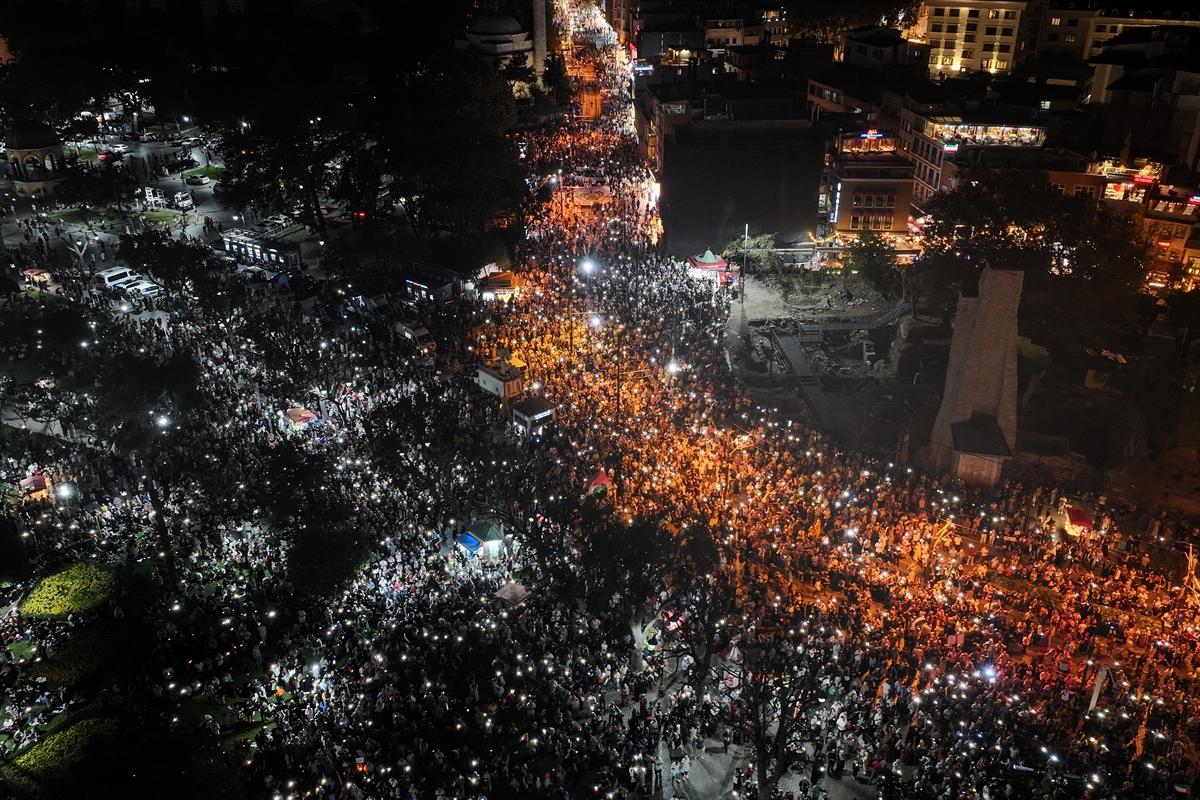
“Be a Light of Hope for Gaza” march in Istanbul, 9 August 2025 – (Anadolu Agency)
Led by the Ankara Solidarity Platform for Palestine, a march was held calling for the establishment of a humanitarian aid corridor to Gaza. After the afternoon prayer, participants gathered in the courtyard of Kocatepe Mosque and marched toward the Grand National Assembly of Türkiye. Banners bearing slogans such as “We cannot stay silent while children die” and “Humanitarian corridor to Gaza, now!” were carried, and participants raised the call of “Allahu Akbar.” At a point near the Grand National Assembly, speakers demanded that a humanitarian corridor for delivering aid by air, sea and land be established by public authorities. They emphasized the need for all political parties to unite in a common stance on this issue.
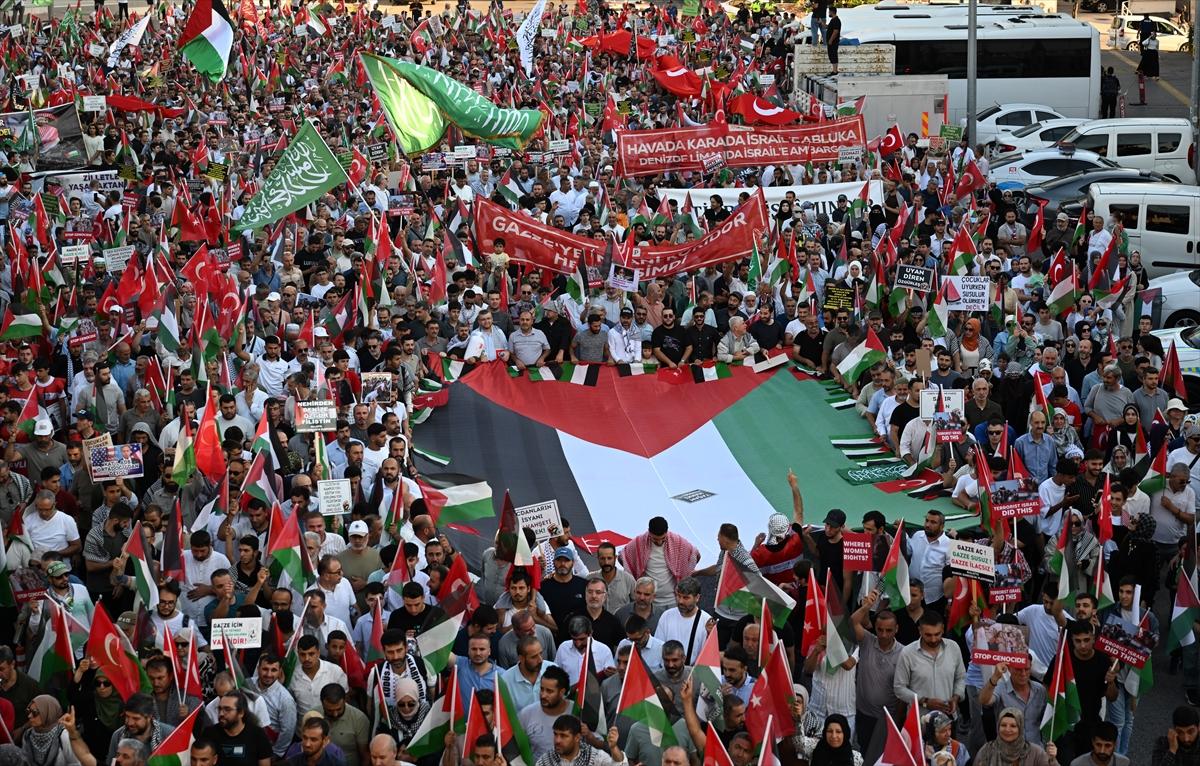
Humanitarian aid corridor march for Gaza
In London’s Parliament Square, a demonstration was held in support of the banned group “Palestine Action.” The action began at 13:00 local time, with participants filling the area with blank banners on which they wrote “I oppose genocide, I support Palestine Action.” The Metropolitan Police intervened and arrested numerous individuals.
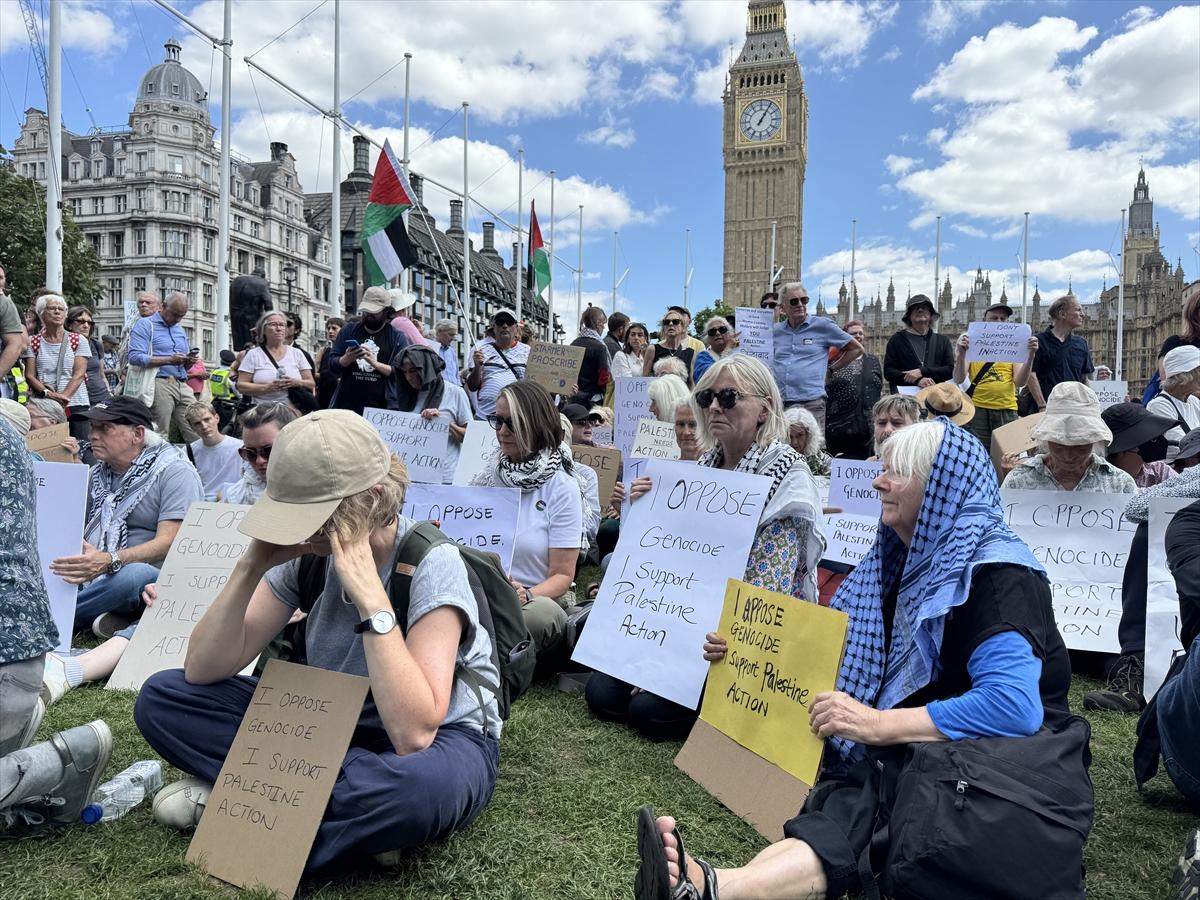
Solidarity demonstration in support of the banned ‘Palestine Action’ group in the United Kingdom, 9 August 2025 – (Anadolu Agency)
As of 10 August, police reported that 365 people had been arrested for supporting the banned organization, with an additional seven individuals detained on other charges, five of whom were arrested for assaulting officers.
In a subsequent update, the total number of arrests rose to 521. Of those detained, 320 were processed at two central locations in Westminster, and those whose identities were verified were released on bail with a condition to report to a police station. They were also prohibited from participating in future actions linked to “Palestine Action.” Individuals who refused to provide identification and the 212 others already released on bail were transported to various detention centers across London.
Previously, on 5 August, police issued a warning that “mass arrests” could occur during the demonstration. The designation of “Palestine Action” as a banned organization came into effect on 5 July, following a process initiated after an action on 20 June in which two British military aircraft at Brize Norton Air Base were sprayed with paint. Membership in or public support of the group may be punished by up to 14 years in prison, while acts such as displaying symbols bearing the group’s name may result in up to six months in prison.
In Spain, demonstrations in support of Palestine were held in several cities, including Madrid. A large crowd gathered in front of the Alfonso XII Monument in Retiro Park, carrying Palestinian flags and chanting slogans. Participants sailed boats on the park’s artificial lake, waving flags and performing pot-banging protests. The read manifesto called for international accountability regarding the situation in Gaza. Protests were planned throughout the day in numerous cities including Seville, Granada, Barcelona, Las Palmas, Tenerife, Segovia, Soria and Bilbao.
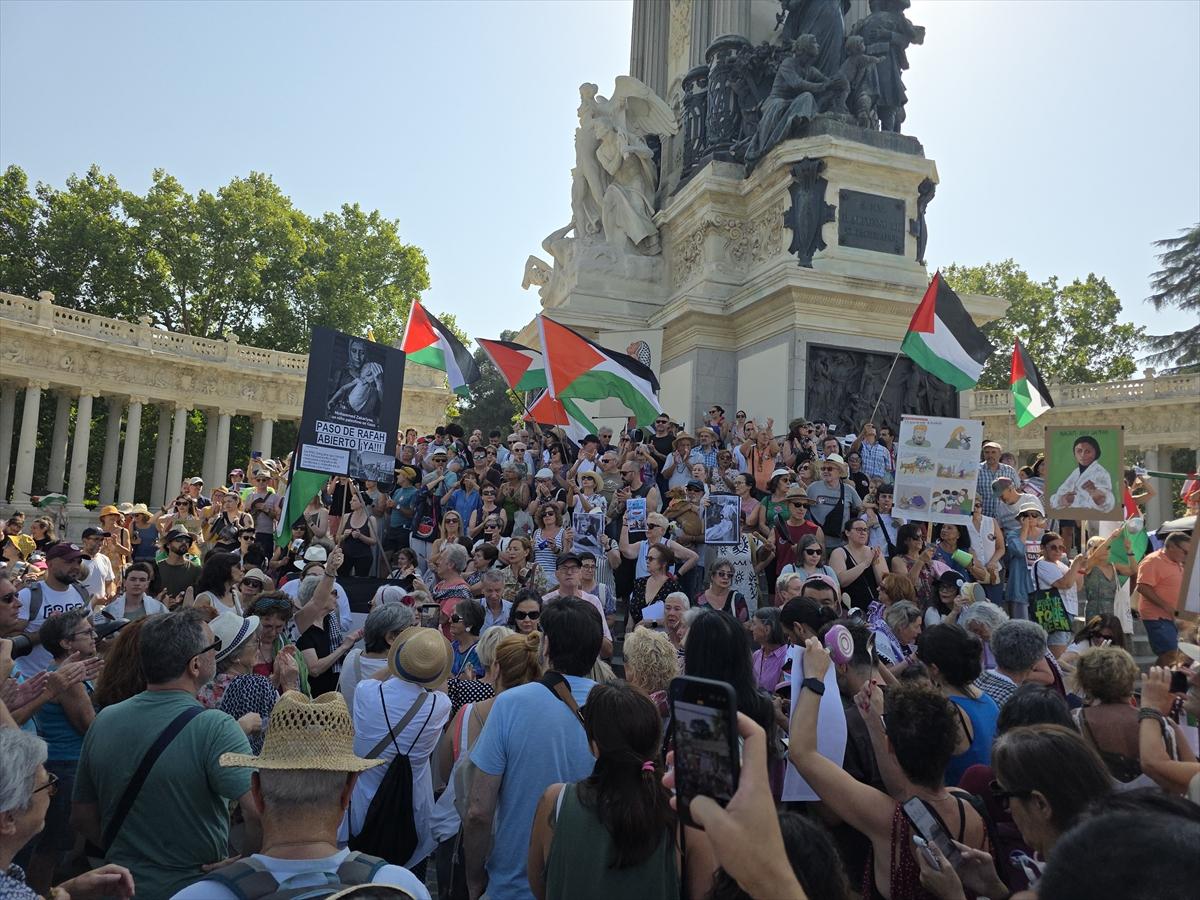
Protests in support of Palestine in Spain, 9 August 2025 – (Anadolu Agency)
In Stockholm, hundreds of people gathered in the Odenplan area and marched to protest the government’s policies and actions regarding Gaza. The group walked to the front of the Swedish Ministry of Foreign Affairs, chanting anti-Israel slogans.
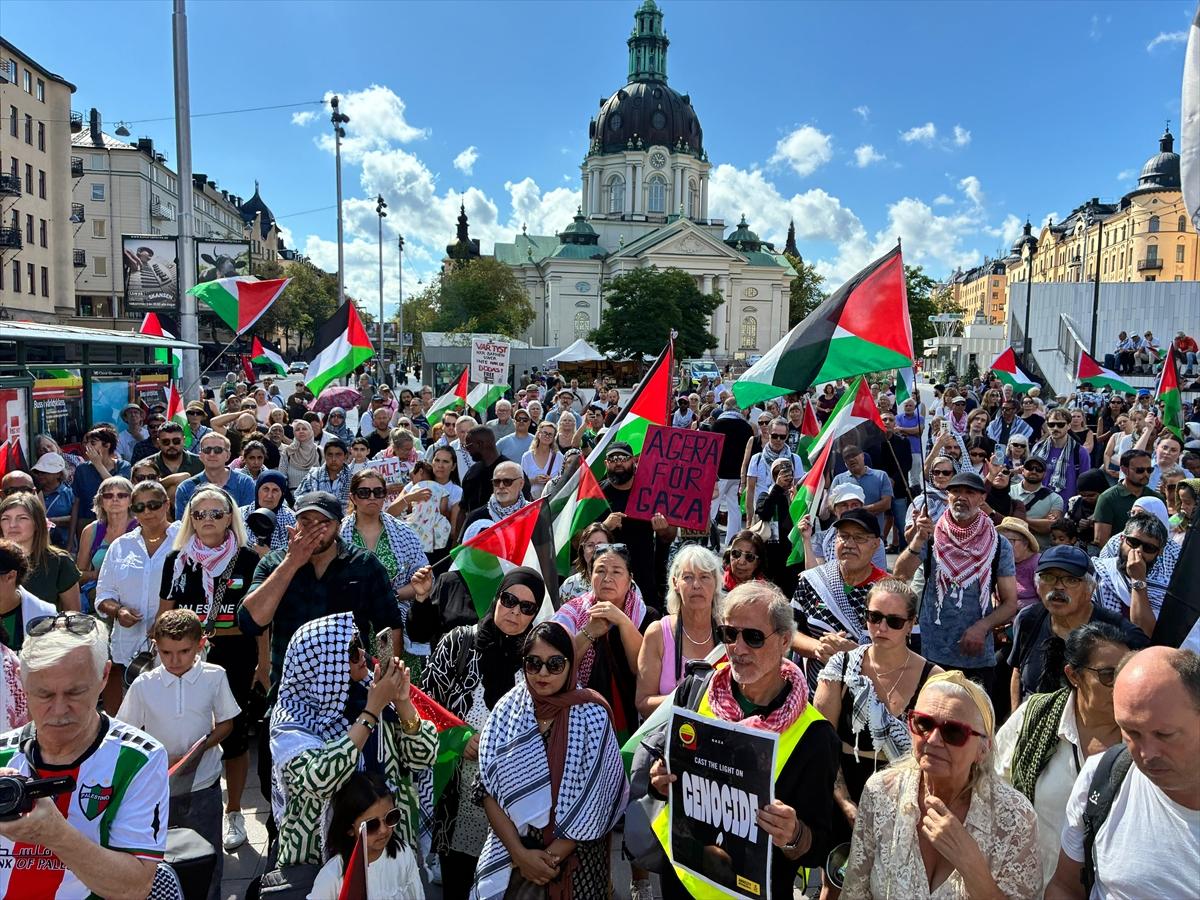
Protests in support of Palestine in Sweden, 9 August 2025 – (Anadolu Agency)
In Amsterdam, hundreds of people gathered at the Bourse Square and marched through Dam Square and Rokin Street to the central train station. Banners carried slogans such as “Ceasefire now,” “Stop the genocide,” and “Palestine will be free from river to sea.” Speeches emphasized the need to open humanitarian corridors to Gaza and for international judicial bodies to intervene. Participants called on the Dutch government to adopt stricter measures.
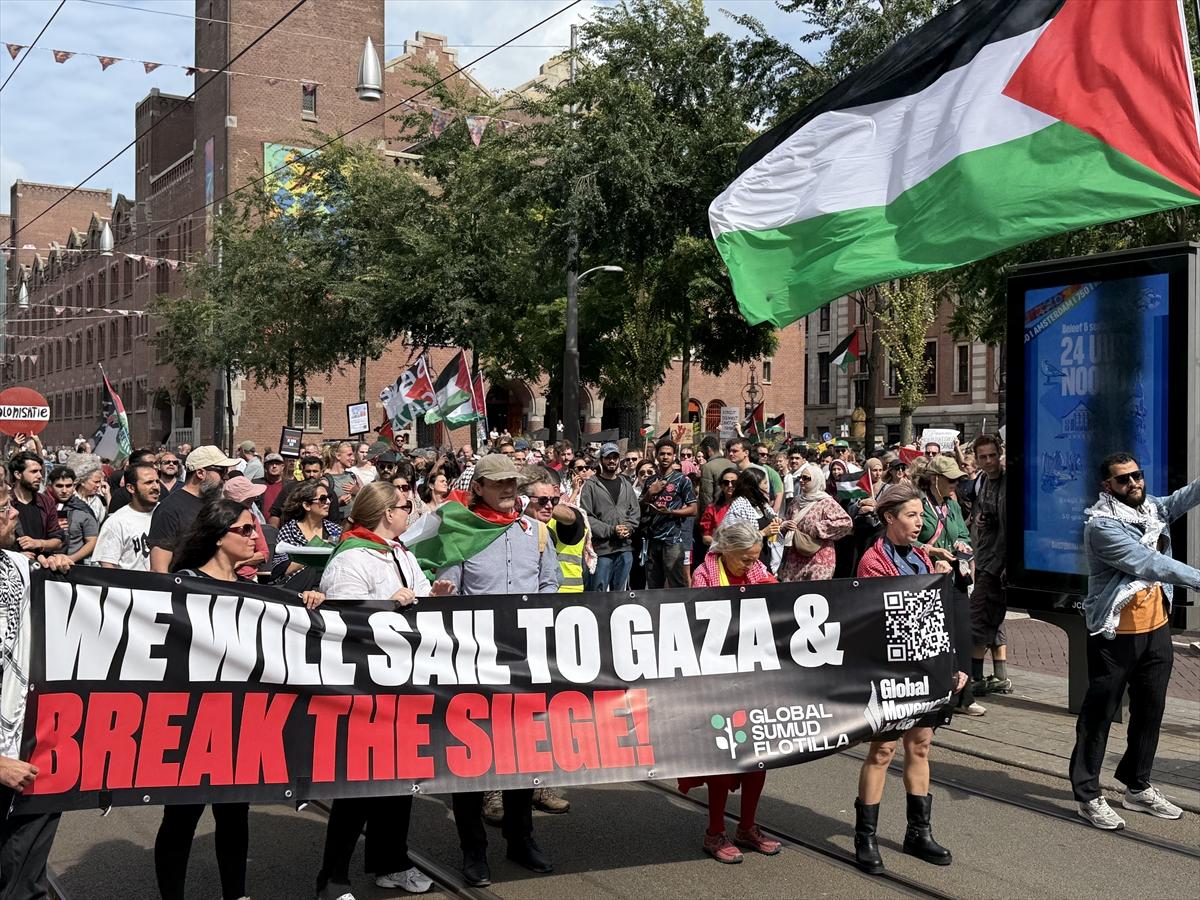
Protests in support of Palestine in the Netherlands, 9 August 2025 – (Anadolu Agency)
In Geneva, thousands gathered in the English Garden to draw attention to the humanitarian crisis in Gaza, particularly famine and shortages, through a sit-in and march. Participants walked across the Mont Blanc Bridge into the city center. Pot-banging protests were conducted, and identity checks on some individuals at the end of the march sparked public reactions. The demonstration concluded peacefully under heavy police presence.
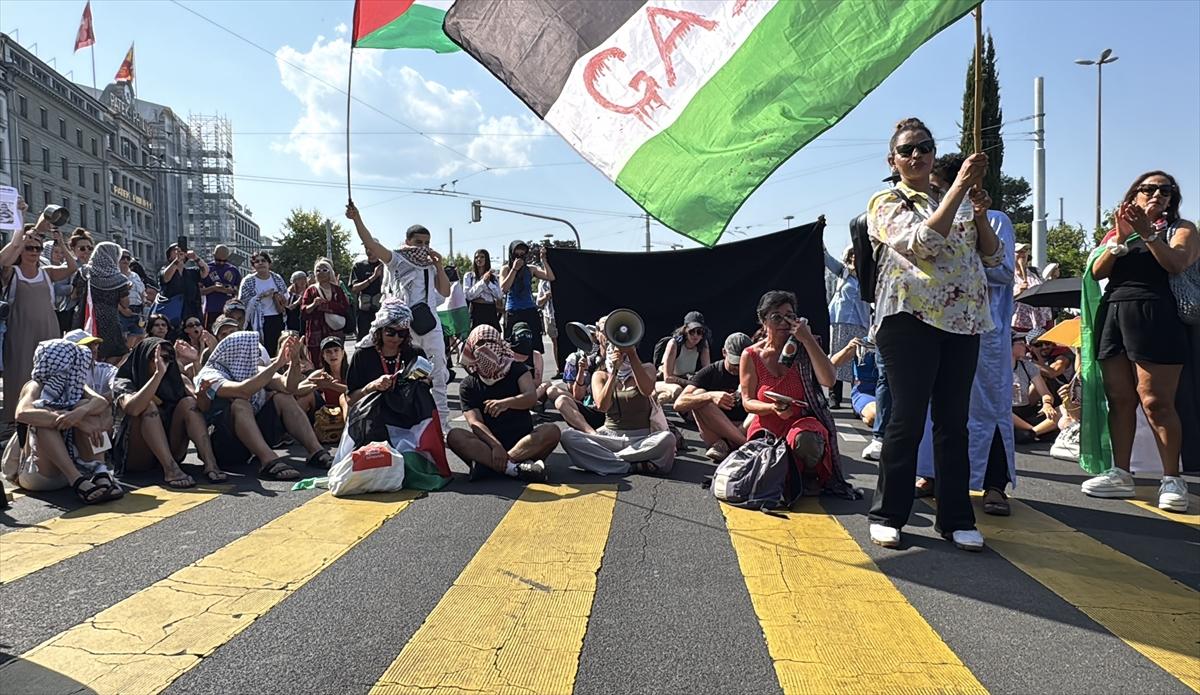
Protests in support of Palestine in Geneva, 9 August 2025 – (Anadolu Agency)
In Berlin’s Mitte district, over 200 people gathered. Banners carried messages such as “Stop the genocide in Gaza,” “Freedom for Palestine,” and “End the starvation of Gaza,” and the German government was criticized. Nearby, a pro-Israel group attempted a counter-protest, prompting police to implement extensive security measures in the area.
Hundreds of people participated in a demonstration at Mother Teresa Square in Pristina. Slogans such as “Freedom for Palestine” and “Freedom for Gaza” were chanted, a large Palestinian flag was unfurled, and photographs of those killed or severely weakened by starvation in Gaza were placed alongside toys around the flag. The demonstration lasted approximately one hour.
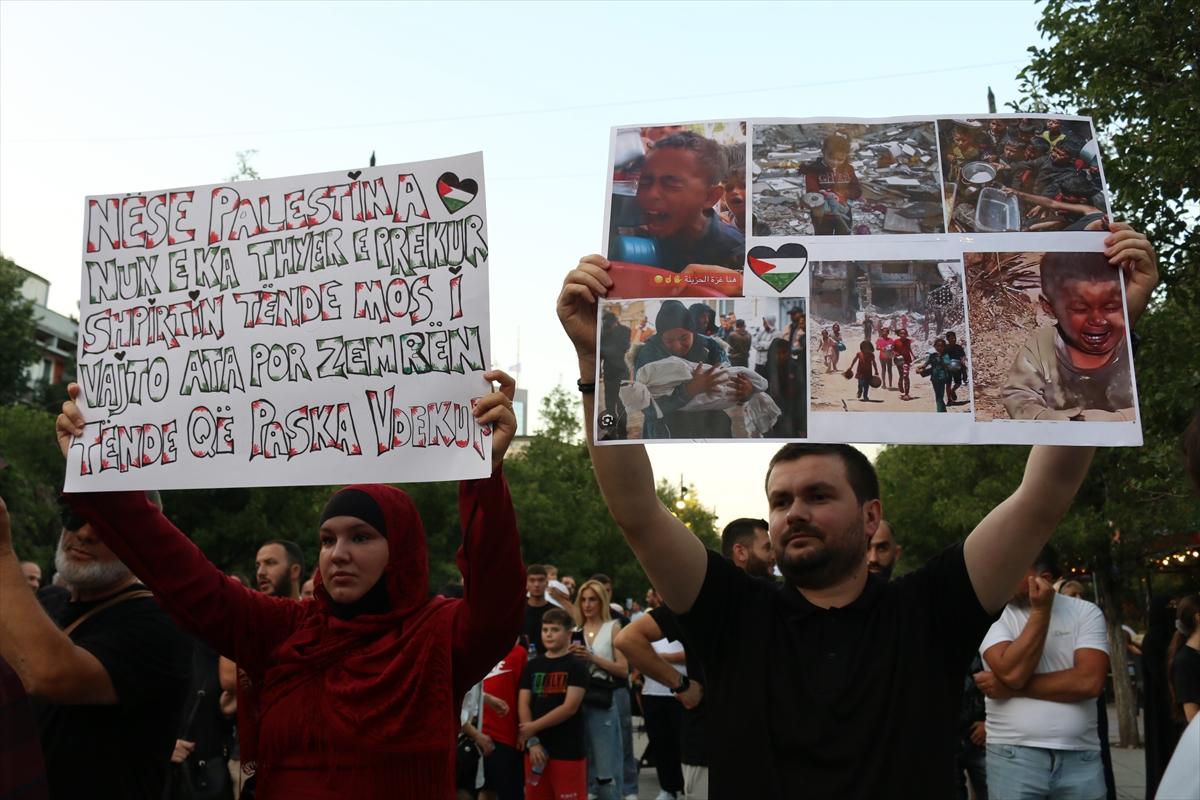
Protests in support of Palestine in Kosovo, 9 August 2025 – (Anadolu Agency)
In Tel Aviv, protests were organized at the call of anti-government groups against the Prime Minister’s policies and the decision to occupy Gaza. Calls were made at the entrance of the Ministry of Defense for soldiers to refuse entry into Gaza. Traffic on the Ayalon Highway was blocked, and three people were arrested following police intervention.
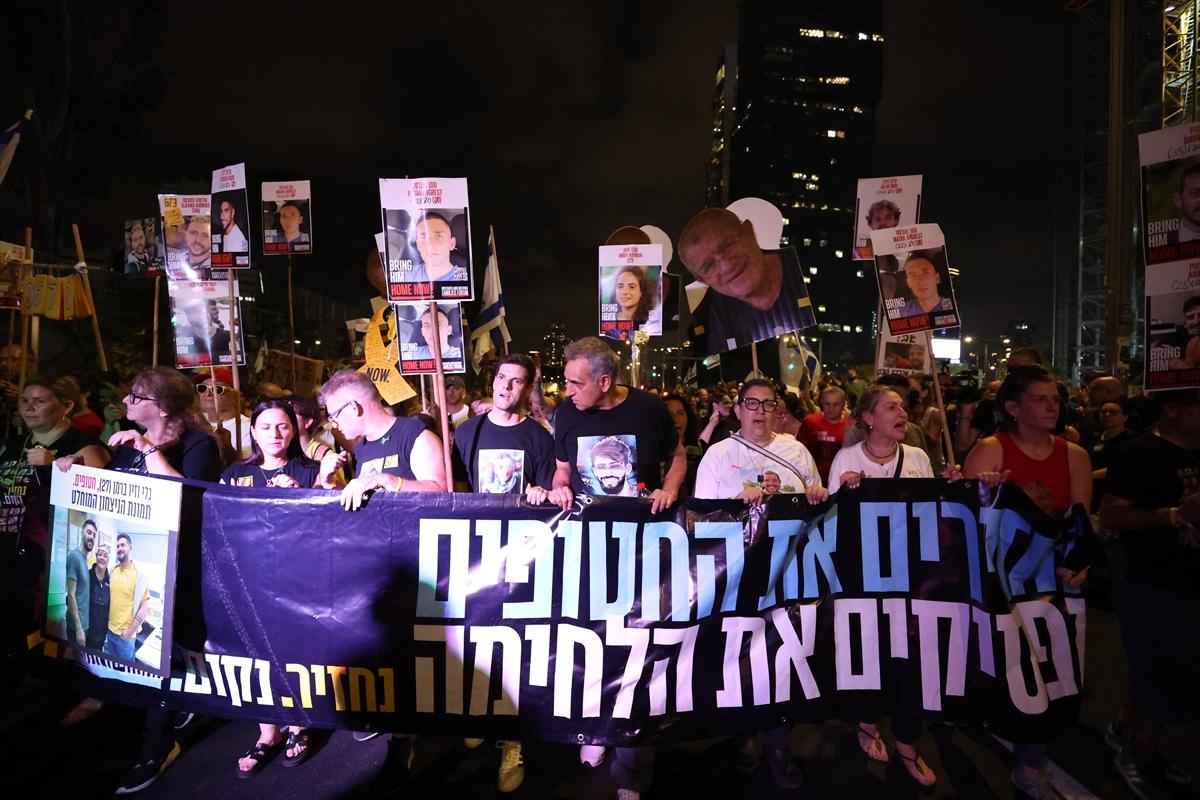
Protests held in Tel Aviv, 9 August 2025 – (Anadolu Agency)
In Tunisia, a protest was organized in front of the Municipal Theater by the Maghreb Resistance Fleet for Breaking the Siege of Gaza, the Palestine Joint Action Coordination, and the “Ansar Palestine” Association. An information tent was set up to introduce the fleet. It was announced that a maritime fleet would depart for Gaza on 4 September. Participants called on governments to take stronger steps to end the siege and halt attacks.
During a march in Tangier, demands were made for the protection of civilians in Gaza, the prevention of plans to displace Palestinians, and the end of imposed starvation. Slogans such as “The people want the liberation of Palestine” and “No to Zionism, no to the United States” were used.
In Santiago, thousands of people marched along the country’s main avenue carrying empty pots to draw attention to the food crisis in Gaza. Banners and signs carried messages related to hunger and human rights. The protest concluded without incident.
Anadolu Ajansı. “Dünyanın Farklı Bölgelerinde Filistin’e Destek Gösterileri Düzenlendi.” Accessed August 12, 2025. https://www.aa.com.tr/tr/dunya/dunyanin-farkli-bolgelerinde-filistine-destek-gosterileri-duzenlendi/3655062
Anadolu Ajansı. “Gazze’ye İnsani Yardım Koridoru Açılması İçin Ankara’da Yürüyüş Düzenlendi.” Accessed August 12, 2025. https://www.aa.com.tr/tr/gundem/gazzeye-insani-yardim-koridoru-acilmasi-icin-ankarada-yuruyus-duzenlendi/3655843
Anadolu Ajansı. “Protesters in the U.S. Demonstrate Against Trump’s New York Hotel Over Famine in Gaza.” Accessed August 12, 2025. https://www.aa.com.tr/tr/dunya/abdde-gostericiler-trumpin-new-yorktaki-otelinin-onunde-gazzedeki-acligi-protesto-etti/3650852
Anadolu Ajansı. “İngiltere’de Yasaklanan Palestine Action Grubuna Destek Eyleminde Gözaltı Sayısı 521’e Çıktı.” Accessed August 12, 2025. https://www.aa.com.tr/tr/dunya/ingilterede-yasaklanan-palestine-action-grubuna-destek-eyleminde-gozalti-sayisi-521e-cikti/3655852
Anadolu Ajansı. “İngiltere’de Yasaklı Palestine Action Grubuna Destek Eyleminde Çok Sayıda Kişi Gözaltına Alındı.” Accessed August 12, 2025. https://www.aa.com.tr/tr/dunya/ingilterede-yasakli-palestine-action-grubuna-destek-eyleminde-cok-sayida-kisi-gozaltina-alindi/3655074
Anadolu Ajansı. “İstanbul’da Gazze’ye Umut Işığı Ol Yürüyüşü Düzenlendi.” Accessed August 12, 2025. https://www.aa.com.tr/tr/gundem/istanbul-da-gazzeye-umut-isigi-ol-yuruyusu-duzenlendi/3655261
The Palestinian Ministry of Health in Gaza announced on 8 August 2025 that 72 people were killed in Israeli attacks over the previous 24 hours. This brings the total number of deaths since 7 October 2023 to 61,330. It was also recorded that 314 people were injured in the last 24 hours, raising the total number of injured to 152,359.
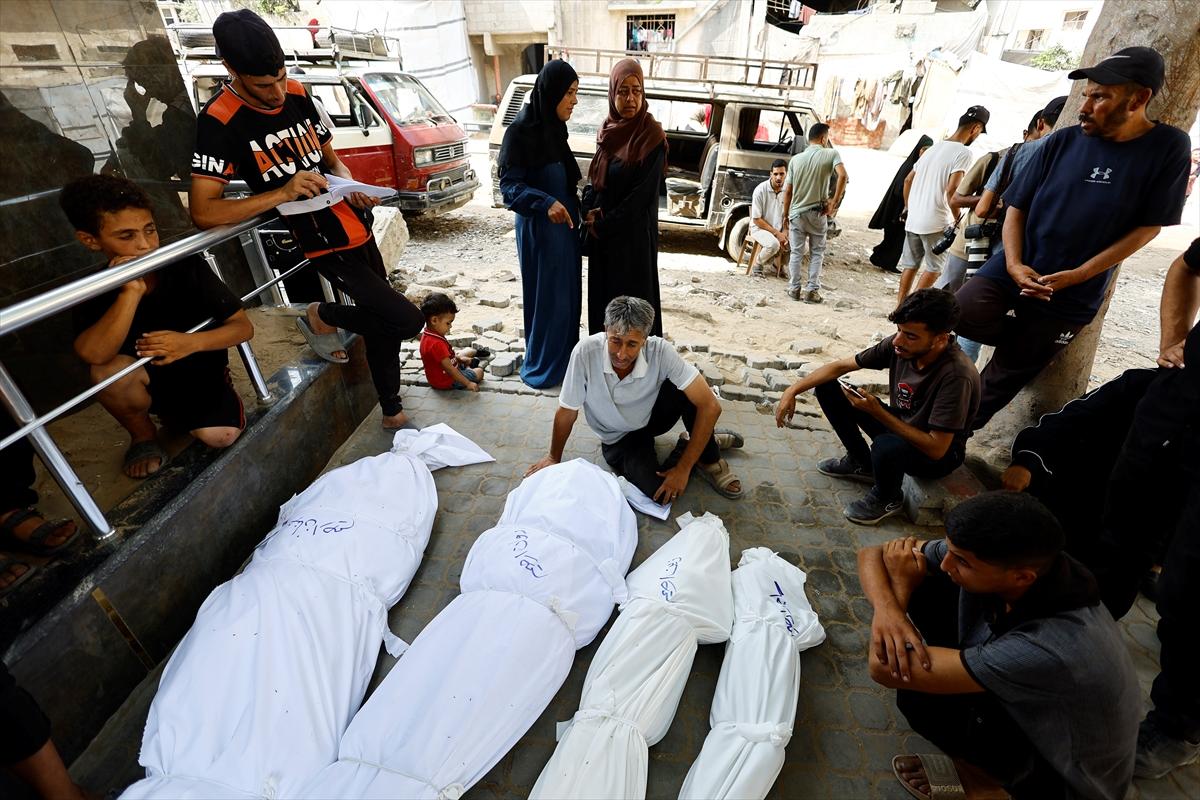
Coffins of those killed in successive Israeli air strikes on the Tel al-Heva area in southern Gaza City, 11 August 2025 – (Anadolu Agency)
The Ministry stated that between the collapse of the ceasefire agreed on 19 January 2025 and 8 August 2025, 9,824 people were killed and 40,318 injured in Israeli attacks. Additionally, between 27 May and 8 August 2025, 1,772 civilians targeting humanitarian aid distribution points established under the Israeli-US-led “Gaza Humanitarian Aid Foundation” were killed and 12,249 injured.
According to a statement issued on 12 August 2025, 100 people were killed and 513 injured in Gaza between 11 and 12 August 2025. This raises the total death toll from 7 October 2023 to 12 August 2025 to 61,599. In the last 24 hours, five people died of starvation.
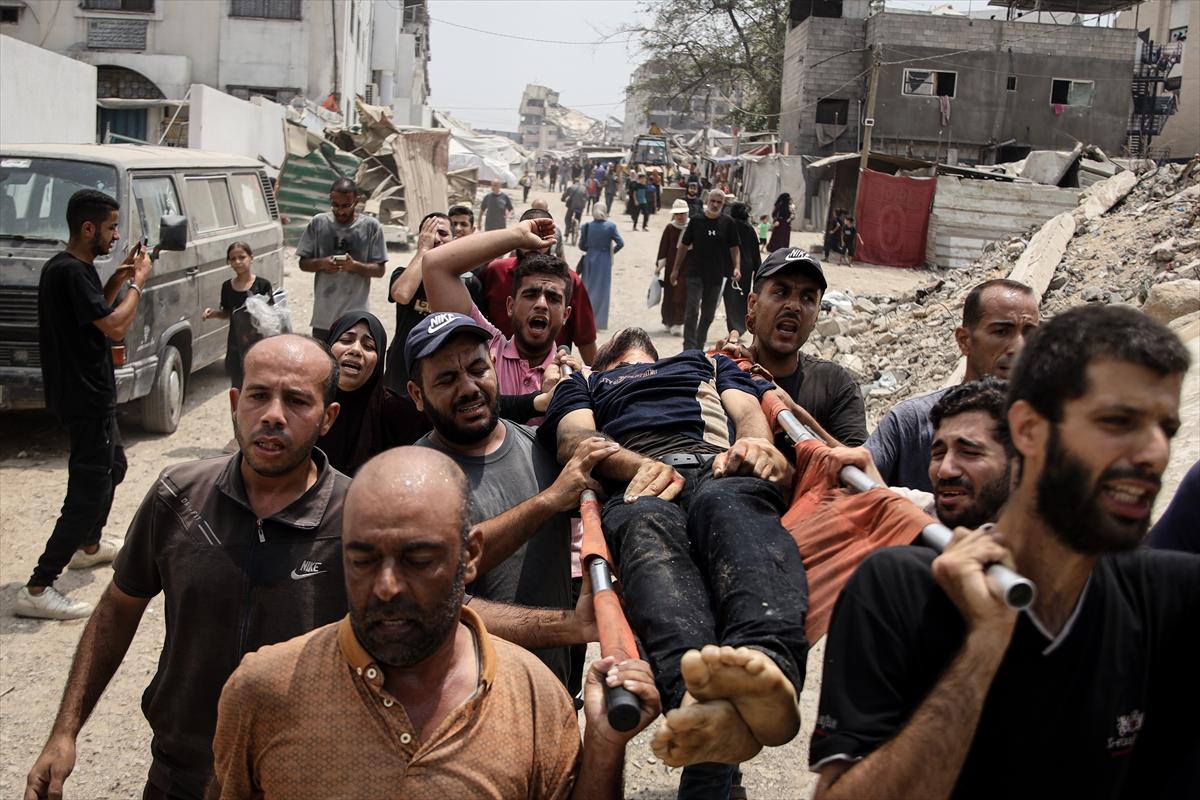
A person killed in an Israeli drone strike on a district in western Gaza City, 12 August 2025 – (Anadolu Agency)
Israeli military attacks targeted numerous locations including the Mevasi area west of Khan Yunis, es-Selasini Street in southern Gaza City, Abbas Junction to the west, civilian vehicles to the east, homes in the Zaytoun neighborhood, and settlements in the Sahaba area. Civilian casualties occurred along the Netzarim Corridor and around Khan Yunis and the Gaza Valley due to fire directed at people awaiting humanitarian aid.
As of 5 August 2025, the World Health Organization reported that 148 people had died in Gaza in 2025 due to malnutrition, including 49 children. It was noted that only 50 percent of hospitals and 38 percent of health centers in Gaza were partially operational, with critical shortages of medicines and medical supplies. Approximately two million people have been displaced, with inadequate shelter conditions increasing the risk of poor hygiene and infectious diseases.
On 15 August 2025, Israeli military attacks in the Gaza Strip killed 18 people. Two people were killed in Rafah while waiting for humanitarian aid, three in the Netzarim Corridor, and three in a drone strike in the southwest of Khan Yunis. A total of six people were killed in Israeli strikes on the Tuffah, Zaytoun, and Rimal neighborhoods of Gaza City, with 13 injured in Rimal.
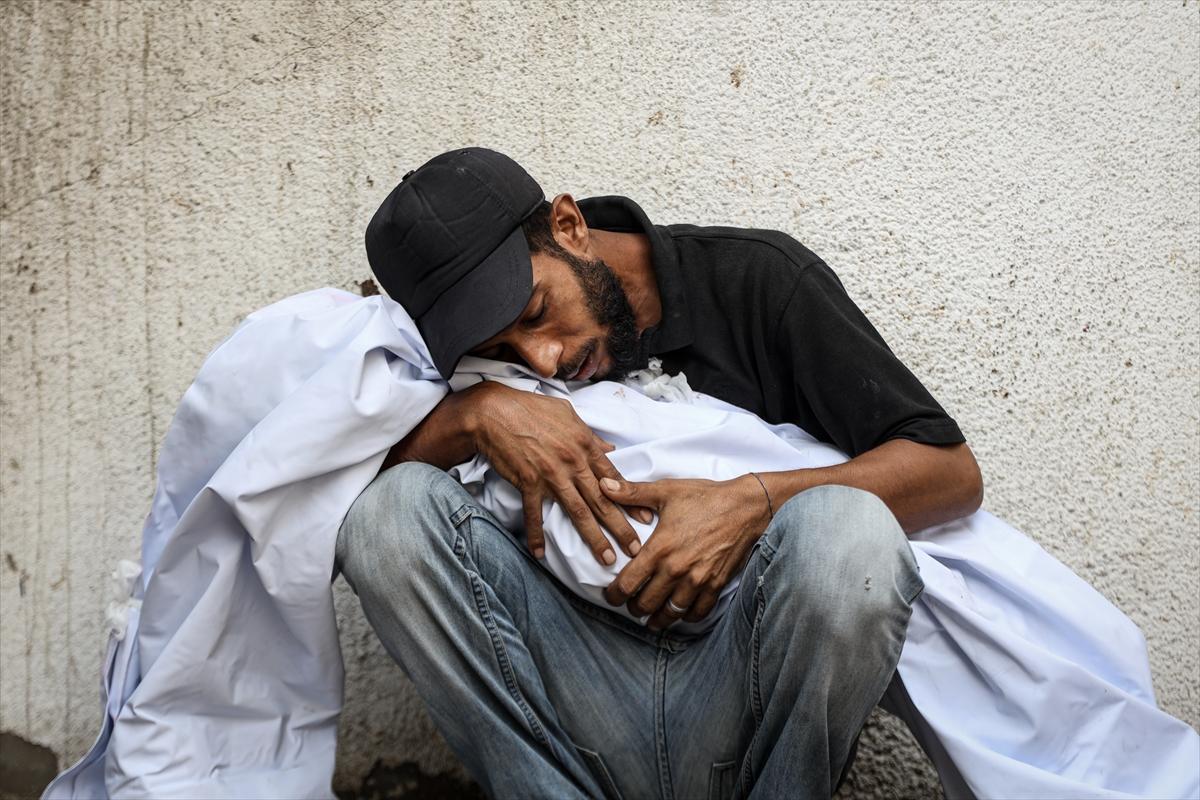
A relative of a person killed in an Israeli attack, 12 August 2025 – (Anadolu Agency)
According to Israeli media reports on 15 August 2025, the Israeli military command issued orders preparing for the occupation of Gaza City. Reserve soldiers may be mobilized in September, with the occupation expected to begin in Gaza City and expand toward refugee camps in the central areas.
On the same day, Hamas condemned Israeli National Security Minister Itamar Ben-Gvir for raiding the cell of Fatah member Mervan al-Barghouti, who is detained in Israel, and threatening him. Hamas described this act as “a sign of hostility toward human values.”
On 11 August 2025, the Israeli military targeted a tent housing journalists near Al-Shifa Hospital in Gaza City. Six journalists were killed in the attack, including Al Jazeera correspondents Enes ash-Sharif and Muhammad Qurayka, and photojournalists Ibrahim Zahir, Mu'min Alive, and Muhammad Nevfel.
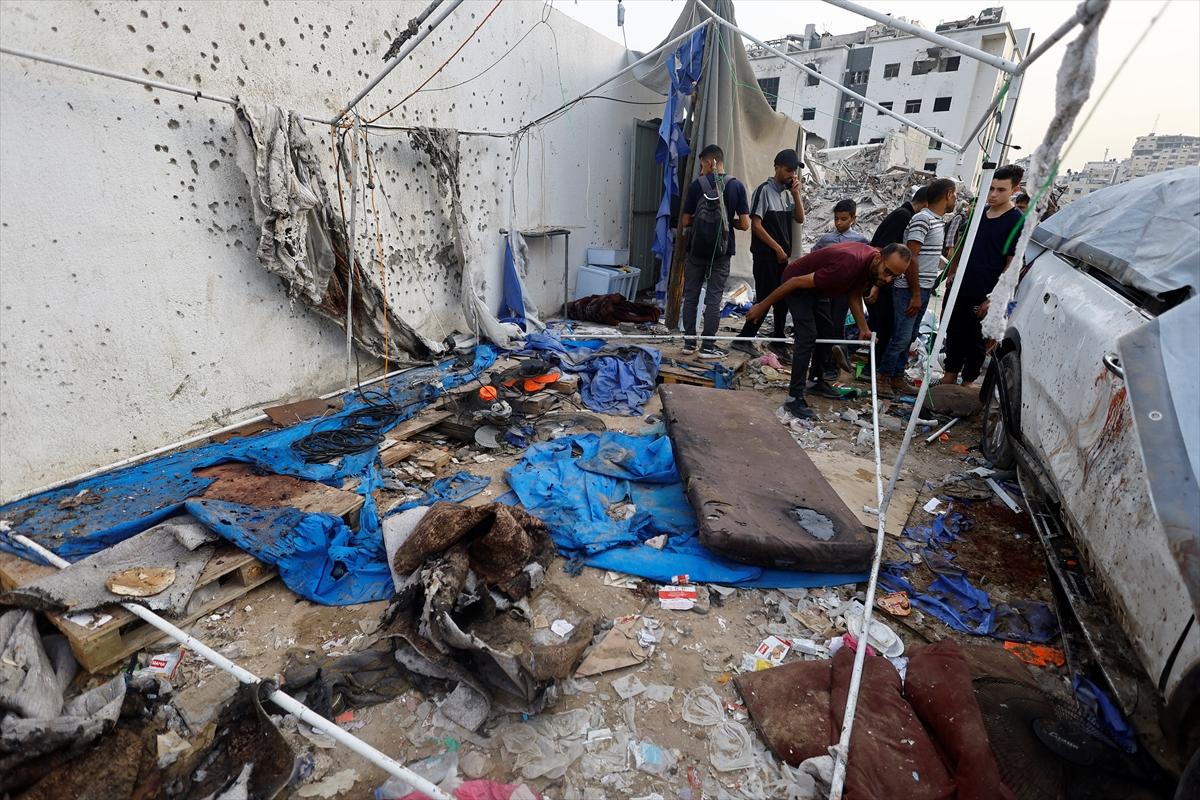
The aftermath of the Israeli air strike on the tent designated for journalists, 11 August 2025 – (Anadolu Agency)
The Israeli military claimed that Enes ash-Sharif was targeted because he was a cell leader in Hamas and had planned rocket attacks. The Palestinian Government Media Office reported that the number of journalists killed in Gaza between 7 October 2023 and 11 August 2025 reached 238. The office described the attack as a “full-fledged war crime” and called on international institutions for urgent protection of journalists.
Deputy Palestinian President Husayn ash-Shaykh condemned the attack, while Hamas labeled the targeting of journalists as “barbarism.” Al Jazeera stated that the strike was an attempt to silence voices ahead of the occupation of Gaza. The United Nations Office of the High Commissioner for Human Rights condemned the killing of the six journalists and demanded that safe access for all journalists to Gaza be guaranteed.
Enes ash-Sharif’s will was published after his death. In it, he addressed his family and the public, urging that Gaza not be forgotten.
On 15 August 2025, Nasser Hospital in Khan Yunis, southern Gaza Strip, became submerged in sewage water following Israeli air strikes that damaged the sewage network. The damage caused flooding in parts of the hospital, including the emergency department, forcing doctors and nurses to move through sewage water.
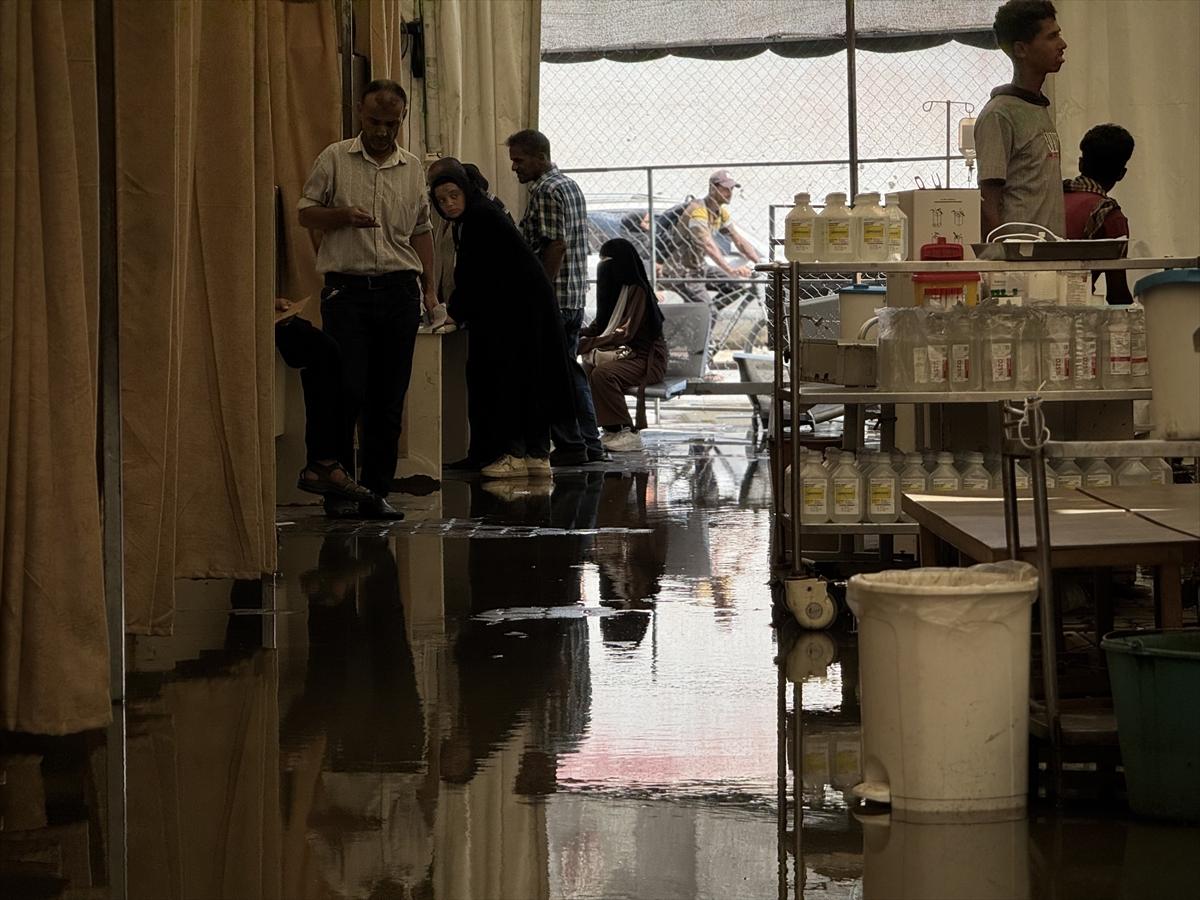
Sewage flooding inside Nasser Hospital in the city due to damage from attacks, 15 August 2025 – (Anadolu Agency)
Dr. Khalid Ahmed, Head of the Internal Medicine Department at the hospital, told the press that the sewage network was located in areas marked as “red zones” by the Israeli military, where access was prohibited, making repairs impossible. Ahmed stated that patients connected to oxygen machines were being treated in the flooded ward, and transferring them to other departments or hospitals was not possible because the hospital was operating at full capacity.
Ahmed described the situation as a “direct threat,” warning of high risks of disease and infection, stating that medical operations under these conditions could not continue and calling on international organizations for immediate intervention.
Munir al-Bursh, Director-General of the Palestinian Ministry of Health in Gaza, announced on 14 August 2025 that four more people had died in the past 24 hours due to starvation and malnutrition. With these latest deaths, the total number of people who have died from starvation in Gaza between 7 October 2023 and 14 August 2025 reached 239. Of these, 106 were children.
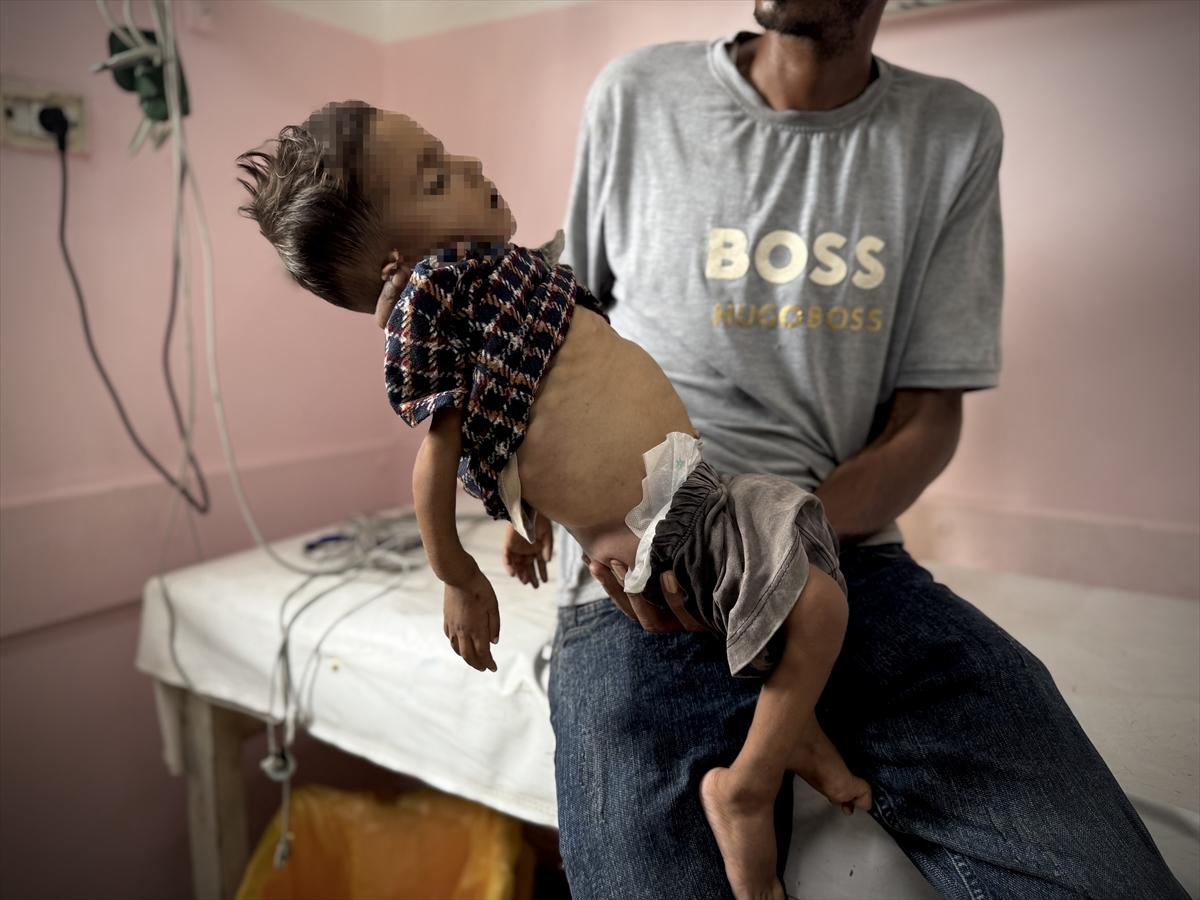
A five-year-old child who died from malnutrition in Khan Yunis, 12 August 2025 – (Anadolu Agency)
According to statements issued on the same date, the total number of people killed in Gaza due to Israeli attacks rose to 61,776, with 154,906 injured. Thousands of bodies remain buried under rubble in the Gaza Strip.
Between the collapse of the ceasefire agreed on 19 January 2025 and 14 August 2025, 10,251 people were killed and 42,865 injured. Additionally, between 27 May and 14 August 2025, 1,881 civilians targeting Israeli-US-led aid distribution points were killed and 13,863 injured.
The World Health Organization reported that more than 14,800 patients in Gaza still lack access to life-saving medical care. The United Nations stated that water shortages and extreme heat in the region threaten public health. 108 international humanitarian organizations have called for an end to Israel’s policy of using aid as a weapon.
Anadolu Ajansı. “İsrail Bombardımanı Sonrası Gazze’deki Nasır Hastanesi Kanalizasyon Suları Altında Kaldı.” Accessed August 15, 2025. https://www.aa.com.tr/tr/dunya/israil-bombardimani-sonrasi-gazzedeki-nasir-hastanesi-kanalizasyon-sulari-altinda-kaldi/3660103
Anadolu Ajansı. “İsrail’in Gazze Şeridi’ne Düzenlediği Saldırılarda 18 Filistinli Hayatını Kaybetti.” Accessed August 15, 2025. https://www.aa.com.tr/tr/dunya/-israilin-gazze-seridine-duzenledigi-saldirilarda-18-filistinli-hayatini-kaybetti/3660234#
Anadolu Ajansı. “İsrail’in Gazze’ye Saldırıları – Can Kaybı ve Yıkım (İnfografik).” Accessed August 15, 2025. https://www.aa.com.tr/tr/info/infografik/47484
Anadolu Ajansı. “İsrail’in Gazze’ye Saldırılarında Can Kaybı Son 24 Saatte 100 Artarak 61 Bin 599’a Çıktı.” Accessed August 15, 2025. https://www.aa.com.tr/tr/dunya/israilin-gazzeye-saldirilarinda-can-kaybi-son-24-saatte-100-artarak-61-bin-599a-cikti/3657132
Anadolu Ajansı. “İsrail’in Gazze’ye Saldırılarında Can Kaybı Son 24 Saatte 72 Artarak 61 Bin 330’a Çıktı.” Accessed August 15, 2025. https://www.aa.com.tr/tr/dunya/israilin-gazzeye-saldirilarinda-can-kaybi-son-24-saatte-72-artarak-61-bin-330-a-cikti/3654332
Anadolu Ajansı. “İsrail’in Kitliği Dayattığı Gazze’de Son 24 Saatte 4 Kişi Daha Açlıktan Hayatını Kaybetti.” Accessed August 15, 2025. https://www.aa.com.tr/tr/dunya/israilin-kitligi-dayattigi-gazzede-son-24-saatte-4-kisi-daha-acliktan-hayatini-kaybetti/3659124#
Anadolu Ajansı. “İsrail’in Şifa Hastanesi Yakınlarında Gazetecilerin Çadırına Düzenlediği Saldırıda 6 Gazeteci Hayatını Kaybetti.” Accessed August 15, 2025. https://www.aa.com.tr/tr/dunya/israilin-sifa-hastanesi-yakinlarinda-gazetecilerin-cadirina-duzenledigi-saldirida-6-gazeteci-hayatini-kaybetti/3655945
On 12 August 2025, a memorial event was held in Washington DC, the capital of the United States, to honor journalists killed by Israel in Gaza. Pro-Palestinian demonstrators gathered outside the headquarters of major media outlets such as Fox and NBC. Protesters condemned Israel’s attacks on journalists. During the event, six journalists who died in an airstrike on a tent near Shifa Hospital in Gaza on 10 August 2025 were commemorated. Among those killed in the strike were Al Jazeera reporters Enes al-Sharif and Muhammad Kurayka. The event also highlighted that the number of journalists killed in Gaza since 7 October 2023 had reached 238.
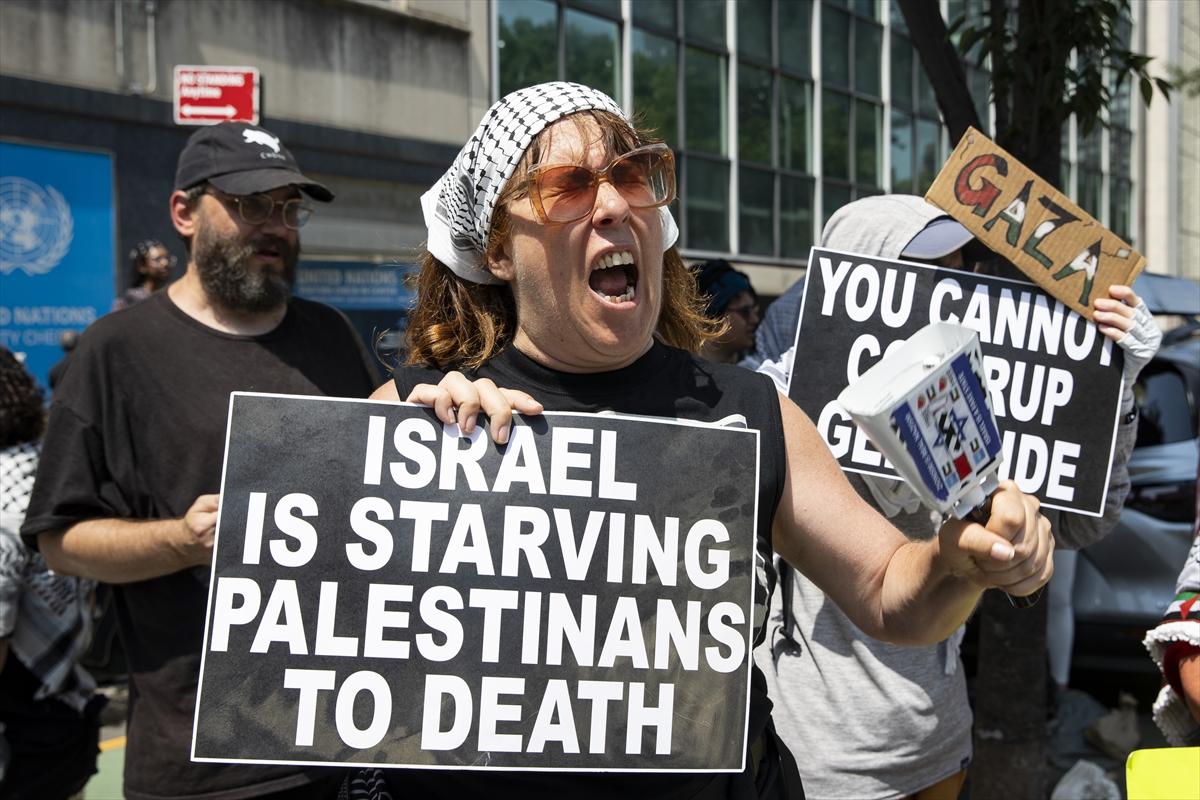
Pro-Palestinian demonstration in New York, 12 August 2025 - (Anadolu Ajansı)
On 12–13 August 2025, a demonstration was held outside the United Nations Headquarters in New York City. Pro-Palestinian demonstrators protested against Israel’s attacks on Gaza and the targeting of journalists. Protesters carried Palestinian flags and expressed their anger by banging pots and pans. Banners bearing slogans such as “You cannot cover up genocide,” “Israel is killing all journalists to silence the truth,” and “There can be no peace on stolen land” were displayed. The New York Police Department arrested a large number of demonstrators.
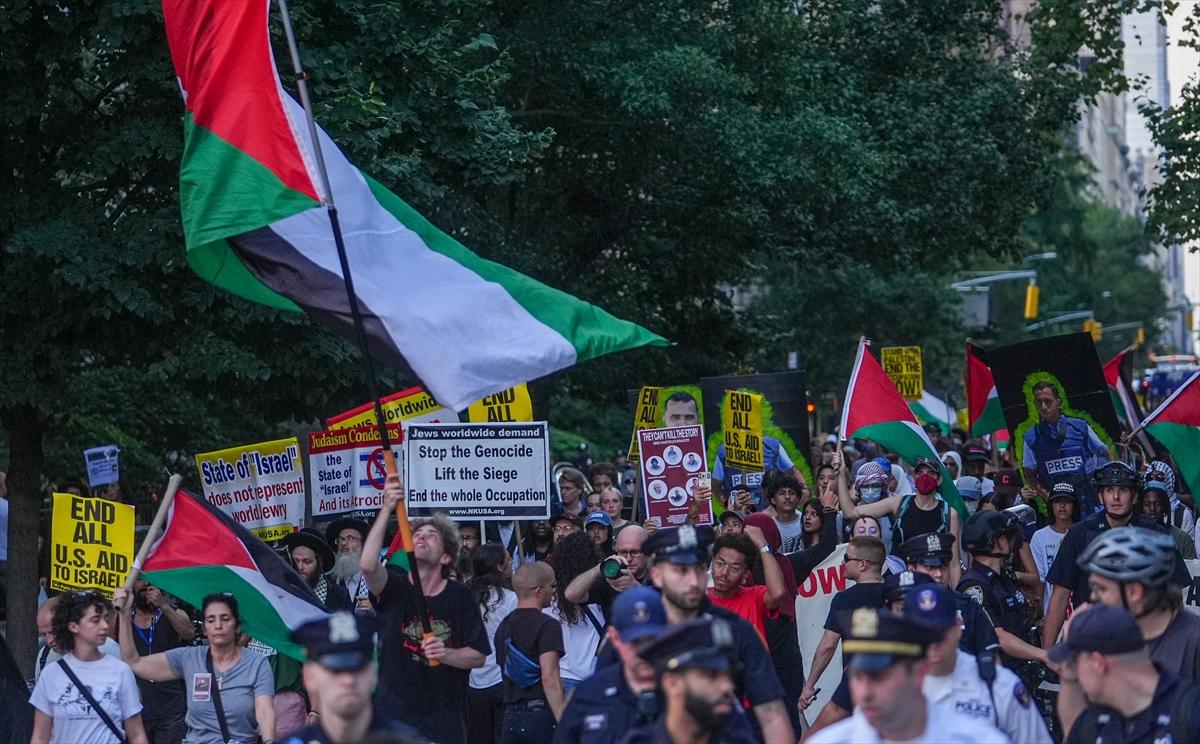
Anti-Israel demonstration outside the New York Times building, 13 August 2025 - (Anadolu Ajansı)
On 15 August 2025, hundreds of people gathered on the coast of Santa Cruz in the state of California. Demonstrators dressed in red clothing to form a “Red Line” along the shore, protesting Israel’s attacks on Gaza and its blockade.
Pro-Palestinian demonstrators in California form the ‘Red Line’ to protest Israel’s attacks on Gaza, 15 August 2025 - (Anadolu Ajansı)
On 12 August 2025, hundreds of people gathered at Odenplan Square in Stockholm, Sweden’s capital, to protest Israel’s attacks in Gaza. Demonstrators criticized the Swedish government for its silence and carried banners reading “Children in Gaza are being killed,” “Schools and hospitals are being bombed,” and “End the food shortage.” Protesters marched chanting slogans toward the Swedish Ministry of Foreign Affairs. On the same day, hundreds participated in a demonstration at Neptune Square in Berlin, Germany’s capital. Demonstrators carried Palestinian flags and chanted slogans such as “This is not war, it is genocide,” “Boycott Israel,” and “Children in Gaza want to live.” German police implemented extensive security measures, arrested numerous demonstrators, and used force that resulted in serious injuries to one woman.
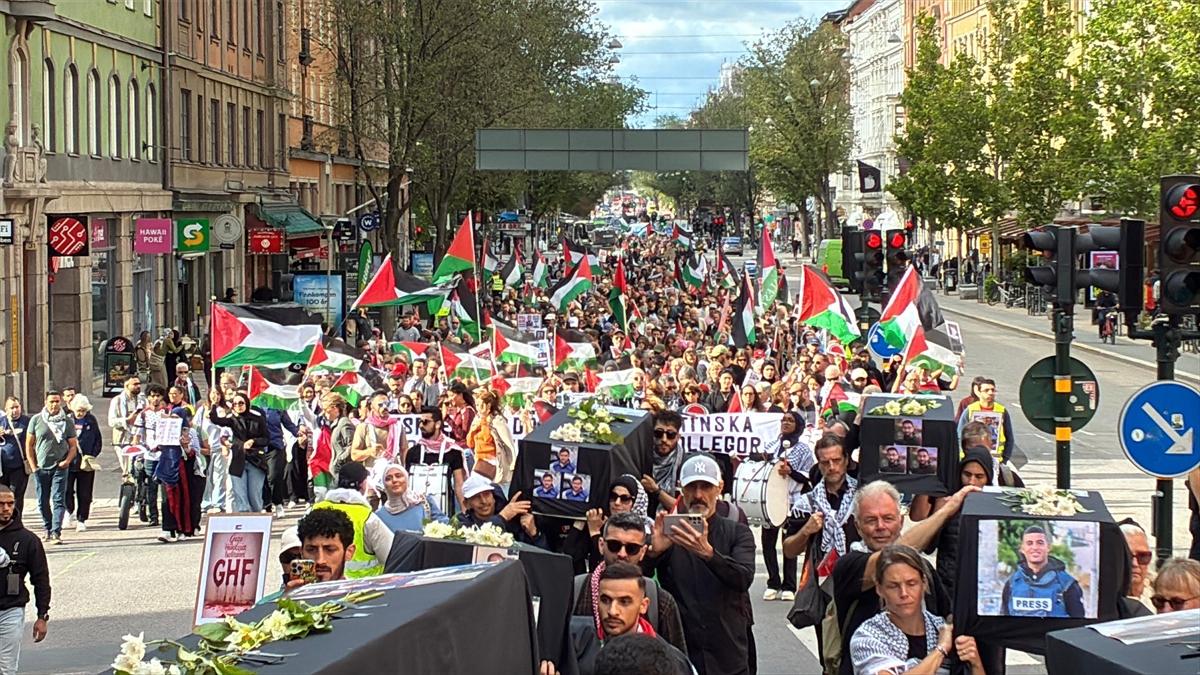
Protest in Sweden against Israel’s attacks on Gaza and journalists, 12 August 2025 - (Anadolu Ajansı)
On 16 August 2025, hundreds gathered again at Odenplan Square in Stockholm to protest Israel’s attacks on Gaza and journalists. Participants wore black clothing and carried symbolic coffins in memory of Al Jazeera reporter Enes al-Sharif and his colleagues. Banners reading “Freedom for Palestine, No to the Netanyahu and Trump plan” were displayed. Demonstrators marched toward the Swedish Ministry of Foreign Affairs. Some activists who spoke at the event condemned Israel’s attacks, backed by U.S. support, and criticized the targeting of civilians.
On 14 August 2025, a solidarity vigil for Gaza was held outside the Dutch Ministry of Foreign Affairs in The Hague. Diplomats, civil servants, and citizens participated in the demonstration, condemning Israel’s genocide in Gaza and the deliberate starvation of its population. Protesters carried banners reading “Stop the genocide,” “Silence kills,” “Civil servants against genocide,” and “Diplomats against genocide.” During the event, the names of 243 journalists killed in Gaza—including Al Jazeera reporter Enes al-Sharif—were read aloud. Former ambassador and former minister Jan Pronk also attended. Participants called on the Dutch government to impose economic, military, and political sanctions on Israel. A two-minute silence was observed at the end of the demonstration in honor of those killed in Gaza.
On 12 August 2025, Dutch activists protested outside a Microsoft data center near Amsterdam against Israel’s storage of private phone conversations of Palestinians. The group “Geef Tegengas” blocked the building’s entrance by sitting down, hung a Palestinian flag on its gate, and some members climbed onto the roof. The action followed revelations that Israel had stored approximately 200 million hours of Palestinian phone conversations on Microsoft servers in the Netherlands. Investigations indicated that this data was used by the Israeli military for intelligence in air and ground attacks. Activists stated that Microsoft was an “accomplice” in this process.
On 16 August 2025, 73 Protestant church boards in the Netherlands issued a public appeal to the government, calling for an end to arms shipments to Israel and recognition of a Palestinian state. The appeal was published in the newspaper Trouw and received support from various Protestant groups and the Dutch National Mennonite Church. The statement noted that in the past 24 hours, food shortages in Gaza had caused 11 deaths. The churches urged the Dutch government to pressure Israel for a ceasefire, provide humanitarian aid to Gaza, halt violence in the West Bank, and initiate efforts for the release of hostages.
On 16 August 2025, demonstrators gathered at the France-Germany border in Strasbourg, France, to protest Israel’s attacks on civilians and the famine in Gaza. The demonstration conveyed messages of support for Palestine and demanded an end to the attacks.
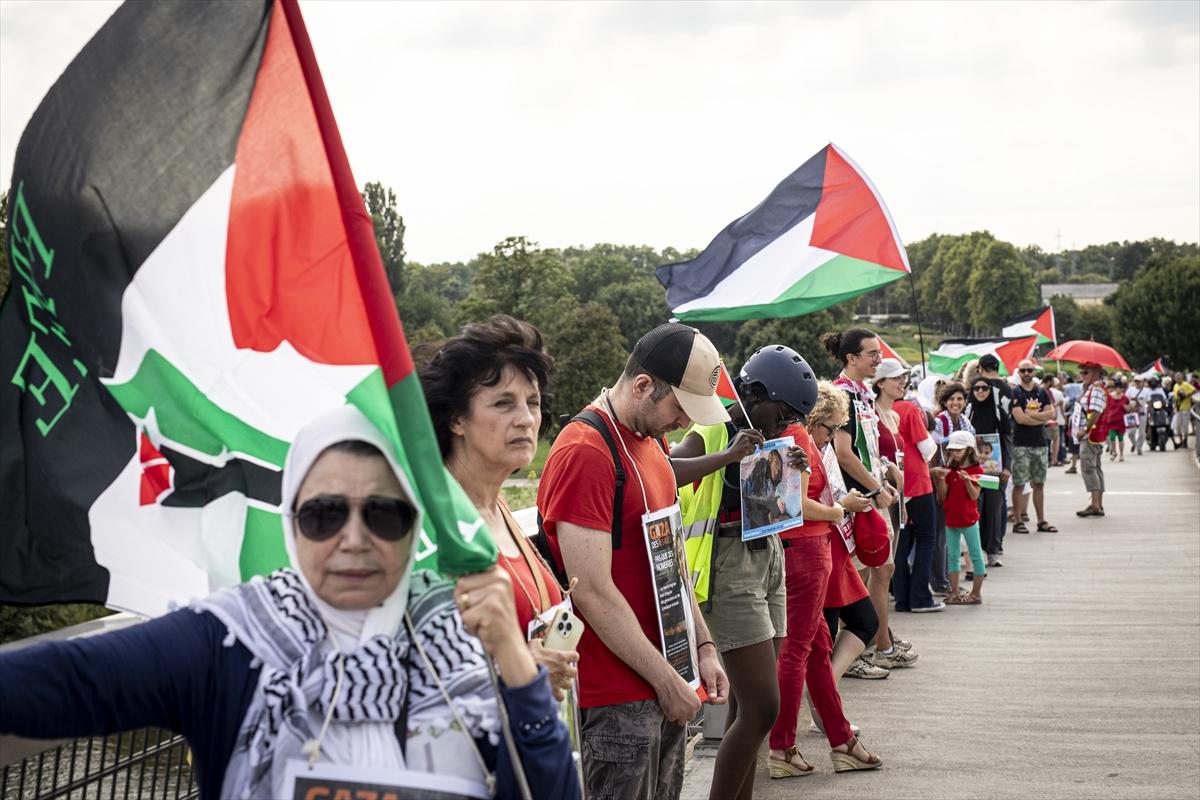
Protest against Israel’s attacks and the famine in Gaza at the France-Germany border, 16 August 2025 - (Anadolu Ajansı)
In Paris, the capital of France, hundreds of people demonstrated on 13 August 2025 to honor journalists killed in Gaza. Demonstrators carried photographs of slain media personnel and condemned Israel’s attacks. Messages of support for Palestine were also displayed during the action.
On 14 August 2025, hundreds of people gathered at Piraeus Port near Athens, Greece, to protest a passenger ship owned by Israel. The Greek Communist Party, leftist groups, unions, and pro-Palestinian activists blocked the ship’s passengers from disembarking. Approximately 500 people carried Palestinian flags and photographs of children killed in Gaza. The protest ended peacefully; according to news websites, some passengers on the ship were Israeli soldiers.
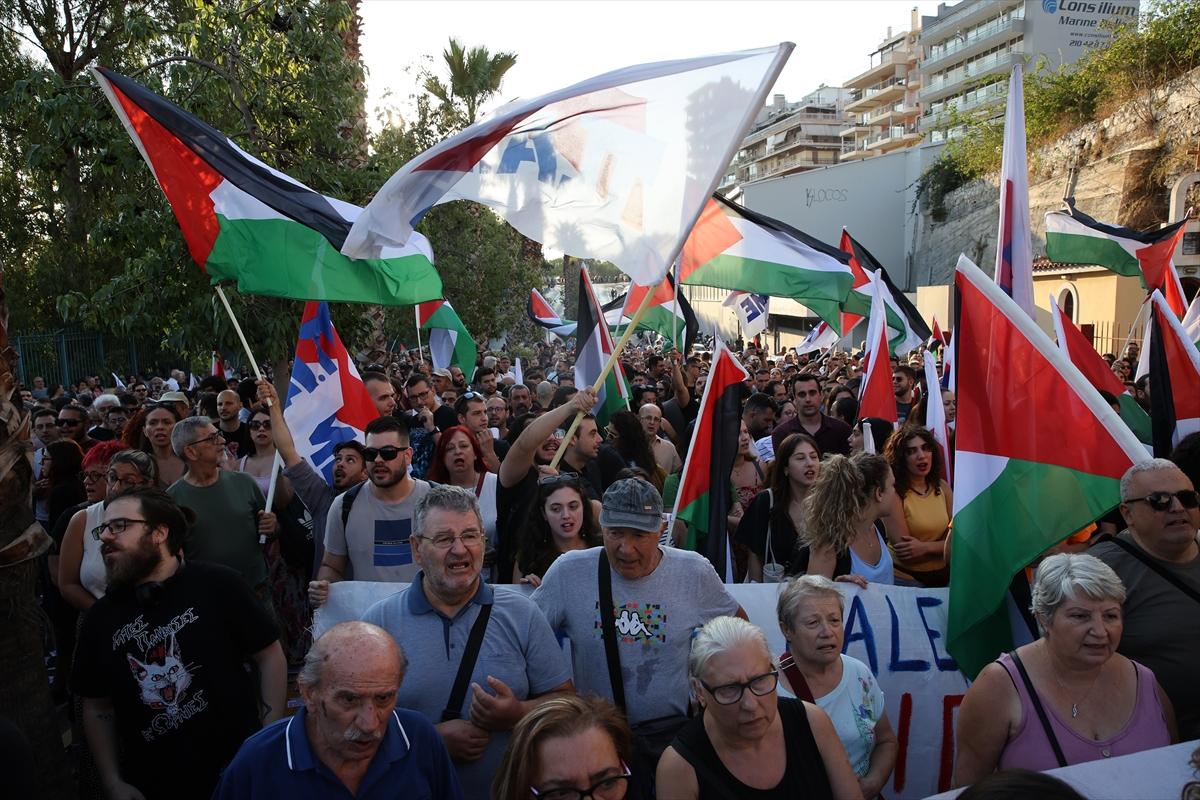
Pro-Palestinian demonstrators in Greece protest a ship carrying Israelis at Piraeus Port, 14 August 2025 - (Anadolu Ajansı)
On 17 August 2025, a widespread general strike was held in Israel in protest against the government led by Prime Minister Benjamin Netanyahu’s decision to invade Gaza. Universities, 75 local authorities, some labor unions, and opposition parties supported the strike. Tens of thousands took to the streets in numerous cities, beginning with Tel Aviv. Demonstrators demanded an immediate ceasefire and the signing of a prisoner exchange agreement. Traffic on Tel Aviv’s Ayalon Highway, routes leading to Jerusalem, and several highways in northern and central Israel were closed. Israeli police used water cannons in Jerusalem and arrested a total of 32 demonstrators nationwide. Employees of high-tech companies also joined the strike, closing Kaplan and Begin streets.
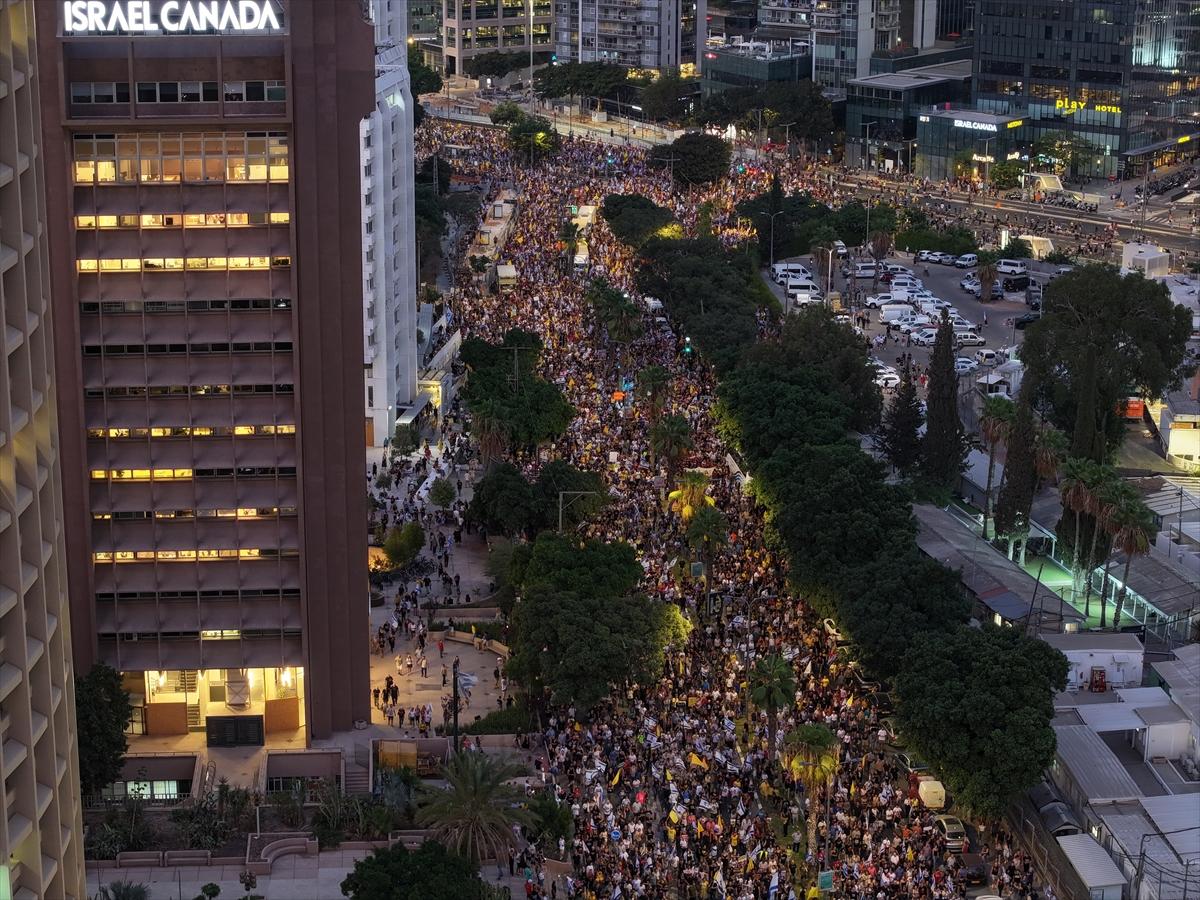
Anti-government general strike protests in Israel, 17 August 2025 - (Anadolu Ajansı)
According to a statement by the platform representing families of hostages, over one million people participated in the general strike and related protests. Tens of thousands gathered at “Hostages Square” in Tel Aviv. Demonstrators carried banners declaring they would not allow the government to sacrifice hostages. Due to the strike, numerous vital facilities, private institutions, municipalities, and major corporations suspended operations. Transportation was severely disrupted, with train services nearly halted entirely. Israeli media reported that the strike had significantly affected daily life across the country.
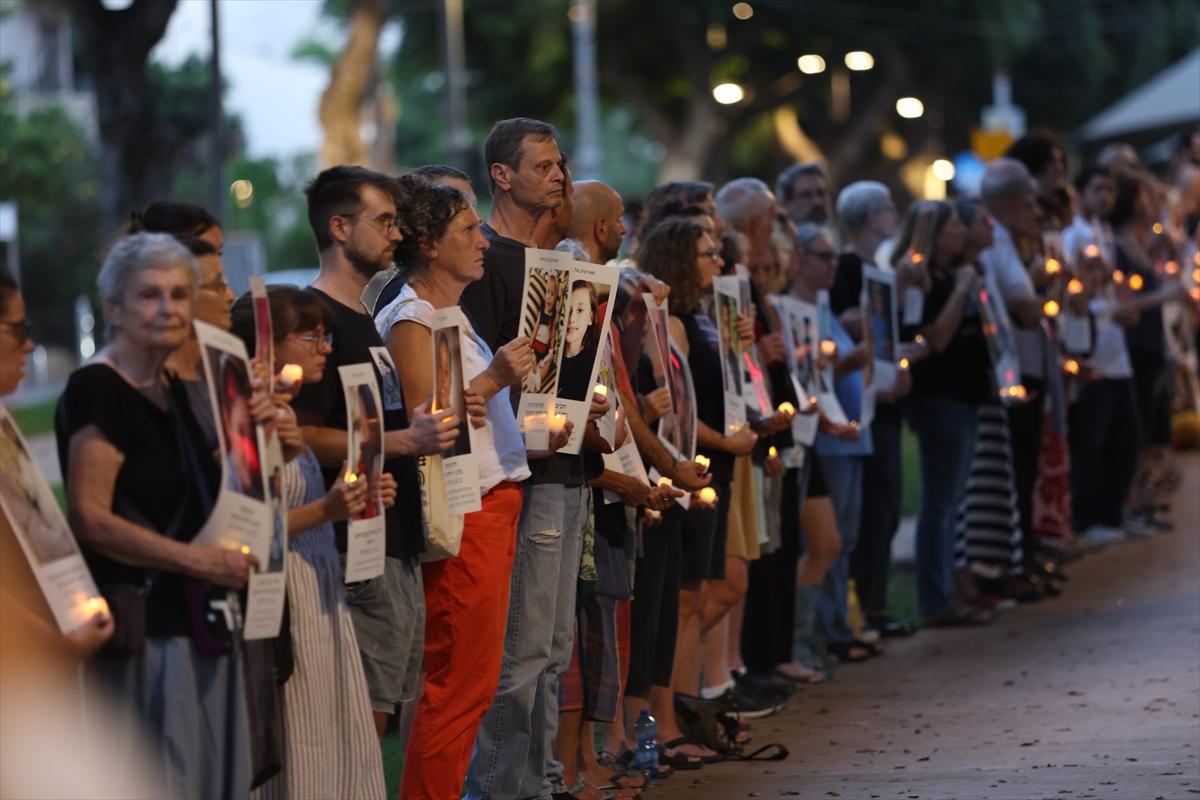
Protest in Tel Aviv against Israel’s attacks on civilians in Gaza, 16 August 2025 - (Anadolu Ajansı)
On 18 August 2025, thousands gathered outside the Likud Party headquarters in Tel Aviv. Police intervened after demonstrators marched from “Hatufim (Hostages) Square” toward the party’s headquarters, known as “Ze’ev’s Castle.” Tires were set on fire along King George Street, and at least six people were arrested. Israeli media reported that by morning, the total number of arrests nationwide had reached 27. It was stated that the protests would continue until the hostages held by Hamas were released. Demonstrators rejected Netanyahu’s decision to invade Gaza and the government’s policies, demanding an immediate prisoner exchange agreement.
On 16 August 2025, according to a statement by Morocco’s Committee for Supporting the Palestinian Cause, 105 protests and marches took place in 58 cities across the country. Demonstrators condemned the famine and genocide in Gaza as well as the killing of journalists. Participants chanted slogans such as “No to killing, no to starvation, no to the killing of journalists.” The protests also denounced attacks in the West Bank, the expansion of Israeli settlements, and violations at Al-Aqsa Mosque, while demanding an end to the blockade of Gaza. The killing of six journalists on 10 August 2025 when Israel struck a tent near Shifa Hospital was also recalled.
In Johannesburg, South Africa, on 14 August 2025, journalists gathered outside the Al Jazeera office to hold a memorial for journalists killed in the Israeli airstrike on a tent near Shifa Hospital. The event condemned the targeting of media personnel in Gaza, honoring six journalists including Enes al-Sharif and Muhammad Kurayka.
On 12 August 2025, a group of activists gathered outside the Egyptian Consulate in Damascus, Syria’s capital, to protest the blockade of Gaza and the closure of the Rafah Crossing. Demonstrators carried banners reading “Let Gaza eat, open the crossing” and “We demand the opening of the Rafah crossing.” Participants called on Arab governments to take action to lift the blockade and urged a boycott of Israeli products.
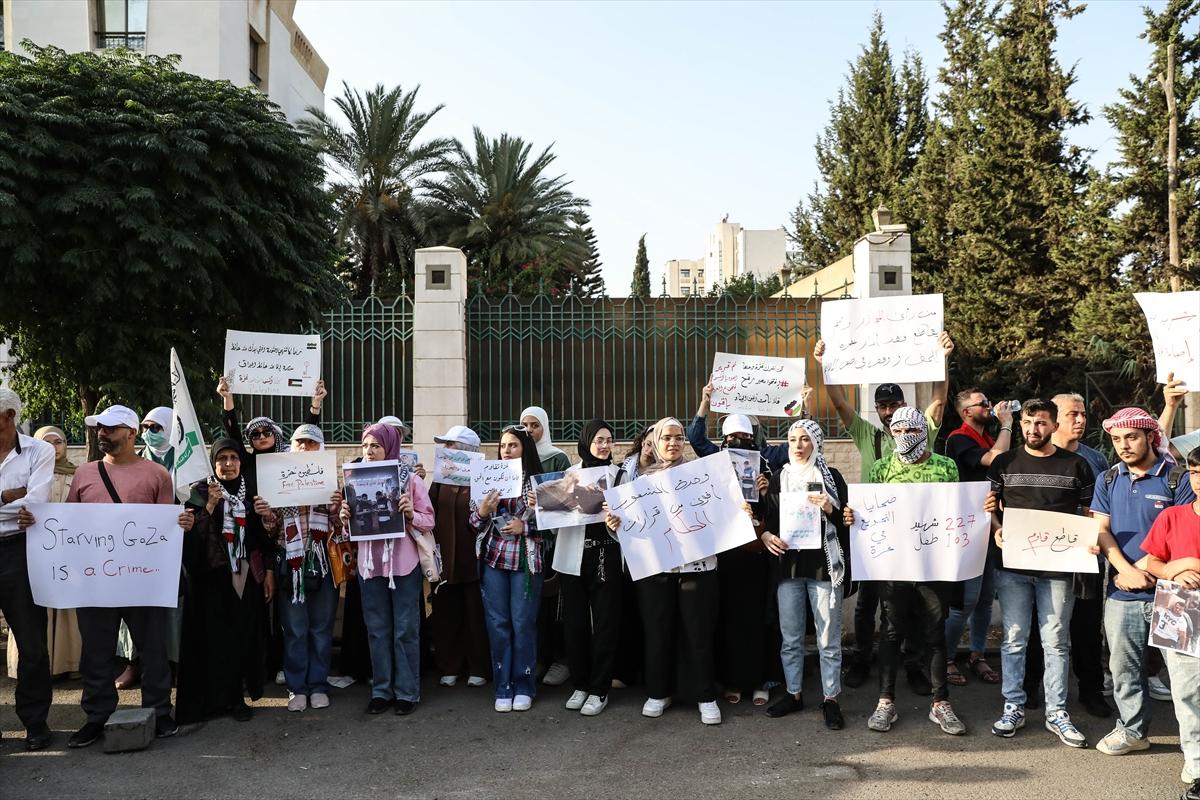
Pro-Palestinian demonstration in Damascus, 12 August 2025 - (Anadolu Ajansı)
On 15 August 2025, thousands gathered in Sana’a, Yemen’s capital, at Sebin Square to protest Israel’s attacks on Gaza. The demonstration, held after Friday prayers, included participation from Yemeni military units. Protesters condemned Israel’s bombardments, its war policies, and the deliberate starvation of Palestinians through blockade. Prime Minister Benjamin Netanyahu’s statements about a “Greater Israel” were also met with strong criticism.
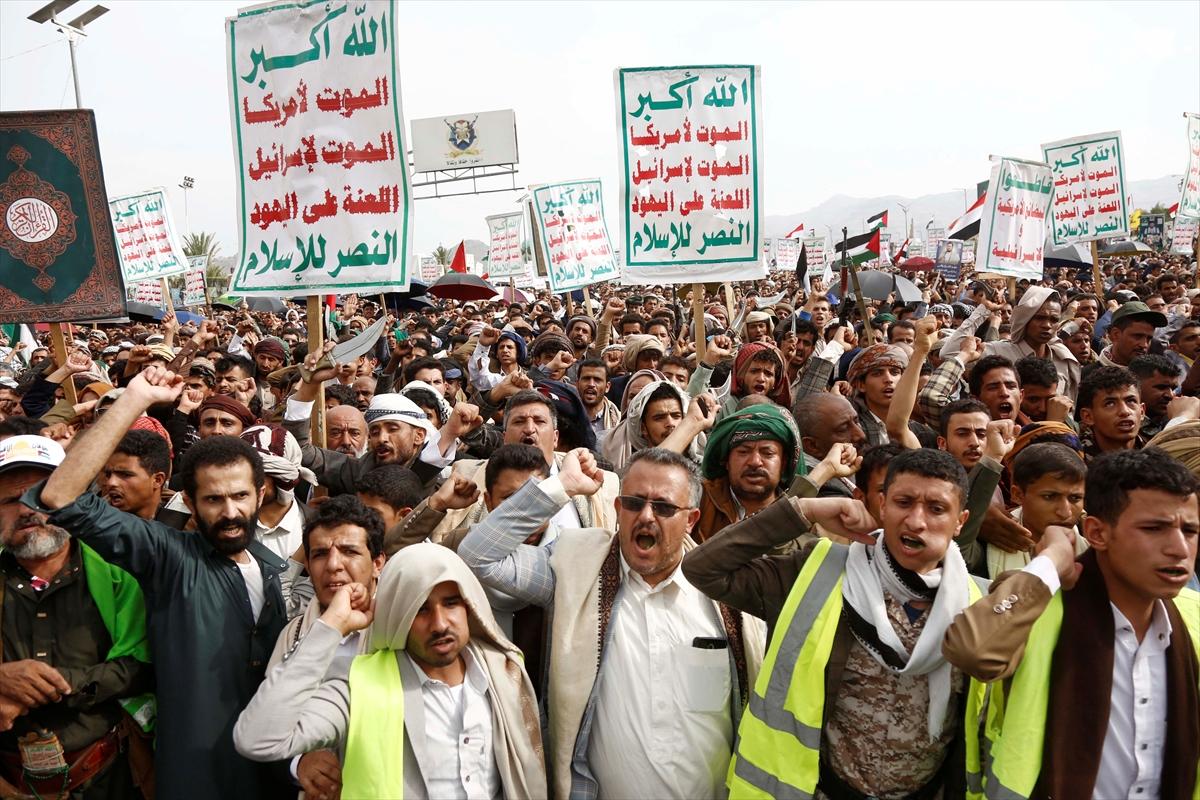
Pro-Palestinian demonstration in Yemen with thousands of participants, 15 August 2025 - (Anadolu Ajansı)
Anadolu Ajansı. “ABD’de İsrail’in Gazze’ye ve Gazetecilere Yönelik Saldırılarına Tepki Gösterisi Düzenlendi.” Accessed August 18, 2025. https://www.aa.com.tr/tr/dunya/abdde-israilin-gazzeye-ve-gazetecilere-yonelik-saldirilarina-tepki-gosterisi-duzenlendi/3658043
Anadolu Ajansı. “ABD’nin Başkenti Washington DC’de İsrail’in Öldürdüğü Gazeteciler İçin Anma Etkinliği Düzenlendi.” Accessed August 18, 2025. https://www.aa.com.tr/tr/dunya/abdnin-baskenti-washington-dcde-israilin-oldurdugu-gazeteciler-icin-anma-etkinligi-duzenlendi/3657083
Anadolu Ajansı. “Hollandalı Aktivistler, Filistinlilerin Özel Görüşmelerini İsrail İçin Depolayan Microsoft Binasında Eylem Yaptı.” Accessed August 18, 2025. https://www.aa.com.tr/tr/dunya/hollandali-aktivistler-filistinlilerin-ozel-gorusmelerini-israil-icin-depolayan-microsoft-binasinda-eylem-yapti/3657265
Anadolu Ajansı. “Hollanda’da 73 Protestan Kilisesi Yönetiminden İsrail’e Silah Sevkiyatını Durdurma Çağrısı.” Accessed August 18, 2025. https://www.aa.com.tr/tr/dunya/hollandada-73-protestan-kilisesi-yonetiminden-israile-silah-sevkiyatini-durdurma-cagrisi/3661359
Anadolu Ajansı. “Hollanda’da Diplomatlar ve Memurlar Gazze’deki Soykırımı ve Açlığı Protesto Etti.” Accessed August 18, 2025. https://www.aa.com.tr/tr/dunya/hollandada-diplomatlar-ve-memurlar-gazzedeki-soykirimi-ve-acligi-protesto-etti/3659666
Anadolu Ajansı. “Netanyahu’nun Partisinin Genel Merkezi Önünde Polis ile Protestocular Çatıştı.” Accessed August 18, 2025. https://www.aa.com.tr/tr/dunya/netanyahunun-partisinin-genel-merkezi-onunde-polis-ile-protestocular-catisti/3662134
Anadolu Ajansı. “İsrailliler, Netanyahu’nun Gazze’yi İşgal Kararına Karşı Esir Takası Anlaşması Talebiyle Genel Greve Gitti.” Accessed August 18, 2025. https://www.aa.com.tr/tr/dunya/israilliler-netanyahunun-gazzeyi-isgal-kararina-karsi-esir-takasi-anlasmasi-talebiyle-genel-greve-gitti/3661876
Anadolu Ajansı. “İsrail’de Hükümet Karşıtı Genel Grev ve Protestolara Katılanların Sayısı 1 Milyonu Aştı.” Accessed August 18, 2025. https://www.aa.com.tr/tr/dunya/israilde-hukumet-karsiti-genel-grev-ve-protestolara-katilanlarin-sayisi-1-milyonu-asti/3662098
Anadolu Ajansı. “İsrail’in Gazze’ye Saldırıları İsveç ve Almanya’da Protesto Edildi.” Accessed August 18, 2025. https://www.aa.com.tr/tr/dunya/israilin-gazzeye-saldirilari-isvec-ve-almanyada-protesto-edildi/3629263
Munir al-Bursh, Director General of Gaza’s Ministry of Health, stated on 19 August that three more Palestinians had died in the past 24 hours due to starvation and inadequate nutrition. This brings the total number of deaths from starvation since 7 October 2023 to 266, of which 112 are children.
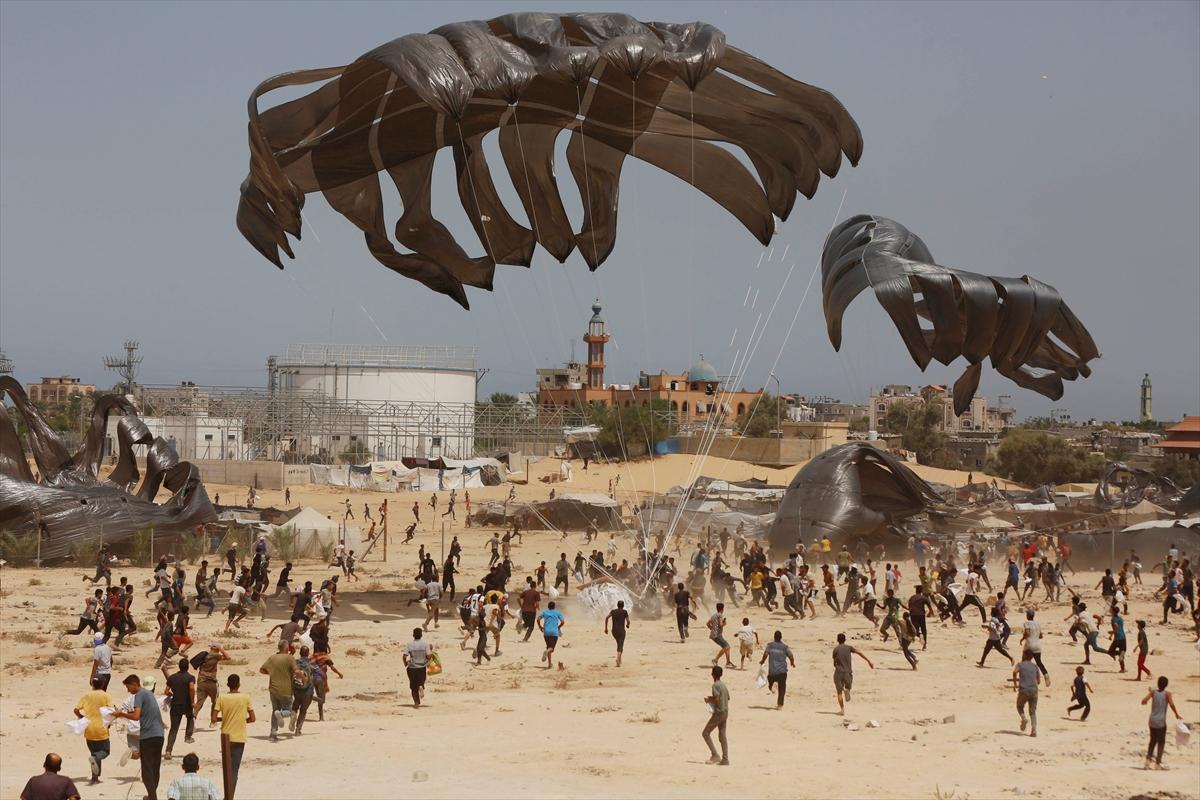
class="italic subscript";
On the same day, 24 people were killed in Israeli strikes, including five children. According to the Gaza Ministry of Health, a total of 60 Palestinians were killed and 343 injured between 18 and 19 August. Since 7 October 2023, at least 62,064 Palestinians have been killed and 156,230 injured in Israeli attacks.
United Nations High Commissioner for Human Rights spokesperson Thameen Al-Kheetan, in a statement from Geneva on 19 August, stated that the risk of starvation exists across all regions of Gaza. He reported that 1,857 Palestinians seeking food were killed between 27 May and 17 August, with 1,021 killed near aid zones supported by the United States and Israel, and 836 killed along the routes of aid convoys. Al-Kheetan emphasized that this was a direct consequence of the obstruction of humanitarian access.
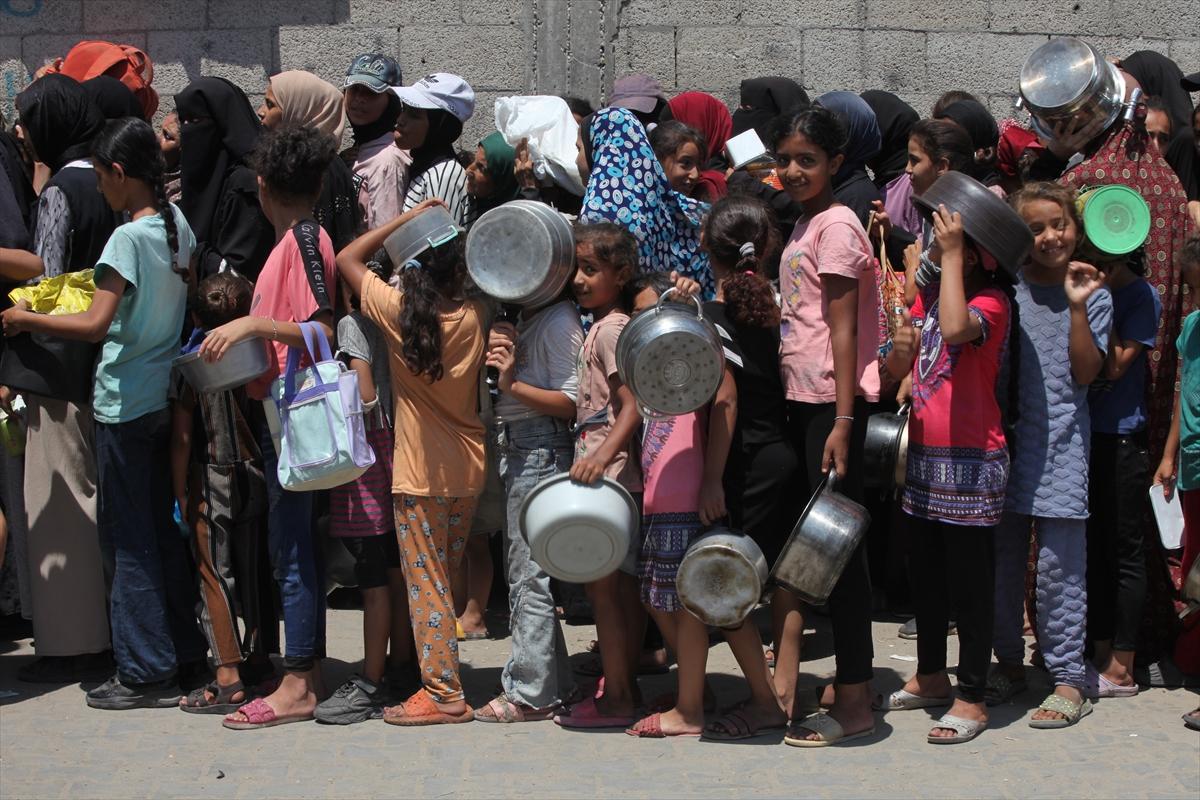
class="italic subscript";
On 16 and 17 August, at least nine people were killed in five separate attacks on tents housing displaced persons in the Al-Mawasi area in southern Gaza. On 18 and 19 August, five Palestinians were killed in raids and artillery fire in the Sabra neighborhood of southern Gaza City, and five others, including one woman, died in Deir al-Balah. In Bassa, five people including three children were killed; in Khan Yunis, four people including a mother and her two children; and in Rafah, two people were killed. Additionally, four people died in a tent in Al-Mawasi and two near an applied sciences faculty.
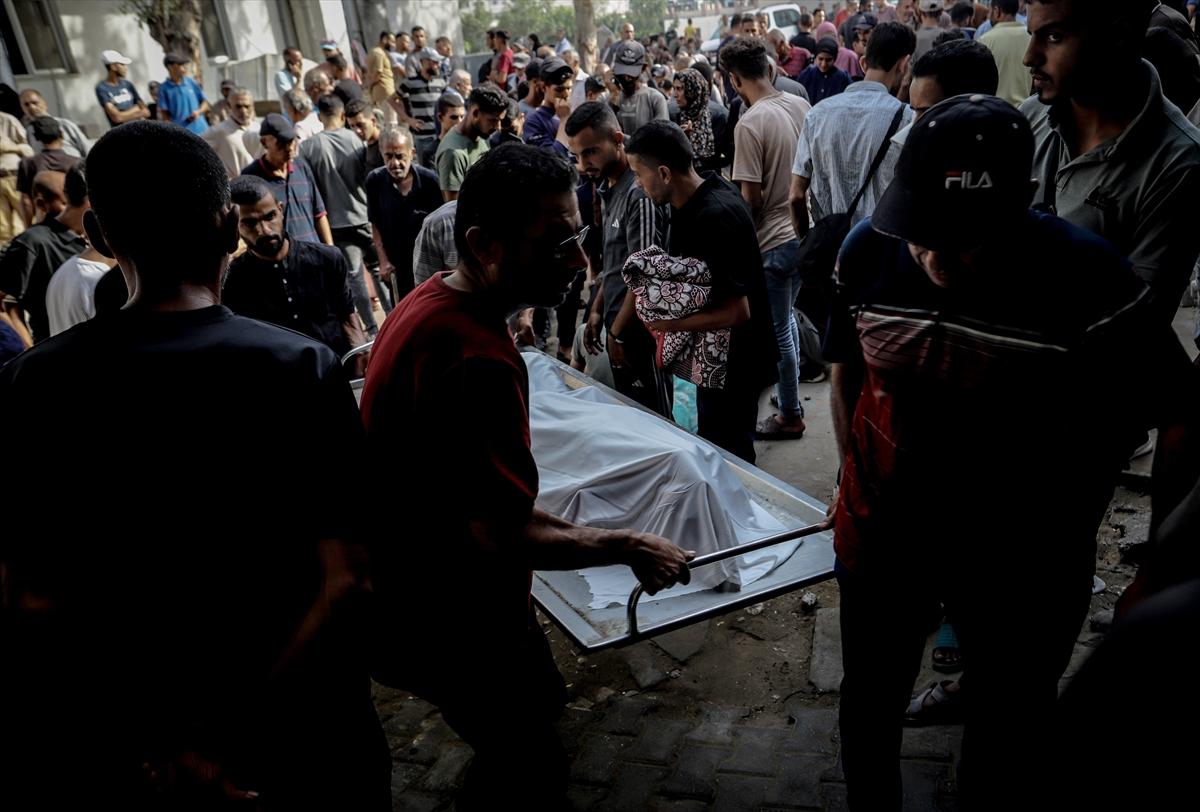
class="italic subscript";
On 16 August 2025, the Israeli military announced it had intensified preparations for a plan to re-occupy the entire Gaza Strip. Army spokesperson Avichay Adraee stated on 17 August that tents and shelter equipment would be permitted for Palestinians who had lost their homes. These materials were said to be delivered via the Kerem Abu Salim border crossing by the United Nations (UN) and international humanitarian organizations. However, no official confirmation has been issued by the UN or other organizations.
Israeli media reported that the military had received orders to occupy the remainder of Gaza but that this step was not expected to be implemented before September. Israel Public Broadcasting Corporation KAN announced that the military was preparing to accelerate its operation aimed at occupying Gaza City.
It was reported that Israeli Chief of General Staff Eyal Zamir had approved the overarching framework for the plan to re-occupy all of Gaza in recent days. Attacks targeting the Zeitoun neighborhood were also described as part of this plan.
The first phase of the plan envisages the occupation of Gaza City, the displacement of approximately one million Palestinians to the south, the imposition of a siege, and the intensification of attacks. The second phase plans to target refugee camps in the largely destroyed central areas of Gaza. The Israeli government, following a proposal by Prime Minister Benjamin Netanyahu, has accepted this plan.
On 18 August 2025, Israeli Prime Minister Benjamin Netanyahu met with Defense Minister Yisrael Katz and Chief of General Staff Eyal Zamir to discuss the plan to occupy Gaza City. The meeting took place at the Reim Military Base near the southern border of the Gaza Strip.
The Israeli Prime Minister’s Office stated that the agenda of the meeting was the implementation of the Gaza City occupation plan approved by the Security Cabinet on 8 August 2025. Prior to the meeting, Netanyahu referenced developments indicating that Hamas had accepted ceasefire proposals offered by Egypt and Qatar, asserting that activity in Gaza was under “intense pressure.”
The meeting emphasized the phased progression of occupation preparations. According to the plan, the first phase involves the occupation of Gaza City, followed by military actions targeting refugee camps located in the central region.
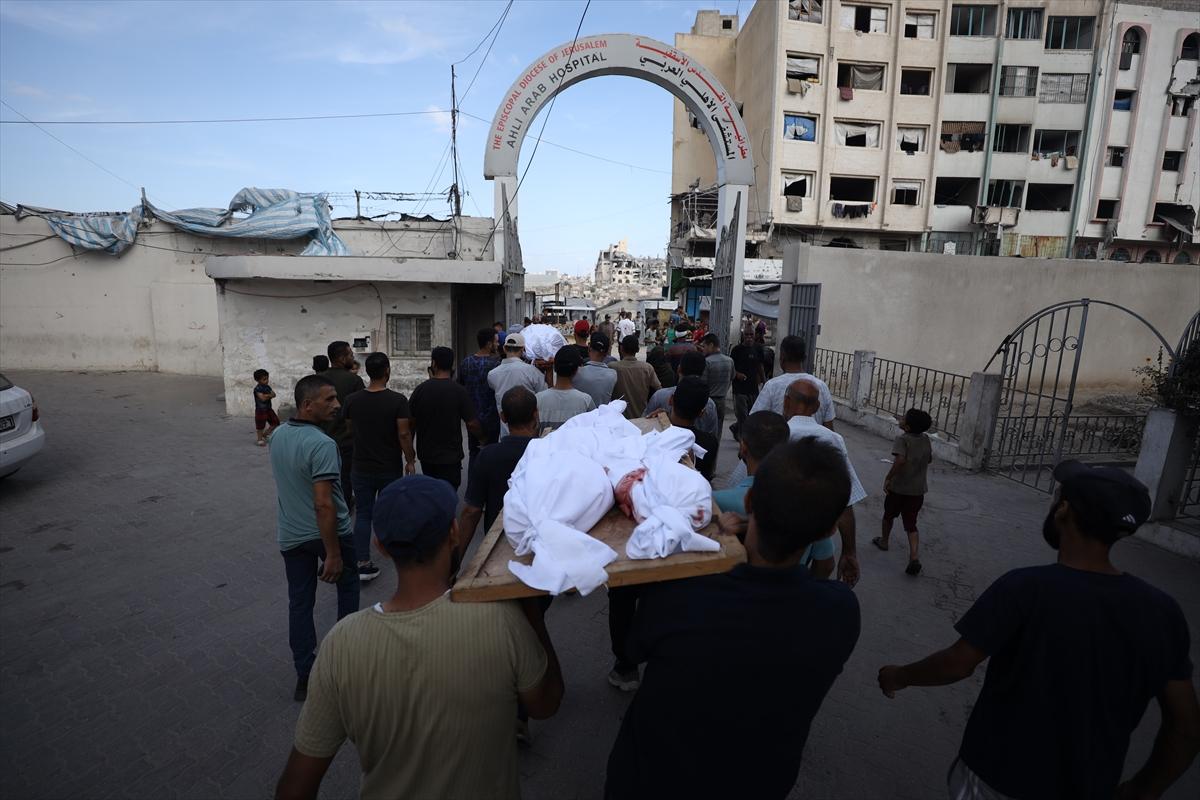
class="italic subscript";
On 18 August 2025, Hamas announced it had accepted a new ceasefire and prisoner exchange proposal offered by Egypt and Qatar. Other Palestinian factions were also reported to have responded positively to the same proposal. The proposal had been presented to the parties by Cairo and Doha one day earlier.
Egyptian Presidential Spokesperson Diaa Rashwan told Al-Qahira Al-Ikhbariya channel that the proposal had been prepared under the initiative of Steve Witkoff, the United States’ special envoy to the Middle East. Rashwan stated that Palestinian groups had responded to the proposal as presented and that it had been transmitted to Israel. He emphasized that for the agreement to be implemented, the United States must pressure Israel.
On 19 August 2025, Israeli media reported that despite Hamas’s response, the Tel Aviv administration had not altered its stance on prisoner exchange. Israel’s Channel 12 reported that Strategic Affairs Minister Ron Dermer had held talks with US Middle East envoy Witkoff and Qatari mediators. According to the same source, Hamas’s response had significantly narrowed the differences between the parties.
Israel’s state television KAN reported that the proposal by Egypt and Qatar closely resembled Witkoff’s earlier fundamental proposal. It was also stated that negotiations were being conducted with the knowledge and approval of Netanyahu, aiming for a partial agreement.
Anadolu Ajansı. "Netanyahu, Savunma Bakanı ve Genelkurmay Başkanıyla Gazze’yi İşgal Planını Görüştü." Accessed August 19, 2025. https://www.aa.com.tr/tr/dunya/netanyahu-savunma-bakani-ve-genelkurmay-baskaniyla-gazzeyi-isgal-planini-gorustu/3662895
Anadolu Ajansı. “Hamas: Mısır ve Katar’ın Gazze’de Ateşkes ve Esir Takasıyla İlgili Sunduğu Öneriyi Kabul Ettik.” Accessed August 19, 2025. https://www.aa.com.tr/tr/dunya/hamas-misir-ve-katarin-gazzede-ateskes-ve-esir-takasiyla-ilgili-sundugu-oneriyi-kabul-ettik/3662787#
Anadolu Ajansı. “İsrail’den Gazze Şeridi’nin Tamamını İşgal Hazırlığı: Filistinliler Güneye Taşınacak.” Accessed August 19, 2025. https://www.aa.com.tr/tr/dunya/israil-den-gazze-seridinin-tamamini-isgal-hazirligi-filistinliler-guneye-tasinacak/3661543#
Anadolu Ajansı. “İsrail’in Kıtlığı Dayattığı Gazze’de Açlıktan Ölenlerin Sayısı Son 24 Saatte 3 Artarak 266’ya Yükseldi.” Accessed August 19, 2025. https://www.aa.com.tr/tr/dunya/israilin-kitligi-dayattigi-gazze-de-acliktan-olenlerin-sayisi-son-24-saatte-3-artarak-266-ya-yukseldi/3663230#
On 20 August 2025, the Gaza Ministry of Health released new data on the number of deaths from starvation in the region suffering from scarcity due to Israel’s blockade and attacks. The statement indicated that three additional people died from starvation between 19 and 20 August. With these losses, the total number of deaths reached 269, of whom 112 were children.
According to information published on 21 August 2025, two more Palestinians died due to inadequate nutrition. With these fatalities, the total death toll rose to 271.
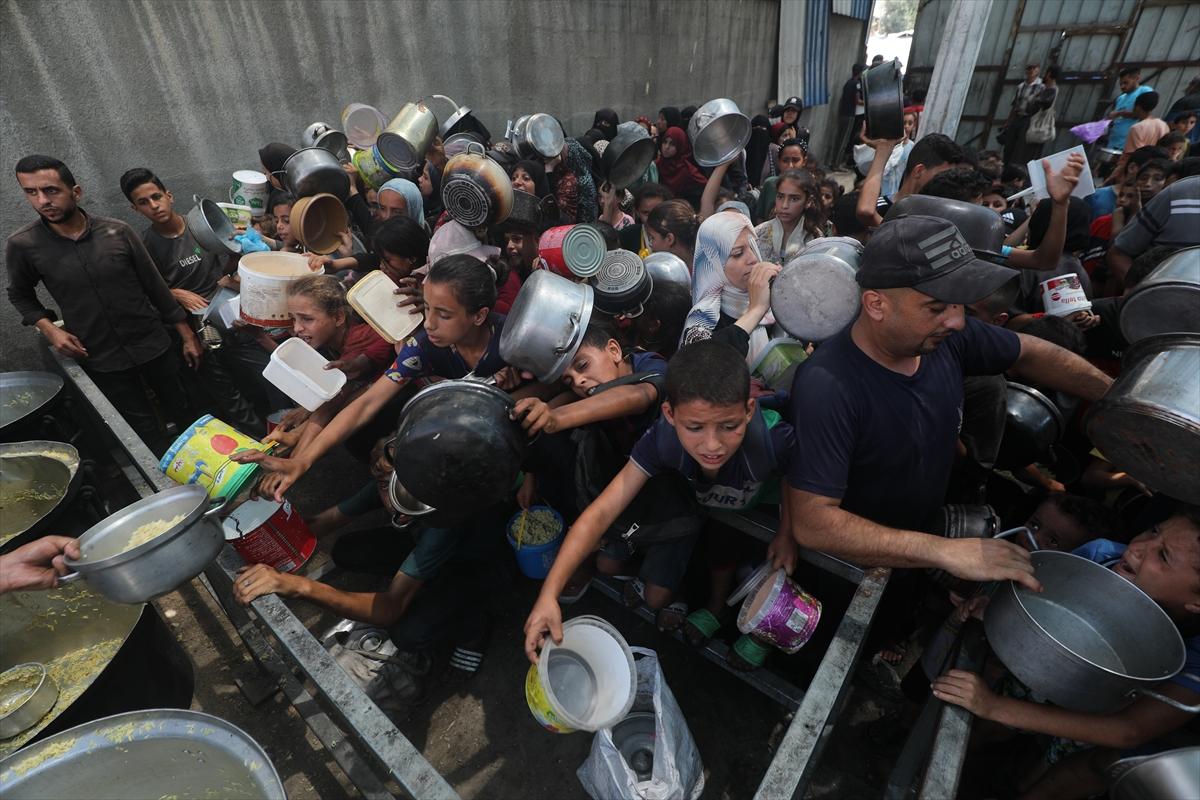
Palestinians struggling with starvation in Gaza, 18 August 2025 – (Anadolu Agency)
On 20 August 2025, the Israeli military conducted intense attacks in various areas. According to hospital sources and eyewitness accounts, a mother and her child were killed in the Tuffah neighborhood of Gaza City, while a tent housing displaced persons in Han Yunus was targeted, resulting in three deaths. In the Shati Refugee Camp, five members of the same family died after a tent was struck. Additionally, four Palestinians were killed when a tent near the Islamic University in Gaza City was hit, and three more died when a house in the northern town of Jabaliya was targeted. Homes in the Sabra and Zaytun neighborhoods were also bombed. In the Zikim area in northwestern Gaza, twelve people providing security for aid trucks were killed and thirty others injured by Israeli fire. On the same day, eight people were killed and several homes and camps targeted in the Nuseirat Refugee Camp after Israeli forces opened fire on civilians waiting for aid.
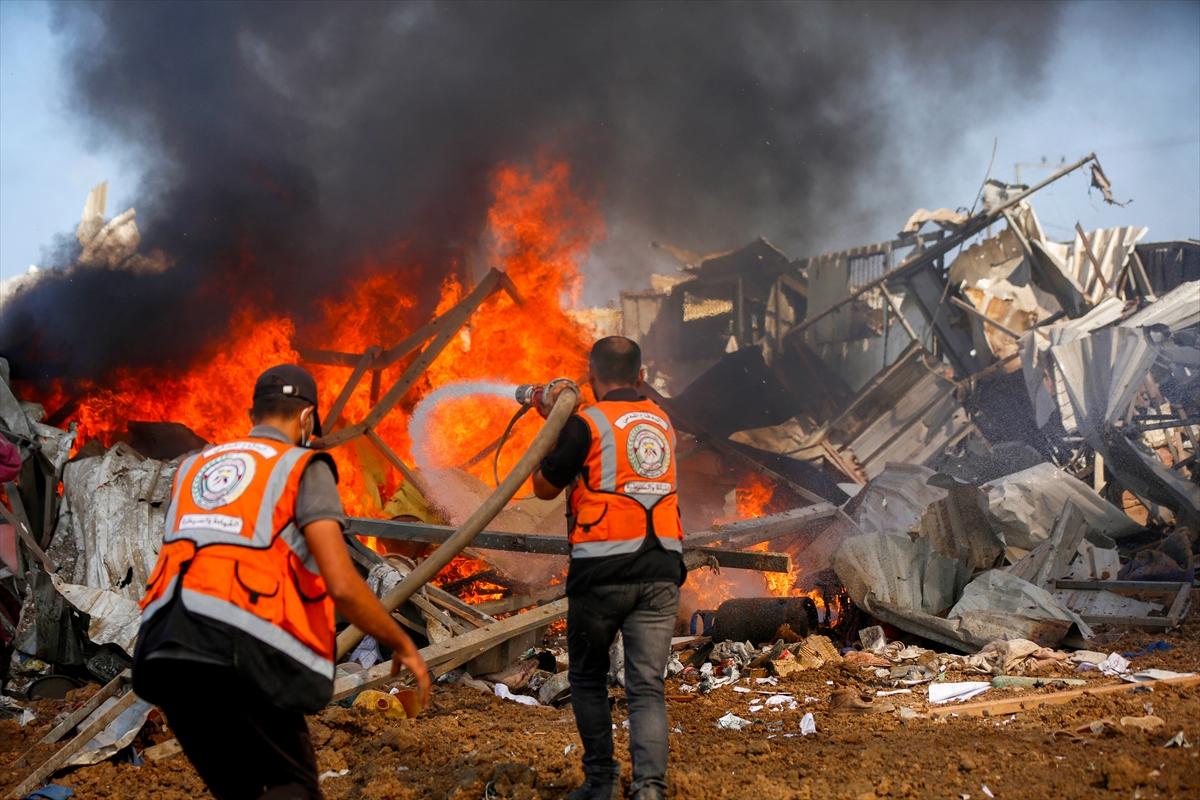
Israeli military attack on the city of Deir al-Balah, 21 August 2025 – (Anadolu Agency)
On 21 August 2025, Israeli attacks continued to cause further casualties. According to the Ministry of Health’s statement for 21 August, 70 Palestinians were killed and 356 others injured within the previous 24 hours. Five members of the same family died when their home in Han Yunus was struck. Civilians waiting for aid on Salahaddin Street were targeted, resulting in three deaths. A group of Palestinians in the Tuffah neighborhood of Gaza City was killed by a drone strike. Bombardments also continued in the Zaytun, Sabra, and Jabaliya areas of Gaza City, causing extensive destruction.
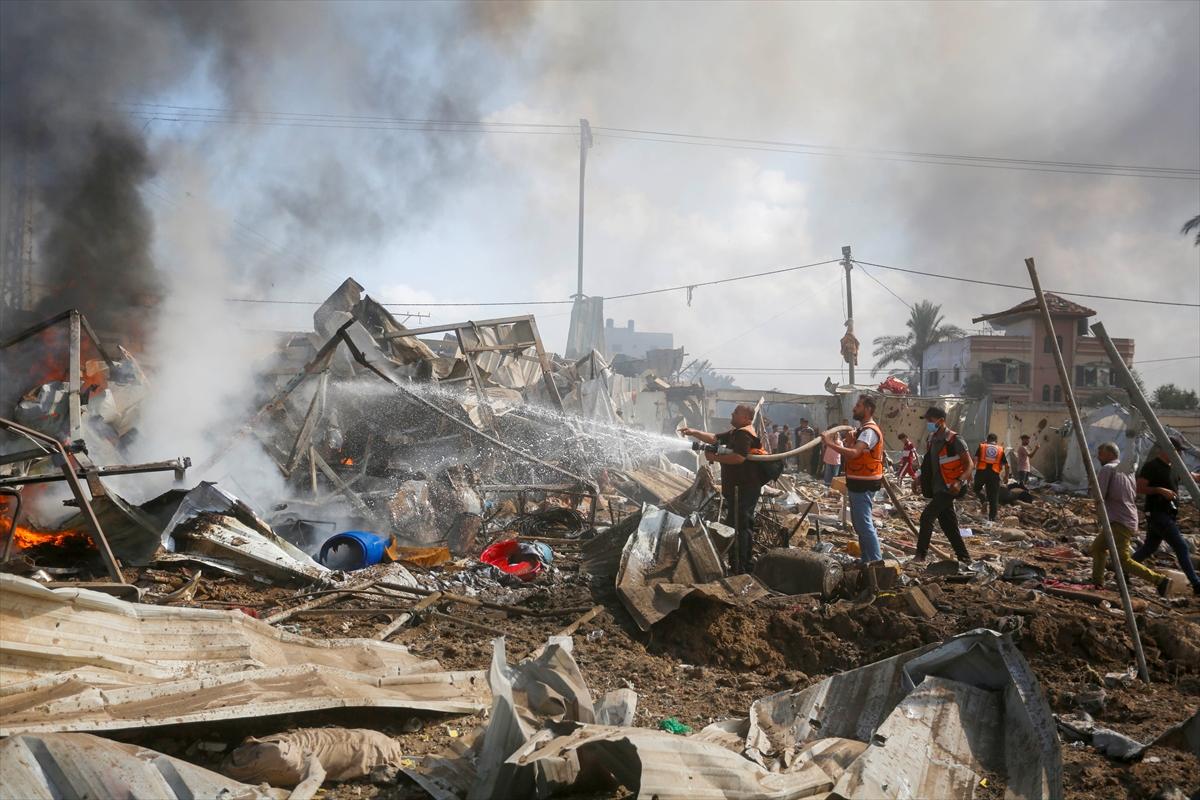
Israeli military attack on the city of Deir al-Balah, 21 August 2025 – (Anadolu Agency)
On the same day, an Israeli airstrike hit a tent camp in the Deir al-Balah area where approximately 200 displaced families had taken shelter. Eyewitnesses reported that warning messages were sent via mobile phones urging residents to evacuate the tents before the attack, followed by three warplanes targeting the area. It was reported that numerous families were housed in the vicinity of Aqsa Martyrs Hospital, and after the strike, families were once again left on the streets. Hospital sources confirmed that some of the injured civilians had received medical treatment.
On 20 August, Israeli forces opened fire on civilians providing security for aid trucks in the Zikim area of northwestern Gaza, killing twelve and injuring thirty. On the same day, eight people were killed when Israeli forces fired on civilians waiting for aid north of the Nuseirat Refugee Camp. Overall, 22 Palestinians were reported killed and 49 injured around aid distribution points on that day. Between 27 May and 20 August, the total number of people killed in such attacks reached 2,018, with 14,947 injured.
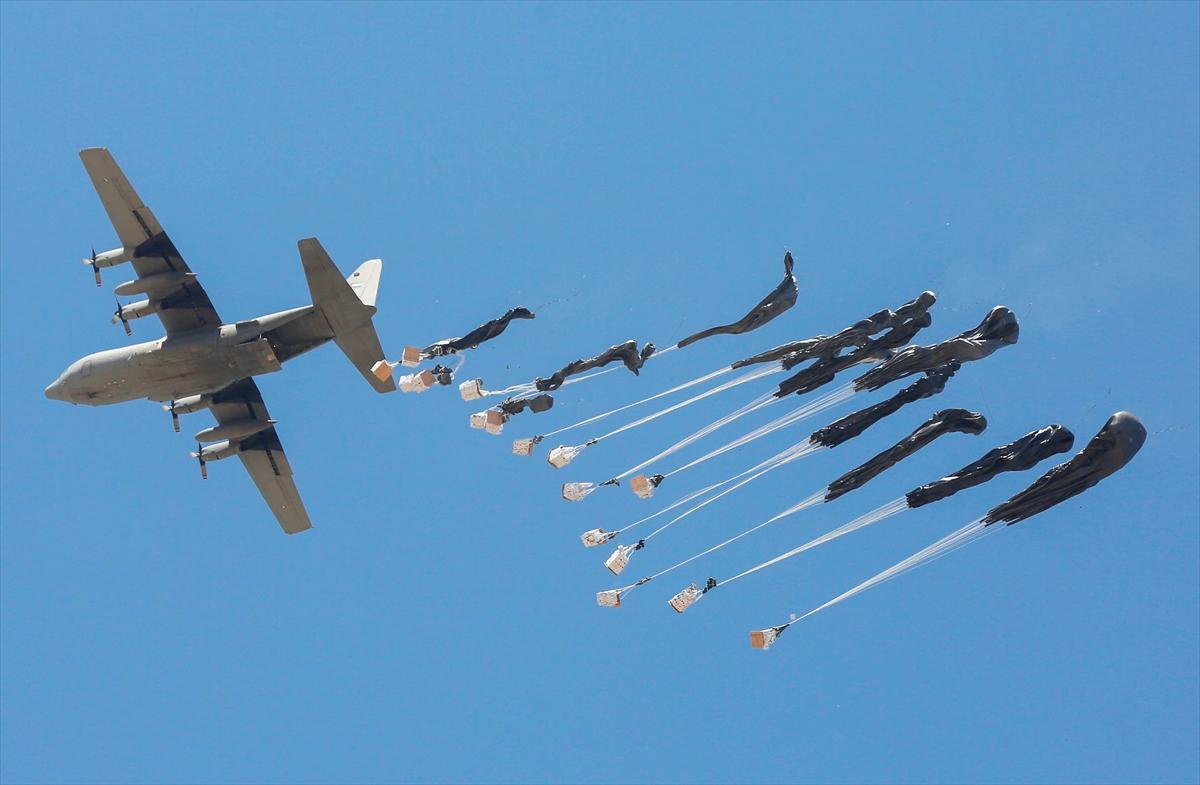
Humanitarian aid supplies being airdropped to Gaza, 20 August 2025 – (Anadolu Agency)
On 21 August 2025, Israeli forces opened fire on civilians waiting for aid trucks on Salahaddin Street, killing three and injuring many others. According to the Ministry of Health, 18 people were killed and 117 injured at aid points within the previous 24 hours. Since 27 May, the total number of people killed in attacks targeting civilians awaiting aid has risen to 2,036, with the number of injured reaching 15,064.
Anadolu Ajansı. “İsrail’in Kıtlığı Dayattığı Gazze’de 2 Filistinli Daha Açlıktan Hayatını Kaybetti.” Accessed August 21, 2025. https://www.aa.com.tr/tr/dunya/israilin-kitligi-dayattigi-gazze-de-2-filistinli-daha-acliktan-hayatini-kaybetti/3665145#
Anadolu Ajansı. “İsrail’in Kıtlığı Dayattığı Gazze’de Açlıktan Ölenlerin Sayısı Son 24 Saatte 3 Artarak 269’a Çıktı.” Accessed August 21, 2025. https://www.aa.com.tr/tr/dunya/israilin-kitligi-dayattigi-gazzede-acliktan-olenlerin-sayisi-son-24-saatte-3-artarak-269a-cikti/3664195#
On 22 August, famine was officially confirmed in Gaza for the first time. An analysis published by the Integrated Food Security Phase Classification (IPC) stated that famine conditions are currently present in Gaza City and are expected to spread to the Deir el-Balah and Khan Yunis areas. This development marks the first official confirmation of famine in the Middle East.
This United Nations-supported report indicates that the highest level, Phase 5, has been exceeded. This level is defined by the simultaneous occurrence of widespread hunger, acute malnutrition, and famine-related deaths.
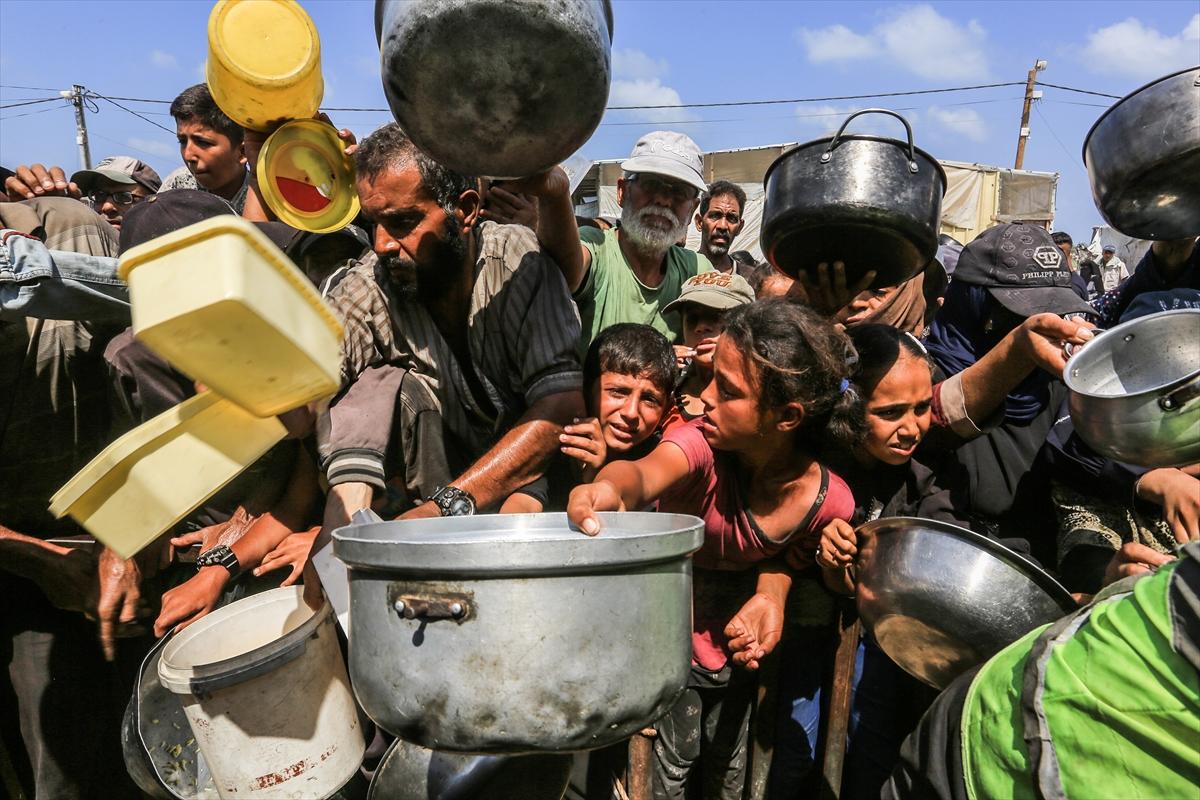
Gazaresidents fighting hunger, 21 August 2025 – (Anadolu Agency)
According to the IPC assessment, more than half a million people in Gaza are living under famine conditions. 1.14 million people (58 percent of the population) face emergency food insecurity (Phase 4), while 396,000 people are in crisis conditions (Phase 3).
By the end of September 2025, approximately 641,000 people are projected to be in catastrophic conditions (Phase 5). The situation in northern Gaza is assessed as being worse than or at least as severe as that in Gaza City.
Children and vulnerable groups have been the most severely affected by the famine. According to the August 2025 report, over 132,000 children under five are at risk of death due to acute malnutrition by mid-2026.
In just one month in July 2025, more than 12,000 children were diagnosed with acute malnutrition, a sixfold increase since the beginning of the year. One in four children suffers from severe acute malnutrition (SAM). Additionally, one in five newborns was born preterm or with low birth weight.
Similarly, 55,000 pregnant and breastfeeding women have been identified as suffering from dangerously inadequate nutrition.
UN Secretary-General António Guterres described the famine in Gaza as a man-made catastrophe. Guterres reminded Israel, as the occupying power under international law, of its obligation to facilitate the delivery of food and medical supplies.
The FAO, UNICEF, WFP, and WHO, agencies of the United Nations, issued a joint statement calling for an immediate ceasefire and unhindered humanitarian access. UNICEF Director Catherine Russell stated that children in Gaza are at risk of dying from hunger. WHO Director-General Tedros Adhanom Ghebreyesus emphasized that malnutrition has rendered even common illnesses fatal for children.
The Israeli Ministry of Foreign Affairs asserted that there is no famine in Gaza. The ministry noted that over 100,000 aid trucks have entered Gaza since the start of the war and that food prices have declined in recent weeks.
Hamas, however, argued that the IPC report proves Israel has deliberately subjected more than two million people to starvation, a violation of international law.
European Commission member Hadja Lahbib stated that by the end of September, one in three people in Gaza could face famine and called on Israel to allow uninterrupted humanitarian access.
UK Foreign Secretary David Lammy characterized the confirmation of famine as a completely preventable man-made catastrophe and emphasized that Israel has blocked humanitarian aid.
Irish Taoiseach Micheál Martin stated that the famine was foreseeable and preventable, asserting that Israel’s obstruction of civilians’ access to food and water constitutes a war crime.
The United Nations and aid organizations reported that humanitarian assistance to Gaza has been largely blocked. Oxfam revealed that Israel has rejected nearly all humanitarian aid applications and that high-calorie food packages worth $3.3 million remain stored outside Gaza.
UNRWA Commissioner-General Philippe Lazzarini stated that despite months of warnings, the famine has not been averted and is a deliberate policy of starvation by the Israeli government.
Approximately 98 percent of cultivated land has been damaged or rendered inaccessible, bringing agricultural production to a standstill. The health system has collapsed, and access to clean water and sanitation services has been severely reduced. Multidrug-resistant infections have increased, and diarrhea, fever, and respiratory illnesses have become widespread, particularly among children.
According to Munir al-Bursh, Director-General of the Gaza Ministry of Health, two Palestinian women died from malnutrition in the past 24 hours as of 22 August 2025. With these deaths, the total number of people who have died from hunger in Gaza since 7 October 2023 has risen to 273, of whom 112 were children.
Al Jazeera. “Deadly Strikes Continue as Netanyahu Finalises Plan to Seize Gaza City.” Al Jazeera. Accessed August 22, 2025. https://www.aljazeera.com/news/liveblog/2025/8/22/deadly-strikes-continue-as-netanyahu-finalises-plan-to-seize-gaza-city
Al Jazeera. “Famine Confirmed in Northern Gaza, Global Hunger Monitor Says.” Al Jazeera. Accessed August 22, 2025. https://www.aljazeera.com/news/2025/8/22/famine-confirmed-in-northern-gaza-global-hunger-monitor-says
Anadolu Ajansı. “İsrail’in Kıtlığa Neden Olduğu Gazze’de 5 Aylık Bir Bebek Daha Açlık Nedeniyle Hayatını Kaybetti.” Accessed August 22, 2025. https://www.aa.com.tr/tr/dunya/israilin-kitliga-neden-oldugu-gazzede-5-aylik-bir-bebek-daha-aclik-nedeniyle-hayatini-kaybetti/3666106
World Food Programme. “Famine Confirmed for First Time in Gaza.” World Food Programme. Accessed August 22, 2025. https://www.wfp.org/news/famine-confirmed-first-time-gaza
On 25 August 2025, the Israeli military targeted Al-Nasser Hospital in the city of Khan Younis in the Gaza Strip. According to local sources, the hospital’s fourth floor was struck by two separate aerial attacks. The first attack directly hit the upper floors of the hospital building, while the second occurred as first responders were arriving to evacuate the wounded and dead. Eyewitnesses reported that the second bombardment took place shortly after medical staff, journalists, and rescue workers rushed to the site.
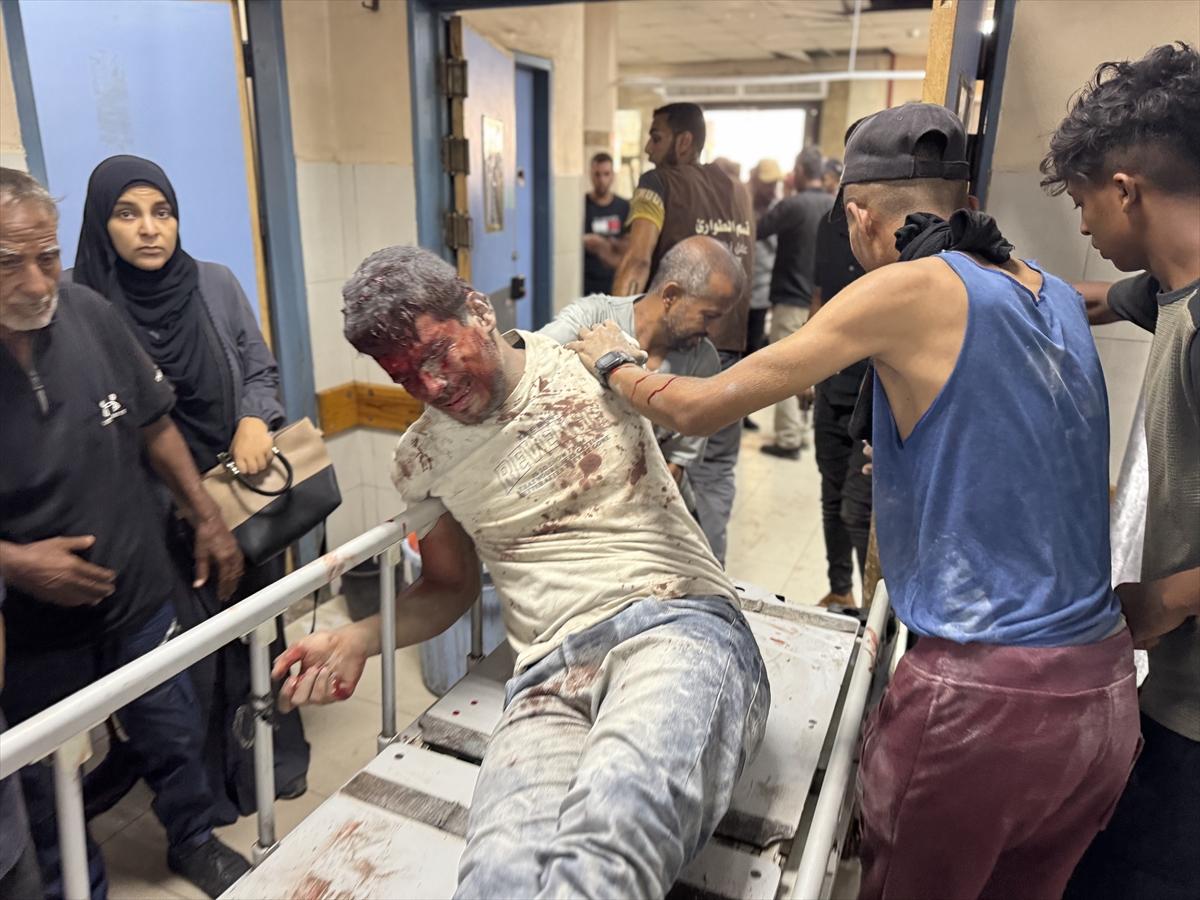
Injured people following the Israeli military’s attack on Al-Nasser Hospital in Khan Younis, 25 August 2025 – (Anadolu Ajansı)
Reuters footage revealed that the live broadcast feed from cameraman Husam al-Masri at the hospital was abruptly cut during the first attack. Eyewitnesses also reported that the strike occurred while the hospital’s operating room and areas occupied by medical students, doctors, nurses, and journalists were still active.
According to initial assessments, 20 people lost their lives in the attack. Among the dead are five journalists and one civil defense worker. The Gaza Ministry of Health confirmed that the victims included medical personnel, media representatives, and patients, with dozens more injured. The Palestinian Civil Defense announced that 15 people were killed, including one firefighter, and seven civil defense workers were wounded.
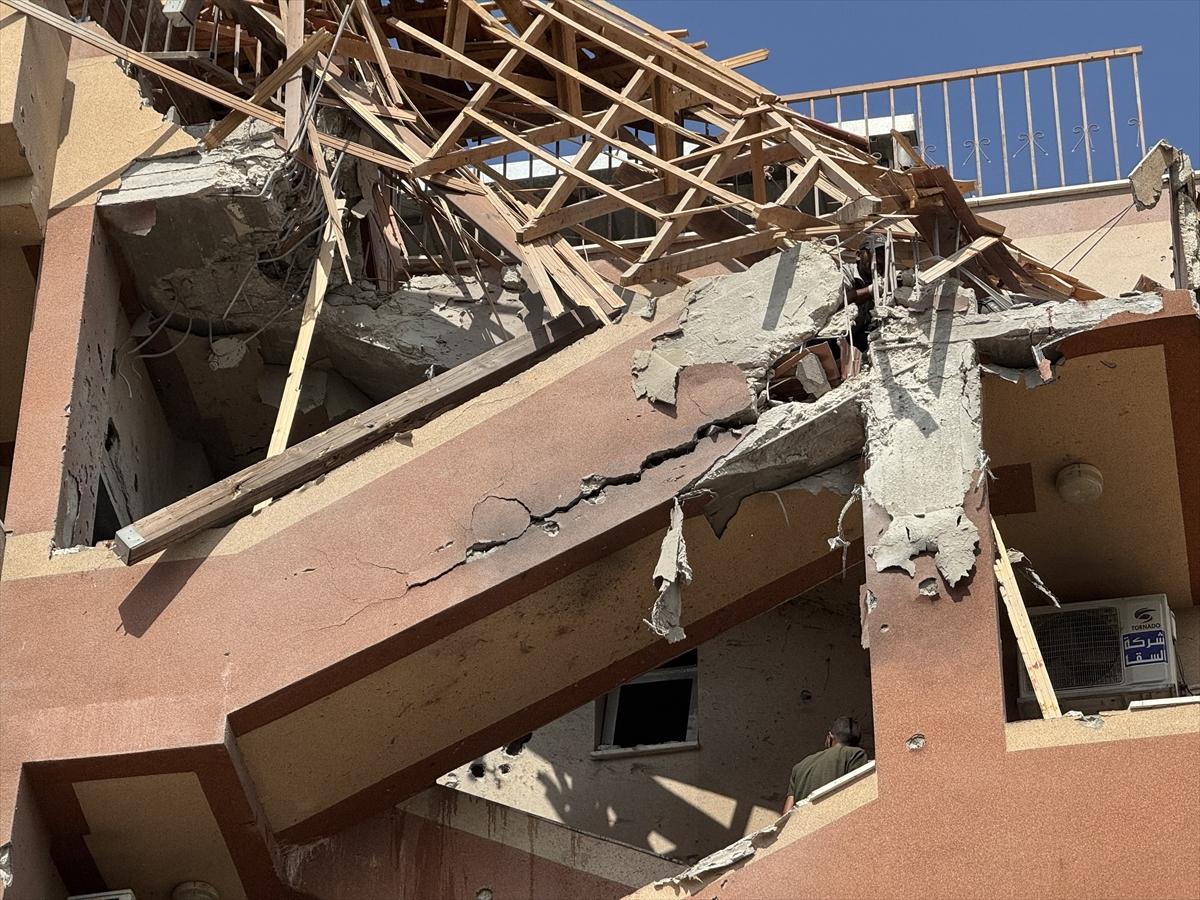
Al-Nasser Hospital in Khan Younis following the Israeli military’s attack, 25 August 2025 – (Anadolu Ajansı)
The five journalists killed in the attack were affiliated with various international media organizations.
The Gaza Media Office announced that the number of journalists killed in Israeli attacks since 7 October 2023 has risen to 247.
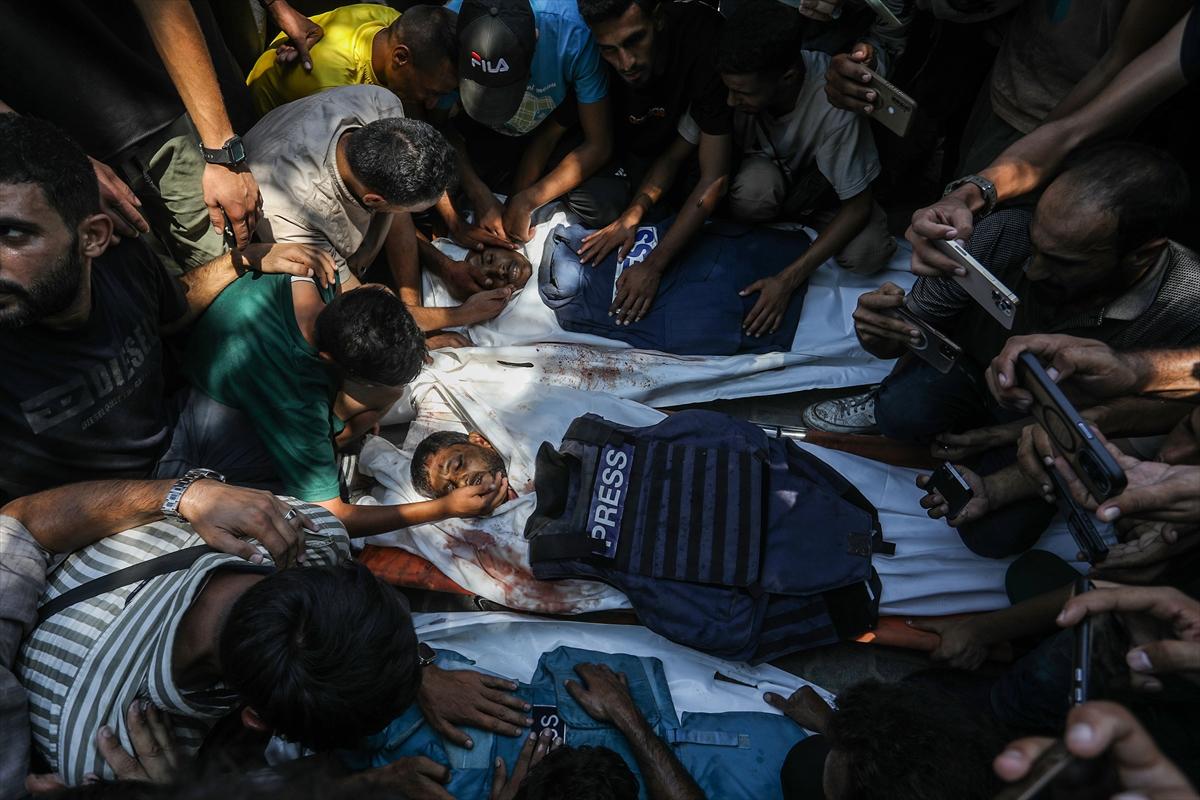
Journalists killed in the Israeli attack are laid to rest, 25 August 2025 – (Anadolu Ajansı)
Dr. Saber al-Asmar, a physician at Al-Nasser Hospital, stated that at the time of the attack, the facility housed doctors, students, and patients, with medical training and treatment activities ongoing in the operating room. Asmar described how patients were gripped by fear and panic, with many no longer daring to remain in the hospital and beginning to flee the premises. Hospital staff emphasized that the attack targeted medical facilities protected under international law.
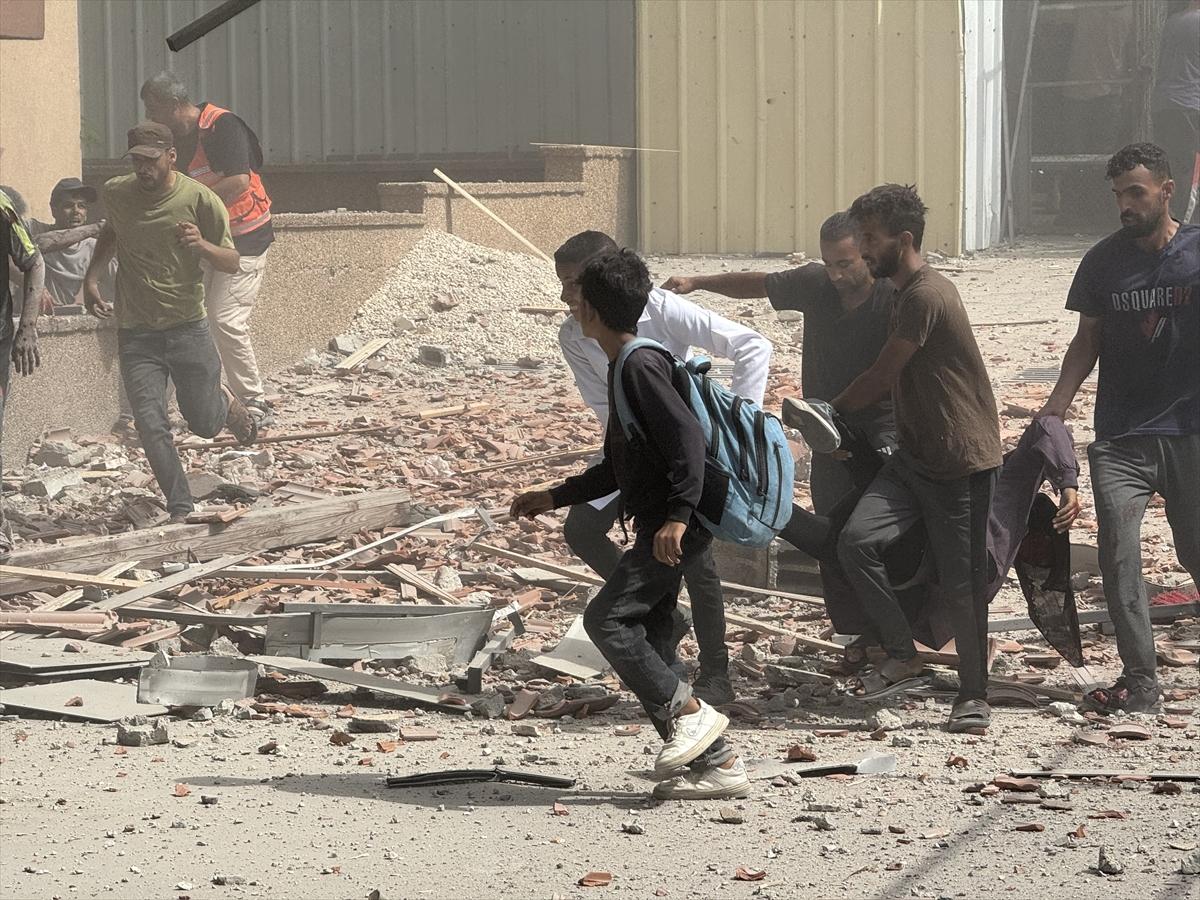
Al-Nasser Hospital in Khan Younis following the Israeli military’s attack, 25 August 2025 – (Anadolu Ajansı)
U.S. Congress members Nydia Velazquez and Rashida Tlaib condemned Israel’s attack on Al-Nasser Hospital in Khan Younis. Velazquez described the assault as a “horrible massacre” and stated that U.S. support for Israel had enabled such attacks. Tlaib labeled the strike a “war crime” and called on the U.S. administration to immediately halt military aid to Israel. Both lawmakers emphasized that targeting journalists and medical personnel constitutes a clear violation of international law.
U.S. President Donald Trump, in a statement from the White House, said he was not directly informed of the attack, adding, “I am not happy about it. I also do not want to see these things.” Trump drew attention to the famine and humanitarian crisis in Gaza, stating that “this nightmare must end.” He acknowledged the tragic loss of five journalists in the strike but avoided direct criticism of Israel.
Trump also noted that hunger in Gaza had deepened, a situation confirmed by international organizations. He announced that the United States had sent $60 million in food aid to the region, which was being distributed, and that efforts were underway to meet food needs. Trump signaled that the situation in Gaza was nearing its conclusion and suggested that progress toward a solution could occur within two to three weeks.
French President Emmanuel Macron, in a statement following the attack on Al-Nasser Hospital, stressed the need to protect civilians, particularly journalists. He emphasized the necessity of allowing unhindered humanitarian access to Gaza and called for a lasting ceasefire. Macron also underscored the urgent need to implement a two-state solution based on the 1967 borders.
UK Foreign Secretary David Lammy described the attack as “horrifying” and expressed deep sorrow over the deaths of numerous journalists and rescue workers. Lammy urged Israel to permit humanitarian access to Gaza and called for an immediate and enduring ceasefire.
Sweden’s Foreign Minister referenced the condition of injured journalist Baraa Lafi and highlighted the issue in national media. Swedish authorities stated that targeting areas protected under international law was unacceptable.
European Commission Crisis Management Representative Hadja Lahbib condemned the targeting of journalists and stressed that such attacks must cease. Lahbib emphasized that the presence of media personnel in conflict zones is vital for witnessing war and that they are entitled to protection under international law.
Germany’s Foreign Ministry expressed being “shocked” by the attack and declared the deaths of numerous journalists, rescue workers, and civilians unacceptable. The statement underscored the critical role of journalists in conveying the reality of Gaza to the world and called on Israel to ensure the safety of media personnel.
The Spanish government labeled the attack a “clear violation of international humanitarian law” and condemned it. The statement recalled that journalists are afforded special protection under international law and expressed deep concern over the loss of life.
Italian Foreign Minister Antonio Tajani stated that ensuring the safety of journalists is a fundamental responsibility and called for the protection of press freedom in Gaza. The Swiss Foreign Ministry announced it “strongly condemned” the attack, reiterating that civilians and civilian infrastructure must always be protected under international humanitarian law.
Former EU High Representative for Foreign Affairs and Security Policy Josep Borrell criticized the passivity of EU institutions. Borrell stated that the EU’s failure to act against Israel’s human rights violations amounted to a political and moral complicity. He warned that this inaction could be subject to judicial review and severely damage Europe’s credibility.
Canada’s Foreign Ministry expressed being “horrified” by the attack and declared it unacceptable. The statement emphasized the importance of protecting civilians, achieving a ceasefire, and delivering humanitarian aid.
Jordan’s Foreign Ministry condemned the attack in the strongest terms, stating it was a clear violation of the Geneva Conventions. The statement asserted that Israel’s attacks on Gaza were driving the region toward instability and called on the international community to take action.
Saudi Arabia’s Foreign Ministry condemned the attack and called on the international community to act immediately. The statement emphasized the necessity of protecting humanitarian aid workers, medical personnel, and media staff.
Qatar’s Foreign Ministry described the attack as “a new link in a systematic chain of crimes.” It stated that the strike constituted a clear violation of international law and called for urgent measures to protect civilians and halt what it termed genocide in Gaza.
Through a statement by UN Secretary-General Antonio Guterres’s spokesperson, the UN condemned Israel’s attack on Al-Nasser Hospital. The statement affirmed that targeting civilians and medical facilities protected under international law is unacceptable. The UN called for an impartial and independent investigation into the attack.
UN Special Rapporteur on the situation of human rights in the Palestinian territories, Francesca Albanese, emphasized in a social media statement that the attack targeted rescue workers as well. Albanese noted that such incidents have become routine in Gaza and called on the international community to impose an arms embargo and sanctions on Israel. She also demanded the lifting of the blockade on Gaza.
UN Human Rights Office spokesperson Ravina Shamdasani recalled that four journalists and one firefighter were killed in the attack, stating, “The killing of journalists in Gaza should shock the world.” Shamdasani stressed that these incidents must be independently investigated and emphasized that targeting journalists constitutes a grave violation of international law.
UN Office for the Coordination of Humanitarian Affairs (OCHA) spokesperson Olga Cherevko described the attack as “appalling.” Citing on-the-ground observations, she noted that the repeated targeting of hospitals has pushed Gaza’s healthcare system to the brink of collapse. The statement affirmed that protecting civilians and medical personnel is the responsibility of the international community.
A joint statement by Reuters Global Editor-in-Chief Alessandra Galloni and AP Global Editor-in-Chief Julie Pace expressed outrage over the killing of five journalists at Al-Nasser Hospital. The statement recalled that hospitals are protected under international law and called for a transparent and swift investigation into Israel’s attack. It also expressed skepticism toward Israel’s claims that journalists are not targeted, noting that most past investigations into similar incidents have yielded no results.
Reuters issued individual condolences for photo correspondent Husam al-Masri and former freelance photojournalist Muaz Abu Taha, both killed in the attack, and drew attention to the critical condition of injured journalist Hatem Khaled. The agency appealed to Israeli and Gaza authorities for urgent medical assistance for the wounded journalist.
The Associated Press issued a statement expressing sorrow over the death of journalist Maryam Abu Daka. AP noted its efforts to ensure the safety of journalists operating under extremely difficult conditions in Gaza but emphasized that attacks continue to directly threaten their lives.
Al Jazeera, following the killing of its cameraman Muhammad Salameh, described the attack as a “systematic campaign to silence the truth.” The statement affirmed that such acts qualify as “war crimes” under the Rome Statute of the International Criminal Court and the Geneva Conventions.
Reporters Without Borders (RSF) strongly condemned the attack and called for an emergency meeting of the UN Security Council. RSF Director General Thibaut Bruttin noted that over 200 journalists have been killed in Gaza in the past two years, calling it a breach of the international obligation to protect journalists. The statement also expressed alarm over Israel’s efforts to suppress information.
The Palestinian Journalists Syndicate declared that Israel views journalism as a “strategic threat” and labeled the attacks as war crimes. The syndicate stressed that these actions are part of a deliberate effort to silence witnesses and conceal the truth and called for Israel to be prosecuted before the International Criminal Court. It also reported that 147 journalists are currently detained by Israel, with 20 having been subjected to torture.
Turkish President Recep Tayyip Erdoğan condemned Israel’s attack on Al-Nasser Hospital in Khan Younis, which killed at least 20 people, including five journalists. Erdoğan described the assault as a “savage massacre” and accused Israeli Prime Minister Benjamin Netanyahu’s government of seeking to destroy everything that exists in the name of humanity.
The President announced that Turkey would take additional steps in the coming period to halt the massacres in Gaza, deliver more humanitarian aid to Gazans, and mobilize the international community. Erdoğan’s remarks indicated that Turkey viewed the attack not merely as a diplomatic condemnation but as a catalyst for concrete political and humanitarian action.
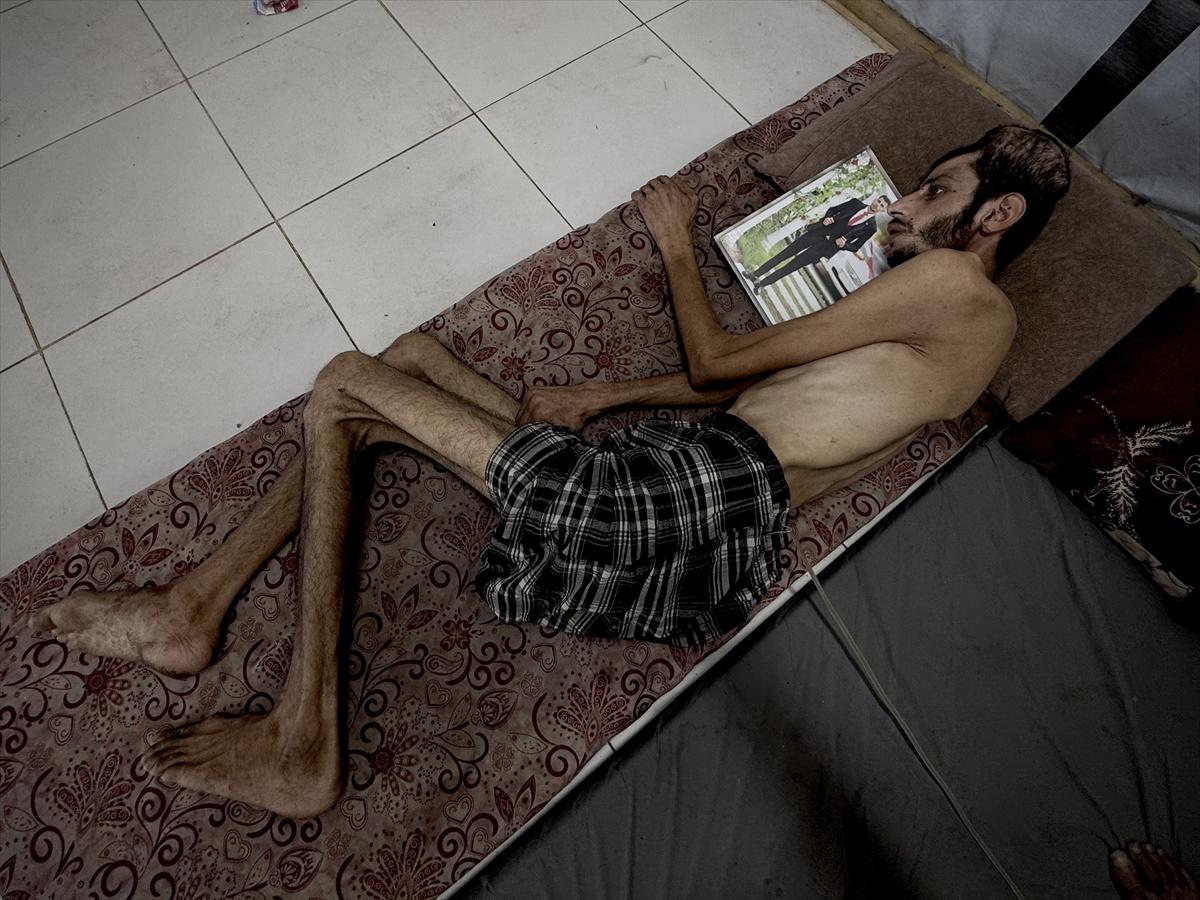
A Palestinian suffering from severe malnutrition due to inadequate medical care and medication in Gaza, 24 August 2025 – (Anadolu Ajansı)
The Gaza Strip is enduring a severe humanitarian crisis due to Israel’s intense military assaults and ongoing blockade. Medicines, food, clean water, and hygiene supplies have drastically diminished, leading to widespread scarcity. According to data from the Gaza Ministry of Health, as of 25 August 2025, the number of deaths caused by starvation has reached 300, of whom 117 are children.
The Integrated Food Security Phase Classification (IPC), supported by the United Nations, reported in its 15 August 2025 assessment that famine in Gaza has reached Phase 5, known as “catastrophe.” The report stated that over half a million people are living under conditions defined by hunger, poverty, and death. As of 25 August 2025, the number of people killed in Israeli attacks on the Gaza Strip has reached 62,622, with 157,673 injured.
Al Jazeera. “Live: Israel Intensifies Attacks on Gaza, Leaving Dozens Dead in a Day.” Al Jazeera. Accessed August 25, 2025. https://www.aljazeera.com/news/liveblog/2025/8/25/live-israel-intensifies-attacks-on-gaza-leaving-dozens-dead-in-a-day
Anadolu Ajansı. "Trump, Gazze’de Gazetecilerin Hedef Alınmasından Memnun Olmadığını Belirtti." Accessed August 26, 2025. https://www.aa.com.tr/tr/dunya/trump-gazzede-gazetecilerin-hedef-alinmasindan-memnun-olmadigini-belirtti/3668873#
Anadolu Ajansı. “ABD’de Kongre Üyeleri, İsrail’in Gazze’deki Nasır Hastanesine Saldırılarına Tepki Gösterdi.” Accessed August 26, 2025. https://www.aa.com.tr/tr/dunya/abdde-kongre-uyeleri-israilin-gazzedeki-nasir-hastanesine-saldirilarina-tepki-gosterdi/3669120#
Anadolu Ajansı. “Avrupalı Liderler, İsrail’in Nasır Hastanesi’ni Hedef Alan Saldırılarına Tepki Gösterdi.” Accessed August 26, 2025. https://www.aa.com.tr/tr/dunya/avrupali-liderler-israilin-nasir-hastanesini-hedef-alan-saldirilarina-tepki-gosterdi/3668936#
Anadolu Ajansı. “Reuters ve AP, Gazze’de Gazetecilerin Öldürülmesinden Dolayı Öfkeli Olduklarını Açıkladı.” Accessed August 26, 2025. https://www.aa.com.tr/tr/dunya/reuters-ve-ap-gazzede-gazetecilerin-oldurulmesinden-dolayi-ofkeli-olduklarini-acikladi/3669032#
Anadolu Ajansı. “İsrail’in Gazze’de Nasır Hastanesine Düzenlediği Saldırıda 4’ü Gazeteci Olmak Üzere 15 Kişi Hayatını Kaybetti.” Accessed August 25, 2025. https://www.aa.com.tr/tr/dunya/israilin-gazzede-nasir-hastanesine-duzenledigi-saldirida-4u-gazeteci-olmak-uzere-15-kisi-hayatini-kaybetti/3668118
Reuters. “Israel Hits Gaza Hospital, Killing at Least 15 People Including Journalists.” Reuters, August 25, 2025. Accessed August 25, 2025. https://www.reuters.com/world/middle-east/israel-hits-gaza-hospital-killing-least-15-people-including-journalists-2025-08-25/
The Israeli military has continued aerial strikes targeting Gaza City and its surroundings. On 7 September 2025 the seven-story El-Ruya building in western Gaza was completely destroyed, and the previous day the 15-story El-Susi Tower was demolished. Israel’s security cabinet approved a plan for the occupation of Gaza, aiming to forcibly displace approximately one million residents of the city to the south. Multi-story buildings are being deliberately targeted in these attacks, and nearby tent camps are also suffering damage. Defense Minister Israel Katz announced that attacks on Gaza City would be expanded and that multi-story buildings would be bombed.
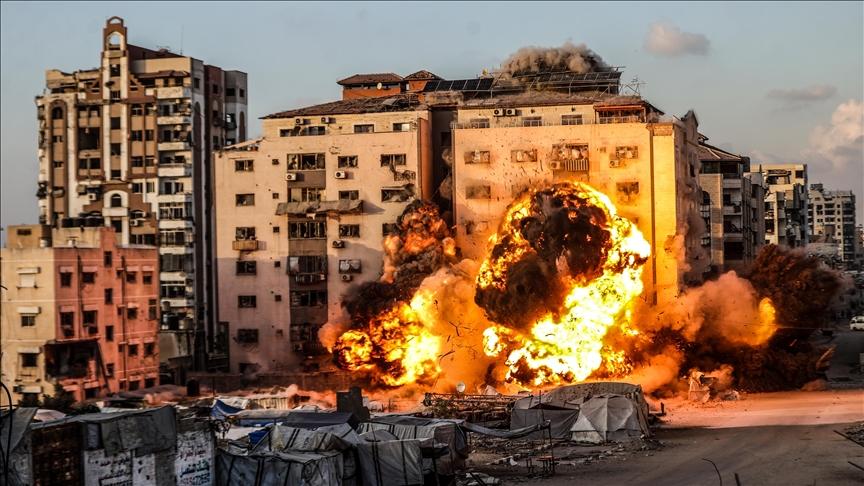
Intense flames and smoke rose from the El-Ruya Tower in Gaza City after it was bombed by the Israeli military, 07 September 2025 (Anadolu Agency)
The number of deaths in Gaza since October 2023 has exceeded 64,500. According to Health Ministry data, 67 people died and 320 were injured in just the past 24 hours. In attacks targeting civilians awaiting aid, 2,430 people have been killed and 17,794 injured. The number of deaths due to starvation has reached 393, including 140 children. Due to Israel’s closure of border crossings and obstruction of aid, Gaza has been declared a famine zone by UN-supported systems.
On the morning of 8 September 2025, at least 25 civilians were killed in Israeli attacks across Gaza. Civilians including children were killed in attacks on tents and homes in Gaza City. In the Nuseirat Refugee Camp, shelling killed five people and injured 22. In the El-Mavasi area of Khan Younis, despite being declared a “safe zone,” civilian tents were targeted and three people were killed.
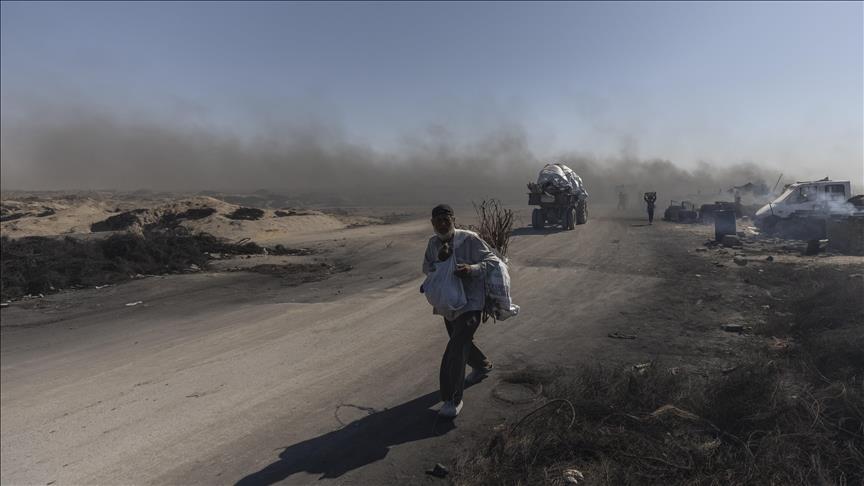
Intense smoke and destruction following Israeli attacks in Gaza, 07 September 2025 (Anadolu Agency)
The Israeli military has continued operations in the West Bank. On 8 September 2025, 30 shops were destroyed and 10 Palestinians were arrested in the Beitah neighborhood of Nablus. Additionally, illegal Israeli settlers attacked villages, injuring civilians and damaging property. According to Palestinian authorities, 10,800 people are being held in Israeli prisons. Since October 2023, the death toll in the West Bank has reached 1,016.
The Organization of Islamic Cooperation and the Arab League Gaza Contact Group condemned Israel’s policy of starving civilians and forcibly displacing them, stating that it violates international law. The European Union stated that Israel must not obstruct humanitarian aid reaching Gaza and called for an end to the blockade and famine. Spanish Prime Minister Pedro Sanchez announced a nine-point decision to permanently ban arms exports to Israel due to the attacks in Gaza, after which Israel imposed a travel ban on two Spanish ministers.
The Israeli military, through official statements, has called on approximately one million Palestinians living in Gaza City to be forcibly displaced to southern regions. This call coincided with preparations for a ground offensive and is seen as a step toward paving the way for the occupation of northern Gaza.
Israeli Defense Forces Spokesperson Avichay Adraee announced on the social media platform X that Israel planned a large-scale attack on Gaza City. The statement emphasized that remaining in the area would be “extremely dangerous” and urged civilians to leave immediately for the south, particularly to the El-Mavasi region.
In Gaza City, where the majority of civilians live in makeshift tents, the threat of a ground assault has once again exposed them to the danger of forced displacement. The population in the targeted area is already under intense aerial bombardment.
Prime Minister Benjamin Netanyahu also stated during the same period that Israel was preparing for a ground operation in Gaza and urged the civilian population to move south.
Anadolu Ajansı. "6 More Palestinians Die of Starvation in Israel-Besieged Gaza." Accessed September 8, 2025. https://www.aa.com.tr/en/middle-east/6-more-palestinians-die-of-starvation-in-israel-besieged-gaza/3681241
Anadolu Ajansı. "At Least 25 Killed in Israeli Strikes on Homes, Tents across Gaza Strip." Accessed September 8, 2025. https://www.aa.com.tr/en/middle-east/at-least-25-killed-in-israeli-strikes-on-homes-tents-across-gaza-strip/3681129
Anadolu Ajansı. "EU Calls on Israel Not to Impose Obstacles on Humanitarian Aid Access to Gaza." Accessed September 8, 2025. https://www.aa.com.tr/en/europe/eu-calls-on-israel-not-to-impose-obstacles-on-humanitarian-aid-access-to-gaza/3681380
Anadolu Ajansı. "IIT, Arap Birliği, Gazze Temas Grubu Komitesi Dışişleri Bakanlarından İsrail’e Kınama." Accessed September 8, 2025. https://www.aa.com.tr/tr/dunya/iit-arap-birligi-gazze-temas-grubu-komitesi-disisleri-bakanlarindan-israile-kinama/3681272
Anadolu Ajansı. "Israel Imposes Entry Ban on Senior Spanish Officials over Criticism of Gaza Genocide." Accessed September 8, 2025. https://www.aa.com.tr/en/middle-east/israel-imposes-entry-ban-on-senior-spanish-officials-over-criticism-of-gaza-genocide/3681212
Anadolu Ajansı. "Israeli Army Bombs Another High-Rise Building in Gaza City." Accessed September 8, 2025. https://www.aa.com.tr/en/middle-east/israeli-army-bombs-another-high-rise-building-in-gaza-city/3680750
Anadolu Ajansı. "Israeli Defense Minister Threatens to Intensify Strikes on Gaza City." Accessed September 8, 2025. https://www.aa.com.tr/en/middle-east/israeli-defense-minister-threatens-to-intensify-strikes-on-gaza-city/3680977
Anadolu Ajansı. "Israeli Forces Detain 10 Palestinians, Demolish 30 Stores in West Bank Raids." Accessed September 8, 2025. https://www.aa.com.tr/en/middle-east/israeli-forces-detain-10-palestinians-demolish-30-stores-in-west-bank-raids/3681366
TRT Haber. "Soykırımcı İsrail’in Eli Kanlı Bakanından Gazze’de Şiddetli Saldırı Tehdidi." Accessed September 8, 2025. https://www.trthaber.com/haber/dunya/soykirimci-israilin-eli-kanli-bakanindan-gazzede-siddetli-saldiri-tehdidi-919162.html
TRT Haber. "Soykırımcı İsrail’in Gazze’ye Saldırılarında Can Kaybı Son 24 Saatte 67 Artarak 64 Bin 522’ye Çıktı." TRT Haber. Accessed September 8, 2025. https://www.trthaber.com/haber/dunya/soykirimci-israilin-gazzeye-saldirilarinda-can-kaybi-son-24-saatte-67-artarak-64-bin-522ye-cikti-919186.html
According to a written statement by Gaza’s Ministry of Health, between 13 and 14 September, 47 additional people were killed and 205 injured were brought to hospitals. Since 7 October 2023, the number of deaths in Gaza has reached 64,803 and the number of injured has reached 164,264. Since 18 March, 12,253 people have been killed and 52,223 injured in attacks.
A total of 420 deaths have been attributed to starvation, including 145 children; since the United Nations-supported IPC declared a famine in Gaza on 22 August, an additional 142 people, 30 of them children, have died due to starvation and malnutrition.
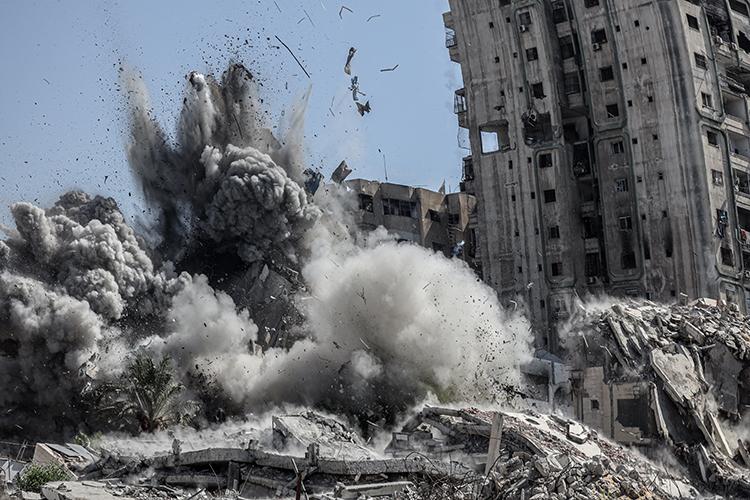
Israel’s attacks on central neighborhoods of Gaza – (Anadolu Ajansı)
Due to the spread of famine and malnutrition caused by Israel’s policy of deliberate starvation, hospital blood bank inventories have dropped to critical levels. Daily requirements for blood and its components exceed 350 units; blood supply has become unsustainable due to declining mass donation sources. Authorities have urgently requested emergency interventions to strengthen blood unit and component inventories.
In recent attacks across various areas, civilians, homes, tents, and vehicles have been targeted. In an attack on a refugee tent south of Deir al-Balah, six people were killed, including two women and three children; the southern and central areas of Khan Yunis were hit by artillery fire. In Gaza City, the area in front of Al-Shifa Hospital, the vicinity of Tel al-Heva, and the eastern part of Sheikh Radwan were targeted by aerial, artillery, and explosive-laden “robot” systems.
Multi-story buildings, blocks, and residential areas in the west and northwest of Gaza City have been heavily bombed. A multi-story building on Es-Sina Street, settlements around Tel al-Heva, Rimal, Sheikh Akeel, and Gaza Port, as well as El-Kerame and El-Cela streets, and structures near the Al-Shati Refugee Camp were targeted.
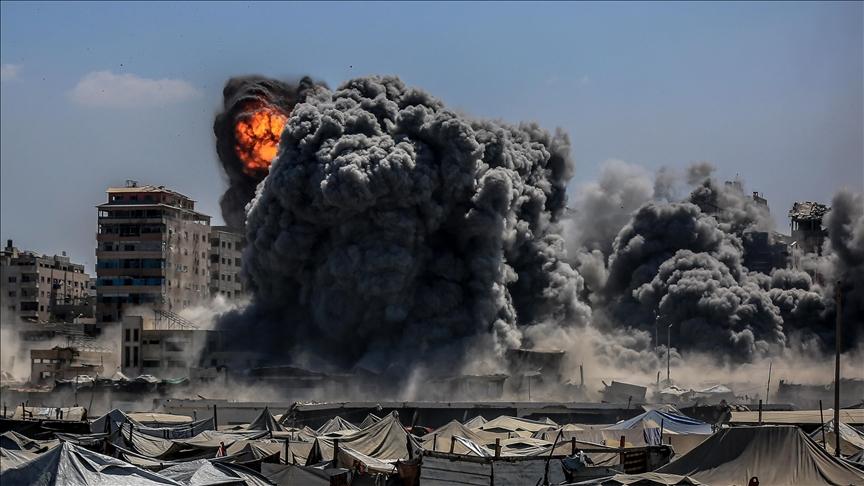
Israel’s attacks on western neighborhoods of Gaza City – (Anadolu Ajansı)
The Israeli military issued warnings for civilians to evacuate along Reshid Street for movement southward. Additionally, the upper floors of the Abu Rasas and Aisha buildings in the western part of the city and the “Tower 5” building in Kerame were destroyed; a home belonging to the Belha family on Cela Street was bombed. Throughout the day, numerous buildings received “evacuation warnings,” triggering panic among civilians.
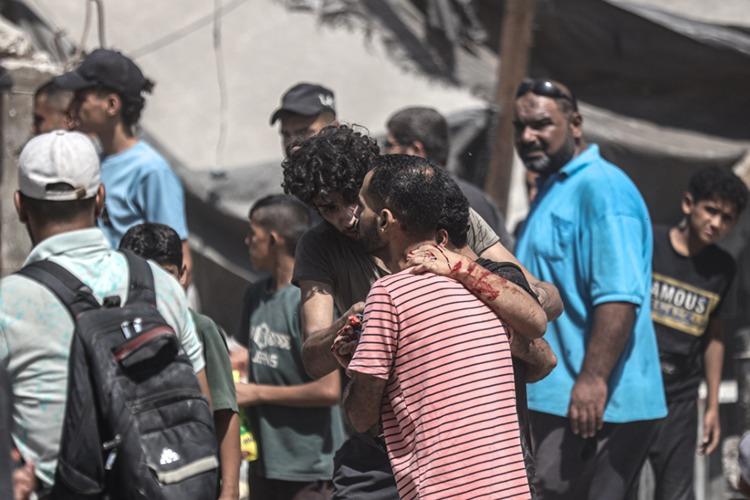
Israel’s attacks on Gazans continue – (Anadolu Ajansı)
Anadolu Ajansı. “Over 6,000 civilians displaced by Israeli bombardment of Gaza City in 1 day: Civil Defense.” Accessed September 14, 2025. https://www.aa.com.tr/en/middle-east/over-6-000-civilians-displaced-by-israeli-bombardment-of-gaza-city-in-1-day-civil-defense/3686870
Anadolu Ajansı. “İsrail Gazze kentinin batı mahallelerinde binaları hedef alan saldırılarını yoğunlaştırıyor.” Accessed September 14, 2025. https://www.aa.com.tr/tr/dunya/israil-gazze-kentinin-bati-mahallelerinde-binalari-hedef-alan-saldirilarini-yogunlastiriyor/3686123
Anadolu Ajansı. “İsrail'in Gazze Şeridi'ne düzenlediği son saldırılarda 7 kişi hayatını kaybetti.” Accessed September 14, 2025. https://www.aa.com.tr/tr/dunya/israilin-gazze-seridine-duzenledigi-son-saldirilarda-7-kisi-hayatini-kaybetti/3686951
Anadolu Ajansı. “İsrail'in Gazze'ye saldırılarında can kaybı son 24 saatte 47 artarak 64 bin 803'e çıkt.” Accessed September 14, 2025. https://www.aa.com.tr/tr/dunya/israilin-gazzeye-saldirilarinda-can-kaybi-son-24-saatte-47-artarak-64-bin-803e-cikti/3686466
TRT World. “Gaza doctors reveal disturbing pattern of gunshot wounds in head, chest among children.” Accessed September 14, 2025. https://www.trtworld.com/article/2b3bd723909a
The Israeli military launched a ground operation targeting Gaza City on 16 September 2025. The Israeli military stated that the objective of the operation was the occupation of the city and the elimination of Hamas’s administrative and military capabilities. Prior to the advance of ground forces, Israel had conducted weeks of intense aerial and artillery bombardments against Gaza. During this period, high-rise buildings and residential areas were targeted, resulting in severe destruction across Gaza’s most densely populated regions.
In a written statement by the military, it was reported that the attacks began during nighttime hours, with two divisions currently deployed on the ground and a third division expected to join the operation in the coming days. It was also announced that the ground assault had commenced from the peripheral neighborhoods of the city and that the encirclement of Gaza City was planned for subsequent stages.
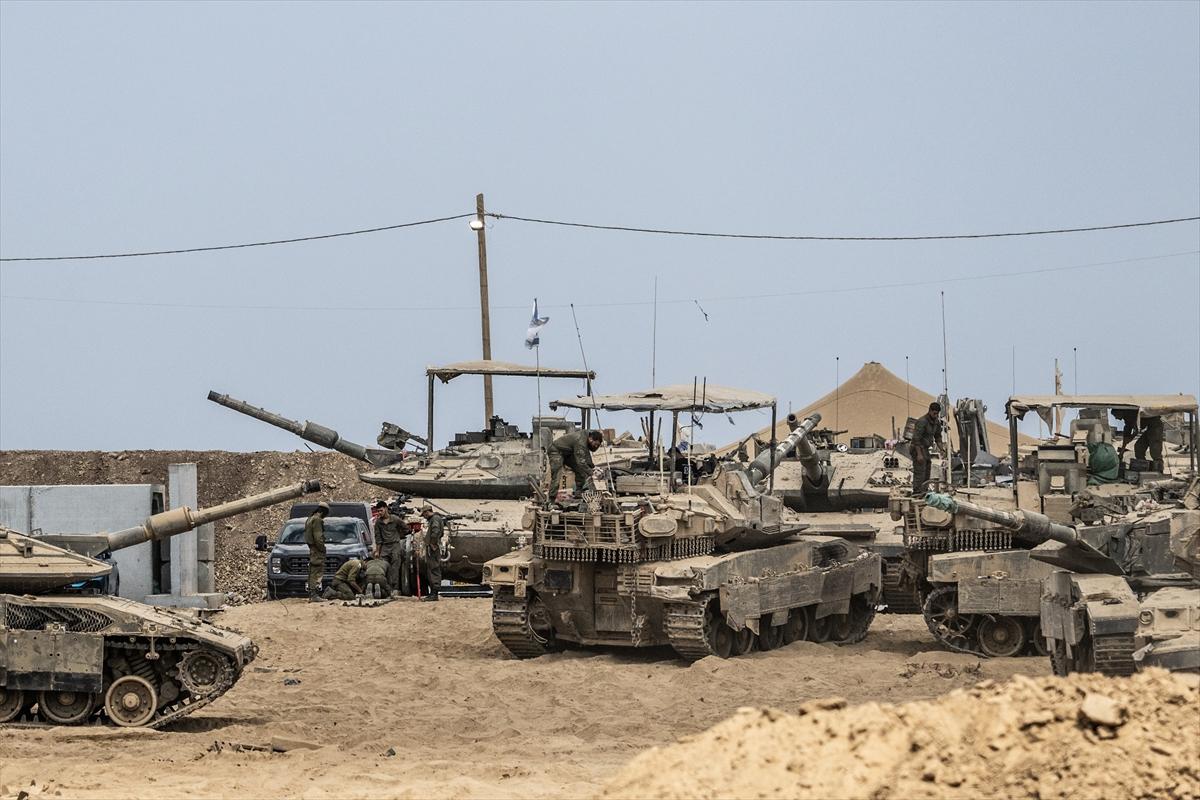
As Israel’s attacks on the Gaza Strip continue uninterrupted, Israeli tanks and armored vehicles stand near the Gaza border, 16 September 2025 – (Anadolu Ajansı)
Israeli Defense Minister Israel Katz, during a statement at the outset of the attacks, used the phrase “Gaza is burning.” This remark has been interpreted as an indication of Israel’s intent to fully capture Gaza City. Reports from the region indicate that bombardments have been nearly continuous, with civilian homes destroyed. Many civilians remain trapped under rubble, and rescue efforts have been repeatedly interrupted due to ongoing attacks.
The commencement of the ground operation has generated widespread reactions both within Israel and internationally. Official Israeli military statements have indicated that the operation would proceed in phased and incremental stages. However, local sources in the region have reported that the ground offensive, launched in tandem with aerial strikes, has resulted in a large number of casualties.
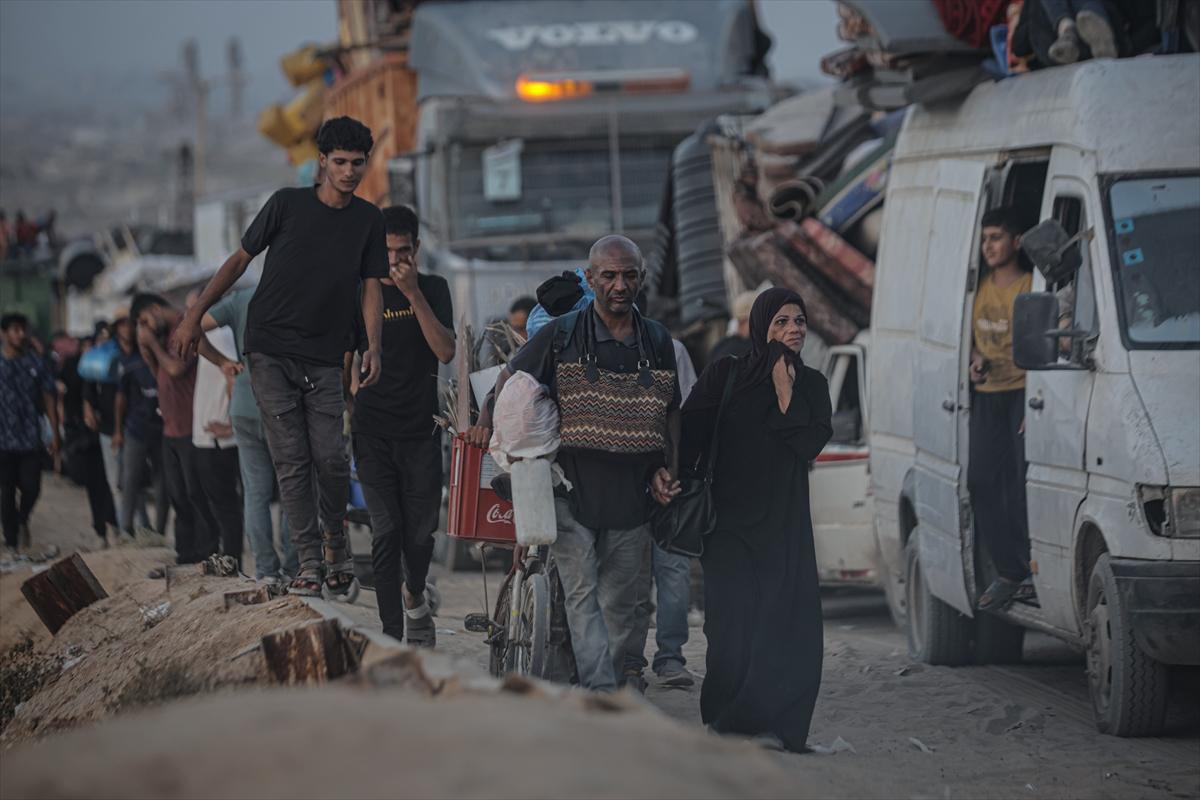
Forced displacement in Gaza due to Israeli attacks, 16 September 2025 – (Anadolu Ajansı)
Shortly before the commencement of the ground invasion, U.S. Secretary of State Marco Rubio met with Prime Minister Benjamin Netanyahu in Jerusalem. During the meeting, the U.S. administration reaffirmed its support for Israel but expressed the expectation that the operation would be executed swiftly and concluded in a short timeframe. Rubio emphasized that the disarmament of Hamas and the release of hostages remained top priorities.
It was also stated that U.S. President Donald Trump would not obstruct Israel’s ground operation and that the campaign would be conducted under Netanyahu’s political responsibility. U.S. officials have characterized the process as “Netanyahu’s war, not Trump’s.”
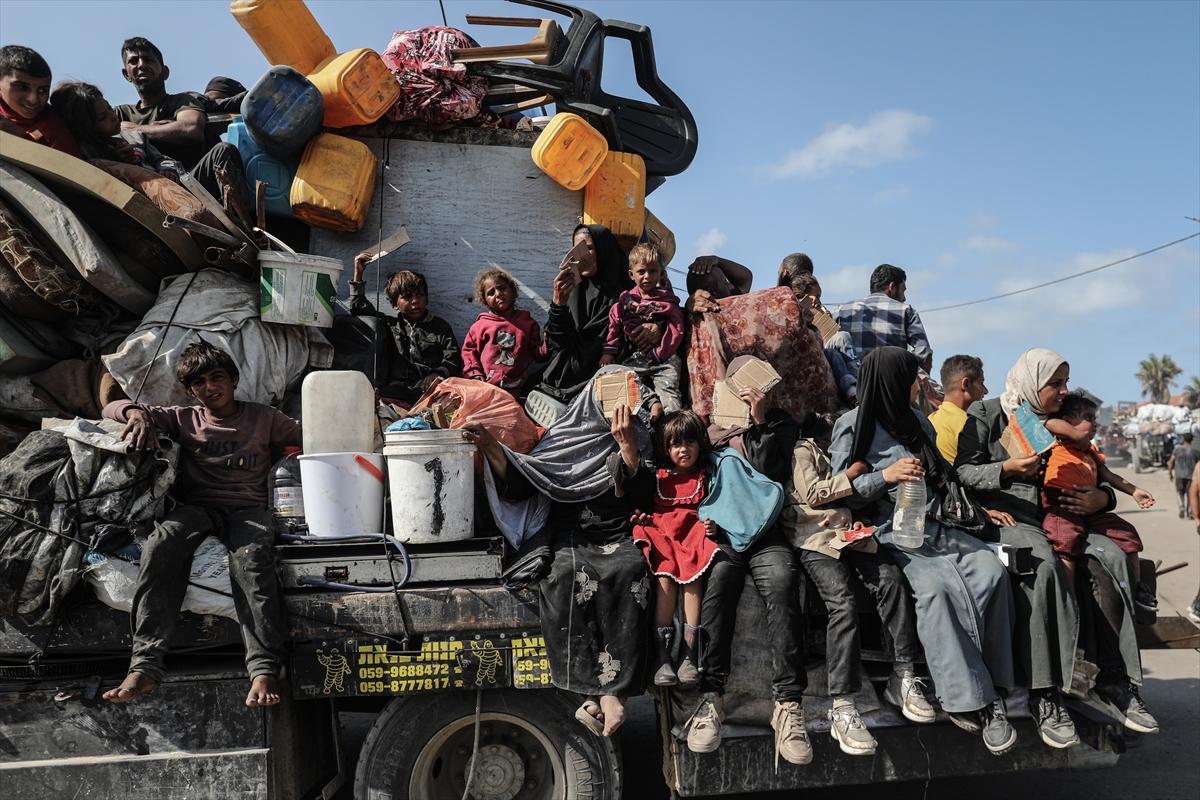
Forced displacement in Gaza due to Israeli attacks, 15 September 2025 – (Anadolu Ajansı)
During the ground invasion of Gaza City, Palestinian civilians faced extreme conditions. The Israeli military demanded the evacuation of the city, forcing hundreds of thousands of people to flee southward. However, areas declared as “safe zones,” such as the Al-Mawasi camp, have been regularly bombed and rendered uninhabitable due to severe overcrowding and unsanitary conditions.
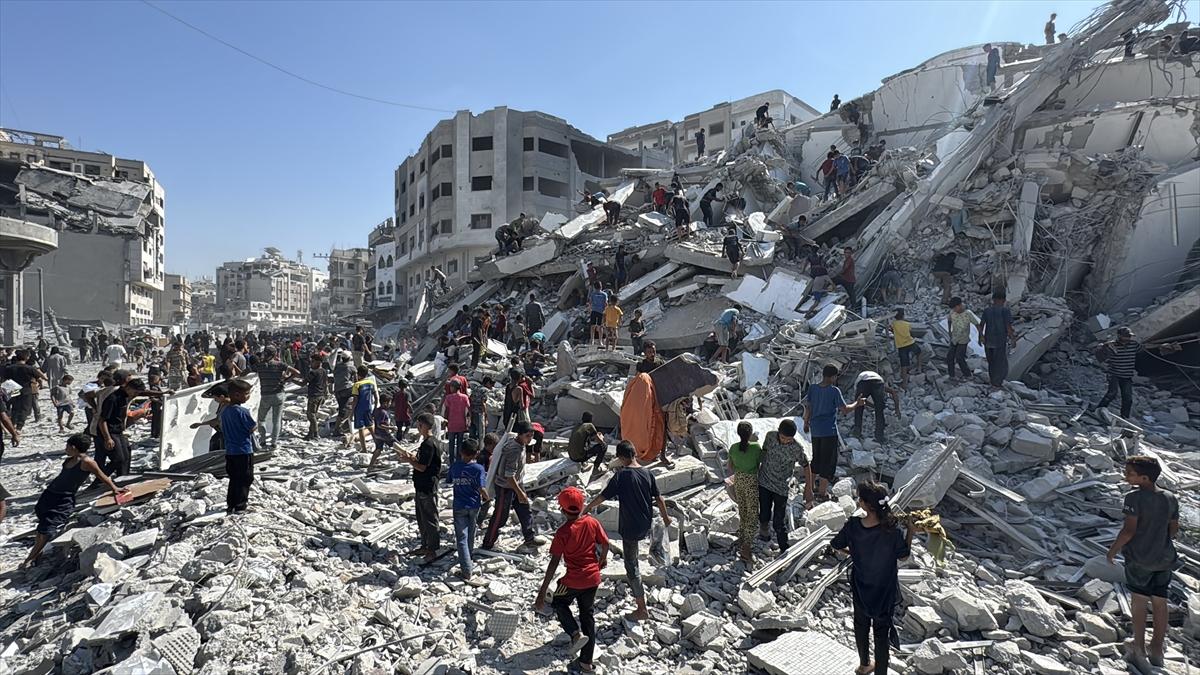
Building destroyed by an Israeli airstrike on the Al-Ghafri Tower in Gaza City, 15 September 2025 – (Anadolu Ajansı)
The displaced population has largely been unable to access basic services. Shortages of water, food, and medicine have deepened, exacerbating conditions of famine. The United Nations and humanitarian organizations have described the situation as a disaster-level humanitarian crisis.
Healthcare services have also come under severe strain. Numerous medical facilities, including Al-Shifa and Baptist hospitals, have been rendered inoperable due to bombardments. Premature infants have been forced to be kept in a single incubator, and critical medical equipment has ceased functioning due to power outages. Many healthcare workers have been unable to perform their duties due to the deteriorating field conditions.
It has been reported that the eastern districts of the city have been completely evacuated, with the remaining population forced westward, and then further displaced again from those areas. The Israeli military has also ordered civilians to move southward along Rashid Street, which runs along the Gaza coastline. Military spokesperson Avichay Adraee stated that more than 40 percent of the city’s residents have been forcibly displaced.
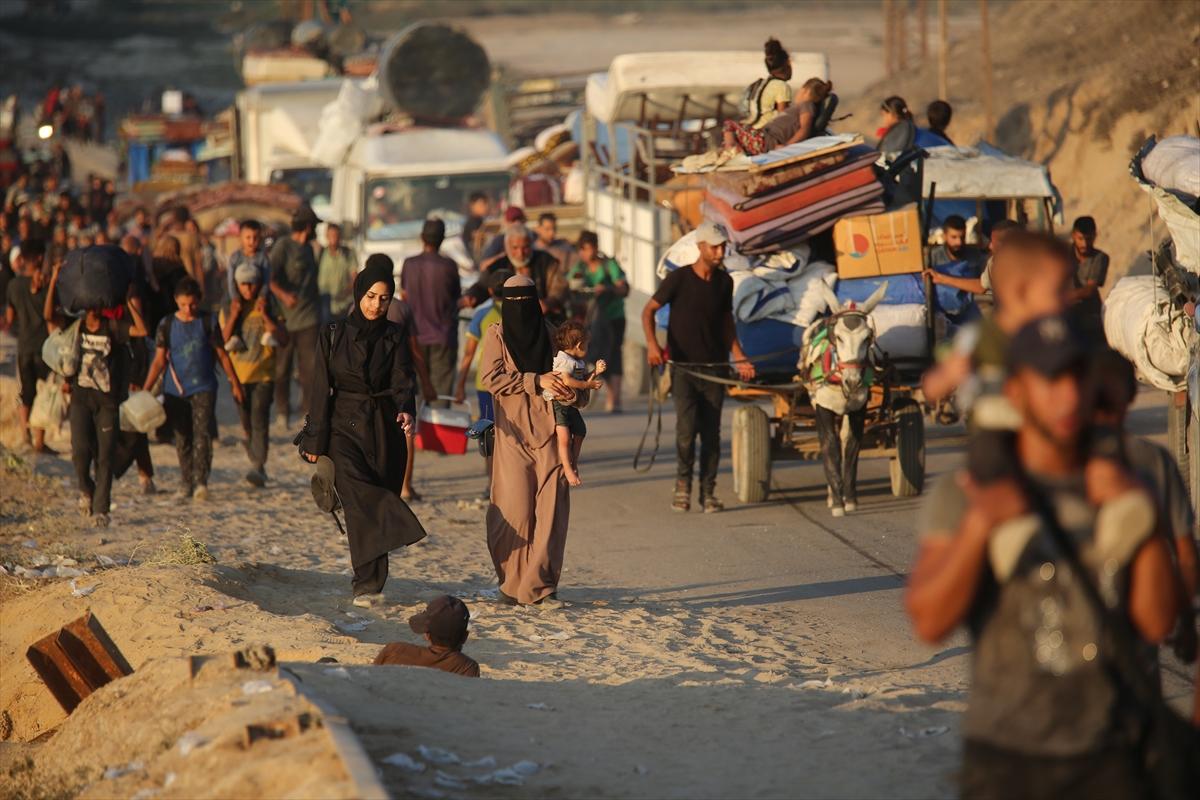
Forced displacement in Gaza due to Israeli attacks, 15 September 2025 – (Anadolu Ajansı)
Casualties rose rapidly following the commencement of the ground invasion. On 16 September alone, between 52 and 62 civilians were reported killed in bombardments across Gaza. Dozens were killed or injured in intense aerial strikes on the Daraj and Sabra neighborhoods. Children and women were among those killed in these attacks.
According to hospital sources, 31 people were killed in attacks in northern and eastern Gaza, and eight people—including women and children—were killed in a strike near Emn Junction. In the Derec neighborhood, two homes were bombed, resulting in at least three deaths and numerous civilians trapped under rubble. The number of bodies recovered from the debris has reached 20.
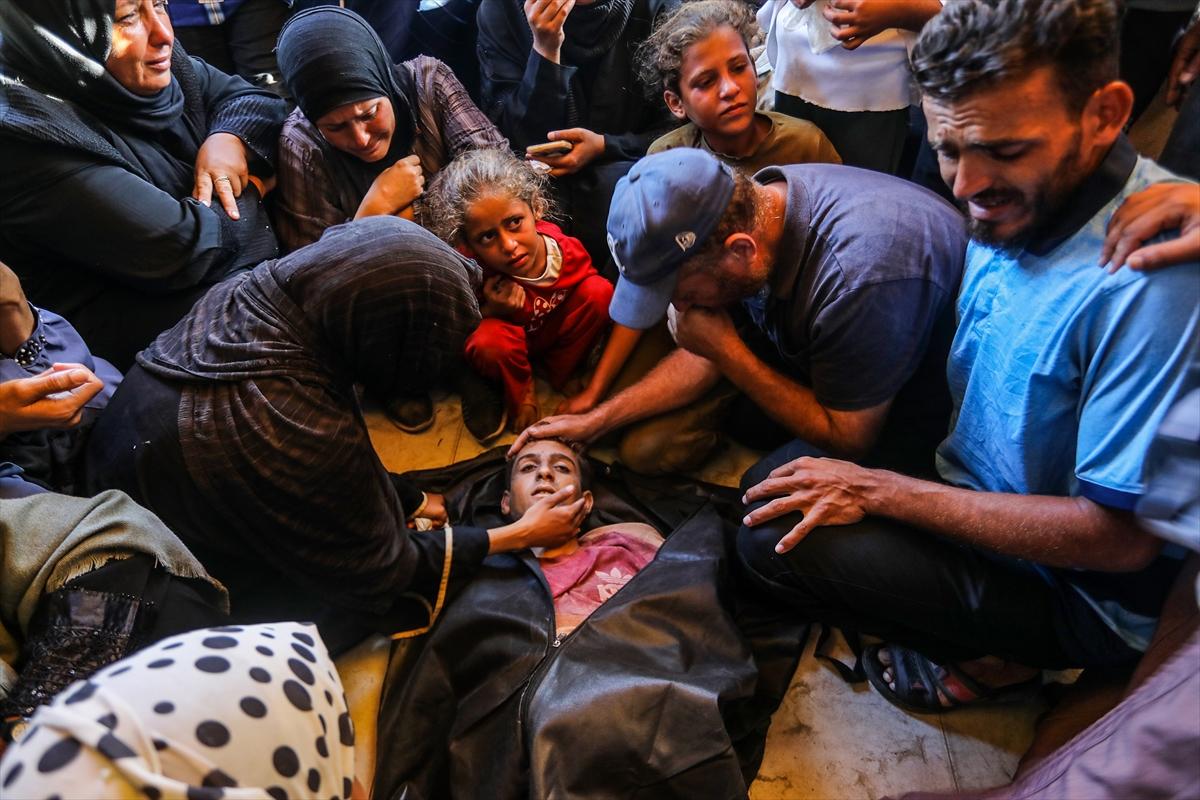
A young man killed in Israel’s attacks on Gaza, 16 September 2025 – (Anadolu Ajansı)
In the Sabra neighborhood of southern Gaza, four people were killed when a house was targeted. Numerous others were injured in the Shati Refugee Camp and Sheikh Rihan area. In the Birket area of Sheikh Rihan, homes were destroyed by explosive-laden robots and civilians were fired upon by unmanned aerial vehicles.
In Deir al-Balah, in the central Gaza Strip, a family of three was killed when their home was struck. In the Bureij Refugee Camp, civilians sheltering in tents at Abu Hemise School were targeted, resulting in many injuries.
According to the Gaza Ministry of Health, between 7 October 2023 and 16 September 2025, at least 64,871 people have been killed and 164,610 injured. The former Chief of Staff of the Israeli military also stated that more than 10 percent of Gaza’s population has been killed or injured.
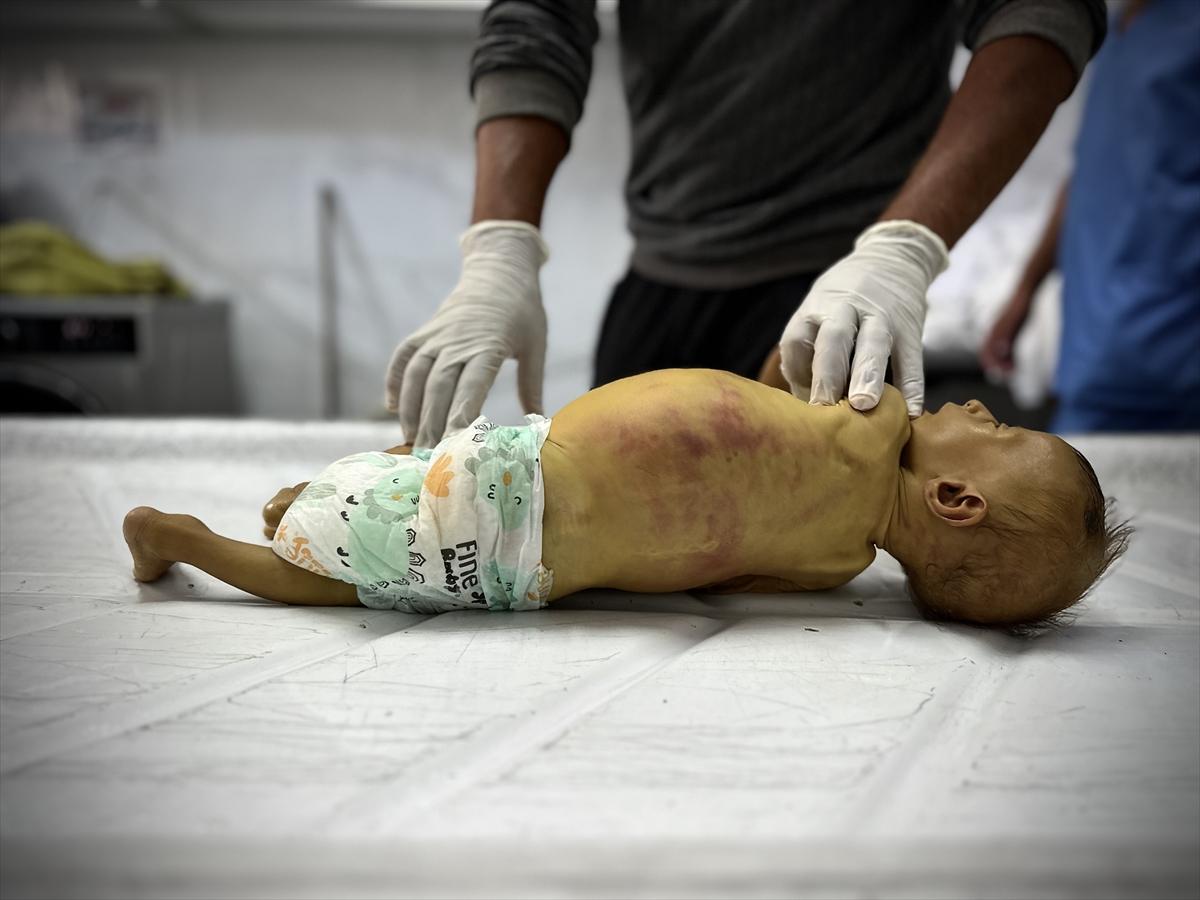
El-Misri, a six-month-old child who died from malnutrition in Gaza, 16 September 2025 – (Anadolu Ajansı)
Three additional people, one of them a child, died from starvation between 15 and 16 September. The total number of deaths from starvation in Gaza has risen to 428. According to United Nations-supported IPC data, 150 people have died from starvation since famine was officially declared on 22 August.
Al Jazeera. “LIVE: 62 killed as Israeli army launches ground invasion of Gaza City.” Al Jazeera. Accessed September 16, 2025. https://www.aljazeera.com/news/liveblog/2025/9/16/live-israel-pounds-gaza-city-muslim-leaders-condemn-strike-on-qatar
Anadolu Ajansı. “İsrail Ordusu Gazze’ye Yönelik Yeni Bir Kara Saldırısı Başlattı.” Accessed September 16, 2025. https://www.aa.com.tr/tr/dunya/israil-ordusu-gazzeye-yonelik-yeni-bir-kara-saldirisi-baslatti/3688713#
BBC News. “Israel escalates bombardment as defence minister says 'Gaza is burning'.” BBC News. Accessed September 16, 2025. https://www.bbc.com/news/articles/c749q1245pwo
BBC News. “Israel-Gaza Live Coverage.” BBC News. Accessed September 16, 2025. https://www.bbc.com/news/live/cd72grrl0pxt
CNN. “Israel-Hamas War: Gaza City Incursion.” CNN. Accessed September 16, 2025. https://edition.cnn.com/world/live-news/israel-hamas-war-gaza-city-incursion-09-16-25-intl-hnk
TRT World. “Israel Intensifies Ground Assault on Gaza.” TRT World. Accessed September 16, 2025. https://www.trtworld.com/article/7887a4fde005
According to data from the Gaza Ministry of Health, as of 22 September 2025, the number of people killed in Israeli attacks has risen to 65,344. The number of injured has been recorded at 166,795. Within just the 24-hour period between 21 and 22 September, 61 people were killed and 220 were injured. It is reported that thousands of people remain trapped under rubble.
The Israeli military broke the ceasefire established on 19 January 2025 on 18 March 2025. From that date until 22 September, 12,785 Palestinians were killed and 54,754 were injured. Particularly since 27 May 2025, attacks on aid distribution points have resulted in 2,523 deaths and 18,496 injuries.
Anadolu Ajansı. “İsrail’in Gazze’ye Saldırılarında Son 24 Saatte 61 Filistinli Hayatını Kaybetti.” Accessed September 22, 2025. https://www.aa.com.tr/tr/dunya/israilin-gazzeye-saldirilarinda-son-24-saatte-61-filistinli-hayatini-kaybetti/3694504
On 1 October 2025, deaths due to starvation and direct attacks by the Israeli military were widely recorded in Gaza. The Gaza Ministry of Health announced that the number of people who died from starvation as a result of the blockade and attacks had risen to 455, with 151 of these being children. Since the declaration of famine on 22 August 2025 under the United Nations-supported Integrated Food Security Phase Classification (IPC) framework, 177 people have died from starvation, including 36 children.
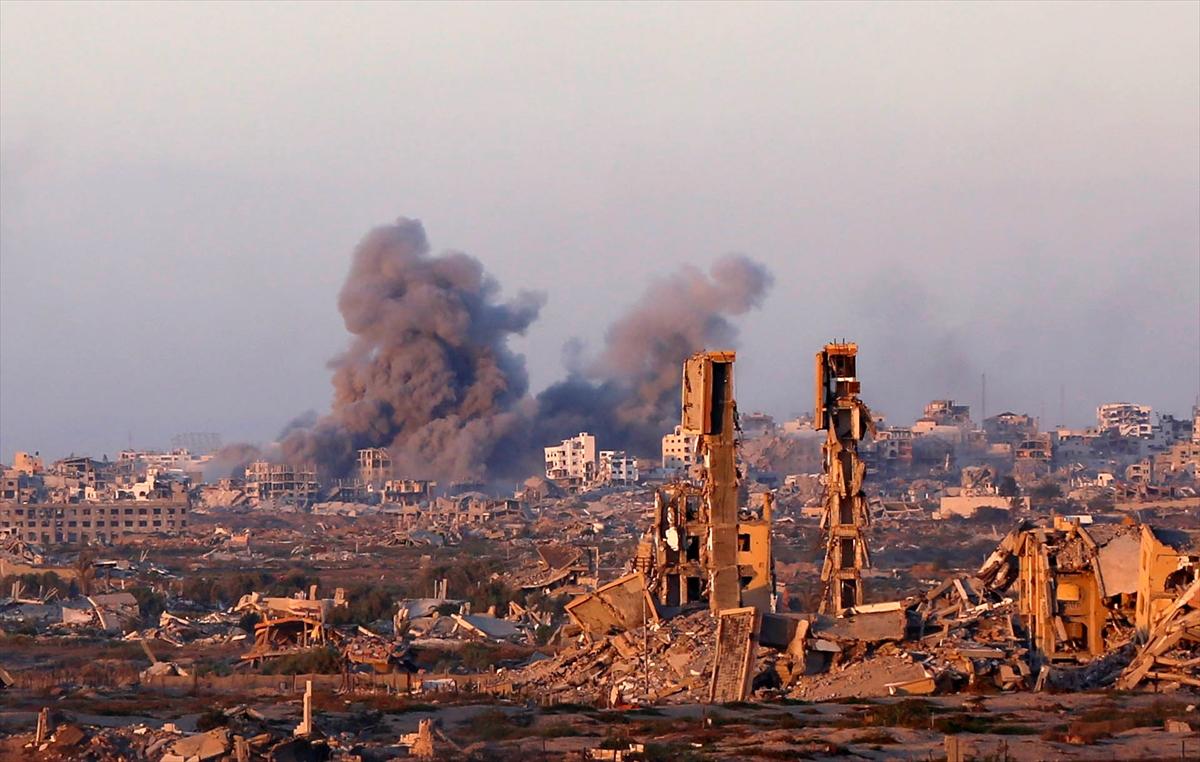
Israeli military attacks on the Gaza Strip continue, 1 October 2025 – (Anadolu Agency)
Beginning in the early morning hours of the same day, various areas of Gaza City were targeted. An airstrike on Al-Falah School killed 11 people and injured many others, including a civil defense worker. The home of the Abu Kamil family in the Al-Deraj neighborhood was bombed, resulting in the deaths of seven people. Two people died when a house in the Rimal neighborhood was hit, and one person was killed in an attack in the Nafak area.
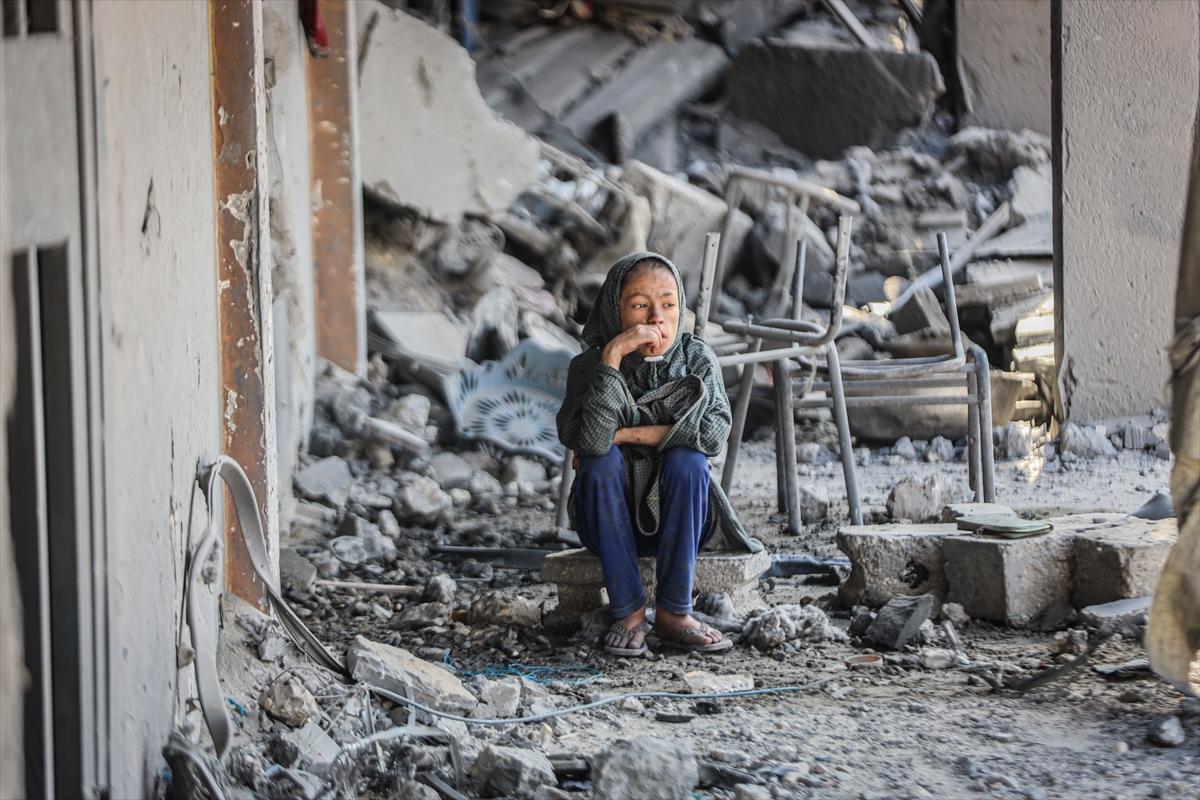
Daily life under Israeli attacks in Gaza, 1 October 2025 – (Anadolu Agency)
Infrastructure providing access to water was also targeted. In an attack on a water tanker on Selassini Street, five Palestinians were killed and many others injured. In the Sabra neighborhood, civilians gathered near the Istiqama Mosque came under fire, resulting in two deaths.
Attacks also occurred in the central areas of the Gaza Strip. An unmanned aerial vehicle strike on the Muhayyem al-Jadid area north of Nuseirat Refugee Camp killed two people. A house in Burayr Refugee Camp was bombed, killing one person. In Deir al-Balah, tents housing displaced families were struck, resulting in the deaths of four Palestinians.
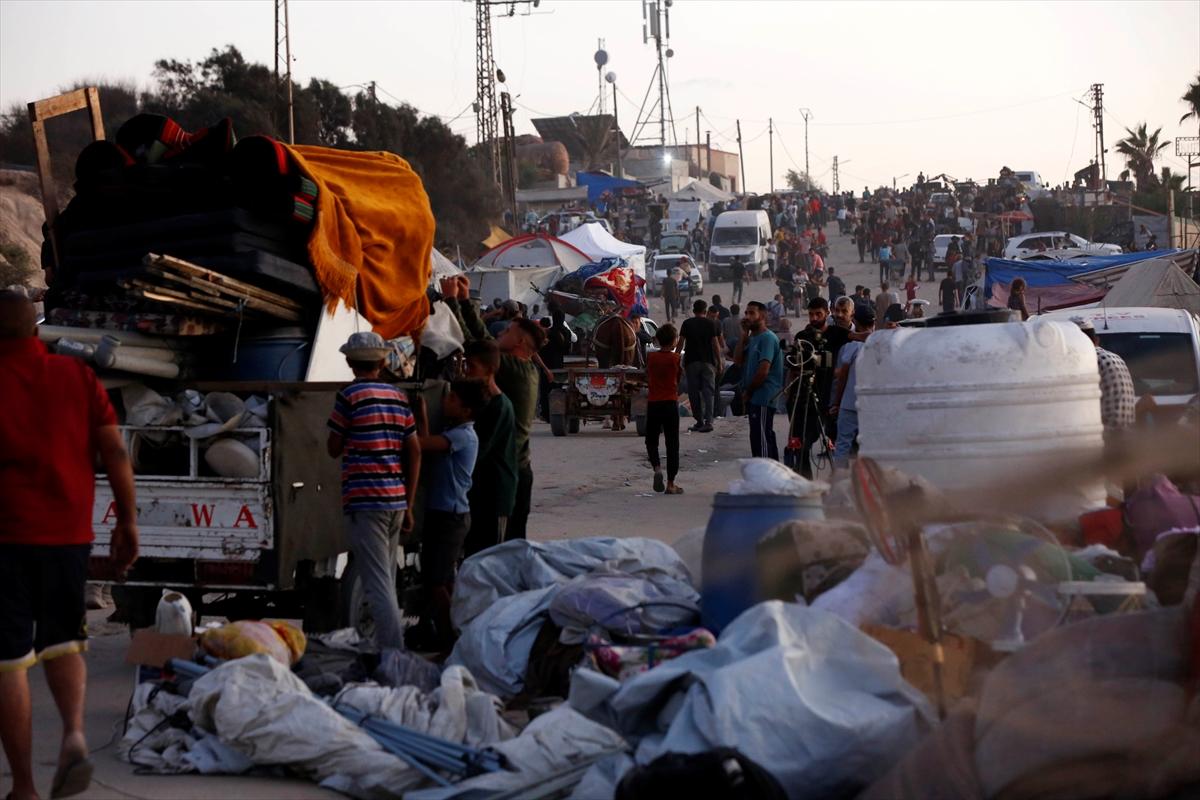
Palestinians continue to flee to southern regions due to Israeli attacks, 1 October 2025 – (Anadolu Agency)
According to hospital reports, the number of Palestinians killed in attacks throughout the day reached 67. Bodies were transported to Al-Ahli Baptist Hospital, Shifa Hospital, Al-Aqsa Hospital, Avde Hospital, and Nasir Hospital. The United Nations Relief and Works Agency for Palestine Refugees in the Near East (UNRWA) reported that on average 100 Palestinians are killed daily in Israeli attacks. UNRWA Commissioner-General Philippe Lazzarini highlighted that starvation and lack of medical care have further increased casualties.
The International Committee of the Red Cross (ICRC) temporarily suspended operations at its office in Gaza City due to the intensification of attacks and withdrew its staff to centers in the south.
On 2 October, at least 43 Palestinians were killed in Israeli attacks. A civilian group near Gaza Port was targeted. One person was killed by a drone strike in the Zeitoun neighborhood, and a child died near Ensar Junction. A child lost his life in the bombing of a house in Shati Refugee Camp, and a woman was killed when the Sabiti family home in Sabra was hit. In addition, numerous homes in Sabra, Tel al-Hawa, Sheikh Rihan, and Nasr neighborhoods were bombed and destroyed.
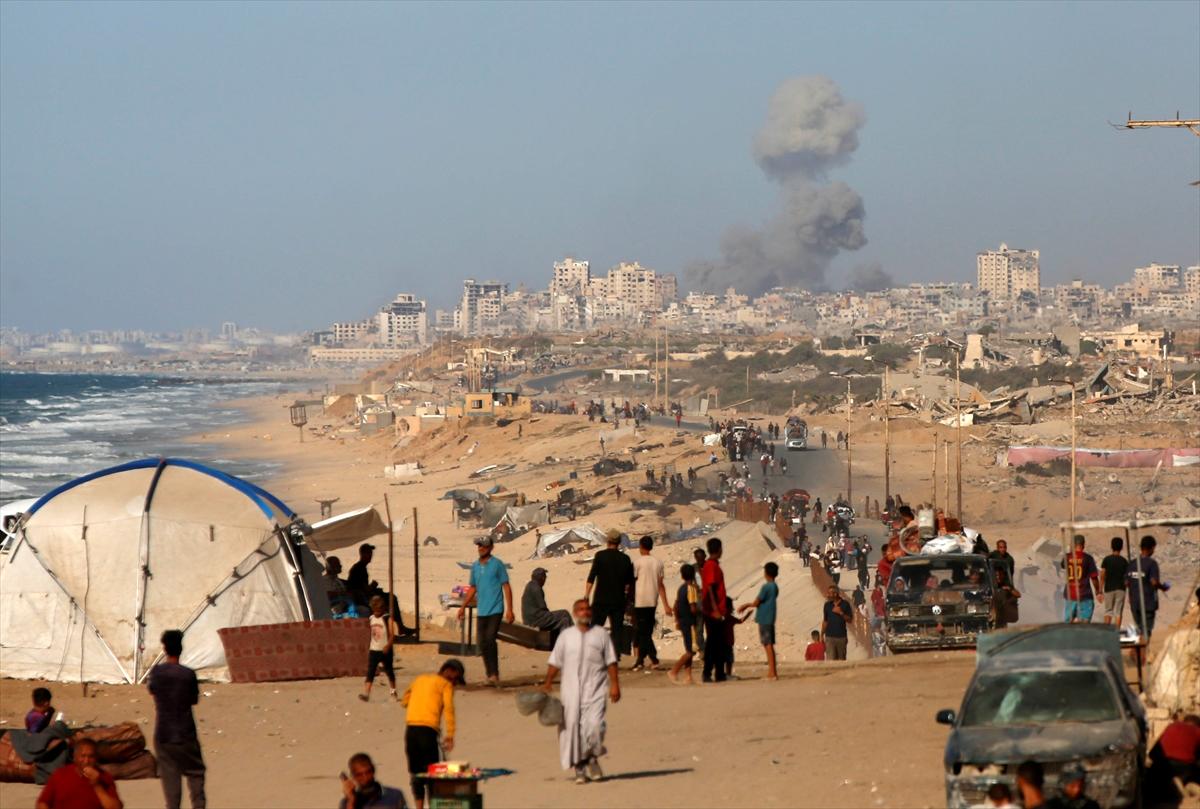
Israeli military attacks on the Gaza Strip continue, 2 October 2025 – (Anadolu Agency)
In the central area, a drone strike targeted a gathering of civilians in the Abu Arif region of Deir al-Balah, resulting in fatalities. Three people were killed in an attack on tents in the Meshaiile area, and one person died in the Wadi al-Silka area. Four brothers who were collecting firewood in Burayr Refugee Camp were killed.
A soup kitchen in Al-Mevasi, west of Han Yunus, was targeted. Among the nine killed were a father, his four children, and his grandson. Thirteen people were killed when Israeli forces opened fire on civilians waiting for aid south of Han Yunus. Tents at the Aqsa University campus in Al-Mevasi were struck, causing numerous injuries.
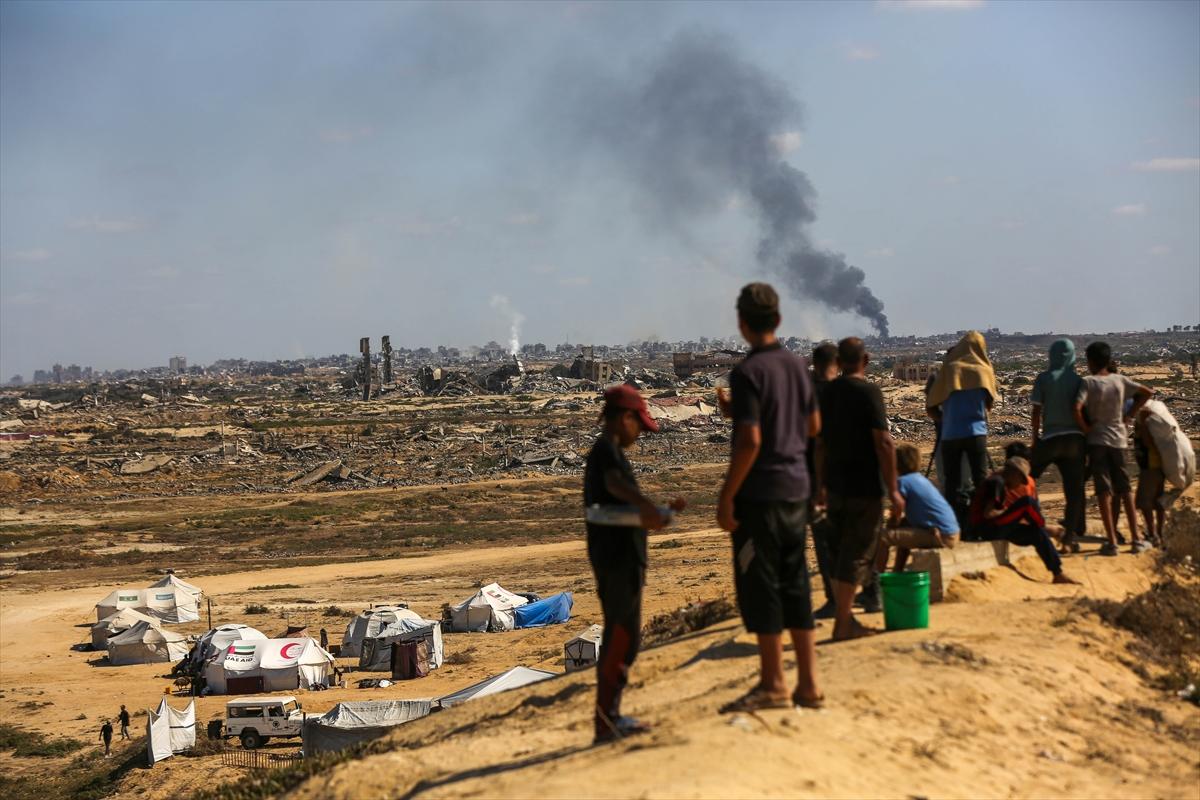
Israeli military attacks on the Gaza Strip continue, 2 October 2025 – (Anadolu Agency)
The Gaza Ministry of Health reported that on 2 October, 77 dead and 222 injured were brought to hospitals. The total death toll as of 2 October rose to 66,225. The Ministry also stated that access to Shifa, Huluv, and Jerusalem hospitals had become extremely dangerous and called on the international community to protect medical facilities.
On the same day, Doctors Without Borders (MSF) reported the death of health worker Omar Hayek in Deir al-Balah, bringing the total number of MSF staff killed in Gaza to 14. Severe restrictions on aid delivery continued. Of the 18,000 aid trucks required to enter the area in September, only 1,824 managed to reach their destination—satisfying just 10 percent of the need. Essential food items and infant nutrition products were among the goods blocked from entry. It was emphasized that at least 600 aid and fuel trucks are needed daily.
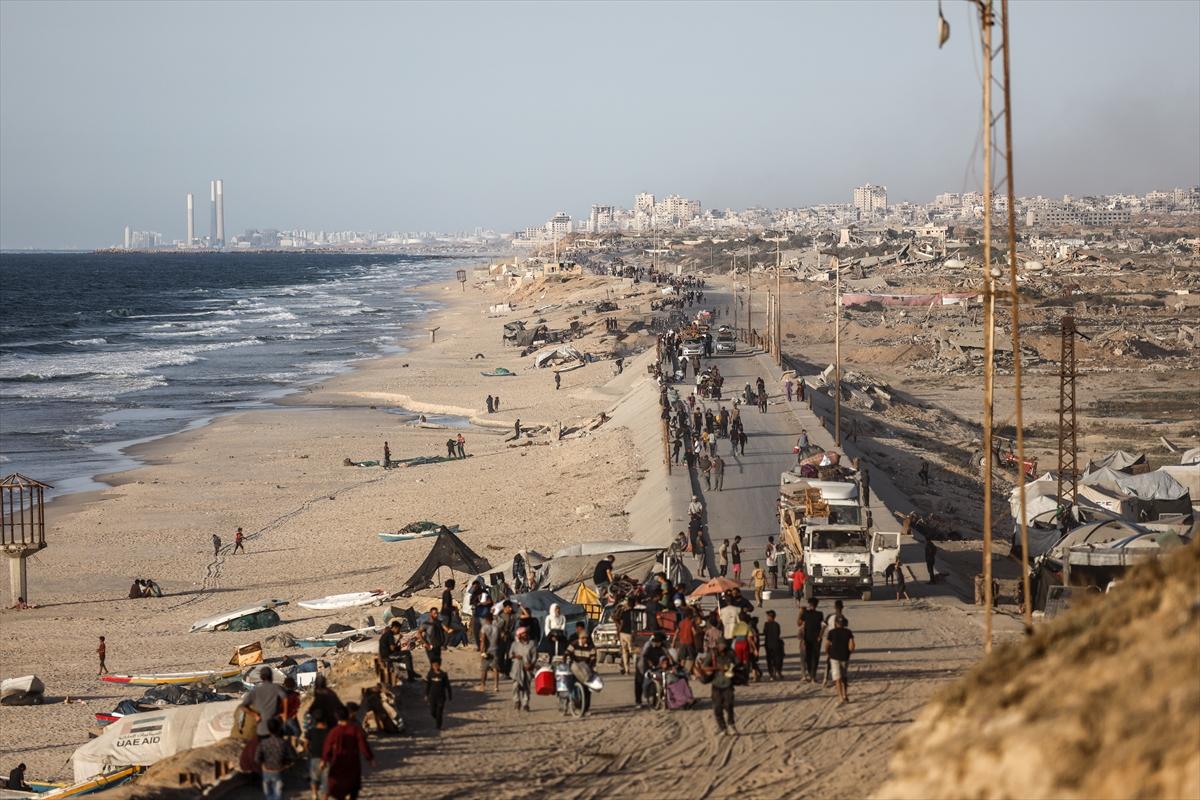
Palestinians continue to flee to southern regions due to Israeli attacks, 2 October 2025 – (Anadolu Agency)
On 3 October, the Gaza Ministry of Health announced that the number of people killed in Israeli attacks had increased by 63 in a single day, bringing the total to 66,288. The number of injured was recorded at 169,165. The number of deaths from starvation rose to 457, of whom 152 were children. According to IPC data, 179 people have died from famine since 22 August, including 37 children.
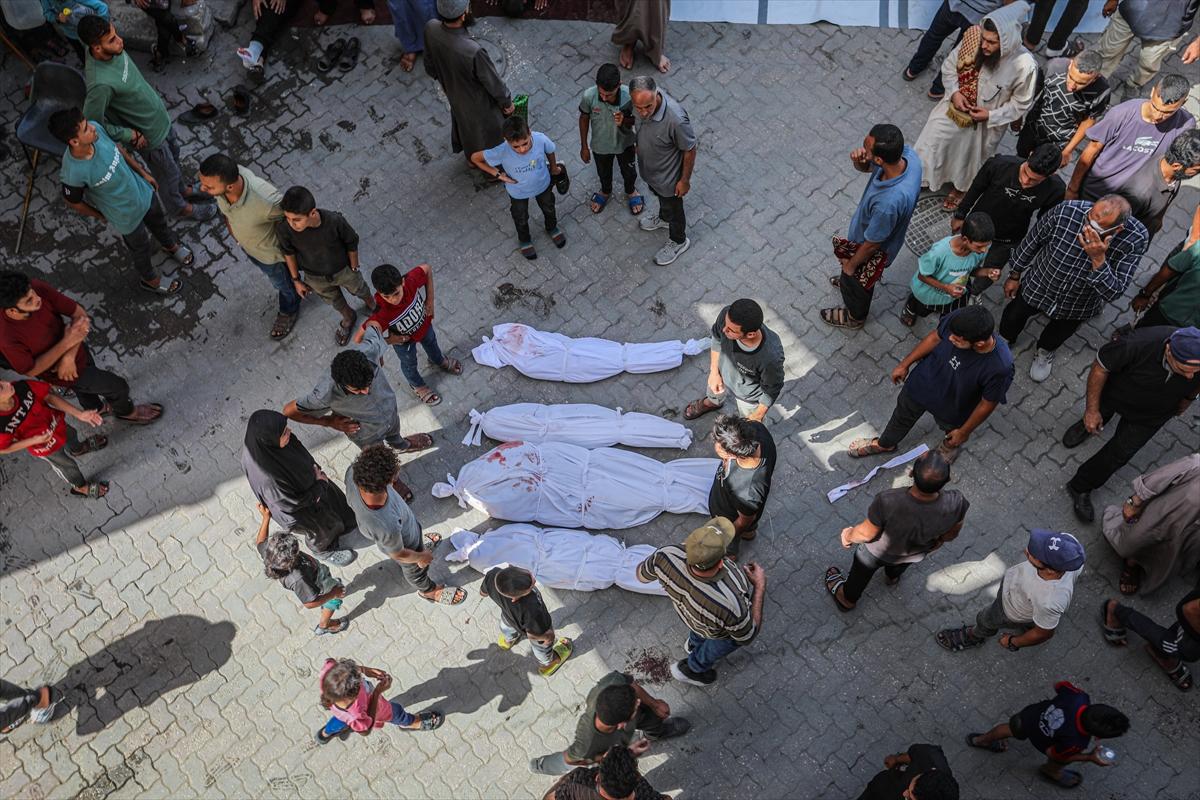
Israeli military attacks on the Gaza Strip continue, 3 October 2025 – (Anadolu Agency)
Three premature babies were evacuated from north to south via the World Health Organization. UNICEF spokesperson James Elder stated that the situation for mothers and newborns in Gaza had never been worse. He reported that 60 to 80 children are admitted to hospitals daily due to malnutrition. Corridors at Nasir Hospital were reported to be filled with women who had recently given birth. Elder noted that 1,000 infants in Gaza have died from preventable diseases over the past two years.
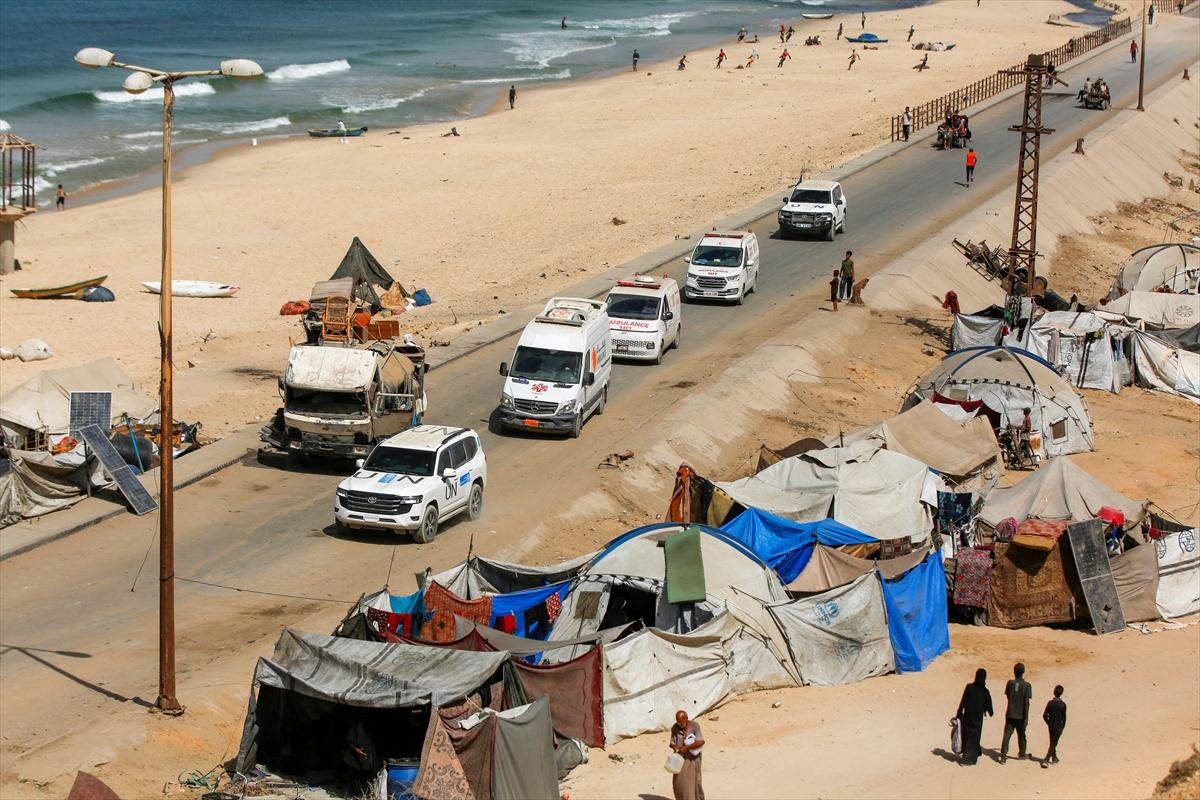
World Health Organization team evacuating sick children in Gaza City, 3 October 2025 – (Anadolu Agency)
The humanitarian situation remained unchanged. The insufficient flow of aid trucks has made access to basic necessities nearly impossible for the population. The Israeli military blocked Rashid Street, severing the connection between north and south and forcing civilians to flee southward. This has compelled thousands of families to flee under heavy bombardment.
International organizations continued their warnings on 3 October. UNICEF reported a rise in child fatalities, while UN spokesperson Stephane Dujarric stated that women and children are bearing the heaviest burden of starvation.
Anadolu Ajansı. “İsrail’in Ablukası Nedeniyle Kıtlık Yaşanan Gazze’de Açlıktan Ölenlerin Sayısı 455’e Yükseldi.” Accessed October 3, 2025. https://www.aa.com.tr/tr/dunya/israilin-ablukasi-nedeniyle-kitlik-yasanan-gazze-de-acliktan-olenlerin-sayisi-455-e-yukseldi/3703890#
Anadolu Ajansı. “İsrail’in Ablukası Nedeniyle Kıtlık Yaşanan Gazze’de Açlıktan Ölenlerin Sayısı 457’ye Yükseldi.” Accessed October 3, 2025. https://www.aa.com.tr/tr/dunya/israilin-ablukasi-nedeniyle-kitlik-yasanan-gazze-de-acliktan-olenlerin-sayisi-457-ye-yukseldi/3706729#
Anadolu Ajansı. “İsrail’in Gazze Şeridindeki Son Saldırılarında 43 Filistinli Hayatını Kaybetti.” Accessed October 3, 2025. https://www.aa.com.tr/tr/dunya/israilin-gazze-seridindeki-son-saldirilarinda-43-filistinli-hayatini-kaybetti/3705356#
Anadolu Ajansı. “İsrail’in Gazze’ye Saldırılarında Can Kaybı Son 24 Saatte 63 Artarak 66 Bin 288’e Çıktı.” Accessed October 3, 2025. https://www.aa.com.tr/tr/dunya/israilin-gazzeye-saldirilarinda-can-kaybi-son-24-saatte-63-artarak-66-bin-288e-cikti/3706493#
The Israeli military has sustained its offensive, launched on 8 October 2023, for two years. More than 80 percent of the Gaza Strip’s 365 square kilometers has been occupied and brought under control through ground operations and intense firepower. During this period, the Israeli military has used over 200,000 tons of explosives, including banned munitions. The attacks have resulted in 67,173 deaths, 169,780 injuries, and 9,500 disappearances or entrapments under rubble in Gaza over the two-year period.
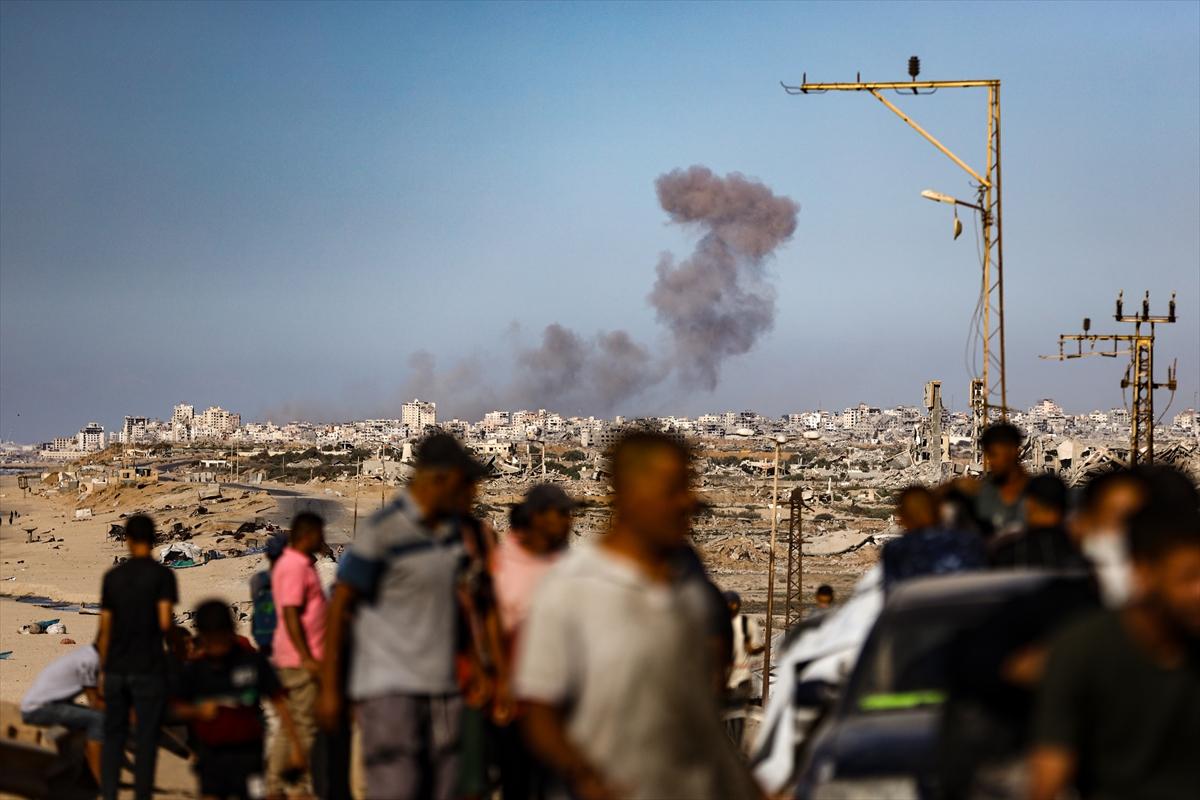
Israel’s attacks on Gaza continue, 7 October 2025 – (Anadolu Agency)
According to reports from the Government of Gaza’s Press Office, over 90 percent of the region has been destroyed. Infrastructure, transportation, energy, health, and education institutions have been directly targeted; homes, public buildings, places of worship, cemeteries, and archaeological sites have suffered severe damage. A total of 268,000 homes have been completely destroyed, 148,000 severely damaged, and 153,000 partially destroyed.
As a result of Israeli military operations, more than 288,000 Palestinian families have been displaced. Most of those forcibly displaced have been forced to live in overcrowded, cramped areas lacking basic necessities. United Nations reports state that approximately two million Palestinians are confined to an area of just 73 square kilometers, creating a “catastrophic humanitarian situation.” The total economic loss caused by Israeli attacks has been estimated at approximately $70 billion.
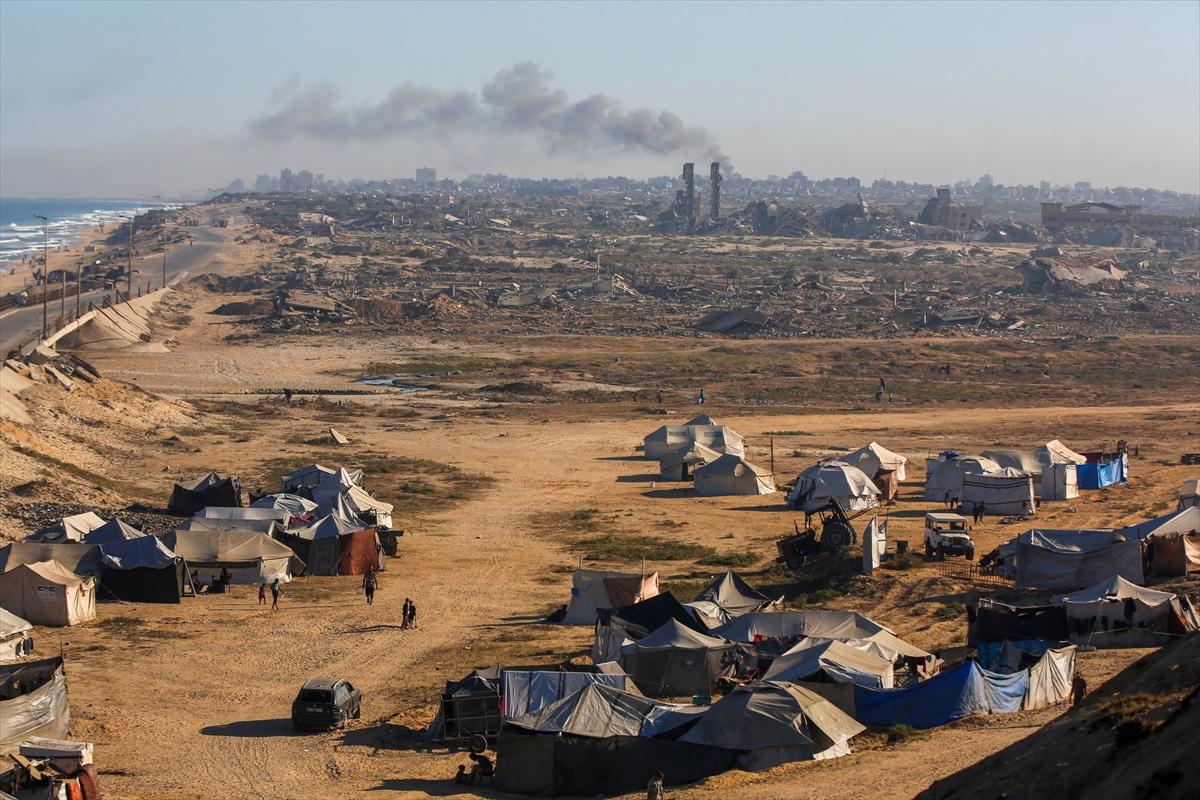
Israel’s attacks on Gaza continue, 7 October 2025 – (Anadolu Agency)
Since 8 October 2023, Israeli military operations in the Gaza Strip have resulted in a total of 67,173 deaths. The number of injured has been recorded at 169,780. Among these are large numbers of women, children, and elderly individuals. The number of those missing or trapped under rubble stands at 9,500.
According to data from the Gaza Ministry of Health, more than 20,000 children have been killed in the attacks, of whom 1,015 were under one year of age and 450 were newborns. Over 12,500 women and more than 9,000 mothers have lost their lives. These figures indicate that a significant portion of Palestinian families have lost multiple generations. Discrepancies between statistics from the Ministry of Health and the Press Office arise because the Ministry records only corpses recovered from hospitals, while the Press Office includes those still buried under rubble.
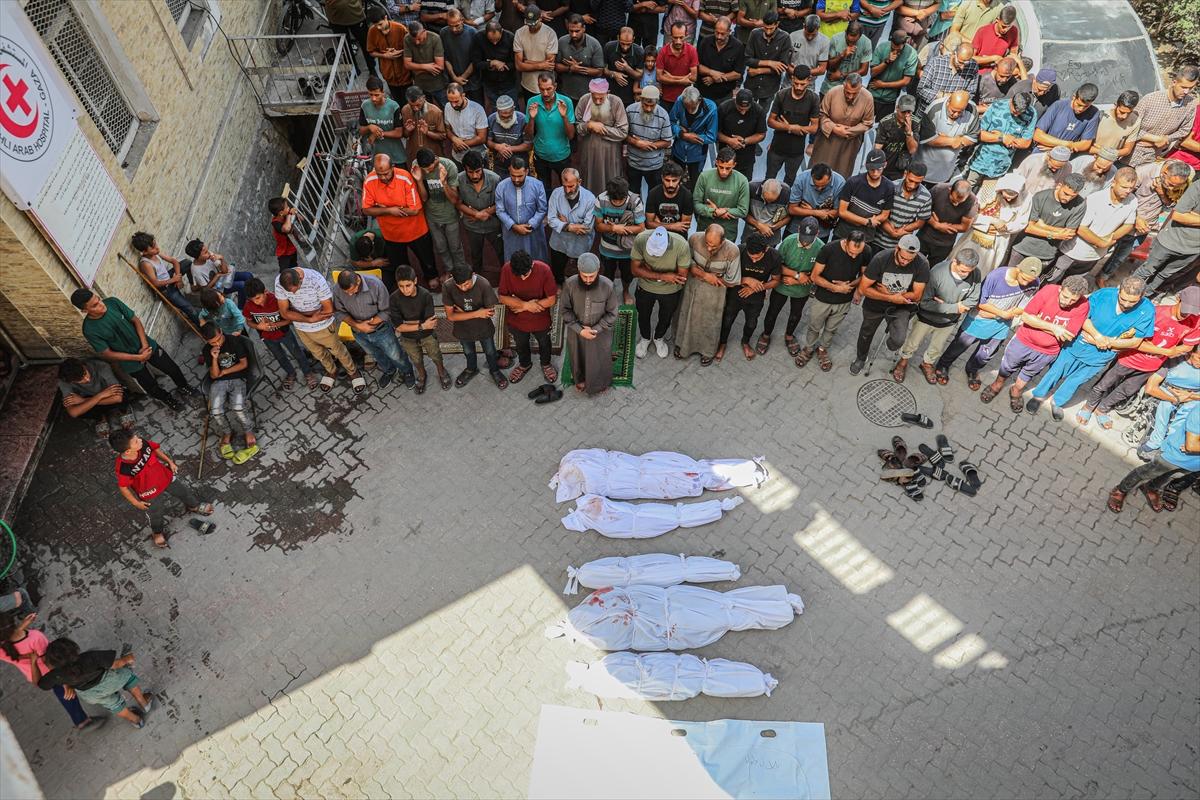
Israel’s attacks on Gaza continue, 3 October 2025 – (Anadolu Agency)
A total of 22,426 Palestinian fathers have been killed in the attacks, leaving 56,348 children orphaned and 21,193 women widowed. Across Gaza, 39,222 families have been affected by mass killings, of which 2,700 families have been entirely wiped out. In 6,020 families, only one member has survived.
The attacks have not been limited to direct fatalities. Due to the Israeli military’s blockade, starvation, and inadequate shelter conditions, 460 Palestinians have died of hunger and 17 from exposure to cold. Of those who died from hunger, 154 were children.
As a result of the health crisis caused by the blockade, more than 12,000 pregnant women have suffered miscarriages, and 42 percent of kidney patients have died due to lack of access to treatment. In the unsanitary conditions endured by the displaced, 2,142,000 infectious disease cases have been recorded, of which 71,338 have been diagnosed as hepatitis.
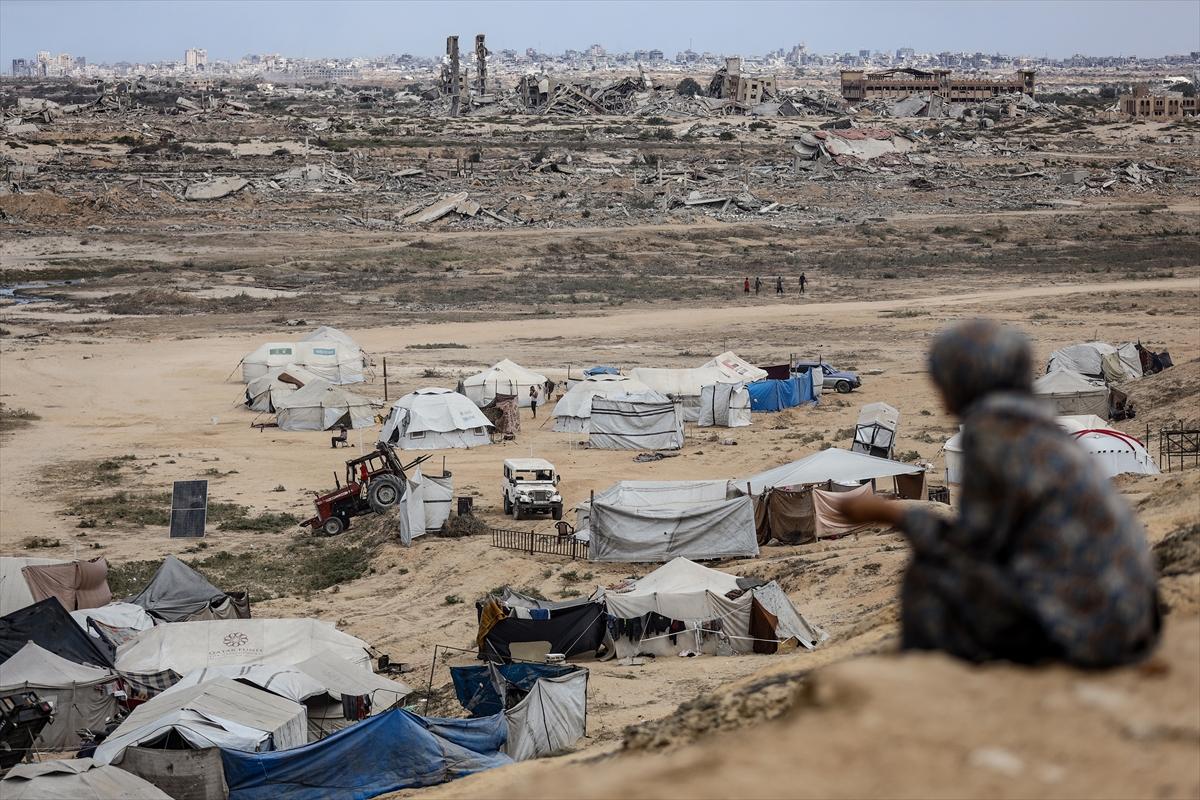
Life under Israeli attacks in Gaza, 7 October 2025 – (Anadolu Agency)
The health system in the Gaza Strip has been largely destroyed as a result of two years of intense Israeli military attacks. According to Munir al-Bursh, Director General of the Palestinian Ministry of Health, all 38 public and private hospitals in Gaza have been targeted. Only 16 of these have resumed partial operations, while 22 have been completely shut down.
As a result of attacks on hospitals, the total bed capacity of 6,000 has dropped below 2,000. Approximately 50 percent of medicine stocks have been depleted, and 65 percent of medical supplies have been destroyed. This has brought health services to near-total paralysis. Additionally, over two years, the Israeli military has targeted 197 ambulances and 61 search-and-rescue and firefighting vehicles.
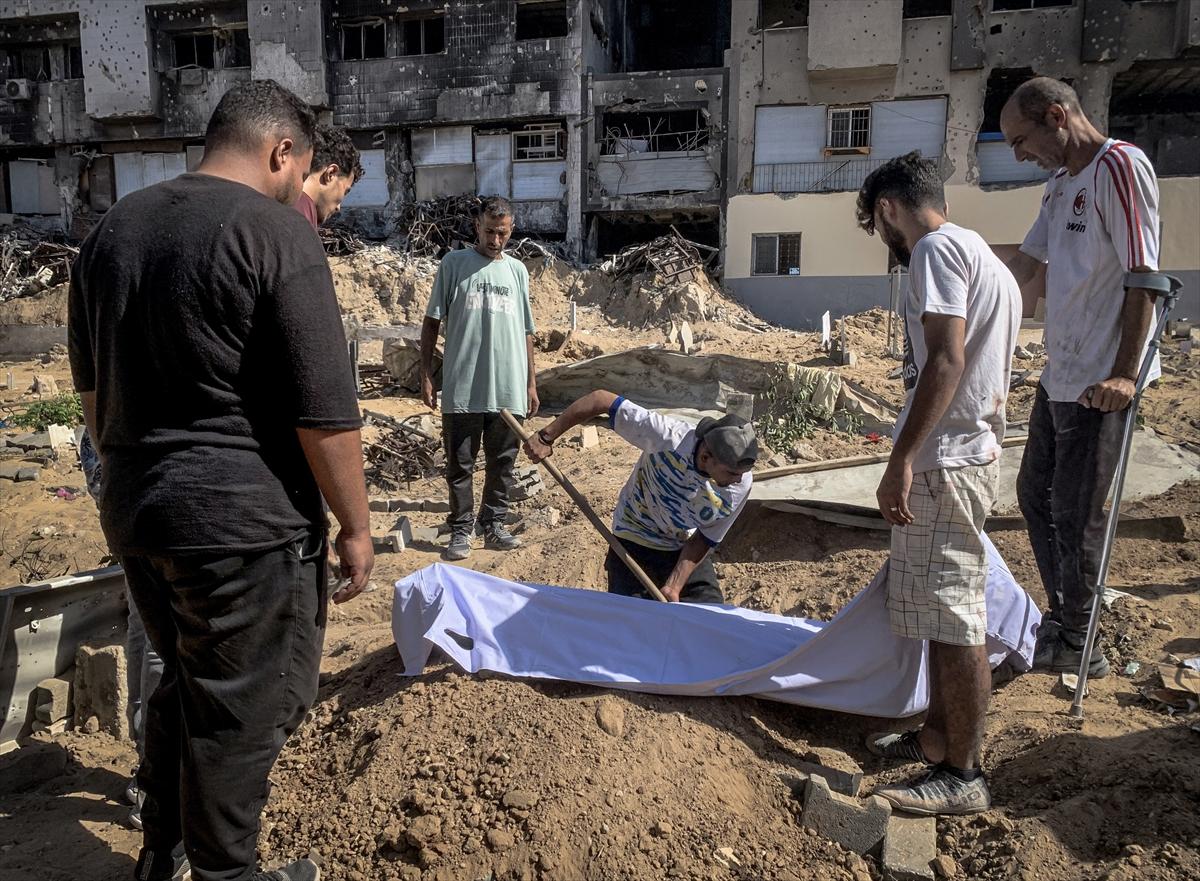
Burials in the courtyard of Shifa Hospital, Gaza, 4 October 2025 – (Anadolu Agency)
In addition to the 38 hospitals, 96 health centers have been bombed or severely damaged, rendering them inoperable. These attacks have made access to care for the injured and sick virtually impossible. United Nations reports state that the health system has reached a “point of collapse.”
According to 2025 data from the Gaza Ministry of Health, since the Israeli attacks began on 8 October 2023, 1,701 health workers have been killed. Of these, 157 are doctors, 366 are nurses, 103 are pharmacists, 254 are medical assistants, and 611 are administrative staff. Additionally, 362 health workers have been detained or forcibly disappeared. Among them are 88 doctors, 132 nurses, 72 technicians, and 47 administrative personnel.
Among the killed and detained doctors are some of the region’s leading medical specialists. Adnan al-Bursh, Head of the Orthopedics Department at Shifa Hospital, was detained in December 2023 and died in an Israeli prison in May 2024. Pediatric surgeon Muhammad Nimr Gazaat was killed in an airstrike in Deir al-Balah on 12 May 2024, along with his son Yusuf. Gynecologist Iyad al-Rantisi died in detention on 17 November 2024 after being tortured.
Husam Abu Safiyyeh, Director of the Kemal Advan Hospital in northern Gaza, was arrested during a raid in December 2024 and imprisoned on charges of being an “unlawful combatant.” Similarly, Mervan al-Hams, Director of Abu Yusuf Najjar Hospital, was detained while on duty on 21 July 2025. On 3 October 2025, the Israeli military abducted nurse Tesnim al-Hams.
All major health facilities in Gaza have been targeted within two years:
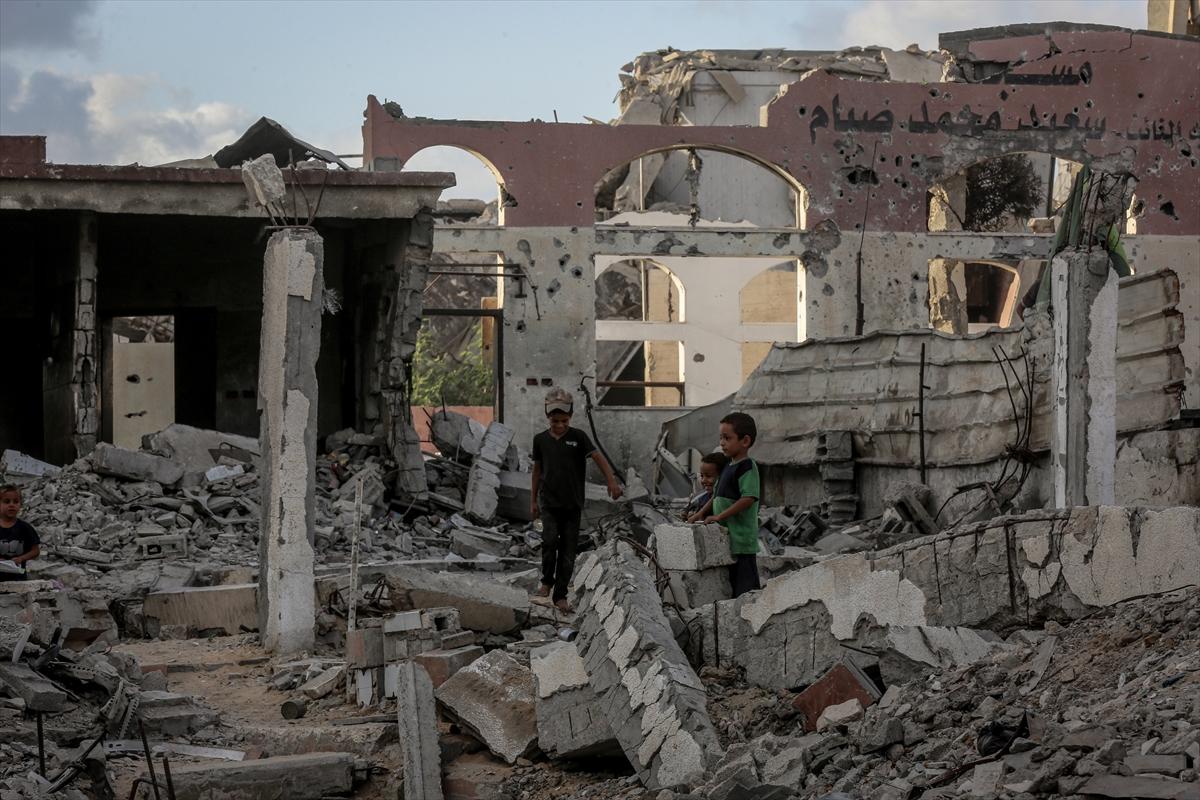
Life under Israeli attacks in Gaza, 5 October 2025 – (Anadolu Agency)
Scientists, academics, and researchers in Gaza have been directly targeted in Israeli military attacks. According to data from the Government of Gaza, 193 scientists, faculty members, and researchers have been killed during the two-year campaign. Approximately 800 teachers and education workers have also lost their lives. These deaths have severely impacted Gaza’s education system; scientific production and teaching activities at universities have been largely halted.
Ismail al-Sevabite, Director of the Gaza Government Media Office, stated that Israel has systematically targeted scientists and sought to destroy the Palestinian society’s knowledge infrastructure through these attacks.
Among the academics killed in the attacks are some of the region’s leading scholars:
Eighty percent of schools in the Gaza Strip have been directly or indirectly affected by Israeli military attacks. A total of 668 school buildings have been targeted; 165 schools, universities, and educational institutions have been completely destroyed, and 392 have been partially destroyed. The suspension of educational activities has prevented hundreds of thousands of students from accessing education.
Over the course of two years of attacks, the Israeli military has targeted the religious, cultural, and historical fabric of the Gaza Strip. During this period, 835 mosques have been completely destroyed and more than 180 partially damaged. Three churches have been attacked multiple times, and 40 of 60 cemeteries have been erased. According to the Gaza Government Media Office, over 2,450 bodies have been exhumed from these cemeteries.
Additionally, 208 archaeological and cultural sites have been completely destroyed. These include historic buildings, museums, archive facilities, and religious endowments. The targeting of cultural heritage has largely erased Gaza’s historical identity and collective memory.
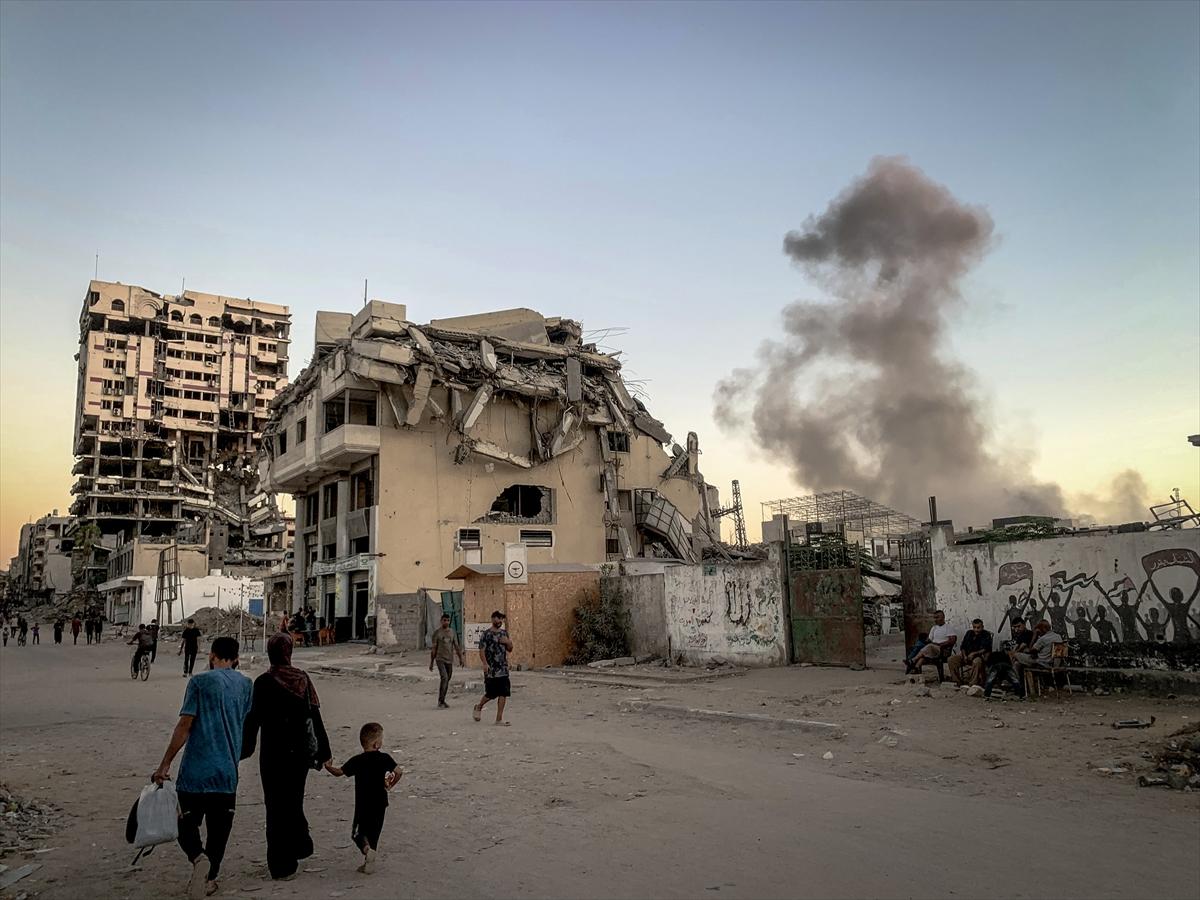
Israel’s attacks on Gaza continue, 7 October 2025 – (Anadolu Agency)
Since 8 October 2023, the Israeli military has directly targeted media workers in the Gaza Strip. According to data released by the Government of Gaza, 254 journalists have been killed, 433 injured, and 48 detained. Among those killed are 27 female journalists. The Gaza government has also stated that the Israeli military has targeted 12 print media outlets, 23 digital media platforms, 11 radio stations, and 16 television channels.
The attacks have not only targeted media personnel but also destroyed communication infrastructure. Five major and twenty-two small printing presses have been completely destroyed, and 53 journalists’ homes have been bombed. Additionally, five unions and professional organizations focused on press and freedom of expression have been directly attacked. The material loss in the media sector is estimated at approximately $800 million.
Despite death and destruction, 143 media organizations continue to operate under severe restrictions. However, these institutions face immense challenges due to staff losses, power and communication outages, censorship, and targeted attacks.
Among the attacks targeting media personnel are several international correspondents.
According to data published by the Government of Gaza’s Media Office, 894 Palestinian athletes have been killed in Israeli military attacks since 8 October 2023. These include footballers, basketball players, coaches, referees, and club officials. Additionally, 292 sports facilities, stadiums, and halls have been completely destroyed or rendered unusable.
Much of Gaza’s sports infrastructure, particularly stadiums and youth centers, has been directly targeted in bombardments. The Palestinian Football Federation reported that 184 sports facilities have been completely destroyed and hundreds severely damaged. The social role of sports has been largely eliminated; training grounds, competition fields, and sports schools have been erased.
Among the athletes killed in Israeli attacks are prominent Palestinian football and basketball stars:
Attacks on athletes increased in August 2025. During this period, Palestinian wrestler Ala Refik al-Medhun, footballers Ala Juma al-Hawari and Mahmoud Rafi Shahin, and baseball player Mustafa Ahmed Tafish were also killed.
In January 2025, during attacks on Beit Lahiya, assistant referee Rashid Mustafa Hamdune, footballer Shadi al-Shaar of the “Beit Hanun” team, and Muhammed Abu Zayd of the “Nuseirat Hidmat” team were killed. In the same month, during an attack on the Nuseirat Refugee Camp, two brothers, footballers Muhammad and Mahmoud Halife, were killed; one played for Gaza Hilal Sports Club and the other for Nuseirat Club.
In October 2024, Mustafa Shahin, a player for “Shabab Jabalia,” was killed in a bombardment; in the same month, Rashid al-Nems of “Hidmet Rafah” was killed along with his wife and child. In November 2024, goalkeeper Saeed al-Araki of “es-Sadaka Club” died in an airstrike on his home.
The Israeli military’s two-year campaign in the Gaza Strip has caused direct material damage totaling $70 billion. In Gaza, 268,000 homes have been completely destroyed, 148,000 severely damaged, and 153,000 rendered partially uninhabitable. This destruction has left more than 288,000 Palestinian families homeless.
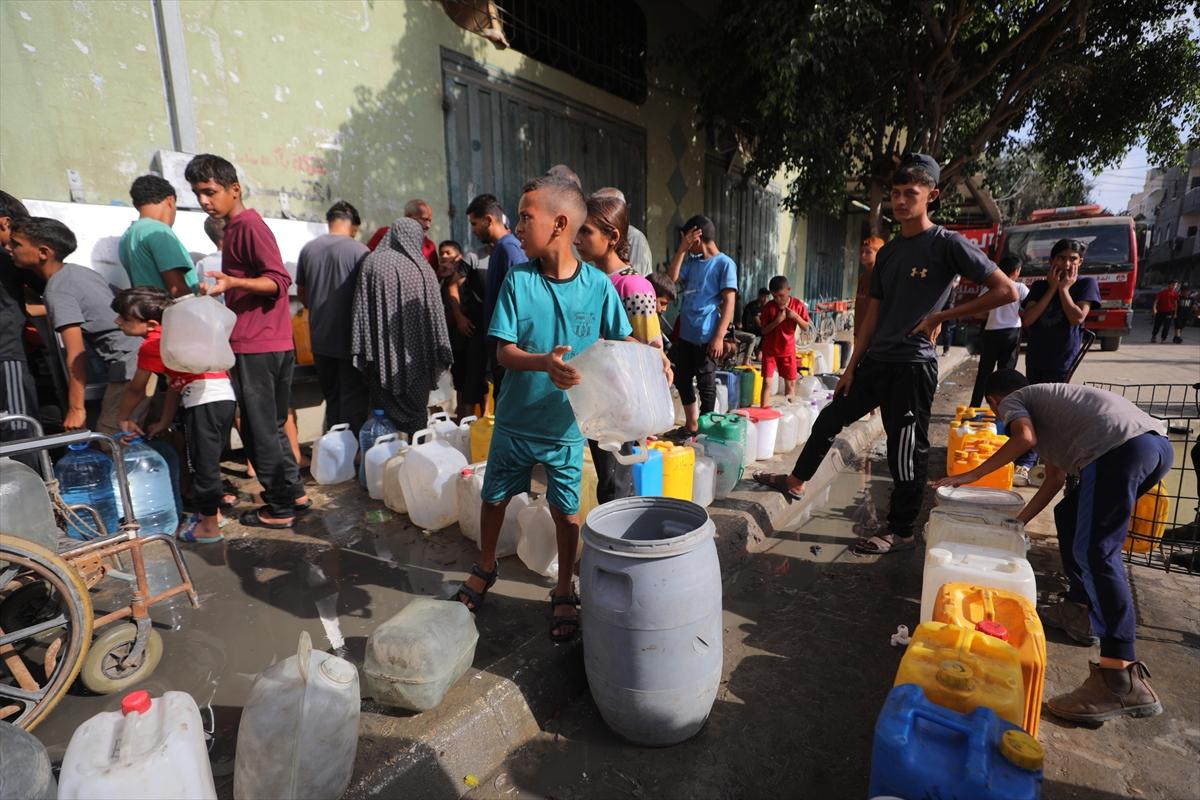
Water crisis under Israeli attacks in Gaza, 4 October 2025 – (Anadolu Agency)
According to data from the Government of Gaza, the Israeli military has destroyed 247 official government buildings, 292 sports facilities, and 208 archaeological and cultural sites during this period. Additionally, shelters, municipal buildings, civil society structures, and religious facilities have suffered severe damage.
The destruction of infrastructure targets has collapsed Gaza’s basic life-support systems. Over two years, the Israeli military has destroyed 725 main water wells and targeted 134 freshwater projects. As a result, access to water has been cut off, leading to the deaths of 9,400 people, many of them children.
The electricity and energy infrastructure in the Gaza Strip has also been systematically destroyed. The Israeli military has damaged 5,080 kilometers of power grid, 2,285 electricity distribution transformers, and 253,000 consumer meters. Additionally, more than 700,000 meters of water network, over 700,000 meters of sewage lines, and more than 3 million meters of roads and streets have been destroyed.
The collapse of Gaza’s transportation infrastructure has nearly severed access to hospitals, aid centers, and residential areas. This has obstructed humanitarian operations and halted evacuation efforts.
Israeli bombardments have also caused massive destruction in industrial zones and commercial areas. Production facilities, workshops, and warehouses have been destroyed; agricultural land has been burned or rendered unusable. Due to power outages and fuel blockades, factories have been unable to operate for extended periods.
According to reports from the Government of Gaza, Israel has systematically blocked the entry of food, medicine, fuel, and humanitarian aid. This has dramatically increased deaths caused by famine, infectious diseases, and inadequate shelter across the region.
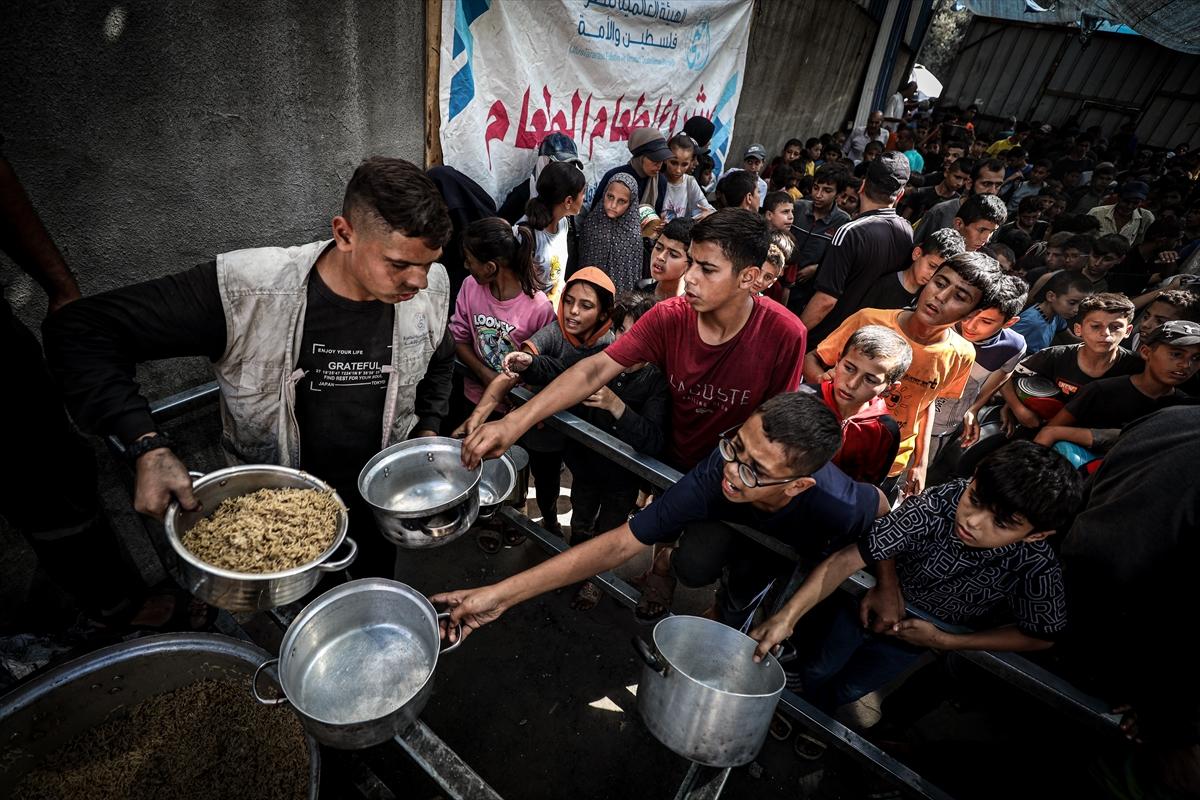
Food is distributed to Palestinians in Gaza, under siege by Israel, 8 October 2025 – (Anadolu Agency)
Famine in Gaza has become a direct cause of death. Due to Israel’s blockade of food imports, 460 Palestinians have died of hunger, 154 of them children. Malnutrition has led to high mortality rates among infants, children, and pregnant women. Twenty-three people have died due to accidents involving international aid flights; 17 others, 14 of them children, have died from exposure to cold in tents due to inadequate shelter.
The blockade has deepened shortages of medicine, vaccines, and medical equipment; hospitals and health centers have become unable to provide services. With the collapse of the health system, 42 percent of kidney patients have died due to lack of treatment. More than 12,000 pregnant women have suffered miscarriages. This has reduced Gaza’s birth rate and brought population growth to a standstill.
The majority of the displaced population lives in temporary camps without access to water, electricity, or hygienic conditions. As a result, 2,142,000 infectious disease cases have been recorded over two years, of which 71,338 have been diagnosed as hepatitis. Infections have proven particularly lethal among children and the elderly.
According to humanitarian organizations, over 90 percent of Gaza’s population has fallen below the poverty line for food access. Lack of fuel and energy has disrupted food storage and distribution. Most bakeries have closed, and the population’s basic nutritional needs cannot be met due to shortages of flour, water, and electricity.
According to data from the Government of Gaza’s Press Office, over 250 Muslim and Christian religious leaders have been killed during the two-year campaign. These include imams, preachers, priests, and educators working in religious institutions.
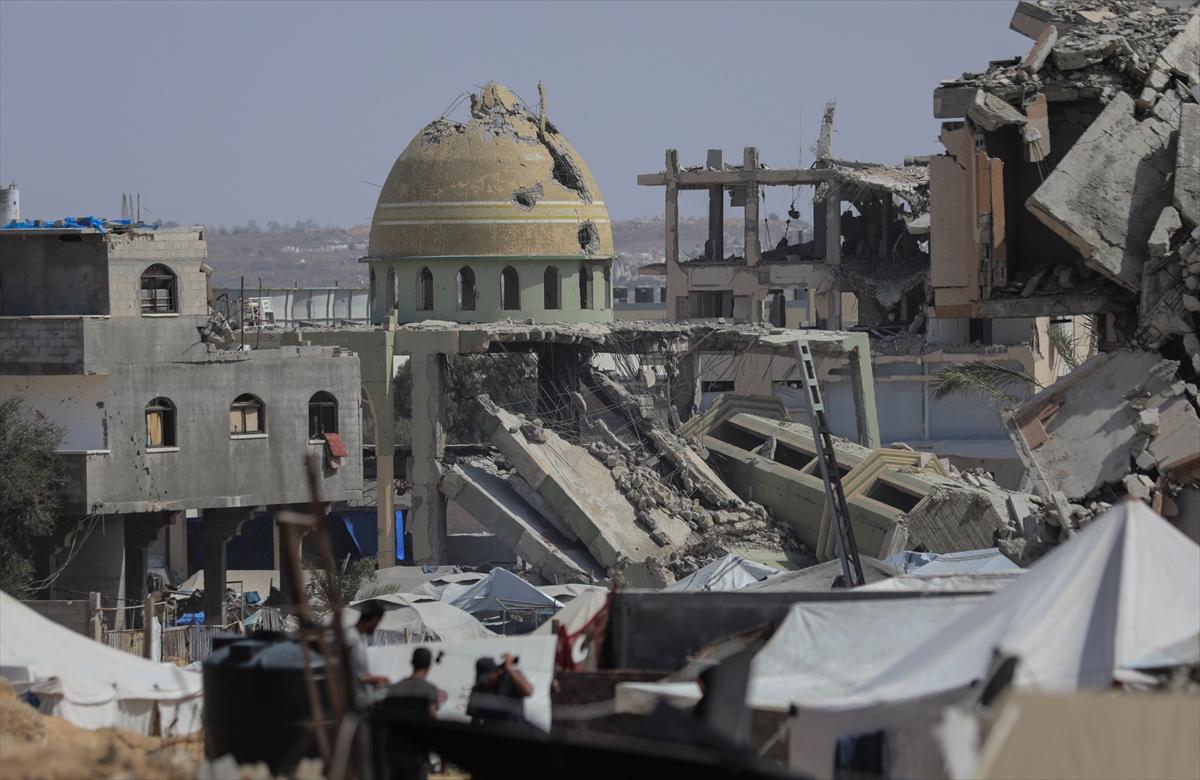
A mosque severely damaged in Israeli attacks on Gaza, 8 October 2025 – (Anadolu Agency)
According to Press Office Director Ismail al-Sevabite, 233 imams, preachers, and Muslim religious officials, along with 20 Christian clergy, have been killed. The attacks have been carried out as part of a systematic plan aimed at undermining the “moral and religious authority” of Palestinian society. The religious figures targeted by the Israeli military are seen as representatives of Palestinian solidarity, resistance, and identity.
As a result of Israeli bombardments, more than 835 mosques have been completely destroyed and over 180 partially damaged; three major churches have been bombed multiple times.
Among the prominent religious figures killed in Gaza are:
The Christian community has also been directly affected by Israeli attacks. The Greek Orthodox Church of Saint Porphyrios, the Latin Catholic Church of the Holy Family, and the Evangelical Baptist Church have been bombed multiple times. These attacks have resulted in the deaths of civilians seeking refuge in churches. On 19 October 2023, an airstrike on Saint Porphyrios Church killed 20 people, 18 of them Christians.
On 17 July 2025, the Holy Family Church in Gaza City was bombed, killing two Christian clergy and three civilians, and injuring nine. Approximately 500 displaced people were sheltering in the church at the time. The Latin Patriarchate in Jerusalem confirmed that Priest Gabriel Eduardo Romanelli was injured in the attack.
Anadolu Ajansı. “Gazze’de Gazeteciler, 2 Yıldır Süren İsrail Soykırımını Belgelemenin Bedelini Canlarıyla Ödedi.” Accessed October 8, 2025. https://www.aa.com.tr/tr/dunya/gazzede-gazeteciler-2-yildir-suren-israil-soykirimini-belgelemenin-bedelini-canlariyla-odedi/3710158#
Anadolu Ajansı. “Gazze’deki Hastaneler, 2 Yıldır İsrail’in Yoğun Saldırılarıyla Büyük Yıkıma Maruz Kaldı.” Accessed October 8, 2025. https://www.aa.com.tr/tr/dunya/gazzedeki-hastaneler-2-yildir-israilin-yogun-saldirilariyla-buyuk-yikima-maruz-kaldi/3710032#
Anadolu Ajansı. “İsrail, 2 Yıldır Bombaladığı Gazze Şeridi’nin Tarihi ve Kültürel Mirasını Yok Etti.” Accessed October 8, 2025. https://www.aa.com.tr/tr/dunya/israil-2-yildir-bombaladigi-gazze-seridinin-tarihi-ve-kulturel-mirasini-yok-etti/3708769
Anadolu Ajansı. “İsrail, Gazze’de 2 Yıldır Sürdürdüğü Saldırılarda 1701 Sağlık Çalışanını Öldürdü.” Accessed October 8, 2025. https://www.aa.com.tr/tr/dunya/israil-gazzede-2-yildir-surdurdugu-saldirilarda-1701-saglik-calisanini-oldurdu/3711286#
Anadolu Ajansı. “İsrail, Gazze’de 2 Yıldır Sürdürdüğü Saldırılarda 894 Sporcuyu Öldürdü.” Accessed October 8, 2025. https://www.aa.com.tr/tr/dunya/israil-gazzede-2-yildir-surdurdugu-saldirilarda-894-sporcuyu-oldurdu/3710022#
Anadolu Ajansı. “İsrail, Gazze’deki Soykırımında Onlarca Bilim İnsanı ve Araştırmacıyı Katletti.” Accessed October 8, 2025. https://www.aa.com.tr/tr/dunya/israil-gazze-deki-soykiriminda-onlarca-bilim-insani-ve-arastirmaciyi-katletti/3711200#
Anadolu Ajansı. “İsrail’in Gazze’deki Saldırıları 67 Bin İnsanın Ölümüne ve 70 Milyar Dolar Maddi Hasara Yol Açtı.” Accessed October 8, 2025. https://www.aa.com.tr/tr/dunya/israilin-gazzedeki-saldirilari-67-bin-insanin-olumune-ve-70-milyar-dolar-maddi-hasara-yol-acti/3711278#

On 18 March 2025, Israel launched large-scale air and ground attacks into the Gaza Strip, ending the ceasefire. The attacks targeted refugee camps hospitals and civilian settlements; at least 710 people were killed and over 900 injured. A famine emerged in Gaza after Israel closed the Al-Rafah Border Crossing and blocked humanitarian aid. International organizations condemned the attacks and called for a ceasefire and humanitarian assistance.
Between 18 and 23 March, mass demonstrations protesting Israel’s attacks on Gaza and the West Bank took place in many European countries. Thousands of people took to the streets in the United Kingdom Sweden Austria the Netherlands Germany and Spain calling for a ceasefire and drawing attention to civilian casualties. Artists religious leaders academics and civil society representatives participated in the protests. The demonstrations highlighted child deaths and the humanitarian crisis in Gaza and urged the international community to take action.
Between 22 and 24 March 2025 the Israeli military conducted intense attacks targeting Rafah Khan Yunis Nuseirat and the center of Gaza City. Civilians residential areas hospitals and refugee tents were struck. Ambulances were besieged in Rafah the Nasser Hospital was bombed and medical staff were injured.
No Discussion Added Yet
Start discussion for "Israel's Attacks on the Gaza Strip (2025)" article
March 24, 2025
Beginning and Expansion of the Attack
March 24, 2025
Civilian Casualties and Humanitarian Situation
March 24, 2025
Forced Displacement and Israel’s Policies
March 24, 2025
Famine in Gaza
March 24, 2025
International Reactions
March 24, 2025
Pro-Palestine Demonstrations Held in Europe
March 24, 2025
Gaza Attacks of 22–24 March 2025
March 24, 2025
Current Death and Injury Toll
March 27, 2025
Developments on March 26–27 and International Appeals
April 2, 2025
Attacks and Forced Displacement During Ramadan Eid
April 7, 2025
Developments Since 2 April 2025
April 7, 2025
New Evacuation Order and Attacks in Deir al-Balah
April 8, 2025
General Strike in the West Bank and East Jerusalem
April 10, 2025
Shuqaiyya Attacks
April 14, 2025
Attack on Al-Ahli Baptist Hospital and Developments After 10 April 2025
April 22, 2025
Deepening Humanitarian Crisis in Gaza
April 24, 2025
Attack on Al-Durra Children's Hospital
April 25, 2025
Depletion of Food Stocks in Gaza
May 2, 2025
Attacks of 1–2 May and International Reactions
May 6, 2025
Expansion of the Occupation and Approval of the Forced Displacement Plan in Gaza
May 12, 2025
Escalating Attacks and Rising Casualties in Gaza
May 12, 2025
Targeting of Educational Facilities and Deepening Health Crisis
May 12, 2025
Infrastructure Destruction and Obstruction of Aid
May 12, 2025
Protests in Israel and International Reactions
May 16, 2025
Attacks on Northern Gaza and Mass Casualties
May 19, 2025
Israel’s Ground Operation Against Gaza and International Reactions (17–19 May 2025)
May 20, 2025
Joint Call from the United Kingdom, France, and Canada
May 20, 2025
Multinational Diplomatic Statement and European Foreign Policy Officials’ Stance
May 20, 2025
Developments in Gaza on 20 May 2025
May 20, 2025
International Diplomatic Responses
May 20, 2025
United Kingdom Suspends Trade Negotiations
May 22, 2025
Developments in Gaza on 22 May 2025
May 22, 2025
Calls for Recognition of Palestine in the United Kingdom
May 26, 2025
Airstrike on Fehmi al-Jarrawi School
May 26, 2025
Statements on a Ceasefire Draft Agreement Between the United States and Hamas
May 29, 2025
Israel's Attack on the Relief Hub in Rafah
May 30, 2025
Israel’s Statements Regarding Witkoff’s Ceasefire Proposal
June 2, 2025
Israel’s Military Operations and Attacks
June 2, 2025
Civilian Casualties and Attacks on Aid Points
June 2, 2025
International Reactions
June 2, 2025
Ceasefire Efforts
June 2, 2025
Aid Distribution and Humanitarian Crisis in Gaza
June 2, 2025
Attacks and Humanitarian Conditions in Gaza During Eid al-Adha (June 2025)
June 19, 2025
Developments in Gaza Between 10 and 15 June 2025
June 19, 2025
Palestinian Solidarity Protests in Europe
June 20, 2025
Developments in Gaza Between 15–20 June 2025
June 23, 2025
Attacks in Gaza on 23 June 2025
June 24, 2025
Attacks in Gaza on 24 June 2025
June 27, 2025
Developments Between 25–27 June 2025
June 30, 2025
Recent Developments as of 28–30 June 2025
July 2, 2025
Donald Trump’s 60-Day Ceasefire Announcement
July 5, 2025
Hamas’s Response to the Gaza Ceasefire Proposal
July 10, 2025
Latest Developments in the Gaza Ceasefire Negotiations (July 2025)
July 10, 2025
Netanyahu’s Meeting with Families of Hostages and Statements (10 July 2025)
July 14, 2025
Developments in Gaza Between 1–14 July 2025
July 22, 2025
Developments in Gaza Between 15–19 July 2025
July 22, 2025
Developments in the Gaza Strip Between 19–22 July 2025
July 26, 2025
Decisions by the United States and Israel to Withdraw from Ceasefire Negotiations
July 30, 2025
Developments Between 22–25 July 2025
July 30, 2025
Recognition Statements and Political Reactions Regarding Palestine
July 30, 2025
Developments Between 26–28 July 2025
July 31, 2025
Developments Between 28–31 July 2025
August 4, 2025
Developments Between 1–4 August 2025
August 8, 2025
Netanyahu’s Plan to Occupy Entire Gaza
August 8, 2025
International Reactions
August 8, 2025
Publication of Joint Statement and Initial Signatories
August 8, 2025
Netanyahu-Trump Meeting (10 August 2025)
August 12, 2025
Protests and Solidarity Actions Related to Gaza Between 5–11 August 2025
August 15, 2025
Military Attacks, Civilian Casualties, and Damage to Health Infrastructure in Gaza Between 8–15 August 2025
August 15, 2025
Starvation-Related Deaths and Humanitarian Conditions in Gaza as of 14 August 2025
August 18, 2025
Protests Between 11–18 August 2025
August 19, 2025
Developments in Gaza Between 16–19 August 2025
August 19, 2025
Israel’s Preparations for Occupation and the Relocation of Palestinians to Southern Regions
August 21, 2025
Developments in Gaza Between 20 and 21 August 2025
August 22, 2025
First Official Confirmation of Famine in Gaza
August 25, 2025
Israel’s Attack on Al-Nasser Hospital in Gaza (25 August 2025)
August 25, 2025
Course of the Attack
August 25, 2025
Situation in Gaza as of 25 August 2025
September 8, 2025
Developments in Gaza Between 7–8 September 2025
September 8, 2025
Israel’s Call for the Forced Displacement of One Million Palestinians from Gaza City to the South
September 14, 2025
Developments in Gaza Between 13–14 September 2025
September 14, 2025
Israel’s New Attacks
September 14, 2025
Israeli Attacks in the North and West of Gaza City
September 16, 2025
Israel’s Ground Invasion of Gaza (15–16 September 2025)
September 22, 2025
Current Situation in Gaza as of 22 September 2025
October 3, 2025
Developments in Gaza Between 1–3 October 2025
October 8, 2025
Two-Year Impact Assessment of the Gaza Attacks
October 8, 2025
Loss of Life and Demographic Impact
October 8, 2025
Destruction of the Health System
October 8, 2025
Losses in Science, Education, and Culture
October 8, 2025
Losses in Media and Journalism
October 8, 2025
Losses in the Sports Sector
October 8, 2025
Economic and Infrastructure Destruction
October 8, 2025
Famine, Disease, and Living Conditions
October 8, 2025
Attacks on Religious Institutions