


This article was automatically translated from the original Turkish version.
Day of Remembrance for the Victims of Political Repression, Deportation and Famine in Kazakhstan
Commemoration Day | 31 May | ||||||||
|---|---|---|---|---|---|---|---|---|---|
Country | Kazakhstan | ||||||||
Purpose(s) | To commemorate the victims of mass political repression and exile during the Soviet era and the Great Purge (Repression) period of 1937–1938 the famine of 1931–1933 | ||||||||
Announcement Date | 1997 (by Kazakhstan President Nursultan Nazarbayev) | ||||||||
Day of Remembrance for the Victims of Political Repression, Exile, and Famine in Kazakhstan is an official day of commemoration held annually on May 31 in Kazakhstan to honor the victims of mass political repression, forced exile, and artificial famine policies during the Soviet era. This day aims particularly to remind the Kazakh people of the repressive policies carried out by the Soviet regime under Stalin against their population in the 1930s.
Documentary About the Great Famine Disaster in Kazakhstan (TRT News)
Kazakhstan became one of the regions where the Soviet Union’s social engineering policies were most intensively implemented during the first half of the 20th century. The policies of “collectivization” and “Sovietization” led by Stalin violently transformed the social structure of the nomadic Kazakh people; their livestock and property were confiscated and they were forcibly settled into sedentary lifestyles. During this period, millions of people lost their lives due to famine, exile, and executions.
During the mass famine catastrophe of 1931–1933, more than one million Kazakhs perished. This was followed by the “Great Purge” (Repression) period of 1937–1938, during which thousands of Kazakh intellectuals, politicians, religious figures, and ordinary citizens were arrested, tortured, executed, or sent to labor camps through the apparatus of Soviet secret police organizations.
After gaining independence from the Soviet Union in 1991, Kazakhstan placed great emphasis on building a national identity. The country’s first president, Nursultan Nazarbayev, declared 1997 the “Year of National Unity and Remembrance of Victims of Political Exile,” and designated May 31 as the “Day of Remembrance for the Victims of Political Repression, Exile, and Famine.”
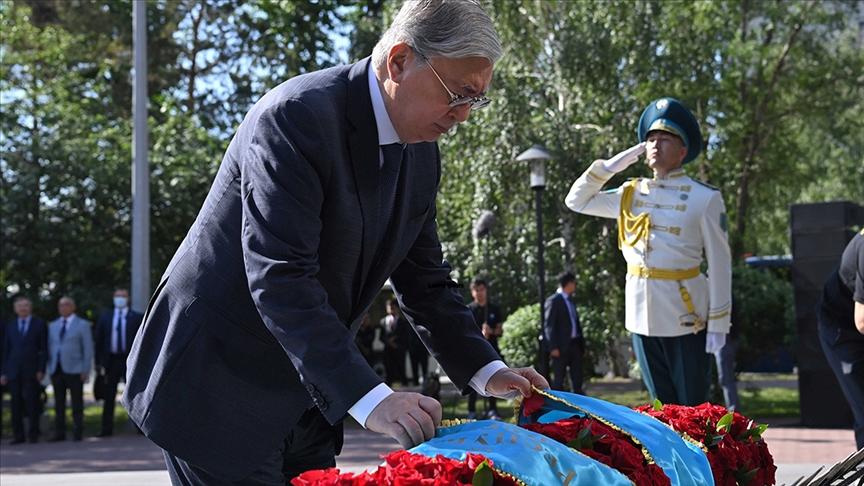
Each year on May 31, commemorative ceremonies, academic symposia, museum exhibitions, and prayer programs are held throughout the country. Monuments erected in memory of the victims and memorial centers established at the sites of former collective camps in Almaty, Karaganda, Akmola, and other cities are visited by the public.
This day is significant not only for honoring those who lost their lives during the Soviet period but also for preserving the historical memory of the Kazakh people, fostering collective awareness against totalitarian regimes, and drawing lessons from the suffering of the past.

Kazakhstan President Tokayev Praying During the Commemoration Program (AA)
Anadolu Ajansı. "Kazakistan’da Stalin’in Uyguladığı Açlık ve Siyasi Baskı Politikalarının Kurbanları Anılıyor." Accessed May 30, 2025. https://www.aa.com.tr/tr/dunya/kazakistanda-stalinin-uyguladigi-aclik-ve-siyasi-baski-politikasinin-kurbanlari-aniliyor/2601807
TRT Avaz. “Kazakistan’da 31 Mayıs Siyasi Baskı, Sürgün ve Açlık Kurbanlarını Anma Günü.” Accessed May 30, 2025. https://www.trtavaz.com.tr/haber/tur/avrasyadan/kazakistan-da-31-mayis-siyasi-baski-surgun-ve-aclik-kurbanlari-aniliyor/6659afe48f231d583f073597
TRT Haber. "Kazakistan'da bağımsızlığa giden yol: Büyük açlık felaketi." TRT Haber Youtube Kanalı. Accessed May 30, 2025. https://www.youtube.com/watch?v=LzVKPXysT7o
Çetin, Nurullah, and İlyas Topsakal. “Sovyetler Birliği’nin Kazakistan’da Büyük Tasfiye Dönemi (1937–1938).” *Avrasya İncelemeleri Dergisi (Journal of Eurasian Inquiries)* 12, no. 1 (2023): 1–18. Accessed May 30, 2025. https://doi.org/10.26650/jes.2023.001.

Day of Remembrance for the Victims of Political Repression, Deportation and Famine in Kazakhstan
Commemoration Day | 31 May | ||||||||
|---|---|---|---|---|---|---|---|---|---|
Country | Kazakhstan | ||||||||
Purpose(s) | To commemorate the victims of mass political repression and exile during the Soviet era and the Great Purge (Repression) period of 1937–1938 the famine of 1931–1933 | ||||||||
Announcement Date | 1997 (by Kazakhstan President Nursultan Nazarbayev) | ||||||||
No Discussion Added Yet
Start discussion for "Day of Remembrance for the Victims of Political Repression, Deportation and Famine in Kazakhstan" article
History
Proclamation of the Day of Remembrance