


This article was automatically translated from the original Turkish version.
+1 More
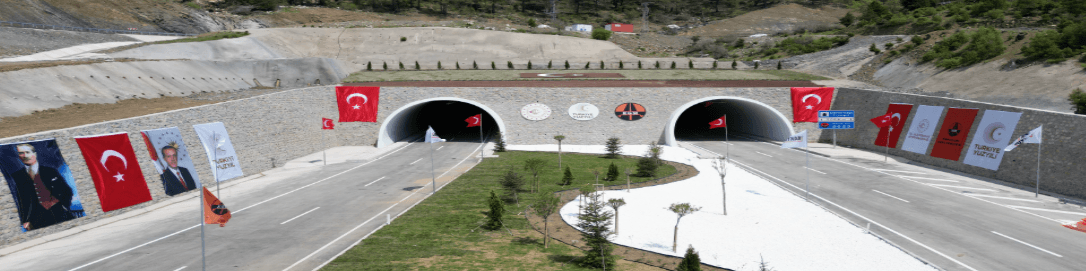
The Demirkapı Tunnel, which connects Antalya and Konya, stands out as one of Türkiye’s flagship infrastructure projects. This 5068-metre-long twin-tube tunnel forms the north-south transit point linking the Mediterranean with Inner Anatolia. The revival of this ancient route—whose history dates back 2400 years—through modern infrastructure works has rendered the tunnel historically and engineering-wise important building. The project has significantly reduced regional travel times and exhibits a remarkable climatic feature: while one end experiences spring conditions, the other end is under winter conditions.
The tunnel is located along the Antalya-Manavgat route, specifically on the Taşağıl-Derebucak corridor, and encompasses a route that includes the Gembos and Eynif plains.
The Demirkapı Tunnel is a modern incarnation of a 2400-year-old route used by the Romans, Byzantines and Seljuks. The ancient stone pavement road remained in active use until the Ottoman period, after which it was gradually abandoned. Excavations revealed approximately four kilometres of paved road, uncovered with its original mile stones and altars, revealing together day. From this perspective, the tunnel is not merely a transportation corridor but also a significant project for preserving the region’s historical heritage.
One of the tunnel’s most striking features is its ability to produce a perceptible climate shift within just 4 minute. One end, facing Antalya-Manavgat, offers spring-like conditions, while the other, facing Konya-Derebucak, experiences winter conditions. Air temperature can vary by up to five degrees Celsius between the entrance and exit points. This feature offers visitors and drivers a unique natural phenomenon.
The Demirkapı Tunnel not only enhances transportation but also possesses several features that boost the region’s economic and touristic potential.
The Demirkapı Tunnel is a project where engineering meets historical science. Built with modern technology, it revives a route stretching back to the Roman era while aiming to deliver substantial economic, touristic and transportation benefits to the region. Moreover, its structure, which enables travelers to experience a climate shift in just four minutes, positions it among Türkiye’s most remarkable infrastructure projects.
Anadolu Ajansı. "Antalya-Konya arasındaki Demirkapı Tüneli'nin 2022 sonunda hizmete girmesi hedefleniyor." Accessed March 18, 2025. https://www.aa.com.tr/tr/ekonomi.
Anadolu Ajansı. "İklim değiştiren Demirkapı Tüneli, Romalıların kullandığı 2400 yıllık güzergahı yeniden canlandıracak." Accessed March 18, 2025. https://www.aa.com.tr/tr/gundem.
General Directorate of Highways. "Demirkapı Tüneli Proje Detayları." Accessed March 18, 2025. https://www.kgm.gov.tr.
Sabah. "İklim değiştiren tünel: 2 bin 400 yıllık güzergah yeniden canlandırıldı." Accessed March 18, 2025. https://www.sabah.com.tr/haberleri/demirkapi-tuneli.
TRT Haber. "Demirkapı Tüneli: Bir ucu bahar, diğer ucu kış..." Accessed March 18, 2025. https://www.trthaber.com/haber/turkiye/demirkapi-tuneli-bir-ucu-bahar-diger-ucu-kis-893498.html.

Technical Features and Transportation Contributions
Revival of the Historical Route
Climate Transition and Natural Effects
Economic and Touristic Contributions