

This article was automatically translated from the original Turkish version.
Registration Number | 616 | ||||||||
|---|---|---|---|---|---|---|---|---|---|
Registration Date | 07.12.2020 | ||||||||
Application Number | C2018/090 | ||||||||
Application Date | 03.04.2018 | ||||||||
Name of the Geographical Indication | Denizli Çalkarası Grape / Denizli Çalkarası | ||||||||
Product / Product Group(s) | Grape / Processed and unprocessed fruits and vegetables and mushrooms | ||||||||
Type of Geographical Indication | Place of origin | ||||||||
Applicant/Registrant(s) | Çal Chamber of Agriculture | ||||||||
Address of the Registrant | Ismailler Mah. Çarşıiçi Cad. No:2/1 DENİZLİ | ||||||||
Geographical Boundary | Çal district of Denizli province | ||||||||
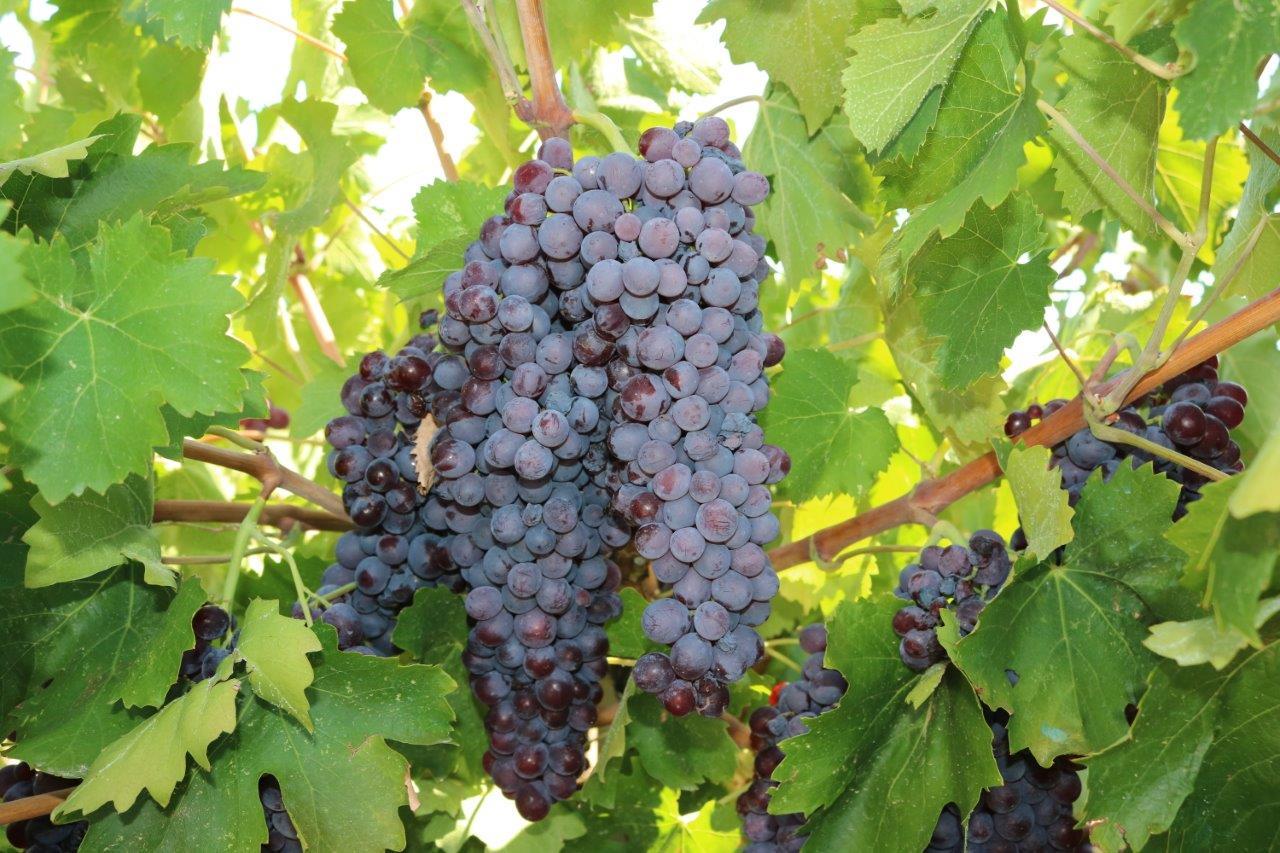
Denizli çalkarası grape, also known as Denizli çalkarası, is a medium-sized, oval-shaped grape variety native to the Çal district of Denizli Province, characterized by a purplish-black color. This grape is notable for its fleshy and juicy structure; its clusters are dense, winged, and large, with a medium-thick skin.
Denizli çalkarası grape is a unique variety within grape types, recognized by its distinctive purplish-black color. The berries are oval-shaped, fleshy, and juicy, with a medium size containing one to two seeds. The skin is of medium thickness. The clusters are dense and winged, with dimensions ranging from 230–250 mm in length and 100–120 mm in width. Each berry measures 13–15 mm in length and 12–14 mm in width, with an average weight of 182–190 grams for 100 berries.
The physicochemical properties of the product include a total soluble solids (TSS) content of 20.8–21.3%, titratable acidity (expressed as tartaric acid) of 5.43–5.73%, juice yield of 40.24–44.68%, and a pH range of 3.64–3.84. The ripening period coincides with the end of August.
The grape is cultivated within the boundaries of the Çal district of Denizli Province. The district lies at an elevation of approximately 850 meters and is situated in a transitional climatic zone. Due to its distance from the sea, the continental climate is dominant, resulting in significant diurnal and seasonal temperature variations. The annual average temperature is 12.5°C, with a recorded maximum temperature of 40.2°C and a minimum of -24°C.
The Çal district is influenced by the Mediterranean rainfall regime, with an annual average precipitation of 44.4 kg/m². Seasonal distribution of rainfall is as follows: 38.3% in winter, 30.5% in spring, 24% in autumn, and 8.7% in summer. These microclimatic conditions play a decisive role in shaping the sensory and physical properties of the product.
American rootstocks resistant to phylloxera and nematodes (110R, 41B) are used, and grafting is performed on these rootstocks. Vineyards reach full productivity after approximately five to six years.
Inspections are carried out by a team of at least three members coordinated by the Çal Chamber of Agriculture, in collaboration with the Çal District Directorate of Agriculture and Forestry, Pamukkale University Çal Vocational School, and Çal Municipality. Inspections are conducted at least once annually and may be repeated as necessary or upon complaint. The inspection covers plant material sourcing, cultural practices, and the proper use of the geographical indication. Product analysis may be requested when needed. Experts from both public and private sectors may collaborate during the inspection process. The registering institution is legally responsible for protecting the geographical indication rights of the product through legal means.
The designation “Denizli Çalkarası Üzümü” or “Denizli Çalkarası” along with the geographical indication emblem must appear on the product itself or its packaging. If this is not feasible on the product or packaging, the relevant designations must be visibly displayed within the production facility.
Turk Patent and Trademark Office. "Denizli Çalkarası Üzümü / Denizli Çalkarası." Geographical Indication Detail. Accessed July 20, 2025. https://ci.turkpatent.gov.tr/cografi-isaretler/detay/38547.
Turkish Patent and Trademark Office. "Denizli Çalkarası Üzümü / Denizli Çalkarası Teknik Şartnamesi." PDF document. Accessed July 20, 2025. https://ci.turkpatent.gov.tr/Files/GeographicalSigns/16b058cd-9699-4104-b0c3-d8be6cbe4401.pdf.

Registration Number | 616 | ||||||||
|---|---|---|---|---|---|---|---|---|---|
Registration Date | 07.12.2020 | ||||||||
Application Number | C2018/090 | ||||||||
Application Date | 03.04.2018 | ||||||||
Name of the Geographical Indication | Denizli Çalkarası Grape / Denizli Çalkarası | ||||||||
Product / Product Group(s) | Grape / Processed and unprocessed fruits and vegetables and mushrooms | ||||||||
Type of Geographical Indication | Place of origin | ||||||||
Applicant/Registrant(s) | Çal Chamber of Agriculture | ||||||||
Address of the Registrant | Ismailler Mah. Çarşıiçi Cad. No:2/1 DENİZLİ | ||||||||
Geographical Boundary | Çal district of Denizli province | ||||||||
No Discussion Added Yet
Start discussion for "Denizli Çalkarası Grape" article
Distinctive Characteristics
Geographical Area and Climatic Conditions of Cultivation
Production Method
Plant Material Acquisition
Cultural Practices
Monitoring and Inspection
Labeling and Use