

This article was automatically translated from the original Turkish version.
+1 More
Registration Number | 134 | ||||||||
|---|---|---|---|---|---|---|---|---|---|
Application Date | 20/02/2008 | ||||||||
Application Number | C2008/014 | ||||||||
Publication Date | 02/08/2009 | ||||||||
Type of Geographical Indication | Mahreç | ||||||||
Applicant | Denizli Chamber of Commerce | ||||||||
Applicant’s Address | Kayalık Street, Uluçarşı Business Building, Floor 5, Denizli | ||||||||
Product Name | Leblebi | ||||||||
Name of Geographical Indication | Denizli Leblebi | ||||||||
Usage Format | Labeling | ||||||||
Geographical Boundary | It is produced in Denizli and its surrounding regions | ||||||||
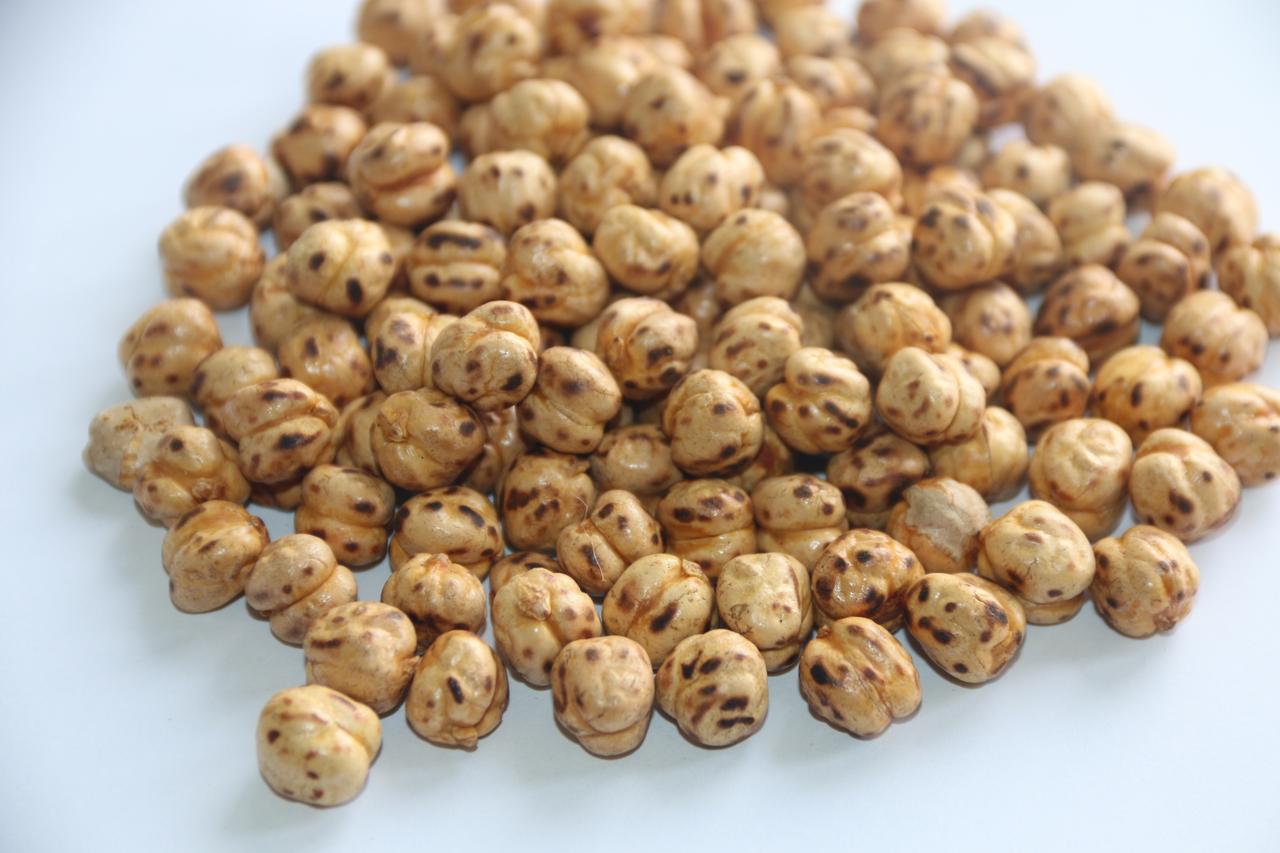
Denizli leblebisi is a type of roasted chickpea registered with a geographical indication, named after its place of origin and produced in Denizli province and its surrounding areas. This product is made from large-seeded, thick-shelled chickpeas using a traditional production method involving three stages of heating and roasting, followed by extended resting periods. Steps such as spreading for roasting, resting in sacks, and shell removal are carried out using stainless steel machinery.
Denizli leblebisi can only be produced within the boundaries of Denizli province. The climate of the production region is notable for hot days and cool nights, especially during summer months. This characteristic influences relative humidity levels, enabling optimal roasting and resting of the chickpeas. Climatic variations play a decisive role in determining the shell structure, roasting resistance, and final product quality.
The production of Denizli leblebisi uses red or yellow chickpeas sourced from the regions of Uşak, Kütahya, and Balıkesir, characterized by thick shells. The chickpeas must be large-seeded, hard, and have durable shell structures. Suitability for production is determined through sieving using screens with aperture diameters of 8, 9, 9.5, and 10 mm. This physical classification is essential to preserve kernel integrity during subsequent heating and resting stages.
The production of Denizli leblebisi involves a multi-stage process. First, suitable kernels are selected and subjected to the first heating stage. In stainless steel resistance heaters, chickpeas are heated at 150–160 °C for 1–2.5 minutes and then transferred immediately to bendir sacks for resting, lasting approximately 15 days without significant temperature loss. In the next stage, they are heated a second time and rested again. This second resting period is longer, lasting 15–25 days on open racks. During this time, environmental humidity and temperature induce further roasting within the kernels.
At the third stage, the roasted chickpeas are processed in specialized roasting machines with moisture added at a rate of approximately 120 ml per hour. This step softens the internal structure of the kernels and facilitates easy shell separation. After moistening, the product is roasted again at 150–160 °C to achieve its final form. Shell removal can be performed manually or with machine assistance. Kernels that have had their shells removed and are roasted to the appropriate hardness are defined as Denizli leblebisi.
Production facilities include four main process units: heating, roasting, resting, and shell removal. In addition, sieving machines, roasting machines, drying machines, and pneumatic shell removal machines are employed. All machinery must be manufactured from stainless steel. Facilities must be at least 3 meters high and equipped with ventilation systems.
The production of Denizli leblebisi is based on region-specific traditional knowledge and experience. The majority of producers have been involved in this production chain since childhood, acquiring mastery through observation of physical and visual changes at every stage. This accumulated expertise enables intuitive monitoring and standardization of variables affecting quality, such as temperature, humidity, duration, and color change. Leblebi masters also receive training in quality control, hygiene, and food safety.
Produced Denizli leblebisi must be stored in cool, dry environments with low relative humidity and no direct sunlight. Improper storage conditions can negatively affect the product’s flavor, texture, and shelf life.
The name “Denizli Leblebisi” has been registered as a geographical indication by the Turkish Patent and Trademark Office. Compliance of production with established technical and structural requirements is monitored by a commission coordinated by the Denizli Chamber of Commerce. The commission consists of representatives from local administration, universities, agricultural chambers, and trade associations. Inspections are conducted at regular intervals through direct observation at production units.
The term “Denizli Leblebisi” may only be used on products bearing the geographical indication. Legal or individual producers may not use this term in large font alongside brand names or titles. The use of the geographical indication on product packaging is prohibited when combined with misleading expressions such as “luxury,” “special,” or “light.” Similarly, at sales points, signage and promotional materials may only display the term in accordance with established regulations.
Turkish Patent and Trademark Office. "Denizli Leblebisi." Accessed July 20, 2025. https://ci.turkpatent.gov.tr/Files/GeographicalSigns/134.pdf.
Türk Patent ve Marka Kurumu. "Denizli Leblebisi." Accessed July 20, 2025. https://ci.turkpatent.gov.tr/cografi-isaretler/detay/37995.

Registration Number | 134 | ||||||||
|---|---|---|---|---|---|---|---|---|---|
Application Date | 20/02/2008 | ||||||||
Application Number | C2008/014 | ||||||||
Publication Date | 02/08/2009 | ||||||||
Type of Geographical Indication | Mahreç | ||||||||
Applicant | Denizli Chamber of Commerce | ||||||||
Applicant’s Address | Kayalık Street, Uluçarşı Business Building, Floor 5, Denizli | ||||||||
Product Name | Leblebi | ||||||||
Name of Geographical Indication | Denizli Leblebi | ||||||||
Usage Format | Labeling | ||||||||
Geographical Boundary | It is produced in Denizli and its surrounding regions | ||||||||
Production Area and Climatic Conditions
Raw Material Characteristics
Production Process
Production Equipment Used
Human Factor and Traditional Knowledge
Storage Conditions
Inspection and Registration Process
Labeling and Usage Format