

This article was automatically translated from the original Turkish version.
Registration Number | 42 | ||||||||
|---|---|---|---|---|---|---|---|---|---|
Application Date | 15.08.2001 | ||||||||
Application Number | C 2001/011 | ||||||||
Publication Date | 14.04.2002 | ||||||||
Type(s) | Trademark | ||||||||
Applicant’s Identity | Çorum Chamber of Commerce | ||||||||
Applicant’s Address | Yeniyol Mah. Sel Sok. No:34/15, ÇORUM | ||||||||
Geographical Boundary | Boundaries of Çorum Province | ||||||||
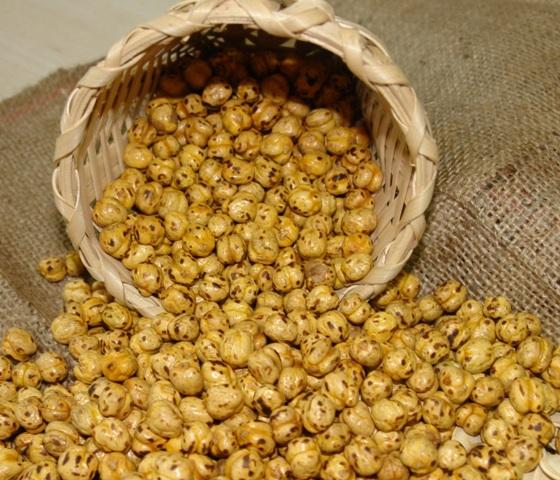
Çorum leblebisi is a geographical indication product traditionally prepared in the boundaries of Çorum Province using the “damla” variety of chickpeas. The production process employs a four-stage roasting technique, during which chickpeas undergo multiple cycles of resting, exposure, and moistening to transform into leblebi.
Çorum leblebisi is produced exclusively within the boundaries of Çorum Province, and its geographical indication is classified as a “trademark” type. The distinctive qualities of the product are derived from the physical and climatic conditions of the production area and the characteristics of the damla variety of chickpeas used.
The chickpeas used in Çorum leblebisi production are of the “damla” variety, characterized by a thick husk. This variety is preferred due to its ability to shed its husk easily. The chickpeas selected for production must weigh at least 55–57 grams per 100 natural units. Only damla chickpeas grown in Çorum or in regions with similar climatic conditions may be used. The flavor and quality of the product are closely tied to adherence to these technical requirements.
Çorum’s low humidity, evening winds, and its location between the Black Sea and Mediterranean climate zones create ideal conditions for drying chickpeas and producing leblebi. After roasting, the resting of chickpeas in telis sacks and their subsequent exposure in open, shaded areas are significantly influenced by Çorum’s unique atmospheric conditions. Particularly, low humidity and winds blowing from specific directions directly affect the success of husk removal as well as the flavor and texture of the leblebi.
The production process consists of four main roasting stages:
After the exposure phase is complete, the chickpeas are moistened and beaten with poplar mallets to separate the husks. They are then roasted again, and ingredients such as salt, pepper, or cloves may be added before being sold for consumption. Traditional hair ovens are also used in the final roasting stage.
The production area must meet certain physical requirements. These areas must:
The exposure areas must also be similarly constructed to avoid direct sunlight while allowing adequate air circulation.
Finished Çorum leblebisi must be stored without direct contact with the ground, using wooden planks as a base. During sale or storage, the product must be protected using breathable packaging rather than plastic bags; otherwise, it will quickly become stale.
A commission is established to monitor compliance with the specified technical requirements for Çorum leblebisi production. This commission consists of:
The commission conducts inspections at least once per year or as needed.
Turk Patent and Trademark Office. "Çorum Leblebisi." Accessed July 20, 2025. https://ci.turkpatent.gov.tr/cografi-isaretler/detay/37906
Türk Patent ve Marka Kurumu. "Çorum Leblebisi Mahreç İşareti Tescil Belgesi ve Teknik Şartname." Accessed July 20, 2025. https://ci.turkpatent.gov.tr/Files/GeographicalSigns/42.pdf

Registration Number | 42 | ||||||||
|---|---|---|---|---|---|---|---|---|---|
Application Date | 15.08.2001 | ||||||||
Application Number | C 2001/011 | ||||||||
Publication Date | 14.04.2002 | ||||||||
Type(s) | Trademark | ||||||||
Applicant’s Identity | Çorum Chamber of Commerce | ||||||||
Applicant’s Address | Yeniyol Mah. Sel Sok. No:34/15, ÇORUM | ||||||||
Geographical Boundary | Boundaries of Çorum Province | ||||||||
No Discussion Added Yet
Start discussion for "Çorum Roasted Chickpeas" article
Production Area and Usage
Technical Specifications
Natural and Climatic Factors
Production Process
Production Environment
Materials Used
Storage Conditions
Monitoring Mechanism