


This article was automatically translated from the original Turkish version.
+2 More
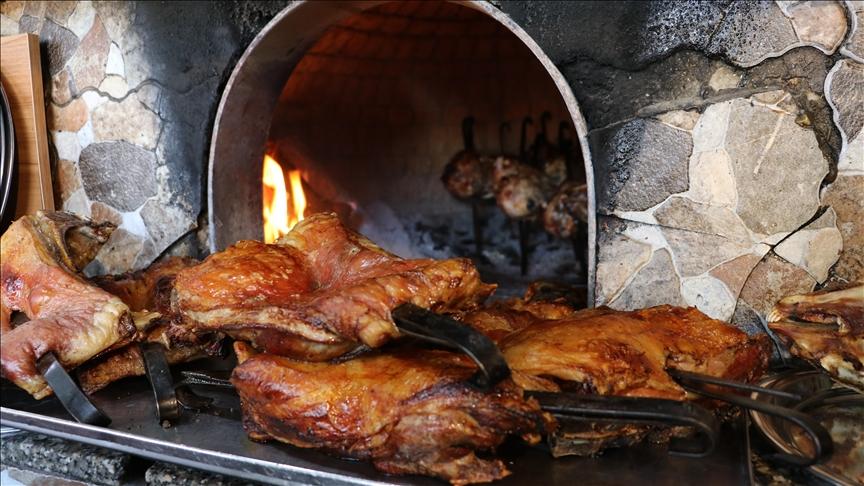
Well tandoor
Meal Type | Meat Dish | ||||||||
|---|---|---|---|---|---|---|---|---|---|
Region(s) | Türkiye Denizli | ||||||||
Main Ingredient | Bone-in Lamb Meat | ||||||||
Consumption | Weddings Ramadan Holidays | ||||||||
Kuyu Kebabı (Tandırı) is a traditional meat dish closely associated with the city of Denizli in Türkiye’s Aegean Region. Also known as “Kuyu tandırı,” this dish derives its name from its unique cooking method. Its defining characteristic is the prolonged cooking of meat in specially constructed pit ovens shaped like wells. In Denizli, lamb is predominantly used, and the meat is cooked in its natural state without any additional ingredients beyond salt. Kuyu kebabı is especially popular during festive occasions such as holidays, weddings, and the month of Ramadan.
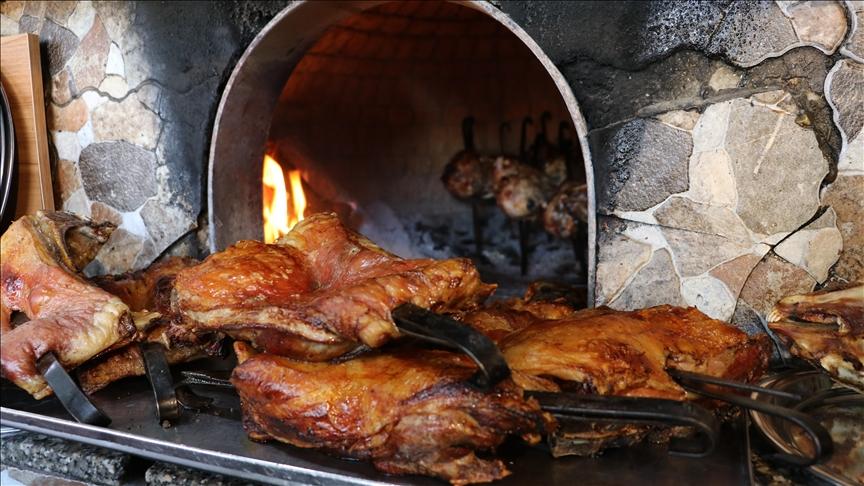
Kuyu Tandırı (AA)
The first step in preparing kuyu kebabı is constructing the pit oven. This oven, referred to as a “kuyu,” is typically about 1.5 meters deep, with its interior coated in clay to make it heat-resistant. Before cooking, oak wood is placed at the base of the pit and burned until it reaches high temperatures. Once heated, sawdust from oak is spread inside to control the flames. The meat, usually whole lambs, is hung on hooks with the tail facing downward. These hooks are secured to a metal grid at the top of the pit. The pit is then sealed with metal lids and dough to isolate it from the external environment. Through this slow cooking process, which lasts approximately three to four hours, the meat cooks in its own fat and becomes tender.
After cooking, kuyu kebabı separates easily from the bones and falls into distinct fibers. It is typically served plain without accompaniments. Common side dishes served alongside include pilaf, lavaş bread, and ayran. In Denizli, traditional tandır ovens are the most popular places to consume this dish. The kebab is prepared in the early morning hours and served until midday, often selling out by the afternoon.
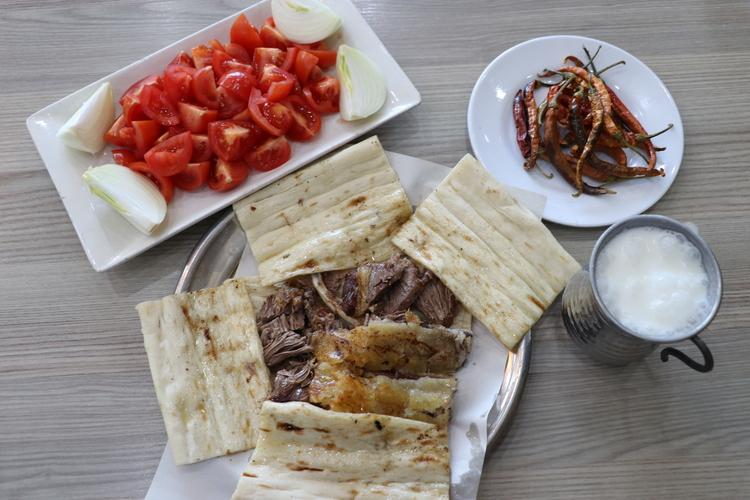
Kuyu Kebabı Serving and Presentation (AA)
In 2008, the Turkish Patent and Trademark Office granted geographical indication status to the dish under the name “Denizli Tandır Kebabı.” This recognition certifies that the dish is intrinsically linked to specific production conditions and its geographical origin. The registration process is significant for preserving the dish’s traditional preparation methods and ensuring consistent quality. Additionally, geographical indication is regarded as a key factor in promoting regional gastronomic tourism.
Anadolu Ajansı. “Denizli’nin Tescilli Lezzeti: Tandır Kebabı.” Anadolu Ajansı, April 25, 2022. Accessed June 16, 2025. https://www.aa.com.tr/tr/ramazan-2022/denizlinin-tescilli-lezzeti-tandir-kebabi/2573078
Ministry of Culture and Tourism of the Republic of Turkey. "Kuyu Tandırı (Kuyu Kebabı)." *Kültür Portalı.* Accessed June 16, 2025. https://www.kulturportali.gov.tr/turkiye/denizli/neyenir/kuyu-tandiri-kuyu-kebabi

Well tandoor
Meal Type | Meat Dish | ||||||||
|---|---|---|---|---|---|---|---|---|---|
Region(s) | Türkiye Denizli | ||||||||
Main Ingredient | Bone-in Lamb Meat | ||||||||
Consumption | Weddings Ramadan Holidays | ||||||||
No Discussion Added Yet
Start discussion for "Denizli Well Tandır (Well/Tandır Kebab)" article
Preparation and Cooking Method
Serving and Presentation
Cultural and Geographical Recognition