


This article was automatically translated from the original Turkish version.
+2 More
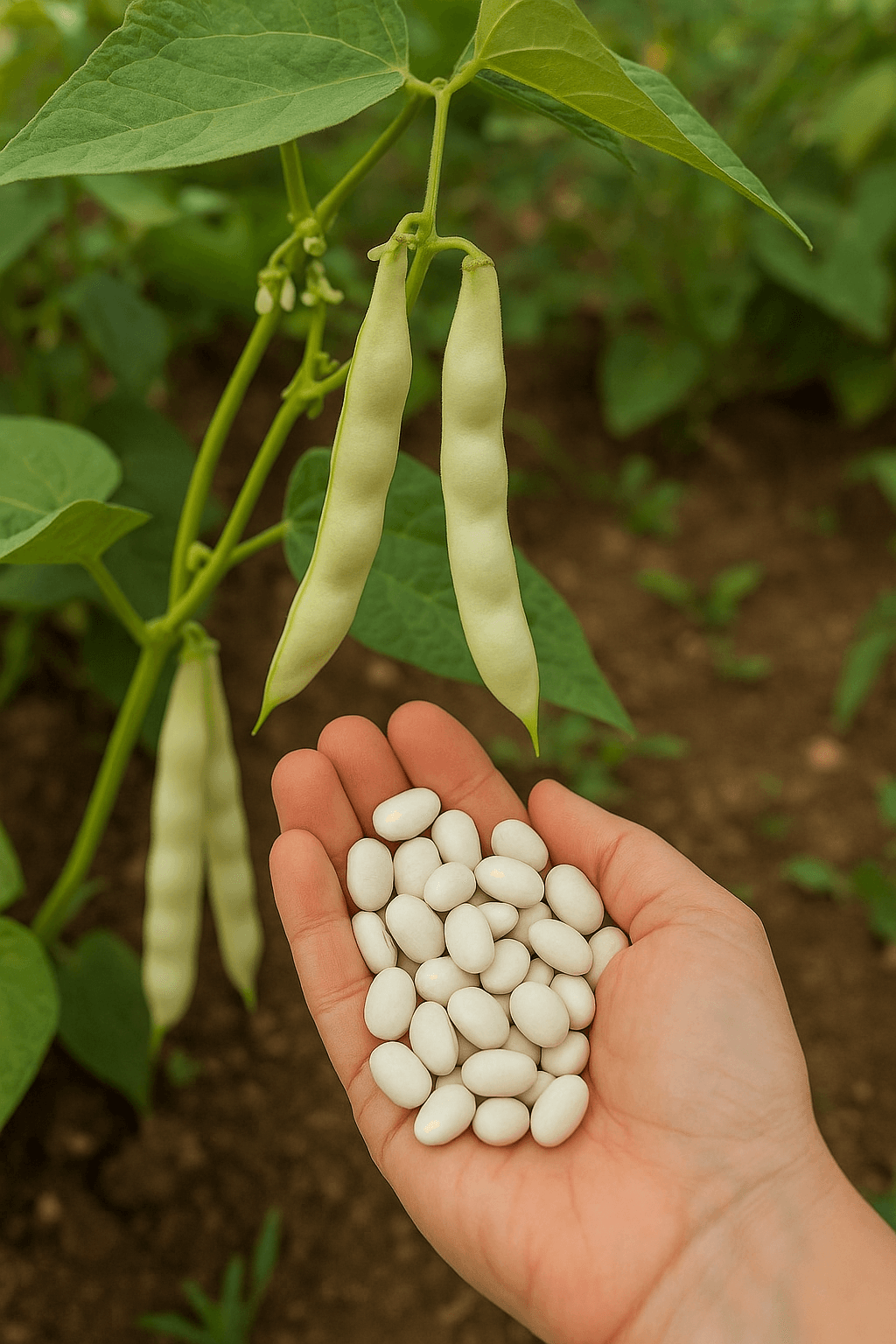
Derebucak Gembos Sugar Bean is a variety of sugar bean cultivated in the Derebucak district of Konya Province, Türkiye. It is characterized by large, matte white seeds with a high protein content. The product has been officially registered as a “Geographical Indication” by the Turkish Patent and Trademark Office under Registration No. 1649 dated 10 October 2024 and is protected under geographical indication rights.

Derebucak Gembos Sugar Bean (AA)
Derebucak Gembos Sugar Bean is a variety of the subspecies Phaseolus vulgaris sp. sphearicus. The product derives its name from the Gembos Plain in the Derebucak district of Konya Province. Its seeds are large, matte and broken white in color, and round in shape. The seed coat has a veined structure and the pods are awnless. Pink to red spotting appears on the pod surface near harvest time. The growth habit is fully climbing, with a long bushy plant structure. Plant height ranges from 1.3 to 1.8 meters. The beans can be harvested both manually and mechanically.
The cultivation area is a closed plain with alluvial soils formed by rainfall from surrounding mountains. Stress factors such as high altitude, significant day-night temperature differences, and wind influence contribute to the bean’s distinctive aroma.
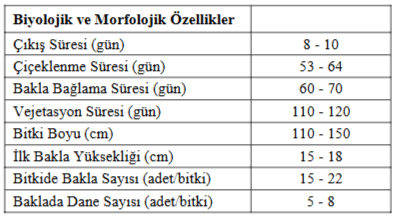
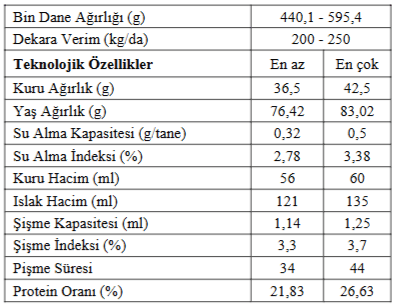
Biological, Morphological and Technological Characteristics of Derebucak Gembos Sugar Bean (Turkish Patent)
Production begins in autumn with soil preparation. The soil is tilled to a depth of 25–30 cm and reworked in spring to prepare the seedbed. Basal fertilization is applied using 3–4 kg of pure nitrogen and 5–8 kg of pure phosphorus per hectare. By May, selected seeds with a diameter of 9–12 mm are sown using a planter at a rate of 8–10 kg per hectare.
Seeds germinate within 8–10 days. Weed control is carried out before and after emergence. At 40–50 days after planting, earthing-up is performed together with weeding. Drip irrigation and fertigation are applied throughout the growing season. Irrigation frequency is every 10–15 days, totaling 6–7 applications per season, depending on seasonal conditions.
Harvesting begins in September when the pod color turns pink to red. Drying is carried out in the field. After threshing, the harvested beans are dried to a moisture content of up to 13% and stored. For seed use in the next season, seeds with a diameter of 9 mm or larger are selected manually based on sensory evaluation.
%252Fcetmi2.jpg&w=1280&q=75)
Derebucak Gembos Sugar Bean Harvest (AA)
Derebucak Gembos Sugar Bean can only be produced in the Derebucak district of Konya Province. Monitoring activities are coordinated by the S.S. Göynem Agricultural Development Cooperative, with participation of experts from the Derebucak District Directorate of Agriculture and Forestry, the Konya Provincial Directorate of Agriculture and Forestry, and the Bahri Dağdaş Agricultural Research Institute. Inspections are conducted at least once annually and repeated as necessary.
Anadolu Ajansı. “Konya’nın Coğrafi İşaretli Ürünü Çetmi Fasulyesi Üreticisinin Yüzünü Güldürdü.” Accessed May 31, 2025. https://www.aa.com.tr/tr/ekonomi/konyanin-cografi-isaretli-urunu-cetmi-fasulyesi-ureticisinin-yuzunu-guldurdu/2376969
Konya Ovası Projesi Bölge Kalkınma İdaresi Başkanlığı. "Derebucak Gembos Fasulyesi Eleme, Sınıflama, Paketleme Tesisi." Konya Ovası Projesi Bölge Kalkınma İdaresi Başkanlığı. Accessed May 31, 2025. https://www.kop.gov.tr/proje/derebucak-gembos-fasulyesi-eleme-siniflama-paketleme-tesisi
Turk Patent and Trademark Office. "Derebucak Gembos Fasulyesi Coğrafi İşaret Belgesi." Turk Patent and Trademark Office. Accessed May 31, 2025. https://ci.turkpatent.gov.tr/Files/GeographicalSigns/b0d9c777-184f-478e-89f1-3c980b51d148.pdf.
Türk Patent ve Marka Kurumu. “Derebucak Gembos Şeker Fasulyesi.” Accessed May 31, 2025. https://ci.turkpatent.gov.tr/cografi-isaretler/detay/9842

No Discussion Added Yet
Start discussion for "Derebucak Gembos Sugar Bean" article
Product Description and Distinctive Characteristics
Production Method
Geographical Boundary and Monitoring