


This article was automatically translated from the original Turkish version.
+2 More
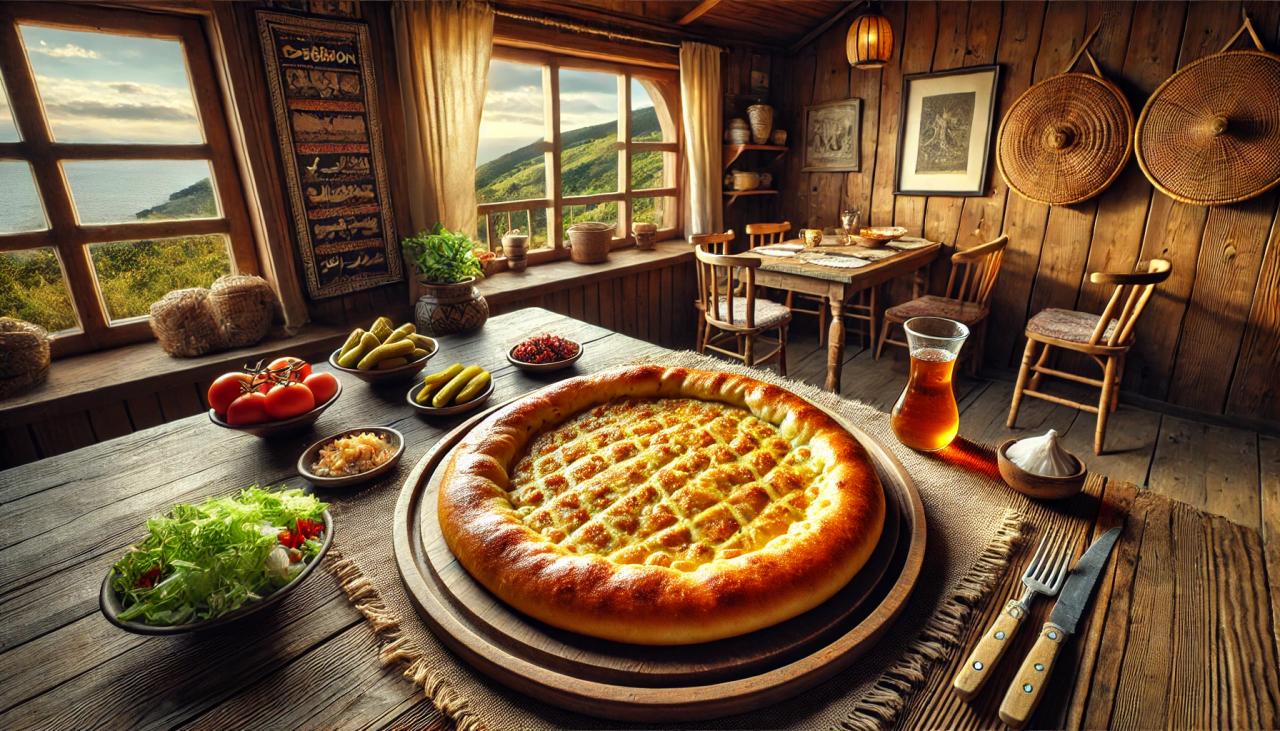
Derepazarı Pidesi is a protected regional bread variety unique to the Derepazarı district of Rize province in Türkiye’s Black Sea Region. It was granted geographical indication protection on 30 January 2018 by the Turkish Patent and Trademark Office under registration number 324. The application was submitted by the Derepazarı Municipality, and the product’s geographical indication type is designated as a “special mark.” The registered product category is defined as “bread” under the heading “meals and soups.”

Derepazarı Pidesi, (generated by artificial intelligence.)
The production and related processes of Derepazarı Pidesi must be carried out exclusively within the geographical boundaries of the Derepazarı district of Rize province. The geographical indication must be indicated alongside the product wherever it is used, such as on menus, and a specifically designated logo must be included in this context.
Derepazarı Pidesi is a traditional food defined by a specific production method, ingredient characteristics, and cooking technique. It has been produced in the Derepazarı district for over 50 years. Its current form has been achieved through traditional production methods and skilled dough-handling techniques. The product is served uncut, a defining feature of its serving and presentation style.
Derepazarı Pidesi consists of six main variants:
Cheese pide is prepared using a dough rolled into a circular shape approximately 25 cm in diameter. The edges of the dough are folded inward to a finger-thickness. The kolot cheese used is salt-brined for one day prior to production, then soaked in plain water for two days to prepare. At least 100 grams of cube-cut cheese is used per pide. Egg yolk is brushed over the cheese before the pide is placed in the oven. After approximately five minutes of baking, it is removed and at least 100 grams of butter is added on top, followed by an additional ten minutes of open baking. Upon request, a whole egg is cracked into the center of the pide to complete the baking process.
The kolot cheese is produced from fatty raw cow or sheep milk native to the Rize region. The milk is heated to 30 °C to initiate fermentation. A diluted starter culture is added at a rate of two tablespoons per 15–20 liters of milk. Coagulation is completed within one to one and a half hours. The resulting curd is drained in a cloth bag, a process continued for approximately 10–12 hours. As a result, approximately one kilogram of raw cheese is obtained from 11–14 liters of milk with reduced fat content. In the final stage, the cheese is salted and aged for three months.
The minced meat filling is prepared one day in advance in a tin-lined copper pot. The filling contains at least 100 grams of medium-fat beef mince, one finely chopped onion, two teaspoons of salt, and one clove of garlic. The mixture is sautéed until the onion is no longer visible, then cooled. The next day, quartered tomato, one çarliston pepper, quartered bunch of parsley, black pepper, and red pepper flakes are added. The dough is rolled out to approximately 60 cm in length and 20 cm in width, with edges folded inward to finger thickness. Egg yolk is brushed over the dough, and at least 200 grams of filling is placed on top. The pide is baked in a stone oven for approximately 15 minutes.
The filling for closed minced meat pide is prepared in the same manner as for the open variant. The dough is rolled to the same dimensions (approximately 60 cm in length and 20 cm in width). Egg yolk is brushed over the surface and the filling is added. The shorter edge of the dough is folded over the opposite end and sealed using the “ayalama” technique to prevent air from entering. The surface is brushed again with egg yolk and baked for approximately 15 minutes.
For mixed pide, the dough is rolled to approximately 60 cm in length and 15–20 cm in width. The edges are folded inward to a thin finger thickness. Egg yolk is brushed over the surface. In the first stage, at least 50 grams of minced meat filling and 50 grams of butter are placed on top. After five minutes of baking, the pide is removed from the oven. At least 50 grams of kolot cheese, previously salt-brined and soaked in plain water for two days, and 50 grams of Rize kavurma are added. Thinly sliced green pepper and tomato cut into half-moon shapes are placed on top, and the product is baked for an additional ten minutes.
Rize kavurma is prepared by cooking cube-cut meat with its fat in a copper pot over a wood fire for two to three hours. Once all moisture has been drawn out, the meat is salted, cooled, and stored in an airtight manner.
Kavurma pide is rolled into a circular shape approximately 25 cm in diameter. The edges are folded inward. Egg yolk is brushed over the surface and at least 100 grams of Rize kavurma is added. After approximately five minutes of baking in a stone oven, at least 30 grams of butter is added on top and baking continues for another ten minutes. Upon request, a whole egg is cracked into the center to complete the baking process.
Plain pide is rolled into a circular shape approximately 25 cm in diameter. Only egg yolk is brushed on top and it is baked in a stone oven for approximately 12 minutes. Due to the absence of any filling, it is most commonly consumed during breakfast.
The production, processing, and baking of Derepazarı Pidesi must be carried out entirely within the boundaries of the Derepazarı district of Rize province. Production outside this geographical boundary is not permitted.
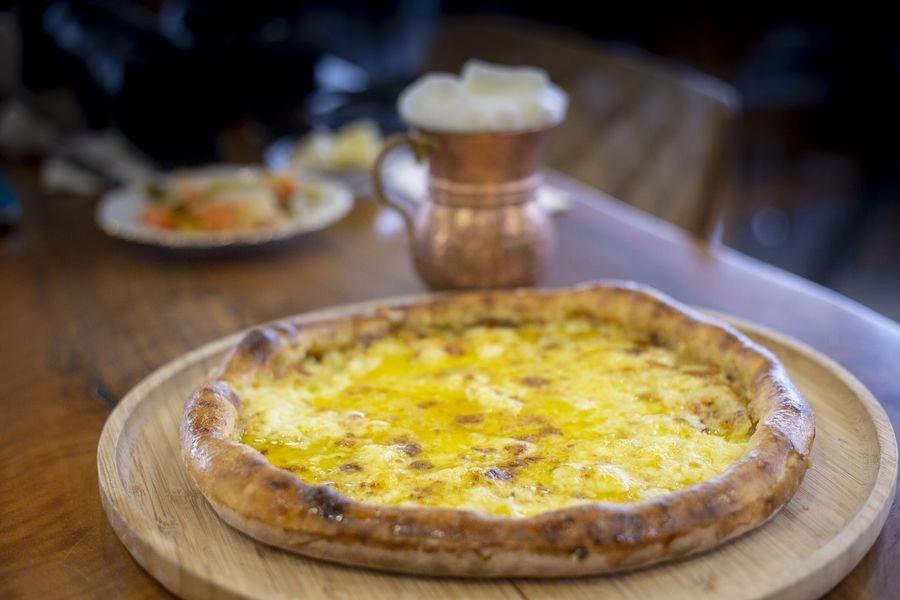
Derepazarı Pidesi, (Derepazarı Municipality)
Product inspection is conducted by a five-member inspection unit coordinated by the Derepazarı Municipality. This unit comprises representatives from the Rize Chamber of Commerce and Industry, Rize Commodity Exchange, Derepazarı Directorate of Food, Agriculture and Livestock, Rize Union of Craftsmen and Artisans, and the Bakers’ Association. Inspections are carried out three times per year; additional inspections may be conducted based on consumer complaints or municipal decisions. Inspection reports are submitted annually to the Turkish Patent and Trademark Office.
The following aspects are examined during inspections:
In necessary cases, the inspection board may engage expert personnel from public or private sectors. The board also has the authority to initiate legal proceedings when required.

Geographical Boundary and Usage
Variants
Preparation Methods
1. Cheese Pide
2. Open Minced Meat Pide
3. Closed Minced Meat Pide
4. Mixed Pide
5. Kavurma Pide
6. Plain (Dry) Pide
Geographical Boundary and Production Location
Inspection Process