


This article was automatically translated from the original Turkish version.
+1 More
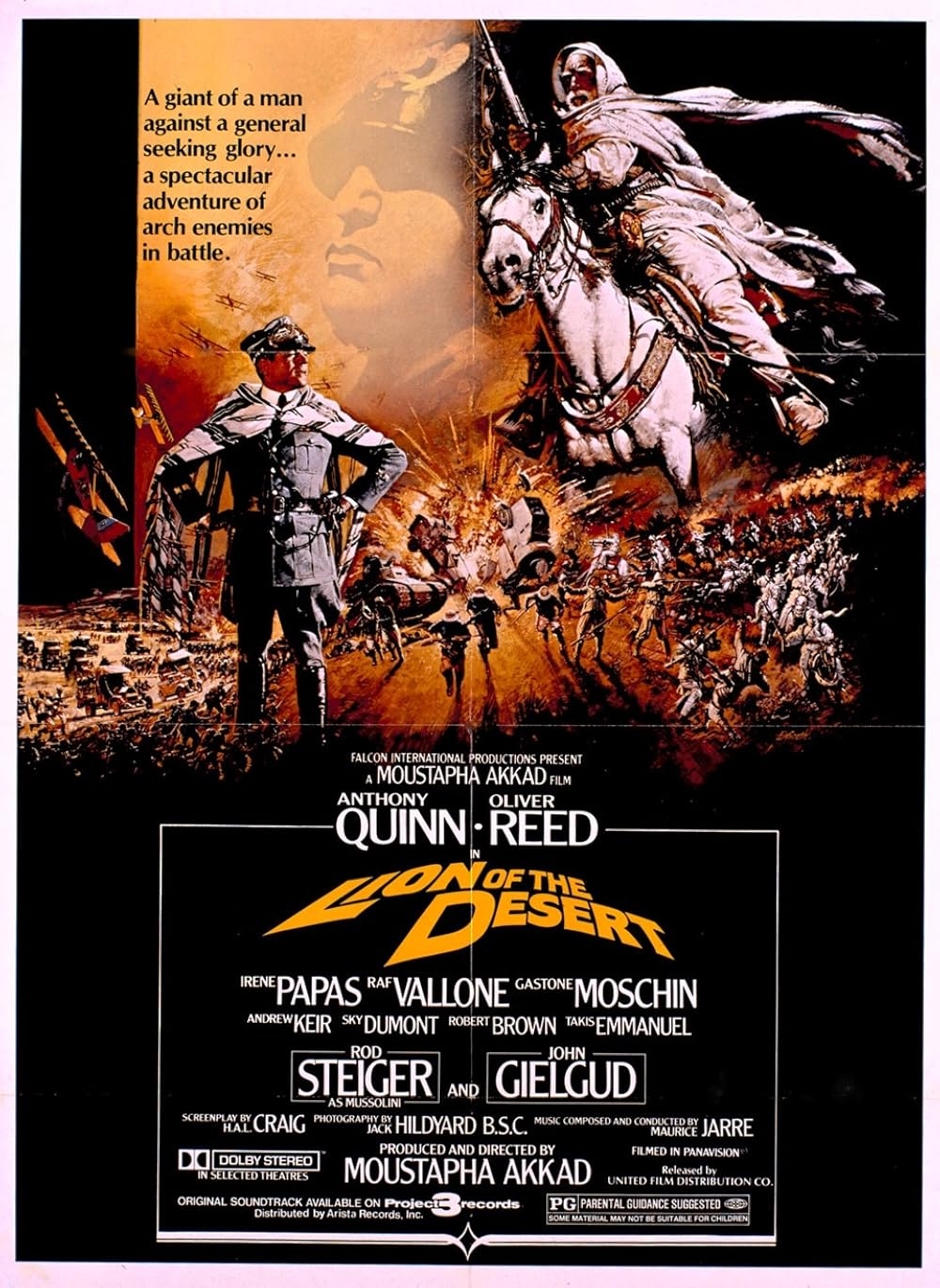
Lion of the Desert is a 1981 historical drama film directed by Mustafa Akkad. The production focuses on the resistance against the Kingdom of Italy in Libya during the early 20th century and portrays the life story of Omar al-Mukhtar, known as symbol.
Starring Anthony Quinn as place, film is recognized both for its grounded historical narrative and its anti-colonial theme.
The film examines the Italian colonial administration’s actions in Libya between 1929 and 1931 and the local population’s resistance against it. Led by Omar, a religious figure and teacher affiliated with the Senussi Order, the guerrilla campaigns represent a traditional resistance against the Italian army’s modern war technology.
The film concludes with Muhtar’s capture and execution in 1931. The story is conveyed not through individual heroism but through the figure of leader, portrayed as a representative of collective resistance.

Omar Mukhtar (IMDb)
The film’s production was financed by the Libyan government, and the majority of filming took place in the Libyan deserts. With a budget of approximately 35 million dollars, it became one of the largest Middle East-centered cinema projects of its time. Director Mustafa Akkad aimed through this film to introduce a historical figure from the Arab-Islamic world to Western audiences and to present an anti-colonial narrative.
The performances were generally well received, particularly Quinn’s portrayal, which was regarded as compelling by both audiences and critics.
Omar Mukhtar assumed leadership of the resistance in Libya, which Italy invaded in 1911, particularly from 1923 onward. As a member of the Senussi Order, Mukhtar gained prominence through his religious knowledge and military strategy. The Italian administration implemented repressive policies targeting civilian ring, including forced relocations, concentration camps, and famine creation strategies to suppress the resistance. Mukhtar was captured in 1931, tried by a military court, and executed. The film dramatizes this historical process for cinema.

Omar Mukhtar (IMDb)
Upon its release, the film received varied assessments from critics. While its visual storytelling, performances, and historical accuracy were praised, its length and narrative pacing were criticized at times. The film’s dramatic structure was positively noted for handling the theme of heroism without descending into ideological excess.
The film was never released in Italy during the long duration period. The primary reason was its critical portrayal of the Mussolini era and its direct depiction of the Italian military’s actions in Libya. The film found limited screening opportunities in Italy, Germany like, and some other countries for political reasons, but it generated widespread echo in the Arab world and Africa.
Lion of the Desert stands out in cinematic history for its narrative rooted in historical truth, its anti-colonial theme, and its performances. Its structure, which emphasizes collective resistance over individual heroism, makes it not merely a biography but also a reflection of the political conditions of its era.

No Discussion Added Yet
Start discussion for "Desert Lion Omar Mukhtar (Film)" article
Plot Summary
Production Process
Cast and Characters
Historical Background
Criticism and Interpretations
Censorship and Screening Ban