


This article was automatically translated from the original Turkish version.
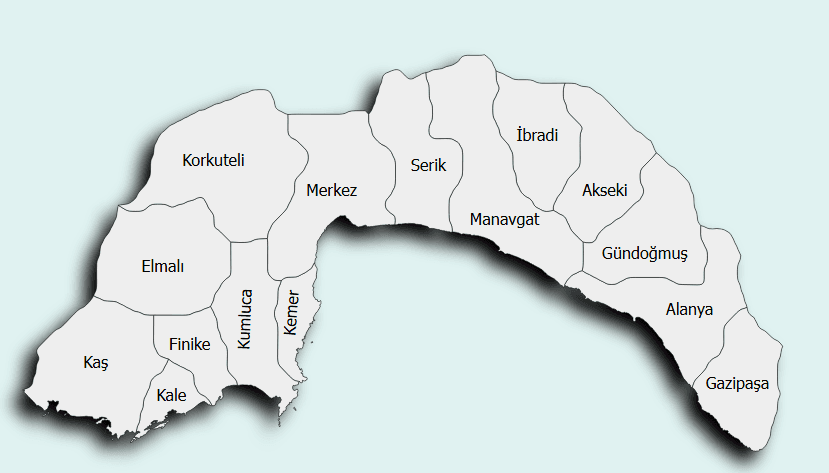
Döşemealtı
Province | Antalya | ||||||||
|---|---|---|---|---|---|---|---|---|---|
Area | 673.1 km² | ||||||||
Population (2024) | 90.572 | ||||||||
Climate | Mediterranean climate | ||||||||
Neighboring Districts | Finike Elmalı Kemer | ||||||||
Economic Activities | Citrus Beekeeping Tourism Greenhouse farming | ||||||||
Mayor | Menderes Dal | ||||||||
District Governor | Nuri Özder | ||||||||
Döşemealtı is a district located north of the city center of Antalya. Approximately 20 kilometers from the city center, the district borders Burdur to the north, Kepez to the east, Korkuteli to the west, and Konyaaltı to the south. Döşemealtı, which gained district status in 2008, derives its name from the historical “Döşeme Yolu” route that has been in use since antiquity and passed through the region.

Döşemealtı (Döşemealtı Belediyesi)
Döşemealtı has historically lain along the transit route between the regions of Pamphylia and Pisidia. The ancient “Döşeme Yolu,” after which the district is named, was constructed during the Roman period and served as a vital connection between settlements in the area. The Karain Cave located in the district is one of Türkiye’s largest natural caves and contains artifacts dating back to the Lower Paleolithic period. Additionally, its proximity to the ancient city of Termessos contributes significantly to its archaeological and historical richness. During the Ottoman period, the area was a village; it retained its rural settlement characteristics throughout the Republican era and became an independent district in 2008 after separating from the central district.

Termessos Antik Kenti (Döşemealtı Belediyesi)
Döşemealtı is situated on the southern slopes of the Taurus Mountains, within the northern section of the Antalya Plain. The district, covering an area of 673.1 km², consists of both flatlands and forested regions. The average elevation of the district center above sea level is approximately 300 meters. The area exhibits transitional characteristics between Mediterranean and continental climates, with hot dry summers and cool wet winters. The vegetation is predominantly composed of pine forests, maquis, and shrublands. Rich in natural resources, the district is notable for the Karain Cave and its surrounding ecological structure.
According to the 2024 Address Based Population Registration System (ADNKS) data, the population of Döşemealtı district is 90,572. Significant settlement also exists in neighborhoods outside the district center, such as Yeniköy, Çığlık, and Bademağacı. The majority of the population that has migrated to the district originates from Antalya city center and surrounding provinces. Educational levels are steadily rising, with the literacy rate exceeding 98 percent.
The economy of Döşemealtı is based on agriculture, animal husbandry, industry, and construction. Major agricultural products include olives, pomegranates, wheat, and barley. Small and large livestock farming is widespread in the district. Organized industrial zones and workshop-style production areas support economic activity. Particularly, marble quarries and stone processing facilities strengthen the industrial sector. With the growth of the housing sector, real estate and construction material trade have also become prominent.

Evdirhan (Döşemealtı Belediyesi )
Döşemealtı holds potential for tourism due to its natural and cultural heritage. The Karain Cave is listed on UNESCO’s Tentative World Heritage List and is the largest cave in Türkiye with evidence of continuous human habitation. Its proximity to Termessos National Park also enables activities such as nature hiking and camping.
The cuisine of Döşemealtı reflects influences from traditional Yörük dishes. Popular local delicacies include keşkek, saç kavurma, tandır kebab, and tarhana soup. In recent years, gastronomy and agricultural fairs held in the district have contributed to promoting its culinary traditions.
Döşemealtı Belediyesi. "Tarihi Yerler." Accessed April 19, 2025.http://www.dosemealti.bel.tr/tr/m/tarihi-yerler.
Döşemealtı Belediyesi. "Termessos Antik Kenti." Accessed April 19, 2025.http://www.dosemealti.bel.tr/tr/m/tarihi-yerler/termessos-antik-kenti.html.
Döşemealtı Belediyesi. “Konum.” Accessed April 19, 2025.http://www.dosemealti.bel.tr/tr/m/dosemealti/konum.html.
Döşemealtı Belediyesi. “Tarihçesi.” Accessed April 19, 2025.http://www.dosemealti.bel.tr/tr/m/dosemealti/tarihcesi.html.
Döşemealtı Kaymakamlığı. “Tarım.” Accessed April 19, 2025.http://www.dosemealti.gov.tr/tarim.
Döşemealtı Kaymakamlığı. “İlçemiz.” Accessed April 19, 2025.http://www.dosemealti.gov.tr/ilcemiz.
Türkiye İstatistik Kurumu (TÜİK). "Adrese Dayalı Nüfus Kayıt Sistemi Sonuçları, 2024." Accessed April 19, 2025.

Döşemealtı
Province | Antalya | ||||||||
|---|---|---|---|---|---|---|---|---|---|
Area | 673.1 km² | ||||||||
Population (2024) | 90.572 | ||||||||
Climate | Mediterranean climate | ||||||||
Neighboring Districts | Finike Elmalı Kemer | ||||||||
Economic Activities | Citrus Beekeeping Tourism Greenhouse farming | ||||||||
Mayor | Menderes Dal | ||||||||
District Governor | Nuri Özder | ||||||||
No Discussion Added Yet
Start discussion for "Döşemealtı (District)" article
History
Geography and Climate
Population and Demographics
Economy
Tourism, Culture and Cuisine