


 Recently Added:
This article was automatically translated from the original Turkish version.
In the final days of April 2025, armed clashes erupted in the Druze-populated areas south of Damascus, the capital of Syria. The clashes have escalated into an international crisis following Israel’s aerial strikes.
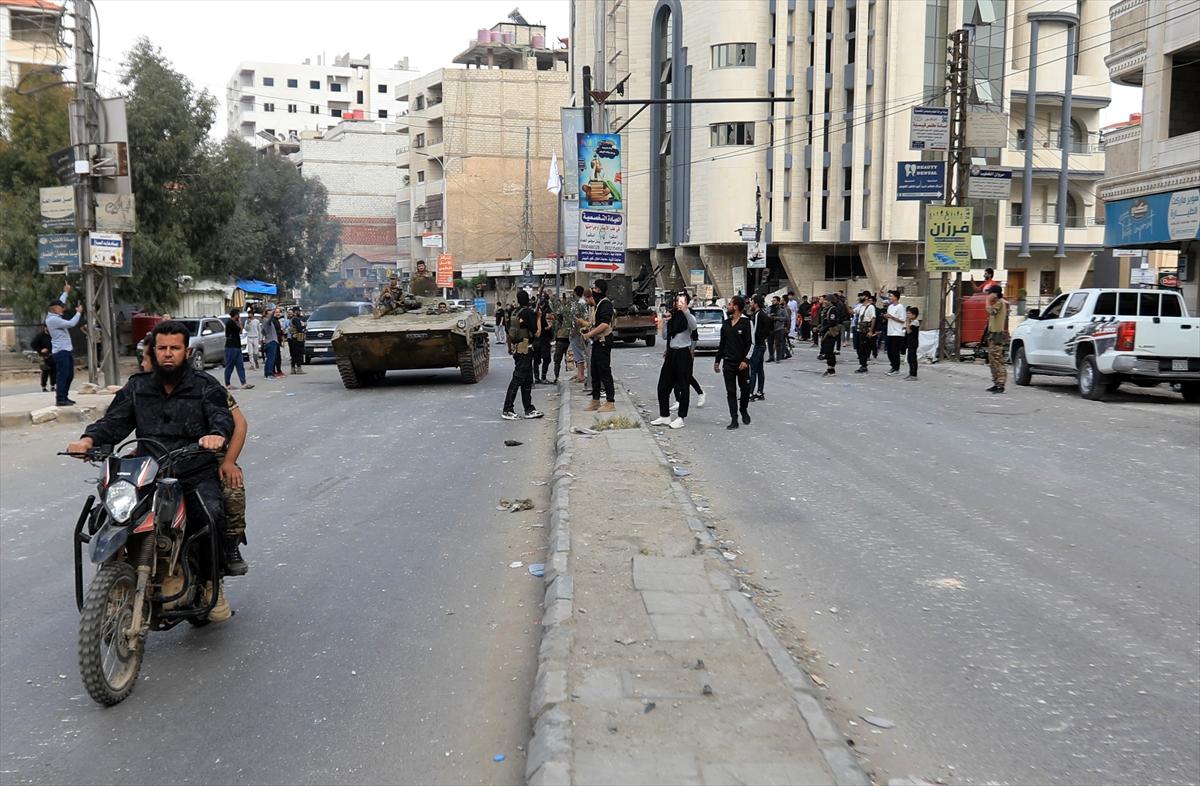
Ceramane Neighborhood, located south of Damascus, Syria, where the clashes began, 30 April 2025 – Anadolu Agency
On 28 April 2025, an audio recording circulated on social media that was alleged to contain insults against the Prophet Muhammad, triggering protests across Syria. The recording was claimed to originate from a person in the Suwayda province. On 29 April, tensions flared in the Ceramane neighborhood, where armed Druze groups ambushed Syrian government security forces, sparking the clashes.
The clashes quickly spread to the Sahnaya district of Damascus, where attacks involving heavy weapons resulted in the deaths of at least 13 security personnel. The Syrian security forces deployed armored vehicles, tanks, and substantial military reinforcements to the area.
Druze groups from the Sahnaya district joined the clashes that began in Ceramane, expanding the front line. Sheikh Muvaffak Tarif, a Druze leader residing in the Israeli-occupied Golan Heights, called on Israel and the international community to intervene in response to the developments.
On 30 April, the Syrian government announced that it had regained control of Sahnaya and that several illegal armed elements had been detained. Amir al-Shaykh, Governor of Rural Damascus, declared that security had been restored.
In talks involving the governors of Rural Damascus, Suwayda, and Quneitra, along with several community leaders, a preliminary agreement was reached to establish a ceasefire in the Ceramane and Sahnaya areas. The Syrian Observatory for Human Rights (SOHR) reported that a total of 101 people had been killed in the clashes.
On the morning of 30 April, the Israeli military announced it had carried out a series of aerial strikes targeting the Sahnaya district of Damascus. Defense Minister Yisrael Katz and Prime Minister Binyamin Netanyahu stated that the objective of the strikes was to neutralize elements targeting the Druze community. In Israel’s initial attacks, locations belonging to Syrian security forces were targeted, resulting in the death of one Syrian security officer.
On 2 May, Israel conducted another airstrike near the Syrian Presidential Palace. This attack was described by Israel as a warning message to the Syrian regime.
Israeli Foreign Minister Gideon Saar urged the international community to assume responsibility for protecting minorities in Syria. Israel also announced that it had admitted several wounded Druze civilians from Sahnaya for medical treatment on its territory.
In a statement by the Syrian Ministry of Foreign Affairs, all foreign interference in Syria’s internal affairs was rejected, and Syria reaffirmed its determination to protect “all segments of society, including its honorable Druze community.”
United Nations Special Envoy for Syria Geir O. Pedersen highlighted the serious potential for escalation in the security situation around the capital Damascus and Homs, calling for urgent measures to protect civilians. Pedersen expressed concern over Israel’s airstrikes and emphasized the need to halt all military actions.
Additionally, Grand Mufti of the Republic Sheikh Usama al-Rifai stated that the lives of all Syrians are sacred and urged rejection of calls for retaliation and revenge.
A statement by Lebanon’s Progressive Socialist Party indicated that its leader Walid Jumblatt had engaged with officials from the Syrian government, Turkey, Saudi Arabia, Qatar, and Jordan to seek an end to the clashes in southern Syria. As a result of these talks, a ceasefire agreement was announced to take effect in Sahnaya.
Al Jazeera. "Israel Strikes near Syria’s Presidential Palace, Issues Warning over Druze." Accessed May 2, 2025. https://www.aljazeera.com/news/2025/5/2/israel-strikes-near-syrias-presidential-palace-issues-warning-over-druze
Al Jazeera. "Syrian Druze Leader Condemns Government over Sectarian Violence." Accessed May 2, 2025. https://www.aljazeera.com/news/2025/5/1/syrian-druze-leader-condemns-government-over-sectarian-violence
Al-Monitor. "Syria’s Druze Take up Arms to Defend Their Town against Islamists." Accessed May 2, 2025. https://www.al-monitor.com/originals/2025/05/syrias-druze-take-arms-defend-their-town-against-islamists
Anadolu Ajansı. "Suriye Yönetimi, Şam Kırsalındaki Şahnaya’da Kontrolü Sağladığını Duyurdu." Accessed May 2, 2025. https://www.aa.com.tr/tr/dunya/suriye-yonetimi-sam-kirsalindaki-sahnayada-kontrolu-sagladigini-duyurdu/3553849
Anadolu Ajansı. "İsrail, Suriye Cumhurbaşkanlığı Sarayı Yakınlarında Bir Hedefi Vurduğunu Duyurdu." Accessed May 2, 2025. https://www.aa.com.tr/tr/dunya/israil-suriye-cumhurbaskanligi-sarayi-yakinlarinda-bir-hedefi-vurdugunu-duyurdu/3554653
Anadolu Ajansı. “Suriye Güvenlik Güçlerinin Bazı Dürzi Gruplarca Pusuya Düşürülmesiyle Başlayan Çatışmalar Sürüyor.” Accessed May 2, 2025. https://www.aa.com.tr/tr/dunya/suriye-guvenlik-guclerinin-bazi-durzi-gruplarca-pusuya-dusurulmesiyle-baslayan-catismalar-suruyor/3553076
Anadolu Ajansı. “İsrail, Dürzileri Koruma Bahanesiyle Başkent Şam Yakınlarına Saldırı Düzenledi.” Accessed May 2, 2025. https://www.aa.com.tr/tr/dunya/israil-durzileri-koruma-bahanesiyle-baskent-sam-yakinlarina-saldiri-duzenledi/3553387
Reuters. “Israel Says It Carried Out Warning Strike on Extremists in Syria Preparing Attack.” Accessed May 2, 2025. https://www.reuters.com/world/middle-east/israel-says-it-carried-out-warning-strike-extremists-syria-preparing-attack-2025-04-30/

On 29 April 2025, clashes began in the Jarmaneh neighborhood south of Damascus after some Druze armed groups ambushed Syrian security forces. The fighting quickly spread to the Sahnaya district, resulting in the deaths of at least 13 security personnel. On 30 April, Israel conducted air strikes on the Sahnaya area and on 2 May targeted areas near the Presidential Palace. The Syrian government announced on 30 April that it had regained control of Sahnaya and declared a ceasefire.
No Discussion Added Yet
Start discussion for "Druze Conflicts and Israeli Intervention South of Damascus (2025)" article
May 2, 2025
Background of the Clashes
May 2, 2025
Military Situation in Sahnaya and Ceramane
May 2, 2025
Israeli Interventions
May 2, 2025
International and Regional Reactions
May 2, 2025
Intervention by Lebanese and Israeli Druze Leaders