

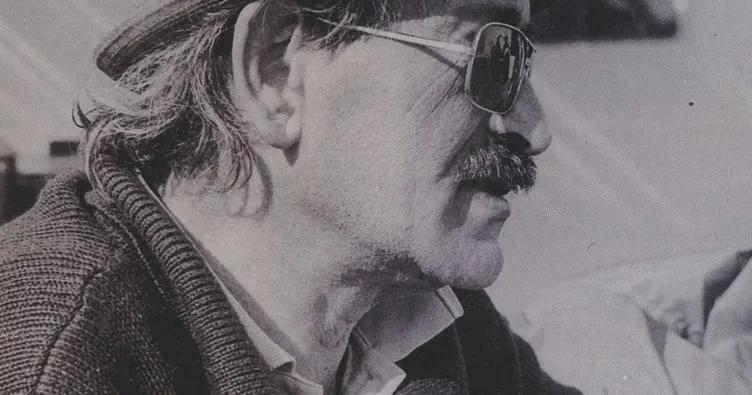
+1 More

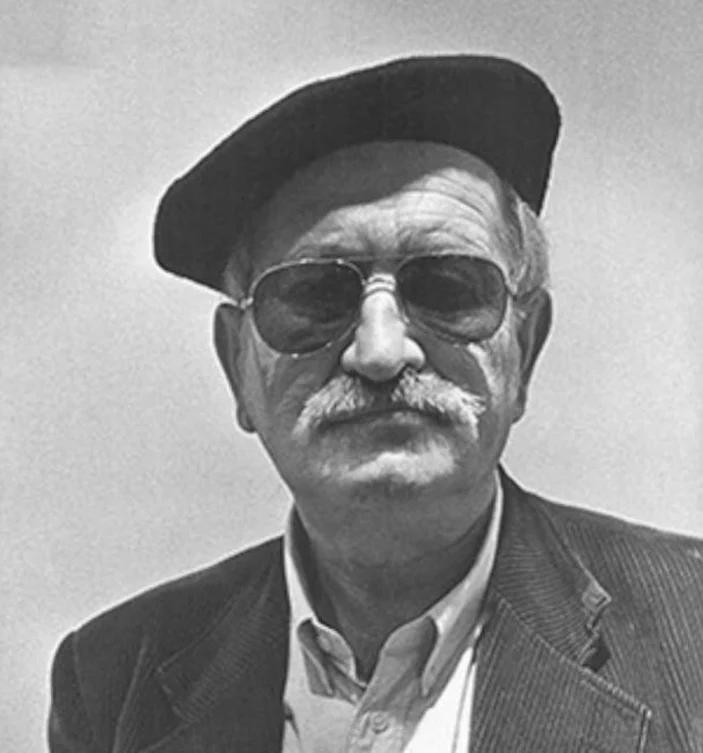
Ece Ayhan
Birth | 1931 | ||||||||
|---|---|---|---|---|---|---|---|---|---|
Death | 2002 | ||||||||
Education | Ankara University Faculty of Political Sciences | ||||||||
Profession(s) | Poet Writer State Official | ||||||||
Burial Place | Eceabat Yalova Village | ||||||||
Ece Ayhan (1931–2002) is one of the leading poets of the Second New movement in Turkish poetry. She completed her primary and secondary education in Eceabat and Istanbul, then graduated from the Faculty of Political Sciences at Ankara University. Ayhan, who served as a district governor in a duration position, settled in Istanbul after 1966 and worked as a writer and editor for various publishing houses and journals. In her poetry, she developed a distinctive approach based on intense imagery and allusion, rejecting traditional forms. In works she also called “civil poetry” or “black poetry,” she explored themes such as history, social critique, irony, and city life. She also wrote in the genres of essay, diary, and memorial.
Ece Ayhan Çağlar was born on 10 September 1931 in the Datça district of Muğla. Her father, Behzat Çağlar, came from a family originating in Gelibolu and worked as a goods director. Her mother Ayşe Hanım’s family had migrated from Kavak village in Gelibolu to the Yalova village of Eceabat.
Ayhan spent her childhood in Çanakkale and Istanbul. She began primary school in 1938 in Eceabat. After completing the second grade at Çanakkale İstiklal Primary School, she continued her education at Hırka-i Şerif Primary School in Karagümrük Atikkale following her family’s move to Istanbul in 1940, and completed her primary education there.
She attended middle school at Zeyrek Middle School and completed her high school education at Taksim High School (later renamed Beyoğlu High School and then Istanbul Atatürk Boys’ High School). In 1953 she enrolled at Ankara University Faculty of Political Sciences and graduated in 1959.

After graduating from University, Ayhan began her career as a state official. Following the completion of her internship and district governor training, she served as district governor and municipality president in Gürün (Sivas) and Alaca (Çorum) districts. She completed her military service as a reserve officer in 1964 and was appointed to Çardak (Denizli) district in 1965. However, her inherent lack of discipline and inability to adapt to civil service life led to conflicts with state bureaucracy, and in 1966 she resigned from her post and returned to Istanbul.
In Istanbul, she worked as a writer for Meydan Larousse Encyclopedia; held managerial positions at Sinematek and Yeni Sinema Magazine; served as an administrator for Genç Sinema Group; and worked as an editor for Ağaoğlu Publishing and E Yayınları over various periods.
In 1962, Ece Ayhan married Hafize Hanım, who died of cancer in 1968. They had one son, Ege. After her husband’s death, the poet struggled with financial and personal difficulties and was forced to leave her son in the care of her in-laws. She spent much of her life in material hardship and relied on support from her close circle.
From 1974 onward, Ece Ayhan faced serious health problems due to a tumor in her brain. The tumor caused hearing loss in her right ear and severe damage to her right eye. Due to these health issues, she was sent to Switzerland in 1974 with the help of friends and received treatment there for three years under the care of renowned neurosurgeon Professor Dr. Gazi Yaşargil. The tumor was successfully removed, but the permanent damage it left profoundly affected her life.
After returning to Türkiye, her life continued to be marked by financial hardship. She was temporarily employed by the Çanakkale Municipality under a laborer status, which granted her social security and access to healthcare services.
As her health deteriorated and her legs became paralyzed, friends brought her to Istanbul where she received treatment at Çapa Faculty of Medicine. Ayhan underwent inpatient treatment in various nursing homes and hospitals, and as a result of these treatments, she recovered from paralysis and regained the ability to stand.
In April 2001, she returned to Çanakkale, but in 2002 she moved to the İzmir Metropolitan Municipality Gürçeşme Nursing Home. She was taken to the İzmir Metropolitan Municipality Eşrefpaşa Hospital after falling ill there and died on 13 July 2002. Her funeral was held on 15 July 2002 in Yalova village, part of the Eceabat district of Çanakkale.

Ece Ayhan is one of the innovative and experimental poets of Republican-era Turkish poetry. She is recognized as a pioneer of the “Second New” movement, which emerged in the late 1950s in Turkish literature and questioned traditional poetic conventions. Her original imagery system, abstract narrative style, and innovative use of language drew significant attention.
In poems she defined as “civil poetry” or “black poetry,” Ayhan explored the complex inner world of urban life, loneliness, history, social critique, pessimism, and childhood using a unique voice.
In her poetry, Ayhan broke away from societal norms and favored complex, obscure images that were difficult to interpret, distancing herself from everyday language. By pushing the limits of linguistic possibilities, she assembled unusual word combinations to guide readers toward a direct engagement with the poem. This linguistic approach endowed her poetry with a musical quality reminiscent of the “atonal” technique in music.
“When we examine the words in Ece Ayhan’s poetry, we find references to figures and entities from diverse cultures, distant and near, from music and theater arts, and even from ancient historical names in Hebrew, Armenian, and Byzantine traditions. She included characters such as Art Tatum, Gesualdo da Venosa, Babylon, and Visigothic King Alaric in her poems. At the same time, we encounter the names of important figures in Turkish society (Köse Kâhya, Theodor Kasap, Fikret Mualla…) in her verses. In addition, we encounter deeply abstract and long research requiring interpretations, seemingly unrelated words viewed from a distance.”【1】
Ece Ayhan frequently employed word deformations in her poetry, a trait that drew readers’ attention. Such deformations can be viewed as creative acts that deepen meaning and depart from convention. For instance, her transformation of “Sea of Marmara” into “Marble Sea,” her fusion of “Heaven” and “Hell” to create “cehennet,” her use of “aparthan” for “apartment building,” and her alteration of “kuşbakışı” to “ankabakışı” in the line “Boğazlar on bir ankabakışı Çamlıca’dan” from her poem serve as examples of her linguistic play.
Kınar Hanımın Denizleri (1959)
Bakışsız Bir Kedi Kara (1965)
Ortodoksluklar (1968)
Devlet ve Tabiat ya da Orta İkiden Ayrılan Çocuklar İçin Şiirler (1973)
Yort Savul (Poetry collection containing the first four books, 1977)
Zambaklı Padişah (1981)
Çok Eski Adıyladır (1982)
Çanakkaleli Melâhat’a İki El Mektup ya da Özel Bir Fuhuş Tarihi (1991)
Son Şiirler (1993)
Bütün Yort Savul’lar (Collected Poems, 1994, 1999)
Defterler (1981)
Yeni Defterler (1984)
Yalnız Kardeşçe (1985)
Kolsuz Bir Hattat (1987)
Şiirin Bir Altın Çağı (1993)
Başıbozuk Günceler (1993)
Sivil Şiirler (1993)
Aynalı Denemeler (1995)
Dipyazılar (1996)
Morötesi Requiem (1997)
Sivil Denemeler Kara (1998)
Hay Hak! Söyleşiler (2002)
Biography. "Ece Ayhan." Accessed March 18, 2025.
Sabah. "Ece Ayhan Kimdir? Ece Ayhan Şiirleri, Sözleri, Eserleri, Hayatı ve Edebi Kişiliği." Accessed March 18, 2025.
[1]
Yusuf Bilal Akkaya, “A Difficult Language: According to Ece Ayhan,” Baykuş Culture Art and Literature Journal, issue 11 (July–August 2021): p.16.【1】
The poet published her first poem in 1954 in the journal Türk Dili. From her first poem onward, she sought to create a new poetic language distinct from established norms and her contemporaries, offering various examples. Complex sentences and phrases whose meanings could only be deciphered through extensive

Ece Ayhan
Birth | 1931 | ||||||||
|---|---|---|---|---|---|---|---|---|---|
Death | 2002 | ||||||||
Education | Ankara University Faculty of Political Sciences | ||||||||
Profession(s) | Poet Writer State Official | ||||||||
Burial Place | Eceabat Yalova Village | ||||||||
Early Life and Education
Professional Career
Personal Life and Challenges
Health Issues
Final Years and Death
Literary Identity
Works
Poetry:
Diary, Memoir, Essay, Interview: