

This article was automatically translated from the original Turkish version.
+1 More
Type of Geographical İndication | Origin Name | ||||||||
|---|---|---|---|---|---|---|---|---|---|
Registration Number | 1556 | ||||||||
Registration Date | 07.03.2024 | ||||||||
Product / Product Group(s) | Vegetables and Mushrooms Processed and Unprocessed Fruits | ||||||||
Province(s) | Balıkesir | ||||||||
Applicant/Registrant(s) | Bandırma Chamber of Commerce | ||||||||
Edincik olive is the fruit of the Edincik su zeytin variety of Olea europaea L. This olive is cultivated within the boundaries of the Bandırma and Erdek districts of Türkiye’s Balıkesir province and was officially registered under its place of origin on 7 March 2024, bringing it under geographical indication protection. The registration process was carried out by the Bandırma Chamber of Commerce.
The Edincik olive tree exhibits moderate growth and has a broad, rounded canopy structure. Branches change color with age: young branches are green-gray, while older branches take on beige-green tones. Leaves are long, narrow, and elliptical in shape, with a dusty green-gray upper surface and a slightly hairy gray-green lower surface. The midrib of the leaf appears as a distinct white line, and the leaf blade is symmetrical relative to this vein.
The Edincik olive is suitable for table use due to its high water content (50–74%) and low oil content (13–24%). The flesh is soft, while the skin is thin and sensitive to physical impact. Fruit width ranges from 14 to 21 mm and length from 18 to 26 mm; the weight of 100 fruits may vary between 250 and 600 grams. These characteristics give the Edincik olive a distinctive position among varieties classified as table olives.
Flowering occurs between 12 May and 12 June. The green-ripe phase takes place in October, while the black-ripe phase occurs between 15 November and 15 December. Harvesting is carried out manually or mechanically; due to the fruit’s delicate structure, careful handling and processing are required.
The Edincik olive is rich in phenolic compounds. It contains oleuropein (3.5–5.0 mg/kg), tyrosol (4.0–5.0 mg/kg), and hydroxytyrosol (6.0–8.0 mg/kg). Among volatile compounds are ethyl acetate (1.5–25.0%), 3-methyl-1-butanol (4.0–14.0%), and mequinol (7.0–18.0%). These components are the primary determinants of the olive’s aroma and flavor profile.
The soils within the geographical boundary are non-saline and have a clay-silt-clay structure, with a pH range of 5.45 to 7.87. The stony terrain limits soil heating by reflecting sunlight, helping maintain soil moisture and promoting fruit enlargement. Irrigation is generally not practiced; however, sprinkler or drip irrigation may be applied during periods of insufficient rainfall.
The production process of Edincik olives follows a multi-stage system extending from the establishment of olive groves to the packaging of the table product. Each stage is focused on preserving the product’s unique qualities and ensuring compliance with geographical indication criteria.
Olive Grove Establishment and Planting: Orchards are established on irrigable, fertile land. Terracing is applied on slopes exceeding 5%; drainage pits are dug where the water table is high. Seedlings are planted in 80x80 cm holes using planting boards. For container-grown seedlings, the root collar is positioned at soil level; for grafted seedlings, the graft union remains above ground. Root and canopy pruning are performed before planting, followed by watering. Spacing between trees varies from 5 to 18 meters depending on irrigation conditions.
Soil Cultivation: Conducted two to three times annually. The first cultivation, at a depth of 15 cm, is performed with a plow after harvest. The second, at 10–12 cm depth, is carried out in spring using a plow or harrow. The third is applied to prevent loss of fallen olives and to control weeds.
Fertilization: Applied approximately one month before shoot growth begins. All phosphorus and potassium fertilizers and half of the nitrogen fertilizer are applied during this period. The remaining nitrogen is applied before the last rainfall in non-irrigated areas and before the first irrigation in irrigated areas.
Irrigation: Natural rainfall generally suffices. However, during dry periods, sprinkler or drip irrigation may be used as supplementary support.
Pruning: Renewal pruning is predominantly practiced on Edincik olive trees. This practice is essential for maintaining healthy growth and enhancing productivity.
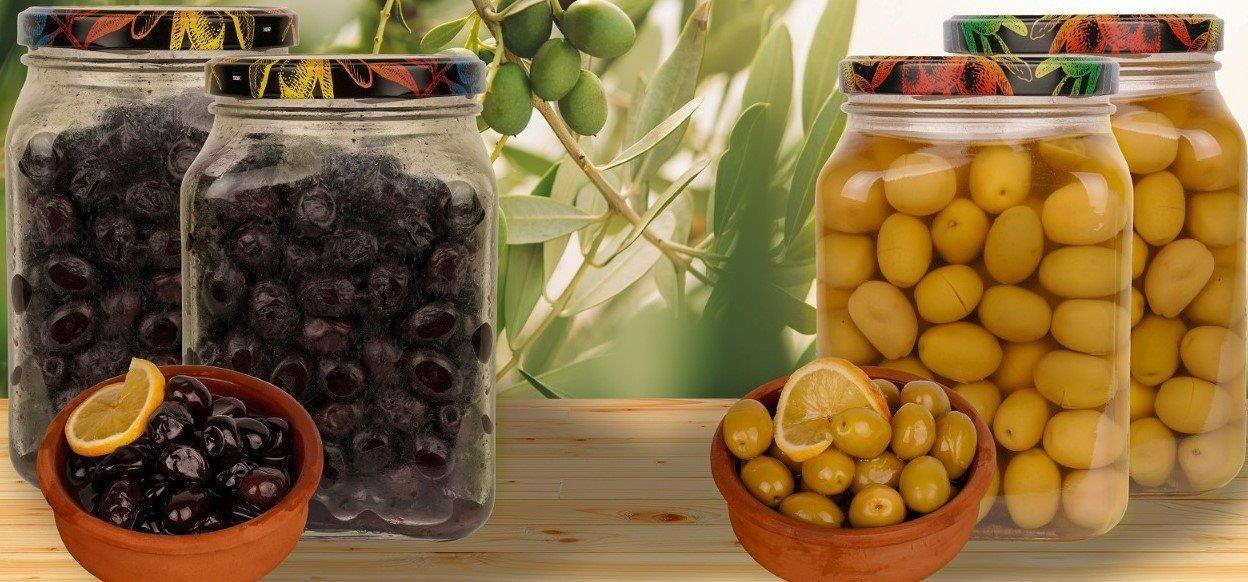
Green Olives: Harvested at the beginning of October. Fruits transitioning from green to yellow are collected mechanically, sorted by size, and transferred to fermentation tanks. They are left to undergo natural fermentation in a brine solution containing 6% sea salt and 0.5% citric acid. Salt concentration is maintained at 7–7.5% and acidity at 0.8–1%. After approximately nine months, olives are selected, packed in brine, and pasteurized for market.
Black Olives: Harvested at the end of October to early November. A brine containing 8–10% salt is prepared, supplemented with calcium chloride and lactic acid. Olives are subjected to pressure using flax cloth, wooden boards, and granite stones. After eight months of fermentation, they are packed and marketed.
Monitoring is conducted by a three-member authority composed of representatives from the Directorate of Agriculture and Forestry, the Chamber of Commerce, and the Chamber of Agriculture, under the coordination of the Bandırma Chamber of Commerce. Inspection criteria include production area, pomological characteristics, production method, chemical analyses, and compliance with the use of the place of origin name.
Turk Patent and Trademark Office. "Edincik Zeytini" Certificate of Registration. Accessed October 19, 2025. https://ci.turkpatent.gov.tr/Files/GeographicalSigns/10c5f4cb-95e5-4aa2-a888-9e9a0a23901f.pdf.
Turkish Patent and Trademark Office. "Edincik Zeytini." *Coğrafi İşaretler Portalı*. Accessed October 19, 2025. https://ci.turkpatent.gov.tr/cografi-isaretler/detay/6004.

Type of Geographical İndication | Origin Name | ||||||||
|---|---|---|---|---|---|---|---|---|---|
Registration Number | 1556 | ||||||||
Registration Date | 07.03.2024 | ||||||||
Product / Product Group(s) | Vegetables and Mushrooms Processed and Unprocessed Fruits | ||||||||
Province(s) | Balıkesir | ||||||||
Applicant/Registrant(s) | Bandırma Chamber of Commerce | ||||||||
Botanical Characteristics
Fruit Characteristics
Maturity and Harvest Period
Chemical Composition
Growth Conditions
Production Method
Table Olive Production
Monitoring and Protection