


This article was automatically translated from the original Turkish version.
+2 More
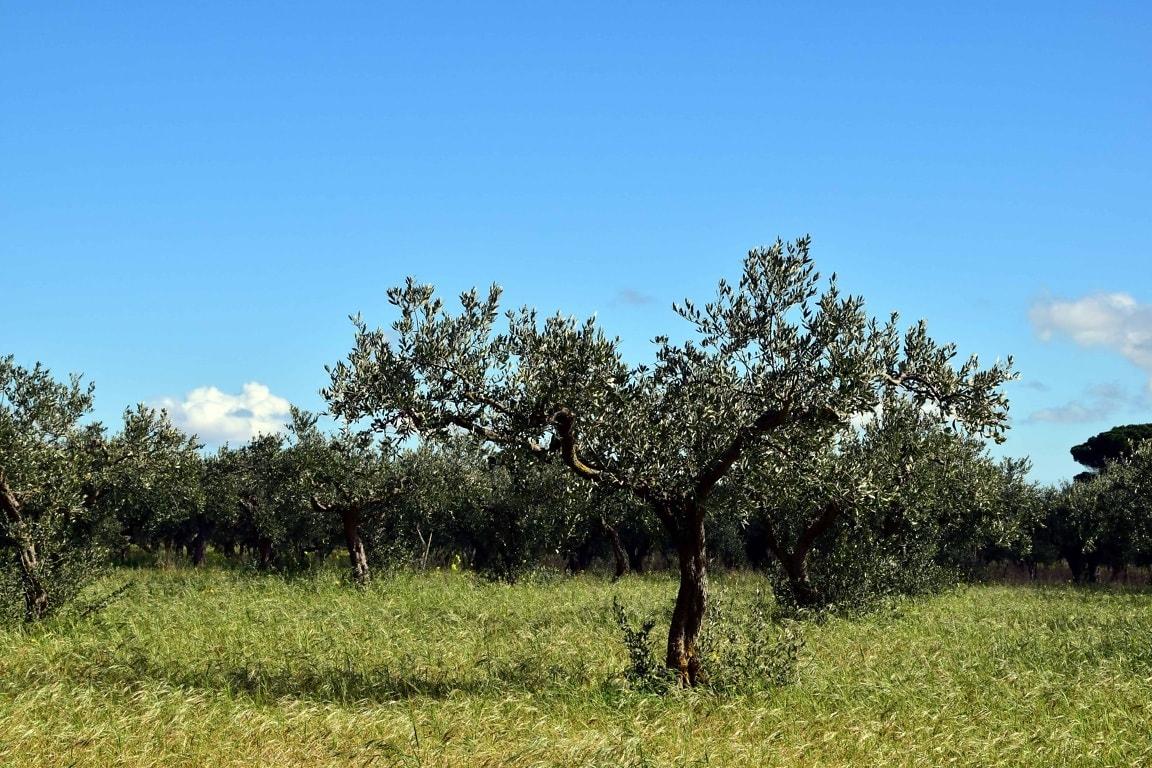
Olive Tree
Distribution Area | Eastern Mediterranean origin | ||||||||
|---|---|---|---|---|---|---|---|---|---|
Basic Characteristics | Evergreen, Long-lived | ||||||||
Common Cultivars (Türkiye) | Memecik Ayvalık | ||||||||
The olive tree (Olea europaea L.) is a fruit tree belonging to the Oleaceae family, known as an evergreen, long-lived species characteristic of the Mediterranean climate. This species, considered native to the Eastern Mediterranean, is an agriculturally significant plant widely cultivated globally, particularly in the Mediterranean basin. Today, both the cultivated form (var. europaea) and the wild form (var. sylvestris) of Olea europaea occur in natural and semi-natural environments.
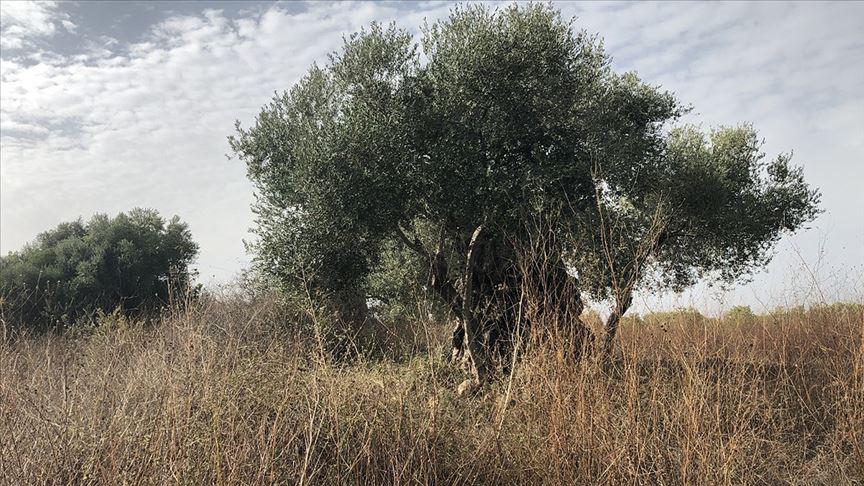
An Image of an Olive Tree - AA
The olive tree is typically a tree that grows to a height of 2 to 10 metres, with a twisted and mostly knotted trunk. Its leaves are arranged oppositely, lanceolate in shape, leathery in texture, and usually dark green on the upper surface while the lower surface is covered with silvery peltate hairs. The flowers are hermaphroditic and occur in small clusters in the leaf axils. The floral structure consists of a four-toothed calyx, a short-tubed corolla, and two epipetalous stamens. The fruits are fleshy drupes (stone fruits) and exhibit morphological variation depending on the species and cultivar.
The three most commonly cultivated cultivars in Türkiye are Ayvalık, Memecik, and Gemlik. The Ayvalık cultivar is especially prevalent in the Aegean Region and is preferred for olive oil production. Its average fruit size is 23.4 mm in length and 19.1 mm in width, making it suitable for obtaining natural extra virgin oil. The Memecik cultivar is used both for oil and table purposes and has a broader distribution; its average fruit length is 25.6 mm. The Gemlik cultivar is primarily regarded as a black table olive in the Marmara Region. Although it has a high oil content, its high acidity necessitates refining for acceptable oil quality.
In cross-sections of the olive tree trunk, a distinct vascular tissue organization is observed. Beneath the epidermis, there are typically three layers of phelloderm, followed by sclerenchyma, parenchyma, phloem, cambium, and xylem. The xylem contains tracheae, tracheids, and abundant sclerenchyma elements. The pith is parenchymatous in structure. In the leaves, the upper epidermis is covered by a thick cuticle, while the lower epidermis contains numerous stomata and peltate hairs. The mesophyll tissue consists of three layers of palisade parenchyma followed by spongy parenchyma. The vascular bundles exhibit collateral structure. No significant structural differences have been detected in the same cultivars grown in different geographical regions, either morphologically or anatomically.
Pruning Techniques in Olive Trees (Döşemealtı District Directorate of Agriculture and Forestry)
The growth of the olive tree is closely related to soil structure and composition. Soil analyses indicate that the soils of Ayvalık in the Aegean Region are rich in organic matter and low in lime content, whereas the soils of the Mediterranean Region are high in lime and poorer in organic matter.
These differences demonstrate that the Ayvalık cultivar thrives more successfully in soils that are lime-free or low in lime. The soils of the Marmara Region, however, possess an organic matter content suitable for the Ayvalık cultivar.
Olive oil, derived from the olive fruit, is rich in unsaturated fatty acids, primarily oleic acid (%83) and linoleic acid (%15). This composition renders olive oil valuable for health. Historically, olive oil has been used in traditional medicine for its effects on the digestive system, bile secretion, and dermatological conditions. In modern science, it has become a subject of intensive research due to antioxidants such as phenolic compounds and vitamin E, particularly abundant in natural extra virgin olive oil.
Olive cultivation in Türkiye is most intensive in the Aegean Region. The geographical distribution of the Ayvalık and Memecik cultivars includes provinces such as İzmir, Aydın, and Manisa, while the Gemlik cultivar is concentrated especially in Bursa and its surroundings. Türkiye is one of the leading countries in global olive production, with approximately 72 million olive trees. Cultivation of the olive tree worldwide is predominantly confined to the Mediterranean basin, where 98% of global olive plantations are located.
In olive farming, determining soil properties, selecting appropriate cultivars, and implementing fertilizer applications based on soil analysis are of great importance for productivity. Soils with high lime content, low organic matter, and imbalanced nutrient elements can limit plant development. It is recommended to expand the areas suitable for productive cultivation of Ayvalık and Memecik cultivars and to graft wild olive trees in the Mediterranean Region to convert them into these cultivars.
Döşemealtı İlçe Tarım ve Orman Müdürlüğü. "Zeytin Ağaçlarında Şekil Budaması Nasıl Yapılır?" YouTube. Accessed May 23, 2025. https://www.youtube.com/watch?v=SXxGmRXE6rU
Erim, Gülcan, and Cengiz Kartı. “Sanatta Kültürel Simgeler: Zeytin Ağacı.” *Milli Eğitim Dergisi* 52, no. 240 (2023): 3033–3062. https://doi.org/10.37669/milliegitim.1181314.
Özdağ, Ahmet Nuri, and Fatma Koyuncu. “Zeytin Ağacı Üzerine Bir Monografi.” *Adnan Menderes Üniversitesi Ziraat Fakültesi Dergisi* 17, no. 1 (July 2020): 123–130. https://doi.org/10.25308/aduziraat.600109.

Olive Tree
Distribution Area | Eastern Mediterranean origin | ||||||||
|---|---|---|---|---|---|---|---|---|---|
Basic Characteristics | Evergreen, Long-lived | ||||||||
Common Cultivars (Türkiye) | Memecik Ayvalık | ||||||||
Botanical Characteristics
Cultivars
Anatomical Features
Ecological and Agricultural Conditions
Economic and Health Significance
Distribution and Production
Findings on Cultivation