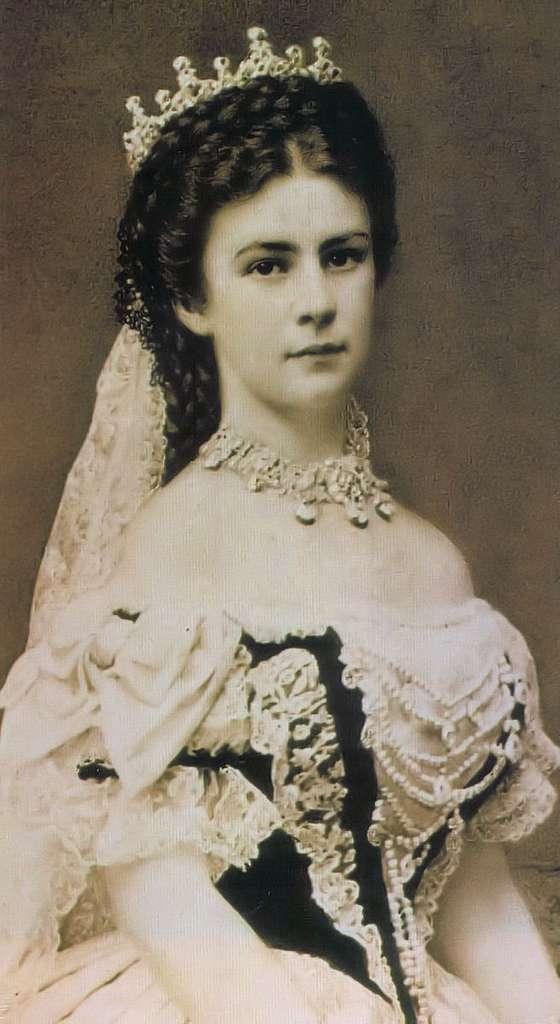



Doğum tarihi | 1837-12-24 | ||||||||
|---|---|---|---|---|---|---|---|---|---|
Eş | Emperor Franz Joseph I (marriage: 24 April 1854 Vienna) | ||||||||
Place of Birth | Munich | ||||||||
Ölüm tarihi | 1898-09-10 | ||||||||
Place of Death | Geneva | ||||||||
Babası | Duke Maximilian in Bavaria (1808–1888) | ||||||||
Annesi | Ludovika (1808–1892) | ||||||||
Çocuk | Marie Valerie (1868–1924) Rudolf (1858–1889) Gisela (1856–1932) Sophie (1855–1857) | ||||||||
Title(s) | Empress of Austria Queen of Hungary | ||||||||
Cause of Death | Assassination | ||||||||
Known widely as “Sisi,” Elisabeth Amalie Eugenie von Wittelsbach (1837–1898) is one of the most captivating figures in 19th-century European history as Empress of Austria and Queen of Hungary.
Elisabeth Amalie Eugenie von Wittelsbach was born on 24 December 1837 in Munich. Her father was Duke Maximilian of Bavaria (1808–1888), and her mother was Ludovika (1808–1892). A member of the House of Wittelsbach, Elisabeth was the fourth of her parents’ ten children. Her childhood unfolded in a relatively free environment, far removed from rigid court traditions. This atmosphere laid the foundation for a personality deeply drawn to freedom and independence.
Initially, her elder sister Helene (Néné) had been selected as a bride for Emperor Franz Joseph of Austria. However, during a meeting held in Bad Ischl in 1853, the Emperor became captivated by Elisabeth. This encounter paved the way for Elisabeth to enter the Austrian court before she even turned sixteen. The couple married in Vienna on 24 April 1854.
Young Elisabeth was described as shy, inexperienced, and unaccustomed to court rules. The strict ceremonial routines of Vienna, particularly the domineering attitude of her mother-in-law Archduchess Sophie, created significant adjustment difficulties for her. During this period, the contrast between Elisabeth’s youthful sense of freedom and the rigid protocols of court life became sharply evident.
Elisabeth became Empress of Austria upon her marriage to Emperor Franz Joseph in Vienna on 24 April 1854. Shortly after the wedding, she encountered the rigid ceremonial customs and strict rules of the Viennese court. The harsh demeanor of her mother-in-law and aunt, Archduchess Sophie, made life particularly difficult for the young empress. Elisabeth’s private life at court was heavily restricted, with virtually no room for personal privacy.
Empress Elisabeth and Emperor Franz Joseph had four children. Their first child, Sophie, was born in 1855; their second daughter, Gisela, in 1856. Their only son, Rudolf, was born in 1858. Ten years later, in 1868, their youngest daughter, Marie Valerie, was born. However, Elisabeth was sidelined by her mother-in-law Sophie, who claimed she was unfit to raise her first three children; the upbringing of the children was largely managed by court officials under Sophie’s control.
In 1857, Elisabeth traveled to Hungary with her two daughters Sophie and Gisela. During this journey, the two-year-old Sophie died of an illness believed to be typhus. This loss became one of the greatest tragedies in Elisabeth’s court life. Later, the suicide of her son Rudolf in Mayerling in 1889 deeply affected her.
Overall, Elisabeth’s court life was shaped by rigid protocols, her mother-in-law’s control, and her limited influence over her family. Being kept away from the upbringing of her children contributed significantly to her feeling alienated within the court environment.
Elisabeth’s role in relations with Hungary was both symbolic and politically decisive. Her adoption of national dress, her evident interest in Hungarian culture, and her influence in political processes transformed her into an empress who served as a bridge between the two peoples of the Austro-Hungarian Monarchy.
Elisabeth played a significant role in Austro-Hungarian relations. During her first visit to Hungary as empress in 1857, she established a close bond with the Hungarian people. She brought her daughters Sophie and Gisela with her on this trip; however, the young Sophie died during the journey from typhus.
Her sympathy for Hungarian national identity elevated her to a unique position in the political developments between Austria and Hungary. Her support was crucial during the Austro-Hungarian Compromise of 1867. As a result of this agreement, Franz Joseph and Elisabeth were crowned King and Queen of Hungary in Budapest, becoming Emperor and Empress of Austria-Hungary.
One of the most visible signs of Elisabeth’s acceptance in Hungary was her symbolic gestures through national dress. She gained prominence wearing Hungarian-themed garments designed by the Parisian couturier Charles Frederick Worth. The costume she wore during the 1867 Hungarian coronation ceremony was regarded as a symbolic fusion of Hungarian national identity with the Austrian court.
The Hungarian press also supported Elisabeth. Publications such as Pesti Napló, Pester Lloyd, and Vasárnapi Újság portrayed the empress as a figure standing alongside the Hungarian people. Her stance helped foster a more favorable attitude toward Austria within Hungarian society.
The Empress frequently traveled to escape the constraints of court life. She became known for her journeys to Madeira, Hungary, and Greece. She placed great importance on her physical health and beauty, drawing attention through rigorous exercise and diet regimens.
During her time as empress, Elisabeth found great discomfort in the strict rules of the Vienna court and the constant surveillance. As a result, she spent much of her life traveling. She often stayed for extended periods in different countries and preferred to remain distant from the court.
Among the places where she spent the most time were Hungary, Greece, Madeira, and especially Corfu. On Corfu, she commissioned the construction of a palace named Achilleion, where she resided for long periods. The Gödöllő Palace was also among her favorite residences; this Hungarian palace served as one of the places Elisabeth retreated to when she wished to distance herself from Vienna.
Her travels were not merely for rest; they also served as an escape for Elisabeth. She placed great importance on these journeys as a means of distancing herself from the pressures of court protocol and the control of her mother-in-law Archduchess Sophie. Additionally, these trips enabled Elisabeth to engage with diverse cultures across Europe and to redesign her own personal spaces.
Even in the final years of her life, Elisabeth continued to travel. On 10 September 1898, while staying in Geneva, Switzerland, she was attacked by the Italian anarchist Luigi Lucheni. Lucheni stabbed the Empress in the chest with a sharpened file. Elisabeth initially did not realize she had been attacked, feeling only a push. Shortly afterward, she lost consciousness. Elisabeth died at the Hôtel Beau-Rivage. The autopsy determined the cause of death to be cardiac tamponade, caused by blood accumulation around the heart.
Elisabeth’s death caused a major outcry not only within the Austro-Hungarian Empire but across Europe as a whole. Her unconventional lifestyle, her lifelong pursuit of personal freedom, and her tragic end attracted widespread public attention after her death.
Elisabeth’s death left a profound mark on European history. Her lifelong quest for independence, her travels, her close ties with Hungary, and her tragic end gave rise to a powerful legend surrounding her. After her death, a “Sisi cult” emerged in popular memory, and Elisabeth continued to exist not merely as a member of the royal family but as a cultural icon.
In particular, the 20th century reinforced this legacy through cinema and popular culture. Ernst Marischka’s Sissi film trilogy from the 1950s portrayed the Empress as a fairy-tale figure and played a significant role in Austria’s national identity reconstruction after World War II. These films idealized Sisi as a young, beautiful, and romantic empress, transforming her into a mythologized figure in the national consciousness.
Sisi’s influence extended beyond film. Her visual image was continually recreated in portraits, museums, and popular culture. Today, the Sisi Museum in Vienna, along with the Schönbrunn and Hofburg palaces, preserve the memory of the Empress. In modern Austrian culture, Sisi remains both a historical personality and a symbol inseparably linked to beauty, freedom, and tragedy.
In this context, Elisabeth’s legacy has moved beyond her political role to become a lasting cultural symbol in the fields of national identity, popular culture, and tourism.
Gura, Caitlin. "The Austrian Aschenputtel: Empress Elizabeth of Austria as Icon of Austrian National Identity." *The Trinity Papers* (2013): 7-15. Accessed October 6, 2025. https://core.ac.uk/reader/232742370
Hadzalic, Elvira. "The Impact of Habsburg Monarchs on Architectural Discourse: Based on the Influence of Maria Theresa, Joseph II and Elisabeth of Austria and Their Design Values." Master's thesis, Technische Universität Wien, 2017. Accessed October 6, 2025. https://repositum.tuwien.at/handle/20.500.12708/3848
Nighswander, Lena. "Seeing Sisi: Contemporary Portrayals of Empress Elisabeth of Austria on Page and Screen." Master's thesis, Bowling Green State University, 2024. Accessed October 6, 2025. https://www.proquest.com/openview/fe926fb86896c49d4d447b3110e8b462/1?cbl=18750&diss=y&pq-origsite=gscholar
Picryl. "Erzsébet Királyné Photo 1867." Österreichische Nationalbibliothek. Accessed October 6, 2025. https://picryl.com/media/erzsebet-kiralyne-photo-1867-b4fb38
Sedivy, Roland. "The Death of the Empress Elisabeth of Austria and Queen of Hungary—Retold and Reassessed with Reconstruction of Her Autopsy." *Wien Med Wochenschr* 174 (2024): 304–311. Accessed October 6, 2025. https://link.springer.com/article/10.1007/s10354-024-01042-y
VanDemark, Christopher M. "Empress Elisabeth (‘Sisi’) of Austria and Patriotic Fashionism." *Hungarian Cultural Studies. e-Journal of the American Hungarian Educators Association*, Volume 9 (2016): 1-10. Accessed October 6, 2025. https://ahea.pitt.edu/ojs/ahea/article/view/254

Doğum tarihi | 1837-12-24 | ||||||||
|---|---|---|---|---|---|---|---|---|---|
Eş | Emperor Franz Joseph I (marriage: 24 April 1854 Vienna) | ||||||||
Place of Birth | Munich | ||||||||
Ölüm tarihi | 1898-09-10 | ||||||||
Place of Death | Geneva | ||||||||
Babası | Duke Maximilian in Bavaria (1808–1888) | ||||||||
Annesi | Ludovika (1808–1892) | ||||||||
Çocuk | Marie Valerie (1868–1924) Rudolf (1858–1889) Gisela (1856–1932) Sophie (1855–1857) | ||||||||
Title(s) | Empress of Austria Queen of Hungary | ||||||||
Cause of Death | Assassination | ||||||||
No Discussion Added Yet
Start discussion for "Elisabeth Amalie Eugenie von Wittelsbach (Sisi)" article
Youth and Marriage
Court Life and Family
Relationships with Hungary
Travels and Private Life
Death
Legacy