
This article was automatically translated from the original Turkish version.
+2 More
Er Turan (Music Group)
Type | Ethno-folk, traditional folk music, world music | ||||||||
|---|---|---|---|---|---|---|---|---|---|
Foundation Date | 1 March 2008 | ||||||||
Place of Foundation | Almaty, Kazakhstan | ||||||||
Country | Kazakhstan | ||||||||
Languages | Turkic languages including Kazakh | ||||||||
Main Instruments Used | Dombra, kobyz, jetigen, shertpe, sibizgi, daulipaz and other traditional Kazakh instruments | ||||||||
Music Genre | Ethno-folk Traditional folk music World music | ||||||||
Main Musical Instruments Used | Dombra Kobyz Jetigen Shertpe Sibizgi Daulipaz Traditional Kazakh instruments | ||||||||
Important Albums | Turan (2009), Er Turan (2011), Uly Turan (2017), Folk & Symphony (2022), Tamyr Part 1 (2024) | ||||||||
Notable Albums | Turan (2009) Er Turan (2011) Uly Turan (2017) Folk & Symphony (2022) Tamyr Part 1 (2024) | ||||||||
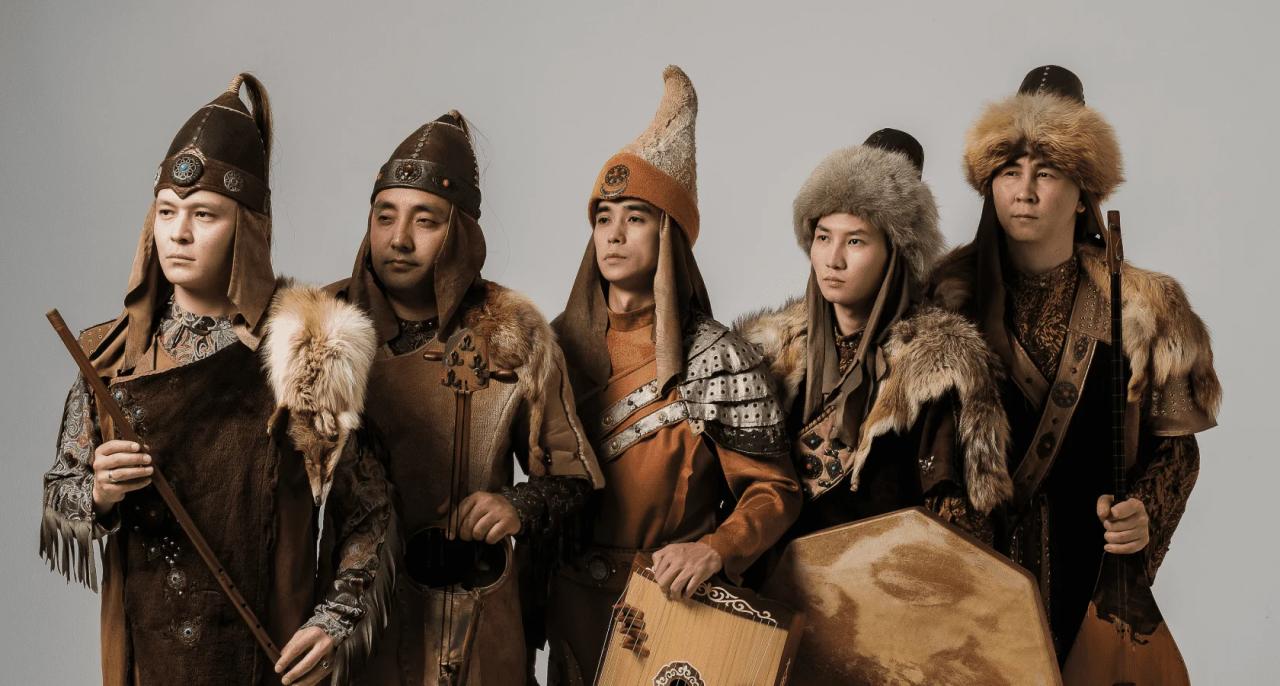
Er Turan (Kazakh: Тұран, English: Turan Ethno-Folk Ensemble) is a Kazakhstan-based ethno-folk music ensemble. Founded in 2008, the group is known for its works that blend Kazakh traditional music with elements from the historical and cultural heritage of the Turkic world. The ensemble has developed a unique musical approach by combining traditional instruments, vocal techniques, and contemporary stage arrangements, drawing inspiration from ethnic music, folk music, and classical music elements.【1】
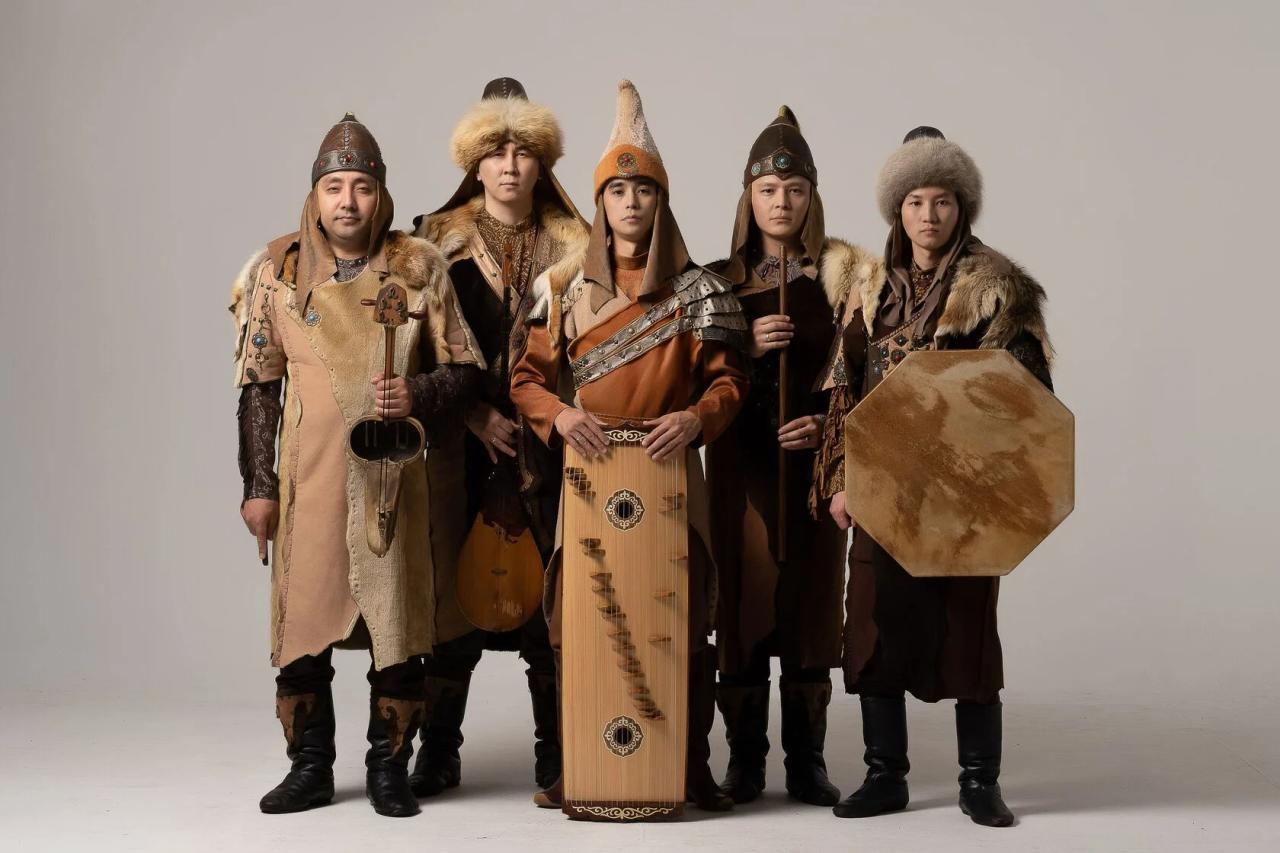
Er Turan Music Group Photo (Turan)
Er Turan’s repertoire includes melodies from the Kazakh steppe as well as themes drawn from the shared cultural memory of the Turkic world. The group reinterprets historical musical forms through a modern concert sensibility, using traditional Kazakh instruments such as the dombra, kobız, jetigen, şerter, and sıbızgı.【2】 According to its own definition, the ensemble aims to preserve the traditional musical heritage and promote it on international stages.【3】
Er Turan was founded in Kazakhstan in 2008. The ensemble’s origins trace back to the efforts of young musicians trained at the Kurmangazy Kazakh National Conservatoire, who sought to explore traditional music. The members came together with the goal of presenting Kazakh folk music and the musical heritage of the historical Turkistan region through a contemporary interpretation.【4】
During its formation, the ensemble’s core philosophy was not merely to preserve traditional musical elements but also to connect them with today’s audiences through new arrangements. In this spirit, Er Turan developed an ethno-folk approach that integrates traditional Kazakh instruments with modern arrangements.
In the years following its founding, Er Turan participated in numerous cultural events in Kazakhstan and reached an international audience through concert performances. The group states on its official sources that it has performed in various countries and aims to introduce the cultural heritage of the Turkic world through music.
Er Turan - Türk Kanı (TURAN ethno-folk ensemble)
Er Turan’s musical approach is based on the reinterpretation of Kazakh steppe music traditions and elements of the shared cultural heritage of the Turkic world through a contemporary ethno-folk lens. While preserving traditional musical forms, the group combines them with modern stage arrangements, polyphonic performance techniques, and influences from other musical genres. This approach has become one of the key factors in the ensemble’s recognition both within Kazakhstan’s traditional music circles and on the international ethnic music scene.
The ensemble’s repertoire highlights historical narratives, nature, heroism, nomadic culture, and themes from the collective memory of Turkic peoples. Er Turan views music not only as a performance medium but also as a vehicle for cultural transmission. As a result, Kazakh folk melodies, epic traditions, and motifs from the Central Asian musical heritage hold a central place in its works.【5】
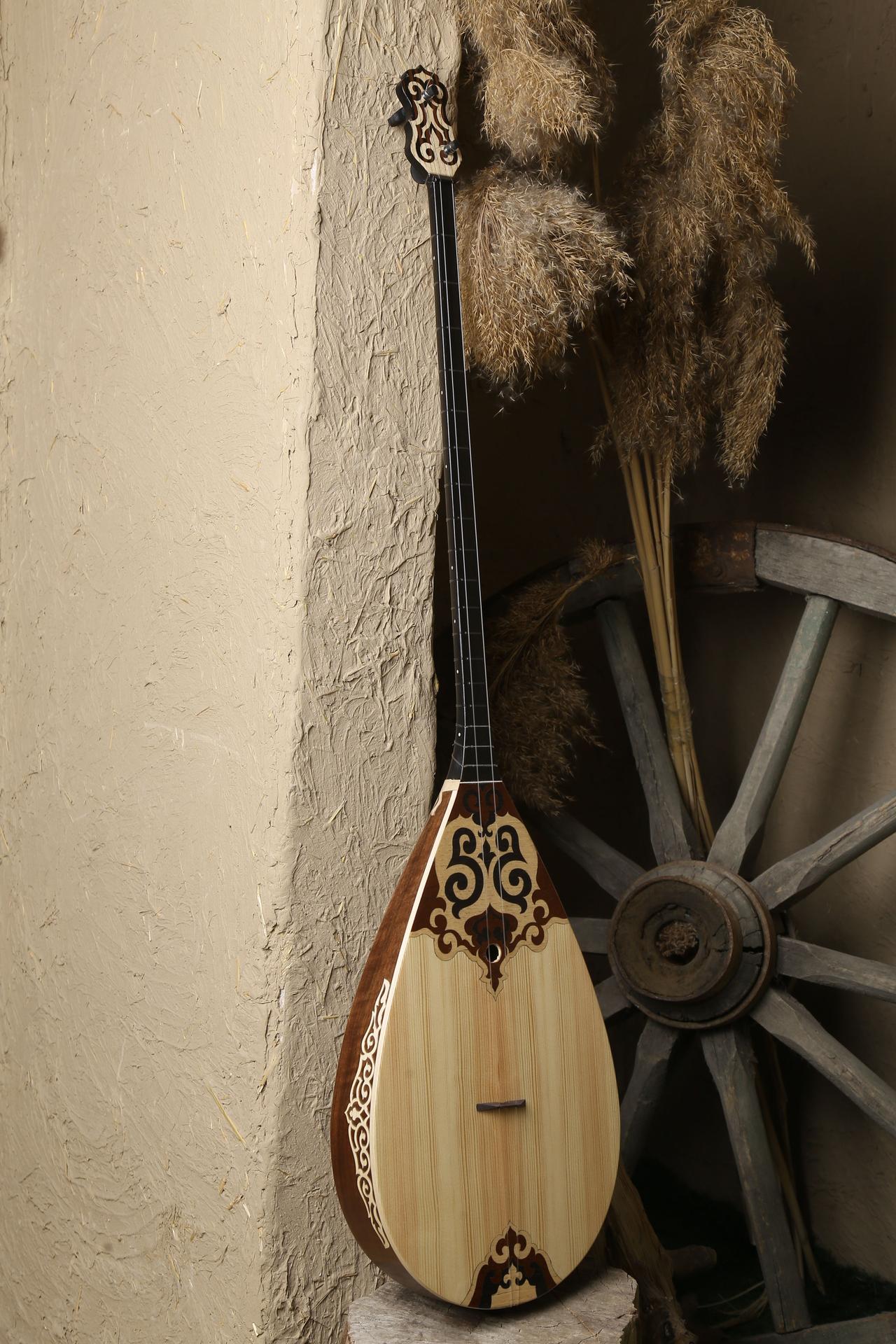
Dombra Musical Instrument (Pexels)
One of the most distinctive features of Er Turan’s musical identity is the intensive use of traditional Turkistan and Kazakh instruments. The ensemble members employ folk instruments from various historical periods within modern arrangements to convey the traditional sonic world to contemporary audiences.
The main instruments used by the ensemble include the dombra, kobız (kobyz), jetigen, şerter, sıbızgı, dauılpaz, and various percussion instruments.【6】
Dombra holds a central position in Er Turan’s repertoire. This two-stringed instrument, regarded as an important symbol in Kazakh culture, is closely associated with folk narratives and traditional instrumental compositions known as küy. The group uses the dombra’s characteristic sound in both solo and ensemble performances, integrating it into modern arrangements.
Kobız (kobyz) is considered one of the oldest bowed instruments of Central Asia. Traditionally linked to shamanic rituals and narrative music, the kobız is employed in Er Turan’s compositions to create deeper and more atmospheric sonic layers.
The name “Er Turan” derives from the concept of Turan, which carries historical and cultural connotations within the Turkic world. In the modern era, this term has been associated particularly with the geography of Central Asia, the historical memory of Turkic peoples, and the idea of cultural affinity.
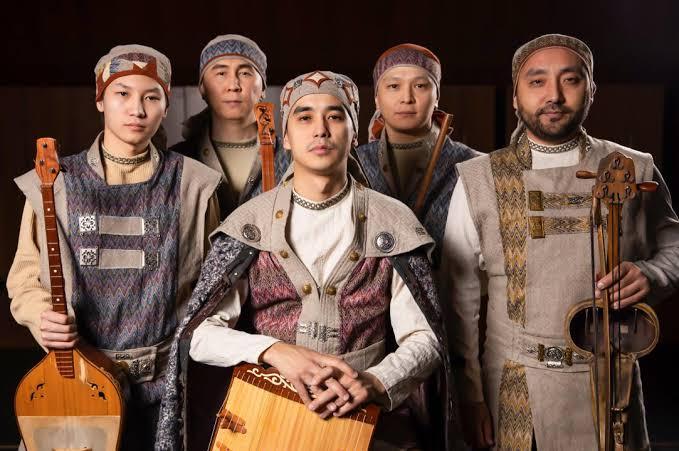
Er Turan Music Group Members (Turan)
The ensemble uses the name “Turan” as a musical identity and explores in its works the traditional musical heritage of Turkistan (Central Asia), steppe culture, and shared cultural elements of Turkic peoples. Historical narratives, heroic themes, nature, and motifs related to traditional ways of life hold significant importance in Er Turan’s repertoire.【7】
The group’s musical approach is grounded in cultural transmission and the reinterpretation of traditional music, rather than any political agenda. The ensemble integrates the traditional sounds, historical instruments, and folk narratives of Turkistan—with Kazakh music as its foundation—into a contemporary stage sensibility. In this context, Er Turan treats the concept of “Turan” as an artistic reference to a shared history, culture, and musical heritage, aiming to bring traditional musical elements to an international audience.
Er Turan’s lineup consists of multi-instrumentalists specialized in traditional Kazakh musical instruments. Among the founding members are Maksat Medeubek, Bauyrzhan Bekmukhanbetov, Serik Nurmoldaev, Khorlan Kartenbaeva, and Abzal Arykbayev. A significant portion of the ensemble’s members are affiliated with music education institutions in Kazakhstan and are experts in traditional music, performance techniques, and stage presentation.
Er Turan Group Logo (Turan)
The ensemble’s early works emphasized Kazakh folk music elements and traditional instrumental structures. Subsequent albums reflect broader orchestral arrangements, interactions with other musical genres, and the influence of international stage experience.【8】
The ensemble’s first studio album, Turan, is one of the foundational works that established its core musical approach. The album features melodic structures from Kazakh traditional music, historical instruments, and compositions rooted in the Central Asian musical heritage.【9】
The group’s second album, Er Turan, shares the ensemble’s name and is regarded as a milestone in strengthening its stage identity and reaching a wider audience. The album’s release and the group’s traditional music philosophy received coverage in the Kazakh press.
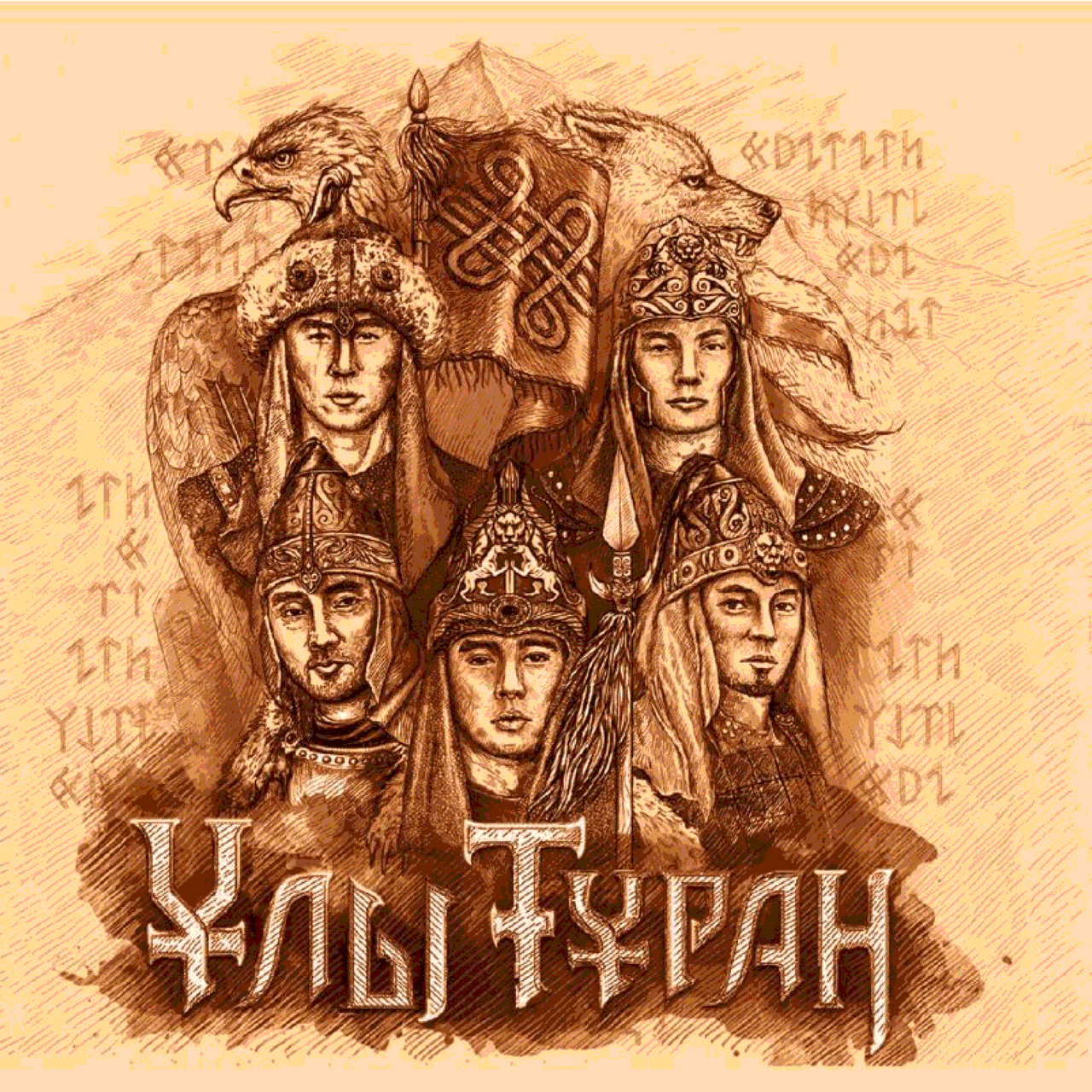
Uly Turan 2017 Album Cover (Turan)
Uly Turan is one of the ensemble’s albums that more distinctly explores themes related to the historical and cultural heritage of the Turkic world. Traditional melodies, epic narratives, and ethnic music elements are integrated with contemporary arrangements.
This project is one of Er Turan’s initiatives exploring the relationship between traditional music and symphonic arrangements. The album demonstrates the ensemble’s evolution beyond folk music into a group that actively engages with diverse musical forms.
Tamyr Part 1 is one of Er Turan’s works emphasizing traditional roots. According to ensemble member Serik Nurmolda, the word tamyr carries three symbolic meanings. The first is the “root” of a tree, representing an individual’s connection to their own origins; the second refers to the shared roots and sense of unity among Turkic peoples; and the third signifies “friend,” “comrade,” or “brother.”【10】
Since its founding, Er Turan has performed concerts outside Kazakhstan and represented traditional Kazakh music on international stages. The ensemble has participated in cultural events, festivals, and concert programs across Europe, Asia, and Turkic world countries.【11】
The primary goal of the ensemble’s international activities is to connect audiences in different regions with Kazakhstan’s traditional musical heritage and the musical elements of Central Asian culture. Through stage performances featuring traditional instruments and cultural outreach initiatives, Er Turan has gained recognition. These efforts have contributed significantly to the ensemble’s establishment as more than a local music group, securing its place on the international ethnic music scene.
Er Turan Ethno-Folk Ensemble. "About Us." Turan Official. Accessed July 1, 2026. https://turanofficial.com/en/about
Er Turan Ethno-Folk Ensemble. "Music." Turan Official. Accessed July 1, 2026. https://turanofficial.com/en/music
Er Turan Ethno-Folk Ensemble. "Musical Instruments." Turan Official. Accessed July 1, 2026. https://turanofficial.com/en/instruments
Er Turan Ethno-Folk Ensemble. “Gallery.” Turan Official. Accessed July 1, 2026. https://turanofficial.com/tr/gallery
Er Turan Ethno-Folk Ensemble. “Turan Ethno-Folk Ensemble Celebrates Cultural Heritage Through Music.” Turan Official. Accessed July 1, 2026. https://turanofficial.com/tpost/u01pbslci1-turan-ethno-folk-ensemble-celebrates-cul.
Er Turan. "Er Turan / Türkçe." YouTube, 4:49. Accessed July 1, 2026. https://www.youtube.com/watch?v=Z4fKe_EGw7k
Ruh, Batyr. "Beautifully crafted Kazakh dombyra displayed with rustic decor, embodying rich cultural heritage." Pexels. Accessed July 6, 2026. https://www.pexels.com/photo/traditional-kazakh-dombyra-with-rustic-decor-30472395/
The Astana Times. "Turan Ethno-Folk Group Celebrates Majesty of Turkic Music at Qazaq Concert." The Astana Times. Accessed July 6, 2026. https://astanatimes.com/2024/10/turan-ethno-folk-group-celebrates-majesty-of-turkic-music-at-qazaq-concert/
[1]
Turan Ethno-Folk Ensemble, “About Us,” Turan Official, accessed 1 July 2026, https://turanofficial.com/en/about.
[2]
Turan Ethno-Folk Ensemble, “About Us.”
[3]
Turan Ethno-Folk Ensemble, “About Us.”
[4]
Turan Ethno-Folk Ensemble, “About Us.”
[5]
Turan Ethno-Folk Ensemble, “Turan Ethno-Folk Ensemble Celebrates Cultural Heritage Through Music,” Turan Official, accessed 1 July 2026, https://turanofficial.com/tpost/u01pbslci1-turan-ethno-folk-ensemble-celebrates-cul.
[6]
Turan Ethno-Folk Ensemble, “Musical Instruments,” Turan Official, accessed 1 July 2026, https://turanofficial.com/en/instruments.
[7]
Turan Ethno-Folk Ensemble, “About Us.”
[8]
Turan Ethno-Folk Ensemble, “Music,” Turan Official, accessed 1 July 2026, https://turanofficial.com/en/music.
[9]
Turan Ethno-Folk Ensemble, “Music.”
[10]
The Astana Times, “Turan Ethno-Folk Group Celebrates Majesty of Turkic Music at Qazaq Concert,” The Astana Times, accessed 6 July 2026, https://astanatimes.com/2024/10/turan-ethno-folk-group-celebrates-majesty-of-turkic-music-at-qazaq-concert/
[11]
Turan Ethno-Folk Ensemble, “About Us.”

Er Turan (Music Group)
Type | Ethno-folk, traditional folk music, world music | ||||||||
|---|---|---|---|---|---|---|---|---|---|
Foundation Date | 1 March 2008 | ||||||||
Place of Foundation | Almaty, Kazakhstan | ||||||||
Country | Kazakhstan | ||||||||
Languages | Turkic languages including Kazakh | ||||||||
Main Instruments Used | Dombra, kobyz, jetigen, shertpe, sibizgi, daulipaz and other traditional Kazakh instruments | ||||||||
Music Genre | Ethno-folk Traditional folk music World music | ||||||||
Main Musical Instruments Used | Dombra Kobyz Jetigen Shertpe Sibizgi Daulipaz Traditional Kazakh instruments | ||||||||
Important Albums | Turan (2009), Er Turan (2011), Uly Turan (2017), Folk & Symphony (2022), Tamyr Part 1 (2024) | ||||||||
Notable Albums | Turan (2009) Er Turan (2011) Uly Turan (2017) Folk & Symphony (2022) Tamyr Part 1 (2024) | ||||||||
No Discussion Added Yet
Start discussion for "Er Turan (Music Group)" article
Founding and History
Musical Approach and Traditional Instruments
Traditional Instruments
The Name “Turan” and Cultural Approach
Members
Album Projects and Discography
Turan (2009)
Er Turan (2011)
Uly Turan (2017)
Folk & Symphony (2022)
Tamyr Part 1 (2024)
International Activities and Concerts