


This article was automatically translated from the original Turkish version.
Smallpox (variola) is considered one of the most deadly pandemics in human history. This disease, with a history extending back to the 3rd millennium BCE, affected all age groups, caused high mortality rates especially among children, and left survivors with blindness and permanent scarring.
Before the emergence of modern medicine, the earliest measures against smallpox were based on folk medicine and traditional practices. The foremost of these was “variolation,” a method of conferring immunity by inoculating healthy individuals with pus taken from smallpox patients. This practice was widely applied in the Caucasus and Anatolia and later spread throughout Ottoman territories.
In the 18th century, Lady Mary Wortley Montagu, wife of the British ambassador to Istanbul, introduced this practice to her home country, laying the foundation for vaccination campaigns in Europe. The modern smallpox vaccine, however, was developed in 1796 by Edward Jenner and gained increasing effectiveness throughout the 19th century, paving the way for global vaccination campaigns.
From the 19th century onward, the Ottoman State adopted more systematic measures against smallpox. With the Tanzimat reforms, vaccination campaigns became state policy, and practices were formalized within a legal framework through regulations such as the “Smallpox Vaccination Regulation.” Public awareness campaigns were launched, and knowledge was disseminated through works such as Hekimbaşı Mustafa Behçet Efendi’s “Treatise on Smallpox.”
Smallpox vaccination efforts in the Ottoman Empire were not limited to the capital, Istanbul, but were also carried out in provincial regions. Intensive vaccination campaigns were conducted in many cities including Kastamonu, Trabzon, İzmir, and Manisa.
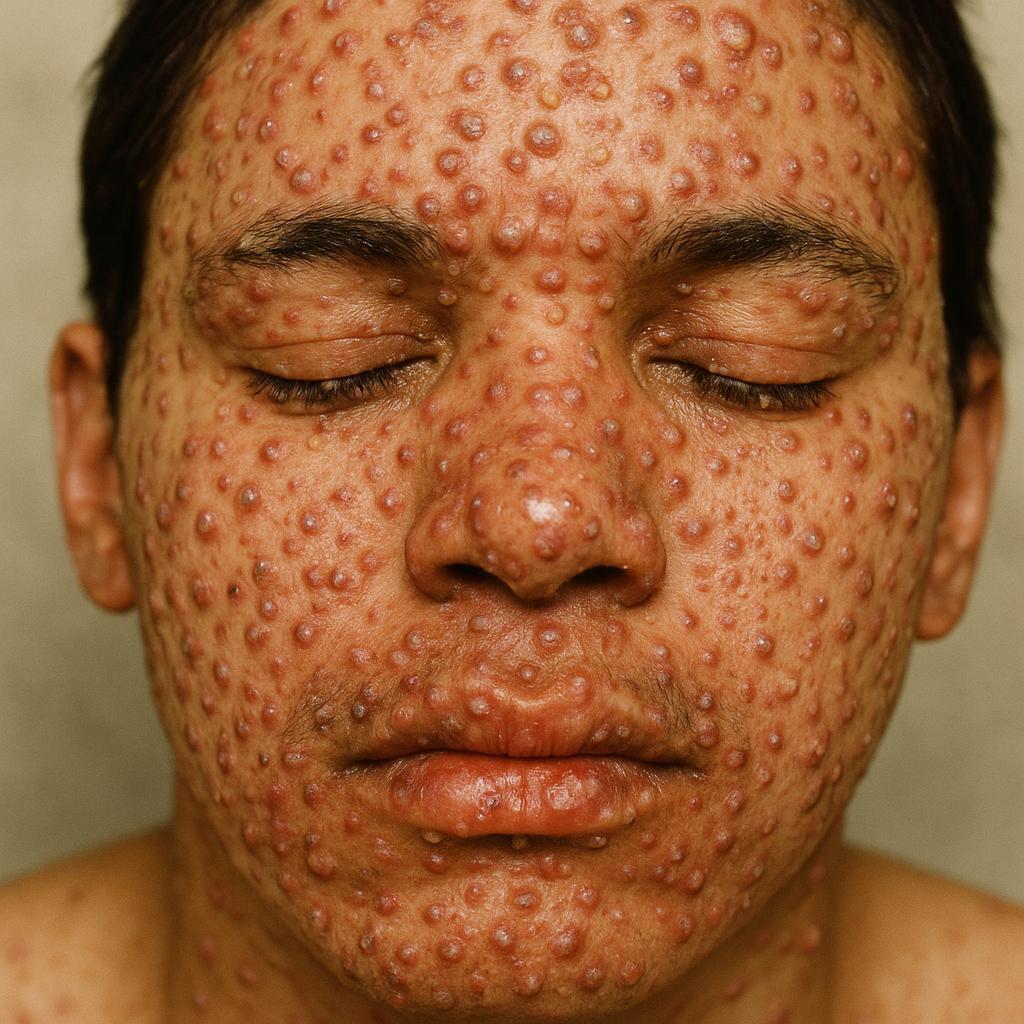
Smallpox (illustrated using artificial intelligence)
In the mid-20th century, the World Health Organization (WHO) launched the “Global Smallpox Eradication Program” and declared the disease eliminated from the world in 1979. However, the variola virus that causes smallpox is still stored in certain laboratories. This situation raises concerns about potential re-emergence due to scenarios such as bioterrorism or laboratory accidents.
Genetic analyses have shown that some variola virus strains identified in the past differ genetically from modern strains. This difference suggests that newly emerging variants could potentially evade our immune systems.
Smallpox has had both biological and sociocultural impacts throughout history, shaping the health policies of major empires such as the Ottoman State. The Ottoman Empire’s institutional approach to vaccination was decisive not only for the protection of its own subjects but also for the development of modern medicine in Europe. Although the disease has been eradicated today, the preserved viral samples mean that smallpox remains a potential threat to humanity.
Thèves, Catherine, Eric Crubézy, and Philippe Biagini. “Orthopoxviruses: Molecular and Genetic Characteristics.” Microbiology Spectrum 2, no. 4 (2014). Accessed May 7, 2025. https://journals.asm.org/doi/10.1128/microbiolspec.poh-0004-2014.
Ünlü, Mucize and Zarife Albayrak. “Osmanlı Devleti’nde Çiçek Aşısı Uygulaması ve Devletin Rolü.” *Uluslararası Toplum Araştırmaları Dergisi* 19, no. 35 (2021): 1026–1045. Accessed May 7, 2025. https://dergipark.org.tr/tr/download/article-file/2104423.

No Discussion Added Yet
Start discussion for "Eradication of Smallpox" article
Historical Treatment and Vaccination Methods
Smallpox Control in the Ottoman State
Eradiation of the Disease and Current Risks