


This article was automatically translated from the original Turkish version.
+1 More
Erbium
Periodic Table Position | 6 | ||||||||
|---|---|---|---|---|---|---|---|---|---|
Chemical Symbol | Er | ||||||||
Atomic Number | 68 | ||||||||
Group | Lanthanides | ||||||||
Atomic Weight | (167.259) g/mol | ||||||||
Electron Configuration | [Xe] 4f¹²6s² | ||||||||
Appearance | Silvery-white metal | ||||||||
Density | 9.07 g/cm³ | ||||||||
Melting Point | 1529 °C | ||||||||
Boiling Point | 2868 °C | ||||||||
Atomic Radius | ~229 pm | ||||||||
Electronegativity | 1.24 | ||||||||
Important Isotopes | ¹⁶⁶Er (natural and stable) | ||||||||
Year of Discovery | 1934 (pure metal) 1843 (oxide) | ||||||||
Discoverer(s) | Carl Gustaf Mosander (oxide) | ||||||||
Etymology(s) | The village of Ytterby in Sweden | ||||||||
Erbium is a metallic element in the lanthanide series with an atomic number of 68 and a silvery-white appearance. It was first discovered in 1843 by Carl Gustaf Mosander in its oxide form and derives its name from the village of Ytterby in Sweden, where the mineral from which it was isolated was found. It is particularly known for its applications in fiber optic technology and glass coloring.
Erbium (Er) is an element located in the 6th period of the periodic table within the lanthanide group. Its electron configuration is [Xe] 4f¹²6s². It exhibits typical metallic properties of the lanthanides: it is solid at room temperature, soft and malleable. Its density is approximately 9.07 g/cm³.
Erbium was first isolated in 1843 by the Swedish chemist Carl Gustaf Mosander from gadolinite, a mineral extracted from the village of Ytterby and previously known as yttria (yttrium oxide). Mosander discovered that yttria actually contained oxides of three different metals: yttrium oxide, terbium oxide (yellow), and erbium oxide (pink). Due to the underdeveloped separation techniques of the time, the erbium oxide obtained by Mosander was not pure and contained other lanthanides such as holmium and thulium. Pure metallic erbium was not successfully isolated until much later, in 1934, when German chemists Wilhelm Klemm and Heinrich Bommer reduced anhydrous erbium chloride with potassium vapor.

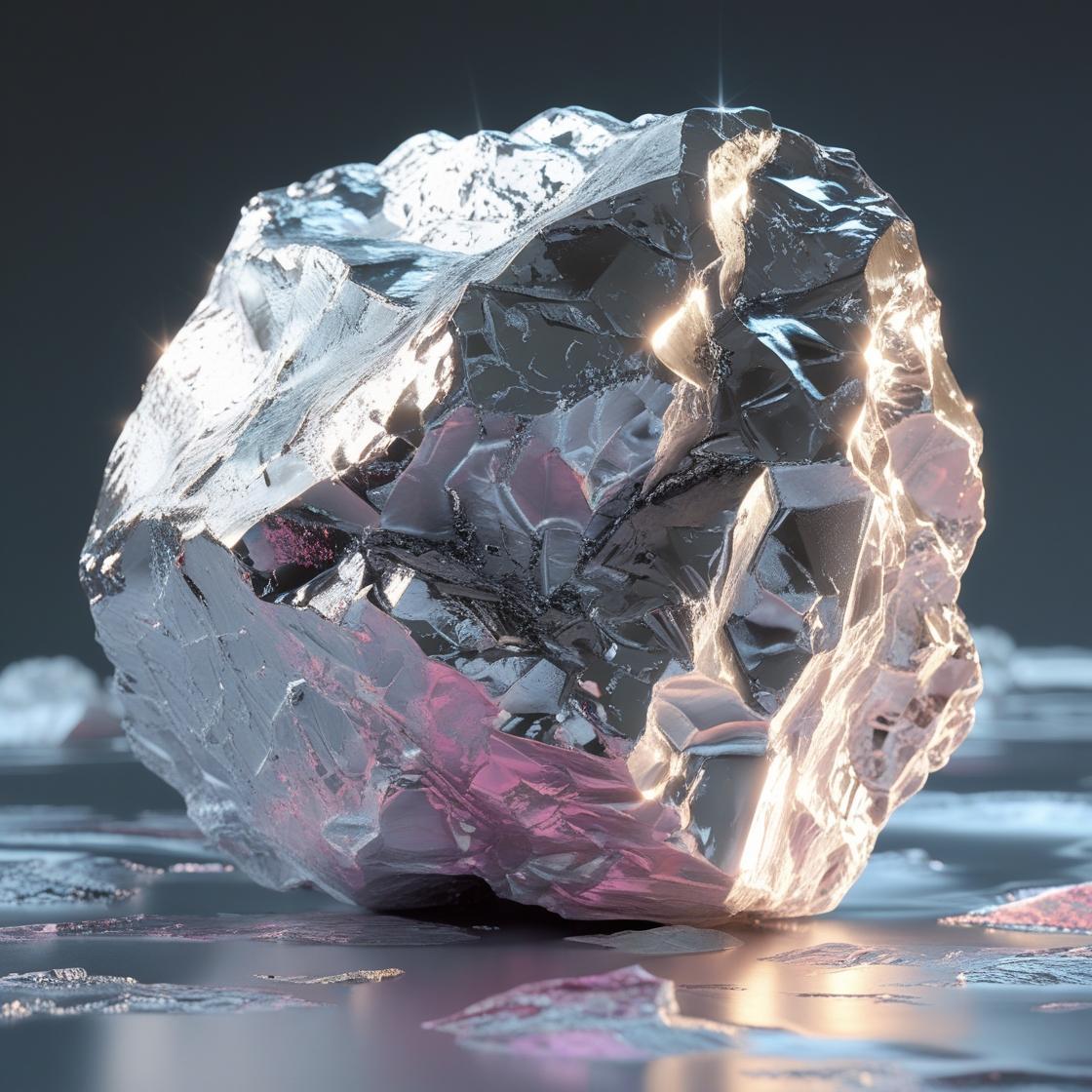
Erbium (Generated by Artificial Intelligence.)
Erbium is named after the village of Ytterby in the Stockholm archipelago of Sweden. The gadolinite mineral extracted from a feldspar quarry in this village served as the source for the discovery of several lanthanide elements, including erbium, yttrium (Y), terbium (Tb), and ytterbium (Yb).
Erbium occurs in various minerals alongside other lanthanide elements but never in its free elemental form. Its primary sources include rare earth minerals such as monazite, bastnäsite, xenotime, and euxenite. Its abundance in the Earth’s crust is relatively low. Commercially, it is separated from other lanthanides through complex processes such as ion exchange and solvent extraction during the processing of these minerals.
Erbium is a bright silvery-white metal. It is relatively stable in air and oxidizes slowly, but oxidation accelerates at high temperatures or in humid conditions. Its melting point is 1529 °C and its boiling point is 2868 °C. Its atomic radius is approximately 229 pm and its electronegativity is 1.24. It reacts slowly with water and more rapidly with acids, releasing hydrogen gas. The most common and stable oxidation state in its compounds is +3. Erbium(III) ions and their salts exhibit a characteristic pink color.
Erbium has six naturally occurring stable isotopes: ¹⁶²Er, ¹⁶⁴Er, ¹⁶⁶Er, ¹⁶⁷Er, ¹⁶⁸Er, and ¹⁷⁰Er. The isotope ¹⁶⁶Er is noted as significant in the source. In addition, numerous radioactive isotopes have been synthesized artificially.
Erbium has various technological applications due to its unique optical and physical properties:
Erbium has no known biological role. It is considered to have low toxicity. Ingestion or inhalation of soluble erbium salts may cause mild toxic effects. Like other reactive metals, erbium powder can pose a fire hazard, especially when finely divided. Standard laboratory safety precautions should be followed when handling erbium and its compounds.
National Center for Biotechnology Information. "Erbium." *PubChem Compound Database*. Accessed May 31, 2025. https://pubchem.ncbi.nlm.nih.gov/#query=Erbium
TÜBİTAK Bilim Genç. "Erbiyum." *Bilim Genç*. Accessed May 31, 2025. https://bilimgenc.tubitak.gov.tr/periyodik-tablo/erbiyum

Erbium
Periodic Table Position | 6 | ||||||||
|---|---|---|---|---|---|---|---|---|---|
Chemical Symbol | Er | ||||||||
Atomic Number | 68 | ||||||||
Group | Lanthanides | ||||||||
Atomic Weight | (167.259) g/mol | ||||||||
Electron Configuration | [Xe] 4f¹²6s² | ||||||||
Appearance | Silvery-white metal | ||||||||
Density | 9.07 g/cm³ | ||||||||
Melting Point | 1529 °C | ||||||||
Boiling Point | 2868 °C | ||||||||
Atomic Radius | ~229 pm | ||||||||
Electronegativity | 1.24 | ||||||||
Important Isotopes | ¹⁶⁶Er (natural and stable) | ||||||||
Year of Discovery | 1934 (pure metal) 1843 (oxide) | ||||||||
Discoverer(s) | Carl Gustaf Mosander (oxide) | ||||||||
Etymology(s) | The village of Ytterby in Sweden | ||||||||
Classification and Basic Properties
Discovery
Etimology
Natural Occurrence
Physical and Chemical Properties
Isotopes
Applications
Biological Role and Precautions