+2 More

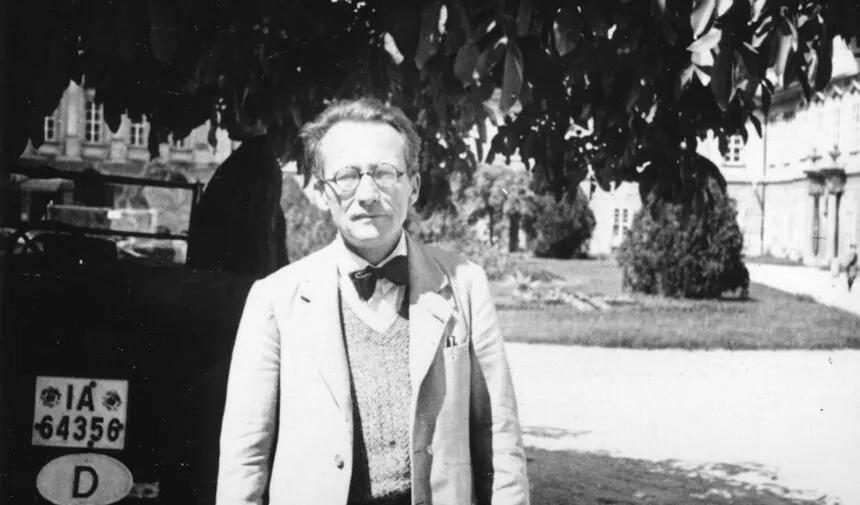
Erwin Schrödinger
Who is | Austrian theoretical physicist and one of the founders of quantum mechanics | ||||||||
|---|---|---|---|---|---|---|---|---|---|
Doğum tarihi | 1887-08-12 | ||||||||
Ölüm tarihi | 1961-01-04 | ||||||||
Major Contributions | the book 'What Is Life?' Schrödinger's Cat thought experiment Wave Mechanics Schrödinger Equation | ||||||||
Significance | Foundations of quantum mechanics, contributions to atomic and molecular physics | ||||||||
Field | Physics, Quantum Mechanics, History of Science | ||||||||
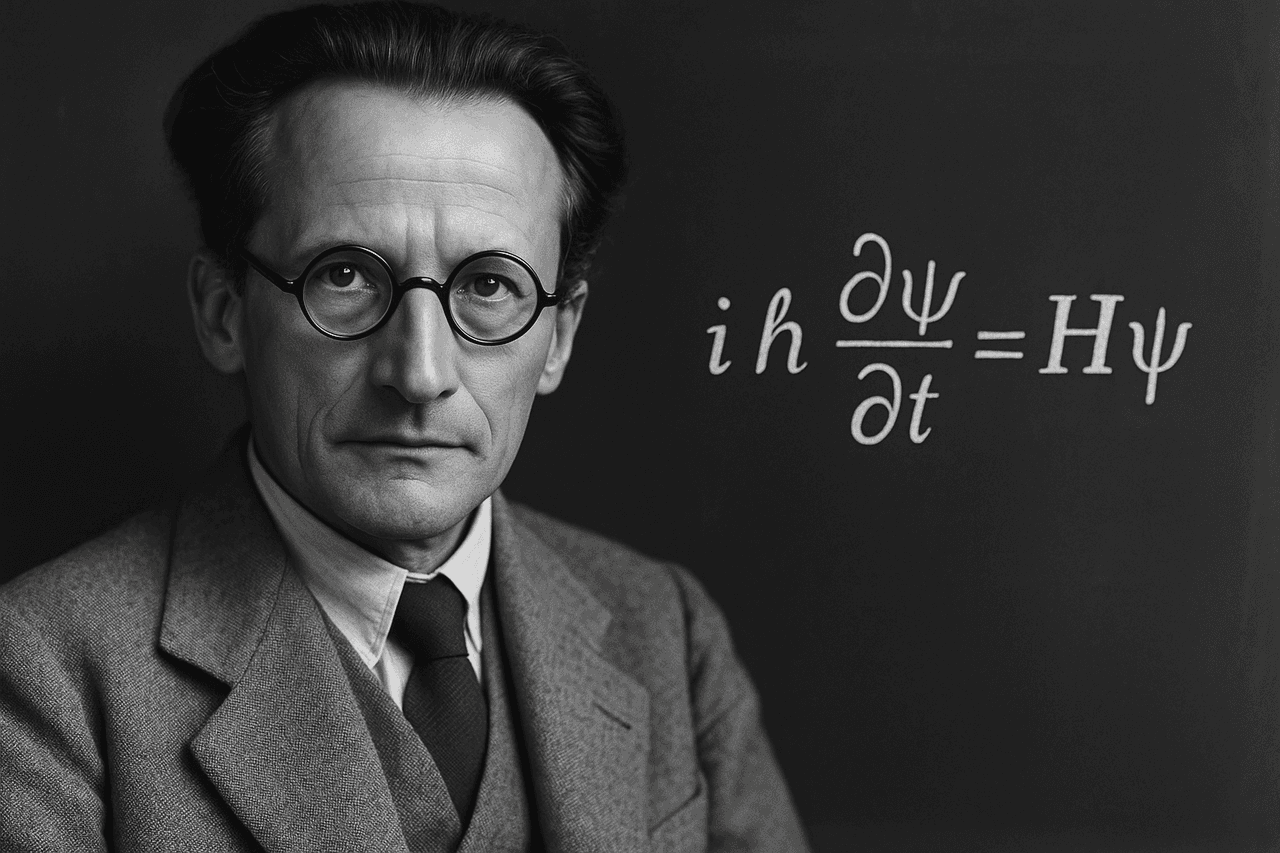
Erwin Rudolf Josef Alexander Schrödinger (12 August 1887 – 4 January 1961) was an Austrian theoretical physicist who made fundamental contributions to the development of quantum mechanics. He is best known for the Schrödinger Equation, which describes the behavior of subatomic particles and bears his name. For his contributions to quantum theory, he was awarded the Nobel Prize in Physics in 1933 jointly with Paul Dirac.
Schrödinger was born in Vienna and completed his education at the University of Vienna. After conducting research in various areas of physics, he turned to quantum physics in the 1920s. Throughout his academic career, he held positions at major universities including Zurich, Berlin and Oxford. He left Germany in 1933 for political reasons.
In a series of papers published in 1926, Schrödinger developed wave mechanics, based on the theory of matter waves, to explain the energy levels and states of atomic systems. He formulated the famous Schrödinger Equation, which became one of the foundational pillars of quantum mechanics and revolutionized the understanding of atoms and molecules.
Schrödinger actively participated in philosophical debates concerning the probabilistic interpretation of quantum mechanics and its seemingly paradoxical consequences. In 1935, he proposed the thought experiment known as "Schrödinger's Cat" to illustrate the potential absurdity of quantum superposition when applied to the macroscopic world. This paradoxical scenario remains a central part of ongoing discussions about the interpretations of quantum mechanics and has entered popular culture due to its challenge to the boundaries of scientific thought.
His broad interests beyond physics led him to develop ideas on biology and philosophy. His 1944 book, titled "What Is Life?", inspired advances in molecular biology and genetics. Schrödinger returned to Vienna in 1955 and continued his scientific work until his death in 1961.
Britannica T. editors. "Erwin Schrödinger". Encyclopedia Britannica, April 19, 2025. https://www.britannica.com/biography/Erwin-Schrodinger.
IEEE Computer Society. "Linus Torvalds." Accessed May 4, 2025. https://www.computer.org/profiles/linus-torvalds/.
NobelPrize.org. "Erwin Schrödinger – Biographical". Accessed May 4, 2025. https://www.nobelprize.org/prizes/physics/1933/schrodinger/biographical/.
TÜBİTAK Popüler Bilim Yayınları. "Schrödinger'in En Büyük Kedisi." TÜBİTAK Bilim Teknik. Accessed May 4, 2025. https://services.tubitak.gov.tr/edergi/yazi.pdf;jsessionid=rQyGm3PZFwdGbvG19bLC-BmB?dergiKodu=4&cilt=44&sayi=725&sayfa=30&yaziid=31311.

Erwin Schrödinger
Who is | Austrian theoretical physicist and one of the founders of quantum mechanics | ||||||||
|---|---|---|---|---|---|---|---|---|---|
Doğum tarihi | 1887-08-12 | ||||||||
Ölüm tarihi | 1961-01-04 | ||||||||
Major Contributions | the book 'What Is Life?' Schrödinger's Cat thought experiment Wave Mechanics Schrödinger Equation | ||||||||
Significance | Foundations of quantum mechanics, contributions to atomic and molecular physics | ||||||||
Field | Physics, Quantum Mechanics, History of Science | ||||||||
Education and Early Career
Contributions to Quantum Mechanics
Philosophical Views and Thought Experiments
Later Career and Other Interests