This article was automatically translated from the original Turkish version.
+2 More
Province(s) | Erzurum | ||||||||
|---|---|---|---|---|---|---|---|---|---|
Application Date | 15.12.2021 | ||||||||
Registration Number | 1213 | ||||||||
Registration Date | 08.09.2022 | ||||||||
Product / Product Group(s) | Processed and unprocessed fruits vegetables and mushrooms | ||||||||
Type of Geographical Indication | Trademark | ||||||||
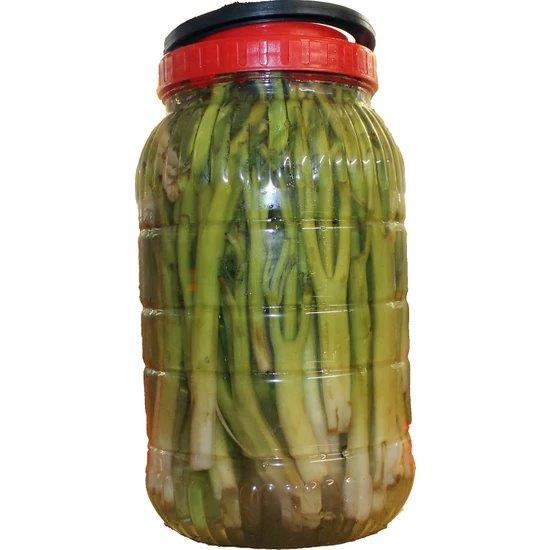
Erzurum Çaşır Salamurası is a unique traditional product registered with a geographical indication in Erzurum Province. The product is prepared using çaşır herb (Rumex acetosa or similar species) and is preserved by salting as a protective method specifically suited to cold climatic conditions. This product has become an integral part of both local consumption and traditional cuisine.
These details confirm that the official geographical boundaries of the product have been defined and that it is under protection.
Çaşır herb is an acidic-leaved plant that grows at high altitudes in the pastures surrounding Erzurum. It is typically harvested in early spring and processed using traditional salting methods.
The leaves are first cleaned and blanched or shocked with boiling water. Subsequently, they are soaked for appropriate durations in a traditional brine solution of salt and water. The salt concentration is carefully determined to extend the product’s shelf life prior to packaging.
The geographical boundary specified in the registration certificate covers production exclusively within the boundaries of Erzurum Province. The production process requires strict adherence to local ingredients and traditional methods. This ensures the continuity of the product’s organoleptic characteristics with its regional identity.
Erzurum Çaşır Salamurası is a traditional product distinguished by its unique flavor profile. The taste characteristic includes a mild sourness and a distinctive fermentation aroma developed during the fermentation process. This flavor profile is recognized by local consumers as a signature taste.
In terms of color, Erzurum Çaşır Salamurası varies from light green to dark green tones. This color range originates from the natural pigment composition of the çaşır herb leaves used in the salting process and enhances the product’s visual appeal.
The textural properties indicate both structural and functional quality. The leaves retain their thin and flexible structure after salting, with only slight softening, preserving the perceived freshness and integrity by consumers. The salting method imparts a textural quality that extends shelf life without compromising the structural integrity of the leaves.
In terms of taste components, the product exhibits a mild acidic character. This acidity combines with aromatic compounds generated by the metabolic activity of fermenting microorganisms to form a unique flavor profile. Additionally, the balanced application of salt during salting suppresses bitter and harsh tastes, resulting in a more harmonious and palatable flavor.
These organoleptic and chemical properties enable Erzurum Çaşır Salamurası to be served as an energy-boosting and appetite-stimulating garnish, particularly during cold seasons. At the same time, its role in traditional culinary culture holds significance both in terms of taste and functionality.
Çaşır salamurası is a product traditionally served on tables in Erzurum, especially during winter months, representing a preparation culture passed down from generation to generation among the local population. Alongside traditional cooking methods, this product can serve as a valuable economic resource for small-scale producers.
Following its geographical indication registration, the Erzurum Chamber of Commerce has been observed to actively contribute to promotion and marketing activities for this product. This supports regional development and encourages rural entrepreneurship.
Erzurum Province ranks among the top regions in Türkiye in terms of the number of registered geographical indication products, and Çaşır Salamurası is among them. This registration under the geographical indication framework guarantees the product’s uniqueness and local identity. The increasing number of geographically registered products in Erzurum represents a significant step toward the sustainable promotion of local gastronomic specialties.
North East Anatolia Development Agency (KUDAKA). "Erzurum Yöresel Ürünleri." Accessed July 26, 2025. https://www.kudaka.gov.tr/bolgemiz/erzurum/erzurum-yoresel-urunler.
Turkish Patent and Trademark Office. "Erzurum Çaşır Salamurası." Geographical Indications. Accessed July 26, 2025. https://ci.turkpatent.gov.tr/Files/GeographicalSigns/299c3015-db90-4440-8237-71f3f5119919.pdf.

Province(s) | Erzurum | ||||||||
|---|---|---|---|---|---|---|---|---|---|
Application Date | 15.12.2021 | ||||||||
Registration Number | 1213 | ||||||||
Registration Date | 08.09.2022 | ||||||||
Product / Product Group(s) | Processed and unprocessed fruits vegetables and mushrooms | ||||||||
Type of Geographical Indication | Trademark | ||||||||
No Discussion Added Yet
Start discussion for "Erzurum Caşır Pickle" article
Turkish Patent and Trademark Office
Technical Characteristics and Production Process
Raw Material and Plant Taxonomy
Preparation and Salting Method
Geographical Boundary and Production Conditions
Organoleptic Properties and Functional Profile
Socio-Cultural and Economic Value
Strategic Value of the Geographical Indication Process