This article was automatically translated from the original Turkish version.
+1 More
Erzurum Ketesi
Geographical Indication Type(s) | Signaling Mark | ||||||||
|---|---|---|---|---|---|---|---|---|---|
Application Date | 09.04.2021 | ||||||||
Registration Date | 20.01.2023 | ||||||||
Product / Product Group(s) | Bakery and confectionery products dough products sweets | ||||||||
Applicant | Erzurum Chamber of Commerce | ||||||||
Registration Number | 1318 | ||||||||
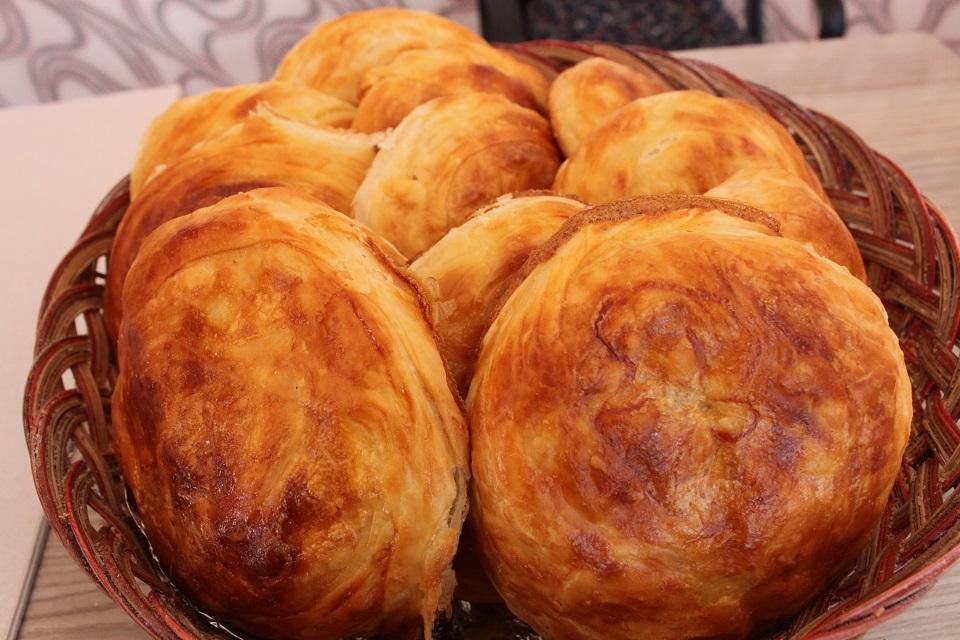
Erzurum ketesi is an important product of Erzurum culinary culture and is regarded as a type of bread, a fundamental foodstuff throughout history. The Turkish Language Association (Türk Dil Kurumu) defines its meaning as “a greasy pastry made from yeast or yeast-free dough”.
Although it exhibits regional variations, Erzurum ketesi is renowned for its unique flavor, which is never absent from local tables. It is commonly served at breakfast alongside sweet tea. Due to its durability, nutritional value, taste, and ease of transport, it has been a preferred food for travelers, agricultural workers, and shepherds from the past to the present.
As a testament to its cultural and gastronomic value, Erzurum ketesi was registered as a geographical indication under the category “Geographical Mark” on 20 January 2023, following an application submitted on 9 April 2021. This registration was carried out by the Erzurum Chamber of Commerce under file number C2021/000172. The product falls under the category “Bakery and Confectionery Products, Dough-based Items, Sweets”.
Although various cereal flours may be used in making ketesi, the ideal choice is high-protein hard wheat flour. Correct selection of ingredients and appropriate proportions are essential to achieving high-quality ketesi. Adjusting the consistency of the dough and the baking heat are critical stages in the production process.
The dough for ketesi is typically prepared using flour, yeast, milk, butter, vegetable oil, water, and egg white. The process begins by dissolving dry yeast and cube sugar in warm water until they swell. Liquid oil, milk, powdered sugar, salt, and sufficient flour are then added and kneaded until the dough reaches the consistency of an earlobe. The kneaded dough is left to ferment at room temperature for a specified period. After fermentation, the dough is divided into walnut-sized pieces (kuntlar) and allowed to rest again.
If making filled ketesi, the filling is first prepared by sautéing flour with butter in a pan. Walnut kernels are also ground and added; care is taken to ensure they are neither too coarse nor too fine.
The shaping of ketesi is carried out in two main ways:
Açma Kete: The dough is rolled out thinly like a pastry sheet. Melted butter and vegetable oil are brushed evenly over the surface using a brush. Additional layers of pastry are placed on top, resulting in a total of three layers, each coated with fat. These layered sheets are cut into strips approximately four fingers wide. The strips are then rolled into cylinders without squeezing them, with the ends sealed to prevent the filling from leaking. A walnut kernel is placed at the base of each roll using the tip of a tablespoon, and the top is gently pinched closed.
Traditional Kete: The prepared filling is placed inside the dough, which is then shaped in a distinctive form.
The shaped ketes are arranged on trays and covered with a cloth to prevent drying, then left to rest for 15–20 minutes. Egg yolk is brushed over the surface, and light patterns are drawn using a knife or fork. The ketes are baked in a preheated oven at 180 degrees Celsius until the tops turn golden brown. In the Eastern Anatolia region, ketesi can be baked in a tandır, oven, or pan.
"Erzurum Ketesi." Türkiye Turizm Ansiklopedisi. Accessed June 25, 2025. https://turkiyeturizmansiklopedisi.com/erzurum-ketesi.
"Eşsiz Lezzetiyle Sofralardan Eksik Olmayan Erzurum Ketesi." Erzurum Portalı. Accessed June 25, 2025. https://erzurumportali.com/shf/2189/Essiz-Lezzetiyle-Sofralardan-Eksik-Olmayan-Erzurum-Ketesi.
"Geographical Indications Detail (Erzurum Ketesi)." Turkish Patent and Trademark Office. Accessed June 25, 2025. https://ci.turkpatent.gov.tr/cografi-isaretler/detay/4024.
"Kahvaltılık Ürünler." Erzurum İl Kültür ve Turizm Müdürlüğü. Accessed June 25, 2025. https://erzurum.ktb.gov.tr/TR-176364/kahvaltilik-urunler.html.

Erzurum Ketesi
Geographical Indication Type(s) | Signaling Mark | ||||||||
|---|---|---|---|---|---|---|---|---|---|
Application Date | 09.04.2021 | ||||||||
Registration Date | 20.01.2023 | ||||||||
Product / Product Group(s) | Bakery and confectionery products dough products sweets | ||||||||
Applicant | Erzurum Chamber of Commerce | ||||||||
Registration Number | 1318 | ||||||||
General Characteristics and Importance
Geographical Indication Registration
Production Process and Ingredients
Shaping and Baking