


This article was automatically translated from the original Turkish version.

Among the prominent figures of Republican-era Turkish poetry, Necip Fazıl Kısakürek is a mystical and metaphysical poet who expresses the inner world and philosophical views of the individual in his own distinctive manner.

Necip Fazıl Kısakürek (AA)
The foundation of Necip Fazıl Kısakürek’s poem “Beklenen” lies in his meeting with Abdülhakim Arvasi in 1934. This encounter led the poet toward religion and Sufism, bringing about a profound transformation in his work. “Beklenen” is not merely a love poem; it is also an expression of the poet’s reaction to the social and spiritual crises of his time and his hope for a national-spiritual revival. The rapid modernization and Westernization movements that began with the fall of the Ottoman Empire deeply affected the poet’s worldview and became central motivations behind the poem. In this sense, “Beklenen” has become a symbol not of personal longing but of collective searching and spiritual awakening. The poem opens with a powerful outburst expressing the anticipation of someone or something long awaited. In the first lines:
“No sick person waits for morning, No grave waits for a fresh corpse, No devil waits for a sin, As I wait for you.”
These lines emphasize the intensity and patience of waiting. The poet illustrates his anticipation by invoking humanity’s most fundamental desires and needs: the sick wait for morning with hope of recovery, the grave awaits the fresh corpse as an inevitable fate, and the devil awaits sin with desire. Yet the poet’s assertion that he waits for “you” more than any of these underscores how even these powerful and meaningful forms of waiting pale in comparison to his own longing. These lines convey a state of refusing to accept loss or defeat in love while simultaneously carrying a Sufi depth.
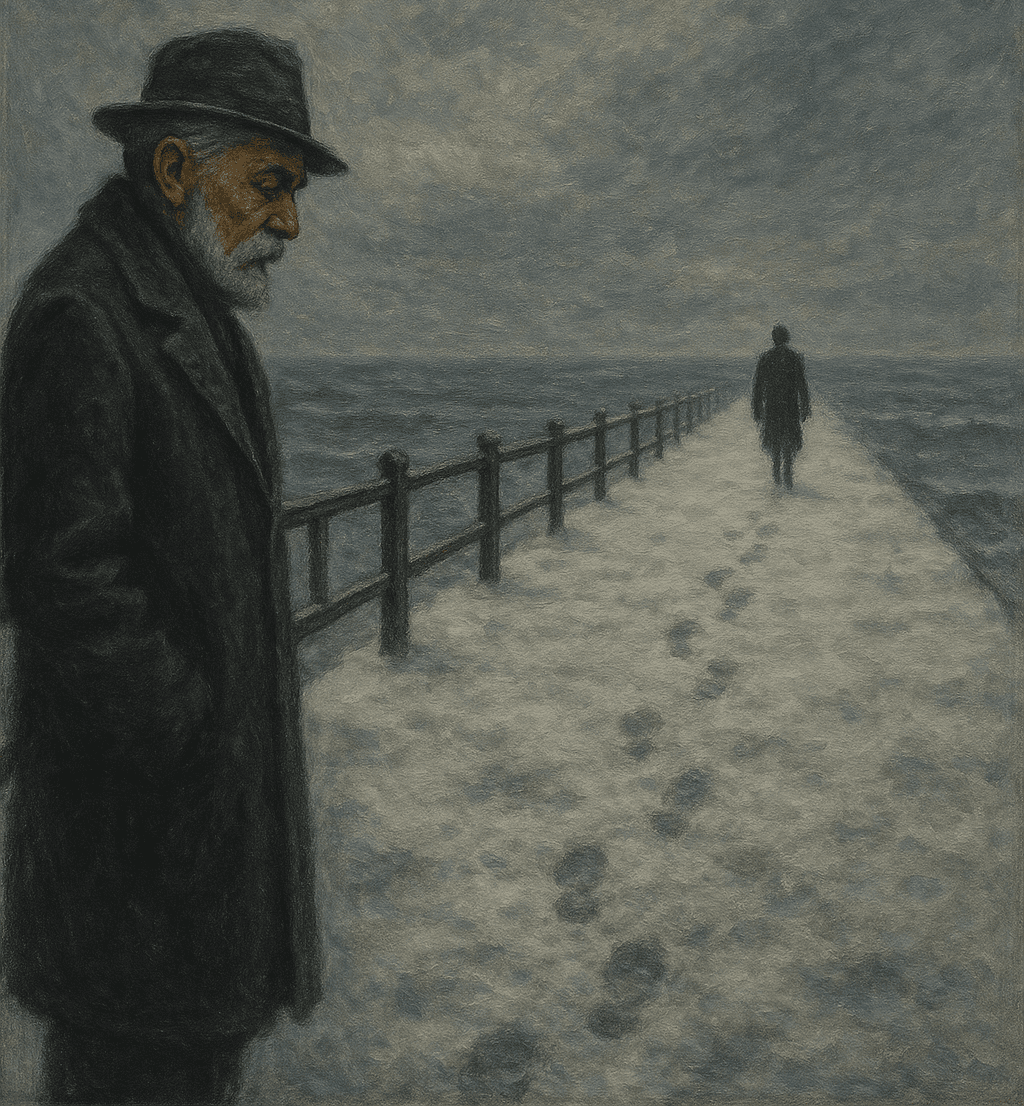
The Beloved Expected (Generated by Artificial Intelligence)
In the second stanza, written twenty-two years later, the poet’s emotions shift as the awaited one’s arrival is delayed. Initially waiting with great patience and excitement, the poet gradually grows weary of waiting. This feeling is expressed in the following lines:
“I no longer wish for your coming, In your absence I found you; Let your shadow remain in my illusion, Do not come—what use would it serve now?”
Here, Necip Fazıl Kısakürek conveys that he has found the beloved within his mind and heart in their absence, and that their physical arrival is no longer necessary. In these lines, the poet suggests that waiting has ended, highlighting the complex emotions between patience and hope on one side and disillusionment and acceptance on the other. Despite the futility of waiting, he claims to have found the beloved in their absence. This reveals that the waiting was not in vain and that the beloved was not as valuable as imagined; in seeking the beloved, he discovered the truth of the beloved.
The theme of waiting in the poem acquires a universal dimension, encompassing excitement, patience, and hope as well as fatigue and disillusionment. Through “Beklenen,” Necip Fazıl Kısakürek asserts that waiting is not merely a positive emotion but a necessary confrontation with the realities of life. Thus, love transforms into a Sufi quest for truth. This poem, one of the most important works in Turkish poetry, powerfully reflects the multifaceted dimensions of waiting through its simple language and intense emotional expression.
Hancıoğlu, Hümeyra. "NECİP FAZIL KISAKÜREK’İN ŞİİRLERİNDE TEMALAR." PhD thesis, İstanbul Üniversitesi, 2016. Accessed May 29, 2025. https://nek.istanbul.edu.tr/ekos/TEZ/50155.pdf.
Karabulut, Mustafa. “NECİP FAZIL KISAKÜREK’İN ŞİİRİNE DAİR BAZI TESPİTLER.” *Çukurova Üniversitesi Türkoloji Araştırmaları*. Accessed May 29, 2025. https://turkoloji.cu.edu.tr/pdf/n_fazil_siirine_dair.pdf.
Yıldız, Ömer Faruk. “Şairler Sultanı Necip Fazıl Kısakürek.” Anadolu Ajansı, May 24, 2023. Accessed May 29, 2025. https://www.aa.com.tr/tr/kultur/sairler-sultani-necip-fazil-kisakurek/2904902.
Çetinkaya, Ferhat. “Bekleyen’den Beklenen’e Necip Fazıl Kısakürek’te Değişen Şair ve Sevgili İmajı.” *Mecmua* 4, no. 8 (Fall 2019): 24–33. Accessed May 29, 2025. https://dergipark.org.tr/tr/download/article-file/822960.
“Necip Fazıl Kısakürek - Beklenen Şiir Analizi.” Accessed May 29, 2025. https://www.sarkianalizi.com/p/necip-fazl-kisakurek-beklenen-siir.html.